

A systematic review of the psychological and social benefits of participation in sport for children and adolescents: informing development of a conceptual model of health through sport
Open accessThe DOI matches its Crossref record; 69 of the 69 references it cites were found in a registry or an index.
Abstract
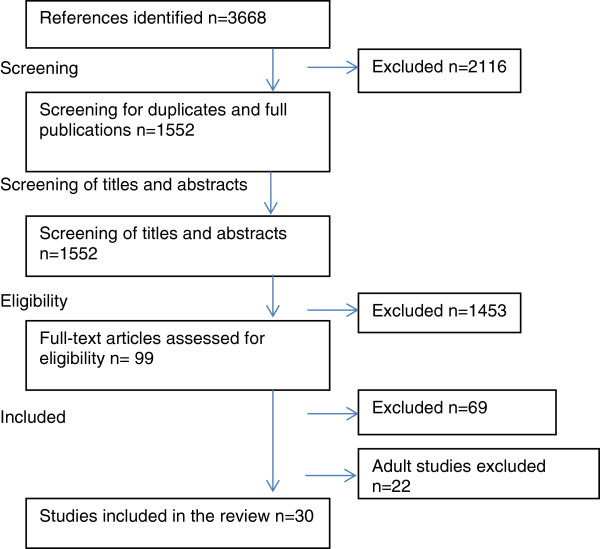
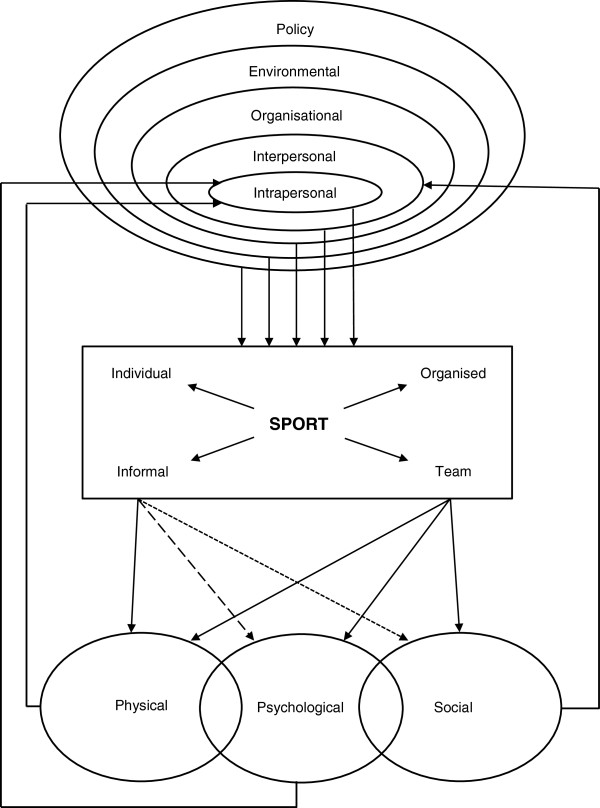
BACKGROUND: There are specific guidelines regarding the level of physical activity (PA) required to provide health benefits. However, the research underpinning these PA guidelines does not address the element of social health. Furthermore, there is insufficient evidence about the levels or types of PA associated specifically with psychological health. This paper first presents the results of a systematic review of the psychological and social health benefits of participation in sport by children and adolescents. Secondly, the information arising from the systematic review has been used to develop a conceptual model. METHODS: A systematic review of 14 electronic databases was conducted in June 2012, and studies published since 1990 were considered for inclusion. Studies that addressed mental and/or social health benefits from participation in sport were included. RESULTS: A total of 3668 publications were initially identified, of which 30 met the selection criteria. There were many different psychological and social health benefits reported, with the most commonly being improved self-esteem, social interaction followed by fewer depressive symptoms. Sport may be associated with improved psychosocial health above and beyond improvements attributable to participation in PA. Specifically, team sport seems to be associated with improved health outcomes compared to individual activities, due to the social nature of the participation. A conceptual model, Health through Sport, is proposed. The model depicts the relationship between psychological, psychosocial and social health domains, and their positive associations with sport participation, as reported in the literature. However, it is acknowledged that the capacity to determine the existence and direction of causal links between participation and health is limited by the fact that the majority of studies identified (n=21) were cross-sectional. CONCLUSION: It is recommended that community sport participation is advocated as a form of leisure time PA for children and adolescents, in an effort to not only improve physical health in relation to such matters as the obesity crisis, but also to enhance psychological and social health outcomes. It is also recommended that the causal link between participation in sport and psychosocial health be further investigated and the conceptual model of Health through Sport tested.
Overview
The claims and statistics of this paper haven’t been checked yet.
Free: it reads the open-access text and checks the first 5 claims that cite a source we can check. Create a free account to check every claim.
Integrity signals
Registry
Cites
Statistics
Figures
Verification
Claims the paper makes
The claims and statistics of this paper haven’t been checked yet.
Free: it reads the open-access text and checks the first 5 claims that cite a source we can check. Create a free account to check every claim.
Claims other papers make about this one
Each is checked against this paper’s own text: does it say what the citing paper says it does?
The source backs part of the claim, not all of it — or backs it for a different population, condition or comparison.
In the citing paper
“All six systematic reviews reported on organized sport activities and two also reported on organized non-sport activities (Cairns et al., 2014, Eime et al., 2013).”
From Impact of organized activities on mental health in children and adolescents: An umbrella review (2022) · cites this paper as Eime et al., 2013
Experimental — accuracy not yet measuredThe source backs part of the claim, not all of it — or backs it for a different population, condition or comparison.
In the citing paper
“Components of exercise interventions may represent important moderators of treatment effects.”
From Exercise for the treatment of anxiety in children and adolescents (2022) · cites this paper as Eime 2013
Experimental — accuracy not yet measuredThe source backs part of the claim, not all of it — or backs it for a different population, condition or comparison.
In the citing paper
“Indeed, intervention setting is another potential moderating factor, with group-based activities reported to confer a range of social benefits compared to individual activities (Eime 2013).”
From Exercise for the treatment of anxiety in children and adolescents (2022) · cites this paper as Eime 2013
Experimental — accuracy not yet measuredThe source backs part of the claim, not all of it — or backs it for a different population, condition or comparison.
In the citing paper
“We found evidence that children and adolescents who participated more frequently, who participated with higher intensity or who participated with longer duration (e.g. started at an early age or participated for a long period), had better mental health compared to their peers (Eime et al., 2013, Evans et al., 2017, Panza et al., 2020).”
From Impact of organized activities on mental health in children and adolescents: An umbrella review (2022) · cites this paper as Eime et al., 2013
Experimental — accuracy not yet measuredThe cited source says what the claim attributes to it.
In the citing paper
“Similarly, sports participation can be instrumental in the physical, social and emotional development of children and adolescents [30].”
2 more claims about this paper
Create a free account to see every claim other papers make about this one.
Self-check
Percentages, sums and reported differences re-computed from the paper’s own numbers.
The self-check needs the paper’s full text.
Citations
Cites
Kytle, J., & Bandura, A. (1978) · Contemporary Sociology · doi:10.2307/2065952 · Cited by 25,422
von Elm, E., Altman, D. G., Egger, M., Pocock, S. J., Gøtzsche, P. C., Vandenbroucke, J. P., & Initiative, F. T. S. (2007) · PLoS Medicine · doi:10.1371/journal.pmed.0040296 · Cited by 23,020
CONSORT 2010 Statement: updated guidelines for reporting parallel group randomised trials
the CONSORT Group, Schulz, K. F., Altman, D. G., & Moher, D. (2010) · BMC Medicine · doi:10.1186/1741-7015-8-18 · Cited by 13,371
Health Behavior and Health Education: Theory, Research, and Practice
(1992) · Annals of Internal Medicine · doi:10.7326/0003-4819-116-4-350_1 · Cited by 13,207
(1985) · Europe PMC (PubMed Central) · Cited by 9,143
Moher, D., Hopewell, S., Schulz, K. F., Montori, V., Gotzsche, P. C., Devereaux, P. J., Elbourne, D., Egger, M., & Altman, D. G. (2010) · BMJ · doi:10.1136/bmj.c869 · Cited by 8,883
An ecological perspective on health promotion programs
McLeroy, K. R., Bibeau, D., Steckler, A., & Glanz, K. (1988) · Health Education Quarterly · doi:10.1177/109019818801500401 · Cited by 8,502 · cited 2×
“The ‘determinants’ element is based on the well-established social ecological model [19,65] and is represented as concentric rings spreading out from the individual’s intrapersonal characteristics to widening spheres of influence.”
BackgroundDowns, S. H., & Black, N. (1998) · Journal of Epidemiology and Community Health · doi:10.1136/jech.52.6.377 · Cited by 8,252 · cited 1×
“Study quality was objectively appraised using the Downs and Black checklist [32].”
MethodJanssen, I., & LeBlanc, A. G. (2010) · International Journal of Behavioral Nutrition and Physical Activity · doi:10.1186/1479-5868-7-40 · Cited by 4,829
Measuring Health: A Guide to Rating Scales and Questionnaires
McDowell, I., & Newell, C. (1987) · Cited by 4,207
Cited by
Items 401–500 of 1,005
Behzadnia, B., Rezaei, F., & Salehi, M. (2022) · Psychology of sport and exercise · doi:10.1016/j.psychsport.2022.102156 · Cited by 35
Prevention of Sexual Violence in sport: A Socioecological Review
Milroy, J. J., Hanna, K., VandeLinde, T., Lee, D. S., Kaufman, K. L., Raj, A., Barker, K. M., Sitney, M. H., Lipman, A., Glace, A. M., et al. (2022) · Journal of Interpersonal Violence · doi:10.1177/08862605211067003 · Cited by 36
“, 2015), psychological, and psychosocial benefits of sport participation (Eime et al., 2013).”
BackgroundThe Association of Sports Participation With Depressive Symptoms and Anxiety Disorder in Adolescents
Chi, G., & Wang, L. (2022) · Frontiers in Public Health · doi:10.3389/fpubh.2022.860994 · Cited by 35
“Additionally, some single empirical research has offered consistent evidence of this (31, 32).”
BackgroundParents’ perceptions of their children’s physical activity during the COVID-19 pandemic
Ostermeier, E., Tucker, P., Tobin, D., Clark, A., & Gilliland, J. (2022) · BMC Public Health · doi:10.1186/s12889-022-13829-y · Cited by 29
“Social interactions with peers can lead to improved psychosocial health and emotional well-being, including higher self-esteem, improved social skills, fewer indicators of depression and greater confidence [39].”
BackgroundRobinson, E., Newman, T. J., Scheadler, T. R., Lower‐Hoppe, L. M., & Baeth, A. C. (2023) · Journal of Homosexuality · doi:10.1080/00918369.2022.2160684 · Cited by 34
“For instance, research indicates that LGBTQ+ athletes are not only worried about facing discrimination but are concerned that participating in sport will be physically and emotionally unsafe for them (Denison et al., belonging (Andersen et al., 2019; Eime et al., 2013).”
BackgroundEffect of aerobic and anaerobic exercises on glycemic control in type 1 diabetic youths
Lukács, A., & Barkai, L. (2015) · World Journal of Diabetes · doi:10.4239/wjd.v6.i3.534 · Cited by 39
Wing, E. K., Bélanger, M. F., & Brunet, J. (2015) · American Journal of Health Behavior · doi:10.5993/ajhb.40.1.4 · Cited by 33
Pang, B., Rundle-Thiele, S. R., & Kubacki, K. (2017) · International Journal of Nonprofit and Voluntary Sector Marketing · doi:10.1002/nvsm.1599 · Cited by 33
Stigma, Coping Skills, and Psychological Help Seeking Among Collegiate Athletes
Kroshus, E. (2017) · Athletic Training & Sports Health Care · doi:10.3928/19425864-20171010-02 · Cited by 31
Cheng, Q., Zhou, Y. C., Hongying, Z., Wang, Q., & Peng, W. (2024) · Frontiers in Psychology · doi:10.3389/fpsyg.2024.1490338 · Cited by 35
Vasilaki, M. M., Zafeiroudi, A., Tsartsapakis, I., Grivas, G. V., Chatzipanteli, A., Aphamis, G., Giannaki, C. D., & Kouthouris, C. (2025) · Education Sciences · doi:10.3390/educsci15030332 · Cited by 42
A Systematic Observation of Coach Leadership Behaviors in Youth Sport
Lefebvre, J. S., Turnnidge, J., & Côté, J. (2019) · Journal of Applied Sport Psychology · doi:10.1080/10413200.2019.1609620 · Cited by 35
Tian, J., Yu, H., & Austin, L. (2022) · Psychology Research and Behavior Management · doi:10.2147/prbm.s384707 · Cited by 32
“11 In previous studies, PA has been shown to be associated with anxiety and depression, stress, self-esteem, and cognitive functioning, 12 as well as contributing to the prevention and management of non-communicable diseases such as obesity, cardiovascular disease, cancer, and diabetes.”
BackgroundLiu, T., Li, D., Yang, H., Chi, X., & Yan, J. H. (2023) · Frontiers in Public Health · doi:10.3389/fpubh.2023.1199782 · Cited by 44
Wickens, N., van Rensburg, E. J., Belinelo, P. D. G., Milroy, H., Martin, L. J., Wood, F. M., & Woolard, A. J. (2023) · Burns · doi:10.1016/j.burns.2023.06.014 · Cited by 34
Examining Former Athletes’ Developmental Experiences in High School Sport
Kendellen, K., & Camiré, M. (2015) · SAGE Open · doi:10.1177/2158244015614379 · Cited by 42
“The participants involved in contact sports described how during high school sports they commonly witnessed aggressive behaviors, which Weinberg and Gould (2003) defined as behavior directed toward intentionally harming another person.”
BackgroundPsychosocial development through Masters sport: What can be gained from youth sport models?
Dionigi, R. A., Fraser-Thomas, J. L., Stone, R. C., & Gayman, A. M. (2017) · Journal of Sports Sciences · doi:10.1080/02640414.2017.1400147 · Cited by 33
Gatouillat, C., Griffet, J., & Travert, M. (2019) · Sport Education and Society · doi:10.1080/13573322.2019.1643300 · Cited by 36
Burns, R. D., Brusseau, T. A., Pfledderer, C. D., & Fu, Y. (2020) · Perceptual and Motor Skills · doi:10.1177/0031512519900055 · Cited by 37
“Youth sport may be a means of helping students perform well academically, possibly due to enhanced self-discipline, self-esteem, psychological resilience, and overall life skills that may transfer from sport participation to academic achievement (Eime et al., 2013).”
BackgroundMeyer, S., Weidmann, R., & Grob, A. (2020) · Journal of sport and health science/Journal of Sport and Health Science · doi:10.1016/j.jshs.2020.01.002 · Cited by 28
“Physical activity (PA), sometimes operationalized as participation in sports, has consistently been associated with higher psychosocial health in adolescents.(5) Therefore, PA is”
BackgroundEscamilla-Fajardo, P., Pomar, J. M. N., & Gómez-Tafalla, A. M. (2020) · Sustainability · doi:10.3390/su12104234 · Cited by 36
“Physical activity and sport can have important health-related mental and physical benefits [1], as well as reducing the risk of serious diseases such as obesity and heart disease [2].”
BackgroundDiekfuss, J. A., Grooms, D. R., Hogg, J. A., Singh, H., Slutsky‐Ganesh, A. B., Bonnette, S., Riehm, C. D., Anand, M., Nissen, K. S., Wilkerson, G. B., et al. (2021) · Journal of Science in Sport and Exercise · doi:10.1007/s42978-020-00085-y · Cited by 39
Almeida, L., Días, T. S., Côrte-Real, N., Menezes, I., & Fonseca, A. M. (2023) · Physical Education and Sport Pedagogy · doi:10.1080/17408989.2023.2230208 · Cited by 69
“The growing involvement of the scientific community in research and discussion of developmental outcomes associated with youth sports practice is also recognized through some systematic reviews (Bruner et al. 2021; Eime et al. 2013; Hermens et al. 2017; Holt et al. 2017; Whitley et al. 2019).”
InfluentialCoombes, E. G., Jones, A., Page, A. S., & Cooper, A. R. (2014) · Health & Place · doi:10.1016/j.healthplace.2014.07.009 · Cited by 27
Hermens, N., Super, S., Verkooijen, K. T., & Koelen, M. A. (2015) · Social Inclusion · doi:10.17645/si.v3i3.139 · Cited by 31
Chae, S., Kang, H. S., & Ra, J. S. (2016) · Applied Nursing Research · doi:10.1016/j.apnr.2016.10.001 · Cited by 31
Shock to the Heart: Psychosocial Implications and Applications of Sudden Cardiac Death in the Young
Grubic, N., Puskas, J., Phelan, D. M. J., Fournier, A., Martin, L. J., & Johri, A. M. (2020) · Current Cardiology Reports · doi:10.1007/s11886-020-01419-6 · Cited by 28
Mapping the scientific structure of positive youth development research in sport
McLaren, C. D., Sutcliffe, J., Gardner, L. A., Vella, S. A., & Bruner, M. W. (2021) · International Review of Sport and Exercise Psychology · doi:10.1080/1750984x.2021.1969675 · Cited by 28
Motivational Antecedents of Young Players’ Intentions to Drop Out of Football during a Season
Fabra, P., García, L. G., Castillo, I., Duda, J. L., & Balaguer, I. (2023) · Sustainability · doi:10.3390/su15031750 · Cited by 31
A Culture-Based Talking Circle Intervention for Native American Youth at Risk for Obesity
Kelley, M., & Lowe, J. R. (2018) · Journal of Community Health Nursing · doi:10.1080/07370016.2018.1475796 · Cited by 28
Spaaij, R., Lusher, D., Jeanes, R., Farquharson, K., Gorman, S., & Magee, J. (2019) · PLoS ONE · doi:10.1371/journal.pone.0214537 · Cited by 32
“Motivations for children and young people to participate in sport centre on associated social and health outcomes [1, 4].”
BackgroundAlanazi, H. M. N. (2020) · Multidisciplinary Journal for Education Social and Technological Sciences · doi:10.4995/muse.2020.12622 · Cited by 45
“…self-concept and self-confidence (Scully, Kremer, Meade, Graham, & Dudgeon,1998), provide opportunities for more positive social interactions (Eime et al., 2013), and reduce depression, anxiety, and symptoms related to attention deficit disorders (Biddle & Asare, 2011; Goldstein, 2012;…”
BackgroundResultMasini, A., Gori, D., Marini, S., Lanari, M., Scrimaglia, S., Esposito, F., Campa, F., Grigoletto, A., Ceciliani, A., Toselli, S., et al. (2021) · International Journal of Environmental Research and Public Health · doi:10.3390/ijerph18063251 · Cited by 27
Does physical activity-based intervention decrease repetitive negative thinking? A systematic review
Wang, S., Lu, M., Dong, X., & Xu, Y. (2025) · PLoS ONE · doi:10.1371/journal.pone.0319806 · Cited by 35
“Physical activity is often a social behavior, such as participating in team sports, fitness classes, and outdoor activities, which can promote communication and interaction with others, fostering positive social relationships[52].”
Exploring strategies to improve the health promotion orientation of Flemish sports clubs
Meganck, J., Seghers, J., & Scheerder, J. (2016) · Health Promotion International · doi:10.1093/heapro/daw004 · Cited by 31
Results From South Korea’s 2016 Report Card on Physical Activity for Children and Youth
Song, Y., Yang, H. I., Lee, E., Yu, M.-S., Kang, M. J., Kang, H. J., Song, W. J., Kim, Y. S., Park, H., Lee, H. J., et al. (2016) · Journal of Physical Activity and Health · doi:10.1123/jpah.2016-0402 · Cited by 27
Chen, C., Sellberg, F., Ahlqvist, V. H., Neovius, M., Christiansen, F., & Berglind, D. (2020) · BMC Pediatrics · doi:10.1186/s12887-020-02222-6 · Cited by 33
Buchan, M. C., Carson, V., Faulkner, G., Qian, W., & Leatherdale, S. T. (2020) · International Journal of Environmental Research and Public Health · doi:10.3390/ijerph17155326 · Cited by 23
“Sport participation is typically a social activity [40], and it is thus possible that adolescents who engage in sports may be more likely to attend social gatherings and partake in risky social behaviours [41], including binge drinking.”
BackgroundThe Structural Relationship between Exercise Frequency, Social Health, and Happiness in Adolescents
Cheon, H.-U. (2021) · Sustainability · doi:10.3390/su13031050 · Cited by 25
“An overwhelming body of evidence supports the relationship between exercise and physical health [7], and the relationship between exercise and mental and social health has also been extensively documented [8,9].”
BackgroundBody surveillance prospectively linked with physical activity via body shame in adolescent girls
Pila, E., Gilchrist, J. D., Huellemann, K. L., Adam, M. E. K., & Sabiston, C. M. (2021) · Body Image · doi:10.1016/j.bodyim.2021.01.002 · Cited by 33
Are Coaches of Female Athletes Informed of Relative Energy Deficiency in Sport? A Scoping Review
Hamer, J. F., Desbrow, B., & Irwin, C. G. (2021) · Women in Sport and Physical Activity Journal · doi:10.1123/wspaj.2020-0062 · Cited by 33
Association between vigorous physical activity and life satisfaction in adolescents
Feng, B., Xu, K., & Zhou, P. (2022) · Frontiers in Public Health · doi:10.3389/fpubh.2022.944620 · Cited by 34
Traumatic dental injuries in high school athletes in the United States of America from 2005 to 2020
Azadani, E. N., Peng, J., Townsend, J. A., & Collins, C. L. (2022) · Dental Traumatology · doi:10.1111/edt.12800 · Cited by 28
Rocliffe, P., O’Keeffe, B. T., Walsh, L., Stylianou, M., Woodforde, J., García‐González, L., O’Brien, W., Coppinger, T. C., Sherwin, I., McNamara, P., et al. (2023) · Adolescent Research Review · doi:10.1007/s40894-022-00200-w · Cited by 23
Chen, L., Huang, Z., Xie, L., He, J., Ji, H., Huang, W., Li, D., Zhou, Y., & Jian, S. (2023) · Scientific Reports · doi:10.1038/s41598-023-48274-3 · Cited by 32
Bantjes, J. R., Swartz, L. M., Conchar, L., & Derman, W. E. (2015) · International Journal of Disability Development and Education · doi:10.1080/1034912x.2015.1020924 · Cited by 30
Flaes, S. B., Chinapaw, M. J. M., Koolhaas, C. M., van Mechelen, W., & Verhagen, E. A. L. M. (2015) · Journal of science and medicine in sport · doi:10.1016/j.jsams.2015.03.001 · Cited by 30
Greenley, R. N., Naftaly, J. P., Walker, R. J., Kappelman, M. D., Martin, C. F., & Schneider, K. L. (2018) · Inflammatory Bowel Diseases · doi:10.1093/ibd/izx057 · Cited by 25
Puce, L., Marinelli, L., Girtler, N. G., Pallecchi, I., Mori, L., Simonini, M., & Trompetto, C. (2019) · Perceptual and Motor Skills · doi:10.1177/0031512519865849 · Cited by 29
“It is well known that regular physical activity in adults, children, and adolescents improves health and reduces mood disorders (Eime et al., 2013).”
BackgroundMirandola, D., Monaci, M., Miccinesi, G., Vannuzzi, A., Sgambati, E., Manetti, M., & Marini, M. (2019) · PLoS ONE · doi:10.1371/journal.pone.0218124 · Cited by 27
“In particular, many different psychological and social health benefits have been reported, the most common being an improvement in self-esteem and social interaction followed by fewer depressive symptoms [40].”
BackgroundSports- and Physical Activity–Related Concussion and Risk for Youth Violence
Lowry, R., Haarbauer-Krupa, J. K., Breiding, M. J., & Simon, T. R. (2021) · American Journal of Preventive Medicine · doi:10.1016/j.amepre.2020.10.018 · Cited by 30
Arat, G., Hoang, A. P., Jordan, L. P., & Wong, P. W. C. (2016) · China Journal of Social Work · doi:10.1080/17525098.2017.1254716 · Cited by 24
“Similarly, international studies have concluded that extracurricular activities help increase physical, psychological and social health outcomes of young people (e.g. Eime et al. 2013).”
BackgroundTrauma-Informed Practice in Physical Activity Programs for Young People: A Systematic Review
Berger, E., O’Donohue, K., Jeanes, R., & Alfrey, L. (2023) · Trauma Violence & Abuse · doi:10.1177/15248380231218293 · Cited by 32
“Research and systematic reviews have explored the impacts and benefits of sports and physical activity on the mental health of children and adolescents (Andermo et al., 2020; Eime et al., 2013), however there is less research on the impacts of physical activity for trauma-exposed young people.”
BackgroundFernandes, H. M., Costa, H., Esteves, P., Machado‐Rodrigues, A. M., & Fonseca, T. (2024) · Sports · doi:10.3390/sports12060155 · Cited by 38
“In addition to the consensus regarding the beneficial effects of PA and sports participation on self-esteem [11,36,37], studies have shown that emotional intelligence also plays a significant antecedent role in self-esteem development [38,39].”
BackgroundResultInfluentialIrish adolescents’ perspectives on the factors influencing motivation in team sport
Lawler, M., Heary, C., & Nixon, E. (2020) · Qualitative Research in Sport Exercise and Health · doi:10.1080/2159676x.2020.1795706 · Cited by 22
“Involvement in sport, particularly in team settings, confers many benefits including enhanced selfesteem, positive social development, fewer depressive symptoms and increased likelihood of meeting daily recommended physical activity guidelines (Bruner et al. 2017a; Eime et al. 2013; Lawler, Heary, and Nixon 2020).”
BackgroundSocial-Emotional Learning Interventions in Youth Sport: What Matters in Design?
Anderson‐Butcher, D., Bates, S. M., Amorose, A. J., Wade-Mdivanian, R., & Lower‐Hoppe, L. M. (2021) · Child and Adolescent Social Work Journal · doi:10.1007/s10560-021-00773-w · Cited by 33
Mandorino, M., Figueiredo, A. J., Condello, G., & Tessitore, A. (2021) · Biology of Sport · doi:10.5114/biolsport.2022.109953 · Cited by 30
Supporting Mental Health in Youth Sport: Introducing a Toolkit for Coaches, Clubs, and Organisations
Walton, C. C., Carberry, S., Wilson, M., Purcell, R., OLIVE, L. S., Vella, S. A., & Rice, S. (2021) · International Sport Coaching Journal · doi:10.1123/iscj.2021-0042 · Cited by 28
Kovács, K. E., Kovács, K., Szabó, F., Dan, B. A., Szakál, Z., Moravecz, M., Szabo, D. R., Olajos, T., Csukonyi, C., Papp, D., et al. (2022) · International Journal of Environmental Research and Public Health · doi:10.3390/ijerph19127423 · Cited by 39
Trends in and relations between children’s health-related behaviors pre-, mid- and post-Covid
de Bruijn, A. G. M., Wierike, S. C. M. T., & Mombarg, R. (2023) · European Journal of Public Health · doi:10.1093/eurpub/ckad007 · Cited by 25
The Effect of Karate Practice on Self-Esteem in Young Adults with Visual Impairment: A Case Study
Qasim, S., Ravenscroft, J., & Sproule, J. (2016) · Cited by 31
Casey, M. M., Harvey, J. T., Telford, A., Eime, R., Mooney, A., & Payne, W. R. (2016) · Journal of science and medicine in sport · doi:10.1016/j.jsams.2016.02.004 · Cited by 26
Self-citationEime, R., Harvey, J. T., & Charity, M. J. (2018) · BMC Public Health · doi:10.1186/s12889-018-5609-0 · Cited by 22
“In addition, sport participation among children and adolescents is more strongly linked to improved psychological and social health than are other individual based leisure-time physical activities [9, 10].”
BackgroundSelf-citationSacher, P. M., Kolotourou, M., Poupakis, S., Chadwick, P., Radley, D., & Fagg, J. (2018) · International Journal of Obesity · doi:10.1038/s41366-018-0158-2 · Cited by 26
Watson, A., Timperio, A. F., Brown, H. L., Hinkley, T., & Hesketh, K. D. (2019) · PLoS ONE · doi:10.1371/journal.pone.0209354 · Cited by 33
Parents’ Perspectives Regarding Age Restrictions for Tackling in Youth Football
Chrisman, S. P. D., Whitlock, K. B., Kroshus, E., Schwien, C., Herring, S. A., & Rivara, F. P. (2019) · PEDIATRICS · doi:10.1542/peds.2018-2402 · Cited by 26
“There are 44 million youth who play sports annually in the United States,(1) and sports participation provides context and motivation for physical activity,(2) thereby decreasing the likelihood of chronic disease(3) and positively impacting emotional health, cognitive function,(7) and social engagement.(8) However, sp…”
BackgroundBullock, G. S., Collins, G. S., Peirce, N., Arden, N., & Filbay, S. R. (2020) · Health and Quality of Life Outcomes · doi:10.1186/s12955-020-01301-7 · Cited by 30
Predictors and outcomes of core and peripheral sport motivation profiles: A person-centered study
Tóth‐Király, I., Amoura, C., Bőthe, B., Orosz, G., & Rigó, A. (2020) · Journal of Sports Sciences · doi:10.1080/02640414.2020.1736765 · Cited by 33
“, social anxiety or depression) outcomes (Eime et al., 2013; Vallerand, 2007).”
BackgroundMassey, W. V., Szarabajko, A., Thalken, J., Perez, D., & Mullen, S. P. (2021) · Psychology of sport and exercise · doi:10.1016/j.psychsport.2021.101948 · Cited by 31
Reenvisioning Postpandemic Youth Sport to Meet Young People’s Mental, Emotional, and Social Needs
Whitley, M. A., Smith, A. L., Dorsch, T. E., Bowers, M. T., & Centeio, E. E. (2021) · Translational Journal of the American College of Sports Medicine · doi:10.1249/tjx.0000000000000177 · Cited by 28
Children’s experience of sport in Australia
McPherson, L., Long, M., Nicholson, M., Cameron, N., Atkins, P., & Morris, M. E. (2015) · International Review for the Sociology of Sport · doi:10.1177/1012690215608517 · Cited by 22
“The benefits for children who participate in sport are well established (Alexander et al., 2011; Biddle et al., 2000; Blair et al., 2001; Eime et al., 2013; Mulholland, 2008; U.S. Anti-Doping Agency (USADA), 2012).”
BackgroundThe process toward commitment to running—The role of different motives, involvement, and coaching
Rocha, C., & Gratão, O. A. (2017) · Sport Management Review · doi:10.1016/j.smr.2017.10.003 · Cited by 25
“Eime et al. (2013) added that participation in sport clubs enhance social connectedness of members.”
BackgroundSilva, A. G., Simões, P., Queirós, A., Rocha, N. P., & Rodrigues, M. J. F. (2020) · International Journal of Environmental Research and Public Health · doi:10.3390/ijerph17072251 · Cited by 24
“For children and adolescents, in particular, physical activity is associated with positive changes in adiposity, skeletal health, psychological health, improved self-esteem, fewer depressive symptoms [1] and improved cardiorespiratory fitness [2].”
BackgroundCoaches’ influence on team dynamics in sport: A scoping review
Hague, C., McGuire, C. S., Chen, J., Bruner, M. W., Côté, J., Turnnidge, J., & Martin, L. J. (2021) · Sports Coaching Review · doi:10.1080/21640629.2021.1874096 · Cited by 34
“The quality assessment feature was adapted from the Downs and Black (1998) guidelines and recent versions used in the sport context (Eime et al., 2013; Evans et al., 2017).”
MethodLarsen, M. N., Madsen, M. F., Cyril, R., Madsen, E. E., Lind, R. R., Ryom, K., Christiansen, S. R., Elbe, A., & Krustrup, P. (2021) · BMJ Open · doi:10.1136/bmjopen-2021-050194 · Cited by 29
Iverson, G. L., & Terry, D. P. (2022) · Frontiers in Neurology · doi:10.3389/fneur.2021.812604 · Cited by 28
“There are mental health benefits, such as less anxiety and other psychological health problems (52), and lower rates of depression (58, 59) and suicide (60–62).”
BackgroundThe impact of mental health literacy initiatives on youth elite athletes: A systematic review
Diamond, S., Wallace, L., English, M., & Caperchione, C. M. (2022) · Performance Enhancement & Health · doi:10.1016/j.peh.2022.100226 · Cited by 33
Sports Specialization, Physical Literacy, and Physical Activity Levels in Young Adults
McKay, C., Hoch, J. M., Hoch, M. C., & Dlugonski, D. (2022) · Journal of Sport Rehabilitation · doi:10.1123/jsr.2022-0057 · Cited by 31
Amaro, N., Monteiro, D., Rodrigues, F. F., Matos, R. M. N., Jacinto, M., Cavaco, B., Jorge, S., & Antunes, R. (2023) · International Journal of Environmental Research and Public Health · doi:10.3390/ijerph20043044 · Cited by 43
“, coaches) on athletes’ motivation is documented in the literature [15], and results demonstrate that an adequate social support provided by sport coaches promotes a greater self-determined motivation [1].”
BackgroundContext of walking and loneliness among community-dwelling older adults: a cross-sectional study
Mizuta, S., Uchida, K., Sawa, R., Nakamura, J., Encho, H., Akisue, T., & Ono, R. (2023) · BMC Geriatrics · doi:10.1186/s12877-023-04043-5 · Cited by 23
“To date, it has been suggested that others’ presence is important to reduce loneliness [20], and walking with someone can affect psychosocial aspects [21].”
BackgroundRaimundi, M. J., Celsi, I., Pérez-Gaido, M., Schmidt, V., Castillo, I., & Álvarez, O. (2024) · European Journal of Investigation in Health Psychology and Education · doi:10.3390/ejihpe14060106 · Cited by 33
“Thus, it can foster social, physical, and psychological well-being, providing a beneficial environment for optimal development and the acquisition of a healthy lifestyle, especially during adolescence [1].”
BackgroundIvaniushina, V. A., & Zapletina, O. O. (2015) · Journal of Siberian Federal University Humanities & Social Sciences · doi:10.17516/1997-1370-2015-8-11-2408-2420 · Cited by 40
“(Eime et al., 2013).”
BackgroundParental perceptions on childrens out-of-school physical activity and family-based physical activity
Noonan, R. J., Boddy, L. M., Fairclough, S. J., & Knowles, Z. R. (2016) · Early Child Development and Care · doi:10.1080/03004430.2016.1194409 · Cited by 27
Krill, M., Borchers, J., Hoffman, J. T., Krill, M., & Hewett, T. (2018) · Clinical Journal of Sports Medicine · doi:10.1097/jsm.0000000000000574 · Cited by 14
“Athletic participation enhances self-esteem, social interaction, and psychosocial health through the social nature of team participation.(3,5,6) Despite all the benefits, the contact nature of the sport has led to one of the highest injury rates of popular team sports.”
BackgroundHermens, N., Verkooijen, K. T., & Koelen, M. A. (2018) · Sport Management Review · doi:10.1016/j.smr.2018.06.008 · Cited by 23
Catastrophic neurologic injuries in sport
Wolff, C., Cantu, R. C., & Kucera, K. L. (2018) · Handbook of clinical neurology · doi:10.1016/b978-0-444-63954-7.00004-5 · Cited by 26
Cho, A., Tsaasan, A. M., & Steinkuehler, C. A. (2019) · International Conference on the Foundations of Digital Games (FDG) · doi:10.1145/3337722.3337738 · Cited by 34
“If the difference between esports and “traditional sports” is simply “where the player or team activities that determine the outcomes of the sport/play are manifested,” [20] it is possible that the well-documented positive outcomes of sports for young people in schools—improved self-esteem and social interaction [10],…”
BackgroundFröberg, A., Lindroos, A. K., Ekblom, Ö. B., & Nyberg, G. (2020) · Acta Paediatrica · doi:10.1111/apa.15187 · Cited by 35
“24 Our results must also be interpreted with some caution.”
BackgroundDesenvolvimento de habilidades para vida em adolescentes praticantes de esportes individuais
Freire, G. L. M., Neto, A. C. D. S., Santos, M. D. C., Tavares, J. E. T., de Oliveira, D. V., & Júnior, J. R. A. D. N. (2020) · Research Society and Development · doi:10.33448/rsd-v9i8.5557 · Cited by 28
Weight Management in Youth with Type 1 Diabetes and Obesity: Challenges and Possible Solutions
Zaharieva, D. P., Addala, A., Simmons, K. M., & Maahs, D. M. (2020) · Current Obesity Reports · doi:10.1007/s13679-020-00411-z · Cited by 21
Tagare, R. L., & Villaluz, G. D. C. (2021) · Multidisciplinary Journal for Education Social and Technological Sciences · doi:10.4995/muse.2021.15492 · Cited by 27
“Further, Biddle & Asare (2011) and Eime et al. (2013), as cited by Alanazi (2020), demonstrated that those who participate actively in recreational activities experience less symptoms of anxiety than those who do not.”
BackgroundNogueira, H. G. D. S. M., Pereira, M., Costa, D., Gama, A., Machado‐Rodrigues, A. M., Silva, R., Rosado‐Marques, V., & Padez, C. M. P. (2019) · American Journal of Human Biology · doi:10.1002/ajhb.23322 · Cited by 24
A mixed-method analysis of the contribution of informal sport to public health in Australia
Jeanes, R., O’Connor, J. P., Penney, D., Spaaij, R., Magee, J., O’Hara, E., & Lymbery, L. (2024) · Health Promotion International · doi:10.1093/heapro/daae048 · Cited by 24
“From the social connection survey data, it isn’t possible to ascertain how informal sport has impacted levels of social connection for individuals, we can only compare this to those participating in other forms of sport but we cannot determine if participants had high levels of social connection…”
BackgroundBakken, V., Lydersen, S., Skokauskas, N., Sund, A. M., & Kaasbøll, J. (2025) · BMC Psychiatry · doi:10.1186/s12888-025-06552-6 · Cited by 33
“Engaging in regular exercise promotes emotional regulation, improves self-esteem, and provides opportunities for social interaction [68], all of which may help reduce negative mental health outcomes and thoughts of suicide.”
Madsen, M. F., Larsen, M. N., Cyril, R., Møller, T. K., Madsen, E. E., Ørntoft, C., Lind, R. R., Ryom, K., Christiansen, S. R., Wikman, J. M., et al. (2020) · The Journal of Strength and Conditioning Research · doi:10.1519/jsc.0000000000003819 · Cited by 34
“With respect to the domain of peers and social support, participation in sports club activities provides opportunities to meet with friends who share the same interests and so have positive social interactions enhancing social well-being, making sports club participation beneficial to well-being (11).”
BackgroundMonterrosa-Castro, Á. D. J., Ordosgoitia-Parra, E., & Beltrán-Barrios, T. (2020) · Medunab · doi:10.29375/01237047.3881 · Cited by 35
Rodríguez‐Negro, J., & Yanci, J. (2021) · Educational Psychology · doi:10.1080/01443410.2021.1988059 · Cited by 23
“In recent decades, physical exercise has been promoted as a valuable tool for achieving benefits in health (Schwarzfischer et al., 2017), social domains (Eime et al., 2013) and academic performance ( Alvarez-Bueno et al., 2017).”
BackgroundFabra, P., Castillo, I., García, L. G., Duda, J. L., & Balaguer, I. (2021) · Sustainability · doi:10.3390/su132413850 · Cited by 33
Liao, Y., Cheng, X., Chen, W., & Peng, X. (2022) · Frontiers in Psychology · doi:10.3389/fpsyg.2022.889758 · Cited by 24
Bock, T. D., Scheerder, J., Theeboom, M., Constandt, B., Marlier, M., Clerck, T. D., & Willem, A. (2022) · BMC Public Health · doi:10.1186/s12889-022-14230-5 · Cited by 35
“A second group that is underrepresented in organized sport are seniors [28, 34, 43].”
Background
Metadata
- Authors
- Eime, R. M., Young, J. A., Harvey, J. T., Charity, M. J., & Payne, W. R.
- Affiliations
- Victoria University (AU)
- Federation University (AU)
- Corresponding author
- Eime, Rochelle M
- Venue
- International Journal of Behavioral Nutrition and Physical Activity
- Published
- 2013
- Volume
- 10
- Issue
- 1
- Pages
- 98
- ISSN
- 1479-5868 (ISSN-L)
- PMC
- PMC3751802
- OpenAlex
- W2150292700
- Semantic Scholar
- 7f8fcfa7ffe59c88cef9c12ca5965f488c4b7011
- Cited by
- 2,366
- References
- 69
- Citations by year
- 2026: 266 · 2025: 309 · 2024: 262 · 2023: 267 · 2022: 238 · 2021: 235 · 2020: 203 · 2019: 153 · 2018: 142 · 2017: 103 · 2016: 86 · 2015: 59 · 2014: 38 · 2013: 3
- FWCI
- 6.70
- Type
- journal article
- Language
- en
- Open access
- gold
- doi.org
- Licence
- cc-by
- Locations
- International Journal of Behavioral Nutrition and Physical Activity (publishedVersion, cc-by)
- Europe PMC (PubMed Central) (publishedVersion, cc-by)
- PubMed Central (publishedVersion, cc-by)
- PubMed (publishedVersion)
- Victoria University Research Repository (Victoria University) (submittedVersion, cc-by)
- FedUni ResearchOnline (Federation University Australia) (submittedVersion)
- Figshare (submittedVersion, cc-by)
- Topics
- Health Sciences › Medicine › Public Health, Environmental and Occupational Health › Physical Activity and Health
- Social Sciences › Psychology › Developmental and Educational Psychology › Youth Development and Social Support
- Social Sciences › Life-span and Life-course Studies › Recreational Sport and Physical Activity
- Keywords
- sports participation, children, adolescents, mental health, social health, self-esteem, depressive symptoms, social interaction, team sports, individual sports, psychosocial health, conceptual model, physical activity guidelines, community sports, leisure-time physical activity
- MeSH terms
- Adolescent, Child, Depression, Health, Humans, Interpersonal Relations, Personal Satisfaction, Self Concept, Sports, Health Behavior, Exercise
About these checks
Registry, retraction, Cites and statistics results are computed, not judged, with one exception: a printed reference that no index lists is read once by a model before it counts as a citation error. Claims are extracted by a model and kept only when their quote appears verbatim in the text; each cited source is then checked, with a model’s help, for whether it says what the claim relies on. Those verdicts can be wrong — read the claim’s quote and the cited source before relying on one.
Statistics and arithmetic are recomputed, not judged.
Confidence bands are shown only for fields calibrated on our annotated test set. None is calibrated yet, so no band is shown.
What counts as a claim ›How we measure confidence ›How we check this ›
Are you an author, or do you see a problem with this page? Request a review
Data sources
Bibliographic data: Semantic Scholar, OpenAlex, Crossref.
Contains information from the Semantic Scholar Academic Graph Datasets, made available under the ODC Attribution License (ODC-BY 1.0).
Semantic Scholar’s data is described in: Kinney, R., et al. (2023). The Semantic Scholar Open Data Platform. arXiv:2301.10140.
