

A systematic review of the psychological and social benefits of participation in sport for children and adolescents: informing development of a conceptual model of health through sport
Open accessThe DOI matches its Crossref record; 69 of the 69 references it cites were found in a registry or an index.
Abstract
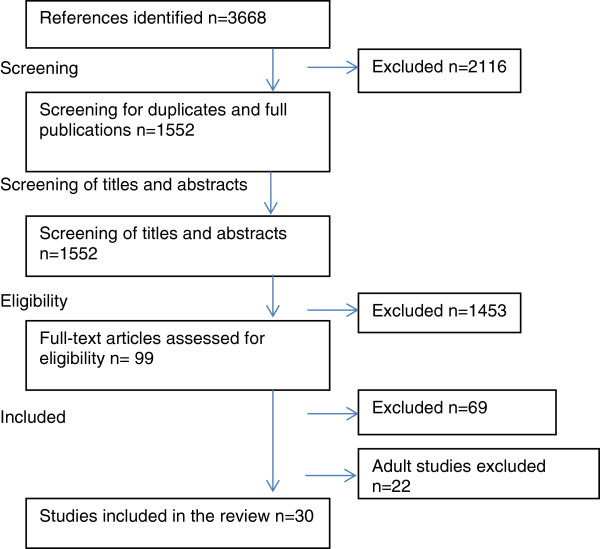
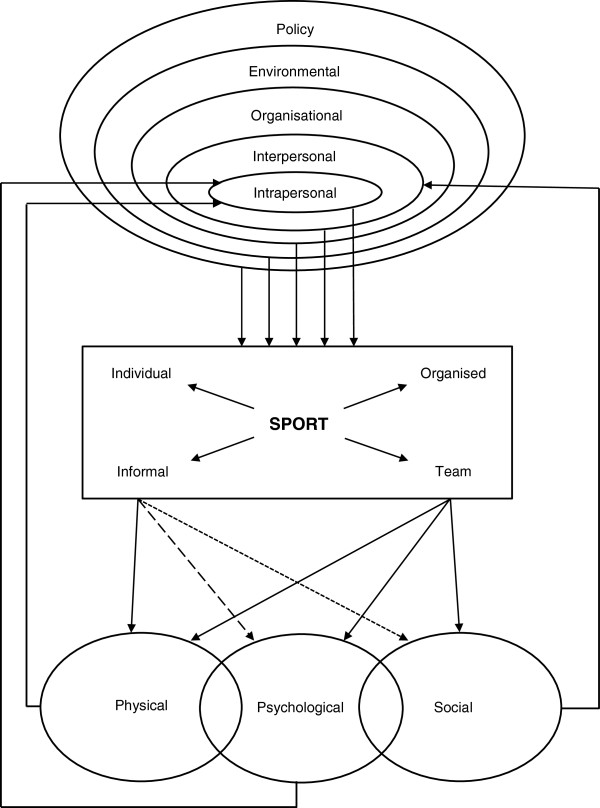
BACKGROUND: There are specific guidelines regarding the level of physical activity (PA) required to provide health benefits. However, the research underpinning these PA guidelines does not address the element of social health. Furthermore, there is insufficient evidence about the levels or types of PA associated specifically with psychological health. This paper first presents the results of a systematic review of the psychological and social health benefits of participation in sport by children and adolescents. Secondly, the information arising from the systematic review has been used to develop a conceptual model. METHODS: A systematic review of 14 electronic databases was conducted in June 2012, and studies published since 1990 were considered for inclusion. Studies that addressed mental and/or social health benefits from participation in sport were included. RESULTS: A total of 3668 publications were initially identified, of which 30 met the selection criteria. There were many different psychological and social health benefits reported, with the most commonly being improved self-esteem, social interaction followed by fewer depressive symptoms. Sport may be associated with improved psychosocial health above and beyond improvements attributable to participation in PA. Specifically, team sport seems to be associated with improved health outcomes compared to individual activities, due to the social nature of the participation. A conceptual model, Health through Sport, is proposed. The model depicts the relationship between psychological, psychosocial and social health domains, and their positive associations with sport participation, as reported in the literature. However, it is acknowledged that the capacity to determine the existence and direction of causal links between participation and health is limited by the fact that the majority of studies identified (n=21) were cross-sectional. CONCLUSION: It is recommended that community sport participation is advocated as a form of leisure time PA for children and adolescents, in an effort to not only improve physical health in relation to such matters as the obesity crisis, but also to enhance psychological and social health outcomes. It is also recommended that the causal link between participation in sport and psychosocial health be further investigated and the conceptual model of Health through Sport tested.
Overview
The claims and statistics of this paper haven’t been checked yet.
Free: it reads the open-access text and checks the first 5 claims that cite a source we can check. Create a free account to check every claim.
Integrity signals
Registry
Cites
Statistics
Figures
Verification
Claims the paper makes
The claims and statistics of this paper haven’t been checked yet.
Free: it reads the open-access text and checks the first 5 claims that cite a source we can check. Create a free account to check every claim.
Claims other papers make about this one
Each is checked against this paper’s own text: does it say what the citing paper says it does?
The source backs part of the claim, not all of it — or backs it for a different population, condition or comparison.
In the citing paper
“All six systematic reviews reported on organized sport activities and two also reported on organized non-sport activities (Cairns et al., 2014, Eime et al., 2013).”
From Impact of organized activities on mental health in children and adolescents: An umbrella review (2022) · cites this paper as Eime et al., 2013
Experimental — accuracy not yet measuredThe source backs part of the claim, not all of it — or backs it for a different population, condition or comparison.
In the citing paper
“Components of exercise interventions may represent important moderators of treatment effects.”
From Exercise for the treatment of anxiety in children and adolescents (2022) · cites this paper as Eime 2013
Experimental — accuracy not yet measuredThe source backs part of the claim, not all of it — or backs it for a different population, condition or comparison.
In the citing paper
“Indeed, intervention setting is another potential moderating factor, with group-based activities reported to confer a range of social benefits compared to individual activities (Eime 2013).”
From Exercise for the treatment of anxiety in children and adolescents (2022) · cites this paper as Eime 2013
Experimental — accuracy not yet measuredThe source backs part of the claim, not all of it — or backs it for a different population, condition or comparison.
In the citing paper
“We found evidence that children and adolescents who participated more frequently, who participated with higher intensity or who participated with longer duration (e.g. started at an early age or participated for a long period), had better mental health compared to their peers (Eime et al., 2013, Evans et al., 2017, Panza et al., 2020).”
From Impact of organized activities on mental health in children and adolescents: An umbrella review (2022) · cites this paper as Eime et al., 2013
Experimental — accuracy not yet measuredThe cited source says what the claim attributes to it.
In the citing paper
“Similarly, sports participation can be instrumental in the physical, social and emotional development of children and adolescents [30].”
2 more claims about this paper
Create a free account to see every claim other papers make about this one.
Self-check
Percentages, sums and reported differences re-computed from the paper’s own numbers.
The self-check needs the paper’s full text.
Citations
Cites
Kytle, J., & Bandura, A. (1978) · Contemporary Sociology · doi:10.2307/2065952 · Cited by 25,422
von Elm, E., Altman, D. G., Egger, M., Pocock, S. J., Gøtzsche, P. C., Vandenbroucke, J. P., & Initiative, F. T. S. (2007) · PLoS Medicine · doi:10.1371/journal.pmed.0040296 · Cited by 23,020
CONSORT 2010 Statement: updated guidelines for reporting parallel group randomised trials
the CONSORT Group, Schulz, K. F., Altman, D. G., & Moher, D. (2010) · BMC Medicine · doi:10.1186/1741-7015-8-18 · Cited by 13,371
Health Behavior and Health Education: Theory, Research, and Practice
(1992) · Annals of Internal Medicine · doi:10.7326/0003-4819-116-4-350_1 · Cited by 13,207
(1985) · Europe PMC (PubMed Central) · Cited by 9,143
Moher, D., Hopewell, S., Schulz, K. F., Montori, V., Gotzsche, P. C., Devereaux, P. J., Elbourne, D., Egger, M., & Altman, D. G. (2010) · BMJ · doi:10.1136/bmj.c869 · Cited by 8,883
An ecological perspective on health promotion programs
McLeroy, K. R., Bibeau, D., Steckler, A., & Glanz, K. (1988) · Health Education Quarterly · doi:10.1177/109019818801500401 · Cited by 8,502 · cited 2×
“The ‘determinants’ element is based on the well-established social ecological model [19,65] and is represented as concentric rings spreading out from the individual’s intrapersonal characteristics to widening spheres of influence.”
BackgroundDowns, S. H., & Black, N. (1998) · Journal of Epidemiology and Community Health · doi:10.1136/jech.52.6.377 · Cited by 8,252 · cited 1×
“Study quality was objectively appraised using the Downs and Black checklist [32].”
MethodJanssen, I., & LeBlanc, A. G. (2010) · International Journal of Behavioral Nutrition and Physical Activity · doi:10.1186/1479-5868-7-40 · Cited by 4,829
Measuring Health: A Guide to Rating Scales and Questionnaires
McDowell, I., & Newell, C. (1987) · Cited by 4,207
Cited by
Items 501–600 of 1,005
Athletic Mobile Manipulator System for Robotic Wheelchair Tennis
Zaidi, Z., Martin, D., Belles, N., Zakharov, V., Krishna, A., Lee, K. M., Wagstaff, P., Naik, S., Sklar, M., Choi, S., et al. (2023) · IEEE Robotics and Automation Letters · doi:10.1109/lra.2023.3249401 · Cited by 36
“The physical and mental training from sports is widely applicable to multiple aspects of life [4], [5].”
BackgroundRigoni, P. A. G., Júnior, J. R. A. D. N., Belém, I. C., Vieira, L. F., & MacDonald, D. J. (2018) · Measurement in Physical Education and Exercise Science · doi:10.1080/1091367x.2018.1446961 · Cited by 26
“Despite this, understanding the mechanisms that underlie the development of youth sport participants is difficult since there are multiple scales aimed at measuring the construct of PYD (Eime et al., 2013; MacDonald & McIsaac, 2016).”
BackgroundA Longitudinal Study of the Effect of Organized Physical Activity on Free Active Play
Cairney, J., Bulten, R., King‐Dowling, S., & Arbour‐Nicitopoulos, K. P. (2018) · Medicine & Science in Sports & Exercise · doi:10.1249/mss.0000000000001633 · Cited by 24
Abrasion injuries on artificial turf: A systematic review
Twomey, D., Petrass, L. A., Fleming, P. R., & Lenehan, K. A. (2018) · Journal of science and medicine in sport · doi:10.1016/j.jsams.2018.11.005 · Cited by 24
Robertson, M. A., Hague, C., Evans, M. B., & Martin, L. J. (2019) · Psychology of sport and exercise · doi:10.1016/j.psychsport.2019.101559 · Cited by 25
Physical Activity, Sedentary Behaviour and Mental Health in Young People: A Review of Reviews
Rodríguez‐Ayllón, M., Estévez‐López, F., Cadenas‐Sánchez, C., Gracia‐Marco, L., Lubans, D. R., Ortega, F. B., & Esteban‐Cornejo, I. (2019) · Springer eBooks · doi:10.1007/978-3-030-25816-0_3 · Cited by 25
Reigal, R. E., Hernández-Mendo, A., de Mier, R. J.-R., & Morales‐Sánchez, V. (2020) · Frontiers in Psychology · doi:10.3389/fpsyg.2020.01777 · Cited by 34
Toyama, M., Godoy-Casasbuenas, N., Olivar, N., Brusco, L. I., Carbonetti, F. L., Diez‐Canseco, F., Gómez–Restrepo, C., Heritage, P., Hidalgo-Padilla, L., Uribe-Restrepo, J. M., et al. (2022) · BMJ Open · doi:10.1136/bmjopen-2021-060340 · Cited by 23
Sports participation & childhood neurocognitive development
Tan, F.-M., Yu, J., & Goodwill, A. M. (2024) · Developmental Cognitive Neuroscience · doi:10.1016/j.dcn.2024.101492 · Cited by 29
“It is commonly theorised that the differences in neurocognitive development resulting from team or individual sports can be attributed to differences in their levels of social collaboration (Eime et al., 2013).”
Adverse childhood experiences (ACEs) & youth sports participation: Does a gradient exist?
Noel-London, K., Ortiz, K. S., & BeLue, R. (2021) · Child Abuse & Neglect · doi:10.1016/j.chiabu.2020.104924 · Cited by 29
Mental Health Outcomes in Barcelona: The Interplay between Gentrification and Greenspace
Zayas-Costa, M., Cole, H. V. S., Anguelovski, I., Connolly, J. J., Bartoll, X., & Mas, M. T. (2021) · International Journal of Environmental Research and Public Health · doi:10.3390/ijerph18179314 · Cited by 25
“Additionally, quality characteristics of greenspaces, such as the presence of sports amenities in recreation areas, may interfere in the physical activity or the social cohesion pathways in ameliorating mental health [54].”
BackgroundEnglish, M., Wallace, L., Evans, J. R., Diamond, S., & Caperchione, C. M. (2021) · Preventive Medicine Reports · doi:10.1016/j.pmedr.2021.101676 · Cited by 27
Procrastination and physical activity: The moderated mediating effect of grit
Tao, Y., Yu, H., Liu, M., Wang, P., Zhang, J., Yang, Y., & Xin, T. (2022) · Journal of American College Health · doi:10.1080/07448481.2022.2068962 · Cited by 27
LaRocca, D., James, K. A., Rosenberg, S., Ma, M., & Brooks‐Russell, A. (2022) · Psychology in the Schools · doi:10.1002/pits.22792 · Cited by 27
A Systems Theory of Mental Health in Recreational Sport
Vella, S. A., Schweickle, M. J., Sutcliffe, J., Liddelow, C., & Swann, C. (2022) · International Journal of Environmental Research and Public Health · doi:10.3390/ijerph192114244 · Cited by 36
“There is also evidence that sport participation is associated with psychosocial benefits such a better mental health and wellbeing, better social interactions, and increased self-esteem [5,6].”
BackgroundBrown, D. M. Y., Cairney, J., Azimi, S., Vandenborn, E., Bruner, M. W., Tamminen, K. A., & KWAN, M. Y. W. (2023) · PLoS ONE · doi:10.1371/journal.pone.0287387 · Cited by 24
“Concerns have been raised about the methodological limitations of how sport participation is currently measured, with researchers also expressing the resulting implications for understanding positive sport experiences and outcomes among youth [2, 5, 7, 8, 12].”
BackgroundSandford, R. A., Quarmby, T., & Hooper, O. (2023) · British Educational Research Journal · doi:10.1002/berj.3907 · Cited by 22
Xiang, C., Zhao, J., Kamalden, T. F. T., Dong, W., Luo, H., & Ismail, N. (2023) · Humanities and Social Sciences Communications · doi:10.1057/s41599-023-02466-4 · Cited by 26
Sañudo, B., Sánchez-Oliver, A. J., Gavira, J. F., Gaser, D., Stöcker, N., Peralta, M., Marques, A., Papakonstantinou, S., Nicolini, C., & Sitzberger, C. (2024) · Sports Medicine - Open · doi:10.1186/s40798-024-00722-8 · Cited by 34
“Sport has been shown to improve young people’s physical and psychological function [20].”
BackgroundSocial Inclusion Through Para sport
Bantjes, J. R., & Swartz, L. M. (2018) · Physical Medicine and Rehabilitation Clinics of North America · doi:10.1016/j.pmr.2018.01.006 · Cited by 19
Physical Fitness Evaluation of School Children in Southern Italy: A Cross Sectional Evaluation
Thomas, E., & Palma, A. (2018) · Journal of Functional Morphology and Kinesiology · doi:10.3390/jfmk3010014 · Cited by 25
Battaglia, A., Kerr, G. A., & Stirling, A. E. (2018) · International Journal of Sport and Exercise Psychology · doi:10.1080/1612197x.2018.1536158 · Cited by 25
Ecological Approaches to Teen Pregnancy Prevention: An Examination of Evidence-Based Interventions
Garney, W. R., Wilson, K. L., Nelon, J. L., Muraleetharan, D., McLeroy, K. R., & Baletka, D. M. (2018) · Health Promotion Practice · doi:10.1177/1524839918815463 · Cited by 29
Sport Medicine in the Prevention and Management of Cancer
Luo, H., Galvao, D. A., Newton, R. U., Fairman, C. M., & Taaffe, D. R. (2019) · Integrative Cancer Therapies · doi:10.1177/1534735419894063 · Cited by 24
Reece, L. J., Foley, B. C., Bellew, W., Owen, K., Cushway, D., Srinivasan, N., Hamdorf, P. A., & Bauman, A. E. (2020) · Public Health Research & Practice · doi:10.17061/phrp30122006 · Cited by 20
‘Even if you don’t care…you do care after all’: ‘Othering’ and physical education in Norway
Røset, L., Green, K., & Thurston, M. N. (2020) · European Physical Education Review · doi:10.1177/1356336x19862303 · Cited by 30
“Recent research suggests that social processes could be significant in explaining how PE might influence mental health (Eime et al., 2013).”
BackgroundHeradstveit, O., Hysing, M., Nilsen, S. A., & Bøe, T. (2020) · Eating Behaviors · doi:10.1016/j.eatbeh.2020.101434 · Cited by 28
Martínez-Moreno, A., Pérez, I., Cavas-García, F., & Noguera, F. C. (2020) · International Journal of Environmental Research and Public Health · doi:10.3390/ijerph17218284 · Cited by 23
“[2] directly linked sport engagement with physical health to an improvement in the psychological and social health of the individual.”
BackgroundMatta, P., Baul, T. D., Loubeau, J. K., Sikov, J., Plasencia, N., Sun, Y., & Spencer, A. E. (2020) · Journal of Affective Disorders · doi:10.1016/j.jad.2020.11.076 · Cited by 23
Schorno, N., Sudeck, G., Gut, V., Conzelmann, A., & Schmid, J. (2021) · German Journal of Exercise and Sport Research · doi:10.1007/s12662-020-00698-z · Cited by 22
Munoz‐Plaza, C. E., Pounds, D., Davis, A., Park, S., Sallis, R. E., Romero, M. G., & Sharp, A. L. (2021) · Sports Medicine - Open · doi:10.1186/s40798-021-00328-4 · Cited by 28
“Introduction Youth sports participation has positive benefits for young athletes, including increased physical, psychological, and social health [1, 2].”
BackgroundMurphy, J., Patte, K. A., Sullivan, P., & Leatherdale, S. T. (2021) · Journal of Clinical Sport Psychology · doi:10.1123/jcsp.2020-0048 · Cited by 23
“Both frequency (Eime et al., 2013; Panza et al., 2020) and involvement in other types of activities (Oberle et al.”
BackgroundChen, S., Li, X., Yan, J. H., & Ren, Z. (2021) · Frontiers in Public Health · doi:10.3389/fpubh.2021.730497 · Cited by 33
Götte, M., Söntgerath, R., Gauß, G., Wiskemann, J., Buždon, M., & Kesting, S. (2022) · Pediatric Exercise Science · doi:10.1123/pes.2021-0218 · Cited by 23
“Moreover, regular physical activity throughout childhood and adolescence is beneficial for the development of muscular and cardiorespiratory fitness, bone health, cognitive function, cardio metabolic, and mental health (11,36).”
Epidemiology of Knee Sprains in Youth, High School, and Collegiate American Football Players
Clifton, D. R., Oñate, J. A., Schussler, E., Djoko, A., Dompier, T. P., & Kerr, Z. Y. (2017) · Journal of Athletic Training · doi:10.4085/1062-6050-52.3.09 · Cited by 24
“Despite the potential risks, participation in sports is important for maintaining regular physical activity and its associated physiological(12) and psychological benefits.(13,14) Effectively reducing the risk of knee injury in football may require specific interventions at the competition level, but little is known a…”
BackgroundEffects of groupness and cohesion on intention to return in sport.
Spink, K. S., Ulvick, J. D., McLaren, C. D., Crozier, A., & Fesser, K. B. (2015) · Sport Exercise and Performance Psychology · doi:10.1037/spy0000043 · Cited by 19
Paniccia, M., Verweel, L., Thomas, S. G., Taha, T., Keightley, M., Wilson, K. E., & Reed, N. P. (2018) · Frontiers in Neurology · doi:10.3389/fneur.2017.00753 · Cited by 27
“For example, youth athletes, compared to non-athletes have been shown to have better psychosocial functioning, emotional well-being, self-efficacy, and psychological resilience (61).”
BackgroundPatel, T., & Jayanthi, N. A. (2018) · Journal of Clinical Sport Psychology · doi:10.1123/jcsp.2017-0031 · Cited by 21
Predictors of Success of Workplace Physical Activity Interventions: A Systematic Review
Muir, S. D., Silva, S. S. M., Woldegiorgis, M. A., Rider, H., Meyer, D., & Jayawardana, M. (2019) · Journal of Physical Activity and Health · doi:10.1123/jpah.2018-0077 · Cited by 24
Bagnato, C. B., Bianco, A., Bonfiglio, C., Franco, I., Verrelli, N., Carella, N., Shahini, E., Zappimbulso, M., Giannuzzi, V., Pesole, P. L., et al. (2024) · Nutrients · doi:10.3390/nu16234225 · Cited by 28
Dance and stress regulation: A multidisciplinary narrative review
Klaperski, S., Skinner, J., Opacka‐Juffry, J., & Pfeffer, K. (2025) · Psychology of sport and exercise · doi:10.1016/j.psychsport.2025.102823 · Cited by 30
Children's Experience of Sport: What Do We Really Know?
McPherson, L., Atkins, P., Cameron, N., Long, M., Nicholson, M., & Morris, M. E. (2015) · Australian Social Work · doi:10.1080/0312407x.2015.1055508 · Cited by 18
“Email: l.mcpherson@latrobe.edu.au Accepted 30 April 2015 © 2015 Australian Association of Social Workers Where children maintain an active involvement in sport into adulthood they can build a sense of connection to their communities (Eime et al., 2013).”
BackgroundAn Examination of Relative Age and Athlete Dropout in Female Developmental Soccer
Smith, K. L., & Weir, P. L. (2022) · Sports · doi:10.3390/sports10050079 · Cited by 26
Macniven, R., Foley, B. C., Owen, K., Evans, J. R., Bauman, A. E., & Reece, L. J. (2020) · Journal of science and medicine in sport · doi:10.1016/j.jsams.2020.06.016 · Cited by 23
Magno, F., ten Caten, C. S., Filho, A. R. R., Callegaro, A. M., & Ferreira, A. D. C. D. (2020) · International Journal of Environmental Research and Public Health · doi:10.3390/ijerph17176011 · Cited by 24
“Moreover, sports and physical activity not only contribute to physical fitness, but also have an impact on mental, emotional, and social well-being of adults, adolescents, and children [6,7].”
BackgroundMapping the role of grassroots sport in public diplomacy
Garamvölgyi, B., Bardocz-Bencsik, M., & Dóczi, T. (2020) · Sport in Society · doi:10.1080/17430437.2020.1807955 · Cited by 33
Madrona, P. G., Martínez, S. J. R., & Faraco, C. C. R. (2021) · Frontiers in Pediatrics · doi:10.3389/fped.2021.684418 · Cited by 29
Iverson, G. L., Merz, Z. C., & Terry, D. P. (2021) · Clinical Journal of Sport Medicine · doi:10.1097/jsm.0000000000000890 · Cited by 21
Moore, H. S., Walton, S. R., Eckenrod, M. R., & Kossman, M. K. (2022) · Journal of Sport Rehabilitation · doi:10.1123/jsr.2021-0434 · Cited by 18
The National Football League Concussion Protocol: A Review
Jacobi, J., Wasserman, E. B., Mack, C. D., Heinzelmann, M. M., Cárdenas, J. F., Rehberg, R. S., Solomon, G. S., Sills, A. K., & Vargas, B. B. (2023) · HSS Journal® The Musculoskeletal Journal of Hospital for Special Surgery · doi:10.1177/15563316231177207 · Cited by 25
“Participation in youth, middle school, and high school sports has been shown to have significant health, psychological, and social benefits [7,32], all increasingly important as young people face exceptional mental and physical health challenges [14,15].”
BackgroundOrtega‐Gómez, S., Adelantado‐Renau, M., Carbonell‐Baeza, A., Moliner‐Urdiales, D., & Jiménez‐Pavón, D. (2023) · Scandinavian Journal of Medicine and Science in Sports · doi:10.1111/sms.14431 · Cited by 29
Promoting mental health among young males in sporting contexts: A systematic review
Petersen, J. M., Drummond, M., Rasheed, K., Elliott, S., Drummond, C., Smith, J. A., Wadham, B., & Prichard, I. J. (2023) · Psychology of sport and exercise · doi:10.1016/j.psychsport.2023.102551 · Cited by 21
Motor skills and capacities in developmental dyslexia: A systematic review and meta-analysis
Decarli, G., Franchin, L., & Vitali, F. (2024) · Acta Psychologica · doi:10.1016/j.actpsy.2024.104269 · Cited by 24
Filbay, S. R., Bishop, F. L., Peirce, N. S., Jones, M. E., & Arden, N. (2017) · BMJ Open · doi:10.1136/bmjopen-2017-017785 · Cited by 20
Tahtinen, R. E., & Kristjánsdóttir, H. (2018) · Journal of Clinical Sport Psychology · doi:10.1123/jcsp.2017-0028 · Cited by 35
Kim, Y., & Lochbaum, M. R. (2018) · International Journal of Environmental Research and Public Health · doi:10.3390/ijerph15102268 · Cited by 23
“In particular, there is an extensive body of literature demonstrating positive health benefits of PA in children [1,2] such as a reduced risk for being overweight and obese [3], as well as better metabolic [4], bone [5], and mental health [6].”
BackgroundSchneuer, F. J., Bell, J. C., Adams, S. E., Brown, J. K., Finch, C. F., & Nassar, N. (2018) · Injury Epidemiology · doi:10.1186/s40621-018-0175-6 · Cited by 20
“Sports participation has multiple benefits on children’s psychological, physical and social capabilities (Eime et al., 2013); however, with recent increases in sports participation (Eime et al., 2016), injuries have become an important pediatric public health issue.”
BackgroundYabe, Y., Hagiwara, Y., Sekiguchi, T., Momma, H., Tsuchiya, M., Kanazawa, K., Koide, M., Itaya, N., Yoshida, S., Sogi, Y., et al. (2019) · The Tohoku Journal of Experimental Medicine · doi:10.1620/tjem.249.249 · Cited by 23
“Sports activities provide numerous benefits to children and adolescents, such as good physical and mental health, psychological and social development, and acquisition of lifelong physical activity habits (Telama et al. 1997; Janssen and Leblanc 2010; Eime et al. 2013).”
BackgroundLitchfield, C., & Elliott, S. (2020) · Qualitative Research in Sport Exercise and Health · doi:10.1080/2159676x.2020.1778063 · Cited by 21
“2016) given the health-related benefits of ongoing participation which include a reduced risk of cardiovascular disease and diabetes, reduced anxiety and depressive episodes, and increased wellbeing (Eime et al. 2013; Khan et al. 2012).”
BackgroundMartin, N., Camiré, M., & Kramers, S. (2021) · Journal of Applied Sport Psychology · doi:10.1080/10413200.2021.1917016 · Cited by 28
“Sport participation has been associated with positive outcomes such as increased academic achievement, increased selfesteem, and, of particular interest in the present study, the development and transfer of life skills (Eime et al., 2013; Jones et al., 2017).”
BackgroundPhysical activity participation, flourishing and academic engagement in adolescents with obesity
McCoy, S. M., & Rupp, K. (2021) · Pediatric Obesity · doi:10.1111/ijpo.12796 · Cited by 25
“A systematic review of the psychosocial benefits of sport participation showed that participation in sport may account for greater psychosocial health than what can be explained by physical activity alone.(15) Additionally, it has been shown that participating in any sport (individual or team), independent of frequenc…”
BackgroundBarrio, M. R., Ley, C., Schomöller, A., & Dumon, D. (2021) · International Journal of Environmental Research and Public Health · doi:10.3390/ijerph18126543 · Cited by 31
Quality of Participation Experiences in Special Olympics Sports Programs
Arbour‐Nicitopoulos, K. P., Bruno, N., Orr, K., O’Rourke, R. H., Wright, F. V., Renwick, R. M., Bobbie, K., & Noronha, J. (2021) · Adapted Physical Activity Quarterly · doi:10.1123/apaq.2021-0033 · Cited by 23
Motor Performance After Treatment for Pediatric Bone Tumors
Kesting, S., Götte, M., Seidel, C. C., Rosenbaum, D., & Boos, J. (2015) · Journal of Pediatric Hematology/Oncology · doi:10.1097/mph.0000000000000396 · Cited by 24
Unhealthy sponsorship of sport
Chambers, T. J., & Sassi, F. (2019) · BMJ · doi:10.1136/bmj.l6718 · Cited by 18
The young Australian loneliness survey Understanding loneliness in adolescence and young adulthood
VicHealth (2019) · doi:10.37309/2019.mw811 · Cited by 20
The Inclusion of LGBTQI+ students across education systems: An overview
McBrien, J. L., Rutigliano, A., & Sticca, A. (2022) · OECD education working papers · doi:10.1787/91775206-en · Cited by 46
Sheehan, N., Summersby, R., Bleakley, C., Caulfield, B. M., Matthews, M., Klempel, N., & Holden, S. (2024) · Physical Therapy in Sport · doi:10.1016/j.ptsp.2024.05.003 · Cited by 33
School-Based Team Sports as Catalysts for Holistic Student Wellness: A Narrative Review
Kang, X., Meng, Q., & Su, C.-H. (2024) · Behavioral Sciences · doi:10.3390/bs14070528 · Cited by 53
“The findings emphasized that school-based team sports and athlete identity are linked to lower depression scores, highlighting the role of social cohesion in emotional wellness [26,28,29].”
BackgroundMiserachs, M., Parmar, A., Bakuła, A., Hierro, L., D’Antiga, L., Goldschmidt, I., Debray, D., McLin, V. A., Casotti, V., Pawłowska, J., et al. (2018) · Clinics and Research in Hepatology and Gastroenterology · doi:10.1016/j.clinre.2018.10.018 · Cited by 17
Züll, A., Tillmann, V., Froböse, I., & Anneken, V. (2019) · Cogent Social Sciences · doi:10.1080/23311886.2019.1648176 · Cited by 17
Appelqvist‐Schmidlechner, K., Haavanlammi, M., & Kekkonen, M. (2021) · Sport in Society · doi:10.1080/17430437.2021.1996348 · Cited by 30
Turgeon, S., Martin, L., Rathwell, S., & Camiré, M. (2022) · International Journal of Sport and Exercise Psychology · doi:10.1080/1612197x.2022.2161103 · Cited by 24
“Research supports the protective e ff ects of high school sport participation on the mental health of adolescents (e.g., Ashdown-Franks et al., 2017; Eime et al., 2013; Jewett et al., 2014).”
BackgroundWoolard, A. J., Wickens, N., McGivern, L., Belinelo, P. D. G., Martin, L. J., Wood, F. M., van Rensburg, E. J., & Milroy, H. (2023) · BMC Pediatrics · doi:10.1186/s12887-023-04105-y · Cited by 20
“Both sports and schooling can be sources of social support for children and young people, and further, can improve psychological wellbeing [25].”
BackgroundA prospective analysis of physical activity and mental health in children: the GECKO Drenthe cohort
Yang, L., Corpeleijn, E., & Hartman, E. (2023) · International Journal of Behavioral Nutrition and Physical Activity · doi:10.1186/s12966-023-01506-1 · Cited by 25
“Participation in sports could offer opportunities for developing social skills and improving social competence, which would in turn help to reduce the likelihood of the development of peer problems [23].”
BackgroundThe Effect of Motivation on Physical Activity among Middle and High School Students
Antunes, H. R. L., Rodrigues, A. J. A., Sabino, B., Alves, R. R., Correia, A. L., & Lopes, H. (2024) · Sports · doi:10.3390/sports12060154 · Cited by 41
“These results are corroborated by some studies which have shown that participation in school sports or other extracurricular activities can promote a greater sense of belonging [84], intrinsic motivation [72,85–87], and self-esteem among students.”
ResultChildren’s Leisure Activities and Subjective Well-Being: A Comparative Analysis of 16 Countries
Rees, G. (2018) · International handbooks of quality-of-life · doi:10.1007/978-3-319-75529-8_3 · Cited by 24
Lim, W. M. (2019) · Journal of Leisure Research · doi:10.1080/00222216.2019.1590139 · Cited by 17
Rodríguez‐Negro, J., & Yanci, J. (2019) · Educational Psychology · doi:10.1080/01443410.2019.1613516 · Cited by 23
Dorsch, T. E., Thrower, S. N., & Lowe, K. (2020) · Elsevier eBooks · doi:10.1016/b978-0-12-816336-8.00014-7 · Cited by 26
Boardley, I. D., Matošić, D., & Bruner, M. W. (2020) · Journal of Sport and Exercise Psychology · doi:10.1123/jsep.2019-0127 · Cited by 21
O’Brien, K. M., Agostino, J., Ciszek, K., & Douglas, K. A. (2020) · BMJ Open · doi:10.1136/bmjopen-2019-034847 · Cited by 19
Do Sports Clubs Contribute to the Accumulation of Regional Social Capital?
Biernat, E., Nałęcz, H., Skrok, Ł., & Majcherek, D. (2020) · International Journal of Environmental Research and Public Health · doi:10.3390/ijerph17145257 · Cited by 24
“[24] say, provoke attitudes and behaviours that will favour SC.”
BackgroundFoley, B. C., Owen, K., Bellew, W., Wolfenden, L., Reilly, K., Bauman, A. E., & Reece, L. J. (2020) · International Journal of Environmental Research and Public Health · doi:10.3390/ijerph17165691 · Cited by 20
“Structured physical activities involve moderate to vigorous intensity activity and develop a range of physical, psychological, social, and cognitive skills required to lead a healthy life [1,2].”
BackgroundGroffik, D., Frömel, K., Ziemba, M., & Mitáš, J. (2021) · International Journal of Environmental Research and Public Health · doi:10.3390/ijerph18041408 · Cited by 20
“For example, participation of children and adolescents in OPA, especially in team sports, brings psychological and social benefits [52,53].”
BackgroundWeissman, S. E., Perinpanayagam, R., Wright, F. V., & Arbour‐Nicitopoulos, K. P. (2021) · International Journal of Sports Science & Coaching · doi:10.1177/17479541211016580 · Cited by 22
Health-Related Quality of Life and Frequency of Physical Activity in Spanish Students Aged 8–14
Calzada-Rodríguez, J. I., Denche-Zamorano, Á. M., Pérez‐Gómez, J., Mendoza-Muñoz, M., Carlos‐Vivas, J., Barrios-Fernández, S., & Adsuar, J. C. (2021) · International Journal of Environmental Research and Public Health · doi:10.3390/ijerph18179418 · Cited by 25
“Hence, sports include specific characteristics of cooperation and socialization, affecting youngsters’ self–esteem and social interaction skills [71].”
BackgroundDavila-Torres, D. M., Solís, G. E. V., Rodríguez-Vásquez, M., Calizaya-Milla, Y. E., & Saintila, J. (2021) · SAGE Open Medicine · doi:10.1177/20503121211043718 · Cited by 20
Iverson, G. L., Büttner, F., & Caccese, J. B. (2021) · Frontiers in Neurology · doi:10.3389/fneur.2021.727089 · Cited by 22
Patafio, B., Skvarc, D., Miller, P. G., & Hyder, S. (2021) · Journal of Youth and Adolescence · doi:10.1007/s10964-021-01513-0 · Cited by 20
Neto, W. C. D. S., Lópes, A. D., & Ribeiro, A. P. (2021) · Journal of Sport Rehabilitation · doi:10.1123/jsr.2021-0091 · Cited by 20
Vassilopoulos, S. P., Brouzos, A., Moberly, N. J., Tsorbatzoudis, H., & Τζιούμα, Ό. (2015) · British Journal of Guidance and Counselling · doi:10.1080/03069885.2015.1057474 · Cited by 21
Street, E. J., & Jacobsen, K. H. (2016) · Journal of Community Health · doi:10.1007/s10900-016-0255-x · Cited by 18
Brunet, J., Gaudet, J., Wing, E. K., & Bélanger, M. F. (2017) · Journal of sport and health science/Journal of Sport and Health Science · doi:10.1016/j.jshs.2017.04.012 · Cited by 21
“, foster supportive relationships, reinforce a sense of belonging) in youth.(3,4) In light of this evidence, guidelines suggesting youth engage in at least 60 min of moderateto-vigorous intensity PA per day have been issued.”
BackgroundRegular exercise improves the well‐being of parents of children with cancer
Halliday, G. C., Miles, G. C. P., Marsh, J., Kotecha, R. S., & Alessandri, A. J. (2017) · Pediatric Blood & Cancer · doi:10.1002/pbc.26668 · Cited by 23
Capitalization of Health Promotion Initiatives within French Sports Clubs
Hoye, A. V., Johnson, S., Lemonnier, F., Rostan, F., Crochet, L., Tézier, B., & Vuillemin, A. (2021) · International Journal of Environmental Research and Public Health · doi:10.3390/ijerph18030888 · Cited by 24
“Beyond the benefits of sport practice [1], research has shown that health promotion (HP) activities implemented by sports coaches decreased drop-out intentions, increased enjoyment in sport, as well as self-reported quality of life, among youth and adults [2,3].”
BackgroundElmose-Østerlund, K., Dalgas, B. W., Bredahl, T. V. G., Lenze, L., Høyer-Kruse, J., & Ibsen, B. (2023) · BMC Public Health · doi:10.1186/s12889-023-17304-0 · Cited by 30
“Regular physical activity (PA) participation has been found to have the potential to promote good physical, mental and social health [2–5] and to contribute to general well-being [5, 6].”
BackgroundBerg, A. E., Meyers, L., Dent, K. M., Rothwell, E., & Everitt, M. D. (2018) · Progress in Pediatric Cardiology · doi:10.1016/j.ppedcard.2018.05.001 · Cited by 17
Do, J., Blais, A. Z., Feldman, B. M., Brandão, L. R., Lougheed, J., Pohl, D., Klaassen, R. J., Johnston, D. L., Laat, D. D., Roth, J., et al. (2021) · Applied Physiology Nutrition and Metabolism · doi:10.1139/apnm-2020-0957 · Cited by 16
Aizawa, K., Orr, M., Inoue, Y., Nagazumi, J., & Yoshida, M. (2021) · European Sport Management Quarterly · doi:10.1080/16184742.2021.1910326 · Cited by 26
Metadata
- Authors
- Eime, R. M., Young, J. A., Harvey, J. T., Charity, M. J., & Payne, W. R.
- Affiliations
- Victoria University (AU)
- Federation University (AU)
- Corresponding author
- Eime, Rochelle M
- Venue
- International Journal of Behavioral Nutrition and Physical Activity
- Published
- 2013
- Volume
- 10
- Issue
- 1
- Pages
- 98
- ISSN
- 1479-5868 (ISSN-L)
- PMC
- PMC3751802
- OpenAlex
- W2150292700
- Semantic Scholar
- 7f8fcfa7ffe59c88cef9c12ca5965f488c4b7011
- Cited by
- 2,366
- References
- 69
- Citations by year
- 2026: 266 · 2025: 309 · 2024: 262 · 2023: 267 · 2022: 238 · 2021: 235 · 2020: 203 · 2019: 153 · 2018: 142 · 2017: 103 · 2016: 86 · 2015: 59 · 2014: 38 · 2013: 3
- FWCI
- 6.70
- Type
- journal article
- Language
- en
- Open access
- gold
- doi.org
- Licence
- cc-by
- Locations
- International Journal of Behavioral Nutrition and Physical Activity (publishedVersion, cc-by)
- Europe PMC (PubMed Central) (publishedVersion, cc-by)
- PubMed Central (publishedVersion, cc-by)
- PubMed (publishedVersion)
- Victoria University Research Repository (Victoria University) (submittedVersion, cc-by)
- FedUni ResearchOnline (Federation University Australia) (submittedVersion)
- Figshare (submittedVersion, cc-by)
- Topics
- Health Sciences › Medicine › Public Health, Environmental and Occupational Health › Physical Activity and Health
- Social Sciences › Psychology › Developmental and Educational Psychology › Youth Development and Social Support
- Social Sciences › Life-span and Life-course Studies › Recreational Sport and Physical Activity
- Keywords
- sports participation, children, adolescents, mental health, social health, self-esteem, depressive symptoms, social interaction, team sports, individual sports, psychosocial health, conceptual model, physical activity guidelines, community sports, leisure-time physical activity
- MeSH terms
- Adolescent, Child, Depression, Health, Humans, Interpersonal Relations, Personal Satisfaction, Self Concept, Sports, Health Behavior, Exercise
About these checks
Registry, retraction, Cites and statistics results are computed, not judged, with one exception: a printed reference that no index lists is read once by a model before it counts as a citation error. Claims are extracted by a model and kept only when their quote appears verbatim in the text; each cited source is then checked, with a model’s help, for whether it says what the claim relies on. Those verdicts can be wrong — read the claim’s quote and the cited source before relying on one.
Statistics and arithmetic are recomputed, not judged.
Confidence bands are shown only for fields calibrated on our annotated test set. None is calibrated yet, so no band is shown.
What counts as a claim ›How we measure confidence ›How we check this ›
Are you an author, or do you see a problem with this page? Request a review
Data sources
Bibliographic data: Semantic Scholar, OpenAlex, Crossref.
Contains information from the Semantic Scholar Academic Graph Datasets, made available under the ODC Attribution License (ODC-BY 1.0).
Semantic Scholar’s data is described in: Kinney, R., et al. (2023). The Semantic Scholar Open Data Platform. arXiv:2301.10140.
