

Dietary protein to maximize resistance training: a review and examination of protein spread and change theories
Open accessThe DOI matches its Crossref record; 60 of the 60 references it cites were found in a registry or an index; 11 of the 154 sources its claims cite were checked for support.
Abstract
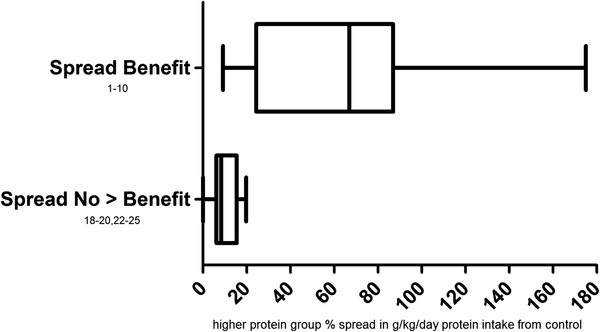
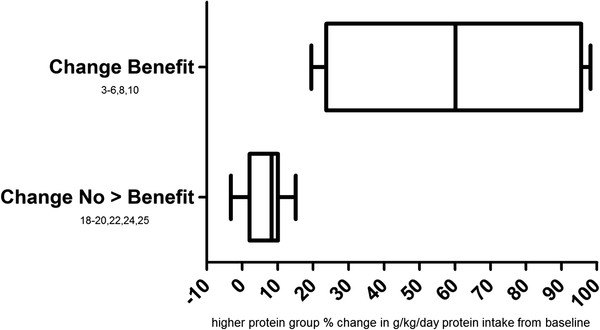
An appreciable volume of human clinical data supports increased dietary protein for greater gains from resistance training, but not all findings are in agreement. We recently proposed "protein spread theory" and "protein change theory" in an effort to explain discrepancies in the response to increased dietary protein in weight management interventions. The present review aimed to extend "protein spread theory" and "protein change theory" to studies examining the effects of protein on resistance training induced muscle and strength gains. Protein spread theory proposed that there must have been a sufficient spread or % difference in g/kg/day protein intake between groups during a protein intervention to see muscle and strength differences. Protein change theory postulated that for the higher protein group, there must be a sufficient change from baseline g/kg/day protein intake to during study g/kg/day protein intake to see muscle and strength benefits. Seventeen studies met inclusion criteria. In studies where a higher protein intervention was deemed successful there was, on average, a 66.1% g/kg/day between group intake spread versus a 10.2% g/kg/day spread in studies where a higher protein diet was no more effective than control. The average change in habitual protein intake in studies showing higher protein to be more effective than control was +59.5% compared to +6.5% when additional protein was no more effective than control. The magnitudes of difference between the mean spreads and changes of the present review are similar to our previous review on these theories in a weight management context. Providing sufficient deviation from habitual intake appears to be an important factor in determining the success of additional protein in enhancing muscle and strength gains from resistance training. An increase in dietary protein favorably effects muscle and strength during resistance training.
Overview
CoChat Summary
TL;DR
This review extends “protein spread theory” and “protein change theory” to resistance training studies, finding that successful higher-protein interventions had much larger between-group protein spreads and larger increases from habitual intake than unsuccessful ones. It concludes that sufficient deviation from habitual protein intake appears important for additional muscle and strength benefits.
Key findings
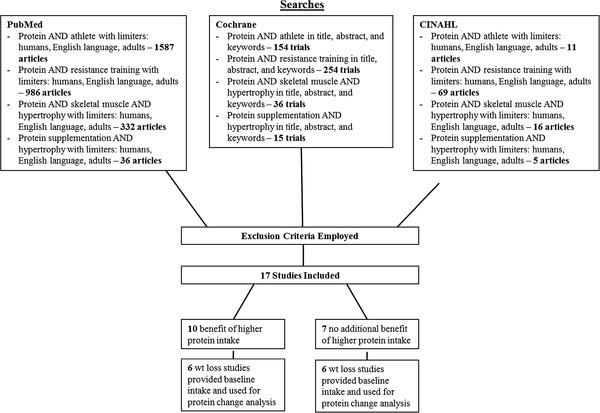
- Of 17 included studies, 10 showed superior muscular benefits of higher protein intake versus control, while 7 showed no greater benefit.
- In studies where higher protein was successful, the average between-group protein intake spread was 66.1% g/kg/day, compared with 10.2% in studies where higher protein was no more effective than control.
- Among the 12 studies reporting baseline intake, the average change in habitual protein intake was +59.5% in studies showing benefit versus +6.5% in studies showing no benefit; all benefit studies had at least a 19.5% increase.
- Baseline protein intakes averaged ~1.31 g/kg/day, while the mean high-protein intake in benefit studies was 2.38 g/kg/day; the authors note a 59.5% increase from ~1.31 g/kg/day would yield 2.09 g/kg/day, close to that benchmark.
Methods
- Narrative review of human resistance training studies; searches were conducted in PubMed, Cochrane Central Register of Controlled Trials, and CINAHL up to August 2012, plus reference lists of four major reviews.
- Seventeen studies met inclusion criteria; exclusions included poor dietary control/reporting, duration <4 weeks, protein timing or type as primary variable with total intake held constant, significant baseline differences, and training only one side of the body.
- Protein intake data were converted to g/kg/day where needed; between-group % spread and % change from baseline were calculated and averaged across studies. No formal meta-analysis or statistical pooling was reported.
Limitations
- The paper states that only 12 of 17 studies reported baseline dietary intake, limiting the protein change analysis.
- The paper states that protein type may influence the acute anabolic response, that resistance training variables varied across studies, and that thresholds for applying the theories are likely context specific.
- Evident from the text: this is a narrative review using aggregate means rather than a meta-analysis; the authors are employees of USANA Health Sciences, Inc., which provided the article processing charge, though they state the company had no role in the review.
Model-written summary. Check it against the paper before relying on it.
Integrity signals
Registry
Cites
Statistics
Figures
Verification
Claims the paper makes
8 Valid · 0 Not valid · 58 Not checked · 29 Own results and interpretations
The cited sources support only part of this claim — read each source’s verdict below.
In the paper
“This review supports our protein spread and change theories [11] as possible explanations for discrepancies in the protein and resistance training literature.”
§ Dietary protein to maximize resistance training: a review and examination of protein spread and change theories > Discussion
What the sources say
- Partly supportedcites [11] Bosse JD Dixon BM Dietary protein in weight management: a review proposing protein spread and change theories. Nutr Metab (Lond) 2012 9 81 10.1186/1743-7075-9-81 22971730 PMC3509388 sourceExperimental — accuracy not yet measured
The Discussion (page unavailable) explicitly supports protein spread and change theories as possible explanations for discrepancies in the protein and weight management literature. The cited review does not make that claim about the protein and resistance training literature; the citing sentence changes the field to which the explanation applies. (LLM, conf=0.88)
hedgedstates a possible cause- Asserted: passes — The authors put it forward as true.
- Checkable: passes — It can be checked against evidence.
- Load-bearing: passes — The paper’s conclusions depend on it.
- Based: passes — The paper gives a reason why it holds.
- Rests on 2 assumptions not shown here.
- Partly supported
The cited sources support only part of this claim — read each source’s verdict below.
In the paper
“Those studies that did not support additional benefits of greater protein still showed that higher protein was as good as an alternative diet [18-20,22-25].”
§ Dietary protein to maximize resistance training: a review and examination of protein spread and change theories > Discussion
What the sources say
- Not checked yetcites [18] Andersen LL Tufekovic G Zebis MK Crameri RM Verlaan G Kjaer M The effect of resistance training combined with timed ingestion of protein on muscle fiber size and muscle strength Metabolism 2005 54 151 156 10.1016/j.metabol.2004.07.012 15690307 source
- Partly supportedcites [19] Verdijk LB Jonkers RA Gleeson BG Beelen M Meijer K Savelberg HH Protein supplementation before and after exercise does not further augment skeletal muscle hypertrophy after resistance training in elderly men Am J Clin Nutr 2009 89 608 616 10.3945/ajcn.2008.26626 19106243 sourceExperimental — accuracy not yet measured
The Discussion reports no difference in muscle mass or strength gains between elderly men receiving protein supplements and those receiving placebo during resistance training. The Protein supplementation section specifies that the placebo beverage contained water, not an alternative diet; the paper therefore supports comparable outcomes with and without added protein, but not a comparison between two diets. (LLM, conf=0.84)
- Not checked yetcites [20] Rankin JW Goldman LP Puglisi MJ Nickols-Richardson SM Earthman CP Gwazdauskas FC Effect of post-exercise supplement consumption on adaptations to resistance training J Am Coll Nutr 2004 23 322 330 15310736 source
- Not checked yetcites [22] MacDougall JD Gibala MJ Tarnopolsky MA MacDonald JR Interisano SA Yarasheski KE The time course for elevated muscle protein synthesis following heavy resistance exercise Can J Appl Physiol 1995 20 480 486 10.1139/h95-038 8563679 source
- Supportedcites [23] Eliot KA Knehans AW Bemben DA Witten MS Carter J Bemben MG The effects of creatine and whey protein supplementation on body composition in men aged 48 to 72 years during resistance training J Nutr Health Aging 2008 12 208 212 10.1007/BF02982622 18309444 source
The Results report higher total protein intake in the whey-supplemented groups than in the placebo group (Table 5), with no significant group difference in total body fat-free mass. The Discussion says the increases after resistance training were similar across all four groups and that whey protein provided no added body-composition benefit. This supports the claim for body-composition outcomes in the men studied; the comparison was supplementation versus placebo, not two prescribed diets. (LLM, conf=0.86)
- Not checked yetcites [24] Candow DG Chilibeck PD Facci M Abeysekara S Zello GA Protein supplementation before and after resistance training in older men Eur J Appl Physiol 2006 97 548 556 10.1007/s00421-006-0223-8 16767436 source
- Not checked yetcites [25] White KM Bauer SJ Hartz KK Baldridge M Changes in body composition with yogurt consumption during resistance training in women Int J Sport Nutr Exerc Metab 2009 19 18 33 19403951 source
plain- Asserted: passes — The authors put it forward as true.
- Checkable: passes — It can be checked against evidence.
- Load-bearing: unclear — It is unclear whether the paper’s conclusions depend on it.
- Based: passes — The paper gives a reason why it holds.
- Rests on 2 assumptions not shown here.
The cited sources support only part of this claim — read each source’s verdict below.
In the paper
“An appreciable volume of human clinical data supports increased dietary protein for greater gains from resistance training, but not all findings are in agreement.”
- Also stated in: § Introduction · plain
“Most studies support the utility of increasing protein intake to promote muscular benefits while resistance training [1-10].”
§ Dietary protein to maximize resistance training: a review and examination of protein spread and change theories > Abstract
What the sources say
- Not checked yetcites [1] Burke DG Chilibeck PD Davidson KS Candow DG Farthing J Smith-Palmer T The effect of whey protein supplementation with and without creatine monohydrate combined with resistance training on lean tissue mass and muscle strength Int J Sport Nutr Exerc Metab 2001 11 349 364 11591884 source
- Not checked yetcites [2] Candow DG Burke NC Smith-Palmer T Burke DG Effect of whey and soy protein supplementation combined with resistance training in young adults Int J Sport Nutr Exerc Metab 2006 16 233 244 16948480 source
- Not checked yetcites [3] Consolazio CF Johnson HL Nelson RA Dramise JG Skala JH Protein metabolism during intensive physical training in the young adult Am J Clin Nutr 1975 28 29 35 1115014 source
- Partly supportedcites [4] Cribb PJ Williams AD Stathis CG Carey MF Hayes A Effects of whey isolate, creatine, and resistance training on muscle hypertrophy Med Sci Sports Exerc 2007 39 298 307 10.1249/01.mss.0000247002.32589.ef 17277594 sourceExperimental — accuracy not yet measured
The INTRODUCTION (Paragraph 1) and DISCUSSION (Paragraph 25) do credit prior human trials showing whey protein supplementation produced greater strength and lean body mass gains than carbohydrate or casein controls during resistance exercise, and the paper's own trial (Abstract; Paragraph 20) reports that CrCHO, WP and CrWP yielded greater hypertrophy (in at least one of three assessments) and 1RM strength gains than CHO — so the direction of the claim is represented. However, the paper characterises this only as 'some studies' and 'previous studies' (refs 6, 8, 7, 13), i.e. a handful of trials in resistance-trained men given a protein supplement, not 'an appreciable volume of human clinical data'; this source is an original RCT, not a review or pooling of the literature, and it addresses whey/creatine supplementation rather than increased dietary protein generally. The 'not all findings are in agreement' clause is at best implicit: Paragraph 21 states 'our findings only partly support the first hypothesis' and that WP was not significantly greater than CHO for LBM, but the paper does not frame the wider literature as discordant for protein. (LLM, conf=0.72)
- Not checked yetcites [5] Demling RH DeSanti L Effect of a hypocaloric diet, increased protein intake and resistance training on lean mass gains and fat mass loss in overweight police officers Ann Nutr Metab 2000 44 21 29 10.1159/000012817 10838463 source
- Not checked yetcites [6] Hartman JW Tang JE Wilkinson SB Tarnopolsky MA Lawrence RL Fullerton AV Consumption of fat-free fluid milk after resistance exercise promotes greater lean mass accretion than does consumption of soy or carbohydrate in young, novice, male weightlifters Am J Clin Nutr 2007 86 373 381 17684208 source
- Not checked yetcites [7] Hoffman JR Ratamess NA Kang J Falvo MJ Faigenbaum AD Effects of protein supplementation on muscular performance and resting hormonal changes in college football players Journal of Sports Science and Medicine 2007 6 85 92 PMC3778704 24149229
- Not checked yetcites [8] Hulmi JJ Kovanen V Selanne H Kraemer WJ Hakkinen K Mero AA Acute and long-term effects of resistance exercise with or without protein ingestion on muscle hypertrophy and gene expression Amino Acids 2009 37 297 308 10.1007/s00726-008-0150-6 18661258 source
- Not checked yetcites [9] Kerksick CM Rasmussen CJ Lancaster SL Magu B Smith P Melton C The effects of protein and amino acid supplementation on performance and training adaptations during ten weeks of resistance training J Strength Cond Res 2006 20 643 653 16937979
- Not checked yetcites [10] Willoughby DS Stout JR Wilborn CD Effects of resistance training and protein plus amino acid supplementation on muscle anabolism, mass, and strength Amino Acids 2007 32 467 477 10.1007/s00726-006-0398-7 16988909 source
plainstates a cause- Asserted: passes — The authors put it forward as true.
- Checkable: passes — It can be checked against evidence.
- Load-bearing: passes — The paper’s conclusions depend on it.
- Based: passes — The paper gives a reason why it holds.
- Also stated in: § Introduction · plain
The sources with a verdict support this claim; the rest weren’t checked yet, have no full text we could read, or their verdicts aren’t rated yet.
In the paper
“Finally, it is likely that adding protein to one’s habitual intake is most beneficial when added to previously protein poor meals, as opposed to adding to meals already highin protein [51,52].”
§ Dietary protein to maximize resistance training: a review and examination of protein spread and change theories > Discussion > Application of this review in resistance training
What the sources say
- Not checked yetcites [51] Luscombe ND Clifton PM Noakes M Farnsworth E Wittert G Effect of a high-protein, energy-restricted diet on weight loss and energy expenditure after weight stabilization in hyperinsulinemic subjects Int J Obes Relat Metab Disord 2003 27 582 590 10.1038/sj.ijo.0802270 12704402 source
- Supportedcites [52] Layman DK Dietary Guidelines should reflect new understandings about adult protein needs Nutr Metab (Lond) 2009 6 12 10.1186/1743-7075-6-12 19284668 PMC2666737 source
In “New knowledge about protein,” the paper says adults need at least 30 g of protein at an individual meal to fully stimulate muscle protein synthesis and that an even distribution across meals is more likely to produce a greater daily anabolic response than an uneven one. It also says that concentrating adequate protein in only one meal produces an anabolic response only after that meal. These passages support the citing sentence’s hedged comparison between adding protein to a low-protein meal and adding it to an already protein-rich meal. (LLM, conf=0.88)
hedgedstates a possible cause- Asserted: passes — The authors put it forward as true.
- Checkable: passes — It can be checked against evidence.
- Load-bearing: unclear — It is unclear whether the paper’s conclusions depend on it.
- Based: passes — The paper gives a reason why it holds.
The cited sources support only part of this claim — read each source’s verdict below.
In the paper
“However, recommending an increased dietary protein would be deemed of little benefit by many nutrition professionals, yet data continually show contrary [1-7,9,10,17,28,38].”
§ Dietary protein to maximize resistance training: a review and examination of protein spread and change theories > Discussion > Application of this review in resistance training
What the sources say
- Not checked yetcites [1] Burke DG Chilibeck PD Davidson KS Candow DG Farthing J Smith-Palmer T The effect of whey protein supplementation with and without creatine monohydrate combined with resistance training on lean tissue mass and muscle strength Int J Sport Nutr Exerc Metab 2001 11 349 364 11591884 source
- Not checked yetcites [2] Candow DG Burke NC Smith-Palmer T Burke DG Effect of whey and soy protein supplementation combined with resistance training in young adults Int J Sport Nutr Exerc Metab 2006 16 233 244 16948480 source
- Not checked yetcites [3] Consolazio CF Johnson HL Nelson RA Dramise JG Skala JH Protein metabolism during intensive physical training in the young adult Am J Clin Nutr 1975 28 29 35 1115014 source
- Supportedcites [4] Cribb PJ Williams AD Stathis CG Carey MF Hayes A Effects of whey isolate, creatine, and resistance training on muscle hypertrophy Med Sci Sports Exerc 2007 39 298 307 10.1249/01.mss.0000247002.32589.ef 17277594 source
Paragraph 20 reports that whey-protein supplementation during resistance training produced greater hypertrophy and strength gains than carbohydrate supplementation, even though all groups consumed protein-rich diets. This supports the cited point that additional protein can provide a benefit; the study’s evidence is specifically from resistance-trained men. (LLM, conf=0.88)
- Not checked yetcites [5] Demling RH DeSanti L Effect of a hypocaloric diet, increased protein intake and resistance training on lean mass gains and fat mass loss in overweight police officers Ann Nutr Metab 2000 44 21 29 10.1159/000012817 10838463 source
- Not checked yetcites [6] Hartman JW Tang JE Wilkinson SB Tarnopolsky MA Lawrence RL Fullerton AV Consumption of fat-free fluid milk after resistance exercise promotes greater lean mass accretion than does consumption of soy or carbohydrate in young, novice, male weightlifters Am J Clin Nutr 2007 86 373 381 17684208 source
- Not checked yetcites [7] Hoffman JR Ratamess NA Kang J Falvo MJ Faigenbaum AD Effects of protein supplementation on muscular performance and resting hormonal changes in college football players Journal of Sports Science and Medicine 2007 6 85 92 PMC3778704 24149229
- Not checked yetcites [9] Kerksick CM Rasmussen CJ Lancaster SL Magu B Smith P Melton C The effects of protein and amino acid supplementation on performance and training adaptations during ten weeks of resistance training J Strength Cond Res 2006 20 643 653 16937979
- Not checked yetcites [10] Willoughby DS Stout JR Wilborn CD Effects of resistance training and protein plus amino acid supplementation on muscle anabolism, mass, and strength Amino Acids 2007 32 467 477 10.1007/s00726-006-0398-7 16988909 source
- Partly supportedcites [17] Cribb PJ Hayes A Effects of supplement timing and resistance exercise on skeletal muscle hypertrophy Med Sci Sports Exerc 2006 38 1918 1925 10.1249/01.mss.0000233790.08788.3e 17095924 sourceExperimental — accuracy not yet measured
Paragraph 22 says that most longitudinal studies support benefits from protein supplementation around resistance exercise, and Paragraph 20 reports greater strength and muscle gains when the same supplement was taken near workouts rather than at other times. These passages support a benefit in that setting, but the study tested supplement timing, not whether recommending increased overall dietary protein is beneficial. (LLM, conf=0.84)
boosted- Asserted: passes — The authors put it forward as true.
- Checkable: passes — It can be checked against evidence.
- Load-bearing: passes — The paper’s conclusions depend on it.
- Based: passes — The paper gives a reason why it holds.
65 more claims · 2 with their cited sources checked
Create a free account to see all 95 claims and to verify the 143 references still open.
- It may state two separate claims as one. 20
- Probably not a substantial claim. 6
Claims other papers make about this one
Each is checked against this paper’s own text: does it say what the citing paper says it does?
The source backs part of the claim, not all of it — or backs it for a different population, condition or comparison.
In the citing paper
“A meta-analysis by Schoenfeld et al. [84] found that consuming protein within one-hour post resistance exercise had a small but significant effect on increasing muscle hypertrophy compared to delaying consumption by at least two hours.”
From International Society of Sports Nutrition Position Stand: protein and exercise (2017) · cites this paper as [84]
Experimental — accuracy not yet measuredThe source backs part of the claim, not all of it — or backs it for a different population, condition or comparison.
In the citing paper
“the meta-analysis provides evidence that protein supplementation (i.e., greater total daily protein intake) may indeed confer an anabolic effect.”
From International Society of Sports Nutrition Position Stand: protein and exercise (2017) · cites this paper as [84]
Experimental — accuracy not yet measuredThe source backs part of the claim, not all of it — or backs it for a different population, condition or comparison.
In the citing paper
“The authors concluded that total protein intake was the strongest predictor of muscular hypertrophy and that protein timing likely influences hypertrophy to a lesser degree.”
From International Society of Sports Nutrition Position Stand: protein and exercise (2017) · cites this paper as [84]
Experimental — accuracy not yet measuredThe source backs part of the claim, not all of it — or backs it for a different population, condition or comparison.
In the citing paper
“sub-analysis of these results revealed the effect all but disappeared after controlling for the total intake of protein, indicating that favorable effects were due to unequal protein intake between the experimental and control groups (∼1.7 g/kg versus 1.3 g/kg, respectively) as opposed to temporal aspects of feeding.”
From International Society of Sports Nutrition Position Stand: protein and exercise (2017) · cites this paper as [84]
Experimental — accuracy not yet measuredThe check wasn’t confident either way, so it gives no verdict — never disputed.
In the citing paper
“which has been shown to be prevalent among recreationally active to elite female athletes [113,124,233–236]”
From International society of sports nutrition position stand: nutritional concerns of the female athlete (2023) · cites this paper as [236]
Experimental — accuracy not yet measured
Self-check
Percentages, sums and reported differences re-computed from the paper’s own numbers.
Each contradiction between two passages listed here was confirmed by an independent check.
Rated minor: it would not touch a result — a value no result rests on, a p-value that stays on the same side of the significance level, or a conflict that is clerical, resolved elsewhere in the paper, or outside its own findings.
In the paper
§ Dietary protein to maximize resistance training: a review and examination of protein spread and change theories > Results > Protein change theory
“| Verdijk, 2009 [18] | 1.1 | 1.1 | 1.1 | 1.1 | 0 | 0 |”
§ Dietary protein to maximize resistance training: a review and examination of protein spread and change theories > References
“18. Andersen LL Tufekovic G Zebis MK Crameri RM Verlaan G Kjaer M The effect of resistance training combined with timed ingestion of protein on muscle fiber size and muscle strength Metabolism 2005 54 151 156 10.1016/j.metabol.2004.07.012 15690307”
Rated minor: it would not touch a result — a value no result rests on, a p-value that stays on the same side of the significance level, or a conflict that is clerical, resolved elsewhere in the paper, or outside its own findings.
In the paper
§ Dietary protein to maximize resistance training: a review and examination of protein spread and change theories > Results > Protein change theory
“| Mielke, 2009 [25] | 1.29 | 1.15 | 1.36 | 1.06 | −10.6 | −3.2 |”
§ Dietary protein to maximize resistance training: a review and examination of protein spread and change theories > Methods
“| | 79.6 ± 18.1 | 20.6 ± 7.3 | 1.36 | 2632 | M | 8 | 1.31 | ↑W,AA | 1988 | UT | 0.3 | NR | 0.8 | 0.4 | 0.6 |”
Rated minor: it would not touch a result — a value no result rests on, a p-value that stays on the same side of the significance level, or a conflict that is clerical, resolved elsewhere in the paper, or outside its own findings.
In the paper
§ Dietary protein to maximize resistance training: a review and examination of protein spread and change theories > Results > Protein spread theory
“the mean g/kg/day protein intake in the higher protein groups in six studies showing no additional muscular benefits of higher protein (Figure 2) was only 10.2% greater than controls on average.”
§ Dietary protein to maximize resistance training: a review and examination of protein spread and change theories > Results > Protein spread theory
“| Burke, 2004 [1] | 175 | Candow, 2006 [23] | 5.8 | | Candow, 2006 [2] | 75 | Eliot, 2008 [22] | 19.7 | | Consolazio, 1975 [3] | 98.6 | Kukuljan, 2009 [20] | 6.5 | | Cribb, 2007 [4] | 90.9 | Mielke, 2009 [25] | 13.8 | | Demling, 2000 [5] | 72.6 | Rankin, 2004 [19] | 8.3 | | Hartman, 2007 [6] | 9.1 | Verdijk, 2009 [18] | 0 | | Hoffman, 2007 [7] | 61.3 | White, 2009 [24] | 17.1 |”
Rated minor: it would not touch a result — a value no result rests on, a p-value that stays on the same side of the significance level, or a conflict that is clerical, resolved elsewhere in the paper, or outside its own findings.
In the paper
§ Dietary protein to maximize resistance training: a review and examination of protein spread and change theories > Results > Protein spread theory
“Cribb et al. had resistance trained men consume 3.15 g/kg/day or 1.65 g/kg/day protein during an 11 wk resistance training program.”
§ Dietary protein to maximize resistance training: a review and examination of protein spread and change theories > Methods
“| Cribb, 2007 [4]1,3 | 76 ± 12 | 16.9 ± 2.4 | 1.6 | 2782 | M | 12 | 1.65 | Mix | 2869 | Tr | NR | 0.7 | 0.7 | 0.8 | 1.4 |”
Citations
Cites
American College of Sports Medicine position stand
Otis, C. L. (1997) · Medical Entomology and Zoology · Cited by 4,407
Anthropometric Reference Data for Children and Adults: United States, 2003-2006: (623932009-001)
McDowell, M. A., Fryar, C. D., Ogden, C. L., & Flegal, K. M. (2008) · PsycEXTRA Dataset · doi:10.1037/e623932009-001 · Cited by 1,378 · cited 1×
“The body’s response to protein is not static, but adjusts to the diet it is afforded [42-44].”
BackgroundJournal of Sports Science and Medicine
Stewart, M. (2014) · Wilderness & Environmental Medicine · doi:10.1016/j.wem.2014.06.007 · Cited by 1,227
Nutrition and Athletic Performance
(2009) · Medicine & Science in Sports & Exercise · doi:10.1249/mss.0b013e31890eb86 · Cited by 1,084 · cited 1×
“Along with the database searches, reference lists of four major reviews relating to the subject matter were scanned for additional studies to include [11-14].”
BackgroundTang, J. E., Moore, D. R., Kujbida, G. W., Tarnopolsky, M. A., & Phillips, S. M. (2009) · Journal of Applied Physiology · doi:10.1152/japplphysiol.00076.2009 · Cited by 998
ISSN exercise & sports nutrition review update: research & recommendations
Kerksick, C. M., Wilborn, C. D., Roberts, M. D., Smith-Ryan, A., Kleiner, S. M., Jäger, R., Collins, R., Cooke, M., Davis, J. N., Galvan, E., et al. (2018) · Journal of the International Society of Sports Nutrition · doi:10.1186/s12970-018-0242-y · Cited by 945
Dietary protein recommendations and the prevention of sarcopenia
Paddon-Jones, D., & Rasmussen, B. B. (2009) · Current Opinion in Clinical Nutrition & Metabolic Care · doi:10.1097/mco.0b013e32831cef8b · Cited by 823 · cited 1×
“That current sports nutrition guidelines for resistance training continue to mirror results of nitrogen balance studies [53,54], is perhaps not optimal.”
BackgroundFrey, S., Rauf Mir, A., & Lucas, M. (1999) · Journal of Renal Nutrition · doi:10.1016/s1051-2276(99)90003-1 · Cited by 805
International Society of Sports Nutrition position stand: protein and exercise
Campbell, B., Kreider, R. B., Ziegenfuss, T., La Bounty, P., Roberts, M., Burke, D., Landis, J., Lopez, H., & Antonio, J. (2007) · Journal of the International Society of Sports Nutrition · doi:10.1186/1550-2783-4-8 · Cited by 716
Esmarck, B., Andersen, J. L., Olsen, S., Richter, E. A., Mizuno, M., & Kjær, M. (2001) · The Journal of Physiology · doi:10.1111/j.1469-7793.2001.00301.x · Cited by 540 · cited 1×
“Before and after exercise have been identified as important times for mediating the effects of nutrition on resistance training gains [15,16].”
BackgroundHartman, J. W., Tang, J. E., Wilkinson, S. B., Tarnopolsky, M. A., Lawrence, R. L., Fullerton, A. V., & Phillips, S. M. (2007) · The American Journal of Clinical Nutrition · doi:10.1093/ajcn/86.2.373 · Cited by 498 · cited 10×
“Clarification on dietary intake data was obtained by contacting authors [6,8,9] as necessary.”
BackgroundMethodResultInfluentialYang, Y., Breen, L., Burd, N. A., Hector, A. J., Churchward-Venne, T. A., Josse, A. R., Tarnopolsky, M. A., & Phillips, S. M. (2012) · British Journal of Nutrition · doi:10.1017/s0007114511007422 · Cited by 480 · cited 2×
“However, recommending an increased dietary protein would be deemed of little benefit by many nutrition professionals, yet data continually show contrary [1-7,9,10,17,28,38].”
BackgroundResultISSN exercise & sport nutrition review: research & recommendations
Kreider, R. B., Wilborn, C. D., Taylor, L., Campbell, B., Almada, A. L., Collins, R., Cooke, M., Earnest, C. P., Greenwood, M., Kalman, D. S., et al. (2010) · Journal of the International Society of Sports Nutrition · doi:10.1186/1550-2783-7-7 · Cited by 428
Austin, G. L., Ogden, L. G., & Hill, J. O. (2011) · The American Journal of Clinical Nutrition · doi:10.3945/ajcn.110.000141 · Cited by 317 · cited 1×
“address a level of protein to optimize body composition [39]; 2) per protein habituation theory, increasing a typical American intake of ~1 g/kg/day [40,41], to strength/power athlete recommendations of 1.”
BackgroundEvaluation of protein requirements for trained strength athletes
Tarnopolsky, M. A., Atkinson, S. A., MacDougall, J. D., Chesley, A., Phillips, S., & Schwarcz, H. P. (1992) · Journal of Applied Physiology · doi:10.1152/jappl.1992.73.5.1986 · Cited by 289
Increased Protein Intake Reduces Lean Body Mass Loss during Weight Loss in Athletes
METTLER, S., MITCHELL, N., & TIPTON, K. D. (2010) · Medicine & Science in Sports & Exercise · doi:10.1249/mss.0b013e3181b2ef8e · Cited by 288 · cited 1×
“address a level of protein to optimize body composition [39]; 2) per protein habituation theory, increasing a typical American intake of ~1 g/kg/day [40,41], to strength/power athlete recommendations of 1.”
BackgroundBray, G. A., Smith, S. R., de Jonge, L., Xie, H., Rood, J., Martin, C. K., Most, M., Brock, C., Mancuso, S., & Redman, L. M. (2012) · JAMA · doi:10.1001/jama.2011.1918 · Cited by 285 · cited 2×
“7 kg greater lean mass gain and fat loss compared to isoenergetic controls [33].”
BackgroundEffects of Supplement Timing and Resistance Exercise on Skeletal Muscle Hypertrophy
CRIBB, P. J., & HAYES, A. (2006) · Medicine & Science in Sports & Exercise · doi:10.1249/01.mss.0000233790.08788.3e · Cited by 270 · cited 3×
“However, recommending an increased dietary protein would be deemed of little benefit by many nutrition professionals, yet data continually show contrary [1-7,9,10,17,28,38].”
BackgroundResultVerdijk, L. B., Jonkers, R. A., Gleeson, B. G., Beelen, M., Meijer, K., Savelberg, H. H., Wodzig, W. K., Dendale, P., & van Loon, L. J. (2009) · The American Journal of Clinical Nutrition · doi:10.3945/ajcn.2008.26626 · Cited by 253 · cited 4×
“Ten weeks of resistance training led to similar strength and body composition improvements in both groups [19].”
BackgroundInfluentialThe Time Course for Elevated Muscle Protein Synthesis Following Heavy Resistance Exercise
MacDougall, J. D., Gibala, M. J., Tarnopolsky, M. A., MacDonald, J. R., Interisano, S. A., & Yarasheski, K. E. (1995) · Canadian Journal of Applied Physiology · doi:10.1139/h95-038 · Cited by 248
Lemon, P. W., Tarnopolsky, M. A., MacDougall, J. D., & Atkinson, S. A. (1992) · Journal of Applied Physiology · doi:10.1152/jappl.1992.73.2.767 · Cited by 241 · cited 1×
“That current sports nutrition guidelines for resistance training continue to mirror results of nitrogen balance studies [53,54], is perhaps not optimal.”
BackgroundHulmi, J. J., Lockwood, C. M., & Stout, J. R. (2010) · Nutrition & Metabolism · doi:10.1186/1743-7075-7-51 · Cited by 238 · cited 1×
“Along with the database searches, reference lists of four major reviews relating to the subject matter were scanned for additional studies to include [11-14].”
Andersen, L. L., Tufekovic, G., Zebis, M. K., Crameri, R. M., Verlaan, G., Kjær, M., Suetta, C., Magnusson, P., & Aagaard, P. (2005) · Metabolism · doi:10.1016/j.metabol.2004.07.012 · Cited by 228
Willoughby, D. S., Stout, J. R., & Wilborn, C. D. (2007) · Amino Acids · doi:10.1007/s00726-006-0398-7 · Cited by 227 · cited 10×
“However, three studies [22,24,25] had spreads that were higher than three studies [6,8,10] of the “muscular benefits” grouping.”
BackgroundResultInfluentialLacroix, M., Bos, C., Léonil, J., Airinei, G., Luengo, C., Daré, S., Benamouzig, R., Fouillet, H., Fauquant, J., Tomé, D., et al. (2006) · The American Journal of Clinical Nutrition · doi:10.1093/ajcn/84.5.1070 · Cited by 194 · cited 4×
“However, recommending an increased dietary protein would be deemed of little benefit by many nutrition professionals, yet data continually show contrary [1-7,9,10,17,28,38].”
BackgroundResultInfluentialBurke, D. G., Chilibeck, P. D., Davison, K. S., Candow, D. C., Farthing, J., & Smith-Palmer, T. (2001) · International Journal of Sport Nutrition and Exercise Metabolism · doi:10.1123/ijsnem.11.3.349 · Cited by 193 · cited 7×
“However, as this review shows, this “lay” recommendation aligns well with research that assesses applied outcome measures of strength and body composition in studies of duration>4 weeks [1-7,9,10,17,28,38].”
BackgroundResultInfluentialHulmi, J. J., Kovanen, V., Selänne, H., Kraemer, W. J., Häkkinen, K., & Mero, A. A. (2009) · Amino Acids · doi:10.1007/s00726-008-0150-6 · Cited by 189 · cited 8×
“Clarification on dietary intake data was obtained by contacting authors [6,8,9] as necessary.”
BackgroundMethodInfluentialEffect of Whey and Soy Protein Supplementation Combined with Resistance Training in Young Adults
Candow, D. G., Burke, N. C., Smith-Palmer, T., & Burke, D. G. (2006) · International Journal of Sport Nutrition and Exercise Metabolism · doi:10.1123/ijsnem.16.3.233 · Cited by 180 · cited 8×
“Squat and bench press strength increased ~25 and 8 kg respectively in the higher protein groups which was significantly greater than the control gains of ~14 and 4 kg [2].”
BackgroundResultInfluentialPacy, P. J., Price, G. M., Halliday, D., Quevedo, M. R., & Millward, D. J. (1994) · Clinical Science · doi:10.1042/cs0860103 · Cited by 169 · cited 1×
“Habitual intake mediates the effects of protein on bone health and satiety [47,48] and studies have shown that that the thermic effect of protein decreases over time while dieting [49,50].”
BackgroundEffects of Whey Isolate, Creatine, and Resistance Training on Muscle Hypertrophy
CRIBB, P. J., WILLIAMS, A. D., STATHIS, C. G., CAREY, M. F., & HAYES, A. (2007) · Medicine & Science in Sports & Exercise · doi:10.1249/01.mss.0000247002.32589.ef · Cited by 165 · cited 8×
“gained significantly greater strength and myofibrillar protein in the quadriceps than control [4].”
BackgroundResultInfluentialProtein supplementation before and after resistance training in older men
Candow, D. G., Chilibeck, P. D., Facci, M., Abeysekara, S., & Zello, G. A. (2006) · European Journal of Applied Physiology · doi:10.1007/s00421-006-0223-8 · Cited by 158 · cited 4×
“However, three studies [22,24,25] had spreads that were higher than three studies [6,8,10] of the “muscular benefits” grouping.”
BackgroundInfluentialKERKSICK, C. M., RASMUSSEN, C. J., LANCASTER, S. L., MAGU, B., SMITH, P., MELTON, C., GREENWOOD, M., ALMADA, A. L., EARNEST, C. P., & KREIDER, R. B. (2006) · Journal of Strength and Conditioning Research · doi:10.1519/00124278-200608000-00028 · Cited by 156 · cited 9×
“Clarification on dietary intake data was obtained by contacting authors [6,8,9] as necessary.”
BackgroundMethodResultInfluentialKukuljan, S., Nowson, C. A., Sanders, K., & Daly, R. M. (2009) · Journal of Applied Physiology · doi:10.1152/japplphysiol.00392.2009 · Cited by 154 · cited 1×
“Additionally, since data show an elevated muscle protein synthetic response for > 24 hours after resistance training [21], prompt timing of post-exercise protein is likely only one of several predictors of muscle protein accrual following resistance exercise.”
BackgroundDietary Guidelines should reflect new understandings about adult protein needs
Layman, D. K. (2009) · Nutrition & Metabolism · doi:10.1186/1743-7075-6-12 · Cited by 146 · cited 1×
“Finally, it is likely that adding protein to one’s habitual intake is most beneficial when added to previously protein poor meals, as opposed to adding to meals already highin protein [51,52].”
BackgroundPrice, G. M., Halliday, D., Pacy, P. J., Quevedo, M. R., & Millward, D. J. (1994) · Clinical Science · doi:10.1042/cs0860091 · Cited by 126 · cited 1×
“For example, progressive increases in protein intake are coupled with increased fasting nitrogen losses [45,46] along with an increase in feeding induced nitrogen accrual [45,46] that is perhaps even more pronounced than fasting losses [45].”
BackgroundLuscombe, N. D., Clifton, P. M., Noakes, M., Farnsworth, E., & Wittert, G. (2003) · International Journal of Obesity · doi:10.1038/sj.ijo.0802270 · Cited by 124 · cited 1×
“Finally, it is likely that adding protein to one’s habitual intake is most beneficial when added to previously protein poor meals, as opposed to adding to meals already highin protein [51,52].”
BackgroundProtein Quantity and Quality at Levels above the RDA Improves Adult Weight Loss
Layman, D. K. (2004) · Journal of the American College of Nutrition · doi:10.1080/07315724.2004.10719435 · Cited by 114 · cited 1×
“address a level of protein to optimize body composition [39]; 2) per protein habituation theory, increasing a typical American intake of ~1 g/kg/day [40,41], to strength/power athlete recommendations of 1.”
BackgroundThe anabolic response to resistance exercise and a protein-rich meal is not diminished by age
Symonsi, T. B., Sheffield-Moore, M., Mamerow, M. M., Wolfe, R. R., & Paddon-Jones, D. (2011) · The Journal of nutrition, health and aging · doi:10.1007/s12603-010-0319-z · Cited by 112
Protein consumption is an important predictor of lower limb bone mass in elderly women
Devine, A., Dick, I. M., Islam, A. F., Dhaliwal, S. S., & Prince, R. L. (2005) · The American Journal of Clinical Nutrition · doi:10.1093/ajcn/81.6.1423 · Cited by 110
Luscombe, N. D., Clifton, P. M., Noakes, M., Parker, B., & Wittert, G. (2002) · Diabetes Care · doi:10.2337/diacare.25.4.652 · Cited by 110
Demling, R. H., & DeSanti, L. (2000) · Annals of Nutrition and Metabolism · doi:10.1159/000012817 · Cited by 108 · cited 7×
“However, as this review shows, this “lay” recommendation aligns well with research that assesses applied outcome measures of strength and body composition in studies of duration>4 weeks [1-7,9,10,17,28,38].”
BackgroundResultInfluentialAn adaptive metabolic demand model for protein and amino acid requirements
Millward, D. J. (2003) · British Journal of Nutrition · doi:10.1079/bjn2003924 · Cited by 100 · cited 1×
“The body’s response to protein is not static, but adjusts to the diet it is afforded [42-44].”
BackgroundEffect of Post-Exercise Supplement Consumption on Adaptations to Resistance Training
Rankin, J. W., Goldman, L. P., Puglisi, M. J., Nickols-Richardson, S. M., Earthman, C. P., & Gwazdauskas, F. C. (2004) · Journal of the American College of Nutrition · doi:10.1080/07315724.2004.10719375 · Cited by 90 · cited 4×
“Although minimal change or spread in protein intake was achieved in groups of two studies not showing a benefit of greater protein [18,20], perhaps age was a factor in this lack of response.”
BackgroundInfluentialFarnfield, M. M., Breen, L., Carey, K. A., Garnham, A., & Cameron-Smith, D. (2012) · Applied Physiology, Nutrition, and Metabolism · doi:10.1139/h11-132 · Cited by 89 · cited 1×
“Age may impair the acute anabolic response to protein with resistance exercise [35], although this finding is not universal [36] and could also be complicated by protein type.”
BackgroundEliot, K. A., Knehans, A. W., Bemben, D. A., Witten, M. S., Carter, J., & Bemben, M. G. (2008) · The Journal of nutrition, health and aging · doi:10.1007/bf02982622 · Cited by 78
Effect of habitual dietary-protein intake on appetite and satiety
Long, S. J., Jeffcoat, A. R., & Millward, D. J. (2000) · Appetite · doi:10.1006/appe.2000.0332 · Cited by 76 · cited 1×
“Habitual intake mediates the effects of protein on bone health and satiety [47,48] and studies have shown that that the thermic effect of protein decreases over time while dieting [49,50].”
BackgroundSukhatme, P. V., & Margen, S. (1978) · The American Journal of Clinical Nutrition · doi:10.1093/ajcn/31.7.1237 · Cited by 73
Protein metabolism during intensive physical training in the young adult
Consolazio, C., Johnson, H., Nelson, R., Dramise, J., & Skala, J. (1975) · The American Journal of Clinical Nutrition · doi:10.1093/ajcn/28.1.29 · Cited by 61 · cited 5×
“However, as this review shows, this “lay” recommendation aligns well with research that assesses applied outcome measures of strength and body composition in studies of duration>4 weeks [1-7,9,10,17,28,38].”
BackgroundResultInfluentialThalacker-Mercer, A. E., Petrella, J. K., & Bamman, M. M. (2009) · Applied Physiology, Nutrition, and Metabolism · doi:10.1139/h09-038 · Cited by 48 · cited 2×
“Since protein benefits muscle mass in lieu of resistance training [32,33], even if a training program was suboptimal, a higher protein intake should still offer a statistically significant benefit over a lower intake.”
Background(2007) · Europe PMC (PubMed Central) · Cited by 46
Lockwood, C. M., Moon, J. R., Tobkin, S. E., Walter, A. A., Smith, A. E., Dalbo, V. J., Cramer, J. T., & Stout, J. R. (2008) · Nutrition & Metabolism · doi:10.1186/1743-7075-5-11 · Cited by 38 · cited 1×
“Age may impair the acute anabolic response to protein with resistance exercise [35], although this finding is not universal [36] and could also be complicated by protein type.”
BackgroundChanges in Body Composition with Yogurt Consumption during Resistance Training in Women
White, K. M., Bauer, S. J., Hartz, K. K., & Baldridge, M. (2009) · International Journal of Sport Nutrition and Exercise Metabolism · doi:10.1123/ijsnem.19.1.18 · Cited by 35 · cited 4×
“However, three studies [22,24,25] had spreads that were higher than three studies [6,8,10] of the “muscular benefits” grouping.”
BackgroundInfluentialDietary protein in weight management: a review proposing protein spread and change theories
Bosse, J. D., & Dixon, B. M. (2012) · Nutrition & Metabolism · doi:10.1186/1743-7075-9-81 · Cited by 31 · cited 3×
“Discussion This review supports our protein spread and change theories [11] as possible explanations for discrepancies in”
BackgroundResultSelf-citationSoenen, S., & Westerterp-Plantenga, M. S. (2010) · Physiology & Behavior · doi:10.1016/j.physbeh.2010.09.014 · Cited by 25 · cited 1×
“on a per participant basis demonstrates this [34].”
BackgroundFrom Chick Nutrition to Nutrition Policy
Hegsted, D. M. (2000) · Annual Review of Nutrition · doi:10.1146/annurev.nutr.20.1.1 · Cited by 17 · cited 1×
“For example, progressive increases in protein intake are coupled with increased fasting nitrogen losses [45,46] along with an increase in feeding induced nitrogen accrual [45,46] that is perhaps even more pronounced than fasting losses [45].”
BackgroundMielke, M. M., Housh, T. J., Malek, M. H., Beck, T. W., Schmidt, R. J., Johnson, G. O., & Housh, D. J. (2009) · Cited by 16
Short Report: Relationship between Quality Protein, Lean Mass and Bone Health
Loenneke, J. P., Balapur, A., Thrower, A. D., Syler, G., Timlin, M., & Pujol, T. J. (2010) · Annals of Nutrition and Metabolism · doi:10.1159/000321736 · Cited by 10 · cited 2×
“[28,31] bring scientific backing to a common phenomenon: that nutritional and training recommendations based upon group means are not effective for all individuals.”
BackgroundRatamess, N. A., Hoffman, J. R., Faigenbaum, A. D., Mangine, G. T., Falvo, M. J., & Kang, J. (2007) · The Journal of Strength and Conditioning Research · doi:10.1519/r-21746.1 · Cited by 9 · cited 3×
“0001) between change in habitual protein intake and change in fat-free body mass [29].”
BackgroundPetzke, K. J., Lemke, S., & Klaus, S. (2011) · Journal of Nutrition and Metabolism · doi:10.1155/2011/210930 · Cited by 5 · cited 1×
“Strong correlations have been shown between increased habitual protein intake [29], regular ingestion of quality protein [30], and muscle mass.”
BackgroundProtein consumption as an important predictor of lower-limb bone mass in elderly women
Sebastian, A. (2005) · The American Journal of Clinical Nutrition · doi:10.1093/ajcn/82.6.1355 · Cited by 2 · cited 1×
“Habitual intake mediates the effects of protein on bone health and satiety [47,48] and studies have shown that that the thermic effect of protein decreases over time while dieting [49,50].”
Background
Cited by
Morton, R. W., Murphy, K. T., McKellar, S. R., Schoenfeld, B. J., Henselmans, M., Helms, E., Aragon, A. A., Devries, M. C., Banfield, L., Krieger, J. W., et al. (2018) · British Journal of Sports Medicine · doi:10.1136/bjsports-2017-097608 · Cited by 1,269
“the RET-induced change in fibre CSA, the negative effect age had on changes in FFM leads us to speculate that even though exercise sensitises muscle to the effect of protein ingestion, 3 older persons have an increased need for higher protein intakes to optimally respond to this effect and see gains in FFM. 76 It has…”
BackgroundInfluentialInternational Society of Sports Nutrition Position Stand: protein and exercise
Jäger, R., Kerksick, C. M., Campbell, B. I., Cribb, P. J., Wells, S. D., Skwiat, T. M., Purpura, M., Ziegenfuss, T. N., Ferrando, A. A., Arent, S. M., et al. (2017) · Journal of the International Society of Sports Nutrition · doi:10.1186/s12970-017-0177-8 · Cited by 873
“A review by Bosse and Dixon [84] critically summa-”
BackgroundInfluentialInternational society of sports nutrition position stand: nutritional concerns of the female athlete
Sims, S. T., Kerksick, C. M., Smith-Ryan, A. E., Janse de Jonge, X. A. K., Hirsch, K. R., Arent, S. M., Hewlings, S. J., Kleiner, S. M., Bustillo, E., Tartar, J. L., et al. (2023) · Journal of the International Society of Sports Nutrition · doi:10.1080/15502783.2023.2204066 · Cited by 129
Reidy, P. T., & Rasmussen, B. B. (2016) · The Journal of Nutrition · doi:10.3945/jn.114.203208 · Cited by 128
“As further support behind the role of total protein intake, another review focused on the role of supplemented protein intake during RET (170).”
BackgroundInfluentialSex differences and considerations for female specific nutritional strategies: a narrative review
Wohlgemuth, K. J., Arieta, L. R., Brewer, G. J., Hoselton, A. L., Gould, L. M., & Smith-Ryan, A. E. (2021) · Journal of the International Society of Sports Nutrition · doi:10.1186/s12970-021-00422-8 · Cited by 111
“However, a ~ 60% increase from habitual protein intake may be needed to support skeletal muscle hypertrophy [120].”
Background
Metadata
- Authors
- Bosse, J. D., & Dixon, B. M.
- Affiliations
- University of Utah (US)
- USANA Health Sciences, Inc. (United States) (US)
- Corresponding author
- Bosse, John D
- Venue
- Journal of the International Society of Sports Nutrition
- Publisher
- Informa UK Limited
- Published
- 2012-02-06
- Volume
- 9
- Issue
- 1
- Pages
- 42-42
- ISSN
- 1550-2783 (ISSN-L)
- PMC
- PMC3518828
- OpenAlex
- W2102451779
- Cited by
- 42
- References
- 60
- Citations by year
- 2026: 1 · 2025: 1 · 2024: 1 · 2023: 5 · 2021: 2 · 2020: 4 · 2019: 4 · 2018: 3 · 2017: 2 · 2016: 8 · 2015: 4 · 2014: 2 · 2013: 4 · 2012: 1
- FWCI
- 1.67
- Type
- journal article
- Language
- en
- Open access
- gold
- doi.org
- Licence
- Locations
- Journal of the International Society of Sports Nutrition (publishedVersion, cc-by)
- Europe PMC (PubMed Central) (publishedVersion, cc-by)
- PubMed Central (publishedVersion, cc-by)
- PubMed (publishedVersion)
- DOAJ (DOAJ: Directory of Open Access Journals) (submittedVersion)
- Topics
- Health Sciences › Nursing › Nutrition and Dietetics › Muscle metabolism and nutrition
- Health Sciences › Medicine › Orthopedics and Sports Medicine › Sports Performance and Training
- Health Sciences › Medicine › Physiology (medical) › Nutrition and Health in Aging
- Keywords
- dietary protein, resistance training, muscle hypertrophy, strength gain, weight management, protein supplementation
About these checks
Registry, retraction, Cites and statistics results are computed, not judged, with one exception: a printed reference that no index lists is read once by a model before it counts as a citation error. Claims are extracted by a model and kept only when their quote appears verbatim in the text; each cited source is then checked, with a model’s help, for whether it says what the claim relies on. Those verdicts can be wrong — read the claim’s quote and the cited source before relying on one.
The claim verdicts this report counts are experimental: their accuracy is not yet measured.
A language model drew the claims from the paper on 2026-10-04, under version 3 of the claim definition (model deepseek-v4.1-flash, prompt extract-v3).
A second model labelled each claim on 2026-10-04 (model jev-1.13-20260917, definition revision gold-guideline-v0.2).
Cited sources are checked with a language model’s help (gpt-6-sol and qwen3.8-omni-flash).
Statistics and arithmetic are recomputed, not judged.
Confidence bands are shown only for fields calibrated on our annotated test set. None is calibrated yet, so no band is shown.
What counts as a claim ›How we measure confidence ›How we check this ›
Are you an author, or do you see a problem with this page? Request a review
Data sources
Bibliographic data: Semantic Scholar, OpenAlex, Crossref.
Contains information from the Semantic Scholar Academic Graph Datasets, made available under the ODC Attribution License (ODC-BY 1.0).
Semantic Scholar’s data is described in: Kinney, R., et al. (2023). The Semantic Scholar Open Data Platform. arXiv:2301.10140.
