

The DOI matches its Crossref record; 64 of the 64 references it cites were found in a registry or an index.
Nucleus accumbens corticotropin-releasing factor increases cue-triggered motivation for sucrose reward: paradoxical positive incentive effects in stress?
Open accessAbstract
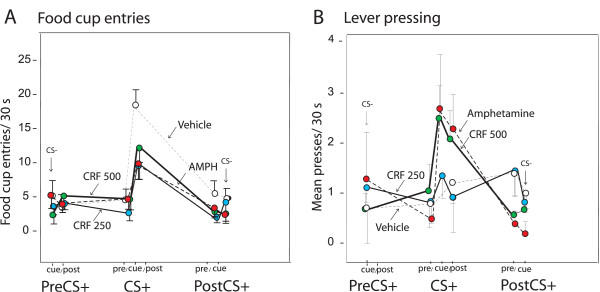
Background: Corticotropin-releasing factor (CRF) is typically considered to mediate aversive aspects of stress, fear and anxiety. However, CRF release in the brain is also elicited by natural rewards and incentive cues, raising the possibility that some CRF systems in the brain mediate an independent function of positive incentive motivation, such as amplifying incentive salience. Here we asked whether activation of a limbic CRF subsystem magnifies the increase in positive motivation for reward elicited by incentive cues previously associated with that reward, in a way that might exacerbate cue-triggered binge pursuit of food or other incentives? We assessed the impact of CRF microinjections into the medial shell of nucleus accumbens using a pure incentive version of Pavlovian-Instrumental transfer, a measure specifically sensitive to the incentive salience of reward cues (which it separates from influences of aversive stress, stress reduction, frustration and other traditional explanations for stress-increased behavior). Rats were first trained to press one of two levers to obtain sucrose pellets, and then separately conditioned to associate a Pavlovian cue with free sucrose pellets. On test days, rats received microinjections of vehicle, CRF (250 or 500 ng/0.2 μl) or amphetamine (20 μg/0.2 μl). Lever pressing was assessed in the presence or absence of the Pavlovian cues during a half-hour test. Results: Microinjections of the highest dose of CRF (500 ng) or amphetamine (20 μg) selectively enhanced the ability of Pavlovian reward cues to trigger phasic peaks of increased instrumental performance for a sucrose reward, each peak lasting a minute or so before decaying after the cue. Lever pressing was not enhanced by CRF microinjections in the baseline absence of the Pavlovian cue or during the presentation without a cue, showing that the CRF enhancement could not be explained as a result of generalized motor arousal, frustration or stress, or by persistent attempts to ameliorate aversive states. Conclusion: We conclude that CRF in nucleus accumbens shell amplifies positive motivation for cued rewards, in particular by magnifying incentive salience that is attributed to Pavlovian cues previously associated with those rewards. CRF-induced magnification of incentive salience provides a novel explanation as to why stress may produce cue-triggered bursts of binge eating, drug addiction relapse, or other excessive pursuits of rewards.
Overview
The claims and statistics of this paper haven’t been checked yet.
Run the check — free, no account needed. It reads the open-access text and checks the sources it cites.
Integrity signals
Registry
Cites
Statistics
Figures
Verification
Claims the paper makes
The claims and statistics of this paper haven’t been checked yet.
Run the check — free, no account needed. It reads the open-access text and checks the sources it cites.
Claims other papers make about this one
Each is checked against this paper’s own text: does it say what the citing paper says it does?
The source backs part of the claim, not all of it — or backs it for a different population, condition or comparison.
In the citing paper
“This and related studies (Wyvell and Berridge, 2000; 2001; Pecina et al., 2006) demonstrate that increased activity of intra-shell dopamine does not merely enhance motor-habits, but also enhances motivation for rewards, a finding consistent with the notion of action-arousal or drive.”
From Dopamine reward circuitry: Two projection systems from the ventral midbrain to the nucleus accumbens–olfactory tubercle complex (2007) · cites this paper as Pecina et al., 2006
Experimental — accuracy not yet measuredThe source backs part of the claim, not all of it — or backs it for a different population, condition or comparison.
In the citing paper
“At the same time, it increases the sensitivity of the excitatory dopaminergic pathway (Peciña et al., 2006).”
From A motivation model of sex addiction – Relevance to the controversy over the concept (2022) · cites this paper as Peciña et al., 2006
Experimental — accuracy not yet measuredIn the citing paper
“CRF in the NAC shell can also enhance the positive motivational value and salience of incentive cues (Pecina et al 2006; Kreibich et al 2009).”
From The behavioral, anatomical and pharmacological parallels between social attachment, love and addiction (2012) · cites this paper as Pecina et al 2006
In the citing paper
“In turn, administration of CRF, has been shown to elevate the value of Pavlovian associated reward cues (Peciña et al., 2006).”
From Cued for Risk: Evidence for an Incentive Sensitization Framework to Explain the Interplay between Stress and Anxiety, Substance Abuse, and Reward Uncertainty in Disordered Gambling Behavior (2019) · cites this paper as Peciña et al., 2006
Self-check
Percentages, sums and reported differences re-computed from the paper’s own numbers.
The self-check needs the paper’s full text.
Citations
Cites
The rat brain in stereotaxic coordinates
Palkovits, M. (1983) · Neuropeptides · doi:10.1016/0143-4179(83)90049-5 · Cited by 28,959
The Rat Brain in Stereotaxic Coordinates
Paxinos, G., & Watson, C. (1983) · Elsevier eBooks · doi:10.1016/c2009-0-63235-9 · Cited by 28,585 · cited 4×
“Cannulae were aimed at the caudal half of the accumbens: 2.8-2.2 mm anterior to bregma, 0.9 mm lateral to the midline, and 5.7 mm ventral to the skull surface (2.0 mm above the injection site), based on the atlas of Paxinos and Watson (1996).”
InfluentialAChE-stained horizontal sections of the rat brain in stereotaxic coordinates
Paxinos, G., WATSON, C. R. R., & Emson, P. C. (1980) · Journal of Neuroscience Methods · doi:10.1016/0165-0270(80)90021-7 · Cited by 4,514
Classical conditioning II: Current research and theory.
Black, A. H., & Prokasy, W. F. (1972) · Appleton-Century-Crofts eBooks · Cited by 4,449
What is the role of dopamine in reward: hedonic impact, reward learning, or incentive salience?
Berridge, K. C., & Robinson, T. E. (1998) · Brain Research Reviews · doi:10.1016/s0165-0173(98)00019-8 · Cited by 4,127
Self-citationDrug Addiction, Dysregulation of Reward, and Allostasis
Koob, G. (2001) · Neuropsychopharmacology · doi:10.1016/s0893-133x(00)00195-0 · Cited by 2,953 · cited 3×
“For example, cocaine administration also activates CRF expression in CRH-producing neurons in hypothalamus and amygdala [13] and CRF given intracerebroventricularly (ICV) or into the ventrolateral BNST can induce reinstatement of drug self-administration behavior in the absence of external stressors (though this last…”
Swanson, L. W., Sawchenko, P. E., Rivier, J., & Vale, W. W. (2008) · Neuroendocrinology · doi:10.1159/000123454 · Cited by 1,953 · cited 1×
“The medial shell of nucleus accumbens also contains substantial distributions of CRF-immunoreactive and fibers, which might arise in part from hypothalamic CRF systems linked to stress, as well as cell bodies (particularly in its caudal half, and thus we focused on caudal shell here) [26].”
An opponent-process theory of motivation. I. Temporal dynamics of affect
Solomon, R. L., & Corbit, J. D. (1974) · Psychological Review · doi:10.1037/h0036128 · Cited by 1,704 · cited 2×
“Such appetitive behaviors have often been viewed as attempts to reduce or avoid unpleasant stress or as overflow from general motor arousal or frustration ([ 12-14 ] but see [8-11]).”
Herman, J. P., Figueiredo, H., Mueller, N. K., Ulrich-Lai, Y., Ostrander, M. M., Choi, D. C., & Cullinan, W. E. (2003) · Frontiers in Neuroendocrinology · doi:10.1016/j.yfrne.2003.07.001 · Cited by 1,586 · cited 2×
“Corticotropin-releasing factor (CRF) is involved in mediating the physiological and behavioral responses to stress [ 1-5 ].”
Robinson, T. E., & Berridge, K. C. (2003) · Annual Review of Psychology · doi:10.1146/annurev.psych.54.101601.145237 · Cited by 1,509
Self-citationThe Neuroscience of Natural Rewards: Relevance to Addictive Drugs
Kelley, A. E., & Berridge, K. C. (2002) · Journal of Neuroscience · doi:10.1523/jneurosci.22-09-03306.2002 · Cited by 1,505 · cited 1×
“Other neurochemical signals converging on the nucleus accumbens from mesocorticolimbic circuits could play roles in enhancing incentive salience too, either directly or by via dopamine modulation [18-20].”
Self-citationTwo-process learning theory: Relationships between Pavlovian conditioning and instrumental learning.
Rescorla, R. A., & Solomon, R. L. (1967) · Psychological Review · doi:10.1037/h0024475 · Cited by 1,487 · cited 2×
“For example, 500 ng in the nucleus accumbens increased activation general behavioral activity counts, whereas 125 or 250 ng did not (and neither dose did when administered in lateral ventricles, consistent with an accumbens site of action) [ 32 ].”
Chronic stress and obesity: a new view of “comfort food”
Dallman, M. F., Pecoraro, N., Akana, S. F., la Fleur, S. E., Gomez, F., Houshyar, H., Bell, M. E., Bhatnagar, S., Laugero, K. D., & Manalo, S. (2003) · Proceedings of the National Academy of Sciences · doi:10.1073/pnas.1934666100 · Cited by 1,369 · cited 2×
“, cue-triggered 'wanting' for a reward, but not necessarily 'liking' for the same reward) has been shown to depend in part on ascending dopamine projections to nucleus accumbens [8-11].”
Dunn, A. J., & Berridge, C. W. (1990) · Brain Research Reviews · doi:10.1016/0165-0173(90)90012-d · Cited by 1,352 · cited 2×
“Background Corticotropin-releasing factor (CRF) is involved in mediating the physiological and behavioral responses to stress [1-5].”
CRF and CRF receptors: role in stress responsivity and other behaviors
Bale, T. L., & Vale, W. W. (2004) · Annual Review of Pharmacology and Toxicology · doi:10.1146/annurev.pharmtox.44.101802.121410 · Cited by 1,270 · cited 2×
“Corticotropin-releasing factor (CRF) is involved in mediating the physiological and behavioral responses to stress [ 1-5 ].”
Motivational control of goal-directed action
Dickinson, A., & Balleine, B. (1994) · Animal Learning & Behavior · doi:10.3758/bf03199951 · Cited by 995 · cited 1×
“, primary instrumental response reinforcement, secondary response reinforcement, discriminative stimulus occasion setting, general stress/frustration drive, Pavlovian S-R habits) [29-37].”
Wyvell, C. L., & Berridge, K. C. (2000) · The Journal of Neuroscience · doi:10.1523/jneurosci.20-21-08122.2000 · Cited by 764 · cited 7×
“Whether CRF acts directly on nucleus accumbens circuits in ways comparable to dopamine, or interacts with dopamine release in nucleus accumbens, CRF release in nucleus accumbens might facilitate incentive salience mechanisms [27-31].”
InfluentialSelf-citationAlcoholism: Allostasis and Beyond
Koob, G. F. (2003) · Alcoholism Clinical and Experimental Research · doi:10.1097/01.alc.0000057122.36127.c2 · Cited by 747 · cited 1×
“Such appetitive behaviors have often been viewed as attempts to reduce or avoid unpleasant stress or as overflow from general motor arousal or frustration ([12-14] but see [8-11]).”
Stress-induced relapse to heroin and cocaine seeking in rats: a review
Shaham, Y., Erb, S. M., & Stewart, J. (2000) · Brain Research Reviews · doi:10.1016/s0165-0173(00)00024-2 · Cited by 704 · cited 1×
“For example, food intake and relapse into drug-taking in models of addiction are both increased by natural CRF-releasing stressors [ 6- 11 ].”
Peciña, S., & Berridge, K. C. (2005) · The Journal of Neuroscience · doi:10.1523/jneurosci.2329-05.2005 · Cited by 671 · cited 2×
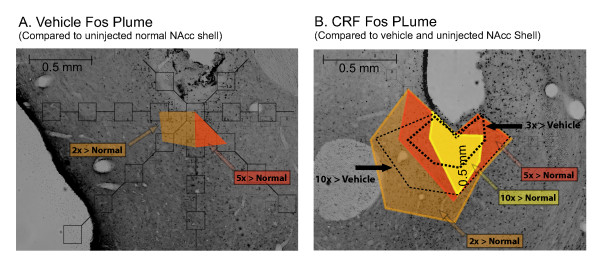
“Our procedure for measuring Fos plumes immediately surrounding a local microinjection site that are induced by drug was modified slightly from one previously described [43-45].”
Self-citationChronic stress and comfort foods: Self-medication and abdominal obesity
Dallman, M. F., Pecoraro, N. C., & la Fleur, S. E. (2005) · Brain, Behavior, and Immunity · doi:10.1016/j.bbi.2004.11.004 · Cited by 656 · cited 1×
“That seems consistent with demonstrations that HPA activation and glucocorticoid hormones may contribute to binge eating, drug addiction, and other excessive reward pursuits [22, 55 ].”
Protein A, avidin, and biotin in immunohistochemistry.
Hsu, S. M., & Raine, L. (1981) · Journal of Histochemistry & Cytochemistry · doi:10.1177/29.11.6172466 · Cited by 638
The involvement of nucleus accumbens dopamine in appetitive and aversive motivation
Salamone, J. D. (1994) · Behavioural Brain Research · doi:10.1016/0166-4328(94)90153-8 · Cited by 584 · cited 1×
“Interaction is compatible with reports that, for instance, aversive stressors can cause dopamine release in nucleus accumbens (which has sometimes been used to argue against a purely positive motivational role of dopamine) [50,51].”
Pecoraro, N., Reyes, F., Gomez, F., Bhargava, A., & Dallman, M. F. (2004) · Endocrinology · doi:10.1210/en.2004-0305 · Cited by 574 · cited 1×
“that individuals try to counteract by pursuing and consuming hedonic rewards [21,47].”
Souza, E. B. D., Insel, T. R., Perrin, M. H., Rivier, J., Vale, W., & Kuhar, M. J. (1985) · Journal of Neuroscience · doi:10.1523/jneurosci.05-12-03189.1985 · Cited by 478 · cited 1×
“Nucleus accumbens contains levels of CRF receptors that are comparable to those in amygdala [ 23-25 ].”
Swanson, L. W., & Simmons, D. M. (1989) · Journal of Comparative Neurology · doi:10.1002/cne.902850402 · Cited by 478 · cited 1×
“Thus, stress and glucocorticoids might 'energize' goal directed behaviors in part by activating CRF accumbens mechanisms that amplify the incentive salience of stimuli associated with reward [56,58].”
An Opponent-Process Theory of Motivation
Solomon, R. L., & Corbit, J. D. (2008) · Cited by 461
Beyond the reward hypothesis: alternative functions of nucleus accumbens dopamine
Salamone, J. D., Correa, M., Mingote, S., & Weber, S. (2004) · Current Opinion in Pharmacology · doi:10.1016/j.coph.2004.09.004 · Cited by 454 · cited 1×
“Interaction is compatible with reports that, for instance, aversive stressors can cause dopamine release in nucleus accumbens (which has sometimes been used to argue against a purely positive motivational role of dopamine) [50,51].”
Wyvell, C. L., & Berridge, K. C. (2001) · The Journal of Neuroscience · doi:10.1523/jneurosci.21-19-07831.2001 · Cited by 436 · cited 7×
“Whether CRF acts directly on nucleus accumbens circuits in ways comparable to dopamine, or interacts with dopamine release in nucleus accumbens, CRF release in nucleus accumbens might facilitate incentive salience mechanisms [27-31].”
InfluentialSelf-citationInteraction between glucocorticoid hormones, stress and psychostimulant drugs*
Marinelli, M., & Piazza, P. V. (2002) · European Journal of Neuroscience · doi:10.1046/j.1460-9568.2002.02089.x · Cited by 426
Peciña, S., & Berridge, K. C. (2000) · Brain Research · doi:10.1016/s0006-8993(00)02102-8 · Cited by 405
Self-citationReynolds, S. M., & Berridge, K. C. (2002) · The Journal of Neuroscience · doi:10.1523/jneurosci.22-16-07308.2002 · Cited by 403 · cited 1×
“Other neurochemical signals converging on the nucleus accumbens from mesocorticolimbic circuits could play roles in enhancing incentive salience too, either directly or by via dopamine modulation [18-20].”
Self-citationThe Ventral Pallidum and Hedonic Reward: Neurochemical Maps of Sucrose “Liking” and Food Intake
Smith, K. S., & Berridge, K. C. (2005) · Journal of Neuroscience · doi:10.1523/jneurosci.1902-05.2005 · Cited by 391 · cited 2×
“Our procedure for measuring Fos plumes immediately surrounding a local microinjection site that are induced by drug was modified slightly from one previously described [43-45].”
Self-citationRelations between Pavlovian-instrumental transfer and reinforcer devaluation
Holland, P. C. (2004) · Journal of Experimental Psychology: Animal Behavior Processes · doi:10.1037/0097-7403.30.2.104 · Cited by 388 · cited 1×
“Similar to previous PIT studies, we wished the CS- to serve as a control stimulus that was essentially irrelevant to reward and rewarded performance, rather than to suppress instrumental pressing as would either a novel stimulus or a strongly negative stimulus that was extensively paired with reward omission [ 59 ].”
Wang, B., Shaham, Y., Zitzman, D., Azari, S., Wise, R. A., & You, Z.-B. (2005) · The Journal of Neuroscience · doi:10.1523/jneurosci.0955-05.2005 · Cited by 369 · cited 1×
“Regardless of the role of dopamine per se in stress, CRF might interact with mesolimbic mechanisms of incentive salience in nucleus accumbens either directly or by modulating dopaminerelated and/or glutamate-related signals [52].”
Pathways to relapse: the neurobiology of drug- and stress-induced relapse to drug-taking.
Stewart, J. (2000) · PubMed Central · Cited by 361
Erb, S. M., & Stewart, J. (1999) · Journal of Neuroscience · doi:10.1523/jneurosci.19-20-j0006.1999 · Cited by 347 · cited 1×
“For example, cocaine administration also activates CRF expression in CRH-producing neurons in hypothalamus and amygdala [13] and CRF given intracerebroventricularly (ICV) or into the ventrolateral BNST can induce reinstatement of drug self-administration behavior in the absence of external stressors (though this last…”
Dissociation of Pavlovian and instrumental incentive learning under dopamine antagonists.
Dickinson, A., Smith, J. W., & Mirenowicz, J. (2000) · Behavioral Neuroscience · doi:10.1037//0735-7044.114.3.468 · Cited by 322 · cited 4×
“Whether CRF acts directly on nucleus accumbens circuits in ways comparable to dopamine, or interacts with dopamine release in nucleus accumbens, CRF release in nucleus accumbens might facilitate incentive salience mechanisms [ 27-31 ].”
InfluentialStolerman, I. P. (2010) · Springer eBooks · doi:10.1007/978-3-540-68706-1_4410 · Cited by 322
Corticotropin-releasing factor and behavior.
Koob, G. F., & Bloom, F. E. (1985) · PubMed · Cited by 290
Neuroadaptive mechanisms of addiction: studies on the extended amygdala
Koob, G. F. (2003) · European Neuropsychopharmacology · doi:10.1016/j.euroneuro.2003.08.005 · Cited by 285 · cited 2×
“that individuals try to counteract by pursuing and consuming hedonic rewards [21,47].”
Merali, Z., McIntosh, J. F., Kent, P., Michaud, D. S., & Anisman, H. (1998) · Journal of Neuroscience · doi:10.1523/jneurosci.18-12-04758.1998 · Cited by 268 · cited 1×
“For example, CRF release is increased in the central nucleus of the amygdala by spontaneous food ingestion [10, 15 ] and in prefrontal cortex by presentation of Pavlovian cues associated with food reward [10].”
Associations between the discriminative stimulus and the reinforcer in instrumental learning.
Colwill, R., & Rescorla, R. (1988) · Journal of Experimental Psychology Animal Behavior Processes · doi:10.1037/0097-7403.14.2.155 · Cited by 259 · cited 1×
“Similarly, approach suppression indicates that CRF did not potentiate discriminative instrumental responding (in which the CS+ might have acted as a discriminative stimulus (SD) to signal that instrumental approach would be reinforced, and this instrumental relation might later have been generalized to lever pressing…”
Makino, S., Gold, P. W., & Schulkin, J. A. (1994) · Brain Research · doi:10.1016/0006-8993(94)90961-x · Cited by 249 · cited 2×
“Glucocorticoids actually increase CRF expression in structures such as amygdala and BNST, and conceivably in accumbens shell too [ 56 ,57].”
Self-citationMakino, S., Schulkin, J. A., Smith, M. A., Pacák, K., Palkovits, M., & Gold, P. W. (1995) · Endocrinology · doi:10.1210/endo.136.10.7664672 · Cited by 193 · cited 1×
“Glucocorticoids actually increase CRF expression in structures such as amygdala and BNST, and conceivably in accumbens shell too [56, 57 ].”
Self-citationChronic Stress‐Induced Effects of Corticosterone on Brain: Direct and Indirect
Dallman, M. F., Akana, S. F., Strack, A. M., SCRIBNER, K. S., Pecoraro, N. C., la Fleur, S. E., Houshyar, H., & Gómez-Oliver, F. (2004) · Annals of the New York Academy of Sciences · doi:10.1196/annals.1296.017 · Cited by 167 · cited 3×
“For example, food intake and relapse into drug-taking in models of addiction are both increased by natural CRF-releasing stressors [ 6- 11 ].”
Reynolds, S. M., & Berridge, K. C. (2003) · European Journal of Neuroscience · doi:10.1046/j.1460-9568.2003.02642.x · Cited by 163 · cited 1×
“Other neurochemical signals converging on the nucleus accumbens from mesocorticolimbic circuits could play roles in enhancing incentive salience too, either directly or by via dopamine modulation [18-20].”
Self-citationCorticotropin releasing hormone receptors: two decades later
Aguilera, G., Nikodémová, M., WYNN, P. C., & Catt, K. J. (2004) · Peptides · doi:10.1016/j.peptides.2004.02.002 · Cited by 161 · cited 1×
“Nucleus accumbens contains levels of CRF receptors that are comparable to those in amygdala [23-25].”
New vistas in neuropeptide research in neuropsychiatry: focus on corticotropin-releasing factor.
Nemeroff, C. B. (1992) · PubMed · Cited by 136
Laugero, K. D., Bell, M. E., Bhatnagar, S., Soriano, L., & Dallman, M. F. (2001) · Endocrinology · doi:10.1210/endo.142.7.8250 · Cited by 123 · cited 1×
“Similarly, sucrose ingestion normalizes CRF levels in hypothalamus and amygdala in adrenalectomized rats [ 16 ].”
Pavlovian Processes in the Motivational Control of Instrumental Performance
Dickinson, A., & Dawson, G. (1987) · Quarterly Journal of Experimental Psychology · doi:10.1080/14640748708402264 · Cited by 118 · cited 1×
“It excludes nonincentive explanations related to stress or stress reduction as well as other alternative explanations for increased behavior (e.g., primary instrumental response reinforcement, secondary response reinforcement, discriminative stimulus occasion setting, general stress/frustration drive, Pavlovian S-R ha…”
Lim, M. M., Nair, H. P., & Young, L. J. (2005) · Journal of Comparative Neurology · doi:10.1002/cne.20532 · Cited by 95 · cited 1×
“Nucleus accumbens contains levels of CRF receptors that are comparable to those in amygdala [ 23-25 ].”
Swerdlow, N. R., & Koob, G. F. (1985) · Pharmacology Biochemistry and Behavior · doi:10.1016/0091-3057(85)90574-x · Cited by 92 · cited 1×
“Whether CRF acts directly on nucleus accumbens circuits in ways comparable to dopamine, or interacts with dopamine release in nucleus accumbens, CRF release in nucleus accumbens might facilitate incentive salience mechanisms [27-31].”
Effects of Alpha-Flupenthixol and Naloxone on CRF-Induced Locomotor Activation
Koob, G. F., Swerdlow, N. R., Seeligson, M., Eaves, M., Sutton, R. E., Rivier, J., & Vale, W. (2008) · Neuroendocrinology · doi:10.1159/000124021 · Cited by 78 · cited 1×
“Whether CRF acts directly on nucleus accumbens circuits in ways comparable to dopamine, or interacts with dopamine release in nucleus accumbens, CRF release in nucleus accumbens might facilitate incentive salience mechanisms [27-31].”
Asymmetrical interactions between thirst and hunger in Pavlovian-instrumental transfer.
Balleine, B. W. (1994) · PubMed · Cited by 75
Corticotropin-releasing factor induces a place aversion independent of its neuroendocrine role
Cador, M., Ahmed, S. H., Koob, G. F., Le Moal, M., & Stinus, L. (1992) · Brain Research · doi:10.1016/0006-8993(92)91487-y · Cited by 74 · cited 1×
“Motor arousal and aversive effects can be caused by intracerebral microinjections CRF [38-40].”
Macey, D. J., Koob, G. F., & Markou, A. (2000) · Brain Research · doi:10.1016/s0006-8993(00)02229-0 · Cited by 69 · cited 1×
“Similarly, CRF delivered to hypothalamus and amygdala may produce predominantly aversive effects, which typically suppress appetitive behaviors such as normal food intake [ 54 ].”
Autonomic and Behavioral Effects of Centrally Administered Corticotropin-Releasing Factor in Rats
Diamant, M., & de Wied, D. (1991) · Endocrinology · doi:10.1210/endo-129-1-446 · Cited by 62 · cited 1×
“Motor arousal and aversive effects can be caused by intracerebral microinjections CRF [38-40].”
Holahan, M. R., Kalin, N. H., & Kelley, A. E. (1997) · Psychopharmacology · doi:10.1007/s002130050228 · Cited by 60 · cited 2×
“CRF 250 and 500 ng doses were chosen because they have previously been found to produce grooming, sniffing and oral motor behavioral effects when microinjected in nucleus accumbens shell [ 48 ].”
Merali, Z., McIntosh, J. F., & Anisman, H. (2004) · Neuropsychopharmacology · doi:10.1038/sj.npp.1300441 · Cited by 49 · cited 4×
“, cue-triggered 'wanting' for a reward, but not necessarily 'liking' for the same reward) has been shown to depend in part on ascending dopamine projections to nucleus accumbens [8-11].”
InfluentialMotivational control of instrumental performance following a shift from thirst to hunger.
Dickinson, A., & Balleine, B. W. (1990) · PubMed · Cited by 46
Both conditioned taste preference and aversion induced by corticotropin-releasing factor
Heinrichs, S. C., Britton, K. T., & Koob, G. F. (1991) · Pharmacology Biochemistry and Behavior · doi:10.1016/0091-3057(91)90075-d · Cited by 46 · cited 1×
“Motor arousal and aversive effects can be caused by intracerebral microinjections CRF [ 38-40 ].”
Glucocorticoids dose-dependently remodel energy stores and amplify incentive relativity effects
Pecoraro, N. C., Gómez-Oliver, F., & Dallman, M. F. (2005) · Psychoneuroendocrinology · doi:10.1016/j.psyneuen.2005.03.010 · Cited by 42 · cited 2×
“, cue-triggered 'wanting' for a reward, but not necessarily 'liking' for the same reward) has been shown to depend in part on ascending dopamine projections to nucleus accumbens [8-11].”
Gurkovskaya, O. V., Palamarchouk, V. S., Smagin, G. N., & Goeders, N. E. (2005) · Synapse · doi:10.1002/syn.20172 · Cited by 17 · cited 1×
“For example, the CRF-1 antagonist CP-154,526 has been reported to increase cocaine-associated dopamine release, at least in rostral shell of nucleus accumbens and pre-frontal cortex [53], and so any speculation about the potential relation of CRF antagonists to incentive salience must await future empirical investigat…”
Research works printed but not linked: 1
- Toates FM: Motivational Systems. 1986, Cambridge: Cambridge University Press
Cited by
Sorted by citations
The debate over dopamine’s role in reward: the case for incentive salience
Berridge, K. C. (2007) · Psychopharmacology · doi:10.1007/s00213-006-0578-x · Cited by 2,347
Self-citationIkemoto, S. (2007) · Brain Research Reviews · doi:10.1016/j.brainresrev.2007.05.004 · Cited by 1,477
“Liking” and “wanting” food rewards: Brain substrates and roles in eating disorders
Berridge, K. C. (2009) · Physiology & Behavior · doi:10.1016/j.physbeh.2009.02.044 · Cited by 1,147
Self-citationThe tempted brain eats: Pleasure and desire circuits in obesity and eating disorders
Berridge, K. C., Ho, C.-Y., Richard, J. M., & DiFeliceantonio, A. G. (2010) · Brain Research · doi:10.1016/j.brainres.2010.04.003 · Cited by 873
Self-citationReward mechanisms in obesity: new insights and future directions
Kenny, P. J. (2011) · Neuron · doi:10.1016/j.neuron.2011.02.016 · Cited by 748
Metadata
- Authors
- Peciña, S., Schulkin, J., & Berridge, K. C.
- Affiliations
- University of Michigan (US)
- Georgetown University (US)
- Corresponding author
- Peciña, Susana
- Venue
- BMC Biology
- Published
- 2006-04-13
- Volume
- 4
- Issue
- 1
- Pages
- 8-8
- ISSN
- 1741-7007 (ISSN-L)
- PMC
- PMC1459217
- OpenAlex
- W1789705209
- Cited by
- 194
- References
- 64
- Citations by year
- 2026: 4 · 2025: 8 · 2024: 8 · 2023: 5 · 2022: 13 · 2021: 8 · 2020: 5 · 2019: 12 · 2018: 14 · 2017: 6 · 2016: 7 · 2015: 8 · 2014: 14 · 2013: 9 · 2012: 17
- FWCI
- 4.18
- Type
- journal article
- Language
- en
- Open access
- gold
- doi.org
- Licence
- cc-by
- Locations
- BMC Biology (publishedVersion, cc-by)
- PubMed Central (publishedVersion)
- PubMed (publishedVersion)
- Deep Blue (University of Michigan) (submittedVersion)
- DOAJ (DOAJ: Directory of Open Access Journals) (submittedVersion, cc-by-sa)
- Funders
- National Institutes of Health
- National Institute of Mental Health (MH-63649, R01MH063649)
- National Institute on Drug Abuse (DA015188, R01DA015188)
- Topics
- Life Sciences › Neuroscience › Cellular and Molecular Neuroscience › Neurotransmitter Receptor Influence on Behavior
- Life Sciences › Neuroscience › Behavioral Neuroscience › Stress Responses and Cortisol
- Life Sciences › Neuroscience › Cellular and Molecular Neuroscience › Neuropeptides and Animal Physiology
- Keywords
- corticotropin-releasing factor, nucleus accumbens shell, incentive salience, Pavlovian-to-instrumental transfer, sucrose reward, incentive motivation, stress, binge eating, amphetamine, reward cues
- MeSH terms
- Animals, Corticotropin-Releasing Hormone, Cues, Male, Microinjections, Motivation, Nucleus Accumbens, Reinforcement, Psychology, Reward, Stress, Physiological, Sucrose, Rats, Sprague-Dawley, Rats
About these checks
Registry, retraction, Cites and statistics results are computed, not judged, with one exception: a printed reference that no index lists is read once by a model before it counts as a citation error. Claims are extracted by a model and kept only when their quote appears verbatim in the text; each cited source is then checked, with a model’s help, for whether it says what the claim relies on. Those verdicts can be wrong — read the claim’s quote and the cited source before relying on one.
Statistics and arithmetic are recomputed, not judged.
Confidence bands are shown only for fields calibrated on our annotated test set. None is calibrated yet, so no band is shown.
What counts as a claim ›How we measure confidence ›How we check this ›
Are you an author, or do you see a problem with this page? Request a review
