

Meat consumption and mortality--results from the European Prospective Investigation into Cancer and Nutrition
Open accessThe DOI matches its Crossref record; 43 of the 43 references it cites were found in a registry or an index.
Abstract
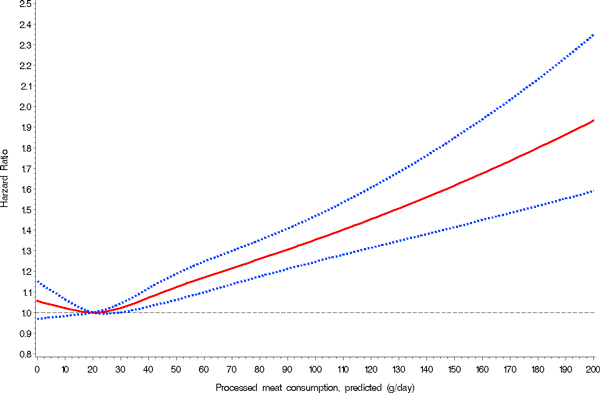
BACKGROUND: Recently, some US cohorts have shown a moderate association between red and processed meat consumption and mortality supporting the results of previous studies among vegetarians. The aim of this study was to examine the association of red meat, processed meat, and poultry consumption with the risk of early death in the European Prospective Investigation into Cancer and Nutrition (EPIC). METHODS: Included in the analysis were 448,568 men and women without prevalent cancer, stroke, or myocardial infarction, and with complete information on diet, smoking, physical activity and body mass index, who were between 35 and 69 years old at baseline. Cox proportional hazards regression was used to examine the association of meat consumption with all-cause and cause-specific mortality. RESULTS: As of June 2009, 26,344 deaths were observed. After multivariate adjustment, a high consumption of red meat was related to higher all-cause mortality (hazard ratio (HR) = 1.14, 95% confidence interval (CI) 1.01 to 1.28, 160+ versus 10 to 19.9 g/day), and the association was stronger for processed meat (HR = 1.44, 95% CI 1.24 to 1.66, 160+ versus 10 to 19.9 g/day). After correction for measurement error, higher all-cause mortality remained significant only for processed meat (HR = 1.18, 95% CI 1.11 to 1.25, per 50 g/d). We estimated that 3.3% (95% CI 1.5% to 5.0%) of deaths could be prevented if all participants had a processed meat consumption of less than 20 g/day. Significant associations with processed meat intake were observed for cardiovascular diseases, cancer, and 'other causes of death'. The consumption of poultry was not related to all-cause mortality. CONCLUSIONS: The results of our analysis support a moderate positive association between processed meat consumption and mortality, in particular due to cardiovascular diseases, but also to cancer.
Overview
The claims and statistics of this paper haven’t been checked yet.
Free: it reads the open-access text and checks the first 5 claims that cite a source we can check. Create a free account to check every claim.
Integrity signals
Registry
Cites
Statistics
Figures
Verification
Claims the paper makes
The claims and statistics of this paper haven’t been checked yet.
Free: it reads the open-access text and checks the first 5 claims that cite a source we can check. Create a free account to check every claim.
Claims other papers make about this one
Each is checked against this paper’s own text: does it say what the citing paper says it does?
The source backs part of the claim, not all of it — or backs it for a different population, condition or comparison.
In the citing paper
“numerous large scale epidemiological studies have noted a relationship between a Western diet, which is enriched in known nutrient TMAO precursors (e.g. choline, phosphatidylcholine and carnitine), and enhanced risk for myocardial infarction, stroke and death”
From Gut Microbial Metabolite TMAO Enhances Platelet Hyperreactivity and Thrombosis Risk (2016) · cites this paper as Rohrmann et al., 2013
Experimental — accuracy not yet measuredIn the citing paper
“There was a positive correlation between processed meat and mortality due to CVD observed in a study from the EPIC group (n > 400,000 people), but this association was specific to processed meat and was not seen with unprocessed meat, which has high L-carnitine and choline content (95).”
From Trimethylamine N -Oxide, the Microbiome, and Heart and Kidney Disease (2017) · cites this paper as [95]
In the citing paper
“In more recent analyses, red meats, particularly processed red meats, were associated with increased CVD, CHD, stroke, and cancer mortality, while poultry was not (170–172).”
From Food Consumption and its Impact on Cardiovascular Disease: Importance of Solutions Focused on the Globalized Food System (2015) · cites this paper as [170]
Self-check
Percentages, sums and reported differences re-computed from the paper’s own numbers.
The self-check needs the paper’s full text.
Citations
Cites
Food, nutrition, physical activity, and the prevention of cancer: a global perspective
(2008) · Choice Reviews Online · doi:10.5860/choice.45-5024 · Cited by 5,350
Riboli, E., Hunt, K., Slimani, N., Ferrari, P., Norat, T., Fahey, M., Charrondière, U., Hémon, B., Casagrande, C., Vignat, J., et al. (2002) · Public Health Nutrition · doi:10.1079/phn2002394 · Cited by 1,866 · cited 4×
“At recruitment, men were 40 to 70 and women 35 to 70 years old [18].”
InfluentialSelf-citationLazcano-Ponce, E. C. (2009) · Salud Pública de México · Cited by 1,669
Mozaffarian, D., Micha, R., & Wallace, S. (2010) · PLoS Medicine · doi:10.1371/journal.pmed.1000252 · Cited by 1,215 · cited 2×
“Both high saturated fat and cholesterol intake have been found to be related to the risk of coronary heart disease [2].”
BackgroundNorat, T., Bingham, S., Ferrari, P., Slimani, N., Jenab, M., Mazuir, M., Overvad, K., Olsen, A., Tjønneland, A., Clavel, F., et al. (2005) · JNCI: Journal of the National Cancer Institute · doi:10.1093/jnci/dji164 · Cited by 862 · cited 1×
“colorectal [29] and gastric [30] cancer with high meat, in particular processed meat, consumption.”
BackgroundSelf-citationWareham, N. J., Jakes, R. W., Rennie, K. L., Schuit, J., Mitchell, J., Hennings, S., & Day, N. E. (2003) · Public Health Nutrition · doi:10.1079/phn2002439 · Cited by 850 · cited 1×
“continuous), physical activity index (active, moderately active, moderately inactive, inactive, missing) [23], and education (none or primary school completed; technical/professional school; secondary school; university degree; missing).”
BackgroundSelf-citationRed Meat Consumption and Mortality: Results From 2 Prospective Cohort Studies
Sun, Q. (2012) · Archives of Internal Medicine · doi:10.1001/archinternmed.2011.2287 · Cited by 763
Meat Intake and Mortality: A Prospective Study of Over Half a Million People
Sinha, R., Cross, A. J., Graubard, B. I., Leitzmann, M. F., & Schatzkin, A. (2009) · Archives of Internal Medicine · doi:10.1001/archinternmed.2009.6 · Cited by 543 · cited 5×
“6 g/1,000 kcal/ day (the authors did not state the preventable fraction for men [8]).”
InfluentialFraser, G. E. (1999) · The American Journal of Clinical Nutrition · doi:10.1093/ajcn/70.3.532s · Cited by 489 · cited 2×
“Some prospective studies have evaluated the association between meat intake and mortality [6-17], but several of them were studies comparing meat consumers with vegetarians [9, 11,”
BackgroundResultAccuracy of Death Certificates for Coding Coronary Heart Disease as the Cause of Death
Lloyd-Jones, D. M., Martin, D. O., Larson, M. G., & Levy, D. (1998) · Annals of Internal Medicine · doi:10.7326/0003-4819-129-12-199812150-00005 · Cited by 480
Cited by
Items 201–300 of 460
Zhuang, P., Jiao, J., Wu, F. L., Mao, L., & Zhang, Y. (2020) · Clinical Nutrition · doi:10.1016/j.clnu.2020.06.040 · Cited by 16
Plant Proteins as Healthy, Sustainable and Integrative Meat Alternates
Kumar, S., Kumar, V., Sharma, R. K., Paul, A. A., Suthar, P., & Saini, R. (2021) · IntechOpen eBooks · doi:10.5772/intechopen.94094 · Cited by 21
Agarwal, S., Fulgoni, V. L. I., & Berg, E. P. (2015) · Nutrition Journal · doi:10.1186/s12937-015-0118-9 · Cited by 19
“High intake of processed meat was also implicated with increased risk of early death, in particular due to cardiovascular diseases and cancer, in a recently published European epidemiological study [34].”
BackgroundClemente‐Suárez, V. J., Redondo-Flórez, L., Beltrán-Velasco, A. I., Sepulveda, R. A. Y., Rubio-Zarapuz, A., Martín-Rodríguez, A., Navarro-Jiménez, E., & Tornero-Aguilera, J. F. (2025) · Metabolites · doi:10.3390/metabo15070453 · Cited by 21
Study of Functional Foods Consumption Patterns Among Decedents Dying Due to Various Causes of Death
Singh, R. B., Visen, P., Sharma, D., Sharma, S., Mondo, R., Sharma, J. P., Sharma, M., Tokunaga, M., Takahashi, T., Mishra, S., et al. (2015) · The Open Nutraceuticals Journal · doi:10.2174/1876396001508010016 · Cited by 17
“We also found that, Western type foods (red meat and eggs, refined foods) were positively associated with these causes of deaths, in both sexes [41].”
BackgroundSubramaniam, S., Boukhlouf, S., & Fletcher, C. (2019) · Blood Coagulation & Fibrinolysis · doi:10.1097/mbc.0000000000000838 · Cited by 15
Morel, S., Amre, D. K., Teasdale, E., Caru, M., Laverdière, C., Krajinović, M., Sinnett, D., Curnier, D. Y., Levy, E. H., & Marcil, V. (2019) · Nutrients · doi:10.3390/nu11122977 · Cited by 18
“However, lines of evidence suggested that diets high in red (beef, pork, lamb and veal) and processed meat (smoked, cured or preserved) are associated with the development of cardiovascular diseases [65,66], but this remains controversial [67–70].”
BackgroundStrategic nutrition: a vision for the twenty-first century
Temple, N. J. (2015) · Public Health Nutrition · doi:10.1017/s1368980014003292 · Cited by 18
Amiano, P., Chamosa, S., Etxezarreta, N., Arriola, L., Sánchez, M., Ardanáz, E., Molina‐Montes, E., Chirlaque, M., Moreno-Iribas, C., Huerta, J. M., et al. (2015) · European Journal of Clinical Nutrition · doi:10.1038/ejcn.2015.150 · Cited by 16
Self-citationAppleton, K. M. (2023) · Nutrients · doi:10.3390/nu15020470 · Cited by 14
Jensen, T. M. E., Braaten, T., Jacobsen, B. K., Ibsen, D. B., & Skeie, G. (2023) · British Journal Of Nutrition · doi:10.1017/s0007114523002040 · Cited by 14
“(9) , there are also indications of potential non-linear associations (7; 8; 17; 18) .”
BackgroundSelf-citationOleinikova, Y., Maksimovich, S., Khadzhibayeva, I., Khamedova, E., Zhaksylyk, A., & Alybayeva, A. (2025) · Food Production Processing and Nutrition · doi:10.1186/s43014-024-00305-w · Cited by 16
Williams, A. C., & Dunbar, R. (2014) · Medical Hypotheses · doi:10.1016/j.mehy.2014.04.003 · Cited by 15
“Among these disadvantages are obesity, heart disease, diabetes and cancers (whose frequencies all correlate positively with meat consumption, although the mechanism is not understood [14,15]).”
BackgroundMlambo, V., & Mnisi, C. M. (2019) · Outlook on Agriculture · doi:10.1177/0030727019840758 · Cited by 19
“Similarly, the European Prospective Investigation into Cancer and Nutrition (EPIC) found no significant correlation between meat consumption and mortality from colorectal cancer in a large group (448,568 men and women) of Europeans (Rohrmann et al., 2013).”
BackgroundTelecoupled impacts of livestock trade on non-communicable diseases
Chung, M. G., & Liu, J. (2019) · Globalization and Health · doi:10.1186/s12992-019-0481-y · Cited by 17
High Consumption of Red Meat Is Associated with Excess Mortality Among African-American Women
Li, S., Palmer, J. R., & Rosenberg, L. A. (2020) · Journal of Nutrition · doi:10.1093/jn/nxaa282 · Cited by 15
“A meta-analysis of red meat intake and cancer mortality in whites reported a HR of 1.09 (1.06, 1.12) for US participants and 1.06 (1.02, 1.10) for European participants per 1 serving/d increase (56).”
BackgroundInfluentialIdentifying the Key Success Factors of Plant-Based Food Brands in Europe
Rini, L., Schouteten, J. J., Faber, I., Bechtold, K.-B., Pérez-Cueto, F. J. A., Gellynck, X., & Steur, H. D. (2022) · Sustainability · doi:10.3390/su15010306 · Cited by 16
“Meat consumption increases the risk of chronic diseases, such as colorectal cancer, type 2 diabetes mellitus, and cardiovascular disease [5,7,8].”
BackgroundFoods and their components promoting gastrointestinal cancer
Muscaritoli, M., Amabile, M. I., & Molfino, A. (2016) · Current Opinion in Clinical Nutrition & Metabolic Care · doi:10.1097/mco.0000000000000309 · Cited by 14
“As processed meat consumption is a modifiable risk factor, health promotion activities should include specific advice on lowering processed meat consumption [16].”
BackgroundInfluentialFuseini, A., & Sulemana, I. (2018) · Food Ethics · doi:10.1007/s41055-018-0028-6 · Cited by 14
de Gavelle, E., Leroy, P. L., Perrimon, M., Huneau, J., Sirot, V., Orset, C., Fouillet, H., Soler, L. G., & Mariotti, F. (2019) · Climatic Change · doi:10.1007/s10584-019-02592-6 · Cited by 19
“Indeed, a high consumption of red and processed meats has been associated with a risk of colorectal cancer and cardiovascular diseases (Anses 2016b; Norat et al. 2005; Rohrmann et al. 2013) which are central to the disease burden in western countries (Bauer et al. 2014).”
BackgroundZhao, Z., Yin, Z., Hang, Z., Zhang, C., & Zhao, Q. (2017) · Oncotarget · doi:10.18632/oncotarget.23561 · Cited by 13
Goti, L., Fitzpatrick, M., Döring, R., Reid, D. G., Mumford, J. D., & Rindorf, A. (2018) · Marine Policy · doi:10.1016/j.marpol.2018.02.006 · Cited by 20
Zhang, R., Zhang, H., Wang, Y., Tang, L., Li, G., Huang, O., Chen, S., Targher, G., Byrne, C. D., Gu, B.-B., et al. (2023) · HepatoBiliary Surgery and Nutrition · doi:10.21037/hbsn-21-468 · Cited by 15
“%) and Europe (23%), and lowest in Africa and India (approximately 10”
Li, G., Jiang, J., & Li, Z. (2024) · European Journal of Preventive Cardiology · doi:10.1093/eurjpc/zwae117 · Cited by 13
Documento de consenso SEA/SEMERGEN 2019. Recomendaciones dietéticas en la prevención cardiovascular
Pascual, V., Pérez‐Martínez, P., Fernández, J. M., Solà, R., Pallarés‐Carratalá, V., Secin, A. A. R., Jiménez, F. P., & Ros, E. (2019) · Medicina de Familia SEMERGEN · doi:10.1016/j.semerg.2019.02.015 · Cited by 19
Stordalen, G. A., Rocklöv, J., Nilsson, M., & Byass, P. (2013) · Global Health Action · doi:10.3402/gha.v6i0.20513 · Cited by 16
“From a health perspective, the links between high consumption of red and processed meat and increased risks of death from cardiovascular disease and cancer have been shown (17), making the co-benefits of reduced consumption for both climate and health substantial.”
Backgroundde Roos, B., Binacchi, F., Whybrow, S., & Sneddon, A. A. (2016) · Public Health Nutrition · doi:10.1017/s1368980016002688 · Cited by 14
“Indeed, processed red meats may contain up to four times more salt than fresh meats(10), perhaps explaining why fresh meat consumption has a low correlation with the incidence of CVD whereas consumption of processed meat is positively linked to CVD(11).”
BackgroundInfluentialWu, X., Roussell, M. A., Hill, A. M., Kris‐Etherton, P. M., & Walzem, R. L. (2021) · Nutrients · doi:10.3390/nu13124328 · Cited by 12
The Role of Nutrition and Physical Activity in Cholesterol and Aging
Ribeiro, S. M. L., Luz, S. D. S., & de Aquino, R. D. C. (2015) · Clinics in Geriatric Medicine · doi:10.1016/j.cger.2015.04.010 · Cited by 17
Paveljšek, D., Pertziger, E., Fardet, A., Panagiotakos, D. B., Savary‐Auzeloux, I., Adamberg, S., Peñas, E., Frías, J., Ntantou, A., Diamantoglou, I., et al. (2025) · Frontiers in Nutrition · doi:10.3389/fnut.2025.1657100 · Cited by 12
Meat composition and nutritional value
Wood, J. D. (2022) · Elsevier eBooks · doi:10.1016/b978-0-323-85408-5.00012-1 · Cited by 20
Veganism - a Fashion Trend or Food as a Medicine
Jovandarić, M. Z. (2020) · IntechOpen eBooks · doi:10.5772/intechopen.78107 · Cited by 14
Ottersen, I. S., Benningstad, N. C. G., & Kunst, J. R. (2022) · Cleaner and Responsible Consumption · doi:10.1016/j.clrc.2022.100068 · Cited by 16
Blank, J. T., Helena, E. T. D. S., Damasceno, N. R. T., Santos, R. D., Markus, M. R. P., & de Azevedo, L. C. (2023) · Ciência & Saúde Coletiva · doi:10.1590/1413-81232023281.01932022 · Cited by 11
Saganuwan, S. A. (2015) · Journal of Cancer Science & Therapy · doi:10.4172/1948-5956.1000319 · Cited by 10
“There is a moderate positive association between processed meat consumption and mortality in particular due to cardiovascular diseases, and some forms of cancers [19].”
BackgroundWang, D., Campos, H., & Baylín, A. (2017) · British Journal Of Nutrition · doi:10.1017/s000711451700201x · Cited by 11
Faraj, T. A., Stover, C. M., & Erridge, C. (2019) · Frontiers in Immunology · doi:10.3389/fimmu.2019.01404 · Cited by 10
Bhuva, V., Morya, S., & Borah, A. (2021) · The Pharma Innovation · doi:10.22271/tpi.2021.v10.i5o.6366 · Cited by 10
“meat is directly correlated to various disease which may become life-threatening ([19]).”
BackgroundAnimal source foods consumed in two fishing communities on the northeast coast of Brazil
Pinto, M. F., Mourão, J. D. S., & Alves, R. R. N. (2016) · Environment Development and Sustainability · doi:10.1007/s10668-016-9758-y · Cited by 12
“Diets having a high consumption of processed meats accentuate the appearance of chronic diseases such as cardiovascular diseases, diabetes, cancer and also early deaths (Monteiro et al. 1995; Popkin 2006; Rohrmann et al. 2013).”
BackgroundFeng, Y., Powell, L., Vassallo, A. J., Hamer, M., & Stamatakis, E. (2020) · International Journal of Cancer · doi:10.1002/ijc.33052 · Cited by 12
“Age, median (IQR), years 52 (40-69) 58 (45-69) 51 (40-64) 50 (39-64) 47 (38-59) 47 (38-56)”
Vezovnik, A., & Kamin, T. (2024) · Sustainability · doi:10.3390/su16209027 · Cited by 9
Lo, Y. C., Wahlqvist, M. L., Huang, Y.-C., & Lee, M. (2016) · British Journal Of Nutrition · doi:10.1017/s0007114515005140 · Cited by 9
“Notably, poultry consumption has not been associated with all-cause mortality((9)).”
BackgroundDominguez, L. J., & Barbagallo, M. (2017) · Elsevier eBooks · doi:10.1016/b978-0-12-811259-5.00003-2 · Cited by 9
Nitrosamine in meat and meat products: a review
Gilani, P. S., Fesahat, M., & Shariatifar, N. (2024) · Journal of Food Safety and Hygiene · doi:10.18502/jfsh.v9i4.14998 · Cited by 9
Pouzou, J. G., & Zagmutt, F. J. (2024) · Advances in Nutrition · doi:10.1016/j.advnut.2024.100214 · Cited by 12
“Seven studies [98 – 104] were excluded because they examined duplicate cohorts.”
ResultAnimal Products and Human Nutrition
Scanes, C. G. (2017) · Elsevier eBooks · doi:10.1016/b978-0-12-805247-1.00003-4 · Cited by 16
Grau, N., Mohammadifard, N., Hassannejhad, R., Haghighatdoost, F., Sadeghi, M., Talaei, M., Sajjadi, F., Mavrommatis, Y., & Sarrafzadegan, N. (2021) · International Journal of Food Sciences and Nutrition · doi:10.1080/09637486.2021.1993797 · Cited by 9
“However, several large cohort studies have reported that while processed meat has certainly an adverse association with CVD, there is still uncertainty about the association with unprocessed red meat (Rohrmann et al. 2013; Johnston et al. 2019; Zhong et al. 2020).”
Increased biting rate and decreased Wolbachia density in irradiated Aedes mosquitoes
Moretti, R., Lampazzi, E., Damiani, C., Fabbri, G., Lombardi, G., Pioli, C., Desiderio, A., Serrao, A., & Calvitti, M. (2022) · Parasites & Vectors · doi:10.1186/s13071-022-05188-9 · Cited by 9
Bolger, Z., Grasso, S., Brunton, N. P., MOLONEY, A. P., Hamill, R. M., & Monahan, F. J. (2022) · LWT · doi:10.1016/j.lwt.2022.113808 · Cited by 12
Evaluation the Antimicrobial Activity of Artemisia and Portulaca Plant Extracts in Beef Burger
Al‐Moghazy, M., AMMAR, M. S., Sief, M. M., & Mohamed, S. R. (2017) · Food Science and Nutrition Studies · doi:10.22158/fsns.v1n1p31 · Cited by 9
Livestock-derived foods and sustainable healthy diets
Iannotti, L. L., Tarawali, S. A., Baltenweck, I., Ericksen, P., Bett, B., Grace, D., Cartmill, M. K., Njoro, J., Rota, A., de Pee, S., et al. (2021) · CGSPace A Repository of Agricultural Research Outputs (Consultative Group for International Agricultural Research) · Cited by 20
Kling, N. R., Rosentrater, K. A., Lee, D.-C., Brellenthin, A. G., & Lanningham‐Foster, L. (2023) · Frontiers in Sustainable Food Systems · doi:10.3389/fsufs.2023.1145272 · Cited by 10
“Overconsumption of red meat, especially processed forms, can increase risk for chronic diseases, particularly cardiovascular disease, and mortality (Pan et al., 2012; Rohrmann et al., 2013).”
BackgroundFeinberg, A., Rebholz, C. M., Lemaître, R. N., Fretts, A. M., Wiggins, K. L., Sotoodehnia, N., Psaty, B. M., & Kim, H. (2025) · American Journal of Clinical Nutrition · doi:10.1016/j.ajcnut.2025.05.033 · Cited by 9
Production of Meat and Milk from Grass in the United Kingdom
Barbour, R. H., Young, R. H., & Wilkinson, J. M. (2022) · Agronomy · doi:10.3390/agronomy12040914 · Cited by 8
“In contrast, poultry meat has frequently been associated with lower health and environmental impacts than beef and lamb, including those related to cancer, heart disease, biodiversity loss, land and water use and eutrophication [3,6,7].”
BackgroundExecutive summary: Updates to the dietary treatment of prediabetes and type 2 diabetes mellitus
Fuster, V. P., Pérez, A., Carretero‐Gómez, J., Caixàs, A., Gómez‐Huelgas, R., & Pérez‐Martínez, P. (2021) · Endocrinología Diabetes y Nutrición (English ed ) · doi:10.1016/j.endien.2020.10.008 · Cited by 16
Nassir, C. M. N. C. M., Ghazali, M. M., Hashim, S., Idris, N. S., Yuen, L. S., Hui, W. J., Norman, H. H., Gau, C. H., Jayabalan, N., Na, Y., et al. (2021) · Frontiers in Cardiovascular Medicine · doi:10.3389/fcvm.2021.632131 · Cited by 11
“Therefore, high intake of processed or unprocessed red meat is associated with higher incidence of vascular microthromboembolism, hence a higher burden of T2DM, risk of metabolic syndrome, colorectal cancer, and stroke (with an increased risk of ischemic stroke by 24%) (253, 254).”
BackgroundExecutive summary: Updates to the dietary treatment of prediabetes and type 2 diabetes mellitus
Fuster, V. P., Pérez, A., Carretero‐Gómez, J., Caixàs, A., Gómez‐Huelgas, R., & Pérez‐Martínez, P. (2021) · Clínica e Investigación en Arteriosclerosis (English Edition) · doi:10.1016/j.artere.2020.11.006 · Cited by 9
Oxygen-Carrying Proteins in Meat and Risk of Diabetes Mellitus
Evans, W. J. (2013) · JAMA Internal Medicine · doi:10.1001/jamainternmed.2013.7399 · Cited by 9
Red Meat and Health: Evidence Regarding Red Meat, Health, and Chronic Disease Risk
Marsh, K. A., Saunders, A. V., & Zeuschner, C. L. (2015) · Practice, progress, and proficiency in sustainability · doi:10.4018/978-1-4666-9553-5.ch008 · Cited by 11
Wood, J. D., & Scollan, N. D. (2022) · Elsevier eBooks · doi:10.1016/b978-0-323-85879-3.00008-8 · Cited by 9
Fields, H. E., Millstine, D. M., Agrwal, N., & Marks, L. A. (2016) · Journal of Osteopathic Medicine · doi:10.7556/jaoa.2016.059 · Cited by 11
Executive summary: Updates to the dietary treatment of prediabetes and type 2 diabetes mellitus
Fuster, V. P., Pérez, A., Carretero‐Gómez, J., Caixàs, A., Gómez‐Huelgas, R., & Pérez‐Martínez, P. (2021) · Revista Clínica Española (English Edition) · doi:10.1016/j.rceng.2020.10.002 · Cited by 10
Lee, S.-H., Lee, S.-H., Park, H.-B., & Kim, J. (2022) · Meat Science · doi:10.1016/j.meatsci.2022.109015 · Cited by 7
Wu, Y., Wang, M., Long, Z., Ye, J., Cao, Y., Pei, B., Gao, Y., Yu, Y., Han, Z., Wang, F., et al. (2023) · Nutrients · doi:10.3390/nu15153373 · Cited by 9
Pascual, V., Pérez‐Martínez, P., Fernández, J. M., Solà, R., Pallarés‐Carratalá, V., Secin, A. A. R., Jiménez, F. P., & Ros, E. (2019) · Clínica e Investigación en Arteriosclerosis (English Edition) · doi:10.1016/j.artere.2019.02.006 · Cited by 8
Fusco, S. A. D., Spinelli, A., Castello, L., Marino, G., Maraschi, I., Gulizia, M. M., Gabrielli, D., & Colivicchi, F. (2021) · Circulation Journal · doi:10.1253/circj.cj-21-0459 · Cited by 8
The Mediterranean Way of Eating: Evidence for Chronic Disease Prevention and Weight Management
Anderson, J. J. B., & Sparling, M. C. (2014) · CRC Press eBooks · doi:10.1201/b17032 · Cited by 7
Dietary influences on urinary tract infections: unraveling the gut microbiota connection
Du, Y., Sui, X., Bai, Y., Shi, Z., Liu, B., Zheng, Z., Zhang, Z., Zhao, Y., Wang, J., Zhang, Q., et al. (2024) · Food & Function · doi:10.1039/d4fo03271c · Cited by 9
Abdullah, F. A. A., Pospiech, M., Đorđević, Đ., & Kabourková, E. (2024) · Applied Sciences · doi:10.3390/app142411513 · Cited by 8
Fuster, V. P., Pérez, A., Carretero‐Gómez, J., Caixàs, A., Gómez‐Huelgas, R., & Pérez‐Martínez, P. (2021) · Endocrinología Diabetes y Nutrición · doi:10.1016/j.endinu.2020.10.009 · Cited by 11
Chrysant, S. G., & Chrysant, G. S. (2021) · Cardiology in Review · doi:10.1097/crd.0000000000000392 · Cited by 6
“From a physiological point of view, red meat consumption has several nutritional benefits (eg, protein, iron, zinc, folate, and vitamins A and B), but also several drawbacks due to the high content in total cholesterol, low-density lipoprotein cholesterol, and saturated fatty acids.(2) The high content of cholesterol…”
BackgroundStürmer, J., Franken, D. L., Ternus, D. L., Henn, R. L., da Costa, J. S. D., Olinto, M. T. A., & Paniz, V. M. V. (2022) · Clinical Nutrition ESPEN · doi:10.1016/j.clnesp.2022.06.105 · Cited by 7
Faraj, T. A., Edroos, G., & Erridge, C. (2024) · Food and Chemical Toxicology · doi:10.1016/j.fct.2024.114539 · Cited by 7
Noncommunicable Diseases of Major Public Health Interest and Prevention
Bueno-de-Mesquita, H. B. (2015) · Asia Pacific Journal of Public Health · doi:10.1177/1010539515594445 · Cited by 6
Self-citationMiles, F. L., Chang, S., Morgenstern, H., Tashkin, D. P., Rao, J.-Y., Cozen, W., Mack, T. M., Lu, Q., & Zhang, Z. (2016) · Nutrition Research · doi:10.1016/j.nutres.2016.01.006 · Cited by 7
“While red or processed meat consumption has been reported to be associated with overall mortality from cardiovascular disease and cancer in general, as well as mortality among colorectal cancer patients [22-24], such an association with head and neck cancers has not been reported previously, in spite of the reported a…”
BackgroundPersonalized nutrition and omics technologies
Braconi, D., Cicaloni, V., Spiga, O., & Santucci, A. (2021) · Elsevier eBooks · doi:10.1016/b978-0-12-821470-1.00007-0 · Cited by 7
Yang, C., Jiang, X., Du, H., Li, Q., Zhang, Z., Qiu, M., & Yu, C. (2021) · IOP Conference Series Earth and Environmental Science · doi:10.1088/1755-1315/705/1/012025 · Cited by 6
The possible importance of income and education as covariates in cohort studies
Temple, N. J. (2015) · F1000Research · doi:10.12688/f1000research.6929.1 · Cited by 6
Red Meat and Health: Evidence Regarding Red Meat, Health, and Chronic Disease Risk
Marsh, K. A., Saunders, A. V., & Zeuschner, C. L. (2016) · IGI Global eBooks · doi:10.4018/978-1-5225-0549-5.ch007 · Cited by 10
“…and cardiovascular and cancer mortality, are also increased with higher intakes of meat, and in particular processed meat (Larsson & Orsini, 2014; Sinha, Cross, Graubard, Leitzmann & Schatzkin, 2009; Pan et al., 2012; Rohrmann et al., 2013; Abete, Romaguera, Vieira, Lopez de Munain & Norat, 2014).”
BackgroundBeing a Vegetarian: Health Benefits and Hazards
Stanišić, S., Marković, V., Šarčević, D., Baltić, M. Ž., Bošković, M., Popović, M. B., & Kilibarda, N. (2018) · Meat Technology · doi:10.18485/meattech.2018.59.1.8 · Cited by 8
Espinosa, R. (2019) · Revue d économie politique · doi:10.3917/redp.293.0287 · Cited by 13
“32 Table 1 – Suite de la page précédente Référence Extrait Rohrmann et al. (2013) « En contrôlant pour de multiples facteurs, une consommation élevée de viande rouge était liée à une mortalité plus forte toutes causes confondues [...] et cette association s’est avérée plus forte pour la viande…”
BackgroundZhang, H., Gan, M., Wu, Q., Dan, H., Chen, L., Niu, L., Zhao, Y., Wang, Y., Zhu, L., & Shen, L. (2025) · Food Chemistry X · doi:10.1016/j.fochx.2025.103211 · Cited by 5
Law, M., Villar, S. S., Oscroft, N. S., Stoneman, V. E. A., Fox-Rushby, J. A., Chiu, Y., Steele, J., Devine, T., Francis, C. E., Claydon, T., et al. (2023) · Trials · doi:10.1186/s13063-023-07484-w · Cited by 7
Suitability of microalgae and fungi in meat analogs: an overview
Okechukwu, Q. N., Adepoju, F. O., Hassani, M. I., Kovaleva, E. G., Rao, A. R., & Ravishankar, G. A. (2024) · Elsevier eBooks · doi:10.1016/b978-0-443-21846-0.00017-4 · Cited by 6
Jang, H.-W., & Cho, M. (2022) · Sustainability · doi:10.3390/su14105812 · Cited by 5
Jenny Ruedlinger, S., Vicente Cid, O., Huidobro, A., Wyngard, V. V. D., Vargas, C., & Ferreccio, C. (2022) · Frontiers in Public Health · doi:10.3389/fpubh.2022.960997 · Cited by 6
“Ultrasound fatty liver Yes (any degree) (3,579) 47.”
BackgroundResultPersonalized nutrition, personalized medicine, and microbiome therapeutics
Chauhan, N. S. (2023) · Elsevier eBooks · doi:10.1016/b978-0-323-99336-4.00017-3 · Cited by 13
Daneshniya, M., Maleki, M. H., & Daneshniya, M. R. (2023) · European Journal of Nutrition & Food Safety · doi:10.9734/ejnfs/2023/v15i91338 · Cited by 8
Mahajan, H., Mallinson, P. A. C., Lieber, J., Bhogadi, S., Banjara, S. K., Reddy, V., Reddy, G. B., Kulkarni, B., & Kinra, S. (2024) · Nutrients · doi:10.3390/nu16050746 · Cited by 5
Do Norwegians with diabetes have a healthier diet than the general population?
Aas, A., Johansson, L., Bjerkan, K. K., Lorentsen, N., & Mostad, I. L. (2013) · Norsk Epidemiologi · doi:10.5324/nje.v23i1.1604 · Cited by 7
“Recently, mortality due to CVD, but also to cancer, was reported to be associated with the consumption of processed meat in a European prospective study comprising about 450 000 men and women (55).”
BackgroundScenarios for transforming the UK food system to meet global agreements
Elliott, M., & Bhunnoo, R. (2021) · Nature Food · doi:10.1038/s43016-021-00257-1 · Cited by 9
Riggi, E., Baccini, M., Camussi, E., Gallo, F., Anatrone, C., Pezzana, A., Senore, C., Giordano, L., & Segnan, N. (2022) · Journal of Public Health Research · doi:10.1177/22799036221106542 · Cited by 6
Gesundheitliche Aspekte des Fleischkonsums
Richi, E. B., Baumer, B., Conrad, B., Darioli, R., Schmid, A., & Keller, U. B. (2015) · Swiss Medical Forum ‒ Schweizerisches Medizin-Forum · doi:10.4414/smf.2015.02296 · Cited by 5
“ziert [15]; sie bestätigten die Befunde der amerikanischen Kohorten [13, 14]: Erhöhter Konsum von rotem Fleisch (>160 g vs.”
BackgroundImpacts of Reducing UK Beef Consumption Using a Revised Sustainable Diets Framework
Chalmers, N., Stetkiewicz, S., Sudhakar, P., Osei-Kwasi, H., & Reynolds, C. J. (2019) · Sustainability · doi:10.3390/su11236863 · Cited by 7
“The majority of evidence linking meat intake with diseases comes from observational studies which, while useful sources of information, can have problems with errors in epidemiology such as confounding bias relative to randomised controlled trials [22,23].”
BackgroundRetrospective Evaluation of an Online Diabetes Health Coaching Program: A Pilot Study
Sarver, J., Khambatta, C., Barbaro, R., Chavan, B. B., & Drozek, D. S. (2019) · American Journal of Lifestyle Medicine · doi:10.1177/1559827619879106 · Cited by 6
“In addition, a growing body of large-scale epidemiological research shows that diets low in carbohydrate energy not only increase chronic disease risk but also increase the risk of all-cause mortality.(44-52) The first studies to report the effect of increased dietary fat on insulin resistance were published as far ba…”
BackgroundYou Are What You Eat, Hence Curtail Saturated and Trans Fats, Free Sugars and Salt
Manolis, A. S. (2016) · Hospital chronicles/Hospital Chronicles · doi:10.2015/hc.v11i2.758 · Cited by 8
Complexity: The Tipping Point for Leadership
Ram, K. (2018) · Springer eBooks · doi:10.1007/978-3-319-73870-3_4 · Cited by 5
Free Radicals Mediated Epigenetic Changes and Breast Cancer Progression
Suresh, P. S., Nanda, N., & Thankachan, S. (2021) · Springer eBooks · doi:10.1007/978-981-15-4501-6_107-1 · Cited by 4
High Protein Foods: A Comparison of Animal Origin vs Plant Origin
Iqbal, S. (2022) · Springer eBooks · doi:10.1007/978-3-030-91206-2_1 · Cited by 8
Comparing Lifestyle Modifications and the Magnitude of Their Associated Benefit on Cancer Mortality
Dougherty, T. P., & Meyer, J. E. (2023) · Nutrients · doi:10.3390/nu15092038 · Cited by 5
“When combing additional studies [21,40,41] to the Pan and Sinha papers, the Wang meta-analysis showed that intake of each additional serving of processed red meat per day intake increases cancer mortality risk by 8% (HR = 1.”
Method
Metadata
- Authors
- Rohrmann, S., Overvad, K., Bueno-de-Mesquita, H. B., Jakobsen, M. U., Egeberg, R., Tjønneland, A., Nailler, L., Boutron-Ruault, M.-C., Clavel-Chapelon, F., Krogh, V., Palli, D., Panico, S., Tumino, R., Ricceri, F., Bergmann, M. M., Boeing, H., Li, K., Kaaks, R., Khaw, K.-T., Wareham, N. J., Crowe, F. L., Key, T. J., Naska, A., Trichopoulou, A., Trichopoulos, D., Leenders, M., Peeters, P. H., Engeset, D., Parr, C. L., Skeie, G., Jakszyn, P., Sánchez, M.-J., Huerta, J. M., Redondo, M. L., Barricarte, A., Amiano, P., Drake, I., Sonestedt, E., Hallmans, G., Johansson, I., Fedirko, V., Romieux, I., Ferrari, P., Norat, T., Vergnaud, A. C., Riboli, E., & Linseisen, J.
- Affiliations
- University of Zurich (CH)
- Aarhus University (DK)
- University Medical Center Utrecht (NL)
- Danish Cancer Society (DK)
- Inserm (FR)
- Fondazione IRCCS Istituto Nazionale dei Tumori (IT)
- Federico II University Hospital (IT)
- Italian institute for Genomic Medicine (IT)
- German Institute of Human Nutrition (DE)
- German Cancer Research Center (DE)
- University of Cambridge (GB)
- MRC Epidemiology Unit (GB)
- University of Oxford (GB)
- National and Kapodistrian University of Athens (GR)
- Harvard University (US)
- UiT The Arctic University of Norway (NO)
- University of Oslo (NO)
- Institut Català d'Oncologia (ES)
- Centro de Investigación Biomédica en Red de Epidemiología y Salud Pública (ES)
- Andalusian School of Public Health (ES)
- Gobierno del Principado de Asturias (ES)
- Instituto de Salud Pública de Navarra (ES)
- Basque Government (ES)
- Lund University (SE)
- Umeå University (SE)
- Centre international de recherche sur le cancer (FR)
- Imperial College London (GB)
- Corresponding author
- Rohrmann, Sabine
- ORCID
- Rohrmann, Sabine
- Overvad, Kim
- Jakobsen, Marianne U
- Tjønneland, Anne
- Krogh, Vittorio
- Palli, Domenico
- Panico, Salvatore
- Tumino, Rosario
- Ricceri, Fulvio
- Bergmann, Manuela M
- Boeing, Heiner
- Li, Kuanrong
- Kaaks, Rudolf
- Khaw, Kay-Tee
- Wareham, Nicholas J
- Crowe, Francesca L
- Key, Timothy J
- Naska, Androniki
- Trichopoulou, Antonia
- Peeters, Petra HM
- Engeset, Dagrun
- Parr, Christine L
- Skeie, Guri
- Jakszyn, Paula
- Sánchez, María-José
- Huerta, José M
- Barricarte, Aurelio
- Amiano, Pilar
- Drake, Isabel
- Sonestedt, Emily
- Johansson, Ingegerd
- Fedirko, Veronika
- Ferrari, Pietro
- Linseisen, Jakob
- Venue
- BMC Medicine
- Published
- 2013-03-07
- Volume
- 11
- Issue
- 1
- Pages
- 63-63
- ISSN
- 1741-7015 (ISSN-L)
- PMC
- PMC3599112
- OpenAlex
- W2168476314
- Cited by
- 454
- References
- 43
- Citations by year
- 2026: 15 · 2025: 23 · 2024: 42 · 2023: 21 · 2022: 44 · 2021: 40 · 2020: 31 · 2019: 38 · 2018: 30 · 2017: 38 · 2016: 37 · 2015: 43 · 2014: 31 · 2013: 21
- FWCI
- 44.88
- Type
- journal article
- Language
- en
- Open access
- gold
- doi.org
- Licence
- Locations
- BMC Medicine (publishedVersion, cc-by)
- Europe PMC (PubMed Central) (publishedVersion, cc-by)
- PubMed Central (publishedVersion, cc-by)
- PubMed (publishedVersion)
- Zurich Open Repository and Archive (University of Zurich) (acceptedVersion, cc-by)
- HAL (submittedVersion, other-oa)
- KTH Publication Database DiVA (KTH Royal Institute of Technology) (submittedVersion, other-oa)
- Institutional Research Information System University of Turin (University of Turin) (submittedVersion)
- Lund University Publications (Lund University) (submittedVersion, other-oa)
- NORA - Norwegian Open Research Archives (submittedVersion, other-oa)
- Site cant be reached (submittedVersion, cc-by)
- OPUS (Augsburg University) (submittedVersion, cc-by)
- NORA - Norwegian Open Research Archives (submittedVersion, cc-by)
- RISalud Institutional Health Repository of Andalucía (submittedVersion, other-oa)
- Apollo (University of Cambridge) (submittedVersion, cc-by)
- Zurich Open Repository and Archive (University of Zurich) (submittedVersion, cc-by)
- Zurich Open Repository and Archive (University of Zurich)
- Funders
- Deutsches Krebsforschungszentrum
- Kreftforeningen
- Wellcome Trust
- Cancer Research UK (14136)
- National Institute for Health and Care Research
- British Heart Foundation
- European Commission
- Institut National de la Santé et de la Recherche Médicale
- Bundesministerium für Bildung und Forschung
- Cancerfonden
- Ligue Contre le Cancer
- Stavros Niarchos Foundation
- NordForsk
- Associazione Italiana per la Ricerca sul Cancro
- Deutsche Krebshilfe
- Institut Gustave-Roussy
- Mutuelle Générale de l'Education Nationale
- Hellenic Health Foundation
- Medical Research Council
- World Cancer Research Fund
- Instituto de Salud Carlos III (C03/09)
- Topics
- Health Sciences › Medicine › Public Health, Environmental and Occupational Health › Nutritional Studies and Diet
- Physical Sciences › Environmental Science › Ecology › Agriculture Sustainability and Environmental Impact
- Life Sciences › Agricultural and Biological Sciences › Animal Science and Zoology › Meat and Animal Product Quality
- Keywords
- meat consumption, red meat, processed meat, poultry, mortality, all-cause mortality, cardiovascular mortality, cancer mortality, dietary risk factors, EPIC cohort
- MeSH terms
- Adult, Aged, Cardiovascular Diseases, Diet, Feeding Behavior, Female, Humans, Male, Meat, Middle Aged, Neoplasms, Nutrition Surveys, Prospective Studies, United States, Cohort Studies, Survival Analysis
About these checks
Registry, retraction, Cites and statistics results are computed, not judged, with one exception: a printed reference that no index lists is read once by a model before it counts as a citation error. Claims are extracted by a model and kept only when their quote appears verbatim in the text; each cited source is then checked, with a model’s help, for whether it says what the claim relies on. Those verdicts can be wrong — read the claim’s quote and the cited source before relying on one.
Statistics and arithmetic are recomputed, not judged.
Confidence bands are shown only for fields calibrated on our annotated test set. None is calibrated yet, so no band is shown.
What counts as a claim ›How we measure confidence ›How we check this ›
Are you an author, or do you see a problem with this page? Request a review
Data sources
Bibliographic data: Semantic Scholar, OpenAlex, Crossref.
Contains information from the Semantic Scholar Academic Graph Datasets, made available under the ODC Attribution License (ODC-BY 1.0).
Semantic Scholar’s data is described in: Kinney, R., et al. (2023). The Semantic Scholar Open Data Platform. arXiv:2301.10140.
