

Meat consumption and mortality--results from the European Prospective Investigation into Cancer and Nutrition
Open accessThe DOI matches its Crossref record; 43 of the 43 references it cites were found in a registry or an index.
Abstract
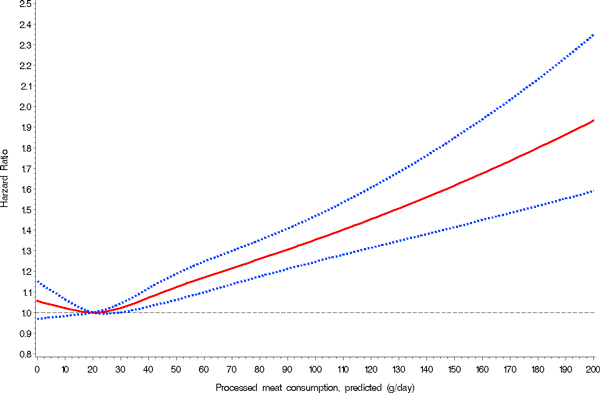
BACKGROUND: Recently, some US cohorts have shown a moderate association between red and processed meat consumption and mortality supporting the results of previous studies among vegetarians. The aim of this study was to examine the association of red meat, processed meat, and poultry consumption with the risk of early death in the European Prospective Investigation into Cancer and Nutrition (EPIC). METHODS: Included in the analysis were 448,568 men and women without prevalent cancer, stroke, or myocardial infarction, and with complete information on diet, smoking, physical activity and body mass index, who were between 35 and 69 years old at baseline. Cox proportional hazards regression was used to examine the association of meat consumption with all-cause and cause-specific mortality. RESULTS: As of June 2009, 26,344 deaths were observed. After multivariate adjustment, a high consumption of red meat was related to higher all-cause mortality (hazard ratio (HR) = 1.14, 95% confidence interval (CI) 1.01 to 1.28, 160+ versus 10 to 19.9 g/day), and the association was stronger for processed meat (HR = 1.44, 95% CI 1.24 to 1.66, 160+ versus 10 to 19.9 g/day). After correction for measurement error, higher all-cause mortality remained significant only for processed meat (HR = 1.18, 95% CI 1.11 to 1.25, per 50 g/d). We estimated that 3.3% (95% CI 1.5% to 5.0%) of deaths could be prevented if all participants had a processed meat consumption of less than 20 g/day. Significant associations with processed meat intake were observed for cardiovascular diseases, cancer, and 'other causes of death'. The consumption of poultry was not related to all-cause mortality. CONCLUSIONS: The results of our analysis support a moderate positive association between processed meat consumption and mortality, in particular due to cardiovascular diseases, but also to cancer.
Overview
The claims and statistics of this paper haven’t been checked yet.
Free: it reads the open-access text and checks the first 5 claims that cite a source we can check. Create a free account to check every claim.
Integrity signals
Registry
Cites
Statistics
Figures
Verification
Claims the paper makes
The claims and statistics of this paper haven’t been checked yet.
Free: it reads the open-access text and checks the first 5 claims that cite a source we can check. Create a free account to check every claim.
Claims other papers make about this one
Each is checked against this paper’s own text: does it say what the citing paper says it does?
The source backs part of the claim, not all of it — or backs it for a different population, condition or comparison.
In the citing paper
“numerous large scale epidemiological studies have noted a relationship between a Western diet, which is enriched in known nutrient TMAO precursors (e.g. choline, phosphatidylcholine and carnitine), and enhanced risk for myocardial infarction, stroke and death”
From Gut Microbial Metabolite TMAO Enhances Platelet Hyperreactivity and Thrombosis Risk (2016) · cites this paper as Rohrmann et al., 2013
Experimental — accuracy not yet measuredIn the citing paper
“There was a positive correlation between processed meat and mortality due to CVD observed in a study from the EPIC group (n > 400,000 people), but this association was specific to processed meat and was not seen with unprocessed meat, which has high L-carnitine and choline content (95).”
From Trimethylamine N -Oxide, the Microbiome, and Heart and Kidney Disease (2017) · cites this paper as [95]
In the citing paper
“In more recent analyses, red meats, particularly processed red meats, were associated with increased CVD, CHD, stroke, and cancer mortality, while poultry was not (170–172).”
From Food Consumption and its Impact on Cardiovascular Disease: Importance of Solutions Focused on the Globalized Food System (2015) · cites this paper as [170]
Self-check
Percentages, sums and reported differences re-computed from the paper’s own numbers.
The self-check needs the paper’s full text.
Citations
Cites
Food, nutrition, physical activity, and the prevention of cancer: a global perspective
(2008) · Choice Reviews Online · doi:10.5860/choice.45-5024 · Cited by 5,350
Riboli, E., Hunt, K., Slimani, N., Ferrari, P., Norat, T., Fahey, M., Charrondière, U., Hémon, B., Casagrande, C., Vignat, J., et al. (2002) · Public Health Nutrition · doi:10.1079/phn2002394 · Cited by 1,866 · cited 4×
“At recruitment, men were 40 to 70 and women 35 to 70 years old [18].”
InfluentialSelf-citationLazcano-Ponce, E. C. (2009) · Salud Pública de México · Cited by 1,669
Mozaffarian, D., Micha, R., & Wallace, S. (2010) · PLoS Medicine · doi:10.1371/journal.pmed.1000252 · Cited by 1,215 · cited 2×
“Both high saturated fat and cholesterol intake have been found to be related to the risk of coronary heart disease [2].”
BackgroundNorat, T., Bingham, S., Ferrari, P., Slimani, N., Jenab, M., Mazuir, M., Overvad, K., Olsen, A., Tjønneland, A., Clavel, F., et al. (2005) · JNCI: Journal of the National Cancer Institute · doi:10.1093/jnci/dji164 · Cited by 862 · cited 1×
“colorectal [29] and gastric [30] cancer with high meat, in particular processed meat, consumption.”
BackgroundSelf-citationWareham, N. J., Jakes, R. W., Rennie, K. L., Schuit, J., Mitchell, J., Hennings, S., & Day, N. E. (2003) · Public Health Nutrition · doi:10.1079/phn2002439 · Cited by 850 · cited 1×
“continuous), physical activity index (active, moderately active, moderately inactive, inactive, missing) [23], and education (none or primary school completed; technical/professional school; secondary school; university degree; missing).”
BackgroundSelf-citationRed Meat Consumption and Mortality: Results From 2 Prospective Cohort Studies
Sun, Q. (2012) · Archives of Internal Medicine · doi:10.1001/archinternmed.2011.2287 · Cited by 763
Meat Intake and Mortality: A Prospective Study of Over Half a Million People
Sinha, R., Cross, A. J., Graubard, B. I., Leitzmann, M. F., & Schatzkin, A. (2009) · Archives of Internal Medicine · doi:10.1001/archinternmed.2009.6 · Cited by 543 · cited 5×
“6 g/1,000 kcal/ day (the authors did not state the preventable fraction for men [8]).”
InfluentialFraser, G. E. (1999) · The American Journal of Clinical Nutrition · doi:10.1093/ajcn/70.3.532s · Cited by 489 · cited 2×
“Some prospective studies have evaluated the association between meat intake and mortality [6-17], but several of them were studies comparing meat consumers with vegetarians [9, 11,”
BackgroundResultAccuracy of Death Certificates for Coding Coronary Heart Disease as the Cause of Death
Lloyd-Jones, D. M., Martin, D. O., Larson, M. G., & Levy, D. (1998) · Annals of Internal Medicine · doi:10.7326/0003-4819-129-12-199812150-00005 · Cited by 480
Cited by
Items 101–200 of 460
Meat, myself, and I: The role of multiple identities in meat consumption
Randers, L., & Thøgersen, J. B. (2022) · Appetite · doi:10.1016/j.appet.2022.106319 · Cited by 69
Samraj, A. N., Bertrand, K. A., Luben, R., Khedri, Z., Yu, H., Nguyen, D., Gregg, C. J., Diaz, S. L., Sawyer, S., Chen, X., et al. (2018) · PLOS ONE · doi:10.1371/journal.pone.0197464 · Cited by 54
Self-citationSingh, V. K., Hu, X.-H., Singh, A. K., Solanki, M. K., Vijayaraghavan, P., Srivastav, R., Joshi, N. K., Kumari, M., Singh, S. K., Wang, Z., et al. (2024) · Frontiers in Nutrition · doi:10.3389/fnut.2024.1427608 · Cited by 64
Red and Processed Meat and Mortality in a Low Meat Intake Population
Alshahrani, S. M., Fraser, G. E., Sabaté, J., Knutsen, R., Shavlik, D., Mashchak, A., Lloren, J. I., & Orlich, M. J. (2019) · Nutrients · doi:10.3390/nu11030622 · Cited by 54
“found a 14% higher risk of all-cause mortality associated with red meat intake, and found 44% and 72% higher risks of all-cause and CVD mortality, respectively, associated with processed meat [9].”
BackgroundMolina‐Montes, E., Ubago‐Guisado, E., Petrova, D., Amiano, P., Chirlaque, M., Agudo, A., & Sánchez, M. (2021) · Nutrients · doi:10.3390/nu13124293 · Cited by 64
“Foods from animal sources: The associations between consumption of different meat types (intake of red meat, processed meat, or poultry) and cancer-related mortality risk were non-significant [38,61].”
BackgroundSelf-citationHealthy eating and all-cause mortality among Chinese aged 80 years or older
Yan, L. L., Li, C., Zou, S., Li, Y., Gong, E., He, Z., Shao, S., Jin, X., Hua, Y., Gallis, J. A., et al. (2022) · International Journal of Behavioral Nutrition and Physical Activity · doi:10.1186/s12966-022-01280-6 · Cited by 53
Shin, Y. H., Jung, S. E., Im, J., & Severt, K. (2020) · Journal of Foodservice Business Research · doi:10.1080/15378020.2020.1770043 · Cited by 65
“…processed food products are not necessarily healthy since processed food products have generally been associated with adverse health effects due to higher content of salt and fat than natural and minimally processed foods (Micha et al., 2010; Rohrmann et al., 2013; Steele et al., 2016).”
BackgroundShivappa, N., Harris, H. R., Wolk, A., & Hébert, J. R. (2015) · European Journal of Nutrition · doi:10.1007/s00394-015-1005-z · Cited by 54
“At the same time, there are also other studies that have shown no association between red meat, vitamin C, and selenium; and inflammation [79–81] and mortality [82, 83].”
ResultReview: Sustainable livestock systems: anticipating demand-side challenges
Moran, D., & Blair, K. (2021) · animal · doi:10.1016/j.animal.2021.100288 · Cited by 76
Health and environmental co-benefits and conflicts of actions to meet UK carbon targets
Smith, A. C., Holland, M., Korkeala, O., Warmington, J., Forster, D., ApSimon, H. M., Oxley, T., Dickens, R., & Smith, S. M. (2015) · Climate Policy · doi:10.1080/14693062.2014.980212 · Cited by 64
“…Lifestyle benefits of exercise Woodcock et al. (2009) Agriculture and forestry † Health benefits of reduced consumption of meat and dairy produce Friel et al. (2009); Rohrman et al. (2013) Upstream fuel production † Accidents, pollution, occupational health ExternE (1995, 1998); Dones et al.…”
BackgroundNew Insights into the Role of Nutrition in CVD Prevention
Sala‐Vila, A., Estruch, R., & Ros, E. (2015) · Current Cardiology Reports · doi:10.1007/s11886-015-0583-y · Cited by 64
Fogelholm, M., Kanerva, N., & Männistö, S. (2015) · European Journal of Clinical Nutrition · doi:10.1038/ejcn.2015.63 · Cited by 61
Flexitarian Diet and Weight Control: Healthy or Risky Eating Behavior?
Forestell, C. A. (2018) · Frontiers in Nutrition · doi:10.3389/fnut.2018.00059 · Cited by 49
Verburgh, K. (2015) · Aging Cell · doi:10.1111/acel.12284 · Cited by 48
“Key words: aging; aging-related diseases; biogerontology; cardiovascular disease; diabetes type 2; diet; nutrient-sensing pathways; nutrition; obesity; overweight.”
BackgroundLupoli, R., Vitale, M., Calabrese, I., Giosuè, A., Riccardi, G., & Vaccaro, O. (2021) · Nutrients · doi:10.3390/nu13020676 · Cited by 57
“, stroke mortality, IHD mortality, or CVD mortality as a composite outcome) [10,26,29,35,39– 43,46], two of these studies were conducted in America [26,39], five in Asia [10,29,35,41,46] and three in Europe [40,42,43].”
BackgroundInfluentialMa, Y., Zheng, Z., Zhuang, L., HuiTing, W., Li, A., Chen, L., & Liu, L. (2024) · Nutrients · doi:10.3390/nu16010152 · Cited by 56
Xiao, Z., Jiang, R., Huo, J., Wang, H., Li, H., Su, S., Gao, Y., & Duan, Y. (2022) · LWT · doi:10.1016/j.lwt.2022.113535 · Cited by 51
A Case-Control Study of Risk Factors for Salivary Gland Cancer in Canada
Pan, S. Y., de Groh, M., & MORRISON, H. I. (2017) · Journal of Cancer Epidemiology · doi:10.1155/2017/4909214 · Cited by 56
“The large European Prospective Investigation into Cancer andNutrition observed amoderate positive association of processed meat consumption with allcause mortality and mortalities of cardiovascular diseases, overall cancer [18], and colorectal cancer [19].”
BackgroundEngeset, D., Braaten, T., Teucher, B., Kühn, T., Bueno-de-Mesquita, H. B., Leenders, M., Agudo, A., Bergmann, M. M., Valanou, E., Naska, A., et al. (2015) · European Journal of Epidemiology · doi:10.1007/s10654-014-9966-4 · Cited by 46
“A higher consumption of fish may substitute for high intake of other presumably less healthy foods, e.g. processed meat; a product formerly found to give a higher risk of mortality [32].”
Self-citationVegetarian Epidemiology: Review and Discussion of Findings from Geographically Diverse Cohorts
Orlich, M. J., Chiu, T. H. T., Dhillon, P. K., Key, T. J., Fraser, G. E., Shridhar, K., Agrawal, S., & Kinra, S. (2018) · Advances in Nutrition · doi:10.1093/advances/nmy109 · Cited by 53
“In North 419 American and European cohorts, red meat and processed meat have generally been associated 420 with higher mortality (72-74).”
BackgroundSelf-citationNutrición y salud cardiovascular
Berciano, S., & Ordovás, J. M. (2014) · Revista Española de Cardiología · doi:10.1016/j.recesp.2014.05.003 · Cited by 81
Manufacture of Meat Analogues Through High Moisture Extrusion
Wild, F. (2016) · Elsevier eBooks · doi:10.1016/b978-0-08-100596-5.03281-9 · Cited by 58
Berryman, C. E., Agarwal, S., Lieberman, H. R., Fulgoni, V. L. I., & Pasiakos, S. M. (2016) · American Journal of Clinical Nutrition · doi:10.3945/ajcn.116.133819 · Cited by 54
“Less evidence exists to evaluate the relation between white meat (poultry and fish) and cardiovascular disease mortality; however, results predominantly indicate null or slightly inverse associations (23, 32, 33).”
Fretts, A. M., Howard, B. V., Siscovick, D. S., Best, L. G., Beresford, S. A. A., Méte, M., Eilat-Adar, S., Sotoodehnia, N., & Zhao, J. (2016) · Journal of Nutrition · doi:10.3945/jn.116.234922 · Cited by 47
“Specifically, processed meat intake is associated with a higher risk of coronary artery disease, type 2 diabetes, and mortality, whereas there are modest associations (or no associations) of unprocessed red meat intake with these outcomes (28, 37).”
BackgroundBaugreet, S., Kerry, J. P., Brodkorb, A., Gomez, C., Auty, M. A. E., Allen, P. D., & Hamill, R. M. (2018) · Meat Science · doi:10.1016/j.meatsci.2018.03.024 · Cited by 46
“Others have reported a positive relationship between meat consumption and healthy ageing (Kappeler, Eichholzer, & Rohrmann, 2013; Rohrmann et al., 2013).”
BackgroundThe role of plant-based nutrition in cancer prevention
Madigan, M., & Karhu, E. (2018) · Journal of Unexplored Medical Data · doi:10.20517/2572-8180.2018.05 · Cited by 49
“In contrast, other nutritional aspects such as high intake of fiber, fruits and vegetables have a protective effect on cancer([6-9]).”
BackgroundMartimianaki, G., Peppa, E., Valanou, E., Papatesta, E., Klinaki, E., & Trichopoulou, A. D. (2022) · Nutrients · doi:10.3390/nu14061193 · Cited by 54
“In the EPIC-PANACEA study, a higher percentage of energy from protein intake was associated with a 23–24% increased risk of being overweight or obese in normal weight and overweight individuals [45].”
MethodSelf-citationDocumento de recomendaciones de la SEA 2018. El estilo de vida en la prevención cardiovascular
Pérez‐Jiménez, F., Pascual, V., Meco, J. F., Pérez‐Martínez, P., Delgado‐Lista, J., Doménech, M., Estruch, R., Leon‐Acuña, A., López‐Miranda, J., Sánchez-Ramos, A., et al. (2018) · Clínica e Investigación en Arteriosclerosis · doi:10.1016/j.arteri.2018.06.005 · Cited by 74
Global red and processed meat trade and non-communicable diseases
Chung, M. G., Li, Y., & Liu, J. (2021) · BMJ Global Health · doi:10.1136/bmjgh-2021-006394 · Cited by 50
Schmid, A., Gille, D., Piccinali, P., Bütikofer, U., Chollet, M., Altintzoglou, T., Honkanen, P., Walther, B., & Stoffers, H. (2017) · Food & Nutrition Research · doi:10.1080/16546628.2017.1308111 · Cited by 47
Er, V., Lane, J. A., Martin, R. M., Emmett, P. M., Gilbert, R., AVERY, K. N. L., Walsh, E. I., Donovan, J., Neal, D. E., Hamdy, F. C., et al. (2014) · Cancer Epidemiology Biomarkers & Prevention · doi:10.1158/1055-9965.epi-14-0322 · Cited by 40
“The recommended intake for processedmeat is less than 20 g/day as a higher intake is associated with an increased risk of mortality (20).”
BackgroundRos, E., López‐Miranda, J., Picó, C., Rubio, M. Á., Babió, N., Sala‐Vila, A., Pérez‐Jiménez, F., Escrich, E., Bulló, M., Solanas, M., et al. (2015) · PubMed · doi:10.3305/nh.2015.32.2.9202 · Cited by 61
Barbieri, G., Barbieri, G., Bergamaschi, M., Francheschini, M., & Berizi, E. (2016) · LWT · doi:10.1016/j.lwt.2016.06.057 · Cited by 39
Nutritional Status and Diet in Cancer Prevention
Bail, J. R., Meneses, K., & Demark‐Wahnefried, W. (2016) · Seminars in Oncology Nursing · doi:10.1016/j.soncn.2016.05.004 · Cited by 47
The impact of red and processed meat consumption on cardiovascular disease risk in women
Bovalino, S., Charleson, G., & Szoeke, C. E. I. (2015) · Nutrition · doi:10.1016/j.nut.2015.09.015 · Cited by 40
Mitry, P., Wawro, N., Rohrmann, S., Giesbertz, P., Daniel, H., & Linseisen, J. (2018) · European Journal of Clinical Nutrition · doi:10.1038/s41430-018-0248-1 · Cited by 41
Self-citationKeller, C., Hartmann, C., & Siegrist, M. (2016) · Psychology and Health · doi:10.1080/08870446.2016.1204451 · Cited by 50
“These four food groups have been shown to be important determinants of increased energy intake and health outcomes (Rohrmann et al., 2013; Willett & Stampfer, 2013).”
BackgroundRed meat consumption and all-cause and cardiovascular mortality: results from the UK Biobank study
Wang, M., Ma, H., Song, Q., Zhou, T., Hu, Y., Heianza, Y., Manson, J. E., & Qi, L. (2022) · European Journal of Nutrition · doi:10.1007/s00394-022-02807-0 · Cited by 45
“The difference between the US and European studies might be partly due to higher meat consumption or a relatively unhealthy food cooking methods in the US compared with Europe [13, 16].”
BackgroundMethodResultInfluentialShi, M., Han, S., Klier, K., Fobo, G., Montrone, C., Yu, S., Harada, M., Henning, A., Friedrich, N., Bahls, M., et al. (2023) · Cardiovascular Diabetology · doi:10.1186/s12933-023-01862-z · Cited by 41
“Given that meats and meat products are rich sources of BCAAs and aromatic amino acids, these observations could be a sign of meat consumption [44].”
BackgroundPapp, R.-E., Hasenegger, V., Ekmekçioğlu, C., & Schwingshackl, L. (2021) · Critical Reviews in Food Science and Nutrition · doi:10.1080/10408398.2021.1975092 · Cited by 43
“2017; Kappeler, Eichholzer, and Rohrmann 2013; Rohrmann et al., 2013; Takata et al.”
State-of-the-Art Review: Evidence on Red Meat Consumption and Hypertension Outcomes
Shrout, T. A., Bhatia, H. S., Wood, A. C., Momin, S. R., & Allison, M. (2022) · American Journal of Hypertension · doi:10.1093/ajh/hpac064 · Cited by 40
Usage of Edible Mushrooms in Various Food Products
Süfer, Ö., Bozok, F., & Demir, H. (2016) · Turkish Journal of Agriculture - Food Science and Technology · doi:10.24925/turjaf.v4i3.144-149.599 · Cited by 41
“America showed that, there were no correlation between red meat consumption and various diseases such as cancer and cardiovascular disorders (Siri-Tarino et al., 2010; Kappeler et al., 2013; Rohrmann et al., 2013; Chowdhury et al., 2014).”
BackgroundQi, H., Liu, Z., Liu, B., Cao, H., Sun, W.-P., Yan, Y.-X., & Zhang, L. (2017) · Medicine · doi:10.1097/md.0000000000006417 · Cited by 30
Urinary Metabolomics Profiles Associated to Bovine Meat Ingestion in Humans
Khodorova, N. V., Rutledge, D. N., Oberli, M., Mathiron, D., Marcelo, P., Benamouzig, R., Tomé, D., Gaudichon, C., & Pilard, S. (2018) · Molecular Nutrition & Food Research · doi:10.1002/mnfr.201700834 · Cited by 36
Thøgersen, R., Rasmussen, M. K., Sundekilde, U. K., Goethals, S., HECKE, T. V., Vossen, E., SMET, S. D., & Bertram, H. C. (2020) · Metabolites · doi:10.3390/metabo10020057 · Cited by 37
Red meat consumption and ischemic heart disease. A systematic literature review
Lippi, G., Mattiuzzi, C., & Sanchis‐Gomar, F. (2015) · Meat Science · doi:10.1016/j.meatsci.2015.05.019 · Cited by 45
Poggio, R., Elorriaga, N., Gutiérrez, L., Irazola, V. E., Rubinstein, A., & Danaei, G. (2017) · British Journal Of Nutrition · doi:10.1017/s0007114517000514 · Cited by 35
“with higher intake of red meat, whereas others found no effect((49,53,54)).”
BackgroundMejborn, H., Møller, S. P., Thygesen, L. C., & Biltoft-Jensen, A. P. (2020) · Nutrients · doi:10.3390/nu13010032 · Cited by 36
“In contrast to our results, in a European cohort including Denmark, intake of processed meat was positively associated with all-cause mortality [28], which was also the result of four meta-analyses [5,6,29,30].”
BackgroundResultMediterranean nutraceutical foods: Strategy to improve vascular ageing
Accardi, G., Aiello, A., Gambino, C. M., Virruso, C., Caruso, C., & Candore, G. (2016) · Mechanisms of Ageing and Development · doi:10.1016/j.mad.2016.02.007 · Cited by 32
Dominguez, L. J., Bes‐Rastrollo, M., Basterra-Gortari, F. J., Gea, A., Barbagallo, M., & Martínez‐González, M. Á. (2017) · Clinical Nutrition · doi:10.1016/j.clnu.2017.06.013 · Cited by 37
Szczebyło, A., Halicka, E., Rejman, K., & Kaczorowska, J. (2022) · Foods · doi:10.3390/foods11030358 · Cited by 39
Revilla, İ., Santos, S., Hernández-Jiménez, M., & Quintana, A. M. V. (2022) · Foods · doi:10.3390/foods11070923 · Cited by 36
“These diseases are related to high fat consumption and the presence of carcinogens generated through various cooking and processing methods [5,6].”
BackgroundHerieka, M., Faraj, T., & Erridge, C. (2015) · Nutrition Metabolism and Cardiovascular Diseases · doi:10.1016/j.numecd.2015.12.001 · Cited by 35
The Role of Education in Sustainable Dietary Patterns in Slovenia
Kirbiš, A., Lamot, M., & Javornik, M. (2021) · Sustainability · doi:10.3390/su132313036 · Cited by 36
Marlow, H. J., Harwatt, H., Soret, S., & Sabaté, J. (2014) · Public Health Nutrition · doi:10.1017/s1368980014002833 · Cited by 36
Park, K., Son, J., Jang, J., Kang, R., Chung, H.-K., Lee, K. J., Lee, S.-M., Lim, H., & Shin, M. (2017) · Nutrients · doi:10.3390/nu9050498 · Cited by 34
“Indeed, there are distinct differences in the amount of meat consumed among populations in East Asia, Europe, America, and the Near East/North Africa [28].”
BackgroundResultInfluentialShan, L. C., Regan, Á., Monahan, F. J., Li, C., Lalor, F., Murrin, C. M., Wall, P. G., & McConnon, Á. (2017) · British Food Journal · doi:10.1108/bfj-11-2016-0557 · Cited by 36
Wood, J. D., Giromini, C., & Givens, D. I. (2024) · Frontiers in Animal Science · doi:10.3389/fanim.2024.1332694 · Cited by 39
Chen, H., Fu, T., Dan, L., Chen, X.-J., Sun, Y.-H., Chen, J., Wang, X.-Y., & Hesketh, T. (2022) · EClinicalMedicine · doi:10.1016/j.eclinm.2022.101406 · Cited by 23
Tang, Z., Zhou, T., Luo, Y., Xie, C., Huo, D., Tao, L., Pan, L., Sun, F., Zhu, H., Yang, X., et al. (2014) · PLoS ONE · doi:10.1371/journal.pone.0087884 · Cited by 29
“Consistent with previous studies [23–25], we also found evidence that closer adherence to the traditional Mediterranean diet, largely based on the consumption of vegetables, fruit, legumes, and olive oil was associated with lower CBVDs incidence and mortality.”
ResultCamilleri, L., Kirkovski, M., Scarfo, J., Jago, A., & Gill, P. R. (2024) · Ecology of Food and Nutrition · doi:10.1080/03670244.2024.2361818 · Cited by 28
“As the biggest meat consumers worldwide (Graça, Godinho, and Truninger 2019; Horgan et al. 2019), men are at greater risk than women of early death from overconsumption of red and processed meat (Battaglia Richi et al. 2015; Rohrmann et al. 2013).”
BackgroundFood choice patterns of long-haul truck drivers driving through Germany, a cross sectional study
Bschaden, A., Rothe, S., Schöner, A., Pijahn, N., & Stroebele‐Benschop, N. (2019) · BMC Nutrition · doi:10.1186/s40795-019-0326-3 · Cited by 28
Communicating Food Risk-Benefit Assessments: Edible Insects as Red Meat Replacers
Boehm, E., Borzekowski, D., Ververis, E., Lohmann, M., & Böl, G. (2021) · Frontiers in Nutrition · doi:10.3389/fnut.2021.749696 · Cited by 32
Wang, X., Liu, A., Du, M., Wu, J., Wang, W., Qian, Y., Zheng, H., Liu, D., Nan, X., Jia, L., et al. (2019) · Public Health Nutrition · doi:10.1017/s136898001900301x · Cited by 28
The Role of Gut Microbiota and Trimethylamine N-oxide in Cardiovascular Diseases
Huang, Y., Zhang, H., Fan, X., Wang, J., Yin, Y., Zhang, Y., Shi, K., & Yu, F. (2022) · Journal of Cardiovascular Translational Research · doi:10.1007/s12265-022-10330-0 · Cited by 26
“A Western diet is rich in TMAO precursor nutrients (choline, phosphatidylcholine, carnitine) has been correlated to an elevated risk of myocardial infarction, stroke, and mortality in several large-scale epidemiological studies [25, 26].”
BackgroundRamel, A., Nwaru, B. I., Lamberg-Allardt, C. J. E., Þórisdóttir, B., Bärebring, L., Söderlund, F., Arnesen, E., Dierkes, J., & Åkesson, A. (2023) · Food & Nutrition Research · doi:10.29219/fnr.v67.9543 · Cited by 30
Keller, C., & Hartmann, C. (2016) · Appetite · doi:10.1016/j.appet.2016.08.007 · Cited by 31
“These four food groups have been shown to be important determinants of increased energy intake and health outcomes (Rohrmann et al., 2013; Willett & Stampfer, 2013).”
Fresán, U., Martínez‐González, M. Á., Segovia‐Siapco, G., Sabaté, J., & Bes‐Rastrollo, M. (2020) · Preventive Medicine · doi:10.1016/j.ypmed.2020.106124 · Cited by 31
Williams, A. C., & Dunbar, R. (2013) · International Journal of Tryptophan Research · doi:10.4137/ijtr.s12838 · Cited by 26
Syringol metabolites as new biomarkers for smoked meat intake
Wedekind, R., Keski‐Rahkonen, P., Robinot, N. R., Viallon, V., Ferrari, P., Engel, E., Boutron‐Ruault, M., Mahamat‐Saleh, Y., Mancini, F. R., Kuhn, T. E., et al. (2019) · American Journal of Clinical Nutrition · doi:10.1093/ajcn/nqz222 · Cited by 24
Self-citationWang, Y., Jacobs, E. J., Shah, R. A., Stevens, V. L., Gansler, T. S., & McCullough, M. L. (2020) · Cancer Epidemiology Biomarkers & Prevention · doi:10.1158/1055-9965.epi-19-1426 · Cited by 26
Microbial carcinogenic toxins and dietary anti-cancer protectants
Stone, T. W., & Darlington, L. G. (2017) · Cellular and Molecular Life Sciences · doi:10.1007/s00018-017-2487-z · Cited by 26
“These comparisons were reflected in other large cohorts which identified a significant link between colorectal cancer and the consumption of processed meat [158, 160, 163].”
ResultProcessed meat consumption and lung health: more evidence for harm
Varraso, R., & Camargo, C. A. (2014) · European Respiratory Journal · doi:10.1183/09031936.00228213 · Cited by 27
Environmental co-benefits of health policies to reduce meat consumption: A narrative review
Bonnet, C., & Coinon, M. (2024) · Health Policy · doi:10.1016/j.healthpol.2024.105017 · Cited by 30
N-Nitrosamines in Meat Products: Formation, Detection and Regulatory Challenges
Rot, T., Kovačević, D., Habschied, K. J., & Mastanjević, K. M. (2025) · Processes · doi:10.3390/pr13051555 · Cited by 23
Reappraisal of SFA and cardiovascular risk
Sanders, T. A. B. (2013) · Proceedings of The Nutrition Society · doi:10.1017/s0029665113003364 · Cited by 25
Nutrition and Cardiovascular Health
Berciano, S., & Ordovás, J. M. (2014) · Revista Española de Cardiología (English Edition) · doi:10.1016/j.rec.2014.05.003 · Cited by 25
Traffano-Schiffo, M. V., Castro‐Giráldez, M., Herrero, V., Colom, R. J., & Fito, P. J. (2018) · Journal of Food Engineering · doi:10.1016/j.jfoodeng.2018.05.023 · Cited by 22
Kopčeková, J., Holovičová, M., Gažarová, M., Mrázová, J., Habánová, M., Mečiarová, L., & Bronkowska, M. (2020) · International Journal of Environmental Research and Public Health · doi:10.3390/ijerph17207605 · Cited by 22
“It confirmed that the consumption of processed meat is strongly associated with CVD risk and that the consumption of unprocessed red meat has little to no association [25].”
BackgroundWhy do men choose and adhere to a meatless diet?
Banyte, A., Lauro, I. V. D., Mitova, A., Schauman, C., Simoniello, E., & Pérez-Cueto, F. J. A. (2021) · International Journal of Gastronomy and Food Science · doi:10.1016/j.ijgfs.2021.100446 · Cited by 22
Son, J., Lee, Y., & Park, K. (2018) · European Journal of Nutrition · doi:10.1007/s00394-018-1799-6 · Cited by 23
Kim, G. H., Shin, S. W., Lee, J., Hwang, J. H., Park, S.-W., Moon, J. S., Kim, H. J., & Ahn, H. S. (2017) · Nutrition Journal · doi:10.1186/s12937-017-0252-7 · Cited by 24
“A low intake of meat, especially red meat, is recommended to avoid the risk of cancer and metabolic syndrome [42].”
BackgroundFeatures of a Balanced Healthy Diet with Cardiovascular and Other Benefits
Manolis, A. S., Manolis, T. A., Melita, H., & Manolis, A. S. (2023) · Current Vascular Pharmacology · doi:10.2174/1570161121666230327135916 · Cited by 24
Document of recommendations of the SEA 2018. Lifestyle in cardiovascular prevention
Pérez‐Jiménez, F., Pascual, V., Meco, J. F., Pérez‐Martínez, P., Delgado‐Lista, J., Doménech, M., Estruch, R., Leon‐Acuña, A., López‐Miranda, J., Sánchez-Ramos, A., et al. (2018) · Clínica e Investigación en Arteriosclerosis (English Edition) · doi:10.1016/j.artere.2018.11.001 · Cited by 26
Epigenetic Dietary Interventions for Prevention of Cancer
Pradhan, N., Kar, S., Parbin, S., Sengupta, D., Deb, M., Das, L., & Patra, S. K. (2019) · Elsevier eBooks · doi:10.1016/b978-0-12-812494-9.00002-0 · Cited by 23
Zhang, Z., Chen, G., Qin, Z., Tong, X., Li, D., & Qin, L. (2017) · Nutrition and Cancer · doi:10.1080/01635581.2018.1412474 · Cited by 21
“Five studies (24, 29, 31, 33, 36) were included in the dose-response analysis of poultry consumption (per 100 g/d increase) and cancer mortality, with a summary RR of 0.”
BackgroundImpact of ultra‐processed meat products on human health: Review and outlook
Yang, D., Chen, C., Zhao, D., & Li, C. (2025) · Journal of Food Science · doi:10.1111/1750-3841.70040 · Cited by 21
Vegan Men’s Food and Health Practices: A Recipe for a More Health-Conscious Masculinity?
Aavik, K., & Velgan, M. (2021) · American Journal of Men s Health · doi:10.1177/15579883211044323 · Cited by 26
“Conversely, positive association has been observed between processed red meat consumption and the risk of colorectal cancer (Bernstein et al., 2015; Rohrmann et al., 2013), which is why red meat and specially processed red meat is classified by the World Health Organization as a carcinogen (World…”
BackgroundNutrimetabolomics: integrating metabolomics in nutrition to disentangle intake of animal-based foods
Bertram, H. C., & Jakobsen, L. M. A. (2018) · Metabolomics · doi:10.1007/s11306-018-1322-3 · Cited by 19
“Based on epidemiological data, it has been proposed that intake of red and processed meat is associated with increased mortality and cancer risk (Larsson and Wolk 2006; Rohrmann et al. 2013).”
BackgroundDietary inflammatory index and mortality: a cohort longitudinal study in a Mediterranean area
Veronese, N., Cisternino, A. M., Shivappa, N., Hébert, J. R., Notarnicola, M., Reddavide, R., Inguaggiato, R., Guerra, V., Logroscino, A. F., Rotolo, O., et al. (2019) · Journal of Human Nutrition and Dietetics · doi:10.1111/jhn.12701 · Cited by 21
The role of livestock in sustainable food production systems in Canada
Ominski, K., Gunte, K. E., Wittenberg, K. M., Legesse, G., Mengistu, G. F., & McAllister, T. A. (2021) · Canadian Journal of Animal Science · doi:10.1139/cjas-2021-0005 · Cited by 29
“meat and cardiovascular disease or cancer (Kappeler et al. 2013; Rohrmann et al. 2013), as well as coronary heart”
BackgroundSchönbach, J.-K., Thiele, S., & Lhachimi, S. K. (2018) · Preventive Medicine · doi:10.1016/j.ypmed.2018.11.011 · Cited by 21
Ward, H. A., Gayle, A., Jakszyn, P. G., Merritt, M. A., Melin, B. S., Freisling, H., Weiderpass, E., Tjønneland, A. M., Olsen, A., Dahm, C. C., et al. (2016) · European Journal of Cancer Prevention · doi:10.1097/cej.0000000000000331 · Cited by 18
“Red and processed meat definitions within EPIC are described elsewhere (Rohrmann et al., 2013).”
BackgroundSelf-citationOnni, A. T., Balakrishna, R., Perillo, M., Amato, M., Arjmand, E. J., Thomassen, L. M., Lorenzini, A., & Fadnes, L. T. (2025) · Advances in Nutrition · doi:10.1016/j.advnut.2025.100393 · Cited by 24
Differences in survival associated with processed and with nonprocessed red meat consumption , ,
Bellavia, A., Larsson, S. C., Bottai, M., Wolk, A., & Orsini, N. (2014) · American Journal of Clinical Nutrition · doi:10.3945/ajcn.114.086249 · Cited by 20
Processed pork is the most frequently consumed type of pork in a survey of Australian children
Nolan‐Clark, D., Neale, E. P., & Charlton, K. E. (2013) · Nutrition Research · doi:10.1016/j.nutres.2013.08.003 · Cited by 18
“n increased risk of all-cause mortality [21] and colorectal cancer”
BackgroundInfluentialVeglia, F., Baldassarre, D., Fairé, U. D., Kurl, S., Smit, A. J., Rauramaa, R., Giral, P., Amato, M., Minno, A. D., Ravani, A. L., et al. (2018) · International Journal of Cardiology · doi:10.1016/j.ijcard.2018.11.124 · Cited by 16
Cao, Y., & Yu, Y. P. (2024) · Nutrients · doi:10.3390/nu16050716 · Cited by 17
“The European Prospective Investigation into Cancer and Nutrition (EPIC) cohort found that only processed meats increase the risk of CVD and all-cause mortality, not red meat or poultry [51].”
BackgroundSimpson, E. J., Clark, M., Razak, A. A., & Salter, A. M. (2019) · Food & Function · doi:10.1039/c9fo00758j · Cited by 21
Sustainable Diets and Meat Consumption Reduction in Emerging Economies: Evidence from Colombia
Blanco-Murcia, L., & Rámos-Mejía, M. (2019) · Sustainability · doi:10.3390/su11236595 · Cited by 19
“On the one hand, lean cuts of meat are a good protein source and provide micronutrients [19,20].”
Background
Metadata
- Authors
- Rohrmann, S., Overvad, K., Bueno-de-Mesquita, H. B., Jakobsen, M. U., Egeberg, R., Tjønneland, A., Nailler, L., Boutron-Ruault, M.-C., Clavel-Chapelon, F., Krogh, V., Palli, D., Panico, S., Tumino, R., Ricceri, F., Bergmann, M. M., Boeing, H., Li, K., Kaaks, R., Khaw, K.-T., Wareham, N. J., Crowe, F. L., Key, T. J., Naska, A., Trichopoulou, A., Trichopoulos, D., Leenders, M., Peeters, P. H., Engeset, D., Parr, C. L., Skeie, G., Jakszyn, P., Sánchez, M.-J., Huerta, J. M., Redondo, M. L., Barricarte, A., Amiano, P., Drake, I., Sonestedt, E., Hallmans, G., Johansson, I., Fedirko, V., Romieux, I., Ferrari, P., Norat, T., Vergnaud, A. C., Riboli, E., & Linseisen, J.
- Affiliations
- University of Zurich (CH)
- Aarhus University (DK)
- University Medical Center Utrecht (NL)
- Danish Cancer Society (DK)
- Inserm (FR)
- Fondazione IRCCS Istituto Nazionale dei Tumori (IT)
- Federico II University Hospital (IT)
- Italian institute for Genomic Medicine (IT)
- German Institute of Human Nutrition (DE)
- German Cancer Research Center (DE)
- University of Cambridge (GB)
- MRC Epidemiology Unit (GB)
- University of Oxford (GB)
- National and Kapodistrian University of Athens (GR)
- Harvard University (US)
- UiT The Arctic University of Norway (NO)
- University of Oslo (NO)
- Institut Català d'Oncologia (ES)
- Centro de Investigación Biomédica en Red de Epidemiología y Salud Pública (ES)
- Andalusian School of Public Health (ES)
- Gobierno del Principado de Asturias (ES)
- Instituto de Salud Pública de Navarra (ES)
- Basque Government (ES)
- Lund University (SE)
- Umeå University (SE)
- Centre international de recherche sur le cancer (FR)
- Imperial College London (GB)
- Corresponding author
- Rohrmann, Sabine
- ORCID
- Rohrmann, Sabine
- Overvad, Kim
- Jakobsen, Marianne U
- Tjønneland, Anne
- Krogh, Vittorio
- Palli, Domenico
- Panico, Salvatore
- Tumino, Rosario
- Ricceri, Fulvio
- Bergmann, Manuela M
- Boeing, Heiner
- Li, Kuanrong
- Kaaks, Rudolf
- Khaw, Kay-Tee
- Wareham, Nicholas J
- Crowe, Francesca L
- Key, Timothy J
- Naska, Androniki
- Trichopoulou, Antonia
- Peeters, Petra HM
- Engeset, Dagrun
- Parr, Christine L
- Skeie, Guri
- Jakszyn, Paula
- Sánchez, María-José
- Huerta, José M
- Barricarte, Aurelio
- Amiano, Pilar
- Drake, Isabel
- Sonestedt, Emily
- Johansson, Ingegerd
- Fedirko, Veronika
- Ferrari, Pietro
- Linseisen, Jakob
- Venue
- BMC Medicine
- Published
- 2013-03-07
- Volume
- 11
- Issue
- 1
- Pages
- 63-63
- ISSN
- 1741-7015 (ISSN-L)
- PMC
- PMC3599112
- OpenAlex
- W2168476314
- Cited by
- 454
- References
- 43
- Citations by year
- 2026: 15 · 2025: 23 · 2024: 42 · 2023: 21 · 2022: 44 · 2021: 40 · 2020: 31 · 2019: 38 · 2018: 30 · 2017: 38 · 2016: 37 · 2015: 43 · 2014: 31 · 2013: 21
- FWCI
- 44.88
- Type
- journal article
- Language
- en
- Open access
- gold
- doi.org
- Licence
- Locations
- BMC Medicine (publishedVersion, cc-by)
- Europe PMC (PubMed Central) (publishedVersion, cc-by)
- PubMed Central (publishedVersion, cc-by)
- PubMed (publishedVersion)
- Zurich Open Repository and Archive (University of Zurich) (acceptedVersion, cc-by)
- HAL (submittedVersion, other-oa)
- KTH Publication Database DiVA (KTH Royal Institute of Technology) (submittedVersion, other-oa)
- Institutional Research Information System University of Turin (University of Turin) (submittedVersion)
- Lund University Publications (Lund University) (submittedVersion, other-oa)
- NORA - Norwegian Open Research Archives (submittedVersion, other-oa)
- Site cant be reached (submittedVersion, cc-by)
- OPUS (Augsburg University) (submittedVersion, cc-by)
- NORA - Norwegian Open Research Archives (submittedVersion, cc-by)
- RISalud Institutional Health Repository of Andalucía (submittedVersion, other-oa)
- Apollo (University of Cambridge) (submittedVersion, cc-by)
- Zurich Open Repository and Archive (University of Zurich) (submittedVersion, cc-by)
- Zurich Open Repository and Archive (University of Zurich)
- Funders
- Deutsches Krebsforschungszentrum
- Kreftforeningen
- Wellcome Trust
- Cancer Research UK (14136)
- National Institute for Health and Care Research
- British Heart Foundation
- European Commission
- Institut National de la Santé et de la Recherche Médicale
- Bundesministerium für Bildung und Forschung
- Cancerfonden
- Ligue Contre le Cancer
- Stavros Niarchos Foundation
- NordForsk
- Associazione Italiana per la Ricerca sul Cancro
- Deutsche Krebshilfe
- Institut Gustave-Roussy
- Mutuelle Générale de l'Education Nationale
- Hellenic Health Foundation
- Medical Research Council
- World Cancer Research Fund
- Instituto de Salud Carlos III (C03/09)
- Topics
- Health Sciences › Medicine › Public Health, Environmental and Occupational Health › Nutritional Studies and Diet
- Physical Sciences › Environmental Science › Ecology › Agriculture Sustainability and Environmental Impact
- Life Sciences › Agricultural and Biological Sciences › Animal Science and Zoology › Meat and Animal Product Quality
- Keywords
- meat consumption, red meat, processed meat, poultry, mortality, all-cause mortality, cardiovascular mortality, cancer mortality, dietary risk factors, EPIC cohort
- MeSH terms
- Adult, Aged, Cardiovascular Diseases, Diet, Feeding Behavior, Female, Humans, Male, Meat, Middle Aged, Neoplasms, Nutrition Surveys, Prospective Studies, United States, Cohort Studies, Survival Analysis
About these checks
Registry, retraction, Cites and statistics results are computed, not judged, with one exception: a printed reference that no index lists is read once by a model before it counts as a citation error. Claims are extracted by a model and kept only when their quote appears verbatim in the text; each cited source is then checked, with a model’s help, for whether it says what the claim relies on. Those verdicts can be wrong — read the claim’s quote and the cited source before relying on one.
Statistics and arithmetic are recomputed, not judged.
Confidence bands are shown only for fields calibrated on our annotated test set. None is calibrated yet, so no band is shown.
What counts as a claim ›How we measure confidence ›How we check this ›
Are you an author, or do you see a problem with this page? Request a review
Data sources
Bibliographic data: Semantic Scholar, OpenAlex, Crossref.
Contains information from the Semantic Scholar Academic Graph Datasets, made available under the ODC Attribution License (ODC-BY 1.0).
Semantic Scholar’s data is described in: Kinney, R., et al. (2023). The Semantic Scholar Open Data Platform. arXiv:2301.10140.
