

Meat consumption and mortality--results from the European Prospective Investigation into Cancer and Nutrition
Open accessThe DOI matches its Crossref record; 43 of the 43 references it cites were found in a registry or an index.
Abstract
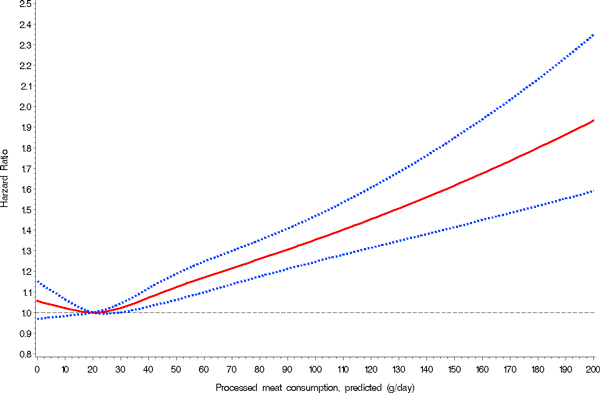
BACKGROUND: Recently, some US cohorts have shown a moderate association between red and processed meat consumption and mortality supporting the results of previous studies among vegetarians. The aim of this study was to examine the association of red meat, processed meat, and poultry consumption with the risk of early death in the European Prospective Investigation into Cancer and Nutrition (EPIC). METHODS: Included in the analysis were 448,568 men and women without prevalent cancer, stroke, or myocardial infarction, and with complete information on diet, smoking, physical activity and body mass index, who were between 35 and 69 years old at baseline. Cox proportional hazards regression was used to examine the association of meat consumption with all-cause and cause-specific mortality. RESULTS: As of June 2009, 26,344 deaths were observed. After multivariate adjustment, a high consumption of red meat was related to higher all-cause mortality (hazard ratio (HR) = 1.14, 95% confidence interval (CI) 1.01 to 1.28, 160+ versus 10 to 19.9 g/day), and the association was stronger for processed meat (HR = 1.44, 95% CI 1.24 to 1.66, 160+ versus 10 to 19.9 g/day). After correction for measurement error, higher all-cause mortality remained significant only for processed meat (HR = 1.18, 95% CI 1.11 to 1.25, per 50 g/d). We estimated that 3.3% (95% CI 1.5% to 5.0%) of deaths could be prevented if all participants had a processed meat consumption of less than 20 g/day. Significant associations with processed meat intake were observed for cardiovascular diseases, cancer, and 'other causes of death'. The consumption of poultry was not related to all-cause mortality. CONCLUSIONS: The results of our analysis support a moderate positive association between processed meat consumption and mortality, in particular due to cardiovascular diseases, but also to cancer.
Overview
The claims and statistics of this paper haven’t been checked yet.
Free: it reads the open-access text and checks the first 5 claims that cite a source we can check. Create a free account to check every claim.
Integrity signals
Registry
Cites
Statistics
Figures
Verification
Claims the paper makes
The claims and statistics of this paper haven’t been checked yet.
Free: it reads the open-access text and checks the first 5 claims that cite a source we can check. Create a free account to check every claim.
Claims other papers make about this one
Each is checked against this paper’s own text: does it say what the citing paper says it does?
The source backs part of the claim, not all of it — or backs it for a different population, condition or comparison.
In the citing paper
“numerous large scale epidemiological studies have noted a relationship between a Western diet, which is enriched in known nutrient TMAO precursors (e.g. choline, phosphatidylcholine and carnitine), and enhanced risk for myocardial infarction, stroke and death”
From Gut Microbial Metabolite TMAO Enhances Platelet Hyperreactivity and Thrombosis Risk (2016) · cites this paper as Rohrmann et al., 2013
Experimental — accuracy not yet measuredIn the citing paper
“There was a positive correlation between processed meat and mortality due to CVD observed in a study from the EPIC group (n > 400,000 people), but this association was specific to processed meat and was not seen with unprocessed meat, which has high L-carnitine and choline content (95).”
From Trimethylamine N -Oxide, the Microbiome, and Heart and Kidney Disease (2017) · cites this paper as [95]
In the citing paper
“In more recent analyses, red meats, particularly processed red meats, were associated with increased CVD, CHD, stroke, and cancer mortality, while poultry was not (170–172).”
From Food Consumption and its Impact on Cardiovascular Disease: Importance of Solutions Focused on the Globalized Food System (2015) · cites this paper as [170]
Self-check
Percentages, sums and reported differences re-computed from the paper’s own numbers.
The self-check needs the paper’s full text.
Citations
Cites
Food, nutrition, physical activity, and the prevention of cancer: a global perspective
(2008) · Choice Reviews Online · doi:10.5860/choice.45-5024 · Cited by 5,350
Riboli, E., Hunt, K., Slimani, N., Ferrari, P., Norat, T., Fahey, M., Charrondière, U., Hémon, B., Casagrande, C., Vignat, J., et al. (2002) · Public Health Nutrition · doi:10.1079/phn2002394 · Cited by 1,866 · cited 4×
“At recruitment, men were 40 to 70 and women 35 to 70 years old [18].”
InfluentialSelf-citationLazcano-Ponce, E. C. (2009) · Salud Pública de México · Cited by 1,669
Mozaffarian, D., Micha, R., & Wallace, S. (2010) · PLoS Medicine · doi:10.1371/journal.pmed.1000252 · Cited by 1,215 · cited 2×
“Both high saturated fat and cholesterol intake have been found to be related to the risk of coronary heart disease [2].”
BackgroundNorat, T., Bingham, S., Ferrari, P., Slimani, N., Jenab, M., Mazuir, M., Overvad, K., Olsen, A., Tjønneland, A., Clavel, F., et al. (2005) · JNCI: Journal of the National Cancer Institute · doi:10.1093/jnci/dji164 · Cited by 862 · cited 1×
“colorectal [29] and gastric [30] cancer with high meat, in particular processed meat, consumption.”
BackgroundSelf-citationWareham, N. J., Jakes, R. W., Rennie, K. L., Schuit, J., Mitchell, J., Hennings, S., & Day, N. E. (2003) · Public Health Nutrition · doi:10.1079/phn2002439 · Cited by 850 · cited 1×
“continuous), physical activity index (active, moderately active, moderately inactive, inactive, missing) [23], and education (none or primary school completed; technical/professional school; secondary school; university degree; missing).”
BackgroundSelf-citationRed Meat Consumption and Mortality: Results From 2 Prospective Cohort Studies
Sun, Q. (2012) · Archives of Internal Medicine · doi:10.1001/archinternmed.2011.2287 · Cited by 763
Meat Intake and Mortality: A Prospective Study of Over Half a Million People
Sinha, R., Cross, A. J., Graubard, B. I., Leitzmann, M. F., & Schatzkin, A. (2009) · Archives of Internal Medicine · doi:10.1001/archinternmed.2009.6 · Cited by 543 · cited 5×
“6 g/1,000 kcal/ day (the authors did not state the preventable fraction for men [8]).”
InfluentialFraser, G. E. (1999) · The American Journal of Clinical Nutrition · doi:10.1093/ajcn/70.3.532s · Cited by 489 · cited 2×
“Some prospective studies have evaluated the association between meat intake and mortality [6-17], but several of them were studies comparing meat consumers with vegetarians [9, 11,”
BackgroundResultAccuracy of Death Certificates for Coding Coronary Heart Disease as the Cause of Death
Lloyd-Jones, D. M., Martin, D. O., Larson, M. G., & Levy, D. (1998) · Annals of Internal Medicine · doi:10.7326/0003-4819-129-12-199812150-00005 · Cited by 480
Cited by
Meat consumption, health, and the environment
Godfray, H. C. J., Aveyard, P., Garnett, T., Hall, J. W., Key, T. J., Lorimer, J., Pierrehumbert, R. T., Scarborough, P., Springmann, M., & Jebb, S. A. (2018) · Science · doi:10.1126/science.aam5324 · Cited by 2,077
Self-citationGut Microbial Metabolite TMAO Enhances Platelet Hyperreactivity and Thrombosis Risk
Zhu, W., Gregory, J. C., Org, E., Buffa, J. A., Gupta, N., Wang, Z., Li, L., Fu, X., Wu, Y., Mehrabian, M., et al. (2016) · Cell · doi:10.1016/j.cell.2016.02.011 · Cited by 1,968
“…large scale epidemiological studies have noted a relationship between a Western diet, which is enriched in known nutrient TMAO precursors (e.g. choline, phosphatidylcholine and carnitine), and enhanced risk for myocardial infarction, stroke and death (Iqbal et al., 2008; Rohrmann et al., 2013).”
de Souza, R. J., Mente, A., Maroleanu, A., Cozma, A. I., Ha, V., Kishibe, T., Uleryk, E., Budylowski, P., Schünemann, H., Beyene, J., et al. (2015) · BMJ · doi:10.1136/bmj.h3978 · Cited by 1,424
Position of the Academy of Nutrition and Dietetics: Vegetarian Diets
Melina, V., Craig, W., & Levin, S. (2016) · Journal of the Academy of Nutrition and Dietetics · doi:10.1016/j.jand.2016.09.025 · Cited by 1,360
Reactive Oxygen Species: A Key Constituent in Cancer Survival
Kumari, S., Badana, A. K., G, M. M., G, S., & Malla, R. (2018) · Biomarker Insights · doi:10.1177/1177271918755391 · Cited by 777
Adherence to Mediterranean Diet and Risk of Cancer: An Updated Systematic Review and Meta-Analysis
Schwingshackl, L., Schwedhelm, C., Galbete, C., & Hoffmann, G. (2017) · Nutrients · doi:10.3390/nu9101063 · Cited by 632
“A positive association between consumption of red meat and all-cause mortality could be observed in prospective cohorts from Europe and the US [145,146].”
BackgroundSchwingshackl, L., Schwedhelm, C., Hoffmann, G., Lampousi, A.-M., Knüppel, S., Iqbal, K., Bechthold, A., Schlesinger, S., & Boeing, H. (2017) · The American Journal of Clinical Nutrition · doi:10.3945/ajcn.117.153148 · Cited by 600
“Analyses of the EPIC (European Prospective Investigation into Cancer and Nutrition) cohort showed a slight J-shaped positive association between red meat consumption and all-cause mortality; the lowest risk was identified among participants with low to moderate meat consumption (120).”
Self-citationDe Toro-Martín, J., Arsenault, B., Després, J.-P., & Vohl, M.-C. (2017) · Nutrients · doi:10.3390/nu9080913 · Cited by 492
“[136], these pieces of work suggest that the general recommendation of reducing the intake of red meat [137] may be better focused on subjects with”
BackgroundAnand, S. S., Hawkes, C., de Souza, R. J., Mente, A., Dehghan, M., Nugent, R., Zulyniak, M. A., Weis, T., Bernstein, A. M., Krauss, R. M., et al. (2015) · Journal of the American College of Cardiology · doi:10.1016/j.jacc.2015.07.050 · Cited by 507
Trimethylamine N -Oxide, the Microbiome, and Heart and Kidney Disease
Zeisel, S. H., & Warrier, M. (2017) · Annual Review of Nutrition · doi:10.1146/annurev-nutr-071816-064732 · Cited by 475
“There was a positive correlation between processed meat and mortality due to CVD observed in a study from the EPIC group (n > 400,000 people), but this association was specific to processed meat and was not seen with unprocessed meat, which has high L-carnitine and choline content (95).”
BackgroundAbete, I., Romaguera, D., Vieira, A. R., Lopez de Munain, A., & Norat, T. (2014) · British Journal of Nutrition · doi:10.1017/s000711451400124x · Cited by 448
“We contacted the authors of four studies (13,15–17) to obtain missing data needed to conduct dose–response analyses.”
InfluentialSelf-citationWang, X., Lin, X., Ouyang, Y. Y., Liu, J., Zhao, G., Pan, A., & Hu, F. B. (2016) · Public Health Nutrition · doi:10.1017/s1368980015002062 · Cited by 412
“In one cohort study((36)), there was a significant association between processed meat consumption and increased mortality in smokers, current and former, but there was no significant association in the never smokers((36)).”
Influential(2017) · doi:10.3390/healthcare5020029 · Cited by 410
The 2015 Dutch food-based dietary guidelines
for the Committee Dutch Dietary Guidelines 2015, Kromhout, D., Spaaij, C. J. K., de Goede, J., & Weggemans, R. M. (2016) · European Journal of Clinical Nutrition · doi:10.1038/ejcn.2016.52 · Cited by 401
Red Meat and Processed Meat Consumption and All-Cause Mortality: A Meta-Analysis
Larsson, S. C., & Orsini, N. (2014) · American Journal of Epidemiology · doi:10.1093/aje/kwt261 · Cited by 353
Viewpoint: Regulating meat consumption to improve health, the environment and animal welfare
Bonnet, C., Bouamra-Mechemache, Z., Réquillart, V., & Treich, N. (2020) · Food Policy · doi:10.1016/j.foodpol.2020.101847 · Cited by 312
Etemadi, A., Sinha, R., Ward, M. H., Graubard, B. I., Inoue-Choi, M., Dawsey, S. M., & Abnet, C. C. (2017) · BMJ · doi:10.1136/bmj.j1957 · Cited by 296
Plant Protein and Animal Proteins: Do They Differentially Affect Cardiovascular Disease Risk?
Richter, C. K., Skulas-Ray, A. C., Champagne, C. M., & Kris-Etherton, P. M. (2015) · Advances in Nutrition · doi:10.3945/an.115.009654 · Cited by 279
“In support of this, a recent analysis of the EPIC-Potsdam cohort identified specific metabolites thatwere associatedwith redmeat consumption (i.e., high ferritin, low glycine, and altered hepatic-derived lipid concentrations) and acted as significant mediators of the association between total red meat consumption and…”
BackgroundInfluentialObesity and cancer: existing and new hypotheses for a causal connection
Stone, T. W., McPherson, M., & Gail Darlington, L. (2018) · eBioMedicine · doi:10.1016/j.ebiom.2018.02.022 · Cited by 262
“A significantly higher risk of several forms of human cancer is associated with regular meat consumption (McCullough et al., 2013; Rohrmann et al., 2013; Key et al., 2002, 2014; Song et al., 2014; Wie et al., 2014; Xu et al., 2014; Xue et al., 2014; Mourouti et al., 2015).”
BackgroundTaking it Personally: Personalized Utilization of the Human Microbiome in Health and Disease
Zmora, N., Zeevi, D., Korem, T., Segal, E., & Elinav, E. (2016) · Cell Host & Microbe · doi:10.1016/j.chom.2015.12.016 · Cited by 252
Trends in consumption of ultra-processed foods and obesity in Sweden between 1960 and 2010
Juul, F., & Hemmingsson, E. (2015) · Public Health Nutrition · doi:10.1017/s1368980015000506 · Cited by 248
Red meat consumption, cardiovascular diseases, and diabetes: a systematic review and meta-analysis
Shi, W., Huang, X., Schooling, C. M., & Zhao, J. V. (2023) · European Heart Journal · doi:10.1093/eurheartj/ehad336 · Cited by 220
Consumption of Ultra-Processed Foods and Mortality: A National Prospective Cohort in Spain
Blanco-Rojo, R., Sandoval-Insausti, H., López-Garcia, E., Graciani, A., Ordovás, J. M., Banegas, J. R., Rodríguez-Artalejo, F., & Guallar-Castillón, P. (2019) · Mayo Clinic Proceedings · doi:10.1016/j.mayocp.2019.03.035 · Cited by 212
Zheng, Y., Li, Y., Satija, A., Pan, A., Sotos-Prieto, M., Rimm, E., Willett, W. C., & Hu, F. B. (2019) · BMJ · doi:10.1136/bmj.l2110 · Cited by 211
The emerging role of nutrition in Parkinson's disease
Seidl, S. E., Santiago, J. A., Bilyk, H., & Potashkin, J. A. (2014) · Frontiers in Aging Neuroscience · doi:10.3389/fnagi.2014.00036 · Cited by 204
“This finding is surprising given the higher incidence of mortality, cardiovascular diseases, and diabetes associated with processed meat consumption (Micha et al., 2010; Rohrmann et al., 2013).”
BackgroundRandom-effects meta-analysis: The number of studies matters
Guolo, A., & Varin, C. (2017) · Statistical Methods in Medical Research · doi:10.1177/0962280215583568 · Cited by 203
“4210 73,162 Unprocessed Rohrman et al.(36) 26,344 448,568 Both Kappeler et al.”
European Code against Cancer 4th Edition: Diet and cancer
Norat, T., Scoccianti, C., Boutron-Ruault, M.-C., Anderson, A., Berrino, F., Cecchini, M., Espina, C., Key, T., Leitzmann, M., Powers, H., et al. (2015) · Cancer Epidemiology · doi:10.1016/j.canep.2014.12.016 · Cited by 206
Self-citationBoada, L. D., Henríquez-Hernández, L. A., & Luzardo, O. P. (2016) · Food and Chemical Toxicology · doi:10.1016/j.fct.2016.04.008 · Cited by 195
Mechanisms Linking Colorectal Cancer to the Consumption of (Processed) Red Meat: A Review
Demeyer, D., Mertens, B., De Smet, S., & Ulens, M. (2016) · Critical Reviews in Food Science and Nutrition · doi:10.1080/10408398.2013.873886 · Cited by 192
Clonan, A., Roberts, K. E., & Holdsworth, M. (2016) · Proceedings of the Nutrition Society · doi:10.1017/s0029665116000100 · Cited by 187
“Many studies to date have conducted analyses by considering both red carcass and processed red and white meat as a single variable((37,49)), despite the very different health outcomes associated with the consumption of processed meat which are now emerging from the literature((15)).”
Mycoprotein: environmental impact and health aspects
Souza Filho, P. F., Andersson, D., Ferreira, J. A., & Taherzadeh, M. J. (2019) · World Journal of Microbiology and Biotechnology · doi:10.1007/s11274-019-2723-9 · Cited by 180
Essential amino acids: master regulators of nutrition and environmental footprint?
Tessari, P., Lante, A., & Mosca, G. (2016) · Scientific Reports · doi:10.1038/srep26074 · Cited by 169
Red meat, diseases, and healthy alternatives: A critical review
Ekmekcioglu, C., Wallner, P., Kundi, M., Weisz, U., Haas, W., & Hutter, H.-P. (2018) · Critical Reviews in Food Science and Nutrition · doi:10.1080/10408398.2016.1158148 · Cited by 173
“…and mortality showed that after adjustment for various confounders, a high versus low consumption of red meat was related to higher all-cause mortality (HR D 1.14, n.s. after correction for measurement error) and the association was stronger for processed meat (HR D 1.44; Rohrmann et al., 2013).”
BackgroundInfluentialDietary fats and cardiovascular disease: Putting together the pieces of a complicated puzzle
Michas, G., Micha, R., & Zampelas, A. (2014) · Atherosclerosis · doi:10.1016/j.atherosclerosis.2014.03.013 · Cited by 173
Gut microbiota metabolism of l-carnitine and cardiovascular risk
Ussher, J. R., Lopaschuk, G. D., & Arduini, A. (2013) · Atherosclerosis · doi:10.1016/j.atherosclerosis.2013.10.013 · Cited by 170
Processing, Quality, Safety, and Acceptance of Meat Analogue Products
Sun, C., Ge, J., He, J., Gan, R., & Fang, Y. (2020) · Engineering · doi:10.1016/j.eng.2020.10.011 · Cited by 181
Maguire, E. R., & Monsivais, P. (2015) · British Journal of Nutrition · doi:10.1017/s0007114514002621 · Cited by 161
“The socio-economic gradients identified for red and processed meat intake may be more pronounced between the consumption of lean, fresh red meat compared with processed meat, as more affluent groups have been found previously to consume more of the former and less of the latter((14,16)) with negative implications for…”
BackgroundWhalen, K., Judd, S. E., McCullough, M. L., Flanders, W. D., Hartman, T. J., & Bostick, R. M. (2017) · Journal of Nutrition · doi:10.3945/jn.116.241919 · Cited by 164
Attitudes toward beef and vegetarians in Argentina, Brazil, France, and the USA
Ruby, M. B., Alvarenga, M. D. S., Rozin, P., Kirby, T. A., Richer, E., & Rutsztein, G. (2015) · Appetite · doi:10.1016/j.appet.2015.10.018 · Cited by 180
“a country level, meat consumption is positively related to longevity, as nine of the ten most long80 lived countries in the world eat a diet high in meat (the exception being Japan, FAOSTAT, 81 2014), but on the other hand, within developed countries and controlling for various potential 82 confounds, such as socioeco…”
BackgroundTaneri, P. E., Wehrli, F., Roa-Díaz, Z. M., Itodo, O. A., Salvador, D., Raeisi-Dehkordi, H., Bally, L., Minder, B., Kiefte-de Jong, J. C., Laine, J. E., et al. (2022) · American Journal of Epidemiology · doi:10.1093/aje/kwac039 · Cited by 137
Bakija, F. Z., Bajraktari, G., Bytyçi, I., Mikhailidis, D. P., Henein, M. Y., Latkovskis, G., Rexhaj, Z., Zhubi, E., Banach, M., Alnouri, F., et al. (2020) · Clinical Nutrition · doi:10.1016/j.clnu.2020.05.017 · Cited by 162
Paving the Way to Precision Nutrition Through Metabolomics
Tebani, A., & Bekri, S. (2019) · Frontiers in Nutrition · doi:10.3389/fnut.2019.00041 · Cited by 143
Soret, S., Mejía, A., Batech, M., Jaceldo‐Siegl, K., Harwatt, H., & Sabaté, J. (2014) · American Journal of Clinical Nutrition · doi:10.3945/ajcn.113.071589 · Cited by 161
Our daily meat: Justification, moral evaluation and willingness to substitute
Hartmann, C., & Siegrist, M. (2019) · Food Quality and Preference · doi:10.1016/j.foodqual.2019.103799 · Cited by 154
Lagoumintzis, G., & Patrinos, G. P. (2023) · Human Genomics · doi:10.1186/s40246-023-00561-w · Cited by 132
“Furthermore, their findings led to the formulation of precise dietary guidelines, one of which advised individuals with a gastrointestinal microbial ecosystem capable of converting red meat-derived nutrients into compounds that promote atherosclerosis to reduce their red meat intake [200].”
BackgroundThe scope for manipulating the polyunsaturated fatty acid content of beef: a review
Vahmani, P., Mapiye, C., Prieto, N., Rolland, D. C., McAllister, T. A., Aalhus, J. L., & Dugan, M. E. R. (2015) · Journal of Animal Science and Biotechnology/Journal of animal science and biotechnology · doi:10.1186/s40104-015-0026-z · Cited by 156
“In Europe, current evidence suggests unprocessed lean red meat is safe to consume as a healthy food choice, and recommendations to limit its consumption in substitution for other protein sources including white meat are not justified [15].”
BackgroundNeuenschwander, M., Stadelmaier, J., Eble, J., Grummich, K., Szczerba, E., Kiesswetter, E., Schlesinger, S., & Schwingshackl, L. (2023) · BMC Medicine · doi:10.1186/s12916-023-03093-1 · Cited by 124
Hartmann, C., Furtwaengler, P., & Siegrist, M. (2021) · Food Quality and Preference · doi:10.1016/j.foodqual.2021.104486 · Cited by 151
Consumer Response to Negative Information on Meat Consumption in Germany
Cordts, A., Nitzko, S., & Spiller, A. (2014) · The International Food and Agribusiness Management Review · doi:10.22004/ag.econ.164599 · Cited by 178
“In recent decades, the demand for meat has increased significantly in industrialized countries, including Germany (DGE 2012; Rohrmann et al. 2013).”
BackgroundInfluentialBiomarkers of meat and seafood intake: an extensive literature review
Cuparencu, C., Praticó, G., Hemeryck, L. Y., Sri Harsha, P. S. C., Noerman, S., Rombouts, C., Xi, M., Vanhaecke, L., Hanhineva, K., Brennan, L., et al. (2019) · Genes & Nutrition · doi:10.1186/s12263-019-0656-4 · Cited by 123
“Poultry was not related to all-cause mortality, whereas red meat was related to higher all-cause mortality only before correcting for potential confounding [9].”
BackgroundRed meats: Time for a paradigm shift in dietary advice
Binnie, M. A., Barlow, K., Johnson, V., & Harrison, C. (2014) · Meat Science · doi:10.1016/j.meatsci.2014.06.024 · Cited by 110
“Two large population studies in Europe (Rohrmann et al., 2013) and the United States (Kappeler et al., 2013) found no association between unprocessed red meat and any cause of death, including CVD or cancer.”
BackgroundInfluentialCocking, C., Walton, J., Kehoe, L., Cashman, K. D., & Flynn, A. (2020) · Nutrition Research Reviews · doi:10.1017/s0954422419000295 · Cited by 129
“(including chicken, hen, turkey, duck, goose, and unclassified poultry)(9) and domestic rabbit, while other epidemological”
BackgroundBiesbroek, S., Bueno-de-Mesquita, H. B., Peeters, P. H. M., Verschuren, W. M. M., van der Schouw, Y. T., Kramer, G. F. H., Tyszler, M., & Temme, E. H. M. (2014) · Environmental Health · doi:10.1186/1476-069x-13-27 · Cited by 130
“Meat intake has been linked to an increased risk of mortality before [29].”
BackgroundSelf-citationHartmann, C., Ruby, M. B., Schmidt, P., & Siegrist, M. (2018) · Food Quality and Preference · doi:10.1016/j.foodqual.2018.02.001 · Cited by 122
Pea protein composition, functionality, modification, and food applications: A review.
Shen, Y., Hong, S., & Li, Y. (2022) · Advances in Food and Nutrition Research · doi:10.1016/bs.afnr.2022.02.002 · Cited by 107
Carfora, V., Caso, D., & Conner, M. T. (2017) · Social Science & Medicine · doi:10.1016/j.socscimed.2017.01.005 · Cited by 125
Sustainable ruminant production to help feed the planet
Pulina, G., Francesconi, A. H. D., Stefanon, B., Sevi, A., Calamari, L., Lacetera, N., DELL’ORTO, V., Pilla, F., Ajmone‐Marsan, P., Mele, M. L., et al. (2016) · Italian Journal of Animal Science · doi:10.1080/1828051x.2016.1260500 · Cited by 134
“Moreover, a recent European Prospective Investigation into Cancer and Nutrition (EPIC) study highlighted that the association between red meat consumption and mortality from colorectal cancer was not significant in a large cohort of European citizens (Rohrmann et al. 2013).”
BackgroundBreast Cancer Primary Prevention and Diet: An Umbrella Review
Buja, A., Pierbon, M., Lago, L., Grotto, G., & Baldo, V. (2020) · International Journal of Environmental Research and Public Health · doi:10.3390/ijerph17134731 · Cited by 138
“The significant association demonstrated by the EPIC study [77] between red or processed meat consumption and a higher risk of BC, and BC-related mortality, was also confirmed in our umbrella review [19,20].”
BackgroundThe Consortium of Metabolomics Studies (COMETS): Metabolomics in 47 Prospective Cohort Studies
Yu, B., Zanetti, K. A., Temprosa, M. G., Albanes, D., Appel, N., Barrios-Barrera, C., Ben‐Shlomo, Y., Boerwinkle, E., Casas, J. P., Clish, C. B., et al. (2019) · American Journal of Epidemiology · doi:10.1093/aje/kwz028 · Cited by 112
“For European cohorts, cancer registries are ≥90% complete for 90% of registries (self-audited) (95), and vital status is approximately 98% complete, according to European Prospective Investigation Into Cancer and Nutrition (EPIC) data (96).”
BackgroundSelf-citationProcessed meat: the real villain?
Rohrmann, S., & Linseisen, J. (2016) · Proceedings of the Nutrition Society · doi:10.1017/s0029665115004255 · Cited by 102
“For example, the associations between processed meat consumption and all-cause mortality appear to be much stronger in the USA((19,23)) than among European((24)) studies.”
InfluentialSelf-citationCommentary: Should we always deliberately be non-representative?
Ebrahim, S., & Davey Smith, G. (2013) · International Journal of Epidemiology · doi:10.1093/ije/dyt105 · Cited by 102
Fatty Acids and Cardiovascular Risk. Evidence, Lack of Evidence, and Diligence
Visioli, F., & Poli, A. (2020) · Nutrients · doi:10.3390/nu12123782 · Cited by 112
“For unexplored reasons, these associations are much less pronounced in European studies [39].”
Animal Proteins as Important Contributors to a Healthy Human Diet
Elmadfa, I., & Meyer, A. L. (2016) · Annual Review of Animal Biosciences · doi:10.1146/annurev-animal-022516-022943 · Cited by 114
Reducing meat consumption: the case for social marketing
Bogueva, D., Marinova, D. V., & Raphaely, T. (2017) · Asia Pacific Journal of Marketing and Logistics · doi:10.1108/apjml-08-2016-0139 · Cited by 134
Oberli, M., Marsset‐Baglieri, A., Airinei, G., Santé-Lhoutellier, V., Khodorova, N., Rémond, D., Foucault‐Simonin, A., Piedcoq, J., Tomé, D., Fromentin, G., et al. (2015) · Journal of Nutrition · doi:10.3945/jn.115.216838 · Cited by 107
Iqbal, R., Dehghan, M., Mente, A., Rangarajan, S., Wielgosz, A. T., Avezum, Á., Serón, P., AlHabib, K. F., López-Jaramillo, P. A., Swaminathan, S., et al. (2021) · American Journal of Clinical Nutrition · doi:10.1093/ajcn/nqaa448 · Cited by 104
“The European Prospective Investigation into Cancer and Nutrition (EPIC) cohort study, including 448,568 participants across 10 European countries with >26,000 deaths, found no significant association between unprocessed red meat intake and total or cause-specific mortality (7).”
Backgroundvan den Brandt, P. A. (2019) · European Journal of Epidemiology · doi:10.1007/s10654-019-00483-9 · Cited by 93
Processing of meats and cardiovascular risk: time to focus on preservatives
Micha, R., Michas, G., Lajous, M., & Mozaffarian, D. (2013) · BMC Medicine · doi:10.1186/1741-7015-11-136 · Cited by 93
“Thus, reports such as those by Rohrmann and colleagues [10] are crucial for both informing science and educating the public.”
BackgroundHerrmann, S. S., Duedahl‐Olesen, L., & Granby, K. (2014) · Journal of Chromatography A · doi:10.1016/j.chroma.2014.01.009 · Cited by 92
Metabolic Health, Insulin, and Breast Cancer: Why Oncologists Should Care About Insulin
Yee, L. D., Mortimer, J. E., Natarajan, R. D., Dietze, E. C., & Seewaldt, V. L. (2020) · Frontiers in Endocrinology · doi:10.3389/fendo.2020.00058 · Cited by 113
“High ROS production during cancer initiation is linked to high mitochondrial respiration/dysfunction and low couplingefficiency of the mitochondrial electron transport chain (122).”
BackgroundHalting European Union soybean feed imports favours ruminants over pigs and poultry
Karlsson, J. O., Parodi, A., van Zanten, H. H. E., Hansson, P., & Röös, E. (2020) · Nature Food · doi:10.1038/s43016-020-00203-7 · Cited by 103
Parker, V., Giles, M., Graham, L., Suthers, B., Watts, W., O’Brien, T., & Searles, A. (2017) · BMC Health Services Research · doi:10.1186/s12913-017-2268-2 · Cited by 107
“A multifaceted evidence-based intervention was piloted in two wards in an acute care hospital in the Hunter New England Local Health District, leading to a 50% reduction in IDC insertions, significantly reduced IDC duration and number of patients treated for CAUTI [34].”
BackgroundIdentifying Novel Causes of Cancers to Enhance Cancer Prevention: New Strategies Are Needed
Brennan, P., & Smith, G. D. (2021) · JNCI Journal of the National Cancer Institute · doi:10.1093/jnci/djab204 · Cited by 103
“for important dietary effects on multiple cancers, with some exceptions such as processed meat [35], and the idea that specific nutrients or food types are driving cancer incidence rates has lost ground.”
BackgroundProcessed and unprocessed red meat consumption and hypertension in women , ,
Lajous, M., Bijon, A., Fagherazzi, G., Rossignol, E., Boutron‐Ruault, M., & Clavel‐Chapelon, F. (2014) · American Journal of Clinical Nutrition · doi:10.3945/ajcn.113.080598 · Cited by 93
Self-citationDietary exposure to volatile and non-volatile N-nitrosamines from processed meat products in Denmark
Herrmann, S. S., Duedahl-Olesen, L., Christensen, T., Olesen, P. T., & Granby, K. (2015) · Food and Chemical Toxicology · doi:10.1016/j.fct.2015.03.008 · Cited by 84
“, 2006), pancreatic cancer (Larsson and Wolk, 2012) as well as increased risk of cardiovascular diseases and other causes of death (Rohrmann et al., 2013).”
BackgroundInfluentialSeafood-Borne Parasitic Diseases: A “One-Health” Approach Is Needed
Shamsi, S. (2019) · Fishes · doi:10.3390/fishes4010009 · Cited by 93
“There is an increasing body of medical research suggesting a positive correlation between red meat consumption and potentially fatal conditions such as cancer and cardiovascular diseases, while showing the health benefits of seafood [2].”
BackgroundHydes, T., Ravi, S., Loomba, R. S., & Gray, M. E. (2020) · Clinical and Molecular Hepatology · doi:10.3350/cmh.2020.0067 · Cited by 94
Org, E., Mehrabian, M., & Lusis, A. J. (2015) · Atherosclerosis · doi:10.1016/j.atherosclerosis.2015.05.035 · Cited by 85
Factors affecting consumer attitudes to fungi-based protein: A pilot study
Chezan, D., Flannery, O., & Patel, A. B. (2022) · Appetite · doi:10.1016/j.appet.2022.106043 · Cited by 84
Hill, A. M., Harris Jackson, K. A., Roussell, M. A., West, S. G., & Kris-Etherton, P. M. (2015) · The American Journal of Clinical Nutrition · doi:10.3945/ajcn.114.104026 · Cited by 75
Dietary patterns and the risk of CVD and all-cause mortality in older British men
Atkins, J. L., Whincup, P. H., Morris, R. W., LENNON, L. T., Papacosta, O., & Wannamethee, S. G. (2016) · British Journal Of Nutrition · doi:10.1017/s0007114516003147 · Cited by 77
“These results are consistent with studies showing that fibre intake and all-cause mortality are inversely associated((38)), and that the consumption of red meat and processed meat (two components of the ‘high-fat/low-fibre’ dietary patterns with high factor loadings) is associated with an increased risk of all-cause a…”
ResultMelaku, Y. A., Renzaho, A. M. N., Gill, T. K., Taylor, A. W., Grande, E. D., de Courten, B. V., Baye, E., González‐Chica, D. A., Hyppönen, E., Shi, Z., et al. (2018) · European Journal of Nutrition · doi:10.1007/s00394-018-1656-7 · Cited by 89
Age-Related Changes and Sex-Related Differences in Brain Iron Metabolism
Kezele, T. G., & Ćurko‐Cofek, B. (2020) · Nutrients · doi:10.3390/nu12092601 · Cited by 83
“Usually, the higher incidence of mortality, cardiovascular diseases, and diabetes is associated with higher meat consumption [240,241].”
BackgroundLuber, G., Knowlton, K., Balbus, J. M., Frumkin, H., Hayden, M. H., Hess, J., McGeehin, M. A., Sheats, N., Backer, L. C., Beard, C. B., et al. (2014) · doi:10.7930/j0pn93h5 · Cited by 113
Pistollato, F., & Battino, M. A. (2014) · Trends in Food Science & Technology · doi:10.1016/j.tifs.2014.07.012 · Cited by 78
Proposing a Novel Index Reflecting Both Climate Impact and Nutritional Impact of Food Products
van Dooren, C., Douma, A., Aiking, H., & Vellinga, P. (2016) · Ecological Economics · doi:10.1016/j.ecolecon.2016.08.029 · Cited by 77
The EAT-Lancet Commission's Dietary Composition May Not Prevent Noncommunicable Disease Mortality
Zagmutt, F. J., Pouzou, J. G., & Costard, S. (2020) · Journal of Nutrition · doi:10.1093/jn/nxaa020 · Cited by 80
“9 g/d) (15), and was indeed found to have significant protective effects against CRC and cardiovascular disease in some studies (e.”
BackgroundProvenza, F. D., Meuret, M., & Gregorini, P. (2015) · Appetite · doi:10.1016/j.appet.2015.08.004 · Cited by 83
“…shown to be healthy (e.g., salt: McCarron et al., 2009; redmeat and saturated fat: Chowdhury et al., 2014; Jakobsen et al., 2009; Pan et al., 2012; Rohrmann et al., 2013; Siri-Tarino, Sun, Hu, & Krauss, 2010); and relationships between diet andweight loss are elusive (e.g., Johnston et al., 2014).”
BackgroundThe usual suspect: How to co-create healthier meat products
Barone, A. M., Banović, M., Asioli, D., Wallace, E., Ruíz‐Capillas, C., & Grasso, S. (2021) · Food Research International · doi:10.1016/j.foodres.2021.110304 · Cited by 74
“meat consumption, such as heart disease, diabetes, cancer, among others (Micha et al., 2010; Rohrmann et al., 2013; WHO-IARC, 2015).”
BackgroundMeat, Meat Products and Seafood as Sources of Energy and Nutrients in the Average Polish Diet
Laskowski, W., Górska-Warsewicz, H., & Kulykovets, O. (2018) · Nutrients · doi:10.3390/nu10101412 · Cited by 73
“Some findings underlined the long-term increasing consumption of red and processed meat leading to the increased risk of total mortality [10,23,24].”
BackgroundHow old are you, really? Communicating chronic risk through ‘effective age’ of your body and organs
Spiegelhalter, D. J. (2016) · BMC Medical Informatics and Decision Making · doi:10.1186/s12911-016-0342-z · Cited by 69
“18 +2 [31]”
Fried potato consumption is associated with elevated mortality: an 8-y longitudinal cohort study
Veronese, N., Stubbs, B., Noale, M., Solmi, M., Vaona, A., Demurtas, J., Nicetto, D., Crepaldi, G., Schofield, P., Koyanagi, A., et al. (2017) · American Journal of Clinical Nutrition · doi:10.3945/ajcn.117.154872 · Cited by 78
“Third, people who consume fried potatoes more frequently might have other unhealthy dietary habits, such as increased consumption of processed red meat, salty foods, and sugar-sweetened beverages, which may increase the risk of death (27, 28).”
BackgroundLamb, R., Harrison, H., Smith, D. L., Townsend, P. A., Jackson, T., Ózsvári, B., Martinez‐Outschoorn, U., Pestell, R. G., Howell, A., Lisanti, M. P., et al. (2015) · Oncotarget · doi:10.18632/oncotarget.3278 · Cited by 67
“Vegans and vegetarians have relatively low intakes of methionine compared with meat eaters and some but not all recent studies suggest that vegans have lower cancer and cardiovascular disease risk [69-71].”
ResultMeat Consumption in Sao Paulo – Brazil: Trend in the Last Decade
de Carvalho, A. M., César, C. L. G., Fisberg, R. M., & Marchioni, D. M. (2014) · PLoS ONE · doi:10.1371/journal.pone.0096667 · Cited by 61
“Some studies show the relationship between processed meat intake and cardiovascular diseases and diabetes [3], and other studies show the relationship between red and processed meat intake and colorectal cancer [4–8], weight gain [9] and high death risk [10–12].”
BackgroundAre Front-of-Pack Labels a Health Policy Tool?
Muzzioli, L., Penzavecchia, C., Donini, L. M., & Pinto, A. (2022) · Nutrients · doi:10.3390/nu14040771 · Cited by 73
Farvid, M. S., Malekshah, A. F., Pourshams, A., Poustchi, H., Sepanlou, S. G., Sharafkhah, M., Khoshnia, M., Farvid, M., Abnet, C. C., Kamangar, F., et al. (2017) · American Journal of Preventive Medicine · doi:10.1016/j.amepre.2016.10.041 · Cited by 67
Nutrient-rich foods, cardiovascular diseases and all-cause mortality: the Rotterdam study
Streppel, M. T., Sluik, D., van Yperen, J. F., Geelen, A., Hofman, A., Franco, O. H., Witteman, J. C. M., & Feskens, E. J. M. (2014) · European Journal of Clinical Nutrition · doi:10.1038/ejcn.2014.35 · Cited by 70
Characteristics of pork belly consumption in South Korea and their health implication
Choe, J., Yang, H., Lee, S., & Go, G. (2015) · Journal of Animal Science and Technology · doi:10.1186/s40781-015-0057-1 · Cited by 66
Perspective: Refined Grains and Health: Genuine Risk, or Guilt by Association?
Gaesser, G. A. (2018) · Advances in Nutrition · doi:10.1093/advances/nmy104 · Cited by 66
“It is possible that the higher risk associated with red and processed meat intake could be related in part to the fact that diets high in either red or processed meat may be lower in overall diet quality, including lower intakes of fruits and vegetables (105, 106).”
Smith, S. B., Lunt, D. K., Smith, D. R., & Walzem, R. L. (2020) · Meat Science · doi:10.1016/j.meatsci.2020.108076 · Cited by 65
Metadata
- Authors
- Rohrmann, S., Overvad, K., Bueno-de-Mesquita, H. B., Jakobsen, M. U., Egeberg, R., Tjønneland, A., Nailler, L., Boutron-Ruault, M.-C., Clavel-Chapelon, F., Krogh, V., Palli, D., Panico, S., Tumino, R., Ricceri, F., Bergmann, M. M., Boeing, H., Li, K., Kaaks, R., Khaw, K.-T., Wareham, N. J., Crowe, F. L., Key, T. J., Naska, A., Trichopoulou, A., Trichopoulos, D., Leenders, M., Peeters, P. H., Engeset, D., Parr, C. L., Skeie, G., Jakszyn, P., Sánchez, M.-J., Huerta, J. M., Redondo, M. L., Barricarte, A., Amiano, P., Drake, I., Sonestedt, E., Hallmans, G., Johansson, I., Fedirko, V., Romieux, I., Ferrari, P., Norat, T., Vergnaud, A. C., Riboli, E., & Linseisen, J.
- Affiliations
- University of Zurich (CH)
- Aarhus University (DK)
- University Medical Center Utrecht (NL)
- Danish Cancer Society (DK)
- Inserm (FR)
- Fondazione IRCCS Istituto Nazionale dei Tumori (IT)
- Federico II University Hospital (IT)
- Italian institute for Genomic Medicine (IT)
- German Institute of Human Nutrition (DE)
- German Cancer Research Center (DE)
- University of Cambridge (GB)
- MRC Epidemiology Unit (GB)
- University of Oxford (GB)
- National and Kapodistrian University of Athens (GR)
- Harvard University (US)
- UiT The Arctic University of Norway (NO)
- University of Oslo (NO)
- Institut Català d'Oncologia (ES)
- Centro de Investigación Biomédica en Red de Epidemiología y Salud Pública (ES)
- Andalusian School of Public Health (ES)
- Gobierno del Principado de Asturias (ES)
- Instituto de Salud Pública de Navarra (ES)
- Basque Government (ES)
- Lund University (SE)
- Umeå University (SE)
- Centre international de recherche sur le cancer (FR)
- Imperial College London (GB)
- Corresponding author
- Rohrmann, Sabine
- ORCID
- Rohrmann, Sabine
- Overvad, Kim
- Jakobsen, Marianne U
- Tjønneland, Anne
- Krogh, Vittorio
- Palli, Domenico
- Panico, Salvatore
- Tumino, Rosario
- Ricceri, Fulvio
- Bergmann, Manuela M
- Boeing, Heiner
- Li, Kuanrong
- Kaaks, Rudolf
- Khaw, Kay-Tee
- Wareham, Nicholas J
- Crowe, Francesca L
- Key, Timothy J
- Naska, Androniki
- Trichopoulou, Antonia
- Peeters, Petra HM
- Engeset, Dagrun
- Parr, Christine L
- Skeie, Guri
- Jakszyn, Paula
- Sánchez, María-José
- Huerta, José M
- Barricarte, Aurelio
- Amiano, Pilar
- Drake, Isabel
- Sonestedt, Emily
- Johansson, Ingegerd
- Fedirko, Veronika
- Ferrari, Pietro
- Linseisen, Jakob
- Venue
- BMC Medicine
- Published
- 2013-03-07
- Volume
- 11
- Issue
- 1
- Pages
- 63-63
- ISSN
- 1741-7015 (ISSN-L)
- PMC
- PMC3599112
- OpenAlex
- W2168476314
- Cited by
- 454
- References
- 43
- Citations by year
- 2026: 15 · 2025: 23 · 2024: 42 · 2023: 21 · 2022: 44 · 2021: 40 · 2020: 31 · 2019: 38 · 2018: 30 · 2017: 38 · 2016: 37 · 2015: 43 · 2014: 31 · 2013: 21
- FWCI
- 44.88
- Type
- journal article
- Language
- en
- Open access
- gold
- doi.org
- Licence
- Locations
- BMC Medicine (publishedVersion, cc-by)
- Europe PMC (PubMed Central) (publishedVersion, cc-by)
- PubMed Central (publishedVersion, cc-by)
- PubMed (publishedVersion)
- Zurich Open Repository and Archive (University of Zurich) (acceptedVersion, cc-by)
- HAL (submittedVersion, other-oa)
- KTH Publication Database DiVA (KTH Royal Institute of Technology) (submittedVersion, other-oa)
- Institutional Research Information System University of Turin (University of Turin) (submittedVersion)
- Lund University Publications (Lund University) (submittedVersion, other-oa)
- NORA - Norwegian Open Research Archives (submittedVersion, other-oa)
- Site cant be reached (submittedVersion, cc-by)
- OPUS (Augsburg University) (submittedVersion, cc-by)
- NORA - Norwegian Open Research Archives (submittedVersion, cc-by)
- RISalud Institutional Health Repository of Andalucía (submittedVersion, other-oa)
- Apollo (University of Cambridge) (submittedVersion, cc-by)
- Zurich Open Repository and Archive (University of Zurich) (submittedVersion, cc-by)
- Zurich Open Repository and Archive (University of Zurich)
- Funders
- Deutsches Krebsforschungszentrum
- Kreftforeningen
- Wellcome Trust
- Cancer Research UK (14136)
- National Institute for Health and Care Research
- British Heart Foundation
- European Commission
- Institut National de la Santé et de la Recherche Médicale
- Bundesministerium für Bildung und Forschung
- Cancerfonden
- Ligue Contre le Cancer
- Stavros Niarchos Foundation
- NordForsk
- Associazione Italiana per la Ricerca sul Cancro
- Deutsche Krebshilfe
- Institut Gustave-Roussy
- Mutuelle Générale de l'Education Nationale
- Hellenic Health Foundation
- Medical Research Council
- World Cancer Research Fund
- Instituto de Salud Carlos III (C03/09)
- Topics
- Health Sciences › Medicine › Public Health, Environmental and Occupational Health › Nutritional Studies and Diet
- Physical Sciences › Environmental Science › Ecology › Agriculture Sustainability and Environmental Impact
- Life Sciences › Agricultural and Biological Sciences › Animal Science and Zoology › Meat and Animal Product Quality
- Keywords
- meat consumption, red meat, processed meat, poultry, mortality, all-cause mortality, cardiovascular mortality, cancer mortality, dietary risk factors, EPIC cohort
- MeSH terms
- Adult, Aged, Cardiovascular Diseases, Diet, Feeding Behavior, Female, Humans, Male, Meat, Middle Aged, Neoplasms, Nutrition Surveys, Prospective Studies, United States, Cohort Studies, Survival Analysis
About these checks
Registry, retraction, Cites and statistics results are computed, not judged, with one exception: a printed reference that no index lists is read once by a model before it counts as a citation error. Claims are extracted by a model and kept only when their quote appears verbatim in the text; each cited source is then checked, with a model’s help, for whether it says what the claim relies on. Those verdicts can be wrong — read the claim’s quote and the cited source before relying on one.
Statistics and arithmetic are recomputed, not judged.
Confidence bands are shown only for fields calibrated on our annotated test set. None is calibrated yet, so no band is shown.
What counts as a claim ›How we measure confidence ›How we check this ›
Are you an author, or do you see a problem with this page? Request a review
Data sources
Bibliographic data: Semantic Scholar, OpenAlex, Crossref.
Contains information from the Semantic Scholar Academic Graph Datasets, made available under the ODC Attribution License (ODC-BY 1.0).
Semantic Scholar’s data is described in: Kinney, R., et al. (2023). The Semantic Scholar Open Data Platform. arXiv:2301.10140.
