

The DOI matches its Crossref record; 32 of the 33 references it cites were found in a registry or an index, and 1 are not checked yet.
GLP-1 secretion by microglial cells and decreased CNS expression in obesity
Open accessAbstract
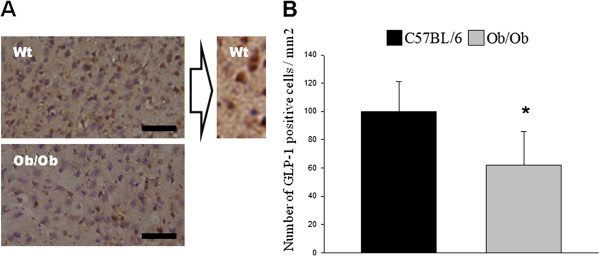
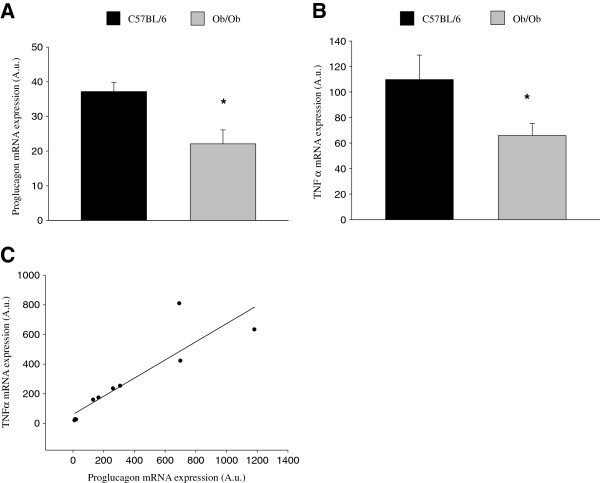
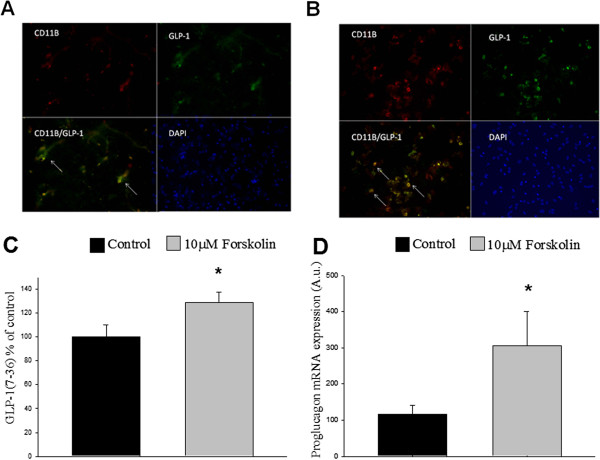
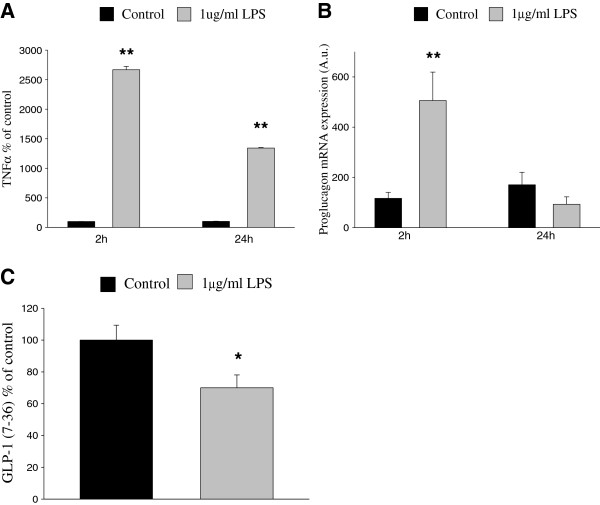
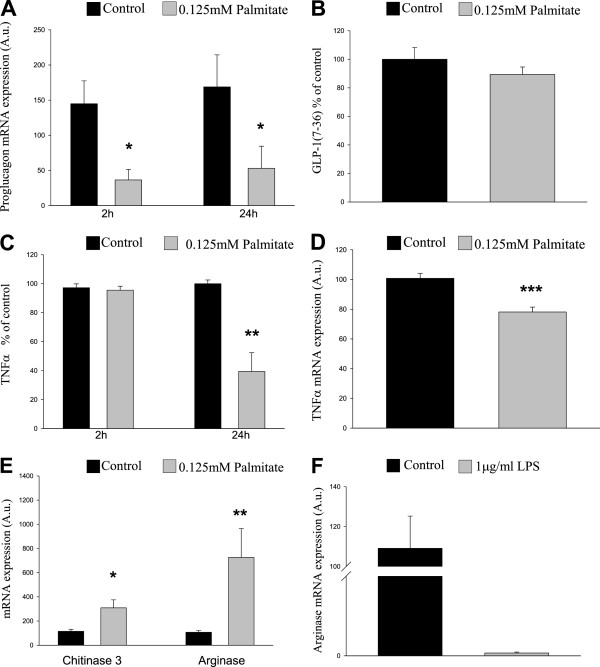
BACKGROUND: Type 2 diabetes (T2D) is a strong risk factor for developing neurodegenerative pathologies. T2D patients have a deficiency in the intestinal incretin hormone GLP-1, which has been shown to exert neuroprotective and anti-inflammatory properties in the brain. METHODS: Here we investigate potential sources of GLP-1 in the CNS and the effect of diabetic conditions on the proglucagon mRNA expression in the CNS. The obese mouse model ob/ob, characterized by its high levels of free fatty acids, and the microglia cell line BV-2 were used as models. mRNA expression and protein secretion were analyzed by qPCR, immunofluorescence and ELISA. RESULTS: We show evidence for microglia as a central source of GLP-1 secretion. Furthermore, we observed that expression and secretion are stimulated by cAMP and dependent on microglial activation state. We also show that insulin-resistant conditions reduce the central mRNA expression of proglucagon. CONCLUSION: The findings that microglial mRNA expression of proglucagon and GLP-1 protein expression are affected by high levels of free fatty acids and that both mRNA expression levels of proglucagon and secretion levels of GLP-1 are affected by inflammatory stimuli could be of pathogenic importance for the premature neurodegeneration and cognitive decline commonly seen in T2D patients, and they may also be harnessed to advantage in therapeutic efforts to prevent or treat such disorders.
Overview
The claims and statistics of this paper haven’t been checked yet.
Run the check — free, no account needed. It reads the open-access text and checks the sources it cites.
Integrity signals
Registry
Cites
Statistics
Figures
Verification
Claims the paper makes
The claims and statistics of this paper haven’t been checked yet.
Run the check — free, no account needed. It reads the open-access text and checks the sources it cites.
Claims other papers make about this one
Each is checked against this paper’s own text: does it say what the citing paper says it does?
The cited source says what the claim attributes to it.
In the citing paper
“GLP-1 is known to be produced in the brain [79] and has many functions including neuroprotection [80–82].”
From Anti-Inflammatory Effects of GLP-1-Based Therapies beyond Glucose Control (2016) · cites this paper as [79]
Self-check
Percentages, sums and reported differences re-computed from the paper’s own numbers.
The self-check needs the paper’s full text.
Citations
Cites
Obese and diabetes: Two mutant genes causing diabetes-obesity syndromes in mice
Coleman, D. L. (1978) · Diabetologia · doi:10.1007/bf00429772 · Cited by 1,307
Repertoire of microglial and macrophage responses after spinal cord injury
David, S., & Kroner, A. (2011) · Nature Reviews Neuroscience · doi:10.1038/nrn3053 · Cited by 1,297
Glucagon-like peptide-1 receptor is involved in learning and neuroprotection
During, M. J., Cao, L., Zuzga, D. S., Francis, J. S., Fitzsimons, H. L., Jiao, X., Bland, R. J., Klugmann, M., Banks, W. A., Drucker, D. J., et al. (2003) · Nature Medicine · doi:10.1038/nm919 · Cited by 851
The role of gut hormones in glucose homeostasis
Drucker, D. J. (2007) · Journal of Clinical Investigation · doi:10.1172/jci30076 · Cited by 628
Expression profiles for macrophage alternative activation genes in AD and in mouse models of AD.
(2006) · Journal of Neuroinflammation · doi:10.1186/1742-2094-3-27 · Cited by 393
Bertilsson, G., Patrone, C., Zachrisson, O., Andersson, A., Dannaeus, K., Heidrich, J., Kortesmaa, J., Mercer, A., Nielsen, E., Rönnholm, H., et al. (2008) · Journal of Neuroscience Research · doi:10.1002/jnr.21483 · Cited by 345
Self-citationLi, Y., Duffy, K. B., Ottinger, M. A., Ray, B., Bailey, J. A., Holloway, H. W., Tweedie, D., Perry, T., Mattson, M. P., Kapogiannis, D., et al. (2010) · Journal of Alzheimer s Disease · doi:10.3233/jad-2010-1314 · Cited by 323
Endothelial inflammation in insulin resistance
SJOHOLM, A., & NYSTROM, T. (2005) · The Lancet · doi:10.1016/s0140-6736(05)70804-7 · Cited by 278
Self-citationThe relationship between Alzheimer's disease and diabetes: Type 3 diabetes?
Kroner, Z. (2009) · PubMed · Cited by 246
Cited by
Sorted by citations
Anti-Inflammatory Effects of GLP-1-Based Therapies beyond Glucose Control
Lee, Y.-S., & Jun, H.-S. (2016) · Mediators of Inflammation · doi:10.1155/2016/3094642 · Cited by 530
“GLP-1 is known to be produced in the brain [79] and has many functions including neuroprotection [80–82].”
BackgroundAthauda, D., & Foltynie, T. (2016) · Drug Discovery Today · doi:10.1016/j.drudis.2016.01.013 · Cited by 383
Insulin resistance and Parkinson’s disease: A new target for disease modification?
Athauda, D. S., & Foltynie, T. (2016) · Progress in Neurobiology · doi:10.1016/j.pneurobio.2016.10.001 · Cited by 340
Insulin, IGF-1 and GLP-1 signaling in neurodegenerative disorders: Targets for disease modification?
Bassil, F., Fernagut, P., Bézard, E., & Meissner, W. G. (2014) · Progress in Neurobiology · doi:10.1016/j.pneurobio.2014.02.005 · Cited by 323
GLP-1 and weight loss: unraveling the diverse neural circuitry
Kanoski, S. E., Hayes, M. R., & Skibicka, K. P. (2016) · American Journal of Physiology-Regulatory, Integrative and Comparative Physiology · doi:10.1152/ajpregu.00520.2015 · Cited by 290
The role of type 2 diabetes in neurodegeneration
Verdile, G., Fuller, S. J., & Martins, R. N. (2015) · Neurobiology of Disease · doi:10.1016/j.nbd.2015.04.008 · Cited by 290
Neuroinflammation in animal models of traumatic brain injury
Chiu, C., Liao, Y.-E., Yang, L.-Y., Wang, J.-Y., Tweedie, D., Karnati, H. K., Greig, N. H., & Wang, J. (2016) · Journal of Neuroscience Methods · doi:10.1016/j.jneumeth.2016.06.018 · Cited by 261
Reich, N., & Hölscher, C. (2022) · Frontiers in Neuroscience · doi:10.3389/fnins.2022.970925 · Cited by 248
Brain insulin resistance: role in neurodegenerative disease and potential for targeting
Hölscher, C. (2020) · Expert Opinion on Investigational Drugs · doi:10.1080/13543784.2020.1738383 · Cited by 180
Glucagon-like Peptide-1 and the Central/Peripheral Nervous System: Crosstalk in Diabetes
Muscogiuri, G., DeFronzo, R. A., Gastaldelli, A., & Holst, J. J. (2017) · Trends in Endocrinology & Metabolism · doi:10.1016/j.tem.2016.10.001 · Cited by 171
Anderberg, R. H., Richard, J. E., Hansson, C., Nissbrandt, H., Bergquist, F., & Skibicka, K. P. (2016) · Psychoneuroendocrinology · doi:10.1016/j.psyneuen.2015.11.021 · Cited by 170
Cell Culture Models of Fatty Acid Overload: Problems and Solutions
Alsabeeh, N., Chausse, B., Kakimoto, P. A., Kowaltowski, A. J., & Shirihai, O. (2018) · Biochimica et Biophysica Acta (BBA) - Molecular and Cell Biology of Lipids · doi:10.1016/j.bbalip.2017.11.006 · Cited by 167
Protective properties of GLP‐1 and associated peptide hormones in neurodegenerative disorders
Hölscher, C. (2021) · British Journal of Pharmacology · doi:10.1111/bph.15508 · Cited by 149
Diet in Parkinson’s Disease: Critical Role for the Microbiome
Jackson, A., Forsyth, C. B., Shaikh, M., Voigt, R. M., Engen, P. A., Ramirez, V., & Keshavarzian, A. (2019) · Frontiers in Neurology · doi:10.3389/fneur.2019.01245 · Cited by 145
Talbot, K., & Wang, H.-Y. (2014) · Alzheimer s & Dementia · doi:10.1016/j.jalz.2013.12.007 · Cited by 142
Kim, D. S., Choi, H.-I., Wang, Y., Luo, Y., Hoffer, B. J., & Greig, N. H. (2017) · Cell Transplantation · doi:10.1177/0963689717721234 · Cited by 136
Jena, P. K., Sheng, L., Di Lucente, J., Jin, L., Maezawa, I., & Wan, Y. Y. (2018) · The FASEB Journal · doi:10.1096/fj.201700984rr · Cited by 134
GLP-1’s role in neuroprotection: a systematic review
Erbil, D., Eren, C. Y., Demirel, Ç., Küçüker, M. U., Solaroğlu, İ., & Eser, H. Y. (2019) · Brain Injury · doi:10.1080/02699052.2019.1587000 · Cited by 129
Eren, C. Y., Yigit, A., Dogruoz, E., & Eser, H. Y. (2021) · Frontiers in Behavioral Neuroscience · doi:10.3389/fnbeh.2020.614884 · Cited by 142
The benefits of GLP1 receptors in cardiovascular diseases
Ferhatbegović, L., Mršić, D., & Macić-Džanković, A. (2023) · Frontiers in Clinical Diabetes and Healthcare · doi:10.3389/fcdhc.2023.1293926 · Cited by 127
Lee, C., Jeon, S. J., Cho, K. S., Moon, E., Sapkota, A., Jun, H., Ryu, J. H., & Choi, J. W. (2017) · Molecular Neurobiology · doi:10.1007/s12035-017-0550-2 · Cited by 131
Badawi, G. A., Fattah, M. A. A. E., Zaki, H. F., & Sayed, M. I. E. (2017) · Inflammopharmacology · doi:10.1007/s10787-017-0331-6 · Cited by 125
Kim, Y.-K., Kim, O. Y., & Song, J. (2020) · Frontiers in Pharmacology · doi:10.3389/fphar.2020.01270 · Cited by 109
Vargas-Soria, M., García-Alloza, M., & Corraliza-Gómez, M. (2023) · Journal of Neuroinflammation · doi:10.1186/s12974-023-02740-x · Cited by 120
Incretin hormones regulate microglia oxidative stress, survival and expression of trophic factors
Spielman, L. J., Gibson, D. L., & Klegeris, A. (2017) · European Journal of Cell Biology · doi:10.1016/j.ejcb.2017.03.004 · Cited by 100
Protective effects of the GLP-1 mimetic exendin-4 in Parkinson's disease
Athauda, D. S., & Foltynie, T. (2017) · Neuropharmacology · doi:10.1016/j.neuropharm.2017.09.023 · Cited by 97
Wiciński, M., Socha, M. W., Malinowski, B., Wódkiewicz, E., Walczak, M., Górski, K. M., Słupski, M., & Pawlak-Osińska, K. (2019) · International Journal of Molecular Sciences · doi:10.3390/ijms20051050 · Cited by 94
Cheng, D., Yang, S., Zhao, X., & Wang, G. (2022) · Drug Design, Development and Therapy · doi:10.2147/dddt.s348055 · Cited by 84
Hidalgo‐Lanussa, O., Ávila-Rodriguez, M., Báez-Jurado, E., Zamudio-Rodriguez, J. A., Echeverría, V., García‐Segura, L. M., & Barreto, G. E. (2017) · Molecular Neurobiology · doi:10.1007/s12035-017-0777-y · Cited by 67
Prowse, N. A., & Hayley, S. P. (2021) · Neuroscience & Biobehavioral Reviews · doi:10.1016/j.neubiorev.2021.09.018 · Cited by 72
Exposure to the Saturated Free Fatty Acid Palmitate Alters BV-2 Microglia Inflammatory Response
Tracy, L. M., Bergqvist, F., Ivanova, E. V., Jacobsen, K. T., & Iverfeldt, K. (2013) · Journal of Molecular Neuroscience · doi:10.1007/s12031-013-0068-7 · Cited by 63
Self-citationHowe, A.-M., Burke, S., O’Reilly, M. E., McGillicuddy, F. C., & Costello, D. A. (2022) · Molecular Neurobiology · doi:10.1007/s12035-022-02756-z · Cited by 61
Distinct metabolic patterns during microglial remodeling by oleate and palmitate
Chausse, B., Kakimoto, P. A., Caldeira-da-Silva, C. C., Chaves-Filho, A. B., Yoshinaga, M. Y., da Silva, R. P., Miyamoto, S., & Kowaltowski, A. J. (2019) · Bioscience Reports · doi:10.1042/bsr20190072 · Cited by 59
Rasha, R. Y., El-Yamany, M. F., Saad, M. A., & El-Sahar, A. E. (2020) · European Journal of Pharmacology · doi:10.1016/j.ejphar.2020.173612 · Cited by 59
Type 2 diabetes mellitus in the pathophysiology of Alzheimer's disease
de Nazareth, A. M. (2017) · Dementia & Neuropsychologia · doi:10.1590/1980-57642016dn11-020002 · Cited by 64
GLP-1 programs the neurovascular landscape
Chen, B., Yu, X., HORVATH-DIANO, C., Ortuño, M. J., Tschöp, M. H., Jastreboff, A. M., & Schneeberger, M. (2024) · Cell Metabolism · doi:10.1016/j.cmet.2024.09.003 · Cited by 58
Tran, D. Q., Tse, E. K., Kim, M. H., & Belsham, D. D. (2016) · Molecular and Cellular Endocrinology · doi:10.1016/j.mce.2016.05.015 · Cited by 55
Badawi, G. A., Fattah, M. A. A. E., Zaki, H. F., & Sayed, M. I. E. (2019) · Neurotoxicity Research · doi:10.1007/s12640-019-9998-3 · Cited by 53
Therapeutic application of GLP-1 and GIP receptor agonists in Parkinson’s disease
Yang, X., Feng, P., Ji, R., Ren, Y., Wei, W., & Hölscher, C. (2022) · Expert Opinion on Therapeutic Targets · doi:10.1080/14728222.2022.2079492 · Cited by 52
Direct and indirect effects of lipids on microglia function
Leyrolle, Q., Layé, S., & Nadjar, A. (2019) · Neuroscience Letters · doi:10.1016/j.neulet.2019.134348 · Cited by 50
The regulation of function, growth and survival of GLP-1-producing L-cells
Kuhre, R. E., Holst, J. J., & Krizhanovskii, C. (2015) · Clinical Science · doi:10.1042/cs20150154 · Cited by 52
Bader, M., Li, Y., Tweedie, D., Shlobin, N. A., Bernstein, A., Rubovitch, V., Tovar‐y‐Romo, L. B., DiMarchi, R. D., Hoffer, B. J., Greig, N. H., et al. (2020) · Frontiers in Cell and Developmental Biology · doi:10.3389/fcell.2019.00356 · Cited by 48
Zhang, L., Li, C., Zhang, Z., Zhang, Z., Jin, Q., Li, L., & Hölscher, C. (2022) · Parkinson s Disease · doi:10.1155/2022/1428817 · Cited by 45
Ahmed, I. A. B. (2024) · Journal of Obesity · doi:10.1155/2024/8056440 · Cited by 46
Raval, U., Harary, J. M., Zeng, E., & Pasinetti, G. M. (2020) · Expert Review of Neurotherapeutics · doi:10.1080/14737175.2020.1775585 · Cited by 45
Kim, S. M., McIlwraith, E. K., Chalmers, J. A., & Belsham, D. D. (2018) · Neuroendocrinology · doi:10.1159/000494759 · Cited by 37
Reda, E., Hassaneen, S. K., & El-Abhar, H. S. (2018) · Frontiers in Pharmacology · doi:10.3389/fphar.2018.00771 · Cited by 35
Glucocorticoids suppress GLP-1 secretion: possible contribution to their diabetogenic effects
Krizhanovskii, C., Fransson, L., Wolbert, P., & Ortsäter, H. (2015) · Clinical Science · doi:10.1042/cs20140719 · Cited by 35
Bader, M., Li, Y., Lecca, D., Rubovitch, V., Tweedie, D., Glotfelty, E. J., Rachmany, L., Kim, H. K., Choi, H., Hoffer, B. J., et al. (2018) · Neurobiology of Disease · doi:10.1016/j.nbd.2018.11.023 · Cited by 34
Green, H., Tsitsi, P., Markaki, I., Aarsland, D., & Svenningsson, P. (2019) · CNS Drugs · doi:10.1007/s40263-018-0601-x · Cited by 31
Li, Y., Li, L., & Hölscher, C. (2016) · Reviews in the Neurosciences · doi:10.1515/revneuro-2016-0018 · Cited by 28
Labandeira, C. M., Bau, A. F., Ron, D. A., Muñoz, A., Losada, G. A., Koukoulis, A., Romero-López, J., & Rodriguez-Perez, A. I. (2021) · Frontiers in Neuroendocrinology · doi:10.1016/j.yfrne.2021.100914 · Cited by 28
Mansur, R. B., Fries, G. R., Trevizol, A. P., Subramaniapillai, M., Lovshin, J. A., Lin, K., Vinberg, M., Ho, R., Brietzke, E. M., & McIntyre, R. S. (2018) · European Neuropsychopharmacology · doi:10.1016/j.euroneuro.2018.10.007 · Cited by 26
Zhang, H., Chu, Y., Zheng, H., Wang, J., Song, B., & Sun, Y. (2020) · Aging · doi:10.18632/aging.202162 · Cited by 25
Old wines in new bottles: Repurposing opportunities for Parkinson's disease
Kakkar, A. K., Singh, H., & Medhi, B. (2018) · European Journal of Pharmacology · doi:10.1016/j.ejphar.2018.04.023 · Cited by 25
Cardiorenal Metabolic Syndrome and Diabetic Cognopathy
Hayden, M. R., Banks, W. A., Shah, G. N., Gu, Z., & Sowers, J. R. (2013) · Cardiorenal Medicine · doi:10.1159/000357113 · Cited by 24
Retatrutide—A Game Changer in Obesity Pharmacotherapy
Katsi, V., Koutsopoulos, G., Fragoulis, C., Dimitriadis, K., & Tsioufis, K. (2025) · Biomolecules · doi:10.3390/biom15060796 · Cited by 29
“Production of this molecule is also shown to occur in pancreatic α -cells and the central nervous system in areas like the nucleus tractus solitarius and microglia [18].”
Deselms, H., Maggio, N., Rubovitch, V., Chapman, J., Schreiber, S., Tweedie, D., Kim, D. S., Greig, N. H., & Pick, C. G. (2016) · Journal of Neuroscience Methods · doi:10.1016/j.jneumeth.2016.02.002 · Cited by 23
Zißler, J., Rothhammer, V., & Linnerbauer, M. (2024) · Cells · doi:10.3390/cells13060497 · Cited by 24
Deng, S., Chen, Z., & Shi, Y. (2025) · Cell & Bioscience · doi:10.1186/s13578-025-01486-8 · Cited by 28
Eser, H. Y., Appadurai, V., Eren, C. Y., Yazıcı, D., Chen, C., Öngür, D., Pizzagalli, D. A., Werge, T. M., & Hall, M. (2020) · Acta Neuropsychiatrica · doi:10.1017/neu.2020.14 · Cited by 23
Hölscher, C. (2025) · CNS Drugs · doi:10.1007/s40263-025-01226-z · Cited by 26
Wu, P., Zhao, Y., Zhuang, X., Sun, A., Zhang, Y., & Ni, Y. (2018) · Clinical Neurology and Neurosurgery · doi:10.1016/j.clineuro.2018.08.012 · Cited by 22
Incretin-based therapeutics for the treatment of neurodegenerative diseases
Vear, A., Heneka, M. T., & Clemmensen, C. (2025) · Nature Metabolism · doi:10.1038/s42255-025-01263-4 · Cited by 25
DPP4 Deficiency Preserved Cardiac Function in Abdominal Aortic Banding Rats
Ku, H.-C., & Su, M. (2014) · PLoS ONE · doi:10.1371/journal.pone.0085634 · Cited by 19
Tominaga, K., Sakashita, E., Kasashima, K., Kuroiwa, K., Nagao, Y., Iwamori, N., & Endo, H. (2023) · International Journal of Molecular Sciences · doi:10.3390/ijms24032113 · Cited by 17
Beyond insulin: The Intriguing role of GLP-1 in Parkinson's disease
Verma, A., & Goyal, A. (2024) · European Journal of Pharmacology · doi:10.1016/j.ejphar.2024.176936 · Cited by 17
Macedo, F. P., dos Santos, L. S., Glezer, I., & da Cunha, F. M. (2019) · Frontiers in Neuroscience · doi:10.3389/fnins.2019.00342 · Cited by 17
Zhang, Z., Shi, M., Li, Z., Ling, Y., Zhai, L., Yuan, Y., Ma, H., Li, H., Li, Z., Zhang, Z., et al. (2023) · Parkinson s Disease · doi:10.1155/2023/7427136 · Cited by 16
The possible factors affecting microglial activation in cases of obesity with cognitive dysfunction
Chunchai, T., Chattipakorn, N., & Chattipakorn, S. C. (2017) · Metabolic Brain Disease · doi:10.1007/s11011-017-0151-9 · Cited by 16
Zhang, H.-Q., Song, B., Zhu, W.-W., Liu, L.-L., He, X.-Q., Wang, Z., An, K., Cao, W., Shi, J., & Wang, S. (2021) · Aging · doi:10.18632/aging.203351 · Cited by 12
Mi, N., Ma, L., Li, X., Fu, J., Bu, X., Liu, F., Yang, F., Zhang, Y., & Yao, L. (2023) · Open Medicine · doi:10.1515/med-2023-0849 · Cited by 13
Exendin-4 improves behaviorial deficits via GLP-1/GLP-1R signaling following partial hepatectomy
Zhou, Y., Li, Z., Cao, X., Ma, H., White, P. F., Xu, X., Jiang, Y., Sun, X.-J., & Cui, Y. (2018) · Brain Research · doi:10.1016/j.brainres.2018.11.007 · Cited by 13
Recent Advances in Drug Repurposing for Parkinson’s Disease
Chen, X., Gumina, G., & Virga, K. G. (2018) · Current Medicinal Chemistry · doi:10.2174/0929867325666180719144850 · Cited by 13
Just a Gut Feeling: Central Nervous Effects of Peripheral Gastrointestinal Hormones
Roth, C. L., & Doyle, R. P. (2017) · Endocrine development · doi:10.1159/000475734 · Cited by 11
Repurposing GLP1 agonists for neurodegenerative diseases
Markaki, I., Winther, K., Catrina, S., & Svenningsson, P. (2020) · International review of neurobiology · doi:10.1016/bs.irn.2020.02.007 · Cited by 11
Ohshima, R. (2015) · American Journal of BioScience · doi:10.11648/j.ajbio.20150301.13 · Cited by 10
Cognitive dysfunction in diabetes – the ‘forgotten’ diabetes complication: a narrative review
Sjöholm, Å., Bennet, L., & Nilsson, P. M. (2025) · Scandinavian Journal of Primary Health Care · doi:10.1080/02813432.2025.2455136 · Cited by 10
Self-citationCentral Functions of Glucagon-like Peptide-1: Roles in Energy Regulation and Neuroprotection
McGrath, R. T. (2015) · Journal of Steroids & Hormonal Science · doi:10.4172/2157-7536.1000.152 · Cited by 8
Elabi, O. F., Davies, J. S., & Lane, E. L. (2021) · International Journal of Molecular Sciences · doi:10.3390/ijms222212346 · Cited by 9
Bariatric Surgery and Gut-Brain-Axis Driven Alterations in Cognition and Inflammation
Custers, E., Franco, A., & Kiliaan, A. J. (2023) · Journal of Inflammation Research · doi:10.2147/jir.s437156 · Cited by 9
Siddique, A. H. H., & Kale, P. P. (2023) · Revue Neurologique · doi:10.1016/j.neurol.2023.08.011 · Cited by 9
A Research Update on Exendin-4 as a Novel Molecule Against Parkinson’s Disease
Singh, N. K., Singh, A., Varshney, M., & Agrawal, R. (2023) · Current Molecular Medicine · doi:10.2174/1566524023666230529093314 · Cited by 9
Crosstalk of kidney and brain in diabetes-related cognitive impairment and therapeutic strategies
Xu, C., Miao, H., Chen, Y., & Liao, L. (2025) · Frontiers in Endocrinology · doi:10.3389/fendo.2025.1562518 · Cited by 7
Lipidomics Analysis of Human HMC3 Microglial Cells in an In Vitro Model of Metabolic Syndrome
Chmielarz, M., Bromke, M. A., Olbromski, M., Środa-Pomianek, K., Frej−Mądrzak, M., Dzięgiel, P., & Sobieszczańska, B. (2024) · Biomolecules · doi:10.3390/biom14101238 · Cited by 6
Gu, Y., Yao, L., Jiang, T., & Che, H. (2022) · Foods · doi:10.3390/foods11233758 · Cited by 5
Zhou, M., Du, M., Tang, R., Liu, H., Gao, Z., Wang, Y., You, H., Hao, J.-W., Ji, Z., Wang, D., et al. (2023) · Neuroendocrinology · doi:10.1159/000529438 · Cited by 4
Yin, H., Hao, J.-W., Chen, Q., Li, F., Yin, S., Zhou, M., Zhang, Q., Yao, Y.-M., & Chai, J. (2020) · Surgery · doi:10.1016/j.surg.2020.01.004 · Cited by 4
Lateral Septum as a Key Integrative Regulator of Feeding: Role of the GLP ‐1/ GLP ‐ 1R System
Dib, T., Covarrubias, M. J., Escobar, A. P., Renard, G. M., Bravo, J. A., & Sotomayor‐Zárate, R. (2025) · Journal of Neurochemistry · doi:10.1111/jnc.70301 · Cited by 3
Bobok, N., & Halushko, O. A. (2025) · Problems of ageing and longevity (Ukraine) · doi:10.71012/pro-ageing-2025-4-05 · Cited by 1
Helal, M. M., Almosilhy, N. A., Abo‐elnour, D. E., Jaffal, R., Allam, E. G., Almosilhy, M. A., Batarseh, S. F., & Meshref, M. M. (2026) · Amyotrophic Lateral Sclerosis and Frontotemporal Degeneration · doi:10.1080/21678421.2026.2627901 · Cited by 2
Zhang, L., Peng, F., Wanting, Z., Qianqian, J., Zhang, Z., Bai, B., Xue, G., & Hölscher, C. (2026) · Frontiers in Endocrinology · doi:10.3389/fendo.2026.1825379 · Cited by 1
The dual role of the immune system in the pathogenesis of traumatic brain injury
Лисяный, Н. И. (2019) · Ukrainian Neurosurgical Journal · doi:10.25305/unj.155107 · Cited by 1
Development of therapeutics for the treatment of diabetic brain complications
Mansouri, S. (2013) · Figshare
Central Functions of Glucagon-like Peptide-1: Roles in Energy Regulation and
McGrath, N., Glastras, S. J., HOCKING, S. L., Tjoeng, I., Krause, M., Fulcher, G. R., & McGrath, R. T. (2015)
The Effect of High-Intensity Interval Training on GLP-1, Appetite, and Weight in Obese Rats
Sepehri, H., Nemati, J., Jahromi, M. K., Eskandari, M. H., & Daryanoosh, F. (2021) · مجله علمی پزشکی جندی شاپور · doi:10.32598/jsmj.20.3.1975
(2020) · Наукові перспективи (Naukovì perspektivi) · doi:10.32689/2708-7530-2020-3(3)-162-172
Agonisti del recettore del GLP1 e infiammazione: non solo compenso glicemico
Costanzo, G., & Frasca, F. (2022) · L Endocrinologo · doi:10.1007/s40619-022-01064-x
Efecto protector de la tibolona en un modelo inflamatorio de microglía estimulado por palmitato
Hidalgo‐Lanussa, O. (2020) · Repositorio Institucional (Pontificia Universidad Javeriana) · doi:10.11144/javeriana.10554.38564
Andraini, T., Mardatillah, J., Kartinah, N. T., Paramita, N., Santoso, . I. S., Yolanda, S., Puspasari, B. C., & Rusli, H. (2022) · Comparative Exercise Physiology · doi:10.3920/cep220020
Metadata
- Authors
- Kappe, C., Tracy, L. M., Patrone, C., Iverfeldt, K., & Sjöholm, Å.
- Affiliations
- Stockholm University (SE)
- Karolinska Institutet (SE)
- Corresponding author
- Tracy, Linda M
- Iverfeldt, Kerstin
- Sjöholm, Åke
- Venue
- Journal of Neuroinflammation
- Published
- 2012-12
- Volume
- 9
- Issue
- 1
- Pages
- 276-276
- ISSN
- 1742-2094 (ISSN-L)
- PMC
- PMC3546916
- OpenAlex
- W2112292567
- Cited by
- 107
- References
- 32
- Citations by year
- 2026: 6 · 2025: 10 · 2024: 5 · 2023: 9 · 2022: 9 · 2021: 7 · 2020: 11 · 2019: 9 · 2018: 9 · 2017: 10 · 2016: 9 · 2015: 7 · 2014: 3 · 2013: 3
- FWCI
- 2.09
- Type
- journal article
- Language
- en
- Open access
- gold
- doi.org
- Locations
- Journal of Neuroinflammation (publishedVersion, cc-by)
- Europe PMC (PubMed Central) (publishedVersion, cc-by)
- PubMed Central (publishedVersion, cc-by)
- PubMed (publishedVersion)
- DOAJ (DOAJ: Directory of Open Access Journals) (submittedVersion)
- Funders
- Gun och Bertil Stohnes Stiftelse
- AFA Försäkring
- Karolinska Institutet
- Stockholms Läns Landsting
- Topics
- Life Sciences › Neuroscience › Neurology › Neuroinflammation and Neurodegeneration Mechanisms
- Health Sciences › Medicine › Endocrinology, Diabetes and Metabolism › Diabetes Treatment and Management
- Health Sciences › Medicine › Endocrinology, Diabetes and Metabolism › Adipokines, Inflammation, and Metabolic Diseases
- Keywords
- glucagon-like peptide-1, proglucagon, microglia, obesity, type 2 diabetes, neurodegeneration, insulin resistance, free fatty acids, cAMP signaling, microglial activation, neuroinflammation, cognitive decline
- MeSH terms
- Cyclic AMP, Animals, Arginase, Cell Line, Transformed, Central Nervous System, Chitinases, Disease Models, Animal, Gene Expression Regulation, Insulin Resistance, Male, Mice, Inbred C57BL, Mice, Obese, Obesity, Palmitates, Plant Proteins, Polysaccharides, RNA, Messenger, Transfection, Tumor Necrosis Factor-alpha, Microglia, Statistics, Nonparametric, CD11b Antigen, Mice, Glucagon-Like Peptide 1, Proglucagon
About these checks
Registry, retraction, Cites and statistics results are computed, not judged, with one exception: a printed reference that no index lists is read once by a model before it counts as a citation error. Claims are extracted by a model and kept only when their quote appears verbatim in the text; each cited source is then checked, with a model’s help, for whether it says what the claim relies on. Those verdicts can be wrong — read the claim’s quote and the cited source before relying on one.
Statistics and arithmetic are recomputed, not judged.
Confidence bands are shown only for fields calibrated on our annotated test set. None is calibrated yet, so no band is shown.
What counts as a claim ›How we measure confidence ›How we check this ›
Are you an author, or do you see a problem with this page? Request a review
