

Variation in alternative splicing across human tissues
Open accessThe DOI matches its Crossref record; 71 of the 71 references it cites were found in a registry or an index.
Abstract
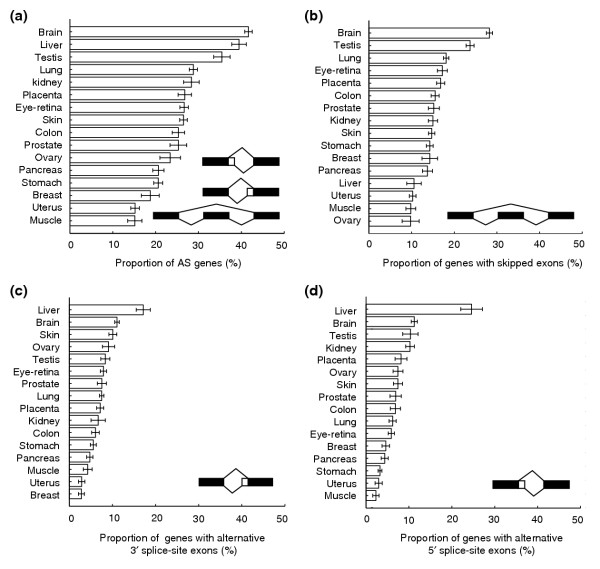
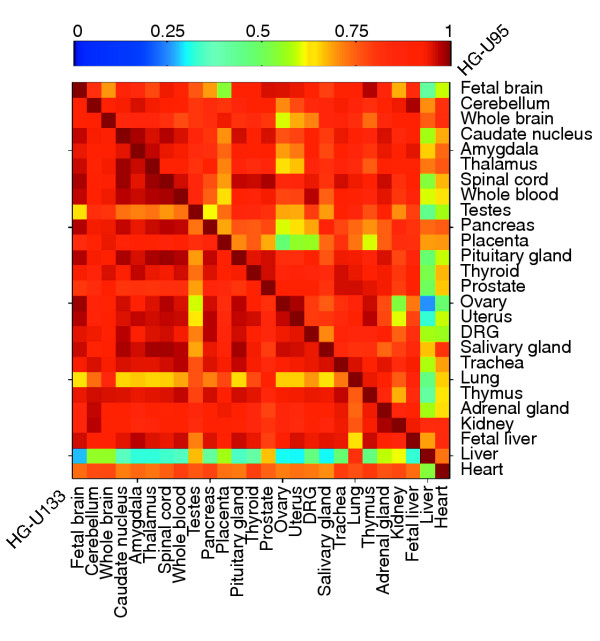
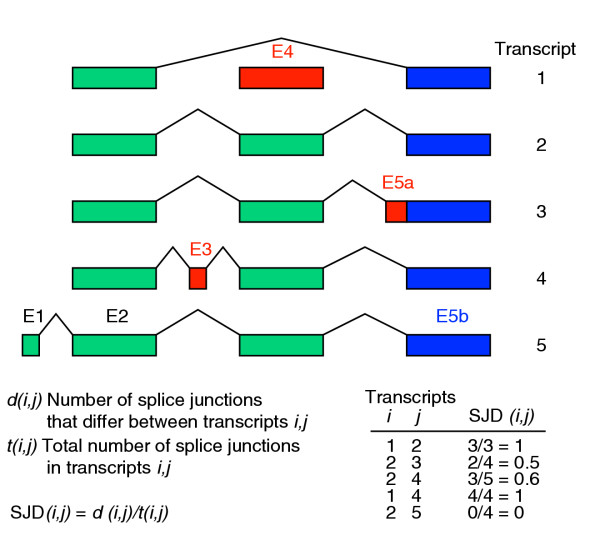
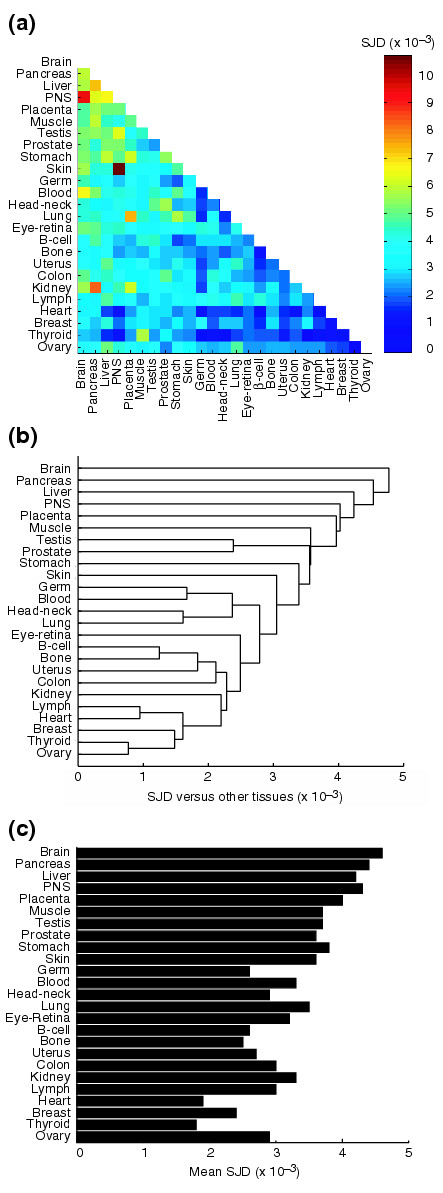
Background: Alternative pre-mRNA splicing (AS) is widely used by higher eukaryotes to generate different protein isoforms in specific cell or tissue types. To compare AS events across human tissues, we analyzed the splicing patterns of genomically aligned expressed sequence tags (ESTs) derived from libraries of cDNAs from different tissues. Results: Controlling for differences in EST coverage among tissues, we found that the brain and testis had the highest levels of exon skipping. The most pronounced differences between tissues were seen for the frequencies of alternative 3' splice site and alternative 5' splice site usage, which were about 50 to 100% higher in the liver than in any other human tissue studied. Quantifying differences in splice junction usage, the brain, pancreas, liver and the peripheral nervous system had the most distinctive patterns of AS. Analysis of available microarray expression data showed that the liver had the most divergent pattern of expression of serine-arginine protein and heterogeneous ribonucleoprotein genes compared to the other human tissues studied, possibly contributing to the unusually high frequency of alternative splice site usage seen in liver. Sequence motifs enriched in alternative exons in genes expressed in the brain, testis and liver suggest specific splicing factors that may be important in AS regulation in these tissues. Conclusions: This study distinguishes the human brain, testis and liver as having unusually high levels of AS, highlights differences in the types of AS occurring commonly in different tissues, and identifies candidate cis-regulatory elements and trans-acting factors likely to have important roles in tissue-specific AS in human cells.
Overview
The claims and statistics of this paper haven’t been checked yet.
Free: it reads the open-access text and checks the first 5 claims that cite a source we can check. Create a free account to check every claim.
Integrity signals
Registry
Cites
Statistics
Figures
Verification
Claims the paper makes
The claims and statistics of this paper haven’t been checked yet.
Free: it reads the open-access text and checks the first 5 claims that cite a source we can check. Create a free account to check every claim.
Claims other papers make about this one
Each is checked against this paper’s own text: does it say what the citing paper says it does?
The source backs part of the claim, not all of it — or backs it for a different population, condition or comparison.
In the citing paper
“Previous expressed sequence tagged mapping studies have led to the conclusion that the brain has the highest number of alternative splicing events when compared with other organs (Yeo et al., 2004)”
From An RNA-Sequencing Transcriptome and Splicing Database of Glia, Neurons, and Vascular Cells of the Cerebral Cortex (2014) · cites this paper as Yeo et al., 2004
Experimental — accuracy not yet measuredIn the citing paper
“Undocumented peptides are particularly enriched in the testis, which is known to differ markedly from other tissues in splicing pattern (Yeo et al., 2004).”
From Splice-Junction-Based Mapping of Alternative Isoforms in the Human Proteome (2019) · cites this paper as Yeo et al., 2004
In the citing paper
“Because brain contains a large number of alternatively spliced proteins [50]”
From Deep proteomic network analysis of Alzheimer’s disease brain reveals alterations in RNA binding proteins and RNA splicing associated with disease (2018) · cites this paper as [50]
Self-check
Percentages, sums and reported differences re-computed from the paper’s own numbers.
The self-check needs the paper’s full text.
Citations
Cites
A gene atlas of the mouse and human protein-encoding transcriptomes
Su, A. I., Wiltshire, T., Batalov, S., Lapp, H., Ching, K. A., Block, D., Zhang, J., Soden, R., Hayakawa, M., Kreiman, G., et al. (2004) · Proceedings of the National Academy of Sciences · doi:10.1073/pnas.0400782101 · Cited by 3,475 · cited 4×
“Expression values for these genes were obtained from the 'gene expression atlas' using the HG-U95A DNA microarray [43] and from a similar set of expression data using the HGU133A DNA microarray [45].”
BackgroundMethodInfluentialSelf-citationGlantz, S. A. (1981) · Cited by 2,879
Mechanisms of Alternative Pre-Messenger RNA Splicing
Black, D. L. (2003) · Annual Review of Biochemistry · doi:10.1146/annurev.biochem.72.121801.161720 · Cited by 2,704 · cited 2×
“In addition to many differences between tissues in transcriptional and translational regulation of genes, alternative pre-mRNA splicing (AS) is also frequently used to regulate gene expression and to generate tissue-specific mRNA and protein isoforms [1-5].”
BackgroundGlantz, S. A. (1981) · Cited by 2,636
Listening to silence and understanding nonsense: exonic mutations that affect splicing
Cartegni, L., Chew, S. L., & Krainer, A. R. (2002) · Nature Reviews Genetics · doi:10.1038/nrg775 · Cited by 2,209 · cited 1×
“In addition to many differences between tissues in transcriptional and translational regulation of genes, alternative pre-mRNA splicing (AS) is also frequently used to regulate gene expression and to generate tissue-specific mRNA and protein isoforms [1-5].”
BackgroundLarge-scale analysis of the human and mouse transcriptomes
Su, A. I., Cooke, M. P., Ching, K. A., Hakak, Y., Walker, J. R., Wiltshire, T., Orth, A. P., Vega, R. G., Sapinoso, L. M., Moqrich, A., et al. (2002) · Proceedings of the National Academy of Sciences · doi:10.1073/pnas.012025199 · Cited by 1,466 · cited 5×
“In analyzing these microarray data, AD values smaller than 20 were standardized to 20, as in [43].”
BackgroundMethodInfluentialGenome-Wide Survey of Human Alternative Pre-mRNA Splicing with Exon Junction Microarrays
Johnson, J. M., Castle, J., Garrett-Engele, P., Kan, Z., Loerch, P. M., Armour, C. D., Santos, R., Schadt, E. E., Stoughton, R., & Shoemaker, D. D. (2003) · Science · doi:10.1126/science.1090100 · Cited by 1,418 · cited 2×
“In addition, DNA microarrays and polymerase colony approaches have been developed for higher-throughput analysis of alternative mRNA isoforms [23-26] and a cross-linking/immunoprecipitation strategy (CLIP) has been developed for systematic detection of the RNAs bound by a given splicing factor [27].”
MethodResultA genomic view of alternative splicing
Modrek, B., & Lee, C. (2002) · Nature Genetics · doi:10.1038/ng0102-13 · Cited by 1,302
A comparison of selected mRNA and protein abundances in human liver
Anderson, L., & Seilhamer, J. (1997) · ELECTROPHORESIS · doi:10.1002/elps.1150180333 · Cited by 1,262 · cited 1×
“The relation between the amount of mRNA expressed from a gene and the concentration of the corresponding protein has been examined previously in several studies in yeast as well as in human and mouse liver tissues [55-58].”
BackgroundPre-mRNA splicing and human disease
Faustino, N. A., & Cooper, T. A. (2003) · Genes & Development · doi:10.1101/gad.1048803 · Cited by 1,256 · cited 2×
“cated in several human genetic diseases [12].”
Background
Cited by
Items 301–400 of 685
An Intronic Signal for Alternative Splicing in the Human Genome
Havlioglu, N., Wang, J., Fushimi, K., Vibranovski, M. D., Kan, Z., Gish, W. R., Fedorov, A. N., Long, M., & Wu, J. Y. (2007) · PLoS ONE · doi:10.1371/journal.pone.0001246 · Cited by 23
“Most of the previously reported splicing regulatory elements, especially those identified by computational approaches, are in the range of 6-15mers [22–30], whereas In100-like elements described here are about 100 nucleotides in length, containing the decoy 39 splice site domain and the pyrimidine-rich domain.”
BackgroundAlternative Splicing Increases Complexity of Stem Cell Transcriptome
Pritsker, M., & Lemischka, I. R. (2006) · Cell Cycle · doi:10.4161/cc.5.4.2424 · Cited by 23
Developmental Splicing Deregulation in Leukodystrophies Related to EIF2B Mutations
Huyghe, A., Horzinski, L., Hénaut, A., Gaillard, M., Bertini, E., Schiffmann, R., Rodriguez, D., Dantal, Y., Boespflug‐Tanguy, O., & Fogli, A. (2012) · PLoS ONE · doi:10.1371/journal.pone.0038264 · Cited by 23
“Alternative splicing, widely used to generate protein diversity and to control gene expression, is highly abundant in brain relative to other tissues [35,36].”
BackgroundYang, Y., Guo, W., Shen, X., Li, J., Yang, S., Chen, S., He, Z., Zhou, R., & Shi, S. (2018) · Scientific Reports · doi:10.1038/s41598-018-22406-6 · Cited by 22
Comparative analysis of sequence features involved in the recognition of tandem splice sites
Bortfeldt, R. H., Schindler, S., Szafranski, K., Schuster, S., & Holste, D. (2008) · BMC Genomics · doi:10.1186/1471-2164-9-202 · Cited by 22
“Exon-skipping is the most prevalent AS type produced by the human spliceosome, as well as by all other mammals investigated to date, when averaged across different organ systems and cell types that can exhibit tissue-enriched splice forms [21,22].”
BackgroundSelf-citationAberrant termination of reproduction-related TMEM30C transcripts in the hominoids
Osada, N., Hashimoto, K., Hirai, M., & Kusuda, J. (2006) · Gene · doi:10.1016/j.gene.2006.11.021 · Cited by 22
“Because the testis is one of the organs that have the widest variety of splicing isoforms (Yeo et al., 2004), other minor transcripts may be hidden at a very low expression level.”
BackgroundSRRM4 Expands the Repertoire of Circular RNAs by Regulating Microexon Inclusion
Conn, V. M., Gabryelska, M., Marri, S., Stringer, B. W., Ormsby, R. J., Penn, T., Poonnoose, S. I., Kichenadasse, G., & Conn, S. J. (2020) · Cells · doi:10.3390/cells9112488 · Cited by 22
“Alternative splicing is a dynamic, well-orchestrated, and cell-type specific process which play critical roles in cell differentiation, maintenance of stem cell pluripotency [5] and generation of highly tissue-specific proteins, particularly in the brain which has the highest rate of alternative splicing in the human…”
BackgroundChen, T., Zhang, B., Ziegenhals, T., Prusty, A. B., Fröhler, S., Grimm, C., Hu, Y., Schaefke, B., Fang, L., Zhang, M., et al. (2019) · PLoS Genetics · doi:10.1371/journal.pgen.1008460 · Cited by 22
“The CNS, as the most complex structure, has the highest degree of alternative splicing to keep the diversity of transcriptome and proteome to guide correct developmental fates [57,58].”
BackgroundAkkaya, C., Atak, D., Kamacıoğlu, A., Akarlar, B. A., Güner, G., Bayam, E., Taşkın, A. C., Özlü, N., & Ince-Dunn, G. (2021) · Development · doi:10.1242/dev.192674 · Cited by 22
Opposing roles of miR‐294 and MBNL1/2 in shaping the gene regulatory network of embryonic stem cells
Wu, D., Gu, K., Yu, J., Fu, X., Wang, X., Guo, W., Liao, L., Zhu, H. M., Zhang, X., Hui, J., et al. (2018) · EMBO Reports · doi:10.15252/embr.201745657 · Cited by 21
“During development and cellular differentiation, the expression of specific splicing factors is finely tuned to coordinate a specific alternative splicing program tailored for a specific cell or tissue type [2,15,16].”
Jiménez, M., Arechederra, M., Avila, M. A., & Berasain, C. (2018) · Translational Gastroenterology and Hepatology · doi:10.21037/tgh.2018.10.11 · Cited by 21
“The importance of alternative splicing in the maintenance of the hepatic phenotype is evidenced by the fact that the liver, together with the brain and testis, is the organ with the greatest diversity in transcripts associated with alternative exon or splice site usage (35).”
BackgroundSohail, M., Zhang, M., Litchfield, D. W., Wang, L., Kung, S. K. P., & Xie, J. (2015) · Biochimica et Biophysica Acta (BBA) - Molecular Cell Research · doi:10.1016/j.bbamcr.2015.07.003 · Cited by 21
iGEMS: an integrated model for identification of alternative exon usage events
Sood, S., Szkop, K. J., Nakhuda, A., Gallagher, I. J., Murie, C., Brogan, R. J., Kaprio, J. A., Kainulainen, H., Atherton, P. J., Kujala, U. M., et al. (2016) · Nucleic Acids Research · doi:10.1093/nar/gkw263 · Cited by 21
“Validation of the aforementioned methods has largely relied on contrasting RNA expression between two diverse tissues, an extreme scenario of AEU likely resulting in a focus on easier-to-detect examples of AEU (30).”
BackgroundDifferential splicing using whole-transcript microarrays
Robinson, M. D., & Speed, T. P. (2009) · BMC Bioinformatics · doi:10.1186/1471-2105-10-156 · Cited by 20
Guo, C., Chen, K., Vatsavayai, S. C., Akiyama, T., Liu, C., Zeng, Y., Sianto, O., Yang, E., Bombosch, J., Powell, R., et al. (2026) · Science Translational Medicine · doi:10.1126/scitranslmed.aeb8517 · Cited by 21
Calame, D. G., Bakhtiari, S., Logan, R., Coban‐Akdemir, Z., Du, H., Mitani, T., Fatih, J. M., Hunter, J. V., Herman, I., Pehlivan, D., et al. (2021) · Genetics in Medicine · doi:10.1038/s41436-021-01291-x · Cited by 19
MAEL gene contributes to bovine testicular development through the m5C-mediated splicing
Liu, S., Ma, X., Wang, Z., Lin, F., Li, M., Li, Y., Yang, L., Rushdi, H. E., Riaz, H., Gao, T., et al. (2023) · iScience · doi:10.1016/j.isci.2023.105941 · Cited by 19
Floro, J., Dai, A., Metzger, A., Mora-Martin, A., Ganem, N. J., Cifuentes, D., Wu, C.-S. P., Dalal, J. S., Lyons, S. M., Labadorf, A. T., et al. (2021) · Nucleic Acids Research · doi:10.1093/nar/gkab647 · Cited by 19
“Finally, we demonstrate that SDE2 expression, while prevalent in all tissues tested, is specifically enriched in brain, liver, and lung (Figure 3B), tissues known to be associated with increased and distinctive patterns of AS (67).”
BackgroundBlood gene expression studies in migraine: Potential and caveats
Gerring, Z. F., Rodriguez‐Acevedo, A. J., Powell, J. E., Griffiths, L. R., Montgomery, G. W., & Nyholt, D. R. (2016) · Cephalalgia · doi:10.1177/0333102416628463 · Cited by 20
“Third, there are well-recognised differences in gene expression and regulatory effects between brain regions (79), limiting the ability to extrapolate findings from blood to the whole brain structure.”
BackgroundSalvatore, J. E., Han, S., Farris, S. P., Mignogna, K. M., Miles, M. F., & Agrawal, A. (2018) · Addiction Biology · doi:10.1111/adb.12591 · Cited by 18
“The human brain contains the largest number of alternative splicing events (Yeo et al. 2004).”
BackgroundWhite‐Cooper, H., & Caporilli, S. (2013) · Advances in experimental medicine and biology · doi:10.1007/978-94-007-6621-1_4 · Cited by 18
Alternatively spliced Robo2 isoforms in zebrafish and rat
Dalgıç, E., Kuscu, C., Sucularlı, C., Aydin, I. T., Akçalı, K. C., & Konu, Ö. (2006) · Development Genes and Evolution · doi:10.1007/s00427-006-0070-y · Cited by 18
“The expression levels of robo2_tv1 in brain and testis were relatively high compared to other tissues; this expression profile was in accord with the findings of a recent study on alternative splicing capacities of human tissues (Yeo et al. 2004).”
ResultPaoli‐Iseppi, R. D., Joshi, S. S., Gleeson, J., Prawer, Y. D. J., You, Y., Agarwal, R., Li, A., Hull, A., Whitehead, E. M., Seo, Y., et al. (2025) · Genome biology · doi:10.1186/s13059-025-03724-1 · Cited by 17
Guardian of Genetic Messenger-RNA-Binding Proteins
Anji, A., & Kumari, M. (2016) · Biomolecules · doi:10.3390/biom6010004 · Cited by 17
“One reason why RBPs play such a prominent role in CNS disorders is because RBPs play a central role in alternative splicing, and this post-transcriptional regulatory mechanism is most prevalent in the nervous system [79].”
BackgroundAlberstein, M., Amit, M., Vaknin, K., O’Donnell, A., Farhy, C., Lerenthal, Y., Shomron, N., Shaham, O., Sharrocks, A. D., Ashery‐Padan, R., et al. (2007) · RNA · doi:10.1261/rna.492907 · Cited by 17
“Alternative splicing varies among tissues (Hanamura et al. 1998; Yeo et al. 2004; Ule et al. 2005), either as a function of different developmental stages (Wang and Grabowski 1996; Cooper 2005) or due to different physiological conditions (van der Houven van Oordt et al. 2000; Pelisch et al.…”
BackgroundPrediction of alternatively skipped exons and splicing enhancers from exon junction arrays
Kechris, K. J., Yang, Y., & Yeh, R. (2008) · BMC Genomics · doi:10.1186/1471-2164-9-551 · Cited by 17
“Figure S1 in Additional file 3 shows the processed log-intensity values in adult and fetal lung, brain, and liver tissues for SR proteins listed in [20].”
Editing efficiency of a Drosophila gene correlates with a distant splice site selection
AGRAWAL, R., & Stormo, G. D. (2005) · RNA · doi:10.1261/rna.7280605 · Cited by 18
“In agreement with this association, there is a positive correlation between inosine content (Paul and Bass 1998) and the amount of alternative splicing (Yeo et al. 2004) where both editing and alternative splicing are most to least abundant in the brain, lung, and muscle, respectively.”
BackgroundLee, H. J., Eom, S. H., Lee, J. H., Wi, S. H., Kim, S. K., & Hyun, T. K. (2019) · The Journal of Horticultural Science and Biotechnology · doi:10.1080/14620316.2019.1656552 · Cited by 16
Posttranscriptional regulation of neurofilament proteins and tau in health and disease
Yuan, A., & Nixon, R. A. (2022) · Brain Research Bulletin · doi:10.1016/j.brainresbull.2022.10.017 · Cited by 16
Alternative RNA Splicing in the Retina: Insights and Perspectives
Keuthan, C. J., Karma, S., & Zack, D. J. (2023) · Cold Spring Harbor Perspectives in Medicine · doi:10.1101/cshperspect.a041313 · Cited by 16
Phillips, C. D., & Baker, R. J. (2015) · Frontiers in Ecology and Evolution · doi:10.3389/fevo.2015.00122 · Cited by 16
“Recently, a proteomic and transcriptomic investigation was conducted to understand the secretory products in vampire bat saliva (Desmodus rotundus) functioning to support success in this life history strategy (Francishetti et al., 2013).”
BackgroundInfluentialTalebizadeh, Z., Aldenderfer, R., & Chen, X. W. (2013) · Psychiatric Genetics · doi:10.1097/ypg.0b013e3283635526 · Cited by 16
“It has been shown that gene expression and alternative splicing profiling are independent and may not be correlated for a given set of genes (Yeo et al., 2004; Clark et al., 2007), a significant finding further emphasizing the importance and necessity of evaluating alternative splicing patterns in autism.”
BackgroundSRSF2 safeguards efficient transcription of DNA damage and repair genes
Wagner, R. E., Arnetzl, L., Britto‐Borges, T., Heit-Mondrzyk, A., Bakr, A., Sollier, E., Gkatza, N. A., Panten, J., Delaunay, S., Sohn, D., et al. (2024) · Cell Reports · doi:10.1016/j.celrep.2024.114869 · Cited by 15
Prediction of transcript isoforms in 19 chicken tissues by Oxford Nanopore long-read sequencing
Guan, D., Halstead, M. M., Islas‐Trejo, A., Goszczynski, D. E., Cheng, H. H., Ross, P. J., & Zhou, H. (2022) · Frontiers in Genetics · doi:10.3389/fgene.2022.997460 · Cited by 15
“It is reported that brain tissues have a higher level of alternative splicing, such as skipped exons, alternative 3 ′ splice site exons, or 5 ′ splice site exons (Yeo et al., 2004; Melé et al., 2015).”
BackgroundNoncoding RNA Contribution to Aging and Lifespan
Ugalde, A. P., Roiz‐Valle, D., Moledo-Nodar, L., Caravia, X. M., Freije, J. M. P., & López-Otín, C. (2024) · The Journals of Gerontology Series A · doi:10.1093/gerona/glae058 · Cited by 16
Kodavati, M. M., Rao, V. H. M., Provasek, V. E., & Hegde, M. L. (2024) · Ageing Research Reviews · doi:10.1016/j.arr.2024.102413 · Cited by 15
Intron retention of an adhesion GPCR generates 1TM isoforms required for 7TM-GPCR function
Bormann, A., Körner, M. B., Dahse, A.-K., Gläser, M. S., Irmer, J., Lede, V., Alenfelder, J., Lehmann, J., Hall, D. C. N., Thane, M., et al. (2024) · Cell Reports · doi:10.1016/j.celrep.2024.115078 · Cited by 15
Schmieg, N., Thomas, C., Yabe, A., Lynch, D. S., Iglesias, T., Chakravarty, P., & Schiavo, G. (2015) · PLoS ONE · doi:10.1371/journal.pone.0129944 · Cited by 15
Cibois, M., Boulanger, G., Audic, Y., Paillard, L., & Gautier‐Courteille, C. (2012) · PLoS ONE · doi:10.1371/journal.pone.0046337 · Cited by 15
“Indeed, high-throughput analyses of gene expression have highlighted adult testis as one of the organs with the highest level of alternative splicing events [9,10].”
BackgroundConserved Alternative Splicing and Expression Patterns of Arthropod N-Cadherin
Hsu, S.-N., Yonekura, S., Ting, C., Robertson, H. M., Iwai, Y., Uemura, T., Lee, C., & Chiba, A. (2009) · PLoS Genetics · doi:10.1371/journal.pgen.1000441 · Cited by 15
“Alternative splicing is particularly abundant in the brain [9].”
BackgroundMachine learning based CRISPR gRNA design for therapeutic exon skipping
Louie, W., Shen, M. W., Tahiry, Z., Zhang, S., Murimi-Worstell, D. A., Cassa, C. A., Sherwood, R. I., & Gifford, D. K. (2021) · PLoS Computational Biology · doi:10.1371/journal.pcbi.1008605 · Cited by 15
“The cellular interpretation of splice acceptor sequences and the resulting exon skipping frequencies is also known to be tissue-specific [39, 40], but SkipGuide in this study is only evaluated in the context of mESCs with SpCas9.”
BackgroundWaite, M. R., Skidmore, J. M., Micucci, J. A., Shiratori, H., Hamada, H., Martin, J. F., & Martin, D. M. (2012) · Molecular and Cellular Neuroscience · doi:10.1016/j.mcn.2012.11.007 · Cited by 15
“Organs with increased cellular and functional complexity, such as the central nervous system (CNS), utilize gene splicing (Modrek et al., 2001; Yeo et al., 2004), nonetheless, there are few detailed studies of protein isoform functions in the developing brain.”
BackgroundRNA alternative splicing impacts the risk for alcohol use disorder
Li, R., Reiter, J. L., Chen, A. B., Chen, S., Foroud, T., Edenberg, H. J., Lai, D., & Liu, Y. (2023) · Molecular Psychiatry · doi:10.1038/s41380-023-02111-1 · Cited by 14
“To test whether the marker variants from the elastic net models were appropriately determined, we evaluated the model predictions for the 1,093 events by estimating the heritability of the splicing outcomes using GCTA [30].”
MethodKroll, J. E., Kim, J.-H., Lucila Ohno-machado, A., & SOUZA, S. J. D. (2015) · PeerJ · doi:10.7717/peerj.1419 · Cited by 14
“To further explore the use of Splicing Express, we focused on the analysis of brain, since it is known to show one of the highest levels of skipped exons, alternative 5 and 3 splice sites (Yeo et al., 2004).”
MethodAlternative Splicing: Expanding Diversity in Major ABC and SLC Drug Transporters
Park, J. E., Ryoo, G., & Lee, W. (2017) · The AAPS Journal · doi:10.1208/s12248-017-0150-0 · Cited by 14
“reported that certain tissues such as the brain, testis, and liver display much higher levels of alternative splicing than other tissues (23).”
BackgroundAlternative splicing diversifies the skeletal muscle transcriptome during prolonged spaceflight
Henrich, M., Ha, P., Wang, Y., Ting, K., Stodieck, L., Soo, C. B., Adams, J. S., & Chun, R. F. (2022) · Skeletal Muscle · doi:10.1186/s13395-022-00294-9 · Cited by 14
“investigated together in a single biological system [89, 90] or separately across multiple biological systems [91, 92].”
BackgroundAlternative splicing impacts microRNA regulation within coding regions
Hackl, L. M., Fenn, A. M., Louadi, Z., Baumbach, J., Kacprowski, T., List, M., & Tsoy, O. V. (2023) · NAR Genomics and Bioinformatics · doi:10.1093/nargab/lqad081 · Cited by 14
In‐depth proteomic analysis of whole testis tissue from the adult rhesus macaque
Wang, J., Xia, Y., Wang, G., Zhou, T., Guo, Y., Zhang, C., An, X., Sun, Y., Guo, X., Zhou, Z., et al. (2014) · PROTEOMICS · doi:10.1002/pmic.201300149 · Cited by 14
“Also it has the second highest number of cassette exons [30, 31].”
BackgroundSharma, S., & Black, D. L. (2006) · Neuron · doi:10.1016/j.neuron.2006.11.005 · Cited by 14
“%) of neuronal pre-mRNAs undergo alternative splicing (Yeo et al., 2004).”
BackgroundWang, P., Yu, P., Gao, P., Shi, T., & Ma, D. (2009) · BMC Genomics · doi:10.1186/1471-2164-10-518 · Cited by 14
Identification of androgen receptor variants in testis from humans and other vertebrates
Laurentino, S., Pinto, P. I. S., Tomás, J., Cavaco, J. E. B., Sousa, M., Barros, A., Power, D. M., Canário, A. V. M., & Socorro, S. (2012) · Andrologia · doi:10.1111/j.1439-0272.2012.01333.x · Cited by 13
“Although previous review articles have highlighted for the predominance of splicing events in the testis (Yeo et al., 2004; Elliott & Grellscheid, 2006), very little is known about the presence of alternative forms of AR in this human tissue.”
BackgroundInfluentialTissue Specificity of Gene Expression
Aguet, F., & Ardlie, K. (2016) · Current Genetic Medicine Reports · doi:10.1007/s40142-016-0105-2 · Cited by 14
“The possible exception is the brain, for which they found evidence for the largest proportion of novel splicing events, supporting the idea of a distinct splicing program in the brain [14].”
BackgroundDecoding the transcriptional programs activated by psychotropic drugs in the brain
Zygmunt, M., Piechota, M., Parkitna, J. M. R., & Korostyński, M. (2018) · Genes Brain & Behavior · doi:10.1111/gbb.12511 · Cited by 13
“The brain has the greatest transcript diversity of all organs.(1) This is”
BackgroundCheng, S., Ray, D., Lee, R. T. H., Naripogu, K. B., Yusoff, P., Goh, P., Liu, Y., Suzuki, Y., Das, K., Chan, H. S., et al. (2020) · NAR Genomics and Bioinformatics · doi:10.1093/nargab/lqaa013 · Cited by 13
“Alternative splicing has important regulatory functions in cellular development and differentiation (14), is highly tissue specific (15) and has been linked to some diseases (16).”
BackgroundKitamura, Y., Uranishi, K., Hirasaki, M., Nishimoto, M., Suzuki, A., & Okuda, A. (2021) · Scientific Reports · doi:10.1038/s41598-021-89123-5 · Cited by 13
Panelli, D., Lorusso, F. P., Papa, F., Panelli, P., Stella, A., Caputi, M., Sardanelli, A. M., & Papa, S. (2012) · Biochimica et Biophysica Acta (BBA) - Gene Regulatory Mechanisms · doi:10.1016/j.bbagrm.2012.12.001 · Cited by 13
Comparative Transcriptome Analysis Reveals Substantial Tissue Specificity in Human Aortic Valve
Wang, J., Wāng, Y., Gu, W., Ni, B., Sun, H., Yu, T., Gu, W., Chen, L., & Shao, Y. (2016) · Evolutionary Bioinformatics · doi:10.4137/ebo.s37594 · Cited by 13
PCPH expression is an early event in the development of testicular germ cell tumors
Regadera, J., Blánquez, M. J., González‐Peramato, P., Nistal, M., Miller, J. E., Tirado, Ò. M., & Notario, V. (2006) · International Journal of Oncology · doi:10.3892/ijo.28.3.595 · Cited by 13
Prediction of human miRNAs using tissue-selective motifs in 3′ UTRs
Chang, Y., Juan, H., Lee, T.-Y., Chang, Y., Yeh, Y., Li, W., & Shih, A. C.-C. (2008) · Proceedings of the National Academy of Sciences · doi:10.1073/pnas.0809151105 · Cited by 13
“Alternative splicing is widely found in higher eukaryotes to generate different mRNA isoforms in specific cell or tissue types (27).”
BackgroundLee, J. C., Stiles, D., Lü, J., & Cam, M. C. (2007) · BMC Genomics · doi:10.1186/1471-2164-8-284 · Cited by 13
“First, alternative splicing is tissue dependent [20]; not only do the variants need to be differentially expressed, but the genes affected will change in each experiment.”
BackgroundSheng, M., Zhang, Y., Wang, Y., Liu, W., Wang, X., Ke, T.-Y., Liu, P., Wang, S., & Shao, W. (2023) · Journal of Cancer Research and Clinical Oncology · doi:10.1007/s00432-023-05474-8 · Cited by 12
“Analysis of expressed sequence tag (EST) data revealed that 3 ′ splice sites and other 5 ′ splice sites are used approximately 50–100% more frequently than in other human tissues (Yeo et al. 2004).”
BackgroundPost-transcriptional regulation of the transcriptional apparatus in neuronal development
Nazim, M. (2024) · Frontiers in Molecular Neuroscience · doi:10.3389/fnmol.2024.1483901 · Cited by 12
Li, H., Sun, C., Wang, Y., Gao, Y., Liu, Y., Gao, Y., Xu, L., & Zhang, C. (2012) · Journal of Histochemistry & Cytochemistry · doi:10.1369/0022155412461255 · Cited by 12
“AS is abundantly used in the brain in comparison to other tissues (Yeo et al. 2004; Blencowe 2006).”
BackgroundTissue-Specific Alternative Splicing Analysis Reveals the Diversity of Chromosome 18 Transcriptome
Shargunov, A., Krasnov, G. S., Ponomarenko, E. A., Lisitsa, A., Shurdov, M. A., Зверев, В. В., Archakov, A. I., & Blinov, V. M. (2013) · Journal of Proteome Research · doi:10.1021/pr400808u · Cited by 12
Functional Characterisation of the Circular RNA, circHTT(2-6), in Huntington’s Disease
Gantley, L., Stringer, B. W., Conn, V. M., Ootsuka, Y., Holds, D. A., Slee, M., Aliakbari, K., Kirk, K., Ormsby, R. J., Webb, S. T., et al. (2023) · Cells · doi:10.3390/cells12091337 · Cited by 12
“AS is a dynamic, well-orchestrated, and cell-type specific process which plays critical roles in cell differentiation and the generation of highly tissue-specific proteins, particularly in the brain, which has the highest rate of AS in the human body [10].”
BackgroundWerren, E. A., LaForce, G. R., Srivastava, A., Perillo, D., Li, S., Johnson, K., Barış, S., Berger, B. A., Regan, S. L., Pfennig, C. D., et al. (2024) · Nature Communications · doi:10.1038/s41467-024-45948-y · Cited by 12
Kole, C., Berdugo, N., Silva, C. D., Aït-Ali, N., Millet-Puel, G., Pagan, D., Blond, F., Poidevin, L., Ripp, R., Fontaine, V. K., et al. (2016) · PLoS ONE · doi:10.1371/journal.pone.0150758 · Cited by 12
“Retinal tissue has high level of alternative splicing [6], and deregulation of this process through mutations in general splicing factors has been associated with retinal diseases [7–9].”
Bhattarai, S., Aly, A., Garcia, K., Ruiz, D., Pontarelli, F., & Dharap, A. A. (2018) · Molecular Neurobiology · doi:10.1007/s12035-018-1147-0 · Cited by 12
Larsen, A. C. V., Kvissel, A., Hafte, T. T., Avellan, C. I. A., Eikvar, S., Rootwelt, T., Ørstavik, S., & Skålhegg, B. S. (2007) · FEBS Journal · doi:10.1111/j.1742-4658.2007.06195.x · Cited by 12
“In addition, the brain is the tissue with the highest frequency of alternative splicing by exon skipping [24].”
BackgroundThe mRNA Encoding τCstF‐64 Is Expressed Ubiquitously in Mouse Tissues
HUBER, Z., Monarez, R. R., Dass, B., & MacDonald, C. C. (2005) · Annals of the New York Academy of Sciences · doi:10.1196/annals.1336.017 · Cited by 12
New IL-15 receptor-α splicing variants identified in intestinal epithelial Caco-2 cells
Escudero‐Hernández, C., Martínez‐Abad, B., Ruipérez, V., Garrote, J. A., & Arranz, E. M. (2016) · Innate Immunity · doi:10.1177/1753425916674263 · Cited by 12
“In addition, the regulation of IL-15Ra was studied, particularly on the description of the IL-15Ra splice variants as they specifically vary depending on the tissue.(18) The aim of this work was to describe variants of splicing of IL-15Ra expressed in human intestinal epithelial cells, using Caco-2 cells as a model, a…”
BackgroundSplicing to orchestrate cell fate
Zhang, X., Guo, Z., Li, Y., & Xu, Y. (2024) · Molecular Therapy — Nucleic Acids · doi:10.1016/j.omtn.2024.102416 · Cited by 11
Single-cell and isoform-specific translational profiling of the mouse brain
Sison, S. L., Zampa, F., Kofman, E. R., Choi, S. Y., Jagannatha, P., Nguyen, G. G., Naritomi, J. T., Shin, A., Khorgade, A., Jin, W., et al. (2026) · Nature · doi:10.1038/s41586-026-10118-1 · Cited by 11
“Neurons exhibit high levels of alternative splicing to generate a rich repertoire of RNA isoforms and proteforms 5,9 .”
Self-citationTools and tactics for studying alternative splicing
Sousa‐Luís, R., & Carmo‐Fonseca, M. (2026) · Nature Reviews Genetics · doi:10.1038/s41576-026-00952-4 · Cited by 11
“…EST sequencing efforts, including those compiled in dbEST, revealed that many human genes undergo AS 187 and identified tissue-specific differences 188 Enabled the first large-scale, transcript-based surveys of AS Artefact-removal and enrichment steps may introduce a bias towards shorter cDNA…”
Modulators of alternative splicing as novel therapeutics in cancer
Oltean, S. (2015) · World Journal of Clinical Oncology · doi:10.5306/wjco.v6.i5.92 · Cited by 11
Neural circular transcriptomes across mammalian species
Curry‐Hyde, A., Ueberham, U., Arendt, T., & Janitz, M. (2019) · Genomics · doi:10.1016/j.ygeno.2019.06.030 · Cited by 11
Sun, Z., Wang, B., Liu, Y., Liu, X., Mi, Y., Gu, M., Wang, F., Wu, C., & Hu, C. (2015) · Developmental & Comparative Immunology · doi:10.1016/j.dci.2015.02.006 · Cited by 11
Shiau, C.-K., Huang, J., Liu, Y., & Tsai, H. (2022) · BMC Genomics · doi:10.1186/s12864-022-08537-1 · Cited by 11
“Furthermore, AS participates in many key biological processes, such as developmental stages [3], tissue types [4, 5], genders [6, 7], insect caste determination [8], and so on.”
SASD: the S ynthetic A lternative S plicing D atabase for identifying novel isoform from proteomics
Zhang, F., & Drabier, R. (2013) · BMC Bioinformatics · doi:10.1186/1471-2105-14-s14-s13 · Cited by 11
Nery, T. G. M., Silva, E., Tavares, R., & Passetti, F. (2018) · Journal of Molecular Neuroscience · doi:10.1007/s12031-018-1220-1 · Cited by 7
Ehrmann, I., Fort, P., & Elliott, D. J. (2016) · Biochemical Society Transactions · doi:10.1042/bst20160084 · Cited by 11
Bioinformatics Approaches for Studying Alternative Splicing
Thakur, P. K., Rawal, H. C., Obuća, M., & Kaushik, S. (2018) · Elsevier eBooks · doi:10.1016/b978-0-12-809633-8.20228-8 · Cited by 11
RNA in axons, dendrites, synapses and beyond
Taylor, R., & Nikolaou, N. (2024) · Frontiers in Molecular Neuroscience · doi:10.3389/fnmol.2024.1397378 · Cited by 10
“Transcripts from 95% human genes are prone to alternative splicing (Pan et al., 2008; Wang et al., 2008), and the process is particularly elaborate in the nervous system (Yeo et al., 2004; Barbosa-Morais et al., 2012; Raj and Blencowe, 2015).”
BackgroundHidden Genetic Regulation of Human Complex Traits via Brain Isoforms
Pan, L., Zheng, C., Yang, Z., Pawitan, Y., Vu, T. N., & Shen, X. (2023) · Phenomics · doi:10.1007/s43657-023-00100-6 · Cited by 10
“It is a process that is most complex in the nervous system (Yeo et al. 2004).”
BackgroundPorter, R. S., An, S., Gavilán, M. C., Nagai, M., Murata-Nakamura, Y., Zhou, B. O., Bonefas, K. M., Dionne, O., Manuel, J. M., St-Germain, J., et al. (2025) · Cell Reports · doi:10.1016/j.celrep.2024.115213 · Cited by 10
Patro, C. P. K., Nousome, D., (GICC), T. G. I. C. C. S., & Lai, R. K. (2021) · Frontiers in Genetics · doi:10.3389/fgene.2021.609657 · Cited by 10
Human APOER2 Isoforms Have Differential Cleavage Events and Synaptic Properties
Omuro, K. C., Gallo, C. M., Scrandis, L., Ho, A., & Beffert, U. (2022) · Journal of Neuroscience · doi:10.1523/jneurosci.1800-21.2022 · Cited by 10
“Another important observation is that exon skipping of APOER2 is far more common in the brain compared with the heart, suggesting an important functional consequence of increased transcript diversity in the brain (Yeo et al., 2004).”
BackgroundRbfox3/NeuN Regulates Alternative Splicing of Tau Exon 10
Gu, J., Chen, F., Chu, D., Lu, Y., Iqbal, K., Gong, C., & Liu, F. (2018) · Journal of Alzheimer s Disease · doi:10.3233/jad-180882 · Cited by 10
“Alternative splicing occurs most frequently in the brain [26, 27].”
SYMPK Is Required for Meiosis and Involved in Alternative Splicing in Male Germ Cells
Wu, R., Zhan, J., Zheng, B. J., Chen, Z. B., Li, J., Li, C., Liu, R., Zhang, X., Huang, X., & Luo, M. (2021) · Frontiers in Cell and Developmental Biology · doi:10.3389/fcell.2021.715733 · Cited by 10
Ochoa‐Leyva, A., Montero-Morán, G. M., Saab‐Rincón, G., Brieba, L. G., & Soberón, X. (2013) · PLoS ONE · doi:10.1371/journal.pone.0070582 · Cited by 10
“Alternative splicing is a regulatory process working independently of transcriptional regulation and provides an additional control of tissue-specific gene expression [5–8].”
BackgroundASePCR: alternative splicing electronic RT-PCR in multiple tissues and organs
Kim, N., Lim, D., Lee, S., & Kim, H. (2005) · Nucleic Acids Research · doi:10.1093/nar/gki407 · Cited by 10
“Recently, the focus of AS research has been on dissecting the functional implications of AS in tissue-specificity (7,8), biological processes (9) and tumor-development (10), or on patterns of conservation among species (11).”
BackgroundFazeli, S., Motovali-Bashi, M., Peymani, M., Hashemi, M., Etemadifar, M., Nasr‐Esfahani, M. H., & Ghaedi, K. (2020) · PLoS ONE · doi:10.1371/journal.pone.0244776 · Cited by 10
Fuller, E. P., O'Neill, R. J. W., & Weiner, M. P. (2022) · New Biotechnology · doi:10.1016/j.nbt.2022.06.003 · Cited by 9
Mol, P., Gopalakrishnan, L., Chatterjee, O., Mangalaparthi, K. K., Kumar, M., Durgad, S. S., Nair, B. G., Shankar, S. K., Mahadevan, A., & Prasad, T. S. K. (2022) · Journal of Proteome Research · doi:10.1021/acs.jproteome.2c00143 · Cited by 9
Worf, K., Matosin, N., Gerstner, N., Fröhlich, A. S., Koller, A. C., Degenhardt, F., Thiele, H., Rietschel, M., Udawela, M., Scarr, E., et al. (2025) · Translational Psychiatry · doi:10.1038/s41398-025-03366-8 · Cited by 9
“These GEO accessions provide access to the respective snRNA-seq data sets for further exploration and analysis.”
InfluentialTheory on the Coupled Stochastic Dynamics of Transcription and Splice-Site Recognition
Murugan, R., & Kreiman, G. (2012) · PLoS Computational Biology · doi:10.1371/journal.pcbi.1002747 · Cited by 9
“Recent studies show that the majority of genes in higher eukaryotes are alternatively spliced and, therefore, contribute significantly to the structural as well as functional complexity and diversity of organisms [8,9,10].”
Self-citationZhang, X., Yu, S., Yang, Q., Wang, K., Zhang, S., Pan, C., Yan, H., Dang, R., Lei, C., Chen, H., et al. (2018) · Theriogenology · doi:10.1016/j.theriogenology.2018.05.002 · Cited by 9
Expression of dysadherin in the human male reproductive tract and in spermatozoa
Gabrielli, N. M., Veiga, M. F., Matos, M. L., Quintana, S., Chemes, H., Blanco, G. V., & Vazquez-Levin, M. H. (2011) · Fertility and Sterility · doi:10.1016/j.fertnstert.2011.06.053 · Cited by 9
Zhou, Y., Cai, H., Xu, Y., Sun, J., Lan, X., Lei, C., & Chen, H. (2014) · Animal Genetics · doi:10.1111/age.12177 · Cited by 9
DOLPHIN advances single-cell transcriptomics beyond gene level by leveraging exon and junction reads
Song, K., Zheng, Y., Zhao, B., Eidelman, D. H., Tang, J., & Ding, J. (2025) · Nature Communications · doi:10.1038/s41467-025-61580-w · Cited by 8
“This study focused on ES and MXE, which together account for over 50% of all AS events 88 – 90 .”
Metadata
- Authors
- Yeo, G., Holste, D., Kreiman, G., & Burge, C. B.
- Affiliations
- Massachusetts Institute of Technology (US)
- Corresponding author
- Burge, Christopher B
- Venue
- Genome Biology
- Published
- 2004-09-13
- Volume
- 5
- Issue
- 10
- Pages
- R74-R74
- ISSN
- 1465-6906 (ISSN-L)
- 1474-760X
- PMC
- PMC545594
- OpenAlex
- W2169685494
- Cited by
- 584
- References
- 70
- Citations by year
- 2026: 17 · 2025: 24 · 2024: 28 · 2023: 26 · 2022: 34 · 2021: 49 · 2020: 24 · 2019: 33 · 2018: 31 · 2017: 24 · 2016: 19 · 2015: 30 · 2014: 20 · 2013: 27 · 2012: 28
- FWCI
- 9.71
- Type
- journal article
- Language
- en
- Open access
- gold
- doi.org
- Licence
- cc-by
- creativecommons.org/licenses/by/2.0/ (tdm)
- creativecommons.org/licenses/by/2.0/ (vor)
- Locations
- Genome biology (publishedVersion, cc-by)
- PubMed Central (publishedVersion)
- PubMed (publishedVersion)
- Digital Access to Scholarship at Harvard (DASH) (Harvard University) (submittedVersion, cc-by)
- Funders
- National Science Foundation
- National Institutes of Health
- Topics
- Life Sciences › Biochemistry, Genetics and Molecular Biology › Molecular Biology › RNA Research and Splicing
- Life Sciences › Biochemistry, Genetics and Molecular Biology › Molecular Biology › RNA regulation and disease
- Life Sciences › Biochemistry, Genetics and Molecular Biology › Cancer Research › Cancer-related molecular mechanisms research
- Keywords
- alternative splicing, tissue-specific splicing, exon skipping, expressed sequence tags, liver, brain, testis, cis-regulatory elements, splicing factors, human tissue
- MeSH terms
- Brain, Exons, Humans, Liver, Male, Organ Specificity, Regulatory Sequences, Nucleic Acid, RNA, Messenger, Testis, Genetic Variation, Gene Library, Alternative Splicing, Protein Isoforms, Expressed Sequence Tags, RNA Splice Sites
About these checks
Registry, retraction, Cites and statistics results are computed, not judged, with one exception: a printed reference that no index lists is read once by a model before it counts as a citation error. Claims are extracted by a model and kept only when their quote appears verbatim in the text; each cited source is then checked, with a model’s help, for whether it says what the claim relies on. Those verdicts can be wrong — read the claim’s quote and the cited source before relying on one.
Statistics and arithmetic are recomputed, not judged.
Confidence bands are shown only for fields calibrated on our annotated test set. None is calibrated yet, so no band is shown.
What counts as a claim ›How we measure confidence ›How we check this ›
Are you an author, or do you see a problem with this page? Request a review
Data sources
Bibliographic data: Semantic Scholar, OpenAlex, Crossref.
Contains information from the Semantic Scholar Academic Graph Datasets, made available under the ODC Attribution License (ODC-BY 1.0).
Semantic Scholar’s data is described in: Kinney, R., et al. (2023). The Semantic Scholar Open Data Platform. arXiv:2301.10140.
