

Variation in alternative splicing across human tissues
Open accessThe DOI matches its Crossref record; 71 of the 71 references it cites were found in a registry or an index.
Abstract
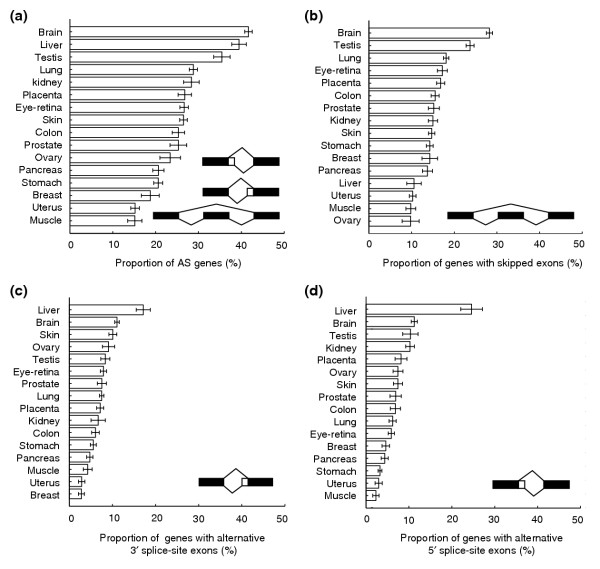
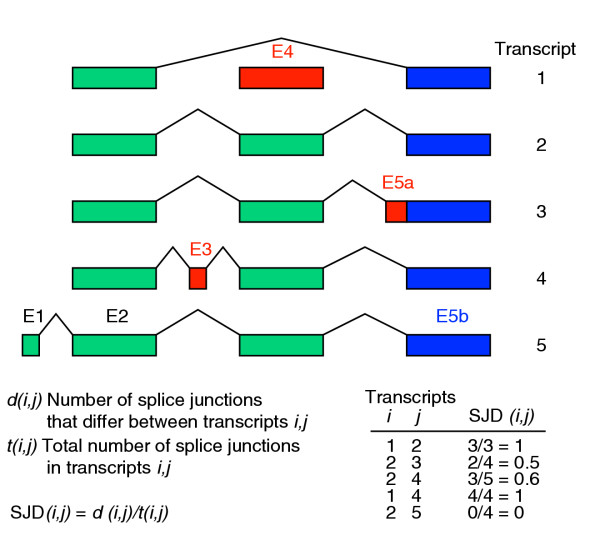
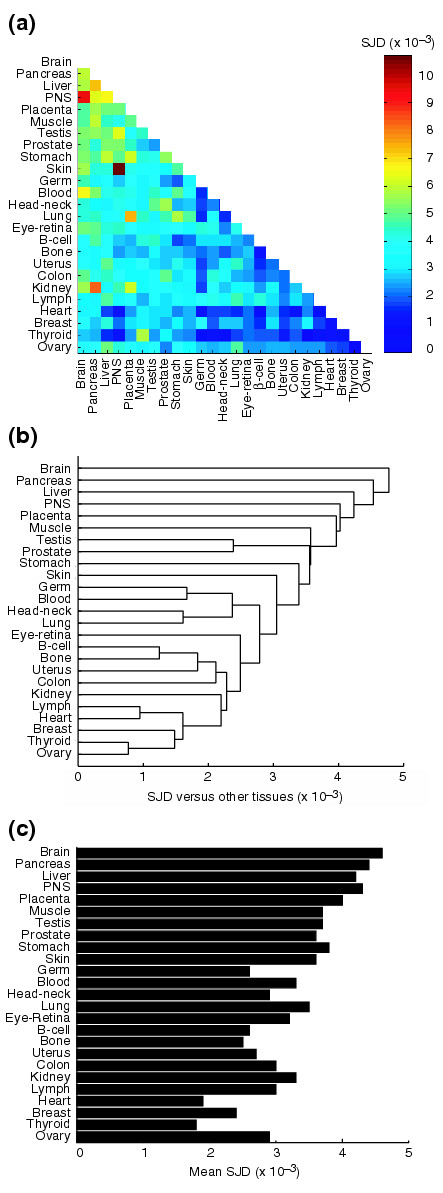
Background: Alternative pre-mRNA splicing (AS) is widely used by higher eukaryotes to generate different protein isoforms in specific cell or tissue types. To compare AS events across human tissues, we analyzed the splicing patterns of genomically aligned expressed sequence tags (ESTs) derived from libraries of cDNAs from different tissues. Results: Controlling for differences in EST coverage among tissues, we found that the brain and testis had the highest levels of exon skipping. The most pronounced differences between tissues were seen for the frequencies of alternative 3' splice site and alternative 5' splice site usage, which were about 50 to 100% higher in the liver than in any other human tissue studied. Quantifying differences in splice junction usage, the brain, pancreas, liver and the peripheral nervous system had the most distinctive patterns of AS. Analysis of available microarray expression data showed that the liver had the most divergent pattern of expression of serine-arginine protein and heterogeneous ribonucleoprotein genes compared to the other human tissues studied, possibly contributing to the unusually high frequency of alternative splice site usage seen in liver. Sequence motifs enriched in alternative exons in genes expressed in the brain, testis and liver suggest specific splicing factors that may be important in AS regulation in these tissues. Conclusions: This study distinguishes the human brain, testis and liver as having unusually high levels of AS, highlights differences in the types of AS occurring commonly in different tissues, and identifies candidate cis-regulatory elements and trans-acting factors likely to have important roles in tissue-specific AS in human cells.
Overview
The claims and statistics of this paper haven’t been checked yet.
Free: it reads the open-access text and checks the first 5 claims that cite a source we can check. Create a free account to check every claim.
Integrity signals
Registry
Cites
Statistics
Figures
Verification
Claims the paper makes
The claims and statistics of this paper haven’t been checked yet.
Free: it reads the open-access text and checks the first 5 claims that cite a source we can check. Create a free account to check every claim.
Claims other papers make about this one
Each is checked against this paper’s own text: does it say what the citing paper says it does?
The source backs part of the claim, not all of it — or backs it for a different population, condition or comparison.
In the citing paper
“Previous expressed sequence tagged mapping studies have led to the conclusion that the brain has the highest number of alternative splicing events when compared with other organs (Yeo et al., 2004)”
From An RNA-Sequencing Transcriptome and Splicing Database of Glia, Neurons, and Vascular Cells of the Cerebral Cortex (2014) · cites this paper as Yeo et al., 2004
Experimental — accuracy not yet measuredIn the citing paper
“Undocumented peptides are particularly enriched in the testis, which is known to differ markedly from other tissues in splicing pattern (Yeo et al., 2004).”
From Splice-Junction-Based Mapping of Alternative Isoforms in the Human Proteome (2019) · cites this paper as Yeo et al., 2004
In the citing paper
“Because brain contains a large number of alternatively spliced proteins [50]”
From Deep proteomic network analysis of Alzheimer’s disease brain reveals alterations in RNA binding proteins and RNA splicing associated with disease (2018) · cites this paper as [50]
Self-check
Percentages, sums and reported differences re-computed from the paper’s own numbers.
The self-check needs the paper’s full text.
Citations
Cites
A gene atlas of the mouse and human protein-encoding transcriptomes
Su, A. I., Wiltshire, T., Batalov, S., Lapp, H., Ching, K. A., Block, D., Zhang, J., Soden, R., Hayakawa, M., Kreiman, G., et al. (2004) · Proceedings of the National Academy of Sciences · doi:10.1073/pnas.0400782101 · Cited by 3,475 · cited 4×
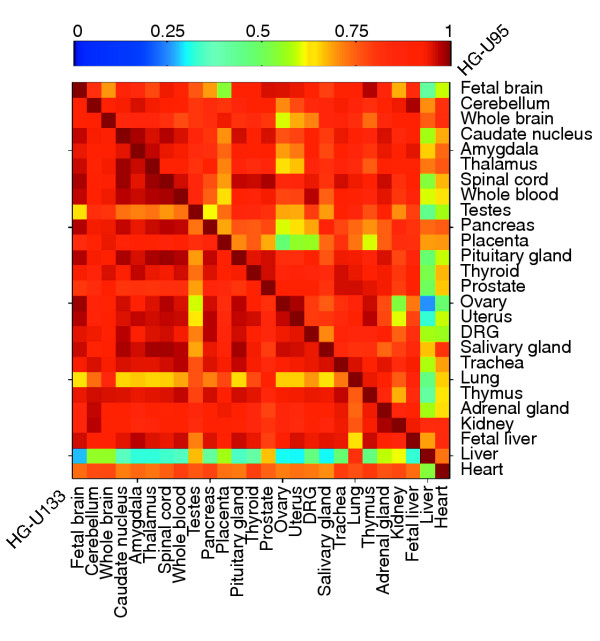
“Expression values for these genes were obtained from the 'gene expression atlas' using the HG-U95A DNA microarray [43] and from a similar set of expression data using the HGU133A DNA microarray [45].”
BackgroundMethodInfluentialSelf-citationGlantz, S. A. (1981) · Cited by 2,879
Mechanisms of Alternative Pre-Messenger RNA Splicing
Black, D. L. (2003) · Annual Review of Biochemistry · doi:10.1146/annurev.biochem.72.121801.161720 · Cited by 2,704 · cited 2×
“In addition to many differences between tissues in transcriptional and translational regulation of genes, alternative pre-mRNA splicing (AS) is also frequently used to regulate gene expression and to generate tissue-specific mRNA and protein isoforms [1-5].”
BackgroundGlantz, S. A. (1981) · Cited by 2,636
Listening to silence and understanding nonsense: exonic mutations that affect splicing
Cartegni, L., Chew, S. L., & Krainer, A. R. (2002) · Nature Reviews Genetics · doi:10.1038/nrg775 · Cited by 2,209 · cited 1×
“In addition to many differences between tissues in transcriptional and translational regulation of genes, alternative pre-mRNA splicing (AS) is also frequently used to regulate gene expression and to generate tissue-specific mRNA and protein isoforms [1-5].”
BackgroundLarge-scale analysis of the human and mouse transcriptomes
Su, A. I., Cooke, M. P., Ching, K. A., Hakak, Y., Walker, J. R., Wiltshire, T., Orth, A. P., Vega, R. G., Sapinoso, L. M., Moqrich, A., et al. (2002) · Proceedings of the National Academy of Sciences · doi:10.1073/pnas.012025199 · Cited by 1,466 · cited 5×
“In analyzing these microarray data, AD values smaller than 20 were standardized to 20, as in [43].”
BackgroundMethodInfluentialGenome-Wide Survey of Human Alternative Pre-mRNA Splicing with Exon Junction Microarrays
Johnson, J. M., Castle, J., Garrett-Engele, P., Kan, Z., Loerch, P. M., Armour, C. D., Santos, R., Schadt, E. E., Stoughton, R., & Shoemaker, D. D. (2003) · Science · doi:10.1126/science.1090100 · Cited by 1,418 · cited 2×
“In addition, DNA microarrays and polymerase colony approaches have been developed for higher-throughput analysis of alternative mRNA isoforms [23-26] and a cross-linking/immunoprecipitation strategy (CLIP) has been developed for systematic detection of the RNAs bound by a given splicing factor [27].”
MethodResultA genomic view of alternative splicing
Modrek, B., & Lee, C. (2002) · Nature Genetics · doi:10.1038/ng0102-13 · Cited by 1,302
A comparison of selected mRNA and protein abundances in human liver
Anderson, L., & Seilhamer, J. (1997) · ELECTROPHORESIS · doi:10.1002/elps.1150180333 · Cited by 1,262 · cited 1×
“The relation between the amount of mRNA expressed from a gene and the concentration of the corresponding protein has been examined previously in several studies in yeast as well as in human and mouse liver tissues [55-58].”
BackgroundPre-mRNA splicing and human disease
Faustino, N. A., & Cooper, T. A. (2003) · Genes & Development · doi:10.1101/gad.1048803 · Cited by 1,256 · cited 2×
“cated in several human genetic diseases [12].”
BackgroundAlternative splicing: increasing diversity in the proteomic world
Graveley, B. R. (2001) · Trends in Genetics · doi:10.1016/s0168-9525(00)02176-4 · Cited by 1,221 · cited 2×
“In addition to many differences between tissues in transcriptional and translational regulation of genes, alternative pre-mRNA splicing (AS) is also frequently used to regulate gene expression and to generate tissue-specific mRNA and protein isoforms [1-5].”
BackgroundCLIP Identifies Nova-Regulated RNA Networks in the Brain
Ule, J., Jensen, K. B., Ruggiu, M., Mele, A., Ule, A., & Darnell, R. B. (2003) · Science · doi:10.1126/science.1090095 · Cited by 1,120 · cited 1×
“In addition, DNA microarrays and polymerase colony approaches have been developed for higher-throughput analysis of alternative mRNA isoforms [23-26] and a cross-linking/immunoprecipitation strategy (CLIP) has been developed for systematic detection of the RNAs bound by a given splicing factor [27].”
MethodExon Recognition in Vertebrate Splicing
Berget, S. M. (1995) · Journal of Biological Chemistry · doi:10.1074/jbc.270.6.2411 · Cited by 1,086 · cited 1×
“Our analysis did not examine differences in 3'-terminal and 5'-terminal exons, inclusion of which is frequently dictated by alternative polyadenylation or alternative transcription start sites and therefore does not represent 'pure' AS [73,74].”
MethodPredictive Identification of Exonic Splicing Enhancers in Human Genes
Fairbrother, W. G., Yeh, R.-F., Sharp, P. A., & Burge, C. B. (2002) · Science · doi:10.1126/science.1073774 · Cited by 1,036
Self-citationJurica, M. S., & Moore, M. J. (2003) · Molecular Cell · doi:10.1016/s1097-2765(03)00270-3 · Cited by 962 · cited 1×
“For this trans-factor analysis, we obtained a list of 20 splicing factors of the SR, SR-related and hnRNP protein families from proteomic analyses of the human spliceosome [46-48] (see Materials and methods for the list of genes).”
MethodLarge-Scale Proteomic Analysis of the Human Spliceosome
Rappsilber, J., Ryder, U., Lamond, A. I., & Mann, M. (2002) · Genome Research · doi:10.1101/gr.473902 · Cited by 943 · cited 1×
“For this trans-factor analysis, we obtained a list of 20 splicing factors of the SR, SR-related and hnRNP protein families from proteomic analyses of the human spliceosome [46-48] (see Materials and methods for the list of genes).”
MethodComprehensive proteomic analysis of the human spliceosome
Zhou, Z., Licklider, L. J., Gygi, S. P., & Reed, R. (2002) · Nature · doi:10.1038/nature01031 · Cited by 893 · cited 1×
“For this trans-factor analysis, we obtained a list of 20 splicing factors of the SR, SR-related and hnRNP protein families from proteomic analyses of the human spliceosome [46-48] (see Materials and methods for the list of genes).”
MethodA Computer Program for Aligning a cDNA Sequence with a Genomic DNA Sequence
Florea, L., Hartzell, G., Zhang, Z., Rubin, G. M., & Miller, W. (1998) · Genome Research · doi:10.1101/gr.8.9.967 · Cited by 729 · cited 3×
“This algorithm is similar in concept to SIM4 [72] but was developed specifically to align high-quality cDNAs rather than ESTs and thus requires higher alignment quality (at least 93% identity) and consensus terminal dinucleotides at the ends of all introns (that is, GT..”
MethodInfluentialGenome-wide detection of alternative splicing in expressed sequences of human genes
Modrek, B. (2001) · Nucleic Acids Research · doi:10.1093/nar/29.13.2850 · Cited by 679 · cited 2×
“Pairs of inferred A3Es or A5Es differing by fewer than six nucleotides were excluded from further analysis, as in [8], because of the possibility that such small differences might sometimes result from EST sequencing or alignment errors.”
BackgroundGriffin, T. J., Gygi, S. P., Ideker, T., Rist, B., Eng, J., Hood, L., & Aebersold, R. (2002) · Molecular & Cellular Proteomics · doi:10.1074/mcp.m200001-mcp200 · Cited by 663 · cited 1×
“The relation between the amount of mRNA expressed from a gene and the concentration of the corresponding protein has been examined previously in several studies in yeast as well as in human and mouse liver tissues [55-58].”
BackgroundALTERNATIVE SPLICING OF PRE-mRNA: Developmental Consequences and Mechanisms of Regulation
Lopez, A. J. (1998) · Annual Review of Genetics · doi:10.1146/annurev.genet.32.1.279 · Cited by 640 · cited 1×
“In addition to many differences between tissues in transcriptional and translational regulation of genes, alternative pre-mRNA splicing (AS) is also frequently used to regulate gene expression and to generate tissue-specific mRNA and protein isoforms [1-5].”
BackgroundA Sampling of the Yeast Proteome
Futcher, B., Latter, G. I., Monardo, P., McLaughlin, C. S., & Garrels, J. I. (1999) · Molecular and Cellular Biology · doi:10.1128/mcb.19.11.7357 · Cited by 606 · cited 1×
“The relation between the amount of mRNA expressed from a gene and the concentration of the corresponding protein has been examined previously in several studies in yeast as well as in human and mouse liver tissues [55-58].”
BackgroundNaor, D., Nedvetzki, S., Golan, I., Melnik, L., & Faitelson, Y. (2002) · Critical Reviews in Clinical Laboratory Sciences · doi:10.1080/10408360290795574 · Cited by 557 · cited 1×
“Prominent examples include the tissue-specific splicing of the c-src N1 exon [13], cancer-associated splicing of the CD44 gene [14] and the alternative splicing cascade involved in Drosophila melanogaster sex determination [15].”
BackgroundFrequent Alternative Splicing of Human Genes
Mironov, A. A., Fickett, J. W., & Gelfand, M. S. (1999) · Genome Research · doi:10.1101/gr.9.12.1288 · Cited by 545
Alternative splicing and genome complexity
Brett, D., Pospisil, H., Valcárcel, J., Reich, J., & Bork, P. (2002) · Nature Genetics · doi:10.1038/ng803 · Cited by 536 · cited 2×
“As larger numbers of ESTs increase the chance of observing a larger fraction of the expressed isoforms of a gene, the number of available ESTs has a direct impact on estimated proportions of AS, as seen previously in analyses comparing the levels of AS in different organisms [ 31 ].”
BackgroundResultIdentification of functional exonic splicing enhancer motifs recognized by individual SR proteins
Liu, H.-X., Zhang, M., & Krainer, A. R. (1998) · Genes & Development · doi:10.1101/gad.12.13.1998 · Cited by 510 · cited 1×
“A number of cis-regulatory elements in exons or introns that play key regulatory roles have also been identified, using a variety of methods including site-directed mutagenesis, systematic evolution of ligands by exponential enrichment (SELEX) and computational approaches [18-22].”
BackgroundBurd, C. G., & Dreyfuss, G. (1994) · The EMBO Journal · doi:10.1002/j.1460-2075.1994.tb06369.x · Cited by 488
Ladd, A. N., Charlet-B., N., & Cooper, T. A. (2001) · Molecular and Cellular Biology · doi:10.1128/mcb.21.4.1285-1296.2001 · Cited by 448 · cited 2×
“Biochemical studies of these and other genes have described important classes of trans-acting splicing-regulatory factors, implicating members of the ubiquitously expressed serine/ arginine-rich protein (SR protein) and heterogeneous nuclear ribonucleoprotein (hnRNP) families, and tissue-specific factors including mem…”
BackgroundNova-1 Regulates Neuron-Specific Alternative Splicing and Is Essential for Neuronal Viability
Jensen, K. B., Dredge, B. K., Stefani, G., Zhong, R., Buckanovich, R. J., Okano, H. J., Yang, Y. Y. L., & Darnell, R. B. (2000) · Neuron · doi:10.1016/s0896-6273(00)80900-9 · Cited by 426 · cited 1×
“Biochemical studies of these and other genes have described important classes of trans-acting splicing-regulatory factors, implicating members of the ubiquitously expressed serine/ arginine-rich protein (SR protein) and heterogeneous nuclear ribonucleoprotein (hnRNP) families, and tissue-specific factors including mem…”
BackgroundGenome-wide detection of tissue-specific alternative splicing in the human transcriptome
Xu, Q. (2002) · Nucleic Acids Research · doi:10.1093/nar/gkf492 · Cited by 415 · cited 3×
“Other computational studies have analyzed the tissue specificity of AS events and identified sets of exons and genes that exhibit tissue-biased expression [29,30].”
BackgroundResultGenomewide Analysis of mRNA Processing in Yeast Using Splicing-Specific Microarrays
Clark, T. A., Sugnet, C. W., & Ares, M. (2002) · Science · doi:10.1126/science.1069415 · Cited by 410 · cited 1×
“In addition, DNA microarrays and polymerase colony approaches have been developed for higher-throughput analysis of alternative mRNA isoforms [23-26] and a cross-linking/immunoprecipitation strategy (CLIP) has been developed for systematic detection of the RNAs bound by a given splicing factor [27].”
MethodWollerton, M. C., Gooding, C., Wagner, E. J., Garcia-Blanco, M. A., & Smith, C. W. J. (2004) · Molecular Cell · doi:10.1016/s1097-2765(03)00502-1 · Cited by 409 · cited 1×
“The motifs in cluster BR1 (CUCC, CCUC) resemble the consensus binding site for the polypyrimidine tract-binding protein (PTB), which acts as a repressor of splicing in many contexts [60-63].”
BackgroundRegulated tissue-specific expression of antagonistic pre-mRNA splicing factors.
Hanamura, A., Cáceres, J. F., Mayeda, A., Franza, B. R., & Krainer, A. R. (1998) · PubMed Central · Cited by 379
A computational analysis of sequence features involved in recognition of short introns
Lim, L. P., & Burge, C. B. (2001) · Proceedings of the National Academy of Sciences · doi:10.1073/pnas.201407298 · Cited by 374 · cited 1×
“A number of cis-regulatory elements in exons or introns that play key regulatory roles have also been identified, using a variety of methods including site-directed mutagenesis, systematic evolution of ligands by exponential enrichment (SELEX) and computational approaches [18-22].”
BackgroundSelf-citationDistribution and Characterization of Regulatory Elements in the Human Genome
Majewski, J., & Ott, J. (2002) · Genome Research · doi:10.1101/gr.606402 · Cited by 303 · cited 1×
“Our analysis did not examine differences in 3'-terminal and 5'-terminal exons, inclusion of which is frequently dictated by alternative polyadenylation or alternative transcription start sites and therefore does not represent 'pure' AS [73,74].”
MethodEST comparison indicates 38% of human mRNAs contain possible alternative splice forms
Brett, D., Hanke, J., Lehmann, G., Haase, S., Delbrück, S., Krueger, S., Reich, J., & Bork, P. (2000) · FEBS Letters · doi:10.1016/s0014-5793(00)01581-7 · Cited by 299
Intronic Sequences Flanking Alternatively Spliced Exons Are Conserved Between Human and Mouse
Sorek, R., & Ast, G. (2003) · Genome Research · doi:10.1101/gr.1208803 · Cited by 278 · cited 1×
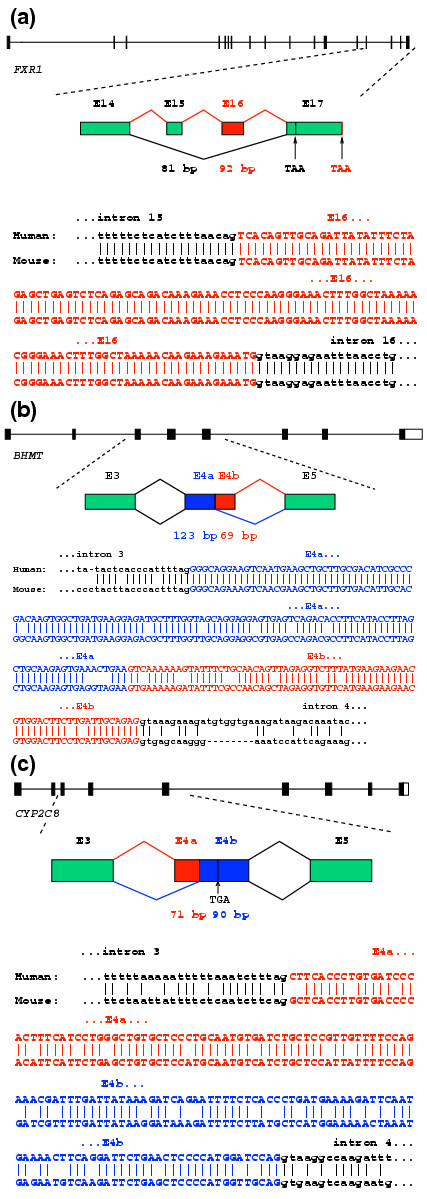
“The exon sequence is perfectly conserved between the human and mouse genomes, as are the 5' splice site and 3' splice site sequences (Figure 2a), suggesting that this AS event may have an important regulatory role [37-39].”
BackgroundhnRNP A/B proteins are required for inhibition of HIV-1 pre-mRNA splicing
Caputi, M., Mayeda, A., Krainer, A. R., & Zahler, A. M. (1999) · The EMBO Journal · doi:10.1093/emboj/18.14.4060 · Cited by 258 · cited 1×
“This functional antagonism between particular SR and hnRNP proteins is often due to competition for binding of nearby sites on pre-mRNAs [49,53,54].”
BackgroundSchaal, T. D., & Maniatis, T. (1999) · Molecular and Cellular Biology · doi:10.1128/mcb.19.3.1705 · Cited by 233
TRANSCRIPTOME AND GENOME CONSERVATION OF ALTERNATIVE SPLICING EVENTS IN HUMANS AND MICE
SUGNET, C. W., KENT, W. J., ARES, M., & HAUSSLER, D. (2003) · Biocomputing 2004 · doi:10.1142/9789812704856_0007 · Cited by 222 · cited 1×
“The exon sequence is perfectly conserved between the human and mouse genomes, as are the 5' splice site and 3' splice site sequences (Figure 2a), suggesting that this AS event may have an important regulatory role [37-39].”
BackgroundMcCullough, A. J., & Berget, S. M. (1997) · Molecular and Cellular Biology · doi:10.1128/mcb.17.8.4562 · Cited by 221 · cited 1×
“In particular, G-rich elements, which are known to act as intronic splicing enhancers [65,66], may function as silencers of splicing when present in an exonic context.”
BackgroundChan, R. C., & Black, D. L. (1997) · Molecular and Cellular Biology · doi:10.1128/mcb.17.8.4667 · Cited by 216 · cited 1×
“The motifs in cluster BR1 (CUCC, CCUC) resemble the consensus binding site for the polypyrimidine tract-binding protein (PTB), which acts as a repressor of splicing in many contexts [60-63].”
BackgroundClark, F. (2002) · Human Molecular Genetics · doi:10.1093/hmg/11.4.451 · Cited by 203 · cited 1×
“From another direction, the accumulation of large databases of cDNA and expressed sequence tag (EST) sequences has enabled large-scale computational studies, which have assessed the scope of AS in the mammalian transcriptome [3,8,10,28].”
BackgroundEperon, I. C., Makarova, O. V., Mayeda, A., Munroe, S. H., Cáceres, J. F., Hayward, D. G., & Krainer, A. R. (2000) · Molecular and Cellular Biology · doi:10.1128/mcb.20.22.8303-8318.2000 · Cited by 201 · cited 1×
“A well established paradigm in the field of RNA splicing is that usage of alternative splice sites is often controlled by the relative concentrations of specific SR proteins and hnRNP proteins [49-52].”
BackgroundChou, M.-Y., Underwood, J. G., Nikolic, J., Luu, M. H. T., & Black, D. L. (2000) · Molecular Cell · doi:10.1016/s1097-2765(00)80260-9 · Cited by 198 · cited 1×
“The motifs in cluster BR1 (CUCC, CCUC) resemble the consensus binding site for the polypyrimidine tract-binding protein (PTB), which acts as a repressor of splicing in many contexts [60-63].”
BackgroundAn unappreciated role for RNA surveillance
Hillman, R. T., Green, R. E., & Brenner, S. E. (2004) · Genome Biology · doi:10.1186/gb-2004-5-2-r8 · Cited by 193 · cited 1×
“In this case, the shorter alternative transcript is a potential substrate for nonsense-mediated decay [41,42] and the AS event may be used to regulate the level of functional mRNA/protein produced.”
BackgroundZavolan, M., Kondo, S., Schönbach, C., Adachi, J., Hume, D. A., RIKEN GER Group, Members, G., Hayashizaki, Y., & Gaasterland, T. (2003) · Genome Research · doi:10.1101/gr.1017303 · Cited by 191
Green, R. E., Lewis, B. P., Hillman, R. T., Blanchette, M., Lareau, L. F., Garnett, A. T., Rio, D. C., & Brenner, S. E. (2003) · Bioinformatics · doi:10.1093/bioinformatics/btg1015 · Cited by 189
Positional clustering of differentially expressed genes on human chromosomes 20, 21 and 22.
Mégy, K., Audic, S., & Claverie, J. (2003) · Genome biology · doi:10.1186/gb-2003-4-2-p1 · Cited by 184
Selecting for Functional Alternative Splices in ESTs
Kan, Z., States, D., & Gish, W. (2002) · Genome Research · doi:10.1101/gr.764102 · Cited by 183 · cited 2×
“Because the availability of a larger number of ESTs derived from a gene increases the chance of observing alternative isoforms of that gene, the proportion of AS genes observed in a tissue will tend to increase with increasing EST coverage of genes [10,31].”
BackgroundCell Type-Specific Expression of hnRNP Proteins
Kamma, H., Portman, D. S., & Dreyfuss, G. (1995) · Experimental Cell Research · doi:10.1006/excr.1995.1366 · Cited by 181 · cited 1×
“A well established paradigm in the field of RNA splicing is that usage of alternative splice sites is often controlled by the relative concentrations of specific SR proteins and hnRNP proteins [49-52].”
BackgroundPrimer of Biostatistics: Sixth Edition
Glantz, S. A. (2005) · Cited by 157
An Alternative-Exon Database and Its Statistical Analysis
Stamm, S., Zhu, J., Nakai, K., Stoilov, P., Stoss, O., & Zhang, M. Q. (2000) · DNA and Cell Biology · doi:10.1089/104454900750058107 · Cited by 156 · cited 4×
“Other computational studies have analyzed the tissue specificity of AS events and identified sets of exons and genes that exhibit tissue-biased expression [29,30].”
BackgroundResultInfluentialSR proteins and hnRNP H regulate the splicing of the HIV‐1 tev‐specific exon 6D
Caputi, M., & Zahler, A. M. (2002) · The EMBO Journal · doi:10.1093/emboj/21.4.845 · Cited by 148 · cited 1×
“This functional antagonism between particular SR and hnRNP proteins is often due to competition for binding of nearby sites on pre-mRNAs [49,53,54].”
BackgroundSplicing Regulation in Neurons: Tinkering with Cell-Specific Control
Grabowski, P. J. (1998) · Cell · doi:10.1016/s0092-8674(00)81399-9 · Cited by 139 · cited 1×
“The motifs in cluster BR1 (CUCC, CCUC) resemble the consensus binding site for the polypyrimidine tract-binding protein (PTB), which acts as a repressor of splicing in many contexts [60-63].”
BackgroundModafferi, E. F., & Black, D. L. (1997) · Molecular and Cellular Biology · doi:10.1128/mcb.17.11.6537 · Cited by 132 · cited 1×
“Prominent examples include the tissue-specific splicing of the c-src N1 exon [13], cancer-associated splicing of the CD44 gene [14] and the alternative splicing cascade involved in Drosophila melanogaster sex determination [15].”
BackgroundWang, Z., Lo, H. S., Yang, H. H., Gere, S., Hu, Y., Buetow, K. H., & Lee, M. P. (2003) · PubMed · Cited by 130
Predicting Splice Variant from DNA Chip Expression Data
Hu, G. K., Madore, S. J., Moldover, B., Jatkoe, T., Balaban, D., Thomas, J., & Wang, Y. (2001) · Genome Research · doi:10.1101/gr.165501 · Cited by 120 · cited 1×
“In addition, DNA microarrays and polymerase colony approaches have been developed for higher-throughput analysis of alternative mRNA isoforms [23-26] and a cross-linking/immunoprecipitation strategy (CLIP) has been developed for systematic detection of the RNAs bound by a given splicing factor [27].”
MethodBrudno, M. (2001) · Nucleic Acids Research · doi:10.1093/nar/29.11.2338 · Cited by 119 · cited 1×
“[59], sequence motifs four to six bases long that were significantly enriched in exons skipped in AS genes expressed in the human brain relative to constitutive exons in genes expressed in the brain were identified.”
BackgroundSirand-Pugnet, P., Durosay, P., Brody, E., & Marie, J. (1995) · Nucleic Acids Research · doi:10.1093/nar/23.17.3501 · Cited by 114 · cited 1×
“In particular, G-rich elements, which are known to act as intronic splicing enhancers [65,66], may function as silencers of splicing when present in an exonic context.”
BackgroundSingle Molecule Profiling of Alternative Pre-mRNA Splicing
Zhu, J., Shendure, J., Mitra, R. D., & Church, G. M. (2003) · Science · doi:10.1126/science.1085792 · Cited by 98 · cited 1×
“In addition, DNA microarrays and polymerase colony approaches have been developed for higher-throughput analysis of alternative mRNA isoforms [23-26] and a cross-linking/immunoprecipitation strategy (CLIP) has been developed for systematic detection of the RNAs bound by a given splicing factor [27].”
MethodComparative Genomic Sequence Analysis of the FXR Gene Family: FMR1, FXR1, and FXR2
Kirkpatrick, L., McIlwain, K. A., & Nelson, D. L. (2001) · Genomics · doi:10.1006/geno.2001.6667 · Cited by 88 · cited 1×
“human and mouse brain tissue is shown in Figure 2a for the human fragile X mental retardation syndrome-related (FXR1) gene [35,36].”
BackgroundAlternative splicing in the nervous system: an emerging source of diversity and regulation
Lee, C. J., & Irizarry, K. (2003) · Biological Psychiatry · doi:10.1016/s0006-3223(03)00375-5 · Cited by 87 · cited 2×
“Previous EST-based analyses have identified high proportions of splicing in human brain and testis tissues [29,30,32].”
BackgroundResultControl of 3' splice site choice in vivo by ASF/SF2 and hnRNP A1
Bai, Y., Lee, D., Yu, T., & Chasin, L. A. (1999) · Nucleic Acids Research · doi:10.1093/nar/27.4.1126 · Cited by 84 · cited 1×
“A well established paradigm in the field of RNA splicing is that usage of alternative splice sites is often controlled by the relative concentrations of specific SR proteins and hnRNP proteins [49-52].”
BackgroundAlternative Splicing in the Murine and Human FXR1 Genes
Kirkpatrick, L., McIlwain, K. A., & Nelson, D. L. (1999) · Genomics · doi:10.1006/geno.1999.5868 · Cited by 70 · cited 1×
“human and mouse brain tissue is shown in Figure 2a for the human fragile X mental retardation syndrome-related (FXR1) gene [35,36].”
BackgroundHui, L., Zhang, X., Wu, X., Lin, Z., Wang, Q., Li, Y., & Hu, G. (2004) · Oncogene · doi:10.1038/sj.onc.1207362 · Cited by 68 · cited 1×
“We also observe a high level of AS in the human liver, a tissue with much lower EST coverage, where higher levels of AS have been previously reported in cancerous cells [33,34].”
BackgroundMacDougall, C. N., Harbison, D., & Bownes, M. (1995) · Developmental Biology · doi:10.1006/dbio.1995.8047 · Cited by 65 · cited 1×
“Prominent examples include the tissue-specific splicing of the c-src N1 exon [13], cancer-associated splicing of the CD44 gene [14] and the alternative splicing cascade involved in Drosophila melanogaster sex determination [15].”
BackgroundExpression profiles of active genes in human and mouse livers
Kawamoto, S., Matsumoto, Y., Mizuno, K., Okubo, K., & Matsubara, K. (1996) · Gene · doi:10.1016/0378-1119(96)00512-4 · Cited by 62 · cited 1×
“The relation between the amount of mRNA expressed from a gene and the concentration of the corresponding protein has been examined previously in several studies in yeast as well as in human and mouse liver tissues [55-58].”
BackgroundTian, H., & Kole, R. (2001) · Journal of Biological Chemistry · doi:10.1074/jbc.m102957200 · Cited by 34 · cited 1×
“A number of cis-regulatory elements in exons or introns that play key regulatory roles have also been identified, using a variety of methods including site-directed mutagenesis, systematic evolution of ligands by exponential enrichment (SELEX) and computational approaches [18-22].”
BackgroundKaufmann, D., Kenner, O., Nürnberg, P., Vogel, W., & Bartelt‐Kirbach, B. (2003) · European Journal of Human Genetics · doi:10.1038/sj.ejhg.5201098 · Cited by 17 · cited 1×
“The exon sequence is perfectly conserved between the human and mouse genomes, as are the 5' splice site and 3' splice site sequences (Figure 2a), suggesting that this AS event may have an important regulatory role [37-39].”
BackgroundGenetic Evidence for a Nova Regulator of Alternative Splicing in the Brain
Grabowski, P. J. (2000) · Neuron · doi:10.1016/s0896-6273(00)80888-0 · Cited by 15 · cited 1×
“In addition to many differences between tissues in transcriptional and translational regulation of genes, alternative pre-mRNA splicing (AS) is also frequently used to regulate gene expression and to generate tissue-specific mRNA and protein isoforms [1-5].”
Cited by
Alternative isoform regulation in human tissue transcriptomes
Wang, E. T., Sandberg, R., Luo, S., Khrebtukova, I., Zhang, L., Mayr, C., Kingsmore, S. F., Schroth, G. P., & Burge, C. B. (2008) · Nature · doi:10.1038/nature07509 · Cited by 5,181
Self-citationThe Genotype-Tissue Expression (GTEx) pilot analysis: Multitissue gene regulation in humans
The GTEx Consortium, Ardlie, K. G., Deluca, D. S., Segrè, A. V., Sullivan, T. J., Young, T. R., Gelfand, E. T., Trowbridge, C. A., Maller, J. B., Tukiainen, T., et al. (2015) · Science · doi:10.1126/science.1262110 · Cited by 5,062
Zhang, Y., Chen, K., Sloan, S. A., Bennett, M. L., Scholze, A. R., O'Keeffe, S., Phatnani, H. P., Guarnieri, P., Caneda, C., Ruderisch, N., et al. (2014) · The Journal of Neuroscience · doi:10.1523/jneurosci.1860-14.2014 · Cited by 4,875
“Previous expressed sequence tagged mapping studies have led to the conclusion that the brain has the highest number of alternative splicing events when compared with other organs (Yeo et al., 2004), and different brain regions are associated with complex patterns of alternative splicing (Johnson et al.”
BackgroundPan, Q., Shai, O., Lee, L. J., Frey, B. J., & Blencowe, B. J. (2008) · Nature Genetics · doi:10.1038/ng.259 · Cited by 3,951
GMAP: A genomic mapping and alignment program for mRNA and EST sequences
Wu, T. D., & Watanabe, C. K. (2005) · Bioinformatics · doi:10.1093/bioinformatics/bti310 · Cited by 2,354
Metadata
- Authors
- Yeo, G., Holste, D., Kreiman, G., & Burge, C. B.
- Affiliations
- Massachusetts Institute of Technology (US)
- Corresponding author
- Burge, Christopher B
- Venue
- Genome Biology
- Published
- 2004-09-13
- Volume
- 5
- Issue
- 10
- Pages
- R74-R74
- ISSN
- 1465-6906 (ISSN-L)
- 1474-760X
- PMC
- PMC545594
- OpenAlex
- W2169685494
- Cited by
- 584
- References
- 70
- Citations by year
- 2026: 17 · 2025: 24 · 2024: 28 · 2023: 26 · 2022: 34 · 2021: 49 · 2020: 24 · 2019: 33 · 2018: 31 · 2017: 24 · 2016: 19 · 2015: 30 · 2014: 20 · 2013: 27 · 2012: 28
- FWCI
- 9.71
- Type
- journal article
- Language
- en
- Open access
- gold
- doi.org
- Licence
- cc-by
- creativecommons.org/licenses/by/2.0/ (tdm)
- creativecommons.org/licenses/by/2.0/ (vor)
- Locations
- Genome biology (publishedVersion, cc-by)
- PubMed Central (publishedVersion)
- PubMed (publishedVersion)
- Digital Access to Scholarship at Harvard (DASH) (Harvard University) (submittedVersion, cc-by)
- Funders
- National Science Foundation
- National Institutes of Health
- Topics
- Life Sciences › Biochemistry, Genetics and Molecular Biology › Molecular Biology › RNA Research and Splicing
- Life Sciences › Biochemistry, Genetics and Molecular Biology › Molecular Biology › RNA regulation and disease
- Life Sciences › Biochemistry, Genetics and Molecular Biology › Cancer Research › Cancer-related molecular mechanisms research
- Keywords
- alternative splicing, tissue-specific splicing, exon skipping, expressed sequence tags, liver, brain, testis, cis-regulatory elements, splicing factors, human tissue
- MeSH terms
- Brain, Exons, Humans, Liver, Male, Organ Specificity, Regulatory Sequences, Nucleic Acid, RNA, Messenger, Testis, Genetic Variation, Gene Library, Alternative Splicing, Protein Isoforms, Expressed Sequence Tags, RNA Splice Sites
About these checks
Registry, retraction, Cites and statistics results are computed, not judged, with one exception: a printed reference that no index lists is read once by a model before it counts as a citation error. Claims are extracted by a model and kept only when their quote appears verbatim in the text; each cited source is then checked, with a model’s help, for whether it says what the claim relies on. Those verdicts can be wrong — read the claim’s quote and the cited source before relying on one.
Statistics and arithmetic are recomputed, not judged.
Confidence bands are shown only for fields calibrated on our annotated test set. None is calibrated yet, so no band is shown.
What counts as a claim ›How we measure confidence ›How we check this ›
Are you an author, or do you see a problem with this page? Request a review
Data sources
Bibliographic data: Semantic Scholar, OpenAlex, Crossref.
Contains information from the Semantic Scholar Academic Graph Datasets, made available under the ODC Attribution License (ODC-BY 1.0).
Semantic Scholar’s data is described in: Kinney, R., et al. (2023). The Semantic Scholar Open Data Platform. arXiv:2301.10140.
