

Variation in alternative splicing across human tissues
Open accessThe DOI matches its Crossref record; 71 of the 71 references it cites were found in a registry or an index.
Abstract
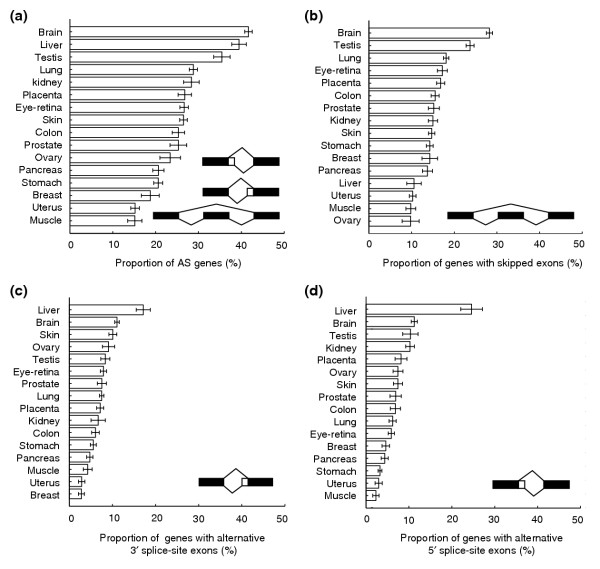
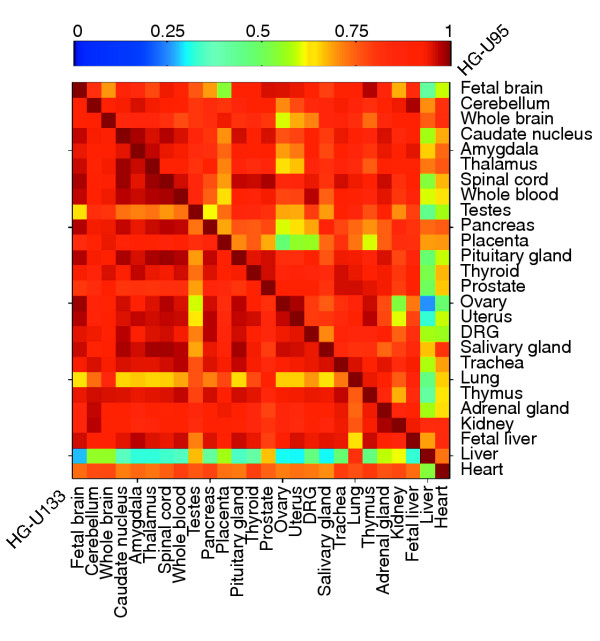
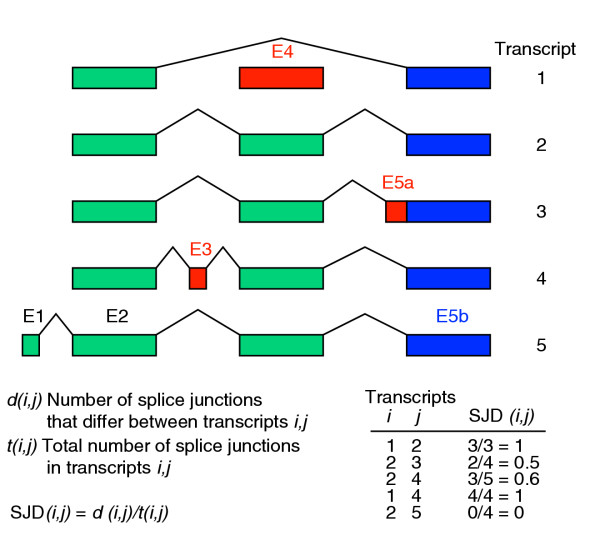
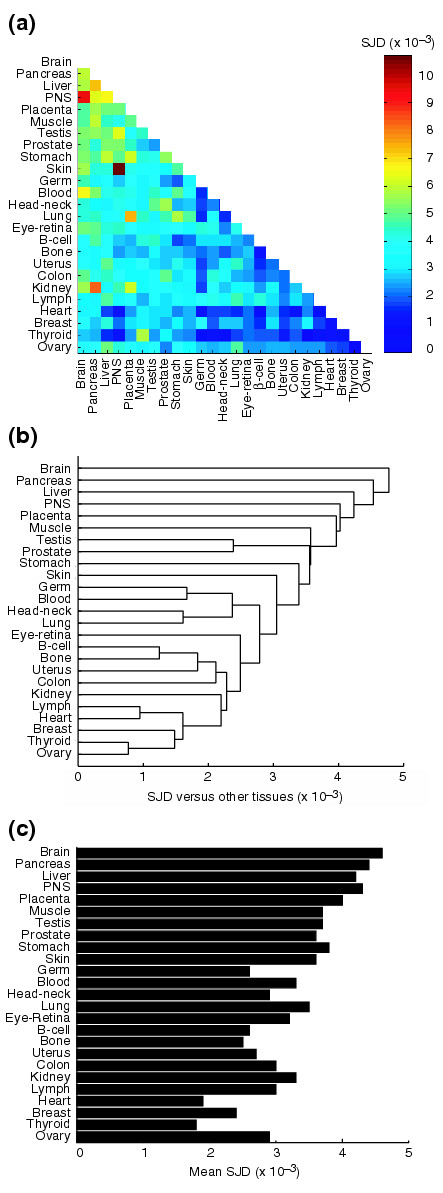
Background: Alternative pre-mRNA splicing (AS) is widely used by higher eukaryotes to generate different protein isoforms in specific cell or tissue types. To compare AS events across human tissues, we analyzed the splicing patterns of genomically aligned expressed sequence tags (ESTs) derived from libraries of cDNAs from different tissues. Results: Controlling for differences in EST coverage among tissues, we found that the brain and testis had the highest levels of exon skipping. The most pronounced differences between tissues were seen for the frequencies of alternative 3' splice site and alternative 5' splice site usage, which were about 50 to 100% higher in the liver than in any other human tissue studied. Quantifying differences in splice junction usage, the brain, pancreas, liver and the peripheral nervous system had the most distinctive patterns of AS. Analysis of available microarray expression data showed that the liver had the most divergent pattern of expression of serine-arginine protein and heterogeneous ribonucleoprotein genes compared to the other human tissues studied, possibly contributing to the unusually high frequency of alternative splice site usage seen in liver. Sequence motifs enriched in alternative exons in genes expressed in the brain, testis and liver suggest specific splicing factors that may be important in AS regulation in these tissues. Conclusions: This study distinguishes the human brain, testis and liver as having unusually high levels of AS, highlights differences in the types of AS occurring commonly in different tissues, and identifies candidate cis-regulatory elements and trans-acting factors likely to have important roles in tissue-specific AS in human cells.
Overview
The claims and statistics of this paper haven’t been checked yet.
Free: it reads the open-access text and checks the first 5 claims that cite a source we can check. Create a free account to check every claim.
Integrity signals
Registry
Cites
Statistics
Figures
Verification
Claims the paper makes
The claims and statistics of this paper haven’t been checked yet.
Free: it reads the open-access text and checks the first 5 claims that cite a source we can check. Create a free account to check every claim.
Claims other papers make about this one
Each is checked against this paper’s own text: does it say what the citing paper says it does?
The source backs part of the claim, not all of it — or backs it for a different population, condition or comparison.
In the citing paper
“Previous expressed sequence tagged mapping studies have led to the conclusion that the brain has the highest number of alternative splicing events when compared with other organs (Yeo et al., 2004)”
From An RNA-Sequencing Transcriptome and Splicing Database of Glia, Neurons, and Vascular Cells of the Cerebral Cortex (2014) · cites this paper as Yeo et al., 2004
Experimental — accuracy not yet measuredIn the citing paper
“Undocumented peptides are particularly enriched in the testis, which is known to differ markedly from other tissues in splicing pattern (Yeo et al., 2004).”
From Splice-Junction-Based Mapping of Alternative Isoforms in the Human Proteome (2019) · cites this paper as Yeo et al., 2004
In the citing paper
“Because brain contains a large number of alternatively spliced proteins [50]”
From Deep proteomic network analysis of Alzheimer’s disease brain reveals alterations in RNA binding proteins and RNA splicing associated with disease (2018) · cites this paper as [50]
Self-check
Percentages, sums and reported differences re-computed from the paper’s own numbers.
The self-check needs the paper’s full text.
Citations
Cites
A gene atlas of the mouse and human protein-encoding transcriptomes
Su, A. I., Wiltshire, T., Batalov, S., Lapp, H., Ching, K. A., Block, D., Zhang, J., Soden, R., Hayakawa, M., Kreiman, G., et al. (2004) · Proceedings of the National Academy of Sciences · doi:10.1073/pnas.0400782101 · Cited by 3,475 · cited 4×
“Expression values for these genes were obtained from the 'gene expression atlas' using the HG-U95A DNA microarray [43] and from a similar set of expression data using the HGU133A DNA microarray [45].”
BackgroundMethodInfluentialSelf-citationGlantz, S. A. (1981) · Cited by 2,879
Mechanisms of Alternative Pre-Messenger RNA Splicing
Black, D. L. (2003) · Annual Review of Biochemistry · doi:10.1146/annurev.biochem.72.121801.161720 · Cited by 2,704 · cited 2×
“In addition to many differences between tissues in transcriptional and translational regulation of genes, alternative pre-mRNA splicing (AS) is also frequently used to regulate gene expression and to generate tissue-specific mRNA and protein isoforms [1-5].”
BackgroundGlantz, S. A. (1981) · Cited by 2,636
Listening to silence and understanding nonsense: exonic mutations that affect splicing
Cartegni, L., Chew, S. L., & Krainer, A. R. (2002) · Nature Reviews Genetics · doi:10.1038/nrg775 · Cited by 2,209 · cited 1×
“In addition to many differences between tissues in transcriptional and translational regulation of genes, alternative pre-mRNA splicing (AS) is also frequently used to regulate gene expression and to generate tissue-specific mRNA and protein isoforms [1-5].”
BackgroundLarge-scale analysis of the human and mouse transcriptomes
Su, A. I., Cooke, M. P., Ching, K. A., Hakak, Y., Walker, J. R., Wiltshire, T., Orth, A. P., Vega, R. G., Sapinoso, L. M., Moqrich, A., et al. (2002) · Proceedings of the National Academy of Sciences · doi:10.1073/pnas.012025199 · Cited by 1,466 · cited 5×
“In analyzing these microarray data, AD values smaller than 20 were standardized to 20, as in [43].”
BackgroundMethodInfluentialGenome-Wide Survey of Human Alternative Pre-mRNA Splicing with Exon Junction Microarrays
Johnson, J. M., Castle, J., Garrett-Engele, P., Kan, Z., Loerch, P. M., Armour, C. D., Santos, R., Schadt, E. E., Stoughton, R., & Shoemaker, D. D. (2003) · Science · doi:10.1126/science.1090100 · Cited by 1,418 · cited 2×
“In addition, DNA microarrays and polymerase colony approaches have been developed for higher-throughput analysis of alternative mRNA isoforms [23-26] and a cross-linking/immunoprecipitation strategy (CLIP) has been developed for systematic detection of the RNAs bound by a given splicing factor [27].”
MethodResultA genomic view of alternative splicing
Modrek, B., & Lee, C. (2002) · Nature Genetics · doi:10.1038/ng0102-13 · Cited by 1,302
A comparison of selected mRNA and protein abundances in human liver
Anderson, L., & Seilhamer, J. (1997) · ELECTROPHORESIS · doi:10.1002/elps.1150180333 · Cited by 1,262 · cited 1×
“The relation between the amount of mRNA expressed from a gene and the concentration of the corresponding protein has been examined previously in several studies in yeast as well as in human and mouse liver tissues [55-58].”
BackgroundPre-mRNA splicing and human disease
Faustino, N. A., & Cooper, T. A. (2003) · Genes & Development · doi:10.1101/gad.1048803 · Cited by 1,256 · cited 2×
“cated in several human genetic diseases [12].”
Background
Cited by
Items 501–600 of 685
Epigenome-Wide DNA Methylation and Histone Modification of Alzheimer's Disease
Bansal, A., & Singh, T. R. (2019) · Elsevier eBooks · doi:10.1016/b978-0-12-814513-5.00009-x · Cited by 1
Computational Methods and Approaches in Pharmacogenomic Research
Zhou, Y., & Lauschke, V. M. (2021) · Elsevier eBooks · doi:10.1016/b978-0-12-820472-6.00166-3 · Cited by 1
Alternative splicing is not a key source of chemerin isoforms diversity
Kwiecień, K., Majewski, P., Bąk, M., Brzoza, P., Godlewska, U., Skulimowska, I., Cichy, J., & Kwitniewski, M. (2023) · Molecular Biology Reports · doi:10.1007/s11033-022-08174-7 · Cited by 1
Bhattacharjee, A., & Roy, P. K. (2024) · Brain Disorders · doi:10.1016/j.dscb.2023.100112 · Cited by 1
“Indeed, both liver and brain are two organs where these differential splicing levels are much higher than other tissues [31].”
Molecular and Cellular Basis of Misfolded Proteins in Neurodegenerative Diseases
Zali, A., Safari, S., Roodsari, S. R., & Niknazar, S. (2022) · International Clinical Neuroscience Journal · doi:10.34172/icnj.2022.32 · Cited by 1
Rodrigues, T. C. (2009) · Acervo Digital da Universidade Estadual Paulista (Universidade Estadual Paulista) · Cited by 1
Comparative analysis of eukaryotic gene sequence features
Ferrando, A., & Francesc, J. (2005) · LA Referencia (Red Federada de Repositorios Institucionales de Publicaciones Científicas) · Cited by 1
Prediction of Alternative Splice Sites in Human Genes
Simmons, D. (2007) · San José State University ScholarWorks (San Jose State University) · doi:10.31979/etd.wm3u-juht · Cited by 1
U12-type Spliceosome : Localization and Effects of Splicing Efficiency on Gene Expression
Pessa, H. K. J. (2010) · Helda - University of Helsinki Institutional Repository · Cited by 1
Sakabe, N. J. (2007) · Digital Library of Theses and Dissertations (Universidade de São Paulo) · doi:10.11606/t.46.2007.tde-26032007-205851 · Cited by 1
Identification and Comparison of Motifs in Brain-Specific and Muscle-Specific Alternative Splicing
Bi, J., & Li, Y. (2006) · Lecture notes in computer science · doi:10.1007/11750321_46 · Cited by 1
“Yeo, et.al. studied AS events in brain, testis and liver and found some motifs in these tissues [ 12 ].”
BackgroundStudies of Exon Scrambling and Mutually Exclusive Alternative Splicing
Kong, R. (2005) · DSpace@MIT (Massachusetts Institute of Technology) · Cited by 1
Common genetic variants underlying cognitive ability
Gosso, M. F. (2003) · Digital Academic REpository of VU University Amsterdam (Vrije Universiteit Amsterdam) · Cited by 1
Computational Approaches to the Identification and Characterization of Non-Coding RNA Genes
Larsson, P. (2009) · Uppsala University Publications (Uppsala University) · Cited by 1
Fallot, S. (2009) · Thèses en ligne de l'Université Toulouse III (Université Toulouse III) · Cited by 1
Novel sperm-specific glycolytic isozymes generated by retrotransposition and alternative splicing
Vemuganti, S. (2009) · Carolina Digital Repository (University of North Carolina at Chapel Hill) · doi:10.17615/1efc-z398 · Cited by 1
Braae, A. (2016) · Nottingham ePrints (University of Nottingham) · Cited by 1
Characterization of Peripherin Isoforms in Amyotrophic Lateral Sclerosis
McLean, J. R. (2009) · TSpace (University of Toronto) · Cited by 1
Contribution of non-coding mutations to RPGRIP1 -mediated inherited retinal degenerationPreprint
Jamshidi, F., Place, E., Mehrotra, S., Navarro-Gomez, D., Maher, M., Valkanas, E., Cherry, T. J., Lek, M., MacArthur, D. G., Pierce, E. A., et al. (2017) · bioRxiv (Cold Spring Harbor Laboratory) · doi:10.1101/211292 · Cited by 1
“It is important to note that splicing patterns can be distinct depending on tissue type (74) and HEK293T cells are not the target cells in IRD.”
BackgroundZhang, D., Guelfi, S., García-Ruiz, S., Costa, B., Reynolds, R. H., D’Sa, K., Liu, W., Courtin, T., Peterson, A., Jaffe, A. E., et al. (2018) · bioRxiv (Cold Spring Harbor Laboratory) · doi:10.1101/499103 · Cited by 2
Investigation of Gene Splicing Variants Contributing Risk to Psychiatric Disorders
Reble, E. (2017) · TSpace (University of Toronto) · Cited by 1
Henrich, M., Ha, P., Adams, J. S., Soo, C. B., Ting, K., Stodieck, L., & Chun, R. F. (2021) · bioRxiv (Cold Spring Harbor Laboratory) · doi:10.1101/2021.05.25.445491 · Cited by 1
“…biological system (cell type, tissue type, disease state, etc.) (Ullah et al., 2020; Brinegar et al., 2017) or separately across multiple biological systems (Shen-Orr et al., 2010; Yeo et al., 2004), without any comprehensive investigations of DGE and AS together across multiple biological systems.”
BackgroundSidorov, S., Pal, K., Lenhard, B., & Luscombe, N. M. (2024) · bioRxiv (Cold Spring Harbor Laboratory) · doi:10.1101/2024.11.28.625692 · Cited by 1
Spliformer-V2 enables multi-tissue prediction and interpretation of splice-altering genetic variantsPreprint
Xuelin, T., Shao, M., Lei, H., Ma, X., Guo, J., Shen, Y., Wu, Q., Dong, Y., Zeng, Y., Gitler, A. D., et al. (2025) · bioRxiv (Cold Spring Harbor Laboratory) · doi:10.1101/2025.06.28.662167 · Cited by 1
“Brain is among the most splicing-complex tissues 34 , yet many existing models 13, 14 treat brain as a single mixed tissue.”
Dynamic changes in mRNA isoform usage during human retinal organoid development
Keuthan, C. J., Parthiban, S., Chang, Y.-Y., Shan, X., Chang, X., Yan, E., Cavalier, S., Timp, W., Hicks, S. C., & Zack, D. J. (2026) · Genome biology · doi:10.1101/2025.11.26.689062 · Cited by 1
Yang, A., Rodriguez, M., Kozlenkov, A., Vadukapuram, R., Hurd, Y., Dracheva, S. M., Humphrey, J., & Breen, M. S. (2025) · bioRxiv (Cold Spring Harbor Laboratory) · doi:10.1101/2025.11.25.690524 · Cited by 1
Regulation of alternative splicing and polyadenylation by genotoxic anti-cancer agents
Tanaka, I. (2019) · theses.fr (ABES) · doi:10.70675/8177333az76a6z4204z808az958753142caf · Cited by 1
Dissecting human CNS gene expression
Francescatto, M. (2015) · Portuguese National Funding Agency for Science, Research and Technology (RCAAP Project by FCT) · doi:10.34626/jffj-3355
Talavera, D. (2007) · Dipòsit Digital de la Universitat de Barcelona (Universitat de Barcelona)
Charakterisierung von humanem PI31 und neuen alternativen Spleißvarianten des PI31 Gens PSMF1
Schwarz, T. (2009) · edoc Publication server (Humboldt University of Berlin) · doi:10.18452/15919
Zaharieva, E. E. (2013) · University of Birmingham Institutional Research Archive (University of Birmingham)
The evolution of mRNA splicing in mammals
Merkin, J. J. (2014) · DSpace@MIT (Massachusetts Institute of Technology)
Chern, T.-M. (2008) · edoc (University of Basel) · doi:10.5451/unibas-004524464
Rasche, A. (2010) · Universitätsbibliothek der FU Berlin Hochschulschriftenstelle u. Dokumentenserver · doi:10.17169/refubium-14074
Hannon, E. J. (2013) · ORCA Online Research @Cardiff (Cardiff University)
Exploring the transcriptome of the brain
Dillman, A. (2014) · Figshare
Tissue-specific classification of alternatively spliced human exons
Rothman, C. J. (2007) · DSpace@MIT (Massachusetts Institute of Technology)
Investigating the role of eEF1A2 in motor neuron degeneration
Griffiths, L. A. (2011) · ERA · Cited by 1
Characterising new roles for APOBEC4 and ADAR deaminases
Hogg, M. C. (2010) · OpenGrey (Institut de l'Information Scientifique et Technique)
Levantamento de proteínas candidatas a ativadoras do splicing do éxon 12 do gene FMR1
de Campos, M. V. (2014) · Digital Library of Theses and Dissertations (Universidade de São Paulo) · doi:10.11606/d.41.2014.tde-26082014-152426
Szczęsna, K. (2014) · Dipòsit Digital de la Universitat de Barcelona (Universitat de Barcelona)
BIOINFORMATIC ANALYSIS OF THE FUNCTIONAL AND STRUCTURAL IMPLICATIONS OF ALTERNATIVE SPLICING.
Melamud, E. (2007) · University Libraries (University of Maryland)
Analysis of Cis-acting Regulatory Motifs Involved in Alternative Splicing
Zhao, S. (2009) · NCSU Libraries Repository (North Carolina State University Libraries)
Yeo, G. W.-M., Nostrand, E. L. V., & Liang, T. Y. (2005) · PLoS Genetics · doi:10.1371/journal.pgen.0030085.eor
Self-citationComputational annotation of eukaryotic gene structures: algorithms development and software systems
Sparks, M. E. (2007) · Iowa State University Digital Repository (Iowa State University) · doi:10.31274/rtd-180813-16829
“, the organism’s developmental stage and experimental conditions it was subjected to [144], tissue type used for extraction [154], potential nuclease degradation, and a given array’s capacity to detect certain transcripts expressed at low levels in vivo [155].”
BackgroundA Verification Tool for Splice Junction Sites on Whole Genome with Massive Reads
Kim, S., Park, T., Park, K.-J., & Cho, H.-G. (2011) · Communications in computer and information science · doi:10.1007/978-3-642-27157-1_20
“However, recently, MIT Burge of United States assures that high throughput sequencing data of six tissue including, brain, liver and lungs reveals 92-94% of the genes produce two or more mRNA[16].”
BackgroundEvolution and Function of Drososphila melanogaster cis-regulatory Sequences
Hardin, A. I. (2013) · eScholarship (California Digital Library)
Sexual steroid regulation of spermatogenesis: new actors enter the stage
Laurentino, S. (2011) · Portuguese National Funding Agency for Science, Research and Technology (RCAAP Project by FCT)
Yu, Y. (2007) · OhioLink ETD Center (Ohio Library and Information Network)
Modeling the Effects of FMR1 Alleles on Behavioral and Synaptic Plasticity
Banerjee, P. (2008) · OhioLink ETD Center (Ohio Library and Information Network)
Shankarling, G. S. (2009) · ThinkTech (Texas Tech University)
New insights into alternative splicing using microarray technology
Grosso, A. R. (2009) · Portuguese National Funding Agency for Science, Research and Technology (RCAAP Project by FCT)
Saeed, A. (2013) · Edinburgh Research Archive (University of Edinburgh)
Computational analysis of alternative splicing in human and mice
Bortfeldt, R. H. (2009) · Common Library Network (Der Gemeinsame Bibliotheksverbund)
Molecular Biology Primer for Neurosurgeons
Miyashiro, K., & Eberwine, J. H. (2011) · Elsevier eBooks · doi:10.1016/b978-1-4160-5316-3.00004-6
Hernández, M. S. (2013) · Digitum: Institutional Repository of the University of Murcia (University of Murcia)
Identification of alternative exon usage in cancer survival using hierarchical modeling
Sadeque, A. (2012) · Illinois Digital Environment for Access to Learning and Scholarship (University of Illinois at Urbana-Champaign)
Genome and Transcriptome-Wide Research of Brain Evolution
Ogura, A. (2017) · Diversity and commonality in animals · doi:10.1007/978-4-431-56469-0_8
Uchida, S. (2012) · Elsevier eBooks · doi:10.1533/9781908818126.75
Optimized Exon-Exon Junction Library and its Application on Rodents' Brain Transcriptome Analysis
Dou, T., Gao, Y., Chen, C., Xu, M., Fu, M., Zhang, L. N., & Zhou, Y. (2017) · Brazilian Archives of Biology and Technology · doi:10.1590/1678-4324-2016160240
Joe, R. M. (2017) · Deep Blue (University of Michigan)
Análisis del silenciamiento génico de TCERG1 mediante Exon Arrays
Belart, M.-C., & Pablo, J. (2017) · Institutional Repository of the University of Granada (University of Granada)
RNA Binding Proteins, Ageing and Caloric Restriction
Santon, K. (2017) · Durham e-Theses (Durham University)
Vashisht, S. (2017) · Archivio Istituzionale della Ricerca (Universita Degli Studi Di Milano) · doi:10.13130/s-vashisht_phd2017-03-02
THE ROLE OF SERINE/THREONINE PHOSPHATASES IN SPERMFUNCTION
Joudeh, N. M. (2017) · OhioLink ETD Center (Ohio Library and Information Network)
Shaw, S. D. (2007) · SUNY Digital Repository Support (State University of New York System)
Large-scale study of rna processing alterations in multiple cancers
Singh, B. (2017) · Repositori digital de la UPF (Universitat Pompeu Fabra)
Zhou, A. (2018) · Purdue University Indianapolis (Indiana University) · doi:10.7912/c2/908
Análise Comparativa da Diversidade de Splicing Alternativo no Proteoma do Cérebro Humano e Murino
da Silva, E. M. G. (2018) · Arca - Repositório Institucional da Fiocruz
ESRP1 is a novel marker of germ cell development and gonadal cancer
Saeidi, S. S. (2018) · Minerva Access (University of Melbourne)
A Genome-Scale Analysis of Alternative Splicing Regulation by Splicing Factors in C. elegans
Tan, J. H. (2018) · TSpace (University of Toronto)
Characterization of clinically relevant RNA alterations for personalized cancer medicine
Alonso, T., & Luis, J. J. Q. (2019) · Repositori digital de la UPF (Universitat Pompeu Fabra)
Manipulating cell lines with CRISPR/Cas9 to investigate Foot and Mouth Disease Virus infection
Fletcher, S. (2019) · ERA
Biology of splicing in Alzheimer's disease research
Nagata, K., Saito, T., Saido, T. C., & Morihara, T. (2019) · Progress in molecular biology and translational science · doi:10.1016/bs.pmbts.2019.08.003
Emerging role of RNA-binding proteins in sporadic and rapid progressive Alzheimer’s disease
Younas, N. (2020) · eDiss (Georg-August-Universität Göttingen) · doi:10.53846/goediss-7836
Étude des mécanismes de régulation de l’épissage alternatif
Rendos, H. V. (2020) · Knowledge UdeS (Institutional Deposit of the University of Sherbrooke)
Drivers of TDP43 Dyshomeostasis in Amyotrophic Lateral Sclerosis
Weskamp, K. (2019) · Deep Blue (University of Michigan)
Martiskainen, H. (2015) · UEF eRepo (University of Eastern Finland)
Çelikbaş, K. (2020) · Bilkent University Institutional Repository (Bilkent University)
Transcriptional and post-transcriptional regulation across biological units and time
Sodaei, R. (2020) · Repositori digital de la UPF (Universitat Pompeu Fabra)
Alternative splicing in mammalian brain
Zhang, Y. (2019) · eScholarship (California Digital Library)
Functional characterization of histone variant H2A.B in Hodgkin lymphoma
Jiang, X. (2020) · ANU Open Research (Australian National University) · doi:10.25911/5f9fd27e924d6
ACTOR: a latent Dirichlet model to compare expressed isoform proportions to a reference panel
McCabe, S., Nobel, A. B., & Love, M. I. (2021) · Biostatistics · doi:10.1093/biostatistics/kxab013
KIR gene complexity in primates: A genetic arsenal equipped to arm and control a killer
Bruijnesteijn, J. (2021) · Utrecht University Repository (Utrecht University) · doi:10.33540/866
Pleiotropic and Isoform-Specific Functions of PITX2 in Brain Development.
Waite, M. R. (2012) · Deep Blue (University of Michigan)
The role of Transposable Elements in the Human Genome and their contribution to Evolution
van Ravesteyn, T. W. (2013) · Utrecht University Repository (Utrecht University)
Munschauer, M. (2015) · Springer theses · doi:10.1007/978-3-319-16253-9_1
Абатуров, А. Е., & Babуch, V. L. (2022) · CHILD`S HEALTH · doi:10.22141/2224-0551.17.1.2022.1492
Kitamura, Y., Uranishi, K., Hirasaki, M., Nishimoto, M., Suzuki, A., & Okuda, A. (2021) · Research Square · doi:10.21203/rs.3.rs-143985/v1
The Decoding of Eukaryotic Genomes
(2008) · Springer eBooks · doi:10.1007/978-3-540-72800-9_5
A Neuron-Specific Histone Demethylase Complex Fine Tunes Neurodevelopment
Porter, R. (2020) · Deep Blue (University of Michigan) · doi:10.7302/4797
Full and D-BOX-Deficient PTTG1 Isoforms: Effects on Cell Proliferation
Демин, Д. Э., Stasevich, E. M., Murashko, M. M., Tkachenko, E. A., Uvarova, A. N., & Schwartz, A. M. (2022) · Molecular Biology · doi:10.1134/s0026893322060061
Intersection Between RNA Methylation and TDP43-Mediated Toxicity in ALS
McMillan, M. (2022) · Deep Blue (University of Michigan) · doi:10.7302/6148
Bioinformatics-driven refinement of the commonly used TPI nonsense-mediated decay reporter system
Peter, L., Walotka, L., Ptok, J., Meyer, C., Schüller, D., Schaal, H., & Müller, L. (2024) · RNA · doi:10.1261/rna.080134.124
Differential analysis of alternative splicing events in gene regions using residual neural networks
Ciccolella, S., Denti, L., Cartes, J. A., Vedova, G. D., Pirola, Y., Rizzi, R., & Bonizzoni, P. (2025) · Neural Computing and Applications · doi:10.1007/s00521-025-10992-2
“Alternative splicing is known to play a crucial role in many biological processes, particularly in cell development and tissue differentiation [3].”
EML2 and EML4 splice variants regulate microtubule remodeling during neuronal cell differentiation
Marasi, V., Adib, R., O’Regan, L., Straatman, K. R., Prigent, S. A., & Fry, A. M. (2025) · Journal of Biological Chemistry · doi:10.1016/j.jbc.2025.110252
“Importantly, these proteins undergo alternative splicing, a fundamental process not only for the diversi fi cation of protein function but also for brain development (35 – 38).”
Metadata
- Authors
- Yeo, G., Holste, D., Kreiman, G., & Burge, C. B.
- Affiliations
- Massachusetts Institute of Technology (US)
- Corresponding author
- Burge, Christopher B
- Venue
- Genome Biology
- Published
- 2004-09-13
- Volume
- 5
- Issue
- 10
- Pages
- R74-R74
- ISSN
- 1465-6906 (ISSN-L)
- 1474-760X
- PMC
- PMC545594
- OpenAlex
- W2169685494
- Cited by
- 584
- References
- 70
- Citations by year
- 2026: 17 · 2025: 24 · 2024: 28 · 2023: 26 · 2022: 34 · 2021: 49 · 2020: 24 · 2019: 33 · 2018: 31 · 2017: 24 · 2016: 19 · 2015: 30 · 2014: 20 · 2013: 27 · 2012: 28
- FWCI
- 9.71
- Type
- journal article
- Language
- en
- Open access
- gold
- doi.org
- Licence
- cc-by
- creativecommons.org/licenses/by/2.0/ (tdm)
- creativecommons.org/licenses/by/2.0/ (vor)
- Locations
- Genome biology (publishedVersion, cc-by)
- PubMed Central (publishedVersion)
- PubMed (publishedVersion)
- Digital Access to Scholarship at Harvard (DASH) (Harvard University) (submittedVersion, cc-by)
- Funders
- National Science Foundation
- National Institutes of Health
- Topics
- Life Sciences › Biochemistry, Genetics and Molecular Biology › Molecular Biology › RNA Research and Splicing
- Life Sciences › Biochemistry, Genetics and Molecular Biology › Molecular Biology › RNA regulation and disease
- Life Sciences › Biochemistry, Genetics and Molecular Biology › Cancer Research › Cancer-related molecular mechanisms research
- Keywords
- alternative splicing, tissue-specific splicing, exon skipping, expressed sequence tags, liver, brain, testis, cis-regulatory elements, splicing factors, human tissue
- MeSH terms
- Brain, Exons, Humans, Liver, Male, Organ Specificity, Regulatory Sequences, Nucleic Acid, RNA, Messenger, Testis, Genetic Variation, Gene Library, Alternative Splicing, Protein Isoforms, Expressed Sequence Tags, RNA Splice Sites
About these checks
Registry, retraction, Cites and statistics results are computed, not judged, with one exception: a printed reference that no index lists is read once by a model before it counts as a citation error. Claims are extracted by a model and kept only when their quote appears verbatim in the text; each cited source is then checked, with a model’s help, for whether it says what the claim relies on. Those verdicts can be wrong — read the claim’s quote and the cited source before relying on one.
Statistics and arithmetic are recomputed, not judged.
Confidence bands are shown only for fields calibrated on our annotated test set. None is calibrated yet, so no band is shown.
What counts as a claim ›How we measure confidence ›How we check this ›
Are you an author, or do you see a problem with this page? Request a review
Data sources
Bibliographic data: Semantic Scholar, OpenAlex, Crossref.
Contains information from the Semantic Scholar Academic Graph Datasets, made available under the ODC Attribution License (ODC-BY 1.0).
Semantic Scholar’s data is described in: Kinney, R., et al. (2023). The Semantic Scholar Open Data Platform. arXiv:2301.10140.
