

Variation in alternative splicing across human tissues
Open accessThe DOI matches its Crossref record; 71 of the 71 references it cites were found in a registry or an index.
Abstract
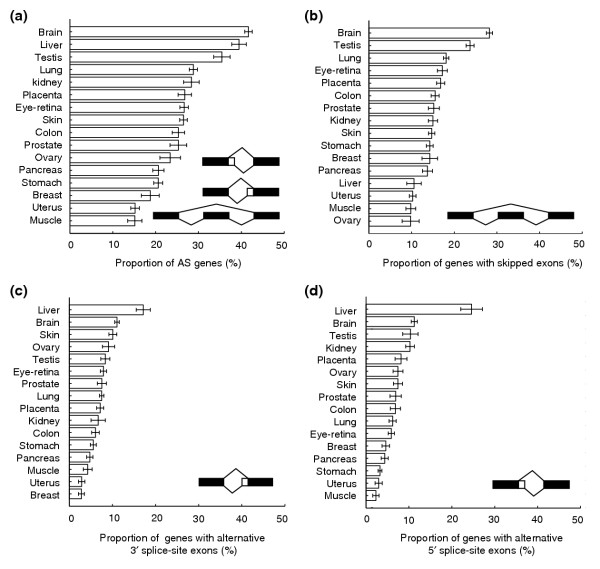
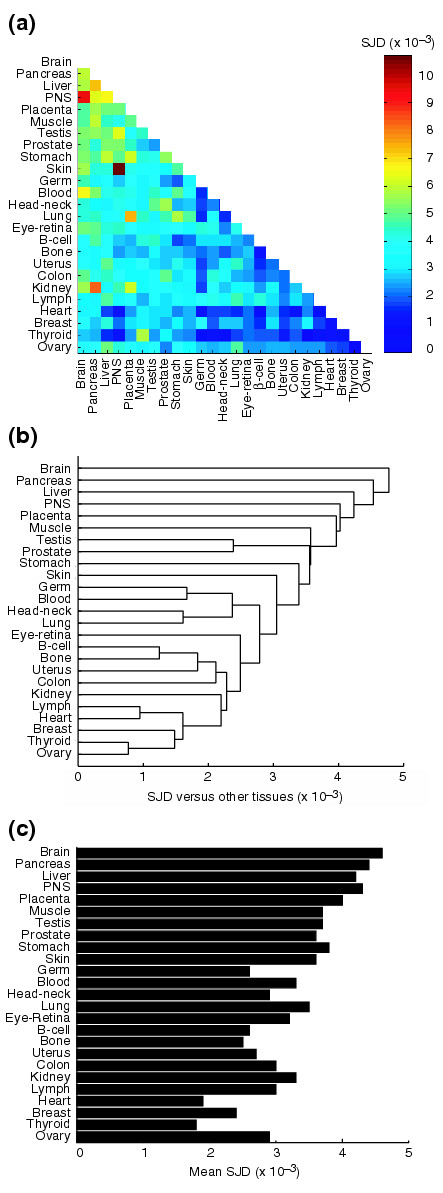
Background: Alternative pre-mRNA splicing (AS) is widely used by higher eukaryotes to generate different protein isoforms in specific cell or tissue types. To compare AS events across human tissues, we analyzed the splicing patterns of genomically aligned expressed sequence tags (ESTs) derived from libraries of cDNAs from different tissues. Results: Controlling for differences in EST coverage among tissues, we found that the brain and testis had the highest levels of exon skipping. The most pronounced differences between tissues were seen for the frequencies of alternative 3' splice site and alternative 5' splice site usage, which were about 50 to 100% higher in the liver than in any other human tissue studied. Quantifying differences in splice junction usage, the brain, pancreas, liver and the peripheral nervous system had the most distinctive patterns of AS. Analysis of available microarray expression data showed that the liver had the most divergent pattern of expression of serine-arginine protein and heterogeneous ribonucleoprotein genes compared to the other human tissues studied, possibly contributing to the unusually high frequency of alternative splice site usage seen in liver. Sequence motifs enriched in alternative exons in genes expressed in the brain, testis and liver suggest specific splicing factors that may be important in AS regulation in these tissues. Conclusions: This study distinguishes the human brain, testis and liver as having unusually high levels of AS, highlights differences in the types of AS occurring commonly in different tissues, and identifies candidate cis-regulatory elements and trans-acting factors likely to have important roles in tissue-specific AS in human cells.
Overview
The claims and statistics of this paper haven’t been checked yet.
Free: it reads the open-access text and checks the first 5 claims that cite a source we can check. Create a free account to check every claim.
Integrity signals
Registry
Cites
Statistics
Figures
Verification
Claims the paper makes
The claims and statistics of this paper haven’t been checked yet.
Free: it reads the open-access text and checks the first 5 claims that cite a source we can check. Create a free account to check every claim.
Claims other papers make about this one
Each is checked against this paper’s own text: does it say what the citing paper says it does?
The source backs part of the claim, not all of it — or backs it for a different population, condition or comparison.
In the citing paper
“Previous expressed sequence tagged mapping studies have led to the conclusion that the brain has the highest number of alternative splicing events when compared with other organs (Yeo et al., 2004)”
From An RNA-Sequencing Transcriptome and Splicing Database of Glia, Neurons, and Vascular Cells of the Cerebral Cortex (2014) · cites this paper as Yeo et al., 2004
Experimental — accuracy not yet measuredIn the citing paper
“Undocumented peptides are particularly enriched in the testis, which is known to differ markedly from other tissues in splicing pattern (Yeo et al., 2004).”
From Splice-Junction-Based Mapping of Alternative Isoforms in the Human Proteome (2019) · cites this paper as Yeo et al., 2004
In the citing paper
“Because brain contains a large number of alternatively spliced proteins [50]”
From Deep proteomic network analysis of Alzheimer’s disease brain reveals alterations in RNA binding proteins and RNA splicing associated with disease (2018) · cites this paper as [50]
Self-check
Percentages, sums and reported differences re-computed from the paper’s own numbers.
The self-check needs the paper’s full text.
Citations
Cites
A gene atlas of the mouse and human protein-encoding transcriptomes
Su, A. I., Wiltshire, T., Batalov, S., Lapp, H., Ching, K. A., Block, D., Zhang, J., Soden, R., Hayakawa, M., Kreiman, G., et al. (2004) · Proceedings of the National Academy of Sciences · doi:10.1073/pnas.0400782101 · Cited by 3,475 · cited 4×
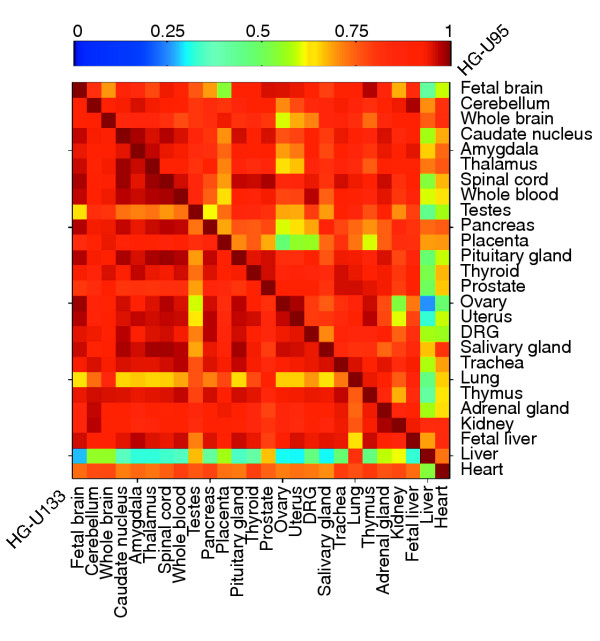
“Expression values for these genes were obtained from the 'gene expression atlas' using the HG-U95A DNA microarray [43] and from a similar set of expression data using the HGU133A DNA microarray [45].”
BackgroundMethodInfluentialSelf-citationGlantz, S. A. (1981) · Cited by 2,879
Mechanisms of Alternative Pre-Messenger RNA Splicing
Black, D. L. (2003) · Annual Review of Biochemistry · doi:10.1146/annurev.biochem.72.121801.161720 · Cited by 2,704 · cited 2×
“In addition to many differences between tissues in transcriptional and translational regulation of genes, alternative pre-mRNA splicing (AS) is also frequently used to regulate gene expression and to generate tissue-specific mRNA and protein isoforms [1-5].”
BackgroundGlantz, S. A. (1981) · Cited by 2,636
Listening to silence and understanding nonsense: exonic mutations that affect splicing
Cartegni, L., Chew, S. L., & Krainer, A. R. (2002) · Nature Reviews Genetics · doi:10.1038/nrg775 · Cited by 2,209 · cited 1×
“In addition to many differences between tissues in transcriptional and translational regulation of genes, alternative pre-mRNA splicing (AS) is also frequently used to regulate gene expression and to generate tissue-specific mRNA and protein isoforms [1-5].”
BackgroundLarge-scale analysis of the human and mouse transcriptomes
Su, A. I., Cooke, M. P., Ching, K. A., Hakak, Y., Walker, J. R., Wiltshire, T., Orth, A. P., Vega, R. G., Sapinoso, L. M., Moqrich, A., et al. (2002) · Proceedings of the National Academy of Sciences · doi:10.1073/pnas.012025199 · Cited by 1,466 · cited 5×
“In analyzing these microarray data, AD values smaller than 20 were standardized to 20, as in [43].”
BackgroundMethodInfluentialGenome-Wide Survey of Human Alternative Pre-mRNA Splicing with Exon Junction Microarrays
Johnson, J. M., Castle, J., Garrett-Engele, P., Kan, Z., Loerch, P. M., Armour, C. D., Santos, R., Schadt, E. E., Stoughton, R., & Shoemaker, D. D. (2003) · Science · doi:10.1126/science.1090100 · Cited by 1,418 · cited 2×
“In addition, DNA microarrays and polymerase colony approaches have been developed for higher-throughput analysis of alternative mRNA isoforms [23-26] and a cross-linking/immunoprecipitation strategy (CLIP) has been developed for systematic detection of the RNAs bound by a given splicing factor [27].”
MethodResultA genomic view of alternative splicing
Modrek, B., & Lee, C. (2002) · Nature Genetics · doi:10.1038/ng0102-13 · Cited by 1,302
A comparison of selected mRNA and protein abundances in human liver
Anderson, L., & Seilhamer, J. (1997) · ELECTROPHORESIS · doi:10.1002/elps.1150180333 · Cited by 1,262 · cited 1×
“The relation between the amount of mRNA expressed from a gene and the concentration of the corresponding protein has been examined previously in several studies in yeast as well as in human and mouse liver tissues [55-58].”
BackgroundPre-mRNA splicing and human disease
Faustino, N. A., & Cooper, T. A. (2003) · Genes & Development · doi:10.1101/gad.1048803 · Cited by 1,256 · cited 2×
“cated in several human genetic diseases [12].”
Background
Cited by
Items 101–200 of 685
Mills, J. D., Nalpathamkalam, T., Jacobs, H. I. L., Janitz, C., Merico, D., Hu, P., & Janitz, M. (2013) · Neuroscience Letters · doi:10.1016/j.neulet.2012.12.042 · Cited by 94
Jha, A., K. Aicher, J., R. Gazzara, M., Singh, D., & Barash, Y. (2020) · Genome Biology · doi:10.1186/s13059-020-02055-7 · Cited by 93
The Function of Pre-mRNA Alternative Splicing in Mammal Spermatogenesis
Song, H., Wang, L., Chen, D., & Li, F. (2019) · International Journal of Biological Sciences · doi:10.7150/ijbs.34422 · Cited by 94
“The exon skipping events are accumulated in the brain and testis, suggesting a tissue-specific nature of alternative splicing [6, 7].”
BackgroundLong non-coding RNA Neat1 regulates adaptive behavioural response to stress in mice
Kukharsky, M. S., Ninkina, N. N., An, H., Telezhkin, V., Wei, W., de Meritens, C. R., Cooper‐Knock, J., Nakagawa, S., Hirose, T., Buchman, V. L., et al. (2020) · Translational Psychiatry · doi:10.1038/s41398-020-0854-2 · Cited by 94
“Alternative splicing occurs at high frequency in the CNS and is crucial for normal functioning of the brain (Yeo et al., 2004).”
BackgroundSplicing heterogeneity: separating signal from noise
Wan, Y., & Larson, D. R. (2018) · Genome Biology · doi:10.1186/s13059-018-1467-4 · Cited by 80
Astuti, G., Bertelsen, M., Preising, M. N., Ajmal, M., Lorenz, B., Faradz, S. M., Qamar, R., Collin, R. W. J., Rosenberg, T., & Cremers, F. P. M. (2015) · European Journal of Human Genetics · doi:10.1038/ejhg.2015.241 · Cited by 91
Kan, Z., Garrett-Engele, P. W., Johnson, J. M., & Castle, J. C. (2005) · Nucleic Acids Research · doi:10.1093/nar/gki834 · Cited by 89
“Previous studies have reported that brain and testis exhibit high levels of alternative splicing (28,29), and microarray studies using exon–exon junction probes revealed higher amounts of alternative splicing in cell lines (7).”
BackgroundA comprehensive characterization of the nuclear microRNA repertoire of post-mitotic neurons
Khudayberdiev, S. A., Zampa, F., Rajman, M., & Schratt, G. (2013) · Frontiers in Molecular Neuroscience · doi:10.3389/fnmol.2013.00043 · Cited by 85
The impact of alternative splicing in vivo: Mouse models show the way
Möröy, T., & Heyd, F. (2007) · RNA · doi:10.1261/rna.554607 · Cited by 83
“Alternative splicing has been shown to occur in a particularly high frequency in the nervous system (Yeo et al. 2004), where many of the genes encoding neurotransmitter receptors and ion channels produce several mRNA isoforms.”
BackgroundPorter, R. S., Jaamour, F., & Iwase, S. (2017) · Molecular and Cellular Neuroscience · doi:10.1016/j.mcn.2017.10.006 · Cited by 88
Toward an Alzheimer's disease diagnosis via high‐resolution blood gene expression
Fehlbaum-Beurdeley, P., Jarrige-Le Prado, A. C., Pallares, D., Carrière, J., Guihal, C., Soucaille, C., Rouet, F., Drouin, D., Sol, O., Jordan, H., et al. (2010) · Alzheimer's & Dementia · doi:10.1016/j.jalz.2009.07.001 · Cited by 75
“Brain is one of the most prominent human tissues with respect to splice-variant diversity [5].”
BackgroundDiversification of stem cell molecular repertoire by alternative splicing
Pritsker, M., Doniger, T. T., Kramer, L. C., Westcot, S. E., & Lemischka, I. R. (2005) · Proceedings of the National Academy of Sciences · doi:10.1073/pnas.0502132102 · Cited by 77
Global analysis of aberrant pre-mRNA splicing in glioblastoma using exon expression arrays
Beird, H. C., Baggerly, K., Tsavachidis, S., Bachinski, L. L., Neubauer, V. L., Nixon, T. J., Aldape, K., Cote, G. J., & Krahe, R. (2008) · BMC Genomics · doi:10.1186/1471-2164-9-216 · Cited by 85
“Of all tissues, the brain has the most cassette exon alternative splicing [21,22].”
BackgroundHannigan, M. M., Zagore, L. L., & Licatalosi, D. D. (2017) · Cell Reports · doi:10.1016/j.celrep.2017.05.089 · Cited by 87
“Whereas the prevalence of AS isoforms in germ cells has long been known (Yeo et al., 2004; Clark et al., 2007; Ramsköld et al., 2009), the dynamics, regulation, and function of AS during spermatogenesis have remained largely unexplored.”
Linking transcriptomics and proteomics in spermatogenesis
Chalmel, F., & Rolland, A. D. (2015) · Reproduction · doi:10.1530/rep-15-0073 · Cited by 84
“Similarly, the finding that the testis contains the highest number of alternative splicings (Xu et al., 2002; Yeo et al., 2004; Kan et al., 2005; de la Grange et al., 2010) indicates that what is true for genes and proteins also applies to isoforms.”
RNA-binding proteins in neurological diseases
Zhou, H., Mangelsdorf, M., Liu, J., Zhu, L., & Wu, J. Y. (2014) · Science China Life Sciences · doi:10.1007/s11427-014-4647-9 · Cited by 79
BCAS2 is involved in alternative mRNA splicing in spermatogonia and the transition to meiosis
Liu, W., Wang, F., Xu, Q., Shi, J., Zhang, X., Lu, X., Zhao, Z., Gao, Z., Ma, H., Duan, E., et al. (2017) · Nature Communications · doi:10.1038/ncomms14182 · Cited by 84
HOLLYWOOD: a comparative relational database of alternative splicing
Holste, D., Huo, G., Tung, V., & Burge, C. B. (2005) · Nucleic Acids Research · doi:10.1093/nar/gkj048 · Cited by 84
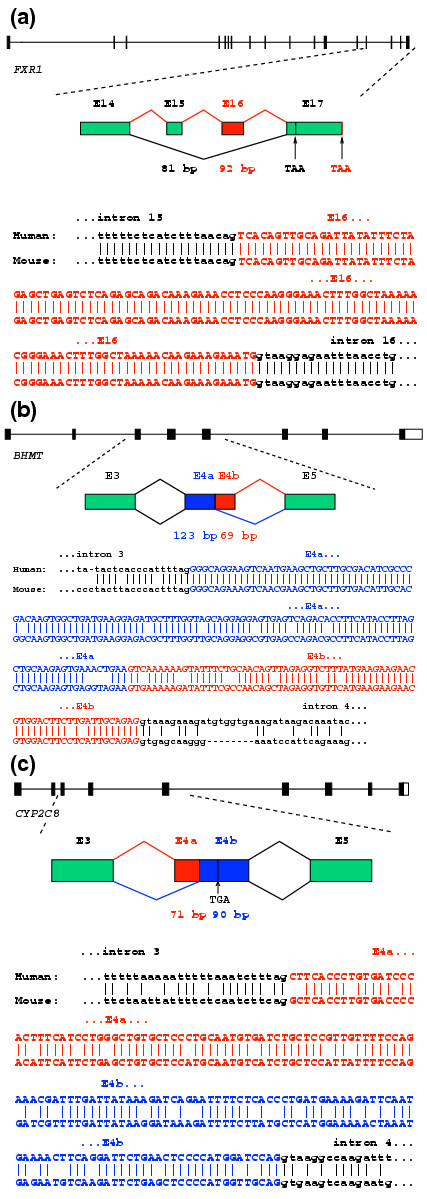
“Figure 1A shows the data structure of such a record for exon E16 of the FXR1 gene, which undergoes tissue-specific AS (32,56).”
BackgroundSelf-citationChen, K., Deng, S., Lu, H., Zheng, Y., Yang, G., Kim, D., Cao, Q., & Wu, J. Q. (2013) · PLoS ONE · doi:10.1371/journal.pone.0072567 · Cited by 83
“Notably, recent large scale RNA-Seq studies have revealed that most mammalian genes generate multiple RNA transcripts through alternative splicing [25].”
BackgroundComputational Methods for the Pharmacogenetic Interpretation of Next Generation Sequencing Data
Zhou, Y., Fujikura, K., Mkrtchian, S., & Lauschke, V. M. (2018) · Frontiers in Pharmacology · doi:10.3389/fphar.2018.01437 · Cited by 84
“…genes, dysregulation of splicing has long been recognized as a cause for inter-individual variability drug metabolism (Hanioka et al., 1990) and toxicity (Raida et al., 2001) and the liver was found to be is among the tissues with highest levels of alternative splicing activity (Yeo et al., 2004).”
BackgroundThe Role of the Double Bromodomain-Containing BET Genes During Mammalian Spermatogenesis
Berkovits, B. D., & Wolgemuth, D. J. (2012) · Current topics in developmental biology/Current Topics in Developmental Biology · doi:10.1016/b978-0-12-416024-8.00011-8 · Cited by 82
Dachet, F., Brown, J. B., Valyi-Nagy, T., Narayan, K. D., Serafini, A., Boley, N., Gingeras, T. R., Celniker, S. E., Mohapatra, G., & Loeb, J. A. (2021) · Scientific Reports · doi:10.1038/s41598-021-85801-6 · Cited by 81
Ladd, A. N. (2013) · Molecular and Cellular Neuroscience · doi:10.1016/j.mcn.2012.12.003 · Cited by 66
“Alternative splicing is particularly prevalent in the brain (de la Grange et al., 2010; Yeo et al., 2004), where alternative splicing of neuronal RNAs has been implicated in the control of axon guidance, synaptogenesis, and excitation (Lee and Irizarry, 2003; Li et al.”
van der Wal, E., Bergsma, A. J., Pijnenburg, J. M., van der Ploeg, A. T., & Pijnappel, W. W. M. P. (2017) · Molecular Therapy - Nucleic Acids · doi:10.1016/j.omtn.2017.03.001 · Cited by 67
“The first step is to test AONs in the relevant cell type, skeletal muscle cells, as splicing can be celltype specific.(37) This is described in our accompanying work.”
BackgroundAlternative splicing in Alzheimer’s disease
Biamonti, G., Amato, A. M., Belloni, E., Matteo, A. D., Infantino, L., Pradella, D., & Ghigna, C. (2019) · Aging Clinical and Experimental Research · doi:10.1007/s40520-019-01360-x · Cited by 81
de la Grange, P., Dutertre, M., Correa, M., & Auboeuf, D. (2007) · BMC Bioinformatics · doi:10.1186/1471-2105-8-180 · Cited by 78
“Global gene expression, promoter use and SV expression can be specific to a tissue or a group of tissues [15,16].”
BackgroundDissecting the Genetic and Etiological Causes of Primary Microcephaly
Jean, F., Stuart, A., & Tarailo‐Graovac, M. (2020) · Frontiers in Neurology · doi:10.3389/fneur.2020.570830 · Cited by 80
“In fact, G1 length has been shown to be an essential regulator of the switch between proliferation and differentiation, which explains why mutations in MCPH genes, which generally cause a lengthening in the cell cycle and thus pre-maturely increase the cell cycle exit fraction, have dramatic effects on the number of p…”
BackgroundThe determinants of alternative RNA splicing in human cells
Ramanouskaya, T. V., & Grinev, V. V. (2017) · Molecular Genetics and Genomics · doi:10.1007/s00438-017-1350-0 · Cited by 79
Bao, H., Li, E., Mansfield, S. D., Cronk, Q., El-Kassaby, Y. A., & Douglas, C. J. (2013) · BMC Genomics · doi:10.1186/1471-2164-14-359 · Cited by 77
“In humans, RNA splice variants with alternative exon configurations often accumulate differentially across different tissues and individuals [1,6-8] and such tissue-specific gene isoforms can have important functions in development and in the functioning of different cell types.”
BackgroundXing, Y., & Lee, C. J. (2005) · PLoS Genetics · doi:10.1371/journal.pgen.0010034 · Cited by 66
“This opens up the interesting question of tissue-specific regulation of alternative splicing [15,16].”
BackgroundHeterogeneous Nuclear Ribonucleoproteins: Implications in Neurological Diseases
Low, Y. H., Asi, Y. T., Foti, S. C., & Lashley, T. (2020) · Molecular Neurobiology · doi:10.1007/s12035-020-02137-4 · Cited by 76
Duarte-Pereira, S., Pereira-Castro, I., Silva, S. S., Correia, M. G., Neto, C., da Costa, L. T., Amorim, A., & Silva, R. M. (2016) · Oncotarget · doi:10.18632/oncotarget.6538 · Cited by 66
“In our study, brain showed the highest number of alternative transcripts, which is supported by previous observations in brain cells, showing over 40% prevalence of alternative splicing [43, 44].”
Ho, E. C. H., Cahill, M. J., & Saville, B. J. (2007) · BMC Genomics · doi:10.1186/1471-2164-8-334 · Cited by 78
“Isocitrate dehydrogenase has also been shown to be alternately spliced in humans [36].”
BackgroundTDP43 and RNA instability in amyotrophic lateral sclerosis
Weskamp, K., & Barmada, S. J. (2018) · Brain Research · doi:10.1016/j.brainres.2018.01.015 · Cited by 64
“2008), and the brain expresses more alternatively spliced mRNAs than any other organ (M. B. Johnson et al. 2009; Yeo et al. 2004).”
BackgroundSebastian, R., Jin, K., Pavon, N., Bansal, R., Potter, A., Song, Y., Babu, J., Gabriel, R., Sun, Y., Aronow, B., et al. (2023) · Nature Communications · doi:10.1038/s41467-023-39420-6 · Cited by 73
“Alternative splicing is highly regulated in the brain 70,71 and is in fl uenced by neuronally enriched splicing factors like NOVAs, PTBPs, RBFOXs, and MBLNs.”
Li, B. J., Zhu, Z. X., Qin, H., Meng, Z. N., Lin, H., & Xia, J. (2020) · Frontiers in Genetics · doi:10.3389/fgene.2020.00244 · Cited by 73
MTSplice predicts effects of genetic variants on tissue-specific splicing
Cheng, J., Çelik, M. H., Kundaje, A., & Gagneur, J. (2021) · Genome Biology · doi:10.1186/s13059-021-02273-7 · Cited by 69
NeuN/Fox‐3 is an intrinsic component of the neuronal nuclear matrix
Dent, M. A. R., Segura-Anaya, E., Alva-Medina, J., & Aranda‐Anzaldo, A. (2010) · FEBS Letters · doi:10.1016/j.febslet.2010.04.073 · Cited by 72
“Moreover, the fact that a regulator of splicing such as NeuN/Fox-3 is concentrated in speckles bound to the ultimate neuronal NM is consistent with the fact that the brain is the organ where alternative splicing occurs more frequently [30].”
BackgroundLastella, P., Surdo, N. C., Resta, N., Guanti, G., & Stella, A. (2006) · BMC Genomics · doi:10.1186/1471-2164-7-243 · Cited by 72
“These results confirm the recent findings based on microarray analysis, demonstrating that human tissues show rather divergent patterns of alternative splicing, yet correlated with differences in the splicing factor expression across tissues [35].”
ResultSengar, A. S., Li, H., Zhang, W., Leung, C., Ramani, A. K., Saw, N. M. N., Wang, Y., Tu, Y., Ross, P. J., Scherer, S. W., et al. (2019) · Cell Reports · doi:10.1016/j.celrep.2019.11.087 · Cited by 71
RNA‐binding proteins implicated in neurodegenerative diseases
Cookson, M. R. (2017) · WIREs RNA · doi:10.1002/wrna.1397 · Cited by 58
“These results might suggest that deregulated splicing might be a general mechanism by which neurons become vulnerable to neurodegeneration in ALS, perhaps because the brain has a relatively high level of alternate splicing events compared to other tissues.(48) However, all three proteins may also be involved in events…”
BackgroundReactivation of Fetal Splicing Programs in Diabetic Hearts Is Mediated by Protein Kinase C Signaling
Verma, S. K., Deshmukh, V., Liu, P., Nutter, C. A., Espejo, R., Hung, M., Wang, G., Yeo, G. W.-M., & Kuyumcu‐Martinez, M. N. (2013) · Journal of Biological Chemistry · doi:10.1074/jbc.m113.507426 · Cited by 69
Self-citationSpliceDisease database: linking RNA splicing and disease
Wang, J., Zhang, J., Li, K., Zhao, W., & Cui, Q. (2012) · Nucleic Acids Research · doi:10.1093/nar/gkr1171 · Cited by 56
“For example, the frequencies of alternative 30 splice site and alternative 50 splice site usage are 50–100% higher in liver than in other investigated tissues (7).”
BackgroundComparative Genomics and Evolution of Alternative Splicing: The Pessimists' Science
Artamonova, I. I., & Gelfand, M. S. (2007) · Chemical Reviews · doi:10.1021/cr068304c · Cited by 70
Zhou, L., Ye, S.-H., Yang, H., Zhou, Y., Zhao, Q., Sun, W., Gao, M., Yi, Y., & Long, Y. (2017) · Neuroscience · doi:10.1016/j.neuroscience.2017.02.044 · Cited by 69
Splice-Junction-Based Mapping of Alternative Isoforms in the Human Proteome
Lau, E., Han, Y., Williams, D. R., Thomas, C. T., Shrestha, R., Wu, J. C., & Lam, M. P. Y. (2019) · Cell Reports · doi:10.1016/j.celrep.2019.11.026 · Cited by 67
“Undocumented peptides are particularly enriched in the testis, which is known to differ markedly from other tissues in splicing pattern (Yeo et al., 2004).”
BackgroundSplicing regulation in brain and testis: common themes for highly specialized organs
Naro, C., Cesari, E., & Sette, C. (2021) · Cell Cycle · doi:10.1080/15384101.2021.1889187 · Cited by 65
“[15] Yeo G, Holste D, Kreiman G, et al.”
BackgroundWang, X., Wang, K., Radovich, M., Wang, Y., Wang, G., Feng, W., Sanford, J. R., & Liu, Y. (2009) · BMC Genomics · doi:10.1186/1471-2164-10-s1-s4 · Cited by 67
“Although alternative splicing is frequently observed in human brain and testes [3,6,30], the differentially expressed exons (Figure 2) show that these two tissues undergo different splicing patterns.”
BackgroundGros-Louis, F., Kriz, J., Kabashi, E., McDearmid, J., Millecamps, S., Urushitani, M., Lin, L., Dion, P., Zhu, Q., Drapeau, P., et al. (2008) · Human Molecular Genetics · doi:10.1093/hmg/ddn171 · Cited by 52
“Human brain, testis and liver have been previously reported to be the site of unusually high levels of alternative splicing events (21).”
BackgroundZhang, D., Guelfi, S., Garcia-Ruiz, S., Costa, B., Reynolds, R. H., D’Sa, K., Liu, W., Courtin, T., Peterson, A., Jaffe, A. E., et al. (2020) · Science Advances · doi:10.1126/sciadv.aay8299 · Cited by 66
“This finding lead us to hypothesize that genes highly expressed in brain would be among the most likely to be reannotated because of the difficulty of sampling human brain tissue, the cellular heterogeneity of this tissue, and the particularly high prevalence of alternative splicing (9).”
FUS-mediated alternative splicing in the nervous system: consequences for ALS and FTLD
Orozco, D., & Edbauer, D. (2013) · Journal of Molecular Medicine · doi:10.1007/s00109-013-1077-2 · Cited by 64
“Compared to other tissues, the human brain shows exceptionally high levels of alternative splicing, with more than 40 % of genes being alternatively spliced [33].”
BackgroundCircular RNAs: The Brain Transcriptome Comes Full Circle
Gokoolparsadh, A., Loy, C. T., Halliday, G. M., & Voineagu, I. (2020) · Trends in Neurosciences · doi:10.1016/j.tins.2020.07.007 · Cited by 63
Dysfunctional gene splicing as a potential contributor to neuropsychiatric disorders
Glatt, S. J., Cohen, O. S., Faraone, S. V., & Tsuang, M. T. (2011) · American Journal of Medical Genetics Part B Neuropsychiatric Genetics · doi:10.1002/ajmg.b.31181 · Cited by 63
“The human brain has unique patterns of alternative splicing, and expresses higher levels of splicing thanmost other tissues [Yeo et al., 2004].”
BackgroundAutoantibody Profiling in Multiple Sclerosis Reveals Novel Antigenic Candidates
Somers, V. A., Govarts, C., Somers, K., Hupperts, R., Medaer, R., & Stinissen, P. (2008) · The Journal of Immunology · doi:10.4049/jimmunol.180.6.3957 · Cited by 62
“In addition, Yeo and colleagues analyzed variation in alternative splicing across different human tissues (38).”
BackgroundTargeting SR Proteins Improves SMN Expression in Spinal Muscular Atrophy Cells
Wee, C. D., Havens, M. A., Jodelka, F. M., & Hastings, M. L. (2014) · PLoS ONE · doi:10.1371/journal.pone.0115205 · Cited by 61
Intergenic and Repeat Transcription in Human, Chimpanzee and Macaque Brains Measured by RNA-Seq
Guohua Xu, A., He, L., Li, Z., Xu, Y., Li, M., Fu, X., Yan, Z., Yuan, Y., Menzel, C., Li, N., et al. (2010) · PLoS Computational Biology · doi:10.1371/journal.pcbi.1000843 · Cited by 58
“Among human tissues, the brain transcriptome is one of the most complex [3,4].”
BackgroundDIGGER: exploring the functional role of alternative splicing in protein interactions
Louadi, Z., Yuan, K. Z., Greß, A., Tsoy, O. V., Kalinina, O. V., Baumbach, J., Kacprowski, T., & List, M. (2020) · Nucleic Acids Research · doi:10.1093/nar/gkaa768 · Cited by 60
“For every PPI, there is a potentially large number of isoform combinations that would have to be experimentally validated (2).”
BackgroundCharacterization of an Alternative Splice Variant of LKB1
Denison, F. C., Hiscock, N. J., Carling, D., & Woods, A. (2009) · Journal of Biological Chemistry · doi:10.1074/jbc.m806153200 · Cited by 45
Venables, J. P., Bourgeois, C. F., Dalgliesh, C., Kister, L., Stévenin, J., & Elliott, D. J. (2005) · Human Molecular Genetics · doi:10.1093/hmg/ddi233 · Cited by 61
“To understand the phenomenon of regulated tissue-specific alternative splicing, we have concentrated on human testis, as this is one of the tissues in which alternative splicing is most prevalent (5).”
Regional Variation of Splicing QTLs in Human Brain
Zhang, Y., Yang, H. T., Kadash-Edmondson, K. E., Pan, Y., Pan, Z., Davidson, B. L., & Xing, Y. (2020) · The American Journal of Human Genetics · doi:10.1016/j.ajhg.2020.06.002 · Cited by 61
Vemuganti, S., Bell, T. A., Scarlett, C. O., Parker, C. E., de Villena, F. P., & O’Brien, D. A. (2007) · Developmental Biology · doi:10.1016/j.ydbio.2007.06.010 · Cited by 60
“Analysis of human ESTs indicates that the testis, along with the brain and liver, have the highest frequencies of alternative splicing (Yeo et al., 2004).”
BackgroundDetection, Validation, and Downstream Analysis of Allelic Variation in Gene Expression
Ciobanu, D. C., Lu, L., Mozhui, K., Wang, X., Jagalur, M., Morris, J. A., Taylor, W. L., Dietz, K., Simon, P. D., & Williams, R. W. (2010) · Genetics · doi:10.1534/genetics.109.107474 · Cited by 60
Cell environment shapes TDP-43 function with implications in neuronal and muscle disease
Šušnjar, U., Škrabar, N., Brown, A., Abbassi, Y., Phatnani, H. P., Phatnani, H. P., Fratta, P., Kwan, J. Y., Sareen, D., Broach, J. R., et al. (2022) · Communications Biology · doi:10.1038/s42003-022-03253-8 · Cited by 60
“…TDP-43 regulates more events in NSC34 cells might reflect the importance of alternative splicing as a regulatory mechanism in neurons and support the existence of a distinct splicing program in neuronal tissues, as already suggested by others (Irimia et al, 2014; Mele et al, 2015; Yeo et al, 2004).”
Alternative splicing interference by xenobiotics
Zaharieva, E. E., Chipman, J. K., & Soller, M. (2012) · Toxicology · doi:10.1016/j.tox.2012.01.014 · Cited by 58
Berkovits, B. D., Wang, L., Guarnieri, P., & Wolgemuth, D. J. (2012) · Nucleic Acids Research · doi:10.1093/nar/gks342 · Cited by 58
Targeting a pre-mRNA structure with bipartite antisense molecules modulates tau alternative splicing
Peacey, E., Rodríguez, L. C. D. L. C., Liu, Y., & Wolfe, M. S. (2012) · Nucleic Acids Research · doi:10.1093/nar/gks710 · Cited by 58
“Over 90% of human genes are alternatively spliced (1), with even more alternative splicing occurring in the human brain (2), and an estimated 15% of disease-causing mutations alter splicing (3).”
The RNA recognition motif protein RBM11 is a novel tissue-specific splicing regulator
Pedrotti, S., Busà, R., Compagnucci, C., & Sette, C. (2011) · Nucleic Acids Research · doi:10.1093/nar/gkr819 · Cited by 58
“Brain and testis have been annotated as the tissues expressing the highest levels of splicing factors and AS events (6,40,41), which could contribute to the generation of proteomic diversity in highly specialized cells, like neurons and germ cells.”
BackgroundLymphocytes from P2X7-deficient mice exhibit enhanced P2X7 responses
Taylor, S. R. J., Gonzalez-Begne, M., Sojka, D. K., Richardson, J. C., Sheardown, S. A., Harrison, S. M., Pusey, C. D., Tam, F. W. K., & Elliott, J. I. (2009) · Journal of Leukocyte Biology · doi:10.1189/jlb.0408251 · Cited by 49
“Alternative splicing is highly abundant in the brain relative to other tissues [31, 32], and the likelihood that leaky expression of a protein will occur in a gene-targeted animal should be related to the selective pressure for its activity.”
BackgroundEndocrine disruptors, gene deregulation and male germ cell tumors
del Mazo, J., Brieño‐Enríquez, M. A., García-López, J., López-Fernández, L. A., & Felici, M. D. (2013) · The International Journal of Developmental Biology · doi:10.1387/ijdb.130042jd · Cited by 57
Zhu, D., Yuan, T., Gao, J., Xu, Q., Xue, K., Zhu, W., Tang, J., Liu, F., Wang, J., & Yu, C. (2021) · Human Brain Mapping · doi:10.1002/hbm.25362 · Cited by 57
The Archaeological Record Speaks: Bridging Anthropology and Linguistics
Balari, S., Benítez‐Burraco, A., Camps, M., Martínez, V. M. L., Lorenzo, G., & Uriagereka, J. (2011) · International Journal of Evolutionary Biology · doi:10.4061/2011/382679 · Cited by 58
Kapeli, K., & Yeo, G. W. (2012) · Frontiers in Neuroscience · doi:10.3389/fnins.2012.00144 · Cited by 48
“It is wellknown that RBPs are intimately involved with the regulation of alternative splicing, a process by which numerous isoforms are generated from a single genetic loci, and is in fact, more prevalent in the nervous system than in any other cell types (Yeo et al., 2004; Wang et al., 2008a).”
BackgroundSelf-citationGlobal Profiling of Alternative Splicing Events and Gene Expression Regulated by hnRNPH/F
Wang, E., Aslanzadeh, V., Papa, F., Zhu, H., de la Grange, P., & Cambi, F. (2012) · PLoS ONE · doi:10.1371/journal.pone.0051266 · Cited by 55
“The higher G peaks close to the 59 ss and the greater density close to weak 59 ss was previously reported in genome wide studies [7,9,10].”
BackgroundmRNA Transcript Diversity Creates New Opportunities for Pharmacological Intervention
Barrie, E. S., Smith, R. M., Sanford, J. C., & Sadée, W. (2012) · Molecular Pharmacology · doi:10.1124/mol.111.076604 · Cited by 54
“Nowhere is mRNA transcript diversity more prevalent than in the brain (Modrek et al., 2001; Yeo et al., 2004; de la Grange et al., 2010), offering opportunities for generating selective pharmacological profiles where alternative splicing results in unique functional proteins.”
BackgroundAlarcón, M. A., Medina, M. A., Hu, Q., Ávila, M. E., Bustos, B. I., Pérez‐Palma, E., Peralta, A. B., Salazar, P. L., Ugarte, G. D., Reyes, A. E., et al. (2012) · Neurobiology of Aging · doi:10.1016/j.neurobiolaging.2012.11.004 · Cited by 53
Extraction of Transcript Diversity from Scientific Literature
Shah, P. K., Jensen, L. J., Boué, S., & Bork, P. (2005) · PLoS Computational Biology · doi:10.1371/journal.pcbi.0010010 · Cited by 52
“AS has been shown to play an important role in creating functional specialization of tissues and development stages [30,31], but only a small number of instances of tissue-specific splicing are listed in the current AS databases [32,33].”
BackgroundThe contribution of alternative splicing to genetic risk for psychiatric disorders
Reble, E., Dineen, A., & Barr, C. L. (2017) · Genes Brain & Behavior · doi:10.1111/gbb.12430 · Cited by 52
“Alternative splicing occurs more frequently in the brain than in any other tissue.(23,42) For example, Neurexin genes, which are important for synaptic function, have been found to have almost 3000 different isoforms due to alternative splicing.”
BackgroundThe Role of the U5 snRNP in Genetic Disorders and Cancer
Wood, K., Eadsforth, M. A., Newman, W. G., & O’Keefe, R. T. (2021) · Frontiers in Genetics · doi:10.3389/fgene.2021.636620 · Cited by 53
Recognition of Unknown Conserved Alternatively Spliced Exons
Ohler, U., Shomron, N., & Burge, C. B. (2005) · PLoS Computational Biology · doi:10.1371/journal.pcbi.0010015 · Cited by 53
“We first tested for presence of the predicted alternative spliced exon in brain and liver cDNA, since these tissues were reported to have the highest levels of AS [32].”
BackgroundMethodSelf-citationLi, Z., Xu, Y., & Lin, Y. (2018) · Gene · doi:10.1016/j.gene.2018.07.027 · Cited by 51
Alternative splicing: An important mechanism in stem cell biology
Chen, K., Dai, X., & Wu, J. (2015) · World Journal of Stem Cells · doi:10.4252/wjsc.v7.i1.1 · Cited by 51
Licatalosi, D. D. (2016) · Advances in experimental medicine and biology · doi:10.1007/978-3-319-29073-7_6 · Cited by 51
Understanding human DNA variants affecting pre-mRNA splicing in the NGS era
Dufner‐Almeida, L. G., do Carmo, R. T., Masotti, C., & Haddad, L. A. (2019) · Advances in genetics · doi:10.1016/bs.adgen.2018.09.002 · Cited by 51
Widespread intron retention impairs protein homeostasis in C9orf72 ALS brains
Wang, Q., Conlon, E. G., Manley, J. L., & Rio, D. C. (2020) · Genome Research · doi:10.1101/gr.265298.120 · Cited by 51
“The strength of 5′ splice sites and 3′ splice sites of the introns were calculated using MaxEntScan (http://hollywood.mit .edu/burgelab/maxent/Xmaxentscan_scoreseq.html) (Yeo et al. 2004).”
MethodAlternative splicing in a presenilin 2 variant associated with Alzheimer disease
Braggin, J. E., Bucks, S. A., Course, M. M., Smith, C., Sopher, B. L., Osnis, L., Shuey, K. D., Domoto‐Reilly, K., Caso, C., Kinoshita, C., et al. (2019) · Annals of Clinical and Translational Neurology · doi:10.1002/acn3.755 · Cited by 50
Stepwise assembly of the Nova -regulated alternative splicing network in the vertebrate brain
Irimia, M., Denuc, A., Burguera, D., Somorjai, I., Martín-Durán, J. M., Genikhovich, G., Jimenez-Delgado, S., Technau, U., Roy, S. W., Marfany, G., et al. (2011) · Proceedings of the National Academy of Sciences · doi:10.1073/pnas.1012333108 · Cited by 47
“In addition to expressing a large fraction of tissue-specific genes, CNS genes show the highest level of alternative splicing (AS) (1).”
BackgroundDreumont, N., Bourgeois, C. F., Lejeune, F., Liu, Y., Ehrmann, I. E., Elliott, D. J., & Stévenin, J. (2009) · Journal of Cell Science · doi:10.1242/jcs.055889 · Cited by 47
“The human brain displays the highest level of AS, followed by liver and testes (Yeo et al., 2004).”
BackgroundThe Germ Cell Nuclear Proteins hnRNP G-T and RBMY Activate a Testis-Specific Exon
Liu, Y., Bourgeois, C. F., Pang, S., Kudla, M., Dreumont, N., Kister, L., Sun, Y., Stévenin, J., & Elliott, D. J. (2009) · PLoS Genetics · doi:10.1371/journal.pgen.1000707 · Cited by 47
“Particularly high levels of alternative splicing have also been observed in the testis [4–7].”
BackgroundMasuda, A., Takeda, J., & Ohno, K. (2016) · Wiley Interdisciplinary Reviews - RNA · doi:10.1002/wrna.1338 · Cited by 47
Fujioka, Y., Ishigaki, S., Masuda, A., Iguchi, Y., Udagawa, T., Watanabe, H., Katsuno, M., Ohno, K., & Sobue, G. (2013) · Scientific Reports · doi:10.1038/srep02388 · Cited by 46
Single cell and spatial alternative splicing analysis with Nanopore long read sequencing
Fu, Y., Kim, H. S., Roy, S., Huang, S., Adams, J. I., Grimes, S. M., Lau, B. T., Sathe, A., Ji, H. P., & Zhang, N. R. (2025) · Nature Communications · doi:10.1038/s41467-025-60902-2 · Cited by 46
Systematic Analysis of the Phosphoproteome and Kinase-substrate Networks in the Mouse Testis
Qi, L., Liu, Z., Wang, J., Cui, Y., Guo, Y., Zhou, T., Zhou, Z., Guo, X., Xue, Y., & Sha, J. (2014) · Molecular & Cellular Proteomics · doi:10.1074/mcp.m114.039073 · Cited by 46
“A microarray study of human exons also showed that the testis has the second highest number of tissue-specific exons, a number that is only moderately smaller than the brain (51), and the second highest number of cassette exons (49, 52).”
BackgroundGenomic landscape of developing male germ cells
Lee, T., Pang, A. L., Rennert, O. M., & Chan, W. (2009) · Birth Defects Research Part C Embryo Today Reviews · doi:10.1002/bdrc.20147 · Cited by 45
“The testis is a rich source for identifying gene regulation mechanisms because germ cell expansion and differentiation requires many cellular changes and regulatory steps (Yeo et al., 2004).”
BackgroundAlternative RNA Splicing in the Pathogenesis of Liver Disease
Webster, N. J. G. (2017) · Frontiers in Endocrinology · doi:10.3389/fendo.2017.00133 · Cited by 46
“Brain, liver, and testis show the greatest diversity in transcripts with ~35–40% of genes showing alternative exon or splice site usage (33).”
BackgroundRNA Degradation in Neurodegenerative Disease
Weskamp, K., & Barmada, S. J. (2018) · Advances in neurobiology · doi:10.1007/978-3-319-89689-2_5 · Cited by 46
Ehrmann, I. E., Crichton, J. H., Gazzara, M. R., James, K., Liu, Y., Grellscheid, S. N., Curk, T., de Rooij, D. G., Steyn, J. S., Cockell, S., et al. (2019) · eLife · doi:10.7554/elife.39304 · Cited by 46
“It has been a long recognised hallmark of mammalian gene expression patterns that there are extremely high levels of transcription and transcriptome complexity in testicular cells (de la Grange et al., 2010; Licatalosi, 2016; Soumillon et al., 2013; Pan et al., 2008; Wang et al., 2008; Clark et al., 2007; Grosso et al…”
BackgroundQuintens, R., Verreet, T., Janssen, A., Neefs, M., Leysen, L., Michaux, A., Verslegers, M., Samari, N., Pani, G., Verheyde, J., et al. (2015) · Biology Open · doi:10.1242/bio.20149969 · Cited by 47
“…Alternative splicing is a very frequent event during embryonic development (Revil et al., 2010) and especially in the brain (Grosso et al., 2008; Yeo et al., 2004; Zheng and Black, 2013), where it is important for neurogenesis, neuronal migration, synaptogenesis, and neuronal differentiation…”
BackgroundHamid, F., & Makeyev, E. V. (2014) · PLoS Genetics · doi:10.1371/journal.pgen.1004771 · Cited by 44
“Of these, the latter two categories (A5C and A3C), involve alternative utilization of exonic termini and constitute a major part of tissuespecific AS programs [6,7].”
BackgroundCastillo, J., Knol, J. C., Korver, C. M., Piersma, S. R., Pham, T. V., Haas, R. R. D. G., van Pelt, A. M. M., Jiménez, C. R., & Jansen, B. (2019) · Molecular & Cellular Proteomics · doi:10.1074/mcp.ra118.001278 · Cited by 44
“(68), which is consistent with the overrepresentation of this”
BackgroundMicroarray Analysis of Alternative Splicing
Čuperlović‐Culf, M., Belacel, N., Culf, A. S., & Ouellette, R. J. (2006) · OMICS A Journal of Integrative Biology · doi:10.1089/omi.2006.10.344 · Cited by 46
Metadata
- Authors
- Yeo, G., Holste, D., Kreiman, G., & Burge, C. B.
- Affiliations
- Massachusetts Institute of Technology (US)
- Corresponding author
- Burge, Christopher B
- Venue
- Genome Biology
- Published
- 2004-09-13
- Volume
- 5
- Issue
- 10
- Pages
- R74-R74
- ISSN
- 1465-6906 (ISSN-L)
- 1474-760X
- PMC
- PMC545594
- OpenAlex
- W2169685494
- Cited by
- 584
- References
- 70
- Citations by year
- 2026: 17 · 2025: 24 · 2024: 28 · 2023: 26 · 2022: 34 · 2021: 49 · 2020: 24 · 2019: 33 · 2018: 31 · 2017: 24 · 2016: 19 · 2015: 30 · 2014: 20 · 2013: 27 · 2012: 28
- FWCI
- 9.71
- Type
- journal article
- Language
- en
- Open access
- gold
- doi.org
- Licence
- cc-by
- creativecommons.org/licenses/by/2.0/ (tdm)
- creativecommons.org/licenses/by/2.0/ (vor)
- Locations
- Genome biology (publishedVersion, cc-by)
- PubMed Central (publishedVersion)
- PubMed (publishedVersion)
- Digital Access to Scholarship at Harvard (DASH) (Harvard University) (submittedVersion, cc-by)
- Funders
- National Science Foundation
- National Institutes of Health
- Topics
- Life Sciences › Biochemistry, Genetics and Molecular Biology › Molecular Biology › RNA Research and Splicing
- Life Sciences › Biochemistry, Genetics and Molecular Biology › Molecular Biology › RNA regulation and disease
- Life Sciences › Biochemistry, Genetics and Molecular Biology › Cancer Research › Cancer-related molecular mechanisms research
- Keywords
- alternative splicing, tissue-specific splicing, exon skipping, expressed sequence tags, liver, brain, testis, cis-regulatory elements, splicing factors, human tissue
- MeSH terms
- Brain, Exons, Humans, Liver, Male, Organ Specificity, Regulatory Sequences, Nucleic Acid, RNA, Messenger, Testis, Genetic Variation, Gene Library, Alternative Splicing, Protein Isoforms, Expressed Sequence Tags, RNA Splice Sites
About these checks
Registry, retraction, Cites and statistics results are computed, not judged, with one exception: a printed reference that no index lists is read once by a model before it counts as a citation error. Claims are extracted by a model and kept only when their quote appears verbatim in the text; each cited source is then checked, with a model’s help, for whether it says what the claim relies on. Those verdicts can be wrong — read the claim’s quote and the cited source before relying on one.
Statistics and arithmetic are recomputed, not judged.
Confidence bands are shown only for fields calibrated on our annotated test set. None is calibrated yet, so no band is shown.
What counts as a claim ›How we measure confidence ›How we check this ›
Are you an author, or do you see a problem with this page? Request a review
Data sources
Bibliographic data: Semantic Scholar, OpenAlex, Crossref.
Contains information from the Semantic Scholar Academic Graph Datasets, made available under the ODC Attribution License (ODC-BY 1.0).
Semantic Scholar’s data is described in: Kinney, R., et al. (2023). The Semantic Scholar Open Data Platform. arXiv:2301.10140.
