

Variation in alternative splicing across human tissues
Open accessThe DOI matches its Crossref record; 71 of the 71 references it cites were found in a registry or an index.
Abstract
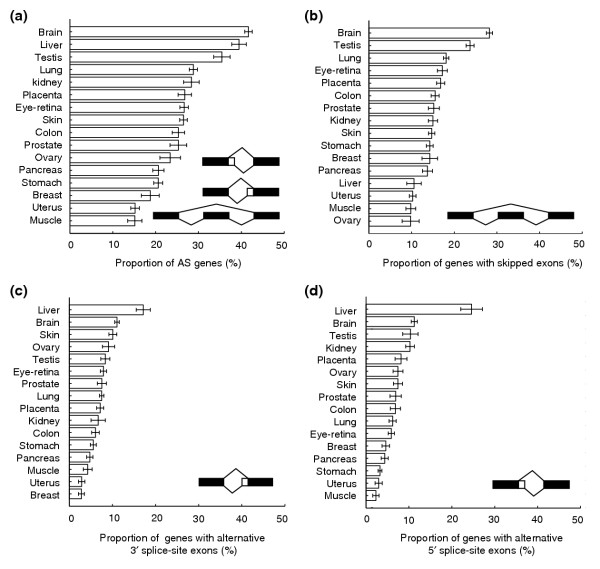
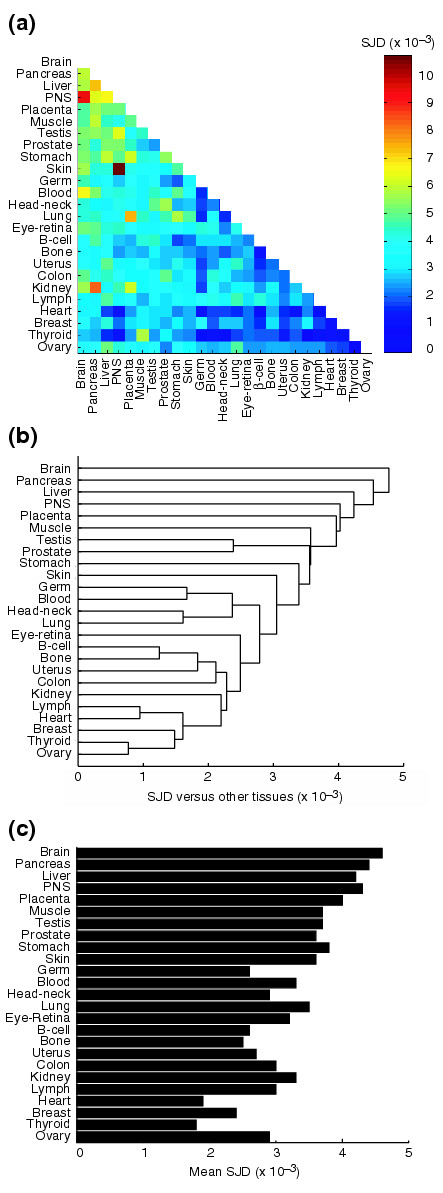
Background: Alternative pre-mRNA splicing (AS) is widely used by higher eukaryotes to generate different protein isoforms in specific cell or tissue types. To compare AS events across human tissues, we analyzed the splicing patterns of genomically aligned expressed sequence tags (ESTs) derived from libraries of cDNAs from different tissues. Results: Controlling for differences in EST coverage among tissues, we found that the brain and testis had the highest levels of exon skipping. The most pronounced differences between tissues were seen for the frequencies of alternative 3' splice site and alternative 5' splice site usage, which were about 50 to 100% higher in the liver than in any other human tissue studied. Quantifying differences in splice junction usage, the brain, pancreas, liver and the peripheral nervous system had the most distinctive patterns of AS. Analysis of available microarray expression data showed that the liver had the most divergent pattern of expression of serine-arginine protein and heterogeneous ribonucleoprotein genes compared to the other human tissues studied, possibly contributing to the unusually high frequency of alternative splice site usage seen in liver. Sequence motifs enriched in alternative exons in genes expressed in the brain, testis and liver suggest specific splicing factors that may be important in AS regulation in these tissues. Conclusions: This study distinguishes the human brain, testis and liver as having unusually high levels of AS, highlights differences in the types of AS occurring commonly in different tissues, and identifies candidate cis-regulatory elements and trans-acting factors likely to have important roles in tissue-specific AS in human cells.
Overview
The claims and statistics of this paper haven’t been checked yet.
Free: it reads the open-access text and checks the first 5 claims that cite a source we can check. Create a free account to check every claim.
Integrity signals
Registry
Cites
Statistics
Figures
Verification
Claims the paper makes
The claims and statistics of this paper haven’t been checked yet.
Free: it reads the open-access text and checks the first 5 claims that cite a source we can check. Create a free account to check every claim.
Claims other papers make about this one
Each is checked against this paper’s own text: does it say what the citing paper says it does?
The source backs part of the claim, not all of it — or backs it for a different population, condition or comparison.
In the citing paper
“Previous expressed sequence tagged mapping studies have led to the conclusion that the brain has the highest number of alternative splicing events when compared with other organs (Yeo et al., 2004)”
From An RNA-Sequencing Transcriptome and Splicing Database of Glia, Neurons, and Vascular Cells of the Cerebral Cortex (2014) · cites this paper as Yeo et al., 2004
Experimental — accuracy not yet measuredIn the citing paper
“Undocumented peptides are particularly enriched in the testis, which is known to differ markedly from other tissues in splicing pattern (Yeo et al., 2004).”
From Splice-Junction-Based Mapping of Alternative Isoforms in the Human Proteome (2019) · cites this paper as Yeo et al., 2004
In the citing paper
“Because brain contains a large number of alternatively spliced proteins [50]”
From Deep proteomic network analysis of Alzheimer’s disease brain reveals alterations in RNA binding proteins and RNA splicing associated with disease (2018) · cites this paper as [50]
Self-check
Percentages, sums and reported differences re-computed from the paper’s own numbers.
The self-check needs the paper’s full text.
Citations
Cites
A gene atlas of the mouse and human protein-encoding transcriptomes
Su, A. I., Wiltshire, T., Batalov, S., Lapp, H., Ching, K. A., Block, D., Zhang, J., Soden, R., Hayakawa, M., Kreiman, G., et al. (2004) · Proceedings of the National Academy of Sciences · doi:10.1073/pnas.0400782101 · Cited by 3,475 · cited 4×
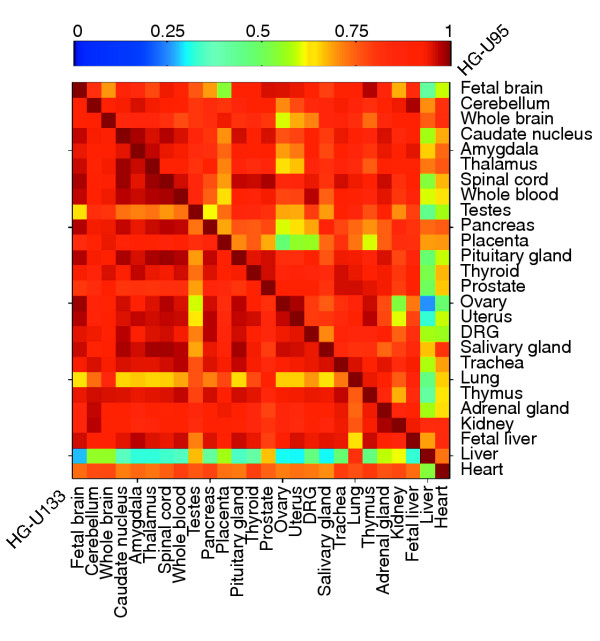
“Expression values for these genes were obtained from the 'gene expression atlas' using the HG-U95A DNA microarray [43] and from a similar set of expression data using the HGU133A DNA microarray [45].”
BackgroundMethodInfluentialSelf-citationGlantz, S. A. (1981) · Cited by 2,879
Mechanisms of Alternative Pre-Messenger RNA Splicing
Black, D. L. (2003) · Annual Review of Biochemistry · doi:10.1146/annurev.biochem.72.121801.161720 · Cited by 2,704 · cited 2×
“In addition to many differences between tissues in transcriptional and translational regulation of genes, alternative pre-mRNA splicing (AS) is also frequently used to regulate gene expression and to generate tissue-specific mRNA and protein isoforms [1-5].”
BackgroundGlantz, S. A. (1981) · Cited by 2,636
Listening to silence and understanding nonsense: exonic mutations that affect splicing
Cartegni, L., Chew, S. L., & Krainer, A. R. (2002) · Nature Reviews Genetics · doi:10.1038/nrg775 · Cited by 2,209 · cited 1×
“In addition to many differences between tissues in transcriptional and translational regulation of genes, alternative pre-mRNA splicing (AS) is also frequently used to regulate gene expression and to generate tissue-specific mRNA and protein isoforms [1-5].”
BackgroundLarge-scale analysis of the human and mouse transcriptomes
Su, A. I., Cooke, M. P., Ching, K. A., Hakak, Y., Walker, J. R., Wiltshire, T., Orth, A. P., Vega, R. G., Sapinoso, L. M., Moqrich, A., et al. (2002) · Proceedings of the National Academy of Sciences · doi:10.1073/pnas.012025199 · Cited by 1,466 · cited 5×
“In analyzing these microarray data, AD values smaller than 20 were standardized to 20, as in [43].”
BackgroundMethodInfluentialGenome-Wide Survey of Human Alternative Pre-mRNA Splicing with Exon Junction Microarrays
Johnson, J. M., Castle, J., Garrett-Engele, P., Kan, Z., Loerch, P. M., Armour, C. D., Santos, R., Schadt, E. E., Stoughton, R., & Shoemaker, D. D. (2003) · Science · doi:10.1126/science.1090100 · Cited by 1,418 · cited 2×
“In addition, DNA microarrays and polymerase colony approaches have been developed for higher-throughput analysis of alternative mRNA isoforms [23-26] and a cross-linking/immunoprecipitation strategy (CLIP) has been developed for systematic detection of the RNAs bound by a given splicing factor [27].”
MethodResultA genomic view of alternative splicing
Modrek, B., & Lee, C. (2002) · Nature Genetics · doi:10.1038/ng0102-13 · Cited by 1,302
A comparison of selected mRNA and protein abundances in human liver
Anderson, L., & Seilhamer, J. (1997) · ELECTROPHORESIS · doi:10.1002/elps.1150180333 · Cited by 1,262 · cited 1×
“The relation between the amount of mRNA expressed from a gene and the concentration of the corresponding protein has been examined previously in several studies in yeast as well as in human and mouse liver tissues [55-58].”
BackgroundPre-mRNA splicing and human disease
Faustino, N. A., & Cooper, T. A. (2003) · Genes & Development · doi:10.1101/gad.1048803 · Cited by 1,256 · cited 2×
“cated in several human genetic diseases [12].”
Background
Cited by
Items 401–500 of 685
Exonic splicing code and protein binding sites for calcium
Pengelly, R. J., Bakhtiar, D., Borovská, I., Královičová, J., & Vořechovský, I. (2022) · Nucleic Acids Research · doi:10.1093/nar/gkac270 · Cited by 8
“Olduvai domains show signs of positive selection, a most striking expansion of their copy number in humans and a high neuron-specific expression in cognitive regions of the brain (157,158), the tissue with the highest level of AS (159).”
New isoforms of human mitochondrial transcription factor A detected in normal and tumoral cells
Virgilio, C. D., Pousis, C., Bruno, S., & Gadaleta, G. (2010) · Mitochondrion · doi:10.1016/j.mito.2010.10.009 · Cited by 8
Informing disease modelling with brain-relevant functional genomic annotations
Reynolds, R. H., Hardy, J., Ryten, M., & Taliun, S. A. G. (2019) · Brain · doi:10.1093/brain/awz295 · Cited by 8
“The significance of isoform-level data at tissue-level resolution is emphasized by estimates that 92–94% of human genes undergo alternative splicing and by the tissue-specificity of alternative splicing events in humans (which for some organs, including the brain, is conserved across mammals) (Yeo et al., 2004; Wang e…”
BackgroundWang, Y., Zhao, B., Choi, J., & Lee, E. A. (2021) · Mobile DNA · doi:10.1186/s13100-021-00250-2 · Cited by 9
The Association of LRP5 Gene Polymorphisms with Ankylosing Spondylitis in a Chinese Han Population
Liu, J., Zhou, X., SHAN, Z., Yang, J., Yang, Q., Cui, Y., & Han, J. (2011) · The Journal of Rheumatology · doi:10.3899/jrheum.111117 · Cited by 8
Alternative splicing of the LIM-homeodomain transcription factor Isl1 in the mouse retina
Whitney, I. E., Kautzman, A. G., & Reese, B. E. (2015) · Molecular and Cellular Neuroscience · doi:10.1016/j.mcn.2015.03.006 · Cited by 8
“Consistent with this, the human brain has the greatest number of alternatively spliced genes compared to other tissues (Lee and Irizarry, 2003; Yeo et al., 2004).”
BackgroundMolecular, Enzymatic, and Cellular Characterization of Soluble Adenylyl Cyclase From Aquatic Animals
Tresguerres, M., & Salmerón, C. (2018) · Methods in enzymology on CD-ROM/Methods in enzymology · doi:10.1016/bs.mie.2018.02.022 · Cited by 8
The effects of multiple features of alternatively spliced exons on the K A /K S ratio test
Chen, F., & Chuang, T. (2006) · BMC Bioinformatics · doi:10.1186/1471-2105-7-259 · Cited by 8
“Meanwhile, ESEs are cis-regulatory elements that regulate pre-mRNA splicing [18,21,22].”
BackgroundMoakley, D. F., Campbell, M., Anglada-Girotto, M., Feng, H., Califano, A., Au, E., & Zhang, C. (2025) · Cell Reports · doi:10.1016/j.celrep.2025.115898 · Cited by 7
LAFITE Reveals the Complexity of Transcript Isoforms in Subcellular Fractions
Zhang, J., Lin, X., Chen, Y., Li, T. H., Lee, A. C. K., Chow, E. Y., Cho, W. C. S., & Chan, T. (2022) · Advanced Science · doi:10.1002/advs.202203480 · Cited by 8
RBFOX2 regulated EYA3 isoforms partner with SIX4 or ZBTB1 to control transcription during myogenesis
Wiedner, H. J., Blue, R. E., Sadovsky, M., Mills, C. A., Wehrens, X. H. T., Herring, L. E., & Giudice, J. (2023) · iScience · doi:10.1016/j.isci.2023.108258 · Cited by 7
Mishra, S. K., Dubey, P. K., Dhiman, A., Dubey, S., Verma, D., Kaushik, A. C., Singh, R., Niranjan, S. K., Vohra, V., Mehrara, K. L., et al. (2019) · 3 Biotech · doi:10.1007/s13205-018-1534-2 · Cited by 7
Dannenfelser, R., & Yao, V. (2023) · Pacific Symposium on Biocomputing (PSB) · doi:10.1142/9789811286421_0044 · Cited by 7
Fish granulocytes express a constitutively active androgen receptor variant
Sánchez-Hernández, M., Arizcún, M., García-Alcázar, A., Sarropoulou, E., Mulero, V., & Ayala, A. G. (2014) · Developmental & Comparative Immunology · doi:10.1016/j.dci.2014.01.024 · Cited by 7
“The alternative spliced variants are commonly generated in steroid hormone receptors and they are particularly prevalent in the testis (Elliott and Grellscheid, 2006; Hirata et al., 2003; Yeo et al., 2004).”
The Genetics of Language: From complex genes to complex communication
Devanna, P., Dediu, D., & Vernes, S. C. (2018) · Oxford University Press eBooks · doi:10.1093/oxfordhb/9780198786825.013.37 · Cited by 7
Wang, X., Guo, S., Xiong, L., Wu, X., Bao, P., Kang, Y., Cao, M., Ding, Z., Liang, C., Pei, J., et al. (2024) · International Journal of Biological Macromolecules · doi:10.1016/j.ijbiomac.2024.132400 · Cited by 6
Lin, T., Tsai, C.-H., Shiau, C.-K., Huang, J., & Tsai, H. (2024) · BMC Genomics · doi:10.1186/s12864-024-10667-7 · Cited by 7
“In this study, we considered the cassette exon splicing, which is the most frequent alternative splicing type in the human genome [36].”
BackgroundMultiple Sgip1 splice variants inhibit cannabinoid receptor 1 internalization
Durydivka, O., Gazdarica, M., Večerková, K., Radenkovic, S., & Blahoš, J. (2023) · Gene · doi:10.1016/j.gene.2023.147851 · Cited by 6
Romeo, C., Trovero, M. F., Radío, S., Smircich, P., Rodríguez‐Casuriaga, R., Geisinger, A., & Sotelo-Silveira, J. R. (2024) · BMC Genomics · doi:10.1186/s12864-024-10170-z · Cited by 6
“Moreover, together with the brain, the testes have been reported to present the highest rate of alternative splicing (AS) [6, 18–21], which generates a huge number of testis-specific, temporally regulated RNA isoforms and protein variants [22, 23].”
BackgroundAPOER2 splicing repertoire in Alzheimer’s disease: Insights from long-read RNA sequencing
Gallo, C. M., Kistler, S. A., Natrakul, A., Labadorf, A. T., Beffert, U., & Ho, A. (2024) · PLoS Genetics · doi:10.1371/journal.pgen.1011348 · Cited by 6
Zhong, G., Shen, Q., Zheng, X., Yu, K., Lu, H., Wei, B., Cui, H., Dai, Z., & Lou, W. (2024) · Journal of Translational Medicine · doi:10.1186/s12967-024-06004-x · Cited by 6
“Studies across the genome reveal that most human genes undergo AS [11, 12].”
Lv, Y., Zuo, Z., & Xu, X. (2013) · Genomics · doi:10.1016/j.ygeno.2013.05.001 · Cited by 6
Chen, S., Simpson, E. R., Reiter, J. L., & Liu, Y. (2022) · Human Mutation · doi:10.1002/humu.24379 · Cited by 6
“especially widespread in the brain, where it is necessary for the differentiation of neurons and may have played a role in the development of the vertebrate brain (Barbosa‐Morais et al., 2012; Merkin et al., 2012; Yeo et al., 2004).”
BackgroundNetwork Module analysis of bipolar disorder mechanism deciphers underlying pathways
Rahnama, M., Mohammadian, A., & Aarabi, S. (2022) · Informatics in Medicine Unlocked · doi:10.1016/j.imu.2022.100975 · Cited by 6
Mining of cis-Regulatory Motifs Associated with Tissue-Specific Alternative Splicing
Kim, J., Zhao, S., Howard, B. E., & Heber, S. (2009) · Lecture notes in computer science · doi:10.1007/978-3-642-01551-9_26 · Cited by 6
Characterising alternate splicing and tissue specific expression in the chicken from ESTs
Tang, H., Heeley, T., Morlec, R., & Hubbard, S. J. (2007) · Cytogenetic and Genome Research · doi:10.1159/000103188 · Cited by 6
“…include developing generic pipelines to map ESTs to genomes (Kim et al., 2005a, b), analysing the differences in alternate splicing in tissues (Yeo et al., 2004), conservation of splice sites across eukaryotes (Nagasaki et al., 2005), exon symmetry and conservation (Magen and Ast, 2005) and…”
BackgroundTandem repeats in human brain evolution and disease susceptibility
Lee, H., & An, J. (2026) · Molecules and Cells · doi:10.1016/j.mocell.2026.100363 · Cited by 5
Comprehensive Analyses of Tissue-Specific Networks with Implications to Psychiatric Diseases
Lin, G. N., Corominas, R., Nam, H.-J., Urresti, J., & Iakoucheva, L. M. (2017) · Methods in molecular biology · doi:10.1007/978-1-4939-7027-8_15 · Cited by 5
“with finely regulated mechanisms of alternative splicing [35, 69, 70].”
BackgroundAnderson, P. E., McCaffrey, V., Hazard, E. S., Watson, P. M., Paul, M. R., Wilson, R. C., Denlinger, C. E., & Watson, D. K. (2014) · IEEE Conference on Computational Intelligence in Bioinformatics and Computational Biology (CIBCB) · doi:10.1109/cibcb.2014.6845521 · Cited by 5
“Because mechanisms and rates of alternative splicing are tissue specific [33], our analysis may have divergent results depending on the type of cancer.”
BackgroundNovel splice variants of the bovine PCK1 gene
Zhang, Z., Zhang, W., Li, R. L., Li, J., Zhong, J. F., Zhao, Z., & Huang, J. (2013) · Genetics and Molecular Research · doi:10.4238/2013.september.27.4 · Cited by 5
“However, other factors may also be important in driving the extent of alternative splicing in the testis, since alternative splicing is also particularly high in the adult liver, which is terminally differentiated and not particularly complex in cell type content (Yeo et al., 2004).”
BackgroundSpatiotemporal Regulation of Transcript Isoform Expression in the Hippocampus
Park, J., & Farris, S. (2021) · Frontiers in Molecular Neuroscience · doi:10.3389/fnmol.2021.694234 · Cited by 5
Paukszto, Ł., Wiśniewska, J., Liszewska, E., Majewska, M., Jastrzebski, J., Jankowski, J., Ciereszko, A., & Słowińska, M. (2023) · Poultry Science · doi:10.1016/j.psj.2023.102484 · Cited by 5
“AS is particularly prevalent in the mammalian testis (Yeo et al., 2004; de la Grange et al., 2010), and several key genes undergoing AS are involved in specific stages of spermatogenesis and in the regula-”
BackgroundHepatitis, testicular degeneration, and ataxia in DIDO3-deficient mice with altered mRNA processing
Gutiérrez, J., van Wely, K. H. M., & Martínez‐A, C. (2022) · Cell & Bioscience · doi:10.1186/s13578-022-00804-8 · Cited by 5
“Indeed, liver stands out for its peculiar alternative mRNA splicing, qualitatively different from most other organs, due possibly to its distinctive complement of splicing factors [31].”
BackgroundAlternative splicing shapes the transcriptome complexity in blackgram [Vigna mungo (L.) Hepper]
Hazra, A., Pal, A., & Kundu, A. (2023) · Functional & Integrative Genomics · doi:10.1007/s10142-023-01066-4 · Cited by 5
“Studies suggested that conserved tissue-specific alternative splicing may have played a pivotal role in the development (Yeo et al. 2004) and the differences in various AS event occurrences among tissues likely to be governed by cis-regulatory elements and trans-acting factors (Rodriguez et al.”
BackgroundLi, Y., Pu, J., & Zhang, B. (2014) · Experimental and Therapeutic Medicine · doi:10.3892/etm.2014.1916 · Cited by 5
“Typically, alternative splicing shows tissue-and/or development-specific distribution, resulting in different expression levels in different cell lines or developmental stages (24).”
Wilming, L. G., & Harrow, J. (2009) · Springer eBooks · doi:10.1007/978-0-387-92738-1_6 · Cited by 6
“2002) and that at least some alternative splicing events are conserved as well (Yeo et al. 2004).”
BackgroundThe role of HnrnpF/H as a driver of oligoteratozoospermia
Netherton, J. K., Ogle, R. A., Robinson, B. R., Molloy, M. P., Krisp, C., Velkov, T., Casagranda, F., Dominado, N., Villaverde, A. I. S. B., Zhang, X. D., et al. (2024) · iScience · doi:10.1016/j.isci.2024.110198 · Cited by 4
“18 Not only is the testis considered to undertake more alternative splicing events besides the brain, 18 several testis-specific splicing events such as alternative 5 0 or 3 0 splice sites and intron retention 18 events have been reported.”
Alieh, L. H. A., de Toledo, B. C., Hadarovich, A., Tóth-Petróczy, Á., & Calegari, F. (2024) · Biology Open · doi:10.1242/bio.061721 · Cited by 4
“Notably, of different organs, the brain is among those with the highest proportion of spliced genes (Mazin et al., 2021; Yeo et al., 2004) and with highly specific and conserved AS profiles, including microexons ( ≤ 27 nt) (Irimia et al., 2014; Raj and Blencowe, 2015).”
BackgroundMichielsen, L., Hsu, J., Joglekar, A., Belchikov, N., Reinders, M. J. T., Tilgner, H., & Mahfouz, A. E. (2026) · Genome biology · doi:10.1186/s13059-026-04015-z · Cited by 4
“Across different tissues, the brain has the highest levels of exon skipping and one of the most distinctive patterns of alternative splicing [6].”
Kassim, S. H., Vandenberghe, L. H., Hovhannisyan, R. H., Wilson, J. M., & Rader, D. J. (2011) · Physiological Genomics · doi:10.1152/physiolgenomics.00006.2011 · Cited by 4
The alternative proteome in neurobiology
Mohaupt, P., Roucou, X., Delaby, C., Vialaret, J., Lehmann, S., & Hirtz, C. (2022) · Frontiers in Cellular Neuroscience · doi:10.3389/fncel.2022.1019680 · Cited by 4
“The transcriptome of the human brain exhibits a high number of splicing variants, which significantly increases the transcriptomic and proteomic diversity encoded by the same gene (Yeo et al., 2004; Melé et al., 2015).”
BackgroundLiu, Y., & Elliott, D. J. (2010) · Biochemical Society Transactions · doi:10.1042/bst0380237 · Cited by 4
Pilaka, P. P., Sadek, N. H., Fusca, D. D., Cutter, A. D., & Calarco, J. A. (2025) · Genetics · doi:10.1093/genetics/iyaf025 · Cited by 3
“Alternative splicing (AS) is a co-transcriptional mechanism that drives proteomic diversity, cellular complexity, animal development, and tissue-specificity by generating multiple isoforms from a single precursor mRNA (Yeo et al .”
Classification and Quantification of Unproductive Splicing Events
Zavileysky, L. G., Chernyavskaya, E. A., Vlasenok, M., & Pervushin, D. D. (2025) · Acta Naturae · doi:10.32607/actanaturae.27572 · Cited by 3
The Role of mRNA Alternative Processing in Mammalian Neurodevelopment
Liu, X., Zuo, J. J., Zhang, G., Han, X., & Tian, Y. (2025) · International Journal of Molecular Sciences · doi:10.3390/ijms262211075 · Cited by 3
“Transcriptome profiling demonstrated a higher prevalence of AS events in brain compared to other tissues, with these events often occurring in a cell-specific or developmental-stage-specific manner [22,23].”
A role for the cholinergic neuron circadian clock in RNA metabolism and mediating neurodegeneration
Tam, S., Waldeck, N. J., Wright, M., Mojsilovic‐Petrovic, J., Baker, E. M., Kiskinis, E., Bass, J. T., & Kalb, R. G. (2025) · Life Science Alliance · doi:10.26508/lsa.202503508 · Cited by 3
“Although RBPs are ubiq-uitously expressed, cells and tissue within the central nervous system (CNS) demonstrate greater disease vulnerability to RBP dysregulation due to their higher frequency of alternative splicing (Yeo et al, 2004; Pan et al, 2008).”
Pluripotent stem cells-based neural organoids for modelling human brain development and diseases
Tong, L., Tian, P., Wang, R., Niu, S., Wang, R., Ye, Y., Wu, Y., Zhang, W., Wang, Y., Foggetti, A., et al. (2025) · Cell & Bioscience · doi:10.1186/s13578-025-01515-6 · Cited by 3
“Given the prevalence of alternative splicing (AS) in human brain, early transcriptome analysis prioritized its developmental roles [182, 183].”
Starck, L., Butelmann, T., Hogan, S. A., Sarem, M., Heimrich, B., Sawarkar, R., Ritz, M., Hütter, G., & Shastri, V. P. (2026) · Advanced Science · doi:10.1002/advs.202509362 · Cited by 3
“This is a significant finding as brain tissue is known to exhibit one of the highest degrees of alternatively spliced transcripts, expressing a unique set of isoforms [ 55 ].”
Allele-specific splicing modulates protein isoforms and Alzheimer's disease risk
King, A. J., Amoah, K., Zhang, L., Bahn, J. H., Barney, R. M., Quinones-Valdez, G., & Xiao, X. G. (2026) · Genome Research · doi:10.1101/gr.281117.125 · Cited by 3
Role of an Alternatively Spliced KCNMA1 Variant in Glioma Growth
Khaitan, D., Ningaraj, N. S., & Joshua, L. (2018) · InTech eBooks · doi:10.5772/intechopen.74509 · Cited by 3
“In cancer, it was shown that abnormal mRNA splicing often leads to tumor-promoting splice variants that are translated into activated oncogenes or inactivated tumor suppressors [26, 27].”
BackgroundIsoform-Disease Association Prediction by Data Fusion
Huang, Q., Wang, J., Zhang, X., & Yu, G. (2020) · Lecture notes in computer science · doi:10.1007/978-3-030-57821-3_5 · Cited by 3
“In addition, the expression of isoforms has tissue specificity [7, 38].”
BackgroundLee, H. M. T., Lim, H. Y., He, H., Lau, C. Y., & Zheng, C. (2024) · PLoS Genetics · doi:10.1371/journal.pgen.1011276 · Cited by 3
A novel human protein-coding locus identified using a targeted RNA enrichment technique
Tang, L., Xu, D., Luo, L., Ma, W., He, X., Diao, Y., Ke, R., & Kapranov, P. (2024) · BMC Biology · doi:10.1186/s12915-024-02069-8 · Cited by 3
“This is particularly evident from the numerous novel transcripts, many of which are located in the genomic “dark matter” regions, discovered through both bulk and single-cell transcriptomic analyses [3–11].”
Identification of two novel chicken GPR133 variants and their expression in different tissues
Tian, K., Xiao, Q., Zhang, X., Lan, X., Zhao, X., Wang, Y., Li, D., Yin, H., Ye, L., & Zhu, Q. C. (2017) · Functional & Integrative Genomics · doi:10.1007/s10142-017-0564-x · Cited by 3
“It can change how a gene acts in different tissues by generating distinct mRNAvariants composed of different selections of exons (Modrek et al. 2001; Yeo et al. 2004).”
BackgroundROLE OF 14-3-3 ETA AND EPSILON IN GAMETOGENESIS
Eisa, A. A. (2019) · OhioLink ETD Center (Ohio Library and Information Network) · Cited by 3
Teber, E., Crawford, E., Bolton, K. B., Dyk, D. D. V., Schofield, P. R., Kapoor, V., & Church, W. B. (2006) · BMC Bioinformatics · doi:10.1186/1471-2105-7-33 · Cited by 3
“There remains intense interest in the annotation of genomes, and work is continuing to be done to elucidate all of the human genes, its haplotypes [1,2] and its transcriptome [3,4].”
BackgroundMa, C., Deng, F., Liu, H., & Zhou, Y. (2009) · International Joint Conferences on Bioinformatics, Systems Biology and Intelligent Computing · doi:10.1109/ijcbs.2009.31 · Cited by 3
“The first one is the EST and microarray based method [1,6,7].”
MethodA Long Short-Term Memory Neural Network Used to Predict the Exon–Intron Structure of a Gene
Урошлев, Л. А., Bal, N. V., & Chesnokova, E. (2020) · BIOPHYSICS · doi:10.1134/s0006350920040259 · Cited by 3
Yeo, G. W.-M. (2004) · DSpace@MIT (Massachusetts Institute of Technology) · Cited by 3
Self-citationExpressão de isoformas da proteína do retardo mental do X frágil (FMRP) e sua regulação
Velloso, F. J. (2008) · Digital Library of Theses and Dissertations (Universidade de São Paulo) · doi:10.11606/d.41.2008.tde-19032009-144613 · Cited by 3
Hannigan, M. M., Fujioka, H., Brett-Morris, A., Mears, J. A., & Licatalosi, D. D. (2018) · bioRxiv (Cold Spring Harbor Laboratory) · doi:10.1101/497461 · Cited by 2
“The testis expresses considerably more AS isoforms compared to other tissue types (Clark et al., 2007; Yeo et al., 2004; Soumillon et al., 2013).”
BackgroundAntoniou, N., Prodromidou, K., Kouroupi, G., Samiotaki, M. K., Panayotou, G., Xilouri, M., Stefanis, L., Grailhe, R., Taoufik, E., & Matsas, R. (2020) · bioRxiv (Cold Spring Harbor Laboratory) · doi:10.1101/2020.06.12.148031 · Cited by 3
SRSF12 is a primate-specific splicing factor that induces a tissue-specific gene expression program
Ly, J., Cady, S. L., Haug, S., Khalizeva, E., & Cheeseman, I. M. (2025) · Molecular Biology of the Cell · doi:10.1091/mbc.e25-07-0352 · Cited by 2
“Alternative splicing is also differentially controlled across a wide range of conditions, with a substantial change in the splicing landscape across tissues (Yeo et al. , 2004; Zhang et al. , 2016; Naro et al. , 2021; Garcia-Perez et al. , 2023).”
Predicting exon criticality from protein sequence
Desai, J. S., Francis, C., Longo, K. A., & Hoss, A. G. (2022) · Nucleic Acids Research · doi:10.1093/nar/gkac155 · Cited by 2
Davis, K., Serrano, M. A., Martin, M. M., Vanzo, R. J., Rimmasch, M., Hom, Y., Uddin, M. J., & Bilancia, C. G. (2021) · Scientific Reports · doi:10.1016/s1096-7192(21)00488-1 · Cited by 2
Why lncRNAs were not conserved? Is it for adaptation?
Karlık, E. (2021) · Frontiers in Life Sciences and Related Technologies · doi:10.51753/flsrt.1027595 · Cited by 2
Gnatowski, E., Jurmain, J. L., Dozmorov, M. G., Wolstenholme, J. T., & Miles, M. F. (2024) · Frontiers in Genetics · doi:10.3389/fgene.2024.1455616 · Cited by 2
Model-based prediction of cis-acting RNA elements regulating tissue-specific alternative splicing
Wang, X., Wang, K., Wang, G., Sanford, J. R., & Liu, Y. (2008) · IEEE International Conference on Bioinformatics and Bioengineering (BIBE) · doi:10.1109/bibe.2008.4696675 · Cited by 2
“Recent surveys of transcript diversity indicate that alternative splicing plays an important role in regulating tissue-specific patterns of gene expression [1, 2].”
BackgroundBak, T. H., & Abrahams, S. (2015) · Cambridge University Press eBooks · doi:10.1017/cbo9781316091586.009 · Cited by 2
Panelli, D., & Papa, P. (2013) · Journal of Bioanalysis & Biomedicine · doi:10.4172/1948-593x.s3-006 · Cited by 2
Finding association rules of cis -regulatory elements involved in alternative splicing
Kim, J., Zhao, S., & Heber, S. (2007) · ACM Southeast Regional Conference (ACMSE) · doi:10.1145/1233341.1233383 · Cited by 2
“Several splicing factor binding sites (cis-regulatory elements) which influence the amount and type of alternative splicing have been identified [15].”
BackgroundWhen pitch adds to volume: coregulation of transcript diversity predicts gene function
Cáceres, A., & González, J. R. (2018) · BMC Genomics · doi:10.1186/s12864-018-5263-z · Cited by 2
Genetic architecture of inherited retinal disease
Dharmat, R., Sui, R., & Chen, R. (2019) · Elsevier eBooks · doi:10.1016/b978-0-12-816222-4.00006-x · Cited by 2
Kovas, Y. V., & Selita, F. (2021) · Palgrave Macmillan UK eBooks · doi:10.1057/978-1-349-96048-4_5 · Cited by 2
Lobas, A. A., Solovyeva, E. M., Levitsky, L. I., Goncharov, A. O., Lyssuk, E. Y., Larin, S. S., Moshkovskii, S. A., & Gorshkov, M. V. (2023) · International Journal of Molecular Sciences · doi:10.3390/ijms24032466 · Cited by 2
GDNF Signaling Regulates YBX1/mRNA Interactions in Mouse Spermatogonia.
Phillips, B., Peters, K. A., & Orwig, K. E. (2012) · Biology of Reproduction · doi:10.1093/biolreprod/87.s1.136 · Cited by 2
“In comparative tissue studies, only the brain was found to have as many alternatively spliced transcripts as the testis [133, 134].”
BackgroundIntrons and alternative splicing in choanoflagellates
Westbrook, M. W. (2011) · eScholarship (California Digital Library) · Cited by 2
Microarray Bioinformatics and Applications in Oncology
Peeters, J. K. (2008) · EUR Research Repository (Erasmus University Rotterdam) · Cited by 2
Underlying genetic mechanisms of hereditary dystrophies in retina and cornea
Jönsson, F. (2017) · DiVA (Digitala Vetenskapliga Arkivet) · Cited by 2
Analysis of Cis-Regulatory Motifs in Cassette Exons by Incorporating Exon Skipping Rates
Zhao, S., Kim, J., & Heber, S. (2009) · Lecture notes in computer science · doi:10.1007/978-3-642-01551-9_27 · Cited by 2
“Therefore, positional bias is often used as a validation of predicted AS motifs [19, 20].”
MethodFull-length isoform transcriptome of developing human brain provides new insights into autismPreprint
Chau, K., Zhang, P., Urresti, J., Amar, M., Pramod, A. B., Chen, J., Thomas, A., Corominas, R., Lin, G. N., & Iakoucheva, L. M. (2020) · bioRxiv (Cold Spring Harbor Laboratory) · doi:10.1101/2020.06.27.175489 · Cited by 3
“The developing human brain exhibits one of the highest frequencies of alternative splicing events (Calarco et al., 2011; Mele et al., 2015; Raj and Blencowe, 2015; Yeo et al., 2004).”
BackgroundMulti-omics approach in Down syndrome resolves new regulators in two regions of the human brain
Rastogi, M. (2021) · CINECA IRIS Institutial Research Information System (University of Genoa) · doi:10.15167/rastogi-mohit_phd2021-04-27 · Cited by 2
Etude des conséquences fonctionnelles des mutations du facteur eIF2B sur la maturation gliale
Huyghe, A. (2011) · theses.fr (ABES) · doi:10.70675/9d457db4zdf63z4e9ez9f8dzb0949a38698b · Cited by 2
Hiller, M. (2006) · FreiDok plus (Universitätsbibliothek Freiburg) · Cited by 2
Human brain development and evolution: insights from gene expression
Sousa, A. M. M. D. C. E. (2013) · Portuguese National Funding Agency for Science, Research and Technology (RCAAP Project by FCT) · doi:10.34626/jx4h-nm17 · Cited by 2
Liharska, L. E., & Charney, A. W. (2024) · Current topics in behavioral neurosciences · doi:10.1007/7854_2024_466 · Cited by 1
Affifi, R. (2025) · Environmental Education Research · doi:10.1080/13504622.2025.2493878 · Cited by 1
“In humans, there are more genes getting alternatively spliced – and spliced in more different ways – in the brain than anywhere else in the body (Yeo et al. 2004).”
A historical and technological perspective on the evolution of the human brain transcriptome
Risgaard, R. D., Doll, H. M., & Sousa, A. M. M. (2025) · Elsevier eBooks · doi:10.1016/b978-0-443-27380-3.00053-1 · Cited by 1
Loss of full-length DAZL isoform disrupts PABPC1-dependent translational regulation and meiosis
Li, X., Cao, D., Lu, Y., Bian, Z., Zhao, T., Liu, W., Zhao, Y., Tan, J., Li, L., & Xu, E. Y. (2025) · Cell Death and Disease · doi:10.1038/s41419-025-08179-7 · Cited by 1
Pregnancy induces extensive changes of transcript usage in the goat brain
Cardoso, T. F., Luigi‐Sierra, M. G., Noce, A., Wang, M., Guan, D., Casas, E., Olvera‐Maneu, S., Gardela, J., Mármol‐Sánchez, E., López‐Béjar, M., et al. (2025) · Journal of Dairy Science · doi:10.3168/jds.2025-26608 · Cited by 1
A novel conditional knock-in mouse model for APOE4-to-APOE3 switching
Ishikawa, R., Yamazaki, Y., Nakazawa, N., Li, X., Tazuma, T., Takebayashi, Y., Nakamori, M., Sotomaru, Y., & Maruyama, H. (2025) · Neurobiology of Disease · doi:10.1016/j.nbd.2025.107244 · Cited by 1
Coleman, N., Wei, Z., Iafrate, A. J., Zwiebel, J. A., Sharon, E., Gray, R. J., Wang, V., McShane, L. M., Rubinstein, L., Patton, D. R., et al. (2026) · Clinical Cancer Research · doi:10.1158/1078-0432.ccr-25-1247 · Cited by 1
HDAC Inhibition Reshapes Splicing of Synaptic Plasticity-Related Genes and Neural Network Dynamics
Beletskiy, A., Leontovich, Y. A., Aseyev, N., Balaban, P. M., & Borodinova, A. A. (2026) · Cellular and Molecular Neurobiology · doi:10.1007/s10571-026-01693-y · Cited by 1
“Alternative splicing (AS) is a fundamental mechanism for protein diversification, particularly prevalent in the nervous system (Yeo et al. 2004; Mazin et al. 2021 ), where it fine-tunes neuronal development and synaptic functions.”
Wang, E., Kang, Y., Chen, D., Tian, R., Hu, Y., Wang, H., Liu, J., Zhou, Z., Tian, T., Xu, H., et al. (2026) · Biochemical Pharmacology · doi:10.1016/j.bcp.2026.118026 · Cited by 1
Nitric oxide drives proteomic diversity through alternative splicing
Schindler, J. C., Seth, P., Hausladen, A., Chan, E. R., Yang, J., Qin, J., Qian, Z., Seth, D., Lundberg, K. C., Luna, J. M., et al. (2026) · Molecular Cell · doi:10.1016/j.molcel.2026.04.024 · Cited by 1
Li, R., Reiter, J. L., Wyatt‐Johnson, S. K., Dong, C., Smith, C. S., Green, N., Gao, H., Hauser, S. R., Kapoor, M., Stevens, J., et al. (2026) · Brain Communications · doi:10.1093/braincomms/fcag264 · Cited by 1
“10,11 In contrast, aberrant IR occurs when splicing fidelity is compromised due to factors such as spliceosome dysfunction, transcriptional overload, cellular stress or epigenetic alterations.”
The contribution of short tandem repeats to splicing variation in the human prefrontal cortex
Li, Y., Margoliash, J., Goren, A., & Gymrek, M. (2026) · Genome biology · doi:10.1186/s13059-026-04296-4 · Cited by 1
Vořechovský, I. (2022) · Brain Sciences · doi:10.3390/brainsci12070874 · Cited by 1
The Decoding of Eukaryotic Genomes
Selzer, P. M., Marhöfer, R. J., & Koch, O. (2018) · Springer eBooks · doi:10.1007/978-3-319-68301-0_4 · Cited by 1
SERINE/THREONINE PHOSPHATASES: ROLE IN SPERMATOGENESIS AND SPERM FUNCTION
Dudiki, T. (2014) · OhioLink ETD Center (Ohio Library and Information Network) · Cited by 1
Metadata
- Authors
- Yeo, G., Holste, D., Kreiman, G., & Burge, C. B.
- Affiliations
- Massachusetts Institute of Technology (US)
- Corresponding author
- Burge, Christopher B
- Venue
- Genome Biology
- Published
- 2004-09-13
- Volume
- 5
- Issue
- 10
- Pages
- R74-R74
- ISSN
- 1465-6906 (ISSN-L)
- 1474-760X
- PMC
- PMC545594
- OpenAlex
- W2169685494
- Cited by
- 584
- References
- 70
- Citations by year
- 2026: 17 · 2025: 24 · 2024: 28 · 2023: 26 · 2022: 34 · 2021: 49 · 2020: 24 · 2019: 33 · 2018: 31 · 2017: 24 · 2016: 19 · 2015: 30 · 2014: 20 · 2013: 27 · 2012: 28
- FWCI
- 9.71
- Type
- journal article
- Language
- en
- Open access
- gold
- doi.org
- Licence
- cc-by
- creativecommons.org/licenses/by/2.0/ (tdm)
- creativecommons.org/licenses/by/2.0/ (vor)
- Locations
- Genome biology (publishedVersion, cc-by)
- PubMed Central (publishedVersion)
- PubMed (publishedVersion)
- Digital Access to Scholarship at Harvard (DASH) (Harvard University) (submittedVersion, cc-by)
- Funders
- National Science Foundation
- National Institutes of Health
- Topics
- Life Sciences › Biochemistry, Genetics and Molecular Biology › Molecular Biology › RNA Research and Splicing
- Life Sciences › Biochemistry, Genetics and Molecular Biology › Molecular Biology › RNA regulation and disease
- Life Sciences › Biochemistry, Genetics and Molecular Biology › Cancer Research › Cancer-related molecular mechanisms research
- Keywords
- alternative splicing, tissue-specific splicing, exon skipping, expressed sequence tags, liver, brain, testis, cis-regulatory elements, splicing factors, human tissue
- MeSH terms
- Brain, Exons, Humans, Liver, Male, Organ Specificity, Regulatory Sequences, Nucleic Acid, RNA, Messenger, Testis, Genetic Variation, Gene Library, Alternative Splicing, Protein Isoforms, Expressed Sequence Tags, RNA Splice Sites
About these checks
Registry, retraction, Cites and statistics results are computed, not judged, with one exception: a printed reference that no index lists is read once by a model before it counts as a citation error. Claims are extracted by a model and kept only when their quote appears verbatim in the text; each cited source is then checked, with a model’s help, for whether it says what the claim relies on. Those verdicts can be wrong — read the claim’s quote and the cited source before relying on one.
Statistics and arithmetic are recomputed, not judged.
Confidence bands are shown only for fields calibrated on our annotated test set. None is calibrated yet, so no band is shown.
What counts as a claim ›How we measure confidence ›How we check this ›
Are you an author, or do you see a problem with this page? Request a review
Data sources
Bibliographic data: Semantic Scholar, OpenAlex, Crossref.
Contains information from the Semantic Scholar Academic Graph Datasets, made available under the ODC Attribution License (ODC-BY 1.0).
Semantic Scholar’s data is described in: Kinney, R., et al. (2023). The Semantic Scholar Open Data Platform. arXiv:2301.10140.
