

Variation in alternative splicing across human tissues
Open accessThe DOI matches its Crossref record; 71 of the 71 references it cites were found in a registry or an index.
Abstract
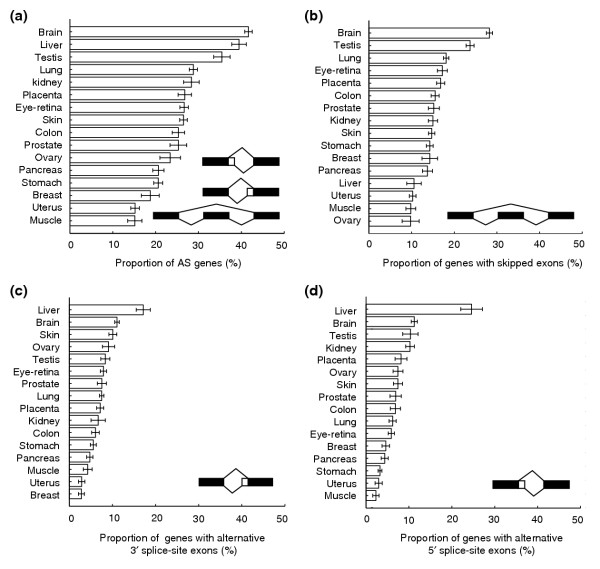
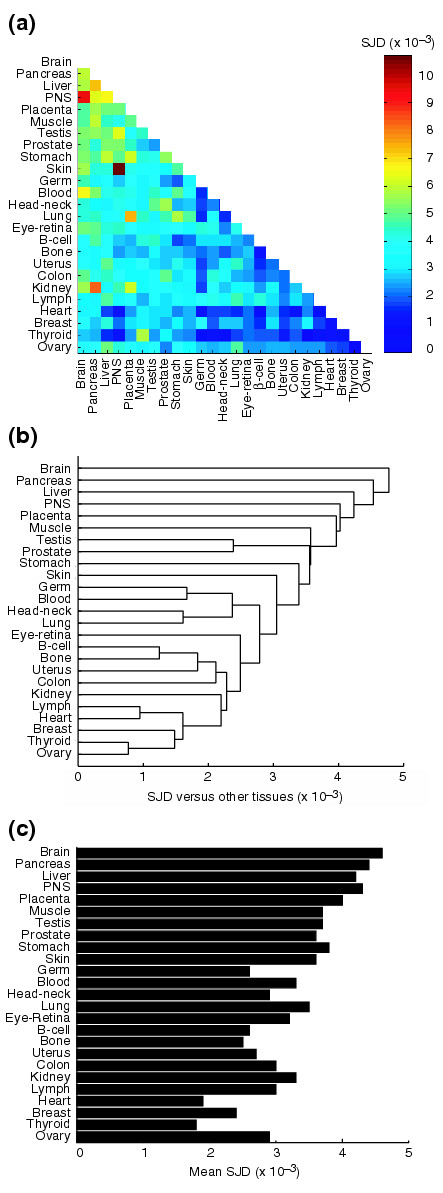
Background: Alternative pre-mRNA splicing (AS) is widely used by higher eukaryotes to generate different protein isoforms in specific cell or tissue types. To compare AS events across human tissues, we analyzed the splicing patterns of genomically aligned expressed sequence tags (ESTs) derived from libraries of cDNAs from different tissues. Results: Controlling for differences in EST coverage among tissues, we found that the brain and testis had the highest levels of exon skipping. The most pronounced differences between tissues were seen for the frequencies of alternative 3' splice site and alternative 5' splice site usage, which were about 50 to 100% higher in the liver than in any other human tissue studied. Quantifying differences in splice junction usage, the brain, pancreas, liver and the peripheral nervous system had the most distinctive patterns of AS. Analysis of available microarray expression data showed that the liver had the most divergent pattern of expression of serine-arginine protein and heterogeneous ribonucleoprotein genes compared to the other human tissues studied, possibly contributing to the unusually high frequency of alternative splice site usage seen in liver. Sequence motifs enriched in alternative exons in genes expressed in the brain, testis and liver suggest specific splicing factors that may be important in AS regulation in these tissues. Conclusions: This study distinguishes the human brain, testis and liver as having unusually high levels of AS, highlights differences in the types of AS occurring commonly in different tissues, and identifies candidate cis-regulatory elements and trans-acting factors likely to have important roles in tissue-specific AS in human cells.
Overview
The claims and statistics of this paper haven’t been checked yet.
Free: it reads the open-access text and checks the first 5 claims that cite a source we can check. Create a free account to check every claim.
Integrity signals
Registry
Cites
Statistics
Figures
Verification
Claims the paper makes
The claims and statistics of this paper haven’t been checked yet.
Free: it reads the open-access text and checks the first 5 claims that cite a source we can check. Create a free account to check every claim.
Claims other papers make about this one
Each is checked against this paper’s own text: does it say what the citing paper says it does?
The source backs part of the claim, not all of it — or backs it for a different population, condition or comparison.
In the citing paper
“Previous expressed sequence tagged mapping studies have led to the conclusion that the brain has the highest number of alternative splicing events when compared with other organs (Yeo et al., 2004)”
From An RNA-Sequencing Transcriptome and Splicing Database of Glia, Neurons, and Vascular Cells of the Cerebral Cortex (2014) · cites this paper as Yeo et al., 2004
Experimental — accuracy not yet measuredIn the citing paper
“Undocumented peptides are particularly enriched in the testis, which is known to differ markedly from other tissues in splicing pattern (Yeo et al., 2004).”
From Splice-Junction-Based Mapping of Alternative Isoforms in the Human Proteome (2019) · cites this paper as Yeo et al., 2004
In the citing paper
“Because brain contains a large number of alternatively spliced proteins [50]”
From Deep proteomic network analysis of Alzheimer’s disease brain reveals alterations in RNA binding proteins and RNA splicing associated with disease (2018) · cites this paper as [50]
Self-check
Percentages, sums and reported differences re-computed from the paper’s own numbers.
The self-check needs the paper’s full text.
Citations
Cites
A gene atlas of the mouse and human protein-encoding transcriptomes
Su, A. I., Wiltshire, T., Batalov, S., Lapp, H., Ching, K. A., Block, D., Zhang, J., Soden, R., Hayakawa, M., Kreiman, G., et al. (2004) · Proceedings of the National Academy of Sciences · doi:10.1073/pnas.0400782101 · Cited by 3,475 · cited 4×
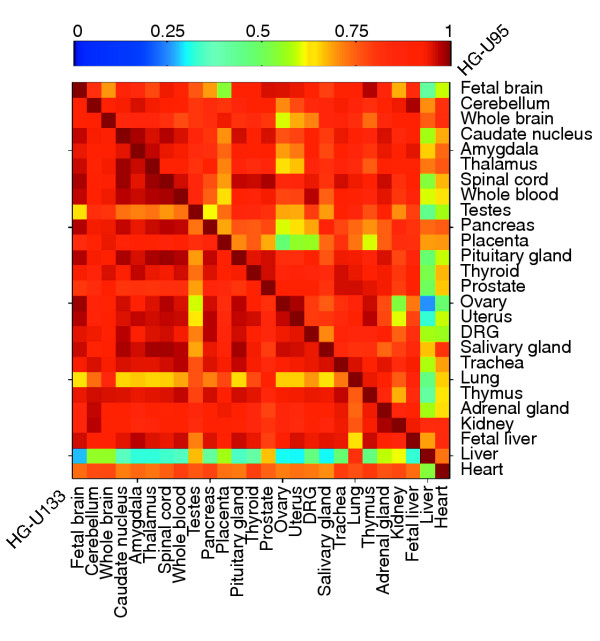
“Expression values for these genes were obtained from the 'gene expression atlas' using the HG-U95A DNA microarray [43] and from a similar set of expression data using the HGU133A DNA microarray [45].”
BackgroundMethodInfluentialSelf-citationGlantz, S. A. (1981) · Cited by 2,879
Mechanisms of Alternative Pre-Messenger RNA Splicing
Black, D. L. (2003) · Annual Review of Biochemistry · doi:10.1146/annurev.biochem.72.121801.161720 · Cited by 2,704 · cited 2×
“In addition to many differences between tissues in transcriptional and translational regulation of genes, alternative pre-mRNA splicing (AS) is also frequently used to regulate gene expression and to generate tissue-specific mRNA and protein isoforms [1-5].”
BackgroundGlantz, S. A. (1981) · Cited by 2,636
Listening to silence and understanding nonsense: exonic mutations that affect splicing
Cartegni, L., Chew, S. L., & Krainer, A. R. (2002) · Nature Reviews Genetics · doi:10.1038/nrg775 · Cited by 2,209 · cited 1×
“In addition to many differences between tissues in transcriptional and translational regulation of genes, alternative pre-mRNA splicing (AS) is also frequently used to regulate gene expression and to generate tissue-specific mRNA and protein isoforms [1-5].”
BackgroundLarge-scale analysis of the human and mouse transcriptomes
Su, A. I., Cooke, M. P., Ching, K. A., Hakak, Y., Walker, J. R., Wiltshire, T., Orth, A. P., Vega, R. G., Sapinoso, L. M., Moqrich, A., et al. (2002) · Proceedings of the National Academy of Sciences · doi:10.1073/pnas.012025199 · Cited by 1,466 · cited 5×
“In analyzing these microarray data, AD values smaller than 20 were standardized to 20, as in [43].”
BackgroundMethodInfluentialGenome-Wide Survey of Human Alternative Pre-mRNA Splicing with Exon Junction Microarrays
Johnson, J. M., Castle, J., Garrett-Engele, P., Kan, Z., Loerch, P. M., Armour, C. D., Santos, R., Schadt, E. E., Stoughton, R., & Shoemaker, D. D. (2003) · Science · doi:10.1126/science.1090100 · Cited by 1,418 · cited 2×
“In addition, DNA microarrays and polymerase colony approaches have been developed for higher-throughput analysis of alternative mRNA isoforms [23-26] and a cross-linking/immunoprecipitation strategy (CLIP) has been developed for systematic detection of the RNAs bound by a given splicing factor [27].”
MethodResultA genomic view of alternative splicing
Modrek, B., & Lee, C. (2002) · Nature Genetics · doi:10.1038/ng0102-13 · Cited by 1,302
A comparison of selected mRNA and protein abundances in human liver
Anderson, L., & Seilhamer, J. (1997) · ELECTROPHORESIS · doi:10.1002/elps.1150180333 · Cited by 1,262 · cited 1×
“The relation between the amount of mRNA expressed from a gene and the concentration of the corresponding protein has been examined previously in several studies in yeast as well as in human and mouse liver tissues [55-58].”
BackgroundPre-mRNA splicing and human disease
Faustino, N. A., & Cooper, T. A. (2003) · Genes & Development · doi:10.1101/gad.1048803 · Cited by 1,256 · cited 2×
“cated in several human genetic diseases [12].”
Background
Cited by
Alternative isoform regulation in human tissue transcriptomes
Wang, E. T., Sandberg, R., Luo, S., Khrebtukova, I., Zhang, L., Mayr, C., Kingsmore, S. F., Schroth, G. P., & Burge, C. B. (2008) · Nature · doi:10.1038/nature07509 · Cited by 5,181
Self-citationThe Genotype-Tissue Expression (GTEx) pilot analysis: Multitissue gene regulation in humans
The GTEx Consortium, Ardlie, K. G., Deluca, D. S., Segrè, A. V., Sullivan, T. J., Young, T. R., Gelfand, E. T., Trowbridge, C. A., Maller, J. B., Tukiainen, T., et al. (2015) · Science · doi:10.1126/science.1262110 · Cited by 5,062
Zhang, Y., Chen, K., Sloan, S. A., Bennett, M. L., Scholze, A. R., O'Keeffe, S., Phatnani, H. P., Guarnieri, P., Caneda, C., Ruderisch, N., et al. (2014) · The Journal of Neuroscience · doi:10.1523/jneurosci.1860-14.2014 · Cited by 4,875
“Previous expressed sequence tagged mapping studies have led to the conclusion that the brain has the highest number of alternative splicing events when compared with other organs (Yeo et al., 2004), and different brain regions are associated with complex patterns of alternative splicing (Johnson et al.”
BackgroundPan, Q., Shai, O., Lee, L. J., Frey, B. J., & Blencowe, B. J. (2008) · Nature Genetics · doi:10.1038/ng.259 · Cited by 3,951
GMAP: A genomic mapping and alignment program for mRNA and EST sequences
Wu, T. D., & Watanabe, C. K. (2005) · Bioinformatics · doi:10.1093/bioinformatics/bti310 · Cited by 2,354
Makeyev, E. V., Zhang, J., Carrasco, M. A., & Maniatis, T. (2007) · Molecular Cell · doi:10.1016/j.molcel.2007.07.015 · Cited by 1,395
“Approximately half of all mammalian genes encode alternatively spliced pre-mRNAs, and a large fraction of the alternative splicing events occur exclusively in the NS (Black, 2003; Licatalosi and Darnell, 2006; Lipscombe, 2005; Maniatis and Tasic, 2002; Yeo et al., 2004).”
BackgroundUnderstanding alternative splicing: towards a cellular code
Matlin, A. J., Clark, F., & Smith, C. W. J. (2005) · Nature Reviews Molecular Cell Biology · doi:10.1038/nrm1645 · Cited by 1,305
“Finally, a set of motifs associated with exons (or splice sites) that are skipped in brain or liver was found to be enriched in known silencer”
BackgroundThe human transcriptome across tissues and individuals
Melé, M., Ferreira, P. G., Reverter, F., DeLuca, D. S., Monlong, J., Sammeth, M., Young, T. R., Goldmann, J. M., Pervouchine, D. D., Sullivan, T. J., et al. (2015) · Science · doi:10.1126/science.aaa0355 · Cited by 1,304
Past, present, and future of circ RNA s
Patop, I. L., Wüst, S., & Kadener, S. (2019) · The EMBO Journal · doi:10.15252/embj.2018100836 · Cited by 1,225
“First, the brain and, more specifically, the neurons display the highest rates of alternative splicing in the body (Yeo et al , 2004; Pan et al , 2008), and circRNA biogenesis can be defined as a particular type of alternative splicing.”
A reference map of the human binary protein interactome
Luck, K., Kim, D.-K., Lambourne, L., Spirohn, K., Begg, B. E., Bian, W., Brignall, R., Cafarelli, T., Campos-Laborie, F. J., Charloteaux, B., et al. (2020) · Nature · doi:10.1038/s41586-020-2188-x · Cited by 1,197
Alternative Splicing: New Insights from Global Analyses
Blencowe, B. J. (2006) · Cell · doi:10.1016/j.cell.2006.06.023 · Cited by 1,130
“…as the brain and testis, or from genes expressed within individual cell types that have undergone selection to provide diverse functions, such as in the immune system (Modrek et al., Cell 126, July 14, 2006 ©2006 Elsevier Inc. 39 2001; Johnson et al., 2003; Yeo et al., 2004; Watson et al., 2005).”
BackgroundThe Evolutionary Landscape of Alternative Splicing in Vertebrate Species
Barbosa-Morais, N. L., Irimia, M., Pan, Q., Xiong, H. Y., Gueroussov, S., Lee, L. J., Slobodeniuc, V., Kutter, C., Watt, S., Çolak, R., et al. (2012) · Science · doi:10.1126/science.1230612 · Cited by 1,063
Interpretation of Shotgun Proteomic Data
Nesvizhskii, A. I., & Aebersold, R. (2005) · Molecular & Cellular Proteomics · doi:10.1074/mcp.r500012-mcp200 · Cited by 1,025
Evolutionary Dynamics of Gene and Isoform Regulation in Mammalian Tissues
Merkin, J., Russell, C., Chen, P., & Burge, C. B. (2012) · Science · doi:10.1126/science.1228186 · Cited by 972
Self-citationSystematic Identification and Analysis of Exonic Splicing Silencers
Wang, Z., Rolish, M. E., Yeo, G., Tung, V., Mawson, M., & Burge, C. B. (2004) · Cell · doi:10.1016/j.cell.2004.11.010 · Cited by 693
Self-citationJohnson, M. B., Kawasawa, Y. I., Mason, C. E., Krsnik, Ž., Coppola, G., Bogdanović, D., Geschwind, D. H., Mane, S. M., State, M. W., & Šestan, N. (2009) · Neuron · doi:10.1016/j.neuron.2009.03.027 · Cited by 603
“Moreover, in the adult human, the brain expresses more alternatively spliced transcripts than any other tissue (Yeo et al., 2004), and the importance of specific AS programs to a number of neurodevelopmental and neurological processes has been recognized (Licatalosi and Darnell, 2006; Coutinho-Mansfield et al.”
BackgroundComprehensive analysis of alternative splicing in rice and comparative analyses with Arabidopsis
Campbell, M. A., Haas, B. J., Hamilton, J. P., Mount, S. M., & Buell, C. R. (2006) · BMC Genomics · doi:10.1186/1471-2164-7-327 · Cited by 497
“A recent report using EST alignments in human also identified an enrichment of alternative splicing in the 5'UTR compared to the 3' UTR and the authors suggested this may represent a method for translational control [55, 56 ].”
MethodAberrant RNA splicing in cancer; expression changes and driver mutations of splicing factor genes
Sveen, A., Kilpinen, S., Ruusulehto, A., Lothe, R. A., & Skotheim, R. I. (2016) · Oncogene · doi:10.1038/onc.2015.318 · Cited by 470
Tapial, J., Ha, K. C. H., Sterne-Weiler, T., Gohr, A., Braunschweig, U., Hermoso-Pulido, A., Quesnel-Vallières, M., Permanyer, J., Sodaei, R., Marquez, Y., et al. (2017) · Genome Research · doi:10.1101/gr.220962.117 · Cited by 448
“Moreover, our analyses show that neural and muscle samples havethestrongest andmostconservedASsignal,followedby testis and ESCs, extending previous observations (Yeo et al. 2004; Barbosa-Morais et al. 2012; Merkin et al. 2012; Melé et al. 2015).”
Kim, K. K., Adelstein, R. S., & Kawamoto, S. (2009) · Journal of Biological Chemistry · doi:10.1074/jbc.m109.052969 · Cited by 398
Genetics of motor neuron disorders: new insights into pathogenic mechanisms
Dion, P. A., Daoud, H., & Rouleau, G. A. (2009) · Nature Reviews Genetics · doi:10.1038/nrg2680 · Cited by 313
“Motor neurons from the CNS may be more susceptible to RNA-processing defects because the CNS expresses more alternative splicing transcripts than other tissue”
BackgroundTranscriptome variation in human tissues revealed by long-read sequencing
Glinos, D. A., Garborcauskas, G., Hoffman, P., Ehsan, N., Jiang, L., Gokden, A., Dai, X., Aguet, F., Brown, K. L., Garimella, K., et al. (2022) · Nature · doi:10.1038/s41586-022-05035-y · Cited by 306
Novel Insights into NeuN: from Neuronal Marker to Splicing Regulator
Duan, W., Zhang, Y.-P., Hou, Z., Huang, C., Zhu, H., Zhang, C.-Q., & Yin, Q. (2016) · Molecular Neurobiology · doi:10.1007/s12035-015-9122-5 · Cited by 294
“With advances in human genome research, 70 % of human genes have been discovered to contain alternative splicing subtypes in their mRNA precursors and to participate in transcriptional regulation [29], neurogenesis [30], synapse formation [31], and neurological activities [32], all of which are important in the develo…”
BackgroundBiased alternative polyadenylation in human tissues
Zhang, H., Lee, J. Y., & Tian, B. (2005) · Genome Biology · doi:10.1186/gb-2005-6-12-r100 · Cited by 292
“[36], we grouped 609 nonnormalized cDNA libraries into 42 tissue types.”
Antisense oligonucleotides in therapy for neurodegenerative disorders
Evers, M. M., Toonen, L. J. A., & van Roon-Mom, W. M. C. (2015) · Advanced Drug Delivery Reviews · doi:10.1016/j.addr.2015.03.008 · Cited by 286
Global Dissection of Alternative Splicing in Paleopolyploid Soybean
Shen, Y., Zhou, Z., Wang, Z., Li, W., Fang, C., Wu, M., Ma, Y., Liu, T., Kong, L.-A., Peng, D.-L., et al. (2014) · The Plant Cell · doi:10.1105/tpc.114.122739 · Cited by 281
“Similar phenomena were found in functionally complex tissues with diverse cell types that provide diverse functions in metazoans, such as the brain, testis, and immune system (Modrek et al., 2001; Johnson et al., 2003; Yeo et al., 2004; Watson et al., 2005).”
BackgroundDiscovery of tissue-specific exons using comprehensive human exon microarrays
Clark, T. A., Schweitzer, A. C., Chen, T. X., Staples, M. K., Lu, G., Wang, H., Williams, A., & Blume, J. E. (2007) · Genome Biology · doi:10.1186/gb-2007-8-4-r64 · Cited by 280
“Since the brain is known to be rich in alternative splicing [10,24,25], we focused our analysis on alternatively spliced regions that had statistically different inclusion rates in the six brain tissues as compared to the remaining non-brain tissues.”
BackgroundInfluentialMolecular Mechanisms in Spermatogenesis
(2008) · Advances in Experimental Medicine and Biology · doi:10.1007/978-0-387-09597-4 · Cited by 276
Generation of neuronal variability and complexity
Muotri, A. R., & Gage, F. H. (2006) · Nature · doi:10.1038/nature04959 · Cited by 274
“Alternative RNA splicing is a versatile mechanism for generating a large repertoire of functionally unique proteins and occurs particularly frequently in the nervous syste”
BackgroundSplicing Regulation in Neurologic Disease
Licatalosi, D. D., & Darnell, R. B. (2006) · Neuron · doi:10.1016/j.neuron.2006.09.017 · Cited by 255
The Coupling of Alternative Splicing and Nonsense-Mediated mRNA Decay
Lareau, L. F., Brooks, A. N., Soergel, D. A. W., Meng, Q., & Brenner, S. E. (2007) · Advances in Experimental Medicine and Biology · doi:10.1007/978-0-387-77374-2_12 · Cited by 252
N6-Methyladenosine Modulates Nonsense-Mediated mRNA Decay in Human Glioblastoma
Li, F., Yi, Y., Miao, Y., Long, W., Long, T., Chen, S., Cheng, W., Zou, C., Zheng, Y., Wu, X., et al. (2019) · Cancer Research · doi:10.1158/0008-5472.can-18-2868 · Cited by 247
“Brain tissue has been found to have particularly high levels of alternative splicing(37, 38).”
BackgroundMMSplice: modular modeling improves the predictions of genetic variant effects on splicing
Cheng, J., Nguyen, T. Y. D., Cygan, K. J., Çelik, M. H., Fairbrother, W. G., Avsec, Ž., & Gagneur, J. (2019) · Genome Biology · doi:10.1186/s13059-019-1653-z · Cited by 235
RNA-binding proteins in neurodegeneration: mechanisms in aggregate
Conlon, E. G., & Manley, J. L. (2017) · Genes & Development · doi:10.1101/gad.304055.117 · Cited by 231
A spatially resolved brain region- and cell type-specific isoform atlas of the postnatal mouse brain
Joglekar, A., Prjibelski, A., Mahfouz, A., Collier, P., Lin, S., Schlusche, A. K., Marrocco, J., Williams, S. R., Haase, B., Hayes, A., et al. (2021) · Nature Communications · doi:10.1038/s41467-020-20343-5 · Cited by 229
Johnson, E. C. B., Dammer, E. B., Duong, D. M., Yin, L., Thambisetty, M., Troncoso, J. C., Lah, J. J., Levey, A. I., & Seyfried, N. T. (2018) · Molecular Neurodegeneration · doi:10.1186/s13024-018-0282-4 · Cited by 225
Genetic mutations in RNA-binding proteins and their roles in ALS
Kapeli, K., Martinez, F. J., & Yeo, G. W. (2017) · Human Genetics · doi:10.1007/s00439-017-1830-7 · Cited by 220
“RNA splicing is most prevalent in cells of the nervous system than in any other cell types (Yeo et al. 2004; Castle et al. 2008), resulting in a greater diversity of gene expression through alternatively spliced isoforms.”
BackgroundSelf-citationThe relationship between proteome size, structural disorder and organism complexity
Schad, E., Tompa, P., & Hegyi, H. (2011) · Genome Biology · doi:10.1186/gb-2011-12-12-r120 · Cited by 215
Defective splicing, disease and therapy: searching for master checkpoints in exon definition
Buratti, E. (2006) · Nucleic Acids Research · doi:10.1093/nar/gkl498 · Cited by 213
LINE-1 RNA splicing and influences on mammalian gene expression
Belancio, V. P. (2006) · Nucleic Acids Research · doi:10.1093/nar/gkl027 · Cited by 209
“Differential splicing is a tissue-, developmentaland cancer-specific process (30).”
BackgroundAlternative splicing in cancer: Noise, functional, or systematic?
Skotheim, R. I., & Nees, M. (2007) · The International Journal of Biochemistry & Cell Biology · doi:10.1016/j.biocel.2007.02.016 · Cited by 208
Tissue-specific splicing factor gene expression signatures
Grosso, A. R., Gomes, A. Q., Barbosa-Morais, N. L., Caldeira, S., Thorne, N. P., Grech, G., von Lindern, M., & Carmo-Fonseca, M. (2008) · Nucleic Acids Research · doi:10.1093/nar/gkn463 · Cited by 196
“Yeo and coauthors (53) have also analyzed microarray expression data for 20 splicing factors of the SR, SR-related and hnRNP protein families across several human tissues and identified liver as an outlier, suggesting an involvement of this group of factors in regulation of liver-specific alternative 30 and 50 splice…”
BackgroundMethodAlternative Splicing in Neurogenesis and Brain Development
Su, C.-H., D, D., & Tarn, W.-Y. (2018) · Frontiers in Molecular Biosciences · doi:10.3389/fmolb.2018.00012 · Cited by 192
“Genome-wide transcriptome analysis has revealed an exceptionally high level of alternative splicing in the mammalian brain (Yeo et al., 2004).”
BackgroundGeneral and Specific Functions of Exonic Splicing Silencers in Splicing Control
Wang, Z., Xiao, X., Van Nostrand, E., & Burge, C. B. (2006) · Molecular Cell · doi:10.1016/j.molcel.2006.05.018 · Cited by 190
“In human, alternative splice site usage is the most common type of alternative splicing in some tissues (Yeo et al., 2004).”
BackgroundInfluentialSelf-citationAlternative splicing in neurodegenerative disease and the promise of RNA therapies
Nikom, D., & Zheng, S. (2023) · Nature Reviews Neuroscience · doi:10.1038/s41583-023-00717-6 · Cited by 190
HDAC inhibitor–dependent transcriptome and memory reinstatement in cognitive decline models
Benito, E., Urbanke, H., Ramachandran, B., Barth, J., Halder, R., Awasthi, A., Jain, G., Capece, V., Burkhardt, S., Navarro-Sala, M., et al. (2015) · Journal of Clinical Investigation · doi:10.1172/jci79942 · Cited by 190
Behavior genetics and postgenomics
Charney, E. (2012) · Behavioral and Brain Sciences · doi:10.1017/s0140525x11002226 · Cited by 189
Stochastic noise in splicing machinery
Melamud, E., & Moult, J. (2009) · Nucleic Acids Research · doi:10.1093/nar/gkp471 · Cited by 188
Global analysis of alternative splicing differences between humans and chimpanzees
Calarco, J. A., Xing, Y., Cáceres, M., Calarco, J. P., Xiao, X., Pan, Q., Lee, C., Preuss, T. M., & Blencowe, B. J. (2007) · Genes & Development · doi:10.1101/gad.1606907 · Cited by 157
Loss of exon identity is a common mechanism of human inherited disease
Sterne-Weiler, T., Howard, J., Mort, M., Cooper, D. N., & Sanford, J. R. (2011) · Genome Research · doi:10.1101/gr.118638.110 · Cited by 177
“Exonic sequences contain a staggering array of cis-acting elements that direct the activation or repression of splicing (Liu et al. 1998; Fairbrother et al. 2002; Cartegni et al. 2003; Wang et al. 2004; Yeo et al. 2004b; Shi et al. 2005; Goren et al. 2006).”
BackgroundStress granule mediated protein aggregation and underlying gene defects in the FTD-ALS spectrum
Baradaran‐Heravi, Y., Broeckhoven, C. V., & van der Zee, J. (2019) · Neurobiology of Disease · doi:10.1016/j.nbd.2019.104639 · Cited by 177
“One explanation may be the role of RBPs in alternative splicing, which is exceptionally high in CNS neurons (Yeo et al., 2004).”
Generation, transcriptome profiling, and functional validation of cone-rich human retinal organoids
Kim, S., Lowe, A., Dharmat, R., Lee, S., Owen, L. A., Wang, J., Shakoor, A., Li, Y., Morgan, D. J., Hejazi, A. A., et al. (2019) · Proceedings of the National Academy of Sciences · doi:10.1073/pnas.1901572116 · Cited by 176
“Alternative mRNA splicing is a major contributor to transcript diversity in human genes, and transcripts often exhibit tissue-specific alternative splicing (39, 40).”
BackgroundOliva, R., de Mateo, S., & Estanyol, J. M. (2009) · PROTEOMICS · doi:10.1002/pmic.200800588 · Cited by 173
“It should also be mentioned that testisspecific splicing is particularly high [125] and may allow to produce new variant products from one specific gene [126].”
BackgroundEpigenetic Alterations in Alzheimer’s Disease
Sanchez-Mut, J. V., & Gräff, J. (2015) · Frontiers in Behavioral Neuroscience · doi:10.3389/fnbeh.2015.00347 · Cited by 171
“It is in the nervous system where three out of four genes are expressed (Johnson et al., 2009), where most splicing variants are transcribed (Stamm et al., 2000; Xu et al., 2002; Yeo et al., 2004) and most miRNAs are synthesized (Cao et al., 2006).”
BackgroundA Combinatorial Code for Splicing Silencing: UAGG and GGGG Motifs
Han, K., Yeo, G., An, P., Burge, C. B., & Grabowski, P. J. (2005) · PLoS Biology · doi:10.1371/journal.pbio.0030158 · Cited by 167
“Based on the analysis of microarray data [66,67] documenting considerable variations in the ratios of hnRNP A1 transcripts to hnRNP F and H transcripts in human and mouse [33], we suggest that such variations may be involved in directing tissue specificity of exons that are regulated by UAGG and GGGG motifs.”
BackgroundSelf-citationHühmer, A. F., Biringer, R. G., Amato, H., Fonteh, A. N., & Harrington, M. G. (2006) · Disease Markers · doi:10.1155/2006/158797 · Cited by 165
“In particular, brain tissue had the highest level of exon skipping and the most distinctive patterns of alternative splicing, suggesting a unusually high level of alternative pre-mRNA splicing events generating brain tissue specific mRNA and protein isoforms [45].”
BackgroundMarquez, Y., Höpfler, M., Ayatollahi, Z., Barta, A., & Kalyna, M. (2015) · Genome Research · doi:10.1101/gr.186585.114 · Cited by 165
“Usage of A5SS and A3SS is themost prominent in liver, and ES events are themost frequent in brain and testis; this was attributed to tissue-specific combinations and levels of splicing factors regulating particular events (Yeo et al. 2004).”
BackgroundAlternative splicing: the pledge, the turn, and the prestige
Gallego-Paez, L. M., Bordone, M. C., Leote, A. C., Saraiva-Agostinho, N., Ascensão-Ferreira, M., & Barbosa‐Morais, N. L. (2017) · Human Genetics · doi:10.1007/s00439-017-1790-y · Cited by 164
“In fact, brain and testis are the anatomic sites where the highest levels of exon skipping events and the most specific expression of splicing-related genes take place (Yeo et al. 2004; Grosso et al. 2008; Barbosa-Morais et al. 2012).”
Suraweera, A., Lim, Y., Woods, R., Birrell, G. W., Nasim, T., Becherel, O. J., & Lavin, M. F. (2009) · Human Molecular Genetics · doi:10.1093/hmg/ddp278 · Cited by 163
“Genes expressed in the nervous system are more frequently spliced than genes expressed elsewhere (39,40).”
BackgroundFarkas, M. H., Grant, G. R., White, J. A., Sousa, M. E., Consugar, M. B., & Pierce, E. A. (2013) · BMC Genomics · doi:10.1186/1471-2164-14-486 · Cited by 163
“Alternative splicing among individuals is known to be variable [59-61].”
BackgroundCurrent topics in genome evolution: Molecular mechanisms of new gene formation
Babushok, D. V., Ostertag, E. M., & Kazazian, H. H. (2006) · Cellular and Molecular Life Sciences · doi:10.1007/s00018-006-6453-4 · Cited by 163
A technology-agnostic long-read analysis pipeline for transcriptome discovery and quantification
Wyman, D., Balderrama-Gutierrez, G., Reese, F., Jiang, S., Rahmanian, S., Forner, S., Matheos, D., Zeng, W., Williams, B., Trout, D., et al. (2019) · bioRxiv (Cold Spring Harbor Laboratory) · doi:10.1101/672931 · Cited by 162
Weischenfeldt, J., Waage, J., Tian, G., Zhao, J., Damgaard, I., Jakobsen, J. S., Kristiansen, K., Krogh, A., Wang, J., & Porse, B. T. (2012) · Genome Biology · doi:10.1186/gb-2012-13-5-r35 · Cited by 140
“As we have shown here, the liver has a high degree of AS (Figures 1 to 3), and it has been found to have a prominent divergent expression pattern of SR proteins and hnRNPs compared to other mammalian tissues [34].”
BackgroundResultXing, Y. (2006) · Nucleic Acids Research · doi:10.1093/nar/gkl396 · Cited by 161
“A large body of work has used expressed sequences to reconstruct full-length isoforms (15,19–28), or to quantify alternative splicing on the exon level (8,40–42).”
BackgroundDiscovery and Analysis of Evolutionarily Conserved Intronic Splicing Regulatory Elements
Yeo, G. W., Nostrand, E. L. V., & Liang, T. Y. (2007) · PLoS Genetics · doi:10.1371/journal.pgen.0030085 · Cited by 160
Self-citationSplicing factor and exon profiling across human tissues
de la Grange, P., Gratadou, L., Delord, M., Dutertre, M., & Auboeuf, D. (2010) · Nucleic Acids Research · doi:10.1093/nar/gkq008 · Cited by 131
Prediction of mRNA polyadenylation sites by support vector machine
Cheng, Y., Miura, R. M., & Tian, B. (2006) · Bioinformatics · doi:10.1093/bioinformatics/btl394 · Cited by 135
“All these methods have been used on biological sequences for identification of signals, such as splice site (Yeo, et al., 2004; Zhang, 2000; Zhang, et al., 2003).”
MethodDrift and conservation of differential exon usage across tissues in primate species
Reyes, A., Anders, S., Weatheritt, R. J., Gibson, T. J., Steinmetz, L. M., & Huber, W. (2013) · Proceedings of the National Academy of Sciences · doi:10.1073/pnas.1307202110 · Cited by 133
Critical Appraisal of DNA Microarrays in Psychiatric Genomics
Mirnics, K., Levitt, P. R., & Lewis, D. A. (2006) · Biological Psychiatry · doi:10.1016/j.biopsych.2006.02.003 · Cited by 148
DNA methylation map of mouse and human brain identifies target genes in Alzheimer’s disease
Sanchez-Mut, J. V., Aso, E., Panayotis, N., Lott, I., Dierssen, M., Rabano, A., Urdinguio, R. G., Fernandez, A. F., Astudillo, A., Martin-Subero, J. I., et al. (2013) · Brain · doi:10.1093/brain/awt237 · Cited by 144
“This is exemplified by the observations that it expresses more alternatively spliced transcripts (Yeo et al., 2004) and microRNAs (Cao et al., 2006) than any other tissue, and that three out of four genes are active (Johnson et al., 2009).”
BackgroundDyle, M. C., Kolakada, D., Cortazar, M. A., & Jagannathan, S. (2020) · WIREs RNA · doi:10.1002/wrna.1560 · Cited by 132
Inside out: the role of nucleocytoplasmic transport in ALS and FTLD
Boeynaems, S., Bogaert, E., Van Damme, P., & Van Den Bosch, L. (2016) · Acta Neuropathologica · doi:10.1007/s00401-016-1586-5 · Cited by 127
“On the other hand, the central nervous system is a hot spot for alternative splicing events [97, 139].”
BackgroundA New Genetic Disorder in Mitochondrial Fatty Acid β-Oxidation: ACAD9 Deficiency
He, M., Rutledge, S. L., Kelly, D. R., Palmer, C. A., MURDOCH, G. H., Majumder, N., Nicholls, R. D., Pei, Z., Watkins, P. A., & Vockley, J. (2007) · The American Journal of Human Genetics · doi:10.1086/519219 · Cited by 139
“Between one-third and two-thirds of all human genes are estimated to undergo alternative splicing, and the disruption of this process has been implicated in several human diseases.(39,40) Our studies have identified two ACAD9 protein isoforms corresponding in size to the predicted products of two ACAD9 messages genera…”
BackgroundLipscombe, D., Andrade, A., & Allen, S. E. (2013) · Biochimica et Biophysica Acta (BBA) - Biomembranes · doi:10.1016/j.bbamem.2012.09.018 · Cited by 122
“Alternative pre-mRNA splicing is particularly prevalent in the mammalian brain [31,32], consistent with the theory that alternative splicing evolved in parallel with biological complexity [33].”
BackgroundGan, Q., Chepelev, I., Wei, G., Tarayrah, L., Cui, K., Zhao, K., & Chen, X. (2010) · Cell Research · doi:10.1038/cr.2010.64 · Cited by 136
Alternative splicing of mRNA in the molecular pathology of neurodegenerative diseases
Mills, J. D., & Janitz, M. (2011) · Neurobiology of Aging · doi:10.1016/j.neurobiolaging.2011.10.030 · Cited by 136
Heritability of alternative splicing in the human genome
Kwan, T., Benovoy, D., Dias, C., Gurd, S., Serre, D., Zuzan, H., Clark, T. A., Schweitzer, A., Staples, M. K., Wang, H., et al. (2007) · Genome Research · doi:10.1101/gr.6281007 · Cited by 113
Alternative Splicing Events Identified in Human Embryonic Stem Cells and Neural Progenitors
Yeo, G. W., Xu, X., Liang, T. Y., Muotri, A. R., Carson, C. T., Coufal, N. G., & Gage, F. H. (2007) · PLoS Computational Biology · doi:10.1371/journal.pcbi.0030196 · Cited by 126
Self-citationMutations in TREM2 lead to pure early-onset dementia without bone cysts
Chouery, E., Delague, V., Bergougnoux, A., Koussa, S., Serre, J.-L., & Mégarbané, A. (2008) · Human Mutation · doi:10.1002/humu.20836 · Cited by 124
“On the other hand, it has been already shown that human brain, testis and liver have an unusually high levels of alternative pre-mRNA splicing [Yeo et al., 2004].”
BackgroundAn alternative splicing switch in FLNB promotes the mesenchymal cell state in human breast cancer
Li, J., Choi, P. S., Chaffer, C. L., Labella, K., Hwang, J. H., Giacomelli, A. O., Kim, J. W., Ilić, N., Doench, J. G., Ly, S. H., et al. (2018) · eLife · doi:10.7554/elife.37184 · Cited by 123
Functional coordination of alternative splicing in the mammalian central nervous system
Fagnani, M., Barash, Y., Ip, J. Y., Misquitta, C., Pan, Q., Saltzman, A. L., Shai, O., Lee, L., Rozenhek, A., Mohammad, N., et al. (2007) · Genome Biology · doi:10.1186/gb-2007-8-6-r108 · Cited by 120
“Moreover, transcripts expressed in organs consisting of large numbers of specialized cell types and activities, such as the mammalian brain, are known to undergo relatively frequent AS [8,9].”
BackgroundHuman mutations in integrator complex subunits link transcriptome integrity to brain development
Oegema, R., Baillat, D., Schot, R., van Unen, L. M., Brooks, A., Kia, S. K., Hoogeboom, A. J. M., Xia, Z., Li, W., Cesaroni, M., et al. (2017) · PLOS Genetics · doi:10.1371/journal.pgen.1006809 · Cited by 111
RNA-binding proteins in neurodegeneration: Seq and you shall receive
Nussbacher, J. K., Batra, R., Lagier-Tourenne, C., & Yeo, G. W. (2015) · Trends in Neurosciences · doi:10.1016/j.tins.2015.02.003 · Cited by 115
Self-citationZhang, X., Joehanes, R., Chen, B. H., Huan, T., Ying, S., Munson, P. J., Johnson, A. D., Levy, D., & O'Donnell, C. J. (2015) · Nature Genetics · doi:10.1038/ng.3220 · Cited by 103
FAST DB: a website resource for the study of the expression regulation of human gene products
de la Grange, P. (2005) · Nucleic Acids Research · doi:10.1093/nar/gki738 · Cited by 95
Splicing in the Diagnosis of Rare Disease: Advances and Challenges
Lord, J., & Baralle, D. (2021) · Frontiers in Genetics · doi:10.3389/fgene.2021.689892 · Cited by 111
“Splicing is known to be highly tissue specific (Yeo et al. 2004), and as such selecting a disease relevant tissue to survey for splicing may be crucial in detecting causal aberrant events, as genes may not be expressed in other tissues, or patterns of splicing and splicing disruption may differ.”
BackgroundEmerging Roles of Alternative Pre-mRNA Splicing Regulation in Neuronal Development and Function
Norris, A. D., & Calarco, J. A. (2012) · Frontiers in Neuroscience · doi:10.3389/fnins.2012.00122 · Cited by 101
“The nervous system exhibits particularly high levels of alternative splicing (Yeo et al., 2004; Grosso et al., 2008).”
BackgroundThe impact of multiple splice sites in human L1 elements
Belancio, V. P., Roy‐Engel, A. M., & Deininger, P. L. (2008) · Gene · doi:10.1016/j.gene.2007.12.022 · Cited by 109
Correa, B. R., de Araujo, P. R., Qiao, M., Burns, S. C., Chen, C., Schlegel, R., Agarwal, S., Galante, P. A. F., & Penalva, L. O. F. (2016) · Genome Biology · doi:10.1186/s13059-016-0990-4 · Cited by 101
The testis‐specific human protein RBMY recognizes RNA through a novel mode of interaction
Skříšovská, L., Bourgeois, C. F., Štefl, R., Grellscheid, S., Kister, L., Wenter, P., Elliott, D. J., Stévenin, J., & Allain, F. H. ‐. (2007) · EMBO Reports · doi:10.1038/sj.embor.7400910 · Cited by 105
“Testis is one of the tissues in which alternative splicing is largely used (Xu et al, 2002; Yeo et al, 2004), and is needed to establish the exclusive pattern of gene expression that occurs throughout the different stages of spermatogenesis (Venables, 2002).”
BackgroundTian, Y., Rich, B. E., Vena, N., Craig, J. M., MacConaill, L. E., Rajaram, V., Goldman, S., Taha, H., Mahmoud, M., Özek, M. M., et al. (2011) · Journal of Molecular Diagnostics · doi:10.1016/j.jmoldx.2011.07.002 · Cited by 102
Comparison of splice sites in mammals and chicken
Abril, J. F., Castelo, R., & Guigó, R. (2004) · Genome Research · doi:10.1101/gr.3108805 · Cited by 102
“The tissue-specific distribution of relative abundances of alternative splicing products (Xu et al. 2002; Yeo et al. 2004), for instance, reflects this nondeterministic nature of the splicing code.”
BackgroundA Missense Mutation in CASK Causes FG Syndrome in an Italian Family
Piluso, G., D’Amico, F., Saccone, V., Bismuto, E., Rotundo, I. L., Domenico, M. D., Aurino, S., Schwartz, C. E., Neri, G., & Nigro, V. (2009) · The American Journal of Human Genetics · doi:10.1016/j.ajhg.2008.12.018 · Cited by 102
Improved annotation of the domestic pig genome through integration of Iso-Seq and RNA-seq data
Beiki, H., Liu, H., Huang, J., Manchanda, N., Nonneman, D., Smith, T. P. L., Reecy, J. M., & Tuggle, C. K. (2019) · BMC Genomics · doi:10.1186/s12864-019-5709-y · Cited by 100
Role of RNA‐binding proteins in mammalian spermatogenesis
Paronetto, M. P., & Sette, C. (2009) · International Journal of Andrology · doi:10.1111/j.1365-2605.2009.00959.x · Cited by 99
French, P. J., Peeters, J. K., Horsman, S., Duijm, E. J., Siccama, I., van den Bent, M. J., Luider, T. M., Kros, J. M., van der Spek, P. J., & Smitt, P. A. E. S. (2007) · Cancer Research · doi:10.1158/0008-5472.can-06-2869 · Cited by 98
Li, W., Park, J. Y., Zheng, D., Hoque, M., Yehia, G., & Tian, B. (2016) · BMC Biology · doi:10.1186/s12915-016-0229-6 · Cited by 84
Cajal body function in genome organization and transcriptome diversity
Sawyer, I. A., Sturgill, D. M., Sung, M., Hager, G. L., & Dundr, M. (2016) · BioEssays · doi:10.1002/bies.201600144 · Cited by 97
“For example, testis, neuronal, and hepatic tissues have a great deal more tissue-specific splicing than does muscle tissue [99].”
Alternative RNA splicing regulation in the testis
Elliott, D. J., & Grellscheid, S. N. (2006) · Reproduction · doi:10.1530/rep-06-0147 · Cited by 95
“The testis was also the second most abundant anatomic site for cassette exons, the most frequent form of alternative splicing (Yeo et al. 2004).”
BackgroundInfluentialNaumova, O. Y., Lee, M., Rychkov, S. Y., Vlasova, N. V., & Grigorenko, E. L. (2013) · Child Development · doi:10.1111/cdev.12014 · Cited by 98
Metadata
- Authors
- Yeo, G., Holste, D., Kreiman, G., & Burge, C. B.
- Affiliations
- Massachusetts Institute of Technology (US)
- Corresponding author
- Burge, Christopher B
- Venue
- Genome Biology
- Published
- 2004-09-13
- Volume
- 5
- Issue
- 10
- Pages
- R74-R74
- ISSN
- 1465-6906 (ISSN-L)
- 1474-760X
- PMC
- PMC545594
- OpenAlex
- W2169685494
- Cited by
- 584
- References
- 70
- Citations by year
- 2026: 17 · 2025: 24 · 2024: 28 · 2023: 26 · 2022: 34 · 2021: 49 · 2020: 24 · 2019: 33 · 2018: 31 · 2017: 24 · 2016: 19 · 2015: 30 · 2014: 20 · 2013: 27 · 2012: 28
- FWCI
- 9.71
- Type
- journal article
- Language
- en
- Open access
- gold
- doi.org
- Licence
- cc-by
- creativecommons.org/licenses/by/2.0/ (tdm)
- creativecommons.org/licenses/by/2.0/ (vor)
- Locations
- Genome biology (publishedVersion, cc-by)
- PubMed Central (publishedVersion)
- PubMed (publishedVersion)
- Digital Access to Scholarship at Harvard (DASH) (Harvard University) (submittedVersion, cc-by)
- Funders
- National Science Foundation
- National Institutes of Health
- Topics
- Life Sciences › Biochemistry, Genetics and Molecular Biology › Molecular Biology › RNA Research and Splicing
- Life Sciences › Biochemistry, Genetics and Molecular Biology › Molecular Biology › RNA regulation and disease
- Life Sciences › Biochemistry, Genetics and Molecular Biology › Cancer Research › Cancer-related molecular mechanisms research
- Keywords
- alternative splicing, tissue-specific splicing, exon skipping, expressed sequence tags, liver, brain, testis, cis-regulatory elements, splicing factors, human tissue
- MeSH terms
- Brain, Exons, Humans, Liver, Male, Organ Specificity, Regulatory Sequences, Nucleic Acid, RNA, Messenger, Testis, Genetic Variation, Gene Library, Alternative Splicing, Protein Isoforms, Expressed Sequence Tags, RNA Splice Sites
About these checks
Registry, retraction, Cites and statistics results are computed, not judged, with one exception: a printed reference that no index lists is read once by a model before it counts as a citation error. Claims are extracted by a model and kept only when their quote appears verbatim in the text; each cited source is then checked, with a model’s help, for whether it says what the claim relies on. Those verdicts can be wrong — read the claim’s quote and the cited source before relying on one.
Statistics and arithmetic are recomputed, not judged.
Confidence bands are shown only for fields calibrated on our annotated test set. None is calibrated yet, so no band is shown.
What counts as a claim ›How we measure confidence ›How we check this ›
Are you an author, or do you see a problem with this page? Request a review
Data sources
Bibliographic data: Semantic Scholar, OpenAlex, Crossref.
Contains information from the Semantic Scholar Academic Graph Datasets, made available under the ODC Attribution License (ODC-BY 1.0).
Semantic Scholar’s data is described in: Kinney, R., et al. (2023). The Semantic Scholar Open Data Platform. arXiv:2301.10140.
