

Physical and mental health impacts of COVID-19 on healthcare workers: a scoping review
Open accessThe DOI matches its Crossref record; 38 of the 38 references it cites were found in a registry or an index.
Abstract
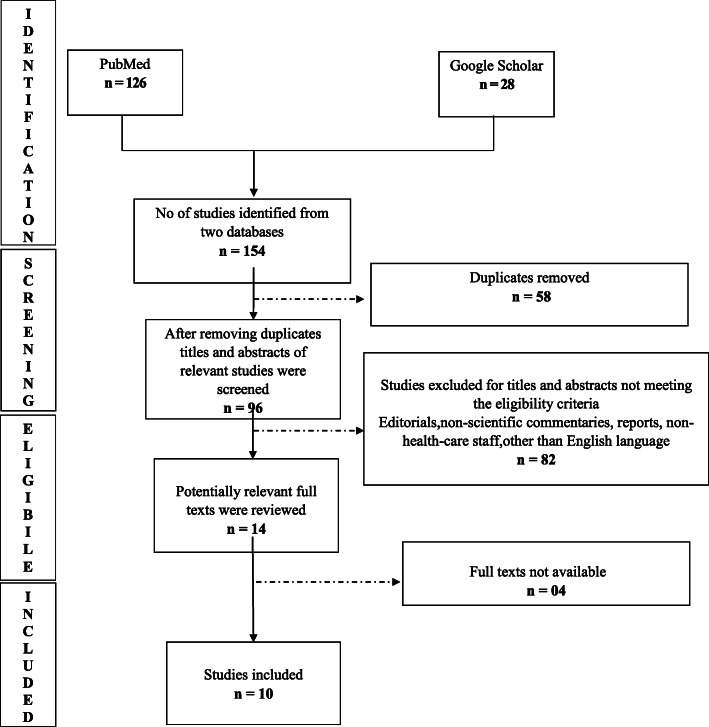
BACKGROUND: Coronavirus disease (COVID-19) pandemic has spread to 198 countries, with approximately 2.4 million confirmed cases and 150,000 deaths globally as of April 18. Frontline healthcare workers (HCWs) face a substantially higher risk of infection and death due to excessive COVID-19 exposure. This review aimed at summarizing the evidence of the physical and mental health impacts of COVID-19 pandemic on health-care workers (HCWs). METHODS: We used the Arksey O'Malley framework to conduct a scoping review. A systematic literature search was conducted using two databases: PubMed and Google Scholar. We found 154 studies, and out of which 10 met our criteria. We collected information on the date of publication, first author's country, the title of the article, study design, study population, intervention and outcome, and key findings, and divided all research articles into two domains: physical and mental health impact. RESULTS: We reviewed a total of 154 articles from PubMed (126) and Google Scholar (28), of which 58 were found to be duplicate articles and were excluded. Of the remaining 96 articles, 82 were excluded after screening for eligibility, and 4 articles did not have available full texts. Ten full-text articles were reviewed and included in this study. Our findings identified the following risk factors for COVID-19-related health impact: working in a high-risk department, diagnosed family member, inadequate hand hygiene, suboptimal hand hygiene before and after contact with patients, improper PPE use, close contact with patients (≥ 12 times/day), long daily contact hours (≥ 15 h), and unprotected exposure. The most common symptoms identified amongst HCWs were fever (85%), cough (70%), and weakness (70%). Prolonged PPE usage led to cutaneous manifestations and skin damage (97%), with the nasal bridge (83%) most commonly affected site. HCWs experienced high levels of depression, anxiety, insomnia, and distress. Female HCWs and nurses were disproportionately affected. CONCLUSION: The frontline healthcare workers are at risk of physical and mental consequences directly as the result of providing care to patients with COVID-19. Even though there are few intervention studies, early data suggest implementation strategies to reduce the chances of infections, shorter shift lengths, and mechanisms for mental health support could reduce the morbidity and mortality amongst HCWs.
Overview
The claims and statistics of this paper haven’t been checked yet.
Free: it reads the open-access text and checks the first 5 claims that cite a source we can check. Create a free account to check every claim.
Integrity signals
Registry
Cites
Statistics
Figures
Verification
Claims the paper makes
The claims and statistics of this paper haven’t been checked yet.
Free: it reads the open-access text and checks the first 5 claims that cite a source we can check. Create a free account to check every claim.
Claims other papers make about this one
Each is checked against this paper’s own text: does it say what the citing paper says it does?
The check wasn’t confident either way, so it gives no verdict — never disputed.
In the citing paper
“Thus, the COVID-19 pandemic acted as a catalyst for the development and adoption by health systems, especially of industrialized countries, of a broad range of telehealth technologies, developing and innovating in new virtual health facilities and telecare platforms to minimize these effects [3,4,5,6,7].”
From Telehealth and COVID-19 Pandemic: An Overview of the Telehealth Use, Advantages, Challenges, and Opportunities during COVID-19 Pandemic (2022) · cites this paper as [4]
Experimental — accuracy not yet measuredIn the citing paper
“Acute stress, including extreme anxiety and resignation symptoms, had already been observed, aggravated by nonoptimal disclosure of information about the pandemic (Marazziti, 2020;Shaukat, Ali & Razzak, 2020;Rossi et al., 2020;Zhang et al., 2020).”
From SECOND LINE VOLUNTEERING IN LOMBARDY COVID-19 EMERGENCY AS A PERSPECTIVE ON MEDICAL EDUCATION AND PSYCHOLOGICAL DISTRESS (2021) · doi:10.36131/cnfioritieditore20210506 · cites this paper as Shaukat, Ali & Razzak, 2020
Self-check
Percentages, sums and reported differences re-computed from the paper’s own numbers.
The self-check needs the paper’s full text.
Citations
Cites
Scoping studies: towards a methodological framework
Arksey, H., & O'Malley, L. (2005) · International Journal of Social Research Methodology · doi:10.1080/1364557032000119616 · Cited by 36,742
An interactive web-based dashboard to track COVID-19 in real time
Dong, E., Du, H., & Gardner, L. (2020) · The Lancet Infectious Diseases · doi:10.1016/s1473-3099(20)30120-1 · Cited by 10,048
Lai, J., Ma, S., Wang, Y., Cai, Z., Hu, J., Wei, N., Wu, J., Du, H., Chen, T., Li, R., et al. (2020) · JAMA Network Open · doi:10.1001/jamanetworkopen.2020.3976 · Cited by 8,015
First case of 2019 novel coronavirus in the United States
Holshue, M. L., DeBolt, C., Lindquist, S., Lofy, K. H., Wiesman, J., Bruce, H., Spitters, C., Ericson, K., Wilkerson, S., Tural, A., et al. (2020) · New England Journal of Medicine · doi:10.1056/nejmoa2001191 · Cited by 6,030
The epidemiology and pathogenesis of coronavirus disease (COVID-19) outbreak
Rothan, H. A., & Byrareddy, S. N. (2020) · Journal of Autoimmunity · doi:10.1016/j.jaut.2020.102433 · Cited by 5,840
Features, Evaluation and Treatment Coronavirus (COVID-19)
Cascella, M., Rajnik, M., Cuomo, A., Dulebohn, S. C., & Napoli, R. D. (2020) · StatPearls · Cited by 5,363
COVID-19 and Italy: what next?
Remuzzi, A., & Remuzzi, G. (2020) · The Lancet · doi:10.1016/s0140-6736(20)30627-9 · Cited by 3,119
Mental health care for medical staff in China during the COVID-19 outbreak
Chen, Q., Liang, M., Li, Y., Guo, J., Fei, D., Wang, L., He, L., Sheng, C., Cai, Y., Li, X., et al. (2020) · The Lancet Psychiatry · doi:10.1016/s2215-0366(20)30078-x · Cited by 2,233
The mental health of medical workers in Wuhan, China dealing with the 2019 novel coronavirus.
Kang, L., Li, Y., Hu, S., Chen, M., Yang, C., Yang, B. X., Wang, Y., Hu, J., Lai, J., Ma, X., et al. (2020) · The Lancet Psychiatry · doi:10.1016/s2215-0366(20)30047-x · Cited by 2,061
Maunder, R., Hunter, J., Vincent, L. H., Bennett, J. P., Peladeau, N., Leszcz, M., Sadavoy, J., Verhaeghe, L. M., Steinberg, R. J., & Mazzulli, T. (2003) · Europe PMC (PubMed Central) · Cited by 1,781
Cited by
Items 301–400 of 890
Fukuda, Y., & Fukuda, K. (2022) · International Journal of Environmental Research and Public Health · doi:10.3390/ijerph19042134 · Cited by 11
“The same is true for educators, as they too deal with the COVID-19 pandemic as frontline workers who seek to guarantee continued education [27].”
BackgroundSilverman, M. E., Nag, S., Kalishman, A., Cox, P., & Mitroff, S. R. (2022) · Journal of American College Health · doi:10.1080/07448481.2022.2080507 · Cited by 10
“…long-term effects of the pandemic on the mental health of frontline workers and vulnerable populations received swift and considerable attention, 3,4 the discussion of the mental health needs of impacted college students remained mostly siloed among parents of students, clinicians, college…”
BackgroundEnculturating, embedding and investing in fundamental care in an academic health science centre
Merkley, J., Ronald, K., Amaral, N., Yang, L., Ginty, L., & Jeffs, L. P. (2022) · Journal of Advanced Nursing · doi:10.1111/jan.15332 · Cited by 8
Cardiovascular disease prevention in the worksite: Where are we?
Biffi, A., Fernando, F., Palermi, S., Sirico, F., Bonatesta, L., Cavarretta, E., D’Ascenzi, F., & Niebauer, J. (2022) · International Journal of Cardiology · doi:10.1016/j.ijcard.2022.08.026 · Cited by 11
Capstick, A., Previdoli, G., Barbosa, A., & Mason, C. (2022) · Journal of Long-Term Care · doi:10.31389/jltc.127 · Cited by 8
Baru, A., Degefa, N., Aschalew, Z., Kassa, M., Feleke, T., Gura, G., & Wambete, S. N. (2022) · PLoS ONE · doi:10.1371/journal.pone.0275248 · Cited by 10
“This mainly stemmed from the bad stories and news they heard about COVID-19 [48, 49].”
BackgroundTuna, Ö., & Ermiş, Ç. (2022) · Psychiatria Danubina · doi:10.24869/psyd.2022.564 · Cited by 10
“Although mental support programs are recommended to alleviate these symptoms (Shaukat et al. 2020), they are rarely applied in real-world settings.”
BackgroundOccupational accidents in healthcare workers: a bibliometric analysis in Scopus database 2010-2019
Cruz-Ausejo, L., Vera-Ponce, V. J., Torres-Malca, J. R., & Quezada, J. C. R. (2022) · Revista Brasileira de Medicina do Trabalho · doi:10.47626/1679-4435-2022-724 · Cited by 10
Kotera, Y., Liu, G., Colman, R. D., Young, H., Ozaki, A., Miyatake, H., Kosaka, M., & Tanimoto, T. E. (2023) · Current Psychology · doi:10.1007/s12144-023-04444-0 · Cited by 9
“…stigmatisation and discrimination (Hong et al., 2021; Kotera, 2021; Kotera, Maxwell-Jones, et al., 2021; Stubbs & Achat, 2022 ), and subject to the effects of stress, including post-traumatic stress, on their physical and mental health (Kotera, Taylor, et al., 2021; Shaukat et al., 2020).”
Impact of the coronavirus disease-2019 pandemic on Veterans Health Administration Sleep Services
Sico, J. J., Koo, B. B., Perkins, A. J., Burrone, L., Sexson, A. E., Myers, L. J., Taylor, S., Yarbrough, W. C., Daggy, J., Miech, E. J., et al. (2023) · SAGE Open Medicine · doi:10.1177/20503121231169388 · Cited by 10
“, inlab diagnostic studies, ambulatory home sleep testing, using PAP) within an individual VHA facility, including cessation of previously offered programs and initiation of new sleep services; (2) how the pandemic affected members of the sleep service; (3) precautions taken to decrease the likelihood of COVID-19 tran…”
BackgroundKitamura, Y., & Nakai, H. (2023) · Nursing Reports · doi:10.3390/nursrep13020069 · Cited by 8
“The COVID-19 pandemic has had a substantial effect on the physical and mental health of healthcare workers who treat patients [8,9].”
BackgroundDoan, L. P., Tran, B. X., Auquier, P., Boyer, L., Fond, G. B., Ngo, T. V., Vu, M. N. L., Vu, G. T., Hoang, T. P., Ho, P. T., et al. (2023) · Journal of Global Health · doi:10.7189/jogh.13.06022 · Cited by 12
“Impacts on health care workers include amplified risks of infection, threats to health status, lack of personal protective equipment, and shortage of financial resources [3,4].”
BackgroundWyszynski, D. F., Hernández–Díaz, S., Gordon-Dseagu, V., Ramiro, N., & Koenen, K. C. (2021) · The Journal of Maternal-Fetal & Neonatal Medicine · doi:10.1080/14767058.2021.1936489 · Cited by 8
Juan, A. D., & Seguí‐Crespo, M. (2021) · Archivos de Prevención de Riesgos Laborales · doi:10.12961/aprl.2021.24.03.08 · Cited by 16
“Así, los profesionales sanitarios pueden presentar altos niveles de ansiedad, depresión, insomnio, burnout o incluso estrés postraumático(5-7).”
Alaradi, A., Irum, S., Ebrahim, N., Mohamed, F. M. J., Hazeem, F. M. J., & Ashfaq, M. (2021) · International Journal of Online and Biomedical Engineering (iJOE) · doi:10.3991/ijoe.v17i09.24791 · Cited by 8
Alnazly, E. K., & Hjazeen, A. A. (2021) · The Open Nursing Journal · doi:10.2174/1874434602115010262 · Cited by 8
Gast, S., Barroso, J. V., Blanchard, F. A., Campbell, A. A., Carter, S. J., Clark, E. V., Hilton, R., Branson, R. D., Greenberg, S., & Kleinpell, R. M. (2022) · American Journal of Critical Care · doi:10.4037/ajcc2022784 · Cited by 13
Santos, J. A. A. D. L. (2022) · Acta Medica Philippina · doi:10.47895/amp.vi0.5137 · Cited by 12
“32 Physically, most of the nurses experienced fever, cough, and body weakness as a consequence of getting infected, in addition to skin damage from PPE use.”
BackgroundPrzyłęcki, P., Wieczorkowska, M., Pawlak, A., Cedrowska-Adamus, W., & Gulczyńska, E. (2023) · Frontiers in Public Health · doi:10.3389/fpubh.2023.1187312 · Cited by 9
Refocusing on work-based hazards for the anaesthesiologist in a post-pandemic era
Nelson, O. K., Greenwood, E., Allan F. Simpao, M., & Matava, C. T. (2023) · BJA Open · doi:10.1016/j.bjao.2023.100234 · Cited by 9
“55,57 The impacts on mental health related to the ongoing exposure to any pathogen and the PPE required is significant.”
BackgroundAljabery, M. A., Elshatarat, R. A., Sawalha, M., Hmaimat, N. A., Al-blooshi, H., Alshehhi, M., Ibrahim, A. M., Zaghamir, D. E. F., Saleh, Z. T., & Saifan, A. R. (2024) · Journal of Education and Health Promotion · doi:10.4103/jehp.jehp_1734_23 · Cited by 7
Hakim, M., Afaq, S., Ali, F., Jawad, M., Islam, S. U., Rose, M. A., Khan, M. S., & Haq, Z. U. (2021) · INQUIRY The Journal of Health Care Organization Provision and Financing · doi:10.1177/00469580211067475 · Cited by 7
“Based on our analysis, we feel that there is a need to advise the HCPs about measures to deal with mental distress associated with COVID-19.(10,12) In our study, it was found that most of the respondents 61.”
InfluentialLearning from adversity: Occupational therapy staff experiences of coping during Covid-19
Ingham, L., Jackson, E., & Purcell, C. (2022) · British Journal of Occupational Therapy · doi:10.1177/03080226211064490 · Cited by 8
“Healthcare staff were at increased occupational risk of contracting COVID-19 (Shaukat et al., 2020), although the physical health risks of serious illness or death were reported to be equivalent to the general population (Cook et al., 2020).”
Poudyal, S., Sharma, K., & Ghimire, S. (2022) · Journal of Chitwan Medical College · doi:10.54530/jcmc.1070 · Cited by 9
Han, R., Hahn, E., Done, S. J., Pun, C., Shivji, S., & Lu, F. (2022) · Archives of Pathology & Laboratory Medicine · doi:10.5858/arpa.2021-0501-ep · Cited by 11
The impact of COVID-19 on relative health outcomes among healthcare workers in Canada
Tiagi, R. (2022) · Healthcare Management Forum · doi:10.1177/08404704221112288 · Cited by 7
Zaman, Z., Shanjabin, S., & Islam, S. A. (2023) · International Journal of Human Resource Studies · doi:10.5296/ijhrs.v13i1.20492 · Cited by 7
Martin, P., Hulme, A., Fallon, T., Kumar, S., McGrail, M. R., Argus, G., Gurney, T., & Kondalsamy‐Chennakesavan, S. (2023) · Australian Journal of Rural Health · doi:10.1111/ajr.12969 · Cited by 7
Shenkman, R., Diewald, L. K., Murray, M. B., & Oliver, T. L. (2023) · Nutrients · doi:10.3390/nu15234857 · Cited by 10
“It has been observed that HCWs experienced a higher level of psychological distress compared to the general population, resulting in increased rates of depression, stress, anxiety, emotional and physical exhaustion (i.e., burnout), and sleep disturbances [10,37–40].”
BackgroundÖnal, L. (2023) · Herkes için Spor ve Rekreasyon Dergisi · doi:10.56639/jsar.1388588 · Cited by 9
Husted, M., & Dalton, R. (2021) · Health Psychology and Behavioral Medicine · doi:10.1080/21642850.2021.1874956 · Cited by 10
Prevention behavior of community for spreading COVID-19 in West Kalimantan Province, Indonesia
Suwarni, L., Selviana, S., Mawardi, M., Marlenywati, M., Nilasari, N., Suyitno, S., & Maretalinia, M. (2021) · International Journal of Public Health Science (IJPHS) · doi:10.11591/ijphs.v10i4.20775 · Cited by 7
“The people most vulnerable to COVID-19 are people who have close contact with COVID-19 patients, including caring for COVID-19 patients [25].”
BackgroundOsteopathic interventions via telehealth in a pediatric population: a retrospective case series
Kramer, J. L., & Asis, K. D. (2021) · Journal of Osteopathic Medicine · doi:10.1515/jom-2021-0124 · Cited by 8
“During the coronavirus disease 2019 (COVID-19) pandemic there was concern that such contact could increase the risk of viral exposure and transmission either to or from a patient [1, 2], in addition to the risk of exposure to other patients in amedical office.”
BackgroundThomson, O. P., MacMillan, A., Draper‐Rodi, J., Vaucher, P., Ménard, M., Vaughan, B., Morin, C., Álvarez, G., Sampath, K. K., Cerritelli, F., et al. (2021) · International journal of osteopathic medicine · doi:10.1016/j.ijosm.2021.02.002 · Cited by 8
Kim, H. J., & Lee, G. H. (2021) · Journal of Yeungnam Medical Science · doi:10.12701/yujm.2021.01361 · Cited by 7
“Previous studies on the impact of COVID-19 on the mental health of HCWs have indicated that frontline HCWs who provide direct care to COVID-19 patients are at a higher risk of distress and burnout [26,27].”
BackgroundShrestha, N., Gurung, N., Banstola, S., Sah, S. K., Koirala, S., & Sharma, B. (2021) · Journal of Gandaki Medical College-Nepal · doi:10.3126/jgmcn.v14i2.37158 · Cited by 8
“The final scores were categorized into four levels: “Likely to be well (10-19)”, “Likely to have the mild disorder (20-24)”, Likely to have a moderate disorder (25-29), Likely to have a severe disorder (30-50).”
BackgroundMental health linked with work life balance of working women
Sharma, M., & Kapur, S. (2022) · International Journal of Health Sciences · doi:10.53730/ijhs.v6ns4.6575 · Cited by 6
“[13] Hye Kyoung Kim used data collected from 293 workers in Korea and performed hypothesized model and hypothesis by regression analysis and structured equation modelling.”
MethodZeb, H., Inayat, S., & Younas, A. (2022) · Nursing and Health Sciences · doi:10.1111/nhs.13012 · Cited by 7
“SARS-COV-2 had incapacitating physical, emotional, ethical, and organizational challenges for health care professionals and health care organizations (Greenberg et al., 2020; Shaukat et al., 2020).”
BackgroundInfluentialBerglund, A. M., Raugh, I. M., Macdonald, K. I., James, S. H., Bartolomeo, L. A., Knippenberg, A. R., & Strauss, G. P. (2023) · European Archives of Psychiatry and Clinical Neuroscience · doi:10.1007/s00406-023-01551-8 · Cited by 6
Barpanda, S., & Saraswathy, G. (2023) · International Journal of Healthcare Management · doi:10.1080/20479700.2022.2157931 · Cited by 6
“Results suggest that the HCWs had signi fi cant levels of post-traumatic depressive illness, anxiety, tension, fatigue, and other negative emotions [46].”
BackgroundHe, C., Igwe, N., Damian, C., Feder, A., Feingold, J. H., Ripp, J., Pietrzak, R. H., Peccoralo, L. A., Hurtado, A., & Chan, C. (2023) · General Hospital Psychiatry · doi:10.1016/j.genhosppsych.2023.09.003 · Cited by 9
Harlianty, R. A., Mukhlis, H., Milindasari, P., Palupi, R., Astuti, T., Junilia, E., & Madila, L. (2023) · Journal of Spirituality in Mental Health · doi:10.1080/19349637.2023.2264885 · Cited by 8
“…isolation and quarantine, the frustration at the inability to help patients, and witnessing the patient’s suffering or death as well as work-related stigma as the forefront of health (Aditya et al., 2022; Galbraith, Boyda, McFeeters, & Hassan, 2020; Shah et al., 2022; Shaukat, Ali, & Razzak, 2020).”
Zhang, M., Bo, M., Wang, H., Fan, W., Kong, L., Zhou, C., & Zhang, Z. (2024) · Frontiers in Psychiatry · doi:10.3389/fpsyt.2024.1323111 · Cited by 7
Baatiema, L., Aikins, A. D., Koram, K. A., Kunfah, S. M. P., Allen, L. N., Abímbọ́lá, Ṣ., & Kruk, M. E. (2024) · BMJ Open · doi:10.1136/bmjopen-2023-078957 · Cited by 9
“In the wake of the COVID-19 pandemic, frontline health workers (first responders to COVID-19 while triaging patients) have faced unprecedented challenges characterised by burnout, 1 2 psychological distress 3–5 and confirmed cases of COVID- 19-related infections and deaths.”
BackgroundA Mixed‐Methods Study to Evaluate Depression and Anxiety Among Undergraduate Nursing Students
Yan, L., Xie, M., & Yang, Q. (2024) · Journal of Psychiatric and Mental Health Nursing · doi:10.1111/jpm.13117 · Cited by 8
Caring for healthcare providers in COVID-19.
Crittenden, P. M., Spieker, S. J., & Landini, A. (2021) · American Journal of Orthopsychiatry · doi:10.1037/ort0000533 · Cited by 10
Sridevi, P. N., Selvameena, M., Priya, S., Saleem, M. T. S., & Saran, R. (2021) · Clinical Epidemiology and Global Health · doi:10.1016/j.cegh.2021.100928 · Cited by 6
Adapting Civility Education in an Academic-Practice Partnership
Opsahl, A. G., Embree, J. L., Howard, M. S., Davis–Ajami, M. L., Herrington, C. S., Wellman, D. S., & Hodges, K. T. (2021) · The Journal of Continuing Education in Nursing · doi:10.3928/00220124-20211108-09 · Cited by 6
Born, J., & Frank, C. (2022) · BMC Health Services Research · doi:10.1186/s12913-022-07850-5 · Cited by 6
“Background Similar to their civilian counterparts, military health care providers (HCPs) work under physically and mentally demanding conditions [1] and are at increased risk of experiencing mental and physical health issues [2, 3].”
BackgroundLinares, J. J. G., Jurado, M. D. M. M., Fuentes, M. D. C. P., Herrera‐Peco, I., Martínez, Á. M., & Martín, A. B. B. (2022) · Healthcare · doi:10.3390/healthcare10081457 · Cited by 7
“This exposure carries significant risk of affecting their physical health, as shown by the high percentage of healthcare workers infected, as high as 14% in Spain, and 20% in Italy [16].”
BackgroundSoomar, S. M., Soomar, S. M., Khan, M., Moin, G., & Azam, I. (2022) · BMJ Open · doi:10.1136/bmjopen-2022-064096 · Cited by 6
RetractedJerusalema, a Heritage Day Song of the COVID-19 Pandemic
Modise, J. M. (2022) · Religions · doi:10.3390/rel14010045 · Cited by 6
COVID-19–Related Medical Vulnerability and Mental Health Outcomes Among US First Responders
Lebeaut, A., Zegel, M., Leonard, S. J., Healy, N. A., Anderson-Fletcher, E. A., & Vujanovic, A. A. (2023) · Journal of Occupational and Environmental Medicine · doi:10.1097/jom.0000000000002811 · Cited by 8
“during the pandemic.(14,15) As such, investigating the effect of medical vulnerability to COVID-19 on the mental health of first responders may serve to better inform our understanding of the psychological impact of the pandemic on this at-risk group, thus informing relevant policy efforts going forward.”
BackgroundAyat, M., Qureshi, S. M., Malikah, M., & Kang, C. (2023) · Journal of Engineering Design and Technology · doi:10.1108/jedt-01-2023-0033 · Cited by 8
Hummel, S., Michelsen, I., Zafar, A., Moritz, S., Benoy, C., Lemogne, C., de Almeida, R. M. R., Losada, R., Ribeiro, Ó. M., Frisardi, V., et al. (2023) · JMIR Public Health and Surveillance · doi:10.2196/45664 · Cited by 6
“The negative impact of mental health on HCPs due to COVID-19 has already been proven [17,18], whereby nurses and frontline HCPs were particularly strained psychologically.”
InfluentialExploring factors influencing depression among Polish nurses during the COVID-19 pandemic
Rachubińska, K., Pańczyk, M., Sygut, M., Ustianowski, P., Grochans, E., & Cybulska, A. M. (2023) · Frontiers in Public Health · doi:10.3389/fpubh.2023.1272082 · Cited by 6
Exploring Job Stress Among Public Health Workforce in Northeastern Malaysia
Wahab, A. T. A., Hairon, S. M., Shafei, M. N., Ibrahim, M. I., & Mahmud, N. (2023) · Cureus · doi:10.7759/cureus.49083 · Cited by 9
“Based on Karasek's demand-control-support model, low decision latitude will lead to job stress when the psychological job demand is high [10].”
MethodSunawari, A. L. A., Khalil, A., Idris, M. M., & Mokhtar, A. (2023) · International Journal of Islamic Thought · doi:10.24035/ijit.24.2023.266 · Cited by 8
Managing Talent Among Healthcare Human Resource: Strategies for a New Normal
Aggarwal, D., Chaturvedi, V., Ramachandran, A., & Singh, T. (2024) · Journal of Health Management · doi:10.1177/09720634231218769 · Cited by 9
“…the loss of lives among family, friends and colleagues and in the workplace, and uncertainty regarding the end of the pandemic resulted in mental stress and burnout among the healthcare workers and professionals (De Kock et al., 2021; Health Workforce Department, 2021; Shaukat et al., 2020).”
BackgroundThe value of work for doctors in Pakistan: towards a framework for ensuring decent work
Hussain, A., Franken, E. H., Bentley, T. A., & Jogulu, U. D. (2024) · Labour & Industry a journal of the social and economic relations of work · doi:10.1080/10301763.2024.2356366 · Cited by 7
“(Atif and Malik 2020; Shaukat et al. 2020).”
Shaukat, N., Ali, D. M., Barolia, R., Hisam, B., Hassan, S., Afzal, B., Khan, A. S., Angez, M., & Razzak, J. (2022) · BMC Health Services Research · doi:10.1186/s12913-022-08053-8 · Cited by 8
Self-citationSo, S., Wang, T. Q., Yu, B. E., & Malvankar‐Mehta, M. S. (2023) · European Journal of Mental Health · doi:10.5708/ejmh.18.2023.0003 · Cited by 7
Asad, M., Alenezi, A., Alsalowly, M. N., Asdaq, S. M. B., Alamri, A. S., Alsanie, W. F., Alhomrani, M., Mohzari, Y. A., Alrashed, A. A., Shammakhi, I. N., et al. (2021) · Indian Journal of Pharmaceutical Education and Research · doi:10.5530/ijper.55.3s.170 · Cited by 7
Jiménez-García, S., Juan, A. D., Pérez‐Cañaveras, R. M., & Vizcaya-Moreno, M. F. (2022) · International Journal of Environmental Research and Public Health · doi:10.3390/ijerph19084856 · Cited by 6
Trends in Workplace-Related Eye Injuries in the United States From 2011 Through 2020
Patel, A., Berkowitz, S. T., Sridhar, J. S., Durrani, A. K., & Patel, S. N. (2022) · Journal of VitreoRetinal Diseases · doi:10.1177/24741264221117418 · Cited by 5
Taubert, F., Schmid, P., Holford, D. L., Verger, P., Fasce, A., Karlsson, L. C., Soveri, A., Lewandowsky, S., & Betsch, C. (2024) · Vaccine X · doi:10.1016/j.jvacx.2024.100560 · Cited by 6
“Vaccine hesitancy among physicians is of particular concern because unvaccinated physicians are not only putting themselves at risk, but, because of their close contact with patients who may be contagious, physicians can be a critical point of pathogen transmission in nosocomial infections [13].”
BackgroundPanda, S., Rajasri, S., Sahoo, S. L., Manoranjan, R., & Patra, R. C. (2025) · Experimental Parasitology · doi:10.1016/j.exppara.2025.108913 · Cited by 6
Ofori, F. N. K. (2021) · Archives of Business Research · doi:10.14738/abr.93.9869 · Cited by 5
KESEHATAN MENTAL PADA PETUGAS KESEHATAN YANG MENANGANI PASIEN COVID-19: A SYSTEMATIC REVIEW
Ichwanhaq, S. S. (2021) · Jurnal EMPATI · doi:10.14710/empati.2021.31279 · Cited by 6
Simjee, Y., Mncwabe, Z., Sindhrajh, K., Khan, R., Seedat, M., Xulu, L., Zondi, S., & Rampersad, N. (2021) · African vision and eye health · doi:10.4102/aveh.v80i1.652 · Cited by 5
Identifying positive change within the NHS as a result of the COVID–19 pandemic
Barr-Keenan, R., Fay, T., Radulovic, A., & Shetty, S. (2021) · Future Healthcare Journal · doi:10.7861/fhj.2021-0079 · Cited by 5
Snoubar, Y., & Zengin, O. (2022) · Frontiers in Psychology · doi:10.3389/fpsyg.2022.985202 · Cited by 6
“Social workers who work in emergency rooms may be more vulnerable to these effects, as they may experience anxiety and fear of contracting the disease (Shaukat et al., 2020).”
BackgroundUsing PhotoVoice to understand mindfulness in health care practitioners
Osman, I., & Singaram, V. S. (2022) · Health SA Gesondheid · doi:10.4102/hsag.v27i0.1942 · Cited by 7
Original Research: COVID-19 Vaccine Hesitancy Among Southern California Nurses
Roberts, L. R., Dubov, A., Distelberg, B. J., Peteet, B. J., Abdul‐Mutakabbir, J. C., Montgomery, S., Patel, P., & Chrissian, A. A. (2022) · AJN American Journal of Nursing · doi:10.1097/01.naj.0000892492.43587.5f · Cited by 5
“Another systematic review examining evidence of COVID-19’s impact on health care workers found that high levels of depression, anxiety, distress, fear, and insomnia disproportionately affected nurses.(10) Clearly, nurses need protective interventions to help them through this ongoing pandemic; vaccination is one such…”
Hesitation about coronavirus vaccines in healthcare professionals and general population in Spain
Saigí-Rubió, F., Eguia, H. A., Espelt, A., Macip, S., & Bosque‐Prous, M. (2022) · PLoS ONE · doi:10.1371/journal.pone.0277899 · Cited by 7
Nguyen, H. T., Hoang, T. L., Nguyen, C. C., Le, T. D., & Nguyen, T. V. (2023) · PLoS ONE · doi:10.1371/journal.pone.0286367 · Cited by 6
“The increased burden of psychological disorders may be due to the fear of COVID-19, forced adaptation of novel daily behaviors to aggressive measures, barriers to social support and healthcare access, limited contact, feelings of loneliness, loss of income, and decreased physical outdoor activities during the pandemic…”
BackgroundMahfouz, M. S., Osman, S. A., Mohamed, B. A., Saeed, E. A. M., Ismaeil, M. I., Elkhider, R. A. A., & Orsud, M. A. (2023) · International Journal of Public Health · doi:10.3389/ijph.2023.1605991 · Cited by 5
Pacheco, T., Coulombe, S., & Kocovski, N. L. (2024) · International Journal of Applied Positive Psychology · doi:10.1007/s41042-023-00142-1 · Cited by 5
“This finding is reminiscent of previous literature showing that higher risk or exposure to a patho-gen is related to poorer well-being (e.g., Shaukat et al., 2020 ).”
An Organizational Leadership Development Approach to Support Health Worker Mental Health
Schwatka, N. V., Burden, M. A., & Dyrbye, L. N. (2024) · American Journal of Public Health · doi:10.2105/ajph.2023.307407 · Cited by 12
Parsons, J. A., & Romanis, E. C. (2024) · Social Science & Medicine · doi:10.1016/j.socscimed.2024.116835 · Cited by 7
Bourassa, K. A., Rohr, J. C., Bartek, N., Miller, S. M., Wood, S. C. J., Vasquez, N. N., Head, J., Robert-Ibarra, S. S. S., Moore, K., Marder, K., et al. (2024) · Journal of Psychiatric Practice · doi:10.1097/pra.0000000000000782 · Cited by 7
School-Based Occupational Therapy during COVID-19 Pandemic
Katsiana, A., & Galanakis, M. (2021) · Psychology · doi:10.4236/psych.2021.121009 · Cited by 6
Javed, S., & Batool, N. (2021) · Humanities & Social Sciences Reviews · doi:10.18510/hssr.2021.9228 · Cited by 5
Tonole, R., Passos, J. P., Brandão, E. D. S., dos Santos, R., Souza, M. O. D. S. E., & Cardoso, T. C. D. S. F. (2022) · Research Society and Development · doi:10.33448/rsd-v11i5.28695 · Cited by 6
McLean, J., Clark, C., McKee, A., Legue, S., Cocking, J., Lamarche, A., Heerschap, C., Morris, S., Fletcher, T., McKee, C., et al. (2022) · Journal of Multidisciplinary Healthcare · doi:10.2147/jmdh.s361896 · Cited by 5
COVID-19 Vaccine Mandates for Healthcare Professionals in the United States
Rao, R., Koehler, A., Beckett, K. R., & Sengupta, S. (2022) · Vaccines · doi:10.3390/vaccines10091425 · Cited by 5
“The COVID-19 vaccine mandate for HCWs is essential, as many HCWs are subjected to morbidity, resulting in long-term psychological scarring and mortality [16].”
BackgroundMarzouqi, A. M. A., Otim, M. E., Kehail, L. S., & Kamal, R. A. (2023) · BMC Health Services Research · doi:10.1186/s12913-023-09215-y · Cited by 8
“A study by Shaukat and colleagues noted that healthcare workers handling COVID-19 cases are at an increased risk of negative impacts on their physical and mental health [17].”
BackgroundWhelan, J., Hillenaar, M., Fraser, P., Allender, S. E., Jackson, M., Strugnell, C., & Bell, C. (2023) · PLoS ONE · doi:10.1371/journal.pone.0287468 · Cited by 5
“Beyond the immediate disease, there were physical and mental health impacts on health workers [12] and documented impacts on mental health across community members more generally [13].”
BackgroundMakhado, G., Ntuli, B., Zungu, L. I., Thovhogi, N., Mphekgwana, P. M., Lebelo, S. L., Madiba, S., & Modjadji, P. (2024) · International Journal of Environmental Research and Public Health · doi:10.3390/ijerph21030372 · Cited by 7
Sağlık Çalışanlarının Covıd-19 Küresel Salgınına Bakış Açılarının ve Tutumlarının Değerlendirilmesi
YILMAZ, B. K., GÜLER, M. E., & Sürgevil, O. (2021) · Journal of Yaşar University · doi:10.19168/jyasar.862327 · Cited by 8
Hartuti, E. P., Suryani, D., Edwin, V. A., Maretalinia, M., & Suyitno, S. (2021) · Public Health of Indonesia · doi:10.36685/phi.v7i2.402 · Cited by 6
Withiel, T., Barson, E., Ng, I., Segal, R., Williams, D. L., Krieser, R. B., Lee, K., Mezzavia, P. M., Sindoni, T., Chen, Y., et al. (2021) · JMIR Perioperative Medicine · doi:10.2196/27166 · Cited by 6
“Unsurprisingly, an increasing number of quantitative studies have described elevated incidence of depression, anxiety, insomnia, and distress among HCWs exposed to COVID-19 through their work [3,7-9].”
BackgroundBabu, L. S., Pillai, D. M. J., & Janardhanan, K. A. (2021) · Cogent Psychology · doi:10.1080/23311908.2021.1978635 · Cited by 5
“There is a great chance for healthcare workers in developing both physical and mental health-associated problems due to occupational exposure with COVID-19 patients (Shaukat et al., 2020).”
BackgroundKwon, C., & Lee, B. (2021) · Healthcare · doi:10.3390/healthcare9101320 · Cited by 6
“In the early stage of the pandemic, the lack of personal protective equipment (PPE), undiscovered etiology, strict isolation, high-intensity work, insufficient rest, fear of infection, and lack of a vaccine were major stressors for them [2,3].”
BackgroundAdams, G. C., Reboe-Benjamin, M., Alaverdashvili, M., Le, T., & Adams, S. (2023) · International Journal of Environmental Research and Public Health · doi:10.3390/ijerph20075259 · Cited by 5
“Besides the strain of caring for patients during the pandemic, physicians faced the uncertainty of becoming sick and dying themselves [7,18].”
BackgroundJin, J. W., Smith, K., Helminiak, A., John, V. P., & Wu, H. E. (2023) · The International Journal of Psychiatry in Medicine · doi:10.1177/00912174231152575 · Cited by 4
“Hence, residency programs have increasingly prioritized resident wellness to mitigate further deterioration of mental health.(15) Generally, residents are allocated protected time and wellness days to address both personal and professional needs.”
BackgroundČerne, M., & Aleksić, D. (2024) · Frontiers in Psychology · doi:10.3389/fpsyg.2023.1042397 · Cited by 6
Yunus, A., Zhou, L., Addai‐Dansoh, S., Tackie, E. A., Agyeiwaa, O. E., & Gbolo, S. S. (2024) · Heliyon · doi:10.1016/j.heliyon.2024.e34861 · Cited by 7
“For instance, a recent scoping review conducted by Shaukat, Ali and Razzak [39] highlighted the physical and mental health impact of COVID-19 on healthcare workers.”
Wang, J., Yang, Z., Lei, Y., Peng, T., Long, T., Liu, J., Li, H., Yang, J., & Miao, L. (2025) · Land · doi:10.3390/land14030575 · Cited by 5
Смирнов, В. С., Leneva, I. A., Kudryavtseva, T. A., Файзулоев, Е. Б., Андреевич, З. В., Викторович, П. С., Павловна, К. Н., Gracheva, A. V., & Korchevaya, E. R. (2021) · Antibiot Khimioter = Antibiotics and Chemotherapy · doi:10.37489/0235-2990-2021-66-5-6-4-10 · Cited by 4
Metadata
- Authors
- Shaukat, N., Ali, D. M., & Razzak, J.
- Affiliations
- Aga Khan University (PK)
- Corresponding author
- Shaukat, Natasha
- Venue
- International Journal of Emergency Medicine
- Published
- 2020-07-20
- Volume
- 13
- Issue
- 1
- Pages
- 40-40
- ISSN
- 1865-1372 (ISSN-L)
- 1865-1380
- PMC
- PMC7370263
- OpenAlex
- W3043065230
- Semantic Scholar
- e25ae2ab02b02aa76bc898097339f711028bc710
- Cited by
- 879
- References
- 38
- Citations by year
- 2026: 27 · 2025: 49 · 2024: 94 · 2023: 155 · 2022: 257 · 2021: 275 · 2020: 22
- FWCI
- 14.04
- Type
- journal article
- Language
- en
- Open access
- gold
- doi.org
- Licence
- cc-by
- creativecommons.org/licenses/by/4.0 (tdm)
- creativecommons.org/licenses/by/4.0 (vor)
- Locations
- International Journal of Emergency Medicine (publishedVersion, cc-by)
- PubMed Central (publishedVersion, cc-by)
- PubMed (publishedVersion)
- eCommons - AKU (Aga Khan University) (submittedVersion, cc-by)
- DOAJ (DOAJ: Directory of Open Access Journals) (submittedVersion, cc-by-sa)
- Topics
- Social Sciences › Psychology › Clinical Psychology › COVID-19 and Mental Health
- Health Sciences › Health Professions › General Health Professions › Healthcare Systems and Challenges
- Health Sciences › Medicine › Clinical Neurology › Long-Term Effects of COVID-19
- Keywords
- COVID-19 pandemic, healthcare workers, occupational exposure, physical health, mental health, depression, anxiety, insomnia, personal protective equipment, hand hygiene, skin damage, nurses, risk factors, infection control
About these checks
Registry, retraction, Cites and statistics results are computed, not judged, with one exception: a printed reference that no index lists is read once by a model before it counts as a citation error. Claims are extracted by a model and kept only when their quote appears verbatim in the text; each cited source is then checked, with a model’s help, for whether it says what the claim relies on. Those verdicts can be wrong — read the claim’s quote and the cited source before relying on one.
Statistics and arithmetic are recomputed, not judged.
Confidence bands are shown only for fields calibrated on our annotated test set. None is calibrated yet, so no band is shown.
What counts as a claim ›How we measure confidence ›How we check this ›
Are you an author, or do you see a problem with this page? Request a review
Data sources
Bibliographic data: Semantic Scholar, OpenAlex, Crossref.
Contains information from the Semantic Scholar Academic Graph Datasets, made available under the ODC Attribution License (ODC-BY 1.0).
Semantic Scholar’s data is described in: Kinney, R., et al. (2023). The Semantic Scholar Open Data Platform. arXiv:2301.10140.
