

Physical and mental health impacts of COVID-19 on healthcare workers: a scoping review
Open accessThe DOI matches its Crossref record; 38 of the 38 references it cites were found in a registry or an index.
Abstract
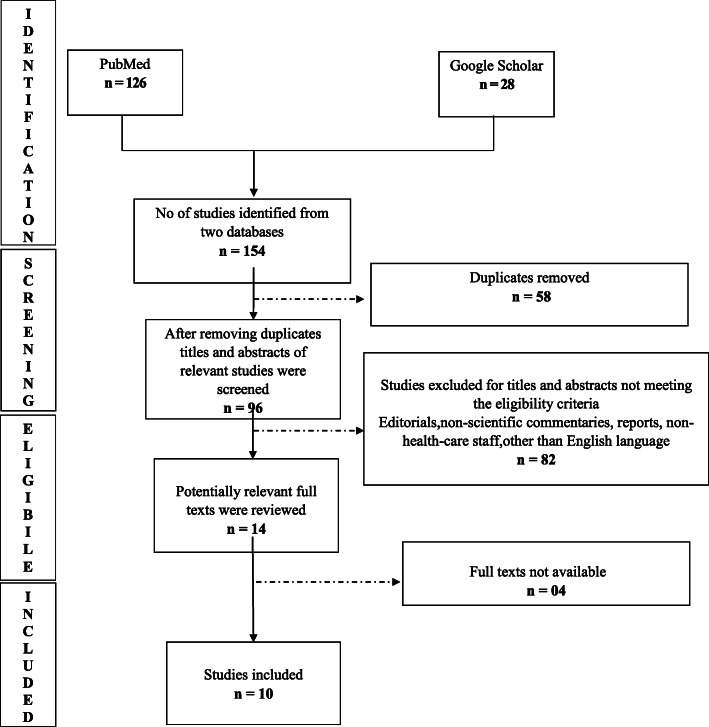
BACKGROUND: Coronavirus disease (COVID-19) pandemic has spread to 198 countries, with approximately 2.4 million confirmed cases and 150,000 deaths globally as of April 18. Frontline healthcare workers (HCWs) face a substantially higher risk of infection and death due to excessive COVID-19 exposure. This review aimed at summarizing the evidence of the physical and mental health impacts of COVID-19 pandemic on health-care workers (HCWs). METHODS: We used the Arksey O'Malley framework to conduct a scoping review. A systematic literature search was conducted using two databases: PubMed and Google Scholar. We found 154 studies, and out of which 10 met our criteria. We collected information on the date of publication, first author's country, the title of the article, study design, study population, intervention and outcome, and key findings, and divided all research articles into two domains: physical and mental health impact. RESULTS: We reviewed a total of 154 articles from PubMed (126) and Google Scholar (28), of which 58 were found to be duplicate articles and were excluded. Of the remaining 96 articles, 82 were excluded after screening for eligibility, and 4 articles did not have available full texts. Ten full-text articles were reviewed and included in this study. Our findings identified the following risk factors for COVID-19-related health impact: working in a high-risk department, diagnosed family member, inadequate hand hygiene, suboptimal hand hygiene before and after contact with patients, improper PPE use, close contact with patients (≥ 12 times/day), long daily contact hours (≥ 15 h), and unprotected exposure. The most common symptoms identified amongst HCWs were fever (85%), cough (70%), and weakness (70%). Prolonged PPE usage led to cutaneous manifestations and skin damage (97%), with the nasal bridge (83%) most commonly affected site. HCWs experienced high levels of depression, anxiety, insomnia, and distress. Female HCWs and nurses were disproportionately affected. CONCLUSION: The frontline healthcare workers are at risk of physical and mental consequences directly as the result of providing care to patients with COVID-19. Even though there are few intervention studies, early data suggest implementation strategies to reduce the chances of infections, shorter shift lengths, and mechanisms for mental health support could reduce the morbidity and mortality amongst HCWs.
Overview
The claims and statistics of this paper haven’t been checked yet.
Free: it reads the open-access text and checks the first 5 claims that cite a source we can check. Create a free account to check every claim.
Integrity signals
Registry
Cites
Statistics
Figures
Verification
Claims the paper makes
The claims and statistics of this paper haven’t been checked yet.
Free: it reads the open-access text and checks the first 5 claims that cite a source we can check. Create a free account to check every claim.
Claims other papers make about this one
Each is checked against this paper’s own text: does it say what the citing paper says it does?
The check wasn’t confident either way, so it gives no verdict — never disputed.
In the citing paper
“Thus, the COVID-19 pandemic acted as a catalyst for the development and adoption by health systems, especially of industrialized countries, of a broad range of telehealth technologies, developing and innovating in new virtual health facilities and telecare platforms to minimize these effects [3,4,5,6,7].”
From Telehealth and COVID-19 Pandemic: An Overview of the Telehealth Use, Advantages, Challenges, and Opportunities during COVID-19 Pandemic (2022) · cites this paper as [4]
Experimental — accuracy not yet measuredIn the citing paper
“Acute stress, including extreme anxiety and resignation symptoms, had already been observed, aggravated by nonoptimal disclosure of information about the pandemic (Marazziti, 2020;Shaukat, Ali & Razzak, 2020;Rossi et al., 2020;Zhang et al., 2020).”
From SECOND LINE VOLUNTEERING IN LOMBARDY COVID-19 EMERGENCY AS A PERSPECTIVE ON MEDICAL EDUCATION AND PSYCHOLOGICAL DISTRESS (2021) · doi:10.36131/cnfioritieditore20210506 · cites this paper as Shaukat, Ali & Razzak, 2020
Self-check
Percentages, sums and reported differences re-computed from the paper’s own numbers.
The self-check needs the paper’s full text.
Citations
Cites
Scoping studies: towards a methodological framework
Arksey, H., & O'Malley, L. (2005) · International Journal of Social Research Methodology · doi:10.1080/1364557032000119616 · Cited by 36,742
An interactive web-based dashboard to track COVID-19 in real time
Dong, E., Du, H., & Gardner, L. (2020) · The Lancet Infectious Diseases · doi:10.1016/s1473-3099(20)30120-1 · Cited by 10,048
Lai, J., Ma, S., Wang, Y., Cai, Z., Hu, J., Wei, N., Wu, J., Du, H., Chen, T., Li, R., et al. (2020) · JAMA Network Open · doi:10.1001/jamanetworkopen.2020.3976 · Cited by 8,015
First case of 2019 novel coronavirus in the United States
Holshue, M. L., DeBolt, C., Lindquist, S., Lofy, K. H., Wiesman, J., Bruce, H., Spitters, C., Ericson, K., Wilkerson, S., Tural, A., et al. (2020) · New England Journal of Medicine · doi:10.1056/nejmoa2001191 · Cited by 6,030
The epidemiology and pathogenesis of coronavirus disease (COVID-19) outbreak
Rothan, H. A., & Byrareddy, S. N. (2020) · Journal of Autoimmunity · doi:10.1016/j.jaut.2020.102433 · Cited by 5,840
Features, Evaluation and Treatment Coronavirus (COVID-19)
Cascella, M., Rajnik, M., Cuomo, A., Dulebohn, S. C., & Napoli, R. D. (2020) · StatPearls · Cited by 5,363
COVID-19 and Italy: what next?
Remuzzi, A., & Remuzzi, G. (2020) · The Lancet · doi:10.1016/s0140-6736(20)30627-9 · Cited by 3,119
Mental health care for medical staff in China during the COVID-19 outbreak
Chen, Q., Liang, M., Li, Y., Guo, J., Fei, D., Wang, L., He, L., Sheng, C., Cai, Y., Li, X., et al. (2020) · The Lancet Psychiatry · doi:10.1016/s2215-0366(20)30078-x · Cited by 2,233
The mental health of medical workers in Wuhan, China dealing with the 2019 novel coronavirus.
Kang, L., Li, Y., Hu, S., Chen, M., Yang, C., Yang, B. X., Wang, Y., Hu, J., Lai, J., Ma, X., et al. (2020) · The Lancet Psychiatry · doi:10.1016/s2215-0366(20)30047-x · Cited by 2,061
Maunder, R., Hunter, J., Vincent, L. H., Bennett, J. P., Peladeau, N., Leszcz, M., Sadavoy, J., Verhaeghe, L. M., Steinberg, R. J., & Mazzulli, T. (2003) · Europe PMC (PubMed Central) · Cited by 1,781
Cited by
Items 201–300 of 890
Bekele, F., Feyissa, D., & Sefera, B. (2021) · Annals of Medicine and Surgery · doi:10.1016/j.amsu.2021.102403 · Cited by 23
“Coronavirus disease (COVID-19) is a new pathogen of virus that was first discovered in Wuhan, China, and which is currently infects human unlike SARS, MERS, and influenza virus [1,2].”
Dental Nurses’ Mental Health in Germany: A Nationwide Survey during the COVID-19 Pandemic
Mekhemar, M. K., Attia, S., Dörfer, C. E., & Conrad, J. (2021) · International Journal of Environmental Research and Public Health · doi:10.3390/ijerph18158108 · Cited by 17
“These include concerns over infecting their families or loved ones with the disease [3], experiencing discrimination by the community as potential virus carriers [4], in addition to extensive workloads and time constraints, despite being critically understaffed or lacking the necessary safety measures [5].”
BackgroundDorn, F., Lange, B., Braml, M., Gstrein, D., Nyirenda, J. L. Z., Vanella, P., Winter, J., Fuest, C., & Krause, G. (2022) · Economics & Human Biology · doi:10.1016/j.ehb.2022.101198 · Cited by 22
Henke, R. M. (2022) · American Journal of Health Promotion · doi:10.1177/08901171221112488 · Cited by 19
Styra, R., Hawryluck, L., McGeer, A., Dimas, M., Lam, E., Giacobbe, P., Lorello, G., Dattani, N., Sheen, J., Rac, V. E., et al. (2022) · Health Promotion and Chronic Disease Prevention in Canada · doi:10.24095/hpcdp.42.10.01 · Cited by 16
Addressing Workplace Stressors Emerging from the Pandemic
Zhang, Y., Woods, E. H., Roemer, E. C., Kent, K. B., & Goetzel, R. Z. (2022) · American Journal of Health Promotion · doi:10.1177/08901171221112488b · Cited by 16
Rydwik, E., Anmyr, L., Regardt, M., McAllister, A. M., Zarenoe, R., Åkerman, E., Orrevall, Y., Bragesjö, M., Dahl, O., Kemani, M. K., et al. (2021) · BMC Sports Science Medicine and Rehabilitation · doi:10.1186/s13102-021-00299-9 · Cited by 16
COVID-19 and the mental health of professionals in the health sector in the UAE: An analytical study
Kooli, C. (2021) · Avicenna · doi:10.5339/avi.2021.9 · Cited by 16
Martin, P., Lizarondo, L. M., Argus, G., Kumar, S., & Kondalsamy‐Chennakesavan, S. (2022) · International Journal of Environmental Research and Public Health · doi:10.3390/ijerph19095555 · Cited by 19
“Recent scoping reviews on the impact of the pandemic on healthcare workers health and wellbeing have highlighted the high levels of anxiety, depression, distress, and insomnia experienced by this group [7,8].”
BackgroundCondições de trabalho e saúde de profissionais da linha de frente na pandemia de covid-19
Alves, L. I. D. N., de Siqueira, G. R., Santos, G. D. S., Soares, A. R. D. S., de Souza, A. I. G., Dantas, D. D. S., & Tenório, A. D. S. (2024) · Saúde em Debate · doi:10.1590/2358-289820241418791p · Cited by 64
Integrated social protection and COVID‐19: rethinking Pacific community responses in Aotearoa
Ratuva, S., Crichton-Hill, Y., Ross, T., Basu, A., Vakaoti, P., & Martin-Neuninger, R. (2021) · Journal of the Royal Society of New Zealand · doi:10.1080/03036758.2020.1861033 · Cited by 16
Ghasemi, F., Zarei, M., Heidarimoghadam, R., & Hosseini, S. M. (2021) · Gene Reports · doi:10.1016/j.genrep.2021.101098 · Cited by 20
Léime, Á. N., & O’Neill, M. (2021) · International Journal of Environmental Research and Public Health · doi:10.3390/ijerph181910060 · Cited by 17
“Common COVID-19 health impacts on healthcare workers internationally include fever, cough, weakness, skin damage due to use of PPE and high levels of depression, anxiety, insomnia and distress [21].”
BackgroundSultan, I. E., Alobaidi, R. A., Sewaid, K. K., Bader, M. U., Al-Muwallad, N. T., & Mohammed, R. A. (2021) · Cureus · doi:10.7759/cureus.19796 · Cited by 16
“The global population is witnessing life-altering challenges due to the COVID-19 pandemic [7].”
BackgroundZhong, Y., Zhao, H., Wang, X., & Ji, J. (2022) · Journal of Nursing Management · doi:10.1111/jonm.13639 · Cited by 17
“Similarly, previous research showed that female nurses were more susceptible to the psychological impact of the COVID-19 crisis than male nurses (De Kock et al., 2021; Shaukat et al., 2020).”
ResultLavoie, B., Bourque, C. J., Côté, A.-J., Rajagopal, M., Clerc, P., Bourdeau, V., Ali, S., Trottier, E. D., Castonguay, V., Fontaine-Pagé, É., et al. (2022) · Canadian Journal of Emergency Medicine · doi:10.1007/s43678-022-00306-z · Cited by 16
Yahemba, D., Chowdhury, S., Olorunfemi, T., Dubukumah, L., David, A., Umunnakwe, C. U., Dalumo, V., Haruna, S., & Dean, L. (2023) · International Health · doi:10.1093/inthealth/ihad005 · Cited by 17
Meher, K., Mushtaq, M., & Fatima, S. (2022) · OMEGA - Journal of Death and Dying · doi:10.1177/00302228221078074 · Cited by 16
“Commonly, in rural settings, screening, diagnostic, and treatment facilities are not satisfactory or up to date and doctors work with less resources for long working hours (Shaukat et al., 2020; Teixeira-Poit et al., 2017).”
BackgroundMelo, G. A. A., Neto, J. C. G. L., Martins, M. G., Pereira, F. G. F., & Caetano, J. Á. (2020) · Escola Anna Nery · doi:10.1590/2177-9465-ean-2020-0311 · Cited by 22
Multilevel and amplified effects of COVID-19 pandemic on health workers
Tran, B. X., Vu, G. T., Latkin, C. A., & Ho, R. (2022) · The Lancet Regional Health - Western Pacific · doi:10.1016/j.lanwpc.2022.100478 · Cited by 17
Varrasi, S., Guerrera, C. S., Platania, G. A., Castellano, S., Pirrone, C., Caponnetto, P., Nicolosi, C., Insanguine, F., Greco, E., Perrone, M., et al. (2023) · Health Psychology Research · doi:10.52965/001c.67961 · Cited by 19
Varela, C., Montero, M., Serrano‐Ibáñez, E. R., Castelo, A. M. D. L. V., & Pulido, A. G. (2023) · Stress and Health · doi:10.1002/smi.3246 · Cited by 15
Dixit, P., Srivastava, S. P., Tiwari, S. K., Chauhan, S., & Bishnoi, R. K. (2024) · Industrial Psychiatry Journal · doi:10.4103/ipj.ipj_45_23 · Cited by 17
Song, W., Ding, Q., Huang, M., Xie, X., & Li, X. (2024) · Journal of Building Engineering · doi:10.1016/j.jobe.2024.108685 · Cited by 21
Ali, P. A., Adam, Z., West, J., Pareek, M., Raza, M., & Iqbal, J. (2020) · Ethnicity and Health · doi:10.1080/13557858.2020.1849568 · Cited by 16
Comelli, A., Focà, E., Sansone, E., Tomasi, C., Albini, E., Quirós-Roldán, E., Tomasoni, L. R., Sala, E., Bonfanti, C., Caccuri, F., et al. (2021) · Microorganisms · doi:10.3390/microorganisms9030488 · Cited by 14
“Moreover, the possible presence of moral injury or post-traumatic stress syndrome occurred in HCWs [32] may have influenced the non-response rate to the questionnaire.”
BackgroundImpact of the COVID-19 pandemic on healthcare workers
Prasad, V. (2021) · International Journal of Research in Medical Sciences · doi:10.18203/2320-6012.ijrms20213644 · Cited by 14
“For front-line caregivers, the concerns about transmitting the virus to family members will need to be addressed.(11)”
BackgroundAruta, J. J. B. R., Almazan, J. U., Alamri, M. S., Adolfo, C. S., & Gonzales, F. (2022) · Current Psychology · doi:10.1007/s12144-022-02828-2 · Cited by 16
“Additionally, the overwhelming number of cases has demanded that nurses report to duty at extended hours, posing a threat to their physical and mental health (Shaukat et al., 2020).”
BackgroundEche, I. J., Eche, I. M., & Aronowitz, T. B. (2022) · Clinical journal of oncology nursing · doi:10.1188/22.cjon.268-274 · Cited by 21
Moral Distress Events and Emotional Trajectories in Nursing Narratives during the COVID-19 Pandemic
Lemmo, D., Vitale, R., Girardi, C., Salsano, R., & Auriemma, E. (2022) · International Journal of Environmental Research and Public Health · doi:10.3390/ijerph19148349 · Cited by 21
“Some studies show positive correlations between anxiety levels, sleep quality, and problem-solving skills [14,15], and high levels of anxiety, depression [16], post-traumatic stress, and emotional exhaustion [17] in nurses involved on the front line of the COVID-19 emergency.”
Ning, L., Jia, H., Yu, J., Gao, S. H., Shang, P., Cao, P., & Yu, X. (2022) · Frontiers in Public Health · doi:10.3389/fpubh.2022.1030808 · Cited by 20
COVID-19 and touch in medical encounters
Pype, P. F., Pype, K., Rowlands, A., George, R., & Devisch, I. (2020) · Patient Education and Counseling · doi:10.1016/j.pec.2020.10.023 · Cited by 17
Mamani-Benito, O. J., Esteban, R. F. C., Ventura‐León, J., Caycho‐Rodríguez, T., Solís, R. F., & Shocosh, D. H. B. (2021) · Salud Mental · doi:10.17711/sm.0185-3325.2021.028 · Cited by 22
“Scientific literature suggests that the COVID-19 pandemic has affected the mental and physical health of large numbers of healthcare workers (Shaukat et al., 2020).”
BackgroundAsaoka, H., Koido, Y., Kawashima, Y., Ikeda, M., Miyamoto, Y., & Nishi, D. (2021) · International Journal of Environmental Research and Public Health · doi:10.3390/ijerph182312474 · Cited by 18
“Mental health has been reported to vary by the occupation of healthcare professionals during the COVID-19 pandemic [17].”
BackgroundPsychological Stress of Nurses During the Covid-19 Pandemic
Oktovin, O., Basit, M., & Peni, M. R. (2021) · KnE Life Sciences · doi:10.18502/kls.v6i1.8613 · Cited by 13
“This condition put nurses at high risk infected COVID-19 [14, 28].”
BackgroundIbigbami, O. I., Akinsulore, A., Opakunle, T., Seun-Fadipe, C. T., Oginni, O. A., Okorie, V. O., Oloniniyi, I. O., Olibamoyo, O., Aloba, O. O., Mapayi, B. M., et al. (2022) · International Journal of Public Health · doi:10.3389/ijph.2022.1604835 · Cited by 17
Resident Mental Health at the Epicenter of the COVID-19 Pandemic
Schwartz, D. A., Connerney, M. A., Davila-Molina, M., & Tummalapalli, S. L. (2020) · Academic Medicine · doi:10.1097/acm.0000000000003768 · Cited by 13
Torrent-Ramos, P., González‐Chordá, V. M., Tudela, D. M., Pejó, L. A., Roig‐Martí, C., Valero‐Chillerón, M. J., & Cervera‐Gasch, Á. (2021) · Nursing Reports · doi:10.3390/nursrep11030051 · Cited by 16
“Doctors and registered nurses were the groups that assessed healthcare quality as worse during this period, probably because they were the professionals who worked in the first healthcare line of attention, and who endured a very heavy physical, psychological, and social load [26].”
BackgroundMental Health Status of Healthcare Workers During the COVID-19 Outbreak: An International Study
Nicolaou, C., Menikou, J., Lamnisos, D., Ļubenko, J., Presti, G., Squatrito, V., Constantinou, M., Papacostas, S., Aydın, G., Chong, Y. Y., et al. (2021) · European Journal of Psychology Open · doi:10.1024/2673-8627/a000010 · Cited by 14
“HCWs, and especially those at the frontline, are susceptible to mental and physical exhaustion and risk of sleep disturbances (Du et al., 2020 ; Lai et al., 2020 ; Lin et al., 2021 ; Shaukat et al. 2020 ; C. Zhang et al., 2020 ).”
BackgroundSavcı, C., Akıncı, A. Ç., & Keles, F. (2021) · Electronic Journal of General Medicine · doi:10.29333/ejgm/11300 · Cited by 14
“In the studies, it has been reported that healthcare professionals experience psychological problems such as anxiety, stress disorder and depression during the COVID-19 pandemic [5,6].”
BackgroundNahidi, S., Li, C., Castillo, C. F. S., Kaufman‐Francis, K., & Shaban, R. Z. (2021) · Infection Disease & Health · doi:10.1016/j.idh.2021.11.001 · Cited by 17
“These findings agree, in most parts, with other studies of other frontline healthcare workers in Australia [24e27] and dentists elsewhere [7,16,46], in which high levels of emotional disturbance, stigmatisation and fear of contagion and infecting family members are reported in relation to the COVID -19 pandemic.”
BackgroundResultImpact of COVID-19 on Oncology Healthcare Providers
Marshall, V. K., Mason, T. M., Chavez, M., Martinez‐Tyson, D., & Bugajski, A. (2022) · Cancer Nursing · doi:10.1097/ncc.0000000000000954 · Cited by 13
Mental health in the Chilean LGBT population in times of COVID-19
Alfonso Urzúa, M., Barrientos, J., Guzmán‐González, M., & Osses, F. U. (2022) · Salud Mental · doi:10.17711/sm.0185-3325.2022.023 · Cited by 15
Gamble, K., Murthy, S., Silverberg, S. L., Gobat, N., & Ritchie, L. M. P. (2022) · BMC Nursing · doi:10.1186/s12912-022-01105-8 · Cited by 22
“Previous research has also shown that pandemics can have a significant psychological, physical, and emotional impact on nurses [5, 8, 10, 12, 23, 24].”
BackgroundResultSleep patterns of US healthcare workers during the first wave of the COVID-19 pandemic
Hassinger, A. B., Breuer, R. K., & Mishra, A. (2021) · Sleep And Breathing · doi:10.1007/s11325-021-02515-9 · Cited by 15
“Unfortunately, these problems are likely magnified by the uncertainties of a once-in-a-century pandemic, including personal risk of infection and transmission to close contacts, shifting professional obligations, and financial instability [7].”
BackgroundMiller, W. R., Malloy, C., Mravec, M., Sposato, M. F., & Groves, D. J. (2022) · Nursing Outlook · doi:10.1016/j.outlook.2022.02.009 · Cited by 19
Wu, C., Lin, H., Lai, S.-Y., Tseng, K.-C., & Hsu, C.-H. (2021) · Healthcare · doi:10.3390/healthcare9060713 · Cited by 19
“Therefore, we believed that helping health care workers to find ways to resist stress in the COVID-19 environment, to preserve the physical and mental health of health care workers, to maintain the employment willingness of health care workers, to stabilize workplace manpower, and to uphold health care quality are imp…”
BackgroundEthics of care and moral resilience in health care practice: A scoping review
Selvakumar, S., & Kenny, B. (2021) · Clinical Ethics · doi:10.1177/14777509211061845 · Cited by 14
“Furthermore, health care during pandemics is delivered within a context of heightened community anxiety and distress.(11) Effective ethical reasoning must adapt within a complex health care system.”
BackgroundFactors Associated with Insomnia and Aggression among Healthcare Workers during COVID-19 Pandemic
Cybulska, A. M., Weymann, A., Rachubińska, K., Grochans, S., Wójcik, G., & Grochans, E. (2023) · International Journal of Environmental Research and Public Health · doi:10.3390/ijerph20021433 · Cited by 15
Lee, S., Yun, Y., Hwang, J.-H., & Jong, S. (2023) · American Journal of Industrial Medicine · doi:10.1002/ajim.23531 · Cited by 12
Zaracena, K. K. R., & Ciabal, L. U. (2022) · International Review of Social Sciences Research · doi:10.53378/352879 · Cited by 11
Jun, Y., Lee, O., & Kim, S. (2023) · Journal of Clinical Nursing · doi:10.1111/jocn.16686 · Cited by 12
Gilin, D. A., Anderson, G. G., Etezad, E., Lee‐Baggley, D., Cooper, A. M., & Preston, R. J. (2023) · Mayo Clinic Proceedings Innovations Quality & Outcomes · doi:10.1016/j.mayocpiqo.2023.09.005 · Cited by 17
Luo, Y., & Sato, Y. (2021) · International Journal of Environmental Research and Public Health · doi:10.3390/ijerph18168745 · Cited by 14
Behnoush, A. H., Ahmadi, N., Mozafar, M., Mirghaderi, P., Azad, A. J., Houjaghan, A. K., Behzad, G., Jahromi, N. A., Zahirian, S., Bazmi, E., et al. (2021) · Iranian Red Crescent Medical Journal · doi:10.32592/ircmj.2022.24.2.1519 · Cited by 11
Choi, E. P. H., Hui, B. P. H., Kwok, J. Y. Y., & Chow, E. P. F. (2022) · Sexual Health · doi:10.1071/sh22058 · Cited by 11
Leigh, J. P., Mizen, S. J., Moss, S. J., Brundin‐Mather, R., de Grood, C., Dodds, A., Honarmand, K., Shah, S., & Mehta, S. (2023) · Canadian Journal of Anesthesia/Journal canadien d anesthésie · doi:10.1007/s12630-022-02377-z · Cited by 13
Kabasinguzi, I., Ali, N., & Ochepo, P. (2023) · BMC Public Health · doi:10.1186/s12889-023-15423-2 · Cited by 13
“*Correspondence: Nasreen Ali Nasreen.Ali@beds.ac.uk Full list of author information is available at the end of the article Method This is a qualitative study conducted between February and May, 2021 in Luton, England.”
BackgroundInfluentialImpact of COVID-19 pandemic on healthcare providers: save the frontline fighters
Al‐Jumaili, A. A., Al-Fatlawi, B. G., Al-Jalehawi, A. K., Al-Hamadani, F. Y., & Alsawad, O. S. (2021) · International Journal of Pharmacy Practice · doi:10.1093/ijpp/riab018 · Cited by 11
“[22] Previous studies have summarized some strategies that could minimize the rate of infection and mortality among HCPs such as: decreasing hours of exposure to infected patients, supplying adequate PPEs and related protective measures, continuous education and training sessions and providing mental health support to…”
BackgroundInfluentialKearney, A., Searl, J. P., Erickson, E., & Doyle, P. C. (2021) · American Journal of Speech-Language Pathology · doi:10.1044/2021_ajslp-20-00325 · Cited by 11
COVID-19 Impact on Resident Mental Health and Well-Being
Jaconia, G. D., Lynch, L. R., Miller, L. K., Hines, R. L., & Pinyavat, T. (2021) · Journal of Neurosurgical Anesthesiology · doi:10.1097/ana.0000000000000806 · Cited by 13
COVID-19 and the economy: job loss and economic shutdown
Olufadewa, I. I., Adesina, M. A., Oladele, R. I., Oladoye, M. J., Akinmuleya, T., & Ogunleye, E. K. (2021) · Medical Research Journal · doi:10.5603/mrj.a2021.0019 · Cited by 11
The Healers Are Broken: A Call for Trauma-Informed Professional Development in Nursing
Gilroy, H. (2021) · Journal for Nurses in Professional Development · doi:10.1097/nnd.0000000000000761 · Cited by 11
“These are just a few examples of the growing evidence of the effect of COVID-19 on healthcare workers’ mental health, and the evidence ismounting that nurses are disproportionately affected (Shaukat et al., 2020).”
BackgroundTaiwo, M. O., Oyekenu, O., Ekeh, F., Dey, A., & Raj, A. (2022) · EClinicalMedicine · doi:10.1016/j.eclinm.2022.101605 · Cited by 11
“44 Lesser hours from female HCWs as a consequence of domestic labor responsibilities can be a particular cost for health care in Africa, where HCW migration is actively occurring to fill HCW shortages around the globe.”
Sharif, N. E., Ahmead, M., & Imam, A. (2022) · Frontiers in Public Health · doi:10.3389/fpubh.2022.947593 · Cited by 13
Korman, M. B., Steinberg, R. J., Gagliardi, L., Stewart, B., Acero, C. L., Davies, J. E., Maunder, R., Walker, T., DasGupta, T., DiProspero, L., et al. (2022) · Healthcare · doi:10.3390/healthcare10101830 · Cited by 13
Aruleba, F., Beach, J. R., & Giddings, G. (2022) · Journal of Medical Regulation · doi:10.30770/2572-1852-108.3.35 · Cited by 10
Misra, P., Mandal, S., Sharma, G., Kant, S., Rai, S., Yadav, K., Sangral, M., & Kardam, P. (2023) · Cureus · doi:10.7759/cureus.43081 · Cited by 15
“Since the COVID-19 outbreak occurred, there was continuous fear among frontline healthcare workers, which had affected their mental and physical health leading to different consequences on their quality of life, and on the healthcare system itself [25].”
BackgroundProfessional Burnout of Medical Workers Before, During and After the Pandemic
Suroegina, A. Y., & Холмогорова, А. Б. (2023) · Journal of Modern Foreign Psychology · doi:10.17759/jmfp.2023120206 · Cited by 14
Psychological distress among South African healthcare workers during the COVID-19 pandemic
Ramlagan, S., Sewpaul, R., Shean, Y., Schmidt, T., North, A., & Reddy, S. P. (2024) · Curationis · doi:10.4102/curationis.v47i1.2477 · Cited by 12
“In addition, similar results were revealed in other studies that also found that HCWs experienced high levels of anxiety, fear, distress, insomnia and depression (Aly et al. 2021; Shaukat, Ali & Razzak 2020).”
ResultCOVID-19 Family Support Team: Providing Person and Family Centered Care During the COVID-19 Pandemic
Burke, C., Hampel, S., Gholson, K. L., Zhang, P., & Rufkhar, B. (2021) · Journal of Social Work in End-of-Life & Palliative Care · doi:10.1080/15524256.2021.1922126 · Cited by 10
Liu, M., Li, N., Cai, X., Feng, X., Wang, R., & Xiong, P. (2021) · Frontiers in Psychiatry · doi:10.3389/fpsyt.2021.708698 · Cited by 13
Oosthuizen, S. J., Bergh, A., Silver, A., Malatji, R., Mfolo, V., & Botha, T. (2022) · African Journal of Primary Health Care & Family Medicine · doi:10.4102/phcfm.v14i1.3034 · Cited by 11
Risk of COVID-19 in healthcare workers working in intensive care setting
Alshamrani, M. M., El‐Saed, A., Arabi, Y. M., Alzunitan, M. A., Farahat, F. M., Bonnie, H. B., Matalqa, M., Othman, F., & Almohrij, S. (2022) · American Journal of Infection Control · doi:10.1016/j.ajic.2022.01.003 · Cited by 10
“3 In relatively few HCWs, this may end up with hospital erable physical and mental challenges during the current coronavirus disease (COVID-19) pandemic.(1) In addition to the traditional community risk, they suffer from additional higher risk of exposure at health admission and even death.”
Bednarz, A., Borkowska-Bierć, M., & Matejun, M. (2021) · International Journal of Environmental Research and Public Health · doi:10.3390/ijerph182212082 · Cited by 14
Sutarto, A. P., Wijayanto, T., & Afiah, I. N. (2021) · Work · doi:10.3233/wor-210922 · Cited by 16
Hasen, A. A., Mohammed, A. A., & Seid, A. A. (2024) · PeerJ · doi:10.7717/peerj.18108 · Cited by 9
“Due to their duty they are vulnerable to COVID-19, and the high contact rate with COVID-19 patients result in stress and depression during the pandemic ( Asnakew, Amha & Kassew, 2021 ; Shaukat, Mansoor Ali & Razzak, 2020 ).”
BackgroundThe Economic and Social Impact of Open Government
OECD, & United Nations Economic and Social Commission for Western Asia (2021) · OECD public governance reviews · doi:10.1787/6b3e2469-en · Cited by 9
Tabassum, F., & Ghosh, N. (2021) · International Journal of Financial Accounting and Management · doi:10.35912/ijfam.v3i3.596 · Cited by 13
“Long duty hours, working in a high-risk department, a lack of PPE, a diagnosed family member, unqualified hand-washing, and poor infection management were all identified as risk factors for healthcare professionals (Shaukat et al., 2020).”
BackgroundHameed, W., Avan, B. I., Feroz, A. S., Khan, B., Fatmi, Z., Jafri, H., Wassan, M. A., & Siddiqi, S. (2022) · BMJ Open · doi:10.1136/bmjopen-2022-065941 · Cited by 10
“Lastly, the study was unable to carry out member checking with study participants, which may have affected the validity of study findings.”
BackgroundImpacts of COVID-19 on career choices in health professionals and medical students
Doan, L. P., Dam, V. A. T., Boyer, L., Auquier, P., Fond, G. B., Tran, B. X., Vu, T. M. T., Do, H., Latkin, C. A., Zhang, M. W., et al. (2023) · BMC Medical Education · doi:10.1186/s12909-023-04328-8 · Cited by 9
“Factors leading healthcare workers to suffer from a COVID-19 health impact include having to work in a high-risk environment, having had a family member diagnosed with COVID-19, having suboptimal hand hygiene, improper use of personal protective equipment, close contact with patients, and long daily contact hours [5].”
BackgroundInfluentialThe Two Sides of the COVID-19 Pandemic
Kumar, R., Srivastava, V., & Nand, K. N. (2023) · COVID · doi:10.3390/covid3120121 · Cited by 16
Impact of COVID-19 pandemic on emergency psychiatry-Millcreek community hospital, Erie, PA
Janoczkin, A., Kiers, S., Edara, N., He, P., & Li, Y. (2021) · Comprehensive Psychiatry · doi:10.1016/j.comppsych.2021.152255 · Cited by 11
Lins-Kusterer, L., de Azevedo, C. F., Netto, E. M., Menezes, M. S., Aguiar, C. V. N., de Azevedo, R. A., Cavalcante, W. C., Sarmento, V. A., & Brites, C. R. (2022) · Applied Research in Quality of Life · doi:10.1007/s11482-022-10117-0 · Cited by 9
COVID-19, Law & Regulation: Rights, Freedoms, and Obligations in a Pandemic
Bennett, B., Freckelton, I. R., & Wolf, G. (2023) · doi:10.1093/oso/9780192896742.001.0001 · Cited by 16
Adeniyi, M. J., Awosika, A., Millis, R. M., & Ige, S. F. (2023) · IntechOpen eBooks · doi:10.5772/intechopen.109148 · Cited by 13
D’Alessandro-Lowe, A. M., Patel, H., Easterbrook, B., Ritchie, K., Brown, A., Xue, Y., Karram, M., Millman, H., Sullo, E., Pichtikova, M., et al. (2024) · European Journal of Psychotraumatology · doi:10.1080/20008066.2023.2299661 · Cited by 14
“…negative mental health outcomes including anxiety, depression, burnout, PTSD, and suicidal ideation among HCWs (Amsalem et al., 2021; D ’ ettorre et al., 2021; Hines et al., 2021; Litam & Balkin, 2021; Marvaldi et al., 2021; Riedel et al., 2022; Shaukat et al., 2020; Zerach & Levi-Belz, 2021).”
BackgroundLeira-Sanmartín, M., Madoz‐Gúrpide, A., Mangado, E. O., & Ibáñez, Á. (2021) · International Journal of Environmental Research and Public Health · doi:10.3390/ijerph18073608 · Cited by 11
“This finding is consistent with the conclusions drawn in numerous previous papers [1,3,15,17,21,22].”
ResultCOVID-19: Implications and considerations for NICU music therapy in Italy, Japan and Colombia
Ettenberger, M., Sgobbi, B., Eguchi, R., Ardila, Y. M. B., Serrano, S. A. T., Bolis, M. E., & Agosti, M. A. (2021) · Music and Medicine · doi:10.47513/mmd.v13i2.798 · Cited by 9
Chupanich, P., Aotprapai, P., Seesophon, S., & Laoraksawong, P. (2024) · Clinical Practice and Epidemiology in Mental Health · doi:10.2174/0117450179327231240924054645 · Cited by 10
Esmaeilbeigy, D., Beiranvand, M. S., & Mohammadipour, F. (2025) · PLoS ONE · doi:10.1371/journal.pone.0321131 · Cited by 12
“Recent studies have also indicated that occupational hazards can lead to an escalation in withdrawal behaviors [14].”
Plasse, M. J. (2020) · Nursing Inquiry · doi:10.1111/nin.12399 · Cited by 8
Miki, A., Lau, M. A., & Moradian, H. (2021) · Journal of Occupational and Environmental Medicine · doi:10.1097/jom.0000000000002248 · Cited by 10
“In 2007, a greater percentage of Canadian healthcare workers reported high stress (45%) than other workers (31%),(3) which was before COVID-19 became an additional stressor that had a significant negative impact on healthcare workers’ stress and mental health.(4) Moreover, work-related stress is linked to a wide range…”
BackgroundNazari, N., Sadeghi, M., Samusenkov, V. O., & Aligholipour, A. (2022) · BMC Psychiatry · doi:10.1186/s12888-022-03690-z · Cited by 9
“Medical personnel in public health situations suffer not only physical and psychological stress but also the threat of prolonged exposure to infectious disease sources [4].”
BackgroundRetractedThe prevalence of undiagnosed anxiety: A national survey
Momin, A., Rodrigues, K., Stead, T. S., Mangal, R. K., & Ganti, L. (2023) · Journal of Affective Disorders Reports · doi:10.1016/j.jadr.2023.100584 · Cited by 19
RetractedEspeleta, H. C., Litvitskiy, N. S., Higgins, K., Ridings, L. E., Bravoco, O., Jones, S., Ruggiero, K. J., & Davidson, T. M. (2023) · Injury · doi:10.1016/j.injury.2023.110922 · Cited by 9
Williams, V., Vos, A. G., Calnan, M., Dlamini, L. M., Haumba, S., Grobbee, D. E., Klipstein‐Grobusch, K., & Otwombe, K. N. (2023) · Public Health in Practice · doi:10.1016/j.puhip.2023.100405 · Cited by 13
Shamon, S., Gill, A., Meadows, L. M., Kruizinga, J., Kaasalainen, S., & Pereira, J. L. (2023) · CMAJ Open · doi:10.9778/cmajo.20220238 · Cited by 10
“29,30 However, to our knowledge, the previously published studies did not describe detailed accounts and experiences of long-term care clinicians working and providing end-of-life care in long-term care homes.”
Abdelaliem, S. M. F., & Boswihi, H. S. S. (2024) · Medicine · doi:10.1097/md.0000000000037479 · Cited by 13
“[9] More importantly, poor mental health affects not just the health of nurses, but also their performance and the quality of patient care.”
BackgroundEngels, L. M. J., Barten, D. G., Boumans, T. J. T., Gaakeer, M. I., Latten, G. H. P., Mehagnoul-Schipper, J., Tapirdamaz, Ö., van Osch, F., & Mortelmans, L. J. M. (2024) · Disaster Medicine and Public Health Preparedness · doi:10.1017/dmp.2024.333 · Cited by 8
“Financial compensation was deemed important only in the case of an influenza epidemic (8 [6-10]) (Table 4).”
Metadata
- Authors
- Shaukat, N., Ali, D. M., & Razzak, J.
- Affiliations
- Aga Khan University (PK)
- Corresponding author
- Shaukat, Natasha
- Venue
- International Journal of Emergency Medicine
- Published
- 2020-07-20
- Volume
- 13
- Issue
- 1
- Pages
- 40-40
- ISSN
- 1865-1372 (ISSN-L)
- 1865-1380
- PMC
- PMC7370263
- OpenAlex
- W3043065230
- Semantic Scholar
- e25ae2ab02b02aa76bc898097339f711028bc710
- Cited by
- 879
- References
- 38
- Citations by year
- 2026: 27 · 2025: 49 · 2024: 94 · 2023: 155 · 2022: 257 · 2021: 275 · 2020: 22
- FWCI
- 14.04
- Type
- journal article
- Language
- en
- Open access
- gold
- doi.org
- Licence
- cc-by
- creativecommons.org/licenses/by/4.0 (tdm)
- creativecommons.org/licenses/by/4.0 (vor)
- Locations
- International Journal of Emergency Medicine (publishedVersion, cc-by)
- PubMed Central (publishedVersion, cc-by)
- PubMed (publishedVersion)
- eCommons - AKU (Aga Khan University) (submittedVersion, cc-by)
- DOAJ (DOAJ: Directory of Open Access Journals) (submittedVersion, cc-by-sa)
- Topics
- Social Sciences › Psychology › Clinical Psychology › COVID-19 and Mental Health
- Health Sciences › Health Professions › General Health Professions › Healthcare Systems and Challenges
- Health Sciences › Medicine › Clinical Neurology › Long-Term Effects of COVID-19
- Keywords
- COVID-19 pandemic, healthcare workers, occupational exposure, physical health, mental health, depression, anxiety, insomnia, personal protective equipment, hand hygiene, skin damage, nurses, risk factors, infection control
About these checks
Registry, retraction, Cites and statistics results are computed, not judged, with one exception: a printed reference that no index lists is read once by a model before it counts as a citation error. Claims are extracted by a model and kept only when their quote appears verbatim in the text; each cited source is then checked, with a model’s help, for whether it says what the claim relies on. Those verdicts can be wrong — read the claim’s quote and the cited source before relying on one.
Statistics and arithmetic are recomputed, not judged.
Confidence bands are shown only for fields calibrated on our annotated test set. None is calibrated yet, so no band is shown.
What counts as a claim ›How we measure confidence ›How we check this ›
Are you an author, or do you see a problem with this page? Request a review
Data sources
Bibliographic data: Semantic Scholar, OpenAlex, Crossref.
Contains information from the Semantic Scholar Academic Graph Datasets, made available under the ODC Attribution License (ODC-BY 1.0).
Semantic Scholar’s data is described in: Kinney, R., et al. (2023). The Semantic Scholar Open Data Platform. arXiv:2301.10140.
