

Physical and mental health impacts of COVID-19 on healthcare workers: a scoping review
Open accessThe DOI matches its Crossref record; 38 of the 38 references it cites were found in a registry or an index.
Abstract
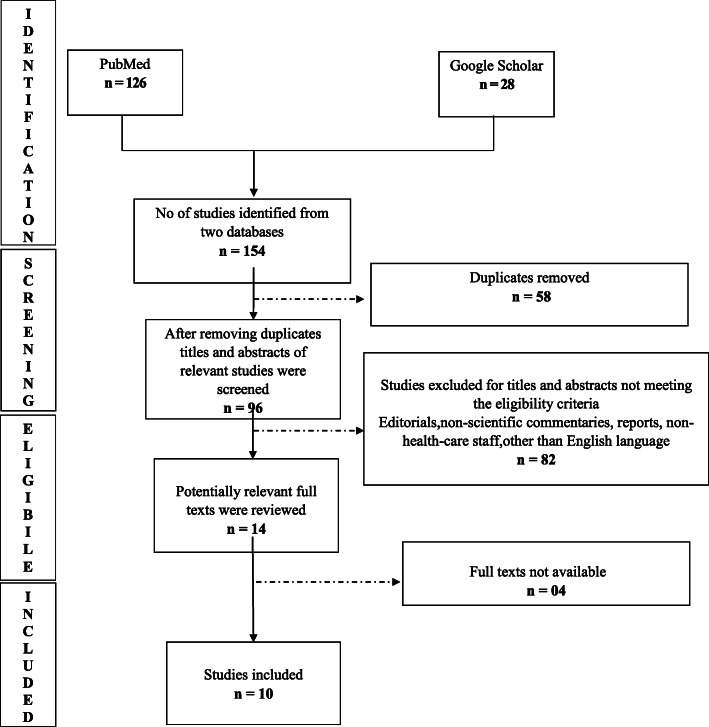
BACKGROUND: Coronavirus disease (COVID-19) pandemic has spread to 198 countries, with approximately 2.4 million confirmed cases and 150,000 deaths globally as of April 18. Frontline healthcare workers (HCWs) face a substantially higher risk of infection and death due to excessive COVID-19 exposure. This review aimed at summarizing the evidence of the physical and mental health impacts of COVID-19 pandemic on health-care workers (HCWs). METHODS: We used the Arksey O'Malley framework to conduct a scoping review. A systematic literature search was conducted using two databases: PubMed and Google Scholar. We found 154 studies, and out of which 10 met our criteria. We collected information on the date of publication, first author's country, the title of the article, study design, study population, intervention and outcome, and key findings, and divided all research articles into two domains: physical and mental health impact. RESULTS: We reviewed a total of 154 articles from PubMed (126) and Google Scholar (28), of which 58 were found to be duplicate articles and were excluded. Of the remaining 96 articles, 82 were excluded after screening for eligibility, and 4 articles did not have available full texts. Ten full-text articles were reviewed and included in this study. Our findings identified the following risk factors for COVID-19-related health impact: working in a high-risk department, diagnosed family member, inadequate hand hygiene, suboptimal hand hygiene before and after contact with patients, improper PPE use, close contact with patients (≥ 12 times/day), long daily contact hours (≥ 15 h), and unprotected exposure. The most common symptoms identified amongst HCWs were fever (85%), cough (70%), and weakness (70%). Prolonged PPE usage led to cutaneous manifestations and skin damage (97%), with the nasal bridge (83%) most commonly affected site. HCWs experienced high levels of depression, anxiety, insomnia, and distress. Female HCWs and nurses were disproportionately affected. CONCLUSION: The frontline healthcare workers are at risk of physical and mental consequences directly as the result of providing care to patients with COVID-19. Even though there are few intervention studies, early data suggest implementation strategies to reduce the chances of infections, shorter shift lengths, and mechanisms for mental health support could reduce the morbidity and mortality amongst HCWs.
Overview
The claims and statistics of this paper haven’t been checked yet.
Free: it reads the open-access text and checks the first 5 claims that cite a source we can check. Create a free account to check every claim.
Integrity signals
Registry
Cites
Statistics
Figures
Verification
Claims the paper makes
The claims and statistics of this paper haven’t been checked yet.
Free: it reads the open-access text and checks the first 5 claims that cite a source we can check. Create a free account to check every claim.
Claims other papers make about this one
Each is checked against this paper’s own text: does it say what the citing paper says it does?
The check wasn’t confident either way, so it gives no verdict — never disputed.
In the citing paper
“Thus, the COVID-19 pandemic acted as a catalyst for the development and adoption by health systems, especially of industrialized countries, of a broad range of telehealth technologies, developing and innovating in new virtual health facilities and telecare platforms to minimize these effects [3,4,5,6,7].”
From Telehealth and COVID-19 Pandemic: An Overview of the Telehealth Use, Advantages, Challenges, and Opportunities during COVID-19 Pandemic (2022) · cites this paper as [4]
Experimental — accuracy not yet measuredIn the citing paper
“Acute stress, including extreme anxiety and resignation symptoms, had already been observed, aggravated by nonoptimal disclosure of information about the pandemic (Marazziti, 2020;Shaukat, Ali & Razzak, 2020;Rossi et al., 2020;Zhang et al., 2020).”
From SECOND LINE VOLUNTEERING IN LOMBARDY COVID-19 EMERGENCY AS A PERSPECTIVE ON MEDICAL EDUCATION AND PSYCHOLOGICAL DISTRESS (2021) · doi:10.36131/cnfioritieditore20210506 · cites this paper as Shaukat, Ali & Razzak, 2020
Self-check
Percentages, sums and reported differences re-computed from the paper’s own numbers.
The self-check needs the paper’s full text.
Citations
Cites
Scoping studies: towards a methodological framework
Arksey, H., & O'Malley, L. (2005) · International Journal of Social Research Methodology · doi:10.1080/1364557032000119616 · Cited by 36,742
An interactive web-based dashboard to track COVID-19 in real time
Dong, E., Du, H., & Gardner, L. (2020) · The Lancet Infectious Diseases · doi:10.1016/s1473-3099(20)30120-1 · Cited by 10,048
Lai, J., Ma, S., Wang, Y., Cai, Z., Hu, J., Wei, N., Wu, J., Du, H., Chen, T., Li, R., et al. (2020) · JAMA Network Open · doi:10.1001/jamanetworkopen.2020.3976 · Cited by 8,015
First case of 2019 novel coronavirus in the United States
Holshue, M. L., DeBolt, C., Lindquist, S., Lofy, K. H., Wiesman, J., Bruce, H., Spitters, C., Ericson, K., Wilkerson, S., Tural, A., et al. (2020) · New England Journal of Medicine · doi:10.1056/nejmoa2001191 · Cited by 6,030
The epidemiology and pathogenesis of coronavirus disease (COVID-19) outbreak
Rothan, H. A., & Byrareddy, S. N. (2020) · Journal of Autoimmunity · doi:10.1016/j.jaut.2020.102433 · Cited by 5,840
Features, Evaluation and Treatment Coronavirus (COVID-19)
Cascella, M., Rajnik, M., Cuomo, A., Dulebohn, S. C., & Napoli, R. D. (2020) · StatPearls · Cited by 5,363
COVID-19 and Italy: what next?
Remuzzi, A., & Remuzzi, G. (2020) · The Lancet · doi:10.1016/s0140-6736(20)30627-9 · Cited by 3,119
Mental health care for medical staff in China during the COVID-19 outbreak
Chen, Q., Liang, M., Li, Y., Guo, J., Fei, D., Wang, L., He, L., Sheng, C., Cai, Y., Li, X., et al. (2020) · The Lancet Psychiatry · doi:10.1016/s2215-0366(20)30078-x · Cited by 2,233
The mental health of medical workers in Wuhan, China dealing with the 2019 novel coronavirus.
Kang, L., Li, Y., Hu, S., Chen, M., Yang, C., Yang, B. X., Wang, Y., Hu, J., Lai, J., Ma, X., et al. (2020) · The Lancet Psychiatry · doi:10.1016/s2215-0366(20)30047-x · Cited by 2,061
Maunder, R., Hunter, J., Vincent, L. H., Bennett, J. P., Peladeau, N., Leszcz, M., Sadavoy, J., Verhaeghe, L. M., Steinberg, R. J., & Mazzulli, T. (2003) · Europe PMC (PubMed Central) · Cited by 1,781
Cited by
Items 101–200 of 890
Szlamka, Z., Kiss, M., Bernáth, S., Kámán, P., Lubani, A., Karner, O., & Demetrovics, Z. (2021) · Frontiers in Psychiatry · doi:10.3389/fpsyt.2021.655211 · Cited by 43
Prekazi, L., Hajrullahu, V., Bahtiri, S., Kryeziu, B., Hyseni, B., Taganoviq, B., & Gallopeni, F. (2021) · Frontiers in Psychology · doi:10.3389/fpsyg.2021.791568 · Cited by 40
Hospital clinicians’ psychosocial well-being during the COVID-19 pandemic: longitudinal study
Wynter, K. H., Holton, S., Trueman, M., Bruce, S., Sweeney, S., Crowe, S., Dabscheck, A., Eleftheriou, P., Booth, S., Hitch, D., et al. (2022) · Occupational Medicine · doi:10.1093/occmed/kqac003 · Cited by 36
“A limitation of almost all studies reporting psychological distress or well-being among healthcare workers is that these studies have been cross-sectional in design [1-6].”
Utvær, B. K. S., Torbergsen, H., Paulsby, T. E., & Haugan, G. (2022) · Frontiers in Psychology · doi:10.3389/fpsyg.2021.793304 · Cited by 41
Vaccination policies for healthcare personnel: Current challenges and future perspectives
Maltezou, H. C., Dounias, G., Rapisarda, V., & Ledda, C. (2022) · Vaccine X · doi:10.1016/j.jvacx.2022.100172 · Cited by 40
“The COVID-19 pandemic is an exceptional physical and mental challenge for HCP worldwide [70,71].”
Zakeri, M. A., Rafsanjanipoor, S. M. H., Sedri, N., Kahnooji, M., Rafsanjani, M. S., Zakeri, M., Bazmandeh, A. Z., Talebi, A., & Dehghan, M. (2021) · Current Psychology · doi:10.1007/s12144-021-01582-1 · Cited by 37
“In addition, by the increasing number of deaths and cases,COVID-19 has global individual, social, and psychosocial consequences (Bo et al., 2020) in addition to physical problems (Natasha et al., 2020).”
BackgroundMartin, P., Tian, E. J., Kumar, S., & Lizarondo, L. M. (2022) · Journal of Advanced Nursing · doi:10.1111/jan.15360 · Cited by 40
“Two scoping reviews on the physical and mental health impacts of COVID- 19 on healthcare workers, have reported high levels of anxiety, depression, distress and insomnia (Shaukat et al., 2020; Shreffler et al., 2020).”
BackgroundShah, A. H., Becene, I. A., Nguyen, K. T. N. H., Stuart, J. J., West, M. G., Berrill, J., Hankins, J. A., Borba, C. P. C., & Rich-Edwards, J. W. (2022) · SSM - Qualitative Research in Health · doi:10.1016/j.ssmqr.2022.100130 · Cited by 52
Leigh, J. P., Kemp, L. G., de Grood, C., Brundin‐Mather, R., Stelfox, H. T., Ng-Kamstra, J., & Fiest, K. M. (2021) · BMC Health Services Research · doi:10.1186/s12913-021-06393-5 · Cited by 38
Exploration of Estimated Emigration Trends of Polish Health Professionals
Domagała, A., Kautsch, M., Kulbat, A., & Parzonka, K. (2022) · International Journal of Environmental Research and Public Health · doi:10.3390/ijerph19020940 · Cited by 31
Riguzzi, M., & Gashi, S. (2021) · Frontiers in Psychology · doi:10.3389/fpsyg.2021.628033 · Cited by 33
Marmet, S., Wicki, M., Gmel, G. E., Gachoud, C., Daeppen, J., Bertholet, N., & Studer, J. (2021) · PLoS ONE · doi:10.1371/journal.pone.0255050 · Cited by 36
The Experiences of Health Care Workers during the COVID-19 Pandemic in Korea: a Qualitative Study
Lee, J., Lee, J.-Y., Lee, S. H., Kim, J., Park, H. Y., Kim, Y., & Kwon, K. T. (2021) · Journal of Korean Medical Science · doi:10.3346/jkms.2021.36.e170 · Cited by 40
Mak, H. W., Bu, F., & Fancourt, D. E. (2022) · Perspectives in Public Health · doi:10.1177/17579139221104973 · Cited by 34
The impact of COVID ‐19 on nurse alcohol consumption: A qualitative exploration
Searby, A., Burr, D., & Redley, B. (2022) · Journal of Clinical Nursing · doi:10.1111/jocn.16467 · Cited by 36
“…evidence that longer shift lengths and shorter roster pattern rotations reduce SARS- CoV-2 infections among healthcare workers (Kluger et al., 2020 ), studies support our finding that longer shift length is attributed to poor well-being and mental health during the pandemic (Shaukat et al., 2020 ).”
Stressors and mental health impacts of COVID‐19 in dental students: A scoping review
Ramachandran, S., Shayanfar, M., & Brondani, M. (2022) · Journal of Dental Education · doi:10.1002/jdd.13122 · Cited by 34
Sacgaca, L. P., Gonzales, A., Alkubati, S. A., Alrashidi, N. A., Alreshidi, M. S., Pasay-an, E. A., Hernandez, J. P., Alboliteeh, M., Ramadan, M. Y., Onezei, A. K. A., et al. (2023) · Healthcare · doi:10.3390/healthcare11030368 · Cited by 39
“The support that the Kingdom of Saudi Arabia provided to nurses aligns with some of the strategies proposed in the literature, as it has included the provision of psychological intervention support teams, psychological counselling, a helpline, and online platforms for medical assistance [39].”
BackgroundLotta, G., Nunes, J., Fernandez, M., & Garcia Correa, M. (2022) · Health Policy OPEN · doi:10.1016/j.hpopen.2021.100065 · Cited by 29
“Other physical symptoms such as exhaustion, pain and discomfort resulting from the new work routine and from prolonged personal protective equipment (PPE) usage have been reported by health workers [3].”
BackgroundIs Maslow’s Hierarchy of Needs Applicable During the COVID-19 Pandemic?
Shoib, S., Amanda, T. W., Menon, V., Ransing, R. S., Kar, S. K., Ojeahere, M. I., Halabi, S. E., & Saleem, S. M. (2022) · Indian Journal of Psychological Medicine · doi:10.1177/02537176211060435 · Cited by 47
Gong, H., Zhang, S. X., Nawaser, K., Jahanshahi, A. A., Xu, X., Li, J., & Bagheri, A. (2021) · Journal of Multidisciplinary Healthcare · doi:10.2147/jmdh.s297503 · Cited by 38
Silva-Júnior, J. S., da Cunha, A. A., Lourenção, D. C. D. A., da Silva, S. M., da Silva, R. F. A., Faria, M. G. D. A., Mininel, V. A., Almeida, M. C. D. S., Baptista, P. C. P., & Gallasch, C. H. (2021) · Einstein (São Paulo) · doi:10.31744/einstein_journal/2021ao6281 · Cited by 28
“(29) Therefore, in addition to improving working conditions, there are gains when organizing teams offer shelter, support, and collective and individual interventions to workers.(6,31) Strategies can be developed to minimize fear of the risk of getting sick or infecting acquaintances, living with pain and death of pat…”
BackgroundInfluentialde Snyder, V. N. S., Villatoro, A. P., McDaniel, M. D., Ocegueda, A. S., García, D., & Parra-Medina, D. M. (2021) · Frontiers in Public Health · doi:10.3389/fpubh.2021.782846 · Cited by 38
Manookian, A., Nayeri, N. D., & Shahmari, M. (2022) · Nursing Forum · doi:10.1111/nuf.12735 · Cited by 28
“Accordingly, it is recommended that the studies with more appropriate designs (e.g., cohort studies and interventional studies) further investigate the leading causes of physical problems related to PPE and the factors affecting the reduction of these problems in different parts of the world due to the different conte…”
BackgroundInfluentialde Cordova, P. B., Reilly, L. L., Pogorzelska‐Maziarz, M., Gerolamo, A. M., Grafova, I. B., Vasquez, A., & Johansen, M. L. (2024) · Journal of Advanced Nursing · doi:10.1111/jan.16061 · Cited by 38
Piccolo, L. D., Donisi, V., Raffaelli, R., Garzon, S., Perlini, C., Rimondini, M., Uccella, S., Cromi, A., Ghezzi, F., Ginami, M., et al. (2021) · Frontiers in Psychology · doi:10.3389/fpsyg.2021.632999 · Cited by 29
“Different authors outlined the psychological impact of this condition, recommending tailored psychosocial interventions to preserve the well-being of HCPs and the quality of healthcare provided to the patients (Galli et al., 2020; Greenberg et al., 2020; Lai et al., 2020; Nie et al., 2020; Preti et al., 2020; Shaukat…”
BackgroundMartin, P., Kumar, S., Tian, E. J., Argus, G., Kondalsamy‐Chennakesavan, S., Lizarondo, L. M., Gurney, T., & Snowdon, D. A. (2022) · International Journal for Quality in Health Care · doi:10.1093/intqhc/mzac030 · Cited by 27
“Female healthcare workers, nurses and those engaging in direct COVID-19 patient care were found to be disproportionally affected and at a higher risk of experiencing these symptoms [2], although men may under-report these issues.”
BackgroundHansen, A., & Tuttas, C. A. (2022) · Nursing Administration Quarterly · doi:10.1097/naq.0000000000000530 · Cited by 27
“Participants were asked to rate their job happiness and stress levels on a scale of 1 to 10 corresponding to 2 time periods: (1) prior to the pandemic and (2) at the time of the interview.”
BackgroundMethodBoulet, M., & Parent‐Lamarche, A. (2022) · Public Personnel Management · doi:10.1177/00910260221102943 · Cited by 41
“Recent literature has established that the pandemic has caused a negative impact on the psychological health of health care workers (Bayham & Fenichel, 2020; Braquehais et al., 2020; Shaukat et al., 2020).”
BackgroundMouedden, I. E., Hellemans, C., Anthierens, S., Michels, N. R. M., & DeSmet, A. (2022) · BMC Medical Education · doi:10.1186/s12909-022-03694-z · Cited by 36
A year after COVID‐19: Its impact on nurses' psychological well‐being
Aloweni, F. B. A. B., Ayre, T. C., Teo, I., Tan, H. K., & Lim, S. H. (2022) · Journal of Nursing Management · doi:10.1111/jonm.13814 · Cited by 41
“Among the literature surrounding the psychological impact of COVID-19, nurses are among the highest population that reported experiencing the worst psychological outcomes than other health care workers (De Kock et al., 2021; Rao et al., 2021; Shaukat et al., 2020).”
BackgroundAlnaeem, M. M., Hamdan‐Mansour, A. M., Nashwan, A. J., Attallah, A. A., & Al-Hussami, M. O. (2022) · Health Science Reports · doi:10.1002/hsr2.859 · Cited by 36
Byrne, J.-P., Humphries, N., McMurray, R. G., & Scotter, C. (2023) · Health Policy · doi:10.1016/j.healthpol.2023.104863 · Cited by 34
“18 outcomes among women, nurses, and those in closest contact with COVID-19 patients (10, 13, 24).”
InfluentialDhingra, V., & Dhingra, M. (2021) · Ethics Medicine and Public Health · doi:10.1016/j.jemep.2021.100630 · Cited by 36
Jenkins, C., Oyebode, J. R., Bicknell, S., Webster, N., Bentham, P., & Smythe, A. (2021) · Journal of Clinical Nursing · doi:10.1111/jocn.15798 · Cited by 37
Patil, A., Ranjan, R., Kumar, P., & Narang, H. (2021) · Advances in Medical Education and Practice · doi:10.2147/amep.s320524 · Cited by 28
Robles, R., Chainé, S. M., Bosch, A., Astudillo‐García, C. I., Feria, M., Infante, S., Castillejos, N. A., Huertas, L. A., Real-Ramírez, J., Díaz-Sosa, D. M., et al. (2021) · International Journal of Environmental Research and Public Health · doi:10.3390/ijerph19010421 · Cited by 33
Healthcare Workers' Mental Health in Pandemic Times: The Predict Role of Psychosocial Risks
Barros, C. E. C., Baylina, P., Fernandes, R., Ramalho, S., & Arezes, P. (2022) · Safety and Health at Work · doi:10.1016/j.shaw.2022.08.004 · Cited by 31
“Therefore, exposure to this set of psychosocial risks led to the aggravation of mental health disorders, as already mentioned in other studies with healthcare [7,8,33].”
Fatima, S., Arshad, M., & Mushtaq, M. (2022) · Archive for the Psychology of Religion · doi:10.1177/00846724221121685 · Cited by 33
“Evidence supports that fear and uncertainties associated with the pandemic have impacted individuals’ physical health alongside mental health (Shaukat et al., 2020).”
BackgroundMortality among healthcare workers in Indonesia during 18 months of COVID-19
Ekawati, L. L., Arif, A., Hidayana, I., Nurhasim, A., Munziri, M. Z., Lestari, K. D., Tan, A., Ferdiansyah, F., Nashiruddin, F., Adnani, Q. E. S., et al. (2022) · PLOS Global Public Health · doi:10.1371/journal.pgph.0000893 · Cited by 26
“or being unfamiliar with wearing it has contributed to a substantially elevated risk of COVID-19 95 compared to other groups not working in a hospital setting [18-20].”
BackgroundNarendra Kumar, M. K., Francis, B., Hashim, A. H., Zainal, N. Z., Abdul Rashid, R., Ng, C. G., Danaee, M., Hussain, N., & Sulaiman, A. H. (2022) · Healthcare · doi:10.3390/healthcare10030532 · Cited by 25
“HCWs who were unvaccinated [19], working long hours (>15 hours/day) [20], and those investigated as close contacts, irrespective of the results of COVID-19 tests [21], showed higher levels of psychological distress.”
ResultVitale, E., Galatola, V., & Mea, R. (2021) · Acta bio-medica dell'Ateneo parmense/Acta biomedica · doi:10.23750/abm.v92is2.11305 · Cited by 32
“In fact, the data reported in the literature showed a greater involvement of the female sex in the onset of certain psychiatric disorders compared to the male sex (3,6,37,38).”
BackgroundBekele, F., & Hajure, M. (2021) · SAGE Open Medicine · doi:10.1177/20503121211012512 · Cited by 26
Hani, A. B., Alaridah, N., Abeeleh, M. A. A., Shatarat, A. T., Rayyan, R., Kamal, A., Alhafez, L., Odeh, R., & Al-Taher, R. N. (2021) · Annals of Medicine and Surgery · doi:10.1016/j.amsu.2021.102775 · Cited by 26
“This can be explained by the unlikelihood of medical students to spend long hours in the hospital [15], as only 3.”
Nasa, P., Azoulay, É., Chakrabarti, A., Divatia, J. V., Jain, R., Rodrigues, C. S., Rosenthal, V., Alhazzani, W. A., Arabi, Y. M., Bakker, J., et al. (2021) · The Lancet Infectious Diseases · doi:10.1016/s1473-3099(21)00626-5 · Cited by 30
Hörold, M., Gottschalk, M., Debbeler, C. M., Heytens, H., Ehrentreich, S., Braun-Dullaeus, R. C., & Apfelbacher, C. (2021) · BMC Health Services Research · doi:10.1186/s12913-021-07261-y · Cited by 26
“The toll of the crisis has been heavy on healthcare workers [42, 43].”
BackgroundNoh, E.-Y., Chai, Y. J., Kim, H. J., Kim, E., & Park, Y. (2021) · Journal of Korean Academy of Nursing · doi:10.4040/jkan.21148 · Cited by 26
O’Brien, N., Flott, K., Bray, O., Shaw, A., & Durkin, M. (2022) · Globalization and Health · doi:10.1186/s12992-022-00818-4 · Cited by 31
Yu, B., Barnett, D., Menon, V. P., Rabiee, L., Castro, Y. S. D., Kasubhai, M., & Watkins, E. Y. (2022) · PLoS ONE · doi:10.1371/journal.pone.0267315 · Cited by 30
“Subsequently, researchers from Italy [12], India [3], Turkey [5], Spain [13], and other locations documented similar reports in addition to some multilocation studies [2,4,5].”
ResultReal-time updating of dynamic social networks for COVID-19 vaccination strategies
Cheng, S. L., Pain, C. C., Guo, Y., & Arcucci, R. (2023) · Journal of Ambient Intelligence and Humanized Computing · doi:10.1007/s12652-023-04589-7 · Cited by 26
“Since the outbreak of the COVID-19 pandemic, continuous effort has been made to understand the behaviour of the virus infection with respect to individual-level (e.g. aged people Mueller et al. 2020) and community-level (e.g. healthcare workers Shaukat et al. 2020) characteristics.”
Kolié, D., Semaan, A. T., Day, L. T., Delvaux, T., Délamou, A., & Beňová, L. (2022) · PLOS Global Public Health · doi:10.1371/journal.pgph.0000602 · Cited by 26
Sitanggang, F. P., Wirawan, G. B. S., Wirawan, I. M. A., Lesmana, C. B. J., & Januraga, P. P. (2021) · Risk Management and Healthcare Policy · doi:10.2147/rmhp.s305373 · Cited by 29
“Working longer hours has been known as risk factors for depression, anxiety, and stress.(24,25) Long working hours has also been attributed to burnout syndrome reported by healthcare workers.”
BackgroundZhang, R., Hou, T., Kong, X., Wang, G., Wang, H., Xu, S., Xu, J., He, J., Lei, X., Wang, Y., et al. (2021) · Frontiers in Psychiatry · doi:10.3389/fpsyt.2021.696200 · Cited by 27
Westphal, M., Wall, M. M., Corbeil, T., Keller, D. I., Maeder, M. B., Ehlert, U., Exadaktylos, A. K., Bingisser, R. M., & Kleim, B. (2021) · PLoS ONE · doi:10.1371/journal.pone.0260208 · Cited by 30
“The scale and unpredictability of the Covid-19 pandemic has magnified the emotional toll of high-acuity care [2], along with hazardous working conditions and distressing triage decisions [3].”
BackgroundHealth Experiences of Nurses during the COVID-19 Pandemic: A Mixed Methods Study
Harris, M., McLeod, A., & Titler, M. G. (2023) · Western Journal of Nursing Research · doi:10.1177/01939459221148825 · Cited by 28
“The impacts on physical health found in this study are also reported by others and include fatigue, exhaustion, insomnia, and headache (Chew et al., 2020; Chutiyami et al., 2021; Häussl et al., 2021; Namikawa et al., 2021; Shaukat et al., 2020).”
BackgroundMethodInfluentialFetters, M. D., & Molina-Azorín, J. F. (2021) · Journal of Mixed Methods Research · doi:10.1177/15586898211029100 · Cited by 23
“, 2021), and other health care workers (Shaukat et al., 2020).”
BackgroundJones, W., Gibb, A., & Chow, V. (2021) · Journal of Engineering Design and Technology · doi:10.1108/jedt-11-2020-0473 · Cited by 28
Grandinetti, P., Gooney, M., Scheibein, F., Testa, R., Ruggieri, G., Tondo, P., Corona, A., Boi, G., Floris, L., Profeta, V. F., et al. (2021) · Brain Sciences · doi:10.3390/brainsci11121586 · Cited by 28
Perego, G., Cugnata, F., Brombin, C., Milano, F., Preti, E., Pierro, R. D., Panfilis, C. D., Madeddu, F., & Mattei, V. E. D. (2022) · Journal of Clinical Medicine · doi:10.3390/jcm11092317 · Cited by 25
“This result is consistent with the literature showing that being a nurse represents a risk factor for worse mental health, which is probably due to the longer time spent with patients in contact with their fears, suffering, and death [18,49,55,56].”
ResultMental health outcomes in health care providers during the COVID-19 pandemic: an umbrella review
Majid, U., Hussain, S. A. S., Zahid, A., Haider, M. H., & Arora, R. (2023) · Health Promotion International · doi:10.1093/heapro/daad025 · Cited by 27
Sarıgül, A., Kaya, A., Aziz, I. A., Yıldırım, M., ÖZOK, H. İ., Chirico, F., & Zaffina, S. (2023) · Frontiers in Public Health · doi:10.3389/fpubh.2023.1254331 · Cited by 27
Australian dentists’ knowledge, preparedness, and experiences during the COVID-19 pandemic
Castillo, C. F. S., Li, C., Kaufman‐Francis, K., Nahidi, S., Walsh, L. J., Liberali, S. A. C., Irving, E., Holden, A. C. L., & Shaban, R. Z. (2021) · Infection Disease & Health · doi:10.1016/j.idh.2021.10.001 · Cited by 22
“Frontline healthcare workers continue to experience numerous physical and mental health challenges as the COVID-19 pandemic evolves [4,5].”
Elliott, R. M., Crowe, L., Abbenbroek, B., Grattan, S., & Hammond, N. E. (2021) · Australian Critical Care · doi:10.1016/j.aucc.2021.08.007 · Cited by 25
Yehualashet, D. E., Seboka, B. T., Tesfa, G. A., Mamo, T. T., Yawo, M. N., & Hailegebreal, S. (2022) · Risk Management and Healthcare Policy · doi:10.2147/rmhp.s368057 · Cited by 23
Healing Touch: A Strategy for Acute Care Nurses’ Stress Reduction
Rosamond, R. L., Giarratano, G., Orlando, S., Sumner, J. F., Devier, D. J., McDaniel, L. S., & Wardell, D. W. (2023) · Journal of Holistic Nursing · doi:10.1177/08980101221142193 · Cited by 24
“Among the studies reviewed, nurses were disproportionately affected (Shaukat et al., 2020).”
BackgroundRosted, E., Thomsen, T. G., Krogsgaard, M., Busk, H., Geisler, A. E., Hansen, S. T., Kjerholt, M., Mortensen, C. B., Thomsen, T. H., Beck, M., et al. (2021) · Journal of Clinical Nursing · doi:10.1111/jocn.15821 · Cited by 22
Nurses’ Experiences of their Ethical Responsibilities during Coronavirus Outbreaks: A Scoping Review
Peter, E. H., Variath, C., Mohammed, S., Mitchell, M., Killackey, T., MacIver, J., & Chiasson, C. (2022) · Canadian Journal of Nursing Research · doi:10.1177/08445621221080153 · Cited by 21
“Several literature reviews have described the severe psychological impacts on healthcare workers during recent epidemics and pandemics (Carmassi et al., 2020; Preti et al., 2020; Shaukat et al., 2020).”
BackgroundBouabida, K., Malas, K., Talbot, A., Desrosiers, M.-È., Lavoie, F., Lebouché, B., Taghizadeh, N., Normandin, L., Vialaron, C., Fortin, O., et al. (2022) · Journal of Personalized Medicine · doi:10.3390/jpm12040529 · Cited by 24
Norhayati, M. N., Yusof, R. C., & Azman, M. Y. (2021) · PLoS ONE · doi:10.1371/journal.pone.0252603 · Cited by 21
“However, the shortage of such equipment during the pandemic may have influenced their psychological and work performance [7, 29].”
BackgroundMorassaei, S., Prospero, L. D., Ringdalen, E., Olsen, S. S., Korsell, A., Erler, D., Ying, C., Choi, S. H., Bolderston, A., Middleton, J. M., et al. (2021) · Journal of Medical Radiation Sciences · doi:10.1002/jmrs.557 · Cited by 22
Kwon, C., & Lee, B. (2022) · Healthcare · doi:10.3390/healthcare10061027 · Cited by 20
“Since the start of this pandemic, healthcare workers (HCWs) have suffered the physical and psychological threat of severe acute respiratory syndrome coronavirus 2 (SARS-CoV-2) [2,3].”
BackgroundLee, P., Kim, H., Kim, Y., Choi, W., Zitouni, M. S., Khandoker, A. H., Jelinek, H. F., Hadjileontiadis, L. J., Lee, U., & Jeong, Y. (2022) · JMIR mhealth and uhealth · doi:10.2196/38614 · Cited by 22
“Such advantages are particularly useful in dealing with infectious diseases that spread through contact and saliva, such as COVID-19 [69].”
The Prevalence and Associated Factors of Occupational Stress in Healthcare Providers in Saudi Arabia
Almutairi, A. F., Hamdan, N., Altheyabi, S., Alsaeed, E., Alammari, F. S., & BaniMustafa, A. A. (2024) · International Journal of General Medicine · doi:10.2147/ijgm.s446410 · Cited by 31
“10 The history of humanity has been marked by the impact of many fearsome pandemics of infectious diseases such as SARS, MERS, and COVID-19, resulting in more stress in the HCW. 11–15 HCW may also experience psychological effects because of the working environment.”
BackgroundKiwanuka, S. N., Babirye, Z., Kabwama, S. N., Tusubira, A. K., Kizito, S., Ndejjo, R., Bosonkie, M. M., Egbende, L., Bondo, B. M., Mapatano, M. A., et al. (2024) · BMC Health Services Research · doi:10.1186/s12913-024-10822-6 · Cited by 24
“The unprecedented nature of the COVID-19 pandemic has posed manifold challenges for healthcare workers around the world [4].”
BackgroundWanat, M., Hoste, M. E., Gobat, N., Anastasaki, M., Böhmer, F., Chlabicz, S., Colliers, A., Farrell, K. D., Karkana, M.-N., Kinsman, J., et al. (2021) · Frontiers in Medicine · doi:10.3389/fmed.2021.726319 · Cited by 21
Dolić, M., Antičević, V., Dolić, K., & Pogorelić, Z. (2022) · International Journal of Environmental Research and Public Health · doi:10.3390/ijerph19031093 · Cited by 25
“Based on the findings to date, risk and protective factors that contribute to the mental health outcomes of health professionals during the COVID-19 pandemic have been identified [35,36].”
BackgroundVillela, E. F. D. M., da Cunha, I. R., Fodjo, J. N. S., Obimpeh, M., Colebunders, R., & Hees, S. V. (2021) · International Journal of Environmental Research and Public Health · doi:10.3390/ijerph18126511 · Cited by 25
Mphekgwana, P. M., Makgahlela, M., & Mothiba, T. M. (2021) · The Open Public Health Journal · doi:10.2174/1874944502114010441 · Cited by 19
“More pronounced is the experience of intense fear and anxiety of disease contagion [22] and avoidant behaviour concerning going out to social spaces, including using the health care system where human contact is imminent [20].”
BackgroundMark, E., Udod, G., Skinner, J., & Jones, M. (2022) · PLoS ONE · doi:10.1371/journal.pone.0271212 · Cited by 22
“While this may in part explain their increased occupational risk of contracting the virus, improved knowledge during infectious outbreaks has been correlated with improved practices [4, 8, 54, 55].”
BackgroundMazza, C., Colasanti, M., Ricci, E., Giandomenico, S. D., Marchetti, D., Fontanesi, L., Verrocchio, M. C., Ferracuti, S., & Roma, P. (2021) · Sustainability · doi:10.3390/su13094992 · Cited by 24
Dryden, E. M., Bolton, R. E., Bokhour, B. G., Wu, J., Dvorin, K., Phillips, L., & Hyde, J. K. (2021) · Global Advances in Health and Medicine · doi:10.1177/21649561211021047 · Cited by 20
“18 Two years into this demonstration effort, at the start of 2020, the SARS-CoV-2 pandemic (hereafter called the ‘pandemic’) swept across the globe, creating the potential for substantial emotional distress for both healthcare workers 19,20 and vulnerable patient populations such as Veterans.”
BackgroundGhogare, A. S., Aloney, S., Vankar, G. K., Bele, A. W., Patil, P. S., & Ambad, R. S. (2021) · Annals of Indian Psychiatry · doi:10.4103/aip.aip_38_21 · Cited by 26
Mental health experiences of healthcare professionals during COVID-19
Cook, L., Hassem, T., Laher, S., Variava, T., & Schutte, E. M. (2021) · SA Journal of Industrial Psychology · doi:10.4102/sajip.v47i0.1865 · Cited by 26
Beiter, K., Wiedemann, R. P., Thomas, C. L., & Conrad, E. J. (2022) · Public Health Reports · doi:10.1177/00333549211058176 · Cited by 26
“15 Overall, HCWs most commonly use or abuse (1) alcohol, (2) prescription drugs (most frequently opiates, anxiolytics), and (3) nonprescription drugs (opiates, illicit drugs).”
BackgroundMethodInfluentialImpacts of COVID-19 Pandemic on Geopolitics, Health, Economics, Education and Sociocultural Events
Hamrouni, A., Sharif, R. S., Sharif, S. I., Hassanein, M., & Abduelkarem, A. R. (2022) · Risk Management and Healthcare Policy · doi:10.2147/rmhp.s362337 · Cited by 28
“There are many reasons for these disturbances: a fear of being infected and spreading the infection to family, a difficult work environment where difficult decisions need to be made on how to provide care to severely affected patients, working under extreme pressure and sometimes with limited resources.(17) Moreover,…”
BackgroundCOVID-19, anxiety, and hopelessness: quality of life among healthcare workers in Turkey
Mert, S., Peker Karatoprak, A., Demirhan, Y., Baydemir, C., Çetinarslan, B., Cantürk, Z., Selek, A., Aydin, L., Sözen, M., & Gezer, E. (2022) · Evaluation & the Health Professions · doi:10.1177/01632787211067530 · Cited by 18
A qualitative examination of graduating nurses’ response to the Covid-19 pandemic
Lancaster, R. J., Schmitt, C. A., & Debish, M. (2021) · Nursing Ethics · doi:10.1177/0969733021999772 · Cited by 19
Ekpenyong, B. N., Osuagwu, U. L., Miner, C. A., Ovenseri-Ogbomo, G. O., Abu, E. K., Goson, P. C., Langsi, R., Nwaeze, O., Timothy, C. G., Charwe, D. D., et al. (2021) · Health Security · doi:10.1089/hs.2020.0208 · Cited by 19
“4,48,49 Higher knowledge may actually be a risk factor, as HCWs have information about the disease but are not favorably disposed to the control measures needed to prevent its spread.”
Norhayati, M. N., Yusof, R. C., & Azman, M. Y. (2021) · PLoS ONE · doi:10.1371/journal.pone.0256932 · Cited by 22
“These psychological impacts are significantly increased as healthcare providers have to work in high-risk environments and may have family members with COVID-19, suboptimal hand hygiene before and after contact with patients, inadequate personal protective equipment, close contact with patients (�12 times/day), long w…”
Backgroundde Santis, L. V., Camacho, I. P., Sobrino, B., González, G., Ruíz-Mesa, J. D., Plata, A., Márquez-Gómez, I., Delgado‐Fernández, M., Castaño, M., Onate, F., et al. (2020) · Epidemiology International Journal · doi:10.23880/eij-16000167 · Cited by 18
Nunes, N., Adamo, G., Ribeiro, M., de Gouveia, B. R. F. O., Gouveia, É. R., Teixeira, P. J., & Nisi, V. (2022) · JMIR Human Factors · doi:10.2196/35434 · Cited by 21
“The COVID-19 pandemic has severely challenged the health care sector, especially medical workers severely exposed to physical and psychological repercussions [5].”
BackgroundChen, B. K., & Denny, C. A. (2022) · Neuropharmacology · doi:10.1016/j.neuropharm.2022.109345 · Cited by 19
Dilokpattanamongkol, P., Yan, C., Jayanama, K., Ngamjanyaporn, P., Sungkanuparph, S., & Rotjanapan, P. (2024) · BMC Complementary Medicine and Therapies · doi:10.1186/s12906-024-04393-6 · Cited by 20
“COVID-19 has led to an enormous public health crisis; it impacts physical and mental health and has increased morbidity and mortality rates worldwide [2].”
BackgroundBarros, C. E. C., & Baylina, P. (2024) · International Journal of Environmental Research and Public Health · doi:10.3390/ijerph21050564 · Cited by 18
“Nursing is a physically and emotionally exhausting work activity that became more demanding with the pandemic, increasing vulnerability to physical and mental health problems [9,34].”
BackgroundDeveloping a Decision-Making Framework to Improve Healthcare Service Quality during a Pandemic
Sivakumar, G., Almehdawe, E., & Kabir, G. (2021) · Applied System Innovation · doi:10.3390/asi5010003 · Cited by 21
“Another reason for considering an ICU ward is that the medical staff and physicians have a relatively higher chance of making errors due to work fatigue [5,6].”
DiGiovanni, M. J., Weller, I., & Martin, A. (2021) · Child and Adolescent Psychiatry and Mental Health · doi:10.1186/s13034-021-00382-6 · Cited by 20
la Cruz, J. P. S.-D., González‐Castro, T. B., Pool-García, S., López-Narváez, M. L., & Tovilla‐Zárate, C. A. (2021) · Revista Colombiana de Psiquiatría · doi:10.1016/j.rcp.2021.08.006 · Cited by 17
Behind the Frontline: A Review on the Impact of COVID-19 Pandemic on Healthcare Workers
Chhablani, N., & Choudhari, S. G. (2022) · Cureus · doi:10.7759/cureus.29349 · Cited by 17
“[26] 2020 The frontline HCWs are at risk of physical and mental consequences directly as the result of providing care to patients with COVID-19.”
BackgroundNishizaki, Y., Nagasaki, K., Shikino, K., Kurihara, M., Shinozaki, T., Kataoka, K., Shimizu, T., Yamamoto, Y., Fukui, S., Nishiguchi, S., et al. (2023) · BMJ Open · doi:10.1136/bmjopen-2022-066348 · Cited by 18
Emotional Freedom Technique (EFT): Tap to relieve stress and burnout
Blacher, S. (2023) · Journal of Interprofessional Education & Practice · doi:10.1016/j.xjep.2023.100599 · Cited by 33
Persson, C. L., Nordén-Hägg, A., & Södergård, B. (2023) · Exploratory Research in Clinical and Social Pharmacy · doi:10.1016/j.rcsop.2023.100327 · Cited by 23
Metadata
- Authors
- Shaukat, N., Ali, D. M., & Razzak, J.
- Affiliations
- Aga Khan University (PK)
- Corresponding author
- Shaukat, Natasha
- Venue
- International Journal of Emergency Medicine
- Published
- 2020-07-20
- Volume
- 13
- Issue
- 1
- Pages
- 40-40
- ISSN
- 1865-1372 (ISSN-L)
- 1865-1380
- PMC
- PMC7370263
- OpenAlex
- W3043065230
- Semantic Scholar
- e25ae2ab02b02aa76bc898097339f711028bc710
- Cited by
- 879
- References
- 38
- Citations by year
- 2026: 27 · 2025: 49 · 2024: 94 · 2023: 155 · 2022: 257 · 2021: 275 · 2020: 22
- FWCI
- 14.04
- Type
- journal article
- Language
- en
- Open access
- gold
- doi.org
- Licence
- cc-by
- creativecommons.org/licenses/by/4.0 (tdm)
- creativecommons.org/licenses/by/4.0 (vor)
- Locations
- International Journal of Emergency Medicine (publishedVersion, cc-by)
- PubMed Central (publishedVersion, cc-by)
- PubMed (publishedVersion)
- eCommons - AKU (Aga Khan University) (submittedVersion, cc-by)
- DOAJ (DOAJ: Directory of Open Access Journals) (submittedVersion, cc-by-sa)
- Topics
- Social Sciences › Psychology › Clinical Psychology › COVID-19 and Mental Health
- Health Sciences › Health Professions › General Health Professions › Healthcare Systems and Challenges
- Health Sciences › Medicine › Clinical Neurology › Long-Term Effects of COVID-19
- Keywords
- COVID-19 pandemic, healthcare workers, occupational exposure, physical health, mental health, depression, anxiety, insomnia, personal protective equipment, hand hygiene, skin damage, nurses, risk factors, infection control
About these checks
Registry, retraction, Cites and statistics results are computed, not judged, with one exception: a printed reference that no index lists is read once by a model before it counts as a citation error. Claims are extracted by a model and kept only when their quote appears verbatim in the text; each cited source is then checked, with a model’s help, for whether it says what the claim relies on. Those verdicts can be wrong — read the claim’s quote and the cited source before relying on one.
Statistics and arithmetic are recomputed, not judged.
Confidence bands are shown only for fields calibrated on our annotated test set. None is calibrated yet, so no band is shown.
What counts as a claim ›How we measure confidence ›How we check this ›
Are you an author, or do you see a problem with this page? Request a review
Data sources
Bibliographic data: Semantic Scholar, OpenAlex, Crossref.
Contains information from the Semantic Scholar Academic Graph Datasets, made available under the ODC Attribution License (ODC-BY 1.0).
Semantic Scholar’s data is described in: Kinney, R., et al. (2023). The Semantic Scholar Open Data Platform. arXiv:2301.10140.
