

Physical and mental health impacts of COVID-19 on healthcare workers: a scoping review
Open accessThe DOI matches its Crossref record; 38 of the 38 references it cites were found in a registry or an index.
Abstract
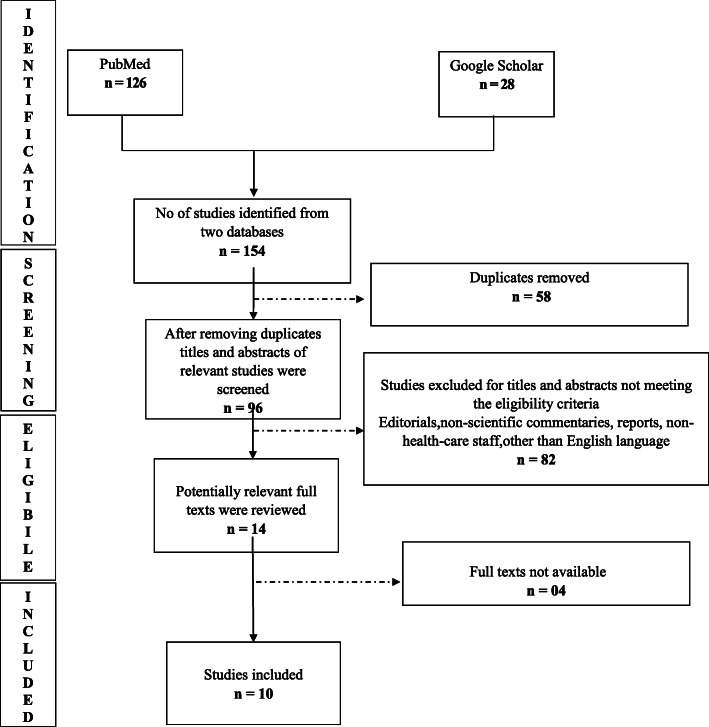
BACKGROUND: Coronavirus disease (COVID-19) pandemic has spread to 198 countries, with approximately 2.4 million confirmed cases and 150,000 deaths globally as of April 18. Frontline healthcare workers (HCWs) face a substantially higher risk of infection and death due to excessive COVID-19 exposure. This review aimed at summarizing the evidence of the physical and mental health impacts of COVID-19 pandemic on health-care workers (HCWs). METHODS: We used the Arksey O'Malley framework to conduct a scoping review. A systematic literature search was conducted using two databases: PubMed and Google Scholar. We found 154 studies, and out of which 10 met our criteria. We collected information on the date of publication, first author's country, the title of the article, study design, study population, intervention and outcome, and key findings, and divided all research articles into two domains: physical and mental health impact. RESULTS: We reviewed a total of 154 articles from PubMed (126) and Google Scholar (28), of which 58 were found to be duplicate articles and were excluded. Of the remaining 96 articles, 82 were excluded after screening for eligibility, and 4 articles did not have available full texts. Ten full-text articles were reviewed and included in this study. Our findings identified the following risk factors for COVID-19-related health impact: working in a high-risk department, diagnosed family member, inadequate hand hygiene, suboptimal hand hygiene before and after contact with patients, improper PPE use, close contact with patients (≥ 12 times/day), long daily contact hours (≥ 15 h), and unprotected exposure. The most common symptoms identified amongst HCWs were fever (85%), cough (70%), and weakness (70%). Prolonged PPE usage led to cutaneous manifestations and skin damage (97%), with the nasal bridge (83%) most commonly affected site. HCWs experienced high levels of depression, anxiety, insomnia, and distress. Female HCWs and nurses were disproportionately affected. CONCLUSION: The frontline healthcare workers are at risk of physical and mental consequences directly as the result of providing care to patients with COVID-19. Even though there are few intervention studies, early data suggest implementation strategies to reduce the chances of infections, shorter shift lengths, and mechanisms for mental health support could reduce the morbidity and mortality amongst HCWs.
Overview
The claims and statistics of this paper haven’t been checked yet.
Free: it reads the open-access text and checks the first 5 claims that cite a source we can check. Create a free account to check every claim.
Integrity signals
Registry
Cites
Statistics
Figures
Verification
Claims the paper makes
The claims and statistics of this paper haven’t been checked yet.
Free: it reads the open-access text and checks the first 5 claims that cite a source we can check. Create a free account to check every claim.
Claims other papers make about this one
Each is checked against this paper’s own text: does it say what the citing paper says it does?
The check wasn’t confident either way, so it gives no verdict — never disputed.
In the citing paper
“Thus, the COVID-19 pandemic acted as a catalyst for the development and adoption by health systems, especially of industrialized countries, of a broad range of telehealth technologies, developing and innovating in new virtual health facilities and telecare platforms to minimize these effects [3,4,5,6,7].”
From Telehealth and COVID-19 Pandemic: An Overview of the Telehealth Use, Advantages, Challenges, and Opportunities during COVID-19 Pandemic (2022) · cites this paper as [4]
Experimental — accuracy not yet measuredIn the citing paper
“Acute stress, including extreme anxiety and resignation symptoms, had already been observed, aggravated by nonoptimal disclosure of information about the pandemic (Marazziti, 2020;Shaukat, Ali & Razzak, 2020;Rossi et al., 2020;Zhang et al., 2020).”
From SECOND LINE VOLUNTEERING IN LOMBARDY COVID-19 EMERGENCY AS A PERSPECTIVE ON MEDICAL EDUCATION AND PSYCHOLOGICAL DISTRESS (2021) · doi:10.36131/cnfioritieditore20210506 · cites this paper as Shaukat, Ali & Razzak, 2020
Self-check
Percentages, sums and reported differences re-computed from the paper’s own numbers.
The self-check needs the paper’s full text.
Citations
Cites
Scoping studies: towards a methodological framework
Arksey, H., & O'Malley, L. (2005) · International Journal of Social Research Methodology · doi:10.1080/1364557032000119616 · Cited by 36,742
An interactive web-based dashboard to track COVID-19 in real time
Dong, E., Du, H., & Gardner, L. (2020) · The Lancet Infectious Diseases · doi:10.1016/s1473-3099(20)30120-1 · Cited by 10,048
Lai, J., Ma, S., Wang, Y., Cai, Z., Hu, J., Wei, N., Wu, J., Du, H., Chen, T., Li, R., et al. (2020) · JAMA Network Open · doi:10.1001/jamanetworkopen.2020.3976 · Cited by 8,015
First case of 2019 novel coronavirus in the United States
Holshue, M. L., DeBolt, C., Lindquist, S., Lofy, K. H., Wiesman, J., Bruce, H., Spitters, C., Ericson, K., Wilkerson, S., Tural, A., et al. (2020) · New England Journal of Medicine · doi:10.1056/nejmoa2001191 · Cited by 6,030
The epidemiology and pathogenesis of coronavirus disease (COVID-19) outbreak
Rothan, H. A., & Byrareddy, S. N. (2020) · Journal of Autoimmunity · doi:10.1016/j.jaut.2020.102433 · Cited by 5,840
Features, Evaluation and Treatment Coronavirus (COVID-19)
Cascella, M., Rajnik, M., Cuomo, A., Dulebohn, S. C., & Napoli, R. D. (2020) · StatPearls · Cited by 5,363
COVID-19 and Italy: what next?
Remuzzi, A., & Remuzzi, G. (2020) · The Lancet · doi:10.1016/s0140-6736(20)30627-9 · Cited by 3,119
Mental health care for medical staff in China during the COVID-19 outbreak
Chen, Q., Liang, M., Li, Y., Guo, J., Fei, D., Wang, L., He, L., Sheng, C., Cai, Y., Li, X., et al. (2020) · The Lancet Psychiatry · doi:10.1016/s2215-0366(20)30078-x · Cited by 2,233
The mental health of medical workers in Wuhan, China dealing with the 2019 novel coronavirus.
Kang, L., Li, Y., Hu, S., Chen, M., Yang, C., Yang, B. X., Wang, Y., Hu, J., Lai, J., Ma, X., et al. (2020) · The Lancet Psychiatry · doi:10.1016/s2215-0366(20)30047-x · Cited by 2,061
Maunder, R., Hunter, J., Vincent, L. H., Bennett, J. P., Peladeau, N., Leszcz, M., Sadavoy, J., Verhaeghe, L. M., Steinberg, R. J., & Mazzulli, T. (2003) · Europe PMC (PubMed Central) · Cited by 1,781
Cited by
Items 501–600 of 890
Manifestaciones cutáneas por el uso de EPP en el personal de la salud
Medina, L. C. G., Cordero, R. D. F. N., Estrada, D. G., Utria, L. A. B., Pazmiño, C. E. C., Rodríguez, G. G. C., Montenegro, J. M. B., & Suescun, G. C. (2022) · Ciencia Latina Revista Científica Multidisciplinar · doi:10.37811/cl_rcm.v6i4.2779 · Cited by 2
The journey of nurse managers in the nursing workforce management during the Covid-19 pandemic
Apsay, R., & Alalag, H. (2022) · Journal of Bioscience and Applied Research/Journal of Bioscience and Applied Research · doi:10.21608/jbaar.2022.273855 · Cited by 3
“of COVID-19 because of more prolonged exposure to the infected patient (Shaukat et al., 2020) which caused understaffing.”
BackgroundSumiati, N. T., & Sita, F. A. (2022) · Journal of Psychological Science and Profession · doi:10.24198/jpsp.v6i3.36638 · Cited by 2
“Hasil penelitian memperlihatkan bahwa mereka mengalami kecemasan, depresi, insomnia (Lai, et al., 2020; Liu et al., 2020; Rajkumar, 2020; Shaukat et al., 2020), distres psikologis (Lai et al., 2020; Liu et al., 2020), dan burnout (Nurbaiti, 2020).”
BackgroundAli, T. M., Amankwah‐Amoah, J., & Mostafa, B. A. (2023) · Employee Relations · doi:10.1108/er-01-2022-0026 · Cited by 3
Aslam, M. (2021) · Annals of Punjab Medical College · doi:10.29054/apmc/2021.709 · Cited by 2
Efeitos da pandemia da Covid-19 sob os profissionais de saúde: protocolo de revisão sistemática
Malaquias, T. D. S. M., Okubo, C. V. C., Rossaneis, M. Â., Aroni, P., Malaquias, A. M., & Haddad, M. D. C. F. L. (2021) · Online Brazilian Journal of Nursing · doi:10.17665/1676-4285.20216520 · Cited by 2
Identifying higher risk subgroups of health care workers for priority vaccination against COVID-19
Haq, M., Rehman, A., Haq, M., Haq, H., Rajab, H., Aḥmad, J., Ahmed, J., Anwar, S., Ahmad, S., & Haq, N. U. (2022) · Therapeutic Advances in Vaccines and Immunotherapy · doi:10.1177/25151355221080724 · Cited by 2
Heidari‐Soureshjani, R., Mohammadi, T., Hashemi-Shahraki, A., Estakhri, R. K., & Rasti, A. (2022) · Journal of Education and Health Promotion · doi:10.4103/jehp.jehp_623_21 · Cited by 2
Wijayanti, A. R., & Fitriani, I. S. (2022) · Indonesian Journal for Health Sciences · doi:10.24269/ijhs.v6i1.4308 · Cited by 2
“[12] Shaukat N, Mansoor A, and Razzak J, “Physical and mental health impacts of COVID-19 on healthcare workers: A scoping review,” Int.”
BackgroundSharif, L., Almutairi, K. M., Sharif, K., Mahsoon, A. N., Banakhar, M. A., Albeladi, S., Alqahtani, Y. J., Attar, Z., Abdali, F., & Wright, R. J. (2022) · Nursing Open · doi:10.1002/nop2.1297 · Cited by 4
Impact of the COVID-19 on the Health System and Healthcare Workers: A Systematic Review
Zafar, M. (2022) · Health Scope · doi:10.5812/jhealthscope-123211 · Cited by 5
“The public health facilities in Pakistan are facing a shortage of medical accessories and equipment, such as personal protective equipment (PPE), including face masks, gowns, and respirators (5).”
BackgroundStress and Associated Factors Among Nursing Workers in Pandemic Times
Barros, C. E. C., & Baylina, P. (2022) · Studies in systems, decision and control · doi:10.1007/978-3-031-12547-8_23 · Cited by 2
Cilović‐Lagarija, Š., Musa, S., Hasanica, N., Čerkez, G., Palo, M., Majdán, M., Scherzer, M., Habersaat, K. B., Smallwood, C. A. H., Tahirukaj, A., et al. (2022) · Behavioral Sciences · doi:10.3390/bs12120495 · Cited by 2
“In addition, HCWs are among the most vulnerable to COVID-19 [24,25] and are prone to severe burdens on mental health caused by work-related stress during the pandemic [26,27], which can further disrupt the available capacities.”
BackgroundPTZ Camera Control on Robot Telemedicine Service for Infectious Diseases
Park, S., Kwon, Y., & Lim, Y. (2022) · International Conference on Control, Automation and Systems (ICCAS) · doi:10.23919/iccas55662.2022.10003685 · Cited by 2
“Frequent contact with the patients can cause infection risk and physical/emotional stress because of edged nerves for an emergency [6, 7].”
BackgroundCamila Valencia, A., Carolina Bernal, A., Diana Mercedes Ramírez, J., John Jairo Zuleta, T., & Delgado, C. E. Y. (2022) · Revista chilena de neuro-psiquiatría · doi:10.4067/s0717-92272022000400433 · Cited by 4
Experiences of Caring for Cohort-Isolated Patients among Nurses in Locked Psychiatric Units
An, H., Kim, K., Lee, J.-E., & Won, S. (2023) · Healthcare · doi:10.3390/healthcare11192650 · Cited by 2
“Frequent contact with patients with an infectious disease elevates health care professionals’ risk of infection and thus may lead to physical and emotional problems [28].”
BackgroundUnlocking the mental health crisis in health-care providers during COVID-19 pandemic
Parihar, J., & Grewal, K. (2020) · Indian Journal of Medical Specialities · doi:10.4103/injms.injms_123_20 · Cited by 2
Care of the Covid-19 Patients: Experiences of Health Workers in Rivers State Nigeria
Uzosike, T. C., Dan-Jumbo, A., Bob-Manuel, M., Alali, A., & Lawson, D. S. (2020) · International Journal of TROPICAL DISEASE & Health · doi:10.9734/ijtdh/2020/v41i2330414 · Cited by 2
“This agrees with reports of Shaukat et al [35] and poses a challenge as it can decelerate healthcare services to patients and also affect the mental state of health workers.”
ResultDurmuş, E., & Güneysu, F. (2021) · SANAMED · doi:10.24125/sanamed.v16i1.498 · Cited by 2
“Also, Albert and Rozita are the fundamental reasons HCW in Malaysia infected with COVID-19; designated that insufficient PPE was used and there was no suspicion of COVID-19 in the patient (9).”
BackgroundInfluentialCuarentena y COVID-19, una percepción más allá de la infección
Domínguez-Amorocho, O. A. (2021) · Bionatura · doi:10.21931/rb/2021.06.02.2 · Cited by 2
Fernández‐Ávalos, M. I., Pérez‐Marfil, M. N., Fernández‐Alcántara, M., Ferrer‐Cascales, R., Cruz‐Quintana, F., & Turnbull, O. H. (2021) · Healthcare · doi:10.3390/healthcare10010048 · Cited by 6
“Health professionals may present with a greater vulnerability to the effects of COVID19 on their mental health, as they are a group exposed to infection in their work environment [7,8].”
BackgroundBasnet, B. B., Satyal, D., Pandit, R., Basnet, T. B., Khattri, S., & Mishra, S. K. (2022) · INQUIRY The Journal of Health Care Organization Provision and Financing · doi:10.1177/00469580221082783 · Cited by 3
Assessment of Covid-19 Obsession Among Hospital Workers in Jos-South LGA Plateau State Nigeria
Saleh, D. A., & David, S. (2022) · Journal of Social Sciences and Management Studies · doi:10.56556/jssms.v1i1.102 · Cited by 2
Kearney, A., Searl, J. P., Erickson, E., Damrose, E. J., & Doyle, P. C. (2022) · Perspectives of the ASHA Special Interest Groups · doi:10.1044/2022_persp-22-00125 · Cited by 2
Risk perception and affective state on work exhaustion in obstetrics during the COVID-19 pandemic
Perlini, C., Garzon, S., Franchi, M. P., Donisi, V., Rimondini, M., Bosco, M., Uccella, S., Cromi, A., Ghezzi, F., Ginami, M., et al. (2022) · Open Medicine · doi:10.1515/med-2022-0571 · Cited by 2
Yazdimoghaddam, H., Sadrzadeh, S. M., & Karimi, F. Z. (2023) · BMC Pregnancy and Childbirth · doi:10.1186/s12884-023-05351-9 · Cited by 2
“Result expressed implementation strategies to reduce the chances of infections, shorter shift lengths, and mechanisms for mental health support could reduce the morbidity and mortality amongst them [31].”
BackgroundSequels of the COVID-19 pandemic on prehospital care professionals
Alinier, G. (2022) · International Paramedic Practice · doi:10.12968/ippr.2022.12.2.37 · Cited by 2
Psychological Sequelae of Covid 19 Calamity on Medical Personnel in Pakistan
Iqbal, T. H., Naseem, F. K., Baig, A. A., & Liaquat, F. (2021) · Pakistan Journal of Medical and Health Sciences · doi:10.53350/pjmhs211561225 · Cited by 1
Shabani, T., Jerie, S., & Shabani, T. (2024) · BMC Health Services Research · doi:10.1186/s12913-024-11425-x · Cited by 1
“Nurses are mostly affected with physical risks such needle stick injuries and pricks/ cuts as well as ionizing and non-ionizing radiation [28, 29].”
BackgroundLim, C. K., & Lau, C. Y. (2024) · AIP conference proceedings · doi:10.1063/5.0230080 · Cited by 1
Insights for a Next Pandemic: An Assessment of Laboratory COVID-19 Safety
Al-Zyoud, W. A., Ismail, H. A., Althawbih, H. H. V., Odeh, B., Saket, M. M., Al-Kazwini, A. T., Al‐Hammouri, F., & Dajani, R. B. (2025) · Safety · doi:10.3390/safety11010013 · Cited by 1
Guo, C., Rivest‐Beauregard, M., Fortin, J., Brown, A. D., Lonergan, M. H., & Brunet, A. (2026) · Journal of Psychiatric Practice · doi:10.1097/pra.0000000000000919 · Cited by 2
Mordeno, I. G., Leyson, B. L., & Baroquillo, L. D. A. (2026) · Journal of Workplace Behavioral Health · doi:10.1080/15555240.2026.2653650 · Cited by 1
de Magalhães, L. F., Neto, R. M., Ibieta, S. M. S., Duran, T. C. A. L., Jorge, A. C., & Neto, A. R. D. S. (2022) · Research Society and Development · doi:10.33448/rsd-v11i12.32965 · Cited by 3
Kufe, C. N., Bernstein, C., & Wilson, K. S. (2024) · African Journal of Psychological Assessment · doi:10.4102/ajopa.v6i0.144 · Cited by 4
“…department, diagnosed family member, suboptimal hand hygiene before and after contact with patients, improper personal protective equipment use, close contact with patients ( ≥ 12 times/day), long daily contact hours ( ≥ 15 h) and female HCWs disproportionated affected (Shaukat et al., 2020).”
The Pandemic Effects on Human Capital Development: An Introduction
Mishrif, A. (2024) · Springer eBooks · doi:10.1007/978-981-97-5246-1_1 · Cited by 1
Siddiqui, R. S., Khan, A. A., Sultan, L. R., & Sami, Z. (2024) · Sustainable Business and Society in Emerging Economies · doi:10.26710/sbsee.v6i3.3113 · Cited by 2
Allotey, N.-K., & Adams, S. (2024) · Discover Psychology · doi:10.1007/s44202-024-00304-5 · Cited by 1
Lorenz, E., Grüne, E., Popp, J., Pfeifer, K., & Carl, J. (2024) · BMC Nursing · doi:10.1186/s12912-024-02639-9 · Cited by 1
Attar, I., Hadrya, F., Senhaji, M., Cigarroa, I., Bendriss, A., & Sfendla, A. (2025) · Enfermería Clínica · doi:10.1016/j.enfcli.2025.502309 · Cited by 1
Perception of quality of life and emotional disorders in Brazilian nursing during COVID-19
Nogueira, L. D. S., Lemos, C. D. S., Bruna, C. Q. D. M., Moura, B. R. S., Cassiano, C., Lima, F. R., & Poveda, V. D. B. (2025) · Revista Brasileira de Enfermagem · doi:10.1590/0034-7167-2024-0605pt · Cited by 1
Glowinska, A., & Glowinski, S. (2025) · Pomeranian Journal of Life Sciences · doi:10.21164/pomjlifesci.1113 · Cited by 1
Dræbel, T. A., Birhanu, Z., Lien, L., Sørensen, J. B., Andersen, L. S., Tucho, G. T., & Mekonnen, H. (2026) · BMJ Open · doi:10.1136/bmjopen-2025-107175 · Cited by 1
Ohene, L. A., Iddrisu, M., & Aziato, L. (2026) · International Journal of Environmental Research and Public Health · doi:10.3390/ijerph23030366 · Cited by 1
“Systemic lapses and policy gaps, particularly relating to incident management and resource allocation, mirror concerns documented globally [28,38].”
Jiménez-García, S., Pérez, E. L., & Vizcaya-Moreno, F. (2026) · Nursing Open · doi:10.1002/nop2.70526 · Cited by 2
“Nurses have been on the front lines of care, facing an intensified workload, lack of personal protective equipment (PPE), abrupt organisational changes, and challenges in their personal and family lives (Jiménez-García et al. 2022; Shaukat et al. 2020).”
COVID-19 and presenteeism: longitudinal evidence from healthcare workers in greater Accra, Ghana
Owusu, B., Opoku, M. M., Akyeampong, E., Udofia, E. A., Botwe, P. K., Tettey, P., & Quansah, R. (2026) · Frontiers in Environmental Health · doi:10.3389/fenvh.2026.1700906 · Cited by 1
Health Care Worker’s Health during COVID’19 Pandemic: The Key to Quality Health Care
Syed, I. M. (2021) · Medical and Clinical Research Open Access · doi:10.52106/2766-3213.1020 · Cited by 1
“area ensuring all the elements of personal safety [3].”
BackgroundInfluentialKüçükali, H., Hayran, O., DUMAN, E., KARACA, A., KIRIKÇI, A., & ÇİFTCİ, O. (2021) · Hacettepe University Journal of the Faculty of Pharmacy · doi:10.52794/hujpharm.988353 · Cited by 1
“17% among 53 healthcare professionals during the pandemic period [10].”
BackgroundOpen government in OECD countries: An overview of good practices
OECD, & United Nations Economic and Social Commission for Western Asia (2021) · OECD public governance reviews · doi:10.1787/0686e6f5-en · Cited by 1
Parikh, M. N., Valipay, S. K., Kumar, R., Shah, A., Kansagra, P. R., Mathuria, K., Patel, V., & Parikh, A. (2022) · Indian Journal of Mental Health(IJMH) · doi:10.30877/ijmh.8.4.2021.391-398 · Cited by 1
“Several recent studies though have found increased anxiety in healthcare workers [16].”
BackgroundAclon, M.-A. C., Perez-Ambray, M. C., Antiporda, M. C. P., Dizon, M. P. S., Garcia, P. R. B., Lapitan, M. A., Nocos, P. M., Aquino, S. S., Parico, A. M., Lopez, M. A. E., et al. (2022) · International Journal of Multidisciplinary Applied Business and Education Research · doi:10.11594/ijmaber.03.01.04 · Cited by 1
Conti, A., Clari, M., Luciani, M., Sciannameo, V., Berchialla, P., Dimonte, V., & Campagna, S. (2022) · The Journal of Continuing Education in Nursing · doi:10.3928/00220124-20220104-06 · Cited by 2
Filkova, S., Cvetkov, B. P., Aleksovski, V., Nakovska, O. K., Karkinski, D., Angjelovska, I., & Debreshliovska, A. (2021) · Macedonian Pharmaceutical Bulletin · doi:10.33320/10.33320/maced.pharm.bull.2021.67.01.003 · Cited by 1
“Healthcare workers (HCWs) face a substantially higher risk of infection and death due to excessive COVID-19 exposure (Shaukat et al., 2020).”
BackgroundFranjić, D., & Franjić, I. (2022) · Sestrinski glasnik · doi:10.11608/sgnj.27.1.4 · Cited by 3
“[18] reported that health professionals are exposed to physical consequences during their care for patients with COVID-19 disease.”
BackgroundCOVID-19 and Healthcare Staff Wellbeing: Is Burnout Really a Systemic Issue of Morality?
French, L., Hanna, P., & Huckle, C. (2022) · Advances in psychology, mental health, and behavioral studies (APMHBS) book series · doi:10.4018/978-1-7998-8813-0.ch010 · Cited by 2
Agaku, I. T., Nkosi, L., Azua, G., Tsafa, T., Agaku, Q. D., & Vardavas, C. I. (2022) · Population Medicine · doi:10.18332/popmed/149307 · Cited by 1
Protecting Pediatric Healthcare Personnel With Personal Protective Equipment–Specific Roles
Valdez, S., Walton, K., Loresto, F., Nyquist, A., & Givens, P. (2022) · JONA The Journal of Nursing Administration · doi:10.1097/nna.0000000000001157 · Cited by 2
“Studies demonstrate that effective communication decreases stress, burnout, and fatigue among nurses.(1-8) Also, inadequate and inconsistent supply of PPE is a major cause of anxiety and concern for HCPs.”
BackgroundInfluentialMental Health Impacts of the COVID-19 Pandemic: Reflecting on Lockdowns and Social Isolations
Cheshmehzangi, A., Su, Z., Zou, T., Chen, H., Tang, T., & Dawodu, A. (2022) · Advances in Infectious Diseases · doi:10.4236/aid.2022.122017 · Cited by 3
Podder, L., Alisha, A., & Bhardwaj, G. (2022) · Nursing Journal of India · doi:10.48029/nji.2022.cxiii101 · Cited by 1
“(Shaukat et al, 2020).”
Occupational Health and Safety in the Healthcare Sector
Modenese, A., & Gobba, F. (2022) · MDPI eBooks · doi:10.3390/books978-3-0365-4593-6 · Cited by 1
Hasanah, U., Bahfiarti, T., & Farid, M. (2022) · JIIP - Jurnal Ilmiah Ilmu Pendidikan · doi:10.54371/jiip.v5i9.923 · Cited by 1
Impact of the COVID-19 Lockdown on Architecture Students' Well-Being
Mari, T., Gunasagaran, S., Lim, W. S., Lee, S.-E., & Jamal, K. A. A. (2022) · Advances in media, entertainment and the arts (AMEA) book series · doi:10.4018/978-1-6684-5119-9.ch016 · Cited by 1
Ahmed, S., & Sheta, S. S. (2022) · Egyptian Journal of Occupational Medicine · doi:10.21608/ejom.2022.127533.1268 · Cited by 1
“As the COVID-19 pandemic continues, frontline healthcare workers continue to face numerous physical and mental health challenges (Shaukat et al., 2020 and Mehta et al., 2021).”
BackgroundIdentifying Occupational Stress and Coping Strategies
Palaniappan, K. (2022) · IntechOpen eBooks · doi:10.5772/intechopen.104175 · Cited by 1
impact of Covid-19 on economic situation of Pakistan
Javaid, A., & Arshed, N. (2022) · Journal on Innovation and Sustainability RISUS · doi:10.23925/2179-3565.2022v13i3p190-208 · Cited by 1
“Shaukat, Ali, and Razzak (2020) used Arksey O'Malley framework to conduct scoping review to investigate the impact of COVID19 on the physical and mental health of health care workers.”
MethodSánchez, I. S., Gallego-Royo, A., Marco-Gómez, B., Pérez-Álvarez, C., Gonzalo, Ó. U., Delgado-Marroquín, M. T., Altisent, R., & Astier-Peña, M. P. (2022) · Journal of Healthcare Quality Research · doi:10.1016/j.jhqr.2022.11.006 · Cited by 1
Singha, B., Karmaker, S. C., Islam, M. M., Eljamal, K., & Saha, B. B. (2022) · International Journal of Statistics in Medical Research · doi:10.6000/1929-6029.2022.11.22 · Cited by 1
Zhang, J. Y., Jabs, F., Brown, N. B., Milani, S., & Brotto, L. A. (2023) · International Journal of Sexual Health · doi:10.1080/19317611.2022.2163446 · Cited by 1
“Pandemic-induced mental health issues have the potential to become long lasting psychological problems (Shaukat et al., 2020; Torales et al., 2020).”
BackgroundCOVID‐19 infection in nursing staff: A cohort study
Nogueira, L. D. S., Poveda, V. D. B., Lemos, C. D. S., Bruna, C. Q. D. M., & Moura, B. R. S. (2023) · International Journal of Nursing Practice · doi:10.1111/ijn.13147 · Cited by 1
Quality of Life of Health Care Professionals During Covid-19 Pandemic in India
Kaur, B., Aggarwal, Y., Bhatnagar, N., & Singla, S. K. (2022) · MAMC Journal of Medical Sciences · doi:10.4103/mamcjms.mamcjms_134_21 · Cited by 2
Moncatar, T. R. T., Gomez, A. V. D., Lorenzo, F. M. E., Saniel, O. P., Faraon, E. J. A., Rosadia, R. A. F., & Garcia, F. B. (2023) · Acta Medica Philippina · doi:10.47895/amp.vi0.7678 · Cited by 3
“30-33 This highlights the fragility experienced by healthcare workers as frontliners in addressing the COVID-19 pandemic.”
BackgroundMukhaimer, J. J. A., Mihdawi, M., Al-Ghatam, R., Alhourani, F., & Opinion, F. B. (2023) · Arab Gulf Journal of Scientific Research · doi:10.1108/agjsr-03-2023-0096 · Cited by 2
Ho, E., Oh, H. C., Lim, C.-S., Soon, S., & Khaing, N. E. E. (2023) · Proceedings of Singapore Healthcare · doi:10.1177/20101058231192784 · Cited by 1
“5 – 7 While this growing literature highlights the mental health impacts on healthcare workers, less attention has been directed towards hospital essential services workers, who also perform public-facing roles and are exposed to increased risks of COVID-19 infection, poor working environments, and…”
BackgroundParedes, L. A. B., Lascano, P. L. P., Santana, C., Chicaiza, M., & Escobar, A. A. (2023) · Revista Ecuatoriana de Ciencia Tecnología e Innovación en Salud Pública · doi:10.31790/inspilip.v7i22.422 · Cited by 1
Quronfulah, B. S., Aboalshamat, K. T., Badri, H. M., Mahmoud, M. A., Rajeh, M. T., Badawoud, A. M., Alzhrani, A. M., & Abdouh, I. M. (2023) · International Journal Of Pharmaceutical Research And Allied Sciences · doi:10.51847/v7w6uqekye · Cited by 1
“According to a national survey in Saudi Arabia [21], individual psychological well-being was generally adversely affected during the COVID-19 pandemic, and the negative impacts were even more significant for healthcare professionals [22, 23].”
BackgroundSosialisasi Aplikasi MHS (Mental Health Solution) Dalam Mengatasi Kesehatan Mental
Surya, N. T., Gita, A. P. A., & Kur’aini, S. N. (2023) · SENTRA DEDIKASI Jurnal Pengabdian Masyarakat · doi:10.59823/dedikasi.v1i3.31 · Cited by 1
The Ethics of Professional Touch
Kinnunen, T., Parviainen, J., & Haho, A. (2023) · Springer eBooks · doi:10.1007/978-981-99-4870-3_5 · Cited by 1
Barros, C. E. C., & Baylina, P. (2023) · Studies in systems, decision and control · doi:10.1007/978-3-031-38277-2_45 · Cited by 1
Estratégias de prevenção e promoção em saúde mental para enfermagem diante da pandemia da covid-19
Góes, F. G. B., Souza, A. N., Corrêa, B. D. S. O., Nunes, N. G. F., dos Santos, A. S. T., & Pereira-Ávila, F. M. V. (2023) · Revista de Enfermagem do Centro-Oeste Mineiro · doi:10.19175/recom.v13i0.4805 · Cited by 1
“…das mãos e dos EPI adequados para os profissio - nais como forma de segurança para execução de suas funções, evitando a propagação de infecções (14,23-24, Por fim, as investigações P6 (15) , P14 (23) e P20 (29) descrevem a importância de um suporte institucional que garanta suprimentos para a…”
Ilmidin, I., Nabila, R., Sarasnita, N., Nirwana, A. C., & Agustin, R. N. (2023) · Jurnal Berkala Kesehatan · doi:10.20527/jbk.v9i2.16936 · Cited by 1
Allotey, N.-K., & Adams, S. (2023) · Journal of Health, Medicine and Nursing · doi:10.7176/jhmn/112-01 · Cited by 1
Christopher, A., Gojer, A. R., Lohanathan, A., Kuruvilla, A., Gopalakrishnan, R. M., & Abhilash, K. P. P. (2022) · Medical Journal of Dr D Y Patil Vidyapeeth · doi:10.4103/mjdrdypu.mjdrdypu_251_21 · Cited by 1
Examination of the Impact of Remote Working Conditions on Quality of Life
Sengupta, S., Ayyagari, A., Archinapalli, R., Zhang, M., & Clack, L. A. (2024) · International Journal of Public and Private Perspectives on Healthcare Culture and the Environment · doi:10.4018/ijppphce.342085 · Cited by 2
Korean Hospital Nurses’ Experiences with COVID-19: A Meta-Synthesis of Qualitative Findings
Han, S. J., Hong, H.-J., & Shin, B. S. (2024) · Healthcare · doi:10.3390/healthcare12090903 · Cited by 2
Compassion Fatigue and Compassion Satisfaction Among Nursing Officers
Sharma, P., Shaiju, B., Rahman, J., & Singh, D. (2024) · Indian Journal of Psychiatric Nursing · doi:10.4103/iopn.iopn_50_22 · Cited by 1
Ancillary hospital workers experience during COVID-19: systematic review and narrative synthesis
Kearsley, S. L., Walker, L., Johnson, M. J., & Bravington, A. (2024) · BMJ Supportive & Palliative Care · doi:10.1136/spcare-2024-004855 · Cited by 3
Experiences of nurses studying towards post-basic qualifications during COVID-19 in KwaZulu-Natal
Sokhela, D. G., Nokes, K. M., & Orton, P. M. (2024) · Health SA Gesondheid · doi:10.4102/hsag.v29i0.2609 · Cited by 1
“Other participants found it hard to work in full PPE, which was uncomfortable and difficult to breathe in. Shaukat, Ali and Razzak (2020) reported different skin eruptions, scarring and skin damage because of prolonged use of PPE.”
BackgroundPerceived Trauma Among Nurses During the COVID ‐19 Pandemic: A Qualitative Descriptive Study
Burr, D., Alexander, L., & Searby, A. (2025) · International Journal of Mental Health Nursing · doi:10.1111/inm.70031 · Cited by 1
Roy, N., Rahman, M. A. U., Fathah, Z., Ammar, N., Ali, A., Kamel, W. A., Ayola-Serrano, N. C., Quraishi, S. A., Barkoudah, E., D’Souza, R. F., et al. (2020) · Global Bioethics Enquiry Journal · doi:10.38020/gbe.8.3.2020.182-190 · Cited by 1
Torra-Bou, J., Soldevilla-Agreda, J., García-Fernández, F., Verdú-Soriano, J., Rodríguez-Palma, M., Jiménez-García, J., Esperón-Güimil, J., Blasco-García, C., Ibars-Moncasí, P., Rueda-López, J., et al. (2021) · Gerokomos · doi:10.4321/s1134-928x2021000100009 · Cited by 1
IMPACT OF COVID 19 ON HEALTH SECTOR
Jacinth, J. S. (2021) · INTERNATIONAL JOURNAL OF SCIENTIFIC RESEARCH · doi:10.36106/0403486 · Cited by 1
Heffels, J., de Vries, D., Everink, I. H. J., Timmermans, A. M., Wegdam-Blans, M. C. A., & Schols, J. M. G. A. (2021) · Tijdschrift voor Gerontologie en Geriatrie · doi:10.36613/tgg.1875-6832/2021.01.01 · Cited by 1
Mental reactions of doctors against the background of the SARS-CoV-2 pandemic (message 1)
Kinkulkina, M. A., Gardanova, Z. R., Novikov, V. V., & Khritinin, D. F. (2020) · Vestnik nevrologii psihiatrii i nejrohirurgii (Bulletin of Neurology Psychiatry and Neurosurgery) · doi:10.33920/med-01-2010-01 · Cited by 1
Unifying Vision: Strategies that Influence Nurse Self-Care Practices
Weaver, N. L. (2021) · Cited by 1
The Situation and Preventive Measures Related to COVID-19 Infection for Medical Staff
Sherzad, A. G., Tu, Y., Liu, W., Azimee, M. A., Nemat, A., Asady, A., Raufi, N. K., Huang, Y., Xu, X., Alsarhang, O., et al. (2021) · Journal of Pharmaceutical Research International · doi:10.9734/jpri/2021/v33i43a32477 · Cited by 1
Yamada, C., Kishimoto, N., Masuda, Y., Tanaka, Y., Kuwahira, I., Chino, O., Ebihara, A., Shiraishi, K., & Nishizaki, Y. (2021) · Environmental and Occupational Health Practice · doi:10.1539/eohp.2021-0014-br · Cited by 1
Nakarmi, K., Basnet, S. J., Karki, B., Ghartimagar, M., Nagarkoti, K. K., Yadav, M. K., & Sm, R. (2021) · Journal of Bangladesh College of Physicians and Surgeons · doi:10.3329/jbcps.v39i4.55945 · Cited by 1
Janušonis, V. (2021) · Health Sciences · doi:10.35988/sm-hs.2021.210 · Cited by 1
The Psychological Impact of COVID-19
Grover, S., & Sahoo, S. (2021) · Springer eBooks · doi:10.1007/978-981-16-5105-2_21 · Cited by 1
Kaur, J., & Jain, A. (2021) · Cureus · doi:10.7759/cureus.19947 · Cited by 1
“Foster parents are sometimes forced to rethink their foster care offer due to stress and school closures, resulting in a placement disruption [6].”
Background
Metadata
- Authors
- Shaukat, N., Ali, D. M., & Razzak, J.
- Affiliations
- Aga Khan University (PK)
- Corresponding author
- Shaukat, Natasha
- Venue
- International Journal of Emergency Medicine
- Published
- 2020-07-20
- Volume
- 13
- Issue
- 1
- Pages
- 40-40
- ISSN
- 1865-1372 (ISSN-L)
- 1865-1380
- PMC
- PMC7370263
- OpenAlex
- W3043065230
- Semantic Scholar
- e25ae2ab02b02aa76bc898097339f711028bc710
- Cited by
- 879
- References
- 38
- Citations by year
- 2026: 27 · 2025: 49 · 2024: 94 · 2023: 155 · 2022: 257 · 2021: 275 · 2020: 22
- FWCI
- 14.04
- Type
- journal article
- Language
- en
- Open access
- gold
- doi.org
- Licence
- cc-by
- creativecommons.org/licenses/by/4.0 (tdm)
- creativecommons.org/licenses/by/4.0 (vor)
- Locations
- International Journal of Emergency Medicine (publishedVersion, cc-by)
- PubMed Central (publishedVersion, cc-by)
- PubMed (publishedVersion)
- eCommons - AKU (Aga Khan University) (submittedVersion, cc-by)
- DOAJ (DOAJ: Directory of Open Access Journals) (submittedVersion, cc-by-sa)
- Topics
- Social Sciences › Psychology › Clinical Psychology › COVID-19 and Mental Health
- Health Sciences › Health Professions › General Health Professions › Healthcare Systems and Challenges
- Health Sciences › Medicine › Clinical Neurology › Long-Term Effects of COVID-19
- Keywords
- COVID-19 pandemic, healthcare workers, occupational exposure, physical health, mental health, depression, anxiety, insomnia, personal protective equipment, hand hygiene, skin damage, nurses, risk factors, infection control
About these checks
Registry, retraction, Cites and statistics results are computed, not judged, with one exception: a printed reference that no index lists is read once by a model before it counts as a citation error. Claims are extracted by a model and kept only when their quote appears verbatim in the text; each cited source is then checked, with a model’s help, for whether it says what the claim relies on. Those verdicts can be wrong — read the claim’s quote and the cited source before relying on one.
Statistics and arithmetic are recomputed, not judged.
Confidence bands are shown only for fields calibrated on our annotated test set. None is calibrated yet, so no band is shown.
What counts as a claim ›How we measure confidence ›How we check this ›
Are you an author, or do you see a problem with this page? Request a review
Data sources
Bibliographic data: Semantic Scholar, OpenAlex, Crossref.
Contains information from the Semantic Scholar Academic Graph Datasets, made available under the ODC Attribution License (ODC-BY 1.0).
Semantic Scholar’s data is described in: Kinney, R., et al. (2023). The Semantic Scholar Open Data Platform. arXiv:2301.10140.
