

Physical and mental health impacts of COVID-19 on healthcare workers: a scoping review
Open accessThe DOI matches its Crossref record; 38 of the 38 references it cites were found in a registry or an index.
Abstract
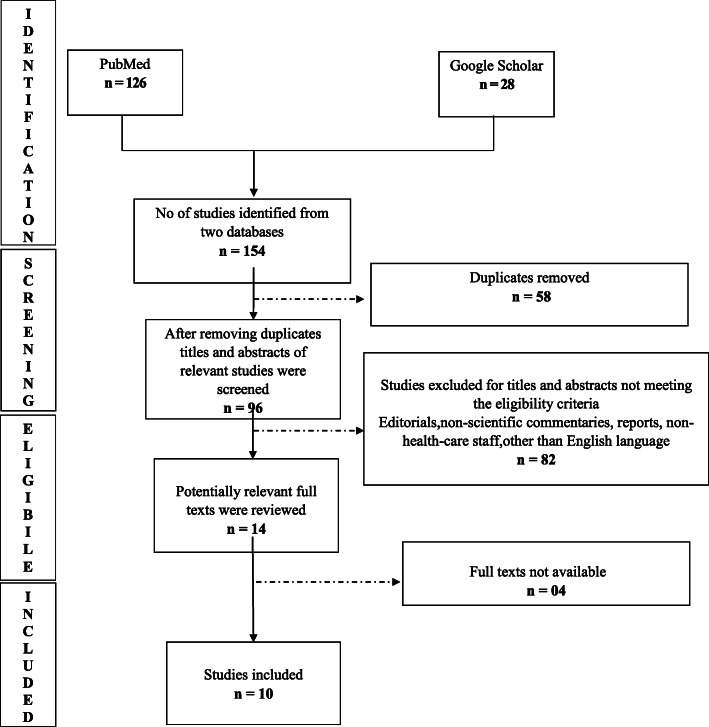
BACKGROUND: Coronavirus disease (COVID-19) pandemic has spread to 198 countries, with approximately 2.4 million confirmed cases and 150,000 deaths globally as of April 18. Frontline healthcare workers (HCWs) face a substantially higher risk of infection and death due to excessive COVID-19 exposure. This review aimed at summarizing the evidence of the physical and mental health impacts of COVID-19 pandemic on health-care workers (HCWs). METHODS: We used the Arksey O'Malley framework to conduct a scoping review. A systematic literature search was conducted using two databases: PubMed and Google Scholar. We found 154 studies, and out of which 10 met our criteria. We collected information on the date of publication, first author's country, the title of the article, study design, study population, intervention and outcome, and key findings, and divided all research articles into two domains: physical and mental health impact. RESULTS: We reviewed a total of 154 articles from PubMed (126) and Google Scholar (28), of which 58 were found to be duplicate articles and were excluded. Of the remaining 96 articles, 82 were excluded after screening for eligibility, and 4 articles did not have available full texts. Ten full-text articles were reviewed and included in this study. Our findings identified the following risk factors for COVID-19-related health impact: working in a high-risk department, diagnosed family member, inadequate hand hygiene, suboptimal hand hygiene before and after contact with patients, improper PPE use, close contact with patients (≥ 12 times/day), long daily contact hours (≥ 15 h), and unprotected exposure. The most common symptoms identified amongst HCWs were fever (85%), cough (70%), and weakness (70%). Prolonged PPE usage led to cutaneous manifestations and skin damage (97%), with the nasal bridge (83%) most commonly affected site. HCWs experienced high levels of depression, anxiety, insomnia, and distress. Female HCWs and nurses were disproportionately affected. CONCLUSION: The frontline healthcare workers are at risk of physical and mental consequences directly as the result of providing care to patients with COVID-19. Even though there are few intervention studies, early data suggest implementation strategies to reduce the chances of infections, shorter shift lengths, and mechanisms for mental health support could reduce the morbidity and mortality amongst HCWs.
Overview
The claims and statistics of this paper haven’t been checked yet.
Free: it reads the open-access text and checks the first 5 claims that cite a source we can check. Create a free account to check every claim.
Integrity signals
Registry
Cites
Statistics
Figures
Verification
Claims the paper makes
The claims and statistics of this paper haven’t been checked yet.
Free: it reads the open-access text and checks the first 5 claims that cite a source we can check. Create a free account to check every claim.
Claims other papers make about this one
Each is checked against this paper’s own text: does it say what the citing paper says it does?
The check wasn’t confident either way, so it gives no verdict — never disputed.
In the citing paper
“Thus, the COVID-19 pandemic acted as a catalyst for the development and adoption by health systems, especially of industrialized countries, of a broad range of telehealth technologies, developing and innovating in new virtual health facilities and telecare platforms to minimize these effects [3,4,5,6,7].”
From Telehealth and COVID-19 Pandemic: An Overview of the Telehealth Use, Advantages, Challenges, and Opportunities during COVID-19 Pandemic (2022) · cites this paper as [4]
Experimental — accuracy not yet measuredIn the citing paper
“Acute stress, including extreme anxiety and resignation symptoms, had already been observed, aggravated by nonoptimal disclosure of information about the pandemic (Marazziti, 2020;Shaukat, Ali & Razzak, 2020;Rossi et al., 2020;Zhang et al., 2020).”
From SECOND LINE VOLUNTEERING IN LOMBARDY COVID-19 EMERGENCY AS A PERSPECTIVE ON MEDICAL EDUCATION AND PSYCHOLOGICAL DISTRESS (2021) · doi:10.36131/cnfioritieditore20210506 · cites this paper as Shaukat, Ali & Razzak, 2020
Self-check
Percentages, sums and reported differences re-computed from the paper’s own numbers.
The self-check needs the paper’s full text.
Citations
Cites
Scoping studies: towards a methodological framework
Arksey, H., & O'Malley, L. (2005) · International Journal of Social Research Methodology · doi:10.1080/1364557032000119616 · Cited by 36,742
An interactive web-based dashboard to track COVID-19 in real time
Dong, E., Du, H., & Gardner, L. (2020) · The Lancet Infectious Diseases · doi:10.1016/s1473-3099(20)30120-1 · Cited by 10,048
Lai, J., Ma, S., Wang, Y., Cai, Z., Hu, J., Wei, N., Wu, J., Du, H., Chen, T., Li, R., et al. (2020) · JAMA Network Open · doi:10.1001/jamanetworkopen.2020.3976 · Cited by 8,015
First case of 2019 novel coronavirus in the United States
Holshue, M. L., DeBolt, C., Lindquist, S., Lofy, K. H., Wiesman, J., Bruce, H., Spitters, C., Ericson, K., Wilkerson, S., Tural, A., et al. (2020) · New England Journal of Medicine · doi:10.1056/nejmoa2001191 · Cited by 6,030
The epidemiology and pathogenesis of coronavirus disease (COVID-19) outbreak
Rothan, H. A., & Byrareddy, S. N. (2020) · Journal of Autoimmunity · doi:10.1016/j.jaut.2020.102433 · Cited by 5,840
Features, Evaluation and Treatment Coronavirus (COVID-19)
Cascella, M., Rajnik, M., Cuomo, A., Dulebohn, S. C., & Napoli, R. D. (2020) · StatPearls · Cited by 5,363
COVID-19 and Italy: what next?
Remuzzi, A., & Remuzzi, G. (2020) · The Lancet · doi:10.1016/s0140-6736(20)30627-9 · Cited by 3,119
Mental health care for medical staff in China during the COVID-19 outbreak
Chen, Q., Liang, M., Li, Y., Guo, J., Fei, D., Wang, L., He, L., Sheng, C., Cai, Y., Li, X., et al. (2020) · The Lancet Psychiatry · doi:10.1016/s2215-0366(20)30078-x · Cited by 2,233
The mental health of medical workers in Wuhan, China dealing with the 2019 novel coronavirus.
Kang, L., Li, Y., Hu, S., Chen, M., Yang, C., Yang, B. X., Wang, Y., Hu, J., Lai, J., Ma, X., et al. (2020) · The Lancet Psychiatry · doi:10.1016/s2215-0366(20)30047-x · Cited by 2,061
Maunder, R., Hunter, J., Vincent, L. H., Bennett, J. P., Peladeau, N., Leszcz, M., Sadavoy, J., Verhaeghe, L. M., Steinberg, R. J., & Mazzulli, T. (2003) · Europe PMC (PubMed Central) · Cited by 1,781
Cited by
COVID-19 Vaccine Hesitancy Worldwide: A Concise Systematic Review of Vaccine Acceptance Rates
Sallam, M. (2021) · Vaccines · doi:10.3390/vaccines9020160 · Cited by 2,128
Galanis, P., Vraka, I., Fragkou, D., Bilali, A., & Kaitelidou, D. (2021) · Journal of Advanced Nursing · doi:10.1111/jan.14839 · Cited by 993
Serrano-Ripoll, M. J., Meneses-Echavez, J. F., Ricci-Cabello, I., Fraile-Navarro, D., Fiol-deRoque, M. A., Pastor-Moreno, G., Castro, A., Ruiz-Pérez, I., Zamanillo Campos, R., & Gonçalves-Bradley, D. C. (2020) · Journal of Affective Disorders · doi:10.1016/j.jad.2020.08.034 · Cited by 592
“We searched databases from inception to 3rd August 2020, and checked the list of included studies of relevant systematic reviews (Shaukat et al., 2020; Pappa et al., 2020; Pan et al., 2020; Luo et al., 2020; Kisely et al., 2020; Garcia-Iglesias et al., 2020; Carmassi et al., 2020; Brooks et al., 2018) to identify pote…”
Li, Y., Scherer, N., Felix, L., & Kuper, H. (2021) · PLOS ONE · doi:10.1371/journal.pone.0246454 · Cited by 536
Marvaldi, M., Mallet, J., Dubertret, C., Moro, M. R., & Guessoum, S. B. (2021) · Neuroscience & Biobehavioral Reviews · doi:10.1016/j.neubiorev.2021.03.024 · Cited by 517
Predictors of COVID-19 Vaccine Acceptance, Intention, and Hesitancy: A Scoping Review
Joshi, A., Kaur, M., Kaur, R., Grover, A., Nash, D., & El-Mohandes, A. (2021) · Frontiers in Public Health · doi:10.3389/fpubh.2021.698111 · Cited by 351
Sahebi, A., Nejati-Zarnaqi, B., Moayedi, S., Yousefi, K., Torres, M., & Golitaleb, M. (2021) · Progress in Neuro-Psychopharmacology and Biological Psychiatry · doi:10.1016/j.pnpbp.2021.110247 · Cited by 293
Danet Danet, A. (2021) · Medicina Clínica (English Edition) · doi:10.1016/j.medcle.2020.11.003 · Cited by 210
“…una mayor prevalencia de sín-tomas psicológicos fueron el sexo y la categoría profesional, con resultados similares a los del ámbito asiático 4,15,16 , donde las muje-res y el personal de enfermería sufrieron más ansiedad (25,7% 11 los hombres y médico) 4 y estrés Ante el mayor riesgo y…”
Chutiyami, M., Cheong, A. M. Y., Salihu, D., Bello, U. M., Ndwiga, D., Maharaj, R., Naidoo, K., Kolo, M. A., Jacob, P., Chhina, N., et al. (2022) · Frontiers in Psychiatry · doi:10.3389/fpsyt.2021.804525 · Cited by 199
“Among health professionals, nurses (24, 58, 61) and doctors (40) were associated with the highest risk of developing any mental health problem.”
BackgroundInfluentialBouabida, K., Lebouché, B., & Pomey, M.-P. (2022) · Healthcare · doi:10.3390/healthcare10112293 · Cited by 179
“, affecting the quality of care and life [3,4].”
BackgroundDanet, A. (2021) · Medicina Clínica · doi:10.1016/j.medcli.2020.11.009 · Cited by 254
Havaei, F., Ma, A., Staempfli, S., & MacPhee, M. (2021) · Healthcare · doi:10.3390/healthcare9010084 · Cited by 198
“A scoping review of 10 COVID19 studies similarly found unsafe workplaces, characterized as inadequate infection control practices and policies, were associated with the development of mental health problems among nurses [4].”
BackgroundWinkelmann, J., Webb, E., Williams, G. A., Hernández‐Quevedo, C., Maier, C. B., & Пантели, Д. (2021) · Health Policy · doi:10.1016/j.healthpol.2021.06.015 · Cited by 189
Bhat, S., & Chokroverty, S. (2021) · Sleep Medicine · doi:10.1016/j.sleep.2021.07.021 · Cited by 172
“Among HCWs, few specific interventional studies exist; however, it has been suggested that implementation strategies to reduce the chance of infection (including adequate hand hygiene and adequate supply of PPE), shorter shift lengths and institutional mechanisms for social and mental support during the pandemic may b…”
BackgroundPublic Health Workforce Burnout in the COVID-19 Response in the U.S.
Stone, K. W., Kintziger, K. W., Jagger, M. A., & Horney, J. A. (2021) · International Journal of Environmental Research and Public Health · doi:10.3390/ijerph18084369 · Cited by 159
“weakness (70%), as well as skin damage (97%) from prolonged use of personal protective equipment [12].”
BackgroundFernandez, R. S., Sikhosana, N., Green, H., Halcomb, E., Middleton, R., Alananzeh, I. M., Trakis, S., & Moxham, L. J. (2021) · BMJ Open · doi:10.1136/bmjopen-2021-054528 · Cited by 156
Impact of the COVID ‐19 pandemic – a mental health service perspective
Byrne, A., Barber, R., & Lim, C. H. (2021) · Progress in Neurology and Psychiatry · doi:10.1002/pnp.708 · Cited by 166
Rathnayake, S., Dasanayake, D., Maithreepala, S., Ekanayake, R., & Basnayake, P. L. (2021) · PLoS ONE · doi:10.1371/journal.pone.0257064 · Cited by 109
“use of PPE led to severe physiological discomfort; for example, skin breakdown among nurses [31].”
BackgroundBarbàra, G., Facchin, F., Micci, L. G., Rendiniello, M., Giulini, P., Cattaneo, C., Vercellini, P., & Kustermann, A. (2020) · Journal of Women s Health · doi:10.1089/jwh.2020.8590 · Cited by 139
Suicide in Healthcare Workers: Determinants, Challenges, and the Impact of COVID-19
Awan, S., Diwan, M. N., Aamir, A., Allahuddin, Z., Irfan, M., Carano, A., Vellante, F., Ventriglio, A., Fornaro, M., Valchera, A., et al. (2022) · Frontiers in Psychiatry · doi:10.3389/fpsyt.2021.792925 · Cited by 142
“Fear and uncertainty about the new virus, its devastating repercussions, exhausting working hours in the hospital, countless deaths, and shortage of PPE’s have all been significant setbacks for the healthcare system and have led to emotional stress and depressive symptoms among HCWs during the early stages of the pand…”
BackgroundDeveloping services for long COVID: lessons from a study of wounded healers
Ladds, E. C., Rushforth, A., Wieringa, S., Taylor, S., Rayner, C. R., Husain, L., & Greenhalgh, T. (2021) · Clinical Medicine · doi:10.7861/clinmed.2020-0962 · Cited by 139
Deressa, W. A., Worku, A., Abebe, W., Gizaw, M., & Amogne, W. (2021) · PLoS ONE · doi:10.1371/journal.pone.0242471 · Cited by 127
“A recent review found that the frontline healthcare workers are at an increased risk of direct physical and mental consequences as the result of providing care to COVID-19 patients [34].”
BackgroundSutarto, A. P., Wardaningsih, S., & Putri, W. H. (2021) · International Journal of Workplace Health Management · doi:10.1108/ijwhm-08-2020-0152 · Cited by 140
Hendrickson, R. C., Slevin, R. A., Hoerster, K. D., Chang, B. P., Sano, E., McCall, C. A., Monty, G. R., Thomas, R. G., & Raskind, M. A. (2022) · Journal of General Internal Medicine · doi:10.1007/s11606-021-07252-z · Cited by 102
Tasnim, R., Sujan, M. S. H., Islam, M. S., Ritu, A. H., Siddique, M. A. B., Toma, T. Y., Nowshin, R., Hasan, A., Hossain, S., Nahar, S., et al. (2021) · BMC Psychiatry · doi:10.1186/s12888-021-03243-w · Cited by 93
“Frontline HCWs during the COVID-19 pandemic may be at considerable risk of developing mental problems [7, 8], as HCWs were during SARS or Ebola outbreaks [9].”
BackgroundBiber, J. E., Ranes, B. M., Lawrence, S., Malpani, V., Trinh, T. T., Cyders, A., English, S., Staub, C. L. H., McCausland, K. L., Kosinski, M. R., et al. (2022) · Journal of Patient-Reported Outcomes · doi:10.1186/s41687-022-00467-6 · Cited by 93
“Higher incidence of sleep disturbances related to COVID-19 in female HCWs were also reported in a study conducted in Bahrain [38] and a review of literature [33].”
BackgroundResultMaunder, R., Heeney, N. D., Hunter, J., Strudwick, G., Jeffs, L. P., Ginty, L., Johnstone, J., Kiss, A., Loftus, C., & Wiesenfeld, L. A. (2022) · Journal of Occupational Medicine and Toxicology · doi:10.1186/s12995-022-00352-4 · Cited by 91
Chutiyami, M., Bello, U. M., Salihu, D., Ndwiga, D. W., Kolo, M. A., Maharaj, R., Naidoo, K., Devar, L., Pratitha, P., & Kannan, P. (2022) · International Journal of Nursing Studies · doi:10.1016/j.ijnurstu.2022.104211 · Cited by 83
A Comprehensive Overview of the COVID-19 Literature: Machine Learning–Based Bibliometric Analysis
Abd-Alrazaq, A. A., Schneider, J., Mifsud, B., Alam, T., Househ, M. S., Hamdi, M., & Shah, Z. (2021) · Journal of Medical Internet Research · doi:10.2196/23703 · Cited by 78
“17% (915/28,904) of the publications (eg, [58-62]).”
Exploring the impact of the COVID-19 pandemic on the mental health of first responders
Vujanovic, A. A., Lebeaut, A., & Leonard, S. J. (2021) · Cognitive Behaviour Therapy · doi:10.1080/16506073.2021.1874506 · Cited by 82
“Emergent research on healthcare workers during the pandemic has documented clinically significant distress, anxiety, depressive symptoms, and sleep disturbances (Pappa et al., 2020; Shaukat et al., 2020).”
BackgroundSun, Y., Song, H., Liu, H., Mao, F., Sun, X., & Cao, F. (2020) · International Journal of Social Psychiatry · doi:10.1177/0020764020972131 · Cited by 85
“As the pandemic spreading all over the world, more studies focusing on mental health impacts were conducted and pilot reviews suggested that health workers are susceptible to various mental health consequences (Shaukat et al., 2020; Spoorthy et al., 2020).”
BackgroundBrancaccio, M., Mennitti, C., Gentile, A., Correale, L., Buzzachera, C. F., Ferraris, C., Montomoli, C., Frisso, G., Borrelli, P., & Scudiero, O. (2021) · International Journal of Environmental Research and Public Health · doi:10.3390/ijerph18041502 · Cited by 78
“In fact, the Coronavirus emergency has led to an increase in sedentary life in both childhood and adulthood [6,7], underlining how the pandemic has influenced the lifestyle of the world population [8–10].”
BackgroundPsychological impact of COVID-19 on health workers in Ghana: A multicentre, cross-sectional study
Ofori, A. A., Osarfo, J., Agbeno, E. K., Manu, D. O., & Amoah, E. (2021) · SAGE Open Medicine · doi:10.1177/20503121211000919 · Cited by 87
Thoughts of suicide or self-harm among Australian healthcare workers during the COVID-19 pandemic
Bismark, M., Scurrah, K. J., Pascoe, A., Willis, K. F., Jain, R., & Smallwood, N. (2022) · Australian & New Zealand Journal of Psychiatry · doi:10.1177/00048674221075540 · Cited by 78
“The full study methodology has been published elsewhere (Shaukat et al., 2020; Smallwood et al., 2021).”
MethodThe changing face of medical professionalism and the impact of COVID-19
Goddard, A. F., & Patel, M. (2021) · The Lancet · doi:10.1016/s0140-6736(21)00436-0 · Cited by 77
Alfalasi, B., al Mazrouei, M., al Ali, M., al Dhamani, M., Ali, A. A., al Kindi, M., Dalkilinc, M., Qubaisi, M. A., Campos, L. A., Tunaiji, H. A., et al. (2021) · International Journal of Environmental Research and Public Health · doi:10.3390/ijerph18042182 · Cited by 75
“Furthermore, the response by worldwide governments involving quarantine, social distance, lockdown measures, and media might contribute to PTSD [1,11,12].”
BackgroundCOVID-19 Vaccine Refusal among Nurses Worldwide: Review of Trends and Predictors
Khubchandani, J., Bustos, E., Chowdhury, S., Biswas, N., & Keller, T. (2022) · Vaccines · doi:10.3390/vaccines10020230 · Cited by 64
Mansueto, G., Lopes, F. L., Grassi, L. G., & Cosci, F. (2021) · Clinical Psychology & Psychotherapy · doi:10.1002/cpp.2644 · Cited by 68
“As what concerns physical symptoms, fever, cough, weakness and cutaneous manifestations were found as the most common among healthcare workers (Shaukat et al., 2020).”
BackgroundInfluentialEngelbrecht, M., Heunis, C., & Kigozi, G. (2021) · International Journal of Environmental Research and Public Health · doi:10.3390/ijerph18157919 · Cited by 72
The mental health impact of the COVID-19 pandemic on Canadian critical care nurses
Crowe, S., Howard, A. F., & Vanderspank‐Wright, B. (2022) · Intensive and Critical Care Nursing · doi:10.1016/j.iccn.2022.103241 · Cited by 86
Agyapong-Opoku, G., Agyapong, B., Obuobi-Donkor, G., & Eboreime, E. (2023) · Behavioral Sciences · doi:10.3390/bs13121002 · Cited by 80
“One study suggests that students in their final year may experience slightly less anxiety 40% [103], whilst another study suggests that those in first or second-year educational level experience increased anxiety 51.3% [59].”
ResultInfluentialImpact of COVID-19 on the Mental Health of Healthcare Workers: A Cross-Sectional Study From Pakistan
Hayat, K., Arshed, M., Fiaz, I., Afreen, U., Khan, F. U., Khan, T. A., Kadirhaz, M., Shukar, S., Saeed, A., Gill, M. R., et al. (2021) · Frontiers in Public Health · doi:10.3389/fpubh.2021.603602 · Cited by 70
Lessons from COVID-19 for managing transboundary climate risks and building resilience
Ringsmuth, A. K., Otto, I. M., van den Hurk, B., Lahn, G., Reyer, C., Carter, T. R., Magnuszewski, P., Monasterolo, I., Aerts, J. C. J. H., Benzie, M., et al. (2022) · Climate Risk Management · doi:10.1016/j.crm.2022.100395 · Cited by 73
“…become unavailable for other health issues (Chudasama et al., 2020; Masroor, 2020), impacting healthcare workers ’ physical and mental wellbeing (Shaukat et al., 2020), raising public avoidance of healthcare services (Baugh et al., 2021; Hartnett et al., 2020), increasing risks to…”
Dawood, B., Tomita, A. M., & Ramlall, S. (2022) · PLoS ONE · doi:10.1371/journal.pone.0266008 · Cited by 75
Self-care among healthcare social workers: The impact of COVID-19
Miller, J. “., & Cassar, J. R. (2021) · Social Work in Health Care · doi:10.1080/00981389.2021.1885560 · Cited by 62
“What’s more, these consequences may be more likely for social workers employed in high-risk areas of healthcare, such as emergency rooms (Shaukat et al., 2020) or for practitioners from underrepresented racial/ethnic groups (e.g., Nguyen et al., 2020) The implications stemming from this literature…”
BackgroundYeh, Y., Chen, I., Ahorsu, D. K., Ko, N., Chen, K., Li, P., Yen, C., Lin, C., Griffiths, M. D., & Pakpour, A. H. (2021) · Vaccines · doi:10.3390/vaccines9030297 · Cited by 57
Alshamrani, M. M., El‐Saed, A., Zunitan, M. A., Almulhem, R., & Almohrij, S. A. (2021) · International Journal of Infectious Diseases · doi:10.1016/j.ijid.2021.07.009 · Cited by 64
AKOVA, İ., Kılıç, E., & Özdemir, M. E. (2022) · INQUIRY The Journal of Health Care Organization Provision and Financing · doi:10.1177/00469580221079684 · Cited by 61
“In the another study, the risk factors were as follows: working in a high-risk department, diagnosed family member, inadequate hand hygiene before and after contact with patients, inappropriate use of PPE, and long daily contact hours.(26) As it can be seen in the results of these studies, like our study, younger age,…”
ResultMubarak, N., Safdar, S., Faiz, S., Khan, J., & Jaafar, M. (2020) · International Journal of Mental Health Nursing · doi:10.1111/inm.12819 · Cited by 65
Gröschke, D., Hofmann, E., Müller, N. D., & Wolf, J. (2022) · Frontiers in Psychology · doi:10.3389/fpsyg.2022.965380 · Cited by 69
Mental Health Outcomes Amongst Health Care Workers During COVID 19 Pandemic in Saudi Arabia
Ammari, M. A., Sultana, K., Thomas, A., Swaidan, L. A., & Harthi, N. A. (2021) · Frontiers in Psychiatry · doi:10.3389/fpsyt.2020.619540 · Cited by 58
Scudiero, O., Lombardo, B., Brancaccio, M., Mennitti, C., Cesaro, A., Fimiani, F., Gentile, L., Moscarella, E., Amodio, F., Ranieri, A., et al. (2021) · International Journal of Environmental Research and Public Health · doi:10.3390/ijerph18030904 · Cited by 56
“In this phase, patients can be physically and emotionally debilitated [111], showing signs of asthenia, difficulty in movement, a deficit of the peripheral and central nervous system, such as loss of smell and taste.”
BackgroundBradshaw, A., Dunleavy, L., Garner, I., Preston, N., Bajwah, S., Cripps, R., Fraser, L. K., Maddocks, M., Hocaoglu, M., Murtagh, F. E., et al. (2022) · Journal of the Royal Society of Medicine · doi:10.1177/01410768221077366 · Cited by 51
“Time worked in current position (months) mean/range 93 months (12-240) 14.”
Anxiety and depression among healthcare workers during COVID-19 pandemic: A cross-sectional study
Motahedi, S., Aghdam, N. F., Khajeh, M., Baha, R., Aliyari, R., Bagheri, H., & Mardani, A. (2021) · Heliyon · doi:10.1016/j.heliyon.2021.e08570 · Cited by 61
“Direct contact of HCWs with patients puts them at high risk of infection, increasing their fear and anxiety [15, 16].”
Al‐Oraibi, A., Fothergill, L., Yıldırım, M., Knight, H., Carlisle, S., O’Connor, M., Briggs, L., Morling, J. R., Corner, J. L., Ball, J. K., et al. (2022) · International Journal of Environmental Research and Public Health · doi:10.3390/ijerph19137631 · Cited by 70
“Though the risk of serious health implications following infection is lower in younger populations [5], the mental health impacts of living through a pandemic are now established, both in the general population [6,7] and in younger populations [8,9], especially in university and college students [10,11].”
BackgroundInfluentialDeath and Mourning Process in Frontline Health Care Professionals and Their Families During COVID-19
Das, S., Singh, T., Varma, R., & Arya, Y. K. (2021) · Frontiers in Psychiatry · doi:10.3389/fpsyt.2021.624428 · Cited by 61
New insights from nanotechnology in SARS-CoV-2 detection, treatment strategy, and prevention
Solanki, R., Shankar, A., Modi, U., & Patel, S. (2023) · Materials Today Chemistry · doi:10.1016/j.mtchem.2023.101478 · Cited by 52
“Additionally, hospital environments are one of the serious concerns for potent SARS-CoV-2 spread because of the close contact between medical staff and COVID-19 patients [162,163].”
Messeri, A., Bonafede, M., Pietrafesa, E., Pinto, I., de'Donato, F. K., Crisci, A., LEE, J. K. W., Marinaccio, A., Levi, M., Morabito, M., et al. (2021) · International Journal of Environmental Research and Public Health · doi:10.3390/ijerph18083861 · Cited by 52
“In addition, COVID-19′s PPE worn for long shifts and associated with environmental heat may further aggravates effects such as skin reactions [16], respiratory difficulties, nausea, digestive discomfort, headaches [17] and mental health impacts [18,19].”
BackgroundStrauss, G. P., Macdonald, K. I., Ruiz, I., Raugh, I. M., Bartolomeo, L. A., & James, S. H. (2021) · European Archives of Psychiatry and Clinical Neuroscience · doi:10.1007/s00406-021-01260-0 · Cited by 51
“Preliminary evidence has supported these expectations, indicating increased rates of PTSD, depression, and anxiety in the frontline healthcare workers and COVID-19 survivors [5, 13, 37, 41, 55, 67, 72].”
BackgroundUnderlying the triple burden effects on women educationists due to COVID-19
Dogra, P., & Kaushal, A. (2021) · Education and Information Technologies · doi:10.1007/s10639-021-10645-6 · Cited by 58
Portugal, L. C. L., Gama, C. M. F., Gonçalves, R., Mendlowicz, M. V., Erthal, F. S., Mocaiber, I., Tsirlis, K., Volchan, E., David, I. A., Pereira, M. G., et al. (2022) · Frontiers in Psychiatry · doi:10.3389/fpsyt.2021.752870 · Cited by 55
Koh, S. W. C., Tan, H. M., Lee, W. H., Mathews, J., & Young, D. (2022) · Vaccines · doi:10.3390/vaccines10030464 · Cited by 47
“This difference can likely be explained due to better vaccine knowledge, understanding of adverse effects, and patient-facing roles adopted by doctors and nurses during the pandemic, a phenomenon also explored in previous studies [27,28].”
ResultBradfield, O., & Giubilini, A. (2021) · Journal of Medical Ethics · doi:10.1136/medethics-2020-107175 · Cited by 51
“33 Reducing face- to-face clinical contact through telehealth services can also reduce COVID-19 transmission.”
BackgroundDuan, X., Sun, H., He, Y., Yang, J., Li, X., Taparia, K., & Zheng, B. (2020) · Journal of Occupational and Environmental Medicine · doi:10.1097/jom.0000000000002123 · Cited by 55
“Thus, providing longterm mental health care to frontline HCPs should be considered.(27) Our last comment is on the discrepancy in survey results between data inputs from personal experience and messages heard from other HCPs.”
BackgroundPsychological impact of the COVID-19 pandemic on healthcare workers in India: An observational study
Singh, K., Raj, R., Koyalada, S., Kumar, A., Kumari, S., Pani, P., & Nishant, N. (2020) · Journal of Family Medicine and Primary Care · doi:10.4103/jfmpc.jfmpc_1217_20 · Cited by 50
“Higher levels of anxiety, depression, stress, fear, anger, and insomnia were seen among healthcare workers.[6]”
BackgroundHesselink, G., Straten, L., Gallée, L., Brants, A., Holkenborg, J., Barten, D. G., & Schoon, Y. (2021) · BMC Health Services Research · doi:10.1186/s12913-021-06555-5 · Cited by 49
“Professionals were reported to have a high risk of experiencing mental health complaints, such as anxiety, stress, depression, sleep disturbance, loss of self-confidence, [7–9] as well as physical health complaints [9, 10].”
BackgroundAmeh, C., Banke-Thomas, A. O., Balogun, M. R., Makwe, C. C., & Afolabi, B. B. (2021) · American Journal of Tropical Medicine and Hygiene · doi:10.4269/ajtmh.20-1324 · Cited by 46
“Most of our respondents were female; however, this is not surprising as most RMNH care providers are female.(7) Shaukat et al.”
InfluentialEtafa, W., Gadisa, G., Dugasa, S. J., & Takele, T. (2021) · BMC Infectious Diseases · doi:10.1186/s12879-021-06149-w · Cited by 48
“Healthcare workers (HCWs) are at risk of physical and mental consequences due to COVID19 patient care [8].”
BackgroundKhatatbeh, M. M., Alhalaiqa, F., Khasawneh, A. G., Al‐Tammemi, A. B., Khatatbeh, H., Alhassoun, S., & Omari, O. A. (2021) · International Journal of Environmental Research and Public Health · doi:10.3390/ijerph18179002 · Cited by 51
“Additionally, a systematic review showed that HCWs are at risk to develop depressive symptoms [35].”
BackgroundResultTh’ng, F., Rao, K. A., Ge, L., Mao, D. R., Neo, H. N., Molina, J. A. D. C., & Seow, E. (2021) · International Journal of Environmental Research and Public Health · doi:10.3390/ijerph182111228 · Cited by 47
Detection of COVID19 from X-ray images using multiscale Deep Convolutional Neural Network
Muralidharan, N., Gupta, S., Prusty, M. R., & Tripathy, R. K. (2022) · Applied Soft Computing · doi:10.1016/j.asoc.2022.108610 · Cited by 45
“It was first spotted in Wuhan City, Hubei Province, China [1].”
Havaei, F., Smith, P. M., Oudyk, J., & Potter, G. G. (2021) · Annals of Epidemiology · doi:10.1016/j.annepidem.2021.05.004 · Cited by 50
Asghar, M. S., Yasmin, F., Alvi, H., Shah, S. M. I., Malhotra, K., Farhan, S. A., Naqvi, S. A. A., Yaseen, R., Anwar, S., & Rasheed, U. (2021) · American Journal of Tropical Medicine and Hygiene · doi:10.4269/ajtmh.21-0141 · Cited by 44
“Health-careworkers are on the front line to combat this virus and they have a high chance of acquiring the infection while taking care of affected patients or coming in direct contact with their biological specimens.(3) The psychological response of health-care workers to a global pandemic is dependent on numerous fac…”
BackgroundDong, F., Liu, H.-L., Yang, M., Lu, C.-L., Dai, N., Zhang, Y., Robinson, N., & Liu, J. (2021) · Frontiers in Psychology · doi:10.3389/fpsyg.2021.645460 · Cited by 48
“Some studies provided only a qualitative description of existing literature as part of their narrative evaluations or general reviews (Barello et al., 2020; Bohlken et al., 2020; Braquehais et al., 2020; Chow et al., 2020; Fu et al., 2020; Heath et al., 2020; Magill et al., 2020; Muller et al., 2020; Paiano et al., 20…”
BackgroundNursing Perspectives on the Impacts of COVID-19: Social Media Content Analysis
Koren, A., Alam, M. A. U., Koneru, S., DeVito, A., Abdallah, L., & Liu, B. (2021) · JMIR Formative Research · doi:10.2196/31358 · Cited by 43
“Similarly, Hu et al [8] and Shaukat et al [9] found that 1910 out of 2014 nurses had one or more skin lesions caused by PPE.”
BackgroundMénard, A. D., Soucie, K. M., Freeman‐Gibb, L., & Ralph, J. (2022) · Health Policy · doi:10.1016/j.healthpol.2022.01.002 · Cited by 48
Ardakani, E. S., Larimi, N. G., Nejad, M. O., Hosseini, M. M., & Zargoush, M. (2022) · Omega · doi:10.1016/j.omega.2022.102750 · Cited by 46
Golden, E., Zweig, M., Danieletto, M., Landell, K., Nadkarni, G. N., Böttinger, E. P., Katz, L., Somarriba, R., Sharma, V., Katz, C. L., et al. (2021) · JMIR Formative Research · doi:10.2196/26590 · Cited by 46
“With consideration for the existing issues of burnout and stress within the health care population, the additional impact of COVID-19 on HCWs, who represent a vulnerable group during this pandemic, is a growing concern [4-6].”
BackgroundDufour, M., Bergeron, N., Rabasa, A., Guay, S., & Geoffrion, S. (2021) · The Canadian Journal of Psychiatry · doi:10.1177/07067437211025217 · Cited by 44
Ralph, J., Freeman‐Gibb, L., Ménard, A. D., & Soucie, K. M. (2021) · Journal of Health Organization and Management · doi:10.1108/jhom-02-2021-0051 · Cited by 54
Jerg‐Bretzke, L., Kempf, M., Jarczok, M. N., Weimer, K., Hirning, C., Gündel, H., Erim, Y., Morawa, E., Geiser, F., Hiebel, N., et al. (2021) · International Journal of Environmental Research and Public Health · doi:10.3390/ijerph181910531 · Cited by 48
“Both international and German studies found an increased burden on healthcare workers due to the COVID-19 pandemic as well as limitations in the quality of care for those affected [21,22].”
BackgroundShorey, S., Pereira, T. L., Teo, W. Z., Ang, E. N. K., Lau, T. C., & Samarasekera, D. D. (2022) · Nurse Education in Practice · doi:10.1016/j.nepr.2022.103483 · Cited by 46
Tasnim, R., Sujan, M. S. H., Islam, M. S., Ritu, A. H., Siddique, A. B., Toma, T. Y., Nowshin, R., Hasan, A., Hossain, S., Nahar, S., et al. (2020) · PsyArXiv (OSF Preprints) · doi:10.31234/osf.io/3qg9p · Cited by 41
Baldwin, S., & George, J. (2021) · BMJ Open · doi:10.1136/bmjopen-2021-054377 · Cited by 39
Fear of COVID-19: Psychological distress and coping among university students in Ghana
Oti-Boadi, M., Malm, E. K., Dey, N. E. Y., & Oppong, S. (2021) · Current Psychology · doi:10.1007/s12144-021-02267-5 · Cited by 46
Rathore, B., & Gupta, R. (2020) · Journal of Decision System · doi:10.1080/12460125.2020.1862988 · Cited by 46
Prevalence of Psychological Impacts on Healthcare Providers during COVID-19 Pandemic in Asia
Norhayati, M. N., Yusof, R. C., & Azman, M. Y. (2021) · International Journal of Environmental Research and Public Health · doi:10.3390/ijerph18179157 · Cited by 42
“A few reviews also showed similar findings [108,113,114].”
ResultBouabida, K., Malas, K., Talbot, A., Desrosiers, M.-È., Lavoie, F., Lebouché, B., Taguemout, M., Rafie, E., Lessard, D., & Pomey, M. (2021) · Frontiers in Digital Health · doi:10.3389/fdgth.2021.721044 · Cited by 45
Liu, Y., Zhang, Q., Jiang, F., Zhong, H., Huang, L., Zhang, Y., & Chen, H. (2022) · Frontiers in Psychiatry · doi:10.3389/fpsyt.2022.919176 · Cited by 53
Chen, F., Zang, Y., Liu, Y., Wang, X., & Lin, X. (2021) · Journal of Clinical Nursing · doi:10.1111/jocn.15753 · Cited by 48
“In view of diversified stress responses, systematic assessment of physical and psychological discomfort associated with the prolonged use of full gear PPE should be implemented regularly to address healthcare providers’ psychological needs (e.g. dealing with PTSD; Shaukat et al., 2020).”
BackgroundA grounded theory of clinical nurses’ process of coping during COVID‐19
Nowell, L. S., Dhingra, S., Andrews, K., & Jackson, J. (2021) · Journal of Clinical Nursing · doi:10.1111/jocn.15809 · Cited by 42
“The lack of PPE has been identified as a major physical health stressor among health-care workers during pandemics (Fernandez et al., 2020 ; Shaukat et al., 2020 ).”
Kamberi, F., Sinaj, E., Jaho, J., Subashi, B., Sinanaj, G., Jaupaj, K., Stramarko, Y., Arapi, P., Dine, L., Gurguri, A., et al. (2021) · Clinical Epidemiology and Global Health · doi:10.1016/j.cegh.2021.100824 · Cited by 44
Mensinger, J. L., Brom, H. M., Havens, D. S., Costello, A., D’Annunzio, C., Durning, J. D., Bradley, P. K., Copel, L. C., Maldonado, L. T., Smeltzer, S. C., et al. (2021) · Applied Nursing Research · doi:10.1016/j.apnr.2021.151517 · Cited by 49
Sharma, M., Singh, S. K., Sharma, L., Dwiwedi, M. K., Agarwal, D., Gupta, G. K., & Dhiman, R. (2021) · Journal of Family Medicine and Primary Care · doi:10.4103/jfmpc.jfmpc_1102_21 · Cited by 42
“[31] As a result, there are higher levels of anxiety, depression, stress, fear, anger, and insomnia has been observed among HCW during the pandemic.[32] Furthermore, public transport was also not available and increase in commuting costs made it difficult for millions of HCWs to commute from home to work.”
BackgroundPrevalence and Impact of Diagnosed and Undiagnosed Depression in the United States
Handy, A., Mangal, R. K., Stead, T. S., Coffee, R. L., & Ganti, L. (2022) · Cureus · doi:10.7759/cureus.28011 · Cited by 36
“In fact, during the COVID-19 pandemic, depression and anxiety rates increased by more than 25% worldwide, impacting almost every stratum of society, including adolescents [12], college students [13], healthcare workers [14], and physicians [15].”
BackgroundHlubocky, F. J., Back, A. L., Shanafelt, T. D., Gallagher, C. M., Burke, J. M., Kamal, A. H., Paice, J. A., Page, R. D., Spence, R., McGinnis, M. M., et al. (2021) · JCO Oncology Practice · doi:10.1200/op.21.00147 · Cited by 38
“It was designed to identify themes associated with the oncologist’s COVID-19 occupational and personal experiences affecting their well-being centering on three domains: (1) oncologist perceptions surrounding if or how their work was affected by the COVID-19 outbreaks, (2) views on how COVID-19 affects personal life,…”
BackgroundInfluentialBaraka, A. A. E., Ramadan, F. H., & Hassan, E. A. (2021) · Nursing in Critical Care · doi:10.1111/nicc.12708 · Cited by 47
Minelli, A., Silva, R. C., Barlati, S., Vezzoli, M., Carletto, S., Isabello, C., Bortolomasi, M., Nibbio, G., Lisoni, J., Menesello, V., et al. (2022) · Brain Sciences · doi:10.3390/brainsci12030408 · Cited by 41
Cheung, T. C. C., Cheng, C. P. W., Fong, T. K. H., Sharew, N. T., Anders, R. L., Xiang, Y., Lam, S. C., & SR Nursing Working Group (2022) · Frontiers in Public Health · doi:10.3389/fpubh.2022.1004558 · Cited by 41
Impacts on and Care of Psychiatric Patients during the Outbreak of COVID-19
Puangsri, P., Jinanarong, V., & Wattanapisit, A. (2021) · Clinical Practice and Epidemiology in Mental Health · doi:10.2174/1745017902117010052 · Cited by 48
Metadata
- Authors
- Shaukat, N., Ali, D. M., & Razzak, J.
- Affiliations
- Aga Khan University (PK)
- Corresponding author
- Shaukat, Natasha
- Venue
- International Journal of Emergency Medicine
- Published
- 2020-07-20
- Volume
- 13
- Issue
- 1
- Pages
- 40-40
- ISSN
- 1865-1372 (ISSN-L)
- 1865-1380
- PMC
- PMC7370263
- OpenAlex
- W3043065230
- Semantic Scholar
- e25ae2ab02b02aa76bc898097339f711028bc710
- Cited by
- 879
- References
- 38
- Citations by year
- 2026: 27 · 2025: 49 · 2024: 94 · 2023: 155 · 2022: 257 · 2021: 275 · 2020: 22
- FWCI
- 14.04
- Type
- journal article
- Language
- en
- Open access
- gold
- doi.org
- Licence
- cc-by
- creativecommons.org/licenses/by/4.0 (tdm)
- creativecommons.org/licenses/by/4.0 (vor)
- Locations
- International Journal of Emergency Medicine (publishedVersion, cc-by)
- PubMed Central (publishedVersion, cc-by)
- PubMed (publishedVersion)
- eCommons - AKU (Aga Khan University) (submittedVersion, cc-by)
- DOAJ (DOAJ: Directory of Open Access Journals) (submittedVersion, cc-by-sa)
- Topics
- Social Sciences › Psychology › Clinical Psychology › COVID-19 and Mental Health
- Health Sciences › Health Professions › General Health Professions › Healthcare Systems and Challenges
- Health Sciences › Medicine › Clinical Neurology › Long-Term Effects of COVID-19
- Keywords
- COVID-19 pandemic, healthcare workers, occupational exposure, physical health, mental health, depression, anxiety, insomnia, personal protective equipment, hand hygiene, skin damage, nurses, risk factors, infection control
About these checks
Registry, retraction, Cites and statistics results are computed, not judged, with one exception: a printed reference that no index lists is read once by a model before it counts as a citation error. Claims are extracted by a model and kept only when their quote appears verbatim in the text; each cited source is then checked, with a model’s help, for whether it says what the claim relies on. Those verdicts can be wrong — read the claim’s quote and the cited source before relying on one.
Statistics and arithmetic are recomputed, not judged.
Confidence bands are shown only for fields calibrated on our annotated test set. None is calibrated yet, so no band is shown.
What counts as a claim ›How we measure confidence ›How we check this ›
Are you an author, or do you see a problem with this page? Request a review
Data sources
Bibliographic data: Semantic Scholar, OpenAlex, Crossref.
Contains information from the Semantic Scholar Academic Graph Datasets, made available under the ODC Attribution License (ODC-BY 1.0).
Semantic Scholar’s data is described in: Kinney, R., et al. (2023). The Semantic Scholar Open Data Platform. arXiv:2301.10140.
