

The DOI matches its Crossref record; 53 of the 56 references it cites were found in a registry or an index.
Trends in glyphosate herbicide use in the United States and globally
Open accessAbstract
BACKGROUND: Accurate pesticide use data are essential when studying the environmental and public health impacts of pesticide use. Since the mid-1990s, significant changes have occurred in when and how glyphosate herbicides are applied, and there has been a dramatic increase in the total volume applied. METHODS: Data on glyphosate applications were collected from multiple sources and integrated into a dataset spanning agricultural, non-agricultural, and total glyphosate use from 1974-2014 in the United States, and from 1994-2014 globally. RESULTS: Since 1974 in the U.S., over 1.6 billion kilograms of glyphosate active ingredient have been applied, or 19 % of estimated global use of glyphosate (8.6 billion kilograms). Globally, glyphosate use has risen almost 15-fold since so-called "Roundup Ready," genetically engineered glyphosate-tolerant crops were introduced in 1996. Two-thirds of the total volume of glyphosate applied in the U.S. from 1974 to 2014 has been sprayed in just the last 10 years. The corresponding share globally is 72 %. In 2014, farmers sprayed enough glyphosate to apply ~1.0 kg/ha (0.8 pound/acre) on every hectare of U.S.-cultivated cropland and nearly 0.53 kg/ha (0.47 pounds/acre) on all cropland worldwide. CONCLUSIONS: Genetically engineered herbicide-tolerant crops now account for about 56 % of global glyphosate use. In the U.S., no pesticide has come remotely close to such intensive and widespread use. This is likely the case globally, but published global pesticide use data are sparse. Glyphosate will likely remain the most widely applied pesticide worldwide for years to come, and interest will grow in quantifying ecological and human health impacts. Accurate, accessible time-series data on glyphosate use will accelerate research progress.
Overview
The claims and statistics of this paper haven’t been checked yet.
Run the check — free, no account needed. It reads the open-access text and checks the sources it cites.
Integrity signals
Registry
Cites
Statistics
Figures
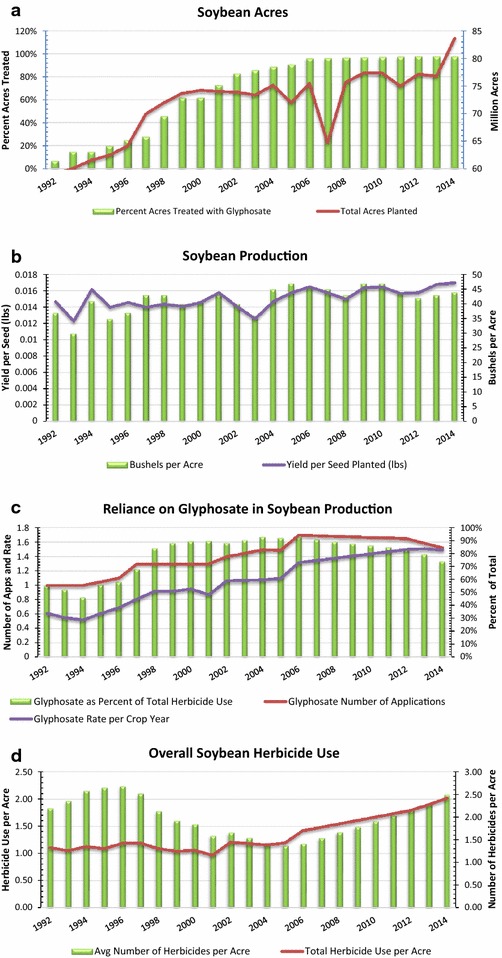
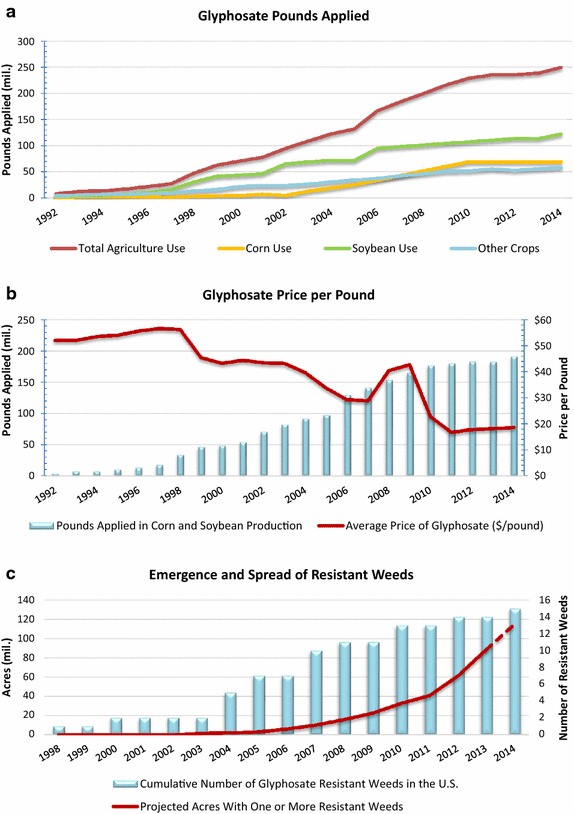
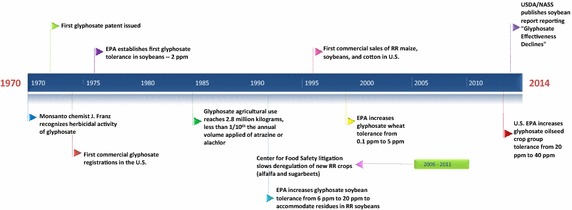
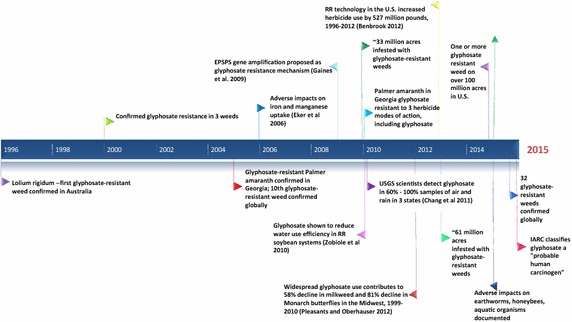
Verification
Claims the paper makes
The claims and statistics of this paper haven’t been checked yet.
Run the check — free, no account needed. It reads the open-access text and checks the sources it cites.
Self-check
Percentages, sums and reported differences re-computed from the paper’s own numbers.
The self-check needs the paper’s full text.
Citations
Cites
International Agency for Research on Cancer
National Cancer Institute (2020) · Definitions · doi:10.32388/pfg7jq · Cited by 9,394
The United States Department of Agriculture
True, A. C. (1912) · The Annals of the American Academy of Political and Social Science · doi:10.1177/000271621204000113 · Cited by 5,104
Glyphosate: a once‐in‐a‐century herbicide
Duke, S. O., & Powles, S. B. (2008) · Pest Management Science · doi:10.1002/ps.1518 · Cited by 1,821 · cited 1×
“John Franz, identified the herbicidal activity of glyphosate in 1970, and a formulated end-use product called Roundup was first sold commercially by Monsanto in 1974 [2].”
BackgroundMyers, J. P., Antoniou, M. N., Blumberg, B., Carroll, L., Colborn, T., Everett, L. G., Hansen, M., Landrigan, P. J., Lanphear, B. P., Mesnage, R., et al. (2016) · Environmental Health · doi:10.1186/s12940-016-0117-0 · Cited by 907
Self-citationFate of glyphosate in soil and the possibility of leaching to ground and surface waters: a review.
Borggaard, O., & Gimsing, A. (2008) · Pest Management Science · doi:10.1002/ps.1512 · Cited by 734 · cited 1×
“Rising use triggers new concerns Driven by the growing diversity of uses and dramatic increases in volumes applied, levels of glyphosate and its primary metabolite aminomethylphosphonic acid (AMPA) have been detected in the air [51], soil [52], and water [49, 53].”
BackgroundGlobal perspective of herbicide‐resistant weeds
Heap, I. (2013) · Pest Management Science · doi:10.1002/ps.3696 · Cited by 666
Glyphosate-based herbicides are toxic and endocrine disruptors in human cell lines
Gasnier, C., Dumont, C., Benachour, N., Clair, E., Chagnon, M.-C., & Séralini, G.-E. (2009) · Toxicology · doi:10.1016/j.tox.2009.06.006 · Cited by 658
Battaglin, W. A., Meyer, M. T., Kuivila, K. M., & Dietze, J. E. (2014) · JAWRA Journal of the American Water Resources Association · doi:10.1111/jawr.12159 · Cited by 597 · cited 1×
“Rising use triggers new concerns Driven by the growing diversity of uses and dramatic increases in volumes applied, levels of glyphosate and its primary metabolite aminomethylphosphonic acid (AMPA) have been detected in the air [51], soil [52], and water [49, 53].”
BackgroundEvolved glyphosate‐resistant weeds around the world: lessons to be learnt
Powles, S. B. (2008) · Pest Management Science · doi:10.1002/ps.1525 · Cited by 500 · cited 1×
“Shifts in weed communities favoring species less susceptible to glyphosate, coupled with the emergence of first, less sensitive, and eventually glyphosate-resistant weeds drove the incremental rise in the intensity of glyphosate applications on GE-HT crops [13, 10].”
BackgroundPaganelli, A. R., Gnazzo, V., Acosta, H., López, S. L., & Carrasco, A. E. (2010) · Chemical Research in Toxicology · doi:10.1021/tx1001749 · Cited by 460
Research works printed but not linked: 3
- Benbrook CM (2016) Trends in glyphosate herbicide use in the united states and globally: Supporting data. Environ Sci Eur. doi: 10.1186/s12302-016-0070-0
- Dupraz E (2012) Monsanto and the Quasi-Per Se Illegal Rule for Bundled Discounts. Vt Law Rev 37:203–237
- Brändli D, Reinacher S (2012) Herbicides found in human urine. Ithaka J 1:270–272
Cited by
Sorted by citations
Items 901–1,000 of 1,002
Schulte, N. O., Carlisle, D. M., & Spaulding, S. A. (2022) · The Science of The Total Environment · doi:10.1016/j.scitotenv.2022.154241 · Cited by 10
Pearsons, K. A., Chase, C. A., Omondi, E. C., Zinati, G. M., Smith, A., & Rui, Y. (2023) · Frontiers in Sustainable Food Systems · doi:10.3389/fsufs.2022.1004256 · Cited by 13
“Reduced-till management has been adopted by over 65% of conventional farmers in the United States in part because most have access to low-cost herbicides that provide an effective way to manage weeds without regular tillage (Pittelkow et al., 2015; Benbrook, 2016; NASS, 2019; White et al., 2019).”
BackgroundPaetow, L. J., Cue, R. I., Pauli, B. D., & Marcogliese, D. J. (2023) · Ecotoxicology and Environmental Safety · doi:10.1016/j.ecoenv.2023.115021 · Cited by 10
Trinh, P. B., & Schäfer, A. I. (2023) · Water Research · doi:10.1016/j.watres.2023.121021 · Cited by 10
Filippi, I., Fernández, P., Grimalt, J. O., Butinof, M., Amé, M. V., & Muñoz, S. E. (2023) · Environmental Advances · doi:10.1016/j.envadv.2023.100474 · Cited by 12
Sun, X., Zhang, H., Huang, X., Yang, D., Wu, C., Liu, H., & Zhang, L. (2024) · Ecotoxicology and Environmental Safety · doi:10.1016/j.ecoenv.2024.116266 · Cited by 10
Tang, P., Wang, Y., Liao, Q., Zhou, Y., Huang, H., Liang, J. L., Zeng, X., & Qiu, X. (2024) · BMC Public Health · doi:10.1186/s12889-024-19126-0 · Cited by 10
“Since the 1990s, the applications of glyphosate have increased rapidly worldwide [1].”
BackgroundHerbicide‐resistant weed management with robots: A weed ecological–economic model
Yu, C., Khanna, M., Atallah, S. S., Kar, S., Bagavathiannan, M., & Chowdhary, G. V. (2024) · Agricultural Economics · doi:10.1111/agec.12856 · Cited by 10
Benbrook, C. (2025) · Environmental Sciences Europe · doi:10.1186/s12302-025-01057-1 · Cited by 10
Self-citationSynergistic effects of contaminants in Lombardy waters
Porta, C. A. M. L., Fumagalli, M. R., Gomarasca, S., Lionetti, M. C., Zapperi, S., & Bocchi, S. (2021) · Scientific Reports · doi:10.1038/s41598-021-93321-6 · Cited by 10
Ergun, H., & Çayır, A. (2021) · Toxicology and Industrial Health · doi:10.1177/07482337211033149 · Cited by 10
“Glyphosate is an herbicide and has been widely and intensively used since 1974 (Benbrook, 2016).”
BackgroundLi, W., Wilkes, R. A., & Aristilde, L. (2021) · ACS Environmental Au · doi:10.1021/acsenvironau.1c00030 · Cited by 10
Weed response in winter wheat fields on a gradient of glyphosate use in the recent past
Andert, S., de Mol, F., Koning, L. A., & Gerowitt, B. (2022) · Agriculture Ecosystems & Environment · doi:10.1016/j.agee.2022.107977 · Cited by 10
Tracking pesticide residues and risk levels in individual samples—insights and applications
Benbrook, C. (2022) · Environmental Sciences Europe · doi:10.1186/s12302-022-00636-w · Cited by 10
“Glyphosate is by far the most heavily used pesticide worldwide [13].”
BackgroundSelf-citationTrehalose prevents glyphosate-induced testicular damage in roosters via its antioxidative properties
Chen, K., Liu, J., Tie, C.-Z., & Wang, L. (2022) · Research in Veterinary Science · doi:10.1016/j.rvsc.2022.08.029 · Cited by 10
Ward, W. A., Heinly, B., Preston, J., Johnson, C., Sweger, A. L., & Persons, M. H. (2022) · Ecotoxicology · doi:10.1007/s10646-022-02610-x · Cited by 10
“Both the quantity and diversity of herbicides used in commercial crop production has steadily increased for over half a century (Benbrook 2016; Kniss 2017; Osteen and Fernandez-Cornejo 2016).”
BackgroundBenbrook, C., Mesnage, R., & Sawyer, W. (2023) · Agrochemicals · doi:10.3390/agrochemicals2010005 · Cited by 10
“This was arguably the most rapid and successful major new technology-package launch in the history of agriculture [1,19].”
BackgroundSelf-citationQi, L., Li, Y., Dong, Y., Ma, S., & Li, G. (2023) · Environmental Toxicology · doi:10.1002/tox.23808 · Cited by 10
“Glyphosate-based herbicides (GBH) are the most widely used organophosphorus pesticides in agriculture.(1) The extensive use of GBH has”
BackgroundSherard, M. M., Dang, Q. M., Reiff, S. C., Simpson, J. H., & Leopold, M. C. (2023) · ACS Applied Nano Materials · doi:10.1021/acsanm.3c00618 · Cited by 10
Qu, M., Cheng, X., Xu, Q., Zeng, Z., Zheng, M., Mei, Y., Zhao, J., & Liu, G. (2023) · Journal of Hazardous Materials · doi:10.1016/j.jhazmat.2023.132757 · Cited by 10
Henderson, A., Finger, B. J., Scott, A. W., Harvey, A. J., & Green, M. P. (2019) · Reproductive Toxicology · doi:10.1016/j.reprotox.2019.05.060 · Cited by 11
Loureiro, Í., Montanyá, I. S., Escorial, M. C., García‐Ruiz, E., Cobos, G., Sánchez‐Ramos, I., Pascual, S., González, M., & Chueca, M. C. (2019) · Agronomy · doi:10.3390/agronomy9120876 · Cited by 11
“As a result, soil degradation, labor requirements, and costs were reduced with concomitant increases in crop yield, but continued use has led to the need for both increased herbicide use and further management measures like increased tilling that may offset the initial improvements [16].”
BackgroundCarretta, L., Cardinali, A., Masin, R., Zanin, G., & Cederlund, H. (2020) · Journal of Hazardous Materials · doi:10.1016/j.jhazmat.2020.122111 · Cited by 10
Gerdol, M., Visintin, A., Kaleb, S., Spazzali, F., Pallavicini, A., & Falace, A. (2020) · Environmental Pollution · doi:10.1016/j.envpol.2020.115483 · Cited by 10
PRE herbicides influence critical time of weed removal in glyphosate-resistant corn
Ulusoy, A. N., Osipitan, O. A., Scott, J. E., Jhala, A. J., Lawrence, N. C., & Knežević, S. Z. (2020) · Weed Technology · doi:10.1017/wet.2020.105 · Cited by 10
“Weed control programs in corn-based cropping systems in the United States are heavily reliant on glyphosate due to widespread adoption of glyphosate-resistant (GR) corn in the last two decades (Benbrook 2016; USDA-NASS 2019).”
Determination of Glyphosate in human urine from farmers in Mato Grosso-BR
de Melo, K., Jacobucci, S. R. F., Garlipp, C. R., Trapé, A. Z., & Rosa, P. C. P. (2020) · InterAmerican Journal of Medicine and Health · doi:10.31005/iajmh.v3i0.124 · Cited by 12
Fate of glyphosate in wheat during milling and bread production
Tittlemier, S. A., Bestvater, L., Carlson, J. C., Kletke, J., Izydorczyk, M. S., & Fu, B. X. (2020) · Cereal Chemistry · doi:10.1002/cche.10369 · Cited by 10
Goodman, R. M., Carter, E. D., & Miller, D. L. (2021) · Viruses · doi:10.3390/v13081440 · Cited by 10
“Glyphosate is the most heavily used herbicide in the United States, due largely to the increasing dominance of crops that are genetically engineered to be resistant to this herbicide [49,50].”
BackgroundNiedobová, J., Ouředníčková, J., Michalko, R., & Skalský, M. (2022) · Environmental Chemistry Letters · doi:10.1007/s10311-022-01391-3 · Cited by 10
“They are applied to many ecosystems, including about 90% to agroecosystems and the remaining 10% to non-crop areas (Benbrook 2016; Richmond 2018).”
BackgroundGlyphosate‐based herbicide induces long‐lasting impairment in neuronal and glial differentiation
Reis, L. T. C., Raciti, M., Rodriguez, P. G., Joseph, B., Rayyes, I. A., Uhlén, P., Falk, A., Lima, S. T. D. C., & Ceccatelli, S. (2022) · Environmental Toxicology · doi:10.1002/tox.23549 · Cited by 9
Glyphosate (Ab)sorption by Shoots and Rhizomes of Native versus Hybrid Cattail (Typha)
Zheng, T., Sutton, N. B., de Jager, P., Grosshans, R. E., Munira, S., & Farenhorst, A. (2017) · Bulletin of Environmental Contamination and Toxicology · doi:10.1007/s00128-017-2167-6 · Cited by 10
“Vol.:(0123456789) North America, but hybrid cattail expansions continue to occur.”
BackgroundInfluentialYushchenko, D. Y., Simonov, P. A., Khlebnikova, T. B., Pai, Z. P., & Bukhtiyarov, V. I. (2018) · Catalysis Communications · doi:10.1016/j.catcom.2018.12.012 · Cited by 10
The Toxic Effect of Herbicidal Ionic Liquids on Biogas-Producing Microbial Community
Czarny, J., Piotrowska‐Cyplik, A., Lewicki, A., Zgoła‐Grześkowiak, A., Wolko, Ł., Galant, N., Syguda, A., & Cyplik, P. (2019) · International Journal of Environmental Research and Public Health · doi:10.3390/ijerph16060916 · Cited by 10
“However, due to their numerous undesirable environmental effects, particularly their possible accumulation, there is an ongoing search for substances with herbicidal properties characterized by low toxicity towards a wide range of organisms and new methods of their application [11].”
BackgroundSingh, V. P., Garetson, R., McGinty, J., Dotray, P. A., Morgan, G. D., Nolte, S. A., & Bagavathiannan, M. (2019) · Weed Technology · doi:10.1017/wet.2019.78 · Cited by 10
“Most of the glyphosateresistant waterhemp accessions from other states have been reported in Roundup-Ready® soybean cropping systems, which have seen tremendous increase in glyphosate use in the past 15 yr (Benbrook 2016).”
BackgroundGlyphosate-based herbicides and oxidative stress
Kronberg, F., Rossen, A., & Munarriz, E. R. (2020) · Elsevier eBooks · doi:10.1016/b978-0-12-819092-0.00009-1 · Cited by 10
Printemps, R., Guilbot, S., Didier, H., Nalin, R., & Grand, B. L. (2022) · Cardiovascular Toxicology · doi:10.1007/s12012-022-09749-3 · Cited by 9
“The use of glyphosate as an herbicide so-called glyphosate-based herbicides (GBH) has increased dramatically in recent years currently being the most widely used in the world [1, 2].”
BackgroundValente, L. C., Manoel, B. D. M., Reis, A. C. C., Stein, J., Jorge, B. C., Barbisan, L. F., Romualdo, G. R., & Arena, A. C. (2023) · Environmental Toxicology · doi:10.1002/tox.23937 · Cited by 9
“19 Glyph-osate is a widely employed herbicide worldwide, with an annual usage of 825 million kg. 20 It is classified as a broad-spectrum systemic organophosphorus compound and is also used as a crop desiccant.”
BackgroundA perspective on how glyphosate and 2,4-D in wetlands may impact climate change
Cornish, C. M., & Sweetman, J. N. (2023) · Frontiers in Environmental Science · doi:10.3389/fenvs.2023.1282821 · Cited by 9
Duong, S. T. D., & Jang, C. (2023) · Colloids and Surfaces B Biointerfaces · doi:10.1016/j.colsurfb.2023.113726 · Cited by 9
Combined Toxic Effects of Lead and Glyphosate on Apis cerana cerana
Xue, Y., Zhao, W., Meng, Q., Yang, L., Zhi, D., Guo, Y., Yue, D., Tian, Y., & Dong, K. (2024) · Insects · doi:10.3390/insects15090644 · Cited by 9
“Glyphosate (GY), the most prevalent herbicide globally, was first marketed as Roundup [5].”
BackgroundSasano, R., Sekizawa, J., Saito, I., Harano, M., Katsumoto, K., Ito, R., Iwasaki, Y., Taguchi, T., Tsutsumi, T., & Akiyama, H. (2024) · Food Chemistry X · doi:10.1016/j.fochx.2024.101806 · Cited by 9
“…and glufosinate (2-amino-4-(hydroxy(methyl)phosphoryl) butanoic acid, PubChem CID: 4794) are the most widely used herbicides worldwide, and are used as non-selective herbicides for the agricultural control of a broad spectrum of grasses and broadleaf weed species (Benbrook, 2016; Xu et al., 2019).”
BackgroundWhat is the prospect of a perennial grain revolution of agriculture?
Olsson, L., Andersson, E., Ardö, J., Crews, T. E., David, C., DeHaan, L. R., Hilling, A., Krug, A. S., Palmgren, M. B., Rey, S., et al. (2024) · Global Sustainability · doi:10.1017/sus.2024.27 · Cited by 9
“More recently, herbicide use has increased substantially (Damalas & Koutroubas, 2024), e.g., the most widely used herbicide (glyphosate) has increased almost 15-fold globally since the introduction of gly-phosate resistant crops (Benbrook, 2016).”
Glyphosate-based herbicide contributes to nutrient variability in forest plants
Wood, L. J., Botten, N., Fredeen, A. L., & Werner, J. R. (2024) · Frontiers in Forests and Global Change · doi:10.3389/ffgc.2024.1463454 · Cited by 9
Tiba, D. Y., & Canevari, T. C. (2024) · Materials Research Bulletin · doi:10.1016/j.materresbull.2024.113290 · Cited by 9
Noor, M. I., & Rahman, M. S. (2025) · Environmental Toxicology · doi:10.1002/tox.24471 · Cited by 9
“…Agency (EPA) and the United States Department of Agriculture (USDA), as well as scientific articles, denoted that glyphosate is the most used herbicide for years to come and incorporated Roundup (trade name Roundup) Ready- To-Use for weeds and grass killer as the most popular farming model [5–7].”
InfluentialShu, S., Chen, X., Ren, J., Yu, X., Zhang, H., & Yu, Y. (2025) · Journal of Applied Toxicology · doi:10.1002/jat.4793 · Cited by 9
“Glyphosate is a broad-spectrum herbicide frequently used for weed management in modern agriculture and domestic gardening (Benbrook 2016).”
McHenry, L. C., Schürch, R., Gross, A. D., Johnson, L. E., Ohlinger, B. D., & Couvillon, M. J. (2025) · Journal of Experimental Biology · doi:10.1242/jeb.250124 · Cited by 9
Kumar, M., Dash, S., Mahlknecht, J., Kolok, A. S., Dogra, S., Kuroda, K., Tobino, T., Mora, A., Kazmi, A. A., Singh, R., et al. (2025) · Current Opinion in Environmental Science & Health · doi:10.1016/j.coesh.2025.100638 · Cited by 9
Shamsi, Z., & Haderlein, S. B. (2025) · Environmental Pollution · doi:10.1016/j.envpol.2025.126967 · Cited by 9
Chowdhury, I. F., Doran, G., Stodart, B. J., Chen, C. R., & Wu, H. (2025) · Toxics · doi:10.3390/toxics13110949 · Cited by 9
“The increased use of glyphosate worldwide over the last few decades led to more research focussing on the potential persistence of glyphosate in soil [22].”
Mathiassen, S. K., Boutin, C., Strandberg, B., Carpenter, D., & Damgaard, C. F. (2021) · Environmental Toxicology and Chemistry · doi:10.1002/etc.4992 · Cited by 9
Organic agriculture: impact on the environment and food quality
Gomiero, T. (2021) · Elsevier eBooks · doi:10.1016/b978-0-12-821363-6.00002-3 · Cited by 17
Socio-Ethical Aspect of Genetically Modified Organisms: A Critical Analysis
N., A., Singh, G., & Shackira, A. M. (2021) · Elsevier eBooks · doi:10.1016/b978-0-12-820780-2.00019-4 · Cited by 9
Kadlecová, M., Vojík, M., Kutlvašr, J., & Berchová‐Bímová, K. (2022) · Weed Research · doi:10.1111/wre.12528 · Cited by 9
A Simple Method to Estimate Weed Control Threshold by Using RGB Images from Drones
Ercolini, L., Grossi, N., & Silvestri, N. (2022) · Applied Sciences · doi:10.3390/app122311935 · Cited by 9
Maternal pre-conceptional glyphosate exposure impacts the offspring hepatic and ovarian proteome
Novbatova, G., Timme, K. A., Severin, A., Sayadi, M., & Keating, A. (2023) · Toxicological Sciences · doi:10.1093/toxsci/kfad047 · Cited by 8
“In addition, due to their broad spectrum weed control properties, GLY and GBH have high usage in the United States in agriculture, horticulture, and in urban areas for general weed control (Benbrook, 2016; Kolpin et al., 2006).”
BackgroundWhy current agroecology rhetoric stands to protract farmer poverty in the developing world
Muhumuza, J. R. (2023) · Outlook on Agriculture · doi:10.1177/00307270231195381 · Cited by 10
“Agroecology advocates often highlight the challenges of technology stewardship including a rise in the use of the herbicide glyphosate due to the widespread adoption of herbicide-tolerant biotech crops (Benbrook, 2016) as a failure of biotechnology and modern farming.”
BackgroundHerbicides may threaten advances in biological control of diseases and pests
PINHEIRO, R. A., Duque, T. S., Barroso, G. M., Soares, M. A., Cabral, C. M., Zanuncio, J. C., & dos Santos, J. B. (2023) · Environmental Science and Pollution Research · doi:10.1007/s11356-023-30198-0 · Cited by 10
“The growing use of genetically modified plants (GMOs) has increased glyphosate herbicide applications to 800000 tons per year, for example (Santos et al. 2023; Wen et al. 2021; Milesi et al. 2021; Benbrook 2016).”
BackgroundPérez-Chávez, N. A., Albesa, A. G., & Longo, G. S. (2018) · Langmuir · doi:10.1021/acs.langmuir.8b02727 · Cited by 9
Agriculture, Pesticide Use, and Economic Development: A Global Examination (1990–2014)
Hedlund, J., Longo, S. B., & York, R. (2019) · Rural Sociology · doi:10.1111/ruso.12303 · Cited by 9
Glyphosate influences cell proliferation in vitro
Jeon, S., Lee, S., Roh, J., Kim, J., & Bunch, H. (2019) · All Life · doi:10.1080/26895293.2019.1702108 · Cited by 9
Circular Economy and Agro-Industrial Wastewater: Potential of Microalgae in Bioremediation Processes
Reno, U., Regaldo, L., & Gagneten, A. M. (2020) · Applied environmental science and engineering for a sustainable future · doi:10.1007/978-3-030-39137-9_5 · Cited by 9
Yield effects associated with glyphosate use in non-GMO arable farming: A review
Wiese, A., & Steinmann, H. (2020) · Crop Protection · doi:10.1016/j.cropro.2020.105148 · Cited by 9
Huaraca, L. F., Chamorro, S., Hernández, V., Bay-Schmith, E., & Villamar-Ayala, C. A. (2020) · Journal of Environmental Science and Health Part B · doi:10.1080/03601234.2020.1758497 · Cited by 9
“9 kg ha (1).([1,4]) This condition makes it have”
Backgroundde Melo, M. S., Nazari, E. M., Müller, Y. M. R., & Gismondi, É. (2020) · Environmental Science and Pollution Research · doi:10.1007/s11356-020-11025-2 · Cited by 9
“Glyphosate-based herbicides (GBH), such as Roundup®, have been used worldwide since their herbicidal properties were discovered in 1974 (Benbrook 2016).”
BackgroundKorchevskiy, A. A. (2020) · Journal of Applied Toxicology · doi:10.1002/jat.4063 · Cited by 9
What Is the Problem? Pesticides in Our Everyday Life
Zaller, J. G. (2020) · Springer eBooks · doi:10.1007/978-3-030-50530-1_1 · Cited by 9
Tang, X., Shen, L., Liu, S., & Gao, J. (2021) · Chemosphere · doi:10.1016/j.chemosphere.2021.129826 · Cited by 9
Yakimowski, S. B., Teitel, Z., & Caruso, C. M. (2021) · Molecular Ecology · doi:10.1111/mec.16231 · Cited by 9
“19 States over the past decade (Benbrook, 2016; Duke, 2018), with growers of Glyphosate-Resistant 467 crops are increasingly relying on glyphosate rather than other herbicides (Duke, 2018; Givens et 468 al.”
BackgroundPastor, I. M., Hernández, E. I., Navarro-Pedreño, J., Candel, M. B. A., Lucas, I. G., & Vidal, M. M. J. (2021) · Applied Sciences · doi:10.3390/app112110212 · Cited by 9
“Glyphosate is a broad-spectrum herbicide, in which worldwide usage (agricultural and non-agricultural) rose more than 12-fold from 1995 to 2014 [17].”
BackgroundLow concentrations of glyphosate alone affect the pubertal male rat meiotic step: An in vitro study
Blondet, A., Guillaume, M., Durand, P., & Perrard, M. (2021) · Toxicology in Vitro · doi:10.1016/j.tiv.2021.105291 · Cited by 9
Álvarez-Moya, C., Sámano-León, A. G., Silva, M. R., Ramírez-Velasco, R., Ruíz-López, M. A., & Villalobos-Arámbula, A. R. (2022) · Current Issues in Molecular Biology · doi:10.3390/cimb44050151 · Cited by 9
Yali, W. (2022) · International Journal of Applied Agricultural Sciences · doi:10.11648/j.ijaas.20220801.11 · Cited by 9
Terrazas-Salgado, L., Yáñez-Rivera, B., Llera-Herrera, R., García-Gasca, A., Alvarado-Cruz, I., & Betancourt-Lozano, M. (2022) · Journal of Environmental Science and Health. Part B - Pesticides, Food Contaminants, and Agricultural Wastes · doi:10.1080/03601234.2022.2115780 · Cited by 10
The Occurrence of Glyphosate and its Degradation Products in the Urban Stormwater: A Short Review
Feltracco, M., Rosso, B., Favarin, M., Sambo, F., Barbaro, E., Biondi, S., Toscano, G., Barbante, C., & Gambaro, A. (2022) · Water, Air and Soil Pollution · doi:10.1007/s11270-022-05973-3 · Cited by 7
“Glyphosate is currently the most widely used herbicide in the USA and throughout the world (Benbrook, 2016).”
BackgroundMovaghati, S., Delphi, L., Disfani, F., & Moosavi‐Movahedi, A. A. (2022) · International Journal of Biological Macromolecules · doi:10.1016/j.ijbiomac.2022.11.230 · Cited by 9
Mesnage, R., & Benbrook, C. (2023) · All Life · doi:10.1080/26895293.2023.2167872 · Cited by 9
Self-citationSasano, R., Ito, R., Kusumoto, M., Sekizawa, J., & Akiyama, H. (2023) · Analytical Sciences · doi:10.1007/s44211-023-00288-7 · Cited by 9
Meta-analysis of metal nanoparticles degrading pesticides: what parameters are relevant?
Herrera, W. A. T., Vera, J., Aponte, H., Hermosilla, E., Fincheira, P., Parada, J., Tortella, G., Seabra, A. B., Diez, M. C., & Rubilar, O. (2023) · Environmental Science and Pollution Research · doi:10.1007/s11356-023-26756-1 · Cited by 9
“Thus, pesticides are essential for agricultural systems due to their protection crop role, and their use is estimated to increase over time (Benbrook 2016; Mohanta 2020).”
BackgroundHe, X., Wu, C., Tan, H., Deng, X., & Li, Y. (2023) · Sustainability · doi:10.3390/su15118497 · Cited by 9
Enhancements Needed in GE Crop and Food Regulation in the U.S.
Benbrook, C. (2016) · Frontiers in Public Health · doi:10.3389/fpubh.2016.00059 · Cited by 9
Self-citationViljoen, C. D., Koortzen, B. J., & Tantuan, S. S. (2021) · Food Additives and Contaminants Part B · doi:10.1080/19393210.2021.1872713 · Cited by 9
The Influence of Herbicides to Marine Organisms Aliivibrio fischeri and Artemia salina
Vurm, R., Tajnaiová, L., & Kofroňová, J. (2021) · Toxics · doi:10.3390/toxics9110275 · Cited by 7
Bhardwaj, J. K., Kumar, V., Panchal, H., & Sachdeva, S. N. (2021) · Ultrastructural Pathology · doi:10.1080/01913123.2021.1993400 · Cited by 8
“…crops).16 Due to these GLY [N-(phosphonomethyl) glycine]resistant crops, the use of GLY herbicide has increased to 15-fold since 1996 as reported by Benbrook 2016,17 and it is currently the most frequently used herbicide worldwide.18 It is a postemergent, broad-spectrum, and non-selective…”
BackgroundBiandolino, F., Prato, E., Grattagliano, A., & Parlapiano, I. (2023) · Foods · doi:10.3390/foods12081595 · Cited by 9
“Among them, glyphosate-based herbicide (GBH) is one of the most widely used globally, with an increase of more than 12 times to 826 million kg having occurred between 1995 and 2014 [28].”
BackgroundCapability of phytoremediation of glyphosate in environment by Vulpia myuros
Gao, W., Zhang, Y., Lin, M., Mao, J., Xing, B., Li, Y., & Hou, R. (2023) · Ecotoxicology and Environmental Safety · doi:10.1016/j.ecoenv.2023.115511 · Cited by 8
“Previous studies have shown that glyphosate can bind to organic matter in the soil and remain there for a long time (Mamy et al., 2005, 2016; Mateos-Naranjo et al., 2009; Simonsen et al., 2008).”
Yarkwan, B., Isaac, O. T., Okopi, A., & Izah, S. C. (2024) · Springer eBooks · doi:10.1007/978-981-97-2428-4_11 · Cited by 8
Solomon, J., Reyes, C. D. G., Chávez‐Reyes, J., Onigbinde, S. B., Marichal‐Cancino, B. A., López-Lariz, C. H., Beck, M., & Mechref, Y. S. (2024) · Frontiers in Neuroscience · doi:10.3389/fnins.2024.1442772 · Cited by 8
“Glyphosate formulations have since grown to dominate the herbicide market (Benbrook, 2016; Duke, 2018; Kanissery et al., 2019), with a wide range of efficacy.”
BackgroundHormetic and transcriptomic responses of the toxic alga Prymnesium parvum to glyphosate
Montes, R. A. C., Mary, M. A., Rashel, R. H., Fokar, M., Herrera‐Estrella, L., López-Arredondo, D. L., & Patiño, R. (2024) · The Science of The Total Environment · doi:10.1016/j.scitotenv.2024.176451 · Cited by 9
Zhu, Y., Yang, Z., Chen, Y., Qian, L., Hao, C., Hao, L., Yang, B., & Duan, J. (2024) · Ecotoxicology and Environmental Safety · doi:10.1016/j.ecoenv.2024.117559 · Cited by 8
Murawska, A., Berbeć, E., Latarowski, K., Roman, A., & Migdał, P. (2025) · PLoS ONE · doi:10.1371/journal.pone.0309567 · Cited by 8
Occurrence and fate of glyphosate and AMPA in wastewater treatment plants in Australia.
Campbell, G., Tscharke, B. J., Prasad, P., Knight, E., Reeks, T., Jackson, A., Thomas, K., Mueller, J. F., & Kaserzon, S. (2025) · Science of the Total Environment · doi:10.1016/j.scitotenv.2025.178964 · Cited by 7
Hall, M., Ashley‐Martin, J., Till, C., Hu, J. M. Y., Lanphear, B. P., Curl, C. L., Arbuckle, T. E., Boivin, M., Booij, L., Muckle, G., et al. (2025) · Environment International · doi:10.1016/j.envint.2025.109480 · Cited by 8
Hui, Y., Guo, H., Xue, R., Wang, M., Ma, Y., Zhuang, D., & Wu, Y. (2025) · Journal of Hazardous Materials · doi:10.1016/j.jhazmat.2025.139137 · Cited by 8
Wu, B., Liu, H., Dong, R., Xu, H., Qi, J., Liang, H., Guo, C., Zeng, H., Zhao, J., Song, H., et al. (2025) · Environmental Pollution · doi:10.1016/j.envpol.2025.127206 · Cited by 8
Controle químico de plantas daninhas em povoamentos de restauração florestal
dos Santos, F. A. M., Leles, P. S. D. S., Santana, J. E. D. S., do Nascimento, D. F., & Machado, A. F. L. (2018) · Pesquisa Florestal Brasileira · doi:10.4336/2018.pfb.38e201701524 · Cited by 8
“O glifosato é o herbicida mais utilizado mundialmente no controle de plantas daninhas, na agricultura e na silvicultura (Benbrook, 2016).”
BackgroundInterference of goethite in the effects of glyphosate and Roundup® on ZFL cell line
da Silva, N. D. G., Carneiro, C. E. A., Campos, E. V. R., de Oliveira, J. L., Risso, W. E., Fraceto, L. F., Zaia, D. A. M., & Martinez, C. B. D. R. (2019) · Toxicology in Vitro · doi:10.1016/j.tiv.2019.104755 · Cited by 9
Carreiro, M. M., Fuselier, L., & Waltman, M. (2020) · Natural Areas Journal · doi:10.3375/043.040.0204 · Cited by 8
“It is also the most commonly recommended and widely applied herbicide for controlling weeds in agriculture and forestry (Andrea et al. 2003; Miller et al. 2015; Benbrook 2016).”
BackgroundPHYSIOLOGICAL AND MORPHOANATOMIC RESPONSES OF Bowdichia virgilioides KUNTH. (FABACEAE) TO GLYPHOSATE
de Oliveira, A. P. A., Filho, A. J. C., Santos, V. R. D. S., Costa, A. C., & Silva, K. L. F. (2021) · Revista Árvore · doi:10.1590/1806-908820210000028 · Cited by 8
Brede, M., Haange, S., Riede, S., Engelmann, B., Jehmlich, N., Rolle-Kampczyk, U. E., Röhn, K., von Soosten, D., von Bergen�, M., & Breves, G. (2022) · Frontiers in Microbiology · doi:10.3389/fmicb.2022.873101 · Cited by 8
“Ruminants livestock are fed protein-rich feed components such as rapes and soybeans which are highly exposed to glyphosate (Benbrook, 2016; Antier et al., 2020).”
Background
Metadata
- Authors
- Benbrook, C. M.
- Corresponding author
- Benbrook, Charles M.
- ORCID
- Benbrook, Charles M.
- Venue
- Environmental Sciences Europe
- Published
- 2016-02-02
- Volume
- 28
- Issue
- 1
- Pages
- 3-3
- ISSN
- 2190-4715 (ISSN-L)
- 2190-4707
- PMC
- PMC5044953
- OpenAlex
- W2255447065
- Cited by
- 1,890
- References
- 56
- Citations by year
- 2026: 163 · 2025: 177 · 2024: 191 · 2023: 264 · 2022: 234 · 2021: 235 · 2020: 227 · 2019: 166 · 2018: 127 · 2017: 77 · 2016: 26
- FWCI
- 71.97
- Type
- journal article
- Language
- en
- Open access
- gold
- doi.org
- Locations
- Environmental Sciences Europe (publishedVersion, cc-by)
- Europe PMC (PubMed Central) (publishedVersion, cc-by)
- PubMed Central (publishedVersion, cc-by)
- PubMed (publishedVersion)
- Funders
- Ceres Trust
- Topics
- Physical Sciences › Environmental Science › Pollution › Pesticide and Herbicide Environmental Studies
- Life Sciences › Agricultural and Biological Sciences › Plant Science › Weed Control and Herbicide Applications
- Life Sciences › Pharmacology, Toxicology and Pharmaceutics › Toxicology › Pesticide Exposure and Toxicity
- Keywords
- glyphosate, Roundup Ready crops, herbicide-tolerant crops, genetically modified crops, agricultural pesticide application
About these checks
Registry, retraction, Cites and statistics results are computed, not judged, with one exception: a printed reference that no index lists is read once by a model before it counts as a citation error. Claims are extracted by a model and kept only when their quote appears verbatim in the text; each cited source is then checked, with a model’s help, for whether it says what the claim relies on. Those verdicts can be wrong — read the claim’s quote and the cited source before relying on one.
Statistics and arithmetic are recomputed, not judged.
Confidence bands are shown only for fields calibrated on our annotated test set. None is calibrated yet, so no band is shown.
What counts as a claim ›How we measure confidence ›How we check this ›
Are you an author, or do you see a problem with this page? Request a review
