

The DOI matches its Crossref record; 53 of the 56 references it cites were found in a registry or an index.
Trends in glyphosate herbicide use in the United States and globally
Open accessAbstract
BACKGROUND: Accurate pesticide use data are essential when studying the environmental and public health impacts of pesticide use. Since the mid-1990s, significant changes have occurred in when and how glyphosate herbicides are applied, and there has been a dramatic increase in the total volume applied. METHODS: Data on glyphosate applications were collected from multiple sources and integrated into a dataset spanning agricultural, non-agricultural, and total glyphosate use from 1974-2014 in the United States, and from 1994-2014 globally. RESULTS: Since 1974 in the U.S., over 1.6 billion kilograms of glyphosate active ingredient have been applied, or 19 % of estimated global use of glyphosate (8.6 billion kilograms). Globally, glyphosate use has risen almost 15-fold since so-called "Roundup Ready," genetically engineered glyphosate-tolerant crops were introduced in 1996. Two-thirds of the total volume of glyphosate applied in the U.S. from 1974 to 2014 has been sprayed in just the last 10 years. The corresponding share globally is 72 %. In 2014, farmers sprayed enough glyphosate to apply ~1.0 kg/ha (0.8 pound/acre) on every hectare of U.S.-cultivated cropland and nearly 0.53 kg/ha (0.47 pounds/acre) on all cropland worldwide. CONCLUSIONS: Genetically engineered herbicide-tolerant crops now account for about 56 % of global glyphosate use. In the U.S., no pesticide has come remotely close to such intensive and widespread use. This is likely the case globally, but published global pesticide use data are sparse. Glyphosate will likely remain the most widely applied pesticide worldwide for years to come, and interest will grow in quantifying ecological and human health impacts. Accurate, accessible time-series data on glyphosate use will accelerate research progress.
Overview
The claims and statistics of this paper haven’t been checked yet.
Run the check — free, no account needed. It reads the open-access text and checks the sources it cites.
Integrity signals
Registry
Cites
Statistics
Figures
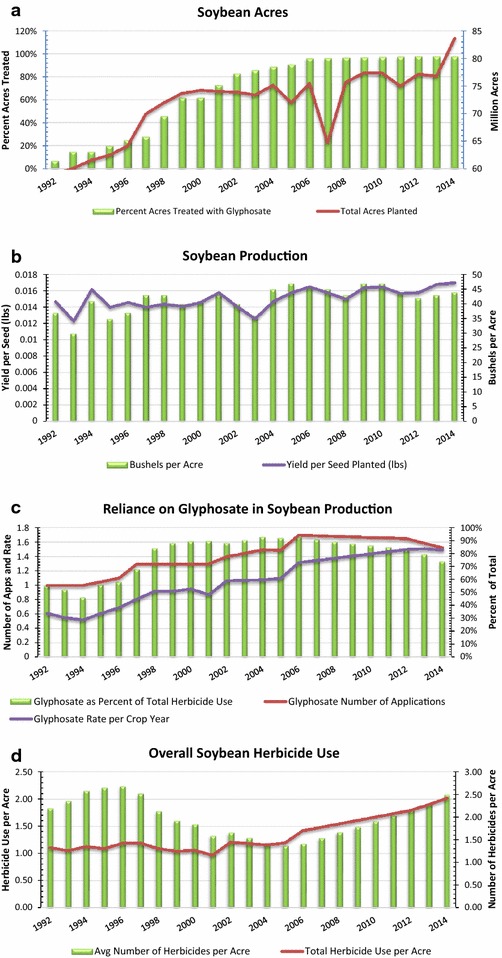
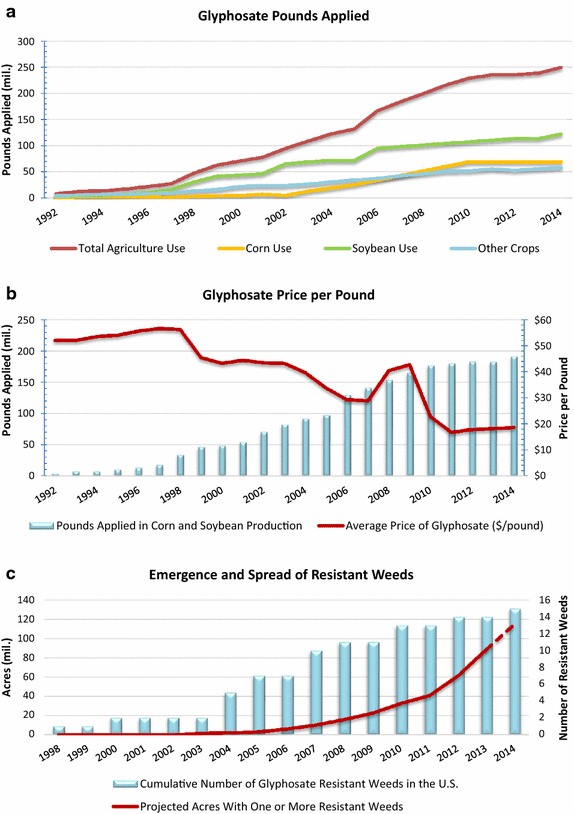
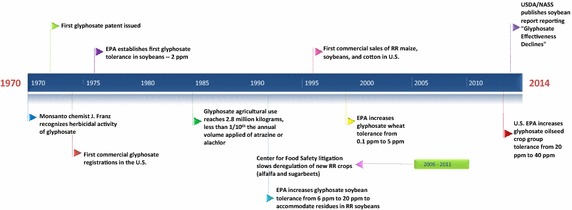
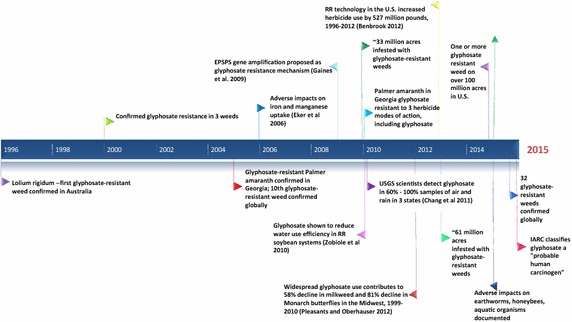
Verification
Claims the paper makes
The claims and statistics of this paper haven’t been checked yet.
Run the check — free, no account needed. It reads the open-access text and checks the sources it cites.
Self-check
Percentages, sums and reported differences re-computed from the paper’s own numbers.
The self-check needs the paper’s full text.
Citations
Cites
International Agency for Research on Cancer
National Cancer Institute (2020) · Definitions · doi:10.32388/pfg7jq · Cited by 9,394
The United States Department of Agriculture
True, A. C. (1912) · The Annals of the American Academy of Political and Social Science · doi:10.1177/000271621204000113 · Cited by 5,104
Glyphosate: a once‐in‐a‐century herbicide
Duke, S. O., & Powles, S. B. (2008) · Pest Management Science · doi:10.1002/ps.1518 · Cited by 1,821 · cited 1×
“John Franz, identified the herbicidal activity of glyphosate in 1970, and a formulated end-use product called Roundup was first sold commercially by Monsanto in 1974 [2].”
BackgroundMyers, J. P., Antoniou, M. N., Blumberg, B., Carroll, L., Colborn, T., Everett, L. G., Hansen, M., Landrigan, P. J., Lanphear, B. P., Mesnage, R., et al. (2016) · Environmental Health · doi:10.1186/s12940-016-0117-0 · Cited by 907
Self-citationFate of glyphosate in soil and the possibility of leaching to ground and surface waters: a review.
Borggaard, O., & Gimsing, A. (2008) · Pest Management Science · doi:10.1002/ps.1512 · Cited by 734 · cited 1×
“Rising use triggers new concerns Driven by the growing diversity of uses and dramatic increases in volumes applied, levels of glyphosate and its primary metabolite aminomethylphosphonic acid (AMPA) have been detected in the air [51], soil [52], and water [49, 53].”
BackgroundGlobal perspective of herbicide‐resistant weeds
Heap, I. (2013) · Pest Management Science · doi:10.1002/ps.3696 · Cited by 666
Glyphosate-based herbicides are toxic and endocrine disruptors in human cell lines
Gasnier, C., Dumont, C., Benachour, N., Clair, E., Chagnon, M.-C., & Séralini, G.-E. (2009) · Toxicology · doi:10.1016/j.tox.2009.06.006 · Cited by 658
Battaglin, W. A., Meyer, M. T., Kuivila, K. M., & Dietze, J. E. (2014) · JAWRA Journal of the American Water Resources Association · doi:10.1111/jawr.12159 · Cited by 597 · cited 1×
“Rising use triggers new concerns Driven by the growing diversity of uses and dramatic increases in volumes applied, levels of glyphosate and its primary metabolite aminomethylphosphonic acid (AMPA) have been detected in the air [51], soil [52], and water [49, 53].”
BackgroundEvolved glyphosate‐resistant weeds around the world: lessons to be learnt
Powles, S. B. (2008) · Pest Management Science · doi:10.1002/ps.1525 · Cited by 500 · cited 1×
“Shifts in weed communities favoring species less susceptible to glyphosate, coupled with the emergence of first, less sensitive, and eventually glyphosate-resistant weeds drove the incremental rise in the intensity of glyphosate applications on GE-HT crops [13, 10].”
BackgroundPaganelli, A. R., Gnazzo, V., Acosta, H., López, S. L., & Carrasco, A. E. (2010) · Chemical Research in Toxicology · doi:10.1021/tx1001749 · Cited by 460
Research works printed but not linked: 3
- Benbrook CM (2016) Trends in glyphosate herbicide use in the united states and globally: Supporting data. Environ Sci Eur. doi: 10.1186/s12302-016-0070-0
- Dupraz E (2012) Monsanto and the Quasi-Per Se Illegal Rule for Bundled Discounts. Vt Law Rev 37:203–237
- Brändli D, Reinacher S (2012) Herbicides found in human urine. Ithaka J 1:270–272
Cited by
Sorted by citations
Worldwide pesticide usage and its impacts on ecosystem
Sharma, A., Kumar, V., Shahzad, B., Tanveer, M., Sidhu, G. P. S., Handa, N., Kohli, S. K., Yadav, P. T., Bali, A. S., Parihar, R. D., et al. (2019) · SN Applied Sciences · doi:10.1007/s42452-019-1485-1 · Cited by 2,143
Pesticides, environment, and food safety
Carvalho, F. P. (2017) · Food and Energy Security · doi:10.1002/fes3.108 · Cited by 1,947
“At present, there is a widespread concern about effects of herbicides on human health, such as glyphosate that is of common use in agriculture and in cities to control weeds, and is a main carcinogenic agent (Araújo et al. 2016; Benbrook 2016).”
BackgroundEnvironmental and health effects of the herbicide glyphosate
van Bruggen, A. H. C., He, M., Shin, K., Mai, V., Jeong, K. C., Finckh, M. R., & Morris, J. G. (2017) · The Science of The Total Environment · doi:10.1016/j.scitotenv.2017.10.309 · Cited by 1,057
Myers, J. P., Antoniou, M. N., Blumberg, B., Carroll, L., Colborn, T., Everett, L. G., Hansen, M., Landrigan, P. J., Lanphear, B. P., Mesnage, R., et al. (2016) · Environmental Health · doi:10.1186/s12940-016-0117-0 · Cited by 907
Self-citationAgriculture and biodiversity: a review
Dudley, N., & Alexander, S. (2017) · Biodiversity · doi:10.1080/14888386.2017.1351892 · Cited by 562
“Herbicide-resistant genetically-modified crops use 56% of total glyphosate (Benbrooke 2016) and increased tolerance means application rates will likely rise further (Tanentzap et al. 2015).”
BackgroundRichardson, J. R., Fitsanakis, V. A., Westerink, R. H. S., & Kanthasamy, A. G. (2019) · Acta Neuropathologica · doi:10.1007/s00401-019-02033-9 · Cited by 551
Thompson, D. A., Lehmler, H., Kolpin, D. W., Hladik, M. L., Vargo, J. D., Schilling, K. E., LeFevre, G. H., Peeples, T. L., Poch, M. C., LaDuca, L. E., et al. (2020) · Environmental Science Processes & Impacts · doi:10.1039/c9em00586b · Cited by 472
Silva, V., Montanarella, L., Jones, A., Fernández‐Ugalde, O., Mol, H. G. J., Ritsema, C. J., & Geissen, V. (2017) · The Science of The Total Environment · doi:10.1016/j.scitotenv.2017.10.093 · Cited by 398
“The half-life times of glyphosate and AMPA, also of importance in the respect of the amounts found in soils, are highly variable, ranging from a few days up to one or two years, depending on edaphic and environmental conditions, namely temperature and soil moisture (Bento et al., 2016; EFSA, 2013).”
BackgroundMethodInfluentialThe evidence of human exposure to glyphosate: a review
Gillezeau, C. N., van Gerwen, M. A. G., Shaffer, R. M., Rana, I., Zhang, L., Sheppard, L. A., & Taioli, E. (2019) · Environmental Health · doi:10.1186/s12940-018-0435-5 · Cited by 382
Zhang, L., Rana, I., Shaffer, R. M., Taioli, E., & Sheppard, L. A. (2019) · Mutation Research/Reviews in Mutation Research · doi:10.1016/j.mrrev.2019.02.001 · Cited by 381
The global environmental hazard of glyphosate use
Maggi, F., la Cecilia, D., Tang, F. H. M., & McBratney, A. B. (2020) · The Science of The Total Environment · doi:10.1016/j.scitotenv.2020.137167 · Cited by 358
Fu, H., Tan, P., Wang, R., Li, S., Liu, H., Yang, Y., & Wu, Z. (2021) · Journal of Hazardous Materials · doi:10.1016/j.jhazmat.2021.127494 · Cited by 353
Glyphosate toxicity for animals
Gill, J. P. K., Sethi, N., Mohan, A., Datta, S., & Girdhar, M. (2017) · Environmental Chemistry Letters · doi:10.1007/s10311-017-0689-0 · Cited by 330
The impact and toxicity of glyphosate and glyphosate-based herbicides on health and immunity
Peillex, C., & Pelletier, M. (2020) · Journal of Immunotoxicology · doi:10.1080/1547691x.2020.1804492 · Cited by 348
“First used as a desiccant and in the pretreatment of crops, RoundUpVR utilization spreads dramatically since 1995 with the development of RoundUpVR -resistant plants (Benbrook 2016).”
BackgroundInfluentialIgnoring Adjuvant Toxicity Falsifies the Safety Profile of Commercial Pesticides
Mesnage, R., & Antoniou, M. N. (2018) · Frontiers in Public Health · doi:10.3389/fpubh.2017.00361 · Cited by 340
“In this review, we have focused on the co-formulants included in the commercial formulations of glyphosate-based herbicides (5), in particular the polyethoxylated tallow amines (POEAs), which we consider as a representative good model system because they are the most used pesticides worldwide (20) (Figure 1).”
BackgroundNie, J., Sun, Y., Zhou, Y., Kumar, M., Usman, M., Li, J., Shao, J., Wang, L., & Tsang, D. C. W. (2019) · The Science of The Total Environment · doi:10.1016/j.scitotenv.2019.136080 · Cited by 303
AminoMethylPhosphonic acid (AMPA) in natural waters: Its sources, behavior and environmental fate
Grandcoin, A., Piel, S., & Baurès, E. (2017) · Water Research · doi:10.1016/j.watres.2017.03.055 · Cited by 312
The combined toxicity effect of nanoplastics and glyphosate on Microcystis aeruginosa growth
Zhang, Q., Qu, Q., Lu, T., Ke, M., Zhu, Y., Zhang, M., Zhang, Z., Du, B., Pan, X., Sun, L., et al. (2018) · Environmental Pollution · doi:10.1016/j.envpol.2018.09.073 · Cited by 283
Long-term trends in the intensity and relative toxicity of herbicide use
Kniss, A. R. (2017) · Nature Communications · doi:10.1038/ncomms14865 · Cited by 268
Resistance-gene-directed discovery of a natural-product herbicide with a new mode of action
Yan, Y., Liu, Q., Zang, X., Yuan, S., Bat-Erdene, U., Nguyen, C., Gan, J., Zhou, J., Jacobsen, S. E., & Tang, Y. (2018) · Nature · doi:10.1038/s41586-018-0319-4 · Cited by 269
Schütte, G., Eckerstorfer, M., Rastelli, V., Reichenbecher, W., Restrepo-Vassalli, S., Ruohonen-Lehto, M., Saucy, A.-G. W., & Mertens, M. (2017) · Environmental Sciences Europe · doi:10.1186/s12302-016-0100-y · Cited by 249
“4 million kg, global agricultural use rose almost 15-fold to 747 million kg, with more than 50% accounted for by use on HR crops [73].”
BackgroundAntimicrobial Use and Resistance in Plant Agriculture: A One Health Perspective
Miller, S. A., Ferreira, J. P., & LeJeune, J. T. (2022) · Agriculture · doi:10.3390/agriculture12020289 · Cited by 241
“For the same year, it is estimated that, worldwide, 860,000 metric tonnes of glyphosate (Roundup), a non-selective weed killer, were applied in agricultural and non-agricultural use (railroads, right-of-way) settings [156,157].”
BackgroundGlyphosate, a chelating agent—relevant for ecological risk assessment?
Mertens, M., Höss, S., Neumann, G., Afzal, J., & Reichenbecher, W. (2018) · Environmental Science and Pollution Research · doi:10.1007/s11356-017-1080-1 · Cited by 235
“Under agronomic conditions, however, multiple applications are very common (Benbrook 2016).”
BackgroundInfluentialPesticides With Potential Thyroid Hormone-Disrupting Effects: A Review of Recent Data
Leemans, M., Couderq, S., DEMENEIX, B. A., & Fini, J. (2019) · Frontiers in Endocrinology · doi:10.3389/fendo.2019.00743 · Cited by 245
“increased tremendously since Monsanto introduced glyphosatetolerant crop varieties in 1996 (namely, sugar beet, canola, cotton, maize, alfalfa) to be used in conjunction with Roundup, the glyphosate-based formulation (129).”
MethodKubsad, D., Nilsson, E. E., King, S. E., Sadler‐Riggleman, I., Beck, D., & Skinner, M. K. (2019) · Scientific Reports · doi:10.1038/s41598-019-42860-0 · Cited by 234
Singh, S., Kumar, V., Datta, S., Wani, A. B., Dhanjal, D. S., Romero, R., & Singh, J. (2020) · Environmental Chemistry Letters · doi:10.1007/s10311-020-00969-z · Cited by 227
“Globally, the share of total use of glyphosate among other herbicide during 1974–2014 was 1.5%, which increased to 71.6% from 2005 to 2015 (Benbrook 2016; Kaur et al.”
BackgroundInfluentialZirconium Metal–Organic Frameworks for Organic Pollutant Adsorption
Drout, R. J., Robison, L., Chen, Z., İslamoğlu, T., & Farha, O. K. (2019) · Trends in Chemistry · doi:10.1016/j.trechm.2019.03.010 · Cited by 222
Meftaul, I. M., Venkateswarlu, K., Dharmarajan, R., Annamalai, P., Asaduzzaman, M., Parven, A., & Megharaj, M. (2020) · Environmental Pollution · doi:10.1016/j.envpol.2020.114372 · Cited by 218
“) of glyphosate has been used since 1974, which is about 19% of the estimated global use (Benbrook, 2016).”
BackgroundLiu, T., Xu, S., Lu, S., Qin, P., Bi, B., Ding, H., Liu, Y., Guo, X., & Liu, X. (2018) · The Science of The Total Environment · doi:10.1016/j.scitotenv.2018.10.087 · Cited by 221
Narayanan, M., Ali, S. S., & El-Sheekh, M. (2023) · Journal of Environmental Management · doi:10.1016/j.jenvman.2023.117532 · Cited by 221
Sharma, A., Kumar, V., & Longchamps, L. (2024) · Smart Agricultural Technology · doi:10.1016/j.atech.2024.100648 · Cited by 276
Parvez, S., Gerona, R. R. L., Proctor, C., Friesen, M. W., Ashby, J. L., Reiter, J. L., Lui, Z., & Winchester, P. (2018) · Environmental Health · doi:10.1186/s12940-018-0367-0 · Cited by 205
“In the United States alone, nearly 300 million pounds are applied each year [5].”
BackgroundShattuck, A., Werner, M., Mempel, F., Dunivin, Z. O., & Galt, R. E. (2023) · Global Environmental Change · doi:10.1016/j.gloenvcha.2023.102693 · Cited by 223
Obesity II: Establishing causal links between chemical exposures and obesity
Heindel, J. J., Howard, S. G., Agay‐Shay, K., Arrebola, J. P., Audouze, K., Babin, P. J., Barouki, R., Bansal, A., Blanc, É., Cave, M. C., et al. (2022) · Biochemical Pharmacology · doi:10.1016/j.bcp.2022.115015 · Cited by 215
Bhatt, P., Joshi, T., Bhatt, K., Zhang, W., Huang, Y.-H., & Chen, S.-H. (2020) · Journal of Hazardous Materials · doi:10.1016/j.jhazmat.2020.124927 · Cited by 164
Mesnage, R., Renney, G., Séralini, G., Ward, M. A., & Antoniou, M. N. (2017) · Scientific Reports · doi:10.1038/srep39328 · Cited by 193
Pesticide regulations and their malpractice implications on food and environment safety
Zikankuba, V. L., Mwanyika, G., Ntwenya, J. E., & James, A. (2019) · Cogent Food & Agriculture · doi:10.1080/23311932.2019.1601544 · Cited by 193
“Persistent organic pollutants mainly OCPs in the food chain in India are reported by several findings in almost all crops, although pesticide MRLs are set considerably higher compared to EU and USA (Jasbir Singh Bedi, Singh, Gupta, Gill, & Aulakh, 2018; Yadav et al., 2015).”
BackgroundInfluentialEffects of glyphosate exposure on human health: Insights from epidemiological and in vitro studies
Agostini, L. P., Dettogni, R. S., Reis, R., Stur, E., Santos, E. V. W., Ventorim, D. P., Garcia, F. M., Cardoso, R. C., Graceli, J. B., & Louro, I. D. (2019) · The Science of The Total Environment · doi:10.1016/j.scitotenv.2019.135808 · Cited by 196
Asad, M., & Bais, A. (2019) · Information Processing in Agriculture · doi:10.1016/j.inpa.2019.12.002 · Cited by 193
Richmond, M. E. (2018) · Journal of Environmental Studies and Sciences · doi:10.1007/s13412-018-0517-2 · Cited by 184
Benbrook, C. (2019) · Environmental Sciences Europe · doi:10.1186/s12302-018-0184-7 · Cited by 187
Self-citationHerbicide Resistance: Managing Weeds in a Changing World
Ofosu, R., Agyemang, E. D., Márton, A., Pásztor, G., Taller, J., & Kazinczi, G. (2023) · Agronomy · doi:10.3390/agronomy13061595 · Cited by 179
Environmental impacts of genetically modified plants: A review
Tsatsakis, A. M., Nawaz, M. A., Kouretas, D., Balias, G., Savolainen, K., Tutelyan, V. A., Golokhvast, K. S., Lee, J., Yang, S. H., & Chung, G. (2017) · Environmental Research · doi:10.1016/j.envres.2017.03.011 · Cited by 178
“For the coming years glyphosate will prevail as the herbicide of choice across the globe and quantification of its human health impacts and ecological consequences will prosper (Benbrook, 2016).”
BackgroundInfluentialTreatment technologies and degradation pathways of glyphosate: A critical review
Feng, D., Soric, A., & Boutin, O. (2020) · Science of The Total Environment · doi:10.1016/j.scitotenv.2020.140559 · Cited by 183
“The total amount of glyphosate used for agricultural and non-agricultural applications reached 126 million kilograms in 2014 (Benbrook, 2016).”
BackgroundIs it time to reassess current safety standards for glyphosate-based herbicides?
Vandenberg, L. N., Blumberg, B., Antoniou, M. N., Benbrook, C., Carroll, L., Colborn, T., Everett, L. G., Hansen, M., Landrigan, P. J., Lanphear, B. P., et al. (2017) · Journal of Epidemiology & Community Health · doi:10.1136/jech-2016-208463 · Cited by 173
Self-citationExplaining Growing Glyphosate Use: The Political Economy of Herbicide-Dependent Agriculture
Jennifer A. Clapp (University of Waterloo) (2021) · Global Environmental Change · doi:10.1016/j.gloenvcha.2021.102239 · Cited by 171
Alonso, L. L., Demetrio, P. M., Etchegoyen, M. A., & Marino, D. J. G. (2018) · The Science of The Total Environment · doi:10.1016/j.scitotenv.2018.07.134 · Cited by 170
“…constitute the most widely used pesticides on the market, with particular emphasis on the employment of glyphosate [N (phosphonomethyl)glycine: GLP] and atrazine (2 chloro 4 ethylamino 6 isopropyl amino 1,3,5 triazine: ATZ), both regionally (Leguizamón, 2014) and globally (Benbrook, 2016).”
BackgroundJennifer A. Clapp (University of Waterloo) (2018) · Global Environmental Politics · doi:10.1162/glep_a_00454 · Cited by 182
Mesnage, R., Teixeira, M., Mandrioli, D., Falcioni, L., Ducarmon, Q. R., Zwittink, R. D., Mazzacuva, F., Caldwell, A., Halket, J. M., Amiel, C., et al. (2021) · Environmental Health Perspectives · doi:10.1289/ehp6990 · Cited by 173
From silent spring to silent night: Agrochemicals and the anthropocene
Hayes, T. B., & Hansen, M. A. (2017) · Elementa Science of the Anthropocene · doi:10.1525/elementa.246 · Cited by 170
“These herbicide resistant varieties will permit (and require) the use of even more herbicides (see the case for glyphosate (Benbrook, 2016)).”
BackgroundGandhi, K. N., Khan, S. S., Patrikar, M., Markad, A., Kumar, N., Choudhari, A., Sagar, P., & Indurkar, S. (2021) · Environmental Challenges · doi:10.1016/j.envc.2021.100149 · Cited by 186
Glyphosate contamination in grains and foods: An overview
Xu, J., Smith, S., Smith, G., Wang, W., & Li, Y. (2019) · Food Control · doi:10.1016/j.foodcont.2019.106710 · Cited by 164
Herbicide Resistance Management: Recent Developments and Trends
Beckie, H. J., Ashworth, M. B., & Flower, K. C. (2019) · Plants · doi:10.3390/plants8060161 · Cited by 161
“Annual legume (pulse) crops are usually the weak link in the rotation because of their poor weed competitiveness combined with few registered herbicides or dependency on a few herbicide SOAs such as ALS inhibitors.”
BackgroundInfluentialPoiger, T., Buerge, I. J., Bächli, A., Müller, M. D., & Balmer, M. E. (2017) · Environmental Science and Pollution Research · doi:10.1007/s11356-016-7835-2 · Cited by 172
“3 × 10(8) kg active substance in 2014 (Benbrook 2016).”
BackgroundInfluentialGlyphosate, but not its metabolite AMPA, alters the honeybee gut microbiota
Blot, N., Veillat, L., Rouzé, R., & Delatte, H. (2019) · PLoS ONE · doi:10.1371/journal.pone.0215466 · Cited by 154
van Bruggen, A. H. C., Finckh, M. R., He, M., Ritsema, C. J., Harkes, P., Knuth, D., & Geissen, V. (2021) · Frontiers in Environmental Science · doi:10.3389/fenvs.2021.763917 · Cited by 161
“…2) Differences in sensitivity of microorganisms as more and more species are becoming resistant to glyphosate (Grube et al., 2019; Pöppe et al., 2019), and 3) Actual residue levels above the maximum residue limits if the MRLs are raised over time (Benbrook, 2016; (European Commission), 2020).”
BackgroundInfluentialRamakrishnan, B., Venkateswarlu, K., Sethunathan, N., & Megharaj, M. (2018) · The Science of The Total Environment · doi:10.1016/j.scitotenv.2018.11.041 · Cited by 159
Glyphosate Use, Toxicity and Occurrence in Food
Soares, D., Silva, L., Duarte, S. C., Pena, A., & Pereira, A. M. P. T. (2021) · Foods · doi:10.3390/foods10112785 · Cited by 147
“The concept of herbicide applied per agricultural area is one of the most important parameters for determining the intensity of a herbicide use [4].”
BackgroundInfluentialEvaluation of estrogen receptor alpha activation by glyphosate-based herbicide constituents
Mesnage, R., Phedonos, A., Biserni, M., Arno, M. J., Balu, S., Corton, J. C., Ugarte, R., & Antoniou, M. N. (2017) · Food and Chemical Toxicology · doi:10.1016/j.fct.2017.07.025 · Cited by 153
“53 kg/hectare on all cropland worldwide (Benbrook, 2016).”
BackgroundInfluentialGlyphosate residues in Swiss market foods: monitoring and risk evaluation
Zoller, O., Rhyn, P., Rupp, H., Zarn, J. A., & Geiser, C. (2017) · Food Additives and Contaminants Part B · doi:10.1080/19393210.2017.1419509 · Cited by 145
The overlooked impact of rising glyphosate use on phosphorus loading in agricultural watersheds
Hébert, M., Fugère, V., & Gonzalez, A. (2018) · Frontiers in Ecology and the Environment · doi:10.1002/fee.1985 · Cited by 143
Organic diet intervention significantly reduces urinary pesticide levels in U.S. children and adults
Hyland, C., Bradman, A., Gerona, R. R. L., Patton, S., Zakharevich, I., Gunier, R. B., & Klein, K. (2019) · Environmental Research · doi:10.1016/j.envres.2019.01.024 · Cited by 140
Farina, W. M., Balbuena, M. S., Herbert, L. T., Goñalons, C. M., & Vázquez, D. E. (2019) · Insects · doi:10.3390/insects10100354 · Cited by 136
“An increase in concentrations of GLY and other agrochemicals can be expected due to the agricultural intensification and use of GMO technology in many countries, which has had an exponential growth in the last decades [6,32].”
BackgroundMethodInfluentialRe-registration Challenges of Glyphosate in the European Union
Székács, A., & Darvas, B. (2018) · Frontiers in Environmental Science · doi:10.3389/fenvs.2018.00078 · Cited by 138
“Since its introduction as an herbicide active ingredient in 1971 (Baird et al., 1971), glyphosate [N-(phosphonomethyl)glycine] became and remains the market leading herbicide active ingredient worldwide (Dill et al., 2010; Székács and Darvas, 2012; Benbrook, 2016).”
BackgroundResultInfluentialDavoren, M. J., & Schiestl, R. H. (2018) · Carcinogenesis · doi:10.1093/carcin/bgy105 · Cited by 144
Tsiaoussis, J., Antoniou, M. N., Koliarakis, I., Mesnage, R., Vardavas, C. I., Izotov, B. N., Psaroulaki, A., & Tsatsakis, A. M. (2019) · Toxicology Letters · doi:10.1016/j.toxlet.2019.04.014 · Cited by 139
“2 Glyphosate 572 573 Glyphosate (GLP) is the stated active component of Roundup® (RU), the most 574 broadly used GLP-based herbicide (GBH) worldwide (Benbrook, 2016).”
BackgroundGlyphosate vs. Glyphosate-Based Herbicides Exposure: A Review on Their Toxicity
Martins‐Gomes, C., Silva, T. L., Andreani, T., & Silva, A. M. (2022) · Journal of Xenobiotics · doi:10.3390/jox12010003 · Cited by 133
“Although it was developed in 1950 [26], glyphosate’s herbicidal activity was only described more than twenty years later, being then introduced by Monsanto in 1970.”
BackgroundMonarchs in decline: a collateral landscape‐level effect of modern agriculture
Stenoien, C. M., Nail, K. R., Zalucki, J., Parry, H. R., Oberhauser, K. S., & Zalucki, M. P. (2016) · Insect Science · doi:10.1111/1744-7917.12404 · Cited by 132
“Glyphosate has become the most widespread and intensively used herbicide in the United States, where agricultural use in 2014 totaled 113.4 million kg, enough to apply approximately 1 kg on every hectare of U.S.-cultivated cropland (Benbrook, 2016).”
BackgroundInfluentialThe rise of financial investment and common ownership in global agrifood firms
Clapp, J. (2019) · Review of International Political Economy · doi:10.1080/09692290.2019.1597755 · Cited by 131
“…firms relies on large-scale monoculture farming practices that have been associated with high fossil fuel use, climate change, biodiversity loss, water shortages, and chemical run off from the increased application of fertilizers and pesticides (Benbrook, 2016; Foley et al., 2011; Garnett, 2013).”
BackgroundChen, Q., Zheng, J., Yang, Q., Dang, Z., & Zhang, L. (2019) · ACS Applied Materials & Interfaces · doi:10.1021/acsami.8b22386 · Cited by 131
Organic versus Conventional Cropping Sustainability: A Comparative System Analysis
Fess, T. L., & Benedito, V. A. (2018) · Sustainability · doi:10.3390/su10010272 · Cited by 140
“, the proportion of HT crop lands have increased from 10% for corn and cotton, and 17% for soybean in 1996 to 89% and 94% in 2014, respectively; on which 250 million pounds (113 million kg) of glyphosate were applied, 49% on soybean crops alone [68,70].”
BackgroundMethodInfluentialThe rise and future of glyphosate and glyphosate‐resistant crops
Green, J. M. (2016) · Pest Management Science · doi:10.1002/ps.4462 · Cited by 129
“A cc ep te d A rti cl e dramatically reduced the price of selective herbicides but sales still declined.(3) In 2002 after six years of sales, the number of herbicides used on 10 percent of the U.”
Glyphosate decreases mycorrhizal colonization and affects plant-soil feedback
Helander, M. L., Saloniemi, I., Omacini, M., Druille, M., Salminen, J., & Saikkonen, K. (2018) · The Science of The Total Environment · doi:10.1016/j.scitotenv.2018.05.377 · Cited by 129
Rerouting plant terpene biosynthesis enables momilactone pathway elucidation
Peña, R. D. L., & Sattely, E. S. (2020) · Nature Chemical Biology · doi:10.1038/s41589-020-00669-3 · Cited by 128
Glyphosate concentrations in global freshwaters: are aquatic organisms at risk?
Brovini, E. M., Cardoso, S. J., Quadra, G. R., Vilas–Boas, J. A., Paranaíba, J. R., Pereira, R. D. O., & Mendonça, R. F. (2021) · Environmental Science and Pollution Research · doi:10.1007/s11356-021-14609-8 · Cited by 128
“Soybean is the primary culture in the USA, Brazil, and Argentina (responsible for 82% of world production), and it is often the crop that receives the most glyphosate addition (Benbrook 2016).”
BackgroundInfluentialShaheen, S. M., Antoniadis, V., Shahid, M. A. R., Yang, Y., Abdelrahman, H. M., Zhang, T., Hassan, N. E. E., Bibi, I., Niazi, N. K., Younis, S. A., et al. (2021) · Renewable and Sustainable Energy Reviews · doi:10.1016/j.rser.2021.111791 · Cited by 133
Mahler, B., Metre, P. V. V., Burley, T. E., Loftin, K., Meyer, M. T., & Nowell, L. (2017) · Science of the Total Environment · doi:10.1016/j.scitotenv.2016.10.236 · Cited by 106
Behaviour of glyphosate in a reservoir and the surrounding agricultural soils
Maqueda, C., López, T. U., Capellán, J. V., & González, E. M. (2017) · The Science of The Total Environment · doi:10.1016/j.scitotenv.2017.03.202 · Cited by 127
Facts and Fallacies in the Debate on Glyphosate Toxicity
Mesnage, R., & Antoniou, M. N. (2017) · Frontiers in Public Health · doi:10.3389/fpubh.2017.00316 · Cited by 134
“Glyphosate sales and use has increased exponentially since 1996 after the introduction of novel glyphosate-tolerant “RoundupReady” crop varieties (namely, maize, soybean, canola, cotton, sugar beet, and alfalfa), which are genetically engineered to be sprayed with Roundup without dying (2).”
BackgroundResultAlmasri, H., Tavares, D. A., Pioz, M., Sené, D., Tchamitchian, S., Cousin, M., Brunet, J., & Belzunces, L. (2020) · Ecotoxicology and Environmental Safety · doi:10.1016/j.ecoenv.2020.111013 · Cited by 125
Glyphosate Use in the European Agricultural Sector and a Framework for Its Further Monitoring
Antier, C., Kudsk, P., Reboud, X., Ulber, L., Baret, P. V., & Messéan, A. (2020) · Sustainability · doi:10.3390/su12145682 · Cited by 122
“Some of the factors identified as drivers in the increase in glyphosate use by Benbrook [3] are also relevant in the EU context (e.g., a possible increase in the area treated with glyphosate; the growing adoption of no-tillage and conservation tillage systems relying on glyphosate), whereas other factors do not apply…”
BackgroundMethodInfluentialLuo, D., Huang, X., Liu, B., Zou, W., & Wu, Y. (2021) · Journal of Agricultural and Food Chemistry · doi:10.1021/acs.jafc.0c08208 · Cited by 122
Glyphosate: environmental fate and impact
Duke, S. O. (2020) · Weed Science · doi:10.1017/wsc.2019.28 · Cited by 120
“In 2014, 88% of the glyphosate used in U.S. agriculture was used in GR crops (Benbrook 2016).”
BackgroundBeckie, H. J., Flower, K. C., & Ashworth, M. B. (2020) · Plants · doi:10.3390/plants9010096 · Cited by 120
“Since the first introduction of GR crop cultivars in 1996, glyphosate use has risen 15-fold [17].”
BackgroundMethodInfluentialMao, Q., Manservisi, F., Panzacchi, S., Mandrioli, D., Menghetti, I., Vornoli, A., Bua, L., Falcioni, L., Lesseur, C., Chen, J., et al. (2018) · Environmental Health · doi:10.1186/s12940-018-0394-x · Cited by 124
“4 million tons of GBHs have been sprayed, nearly half a pound of 100 glyphosate on every cultivated acre of land globally[2].”
BackgroundHerath, G. A. D., Poh, L. S., & Ng, W. J. (2019) · Chemosphere · doi:10.1016/j.chemosphere.2019.04.078 · Cited by 119
Tarfeen, N., Nisa, K. U., Hamid, B., Bashir, Z., Yatoo, A. M., Dar, M. A., Mohiddin, F. A., Amin, Z., Ahmad, R. A., & Sayyed, R. Z. (2022) · Processes · doi:10.3390/pr10071358 · Cited by 118
“The most widely used pesticides worldwide mainly include atrazine, simazine, isoproturon, mecoprop and glyphosate [60,61].”
BackgroundGlyphosate impairs collective thermoregulation in bumblebees
Weidenmüller, A., Meltzer, A., Neupert, S., Schwarz, A., & Kleineidam, C. (2022) · Science · doi:10.1126/science.abf7482 · Cited by 109
Lupi, L., Bedmar, F., Puricelli, M., Marino, D. J. G., Aparicio, V., Wunderlin, D. A., & Miglioranza, K. S. B. (2019) · Chemosphere · doi:10.1016/j.chemosphere.2019.03.090 · Cited by 117
Transboundary impacts of pesticide use in food production
Tang, F. H. M., Wyckhuys, K. A. G., Li, Z., Maggi, F., & Silva, V. (2025) · Nature Reviews Earth & Environment · doi:10.1038/s43017-025-00673-y · Cited by 126
“Individual countries can use different criteria to define their MRLs, alter MRLs to counter emerging concerns or industry pressure, or lack the capacity for rigorous implementation 100,101 .”
Impacts of glyphosate-based herbicides on disease resistance and health of crops: a review
Martinez, D. A., Loening, U. E., & Graham, M. C. (2018) · Environmental Sciences Europe · doi:10.1186/s12302-018-0131-7 · Cited by 114
Sex-dependent impact of Roundup on the rat gut microbiome
Lozano, V. L., Defarge, N., Rocque, L.-M., Mesnage, R., Hennequin, D., Cassier, R., de Vendômois, J. S., Panoff, J.-M., Séralini, G., & Amiel, C. (2017) · Toxicology Reports · doi:10.1016/j.toxrep.2017.12.005 · Cited by 116
“Glyphosate (G)-based herbicides (GBH) are the most used herbicides used worldwide [15].”
BackgroundExploring the half-life of glyphosate in human urine samples
Connolly, A., Jones, K., Basinas, I., Galea, K. S., Kenny, L., McGowan, P., & Coggins, M. A. (2018) · International Journal of Hygiene and Environmental Health · doi:10.1016/j.ijheh.2018.09.004 · Cited by 113
“Glyphosate is a broad spectrum, post emerging, organophosphate herbicide and is currently the highest volume herbicide used globally (Benbrook, 2016; Guyton et al., 2014).”
BackgroundIs glyphosate toxic to bees? A meta-analytical review
Battisti, L., Potrich, M., Sampaio, A. R., Ghisi, N. D. C., Costa-Maia, F. M., Abati, R., Martinez, C. B. D. R., & Sofia, S. H. (2021) · The Science of The Total Environment · doi:10.1016/j.scitotenv.2021.145397 · Cited by 111
Okada, E., Allinson, M., Barral, M., Clarke, B., & Allinson, G. (2020) · Water Research · doi:10.1016/j.watres.2019.115139 · Cited by 101
Clean-up and matrix effect in LC-MS/MS analysis of food of plant origin for high polar herbicides
Kaczyński, P. (2017) · Food Chemistry · doi:10.1016/j.foodchem.2017.03.091 · Cited by 106
The Herbicide Revolution in Developing Countries: Patterns, Causes, and Implications
Haggblade, S., Minten, B., Pray, C. E., Reardon, T., & Zilberman, D. (2017) · European Journal of Development Research · doi:10.1057/s41287-017-0090-7 · Cited by 117
Generic, growing, green?: The changing political economy of the global pesticide complex
Shattuck, A. (2021) · The Journal of Peasant Studies · doi:10.1080/03066150.2020.1839053 · Cited by 125
Woźniak, E., Sicińska, P., Michałowicz, J., Woźniak, K., Reszka, E., Huras, B., Zakrzewski, J., & Bukowska, B. (2018) · Food and Chemical Toxicology · doi:10.1016/j.fct.2018.07.035 · Cited by 115
Glyphosate: too much of a good thing?
Cuhra, M., Bøhn, T., & Cuhra, P. (2016) · Frontiers in Environmental Science · doi:10.3389/fenvs.2016.00028 · Cited by 106
“…role in industrialized farming practices, from various scientific disciplines and from a wealth of perspectives; agronomy (Duke and Powles, 2008; Benbrook, 2012, 2016; Bonny, 2011, 2014), socio-economy (Binimelis et al., 2009; Bonny, 2014), Ecology (Giesy et al., 2000; Samsel and Seneff, 2015b)…”
BackgroundInfluential
Metadata
- Authors
- Benbrook, C. M.
- Corresponding author
- Benbrook, Charles M.
- ORCID
- Benbrook, Charles M.
- Venue
- Environmental Sciences Europe
- Published
- 2016-02-02
- Volume
- 28
- Issue
- 1
- Pages
- 3-3
- ISSN
- 2190-4715 (ISSN-L)
- 2190-4707
- PMC
- PMC5044953
- OpenAlex
- W2255447065
- Cited by
- 1,890
- References
- 56
- Citations by year
- 2026: 163 · 2025: 177 · 2024: 191 · 2023: 264 · 2022: 234 · 2021: 235 · 2020: 227 · 2019: 166 · 2018: 127 · 2017: 77 · 2016: 26
- FWCI
- 71.97
- Type
- journal article
- Language
- en
- Open access
- gold
- doi.org
- Locations
- Environmental Sciences Europe (publishedVersion, cc-by)
- Europe PMC (PubMed Central) (publishedVersion, cc-by)
- PubMed Central (publishedVersion, cc-by)
- PubMed (publishedVersion)
- Funders
- Ceres Trust
- Topics
- Physical Sciences › Environmental Science › Pollution › Pesticide and Herbicide Environmental Studies
- Life Sciences › Agricultural and Biological Sciences › Plant Science › Weed Control and Herbicide Applications
- Life Sciences › Pharmacology, Toxicology and Pharmaceutics › Toxicology › Pesticide Exposure and Toxicity
- Keywords
- glyphosate, Roundup Ready crops, herbicide-tolerant crops, genetically modified crops, agricultural pesticide application
About these checks
Registry, retraction, Cites and statistics results are computed, not judged, with one exception: a printed reference that no index lists is read once by a model before it counts as a citation error. Claims are extracted by a model and kept only when their quote appears verbatim in the text; each cited source is then checked, with a model’s help, for whether it says what the claim relies on. Those verdicts can be wrong — read the claim’s quote and the cited source before relying on one.
Statistics and arithmetic are recomputed, not judged.
Confidence bands are shown only for fields calibrated on our annotated test set. None is calibrated yet, so no band is shown.
What counts as a claim ›How we measure confidence ›How we check this ›
Are you an author, or do you see a problem with this page? Request a review
