

The DOI matches its Crossref record; 53 of the 56 references it cites were found in a registry or an index.
Trends in glyphosate herbicide use in the United States and globally
Open accessAbstract
BACKGROUND: Accurate pesticide use data are essential when studying the environmental and public health impacts of pesticide use. Since the mid-1990s, significant changes have occurred in when and how glyphosate herbicides are applied, and there has been a dramatic increase in the total volume applied. METHODS: Data on glyphosate applications were collected from multiple sources and integrated into a dataset spanning agricultural, non-agricultural, and total glyphosate use from 1974-2014 in the United States, and from 1994-2014 globally. RESULTS: Since 1974 in the U.S., over 1.6 billion kilograms of glyphosate active ingredient have been applied, or 19 % of estimated global use of glyphosate (8.6 billion kilograms). Globally, glyphosate use has risen almost 15-fold since so-called "Roundup Ready," genetically engineered glyphosate-tolerant crops were introduced in 1996. Two-thirds of the total volume of glyphosate applied in the U.S. from 1974 to 2014 has been sprayed in just the last 10 years. The corresponding share globally is 72 %. In 2014, farmers sprayed enough glyphosate to apply ~1.0 kg/ha (0.8 pound/acre) on every hectare of U.S.-cultivated cropland and nearly 0.53 kg/ha (0.47 pounds/acre) on all cropland worldwide. CONCLUSIONS: Genetically engineered herbicide-tolerant crops now account for about 56 % of global glyphosate use. In the U.S., no pesticide has come remotely close to such intensive and widespread use. This is likely the case globally, but published global pesticide use data are sparse. Glyphosate will likely remain the most widely applied pesticide worldwide for years to come, and interest will grow in quantifying ecological and human health impacts. Accurate, accessible time-series data on glyphosate use will accelerate research progress.
Overview
The claims and statistics of this paper haven’t been checked yet.
Run the check — free, no account needed. It reads the open-access text and checks the sources it cites.
Integrity signals
Registry
Cites
Statistics
Figures
Verification
Claims the paper makes
The claims and statistics of this paper haven’t been checked yet.
Run the check — free, no account needed. It reads the open-access text and checks the sources it cites.
Self-check
Percentages, sums and reported differences re-computed from the paper’s own numbers.
The self-check needs the paper’s full text.
Citations
Cites
International Agency for Research on Cancer
National Cancer Institute (2020) · Definitions · doi:10.32388/pfg7jq · Cited by 9,394
The United States Department of Agriculture
True, A. C. (1912) · The Annals of the American Academy of Political and Social Science · doi:10.1177/000271621204000113 · Cited by 5,104
Glyphosate: a once‐in‐a‐century herbicide
Duke, S. O., & Powles, S. B. (2008) · Pest Management Science · doi:10.1002/ps.1518 · Cited by 1,821 · cited 1×
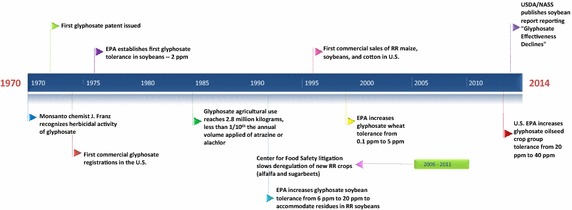
“John Franz, identified the herbicidal activity of glyphosate in 1970, and a formulated end-use product called Roundup was first sold commercially by Monsanto in 1974 [2].”
BackgroundMyers, J. P., Antoniou, M. N., Blumberg, B., Carroll, L., Colborn, T., Everett, L. G., Hansen, M., Landrigan, P. J., Lanphear, B. P., Mesnage, R., et al. (2016) · Environmental Health · doi:10.1186/s12940-016-0117-0 · Cited by 907
Self-citationFate of glyphosate in soil and the possibility of leaching to ground and surface waters: a review.
Borggaard, O., & Gimsing, A. (2008) · Pest Management Science · doi:10.1002/ps.1512 · Cited by 734 · cited 1×
“Rising use triggers new concerns Driven by the growing diversity of uses and dramatic increases in volumes applied, levels of glyphosate and its primary metabolite aminomethylphosphonic acid (AMPA) have been detected in the air [51], soil [52], and water [49, 53].”
BackgroundGlobal perspective of herbicide‐resistant weeds
Heap, I. (2013) · Pest Management Science · doi:10.1002/ps.3696 · Cited by 666
Glyphosate-based herbicides are toxic and endocrine disruptors in human cell lines
Gasnier, C., Dumont, C., Benachour, N., Clair, E., Chagnon, M.-C., & Séralini, G.-E. (2009) · Toxicology · doi:10.1016/j.tox.2009.06.006 · Cited by 658
Battaglin, W. A., Meyer, M. T., Kuivila, K. M., & Dietze, J. E. (2014) · JAWRA Journal of the American Water Resources Association · doi:10.1111/jawr.12159 · Cited by 597 · cited 1×
“Rising use triggers new concerns Driven by the growing diversity of uses and dramatic increases in volumes applied, levels of glyphosate and its primary metabolite aminomethylphosphonic acid (AMPA) have been detected in the air [51], soil [52], and water [49, 53].”
BackgroundEvolved glyphosate‐resistant weeds around the world: lessons to be learnt
Powles, S. B. (2008) · Pest Management Science · doi:10.1002/ps.1525 · Cited by 500 · cited 1×
“Shifts in weed communities favoring species less susceptible to glyphosate, coupled with the emergence of first, less sensitive, and eventually glyphosate-resistant weeds drove the incremental rise in the intensity of glyphosate applications on GE-HT crops [13, 10].”
BackgroundPaganelli, A. R., Gnazzo, V., Acosta, H., López, S. L., & Carrasco, A. E. (2010) · Chemical Research in Toxicology · doi:10.1021/tx1001749 · Cited by 460
Research works printed but not linked: 3
- Benbrook CM (2016) Trends in glyphosate herbicide use in the united states and globally: Supporting data. Environ Sci Eur. doi: 10.1186/s12302-016-0070-0
- Dupraz E (2012) Monsanto and the Quasi-Per Se Illegal Rule for Bundled Discounts. Vt Law Rev 37:203–237
- Brändli D, Reinacher S (2012) Herbicides found in human urine. Ithaka J 1:270–272
Cited by
Sorted by citations
Items 701–800 of 1,002
Bai, G., Zhou, R., Jiang, X., Zou, Y., & Shi, B. (2022) · Environmental Toxicology · doi:10.1002/tox.23534 · Cited by 18
“people are gradually concerned about the toxicity of glyphosate and the problem of glyphosate residues.(4,5) Research showed that glyphosate exists in the soil and surface waters as pollutants,(6) and also in feed and food of human blood and urine.”
BackgroundKimani, M., Kislenko, E., Gawlitza, K., & Rurack, K. (2022) · Scientific Reports · doi:10.1038/s41598-022-16825-9 · Cited by 18
Parus, A., Zdebelak, O., Ciesielski, T., Szumski, R., Woźniak-Karczewska, M., Framski, G., Baranowski, D., Niemczak, M., Zembrzuska, J., Cajthaml, T., et al. (2022) · Journal of Molecular Liquids · doi:10.1016/j.molliq.2022.120981 · Cited by 18
Karn, E., & Jasieniuk, M. (2017) · Frontiers in Plant Science · doi:10.3389/fpls.2017.00777 · Cited by 18
“Repeated evolution of resistance to glyphosate, the most widely used herbicide worldwide (Baylis, 2000; Benbrook, 2016), has been particularly problematic, occurring in 36 weed species on six continents to date (Heap, 2016).”
BackgroundCardiovascular damage associated with subchronic exposure to the glyphosate herbicide in Wistar rats
Maia, F. C. C., Porto, R. A., Magalhães, L. R., Chagas, P. H. N., & Nai, G. A. (2021) · Toxicology and Industrial Health · doi:10.1177/0748233721996578 · Cited by 17
Kimani, M., Pérez‐Padilla, V., Valderrey, V., Gawlitza, K., & Rurack, K. (2022) · Chemosensors · doi:10.3390/chemosensors10030099 · Cited by 17
Wimmer, B., Neidhardt, H., Schwientek, M., Haderlein, S. B., & Hühn, C. (2022) · Pest Management Science · doi:10.1002/ps.6883 · Cited by 17
Miranda, L. A., & Somoza, G. M. (2022) · Frontiers in Physiology · doi:10.3389/fphys.2022.939986 · Cited by 17
“Within agrochemicals, atrazine and glyphosate are currently the most widely used herbicides for agriculture (Benbrook, 2016).”
BackgroundSchwantes, D., Gonçalves, A. C., Fuentealba, D., Carneiro, M. F. H., Tarley, C. R. T., & Prete, M. C. (2022) · Process Safety and Environmental Protection · doi:10.1016/j.cherd.2022.09.033 · Cited by 17
Thompson, L. J., Stout, J. C., & Stanley, D. A. (2023) · Journal of Experimental Biology · doi:10.1242/jeb.245180 · Cited by 17
Fischer, L. R., Ramesh, D., & Weidenmüller, A. (2023) · The Science of The Total Environment · doi:10.1016/j.scitotenv.2023.166097 · Cited by 17
Yang, A., Chu, P., Wang, C., & Lin, C. (2023) · Journal of Exposure Science & Environmental Epidemiology · doi:10.1038/s41370-023-00594-2 · Cited by 20
Sánchez, R. M., Losada, J. F. B., & Martínez, J. A. M. (2024) · Frontiers in Neuroendocrinology · doi:10.1016/j.yfrne.2024.101132 · Cited by 17
“Specifically, the herbicide glyphosate, one of the most widely used in the world (Benbrook, 2015), has been associated with autism, among other diseases (Samsel and Seneff, 2013; Samsel and Seneff, 2015).”
BackgroundTittlemier, S. A., Drul, D., Lake, B. P. M., Zirdum, T., Hammond, E., Sobering, D. C., Lin, W. J., Tran, M., & Roscoe, M. (2017) · Cereal Chemistry · doi:10.1094/cchem-01-17-0021-r · Cited by 17
Analysis of scientific production on glyphosate: An example of politicization of science
Sosa, B., Fontáns, E., Romero, D., da Fonseca, A., & Achkar, M. (2019) · The Science of The Total Environment · doi:10.1016/j.scitotenv.2019.04.379 · Cited by 17
Ohara, T., Yoshimoto, T., Natori, Y., & Ishii, A. (2021) · Europe PMC (PubMed Central) · doi:10.18999/nagjms.83.3.567 · Cited by 17
Multiple evolutionary origins of glyphosate resistance in Lolium multiflorum
Brunharo, C. A. C. G., & Streisfeld, M. A. (2022) · Evolutionary Applications · doi:10.1111/eva.13344 · Cited by 17
“In addition, we likely can rule out a single origin followed by gene flow among populations, because L . multiflorum was introduced to Oregon in the early 1900s, and glyphosate did not become adopted as a widespread herbicide until the year 2000 (Benbrook, 2016).”
The Glyphosate-Based Herbicide Roundup Does Not Elevate Genome-Wide Mutagenesis ofEscherichia coli
Tincher, C., Long, H., Behringer, M. G., Walker, N. B., & Lynch, M. (2017) · G3 Genes Genomes Genetics · doi:10.1534/g3.117.300133 · Cited by 17
“Over the last decade, the use of GBHs has increased by 60%, because of the introduction of genetically-engineered herbicide-tolerant crops, the drop in price of glyphosate, and the emergence of resistant weeds (Benbrook 2016; Myers et al. 2016).”
BackgroundPatterns of pre-crop glyphosate use and in-crop selective herbicide intensities in Northern Germany
Andert, S., Bürger, J., Mutz, J.-E., & Gerowitt, B. (2018) · European Journal of Agronomy · doi:10.1016/j.eja.2018.04.009 · Cited by 16
The Growth, Apoptosis and Oxidative Stress in Microcystis viridis Exposed to Glyphosate
Ye, J., Huang, C., Qiu, Z., Wu, L., & Xu, C. (2019) · Bulletin of Environmental Contamination and Toxicology · doi:10.1007/s00128-019-02691-1 · Cited by 17
“In 2014, approximately 125,000 tons of glyphosate were used in the USA and 825,000 tons worldwide (Benbrook 2016).”
BackgroundWoźniak, E., Reszka, E., Jabłońska, E., Mokra, K., Balcerczyk, A., Huras, B., Zakrzewski, J., & Bukowska, B. (2020) · Toxicology in Vitro · doi:10.1016/j.tiv.2020.104878 · Cited by 17
Malalgoda, M., Ohm, J., Howatt, K., Green, A. J., & Şimşek, Ş. (2020) · Food Chemistry · doi:10.1016/j.foodchem.2020.127422 · Cited by 17
Ferrari, V. E., da Silveira, J. M. F. J., & Poz, M. E. S. D. (2019) · Economics of Innovation and New Technology · doi:10.1080/10438599.2019.1684645 · Cited by 20
Schimpf, M. G., Milesi, M. M., Zanardi, M., & Varayoud, J. (2021) · Food and Chemical Toxicology · doi:10.1016/j.fct.2021.112695 · Cited by 17
The shikimate pathway regulates programmed cell death
Lu, X., Shi, S., Wu, C., Zheng, X., Yang, C., Luo, J., & Yan, S. (2022) · Journal of genetics and genomics/Journal of Genetics and Genomics · doi:10.1016/j.jgg.2022.02.001 · Cited by 16
Grados, L., Pérot, M., Barbezier, N., Delayre‐Orthez, C., Bach, V., Fuméry, M., Anton, P. M., & Gay‐Queheillard, J. (2022) · Chemosphere · doi:10.1016/j.chemosphere.2022.135260 · Cited by 21
“429 As already mentioned above, glyphosate (GLY), chemically known as isopropylamine salt of N-phosphonomethyl gly- 430 cine, is a broad-spectrum herbicide commercialized in 1974 with a high efficiency in weed control (Benbrook, 2016).”
BackgroundTwo novel enzyme-free colorimetric sensors for the detection of glyphosate in real samples
Aydın, Z., Akın, Ş., Çenet, E. N., Keskinateş, M., Akbulut, A., Keleş, H., & Keleş, M. (2022) · Journal of Food Composition and Analysis · doi:10.1016/j.jfca.2022.104674 · Cited by 16
Feng, P., Dai, M., Yang, J., Wang, Y., Mao, T., Su, W., Li, F., Sun, H., Wei, J., & Li, B. (2022) · Archives of Insect Biochemistry and Physiology · doi:10.1002/arch.21919 · Cited by 16
Review on the sublethal effects of pure and formulated glyphosate on bees: Emphasis on social bees
Battisti, L., Potrich, M., Lozano, E. R., Martinez, C. B. D. R., & Sofia, S. H. (2022) · Journal of Applied Entomology · doi:10.1111/jen.13089 · Cited by 16
“The most widely sold pesticides in the world are glyphosate- based herbicides (GLY), representing approximately 71.6% of the active ingredients sold (Benbrook, 2016) and standing out in Brazil, which represents 31.45% (IBAMA— Ministério do meio ambiente, 2020).”
BackgroundMethodInfluentialPrairie Agroecosystems: Interconnected Microbiomes of Livestock, Soil and Insects
Liu, X., Floate, K. D., Gorzelak, M. A., Holman, D. B., Hrycauk, S., Kubota, H., Lupwayi, N. Z., Neilson, J. A. D., Polo, R. O., Petri, R. M., et al. (2023) · Agriculture · doi:10.3390/agriculture13020326 · Cited by 20
Conrad, J. L., Thomas, M., Parks, C. S., Jetter, K. M., Madsen, J. D., Pratt, P. D., Moran, P. J., Takekawa, J. Y., District, S. R. C., & Darin, G. M. S. (2023) · San Francisco Estuary and Watershed Science · doi:10.15447/sfews.2023v20iss4art4 · Cited by 16
No impacts of glyphosate or Crithidia bombi, or their combination, on the bumblebee microbiome
Straw, E. A., Mesnage, R., Brown, M. J. F., & Antoniou, M. N. (2023) · Scientific Reports · doi:10.1038/s41598-023-35304-3 · Cited by 16
Argüelles, L., & March, H. (2023) · Journal of Rural Studies · doi:10.1016/j.jrurstud.2023.103046 · Cited by 19
Fazal, A., Wen, Z., Yang, M., Wang, C., Hao, C., Lai, X., Jie, W., Yang, L., He, Z., Yang, H., et al. (2023) · Environmental Pollution · doi:10.1016/j.envpol.2023.122337 · Cited by 16
Urueña, Á., Blasco‐Lavilla, N., & la Rúa, P. D. (2023) · Ecotoxicology and Environmental Safety · doi:10.1016/j.ecoenv.2023.115427 · Cited by 16
Effects of glyphosate exposure on western diet-induced non-alcoholic fatty liver disease in mice
Romualdo, G. R., Valente, L. C., dos Santos, A. C. S., Grandini, N. A., Corrêa, C. R., Vinken, M., Cogliati, B., Hou, D., & Barbisan, L. F. (2023) · Environmental Toxicology and Pharmacology · doi:10.1016/j.etap.2023.104286 · Cited by 20
Herrera, W., Vera, J., Hermosilla, E., Díaz, M., Tortella, G., dos Reis, R. A., Seabra, A. B., Diez, M. C., & Rubilar, O. (2024) · Nanomaterials · doi:10.3390/nano14030299 · Cited by 18
“Imagining modern agriculture without the use of pesticides is difficult due to the crop protection role they play [1,2].”
Otaru, S., Jones, L., & Carpenter, D. O. (2024) · Environmental Health · doi:10.1186/s12940-024-01098-8 · Cited by 16
“Glyphosate is the most widely used broadleaf herbicide globally and is marketed as Roundup ™ in the United States [8].”
Backgroundla Cecilia, D., & Maggi, F. (2017) · Journal of Contaminant Hydrology · doi:10.1016/j.jconhyd.2017.05.004 · Cited by 16
Offsetting Risk: Organic Food, Pollution, and the Transgression of Spatial Boundaries
Orlando, G. (2018) · Culture Agriculture Food and Environment · doi:10.1111/cuag.12105 · Cited by 16
Some aspects of the adsorption of glyphosate and its degradation products on montmorillonite
Flores, F. M., Sánchez, R. M. T., & Afonso, M. D. S. (2018) · Environmental Science and Pollution Research · doi:10.1007/s11356-018-2073-4 · Cited by 16
JIANG, X. H., Zhang, N., Yin, L., Zhang, W., Han, F., Liu, W., Chen, H., Cao, J., & Liu, J. (2018) · Toxicology Letters · doi:10.1016/j.toxlet.2018.06.1067 · Cited by 16
Bacterial Microbiota Response in Graptemys pseudogeographica to Captivity and Roundup® Exposure
Madison, J. D., Austin, S., Davis, D. R., & Kerby, J. (2018) · Copeia · doi:10.1643/ch-18-082 · Cited by 15
Wumbei, A., Goeteyn, L., Dávila, E. L., Houbraken, M., & Spanoghe, P. (2019) · Food Additives and Contaminants Part B · doi:10.1080/19393210.2019.1609098 · Cited by 16
Bataillard, D., Christe, P., & Pigeault, R. (2020) · Ecology and Evolution · doi:10.1002/ece3.6261 · Cited by 16
“More than 85 000 tons are spread every year (Benbrook, 2016).”
BackgroundUrinary excretion of herbicide co-formulants after oral exposure to roundup MON 52276 in rats
Mesnage, R., Mazzacuva, F., Caldwell, A., Halket, J. M., & Antoniou, M. N. (2021) · Environmental Research · doi:10.1016/j.envres.2021.111103 · Cited by 15
Chavalarias, D., Lobbé, Q., & Delanoë, A. (2021) · Scientometrics · doi:10.1007/s11192-021-04186-5 · Cited by 16
“…method of phylomemy reconstruction with that depicted by experts in the field, we have synthesized the most cited literature reviews written by glyphosate supporters and skeptics (Duke 2018; Benbrook 2016; Székács and Dar-vas 2012; Gillezeau et al. 2019; Martinez et al. 2018; Singh et al. 2020).”
MethodZhou, K., Liu, X., Guo, H., Li, H.-Q., & Yang, P. (2022) · RSC Advances · doi:10.1039/d1ra08493c · Cited by 16
Graf, H. G., Biebl, S. M., Müller, L., Breitenstein, C., & Hühn, C. (2022) · Journal of Separation Science · doi:10.1002/jssc.202100952 · Cited by 16
Oilseed Rape, Wheat, and Barley Grain Contamination as Affected by Different Glyphosate Usage
Kadžienė, G., Pranaitienė, S., Auskalniene, O., Veršulienė, A., Supronienė, S., Žvirdauskienė, R., Gecaitė, V., Cesevičienė, J., & Semaškienė, R. (2023) · Plants · doi:10.3390/plants12061335 · Cited by 16
“For this reason, it is the most widely used herbicide, both across Europe [3] and the world [4].”
BackgroundA lognormal model for evaluating maximum residue levels of pesticides in crops
Guo, Y. C., & Li, Z. (2021) · Environmental Pollution · doi:10.1016/j.envpol.2021.116832 · Cited by 16
Kormann, U. G., Stokely, T. D., Verschuyl, J. P., Kroll, A. J., Harris, S. H., Maguire, D., Mainwaring, D. B., Rivers, J. W., & Betts, M. G. (2021) · Ecological Applications · doi:10.1002/eap.2441 · Cited by 15
Genna, N. G., Gourlie, J. A., & Barroso, J. (2021) · Plants · doi:10.3390/plants10122725 · Cited by 15
Adsorption and detoxification of glyphosate and aminomethylphosphonic acid by montmorillonite clays
Wang, M., Rivenbark, K. J., & Phillips, T. D. (2022) · Environmental Science and Pollution Research · doi:10.1007/s11356-022-22927-8 · Cited by 15
“Glyphosate (GLP; N-phosphonomethylglycine; C3H8NO5P), the active ingredient in Roundup®, has become one of the most prevalent organophosphorus herbicides worldwide, with almost 1 billion kg used annually (Benbrook 2016; Maggi et al.”
BackgroundGlyphosate in house dust and risk of childhood acute lymphoblastic leukemia in California
Ward, M. H., Madrigal, J. M., Jones, R. R., Friesen, M. C., Falk, R. T., Koebel, D. D., & Metayer, C. (2023) · Environment International · doi:10.1016/j.envint.2023.107777 · Cited by 15
Wang, K., Jiao, B., Gao, H., Pan, X., Wu, X., Xu, J., Dong, F., & Zheng, Y. (2023) · Journal of Food Composition and Analysis · doi:10.1016/j.jfca.2023.105298 · Cited by 15
Hernández-García, C. I., & Martı́nez-Jerónimo, F. (2023) · Frontiers in Microbiology · doi:10.3389/fmicb.2023.1195776 · Cited by 15
“It is used in more than 160 countries (Woodburn, 2000) in chemical varieties that include salts of isopropylamine, ammonium, di-ammonium, dimethyl ammonium, and potassium (Benbrook, 2016).”
BackgroundLucia, R. M., Liao, X., Huang, W., Forman, D., Kim, A., Ziogas, A., Norden‐Krichmar, T. M., Goodman, D., Alvarez, A., Masunaka, I. K., et al. (2023) · International Journal of Hygiene and Environmental Health · doi:10.1016/j.ijheh.2023.114211 · Cited by 15
Deep Learning-Based Model for Detection of Brinjal Weed in the Era of Precision Agriculture
Patel, J. A., Ruparelia, A., Tanwar, S., Alqahtani, F. H., Tolba, A. K. R., Sharma, R., Raboacă, M. S., & Neagu, B.-C. (2023) · Computers, materials & continua/Computers, materials & continua (Print) · doi:10.32604/cmc.2023.038796 · Cited by 15
Sen, K., & Mondal, N. K. (2024) · Journal of Industrial and Engineering Chemistry · doi:10.1016/j.jiec.2024.02.003 · Cited by 15
Langarica-Fuentes, A., Straub, D., Wimmer, B., Thompson, K. J., Nahnsen, S., Hühn, C., & Kleindienst, S. (2024) · Applied Soil Ecology · doi:10.1016/j.apsoil.2024.105381 · Cited by 18
Schäfer, A.-K., Vetter, W., & Anastassiades, M. (2024) · Analytical and Bioanalytical Chemistry · doi:10.1007/s00216-024-05389-4 · Cited by 15
“Some of the very polar pesticides, i.e., the total herbicides glyphosate and glufosinate along with the fungicide phosphonic acid, are currently among the most commonly used pesticides in agriculture [4].”
Molecular Triggers of Non-celiac Wheat Sensitivity: A Scoping Review and Analysis
An, C., Yang, J., Pinto-Sánchez, M. I., Verdu, E. F., Lebwohl, B., Green, P. H., & Alaedini, A. (2025) · The American Journal of Gastroenterology · doi:10.14309/ajg.0000000000003318 · Cited by 16
“Similarly, in vitro and animal studies have linked WGA and glyphosate, an herbicide that has seen a rise in usage as a desiccant immediately before wheat harvest (37), to immune activation, gut microbial dysbiosis, or intestinal barrier dysfunction (38 – 41).”
Biological Limitations on Glyphosate Biodegradation
Villarreal-Chiu, J. F., Acosta-Cortés, A. G., Kumar, S., & Kaushik, G. (2017) · Springer eBooks · doi:10.1007/978-3-319-50654-8_8 · Cited by 16
Palma‐Bautista, C., Tahmasebi, B. K., Fernández-Moreno, P. T., Rojano‐Delgado, A. M., la Cruz, R. A., & Prado, R. A. D. (2018) · Agronomy · doi:10.3390/agronomy8080157 · Cited by 15
“One of the most widely used herbicides over the last four decades has been glyphosate, which has a demonstrated high efficiency in weed control [3].”
BackgroundYang, M., Wen, Z., Fazal, A., Hua, X.-M., Xu, X., Yin, T., Qi, J., Yang, R., Lu, G., Hong, Z., et al. (2020) · Microbes and Environments · doi:10.1264/jsme2.me20056 · Cited by 17
“While GM crops bring significant benefits to humans, biosafety issues, including environmental and biological factors, need to be considered (Benbrook, 2016; ISAAA, 2017; 2018).”
BackgroundStrobl, V., Camenzind, D. W., Minnameyer, A., Walker, S., Eyer, M., Neumann, P., & Straub, L. (2020) · Insects · doi:10.3390/insects11110819 · Cited by 15
“Neonicotinoid insecticides and glyphosate-based herbicides are among the most common and widely applied pesticides in current agricultural practices [12], and are very likely to be found in combination [13].”
BackgroundGrundler, F., Séralini, G., Mesnage, R., Peynet, V., & de Toledo, F. W. (2021) · Frontiers in Nutrition · doi:10.3389/fnut.2021.708069 · Cited by 15
Straw, E. A., & Brown, M. J. F. (2021) · PeerJ · doi:10.7717/peerj.12486 · Cited by 15
Boucher-Carrier, O., Brisson, J., Abas, K., Duy, S. V., Sauvé, S., & Kõiv‐Vainik, M. (2022) · The Science of The Total Environment · doi:10.1016/j.scitotenv.2022.156061 · Cited by 15
Bahamón-Pinzón, D., Moreira, G. A. M., Obare, S. O., & Vanegas, D. C. (2022) · Microchimica Acta · doi:10.1007/s00604-022-05355-w · Cited by 15
“For instance, glyphosate [N-(phosphonomethyl)glycine] is the most used herbicide in the world [1], with applications in monocultures of genetically modified crops [2].”
Backgroundde Carvalho, R. C., Feijão, E., Matos, A. R., Cabrita, M. T., Utkin, A. B., Novais, S. C., Lemos, M. F. L., Caçador, I., Marques, J. C., Reis‐Santos, P., et al. (2022) · Toxics · doi:10.3390/toxics10080430 · Cited by 15
“Over 20 years (1994–2014), glyphosate-based herbicide (GBH) use increased from 56 million to more than 826 million kg globally, associated with agricultural and non-agricultural practices [16].”
BackgroundLeyva-Soto, L., Balderrama-Carmona, A. P., Moran-Palacio, E., Díaz-Tenorio, L., & Gortáres-Moroyoqui, P. (2018) · Applied Ecology and Environmental Research · doi:10.15666/aeer/1604_51275140 · Cited by 11
“The following criterions were considered for the selection: (1) Housing of participants less than 50 m from an irrigation canal or drain; (2) Drains or canals with weed problems; (3) Herbicide applied at least twice a year; (4) Difficult access to drinking water; (5) Communities with private wells; (6) People working…”
BackgroundInfluentialMalone, M., & Foster, E. P. (2018) · The Science of The Total Environment · doi:10.1016/j.scitotenv.2018.12.266 · Cited by 15
“…and concerns about the levels which are currently allowed and considered acceptable in regulatory literature (Battaglin et al., 2014; Benbrook, 2012; Benbrook, 2016; Grandjean and Landrigan, 2014; Porter, 2010; Kremer and Means, 2009; Mesnage et al., 2015, Myers et al., 2016 Relyea, 2005).”
BackgroundInfluentialAluffi, M. E., Carranza, C. S., Benito, N., Magnoli, K., Magnoli, C. E., & Barberis, C. L. (2020) · Revista Argentina de Microbiología · doi:10.1016/j.ram.2019.11.003 · Cited by 15
Highly Efficient and Low‐Cost Clay‐Based Adsorbent for Glyphosate Removal from Contaminated Water
Nargis, F., Duong, A., Rehl, E., Bradshaw, C., & Kazemian, H. (2021) · Chemical Engineering & Technology · doi:10.1002/ceat.202100437 · Cited by 15
Bakian, A. V., & VanDerslice, J. A. (2019) · BMJ · doi:10.1136/bmj.l1149 · Cited by 15
Zhan, X., Ding, Z., Liu, F., Chu, K., & Guo, Y.-L. (2025) · Food Chemistry · doi:10.1016/j.foodchem.2025.144966 · Cited by 13
Li, Z., & Kannan, K. (2025) · Water Research · doi:10.1016/j.watres.2025.124232 · Cited by 14
Noor, S., Farooq, U., Noor, H., Fatima, K., Khan, M. E., Ali, W., Ali, S. K., Imran, M., & Khamaj, A. (2025) · Journal of the Taiwan Institute of Chemical Engineers · doi:10.1016/j.jtice.2025.106451 · Cited by 14
Gul, S., Gomaa, H., Batool, M., Kong, D.-M., & Zhu, L. (2026) · Journal of environmental chemical engineering · doi:10.1016/j.jece.2026.122352 · Cited by 16
Søfteland, L., & Olsvik, P. A. (2022) · Food and Chemical Toxicology · doi:10.1016/j.fct.2022.113012 · Cited by 14
Karzi, V., Tzatzarakis, M. N., Alegakis, A. K., Vakonaki, E., Fragkiadoulaki, I., Kaloudis, K., Chalkiadaki, C., Apalaki, P., Panagiotopoulou, M., Kalliantasi, A., et al. (2022) · Toxics · doi:10.3390/toxics10050246 · Cited by 14
“It was accidentally discovered by Henri Martin in 1950, however, it was in 1970 when Monsanto identified its herbicidal activity and formulated Roundup® which has been commercially available since 1974 [5].”
BackgroundCan calcite play a role in the adsorption of glyphosate? A comparative study with a new challenge
Ghavamifar, S., Naidu, R., Mozafari, V., & Li, Z. (2022) · Chemosphere · doi:10.1016/j.chemosphere.2022.136922 · Cited by 14
Mehtiyev, T., Karaman, E., & Ozden, S. (2023) · Toxicology and industrial health · doi:10.1177/07482337221149571 · Cited by 14
“Increasing demand for the broad-spectrum herbicide glyphosate has triggered the spread of tolerant and resistant weeds globally (Benbrook, 2016; Heap, 2014; Powles, 2008).”
BackgroundZhang, H.-C., Shi, C.-Y., Zhao, W.-J., Chen, G., & Liu, D. (2023) · Aquatic Toxicology · doi:10.1016/j.aquatox.2023.106425 · Cited by 14
Parasite and Pesticide Impacts on the Bumblebee (Bombus terrestris) Haemolymph Proteome
Askri, D., Straw, E. A., Arafah, K., Voisin, S. N., Bocquet, M., Brown, M. J. F., & Bulet, P. (2023) · International Journal of Molecular Sciences · doi:10.3390/ijms24065384 · Cited by 14
“Finally, (iii) glyphosate, a herbicide that is the world’s most used pesticide [49,50].”
BackgroundHardell, L., Carlberg, M., Nordström, M., & Eriksson, M. (2023) · Leukemia & lymphoma/Leukemia and lymphoma · doi:10.1080/10428194.2023.2190434 · Cited by 14
“Glyphosate has in recent years been the most widely used pesticide [16].”
BackgroundRosales, C. A., Shields, S. W. J., Aulenback, C. L. J., Elezi, G., Wasslen, K. V., Pallister, P. J., Faull, K. F., Manthorpe, J. M., & Smith, J. C. (2023) · Journal of the American Society for Mass Spectrometry · doi:10.1021/jasms.3c00026 · Cited by 14
Photodegradation of glyphosate in water and stimulation of by-products on algae growth.
An, J., Jiang, Y., Cao, H.-F., Yi, C., Li, S., Qu, M.-J., & Liu, G.-L. (2023) · Ecotoxicology and Environmental Safety · doi:10.1016/j.ecoenv.2023.115211 · Cited by 12
Bender, J. M. D. O., Zenzeluk, J., Bargi‐Souza, P., Szawka, R. E., Romano, M. A., & Romano, R. M. (2023) · Environmental Pollution · doi:10.1016/j.envpol.2023.122216 · Cited by 14
Ayoola, R. T., Olujimi, O. O., Bada, B. S., & Dedeke, G. A. (2023) · Heliyon · doi:10.1016/j.heliyon.2023.e20324 · Cited by 14
“8 mgKg 1 for three times applications of glyphosate which is above the cRfD allowable dose, it was concluded that glyphosate and AMPA concentrations were higher when sprayings were done later in the growing season, close to time of blooming [83].”
BackgroundGlyphosate effect on biofilms formation, mutagenesis and stress response of E. сoli
Sazykin, I. S., Naumova, E., Azhogina, T. N., Klimova, M., Karchava, S., Khmelevtsova, L. E., Chernyshenko, E., Litsevich, A., Khammami, M., & Sazykina, M. A. (2023) · Journal of Hazardous Materials · doi:10.1016/j.jhazmat.2023.132574 · Cited by 14
Romualdo, G. R., Valente, L. C., de Souza, J. L. H., Rodrigues, J., & Barbisan, L. F. (2023) · Ecotoxicology and Environmental Safety · doi:10.1016/j.ecoenv.2023.115688 · Cited by 14
Use of Genetically Modified Organism (GMO)-Containing Food Products in Children
Abrams, S. A., Albin, J. L., Landrigan, P. J., Corkins, M. R., Blanco, C. L., Fuchs, G. J., Godoy, P. S., Hannon, T. S., Lindsey, C. W., Rome, E. S., et al. (2023) · PEDIATRICS · doi:10.1542/peds.2023-064774 · Cited by 16
Butovskaya, E., Gasparini, M., Angelone, B., Cancemi, G., Tranquillo, V., Prestini, G., Bosi, F., & Menotta, S. (2023) · Foods · doi:10.3390/foods12244448 · Cited by 14
“According to Benbrook et al., around 746,580 tons of GLY was applied globally in the agricultural sector in 2014 [11], while Antier et al. estimated that 49,427 tons of the herbicide was sold in Europe in 2017 [12].”
BackgroundBabich, R., Merutka, I. R., Craig, E. A., Harichandara, A., Silva, P. M. C. S. D., Gunasekara, T. D. K. S. C., & Jayasundara, N. (2023) · The Science of The Total Environment · doi:10.1016/j.scitotenv.2023.169271 · Cited by 14
Han, K., Gao, L., Xu, H., Li, J., Han, L., Shen, J., Sun, W., & Gao, Y. (2024) · BMC Public Health · doi:10.1186/s12889-024-18189-3 · Cited by 15
“Glyphosate herbicides (GBHs) were marketed in 1974 and are among the most commonly used herbicides in the world, accounting for nearly 72% of global pesticide use [8].”
BackgroundOspina, M., Schütze, A., Morales-Agudelo, P., Vidal, M., Wong, L.-Y., & Calafat, A. M. (2024) · Chemosphere · doi:10.1016/j.chemosphere.2024.142966 · Cited by 14
Landscape‐scale predictions of future grassland conversion to cropland or development
Barnes, K. W., Niemuth, N. D., & Iovanna, R. (2024) · Conservation Biology · doi:10.1111/cobi.14346 · Cited by 15
Metadata
- Authors
- Benbrook, C. M.
- Corresponding author
- Benbrook, Charles M.
- ORCID
- Benbrook, Charles M.
- Venue
- Environmental Sciences Europe
- Published
- 2016-02-02
- Volume
- 28
- Issue
- 1
- Pages
- 3-3
- ISSN
- 2190-4715 (ISSN-L)
- 2190-4707
- PMC
- PMC5044953
- OpenAlex
- W2255447065
- Cited by
- 1,890
- References
- 56
- Citations by year
- 2026: 163 · 2025: 177 · 2024: 191 · 2023: 264 · 2022: 234 · 2021: 235 · 2020: 227 · 2019: 166 · 2018: 127 · 2017: 77 · 2016: 26
- FWCI
- 71.97
- Type
- journal article
- Language
- en
- Open access
- gold
- doi.org
- Locations
- Environmental Sciences Europe (publishedVersion, cc-by)
- Europe PMC (PubMed Central) (publishedVersion, cc-by)
- PubMed Central (publishedVersion, cc-by)
- PubMed (publishedVersion)
- Funders
- Ceres Trust
- Topics
- Physical Sciences › Environmental Science › Pollution › Pesticide and Herbicide Environmental Studies
- Life Sciences › Agricultural and Biological Sciences › Plant Science › Weed Control and Herbicide Applications
- Life Sciences › Pharmacology, Toxicology and Pharmaceutics › Toxicology › Pesticide Exposure and Toxicity
- Keywords
- glyphosate, Roundup Ready crops, herbicide-tolerant crops, genetically modified crops, agricultural pesticide application
About these checks
Registry, retraction, Cites and statistics results are computed, not judged, with one exception: a printed reference that no index lists is read once by a model before it counts as a citation error. Claims are extracted by a model and kept only when their quote appears verbatim in the text; each cited source is then checked, with a model’s help, for whether it says what the claim relies on. Those verdicts can be wrong — read the claim’s quote and the cited source before relying on one.
Statistics and arithmetic are recomputed, not judged.
Confidence bands are shown only for fields calibrated on our annotated test set. None is calibrated yet, so no band is shown.
What counts as a claim ›How we measure confidence ›How we check this ›
Are you an author, or do you see a problem with this page? Request a review
