

The DOI matches its Crossref record; 53 of the 56 references it cites were found in a registry or an index.
Trends in glyphosate herbicide use in the United States and globally
Open accessAbstract
BACKGROUND: Accurate pesticide use data are essential when studying the environmental and public health impacts of pesticide use. Since the mid-1990s, significant changes have occurred in when and how glyphosate herbicides are applied, and there has been a dramatic increase in the total volume applied. METHODS: Data on glyphosate applications were collected from multiple sources and integrated into a dataset spanning agricultural, non-agricultural, and total glyphosate use from 1974-2014 in the United States, and from 1994-2014 globally. RESULTS: Since 1974 in the U.S., over 1.6 billion kilograms of glyphosate active ingredient have been applied, or 19 % of estimated global use of glyphosate (8.6 billion kilograms). Globally, glyphosate use has risen almost 15-fold since so-called "Roundup Ready," genetically engineered glyphosate-tolerant crops were introduced in 1996. Two-thirds of the total volume of glyphosate applied in the U.S. from 1974 to 2014 has been sprayed in just the last 10 years. The corresponding share globally is 72 %. In 2014, farmers sprayed enough glyphosate to apply ~1.0 kg/ha (0.8 pound/acre) on every hectare of U.S.-cultivated cropland and nearly 0.53 kg/ha (0.47 pounds/acre) on all cropland worldwide. CONCLUSIONS: Genetically engineered herbicide-tolerant crops now account for about 56 % of global glyphosate use. In the U.S., no pesticide has come remotely close to such intensive and widespread use. This is likely the case globally, but published global pesticide use data are sparse. Glyphosate will likely remain the most widely applied pesticide worldwide for years to come, and interest will grow in quantifying ecological and human health impacts. Accurate, accessible time-series data on glyphosate use will accelerate research progress.
Overview
The claims and statistics of this paper haven’t been checked yet.
Run the check — free, no account needed. It reads the open-access text and checks the sources it cites.
Integrity signals
Registry
Cites
Statistics
Figures
Verification
Claims the paper makes
The claims and statistics of this paper haven’t been checked yet.
Run the check — free, no account needed. It reads the open-access text and checks the sources it cites.
Self-check
Percentages, sums and reported differences re-computed from the paper’s own numbers.
The self-check needs the paper’s full text.
Citations
Cites
International Agency for Research on Cancer
National Cancer Institute (2020) · Definitions · doi:10.32388/pfg7jq · Cited by 9,394
The United States Department of Agriculture
True, A. C. (1912) · The Annals of the American Academy of Political and Social Science · doi:10.1177/000271621204000113 · Cited by 5,104
Glyphosate: a once‐in‐a‐century herbicide
Duke, S. O., & Powles, S. B. (2008) · Pest Management Science · doi:10.1002/ps.1518 · Cited by 1,821 · cited 1×
“John Franz, identified the herbicidal activity of glyphosate in 1970, and a formulated end-use product called Roundup was first sold commercially by Monsanto in 1974 [2].”
BackgroundMyers, J. P., Antoniou, M. N., Blumberg, B., Carroll, L., Colborn, T., Everett, L. G., Hansen, M., Landrigan, P. J., Lanphear, B. P., Mesnage, R., et al. (2016) · Environmental Health · doi:10.1186/s12940-016-0117-0 · Cited by 907
Self-citationFate of glyphosate in soil and the possibility of leaching to ground and surface waters: a review.
Borggaard, O., & Gimsing, A. (2008) · Pest Management Science · doi:10.1002/ps.1512 · Cited by 734 · cited 1×
“Rising use triggers new concerns Driven by the growing diversity of uses and dramatic increases in volumes applied, levels of glyphosate and its primary metabolite aminomethylphosphonic acid (AMPA) have been detected in the air [51], soil [52], and water [49, 53].”
BackgroundGlobal perspective of herbicide‐resistant weeds
Heap, I. (2013) · Pest Management Science · doi:10.1002/ps.3696 · Cited by 666
Glyphosate-based herbicides are toxic and endocrine disruptors in human cell lines
Gasnier, C., Dumont, C., Benachour, N., Clair, E., Chagnon, M.-C., & Séralini, G.-E. (2009) · Toxicology · doi:10.1016/j.tox.2009.06.006 · Cited by 658
Battaglin, W. A., Meyer, M. T., Kuivila, K. M., & Dietze, J. E. (2014) · JAWRA Journal of the American Water Resources Association · doi:10.1111/jawr.12159 · Cited by 597 · cited 1×
“Rising use triggers new concerns Driven by the growing diversity of uses and dramatic increases in volumes applied, levels of glyphosate and its primary metabolite aminomethylphosphonic acid (AMPA) have been detected in the air [51], soil [52], and water [49, 53].”
BackgroundEvolved glyphosate‐resistant weeds around the world: lessons to be learnt
Powles, S. B. (2008) · Pest Management Science · doi:10.1002/ps.1525 · Cited by 500 · cited 1×
“Shifts in weed communities favoring species less susceptible to glyphosate, coupled with the emergence of first, less sensitive, and eventually glyphosate-resistant weeds drove the incremental rise in the intensity of glyphosate applications on GE-HT crops [13, 10].”
BackgroundPaganelli, A. R., Gnazzo, V., Acosta, H., López, S. L., & Carrasco, A. E. (2010) · Chemical Research in Toxicology · doi:10.1021/tx1001749 · Cited by 460
Research works printed but not linked: 3
- Benbrook CM (2016) Trends in glyphosate herbicide use in the united states and globally: Supporting data. Environ Sci Eur. doi: 10.1186/s12302-016-0070-0
- Dupraz E (2012) Monsanto and the Quasi-Per Se Illegal Rule for Bundled Discounts. Vt Law Rev 37:203–237
- Brändli D, Reinacher S (2012) Herbicides found in human urine. Ithaka J 1:270–272
Cited by
Sorted by citations
Items 201–300 of 1,002
Occurrence and exposure assessment of glyphosate in the environment and its impact on human beings
Muñoz, J. P., Silva-Pavez, E., Carrillo-Beltrán, D., & Calaf, G. M. (2023) · Environmental Research · doi:10.1016/j.envres.2023.116201 · Cited by 68
A glyphosate micro-emulsion formulation displays teratogenicity in Xenopus laevis
Bonfanti, P., Saibene, M., Bacchetta, R., Mantecca, P., & Colombo, A. (2017) · Aquatic Toxicology · doi:10.1016/j.aquatox.2017.12.007 · Cited by 64
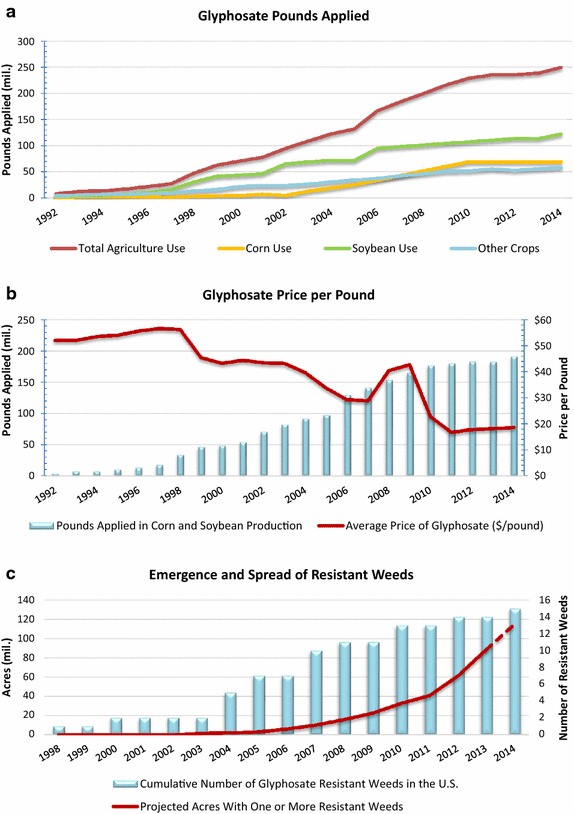
“Considering that, land area treated with GBHs rose rapidly, with the consequent appearance of weed phenotype less sensitive to glyphosate, the rate and the number of applications continue to increase (Benbrook, 2016).”
BackgroundGlyphosate Determination by Coupling an Immuno-Magnetic Assay with Electrochemical Sensors
Bettazzi, F., Romero-Natale, A., Torres, E., & Palchetti, I. (2018) · Sensors · doi:10.3390/s18092965 · Cited by 64
“6% of total use worldwide from 1974–2014 [2].”
BackgroundMolecular mechanisms underlying glyphosate resistance in bacteria
Hertel, R., Gibhardt, J., Martienssen, M., Kuhn, R., & Commichau, F. M. (2021) · Environmental Microbiology · doi:10.1111/1462-2920.15534 · Cited by 64
“Glyphosate was soon patented for herbicide use and its large-scale production began in the second half of the 1970s (Grossbard and Atkinson, 1985; Duke and Powles, 2008; Benbrook, 2016).”
BackgroundLiu, J., Yang, G., & Zhang, H. (2022) · The Science of The Total Environment · doi:10.1016/j.scitotenv.2022.160839 · Cited by 63
Mazuryk, J., Klepacka, K., Kutner, W., & Sharma, P. S. (2023) · Environmental Science & Technology · doi:10.1021/acs.est.3c01269 · Cited by 65
Detection of glyphosate residues in companion animal feeds
Zhao, J. J., Pacenka, S., Wu, J. F., Richards, B. K., Steenhuis, T. S., Simpson, K. W., & Hay, A. G. (2018) · Environmental Pollution · doi:10.1016/j.envpol.2018.08.100 · Cited by 62
Werle, R., de Oliveira, M. C., Jhala, A. J., Proctor, C. A., Rees, J. M., & Klein, R. N. (2018) · Weed Technology · doi:10.1017/wet.2018.62 · Cited by 63
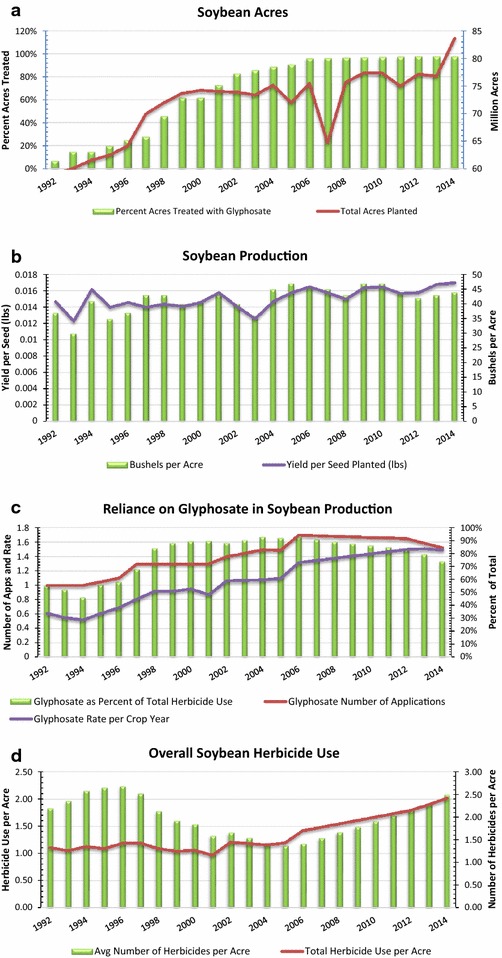
“Ten years after the introduction of GR soybean in 1996, over 95% of soybean hectares in the United States were treated with glyphosate (Benbrook 2016; Bonny 2008).”
BackgroundZhao, H., Li, G., Guo, D., Wang, Y., Liu, Q., Gao, Z., Wang, H., Liu, Z., Guo, X., & Xu, B. (2020) · The Science of The Total Environment · doi:10.1016/j.scitotenv.2020.140819 · Cited by 64
Hu, J., Lesseur, C., Yu, M., Manservisi, F., Panzacchi, S., Mandrioli, D., Belpoggi, F., Chen, J., & Petrick, L. M. (2021) · Scientific Reports · doi:10.1038/s41598-021-82552-2 · Cited by 59
Weisenburger, D. D. (2021) · Clinical Lymphoma Myeloma & Leukemia · doi:10.1016/j.clml.2021.04.009 · Cited by 72
Li, X., Wen, C., Liu, C., Lu, S., Xu, Z., Yang, Q., Chen, Z., Liao, H., & Zhou, S. (2021) · Journal of Environmental Sciences · doi:10.1016/j.jes.2021.08.006 · Cited by 66
Niemeyer, J. C., de Santo, F. B., Guerra, N., Filho, A. M. R., & Pech, T. M. (2018) · Chemosphere · doi:10.1016/j.chemosphere.2018.01.127 · Cited by 62
de Araújo-Ramos, A. T., Passoni, M. T., Romano, M. A., Romano, R. M., & Martino‐Andrade, A. J. (2021) · Frontiers in Endocrinology · doi:10.3389/fendo.2021.627210 · Cited by 61
“The development of genetically engineered glyphosate-tolerant crops in 1996 has broadened the agricultural applications of glyphosate-based herbicides (GBHs), which became the most widely used herbicides worldwide (1).”
BackgroundGlyphosate-based herbicide formulations and reproductive toxicity in animals
Jarrell, Z. R., Ahammad, M. U., & Benson, A. P. (2020) · Veterinary and Animal Science · doi:10.1016/j.vas.2020.100126 · Cited by 66
“The adoption of glyphosate tolerant (GT) crops has been very fast and the global use of glyphosate has increased 15-fold since 1996 (Benbrook, 2016).”
BackgroundOverview of Environmental and Health Effects Related to Glyphosate Usage
Rivas-García, T., Espinosa‐Calderón, A., Hernández-Vázquez, B., & Rindermann, R. S. (2022) · Sustainability · doi:10.3390/su14116868 · Cited by 73
“Chemically, it is formulated as ammonium, di-ammonium, dimethyl ammonium, potassium, and isopropylamine salts [2].”
BackgroundAslam, S., Jing, Y., & Nowak, K. M. (2023) · Journal of Hazardous Materials · doi:10.1016/j.jhazmat.2023.130847 · Cited by 60
Life as Aftermath: Social Theory for an Age of Anthropogenic Biology
Landecker, H. L. (2024) · Science Technology & Human Values · doi:10.1177/01622439241233946 · Cited by 68
“…risen globally fifteen-fold since the introduction of GM glyphosate-tolerant seeds in 1996; by 2014, growers were spraying enough of the herbicide to apply 1 kilo-gram per hectare of cropland in the United States, and 0.5 kilograms per hectare of cropland globally (Benbrook 2016; Heap 2014, 1309).”
InfluentialMaamar, M. B., Beck, D., Nilsson, E. E., Kubsad, D., & Skinner, M. K. (2020) · Epigenetics · doi:10.1080/15592294.2020.1853319 · Cited by 63
“Louis Missouri, commercialized glyphosate in the 1970s which is now used extensively in corn, soy, and canola crops [18].”
BackgroundDupont, Y. L., Strandberg, B., & Damgaard, C. (2018) · Agriculture, Ecosystems & Environment · doi:10.1016/j.agee.2018.04.014 · Cited by 59
Ferramosca, A., Lorenzetti, S., Giacomo, M. D., Murrieri, F., Coppola, L., & Zara, V. (2020) · Reproductive Toxicology · doi:10.1016/j.reprotox.2020.11.011 · Cited by 62
Sleep in honey bees is affected by the herbicide glyphosate
Vázquez, D. E., Balbuena, M. S., Chaves, F., Gora, J., Menzel, R., & Farina, W. M. (2020) · Scientific Reports · doi:10.1038/s41598-020-67477-6 · Cited by 58
Stajnko, A., Tratnik, J. S., Kosjek, T., Mazej, D., Hudobivnik, M. J., Eržen, I., & Horvat, M. (2020) · Environment International · doi:10.1016/j.envint.2020.105985 · Cited by 58
Russo, L., Buckley, Y. M., Hamilton, H., Kavanagh, M., & Stout, J. C. (2020) · Agriculture Ecosystems & Environment · doi:10.1016/j.agee.2020.107141 · Cited by 58
Uka, B., Kieninger, J., Urban, G. A., & Weltin, A. (2021) · ACS Sensors · doi:10.1021/acssensors.1c00884 · Cited by 58
Marino, M., Mele, E., Viggiano, A., Nori, S. L., Meccariello, R., & Santoro, A. (2021) · International Journal of Molecular Sciences · doi:10.3390/ijms222212606 · Cited by 63
Glyphosate, AMPA and glufosinate in soils and earthworms in a French arable landscape
Pelosi, C., Bertrand, C., Bretagnolle, V., Cœurdassier, M., Delhοmme, O., Deschamps, M., Gaba, S., Millet, M., Nélieu, S., & Fritsch, C. (2022) · Chemosphere · doi:10.1016/j.chemosphere.2022.134672 · Cited by 58
Occurrence and environmental risk assessment of 22 pesticides in Brazilian freshwaters
Brovini, E. M., Quadra, G. R., Paranaíba, J. R., Carvalho, L., Pereira, R. D. O., & de Aquino, S. F. (2023) · Aquatic Toxicology · doi:10.1016/j.aquatox.2023.106566 · Cited by 58
Muskus, A. M., Krauss, M. K. V., Miltner, A., Hamer, U., & Nowak, K. M. (2018) · The Science of The Total Environment · doi:10.1016/j.scitotenv.2018.12.195 · Cited by 58
Pesticide effects on fish cholinesterase variability and mean activity: A meta-analytic review
Santana, M. S., Sandrini-Neto, L., Domênico, M. D., & Prodócimo, M. M. (2020) · The Science of The Total Environment · doi:10.1016/j.scitotenv.2020.143829 · Cited by 57
Pests, Weeds and Diseases in Agricultural Crop and Animal Husbandry Production
Kontogiannatos, D., Kourti, A., & Mendes, K. F. (2020) · IntechOpen eBooks · doi:10.5772/intechopen.87515 · Cited by 57
Lyu, Y., Raugei, M., Zhang, X., Mellino, S., & Ulgiati, S. (2021) · Renewable and Sustainable Energy Reviews · doi:10.1016/j.rser.2021.111604 · Cited by 57
The Risks Associated with Glyphosate-Based Herbicide Use in Planted Forests
Rolando, C. A., Baillie, B. R., Thompson, D. G., & Little, K. M. (2017) · Forests · doi:10.3390/f8060208 · Cited by 57
Microcosm experiments and kinetic modeling of glyphosate biodegradation in soils and sediments
Tang, F. H. M., Jeffries, T. C., Vervoort, W., Conoley, C., Coleman, N. V., & Maggi, F. (2018) · The Science of The Total Environment · doi:10.1016/j.scitotenv.2018.12.179 · Cited by 57
Relationship between agrochemical compounds and mammary gland development and breast cancer
Kass, L., Gómez, A. L., & Altamirano, G. A. (2020) · Molecular and Cellular Endocrinology · doi:10.1016/j.mce.2020.110789 · Cited by 56
Haggblade, S., Diarra, A., & Traoré, A. (2021) · Development Policy Review · doi:10.1111/dpr.12545 · Cited by 56
Zebral, Y. D., Lansini, L. R., Costa, P. G., Roza, M., Bianchini, A., & Robaldo, R. B. (2018) · Chemosphere · doi:10.1016/j.chemosphere.2017.12.196 · Cited by 56
Woźniak, E., Reszka, E., Jabłońska, E., Balcerczyk, A., Broncel, M., & Bukowska, B. (2019) · Toxicology in Vitro · doi:10.1016/j.tiv.2019.104736 · Cited by 56
Ruuskanen, S., Rainio, M. J., Uusitalo, M., Saikkonen, K., & Helander, M. L. (2020) · Scientific Reports · doi:10.1038/s41598-020-63365-1 · Cited by 56
Ghaffar, A., Hussain, R., Ahmad, N., Ghafoor, R., Akram, M., Khan, I., & Khan, A. (2021) · Chemistry and Ecology · doi:10.1080/02757540.2021.1937141 · Cited by 56
“Extensive application of glyphosate in different areas has increased its presence in the environment, surface water, and groundwater [13].”
BackgroundFagan, J., Bohlen, L., Patton, S., & Klein, K. (2020) · Environmental Research · doi:10.1016/j.envres.2020.109898 · Cited by 56
Delkash‐Roudsari, S., Chicas‐Mosier, A. M., Goldansaz, S. H., Talebi, K., Ashouri, A., & Abramson, C. I. (2020) · Ecotoxicology and Environmental Safety · doi:10.1016/j.ecoenv.2020.111108 · Cited by 55
Chiu, N.-C., Lessard, J. M., Musa, E. N., Lancaster, L. S., Wheeler, C., Krueger, T. D., Chen, C., Gallagher, T. C., Nord, M. T., Huang, H.-L., et al. (2024) · Nature Communications · doi:10.1038/s41467-024-45546-y · Cited by 52
Rong, X., Liu, C., Hou, F., Zhao, X., Wang, Z., & Zhu, B. (2025) · Food Chemistry · doi:10.1016/j.foodchem.2025.143045 · Cited by 55
Environmental Injustice in Argentina: Struggles against Genetically Modified Soy
Leguizamón, A. (2016) · Journal of Agrarian Change · doi:10.1111/joac.12163 · Cited by 55
Advances in breeding and biotechnology of legume crops
Jacob, C., Carrasco, B., & Schwember, A. R. (2016) · Plant Cell Tissue and Organ Culture (PCTOC) · doi:10.1007/s11240-016-1106-2 · Cited by 55
“Since then, the application of glyphosate active ingredient to alfalfa has increased from 479,184 pounds in 2010 to 8,853,600 pounds in the USA in 2014 (Benbrook 2016).”
Backgroundde Melo, M. S., dos Santos, T. P. G., Jaramillo, M. L., Nezzi, L., Müller, Y. M. R., & Nazari, E. M. (2019) · Aquatic Toxicology · doi:10.1016/j.aquatox.2019.03.007 · Cited by 55
Qı, L., Dong, Y., Chao, H., Zhao, P., Ma, S., & Li, G. (2023) · Chemosphere · doi:10.1016/j.chemosphere.2023.137751 · Cited by 57
Stronger effects of Roundup than its active ingredient glyphosate in damselfly larvae
Janssens, L., & Stoks, R. (2017) · Aquatic Toxicology · doi:10.1016/j.aquatox.2017.10.028 · Cited by 54
Phosphate and glyphosate sorption in soils following long-term phosphate applications
Munira, S., Farenhorst, A., & Akinremi, W. (2017) · Geoderma · doi:10.1016/j.geoderma.2017.10.030 · Cited by 54
“Generally, farmers apply phosphate fertilizer at 20 to 40 kg P ha-1 and ~1 kg glyphosate ha-1 on their crop farms (Akinremi and Grant 2014; Benbrook, 2016).”
BackgroundCrone, E. E., Pelton, E. M., Brown, L. M., Thomas, C. C., & Schultz, C. B. (2019) · Ecological Applications · doi:10.1002/eap.1975 · Cited by 54
Glyphosate ban in Mexico : potential impacts on agriculture and weed management
la Cruz, R. A., Cruz-Hipólito, H. E., Domínguez‐Valenzuela, J. A., & Prado, R. A. D. (2021) · Pest Management Science · doi:10.1002/ps.6362 · Cited by 53
Wang, Y., Gao, W., Li, Y., Xiao, Y., Song, W., Yao, T., Cheng, M., Wang, W., & Hou, R. (2021) · Journal of Agricultural and Food Chemistry · doi:10.1021/acs.jafc.1c01757 · Cited by 53
Yalsuyi, A. M., Vajargah, M. F., Hajimoradloo, A., Galangash, M. M., Prokić, M. D., & Faggio, C. (2021) · Veterinary Sciences · doi:10.3390/vetsci8100218 · Cited by 53
“Glyphosate is sold in over 100 countries and its global use reached more than 800,000 tons in 2014 [22].”
BackgroundReview: Purchased agricultural input quality and small farms
Michelson, H., Gourlay, S., Lybbert, T. J., & Wollburg, P. R. (2023) · Food Policy · doi:10.1016/j.foodpol.2023.102424 · Cited by 53
“The most commonly used pesticide in the world is glyphosate herbicide (Benbrook, 2016).”
BackgroundN-phosphonomethylglycine utilization by the psychrotolerant yeast Solicoccozyma terricola M 3.1.4.
Stosiek, N., Terebieniec, A., Ząbek, A., Młynarz, P., Cieśliński, H., & Klimek‐Ochab, M. (2019) · Bioorganic Chemistry · doi:10.1016/j.bioorg.2019.03.040 · Cited by 54
“8 million kg of glyphosate were used worldwide [6].”
BackgroundAgrochemical pesticide production, trade, and hazard: Narrowing the information gap in Colombia
Valbuena, D., Cely-Santos, M., & Obregón, D. (2021) · Journal of Environmental Management · doi:10.1016/j.jenvman.2021.112141 · Cited by 56
da Silva, V. B., Santos, Y. H., Hellinger, R., Mansour, S., Delaune, A., Legros, J., Zinoviev, S., Nogueira, E. S., & Orth, E. S. (2021) · Green Chemistry · doi:10.1039/d1gc02705k · Cited by 51
Bach, N. C., Natale, G. S., Somoza, G. M., & Ronco, A. E. (2016) · Environmental Science and Pollution Research · doi:10.1007/s11356-016-7631-z · Cited by 52
“In addition, Argentina is the third largest producer of soybeans in the world, after the USA and Brazil (Benbrook 2016), and according to the Cámara de Sanidad Agropecuaria y Fertilizantes, Buenos Aires (CASAFE 2012), the GLY-based herbicides are those most commonly used in the country.”
BackgroundAlarcón, R., Ingaramo, P. I., Rivera, O. E., Dioguardi, G. H., Repetti, M. R., Demonte, L. D., Milesi, M. M., Varayoud, J., Muñoz‐de‐Toro, M., & Luque, E. H. (2018) · Molecular and Cellular Endocrinology · doi:10.1016/j.mce.2018.12.007 · Cited by 52
Identification of the first glyphosate transporter by genomic adaptation
Wicke, D., Schulz, L. M., Lentes, S., Scholz, P., Poehlein, A., Gibhardt, J., Daniel, R., Ischebeck, T., & Commichau, F. M. (2019) · Environmental Microbiology · doi:10.1111/1462-2920.14534 · Cited by 57
Ledoux, M. L., HETTIARACHCHY, N. S., Yu, X., Howard, L. R., & Lee, S. (2019) · Food Control · doi:10.1016/j.foodcont.2019.106859 · Cited by 54
Wimmer, B., Pattky, M., Guluzada, L., Meixner, M., Haderlein, S. B., Zimmermann, H., & Hühn, C. (2020) · Analytical and Bioanalytical Chemistry · doi:10.1007/s00216-020-02751-0 · Cited by 52
Almasri, H., Tavares, D. A., Diogon, M., Pioz, M., Alamil, M., Sené, D., Tchamitchian, S., Cousin, M., Brunet, J., & Belzunces, L. (2021) · Ecotoxicology and Environmental Safety · doi:10.1016/j.ecoenv.2021.112258 · Cited by 52
Glyphosate-based herbicides: Evidence of immune-endocrine alteration
Maddalon, A., Galbiati, V., Colosio, C., Mandić‐Rajčević, S., & Corsini, E. (2021) · Toxicology · doi:10.1016/j.tox.2021.152851 · Cited by 53
Gelinsky, E., & Hilbeck, A. (2018) · Environmental Sciences Europe · doi:10.1186/s12302-018-0182-9 · Cited by 51
Muola, A., Fuchs, B., Laihonen, M., Rainio, K., Heikkonen, L., Ruuskanen, S., Saikkonen, K., & Helander, M. L. (2020) · The Science of The Total Environment · doi:10.1016/j.scitotenv.2020.141422 · Cited by 51
Effects of glyphosate on soil fungal communities: A field study
Vázquez, M. B., Moreno, V., Amodeo, M. R., & Bianchinotti, M. V. (2021) · Revista Argentina de Microbiología · doi:10.1016/j.ram.2020.10.005 · Cited by 51
Synergistic effects of glyphosate formulation herbicide and tank-mixing adjuvants on Pardosa spiders
Niedobová, J., Skalský, M., Ouředníčková, J., Michalko, R., & Bartošková, A. (2019) · Environmental Pollution · doi:10.1016/j.envpol.2019.03.031 · Cited by 50
Harper, A. P., Finger, B. J., & Green, M. P. (2020) · Frontiers in Endocrinology · doi:10.3389/fendo.2020.580124 · Cited by 51
“Based on consistent groundwater contamination and its potential risks to human health atrazine was banned in 2003 in the European Union (EU) (10), although atrazine is still very heavily used in many countries (4, 7).”
BackgroundOCHMIAN, I. D., Błaszak, M., Lachowicz, S., & Piwowarczyk, R. (2020) · Scientific Reports · doi:10.1038/s41598-020-73947-8 · Cited by 50
Ojelade, B. S., Durowoju, O. S., Adesoye, P. O., Gibb, S. W., & Ekosse, G.-I. (2022) · Applied Sciences · doi:10.3390/app12178789 · Cited by 57
“Its use has progressively increased in non-agricultural and agricultural settings, and it is now the most common herbicide worldwide [13,14].”
BackgroundPhytoremediation: A green and low-cost technology to remediate herbicides in the environment
Barroso, G. M., dos Santos, E. A., Pires, F. R., Galon, L., Cabral, C. M., & dos Santos, J. B. (2023) · Chemosphere · doi:10.1016/j.chemosphere.2023.138943 · Cited by 50
Bonifacio, A. F., & Hued, A. C. (2019) · Chemosphere · doi:10.1016/j.chemosphere.2019.07.042 · Cited by 50
Down the River: Glyphosate Use in Agriculture and Birth Outcomes of Surrounding Populations
Dias, M., Rocha, R., & Soares, R. R. (2023) · Review of Economic Studies · doi:10.1093/restud/rdad011 · Cited by 50
“In the US, which is estimated to have been responsible for 19% of the historical global usage, glyphosate represents over 50% of the total use of herbicides (Benbrook, 2016; Osteen and Fernandez-Cornejo, 2016).”
BackgroundGlyphosate disturbs various epigenetic processes in vitro and in vivo – A mini review
Bukowska, B., Woźniak, E., Sicińska, P., Mokra, K., & Michałowicz, J. (2022) · The Science of The Total Environment · doi:10.1016/j.scitotenv.2022.158259 · Cited by 49
Biomonitoring of glyphosate and aminomethylphosphonic acid: Current insights and future perspectives
Wei, X., Pan, Y., Zhang, Z., Cui, J., Yin, R., Li, H., Qin, J., Li, A. J., & Qiu, R. (2023) · Journal of Hazardous Materials · doi:10.1016/j.jhazmat.2023.132814 · Cited by 49
Forner-Piquer, I., Faucherre, A., Byram, J., Blaquière, M., de Bock, F., Gamet‐Payrastre, L., Ellero‐Simatos, S., Audinat, É., Jopling, C., & Marchi, N. (2020) · Chemosphere · doi:10.1016/j.chemosphere.2020.128986 · Cited by 49
Freisthler, M. S., Robbins, C. R., Benbrook, C. M., Young, H. A., Haas, D. M., Winchester, P., & Perry, M. J. (2022) · Environmental Health · doi:10.1186/s12940-021-00815-x · Cited by 52
“In PUDS, conglomerate values for a given pesticide integrate multiple forms of an active ingredients into a single set of data (see Additional file 2).”
MethodInfluentialSelf-citationPesticide impacts on insect pollinators: Current knowledge and future research challenges
Basu, P., Ngo, H. T., Aizen, M. A., Garibaldi, L. A., Gemmill‐Herren, B., Imperatriz-Fonseca, V. L., Klein, A.-M., Potts, S. G., Seymour, C. L., & Vanbergen, A. J. (2024) · The Science of The Total Environment · doi:10.1016/j.scitotenv.2024.176656 · Cited by 61
Fauvelle, V., Montero, N., Mueller, J. F., Banks, A. P. W., Mazzella, N., & Kaserzon, S. (2017) · Chemosphere · doi:10.1016/j.chemosphere.2017.08.013 · Cited by 48
“…glycine, i.e. PMG) is the active substance of more than 750 commercial formulation (i.e., glyphosate-based herbicides, GBHs) and the most widly used herbicide for agricultural and non-crop uses, both in Australia (15,000 tons y -1 ) and worldwide (826,000 tons y -1 ) (Benbrook, 2016).”
de Souza, J. S., Laureano‐Melo, R., Herai, R. H., da Conceição, R. R., Oliveira, K. C., da Silva, I. D. C. G., Dias-da-Silva, M. R., Romano, R. M., Romano, M. A., Maciel, R. M. B., et al. (2019) · NeuroToxicology · doi:10.1016/j.neuro.2019.06.004 · Cited by 47
Bøhn, T., & Millstone, E. P. (2019) · Foods · doi:10.3390/foods8120669 · Cited by 50
“Number of (#) glyphosate/glyphosate-based herbicides (GBH) applications on GT soybeans in Brazil and Argentina 1996–2014, data from Benbrook [3].”
BackgroundElectrochemSENSE: A platform towards field deployable direct on-produce glyphosate detection
Dhamu, V. N., & Prasad, S. (2020) · Biosensors and Bioelectronics · doi:10.1016/j.bios.2020.112609 · Cited by 48
Lanzarin, G. A. B., Venâncio, C. A. S., Félix, L. M., & Monteiro, S. M. (2021) · Biomedicines · doi:10.3390/biomedicines9121784 · Cited by 50
“The use of GBH intensified due to the emergence of herbicide-resistant weed species [1], and it is presently the most widely used herbicide in the world [2].”
BackgroundThe Use of Genetic and Gene Technologies in Shaping Modern Rapeseed Cultivars (Brassica napus L.)
Ton, L. B., Neik, T. X., & Batley, J. (2020) · Genes · doi:10.3390/genes11101161 · Cited by 51
Bioremediation of the herbicide glyphosate in polluted soils by plant-associated microbes.
Masotti, F., Garavaglia, B. S., Gottig, N., & Ottado, J. (2023) · Current Opinion in Microbiology · doi:10.1016/j.mib.2023.102290 · Cited by 38
Toxic Algae in Inland Waters of the Conterminous United States—A Review and Synthesis
Patiño, R., Christensen, V. G., Graham, J. L., Rogosch, J., & Rosen, B. (2023) · Water · doi:10.3390/w15152808 · Cited by 35
Lorenz, V., Milesi, M. M., Schimpf, M. G., Luque, E. H., & Varayoud, J. (2018) · Molecular and Cellular Endocrinology · doi:10.1016/j.mce.2018.10.022 · Cited by 49
Comont, D., Hicks, H. L., Crook, L., Hull, R. J., Cocciantelli, E., Hadfield, J. D., Childs, D. Z., Freckleton, R. P., & Neve, P. (2019) · New Phytologist · doi:10.1111/nph.15800 · Cited by 49
“In response to this global epidemic of herbicide resistance, the use of the herbicide glyphosate has increased (Benbrook, 2016).”
BackgroundApplications of the 12 Principles of Green Chemistry in the Crop Protection Industry
Whiteker, G. T. (2019) · Organic Process Research & Development · doi:10.1021/acs.oprd.9b00305 · Cited by 54
Muskus, A. M., Krauss, M. K. V., Miltner, A., Hamer, U., & Nowak, K. M. (2019) · Environmental Pollution · doi:10.1016/j.envpol.2019.113767 · Cited by 47
Ecotoxicology of glyphosate and recent advances in its mitigation by adsorption
Ighalo, J. O., Ajala, O. J., Adeniyi, A. G., Babatunde, E. O., & Ajala, M. A. (2020) · Environmental Science and Pollution Research · doi:10.1007/s11356-020-11521-5 · Cited by 47
Zaller, J. G., Weber, M., Maderthaner, M., Gruber, E., Takács, E., Mörtl, M., Klátyik, S., Győri, J., Römbke, J., Leisch, F., et al. (2021) · Environmental Sciences Europe · doi:10.1186/s12302-021-00492-0 · Cited by 47
“Several hundred GBHs are in use and it is estimated that about 825 million kilograms of the active ingredient (AI) glyphosate (N-phosphonomethyl-glycine) is globally used per year [2, 4].”
BackgroundLiu, J., Yang, M., Wang, Y., Qu, L., & Zhong, G. (2019) · Journal of Hazardous Materials · doi:10.1016/j.jhazmat.2019.05.014 · Cited by 46
Herbicide residues in Australian grain cropping soils at sowing and their relevance to crop growth
Rose, M. T., Zhang, P., Rose, T. J., Scanlan, C. A., McGrath, G., & ZWIETEN, L. V. (2022) · The Science of The Total Environment · doi:10.1016/j.scitotenv.2022.155105 · Cited by 46
Baier, F., Jedinger, M., Gruber, E., & Zaller, J. G. (2016) · Frontiers in Environmental Science · doi:10.3389/fenvs.2016.00051 · Cited by 46
“Since its introduction in 1974 glyphosate use in the agricultural sector rose 300-fold in 40 years (Benbrook, 2016).”
BackgroundFelton, D. E., Ederer, M. M., Steffens, T. J., Hartzell, P. L., & Waynant, K. V. (2017) · Journal of Chemical Education · doi:10.1021/acs.jchemed.7b00440 · Cited by 46
Panzacchi, S., Mandrioli, D., Manservisi, F., Bua, L., Falcioni, L., Spinaci, M., Galeati, G., Dinelli, G., Miglio, R., Mantovani, A., et al. (2018) · Environmental Health · doi:10.1186/s12940-018-0393-y · Cited by 48
“methyl)glycine] is the most widely applied pesticide worldwide and it is an active ingredient of all glyphosate-based herbicides (GBHs), including in the formulation “Roundup” [1, 2].”
BackgroundEffects of glyphosate on germination, photosynthesis and chloroplast morphology in tomato
Khan, S. A., Zhou, J. L., Ren, L., & Mojiri, A. (2020) · Chemosphere · doi:10.1016/j.chemosphere.2020.127350 · Cited by 46
Metadata
- Authors
- Benbrook, C. M.
- Corresponding author
- Benbrook, Charles M.
- ORCID
- Benbrook, Charles M.
- Venue
- Environmental Sciences Europe
- Published
- 2016-02-02
- Volume
- 28
- Issue
- 1
- Pages
- 3-3
- ISSN
- 2190-4715 (ISSN-L)
- 2190-4707
- PMC
- PMC5044953
- OpenAlex
- W2255447065
- Cited by
- 1,890
- References
- 56
- Citations by year
- 2026: 163 · 2025: 177 · 2024: 191 · 2023: 264 · 2022: 234 · 2021: 235 · 2020: 227 · 2019: 166 · 2018: 127 · 2017: 77 · 2016: 26
- FWCI
- 71.97
- Type
- journal article
- Language
- en
- Open access
- gold
- doi.org
- Locations
- Environmental Sciences Europe (publishedVersion, cc-by)
- Europe PMC (PubMed Central) (publishedVersion, cc-by)
- PubMed Central (publishedVersion, cc-by)
- PubMed (publishedVersion)
- Funders
- Ceres Trust
- Topics
- Physical Sciences › Environmental Science › Pollution › Pesticide and Herbicide Environmental Studies
- Life Sciences › Agricultural and Biological Sciences › Plant Science › Weed Control and Herbicide Applications
- Life Sciences › Pharmacology, Toxicology and Pharmaceutics › Toxicology › Pesticide Exposure and Toxicity
- Keywords
- glyphosate, Roundup Ready crops, herbicide-tolerant crops, genetically modified crops, agricultural pesticide application
About these checks
Registry, retraction, Cites and statistics results are computed, not judged, with one exception: a printed reference that no index lists is read once by a model before it counts as a citation error. Claims are extracted by a model and kept only when their quote appears verbatim in the text; each cited source is then checked, with a model’s help, for whether it says what the claim relies on. Those verdicts can be wrong — read the claim’s quote and the cited source before relying on one.
Statistics and arithmetic are recomputed, not judged.
Confidence bands are shown only for fields calibrated on our annotated test set. None is calibrated yet, so no band is shown.
What counts as a claim ›How we measure confidence ›How we check this ›
Are you an author, or do you see a problem with this page? Request a review
