

The DOI matches its Crossref record; 53 of the 56 references it cites were found in a registry or an index.
Trends in glyphosate herbicide use in the United States and globally
Open accessAbstract
BACKGROUND: Accurate pesticide use data are essential when studying the environmental and public health impacts of pesticide use. Since the mid-1990s, significant changes have occurred in when and how glyphosate herbicides are applied, and there has been a dramatic increase in the total volume applied. METHODS: Data on glyphosate applications were collected from multiple sources and integrated into a dataset spanning agricultural, non-agricultural, and total glyphosate use from 1974-2014 in the United States, and from 1994-2014 globally. RESULTS: Since 1974 in the U.S., over 1.6 billion kilograms of glyphosate active ingredient have been applied, or 19 % of estimated global use of glyphosate (8.6 billion kilograms). Globally, glyphosate use has risen almost 15-fold since so-called "Roundup Ready," genetically engineered glyphosate-tolerant crops were introduced in 1996. Two-thirds of the total volume of glyphosate applied in the U.S. from 1974 to 2014 has been sprayed in just the last 10 years. The corresponding share globally is 72 %. In 2014, farmers sprayed enough glyphosate to apply ~1.0 kg/ha (0.8 pound/acre) on every hectare of U.S.-cultivated cropland and nearly 0.53 kg/ha (0.47 pounds/acre) on all cropland worldwide. CONCLUSIONS: Genetically engineered herbicide-tolerant crops now account for about 56 % of global glyphosate use. In the U.S., no pesticide has come remotely close to such intensive and widespread use. This is likely the case globally, but published global pesticide use data are sparse. Glyphosate will likely remain the most widely applied pesticide worldwide for years to come, and interest will grow in quantifying ecological and human health impacts. Accurate, accessible time-series data on glyphosate use will accelerate research progress.
Overview
The claims and statistics of this paper haven’t been checked yet.
Run the check — free, no account needed. It reads the open-access text and checks the sources it cites.
Integrity signals
Registry
Cites
Statistics
Figures
Verification
Claims the paper makes
The claims and statistics of this paper haven’t been checked yet.
Run the check — free, no account needed. It reads the open-access text and checks the sources it cites.
Self-check
Percentages, sums and reported differences re-computed from the paper’s own numbers.
The self-check needs the paper’s full text.
Citations
Cites
International Agency for Research on Cancer
National Cancer Institute (2020) · Definitions · doi:10.32388/pfg7jq · Cited by 9,394
The United States Department of Agriculture
True, A. C. (1912) · The Annals of the American Academy of Political and Social Science · doi:10.1177/000271621204000113 · Cited by 5,104
Glyphosate: a once‐in‐a‐century herbicide
Duke, S. O., & Powles, S. B. (2008) · Pest Management Science · doi:10.1002/ps.1518 · Cited by 1,821 · cited 1×
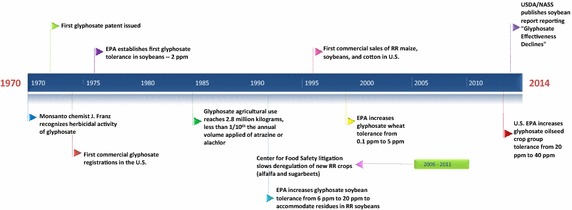
“John Franz, identified the herbicidal activity of glyphosate in 1970, and a formulated end-use product called Roundup was first sold commercially by Monsanto in 1974 [2].”
BackgroundMyers, J. P., Antoniou, M. N., Blumberg, B., Carroll, L., Colborn, T., Everett, L. G., Hansen, M., Landrigan, P. J., Lanphear, B. P., Mesnage, R., et al. (2016) · Environmental Health · doi:10.1186/s12940-016-0117-0 · Cited by 907
Self-citationFate of glyphosate in soil and the possibility of leaching to ground and surface waters: a review.
Borggaard, O., & Gimsing, A. (2008) · Pest Management Science · doi:10.1002/ps.1512 · Cited by 734 · cited 1×
“Rising use triggers new concerns Driven by the growing diversity of uses and dramatic increases in volumes applied, levels of glyphosate and its primary metabolite aminomethylphosphonic acid (AMPA) have been detected in the air [51], soil [52], and water [49, 53].”
BackgroundGlobal perspective of herbicide‐resistant weeds
Heap, I. (2013) · Pest Management Science · doi:10.1002/ps.3696 · Cited by 666
Glyphosate-based herbicides are toxic and endocrine disruptors in human cell lines
Gasnier, C., Dumont, C., Benachour, N., Clair, E., Chagnon, M.-C., & Séralini, G.-E. (2009) · Toxicology · doi:10.1016/j.tox.2009.06.006 · Cited by 658
Battaglin, W. A., Meyer, M. T., Kuivila, K. M., & Dietze, J. E. (2014) · JAWRA Journal of the American Water Resources Association · doi:10.1111/jawr.12159 · Cited by 597 · cited 1×
“Rising use triggers new concerns Driven by the growing diversity of uses and dramatic increases in volumes applied, levels of glyphosate and its primary metabolite aminomethylphosphonic acid (AMPA) have been detected in the air [51], soil [52], and water [49, 53].”
BackgroundEvolved glyphosate‐resistant weeds around the world: lessons to be learnt
Powles, S. B. (2008) · Pest Management Science · doi:10.1002/ps.1525 · Cited by 500 · cited 1×
“Shifts in weed communities favoring species less susceptible to glyphosate, coupled with the emergence of first, less sensitive, and eventually glyphosate-resistant weeds drove the incremental rise in the intensity of glyphosate applications on GE-HT crops [13, 10].”
BackgroundPaganelli, A. R., Gnazzo, V., Acosta, H., López, S. L., & Carrasco, A. E. (2010) · Chemical Research in Toxicology · doi:10.1021/tx1001749 · Cited by 460
Research works printed but not linked: 3
- Benbrook CM (2016) Trends in glyphosate herbicide use in the united states and globally: Supporting data. Environ Sci Eur. doi: 10.1186/s12302-016-0070-0
- Dupraz E (2012) Monsanto and the Quasi-Per Se Illegal Rule for Bundled Discounts. Vt Law Rev 37:203–237
- Brändli D, Reinacher S (2012) Herbicides found in human urine. Ithaka J 1:270–272
Cited by
Sorted by citations
Items 401–500 of 1,002
Wei, P., Xiao, L., Hou, P., Wang, Q., & Wang, P. (2023) · Analytical and Bioanalytical Chemistry · doi:10.1007/s00216-023-04869-3 · Cited by 34
Moscoso, M. G., Meza‐Figueroa, D., Martínez-Villegas, N. V., & Pedroza‐Montero, M. (2023) · Chemosphere · doi:10.1016/j.chemosphere.2023.139810 · Cited by 34
Valentim, J. M. B. D. M., Coradi, C., Viana, N. P., Fagundes, T. R., Micheletti, P. L., Gaboardi, S. C., Fadel, B., Pizzatti, L., Candiotto, L. Z. P., & Panis, C. (2024) · Foods · doi:10.3390/foods13111697 · Cited by 34
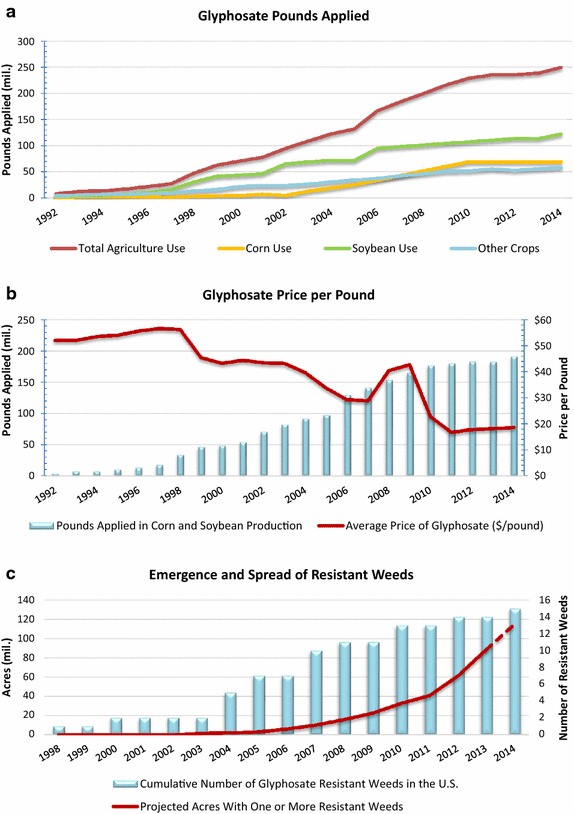
“In 1994, there were 56,000 tons; in 2014, global glyphosate usage reached the 826,000 tons mark [9].”
BackgroundWelch, E. M., Dulai, H., El‐Kadi, A. I., & Shuler, C. K. (2019) · Frontiers in Environmental Science · doi:10.3389/fenvs.2019.00162 · Cited by 34
“Glyphosate has become the most heavily used herbicide in the world since its introduction as a key ingredient in the popular Roundup formula in 1974 (Benbrook, 2016).”
Ciasca, B., Pecorelli, I., Lepore, L., Paoloni, A., Catucci, L., Pascale, M., & Lattanzio, V. M. T. (2019) · Food Chemistry · doi:10.1016/j.foodchem.2019.125813 · Cited by 34
Lorenz, V., Pacini, G., Luque, E. H., Varayoud, J., & Milesi, M. M. (2020) · Food and Chemical Toxicology · doi:10.1016/j.fct.2020.111560 · Cited by 35
Karthik, K., Muralimohan, N., Thangaraj, A., Singh, S., Mishra, P., Rathinam, M., Sharma, M., Singh, N. K., Dash, P. K., & Sreevathsa, R. (2020) · Frontiers in Plant Science · doi:10.3389/fpls.2020.00768 · Cited by 34
“Crop improvement through genetic engineering has given the feasibility to engineer plants to combat herbicides being sprayed and thus help in the safety of the crops without major yield losses (Benbrook, 2016; Bohn and Lovei, 2017).”
BackgroundInvasive Johnsongrass, a threat to native grasslands and agriculture
Klein, P., & Smith, C. M. (2020) · Biologia · doi:10.2478/s11756-020-00625-5 · Cited by 34
Panseri, S., Bonerba, E., Nobile, M., Cesare, F. D., Mosconi, G., Cecati, F. M., Arioli, F., Tantillo, G. M., & Chiesa, L. M. (2020) · Foods · doi:10.3390/foods9121863 · Cited by 34
“Among pesticides, glyphosate (GLY) is the most widely used herbicide in the world [34] and represents a chemical model for estimation of the potential toxic effects on non-target organisms.”
BackgroundImpact of agrochemical application in sustainable agriculture
Ganguly, R. K., Mukherjee, A., Chakraborty, S. K., & Verma, J. P. (2020) · Elsevier eBooks · doi:10.1016/b978-0-444-64325-4.00002-x · Cited by 34
Nozdrenko, D. M., Abramchuk, O., Prylutska, S., Vygovska, O., Soroca, V. M., Bogutska, K. I., Khrapatyi, S., Prylutskyy, Y. І., Scharff, P., & Ritter, U. (2021) · International Journal of Molecular Sciences · doi:10.3390/ijms22094977 · Cited by 34
“system of the shikimate pathway of biosynthesis of benzoic aromatic compounds [1].”
BackgroundShopova, E., Katerova, Z., Brankova, L., Dimitrova, L., Sergiev, I., Todorova, D., & Talaat, N. B. (2021) · Life · doi:10.3390/life11111156 · Cited by 34
“Glyphosate (N-(phosphonomethyl)glycine) use has increased 15-fold from 1994 to 2014 on a worldwide scale [1].”
BackgroundThe effects of low-toxic herbicide Roundup and glyphosate on mitochondria
Strilbytska, O. M., Tsiumpala, S. A., Kozachyshyn, I. I., Strutynska, T. R., Burdyliuk, N., Lushchak, V. I., & Lushchak, O. V. (2021) · EXCLI journal · doi:10.17179/excli2021-4478 · Cited by 34
“Its global use reached 825,804 metric tons in 2014 (Benbrook, 2016).”
BackgroundConnolly, A., Koch, H., Bury, D., Koslitz, S., Kolossa-Gehring, M., Conrad, A., Murawski, A., McGrath, J. A., Leahy, M., Brüning, T., et al. (2022) · Toxics · doi:10.3390/toxics10110690 · Cited by 32
Dhamu, V. N., Poudyal, D. C., Samson, M., Paul, A., Muthukumar, S., & Prasad, S. (2023) · ECS Sensors Plus · doi:10.1149/2754-2726/acde5d · Cited by 34
Chen, Y., Gong, M., Liang, D., Li, S., Meng, D., He, J., Li, Y., Kang, Z., & Li, H. (2023) · Journal of environmental chemical engineering · doi:10.1016/j.jece.2023.110949 · Cited by 32
Toxicity of glyphosate to animals: A meta-analytical approach
Evalen, P. S., Barnhardt, E. N., Ryu, J., & Stahlschmidt, Z. R. (2024) · Environmental Pollution · doi:10.1016/j.envpol.2024.123669 · Cited by 38
Séguin, A., Mottier, A., Perron, C., Lebel, J., Serpentini, A., & Costil, K. (2017) · Marine Pollution Bulletin · doi:10.1016/j.marpolbul.2017.02.028 · Cited by 32
“Protein contents were determined using the Bio-Rad Protein Assay kit (Bio-Rad®) according to the method by Bradford (1976).”
MethodHerrera, S., Dias, J. V., & de Kok, A. (2020) · Food Control · doi:10.1016/j.foodcont.2020.107289 · Cited by 33
Glyphosate and its formulation Roundup impair pig oocyte maturation
Spinaci, M., Nerozzi, C., Tamanini, C., Bucci, D., & Galeati, G. (2020) · Scientific Reports · doi:10.1038/s41598-020-68813-6 · Cited by 34
Malalgoda, M., & Şimşek, Ş. (2020) · Cereal Chemistry · doi:10.1002/cche.10355 · Cited by 33
Chitosan-Based Nanocomposites for Glyphosate Detection Using Surface Plasmon Resonance Sensor
Do, M. H., Dubreuil, B., Peydecastaing, J., Vaca-Medina, G., Nhu-Trang, T., Jaffrezic-Renault, N., & Behra, P. (2020) · Italian National Conference on Sensors · doi:10.3390/s20205942 · Cited by 26
“Glyphosate (N-(phosphonomethyl)glycine), the world most widely applied herbicide in agriculture and urban areas [1], was first synthesized by the Swiss chemist Henri Martin in 1950 [2] as a potential pharmaceutical compound [3].”
BackgroundZhang, L., Ding, F., Wang, R., Wu, X., Wan, Y., Hu, J., & Wu, Q. (2021) · Environmental Pollution · doi:10.1016/j.envpol.2021.117082 · Cited by 32
Boccioni, A. P. C., Lener, G., Peluso, J., Peltzer, P. M., Attademo, A. M., Aronzon, C. M., Simoniello, M. F., Demonte, L. D., Repetti, M. R., & Lajmanovích, R. C. (2022) · Chemosphere · doi:10.1016/j.chemosphere.2022.136554 · Cited by 33
Intra-specific variation in sensitivity of Bombus terrestris and Osmia bicornis to three pesticides
Linguadoca, A., Jürison, M., Hellström, S., Straw, E. A., Šima, P., Karise, R., Costa, C., Serra, G., Colombo, R., Paxton, R. J., et al. (2022) · Scientific Reports · doi:10.1038/s41598-022-22239-4 · Cited by 33
Occurrence of glyphosate in beer from the Latvian market
Jansons, M., Pugajeva, I., & Bartkevičs, V. (2018) · Food Additives & Contaminants Part A · doi:10.1080/19440049.2018.1469051 · Cited by 33
Bioaccumulation of Pesticides and Its Impact on Biological Systems
Gupta, S., & Gupta, K. (2020) · doi:10.1002/9781119432241.ch4 · Cited by 33
Then, C., & Bauer‐Panskus, A. (2017) · Environmental Sciences Europe · doi:10.1186/s12302-016-0099-0 · Cited by 33
“This problem is also relevant for health risk assessment, since this has led to increasing amounts of glyphosate being sprayed [76] and subsequently more residues in the harvest [77].”
BackgroundRomero-Natale, A., Palchetti, I., Avelar, M., Vergara, E. G., Gárate‐Morales, J. L., & Torres, E. (2019) · Water · doi:10.3390/w11040719 · Cited by 32
“Glyphosate (N-(phosphonomethyl)glycine) (glyp) (Figure 1c) is the most intensively used herbicide worldwide because of its high effectiveness against annual grasses and aquatic weeds [1,2], with a global annual production estimated to be over 825,804 tons in 2014 [3].”
BackgroundEnvironmental behavior of glyphosate in soils
Padilla, J. T., & Selim, H. M. (2019) · Advances in agronomy · doi:10.1016/bs.agron.2019.07.005 · Cited by 38
Serra-Clusellas, A., Angelis, L. D. D., Beltramo, M., Bava, M., Frankenberg, J. D., Vigliarolo, J., Giovanni, N. D., Stripeikis, J., Rengifo-Herrera, J. A., & de Cortalezzi, M. M. F. (2019) · Environmental Science Water Research & Technology · doi:10.1039/c9ew00442d · Cited by 25
Yahfoufi, Z. A., Bai, D., Khan, S., Chatzicharalampous, C., Kohan‐Ghadr, H., Morris, R. T., & Abu‐Soud, H. M. (2020) · Toxicology · doi:10.1016/j.tox.2020.152466 · Cited by 33
The dietary risk index system: a tool to track pesticide dietary risks
Benbrook, C., & Davis, D. R. (2020) · Environmental Health · doi:10.1186/s12940-020-00657-z · Cited by 32
Self-citationLucia, R. M., Huang, W., Pathak, K. V., McGilvrey, M. I., David‐Dirgo, V., Alvarez, A., Goodman, D., Masunaka, I. K., Odegaard, A., Ziogas, A., et al. (2022) · Environmental Health Perspectives · doi:10.1289/ehp10174 · Cited by 34
Moretti, M. L., Alarcón‐Reverte, R., Pearce, S. P., Morran, S., & Hanson, B. D. (2017) · PLoS ONE · doi:10.1371/journal.pone.0180794 · Cited by 33
The rise of glyphosate and new opportunities for biosentinel early‐warning studies
Kissane, Z. M., & Shephard, J. M. (2017) · Conservation Biology · doi:10.1111/cobi.12955 · Cited by 33
Meta-Analysis of Herbicide Non-Target Effects on Pest Natural Enemies
Zilnik, G., Bergeron, P. E., Chuang, A., Diepenbrock, L. M., Hanel, A., Middleton, E. G., Moretti, E., & Schmidt‐Jeffris, R. A. (2023) · Insects · doi:10.3390/insects14100787 · Cited by 37
“Glyphosate is used extensively in both agricultural and non-agricultural settings, drawing public attention to its potential non-target effects on both human health and the environment [17–20].”
BackgroundGlyphosate: a review on its widespread prevalence and occurrence across various systems
Ahuja, M., Kumar, L., Kumar, K., Shingatgeri, V., & Kumar, S. (2024) · Environmental Science Advances · doi:10.1039/d4va00085d · Cited by 31
Glyphosate-based herbicide enhances the uterine sensitivity to estradiol in rats
Schimpf, M. G., Milesi, M. M., Luque, E. H., & Varayoud, J. (2018) · Journal of Endocrinology · doi:10.1530/joe-18-0207 · Cited by 31
Acute toxicity effect of glyphosate on survival rate of common carp, Cyprinus carpio
Vajargah, M. F., Yalsuyi, A. M., Sattari, M., & Hedayati, A. (2018) · Environmental Health Engineering and Management · doi:10.15171/ehem.2018.09 · Cited by 31
“Two-thirds of the total volume of glyphosate has been sprayed in the recent decades (9).”
BackgroundBote, K., Pöppe, J., Merle, R., Makarova, O., & Roesler, U. H. (2019) · Frontiers in Microbiology · doi:10.3389/fmicb.2019.00932 · Cited by 35
“For a long time, this has been considered as a significant advantage regarding toxicity in comparison to almost all other pesticides (Benbrook, 2016).”
BackgroundResultda Silva, L. C. M., Daam, M. A., & Gusmão, F. (2019) · Journal of Hazardous Materials · doi:10.1016/j.jhazmat.2019.121512 · Cited by 31
Buffelgrass invasion and glyphosate effects on desert soil microbiome communities
Gornish, E. S., Franklin, K. A., Rowe, J. A., & Barberán, A. (2020) · Biological Invasions · doi:10.1007/s10530-020-02268-8 · Cited by 31
“ing worldwide (Benbrook 2016) and its effects can last for years after a single use (Rinella et al.”
BackgroundRobichaud, C. D., & Rooney, R. C. (2020) · Water Research · doi:10.1016/j.watres.2020.116573 · Cited by 31
Woźniak, E., Reszka, E., Jabłońska, E., Michałowicz, J., Huras, B., & Bukowska, B. (2021) · International Journal of Molecular Sciences · doi:10.3390/ijms22062966 · Cited by 31
“Aminomethylphosphonic acid (AMPA) is the major product of environmental transformation of glyphosate [6].”
BackgroundZhang, Q., Liu, X., Gao, M., Li, X., Wang, Y., Chang, Y., Zhang, X., Huo, Z., Li, Z., Shan, J., et al. (2022) · Chemosphere · doi:10.1016/j.chemosphere.2022.134308 · Cited by 31
Camiccia, M., Candiotto, L. Z. P., Gaboardi, S. C., Panis, C., & Kottwitz, L. B. M. (2022) · Brazilian Journal of Medical and Biological Research · doi:10.1590/1414-431x2022e12194 · Cited by 31
“Since glyphosate-AMPA is mobile in the environment, its presence in surface and groundwater is likely to increase animal and human exposure (24).”
BackgroundPerinatal exposure to a glyphosate pesticide formulation induces offspring liver damage
Rieg, C. E. H., Cattani, D., Naspolini, N. F., Cenci, V. H., Cavalli, V. L. D. L. O., Jacques, A. V., Nascimento, M. V. P. D. S., Dalmarco, E. M., de Moraes, A. C. R., Santos‐Silva, M. C., et al. (2022) · Toxicology and Applied Pharmacology · doi:10.1016/j.taap.2022.116245 · Cited by 31
Bayona, M. A. A., Maturana, A., Amaya, R. J. G., & Muñoz-Acevedo, A. (2022) · Frontiers in Environmental Science · doi:10.3389/fenvs.2022.941836 · Cited by 31
“6 billion kilograms of active ingredient glyphosate have been applied (Benbrook, 2016).”
BackgroundInfluentialSchlatter, D., Yin, C., Burke, I. C., Hulbert, S. H., & Paulitz, T. C. (2017) · Microbial Ecology · doi:10.1007/s00248-017-1113-9 · Cited by 33
“Glyphosate is the most widely used herbicide in the world [6] and is considered an essential tool for weed control in no-till systems for dryland wheat production in the Pacific Northwest (PNW) of the USA [7].”
BackgroundLucadamo, L., Corapi, A., & Gallo, L. (2018) · Air Quality Atmosphere & Health · doi:10.1007/s11869-018-0547-7 · Cited by 31
Glyphosate and a glyphosate-based herbicide affect bumblebee gut microbiota
Helander, M. L., Jeevannavar, A., Kaakinen, K., Mathew, S. A., Saikkonen, K., Fuchs, B., Puigbò, P., Loukola, O., & Tamminen, M. V. (2023) · FEMS Microbiology Ecology · doi:10.1093/femsec/fiad065 · Cited by 32
Ferreira, N. G. C., da Silva, K. A., Guimarães, A. T. B., & de Oliveira, C. M. R. (2023) · Environment International · doi:10.1016/j.envint.2023.108135 · Cited by 30
Effects of management by glyphosate or tillage on the weed vegetation in a field experiment
Koning, L. A., de Mol, F., & Gerowitt, B. (2018) · Soil and Tillage Research · doi:10.1016/j.still.2018.10.012 · Cited by 30
Mesnage, R., Oestreicher, N., Poirier, F., Nicolas, V., Boursier, C., & Vélot, C. (2020) · Environmental Research · doi:10.1016/j.envres.2020.109116 · Cited by 30
“In 2014, the amount of GBH sprayed by farmers was equivalent to 0.53 kg of GLY per ha on all cropland worldwide (Benbrook, 2016).”
BackgroundInfluentialAdjuvant contributes Roundup's unexpected effects on A549 cells
Hao, Y., Zhang, Y., Cheng, J., Xu, W., Xu, Z., Gao, J., & Tao, L. (2020) · Environmental Research · doi:10.1016/j.envres.2020.109306 · Cited by 30
Liu, L., Rao, L., Li, W., Zhou, W., Li, B., & Tang, L. (2020) · Microchemical Journal · doi:10.1016/j.microc.2020.105157 · Cited by 30
Boccioni, A. P. C., Lajmanovích, R. C., Peltzer, P. M., Attademo, A. M., & Martinuzzi, C. S. (2020) · Chemosphere · doi:10.1016/j.chemosphere.2020.128475 · Cited by 30
Graffigna, S., Marrero, H. J., & Torretta, J. P. (2020) · Apidologie · doi:10.1007/s13592-020-00816-8 · Cited by 30
Update on human exposure to glyphosate, with a complete review of exposure in children
Gillezeau, C. N., Lieberman‐Cribbin, W., & Taioli, E. (2020) · Environmental Health · doi:10.1186/s12940-020-00673-z · Cited by 30
“Despite its widespread use worldwide and because of the introduction of genetically modified seeds that are Round-Up resistant, and its adoption in the early 2000s as a mean to speed up crop desiccation [2], the amount of exposure in the general population and the potential effects of sustained exposure on human healt…”
BackgroundLi, Z., & Kannan, K. (2022) · International Journal of Environmental Research and Public Health · doi:10.3390/ijerph19094966 · Cited by 30
“Glufosinate was not found in any of the samples, probably due to its rapid metabolism, and low usage (~200-fold lower than glyphosate) [1,2,17].”
BackgroundSingle-cell transcriptome analysis reveals liver injury induced by glyphosate in mice
Wu, J., Sun, X., Wu, C., Hong, X., Xie, L., Shi, Z., Zhao, L., Du, Q., Xiao, W. L., Sun, J., et al. (2023) · Cellular & Molecular Biology Letters · doi:10.1186/s11658-023-00426-z · Cited by 31
“which has broad-spectrum activity for weed control in agriculture [1, 2].”
BackgroundCantilever Functionalization Using Peroxidase Extract of Low Cost for Glyphosate Detection
Muenchen, D. K., Martinazzo, J., Brezolin, A. N., de Cezaro, A. M., Rigó, A., Mezarroba, M. N., Manzoli, A., Leite, F. L., Steffens, J., & Steffens, C. (2018) · Applied Biochemistry and Biotechnology · doi:10.1007/s12010-018-2799-y · Cited by 32
Fathi, M. A., Han, G., Kang, R., Shen, D., Shen, J., & Li, C. (2020) · Environmental Science and Pollution Research · doi:10.1007/s11356-020-08269-3 · Cited by 33
“most developing and industrial countries (Benbrook 2016).”
BackgroundQin, W., Zhu, J., Basit, A., Liu, Y., Xu, H., & Guo, J. (2025) · Food Chemistry · doi:10.1016/j.foodchem.2025.144905 · Cited by 29
Interactions of glyphosate use with farm characteristics and cropping patterns in Central Europe
Wiese, A., Schulte, M., Theuvsen, L., & Steinmann, H. (2017) · Pest Management Science · doi:10.1002/ps.4542 · Cited by 27
Nguyen, D. B., Rose, M. T., Rose, T. J., & ZWIETEN, L. V. (2018) · European Journal of Soil Biology · doi:10.1016/j.ejsobi.2018.01.004 · Cited by 29
Gélinas, P., Gagnon, F., & McKinnon, C. M. (2018) · International Journal of Food Science & Technology · doi:10.1111/ijfs.13741 · Cited by 29
Soil and crop management to save food and enhance food security
Gomiero, T. (2019) · Elsevier eBooks · doi:10.1016/b978-0-12-815357-4.00002-x · Cited by 31
Meloni, F., Satta, G., Padoan, M., Montagna, A., Pilia, I., Argiolas, A., Piro, S., Magnani, C., Gambelunghe, A., Muzi, G., et al. (2021) · Environmental Health · doi:10.1186/s12940-021-00729-8 · Cited by 29
“Background Following its 1974 registration in 160 countries, glyphosate is currently the most widely used herbicide worldwide, with a 12-fold increase in production from 67,000 to 826,000 metric tons from 1995 to 2014, and a 25% share of the global herbicide market [1, 2].”
BackgroundRibeiro, V. H. V., de Oliveira, M. C., Smith, D. H., dos Santos, J. B., & Werle, R. (2021) · Weed Technology · doi:10.1017/wet.2021.22 · Cited by 29
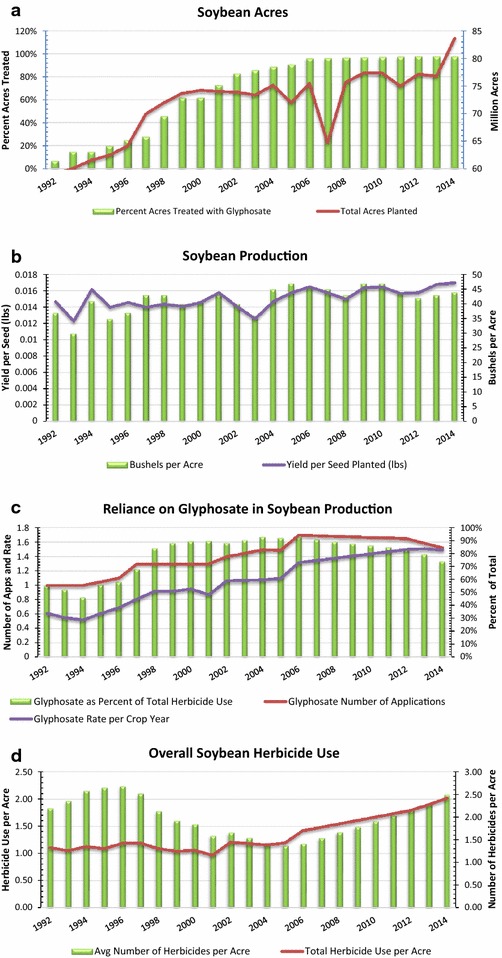
“Between 1996 and 2006, the soybean acreage in the United States planted with glyphosate-resistant (GR) varieties and the area treated with glyphosate increased by approximately 90% and 60%, respectively (Benbrook 2016; Duke and Powles 2009).”
BackgroundMaría, M. D., Kroll, K. J., Yu, F., Nouri, M., Silva-Sánchez, C., Pérez, J. G., Amador, D. A. M., Zhang, Y., Walsh, M. T., & Denslow, N. D. (2022) · Aquatic Toxicology · doi:10.1016/j.aquatox.2022.106142 · Cited by 29
Feltracco, M., Barbaro, E., Maule, F., Bortolini, M., Gabrieli, J., Blasi, F. D., Cairns, W. R. L., Dallo, F., Zangrando, R., Barbante, C., et al. (2022) · Environmental Pollution · doi:10.1016/j.envpol.2022.119657 · Cited by 29
Glyphosate used as desiccant contaminates plant pollen and nectar of non-target plant species
Zioga, E., White, B., & Stout, J. C. (2022) · Heliyon · doi:10.1016/j.heliyon.2022.e12179 · Cited by 30
“AMPA accumulation in topsoil (Benbrook, 2016), considering that glyphosate and AMPA may persist in soil for long periods, under certain conditions (e.”
BackgroundInfluentialGlyphosate-based herbicide (GBH) causes damage in embryo-larval stages of zebrafish (Danio rerio)
Ames, J., Severo, E. S., da Costa-Silva, D. G., Storck, T. R., do Amaral, A. M. B., Miragem, A. A., Rosemberg, D. B., & Loro, V. L. (2022) · Neurotoxicology and Teratology · doi:10.1016/j.ntt.2022.107147 · Cited by 31
Xiao, L., Wei, P., Yang, X., & Wang, P. (2023) · Microchemical Journal · doi:10.1016/j.microc.2023.109084 · Cited by 29
Yang, Y., Wang, H., Yan, S., Wang, T., Zhang, P., Zhang, H., Wang, H., Hansson, L., & Xu, J. (2023) · Environmental Science & Technology · doi:10.1021/acs.est.3c02257 · Cited by 29
Decision-making in a storm of discontent
van Straalen, N. M., & Legler, J. (2018) · Science · doi:10.1126/science.aat0567 · Cited by 29
Recent technologies for glyphosate removal from aqueous environment: A critical review
Yaah, V. B. K., Ahmadi, S., Quimbayo, J. S. M., Morales‐Torres, S., & Ojala, S. (2023) · Environmental Research · doi:10.1016/j.envres.2023.117477 · Cited by 32
Zhang, Q., Li, Y., Kroeze, C., Xu, W., Gai, L., Vitsas, M., Ma, L., Zhang, F. S., & Strokal, M. (2024) · Water Research · doi:10.1016/j.watres.2024.121986 · Cited by 28
Bartholomew, S. K., Winslow, W., Sharma, R., Pathak, K. V., Tallino, S., Judd, J. M., Leon, H., Turk, J., Pirrotte, P., & Velazquez, R. (2024) · Journal of Neuroinflammation · doi:10.1186/s12974-024-03290-6 · Cited by 28
“Glyphosate ( N-(phosphonomethyl) glycine) is the most heavily-applied herbicide in the US [7].”
Widespread occurrence of glyphosate in urine from pet dogs and cats in New York State, USA.
Karthikraj, R., & Kannan, K. (2019) · Science of the Total Environment · doi:10.1016/j.scitotenv.2018.12.454 · Cited by 23
Combined effect of glyphosphate, saccharin and sodium benzoate on rats
Lieshchova, M. A., Тішкіна, Н. М., Bohomaz, A. А., Гаврилін, П. М., & Brygadyrenko, V. V. (2018) · Regulatory Mechanisms in Biosystems · doi:10.15421/021888 · Cited by 28
Brock, A. L., Rein, A., Polesel, F., Nowak, K. M., Kästner, M., & Trapp, S. (2019) · Environmental Science & Technology · doi:10.1021/acs.est.9b01259 · Cited by 28
The Bill and Melinda Gates Foundation and the necro-populationism of ‘climate-smart’ agriculture
Shaw, A., & Wilson, K. (2019) · Gender Place & Culture · doi:10.1080/0966369x.2019.1609426 · Cited by 32
“2016), massive fertiliser and pesticide inputs associated with GM corn and soy have been linked to displacement, infertility, birth defects, increased cancer rates and other health and environmental problems in Argentina, Paraguay, Brazil and the United States (Serrano 2018; Lapegna 2014; Otero and Lapegna 2016; Motta…”
BackgroundInfluentialEfficient removal of a glyphosate-based herbicide from water using ZnO nanoparticles (ZnO-NPs)
Páez, M. R., Ochoa-Muñoz, Y. H., & Páez, J. E. R. (2019) · Biocatalysis and Agricultural Biotechnology · doi:10.1016/j.bcab.2019.101434 · Cited by 29
Glyphosate Residues in Soil and Air: An Integrated Review
Tzanetou, E. N., & Karasali, H. (2020) · IntechOpen eBooks · doi:10.5772/intechopen.93066 · Cited by 28
“5 Mg applied in 2014, and it is currently the most widely used herbicide in the United States and throughout the world [4, 5].”
BackgroundHearon, S. E., Wang, M., McDonald, T. J., & Phillips, T. D. (2020) · Journal of Environmental Sciences · doi:10.1016/j.jes.2020.06.029 · Cited by 28
“One factor contributing to the dominant and increasing use of PMG is the availability of genetically modified (GM), PMG-resistant crops, which makes up 56% of global PMG application ( Benbrook, 2016 ).”
BackgroundSesin, V., Davy, C. M., Stevens, K. J., Hamp, R., & Freeland, J. R. (2020) · Integrated Environmental Assessment and Management · doi:10.1002/ieam.4350 · Cited by 28
“Glyphosate is the most widely used herbicide for controlling invasive plants in agricultural lands, urban environments, and wildlands including habitats such as forests, wetlands, rangelands, roadsides, and power line corridors (Kettenring and Adams 2011; Benbrook 2016).”
InfluentialAnalysis of glyphosate, aminomethylphosphonic acid, and glufosinate from human urine by HRAM LC-MS
Franke, A., Li, X.-N., & Lai, J. F. (2020) · Analytical and Bioanalytical Chemistry · doi:10.1007/s00216-020-02966-1 · Cited by 24
Seeking justice, eating toxics: overlooked contaminants in urban community gardens
Malone, M. (2021) · Agriculture and Human Values · doi:10.1007/s10460-021-10236-8 · Cited by 28
Comparative analysis of detection techniques for glyphosate in urine and in water
Vélot, C., Poitou, F., & de Vendômois, J. S. (2022) · Environmental Sciences Europe · doi:10.1186/s12302-022-00637-9 · Cited by 28
“GBHs’ usage keeps increasing with the emergence of tolerant weeds induced by the widespread application of these herbicides: the proliferation of such weeds requires more frequent spraying and at higher concentrations [1].”
BackgroundAmberger, M. A., Schröder, M., Kuballa, J., & Jantzen, E. (2022) · Journal of Chromatography A · doi:10.1016/j.chroma.2022.463631 · Cited by 28
de Mesquita, C. P. B., Solon, A. J., Barfield, A., Mastrangelo, C. F., Tubman, A. J., Vincent, K., Porazinska, D. L., Hufft, R. A., Shackelford, N., Suding, K. N., et al. (2022) · Applied Soil Ecology · doi:10.1016/j.apsoil.2022.104778 · Cited by 28
Traiwatcharanon, P., Velmurugan, S., Zacharias, M., & Wongchoosuk, C. (2023) · Nanotechnology · doi:10.1088/1361-6528/ace3cc · Cited by 28
“In addition, the commercial herbicide formulations of Gly also improved the efficacy for application in different ways by adding adjuvant additives included in the formulated such as polyoxyethylene amine, POEA, propylene glycol, glycerin, sodium sulfite, sodium benzoate, ascorbic acid, sodium salt of o-phenylphenol,…”
Glyphosate-based herbicide induces hyperplastic ducts in the mammary gland of aging Wistar rats
Zanardi, M., Schimpf, M. G., Gastiazoro, M. P., Milesi, M. M., Muñoz‐de‐Toro, M., Varayoud, J., & Durando, M. (2019) · Molecular and Cellular Endocrinology · doi:10.1016/j.mce.2019.110658 · Cited by 29
Weng, R.-C., Tsou, M.-C., Lee, J., Tseng, C., Huang, Y., Xiao, Y.-L., Lu, Y.-P., Chou, W., Chang, R., & Chuang, C. (2024) · Talanta · doi:10.1016/j.talanta.2024.125741 · Cited by 28
Chianese, T., Trinchese, G., Leandri, R., Falco, M. D., Mollica, M. P., Scudiero, R., & Rosati, L. (2024) · International Journal of Molecular Sciences · doi:10.3390/ijms25137039 · Cited by 27
“Glyphosate [Gly, N-(phosphonomethyl) glycine] is widely used in agriculture, horticulture, forestry, and other fields, given the ever-increasing demand for food closely related to the population increase that we are experiencing [1].”
BackgroundBento, C. P. M., Commelin, M. C., Baartman, J. E. M., Yang, X., Peters, P., Mol, H. G. J., Ritsema, C. J., & Geissen, V. (2017) · Environmental Pollution · doi:10.1016/j.envpol.2017.12.003 · Cited by 27
“Large areas of loess soils are used to grow glyphosate-resistant crops, where huge amounts of glyphosatebased herbicides are applied every year (Aparicio et al., 2013; Clive, 2014; Benbrook, 2016; Bento et al., 2016).”
BackgroundElinson, M. N., Vereshchagin, A. N., Anisina, Y. E., Fakhrutdinov, A. N., Goloveshkin, A. S., & Egorov, M. P. (2019) · European Journal of Organic Chemistry · doi:10.1002/ejoc.201900240 · Cited by 27
Metadata
- Authors
- Benbrook, C. M.
- Corresponding author
- Benbrook, Charles M.
- ORCID
- Benbrook, Charles M.
- Venue
- Environmental Sciences Europe
- Published
- 2016-02-02
- Volume
- 28
- Issue
- 1
- Pages
- 3-3
- ISSN
- 2190-4715 (ISSN-L)
- 2190-4707
- PMC
- PMC5044953
- OpenAlex
- W2255447065
- Cited by
- 1,890
- References
- 56
- Citations by year
- 2026: 163 · 2025: 177 · 2024: 191 · 2023: 264 · 2022: 234 · 2021: 235 · 2020: 227 · 2019: 166 · 2018: 127 · 2017: 77 · 2016: 26
- FWCI
- 71.97
- Type
- journal article
- Language
- en
- Open access
- gold
- doi.org
- Locations
- Environmental Sciences Europe (publishedVersion, cc-by)
- Europe PMC (PubMed Central) (publishedVersion, cc-by)
- PubMed Central (publishedVersion, cc-by)
- PubMed (publishedVersion)
- Funders
- Ceres Trust
- Topics
- Physical Sciences › Environmental Science › Pollution › Pesticide and Herbicide Environmental Studies
- Life Sciences › Agricultural and Biological Sciences › Plant Science › Weed Control and Herbicide Applications
- Life Sciences › Pharmacology, Toxicology and Pharmaceutics › Toxicology › Pesticide Exposure and Toxicity
- Keywords
- glyphosate, Roundup Ready crops, herbicide-tolerant crops, genetically modified crops, agricultural pesticide application
About these checks
Registry, retraction, Cites and statistics results are computed, not judged, with one exception: a printed reference that no index lists is read once by a model before it counts as a citation error. Claims are extracted by a model and kept only when their quote appears verbatim in the text; each cited source is then checked, with a model’s help, for whether it says what the claim relies on. Those verdicts can be wrong — read the claim’s quote and the cited source before relying on one.
Statistics and arithmetic are recomputed, not judged.
Confidence bands are shown only for fields calibrated on our annotated test set. None is calibrated yet, so no band is shown.
What counts as a claim ›How we measure confidence ›How we check this ›
Are you an author, or do you see a problem with this page? Request a review
