

Effectiveness of a scalable, remotely delivered stepped-care intervention to reduce symptoms of psychological distress among Polish migrant workers in the Netherlands: study protocol for the RESPOND randomised controlled trial
Open accessThe DOI matches its Crossref record; 71 of the 72 references it cites were found in a registry or an index; 30 of the 59 sources its claims cite were checked for support.
Abstract
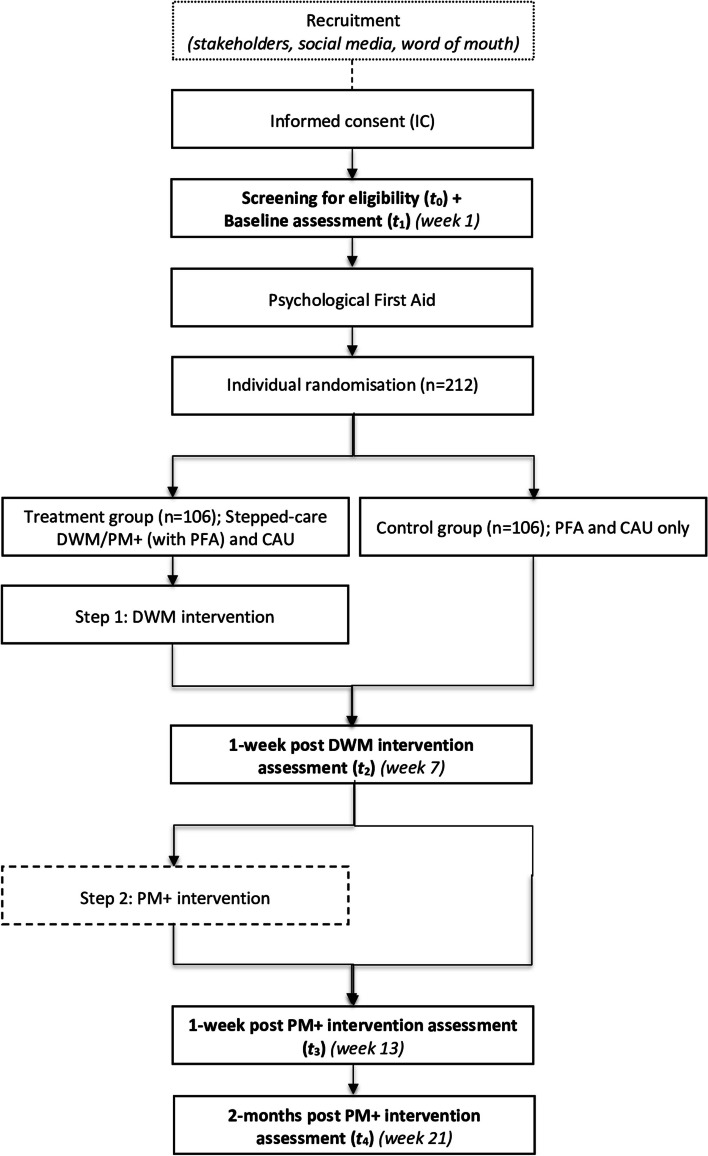
Background: The COVID-19 pandemic has negatively affected the mental health of international migrant workers (IMWs). IMWs experience multiple barriers to accessing mental health care. Two scalable interventions developed by the World Health Organization (WHO) were adapted to address some of these barriers: Doing What Matters in times of stress (DWM), a guided self-help web application, and Problem Management Plus (PM +), a brief facilitator-led program to enhance coping skills. This study examines whether DWM and PM + remotely delivered as a stepped-care programme (DWM/PM +) is effective and cost-effective in reducing psychological distress, among Polish migrant workers with psychological distress living in the Netherlands. Methods: The stepped-care DWM/PM + intervention will be tested in a two-arm, parallel-group, randomized controlled trial (RCT) among adult Polish migrant workers with self-reported psychological distress (Kessler Psychological Distress Scale; K10 > 15.9). Participants (n = 212) will be randomized into either the intervention group that receives DWM/PM + with psychological first aid (PFA) and care-as-usual (enhanced care-as-usual or eCAU), or into the control group that receives PFA and eCAU-only (1:1 allocation ratio). Baseline, 1-week post-DWM (week 7), 1-week post-PM + (week 13), and follow-up (week 21) self-reported assessments will be conducted. The primary outcome is psychological distress, assessed with the Patient Health Questionnaire Anxiety and Depression Scale (PHQ-ADS). Secondary outcomes are self-reported symptoms of depression, anxiety, posttraumatic stress disorder (PTSD), resilience, quality of life, and cost-effectiveness. In a process evaluation, stakeholders’ views on barriers and facilitators to the implementation of DWM/PM + will be evaluated. Discussion: To our knowledge, this is one of the first RCTs that combines two scalable, psychosocial WHO interventions into a stepped-care programme for migrant populations. If proven to be effective, this may bridge the mental health treatment gap IMWs experience. Trial registration: Dutch trial register NL9630, 20/07/2021, https://www.onderzoekmetmensen.nl/en/trial/27052 © 2023, The Author(s).
Overview
CoChat Summary
## TL;DR
This paper is a study protocol for a two-arm randomized controlled trial testing whether a remotely delivered stepped-care program combining WHO interventions DWM and PM+ reduces psychological distress among Polish migrant workers in the Netherlands. The trial will also assess cost-effectiveness, feasibility/acceptability, and implementation barriers/facilitators, but it reports no results yet.
## Key findings
- The planned RCT will enroll 212 adult Polish migrant workers with psychological distress (K10 > 15.9) and randomize them 1:1 to intervention (n = 106) or control (n = 106).
- The primary endpoint is combined depression and anxiety at week 21 measured by PHQ-ADS; the analysis plan targets a small-to-medium effect size of 0.3 and required 74 participants per group for power = 0.95, α = 0.05.
- As of the protocol’s trial-status statement, enrollment had begun on 03 June 2022 and 138 participants had been enrolled.
- The intervention is fully remote and stepped-care: all intervention participants receive PFA + step 1 (DWM), and those with persistent distress at t2 (K10 > 15.9) are offered step 2 (PM+).
## Methods
- Design: Single-blind, two-arm, parallel-group, superiority RCT with 1:1 allocation; intervention is compared with PFA + enhanced care-as-usual (eCAU) only.
- Sample/data: Adult Polish migrant workers living in the Netherlands with self-reported psychological distress; key inclusion criterion is K10 > 15.9 and access to an internet-enabled device; assessments at baseline (t1), week 7 (t2), week 13 (t3), and week 21 (t4).
- Main analysis: Intention-to-treat and per-protocol analyses using linear mixed models for primary and secondary outcomes; cost-effectiveness from healthcare system and societal perspectives, plus qualitative thematic analysis for process evaluation.
## Limitations
- The paper is a protocol, so no efficacy, cost-effectiveness, feasibility, or acceptability results are reported yet.
- The study itself notes that participants who speak the intervention language and have internet access are eligible; this implies a digital-access/language constraint in the sample definition (text evident).
- The protocol includes optional components and self-reported outcomes, and it uses missing-at-random assumptions with no imputation for missing data in mixed models; this is a methodological limitation evident from the text.
Model-written summary. Check it against the paper before relying on it.
Integrity signals
Registry
Cites
Statistics
Figures
Verification
Claims the paper makes
21 Valid · 0 Not valid · 16 Not checked · 18 Own results and interpretations
Every source the paper cites for this claim was checked and supports it.
In the paper
“These common mental health problems have been exacerbated by the ongoing COVID-19 pandemic [12].”
§ Effectiveness of a scalable, remotely delivered stepped-care intervention to reduce symptoms of psychological distress among Polish migrant workers in the Netherlands: study protocol for the RESPOND randomised controlled trial > Introduction
What the sources say
- Supportedcites [12] Oliva-Arocas A Benavente P Ronda E Diaz E Health of International Migrant Workers During the COVID-19 Pandemic: A Scoping Review Front Public Health 2022 10 816597 35252094 PMC8888537 source
The Discussion says pandemic-related working conditions and restrictions appear to have been detrimental to migrant workers’ mental health. The Results report that fourteen reviewed studies assessed effects on anxiety, depression, stress, and other mental health outcomes, supporting the paraphrase. (LLM, conf=0.88)
plainstates a cause- Asserted: passes — The authors put it forward as true.
- Checkable: passes — It can be checked against evidence.
- Load-bearing: passes — The paper’s conclusions depend on it.
- Based: passes — The paper gives a reason why it holds.
- Supported
The cited sources support only part of this claim — read each source’s verdict below.
In the paper
“Prior to the COVID-19 pandemic, mental health problems were already one of the most commonly reported work-related health problems among IMWs [9, 10].”
§ Effectiveness of a scalable, remotely delivered stepped-care intervention to reduce symptoms of psychological distress among Polish migrant workers in the Netherlands: study protocol for the RESPOND randomised controlled trial > Introduction
What the sources say
- Not matchedcites [9] Simon J, Kiss N, Łaszewska A, Mayer S. Public health aspects of migrant health: a review of the evidence on health status for labour migrants in the European Region. World Health Organization. Regional Office for Europe; 2015 [cited 2023 Jun 21]. 45 p. Available from: https://apps.who.int/iris/handle/10665/326345 27536766
We searched by its title and found no matching paper.
- Partly supportedcites [10] Hargreaves S Rustage K Nellums LB McAlpine A Pocock N Devakumar D Occupational health outcomes among international migrant workers: a systematic review and meta-analysis Lancet Glob Health 2019 7 7 e872 e882 31122905 PMC6565984 sourceExperimental — accuracy not yet measured
The Results (page not available in our copy) say mental health problems were common among retail and service workers and report depression or stress in several other migrant-worker groups. The paper does not establish that mental health problems were among the most commonly reported work-related health problems across international migrant workers as a whole. (LLM, conf=0.85)
plain- Asserted: passes — The authors put it forward as true.
- Checkable: passes — It can be checked against evidence.
- Load-bearing: unclear — It is unclear whether the paper’s conclusions depend on it.
- Based: passes — The paper gives a reason why it holds.
- Not matched
The cited sources support only part of this claim — read each source’s verdict below.
In the paper
“IMWs have been found to develop more symptoms of anxiety and depression than non-migrant workers [11].”
§ Effectiveness of a scalable, remotely delivered stepped-care intervention to reduce symptoms of psychological distress among Polish migrant workers in the Netherlands: study protocol for the RESPOND randomised controlled trial > Introduction
What the sources say
- Partly supportedcites [11] Mucci N Traversini V Giorgi G Tommasi E De Sio S Arcangeli G Migrant Workers and Psychological Health: A Systematic Review Sustainability 2020 12 1 120 sourceExperimental — accuracy not yet measured
In §3.2.1 (page unavailable), the review reports that labor migrants were more likely than non-migrants to report depressive symptoms, but says this difference applied to solo migrants, not those accompanied by family. Its anxiety comparison concerns Filipino-American nurses and Caucasian colleagues (§3.1, page unavailable), rather than international migrant workers and non-migrant workers generally. The claim omits those limits. (LLM, conf=0.85)
plainstates an association- Asserted: passes — The authors put it forward as true.
- Checkable: passes — It can be checked against evidence.
- Load-bearing: passes — The paper’s conclusions depend on it.
- Based: passes — The paper gives a reason why it holds.
- Partly supported
The cited sources support only part of this claim — read each source’s verdict below.
In the paper
“The COVID-19 pandemic has negatively affected the mental health of international migrant workers (IMWs).”
§ Effectiveness of a scalable, remotely delivered stepped-care intervention to reduce symptoms of psychological distress among Polish migrant workers in the Netherlands: study protocol for the RESPOND randomised controlled trial > Abstract > Background
What the sources say
- Partly supportedcites [12] Oliva-Arocas A Benavente P Ronda E Diaz E Health of International Migrant Workers During the COVID-19 Pandemic: A Scoping Review Front Public Health 2022 10 816597 35252094 PMC8888537 sourceExperimental — accuracy not yet measured
The Discussion (page unavailable) says pandemic-related conditions appear to have been detrimental to migrant workers’ mental health. The Results (page unavailable) report studies of anxiety, depression and other mental-health outcomes, but the source’s qualified wording does not establish the citing sentence’s unqualified claim. (LLM, conf=0.82)
plainstates a cause- Asserted: passes — The authors put it forward as true.
- Checkable: passes — It can be checked against evidence.
- Load-bearing: passes — The paper’s conclusions depend on it.
- Based: passes — The paper gives a reason why it holds.
- Partly supported
Every source the paper cites for this claim was checked and supports it.
In the paper
“The Polish version of the PHQ-9 has been validated [58].”
§ Effectiveness of a scalable, remotely delivered stepped-care intervention to reduce symptoms of psychological distress among Polish migrant workers in the Netherlands: study protocol for the RESPOND randomised controlled trial > Methods > Study measures
What the sources say
- Supportedcites [58] Ślusarska BJ, Nowicki G, Piasecka H, Zarzycka D, Mazur A, Saran T, et al. Validation of the Polish language version of the Patient Health Questionnaire-9 in a population of adults aged 35–64. Ann Agric Environ Med. 2019;26(3):420–4. 31559797 source
The Discussion reports that the study confirmed satisfactory psychometric properties for the Polish PHQ-9 in adults aged 35–64. That validation supports the citing sentence, although the study's findings are bounded to that age group. (LLM, conf=0.94)
plain- Asserted: passes — The authors put it forward as true.
- Checkable: passes — It can be checked against evidence.
- Load-bearing: passes — The paper’s conclusions depend on it.
- Based: passes — The paper gives a reason why it holds.
- Supported
20 more claims · 8 with their cited sources checked
Create a free account to see all 55 claims and to verify the 1 reference still open.
- It may state two separate claims as one. 11
- Probably not a substantial claim. 29
Citations
Cites
The PHQ-9: Validity of a brief depression severity measure
Kroenke, K., Spitzer, R. L., & Williams, J. B. W. (2001) · Journal of General Internal Medicine · doi:10.1046/j.1525-1497.2001.016009606.x · Cited by 44,910
A Brief Measure for Assessing Generalized Anxiety Disorder: The GAD-7
Spitzer, R. L., Kroenke, K., Williams, J. B. W., & Löwe, B. (2006) · Archives of Internal Medicine · doi:10.1001/archinte.166.10.1092 · Cited by 31,765 · cited 3×
“Symptoms of depression and anxiety during the preceding two weeks will be measured by the nine-item PHQ-9 [55] and the seven-item GAD-7 [56] respectively.”
MethodKESSLER, R. C., ANDREWS, G., COLPE, L. J., HIRIPI, E., MROCZEK, D. K., NORMAND, S.-L. T., WALTERS, E. E., & ZASLAVSKY, A. M. (2002) · Psychological Medicine · doi:10.1017/s0033291702006074 · Cited by 10,327 · cited 1×
“Psychological distress will be measured with the K10 [47].”
Method(1998) · PubMed · Cited by 10,216
Development and preliminary testing of the new five-level version of EQ-5D (EQ-5D-5L)
Herdman, M., Gudex, C., Lloyd, A., Janssen, M., Kind, P., Parkin, D., Bonsel, G., & Badia, X. (2011) · Quality of Life Research · doi:10.1007/s11136-011-9903-x · Cited by 9,795 · cited 1×
“Quality of life will be measured by the EuroQol 5-dimensional descriptive system—5-level version (EQ-5D-5L) which consists of the EQ-5D (part 1) and EQ-VAS (part 2) [68].”
MethodManea, L., Gilbody, S., & McMillan, D. (2012) · Canadian Medical Association Journal · doi:10.1503/cmaj.110829 · Cited by 1,966
How mental health care should change as a consequence of the COVID-19 pandemic
Moreno, C., Wykes, T., Galderisi, S., Nordentoft, M., Crossley, N., Jones, N., Cannon, M., Correll, C. U., Byrne, L., Carr, S., et al. (2020) · The Lancet Psychiatry · doi:10.1016/s2215-0366(20)30307-2 · Cited by 1,840 · cited 1×
“…while recently developed non-invasive, low-burden digital phenotyping measures that integrate voice, speech, movement and facial expression data from smart devices (e.g. smartphones) may be a promising and scalable way for assessing psychological wellbeing (e.g. depression, PTSD) [34–36].”
BackgroundDigital Phenotyping: Technology for a New Science of Behavior
Insel, T. R. (2017) · JAMA · doi:10.1001/jama.2017.11295 · Cited by 833
Cuijpers, P., Donker, T., van Straten, A., Li, J., & Andersson, G. (2010) · Psychological Medicine · doi:10.1017/s0033291710000772 · Cited by 832 · cited 1×
“Often, (guided) self-help treatments are used as a first step in stepped-care interventions, showing comparable effectiveness to face-to-face interventions [23].”
BackgroundPotential problems with the interpretation of hair analysis results
Wennig, R. (2000) · Forensic Science International · doi:10.1016/s0379-0738(99)00146-2 · Cited by 677 · cited 1×
“Based on an average hair growth rate of 1 cm/month [73], this will give an indication of physiological stress levels over 3 months.”
BackgroundMigrant Workers and Their Occupational Health and Safety
Moyce, S. C., & Schenker, M. (2018) · Annual Review of Public Health · doi:10.1146/annurev-publhealth-040617-013714 · Cited by 508 · cited 2×
“D jobs: dirty, dangerous, and demanding (or demeaning or degrading) jobs [6].”
BackgroundCulturally centered psychosocial interventions
Bernal, G., & Sáez‐Santiago, E. (2006) · Journal of Community Psychology · doi:10.1002/jcop.20096 · Cited by 463 · cited 1×
“Before implementation of the stepped-care interventions, a qualitative sub-study is performed to assess the main daily-life problems and psychosocial care needs of IMWs in the Netherlands, to contextually adapt both interventions [76].”
MethodDawson, K. S., Bryant, R. A., Harper, M., Kuowei Tay, A., Rahman, A., Schafer, A., & van Ommeren, M. (2015) · World Psychiatry · doi:10.1002/wps.20255 · Cited by 440 · cited 2×
“PM + teaches four strategies: (1) stress management, (2) problem solving, (3) behavioural activation, and (4) strengthening social support, and has a psycho-education component [27].”
BackgroundSelf-citationDigital interventions for the treatment of depression: a meta-analytic review
Moshe, I., Terhorst, Y., Philippi, P., Domhardt, M., Cuijpers, P., Cristea, I., Pulkki-Råback, L., Baumeister, H., & Sander, L. B. (2021) · Psychological Bulletin · doi:10.1037/bul0000334 · Cited by 390
Pierce, M., McManus, S., Hope, H., Hotopf, M., Ford, T., Hatch, S. L., John, A., Kontopantelis, E., Webb, R. T., Wessely, S., et al. (2021) · The Lancet Psychiatry · doi:10.1016/s2215-0366(21)00151-6 · Cited by 387 · cited 1×
“…period [2], trajectory studies show that the mental health of vulnerable groups such as women, young people, people with pre-existing physical ill-health, or those experiencing socio-economic difficulties deteriorated more than the general population during the COVID-19 pandemic [3, 4].”
BackgroundHargreaves, S., Rustage, K., Nellums, L. B., McAlpine, A., Pocock, N., Devakumar, D., Aldridge, R. W., Abubakar, I., Kristensen, K. L., Himmels, J. W., et al. (2019) · The Lancet Global Health · doi:10.1016/s2214-109x(19)30204-9 · Cited by 364 · cited 2×
“Prior to the COVID-19 pandemic, mental health problems were already one of the most commonly reported work-related health problems among IMWs [9, 10].”
BackgroundBryant, R. A., Schafer, A., Dawson, K. S., Anjuri, D., Mulili, C., Ndogoni, L., Koyiet, P., Sijbrandij, M., Ulate, J., Harper Shehadeh, M., et al. (2017) · PLOS Medicine · doi:10.1371/journal.pmed.1002371 · Cited by 321 · cited 2×
“We aim to detect a small-to-medium Cohen’s d effect size of 0.3 on the PHQ-ADS composite score (primary outcome) at the t 4 follow-up assessment point, which is based on previous RCTs on PM + [28, 29].”
MethodInfluentialSelf-citationRahman, A., Hamdani, S. U., Awan, N. R., Bryant, R. A., Dawson, K. S., Khan, M. F., Azeemi, M. M.-U.-H., Akhtar, P., Nazir, H., Chiumento, A., et al. (2016) · JAMA · doi:10.1001/jama.2016.17165 · Cited by 292 · cited 2×
“We aim to detect a small-to-medium Cohen’s d effect size of 0.3 on the PHQ-ADS composite score (primary outcome) at the t 4 follow-up assessment point, which is based on previous RCTs on PM + [28, 29].”
MethodInfluentialSelf-citationStepped care treatment delivery for depression: a systematic review and meta-analysis
van Straten, A., Hill, J., Richards, D. A., & Cuijpers, P. (2015) · Psychological Medicine · doi:10.1017/s0033291714000701 · Cited by 288 · cited 2×
“In stepped-care interventions, indi - viduals first receive an evidence-based, low-intensity treatment, i.e. a treatment requiring less of the individual’s and the professional’s time and which is less expensive [22].”
BackgroundSun, Y., Wu, Y., Fan, S., Dal Santo, T., Li, L., Jiang, X., Li, K., Wang, Y., Tasleem, A., Krishnan, A., et al. (2023) · BMJ · doi:10.1136/bmj-2022-074224 · Cited by 279 · cited 1×
“…not found convincing evidence for substantial increases in mental health symptoms during the COVID-19 pandemic compared to the pre-pandemic period [2], trajectory studies show that the mental health of vulnerable groups such as women, young people, people with pre-existing physical ill-health, or…”
BackgroundConway, L. G., Woodard, S. R., & Zubrod, A. (2020) · doi:10.31234/osf.io/z2x9a · Cited by 272 · cited 1×
“To accommodate follow-up, minor adaptations were made to the BTQ. Impacts of COVID-19 will be assessed with a questionnaire based on other COVID-19 questionnaires [72].”
MethodIntraindividual stability of hair cortisol concentrations
Stalder, T., Steudte, S., Miller, R., Skoluda, N., Dettenborn, L., & Kirschbaum, C. (2012) · Psychoneuroendocrinology · doi:10.1016/j.psyneuen.2011.08.007 · Cited by 271 · cited 2×
“In about 100 hair strands, cut as close as possible from the scalp at the vertex posterior, the 3cm hair from the scalp will be analysed for cumulative HCC, cortisone, and DHEA(S) levels [39].”
BackgroundThomson, M. S., Chaze, F., George, U., & Guruge, S. (2015) · Journal of Immigrant and Minority Health · doi:10.1007/s10903-015-0175-3 · Cited by 256 · cited 1×
“IMWs can face various barriers related to seeking mental health services (e.g. lack of awareness of services, stigma) and to accessing the existing services (e.g. language differences, lack of culturally appropriate services) [14, 15].”
BackgroundSafe but Lonely? Loneliness, Anxiety, and Depression Symptoms and COVID-19
Okruszek, Ł., Aniszewska-Stańczuk, A., Piejka, A., Wiśniewska, M., & Żurek, K. (2020) · Frontiers in Psychology · doi:10.3389/fpsyg.2020.579181 · Cited by 244
Investigation of abbreviated 4 and 8 item versions of the PTSD Checklist 5
Price, M., Szafranski, D. D., van Stolk-Cooke, K., & Gros, D. F. (2016) · Psychiatry Research · doi:10.1016/j.psychres.2016.03.014 · Cited by 242 · cited 1×
“Symptoms of PTSD during the past month will be measured by the 8-item PCL-5 [62], which is a shortened version of the 20-item PTSD Checklist for DSM-5 (PCL-C) [63].”
MethodPsycho-social factors associated with mental resilience in the Corona lockdown
Veer, I. M., Riepenhausen, A., Zerban, M., Wackerhagen, C., Puhlmann, L. M. C., Engen, H., Köber, G., Bögemann, S. A., Weermeijer, J., Uściłko, A., et al. (2021) · Translational Psychiatry · doi:10.1038/s41398-020-01150-4 · Cited by 223 · cited 1×
“To this end, a measure of stressor exposure has been developed based on the Mainz Inventory of Microstressors (MIMIS) [65] and similar measures [66].”
Self-citationGambin, M., Sękowski, M., Woźniak-Prus, M., Wnuk, A., Oleksy, T., Cudo, A., Hansen, K., Huflejt-Łukasik, M., Kubicka, K., Łyś, A. E., et al. (2021) · Comprehensive Psychiatry · doi:10.1016/j.comppsych.2020.152222 · Cited by 202 · cited 1×
“The Polish version of the GAD-7 has not been validated yet but has recently been used in various studies to assess anxiety during the COVID-19 pandemic in Poland and shown high internal consistency [59–61].”
MethodWynne, B., McHugh, L., Gao, W., Keegan, D., Byrne, K., Rowan, C., Hartery, K., Kirschbaum, C., Doherty, G., Cullen, G., et al. (2019) · Gastroenterology · doi:10.1053/j.gastro.2018.11.030 · Cited by 188
The validity of the Dutch K10 and extended K10 screening scales for depressive and anxiety disorders
Donker, T., Comijs, H., Cuijpers, P., Terluin, B., Nolen, W., Zitman, F., & Penninx, B. (2010) · Psychiatry Research · doi:10.1016/j.psychres.2009.01.012 · Cited by 175 · cited 1×
“The K10 is validated in various languages (e.g. Dutch) [51].”
BackgroundMental disorders following COVID-19 and other epidemics: a systematic review and meta-analysis
Leung, C. M. C., Ho, M. K., Bharwani, A. A., Cogo-Moreira, H., Wang, Y., Chow, M. S. C., Fan, X., Galea, S., Leung, G. M., & Ni, M. Y. (2022) · Translational Psychiatry · doi:10.1038/s41398-022-01946-6 · Cited by 174 · cited 2×
“The EQ-VAS consists of a visual, analogue scale with as endpoints ‘the best’ [1] and ‘the worst’ [5] health you can imagine.”
BackgroundAragona, M., Barbato, A., Cavani, A., Costanzo, G., & Mirisola, C. (2020) · Public Health · doi:10.1016/j.puhe.2020.06.055 · Cited by 173 · cited 1×
“In light of the COVID-19 pandemic, there is thus an even higher need for psychosocial interventions for IMWs targeting the most notable symptoms of psychological distress, such as anxiety, depression, and posttraumatic stress disorder (PTSD) [16, 17].”
BackgroundMigrant Workers and Psychological Health: A Systematic Review
Mucci, N., Traversini, V., Giorgi, G., Tommasi, E., De Sio, S., & Arcangeli, G. (2019) · Sustainability · doi:10.3390/su12010120 · Cited by 160 · cited 1×
“IMWs have been found to develop more symptoms of anxiety and depression than non-migrant workers [11].”
BackgroundSchnurr, P. P., Vielhauer, M. J., Weathers, F. W., & Findler, M. (1999) · PsycTESTS Dataset · doi:10.1037/t07488-000 · Cited by 153
Self‐Help Plus ( SH +): a new WHO stress management package
Epping‐Jordan, J. E., Harris, R., Brown, F. L., Carswell, K., Foley, C., García‐Moreno, C., Kogan, C., & van Ommeren, M. (2016) · World Psychiatry · doi:10.1002/wps.20355 · Cited by 151 · cited 1×
“The first step is a digitalized guided self-help web application (web app) of Doing What Matters in times of stress (DWM), an illustrated self-help book that is part of Self-Help Plus (SH + ) [24].”
BackgroundBarnett, P., Goulding, L., Casetta, C., Jordan, H., Sheridan-Rains, L., Steare, T., Williams, J., Wood, L., Gaughran, F., & Johnson, S. (2021) · Journal of Medical Internet Research · doi:10.2196/26492 · Cited by 136 · cited 1×
“Policy makers, mental health professionals and service users have expressed interest in continuing with this remote delivery in the absence of pandemic-related measures [21].”
BackgroundKalisch, R., Köber, G., Binder, H., Ahrens, K. F., Basten, U., Chmitorz, A., Choi, K. W., Fiebach, C. J., Goldbach, N., Neumann, R. J., et al. (2021) · Frontiers in Psychology · doi:10.3389/fpsyg.2021.710493 · Cited by 135 · cited 1×
“…used to estimate the effect of the DWM/PM + stepped-care programme on secondary outcomes: symptoms of depression (PHQ-9), anxiety (GAD-7), PTSD (PCL-5), quality of life (EQ-5D-5L), and an outcome-based resilience variable, operationalised as the PHQ-ADS total score against stressor exposure [78].”
MethodSelf-citationOut of the Loop: (In)access to Health Care for Migrant Workers in Canada
Hennebry, J., McLaughlin, J., & Preibisch, K. (2016) · Journal of International Migration and Integration · doi:10.1007/s12134-015-0417-1 · Cited by 118 · cited 1×
“IMWs can face various barriers related to seeking mental health services (e.g. lack of awareness of services, stigma) and to accessing the existing services (e.g. language differences, lack of culturally appropriate services) [14, 15].”
BackgroundRemote mental health care interventions during the COVID-19 pandemic: An umbrella review
Witteveen, A. B., Young, S. Y., Cuijpers, P. J., Ayuso‐Mateos, J. L., Barbui, C., Bertolini, F., Cabello, M., Cadorin, C., Downes, N., Franzoi, D., et al. (2022) · Behaviour Research and Therapy · doi:10.1016/j.brat.2022.104226 · Cited by 110 · cited 2×
“…period [2], trajectory studies show that the mental health of vulnerable groups such as women, young people, people with pre-existing physical ill-health, or those experiencing socio-economic difficulties deteriorated more than the general population during the COVID-19 pandemic [3, 4].”
BackgroundSelf-citationde Graaff, A. M., Cuijpers, P., McDaid, D., Park, A., Woodward, A., Bryant, R. A., Fuhr, D. C., Kieft, B., Minkenberg, E., & Sijbrandij, M. (2020) · Epidemiology and Psychiatric Sciences · doi:10.1017/s2045796020000724 · Cited by 109 · cited 1×
“In previous randomized controlled trials (RCTs), PM + has been found to be effective in reducing psychological distress in low-income settings [28, 29] and Syrian refugees in the Netherlands [30, 31].”
Self-citationHair cortisol concentrations in war-affected adolescents: A prospective intervention trial
Dajani, R., Hadfield, K., van Uum, S., Greff, M., & Panter-Brick, C. (2018) · Psychoneuroendocrinology · doi:10.1016/j.psyneuen.2017.12.012 · Cited by 108 · cited 1×
“In recent years, HCC has also been used as a secondary outcome of psychological interventions [44, 45].”
Hair cortisol concentrations in mental disorders: A systematic review
Koumantarou Malisiova, E., Mourikis, I., Darviri, C., Nicolaides, N. C., Zervas, I. M., Papageorgiou, C., & Chrousos, G. P. (2021) · Physiology & Behavior · doi:10.1016/j.physbeh.2020.113244 · Cited by 99 · cited 1×
“Studies have found that HCC is related to PTSD, depression and anxiety disorders [40, 41] or with perceived job insecurity and work stress [42, 43].”
Backgroundde Graaff, A. M., Cuijpers, P., Twisk, J. W. R., Kieft, B., Hunaidy, S., Elsawy, M., Gorgis, N., Bouman, T. K., Lommen, M. J. J., Acarturk, C., et al. (2023) · BMJ Mental Health · doi:10.1136/bmjment-2022-300637 · Cited by 97 · cited 1×
“In previous randomized controlled trials (RCTs), PM + has been found to be effective in reducing psychological distress in low-income settings [28, 29] and Syrian refugees in the Netherlands [30, 31].”
Self-citationDragan, M., Grajewski, P., & Shevlin, M. (2021) · European Journal of Psychotraumatology · doi:10.1080/20008198.2020.1860356 · Cited by 93
Ang, J. W., Chia, C., Koh, C. J., Chua, B. W. B., Narayanaswamy, S., Wijaya, L., Chan, L. G., Goh, W. L., & Vasoo, S. (2017) · BMJ Global Health · doi:10.1136/bmjgh-2016-000213 · Cited by 84 · cited 1×
“Despite this mental health burden, access to specialist health care is limited [10, 13].”
BackgroundPotential Responses to the COVID-19 Outbreak in Support of Migrant Workers
Shrestha, M., Moroz, H., & Testaverde, M. (2020) · World Bank, Washington, DC eBooks · doi:10.1596/33625 · Cited by 80 · cited 1×
“During the pandemic, additional challenges for IMWs were, amongst others, limited social protection, high risk of exposure to and transmission of COVID-19, and impending job loss, in turn, leading to economic hardship and loss of housing (often provided by the employer) [8].”
BackgroundSafe but lonely? Loneliness, mental health symptoms and COVID-19
Okruszek, Ł., Aniszewska-Stańczuk, A., Piejka, A., Wiśniewska, M., & Żurek, K. (2020) · doi:10.31234/osf.io/9njps · Cited by 77 · cited 1×
“The Polish version of the GAD-7 has not been validated yet but has recently been used in various studies to assess anxiety during the COVID-19 pandemic in Poland and shown high internal consistency [59–61].”
MethodNavakkode, S., Zhai, J., Wong, Y. P., Li, G., & Soong, T. W. (2022) · Translational Psychiatry · doi:10.1038/s41398-021-01683-2 · Cited by 75
A vulnerable workforce: migrant workers in the COVID-19 pandemic
(2020) · Joint Research Centre (European Commission) · doi:10.2760/316665 · Cited by 73 · cited 1×
“Compared to non-migrant workers, IMWs are more likely to work in essential, low-skilled occupations, have temporary contracts, work longer hours for lower wages, are willing to take on greater risks and have jobs that are not suitable for remote working [6, 7].”
BackgroundChmitorz, A., Kurth, K., Mey, L. K., Wenzel, M., Lieb, K., Tüscher, O., Kubiak, T., & Kalisch, R. (2020) · JMIR Mental Health · doi:10.2196/14566 · Cited by 72 · cited 1×
“To this end, a measure of stressor exposure has been developed based on the Mainz Inventory of Microstressors (MIMIS) [65] and similar measures [66].”
MethodPsarraki, E. E., Kokka, I., Bacopoulou, F., Chrousos, G. P., Artemiadis, A., & Darviri, C. (2021) · Psychoneuroendocrinology · doi:10.1016/j.psyneuen.2020.105098 · Cited by 67 · cited 1×
“Studies have found that HCC is related to PTSD, depression and anxiety disorders [40, 41] or with perceived job insecurity and work stress [42, 43].”
Backgroundde Graaff, A. M., Cuijpers, P., Acarturk, C., Bryant, R., Burchert, S., Fuhr, D. C., Huizink, A. C., de Jong, J., Kieft, B., Knaevelsrud, C., et al. (2020) · European Journal of Psychotraumatology · doi:10.1080/20008198.2019.1694347 · Cited by 57 · cited 1×
“In line with previous research [48, 49] a cut-off score of > 15.9 is used, which indicates psychological distress [50].”
MethodInfluentialSelf-citationSelecting instruments for assessing psychological wellbeing in Afghan and Kurdish refugee groups
Sulaiman-Hill, C. M., & Thompson, S. C. (2010) · BMC Research Notes · doi:10.1186/1756-0500-3-237 · Cited by 55 · cited 1×
“In line with previous research [48, 49] a cut-off score of > 15.9 is used, which indicates psychological distress [50].”
MethodInfluentialAbbas, A., Sauder, C., Yadav, V., Koesmahargyo, V., Aghjayan, A., Marecki, S., Evans, M., & Galatzer-Levy, I. R. (2021) · Frontiers in Digital Health · doi:10.3389/fdgth.2021.610006 · Cited by 49 · cited 3×
“As an exploratory additional analysis, digital markers will be assessed using open-source tools in a Python environment, which is available on GitHub [38, 74].”
BackgroundMethodMediavilla, R., Felez-Nobrega, M., McGreevy, K. R., Monistrol-Mula, A., Bravo-Ortiz, M.-F., Bayón, C., Giné-Vázquez, I., Villaescusa, R., Muñoz-Sanjosé, A., Aguilar-Ortiz, S., et al. (2023) · BMJ Mental Health · doi:10.1136/bmjment-2023-300697 · Cited by 47 · cited 1×
“This stepped-care programme has also been found to be effective among healthcare workers experiencing psychological distress in the initial pandemic hotspots [33].”
BackgroundSelf-citationAcartürk, C., Kurt, G., İlkkurşun, Z., de Graaff, A. M., Bryant, R. A., Cuijpers, P. J., Fuhr, D. C., McDaid, D., Park, A. L., Sijbrandij, M., et al. (2024) · Epidemiology and Psychiatric Sciences · doi:10.1017/s2045796024000453 · Cited by 43
Self-citationŚlusarska, B., Nowicki, G., Piasecka, H., Zarzycka, D., Mazur, A., Saran, T., & Bednarek, A. (2019) · Annals of Agricultural and Environmental Medicine · doi:10.26444/aaem/99246 · Cited by 40 · cited 1×
“The Polish version of the PHQ-9 has been validated [58].”
MethodSchultebraucks, K., Yadav, V., & Galatzer‐Levy, I. R. (2020) · Digital Biomarkers · doi:10.1159/000512394 · Cited by 36 · cited 1×
“…while recently developed non-invasive, low-burden digital phenotyping measures that integrate voice, speech, movement and facial expression data from smart devices (e.g. smartphones) may be a promising and scalable way for assessing psychological wellbeing (e.g. depression, PTSD) [34–36].”
BackgroundHealth of International Migrant Workers During the COVID-19 Pandemic: A Scoping Review
Oliva-Arocas, A., Benavente, P., Ronda, E., & Diaz, E. (2022) · Frontiers in Public Health · doi:10.3389/fpubh.2022.816597 · Cited by 36
Petri‐Romão, P., Engen, H. G., Rupanova, A., Puhlmann, L. M. C., Zerban, M., Neumann, R. J., Malyshau, A., Ahrens, K. F., Schick, A., Kollmann, B., et al. (2024) · PLoS ONE · doi:10.1371/journal.pone.0295562 · Cited by 35 · cited 1×
“Positive appraisal style, a factor leading to resilience, will be measured with the Positive Appraisal Style Scale, content-focused (PASS-content) [67].”
MethodSelf-citationMediavilla, R., McGreevy, K. R., Félez-Nóbrega, M., Monistrol-Mula, A., Bravo‐Ortiz, M. F., Bayón, C., Vega, B. R., Nicaise, P., Delaire, A., Sijbrandij, M., et al. (2022) · Digital Health · doi:10.1177/20552076221129084 · Cited by 31 · cited 2×
“For this project, DWM has been adapted for delivery in a digital smart-phone-based format [26].”
BackgroundMethodSelf-citationSelf-Help Plus for refugees and asylum seekers: an individual participant data meta-analysis
Karyotaki, E., Sijbrandij, M., Purgato, M., Acarturk, C., Lakin, D., Bailey, D., Peckham, E., Uygun, E., Tedeschi, F., Wancata, J., et al. (2023) · BMJ Mental Health · doi:10.1136/bmjment-2023-300672 · Cited by 30 · cited 1×
“So far, SH + has been evaluated among refugee populations, showing overall beneficial effects in improving self-identified problems and well-being [25].”
BackgroundSelf-citationHerr, R. M., Almer, C., Loerbroks, A., Barrech, A., Elfantel, I., Siegrist, J., Gündel, H., Angerer, P., & Li, J. (2018) · Psychoneuroendocrinology · doi:10.1016/j.psyneuen.2018.01.011 · Cited by 26 · cited 1×
“Studies have found that HCC is related to PTSD, depression and anxiety disorders [40, 41] or with perceived job insecurity and work stress [42, 43].”
BackgroundMigrant workers in China need emergency psychological interventions during the COVID-19 outbreak
Liu, Z.-H., Zhao, Y.-J., Feng, Y., Zhang, Q., Zhong, B.-L., Cheung, T., Hall, B. J., & Xiang, Y.-T. (2020) · Globalization and Health · doi:10.1186/s12992-020-00608-w · Cited by 25 · cited 1×
“In light of the COVID-19 pandemic, there is thus an even higher need for psychosocial interventions for IMWs targeting the most notable symptoms of psychological distress, such as anxiety, depression, and posttraumatic stress disorder (PTSD) [16, 17].”
BackgroundAlozkan Sever, C., Cuijpers, P., Mittendorfer-Rutz, E., Bryant, R. A., Dawson, K. S., Holmes, E. A., Mooren, T., Norredam, M. L., & Sijbrandij, M. (2021) · European Journal of Psychotraumatology · doi:10.1080/20008198.2021.1947003 · Cited by 25
Self-citationGalatzer-Levy, I., Abbas, A., Ries, A., Homan, S., Sels, L., Koesmahargyo, V., Yadav, V., Colla, M., Scheerer, H., Vetter, S., et al. (2021) · Journal of Medical Internet Research · doi:10.2196/25199 · Cited by 23 · cited 1×
“…altered speech and vocality, reduced facial expressivity and movement have been found in major depressive disorder and psychopharmacological treatment has demonstrated restored levels of digital markers (e.g. increased head movement) and a decrease in anger and fear facial expressions [37, 38].”
BackgroundPurgato, M., Turrini, G., Tedeschi, F., Serra, R., Tarsitani, L., Compri, B., Muriago, G., Cadorin, C., Ostuzzi, G., Nicaise, P., et al. (2023) · Frontiers in Public Health · doi:10.3389/fpubh.2023.1100546 · Cited by 20 · cited 1×
“This study is part of the larger EU H2020 RESPOND project, in which three other RCTs in Western Europe will also be conducted to test the effectiveness of this intervention amongst two other migrant populations (Italy [81], France as well as health care workers (Spain) [26].”
BackgroundSelf-citationvan 't Hof, E., Heim, E., Abi Ramia, J., Burchert, S., Cornelisz, I., Cuijpers, P., El Chammay, R., Harper Shehadeh, M., Noun, P., Smit, F., et al. (2021) · JMIR Research Protocols · doi:10.2196/21585 · Cited by 16
Effects of psychosocial work characteristics on hair cortisol – findings from a post-trial study
Herr, R. M., Barrech, A., Gündel, H., Lang, J., Quinete, N. S., Angerer, P., & Li, J. (2017) · Stress · doi:10.1080/10253890.2017.1340452 · Cited by 15 · cited 1×
“Studies have found that HCC is related to PTSD, depression and anxiety disorders [40, 41] or with perceived job insecurity and work stress [42, 43].”
Background(2021) · Radboud Repository (Radboud University) · Cited by 8
Petri‐Romão, P., Engen, H. G., Rupanova, A., et al. (2023) · doi:10.31234/osf.io/fpw94 · Cited by 7
Self-citationGalatzer‐Levy, I. R., Abbas, A., Yadav, V., et al. (2020) · medRxiv · doi:10.1101/2020.08.24.20178004 · Cited by 4 · cited 3×
“As an exploratory additional analysis, digital markers will be assessed using open-source tools in a Python environment, which is available on GitHub [38, 74].”
Method
Research works printed but not linked: 4
- Simon J, Kiss N, Łaszewska A, Mayer S. Public health aspects of migrant health: a review of the evidence on health status for labour migrants in the European Region. World Health Organization. Regional Office for Europe; 2015 [cited 2023 Jun 21]. 45 p. Available from: https://apps.who.int/iris/handle/10665/326345 27536766
- World Health Organization. mhGAP intervention guide for mental, neurological and substance use disorders in non-specialized health settings: mental health Gap Action Programme (mhGAP). version 2.0. Geneva: World Health Organization; 2016 [cited 2023 Jun 21]. 174 p. Available from: https://apps.who.int/iris/handle/10665/250239 27786430
- Ogińska-Bulik N Lis-Turlejska M Juczyński Z Polish adaptation of the PTSD checklist for DWM-5 - PCL-5 A preliminary communication PRZEGLAD Psychol 2018 61 2 287 291
- Huisman M Item nonresponse: occurrence, causes, and imputation of missing answers to test items 1999
Cited by
Mediavilla, R., García-Vázquez, B., McGreevy, K. R., Underhill, J., Bayón, C., Bravo‐Ortiz, M. F., Muñoz‐Sanjosé, A., Haro, J. M., Monistrol-Mula, A., Nicaise, P., et al. (2024) · Digital Health · doi:10.1177/20552076241287678 · Cited by 5
“Additional process evaluations of ongoing RESPOND trials 13 – 15 involving different population groups will help detect commonalities across populations and settings with potential implications for implementation research.”
MethodSelf-citationRoos, R., Witteveen, A. B., Ayuso‐Mateos, J. L., et al. (2024) · BMC Psychiatry · doi:10.1186/s12888-023-05475-4 · Cited by 1
Self-citationPsychological distress and compliance with sanitary measures during the Covid-19 pandemic
Hecker, I., Wallez, S., Scarlett, H., Ayuso‐Mateos, J. L., Bryant, R. A., Caggiu, G., Conflitti, C., Gémes, K., Haro, J. M., Lorant, V., et al. (2025) · PLoS ONE · doi:10.1371/journal.pone.0317272 · Cited by 3
“Mental health interventions for vulnerable groups are currently being tested within the context of the COVID-19 pandemic and its aftermath [77–80].”
Self-citationHong, W., Cheng, G., Ma, Y., Chen, M., Yang, C., & Yin, X. (2025) · BMC Psychiatry · doi:10.1186/s12888-025-07534-4 · Cited by 2
Roos, R., Witteveen, A. B., Ayuso‐Mateos, J. L., Barbui, C., Bryant, R. A., Dontsova, Z., Félez-Nóbrega, M., Głowacka, Z., Haro, J. M., Kalisch, R., et al. (2026) · PLoS Medicine · doi:10.1371/journal.pmed.1005197
“Full details are available in the published protocol [23].”
InfluentialSelf-citation
Metadata
- Authors
- Roos, R., Witteveen, A. B., Ayuso-Mateos, J. L., Barbui, C., Bryant, R. A., Felez-Nobrega, M., Figueiredo, N., Kalisch, R., Haro, J. M., McDaid, D., Mediavilla, R., Melchior, M., Nicaise, P., Park, A.-L., Petri-Romão, P., Purgato, M., van Straten, A., Tedeschi, F., Underhill, J., Sijbrandij, M., & the RESPOND Consortium
- Affiliations
- Vrije Universiteit Amsterdam (NL)
- University of Verona (IT)
- UNSW Sydney (AU)
- Inserm (FR)
- Instituto de Salud Carlos III (ES)
- London School of Economics and Political Science (GB)
- UCLouvain (BE)
- Corresponding author
- Roos, Rinske
- ORCID
- Venue
- BMC Psychiatry
- Published
- 2023-11-02
- Volume
- 23
- Issue
- 1
- Pages
- 801-801
- ISSN
- 1471-244X (ISSN-L)
- PMC
- PMC10623706
- OpenAlex
- W4388219499
- Semantic Scholar
- b34e65a1b085ea48b8b8f82eba17f6be61574277
- Cited by
- 7
- References
- 72
- Citations by year
- 2026: 1 · 2025: 3 · 2024: 3
- FWCI
- 1.59
- Type
- journal article
- Language
- en
- Update notices
- correction (2024-01-04)
- Open access
- gold
- doi.org
- Licence
- cc-by
- creativecommons.org/licenses/by/4.0 (tdm)
- creativecommons.org/licenses/by/4.0 (vor)
- Locations
- BMC Psychiatry (publishedVersion, cc-by)
- PubMed Central (publishedVersion, cc-by)
- PubMed (publishedVersion)
- Pure Amsterdam UMC (publishedVersion, other-oa)
- VU Research Portal (publishedVersion, other-oa)
- London School of Economics and Political Science Research Online (London School of Economics and Political Science) (acceptedVersion, other-oa)
- Biblos-e Archivo (Universidad Autónoma de Madrid) (submittedVersion, cc-by)
- HAL (submittedVersion)
- Digital Access to Libraries (submittedVersion, other-oa)
- DOAJ (DOAJ: Directory of Open Access Journals) (submittedVersion, cc-by-sa)
- Informationszentrum Lebenswissenschaften (ZB MED) (submittedVersion, cc-by)
- Hispana (submittedVersion, cc-by)
- Funders
- Horizon 2020 (101016127)
- Topics
- Social Sciences › Psychology › Clinical Psychology › Migration, Health and Trauma
- Social Sciences › Psychology › Applied Psychology › Digital Mental Health Interventions
- Health Sciences › Medicine › Psychiatry and Mental health › Mental Health Treatment and Access
- Keywords
- psychological distress, international migrant workers, Polish migrant workers, stepped-care intervention, Problem Management Plus, psychological first aid, remote mental health care, barriers to mental health care, COVID-19 pandemic, depression, anxiety, post-traumatic stress disorder, resilience, quality of life, cost-effectiveness, migrant mental health
- MeSH terms
- Psychological Distress, Adult, Humans, Netherlands, Poland, Psychotherapy, Transients and Migrants, Randomized Controlled Trials as Topic
About these checks
Registry, retraction, Cites and statistics results are computed, not judged, with one exception: a printed reference that no index lists is read once by a model before it counts as a citation error. Claims are extracted by a model and kept only when their quote appears verbatim in the text; each cited source is then checked, with a model’s help, for whether it says what the claim relies on. Those verdicts can be wrong — read the claim’s quote and the cited source before relying on one.
The claim verdicts this report counts are experimental: their accuracy is not yet measured.
A language model drew the claims from the paper on 2026-10-11, under version 3 of the claim definition (model deepseek-v4.1-flash, prompt extract-v3).
A second model labelled each claim on 2026-10-11 (model jev-1.13-20260917, definition revision gold-guideline-v0.2).
Cited sources are checked with a language model’s help (gpt-6-sol).
Statistics and arithmetic are recomputed, not judged.
Confidence bands are shown only for fields calibrated on our annotated test set. None is calibrated yet, so no band is shown.
What counts as a claim ›How we measure confidence ›How we check this ›
Are you an author, or do you see a problem with this page? Request a review
Data sources
Bibliographic data: Semantic Scholar, OpenAlex, Crossref.
Contains information from the Semantic Scholar Academic Graph Datasets, made available under the ODC Attribution License (ODC-BY 1.0).
Semantic Scholar’s data is described in: Kinney, R., et al. (2023). The Semantic Scholar Open Data Platform. arXiv:2301.10140.
