

20-Hydroxyecdysone ameliorates metabolic and cardiovascular dysfunction in high-fat-high-fructose-fed ovariectomized rats
Open accessThe DOI matches its Crossref record; 44 of the 44 references it cites were found in a registry or an index.
Abstract
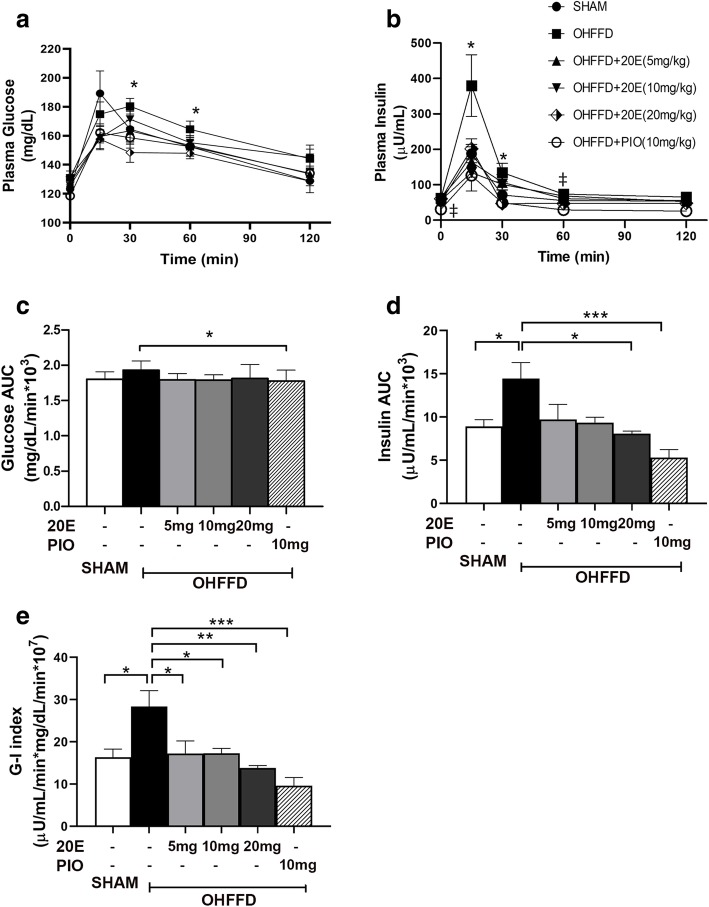
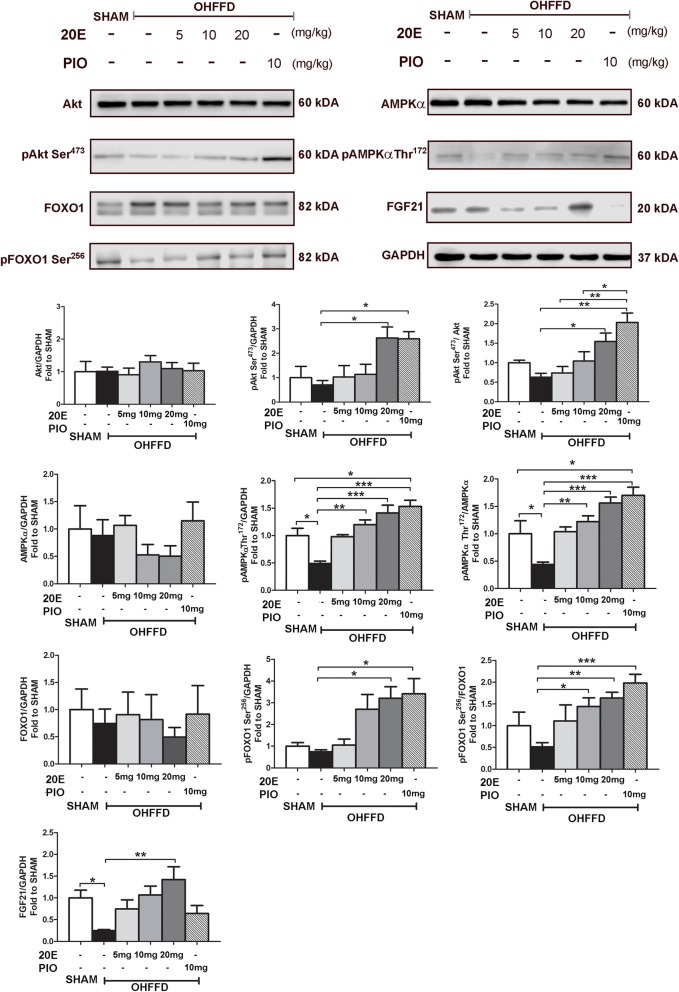
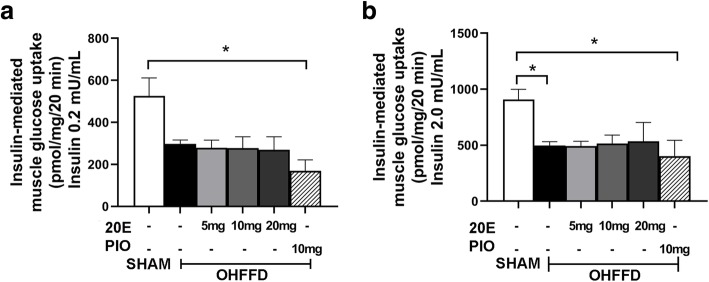
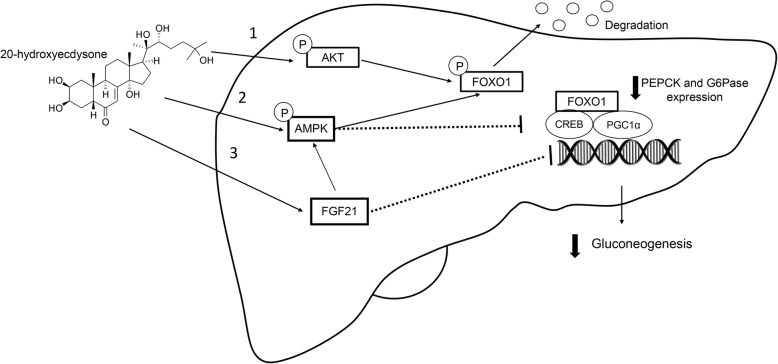
Background: Ecdysteroids are polyhydroxylated steroids present in invertebrates and plants. 20-Hydroxyecdysone (20E) is the most common and the main biologically active compound of ecdysteroids. Previous studies have demonstrated anabolic and metabolic effects of 20E in mammals. However, it is unknown whether 20E has a positive effect on all aspects of cardiometabolic syndrome. The aims of this study were to investigate the favorable effect and possible underlying mechanisms of 20E in a rat model of cardiometabolic syndrome (CMS) induced by a high-calorie diet combined with female sex hormone deprivation. Methods: 20E (5 mg/kg, 10 mg/kg, or 20 mg/kg) or pioglitazone (PIO) (10 mg/kg) was intragastrically administered to sham-operated Sprague-Dawley female rats and ovariectomized rats fed a high-fat-high-fructose diet (OHFFD) for 8 weeks. The phenotypic characteristics of CMS, including central adiposity, blood pressure, serum lipid profile, glucose tolerance, insulin action on skeletal muscle glucose transport activity and hepatic protein expression, were determined. Results: Some CMS characteristics were improved by 20E treatment. Rats treated with 20E had lower body weight, abdominal fat accumulation than rats treated with vehicle control without changes in total caloric intake and fat-free mass. OHFFD rats exhibited high blood pressure, but 20E-treated rats maintained normal blood pressure with a lower level of low-density lipoprotein (LDL)-cholesterol. Although 20E showed no positive effect on inducing insulin-mediated glucose transport in the skeletal muscle of OHFFD rats, 20E improved whole body glucose homeostasis. Analysis of protein expression in livers from 20E-treated rats revealed significantly increased expression of pAkt Ser 473, pFOXO1 Ser 256, pAMPKα Thr 172, and FGF21. Conclusion: 20E treatment can alleviate cardiometabolic disorder caused by a high-fat-high-fructose diet and female sex hormone deprivation. In particular, 20E helps improve whole body insulin sensitivity in OHFFD rats, and the mechanisms that underlie this favorable effect are potentially mediated by the activation of AMPK and FGF21. The present study indicates that 20E could be an alternative therapeutic option for the prevention and alleviation of cardiometabolic syndrome.
Overview
The claims and statistics of this paper haven’t been checked yet.
Free: it reads the open-access text and checks the first 5 claims that cite a source we can check. Create a free account to check every claim.
Integrity signals
Registry
Cites
Statistics
Figures
Verification
Claims the paper makes
The claims and statistics of this paper haven’t been checked yet.
Free: it reads the open-access text and checks the first 5 claims that cite a source we can check. Create a free account to check every claim.
Claims other papers make about this one
Each is checked against this paper’s own text: does it say what the citing paper says it does?
The source backs part of the claim, not all of it — or backs it for a different population, condition or comparison.
In the citing paper
“A number of in vitro and in vivo studies have demonstrated the 20E-mediated improvement of lipid and glucose metabolism in the liver and the heart [17,18,19,20,21].”
From 20-Hydroxyecdysone Boosts Energy Production and Biosynthetic Processes in Non-Transformed Mouse Cells (2024) · cites this paper as [20]
Experimental — accuracy not yet measuredThe source backs part of the claim, not all of it — or backs it for a different population, condition or comparison.
In the citing paper
“It is important to note that the 20E-induced activation of AKT kinase occurs in various tissues of both insects and mammals [17,20,22].”
From 20-Hydroxyecdysone Boosts Energy Production and Biosynthetic Processes in Non-Transformed Mouse Cells (2024) · cites this paper as [20]
Experimental — accuracy not yet measuredThe cited source says what the claim attributes to it.
In the citing paper
“Weight reduction induced by 20E has been reported in rodent models [26,33].”
Self-check
Percentages, sums and reported differences re-computed from the paper’s own numbers.
The self-check needs the paper’s full text.
Citations
Cites
The Emergence of the Metabolic Syndrome with Menopause
Carr, M. C. (2003) · The Journal of Clinical Endocrinology & Metabolism · doi:10.1210/jc.2003-030242 · Cited by 1,449
Oral Antidiabetic Agents: Current Role in Type 2 Diabetes Mellitus
Krentz, A. J., & Bailey, C. J. (2005) · Drugs · doi:10.2165/00003495-200565030-00005 · Cited by 1,108
Thomas, N., K, S., & Kapoor, N. (2016) · A Practical Guide to Diabetes Mellitus · doi:10.5005/jp/books/12651_7 · Cited by 943
Grundy, S. M. (2016) · Trends in Cardiovascular Medicine · doi:10.1016/j.tcm.2015.10.004 · Cited by 882
Fibroblast growth factor 21 regulates energy metabolism by activating the AMPK–SIRT1–PGC-1α pathway
Chau, M. D. L., Gao, J., Yang, Q., Wu, Z., & Gromada, J. (2010) · Proceedings of the National Academy of Sciences · doi:10.1073/pnas.1006962107 · Cited by 544
High-carbohydrate High-fat Diet–induced Metabolic Syndrome and Cardiovascular Remodeling in Rats
Panchal, S. K., Poudyal, H., Iyer, A., Nazer, R., Alam, A., Diwan, V., Kauter, K., Sernia, C., Campbell, F., Ward, L., et al. (2011) · Journal of Cardiovascular Pharmacology · doi:10.1097/fjc.0b013e3181feb90a · Cited by 458
Rodent Models for Metabolic Syndrome Research
Panchal, S. K., & Brown, L. (2011) · BioMed Research International · doi:10.1155/2011/351982 · Cited by 408
Phytoecdysteroids: Biological aspects
Dinan, L. (2001) · Phytochemistry · doi:10.1016/s0031-9422(01)00078-4 · Cited by 392
Tran, L. T., Yuen, V. G., & McNeill, J. H. (2009) · Molecular and Cellular Biochemistry · doi:10.1007/s11010-009-0184-4 · Cited by 356
Estrogen receptor and aryl hydrocarbon receptor signaling pathways
Matthews, J., & Gustafsson, J.-Å. (2006) · Nuclear Receptor Signaling · doi:10.1621/nrs.04016 · Cited by 277
Murase, T., Mizuno, T., Omachi, T., Onizawa, K., Komine, Y., Kondo, H., Hase, T., & Tokimitsu, I. (2001) · Journal of Lipid Research · doi:10.1016/s0022-2275(20)31661-8 · Cited by 239
Uterine glands: development, function and experimental model systems
Cooke, P. S., Spencer, T. E., Bartol, F. F., & Hayashi, K. (2013) · Molecular Human Reproduction · doi:10.1093/molehr/gat031 · Cited by 208
Effects and applications of arthropod steroid hormones (ecdysteroids) in mammals
Dinan, L., & Lafont, R. (2006) · Journal of Endocrinology · doi:10.1677/joe.1.06900 · Cited by 200
Reversal of diet-induced obesity and diabetes in C57BL/6J mice
Parekh, P. I., Petro, A. E., Tiller, J. M., Feinglos, M. N., & Surwit, R. S. (1998) · Metabolism · doi:10.1016/s0026-0495(98)90283-9 · Cited by 198
Practical uses for ecdysteroids in mammals including humans: and update
Lafont, R., & Dinan, L. (2003) · Journal of Insect Science · doi:10.1093/jis/3.1.7 · Cited by 196 · cited 2×
“Additionally, ecdysteroids can be found in many plant species around the world (phytoecdysteroids) [14, 15].”
BackgroundPractical uses for ecdysteroids in mammals including humans: And update
Lafont, R., & Dinan, L. (2003) · Journal of Insect Science · doi:10.1673/031.003.0701 · Cited by 196
Expression of Both Oestrogen Receptor Alpha and Beta in Human Skeletal Muscle Tissue
Wiik, A., Ekman, M., Johansson, O., Jansson, E., & Esbjörnsson, M. (2009) · Histochemistry and Cell Biology · doi:10.1007/s00418-008-0512-x · Cited by 190
Phytoecdysteroids increase protein synthesis in skeletal muscle cells.
Gorelick-Feldman, J., MacLean, D., Ilic, N., Poulev, A., Lila, M. A., Cheng, D., & Raskin, I. (2008) · Journal of Agricultural and Food Chemistry · doi:10.1021/jf073059z · Cited by 166
(2011) · Journal of Cardiovascular Pharmacology · doi:10.1097/fjc.0b013e31821b1379 · Cited by 125
Oestrogen receptor β is expressed in adult human skeletal muscle both at the mRNA and protein level
Wiik, A., Glenmark, B., Ekman, M., Esbjörnsson‐Liljedahl, M., Johansson, O., Bodin, K., Enmark, E., & Jansson, E. (2003) · Acta Physiologica Scandinavica · doi:10.1046/j.0001-6772.2003.01186.x · Cited by 122
Foucault, A., Mathé, V., Lafont, R., Even, P., Dioh, W., Veillet, S., Tomé, D., Huneau, J., Hermier, D., & Quignard‐Boulangé, A. (2012) · Obesity · doi:10.1038/oby.2011.257 · Cited by 122
20-Hydroxyecdysone decreases weight and hyperglycemia in a diet-induced obesity mice model
Kizelsztein, P., Govorko, D., Komarnytsky, S., Evans, A., Wang, Z., Cefalu, W. T., & Raskin, I. (2009) · American Journal of Physiology-Endocrinology and Metabolism · doi:10.1152/ajpendo.90772.2008 · Cited by 117
Phytoecdysteroids - From Isolation to Their Effects on Humans
Bathori, M., & Pongracz, Z. (2005) · Current Medicinal Chemistry · doi:10.2174/0929867053363450 · Cited by 111
Parr, M. K., Zhao, P., Haupt, O., Ngueu, S. T., Hengevoss, J., Fritzemeier, K. H., Piechotta, M., Schlörer, N., Muhn, P., Zheng, W., et al. (2014) · Molecular Nutrition & Food Research · doi:10.1002/mnfr.201300806 · Cited by 106
The Karlson Lecture. Phytoecdysteroids: what use are they?
Dinan, L. (2009) · Archives of Insect Biochemistry and Physiology · doi:10.1002/arch.20334 · Cited by 106
Gupta, P., Bala, M., Gupta, S. K., Dua, A., Dabur, R., Injeti, E. R., & Mittal, A. (2016) · Pharmacological Research · doi:10.1016/j.phrs.2016.09.029 · Cited by 101
Gorelick-Feldman, J., Cohick, W., & Raskin, I. (2010) · Steroids · doi:10.1016/j.steroids.2010.03.008 · Cited by 96
Early alterations in soleus GLUT-4, glucose transport, and glycogen in voluntary running rats
Henriksen, E. J., & Halseth, A. E. (1994) · Journal of Applied Physiology · doi:10.1152/jappl.1994.76.5.1862 · Cited by 86
20-Hydroxyecdysone Increases Fiber Size in a Muscle-Specific Fashion in Rat
Tóth, N., Szabó, A., Kacsala, P., Héger, J., & Zádor, E. (2008) · Phytomedicine · doi:10.1016/j.phymed.2008.04.015 · Cited by 85
Effect of Ecdysterone on Hyperglycemia in Experimental Animals
Yoshida, T., Otaka, T., Uchiyama, M., & Ogawa, S. (1971) · Biochemical Pharmacology · doi:10.1016/0006-2952(71)90431-x · Cited by 74
Expression and localization of estrogen receptor α in the C2C12 murine skeletal muscle cell line
Milanesi, L., de Boland, A. R., & Boland, R. (2008) · Journal of Cellular Biochemistry · doi:10.1002/jcb.21706 · Cited by 64
Metabolic Effects of 20-OH-Ecdysone in Ovariectomized Rats
Seidlova-Wuttke, D., Ehrhardt, C., & Wuttke, W. (2010) · The Journal of Steroid Biochemistry and Molecular Biology · doi:10.1016/j.jsbmb.2010.01.006 · Cited by 57
Farahmand, M., Tehrani, F. R., Khomami, M. B., Noroozzadeh, M., & Azizi, F. (2015) · Journal of Endocrinological Investigation · doi:10.1007/s40618-015-0253-3 · Cited by 52
Effect of Ecdysterone on Glucose Metabolism in vitro
Chen, Q., Xia, Y., & Qiu, Z. (2006) · Life Sciences · doi:10.1016/j.lfs.2005.06.031 · Cited by 51
Milanesi, L., Vasconsuelo, A., de Boland, A. R., & Boland, R. (2009) · Steroids · doi:10.1016/j.steroids.2009.01.005 · Cited by 47
Rattanavichit, Y., Chukijrungroat, N., & Saengsirisuwan, V. (2016) · American Journal of Physiology-Regulatory, Integrative and Comparative Physiology · doi:10.1152/ajpregu.00230.2016 · Cited by 34
Self-citationPrasannarong, M., Saengsirisuwan, V., Piyachaturawat, P., & Suksamrarn, A. (2012) · BMC Complementary and Alternative Medicine · doi:10.1186/1472-6882-12-28 · Cited by 32
Self-citationSundaram, R., Naresh, R., Shanthi, P., & Sachdanandam, P. (2012) · Phytomedicine · doi:10.1016/j.phymed.2012.02.019 · Cited by 27
Buniam, J., Chukijrungroat, N., Khamphaya, T., Weerachayaphorn, J., & Saengsirisuwan, V. (2019) · American Journal of Physiology-Endocrinology and Metabolism · doi:10.1152/ajpendo.00466.2018 · Cited by 26
Self-citationDushkin, M., Khrapova, M., Kovshik, G., Chasovskikh, M., Menshchikova, E., Trufakin, V., Shurlygina, A., & Vereschagin, E. (2014) · BMC Complementary and Alternative Medicine · doi:10.1186/1472-6882-14-33 · Cited by 25
Naresh Kumar, R., Sundaram, R., Shanthi, P., & Sachdanandam, P. (2013) · European Journal of Pharmacology · doi:10.1016/j.ejphar.2012.10.016 · Cited by 21
Metabolic syndrome and cardiometabolic risk: An update
Grassi, G. M., Seravalle, G., Quarti‐Trevano, F., Dell'ro, R., Bombelli, M., & Mancia, G. (2009) · Blood Pressure · doi:10.1080/08037050802677695 · Cited by 21
20-Hydroxyecdysone attenuates cardiac remodeling in spontaneously hypertensive rats
Phungphong, S., Kijtawornrat, A., Chaiduang, S., Saengsirisuwan, V., & Bupha‐Intr, T. (2017) · Steroids · doi:10.1016/j.steroids.2017.08.004 · Cited by 17
Self-citation(1988) · PubMed
Cited by
Dinan, L., Dioh, W., Veillet, S., & Lafont, R. (2021) · Biomedicines · doi:10.3390/biomedicines9050492 · Cited by 99
“…[68,69] Anti-oxidant [70] Anti-thrombotic [71,72] Vasorelaxant [73] Hematopoiesis stimulation [74] Angiogenic [75,76] Cardioprotective [62,77–79] Neuromuscular protective [80,81] Neuroprotective [81–84] Liver protective [85,86] Lung protective [69,72,87,88] Kidney protective…”
Todorova, V., Ivanov, K., & Ivanova, S. (2021) · Plants · doi:10.3390/plants11010064 · Cited by 56
BIO101 stimulates myoblast differentiation and improves muscle function in adult and old mice
Serova, M., Didry‐Barca, B., Deloux, R., Foucault, A., Veillet, S., Lafont, R., Dilda, P. J., & Latil, M. (2024) · Journal of Cachexia, Sarcopenia and Muscle · doi:10.1002/jcsm.13326 · Cited by 35
“These observations are consistent with the work of Buniam et al, 28 who observed a signi fi cant increase of p-AKT, p-FOXO1, p-AMPK α , and FGF21 expression in the liver of 20E-treated rats.”
ResultGaur, P. K., Rastogi, S., & Lata, K. (2022) · Phytomedicine Plus · doi:10.1016/j.phyplu.2022.100260 · Cited by 39
Boskabady, M., Khazdair, M. R., Bargi, R., Saadat, S., Memarzia, A., Roshan, N. M., Hosseini, M., Askari, V. R., & Boskabady, M. H. (2021) · Evidence-based Complementary and Alternative Medicine · doi:10.1155/2021/6681729 · Cited by 26
“*e procedure was repeated 5 times (total volume of 5ml) [22, 23].”
Method
Metadata
- Authors
- Buniam, J., Chukijrungroat, N., Rattanavichit, Y., Surapongchai, J., Weerachayaphorn, J., Bupha-Intr, T., & Saengsirisuwan, V.
- Affiliations
- Mahidol University (TH)
- Huachiew Chalermprakiet University (TH)
- Srinakharinwirot University (TH)
- Corresponding author
- Saengsirisuwan, Vitoon
- Venue
- BMC Complementary Medicine and Therapies
- Published
- 2020-05-06
- Volume
- 20
- Issue
- 1
- Pages
- 140-140
- ISSN
- 2662-7671 (ISSN-L)
- PMC
- PMC7203795
- OpenAlex
- W3022084469
- Cited by
- 35
- References
- 44
- Citations by year
- 2026: 6 · 2025: 6 · 2024: 5 · 2023: 4 · 2022: 3 · 2021: 11
- FWCI
- 3.39
- Type
- journal article
- Language
- en
- Open access
- gold
- doi.org
- Licence
- cc-by
- creativecommons.org/licenses/by/4.0/ (tdm)
- creativecommons.org/licenses/by/4.0/ (vor)
- Locations
- BMC Complementary Medicine and Therapies (publishedVersion, cc-by)
- PubMed Central (publishedVersion, cc-by)
- PubMed (publishedVersion)
- DOAJ (DOAJ: Directory of Open Access Journals) (submittedVersion)
- Greater South Information System
- Funders
- Royal Golden Jubilee (RGJ) Ph.D. Programme (PHD/4.PE.MU/56/C.1)
- Mahidol University
- Topics
- Health Sciences › Medicine › Endocrinology, Diabetes and Metabolism › Diet, Metabolism, and Disease
- Health Sciences › Medicine › Endocrinology, Diabetes and Metabolism › Hormonal and reproductive studies
- Health Sciences › Medicine › Endocrinology, Diabetes and Metabolism › Adipokines, Inflammation, and Metabolic Diseases
- Keywords
- 20-hydroxyecdysone, ecdysteroids, cardiometabolic syndrome, high-fat high-fructose diet, ovariectomy, insulin sensitivity, glucose homeostasis, AMPK, FGF21, FOXO1, Akt signaling, hepatic lipid metabolism, blood pressure, LDL cholesterol, abdominal fat, pioglitazone
- MeSH terms
- Animals, Blood Pressure, Disease Models, Animal, Ecdysterone, Female, Fructose, Ovariectomy, Rats, Sprague-Dawley, Metabolic Syndrome, Rats, Diet, High-Fat
About these checks
Registry, retraction, Cites and statistics results are computed, not judged, with one exception: a printed reference that no index lists is read once by a model before it counts as a citation error. Claims are extracted by a model and kept only when their quote appears verbatim in the text; each cited source is then checked, with a model’s help, for whether it says what the claim relies on. Those verdicts can be wrong — read the claim’s quote and the cited source before relying on one.
Statistics and arithmetic are recomputed, not judged.
Confidence bands are shown only for fields calibrated on our annotated test set. None is calibrated yet, so no band is shown.
What counts as a claim ›How we measure confidence ›How we check this ›
Are you an author, or do you see a problem with this page? Request a review
Data sources
Bibliographic data: Semantic Scholar, OpenAlex, Crossref.
Contains information from the Semantic Scholar Academic Graph Datasets, made available under the ODC Attribution License (ODC-BY 1.0).
Semantic Scholar’s data is described in: Kinney, R., et al. (2023). The Semantic Scholar Open Data Platform. arXiv:2301.10140.
