

Cognitive biases associated with medical decisions: a systematic review
Open accessThe DOI matches its Crossref record; 76 of the 76 references it cites were found in a registry or an index.
Abstract
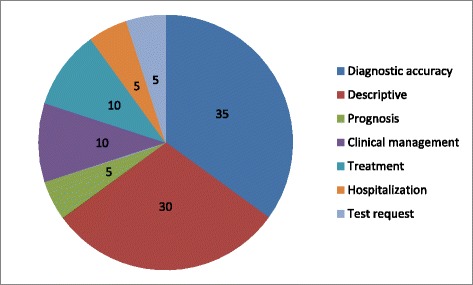
BACKGROUND: Cognitive biases and personality traits (aversion to risk or ambiguity) may lead to diagnostic inaccuracies and medical errors resulting in mismanagement or inadequate utilization of resources. We conducted a systematic review with four objectives: 1) to identify the most common cognitive biases, 2) to evaluate the influence of cognitive biases on diagnostic accuracy or management errors, 3) to determine their impact on patient outcomes, and 4) to identify literature gaps. METHODS: We searched MEDLINE and the Cochrane Library databases for relevant articles on cognitive biases from 1980 to May 2015. We included studies conducted in physicians that evaluated at least one cognitive factor using case-vignettes or real scenarios and reported an associated outcome written in English. Data quality was assessed by the Newcastle-Ottawa scale. Among 114 publications, 20 studies comprising 6810 physicians met the inclusion criteria. Nineteen cognitive biases were identified. RESULTS: All studies found at least one cognitive bias or personality trait to affect physicians. Overconfidence, lower tolerance to risk, the anchoring effect, and information and availability biases were associated with diagnostic inaccuracies in 36.5 to 77 % of case-scenarios. Five out of seven (71.4 %) studies showed an association between cognitive biases and therapeutic or management errors. Of two (10 %) studies evaluating the impact of cognitive biases or personality traits on patient outcomes, only one showed that higher tolerance to ambiguity was associated with increased medical complications (9.7 % vs 6.5 %; p = .004). Most studies (60 %) targeted cognitive biases in diagnostic tasks, fewer focused on treatment or management (35 %) and on prognosis (10 %). Literature gaps include potentially relevant biases (e.g. aggregate bias, feedback sanction, hindsight bias) not investigated in the included studies. Moreover, only five (25 %) studies used clinical guidelines as the framework to determine diagnostic or treatment errors. Most studies (n = 12, 60 %) were classified as low quality. CONCLUSIONS: Overconfidence, the anchoring effect, information and availability bias, and tolerance to risk may be associated with diagnostic inaccuracies or suboptimal management. More comprehensive studies are needed to determine the prevalence of cognitive biases and personality traits and their potential impact on physicians' decisions, medical errors, and patient outcomes.
Overview
The claims and statistics of this paper haven’t been checked yet.
Free: it reads the open-access text and checks the first 5 claims that cite a source we can check. Create a free account to check every claim.
Integrity signals
Registry
Cites
Statistics
Figures
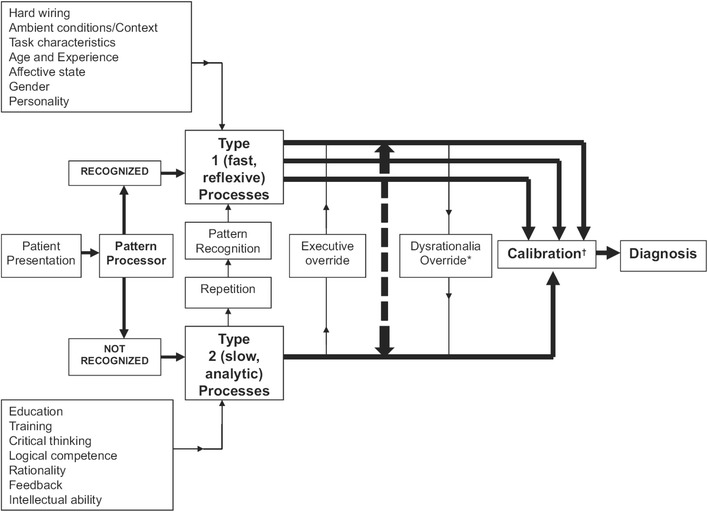
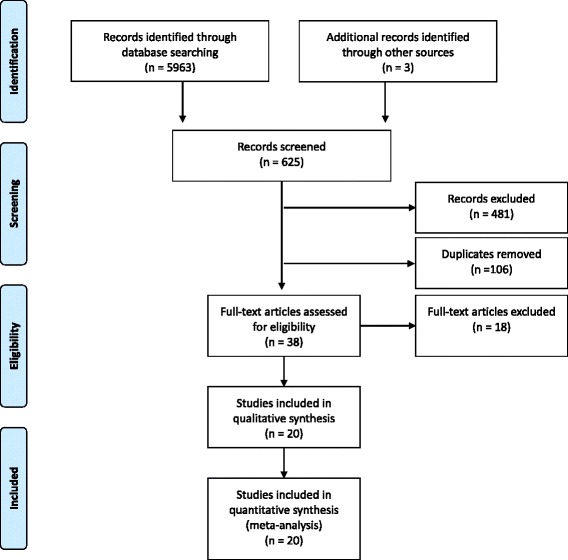
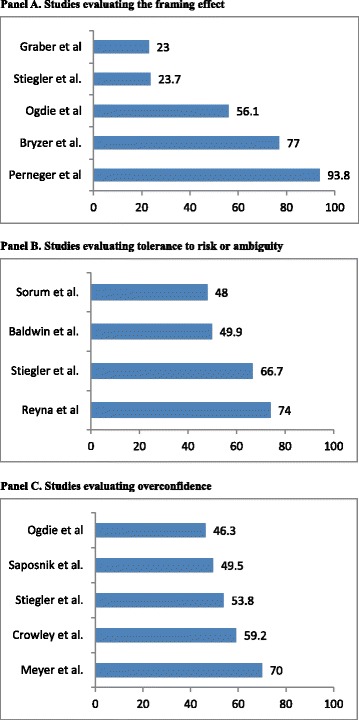
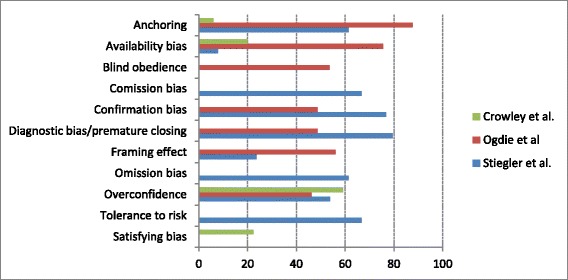
Verification
Claims the paper makes
The claims and statistics of this paper haven’t been checked yet.
Free: it reads the open-access text and checks the first 5 claims that cite a source we can check. Create a free account to check every claim.
Claims other papers make about this one
Each is checked against this paper’s own text: does it say what the citing paper says it does?
The source backs part of the claim, not all of it — or backs it for a different population, condition or comparison.
In the citing paper
“Cognitive tendencies, including anchoring, status-quo preference, and an asymmetric weighting of affirmative rather than disproving information, may reinforce familiar clinical defaults [ 54 ].”
From Paracetamol: A History of Assumptions, Errors, and Evidence Reversals in Pain Management (2026) · cites this paper as [54]
Experimental — accuracy not yet measuredThe source backs part of the claim, not all of it — or backs it for a different population, condition or comparison.
In the citing paper
“Labels associated with medical data, disease rating scales, and diagnosis may be imbued with cognitive biases of the health care personnel who collected this information.51”
From Addressing bias in big data and AI for health care: A call for open science (2021) · cites this paper as [51]
Experimental — accuracy not yet measuredThe source backs part of the claim, not all of it — or backs it for a different population, condition or comparison.
In the citing paper
“Human cognitive biases in clinical decision-making are increasingly recognized as a crucial factor in health care errors and suboptimal patient outcomes [1].”
From Mitigating cognitive biases in clinical decision-making through multi-agent conversations using large language models: simulation study (2024) · cites this paper as [1]
Experimental — accuracy not yet measuredThe source backs part of the claim, not all of it — or backs it for a different population, condition or comparison.
In the citing paper
“Cognitive biases in clinical decision-making significantly contribute to errors in diagnosis and suboptimal patient outcomes.”
From Mitigating cognitive biases in clinical decision-making through multi-agent conversations using large language models: simulation study (2024) · cites this paper as [1]
Experimental — accuracy not yet measured
Self-check
Percentages, sums and reported differences re-computed from the paper’s own numbers.
The self-check needs the paper’s full text.
Citations
Cites
Tversky, A., & Kahneman, D. (1974) · Science · doi:10.1126/science.185.4157.1124 · Cited by 28,810 · cited 2×
“errors in the diagnosis, management, or treatment of medical conditions [6, 26].”
Liberati, A., Altman, D. G., Tetzlaff, J., Mulrow, C., Gøtzsche, P. C., Ioannidis, J. P. A., Clarke, M., Devereaux, P. J., Kleijnen, J., & Moher, D. (2009) · PLoS Medicine · doi:10.1371/journal.pmed.1000100 · Cited by 28,164
Judgment under Uncertainty: Heuristics and Biases
Tversky, A., & Kahneman, D. (1975) · Utility, Probability, and Human Decision Making · doi:10.1007/978-94-010-1834-0_8 · Cited by 22,650
(2014) · Medical Entomology and Zoology · Cited by 17,633
Liberati, A., Altman, D. G., Tetzlaff, J., Mulrow, C., Gøtzsche, P. C., Ioannidis, J. P. A., Clarke, M., Devereaux, P. J., Kleijnen, J., & Moher, D. (2009) · Annals of Internal Medicine · doi:10.7326/0003-4819-151-4-200908180-00136 · Cited by 10,349
Newcastle-Ottawa Scale: comparing reviewers’ to authors’ assessments
Lo, C. K.-L., Mertz, D., & Loeb, M. (2014) · BMC Medical Research Methodology · doi:10.1186/1471-2288-14-45 · Cited by 2,477
Incidence of Adverse Drug Events and Potential Adverse Drug Events: Implications for Prevention
Bates, D. W. (1995) · JAMA · doi:10.1001/jama.1995.03530010043033 · Cited by 2,127 · cited 1×
“each year, and perhaps one million in excess injuries in the USA [1, 2].”
BackgroundThe Importance of Cognitive Errors in Diagnosis and Strategies to Minimize Them
Croskerry, P. (2003) · Academic Medicine · doi:10.1097/00001888-200308000-00003 · Cited by 1,675 · cited 5×
“errors in the diagnosis, management, or treatment of medical conditions [6, 26].”
BackgroundInfluentialWhat every teacher needs to know about clinical reasoning
Eva, K. W. (2005) · Medical Education · doi:10.1111/j.1365-2929.2004.01972.x · Cited by 930 · cited 1×
“Fourth, case-vignettes or real clinical encounters were used [28].”
MethodClaims, Errors, and Compensation Payments in Medical Malpractice Litigation
Studdert, D. M., Mello, M. M., Gawande, A. A., Gandhi, T. K., Kachalia, A., Yoon, C., Puopolo, A. L., & Brennan, T. A. (2006) · New England Journal of Medicine · doi:10.1056/nejmsa054479 · Cited by 848 · cited 1×
“outcomes, which are the most common reasons for patients’ dissatisfaction and medical complaints [54, 64, 65].”
Background
Cited by
Items 901–1,000 of 1,000
On the purpose of artificial intelligence in critical care medicine
Drudi, C., Matta, S. C., Lee, H., O’Donoghue, S. C., D’Couto, H. T., Hamza, A., Gutiérrez, C. A., Nakasi, R., Byers, J., Tumukunde, M., et al. (2026) · Journal of Translational Critical Care Medicine · doi:10.1097/jtccm-d-25-00021
Parkes, R., Probert, C., Baker, S., Noon, S., McGlashan, J. M., Simons, A. C. R., Parsons, S. L., Fernández‐Sordo, J. O., Martin, M. J., Patel, H., et al. (2026) · British Journal of Nursing · doi:10.12968/bjon.2025.0026
On the contextuality of gender biases in pain care: theory and evidence
Bernardes, S. F., & Samulowitz, A. (2026) · Health Psychology Review · doi:10.1080/17437199.2026.2643504 · Cited by 3
Gladhill, G., Schwei, R. J., Griffin, M., Glinert, R., Haleem, A., Hess, J., Keenan, T. D., McBride, J. A., Redwood, R., & Pulia, M. S. (2026) · Journal of Emergency Medicine · doi:10.1016/j.jemermed.2026.03.023 · Cited by 1
Rapid MRI Protocol for Pediatric MSK Infections: Can We Safely Remove Contrast and Sedation?Preprint
Shah, R., Sanders, A. E., Baghdadi, S., Krauss, J., Sagan, M. L., Wyers, M. R., Gibly, R. F., & Samet, J. D. (2026) · Research Square · doi:10.21203/rs.3.rs-9140440/v1
Error diagnóstico en el servicio de emergencias: ¿por qué ocurre y cómo podemos reducirlo?
Garcia, R. J. A., & Huamán, L. G. H. (2026) · Emergencia · doi:10.65920/rpmed.202611.17
Rahimian, A. N., Abojaib, L., Doko, D., & Kashkouli, A. (2026) · Journal of Investigative Medicine High Impact Case Reports · doi:10.1177/23247096251344722
Arda, Y., Panossian, V. S., Nzenwa, I. C., Hwabejire, J. O., DeWane, M. P., Paranjape, C. N., Ng-Kamstra, J. S., Parks, J. J., Velmahos, G. C., & Kaafarani, H. M. A. (2026) · Surgery · doi:10.1016/j.surg.2026.110184
Externalized Living Memory: Structuring Clinical Knowledge for the Age of AI Agents (Preprint)Preprint
Lee, W.-J., & Wu, C.-F. (2026) · doi:10.2196/preprints.96809
Debue, A.-S. (2021) · theses.fr (ABES) · doi:10.70675/10abdc93z4499z453czbc66z4b3684e803e2 · Cited by 2
Sauvage, A., Guillon, A., & Mamzer, M. (2026) · BMC Medical Ethics · doi:10.1186/s12910-026-01454-y
“Indeed, despite the probable benefits of involving practical knowledge in medicine, any sub-conscious process involving automatic thought patterns is prone to errors and cognitive biases [46], and medical decision-making is subject to many [47, 48], including in ICU [49].”
Evaluation et optimisation des performances cliniques en situations de soins critiques simulées
Evain, J. (2022) · theses.fr (ABES) · doi:10.70675/707dfef1za05ez49ddzb567zd7a2835591d7
Clinical preparedness activities for bioterrorism: an ethical analysis
Armitage, R. C. (2026) · JME Practical Bioethics · doi:10.1136/jmepb-2026-000097
Adherence With Diagnostic Stewardship Guidance and Sociodemographic Characteristics in the PICU
Booth, L. D., Linz, M. S., Schumacher, C. M., Milstone, A. M., Stockwell, D. C., & Sick-Samuels, A. C. (2026) · Hospital Pediatrics · doi:10.1542/hpeds.2025-008873
Park, J., Koutentakis, M., Park, I., Faluade, E., & Oviedo, R. J. (2026) · Cureus · doi:10.7759/cureus.107523 · Cited by 1
As’ad, M. (2026) · JMIR Human Factors · doi:10.2196/87846
“In the absence of structured analytic support, interpretation depends on informal sensemaking [16] and locally constructed mental models [17], increasing the risk of inconsistent prioritization and resource allocation.”
Assessment of Survival and the Decision to Engage in Palliative Care when Facing a Defeat in the ICU
Gad, H., Diedrich, D. A., & Laudański, K. (2026) · Medical Decision Making · doi:10.1177/0272989x261430761
“4,11,15,18,23,25 To aid in these decisions, clinical prediction scores and clinical decision support systems have been developed.”
InfluentialHelping doctors’ AI-assisted health care decision-making: The role of social norms
He, H., & Xia, J. (2026) · Journal of Economic Behavior & Organization · doi:10.1016/j.jebo.2026.107597 · Cited by 1
Understanding cognitive errors in clinical decision-making: a Q methodology approach
Zangooeidovvom, S., Jokar, F., & Omid, A. (2026) · BMC Medical Education · doi:10.1186/s12909-026-09375-5
“Exploring pediatricians’ perspectives can illuminate the diversity of cognitive styles underlying diagnostic decisions and provide a foundation for more targeted educational and quality-improvement initiatives [2, 16, 20].”
Subedi, S., Harris, P. N. A., Hall, L., & Paterson, L. D. (2026) · Open Forum Infectious Diseases · doi:10.1093/ofid/ofag240
Shrinking pharmacological options in modern anaesthesia
Chappell, D., & Kranke, P. (2026) · British Journal of Anaesthesia · doi:10.1016/j.bja.2026.04.038
Yamamura, Y., Fujii, K., Nakashima, C., & Otsuka, A. (2026) · Acta Dermato Venereologica · doi:10.2340/actadv.v106.adv-2025-0180 · Cited by 1
“In addition, the number of AI-generated differential diagnoses was limited to 3, as presenting a single candidate may promote anchoring (9), whereas excessive options can increase cognitive burden (10, 11).”
Decision-making: A Predictor of Happiness among Doctors
., K., & Singh, S. (2026) · International Journal of Arts Humanities and Social Studies · doi:10.33545/26648652.2026.v8.i5a.452
Mauritz, M. D., Sehlbrede, M., Wager, J., & Aydin, M. (2026) · BMC Infectious Diseases · doi:10.1186/s12879-026-13486-1
“However, these observations may be also consistent with cognitive biases such as ‘information bias’ and ‘availability bias’ [18].”
From uncertainty to understanding: The focus on follow-up initiative
Corines, M. J., Taya, M. D., Sinha, V., Jaspan, O., Brady, E. J., Hayes, C. D., Pitman, J., Lo, G. C., Schweitzer, A. D., & Agress, H. (2026) · Clinical Imaging · doi:10.1016/j.clinimag.2026.110843
The missing left main: A clinical lesson in detecting ALCAPA
Zahin, M. R., Sun, J., Sutherland, N., Wong, C. Y., & Vaddadi, G. (2026) · Progress in Pediatric Cardiology · doi:10.1016/j.ppedcard.2026.101938
Physician Facing AI Tools Show Distinct Failure Modes Under Structured Stress TestingPreprint
Hazare, N. S., Oh, W., KUMAR, G., Goel, N. N., Shaikh, A., Sharma, A., Desman, J. M., Kumar, A., Robles, C., Singh, A., et al. (2026) · medRxiv · doi:10.64898/2026.05.27.26354248
Intra-abdominal etiology of post-abdominoplasty pain: report of 2 cases
Ting, J., Phuyal, D., Gharb, B. B., & Rampazzo, A. (2026) · Case Reports in Plastic Surgery and Hand Surgery · doi:10.1080/23320885.2026.2678774
“Anchoring bias, or prematurely attributing symptoms to the surgical site or expected postoperative course, may further contribute to delayed escalation of care [10,11].”
Maurino, J., Carrera‐García, L., Castro-Fernández, P., Málaga, I., Nascimento, A., & Saposnik, G. (2026) · PLoS ONE · doi:10.1371/journal.pone.0350643
“Decision-making in complex neurological conditions is a cognitively and emotionally demanding process [6].”
Self-citationPetelinsek, S., Jones, J., Kelner, R. H., Champion, N., Morgan, M., Hartridge, T. A., & Hughes, P. G. (2026) · Academic Medicine & Surgery · doi:10.62186/001c.162011
Chen, L., & Dai, M. (2026) · Frontiers in Public Health · doi:10.3389/fpubh.2026.1847300
“Clinicians may consequently systematically underestimate the risk in patients who do not conform to this paradigm (7), potentially leading to missed screening opportunities and delayed diagnosis (8).”
Lin, T., Huang, Z., & Huang, X. (2026) · Frontiers in Oncology · doi:10.3389/fonc.2026.1785461
Kalali, A., Hsaïri, M., Saidi, A., Fakir, J. E., Retal, H., Kettani, N. E. C., Fikri, M., & Touarsa, F. (2026) · Radiology Case Reports · doi:10.1016/j.radcr.2026.06.003
“Cognitive biases, particularly anchoring bias, are a recognized source of diagnostic error in clinical decision-making and may lead to premature closure in complex oncologic contexts [ 3 ,4 ].”
Xie, F., Xiong, X., Mai, X., Zhou, S. H. E. N. G. H., Liu, Y., Yu, K., Xu, X., Lin, M., Zhang, R., & Puskarich, M. A. (2026) · Research Square · doi:10.21203/rs.3.rs-10020548/v1
A 70-year-old man with lower-extremity weakness and falls
Frolkis, C., Wachsman, A., Liu, A., & Harb, A. (2026) · Cleveland Clinic Journal of Medicine · doi:10.3949/ccjm.93a.25061
Nigro, A. (2026) · Diagnosis · doi:10.1515/dx-2026-0062
“The clinician who accepts an AI output as a working hypothesis and then seeks con fi rmatory data (e.g., SSc-speci fi c antibodies) without examining the internal consistency of all fi ndings commits a form of con fi rmation bias superimposed on an anchoring error [15, 16].”
Lessons in clinical reasoning: a case of a boy who continued crying after falling
Fu, M., Nakamura, T., Kishibe, S., Hagiwara, Y., Shimizu, T., & Sakakibara, H. (2026) · Diagnosis · doi:10.1515/dx-2025-0174 · Cited by 1
“An average of 5.9 system errors or cognitive factors are reportedly involved in a single diagnostic error [2], and cognitive biases have been categorized on the basis of their characteristics and context [17].”
InfluentialMoosa, S. A., Chowdhury, A. A., Golub, E., & Feoktistov, A. S. (2026) · Cureus · doi:10.7759/cureus.112152
“Combined, these decision-making pitfalls may have led to consideration of escalation to tofacitinib despite evidence supporting a mechanical cause related to hypermobility [21].”
van der Wal, M. B. , Akkerman, O. W., Kerstjens, H. A. M., Faber, T., Boerma, E. C., & Terlouw, G. (2026) · doi:10.2196/preprints.106081
Asadullaev, M., Vakhabova, N., & Khomidov, T. (2026) · Frontiers in Neurology · doi:10.3389/fneur.2026.1839070
Pari, V., Vijayaraghavan, B. K. T., Tripathy, S., Savio, R. D., Ramachandran, P., Shyamsundar, S., Mathew, M., Chandran, V., Haniffa, R., Davies, J., et al. (2026) · Frontiers in Health Services · doi:10.3389/frhs.2026.1872641
“…relevance of indicators to local clinical practice, frustrations with the registry itself (platform usability, reporting issues and delays), and their confidence in the credibility of the data and the perceived risks associated with presenting data that may suggest poor care quality (27 – 29).”
Amoei, M., Fraser, K., & Poenaru, D. (2026) · doi:10.2196/preprints.107982 · Cited by 1
Physiotherapy’s philosophical phobia will be its demise
Weisman, A., & Masharawi, Y. (2026) · Physiotherapy · doi:10.1016/j.physio.2026.102368
Lee, J., Koo, J. Y., Lee, S. Y., Park, H.-M., Kim, C. H., & Kim, H. R. (2026) · Discover Oncology · doi:10.1007/s12672-026-05670-1
“This tendency may reflect anchoring bias, in which subsequent findings are disproportionately interpreted according to an established diagnosis [2, 3].”
Communiquer en anesthésie-réanimation et médecine péri-opératoire
Kandelman, S., & Rohaut, B. (2022) · Arnette eBooks · doi:10.3917/arne.brune.2022.01.0544
Ethical Considerations in Cerebral Palsy
Modaber, M., Parsapoor, A., & Gooshki, E. S. (2026) · Springer eBooks · doi:10.1007/978-3-032-20967-2_18
Choudhari, P. R., Bonds, K., Eschbach, K., Chapman, K. E., Alexander, A., Knupp, K. G., Park, K., Demarest, S., Bird, W., Sirsi, D., et al. (2026) · Epilepsy Research · doi:10.1016/j.eplepsyres.2026.107895
Conflict Resolution and Negotiation
Manjarrez, E. C., Thompson, R., Nye, H. E., & Kennedy, K. C. (2026) · Medical Clinics of North America · doi:10.1016/j.mcna.2026.06.007
Powerful Perceptions of Genetic Information
Callahan, K. P., Mueller, R., Hess, M., & Lantos, J. D. (2026) · The Journal of Clinical Ethics · doi:10.1086/741891
An agentic AI workflow for spine history taking and surgeon-facing clinical synthesisPreprint
Kaplan, B. A., Kaplan, A., Aydilek, A., Çeliker, Ö., Ege, T., Şentürk, S., & Solmaz, İ. (2026) · Research Square · doi:10.21203/rs.3.rs-10617202/v1
Diyasena, H. K., Ahmad, A., Weerasinghe, T. H., Crawshaw, O. V., & O'Brien, A. A. (2026) · Cureus · doi:10.7759/cureus.114680
“Reviewers then classified this divergence using a predetermined taxonomy adapted from established literature (Table 1 ) [9,10].”
เครือโสม, ไ. (2026) · Hatyai Academic Journal · doi:10.67884/haj.2026.e288315
Fadel, M., Fadel, A., Jwaida, N., Berry, A., & Shuayto, M. (2026) · Cureus · doi:10.7759/cureus.114851
“Diagnostic reasoning in the perioperative environment is frequently hampered by anchoring bias, a cognitive error implicated in 36.5 to 77% of diagnostic inaccuracies [20].”
InfluentialClinical myths in dental bleaching: an evidence-based structured narrative review
Reis, A., Maran, B. M., Cordeiro, D. C. F., Barbosa, L. M. M., Terra, R. M. O., Loguércio, A. D., & Favoreto, M. W. (2026) · Brazilian Oral Research · doi:10.1590/1807-3107bor-2026.vol40suppl1062 · Cited by 1
Artificial Intelligence in the NHS: A quarter-century review of healthcare processes and outcomes
Iluromi, A., & Umeh, C. (2026) · Computers in Human Behavior Reports · doi:10.1016/j.chbr.2026.101269
Merging Divergent and Convergent Thinking for Nursing Pedagogy Transformation: A Rapid Review
Akintomide, M., & Schoon, P. M. (2026) · Journal of Nursing Education · doi:10.3928/01484834-20260707-01 · Cited by 1
When seeing is not believing: a scope mistaken for a foreign body
Üntan, İ., & Untan, S. (2026) · Diagnosis · doi:10.1515/dx-2026-0150
“Cognitive biases are systematic deviations from rational judgement, now recognised as contributors to surgical and diagnostic error [7, 8]; in a systematic review of 21 studies, anchoring and over-con fi dence were the biases most strongly linked to fatal outcomes, yet almost no formal debiasing…”
Jaarsma, E. H., Ring, D., Wickman, J., & (24182938), A. D. (2026) · The Journal Of Hand Surgery · doi:10.1016/j.jhsa.2026.07.014
Tracol, P., Welby, F., Mauger, S., & Dû, C. L. (2026) · Revue de Chirurgie Orthopédique et Traumatologique · doi:10.1016/j.rcot.2026.07.028
The age 70 threshold: Evidence of left-digit bias in liver transplantation
omar, M. A., Katrib, M., Tofteland, N. D., Salyers, W. J., Moore, H. B., & Stotts, M. (2026) · Liver Transplantation · doi:10.1097/lvt.0000000000000984
Gao, Z. (2026) · Frontiers in Psychology · doi:10.3389/fpsyg.2026.1870936
“Saposnik et al. (2016) documented a similar pattern in clinical medicine: standardized practice guidelines intended to improve diagnostic consistency instead anchored physicians to guideline-specified parameters, inhibiting individualized assessment.”
Gounden, Y., Blondelle, G., Coppalle, R., & Duclos, H. (2026) · Pratiques Psychologiques · doi:10.1016/j.prps.2026.07.001
Value Co‐Creation Between Nurses and Generative Artificial Intelligence: A Grounded Theory Study
Jia, Y., Zhu, W., Cai, Y., & Jiang, Y. (2026) · Journal of Nursing Management · doi:10.1155/jonm/8980490 · Cited by 1
Borza, D. B., Surcel, M., Rotar, I. C., Cruciat, G., Nemeti, G. I., Florian, A. R., Mureșan, D., & Oancea, M. D. (2026) · Diseases · doi:10.3390/diseases14090315
“Cognitive tunneling and related diagnostic errors carry significant medicolegal implications in OB/GYN practice [28,29], occupying a complex position at the intersection of human cognitive limitation and professional accountability.”
Wójcik, S., Rulkiewicz, A., & Domienik‐Karłowicz, J. (2026) · medRxiv · doi:10.64898/2026.08.28.26361634
Parsons, M. V., Mwobobia, J. M., Solomon, E. D., Kudom-Agyemang, M., DuBois, J. M., & McIntosh, T. J. (2026) · Frontiers in Neuroscience · doi:10.3389/fnins.2026.1926799
Bruyne, S. D., Rommes, S., Fiers, T., Volders, P., & Maes, B. (2026) · Clinical Chemistry and Laboratory Medicine (CCLM) · doi:10.1515/cclm-2026-0887
“A systematic review identi fi ed overcon fi dence as one of the most common biases a ff ecting specialists, with overcon fi dence (along with lower tolerance to risk, the anchoring e ff ect, and information and availability biases) associated with diagnostic inaccuracies in 36.5 – 77 % of cases [14].”
InfluentialThe Human Factor in Airway Management
Via, L. L., Paternò, D. S., & Sorbello, M. (2026) · Springer eBooks · doi:10.1007/978-3-032-25721-5_16
Uncertain Pretest Probabilities in Diagnostic Reasoning: The Prevalence Threshold as a Tipping Point
Nadler, M., & Balayla, J. (2026) · Journal of Evaluation in Clinical Practice · doi:10.1111/jep.70582
Lai, W. W., Cheung, B. W., & Armatas, C. (2026) · International Conference on Ground Penetrating Radar (GPR) · doi:10.1109/gpr69898.2026.11678042
“[6].”
InfluentialBagley, R. (2026) · Frontiers in Veterinary Science · doi:10.3389/fvets.2026.1940970
From Seeing to Understanding: The Visibility Paradox in Dermatology
Atılan, A. U., & Metın, A. (2026) · International Journal of Dermatology · doi:10.1111/ijd.70689
Performance of large language models in ambiguous treatment scenarios of early breast cancer
Oseledchyk, A., Weber, W. P., & Kasenda, B. (2026) · The Breast · doi:10.1016/j.breast.2026.104932
“These biases are anchored in personal clinical experiences of individual experts which shape their attitudes toward treatment-related toxicity, risk tolerance and their assessment of patients' capacity to endure treatments [12,13].”
Liu, F., Liu, Z., Fei, X., He, J., Xing, J., Li, J., & Chan, P. (2026) · Journal of Medical Systems · doi:10.1007/s10916-026-02459-1 · Cited by 1
“Emergency diagnosis involves undifferentiated presenta - tions, incomplete information, and time-critical decisions— conditions where cognitive biases substantially contribute to clinician diagnostic error [11, 12].”
Castano-Villegas, N., Barrientos, K. M., Villa, M. C., Gómez, O. I. Q., Velásquez, L., & Zea, J. (2026) · medRxiv · doi:10.64898/2026.09.23.26363806
Chong, L. X., Hockley, N., Wood‐Bradley, R. J., & Armitage, J. A. (2026) · BMC Medical Education · doi:10.1186/s12909-026-10458-6
Moslehshirazi, S., Chiriboga, M., Starks, A., Grasso, S., & Arghavani, P. (2026) · Cureus · doi:10.7759/cureus.117085
“Premature closure, defined as settling on a diagnosis before the full clinical picture has been considered, is among the most common cognitive errors in emergency and general medical practice and is a well-documented contributor to diagnostic delay across a wide range of conditions [6,15,16].”
Roque‐Afonso, A., Mouliade, C., Parlati, L., Goutté, N., Figoni, J., Bouam, S., Sogni, P., & Mallet, V. O. (2026) · Eurosurveillance · doi:10.2807/1560-7917.es.2026.31.39.2500858
“The observed increase in severity and mortality thus remains unexplained and warrants further investigation, including potential cognitive biases in clinical decision-making [36].”
O princípio da precaução nas ações preventivas: considerações sobre uma ausência
Tesser, C. D. (2026) · Cadernos de Saúde Pública · doi:10.1590/0102-311xpt195125
Meindl, M., & Wilkins, D. (2026) · The British Journal of Social Work · doi:10.1093/bjsw/bcag212
Diaphragm ultrasound beyond numbers: A call for Bayesian reasoning in critical care
Ferreira, J. G. (2026) · Respiratory Medicine · doi:10.1016/j.rmed.2026.109209
Pujol, C., Tejado, L. M., & Castelló, J. V. (2026) · Research Square · doi:10.21203/rs.3.rs-11110582/v1
Muthukumar, T., Thanzila, J. A., & Annadurai, K. (2026) · Journal of Datta Meghe Institute of Medical Sciences University · doi:10.4103/jdmimsu.jdmimsu_920_25
Physicians’ metacognition in medical decision-making
Lakhlifi, C., Kouzy, R., Lejeune, F., Beuzon, N., Mawet, J., Roos, C., Khamassi, M., Rohaut, B., & Rouault, M. (2026) · Neuroscience of Consciousness · doi:10.1093/nc/niag064 · Cited by 1
“A systematic review identified overconfidence as one of the most common cognitive biases in medical contexts, with a prevalence between 46.3% and 70% ( Saposnik et al. 2016).”
InfluentialMitigating Bias in Trustworthiness Assessment of Medical Students and Trainees
Weisberg, L. S., Mitchell‐Williams, J., Colcher, A., & Rajput, V. (2026) · Medical Science Educator · doi:10.1007/s40670-026-02920-3
Læssøe-Arendt, K., Ferlias, N., Woolley, J., & Stoustrup, P. B. (2026) · Orthodontics and Craniofacial Research · doi:10.1111/ocr.70195
Beyond Pain Intensity: A Patient-Informed Framework for Documenting Burden in Small Fiber Neuropathy
Hochman, G. (2026) · Neurology and Therapy · doi:10.1007/s40120-026-01063-2
Oo, W. (2026) · Cureus · doi:10.7759/cureus.118182
“A systematic review of cognitive biases has also demonstrated a potential relationship between cognitive bias and diagnostic inaccuracy [16,17].”
Rethinking surgical governance through structured prospective challenge
Alkashty, M. (2026) · International Journal for Quality in Health Care · doi:10.1093/intqhc/mzag168
Alsagaihe, K. A., Alanazi, M. M., Alfulaij, S., Almutairi, S. A., & Alkhelaiwi, H. S. (2026) · doi:10.65759/sjccgm.m7q2v9x4
Mühlen, L., Zimmermann, S., Leschowski, N., Sauer, D., & Rulf, H. (2026) · Notfall + Rettungsmedizin · doi:10.1007/s10049-026-01831-5
García-Uzquiano, R., Brañas, M., Medina-Cantillo, J., García-Palop, B., Ruíz-Beato, E., Mauriño, J., & Poveda-Andrés, J. L. (2026) · Frontiers in Medicine · doi:10.3389/fmed.2026.1985172
“Third, work-related psychosocial and behavioral measures were evaluated to identify predictors of adoption (29, 30); these were restricted to pediatric neurologists as the primary prescribers initiating disease-modifying treatment.”
Williamson, L. D., Hayes, H. C., Williams, P.-J. C., Jirau-Rosaly, W., & Ledford, C. J. W. (2026) · The Journal of the American Board of Family Medicine · doi:10.3122/jabfm.2025.250296r1
Shinde, A. (2026) · Journal of Evaluation in Clinical Practice · doi:10.1111/jep.70701
Vultaggio, F. (2026) · International Emergency Nursing · doi:10.1016/j.ienj.2026.101921
Cognitive Biases: A Concept Analysis for Emergency Clinicians
Colio, P. A., & Hoyt, K. S. (2026) · Advanced Emergency Nursing Journal · doi:10.1097/tme.0000000000000650
Ahmed, A. A. O., Ahmed, O., Ahmed, R. A. O., Dishean, A. S., Gilbert, C., Mohamed, M. M. A., Ahmed, Y., Abdelmageed, M. H., & Eissa, A. A. (2026) · Annals of Noninvasive Electrocardiology · doi:10.1111/anec.70248
“The AI results act as a “nudge,” lowering diagnostic uncertainty and encouraging action for a condition where doctors often hesitate (Saposnik et al. 2016).”
Navigating the Challenges of Shared Decision‐Making in Amyloid Immunotherapy for Alzheimer's Disease
François, G., Michalon, R., Tannou, T., Damier, P., Desmoulin‐Canselier, S., & Lebouvier, T. (2026) · European Journal of Neurology · doi:10.1111/ene.70800
Metadata
- Authors
- Saposnik, G., Redelmeier, D., Ruff, C. C., & Tobler, P. N.
- Affiliations
- St. Michael's Hospital (CA)
- Institute for Clinical Evaluative Sciences (CA)
- University of Zurich (CH)
- Corresponding author
- Saposnik, Gustavo
- Venue
- BMC Medical Informatics and Decision Making
- Published
- 2016-11-03
- Volume
- 16
- Issue
- 1
- Pages
- 138-138
- ISSN
- 1472-6947 (ISSN-L)
- PMC
- PMC5093937
- OpenAlex
- W2548421507
- Cited by
- 1,001
- References
- 74
- Citations by year
- 2026: 141 · 2025: 111 · 2024: 118 · 2023: 97 · 2022: 158 · 2021: 120 · 2020: 95 · 2019: 83 · 2018: 55 · 2017: 21 · 2016: 1
- FWCI
- 8.96
- Type
- journal article
- Language
- en
- Open access
- gold
- doi.org
- Licence
- Locations
- BMC Medical Informatics and Decision Making (publishedVersion, cc-by)
- PubMed Central (publishedVersion, cc-by)
- PubMed (publishedVersion)
- Zurich Open Repository and Archive (University of Zurich) (acceptedVersion, cc-by)
- TSpace (University of Toronto) (submittedVersion, cc-by)
- Zurich Open Repository and Archive (University of Zurich) (submittedVersion, cc-by)
- Zurich Open Repository and Archive (University of Zurich)
- Funders
- Swiss National Science Foundation (CRSII3_141965)
- Heart and Stroke Foundation of Canada (NA)
- Topics
- Health Sciences › Medicine › Family Practice › Clinical Reasoning and Diagnostic Skills
- Social Sciences › Decision Sciences › General Decision Sciences › Decision-Making and Behavioral Economics
- Health Sciences › Medicine › Public Health, Environmental and Occupational Health › Patient Safety and Medication Errors
- Keywords
- cognitive biases, clinical decision-making, diagnostic errors, medical errors, overconfidence, anchoring effect, availability bias, information bias, risk aversion, ambiguity tolerance, personality traits, patient outcomes, physician decision-making
- MeSH terms
- Clinical Decision-Making, Humans, Personality, Physicians, Thinking
About these checks
Registry, retraction, Cites and statistics results are computed, not judged, with one exception: a printed reference that no index lists is read once by a model before it counts as a citation error. Claims are extracted by a model and kept only when their quote appears verbatim in the text; each cited source is then checked, with a model’s help, for whether it says what the claim relies on. Those verdicts can be wrong — read the claim’s quote and the cited source before relying on one.
Statistics and arithmetic are recomputed, not judged.
Confidence bands are shown only for fields calibrated on our annotated test set. None is calibrated yet, so no band is shown.
What counts as a claim ›How we measure confidence ›How we check this ›
Are you an author, or do you see a problem with this page? Request a review
Data sources
Bibliographic data: Semantic Scholar, OpenAlex, Crossref.
Contains information from the Semantic Scholar Academic Graph Datasets, made available under the ODC Attribution License (ODC-BY 1.0).
Semantic Scholar’s data is described in: Kinney, R., et al. (2023). The Semantic Scholar Open Data Platform. arXiv:2301.10140.
