

Cognitive biases associated with medical decisions: a systematic review
Open accessThe DOI matches its Crossref record; 76 of the 76 references it cites were found in a registry or an index.
Abstract
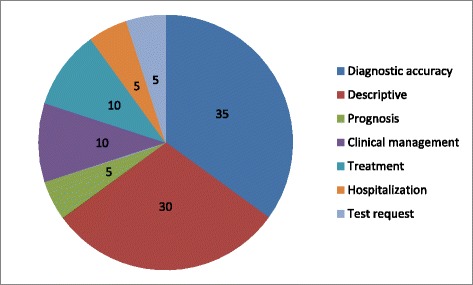
BACKGROUND: Cognitive biases and personality traits (aversion to risk or ambiguity) may lead to diagnostic inaccuracies and medical errors resulting in mismanagement or inadequate utilization of resources. We conducted a systematic review with four objectives: 1) to identify the most common cognitive biases, 2) to evaluate the influence of cognitive biases on diagnostic accuracy or management errors, 3) to determine their impact on patient outcomes, and 4) to identify literature gaps. METHODS: We searched MEDLINE and the Cochrane Library databases for relevant articles on cognitive biases from 1980 to May 2015. We included studies conducted in physicians that evaluated at least one cognitive factor using case-vignettes or real scenarios and reported an associated outcome written in English. Data quality was assessed by the Newcastle-Ottawa scale. Among 114 publications, 20 studies comprising 6810 physicians met the inclusion criteria. Nineteen cognitive biases were identified. RESULTS: All studies found at least one cognitive bias or personality trait to affect physicians. Overconfidence, lower tolerance to risk, the anchoring effect, and information and availability biases were associated with diagnostic inaccuracies in 36.5 to 77 % of case-scenarios. Five out of seven (71.4 %) studies showed an association between cognitive biases and therapeutic or management errors. Of two (10 %) studies evaluating the impact of cognitive biases or personality traits on patient outcomes, only one showed that higher tolerance to ambiguity was associated with increased medical complications (9.7 % vs 6.5 %; p = .004). Most studies (60 %) targeted cognitive biases in diagnostic tasks, fewer focused on treatment or management (35 %) and on prognosis (10 %). Literature gaps include potentially relevant biases (e.g. aggregate bias, feedback sanction, hindsight bias) not investigated in the included studies. Moreover, only five (25 %) studies used clinical guidelines as the framework to determine diagnostic or treatment errors. Most studies (n = 12, 60 %) were classified as low quality. CONCLUSIONS: Overconfidence, the anchoring effect, information and availability bias, and tolerance to risk may be associated with diagnostic inaccuracies or suboptimal management. More comprehensive studies are needed to determine the prevalence of cognitive biases and personality traits and their potential impact on physicians' decisions, medical errors, and patient outcomes.
Overview
The claims and statistics of this paper haven’t been checked yet.
Free: it reads the open-access text and checks the first 5 claims that cite a source we can check. Create a free account to check every claim.
Integrity signals
Registry
Cites
Statistics
Figures
Verification
Claims the paper makes
The claims and statistics of this paper haven’t been checked yet.
Free: it reads the open-access text and checks the first 5 claims that cite a source we can check. Create a free account to check every claim.
Claims other papers make about this one
Each is checked against this paper’s own text: does it say what the citing paper says it does?
The source backs part of the claim, not all of it — or backs it for a different population, condition or comparison.
In the citing paper
“Cognitive tendencies, including anchoring, status-quo preference, and an asymmetric weighting of affirmative rather than disproving information, may reinforce familiar clinical defaults [ 54 ].”
From Paracetamol: A History of Assumptions, Errors, and Evidence Reversals in Pain Management (2026) · cites this paper as [54]
Experimental — accuracy not yet measuredThe source backs part of the claim, not all of it — or backs it for a different population, condition or comparison.
In the citing paper
“Labels associated with medical data, disease rating scales, and diagnosis may be imbued with cognitive biases of the health care personnel who collected this information.51”
From Addressing bias in big data and AI for health care: A call for open science (2021) · cites this paper as [51]
Experimental — accuracy not yet measuredThe source backs part of the claim, not all of it — or backs it for a different population, condition or comparison.
In the citing paper
“Human cognitive biases in clinical decision-making are increasingly recognized as a crucial factor in health care errors and suboptimal patient outcomes [1].”
From Mitigating cognitive biases in clinical decision-making through multi-agent conversations using large language models: simulation study (2024) · cites this paper as [1]
Experimental — accuracy not yet measuredThe source backs part of the claim, not all of it — or backs it for a different population, condition or comparison.
In the citing paper
“Cognitive biases in clinical decision-making significantly contribute to errors in diagnosis and suboptimal patient outcomes.”
From Mitigating cognitive biases in clinical decision-making through multi-agent conversations using large language models: simulation study (2024) · cites this paper as [1]
Experimental — accuracy not yet measured
Self-check
Percentages, sums and reported differences re-computed from the paper’s own numbers.
The self-check needs the paper’s full text.
Citations
Cites
Tversky, A., & Kahneman, D. (1974) · Science · doi:10.1126/science.185.4157.1124 · Cited by 28,810 · cited 2×
“errors in the diagnosis, management, or treatment of medical conditions [6, 26].”
Liberati, A., Altman, D. G., Tetzlaff, J., Mulrow, C., Gøtzsche, P. C., Ioannidis, J. P. A., Clarke, M., Devereaux, P. J., Kleijnen, J., & Moher, D. (2009) · PLoS Medicine · doi:10.1371/journal.pmed.1000100 · Cited by 28,164
Judgment under Uncertainty: Heuristics and Biases
Tversky, A., & Kahneman, D. (1975) · Utility, Probability, and Human Decision Making · doi:10.1007/978-94-010-1834-0_8 · Cited by 22,650
(2014) · Medical Entomology and Zoology · Cited by 17,633
Liberati, A., Altman, D. G., Tetzlaff, J., Mulrow, C., Gøtzsche, P. C., Ioannidis, J. P. A., Clarke, M., Devereaux, P. J., Kleijnen, J., & Moher, D. (2009) · Annals of Internal Medicine · doi:10.7326/0003-4819-151-4-200908180-00136 · Cited by 10,349
Newcastle-Ottawa Scale: comparing reviewers’ to authors’ assessments
Lo, C. K.-L., Mertz, D., & Loeb, M. (2014) · BMC Medical Research Methodology · doi:10.1186/1471-2288-14-45 · Cited by 2,477
Incidence of Adverse Drug Events and Potential Adverse Drug Events: Implications for Prevention
Bates, D. W. (1995) · JAMA · doi:10.1001/jama.1995.03530010043033 · Cited by 2,127 · cited 1×
“each year, and perhaps one million in excess injuries in the USA [1, 2].”
BackgroundThe Importance of Cognitive Errors in Diagnosis and Strategies to Minimize Them
Croskerry, P. (2003) · Academic Medicine · doi:10.1097/00001888-200308000-00003 · Cited by 1,675 · cited 5×
“errors in the diagnosis, management, or treatment of medical conditions [6, 26].”
BackgroundInfluentialWhat every teacher needs to know about clinical reasoning
Eva, K. W. (2005) · Medical Education · doi:10.1111/j.1365-2929.2004.01972.x · Cited by 930 · cited 1×
“Fourth, case-vignettes or real clinical encounters were used [28].”
MethodClaims, Errors, and Compensation Payments in Medical Malpractice Litigation
Studdert, D. M., Mello, M. M., Gawande, A. A., Gandhi, T. K., Kachalia, A., Yoon, C., Puopolo, A. L., & Brennan, T. A. (2006) · New England Journal of Medicine · doi:10.1056/nejmsa054479 · Cited by 848 · cited 1×
“outcomes, which are the most common reasons for patients’ dissatisfaction and medical complaints [54, 64, 65].”
Background
Cited by
Items 801–900 of 1,000
An Unusual Cause of Prolonged Fever in an Elderly Woman – Pyometra
Schattner, A., Dubin, I., Glick, Y., & Haimovich, S. (2023) · The American Journal of Medicine · doi:10.1016/j.amjmed.2023.03.011
Wang, Y. X., He, Q., Dang, X., Wu, X., & Li, X. (2023) · Frontiers in Pediatrics · doi:10.3389/fped.2023.1107280
“Anchoring bias is a common cognitive bias in medicine and is associated with therapeutic or management inaccuracies (28).”
BackgroundPheochromocytoma: A Diagnosis Made More Difficult in the COVID-19 Era
Mayer, F. (2022) · Western Journal of Emergency Medicine · doi:10.5811/westjem.55091
The what-if approach to perioperative planning
Anstey, M., & Senthuran, S. (2023) · Anaesthesia and Intensive Care · doi:10.1177/0310057x231161648
“We should also steel ourselves against commission bias – the tendency towards action, even in the situation where not performing an action leads to an identical or better outcome.(9) Whilst the Lee and Ashby study is another important step in untangling the complexity around perioperative goals of care, more detailed…”
ResultFor Medical Directors: Case Report of a Missed Wooden Foreign Body in the Forehead
Keehn, J., Goodfriend, S., & Wegman, M. P. (2023) · Cureus · doi:10.7759/cureus.38790 · Cited by 1
“” This saying describes the phenomenon of anchoring bias, which occurs due to the propensity to rely too heavily on the first piece of information learned (Table 1) [7,8].”
BackgroundSanak-Kosmowska, K. (2023) · Studia i Prace Kolegium Zarządzania i Finansów / Szkoła Główna Handlowa · doi:10.33119/sip.2023.188.4
Turner, F., & Watts, M. (2023) · Lecture notes in mechanical engineering · doi:10.1007/978-3-031-34821-1_19
Li, Y., & Chen, L. (2023) · Financial Engineering and Risk Management · doi:10.23977/ferm.2023.060806
“In other words, changes in the external market environment can touch the nerves of enterprises [12].”
BackgroundMathew, D. (2023) · Journal of Hospital Medicine · doi:10.1002/jhm.13232
When Should Providers Defer versus Impose Their Views?
Howe, E. G. (2023) · The Journal of Clinical Ethics · doi:10.1086/727439
Sesgos cognitivos y Neurocirugía
David Rojas, Z. (2023) · Revista Chilena de Neurocirugía · doi:10.36593/revchilneurocir.v49i2.421
Balancing Open-Mindedness and Sound-Mindedness: A Physician’s Perspective
Jan, K. (2024) · Cureus · doi:10.7759/cureus.51948
Cognitive bias leading to diagnostic errors in patient management in emergency room
Kumar, P. M. (2024) · Journal of Indira Gandhi Institute Of Medical Sciences · doi:10.4103/jigims.jigims_42_23
Judgment Errors in Surgical Care
Marsh, K. M., Turrentine, F. E., Jin, R., Schirmer, B. D., Hanks, J. B., Davis, J., Schenk, W. G., & Jones, R. S. (2024) · Journal of the American College of Surgeons · doi:10.1097/xcs.0000000000001011 · Cited by 1
Physician-Centered EHR Data Utilization: A Pilot Study
Wu, C., Zhou, T., Tian, Y., Sun, H., Liu, Z., & Li, J. (2024) · Studies in health technology and informatics · doi:10.3233/shti231061
Taxonomies of Debiasing Methods in Procurement Processes
Şen, K. T. (2024) · Advances in human resources management and organizational development book series · doi:10.4018/979-8-3693-1766-2.ch012
Tantoco, A., Bhasin, A., Santos, M. J., Kastl, A., & Bracken, A. (2024) · Journal of Hospital Medicine · doi:10.1002/jhm.13298
Poker and Cardiology: Judging Our Decisions
Mills, M. (2024) · Circulation · doi:10.1161/circulationaha.123.067366 · Cited by 1
Cherin, N. G., Patel, S., & Jukic, M. (2024) · Clinical Case Reports · doi:10.1002/ccr3.8544
Ridge, G. E. (2024) · Springer eBooks · doi:10.1007/978-3-031-47032-5_2
The Dog Care Handbook: Things I Wish My Vet Had Told Me
Little, C. (2024) · 5m Books Ltd · doi:10.52517/9781789182705 · Cited by 2
Rothka, A. J., Jonik, S., Nelsen, J. L., Patel, S., & Cherin, N. G. (2024) · Clinical Case Reports · doi:10.1002/ccr3.8874
“14 information discovered early in the information retrieval process.”
BackgroundBias in team decision-making for advanced heart failure therapies: model application
Hebdon, M., Pool, N. M., Yee, R., Herrera‐Theut, K., Yee, E., Allen, L. A., Hasan, A., Lindenfeld, J. M., Calhoun, E. A., Sweitzer, N. K., et al. (2024) · Journal of Interprofessional Care · doi:10.1080/13561820.2024.2346934
“These narratives emerged from HCT member observations and reported conversations with patients and families or from medical record data, with the potential for individual viewpoints to cloud objectivity (Saposnik et al., 2016; USDHHS, 2022).”
BackgroundEthical aspects of risk communication
Gordon, J. (2024) · Medicine · doi:10.1016/j.mpmed.2024.04.010
When to Observe or Act? Interpretable and Causal Recommendations in Time-Sensitive Dilemmas
Odell, A. M., Forney, A., Raglin, A. J., Basak, S., & Khooshabeh, P. (2024) · Communications in computer and information science · doi:10.1007/978-3-031-62110-9_11
The Right Behavioral Technique for the Right Context
Belardinelli, P. (2024) · Executive Politics and Governance · doi:10.1007/978-3-031-58531-9_4
Robison, C., & Wilson, C. G. (2024) · ASEE Annual Conference & Exposition · doi:10.18260/1-2--46877
Case 2: Worsening Anxiety in an Adolescent: The Role of Anchoring Bias
Nelson, J. E., Kravitz, A., & Anderson-Burnett, S. A. (2024) · Pediatrics in Review · doi:10.1542/pir.2022-005947
Stevenson, H., Ramsay, D. S. C., & Jerjes, W. (2024) · Oxford Medical Case Reports · doi:10.1093/omcr/omae109
“Plain abdominal radiograph with visible small bowel dilatation. such as overconfidence, the anchoring effect, and information and availability biases, contributed to diagnostic inaccuracies in up to 77% of case scenarios studied [6].”
BackgroundInfluentialSmout, E., Buechner, H., Lynch, R., Dalton, L. J., & Rapa, E. (2024) · Heliyon · doi:10.1016/j.heliyon.2024.e38908
Why Do Researchers Falsify Data or Manipulate Study Findings?
Crombie, I. (2021) · Wiley eBooks · doi:10.1002/9781394322183.ch7
Livin’ on a Prayer: The Intersection of Prognostication, Code Status, and Palliative Care
Georgia, M. A. D. (2024) · Springer eBooks · doi:10.1007/978-3-031-69686-2_16
Takase, M. (2024) · Research Square · doi:10.21203/rs.3.rs-5666472/v1
Shortness of breath in a 52-year-old man with HIV and severe mitral regurgitation
Wangmang, F., Aiken, A. V., & Chyu, K. (2025) · Cleveland Clinic Journal of Medicine · doi:10.3949/ccjm.92a.24060
Vach, K., Ganss, C., Schlueter, N., & Vach, W. (2025) · European journal of medical research · doi:10.1186/s40001-024-02260-1
“Diagnostic procedures are the cornerstone of treatment decisions in all areas of medicine and dentistry [1–3] and are part of the daily practice of healthcare.”
Cognitive biases in osteopathic diagnosis: a mixed study among French osteopaths
Siffert, C., Romanet, F., Desmazières, M., Drault, P., & Gourjon, G. (2025) · Diagnosis · doi:10.1515/dx-2024-0144 · Cited by 1
Simoni, C., Costello, J., Blanchette, L. P., Ratliff, J., Bith-Melander, P., Jindal, C., Cassidy, K., Choi, Y.-S., Kronsteadt, S., & Efird, J. T. (2024) · PubMed
Robinson, W. K., CALLAS, P. W., Eldrup-Jørgensen, J., & Bertges, D. J. (2025) · Journal of Vascular Surgery · doi:10.1016/j.jvs.2025.01.031
Chronic and acute-on-chronic pain and irritability/agitation
Hauer, J. (2025) · Oxford University Press eBooks · doi:10.1093/oso/9780192867605.003.0003
Davis, H., & Cosper‐Roberts, T. L. (2025) · Wiley eBooks · doi:10.1002/9781394217113.ch21
Economic Evaluation Under Ambiguity and Structural Uncertainties
Andrews, B. P. (2024) · Journal of Benefit-Cost Analysis · doi:10.1017/bca.2024.39
Tribler, S., Frendved, C., Benfeldt, E., Jørgensen, R. M., & Mikkelsen, K. L. (2025) · BMJ Open Quality · doi:10.1136/bmjoq-2024-003198 · Cited by 1
Ginsburg, J. (2025) · AEM Education and Training · doi:10.1002/aet2.70025
“2,3 If we accept that biases influence decision making, we should not abandon efforts to mitigate their impact.”
A practical primer on clinical supervision of learners in the emergency department
Krzyzaniak, S. M., Tondt, J., Strokes, N., Hartman, N. D., Davis, J. J., & Schnapp, B. H. (2025) · AEM Education and Training · doi:10.1002/aet2.70015
“16,17 Overconfident learners or those lacking insight into knowledge gaps may require closer supervision, while self-aware learners who proactively seek guidance may benefit from increased autonomy within a supportive framework.”
Nguyen, C. P., Ro, S. S., Jergel, A., Border, W. L., & Sachdeva, R. (2025) · Pediatric Cardiology · doi:10.1007/s00246-025-03886-6
“In a systematic review of medical errors that included 20 studies and 6810 physicians, cognitive factors were reported to account for diagnostic inaccuracies in 36.5% to 77% of cases [10].”
InfluentialKognitive Verzerrungen im Rettungsdienst
Bushuven, S., & Trifunovic-Koenig, M. (2025) · Springer eBooks · doi:10.1007/978-3-662-70000-6_4 · Cited by 1
Gao, S., Yan, D., & He, L. (2025) · Injury · doi:10.1016/j.injury.2025.112467
H-DSAE: a hybrid technique to recognize heart disease
Maheswari, K. U., & Valarmathi, A. (2025) · Frontiers in Physiology · doi:10.3389/fphys.2025.1563199
Navasardyan, A. R., Lobastov, K. V., Marapov, D. I., Makarova, D. D., Mikaelyan, M. V., Mareev, Y. V., Drapkina, O. M., & Martsevich, S. Y. (2025) · Medical Technologies Assessment and Choice · doi:10.17116/medtech20254702158
Overlooked Risk in Cancer Care: Failure of Medical Reconciliation
Dixit, N., McGuire, J. D., Mulvey, T. M., & Speers, C. W. (2025) · JCO Oncology Practice · doi:10.1200/op-24-01051
The Importance of Simulation Fidelity to Physician Assistant/Associate Education
Fischer, T. L. (2025) · Lynchburg Journal of Medical Science · doi:10.63932/3067-7106.1039
Bäckryd, E. (2025) · Scandinavian Journal of Pain · doi:10.1515/sjpain-2025-0015
Ethical standards in peer review of surgical practice: Professionalism, pride, and prejudice
Roughneen, P. T., Entwistle, J. W., Cohen, R. G., Drake, D. H., Scully, B. B., Sade, R. M., Braxton, J., Ceppa, D. P., Goldberg, J., Hagberg, R., et al. (2025) · Journal of Thoracic and Cardiovascular Surgery · doi:10.1016/j.jtcvs.2025.07.024
Camonico, T., Lippi, F., Rizzo, N., Barusso, A., Rossettini, G., Villafañe, J. H., Cerritelli, F., Papa, L., & Esteves, J. E. (2025) · Healthcare · doi:10.3390/healthcare13161995 · Cited by 1
“The continued use of Barral’s palpatory-driven concepts of visceral mobility and motility, attributed to biomechanical, psychological, or traumatic origins, lacks empirical support and diagnostic reliability, and is prone to epistemological and cognitive bias [14,15,38–41].”
Understanding Economic Decision-Making in Digital Therapeutics Development: Qualitative Approach
Sapanel, Y., Cloutier, L. M., Morton, A., Lin, S., Seres, G., & Ho, D. (2025) · Journal of Medical Internet Research · doi:10.2196/79746 · Cited by 2
“The findings on the influence of professional training on decision frameworks corroborate earlier research about educational background in innovation development [86-88].”
New Approaches for Improving Equity in Mental Health Research, Treatment, and Policy
Howe, E., Brown, V. A., White, L. C., Knopes, J., & Suarez, J. (2025) · Frontiers research topics · doi:10.3389/978-2-8325-6907-8
Relationship Between Cognitive Biases and Reading Comprehension among College Students
Decipulo, A. C., Labanon, D. M., Amoroso, S. E., & Bocacao, H. R. (2025) · International Journal of Research and Innovation in Social Science · doi:10.47772/ijriss.2025.910000365
Diagnostic injustice. What is it, what are its sources, and what can we do about it?
Hofmann, B. (2025) · Diagnosis · doi:10.1515/dx-2025-0099 · Cited by 1
“A recent systematic review has identi fi ed a series of biases that a ff ect diagnostics [113], and cognitive Early detection (and diagnosing) of disease is better than late detection biases have been shown to result in diagnostic errors [114] as well as distorted decision-making processes [115, 116].”
Crijns, T. J., Mercado, A. E., Ring, D., Vagner, G. A., & Reichel, L. M. (2025) · Quality Management in Health Care · doi:10.1097/qmh.0000000000000514
Pang, S., Wang, L., Li, J., Yuan, H., Huang, Y., Zheng, Y., Shen, S., Wang, L., Shen, Y., Jiang, X., et al. (2025) · Supportive Care in Cancer · doi:10.1007/s00520-025-10173-w
“Cognitive factors, such as anchoring, where initial information from sources like the internet shapes subsequent judgments, may lead to overestimation of some risks and underestimation of others [36].”
Frost, B. K., Collier, V. E., Sturgill, F., Polson, J., & Jones, J. (2026) · JMIR Medical Informatics · doi:10.2196/87450
“Selecting and integrating ambient AI solutions into daily clinical workflows is complex and highly vulnerable to cognitive bias during the selection process [9,10].”
Petelinsek, S., Stoutin, K., Hughes, P. G., & Kolomaya, A. E. (2025) · Cureus · doi:10.7759/cureus.98015
Influence of non-clinical factors on emergency department decision-making: a Delphi study
Kobo, O. M., Itzhaki, I., Drescher, M. J., Glazer, J., Israeli, A., Landon, B. E., & Brammli‐Greenberg, S. (2025) · BMC Emergency Medicine · doi:10.1186/s12873-025-01425-3
“Decision-making in the ED involves complex risk–benefit assessments that require both clinical judgment and contextual awareness [27]; therefore, staffing EDs with dedicated emergency medicine physicians can help ensure consistent, safe, and efficient disposition decisions.”
Mandić, D. (2025) · Psiholoska istrazivanja · doi:10.5937/psistra0-59009
Ferreira, G., Bishop, D. G., & Gopalan, P. (2025) · Journal of the Colleges of Medicine of South Africa · doi:10.4102/jcmsa.v3i1.262
Log in, lie down: ethics and the digital turn in psychotherapy
Branford, J., & Conrad, J. A. (2025) · Philosophical Psychology · doi:10.1080/09515089.2025.2599894
Upeh, E. R., Hynes, C., Eze, C. U., & Ollawa, C. (2025) · Radiography · doi:10.1016/j.radi.2025.103268
Mental Health Perspectives on the BMI Paradox
Jiwanmall, S. A., & Kattula, D. (2025) · IntechOpen eBooks · doi:10.5772/intechopen.1013992 · Cited by 1
Lakhlifi, C., Lejeune, F., Rouault, M., Khamassi, M., & Rohaut, B. (2024) · Figshare · doi:10.6084/m9.figshare.26583951
Rajbhandari, P., Goodrich, N. P., Nabower, A. M., Brown, M. F., Ekambaram, M., Eisenberg, J., Forbes, M. L., Gollehon, N. S., Martin, K., McCulloh, R. J., et al. (2022) · Figshare · doi:10.6084/m9.figshare.21442016
Poranen, A., Kouvonen, A. M., & Nordquist, H. (2024) · Figshare · doi:10.6084/m9.figshare.26944374
Miyachi, Y., Ishii, O., & Torigoe, K. (2024) · Figshare · doi:10.6084/m9.figshare.26565908
Poranen, A., Kouvonen, A. M., & Nordquist, H. (2022) · Figshare · doi:10.6084/m9.figshare.21546681
Thompson, J. P., Bujalka, H., McKeever, S., Lipscomb, A., Moore, S., Hill, N., Kinney, S., Cham, K. M., Martin, J., Bowers, P. J., et al. (2023) · Figshare · doi:10.6084/m9.figshare.23550374
Karunaratne, S., Harris, I. A., Horsley, M., Trevena, L. J., & Solomon, M. (2024) · Figshare · doi:10.6084/m9.figshare.26730361
Poranen, A., Kouvonen, A. M., & Nordquist, H. (2024) · Figshare · doi:10.6084/m9.figshare.26944371
Thompson, J. P., Bujalka, H., McKeever, S., Lipscomb, A., Moore, S., Hill, N., Kinney, S., Cham, K. M., Martin, J., Bowers, P. J., et al. (2023) · Figshare · doi:10.6084/m9.figshare.23550377
Lamping, J., Tomsic, I., Stolz, M., Krauth, C., Chaberny, I. F., & von Lengerke, T. (2024) · Figshare · doi:10.6084/m9.figshare.26550676
Additional file 1 of Regret among primary care physicians: a survey of diagnostic decisions
Müller, B. S., Donner-Banzhoff, N., Beyer, M., Haasenritter, J., Müller, A., & Seifart, C. (2020) · Figshare · doi:10.6084/m9.figshare.11998905
Jones, W. S., Suklan, J., Winter, A., Green, K., Craven, T., Bruce, A., Mair, J., Dhaliwal, K., Walsh, T., Simpson, A. J., et al. (2022) · Figshare · doi:10.6084/m9.figshare.19159353
Additional file 1 of Users’ experience with health-related content on YouTube: an exploratory study
Mohamed, F., & Shoufan, A. (2024) · Figshare · doi:10.6084/m9.figshare.26660575
Miyachi, Y., Ishii, O., & Torigoe, K. (2024) · Figshare · doi:10.6084/m9.figshare.26565911
Poranen, A., Kouvonen, A. M., & Nordquist, H. (2022) · Figshare · doi:10.6084/m9.figshare.21546684
Poranen, A., Kouvonen, A. M., & Nordquist, H. (2024) · Figshare · doi:10.6084/m9.figshare.26944380
Poranen, A., Kouvonen, A. M., & Nordquist, H. (2024) · Figshare · doi:10.6084/m9.figshare.26944377
Grubenhoff, J. A., Dillon, M., Geanacopoulos, A. T., Melvin, J. E., Widmer, K. M., & Olson, A. P. J. (2025) · Journal of Continuing Education in the Health Professions · doi:10.1097/ceh.0000000000000632
Constrained Causal Decision Dilemmas
Odell, A. M., Forney, A., Raglin, A. J., Basak, A., & Khooshabeh, P. (2026) · Lecture notes in computer science · doi:10.1007/978-3-032-13184-3_15 · Cited by 1
Clinical Decision-Making for Pharmacists
Rajan, V., & Mahmoud, S. H. (2025) · Springer eBooks · doi:10.1007/978-3-032-10050-4_5
Medico-legal cases involving gastroenterologists in Canada between 2017 and 2021
Mostafapour, M., Barbosa, K., Ji, J., Kagan, D. B., Gagné, N., Yang, Q., Garber, G. E., & Singh, H. (2025) · Journal of the Canadian Association of Gastroenterology · doi:10.1093/jcag/gwaf035
Diagnostic Overshadowing: Delayed Management in Substance Use Disorder Patients With Splenic Injury
Arda, Y., Nzenwa, I. C., Panossian, V. S., Holtrop, T. E. T., Kaafarani, H. M. A., Hwabejire, J. O., Velmahos, G. C., & DeWane, M. P. (2026) · Journal of Surgical Research · doi:10.1016/j.jss.2025.12.041
Doren, N., & Tobler, P. N. (2026) · Springer eBooks · doi:10.1007/978-3-032-02925-6_31
Self-citationde Moura, E. C., Goldszmidt, R. B., & Andrade, E. B. (2026) · BMJ Quality & Safety · doi:10.1136/bmjqs-2025-019520
“This study responds to that call by presenting an empirically grounded approach to understanding a cognitive bias in real clinical settings, 7 8 building on the dual-process theory of reasoning 9 and the literature on heuristic-driven errors.”
When Doing Nothing Is a Decision
Patel, J. J., & Gavinski, K. (2026) · CHEST Critical Care · doi:10.1016/j.chstcc.2026.100248
Bias – Fallstricke des Denkens
Reinbacher, D., & Taege, J. (2026) · Notfallmedizin up2date · doi:10.1055/a-2593-8957
Suwanaratana, R., Amphansap, T., Lawanprasert, A., Wuthikraikun, C., & Chanalithichai, N. (2026) · Research Square · doi:10.21203/rs.3.rs-8758035/v1
Richter, S., & Carol, S. B. (2026) · Research Square · doi:10.21203/rs.3.rs-8935281/v1
Richter, S., & Carol, S. B. (2026) · Research Square · doi:10.21203/rs.3.rs-8935281/v2
Richter, S., & Carol, S. B. (2026) · Research Square · doi:10.21203/rs.3.rs-8935281/v3
Mistakes at work are judged more negatively in routine tasks than in complex tasks
Hampel, T. (2026) · SN Social Sciences · doi:10.1007/s43545-026-01396-7
“As a consequence, routine tasks are particularly prone to mistakes that stem from inat-tention, overconfidence, or cognitive shortcuts (Saposnik et al. 2016).”
Metadata
- Authors
- Saposnik, G., Redelmeier, D., Ruff, C. C., & Tobler, P. N.
- Affiliations
- St. Michael's Hospital (CA)
- Institute for Clinical Evaluative Sciences (CA)
- University of Zurich (CH)
- Corresponding author
- Saposnik, Gustavo
- Venue
- BMC Medical Informatics and Decision Making
- Published
- 2016-11-03
- Volume
- 16
- Issue
- 1
- Pages
- 138-138
- ISSN
- 1472-6947 (ISSN-L)
- PMC
- PMC5093937
- OpenAlex
- W2548421507
- Cited by
- 1,001
- References
- 74
- Citations by year
- 2026: 141 · 2025: 111 · 2024: 118 · 2023: 97 · 2022: 158 · 2021: 120 · 2020: 95 · 2019: 83 · 2018: 55 · 2017: 21 · 2016: 1
- FWCI
- 8.96
- Type
- journal article
- Language
- en
- Open access
- gold
- doi.org
- Licence
- Locations
- BMC Medical Informatics and Decision Making (publishedVersion, cc-by)
- PubMed Central (publishedVersion, cc-by)
- PubMed (publishedVersion)
- Zurich Open Repository and Archive (University of Zurich) (acceptedVersion, cc-by)
- TSpace (University of Toronto) (submittedVersion, cc-by)
- Zurich Open Repository and Archive (University of Zurich) (submittedVersion, cc-by)
- Zurich Open Repository and Archive (University of Zurich)
- Funders
- Swiss National Science Foundation (CRSII3_141965)
- Heart and Stroke Foundation of Canada (NA)
- Topics
- Health Sciences › Medicine › Family Practice › Clinical Reasoning and Diagnostic Skills
- Social Sciences › Decision Sciences › General Decision Sciences › Decision-Making and Behavioral Economics
- Health Sciences › Medicine › Public Health, Environmental and Occupational Health › Patient Safety and Medication Errors
- Keywords
- cognitive biases, clinical decision-making, diagnostic errors, medical errors, overconfidence, anchoring effect, availability bias, information bias, risk aversion, ambiguity tolerance, personality traits, patient outcomes, physician decision-making
- MeSH terms
- Clinical Decision-Making, Humans, Personality, Physicians, Thinking
About these checks
Registry, retraction, Cites and statistics results are computed, not judged, with one exception: a printed reference that no index lists is read once by a model before it counts as a citation error. Claims are extracted by a model and kept only when their quote appears verbatim in the text; each cited source is then checked, with a model’s help, for whether it says what the claim relies on. Those verdicts can be wrong — read the claim’s quote and the cited source before relying on one.
Statistics and arithmetic are recomputed, not judged.
Confidence bands are shown only for fields calibrated on our annotated test set. None is calibrated yet, so no band is shown.
What counts as a claim ›How we measure confidence ›How we check this ›
Are you an author, or do you see a problem with this page? Request a review
Data sources
Bibliographic data: Semantic Scholar, OpenAlex, Crossref.
Contains information from the Semantic Scholar Academic Graph Datasets, made available under the ODC Attribution License (ODC-BY 1.0).
Semantic Scholar’s data is described in: Kinney, R., et al. (2023). The Semantic Scholar Open Data Platform. arXiv:2301.10140.
