

Cognitive biases associated with medical decisions: a systematic review
Open accessThe DOI matches its Crossref record; 76 of the 76 references it cites were found in a registry or an index.
Abstract
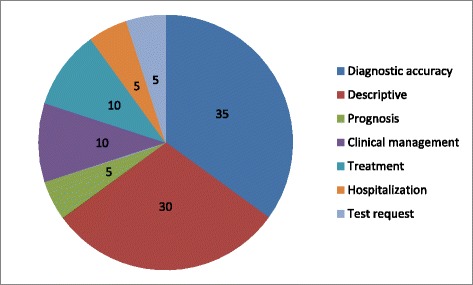
BACKGROUND: Cognitive biases and personality traits (aversion to risk or ambiguity) may lead to diagnostic inaccuracies and medical errors resulting in mismanagement or inadequate utilization of resources. We conducted a systematic review with four objectives: 1) to identify the most common cognitive biases, 2) to evaluate the influence of cognitive biases on diagnostic accuracy or management errors, 3) to determine their impact on patient outcomes, and 4) to identify literature gaps. METHODS: We searched MEDLINE and the Cochrane Library databases for relevant articles on cognitive biases from 1980 to May 2015. We included studies conducted in physicians that evaluated at least one cognitive factor using case-vignettes or real scenarios and reported an associated outcome written in English. Data quality was assessed by the Newcastle-Ottawa scale. Among 114 publications, 20 studies comprising 6810 physicians met the inclusion criteria. Nineteen cognitive biases were identified. RESULTS: All studies found at least one cognitive bias or personality trait to affect physicians. Overconfidence, lower tolerance to risk, the anchoring effect, and information and availability biases were associated with diagnostic inaccuracies in 36.5 to 77 % of case-scenarios. Five out of seven (71.4 %) studies showed an association between cognitive biases and therapeutic or management errors. Of two (10 %) studies evaluating the impact of cognitive biases or personality traits on patient outcomes, only one showed that higher tolerance to ambiguity was associated with increased medical complications (9.7 % vs 6.5 %; p = .004). Most studies (60 %) targeted cognitive biases in diagnostic tasks, fewer focused on treatment or management (35 %) and on prognosis (10 %). Literature gaps include potentially relevant biases (e.g. aggregate bias, feedback sanction, hindsight bias) not investigated in the included studies. Moreover, only five (25 %) studies used clinical guidelines as the framework to determine diagnostic or treatment errors. Most studies (n = 12, 60 %) were classified as low quality. CONCLUSIONS: Overconfidence, the anchoring effect, information and availability bias, and tolerance to risk may be associated with diagnostic inaccuracies or suboptimal management. More comprehensive studies are needed to determine the prevalence of cognitive biases and personality traits and their potential impact on physicians' decisions, medical errors, and patient outcomes.
Overview
The claims and statistics of this paper haven’t been checked yet.
Free: it reads the open-access text and checks the first 5 claims that cite a source we can check. Create a free account to check every claim.
Integrity signals
Registry
Cites
Statistics
Figures
Verification
Claims the paper makes
The claims and statistics of this paper haven’t been checked yet.
Free: it reads the open-access text and checks the first 5 claims that cite a source we can check. Create a free account to check every claim.
Claims other papers make about this one
Each is checked against this paper’s own text: does it say what the citing paper says it does?
The source backs part of the claim, not all of it — or backs it for a different population, condition or comparison.
In the citing paper
“Cognitive tendencies, including anchoring, status-quo preference, and an asymmetric weighting of affirmative rather than disproving information, may reinforce familiar clinical defaults [ 54 ].”
From Paracetamol: A History of Assumptions, Errors, and Evidence Reversals in Pain Management (2026) · cites this paper as [54]
Experimental — accuracy not yet measuredThe source backs part of the claim, not all of it — or backs it for a different population, condition or comparison.
In the citing paper
“Labels associated with medical data, disease rating scales, and diagnosis may be imbued with cognitive biases of the health care personnel who collected this information.51”
From Addressing bias in big data and AI for health care: A call for open science (2021) · cites this paper as [51]
Experimental — accuracy not yet measuredThe source backs part of the claim, not all of it — or backs it for a different population, condition or comparison.
In the citing paper
“Human cognitive biases in clinical decision-making are increasingly recognized as a crucial factor in health care errors and suboptimal patient outcomes [1].”
From Mitigating cognitive biases in clinical decision-making through multi-agent conversations using large language models: simulation study (2024) · cites this paper as [1]
Experimental — accuracy not yet measuredThe source backs part of the claim, not all of it — or backs it for a different population, condition or comparison.
In the citing paper
“Cognitive biases in clinical decision-making significantly contribute to errors in diagnosis and suboptimal patient outcomes.”
From Mitigating cognitive biases in clinical decision-making through multi-agent conversations using large language models: simulation study (2024) · cites this paper as [1]
Experimental — accuracy not yet measured
Self-check
Percentages, sums and reported differences re-computed from the paper’s own numbers.
The self-check needs the paper’s full text.
Citations
Cites
Tversky, A., & Kahneman, D. (1974) · Science · doi:10.1126/science.185.4157.1124 · Cited by 28,810 · cited 2×
“errors in the diagnosis, management, or treatment of medical conditions [6, 26].”
Liberati, A., Altman, D. G., Tetzlaff, J., Mulrow, C., Gøtzsche, P. C., Ioannidis, J. P. A., Clarke, M., Devereaux, P. J., Kleijnen, J., & Moher, D. (2009) · PLoS Medicine · doi:10.1371/journal.pmed.1000100 · Cited by 28,164
Judgment under Uncertainty: Heuristics and Biases
Tversky, A., & Kahneman, D. (1975) · Utility, Probability, and Human Decision Making · doi:10.1007/978-94-010-1834-0_8 · Cited by 22,650
(2014) · Medical Entomology and Zoology · Cited by 17,633
Liberati, A., Altman, D. G., Tetzlaff, J., Mulrow, C., Gøtzsche, P. C., Ioannidis, J. P. A., Clarke, M., Devereaux, P. J., Kleijnen, J., & Moher, D. (2009) · Annals of Internal Medicine · doi:10.7326/0003-4819-151-4-200908180-00136 · Cited by 10,349
Newcastle-Ottawa Scale: comparing reviewers’ to authors’ assessments
Lo, C. K.-L., Mertz, D., & Loeb, M. (2014) · BMC Medical Research Methodology · doi:10.1186/1471-2288-14-45 · Cited by 2,477
Incidence of Adverse Drug Events and Potential Adverse Drug Events: Implications for Prevention
Bates, D. W. (1995) · JAMA · doi:10.1001/jama.1995.03530010043033 · Cited by 2,127 · cited 1×
“each year, and perhaps one million in excess injuries in the USA [1, 2].”
BackgroundThe Importance of Cognitive Errors in Diagnosis and Strategies to Minimize Them
Croskerry, P. (2003) · Academic Medicine · doi:10.1097/00001888-200308000-00003 · Cited by 1,675 · cited 5×
“errors in the diagnosis, management, or treatment of medical conditions [6, 26].”
BackgroundInfluentialWhat every teacher needs to know about clinical reasoning
Eva, K. W. (2005) · Medical Education · doi:10.1111/j.1365-2929.2004.01972.x · Cited by 930 · cited 1×
“Fourth, case-vignettes or real clinical encounters were used [28].”
MethodClaims, Errors, and Compensation Payments in Medical Malpractice Litigation
Studdert, D. M., Mello, M. M., Gawande, A. A., Gandhi, T. K., Kachalia, A., Yoon, C., Puopolo, A. L., & Brennan, T. A. (2006) · New England Journal of Medicine · doi:10.1056/nejmsa054479 · Cited by 848 · cited 1×
“outcomes, which are the most common reasons for patients’ dissatisfaction and medical complaints [54, 64, 65].”
Background
Cited by
Items 601–700 of 1,000
Iacobucci, G. J., Leo, R. J., & Pristach, C. A. (2025) · Personalized Medicine in Psychiatry · doi:10.1016/j.pmip.2025.100164 · Cited by 2
Avoiding Clinical Errors With Bedside Echocardiography: A Randomized Clinical Study
Moayedi, Y., Posada, J. D., Nesbitt, G. C., Ross, H. J., Bell, C. M., Dorian, P., & Sibbald, M. (2017) · Canadian Journal of Cardiology · doi:10.1016/j.cjca.2017.10.018 · Cited by 2
Fierro, C. (2017) · Revista de Psicología · doi:10.18800/psico.201801.010 · Cited by 2
Roberts, C. S., & Nyland, J. A. (2018) · Journal of surgical education · doi:10.1016/j.jsurg.2018.01.004 · Cited by 2
The perils of teaching medical triads
Manzoor, F., & Redelmeier, D. A. (2018) · Medical Education · doi:10.1111/medu.13637 · Cited by 2
Self-citationLejeune, N., van Erp, W. S., Rohaut, B., Sanz, L. R. D., Laureys, S., & Chatelle, C. (2020) · Dunod eBooks · doi:10.3917/dunod.centr.2020.01.0727 · Cited by 4
A Perioperative Care Display for Understanding High Acuity Patients
Novak, L. L., Wanderer, J. P., Owens, D. A., Fabbri, D., Genkins, J. Z., & Lasko, T. A. (2021) · Applied Clinical Informatics · doi:10.1055/s-0041-1723023 · Cited by 2
Granek, L., Shapira, S., Roth, J., & Constantini, S. (2021) · Pediatric Neurosurgery · doi:10.1159/000521451 · Cited by 3
Bouwsema, M., & Bell, C. R. (2022) · POCUS Journal · doi:10.24908/pocus.v7i1.15020 · Cited by 2
“The systematic use of POCUS, prevented the pitfall of anchoring bias and premature closure bias, both recognized as common sources of bias in diagnosis [8].”
BackgroundHomsud, N., & Rompho, N. (2022) · Asia-Pacific Journal of Business Administration · doi:10.1108/apjba-08-2021-0402 · Cited by 3
Quiles‐Tsimaratos, N., Paul, C. F., de la Brassinne, M., Telle, H., Corgibet, F., Tanasescu, S., Roux, B., Girardot-Seguin, S., & Duval‐Modeste, A. ‐. (2022) · Annales de Dermatologie et de Vénéréologie · doi:10.1016/j.annder.2022.05.003 · Cited by 2
Teaching endoscopic management of gastrointestinal hemorrhage using a modular simulation curriculum
VanDruff, V. N., Wong, H. J., Amundson, J. R., Wu, H., Campbell, M., Kuchta, K. M., Hedberg, H. M., Linn, J. G., Haggerty, S. P., Denham, W., et al. (2022) · Surgery · doi:10.1016/j.surg.2022.06.047 · Cited by 2
Interpretable Convolutional Learning Classifier System (C-LCS) for higher dimensional datasets
Owens, J., Gupta, K. D., Yan, X., Zeleke, L., & Homaifar, A. (2022) · Conference proceedings/Conference proceedings - IEEE International Conference on Systems, Man, and Cybernetics · doi:10.1109/smc53654.2022.9945515 · Cited by 2
“Shortcomings of their application in those fields [25]–[27] has recently raised a fair amount of public distrust and has generated sufficient incentive to call for increased accountability and transparency in application of those models.”
BackgroundPatient Perceptions of a Decision Support Tool for Men with Localized Prostate Cancer
Austria, M. D., Kimberlin, C., Le, T., Lynch, K. A., Ehdaie, B., Atkinson, T. M., Vickers, A. J., & Carlsson, S. (2023) · MDM Policy & Practice · doi:10.1177/23814683231156427 · Cited by 3
“Hindsight bias is the tendency to view events as more predictable than they really are.(26) In other words, after an event, people often believe that they knew, or at least could have predicted, the outcome of an event before it happened.”
BackgroundBorghini, G., Ronca, V., Aricò, P., Flumeri, G. D., Giorgi, A., Bonelli, S., Moens, L., Castagneto‐Gissey, L., Bellini, M. I., Casella, G., et al. (2023) · AHFE international · doi:10.54941/ahfe1003010 · Cited by 2
Primary Adrenal Insufficiency Masked by an Eating Disorder Diagnosis in an Adolescent Male
Nichols, P., Rahming, V. L., Weiner, A., & Sopher, A. B. (2023) · JCEM Case Reports · doi:10.1210/jcemcr/luad095 · Cited by 4
“This case report serves as a review of a rare but treatable diagnosis and of cognitive biases that drive medical decision making [6, 7].”
BackgroundSchlögl, M., Hofmaenner, D. A., Manka, R., & Keller, D. I. (2018) · BMJ Case Reports · doi:10.1136/bcr-2017-223135 · Cited by 3
Mucormycosis: More Than Meets the Eye!
Ally, M. T., Jenkins, I., & Gupta, V. (2019) · The American Journal of Medicine · doi:10.1016/j.amjmed.2019.04.007 · Cited by 2
Early clinical experience with a touchless image navigation interface for the endovascular suite
Homayoon, B., Chung, J., Gandhi, R. T., & Liu, D. M. (2019) · Minimally Invasive Therapy & Allied Technologies · doi:10.1080/13645706.2019.1612440 · Cited by 2
“decisions, or act out of cognitive biases especially when under stress, which may lead to avoidable compromises in workflow, suboptimal outcomes or complications [19,20].”
BackgroundUnderstanding bias in the medical literature: With reflections on metastasectomy
Macbeth, F. R., & Webster, A. C. (2020) · South African Journal of Oncology · doi:10.4102/sajo.v4i0.144 · Cited by 2
Cognitive biases policy (CBP) in performance improvements – the example of benchmarking
Kulikowski, K. (2021) · International Journal of Productivity and Performance Management · doi:10.1108/ijppm-02-2020-0060 · Cited by 2
Kavchak, A. J. E., Chandler, L., Oxendine, R. H., Huff, C. M., Harris, G. M., Baxter, D. G., & Jones, E. (2021) · Physical Therapy Reviews · doi:10.1080/10833196.2021.2000289 · Cited by 3
“Research using case vignettes suggests that CDMs’ decisions for a variety of medical diagnoses are influenced by cognitive biases [29] which can contribute to management errors [30].”
Suárez-Ruíz, E. J., & Galli, L. G. (2022) · adComunica revista científica de estrategias tendencias e innovación en comunicación · doi:10.6035/adcomunica.6201 · Cited by 6
“…de situaciones concretas precisa incorporar la influencia de sesgos cognitivos y heurísticas intuitivas como variables relevantes a ser consideradas (p. ej., Crowley y Gottlieb, 2012; de Oliveira y Carrascal, 2014; Blumenthal-Barby y Krieger, 2015; Dubov y Phung, 2015; Saposnik et al., 2016).”
BackgroundCase 9-2022: A 56-Year-Old Woman with Fever, Myalgias, Diarrhea, and Cough
Vyas, J. M., Castle, A. C., Bourgouin, P., & Turbett, S. E. (2022) · New England Journal of Medicine · doi:10.1056/nejmcpc2115846 · Cited by 2
How to Mitigate the Effects of Cognitive Biases During Patient Safety Incident Investigations
Rogers, J. E., Hilgers, T. R., Keebler, J. R., Looke, T., & Lazzara, E. H. (2022) · The Joint Commission Journal on Quality and Patient Safety · doi:10.1016/j.jcjq.2022.06.010 · Cited by 5
Behavioral Insights and Public Policy
Belardinelli, P. (2024) · Executive Politics and Governance · doi:10.1007/978-3-031-58531-9_2 · Cited by 2
Stroke in persons with disability
Ozair, A., & Garg, R. K. (2020) · Neurology · doi:10.1212/wnl.0000000000008957 · Cited by 2
“These lead to diagnostic inaccuracies, medical mismanagement, and poor resource use, resulting in overall poor patient care.(6) Here, Young et al.”
BackgroundReply to “Key Points to Consider When Evaluating Andexxa for Formulary Addition”
Mahan, C. E. (2020) · Neurocritical Care · doi:10.1007/s12028-020-01008-z · Cited by 2
“Studies note cognitive biases in healthcare providers, including physicians and pharmacy and medical directors that serve on pharmacy and therapeutics committees [22, 23].”
BackgroundLetter: ginger as anti‐emetic for acute gastroenteritis in children—interpreting evidence gingerly
Philips, C. A., & Abraham, L. (2021) · Alimentary Pharmacology & Therapeutics · doi:10.1111/apt.16474 · Cited by 2
Can personalized medicine mitigate confirmation bias in mental health?
Perna, G., & Nemeroff, C. B. (2022) · Brazilian Journal of Psychiatry · doi:10.1590/1516-4446-2021-0032 · Cited by 2
Behavioral Aspects of Healthy Longevity
Rojas, A. M., Boudet, A. M. M., Moscoe, E., Jamison, J., & Riumalló‐Herl, C. (2023) · World Bank, Washington, DC eBooks · doi:10.1596/1813-9450-10347 · Cited by 2
The economics of diagnostic safety: Setting the scene
OECD (2024) · doi:10.1787/bb24ea76-en · Cited by 6
Physician Decision-Making Under Uncertainty in a Post-Dobbs AmericaPreprint
Wilson, M. J. W., & Sinha, M. S. (2024) · SSRN Electronic Journal · doi:10.2139/ssrn.4952568 · Cited by 2
Demigods of Technology Use – How Beating the Overconfidence Bias Can Prevent Medical Errors
Oschinsky, F. M., Müller, M., & Niehaves, B. (2020) · Hawaii International Conference on System Sciences (HICSS) · doi:10.24251/hicss.2020.471 · Cited by 2
Lau, N. K. C., Hartman‐Kenzler, J., Fichtel, E., Park, J., Ponnala, S., Parker, S. H., Fitzgibbons, S., & Safford, S. D. (2021) · Journal of Surgical Research · doi:10.1016/j.jss.2020.12.064 · Cited by 1
Cognitive biases and their effects on practice: a case study reflection
Patenotte, P., & Darby, I. (2023) · Journal of Paramedic Practice · doi:10.12968/jpar.2023.15.5.cpd1 · Cited by 1
Diagnosing Fast and Slow: Cognitive Bias in Obstetrics
Atallah, F., Gomes, C., & MINKOFF, H. L. (2023) · Obstetrics and Gynecology · doi:10.1097/aog.0000000000005303 · Cited by 1
Clinical Judgement and Decision-Making
Balayla, J. (2024) · Springer eBooks · doi:10.1007/978-3-031-71452-8_2 · Cited by 1
Parsonage, L., Gourley, S., Ullah, S., & Johnson, R. J. (2025) · Emergency Medicine Australasia · doi:10.1111/1742-6723.14558 · Cited by 1
Cognitive biases in cardiology practice from the perspective of evolutionary explanation
Александрович, Ч. Г., & Таратухин, Е. О. (2025) · CARDIOVASCULAR THERAPY AND PREVENTION · doi:10.15829/1728-8800-2024-4311 · Cited by 3
Barcelo, J. M., & Ferido, N. M. B. (2025) · Science & Education · doi:10.1007/s11191-025-00642-3 · Cited by 1
Lautenbacher, S., Ceynowa, N., Burlakovas, M., Lang, P. M., & Miriam Kunz, A. (2025) · Clinical Journal of Pain · doi:10.1097/ajp.0000000000001300 · Cited by 1
de Alencar, J. N., da Silva, P. H. B., & Borin, V. (2025) · BMJ Evidence-Based Medicine · doi:10.1136/bmjebm-2025-113664 · Cited by 1
“8 Another important challenge stems from overconfidence in raw frequency data—for instance, statements like ‘this sign appears in 12% of affected patients’.”
Cognitive Task Analysis to Evaluate Resident Physician Decision Making in the Intensive Care Unit
Mansoori, J. N., Gravitz, S., Reed, K. D., Taylor, J. K., Havranek, E. P., Holtrop, J. S., & Douglas, I. S. (2025) · ATS Scholar · doi:10.34197/ats-scholar.2025-0009oc · Cited by 3
The effect of centrality bias on triage nurses in the emergency department
Shlenger, D., Cohen, A., Hochman, G., Pachys, G., & Trotzky, D. (2025) · SAGE Open Medicine · doi:10.1177/20503121251364742 · Cited by 2
Malyon, A., Hartley, P., Eaton, T. L., Danesh, V. C., Connolly, B. A., Lone, N., Brown, C. A., & McPeake, J. M. (2025) · Intensive and Critical Care Nursing · doi:10.1016/j.iccn.2025.104212 · Cited by 1
Biparametric Prostate MRI Is Safe and Effective if Image Quality Is Excellent
Davenport, M. S., Pockros, B. M., & Morgan, T. M. (2025) · JAMA · doi:10.1001/jama.2025.13914 · Cited by 1
Cognitive biases in otolaryngology: a systematic narrative review
Pulimoottil, D. T., Philip, A. C., Kaipuzha, R. R., Thomas, I. A., Joseph, N. A., Moideen, S. P., Varghese, A., Chalil, H. R., Eapen, D. S., Babu, D., et al. (2025) · International Journal of Otorhinolaryngology and Head and Neck Surgery · doi:10.18203/issn.2454-5929.ijohns20253002 · Cited by 1
Overnight Decision-Making for Equivocal Appendicitis Often Involves Unnecessary Hospital Admissions
Liesman, D. R., Papastefan, S. T., Ungerleider, S., Carter, M. M., Pitt, J. B., McElhinney, K. L., Grabowski, J. E., Ramgopal, S., & Goldstein, S. D. (2025) · Journal of Surgical Research · doi:10.1016/j.jss.2025.09.035 · Cited by 1
Gad, H., Elgazar, A., & Laudański, K. (2025) · Healthcare · doi:10.3390/healthcare13202636 · Cited by 1
Khanna, P., Noel, M. E., & Orr, S. L. (2025) · Current Neurology and Neuroscience Reports · doi:10.1007/s11910-025-01459-x · Cited by 1
Zeyara, A., Scarfone, L., Jeremiasen, M., Falkenback, D., Andersson, B., Tingstedt, B., & Johansson, J. (2026) · BMC Gastroenterology · doi:10.1186/s12876-026-04619-6 · Cited by 1
Prescribing in healthcare: behavioral factors and management levers
Cantarelli, P., Milanesi, M., Piazzoli, A., Luga, G., Bellè, N., & Guercini, S. (2026) · Management Decision · doi:10.1108/md-07-2025-2153 · Cited by 1
Clarifying the muddle: towards a comprehensive taxonomy of cognitive biases in medicine
Amoretti, M. C., & Lalumera, E. (2026) · Medicine Health Care and Philosophy · doi:10.1007/s11019-026-10349-z · Cited by 2
“…of medicine, more than one hundred cognitive biases have been identified, influencing not only diagnostic reasoning, but also research practices, treatment planning, prognostic estimations, public health policies, and ethical judgments (Blumenthal-Barby and Krieger 2015; Saposnik et al. 2016).”
Clark, T., Šlapeta, J. R., Sullivan, L., & Malik, R. (2026) · Australian Veterinary Journal · doi:10.1111/avj.70091 · Cited by 1
Cognitive mechanisms underlying anchoring bias in diagnosis: a randomized controlled experiment
Mamede, S., Schmidt, H. G., Specian, F. C., Ribeiro, L. M. C., Filho, C., Campos, B. A. G., & Cecílio‐Fernandes, D. (2026) · Diagnosis · doi:10.1515/dx-2025-0181 · Cited by 1
“Our fi ndings shed some light on the cognitive mechanisms underlying anchoring bias, highlighted in the medical literature as a major cause of diagnostic error [1, 2, 6].”
Lei, S., Zhou, G., Berzin, T. M., Xiao, X., Liu, P., & Wang, P. (2026) · Frontiers in Medicine · doi:10.3389/fmed.2026.1793448 · Cited by 1
“However, considering that human endoscopists may have diagnostic bias or a mentality of avoiding difficulties (33–35), the true sensitivity of endoscopists may be lower in more challenging real clinical setting.”
Strukturierte Ersteinschätzung als Sicherheitsnetz: Ein Fall mit Lernpotenzial
Witt, K., Werkmann, M., Städtler, M., Katipoglu, G., Pfeiffer, C., Gerosch, S., Cyrus, C., Becker, D., Stillfried, D. V., & Bayeff-Filloff, M. (2026) · Notfall + Rettungsmedizin · doi:10.1007/s10049-026-01778-7 · Cited by 1
Shabrina, Z. R. N., Adiwibowo, I. R., & Beryllia, N. A. (2020) · Buletin Psikologi · doi:10.22146/buletinpsikologi.60763 · Cited by 1
Sideroblastic anaemia in a patient with sickle cell disease
Vobugari, N., Chaturvedi, M., Schlam, I. M., & Smith, H. P. (2022) · BMJ Case Reports · doi:10.1136/bcr-2021-246623 · Cited by 2
Fast-Bleeped: A to E Series – Disability: Coma
Movio, G., Rashid, A., & Clarke, A. (2022) · Morecambe Bay medical journal · doi:10.48037/mbmj.v9i1.1363 · Cited by 1
9. Creating Evidence-Based Policy and Practice
Downey, H., Boenisch, N., Browne, D., Buckley, Y. M., Cranston, G. R., Dicks, L. V., Hughes, J., Latrémouille, C., Morgan, W. H., Muir, M. J., et al. (2022) · Open Book Publishers · doi:10.11647/obp.0321.09 · Cited by 2
Mwape, A. K., Schmidtke, K. A., & Brown, C. (2023) · Reproductive Female and Child Health · doi:10.1002/rfc2.52 · Cited by 1
Distal Fibular Metastasis of Colorectal Carcinoma: A Case Report
Luther, L., McGlone, P. J., Hardacker, K. D., Alsoof, D., Hayda, R. A., & Terek, R. M. (2024) · Orthopedic Reviews · doi:10.52965/001c.91505 · Cited by 1
The Influence of Cognitive Bias on Professional Judgment in Auditing: An Empirical Study from Egypt
Khaleq, S. A. M. A. (2023) · المجلة العلمية للدراسات التجارية والبيئية · doi:10.21608/jces.2023.346529 · Cited by 1
Anchoring as a Mechanism for Modifying Risk-Taking Behavior in Military Aviation
Roanghesi, C. (2025) · Aviation Psychology and Applied Human Factors · doi:10.1027/2192-0923/a000290 · Cited by 1
Diagnostic bias and its impact on clinical decision making
Maddison, J. E., & Dirrig, H. (2025) · Companion animal · doi:10.12968/coan.2024.0025 · Cited by 1
Rainkie, D. C., Nazar, Z. J., Teunissen, P. W., & Könings, K. D. (2025) · Research in Social and Administrative Pharmacy · doi:10.1016/j.sapharm.2025.08.012 · Cited by 2
Kerr, K. F., Eguchi, M., Shucard, H. L., Drew, T., Weaver, D. L., Elmore, J. G., & Brunyé, T. T. (2025) · Medical Decision Making · doi:10.1177/0272989x251368886 · Cited by 1
“22,23,35 Pathologists may be initially inclined to render more severe diagnoses in ambiguous cases, minimizing any perceived risk of underdiagnosing/missing cancer and associated legal consequences.”
To Do or Not to Do: Decompressive Craniectomy for Severe Traumatic Brain Injury
Raoufi, E. H., Tabatabaei, M. S. H. Z., Namazi, H., Honeybul, S., & Rahimi‐Movaghar, V. (2025) · Asian Journal of Neurosurgery · doi:10.1055/s-0045-1813220 · Cited by 2
Movement Disorders Associated with 22q11.2 Microdeletion: A Scoping Review
Reyes, N. G. D., Luca, D. G. D., Marras, C., Boot, E., Yuen, R. K. C., Lang, A. E., & Bassett, A. S. (2025) · Movement Disorders Clinical Practice · doi:10.1002/mdc3.70459 · Cited by 2
“18,19 This may, in turn, lead to two important pitfalls: (1) potential associations between 22q11.”
Ibrahim, A. H., Beaumont, C. T., & Strohacker, K. A. (2026) · Applied Psychophysiology and Biofeedback · doi:10.1007/s10484-025-09762-6 · Cited by 1
“Similar effects occur in medical, and financial settings, where individuals anchor on round numbers or culturally significant cutoffs, leading to an overemphasis on arbitrary benchmarks (Englitch & Mussweiler, 2001 ; Epley & Gilovich, 2006; Saposnik et al., 2016 ).”
Aesthetic Medicine and Perceptual Distortion: The Role of Professional Aesthetic Drift
Armenti, A. F. (2026) · Clinical Cosmetic and Investigational Dermatology · doi:10.2147/ccid.s583396 · Cited by 2
Effect of race and sex on lupus diagnosis in primary care: A randomized factorial survey study
Howren, A. M., Tran, Q., Sediqi, S., Hawa, S., Owens, D. K., Linos, E., Falasinnu, T., Chaichian, Y., & Simard, J. F. (2026) · PLoS ONE · doi:10.1371/journal.pone.0342328 · Cited by 2
“A systematic review found low tolerance to risk and overconfidence was associated with diagnostic inaccuracies [22].”
Harada, Y. (2026) · Cureus · doi:10.7759/cureus.105796 · Cited by 2
“Clinical reasoning is shaped by dual-process cognition, heuristics, contextual stressors, and cognitive bias [15-19].”
Jansen, P., Krause, F., Braun, A., & Jansen, E. E. (2026) · Dentistry Journal · doi:10.3390/dj14040235 · Cited by 1
Brändle, G., Orfanos, I., Mari, J., Montemaggi, A., Størdal, K., Trapani, S., & Wyder, C. (2026) · Acta Paediatrica · doi:10.1111/apa.70545 · Cited by 1
Ay, M., Öztan, D. T., Asri, Ş., Karaveli, A., Öztürk, N., Alparslan, A. Ş., & Ay, S. A. (2026) · Medicina · doi:10.3390/medicina62091680 · Cited by 2
“The model’s confidence score should therefore not be used as an independent, reliable indicator of the accuracy of a prediction [16,21,22]; this reinforces the conclusion that LLM outputs require human oversight.”
Nüssler, E., Eskildsen, J., Håkonsson, D. D., Löfgren, M., & Mitkidis, P. (2018) · Total Quality Management & Business Excellence · doi:10.1080/14783363.2018.1452610 · Cited by 1
“In a metaanalytical study by Saposnik et al. (2016) results were striking – overconfidence, lower tolerance to risk, the anchoring effect, and information and availability biases were associated with diagnostic inaccuracies in 36.5 to 77% of case-scenarios.”
BackgroundInfluentialWoodfine, J. D., & van Walraven, C. (2018) · Journal of Evaluation in Clinical Practice · doi:10.1111/jep.13049 · Cited by 1
Analysis of Medical Error Contributing to Missed Acute Myeloid Leukemia Diagnosis
Angel, C., & Packer, C. D. (2019) · Cureus · doi:10.7759/cureus.4449 · Cited by 1
“In this case, the physicians’ approach to this patient’s pancytopenia was likely impacted by framing and anchoring biases [5-7].”
BackgroundAponte-Tinao, L. A. (2019) · Clinical Orthopaedics and Related Research · doi:10.1097/corr.0000000000000744 · Cited by 1
Insight of Artificial Intelligence Application in Healthcare
Kuang, C. (2019) · International Journal of Sciences · doi:10.18483/ijsci.2157 · Cited by 2
“Doctor biases come from limitation of diagnosis time, shortage of information, personal experience, and forecasting biases 9 .”
BackgroundMorgenstern, J. (2021) · Springer eBooks · doi:10.1007/978-981-16-0143-9_1 · Cited by 1
Murillo, J. P. M., Moreno-Quimbay, S., Londoño, D. T. L., Zapata, A. T., Restrepo, J. P. G., Ortiz, N. L. V., & Mejía, M. C. B. (2022) · Revista CES Salud Pública y Epidemiología · doi:10.21615/cesspe.6509 · Cited by 1
“Esto generaría en quien hace el triaje un sesgo cognitivo para incluir la mayor información posible para respaldar la clasificación ((20)).”
Background6. Identifying Stakeholders and Collaborating with Communities
Best, M., Irvine, R. L., Bako, L. A., Citegetse, G., Field, A., Roe, D., Rose, D. C., & Spencer, J. (2022) · Open Book Publishers · doi:10.11647/obp.0321.06 · Cited by 1
Forme rare et atypique de tularémie dans un contexte d’immunodépression
Laplaza, C., Barnig, C., Westeel, V., & Eberst, G. (2023) · Revue des Maladies Respiratoires · doi:10.1016/j.rmr.2022.12.015 · Cited by 1
Nah, C. Y., & Liang, R. F.-H. (2023) · ACG Case Reports Journal · doi:10.14309/crj.0000000000001020 · Cited by 1
Social Determinants in Clinical Decision Making: A Case of Mistaken Hepatic Encephalopathy
Almujarkesh, M. K., Damughatla, A. R., Shukla, A., Alsakarneh, S., Koleti, P., LaBuda, D., & Levine, D. L. (2023) · Cureus · doi:10.7759/cureus.40405 · Cited by 2
“Physicians also tend to overwhelmingly recommend treatments that have more knowledge about and have more training to deliver [14-15].”
BackgroundHepburn, J. (2023) · Musculoskeletal Care · doi:10.1002/msc.1818 · Cited by 1
Prakash, V., Gore, K., Shukla, G., Tapiawala, P., & Thakkar, S. (2023) · BMJ Evidence-Based Medicine · doi:10.1136/bmjebm-2023-112433 · Cited by 1
“4 Cognitive biases, such as confirmation bias, status quo bias and anchoring bias, might also influence readers’ interpretation of Cochrane PLSs. 14 15 These biases can influence the way individuals process and interpret information, leading them to be more likely to accept information that…”
BackgroundHow the COVID-19 Pandemic Contributed to Diagnostic Bias
AbdelMassih, A. F., Gomaa, F. A. M., AbuGhosh, R., Shebl, N., Enab, S. E., ElBanna, M. A., & Ali, N. (2023) · Cureus · doi:10.7759/cureus.48282 · Cited by 1
“In addition to that, setting a checklist of the possible causes of coronary dilatation could have prevented the misdiagnosis that took place initially [8-10].”
BackgroundPhadke, S. V., Dalal, C., Seetharaman, R., & Parsons, A. S. (2024) · Diagnosis · doi:10.1515/dx-2023-0161 · Cited by 1
Psychotherapeutic approaches: hopefully, globally effective
Howe, E. G. (2024) · Frontiers in Psychiatry · doi:10.3389/fpsyt.2024.1322184 · Cited by 1
Furuta, Y., Masuoka, T., Narishige, R., & Tateno, A. (2024) · Journal of Nippon Medical School · doi:10.1272/jnms.jnms.2025_92-302 · Cited by 2
Ajmi, S. C., Kurz, M. W., Lindner, T. W., Dalen, I., & Ersdal, H. L. (2024) · BMJ Open · doi:10.1136/bmjopen-2024-086413 · Cited by 1
¿Qué es la “ética preventiva”? Una indagación exploratoria
Suárez-Ruíz, J. (2024) · Euphyía - Revista de Filosofía · doi:10.33064/33euph6521 · Cited by 2
Moreira, J. C., Caneppele, T. M. F., & Bresciani, E. (2024) · Pesquisa Brasileira em Odontopediatria e Clínica Integrada · doi:10.1590/pboci.2024.078 · Cited by 1
Gärtner, J., Bußenius, L., Prediger, S., & Harendza, S. (2024) · BMC Medical Education · doi:10.1186/s12909-024-06161-z · Cited by 1
“…history to make an informed judgement (i.e. unpacking principle) due to the patient’s restrained personal state, or of anchoring bias, when a student stuck to the initial hypothesis of an orthopedic problem despite having elicited contradictory information form the patient’s history [33, 47, 48].”
Implications of Diagnostic Error in Ocular Surface Disease
Margolis, T. P., Galor, A., & Novack, G. D. (2024) · JAMA Ophthalmology · doi:10.1001/jamaophthalmol.2024.4867 · Cited by 1
Metadata
- Authors
- Saposnik, G., Redelmeier, D., Ruff, C. C., & Tobler, P. N.
- Affiliations
- St. Michael's Hospital (CA)
- Institute for Clinical Evaluative Sciences (CA)
- University of Zurich (CH)
- Corresponding author
- Saposnik, Gustavo
- Venue
- BMC Medical Informatics and Decision Making
- Published
- 2016-11-03
- Volume
- 16
- Issue
- 1
- Pages
- 138-138
- ISSN
- 1472-6947 (ISSN-L)
- PMC
- PMC5093937
- OpenAlex
- W2548421507
- Cited by
- 1,001
- References
- 74
- Citations by year
- 2026: 141 · 2025: 111 · 2024: 118 · 2023: 97 · 2022: 158 · 2021: 120 · 2020: 95 · 2019: 83 · 2018: 55 · 2017: 21 · 2016: 1
- FWCI
- 8.96
- Type
- journal article
- Language
- en
- Open access
- gold
- doi.org
- Licence
- Locations
- BMC Medical Informatics and Decision Making (publishedVersion, cc-by)
- PubMed Central (publishedVersion, cc-by)
- PubMed (publishedVersion)
- Zurich Open Repository and Archive (University of Zurich) (acceptedVersion, cc-by)
- TSpace (University of Toronto) (submittedVersion, cc-by)
- Zurich Open Repository and Archive (University of Zurich) (submittedVersion, cc-by)
- Zurich Open Repository and Archive (University of Zurich)
- Funders
- Swiss National Science Foundation (CRSII3_141965)
- Heart and Stroke Foundation of Canada (NA)
- Topics
- Health Sciences › Medicine › Family Practice › Clinical Reasoning and Diagnostic Skills
- Social Sciences › Decision Sciences › General Decision Sciences › Decision-Making and Behavioral Economics
- Health Sciences › Medicine › Public Health, Environmental and Occupational Health › Patient Safety and Medication Errors
- Keywords
- cognitive biases, clinical decision-making, diagnostic errors, medical errors, overconfidence, anchoring effect, availability bias, information bias, risk aversion, ambiguity tolerance, personality traits, patient outcomes, physician decision-making
- MeSH terms
- Clinical Decision-Making, Humans, Personality, Physicians, Thinking
About these checks
Registry, retraction, Cites and statistics results are computed, not judged, with one exception: a printed reference that no index lists is read once by a model before it counts as a citation error. Claims are extracted by a model and kept only when their quote appears verbatim in the text; each cited source is then checked, with a model’s help, for whether it says what the claim relies on. Those verdicts can be wrong — read the claim’s quote and the cited source before relying on one.
Statistics and arithmetic are recomputed, not judged.
Confidence bands are shown only for fields calibrated on our annotated test set. None is calibrated yet, so no band is shown.
What counts as a claim ›How we measure confidence ›How we check this ›
Are you an author, or do you see a problem with this page? Request a review
Data sources
Bibliographic data: Semantic Scholar, OpenAlex, Crossref.
Contains information from the Semantic Scholar Academic Graph Datasets, made available under the ODC Attribution License (ODC-BY 1.0).
Semantic Scholar’s data is described in: Kinney, R., et al. (2023). The Semantic Scholar Open Data Platform. arXiv:2301.10140.
