

Cognitive biases associated with medical decisions: a systematic review
Open accessThe DOI matches its Crossref record; 76 of the 76 references it cites were found in a registry or an index.
Abstract
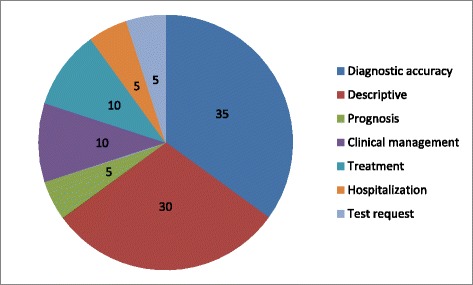
BACKGROUND: Cognitive biases and personality traits (aversion to risk or ambiguity) may lead to diagnostic inaccuracies and medical errors resulting in mismanagement or inadequate utilization of resources. We conducted a systematic review with four objectives: 1) to identify the most common cognitive biases, 2) to evaluate the influence of cognitive biases on diagnostic accuracy or management errors, 3) to determine their impact on patient outcomes, and 4) to identify literature gaps. METHODS: We searched MEDLINE and the Cochrane Library databases for relevant articles on cognitive biases from 1980 to May 2015. We included studies conducted in physicians that evaluated at least one cognitive factor using case-vignettes or real scenarios and reported an associated outcome written in English. Data quality was assessed by the Newcastle-Ottawa scale. Among 114 publications, 20 studies comprising 6810 physicians met the inclusion criteria. Nineteen cognitive biases were identified. RESULTS: All studies found at least one cognitive bias or personality trait to affect physicians. Overconfidence, lower tolerance to risk, the anchoring effect, and information and availability biases were associated with diagnostic inaccuracies in 36.5 to 77 % of case-scenarios. Five out of seven (71.4 %) studies showed an association between cognitive biases and therapeutic or management errors. Of two (10 %) studies evaluating the impact of cognitive biases or personality traits on patient outcomes, only one showed that higher tolerance to ambiguity was associated with increased medical complications (9.7 % vs 6.5 %; p = .004). Most studies (60 %) targeted cognitive biases in diagnostic tasks, fewer focused on treatment or management (35 %) and on prognosis (10 %). Literature gaps include potentially relevant biases (e.g. aggregate bias, feedback sanction, hindsight bias) not investigated in the included studies. Moreover, only five (25 %) studies used clinical guidelines as the framework to determine diagnostic or treatment errors. Most studies (n = 12, 60 %) were classified as low quality. CONCLUSIONS: Overconfidence, the anchoring effect, information and availability bias, and tolerance to risk may be associated with diagnostic inaccuracies or suboptimal management. More comprehensive studies are needed to determine the prevalence of cognitive biases and personality traits and their potential impact on physicians' decisions, medical errors, and patient outcomes.
Overview
The claims and statistics of this paper haven’t been checked yet.
Free: it reads the open-access text and checks the first 5 claims that cite a source we can check. Create a free account to check every claim.
Integrity signals
Registry
Cites
Statistics
Figures
Verification
Claims the paper makes
The claims and statistics of this paper haven’t been checked yet.
Free: it reads the open-access text and checks the first 5 claims that cite a source we can check. Create a free account to check every claim.
Claims other papers make about this one
Each is checked against this paper’s own text: does it say what the citing paper says it does?
The source backs part of the claim, not all of it — or backs it for a different population, condition or comparison.
In the citing paper
“Cognitive tendencies, including anchoring, status-quo preference, and an asymmetric weighting of affirmative rather than disproving information, may reinforce familiar clinical defaults [ 54 ].”
From Paracetamol: A History of Assumptions, Errors, and Evidence Reversals in Pain Management (2026) · cites this paper as [54]
Experimental — accuracy not yet measuredThe source backs part of the claim, not all of it — or backs it for a different population, condition or comparison.
In the citing paper
“Labels associated with medical data, disease rating scales, and diagnosis may be imbued with cognitive biases of the health care personnel who collected this information.51”
From Addressing bias in big data and AI for health care: A call for open science (2021) · cites this paper as [51]
Experimental — accuracy not yet measuredThe source backs part of the claim, not all of it — or backs it for a different population, condition or comparison.
In the citing paper
“Human cognitive biases in clinical decision-making are increasingly recognized as a crucial factor in health care errors and suboptimal patient outcomes [1].”
From Mitigating cognitive biases in clinical decision-making through multi-agent conversations using large language models: simulation study (2024) · cites this paper as [1]
Experimental — accuracy not yet measuredThe source backs part of the claim, not all of it — or backs it for a different population, condition or comparison.
In the citing paper
“Cognitive biases in clinical decision-making significantly contribute to errors in diagnosis and suboptimal patient outcomes.”
From Mitigating cognitive biases in clinical decision-making through multi-agent conversations using large language models: simulation study (2024) · cites this paper as [1]
Experimental — accuracy not yet measured
Self-check
Percentages, sums and reported differences re-computed from the paper’s own numbers.
The self-check needs the paper’s full text.
Citations
Cites
Tversky, A., & Kahneman, D. (1974) · Science · doi:10.1126/science.185.4157.1124 · Cited by 28,810 · cited 2×
“errors in the diagnosis, management, or treatment of medical conditions [6, 26].”
Liberati, A., Altman, D. G., Tetzlaff, J., Mulrow, C., Gøtzsche, P. C., Ioannidis, J. P. A., Clarke, M., Devereaux, P. J., Kleijnen, J., & Moher, D. (2009) · PLoS Medicine · doi:10.1371/journal.pmed.1000100 · Cited by 28,164
Judgment under Uncertainty: Heuristics and Biases
Tversky, A., & Kahneman, D. (1975) · Utility, Probability, and Human Decision Making · doi:10.1007/978-94-010-1834-0_8 · Cited by 22,650
(2014) · Medical Entomology and Zoology · Cited by 17,633
Liberati, A., Altman, D. G., Tetzlaff, J., Mulrow, C., Gøtzsche, P. C., Ioannidis, J. P. A., Clarke, M., Devereaux, P. J., Kleijnen, J., & Moher, D. (2009) · Annals of Internal Medicine · doi:10.7326/0003-4819-151-4-200908180-00136 · Cited by 10,349
Newcastle-Ottawa Scale: comparing reviewers’ to authors’ assessments
Lo, C. K.-L., Mertz, D., & Loeb, M. (2014) · BMC Medical Research Methodology · doi:10.1186/1471-2288-14-45 · Cited by 2,477
Incidence of Adverse Drug Events and Potential Adverse Drug Events: Implications for Prevention
Bates, D. W. (1995) · JAMA · doi:10.1001/jama.1995.03530010043033 · Cited by 2,127 · cited 1×
“each year, and perhaps one million in excess injuries in the USA [1, 2].”
BackgroundThe Importance of Cognitive Errors in Diagnosis and Strategies to Minimize Them
Croskerry, P. (2003) · Academic Medicine · doi:10.1097/00001888-200308000-00003 · Cited by 1,675 · cited 5×
“errors in the diagnosis, management, or treatment of medical conditions [6, 26].”
BackgroundInfluentialWhat every teacher needs to know about clinical reasoning
Eva, K. W. (2005) · Medical Education · doi:10.1111/j.1365-2929.2004.01972.x · Cited by 930 · cited 1×
“Fourth, case-vignettes or real clinical encounters were used [28].”
MethodClaims, Errors, and Compensation Payments in Medical Malpractice Litigation
Studdert, D. M., Mello, M. M., Gawande, A. A., Gandhi, T. K., Kachalia, A., Yoon, C., Puopolo, A. L., & Brennan, T. A. (2006) · New England Journal of Medicine · doi:10.1056/nejmsa054479 · Cited by 848 · cited 1×
“outcomes, which are the most common reasons for patients’ dissatisfaction and medical complaints [54, 64, 65].”
Background
Cited by
Items 701–800 of 1,000
The Importance of Sexual History-Taking Within Surgery
Chinn, J. O., & Hawn, M. T. (2024) · Academic Medicine · doi:10.1097/acm.0000000000005965 · Cited by 1
Unmasking the Shadows: Confronting Racism-Driven Cognitive Biases in Strategic Decision Making
Singha, S. (2025) · Advances in religious and cultural studies (ARCS) book series · doi:10.4018/978-1-6684-9897-2.ch002 · Cited by 1
La Inteligencia Artificial en los servicios de urgencias
Franco-Pérez, Á. (2024) · Hospital a Domicilio · doi:10.22585/hospdomic.v8i4.225 · Cited by 1
“…de su adopción y difusión en todo el mundo, los sis-temas de triaje se ven afectados por algunos problemas comunes, como los sesgos cognitivos (27) o el triaje incorrecto (26) (ya sea por defecto o por exceso) y que tiene notables consecuencias tanto en los pacientes (retrasos en la atención,…”
Dau, G. E., Brennan, A. K., Teschan, N., Taylor, J. S., & Winkler, S. S. (2025) · Cureus · doi:10.7759/cureus.82134 · Cited by 1
Rein, C. (2025) · Advances in Medical Education and Practice · doi:10.2147/amep.s496784 · Cited by 1
“Bias has been well explored in other fields with research showing that over 90% of air traffic control system errors, 53,54 82% of production errors, 54,55 80% of wrongful convictions in the criminal justice system, 56 and 50–70% of all electronic equipment failures are the direct consequence of…”
InfluentialCatalyzing biopharma leaders: Sparking innovative medicines through inclusive engagement
Bandeiras, C., Murray, L., Cox, A., Rucker, S. Y., Luna, R. E., Lofgren, J. L. S., Gaskill, B. N., Loureiro, J., Côrte‐Real, J., & Wad, A. A. (2025) · European Journal of Pharmacology · doi:10.1016/j.ejphar.2025.177868 · Cited by 1
Corporate Social Responsibility and Cognitive Bias: A Systematic Literature Review
Mazzitelli, D., & Belgacem, I. (2025) · Journal of Sustainability Research · doi:10.20900/jsr20250043 · Cited by 1
Risco, J., & Kelly, A. G. (2018) · Springer eBooks · doi:10.1007/978-3-319-93215-6_13 · Cited by 2
The Illusion of Consensus: Febrile Neonates and Lumbar Puncture
McDaniel, C. E. (2019) · Hospital Pediatrics · doi:10.1542/hpeds.2019-0069 · Cited by 1
Fieber nach offener Sprunggelenksluxationsfraktur – eine unerwartete Diagnose
Lempert, M., Pape, H., & Jukema, G. N. (2019) · Praxis · doi:10.1024/1661-8157/a003329 · Cited by 1
Critical Thinking in Medicine and Health
Cummings, L. (2020) · Springer eBooks · doi:10.1007/978-3-030-28513-5_1 · Cited by 1
So, S., Brennan, F. P., & Brown, M. A. (2020) · Journal of Pain and Symptom Management · doi:10.1016/j.jpainsymman.2020.09.038 · Cited by 1
Physicians' cognitive strategies for avoiding overconfidence
Yagil, D., Reuveni, Y., & Segel‐Karpas, D. (2020) · Journal of Evaluation in Clinical Practice · doi:10.1111/jep.13511 · Cited by 3
You Only Find What You Look for: Anchor Bias During the COVID-19 Pandemic
Abu-Rumaileh, M. A., Alsharif, N. M., Abdulelah, M., Mueting, S., & Bader, H. (2021) · Cureus · doi:10.7759/cureus.15416 · Cited by 2
“Cognitive bias can result from relying on clinical impressions more than a systemized analytical process in reaching the final diagnosis [14,15].”
BackgroundConflict Management in the Cardiac Intensive Care Unit
Rusínová, K., & Bělohlávek, J. (2021) · Springer eBooks · doi:10.1007/978-3-030-80112-0_12 · Cited by 1
A Pitfall of Wheezing – A Large Mediastinal Mass Presenting as Persistent Wheezing: A Case Report
Iwai, K., Tetsuhara, K., Tsuji, S., & Kubota, M. (2022) · Cureus · doi:10.7759/cureus.21340 · Cited by 1
“Regarding the first clinical point, physicians must recognize the danger of anchoring bias, which is one of the most frequent diagnostic biases [4].”
BackgroundSaposnik, G., Díaz-Abós, P., Sánchez-Menéndez, V., Álvarez, C., Terzaghi, M., Mauriño, J., Brañas, M., & Málaga, I. (2022) · PLoS ONE · doi:10.1371/journal.pone.0264006 · Cited by 1
“However, decision making may also be influenced by cognitive or behavioral biases [15,16], including personality traits and background effects such as overconfidence, uncertainty tolerance, anchoring effect, information availability, or confirmation biases [17].”
BackgroundSelf-citationGrory, B. M., & Hwang, D. Y. (2018) · Springer eBooks · doi:10.1007/978-3-319-93215-6_12 · Cited by 1
3. Assessing Collated and Synthesised Evidence
Sutherland, W. J., Cheng, S. H., Christie, A. P., Cooke, S. J., Koricheva, J., Randall, N., Smith, R. K., & Stewart, R. J. (2022) · Open Book Publishers · doi:10.11647/obp.0321.03 · Cited by 1
Hemeda, M. S., Sayed, H. Y., Mostafa, A. A., Salem, A. A., Reyad, I. A., Mosa, H. H. A., Mohamed, M. H., Ahmed, S. F., Saqr, Y., Bastawisy, A., et al. (2025) · Médecine & Droit · doi:10.1016/j.meddro.2024.10.001 · Cited by 1
Epistemic lenses and virtues, beyond evidence‐based medicine
Murphy, M. E. (2018) · Health Information & Libraries Journal · doi:10.1111/hir.12218 · Cited by 1
Xu, Y. (2020) · DR-NTU (Nanyang Technological University) · doi:10.32657/10356/142967 · Cited by 1
Chen, Y., & Nagendran, M. (2020) · Postgraduate Medical Journal · doi:10.1136/postgradmedj-2020-139032 · Cited by 1
The Impact of Choice Architecture on Clinical Decision-Making in Sepsis: A Proof of Concept StudyPreprint
Mansoori, J. N., Clark, B. J., Havranek, E. P., & Douglas, I. S. (2020) · Research Square · doi:10.21203/rs.3.rs-34206/v1 · Cited by 1
“…that in�uence clinical decision-making in sepsis and account for this variation are poorly understood but potentially include cognitive biases 7–10 driven by choice architecture 7 (i.e. the environment, manner, and behavioral psychology within which options are presented and decisions are…”
BackgroundUse of Heuristics during the clinical decision process from family physicians in real conditions.Preprint
Fernández‐Aguilar, C., Martín-Martín, J.-J., Minué-Lorenzo, S., & Ajuria, A. F. (2021) · Authorea · doi:10.22541/au.161426081.15216925/v3 · Cited by 1
Electronic Health Record Data for Secondary Analysis – 'The Best of the Worst'Preprint
Agha-Mir-Salim, L., Nabulsi, H., Celi, L. A., & Rodman, A. M. (2024) · SSRN Electronic Journal · doi:10.2139/ssrn.5064380 · Cited by 2
Safe, Then Sorry? — The Psychological Biases that Drive Care Cascades
Daley, N. E., Rosenthal, M. B., & Ganguli, I. (2025) · Journal of General Internal Medicine · doi:10.1007/s11606-025-09442-5 · Cited by 1
Neves, B. D., & Silva, M. J. (2025) · medRxiv · doi:10.1101/2025.09.09.25335411 · Cited by 1
“This aligns with extensive literature documenting that physician confidence is only weakly correlated with actual accuracy and is often inflated by optimism and other cognitive biases [14, 15, 16].”
How Large Language Models Can Affect Clinical Reasoning: A Randomized Clinical TrialPreprint
Levels, M., Levels, M., Rounding, Dijksman, Fouarge, D. J. A. G., Fregin, Steens, Velasco, Boer, D., Bont, D., et al. (2025) · medRxiv · doi:10.64898/2025.12.17.25342338 · Cited by 2
Ökonomie der Diagnosesicherheit
Slawomirski, L., Kelly, D., Bienassis, K. D., Kallas, K.-A., & Klazinga, N. (2025) · OECD health working papers · doi:10.1787/ced786a8-de · Cited by 1
Epling, J. W., King, M. J., Rockwell, M. S., Tegge, A. N., Hester, C. M., Clay, T. L., Callen, E. F., Turner, J. K., & Stein, J. S. (2026) · medRxiv · doi:10.64898/2026.07.09.26357617 · Cited by 1
From reflection to anticipation: why healthcare systems need red teaming
Alkashty, M. (2026) · British Journal of Healthcare Management · doi:10.12968/bjhc.2026.0034 · Cited by 1
Paracetamol: A History of Assumptions, Errors, and Evidence Reversals in Pain Management
Nicolas, J., Leoni, M. L. G., Van Tran, Y., Van Phong, P., Farì, G., Puttini, P. S., Kaye, A. D., & Varrassi, G. (2026) · Current Pain and Headache Reports · doi:10.1007/s11916-026-01553-w
Moro, B. L. P. (2017) · Digital Library of Theses and Dissertations (Universidade de São Paulo) · doi:10.11606/d.23.2017.tde-07062017-152253
Applegate, K. L. (2017) · Surgery for Obesity and Related Diseases · doi:10.1016/j.soard.2017.08.012
Werkzeuge gegen kognitive Verzerrungen im klinischen Alltag
Kovic, M. (2018) · Bulletin des Médecins Suisses · doi:10.4414/bms.2018.06380 · Cited by 1
Former et se former en psychiatrie libérale : une gageure
Gourion, D. (2018) · Annales Médico-psychologiques revue psychiatrique · doi:10.1016/j.amp.2018.11.003
Patient Mismanagement by Physician Turnover
Shakil, H., & Baig, M. A. (2019) · Eurasian Journal of Emergency Medicine · doi:10.4274/eajem.galenos.2018.54872
A Diagnostic Approach to Chronic Abdominal Pain
Kamboj, A. K., & Oxentenko, A. S. (2019) · Springer eBooks · doi:10.1007/978-3-030-01117-8_11
Commentary: Having the right MINDset
Manji, R. A., & Arora, R. C. (2019) · Journal of Thoracic and Cardiovascular Surgery · doi:10.1016/j.jtcvs.2019.04.016
Medical Error and “Psycho-Physiology”
Manji, R. A., Grocott, H. P., & Arora, R. C. (2019) · Seminars in Thoracic and Cardiovascular Surgery · doi:10.1053/j.semtcvs.2019.05.011
Therapeutic Inertia in Stroke Prevention
Saposnik, G. (2018)
Self-citationWork Habits Contributing to Error in Surgical Pathology
Volmar, K. E. (2019) · Springer eBooks · doi:10.1007/978-3-030-18464-3_6
Vordermark, J. S. (2019) · Springer eBooks · doi:10.1007/978-3-030-23147-7_1
The role of information in the reduction of clinically inappropriate expectations of antibiotics
Thorpe, A. (2019) · Open Access at Essex (University of Essex) · Cited by 1
The frame and name of the medical treatment and their influence on health decisions
Damnjanović, K., Ilić, S., & Teovanović, P. (2019) · Psiholoska istrazivanja · doi:10.5937/psistra22-23375
Peled, H. B., Dau, N. Q., & Lau, H. (2020) · Neurocritical Care · doi:10.1007/s12028-020-01007-0
Manejo fisioterápico de dolor neuropático sin correlación anatómica nerviosa: informe de caso
Fernández‐Pérez, J. J., & Gonzalez, A. (2020) · Journal of MOVE and Therapeutic Science · doi:10.37382/jomts.v2i1.19
“La mayoría de estos sesgos son intrínsecos al profesional sanitario y han sido ampliamente revisados en la literatura, mostrando que pueden llegar a provocar entre el 36.5 y el 77% de los errores en el diagnóstico y manejo del paciente (Saposnik et al., 2016).”
BackgroundInfluentialEvaluation of the Merits and Limitations of Evidence-Based Medicine—Reply
Mostaghimi, A., Adamson, A. S., & Barbieri, J. S. (2020) · JAMA Dermatology · doi:10.1001/jamadermatol.2019.4856
Ethical aspects of risk communication
Gordon, J. (2020) · Medicine · doi:10.1016/j.mpmed.2020.07.011
Improving the acute and perioperative hemodynamic assessment
Kaufmann, T. (2020) · University of Groningen research database (University of Groningen / Centre for Information Technology) · doi:10.33612/diss.128650137
Reductio ad absurdum in critical care trials
Zampieri, F. G. (2020) · Journal of Critical Care · doi:10.1016/j.jcrc.2020.10.001
Kerckhoffs, M. C. (2020) · Utrecht University Repository (Utrecht University) · doi:10.33540/235
Ramírez, L., & Sebastián, J. J. (2020)
Fever, Headache, and Sore Throat in a 7-year-old Girl
Blood, J. D., Khan, A., Kamdar, K. Y., & Foradori, D. M. (2021) · Pediatrics in Review · doi:10.1542/pir.2019-0200
Chronic Obstructive Pulmonary Disease in the Emergency Department: What Are We Missing?
Freeman, C. L., Ritter, K., & Barrett, T. W. (2021) · Annals of Emergency Medicine · doi:10.1016/j.annemergmed.2021.03.026
Impact de la pandémie COVID-19 sur le raisonnement clinique des médecins
Du, T., Hanoul, C., Kemdem, A., Lemaitre, F., & Diawara, L. (2021) · Médecine Intensive Réanimation · doi:10.37051/mir-00066
Parker, R. (2021) · Springer eBooks · doi:10.1007/978-981-16-0143-9_38
Kawabata, A., Funakoshi, H., Ito, J., Santanda, T., Norisue, Y., & Watanabe, H. (2021) · International Journal of Emergency Medicine · doi:10.1186/s12245-021-00365-6 · Cited by 1
“This case is classified as a diagnostic error due to anchoring bias, in which COVID-19 was suspected and accurate diagnosis was delayed [12].”
BackgroundProviding care in isolation while awaiting SARS-CoV-2 test results
Schmidt-Hellerau, K., Meyer‐Schwickerath, C., Paul, G., Augustin, M., Priesner, V., Rybniker, J., Suárez, I., Hallek, M. J., Burst, V. R., Kolibay, F., et al. (2021) · Medicine · doi:10.1097/md.0000000000026720
“However, seeing every patient with fever and or cough as a potential COVID-19 patient in the timeofapandemiccan lead toananchoringbias,which isknown to be associated with diagnostic errors.([19]) Thus, as SARS-CoV-2 negative patients suffered from different infectious as well as noninfectiousdiseases, other differenti…”
BackgroundKeh, C., Wong, C., Furnham, A. F., & McClelland, A. (2021) · Ethics & Behavior · doi:10.1080/10508422.2021.1979978 · Cited by 1
“The human mind is vulnerable to cognitive biases and individuals including medical staff are not always consciously aware of their decisions or do not actively examine biases that could influence their decision-making process, leading to suboptimal treatment (Saposnik et al., 2016).”
BackgroundWatson, R. E., Adler, H., & Wingfield, T. (2021) · Clinical Infection in Practice · doi:10.1016/j.clinpr.2021.100105
ПРИНЯТИЕ КЛИНИЧЕСКИХ РЕШЕНИЙ: ОБЗОР КОНЦЕПЦИЙ, ИССЛЕДОВАНИЙ, МЕТОДОВ
Зайцева, Е. А. (2019) · Медицинская антропология и биоэтика · doi:10.33876/2224-9680/2019-2-18/11
Shared decision-making in oncology: challenges and opportunities
Ankolekar, A. (2021) · Research Publications (Maastricht University) · doi:10.26481/dis.20211125aa
This month in JAAD Case Reports: February 2022 Availability and Anchoring Biases
Sloan, B. (2021) · Journal of the American Academy of Dermatology · doi:10.1016/j.jaad.2021.11.047
Wafula, D. N., Wesonga, B., Wanzala, M., Shaviya, N., & Nyang’au, R. A. M. (2022) · European Journal of Medical and Health Sciences · doi:10.24018/ejmed.2022.4.1.1170
“4% association between cognitive biases and therapeutic or management errors [7].”
BackgroundInfluência da personalidade e perfeccionismo dos examinadores no diagnóstico de cárie
Maia, H. C. D. M. (2021) · Digital Library of Theses and Dissertations (Universidade de São Paulo) · doi:10.11606/d.23.2021.tde-26102021-122754
Hansen, K. (2021) · Springer eBooks · doi:10.1007/978-981-16-0143-9_42
Kargl, S. (2022) · Pädiatrie & Pädologie · doi:10.1007/s00608-021-00957-8
Golding, S. E., Ogden, J., & Higgins, H. M. (2021) · PsyArXiv (OSF Preprints) · doi:10.31234/osf.io/uz5mb
Impact of Emergency Department Workload on Triage BehaviorPreprint
Feizi, A., Tucker, A. L., & Baker, W. B. (2022) · SSRN Electronic Journal · doi:10.2139/ssrn.4071155 · Cited by 1
Francis, J. G., & Francis, L. P. (2021) · Public health ethics analysis · doi:10.1007/978-3-030-63928-0_2
“Their impact on clinical care has also been studied but primarily with hypothetical rather than real-world examples (Saposnik et al. 2016; Blumenthal-Barby and Krieger 2015).”
BackgroundUse of Heuristics during the clinical decision process in from family physicians in real conditions.Preprint
Fernández‐Aguilar, C., Martín-Martín, J.-J., Minué-Lorenzo, S., & Ajuria, A. F. (2021) · Authorea · doi:10.22541/au.161426081.15216925/v2
“medicine is very scarce and the instruments and operational definitions for their assessment are insufficiently validated (25, 26, 32).”
BackgroundWalking Patient, Missing Drain
(2019) · AORN Journal · doi:10.1002/aorn.12775
Mansoori, J. N., Clark, B. J., Havranek, E. P., & Douglas, I. S. (2022) · MDM Policy & Practice · doi:10.1177/23814683221099454 · Cited by 3
“, search satisficing(24)) or consider alternative choice options resulting in practice variation.(37,38,51,52) The magnitude of effect of COL is therefore amplified in these individuals by promoting increased deliberation.”
BackgroundFrom Bedside to Balloon: The Challenges of In-Hospital ST-Elevation Myocardial Infarction
Gewarges, M., Amad, H., & Luk, A. C. (2022) · Circulation Cardiovascular Quality and Outcomes · doi:10.1161/circoutcomes.121.008688
Diagnosis and classification in the early 21st century
Waugh, M. H., Zachar, P., & Flanagan, E. H. (2022) · Elsevier eBooks · doi:10.1016/b978-0-323-91497-0.00069-2
Harada, F., Yamamoto, K., Matsuda, T., Yamamoto, C., Tani, Y., Ohnishi, M., Takita, M., Tanimoto, T. E., Kami, M., & Shineha, R. (2022) · Gastroenterology report · doi:10.1093/gastro/goac034
“Physicians may recognize events early after vaccination as AEs due to the vaccination [6, 7].”
BackgroundDiagnosis of Intrauterine Pregnancy Despite the Presence of Etonogestrel Implant
Sawyers, R. J., Parikh, P. M., Lazaro, J. J., & Greenberg, M. R. (2022) · Cureus · doi:10.7759/cureus.28041 · Cited by 1
“Putting too much credence on this initial conviction from the patient that she “could not be pregnant” would have been consistent with “anchoring bias” in which the clinician’s ability to objectively take in further information is distorted by this initial perception [12].”
ResultClinical Decision Making in Athletic Training
Muir, R. L. (2022) · International Journal of Athletic Therapy & Training · doi:10.1123/ijatt.2021-0059 · Cited by 1
Diagnosing Pheochromocytoma in the COVID-19 Era: A Case Report
Mayer, F., III, Memon, R., & Stowens, J. C. (2022) · Clinical Practice and Cases in Emergency Medicine · doi:10.5811/cpcem.2022.2.55091 · Cited by 1
Clinical Practice and Cases in Emergency Medicine
Rafi, R. (2022) · Clinical Practice and Cases in Emergency Medicine · doi:10.5811/cpcem.2022.8.58466
Raciocínio Clínico em Cardiologia: Passado, Presente e Futuro
Mesquita, E. T., Toledo, M. G., Prieto, R. D. S. G., Soares, A. C., & Correia, E. T. D. O. (2022) · Arquivos Brasileiros de Cardiologia · doi:10.36660/abc.20220002
Les biais cognitifs dans le diagnostic de fibromyalgie
de Santana, F. M., Cobra, J. F., & Figueiredo, C. P. (2022) · Revue du Rhumatisme · doi:10.1016/j.rhum.2022.09.006
The Impact of a Minimally Invasive Approach on Oral Wound Healing
Burkhardt, R. (2022) · Springer eBooks · doi:10.1007/978-3-030-96874-8_2
A Sensitive Approach to Managing Hypersensitivity Pneumonitis
Ahlawat, P., Upadhyay, P., & Madaan, P. K. (2022) · Cureus · doi:10.7759/cureus.29738
“Accelerated morbidity and mortality caused by COVID-19 prioritized ruling it out as a diagnosis, which also led to diagnostic anchoring bias in many cases, thus affecting heuristic decision-making [18].”
BackgroundWang, J., Baharav, C., Shah, N. B., Woolley, A. W., & Ravi, R. (2022) · Proceedings of the AAAI Conference on Human Computation and Crowdsourcing · doi:10.1609/hcomp.v10i1.22000
Bordini, B. J., & Basel, D. (2022) · Elsevier eBooks · doi:10.1016/b978-0-323-76174-1.00001-8
Gerunov, A. A. (2022) · Studies in systems, decision and control · doi:10.1007/978-3-031-18100-9_6 · Cited by 1
Selvaraj, S., Greene, S. J., Ayodele, I., Alhanti, B., Allen, L. A., Lewsey, S. C., Adusumalli, S., Reza, N., Hernandez, A. F., Yancy, C. W., et al. (2022) · Circulation Heart Failure · doi:10.1161/circheartfailure.122.010069
“010069 February 2023 hospitalization, (4) who were discharged to hospice care, or (5) who were not fee for service eligible at discharge, leaving 2759 patients among 420 hospitals for the analysis of postdischarge outcomes.”
Background13. Supplementary Material from Online Resources
Sutherland, W. J. (2022) · Open Book Publishers · doi:10.11647/obp.0321.13
Preface: A Vision of Transformed Conservation Practice
Sutherland, W. J. (2022) · Open Book Publishers · doi:10.11647/obp.0321.14
Basic Oral Health-Related Psychology
Johnsen, J.-A. K., Rogers, A. A., Bergdahl, J., & Willumsen, T. (2022) · Textbooks in contemporary dentistry · doi:10.1007/978-3-031-04248-5_1
Desaturation during the pandemic: Covid or cognitive bias?
Nangia, R., Sethi, C. A., & Dhiman, N. (2022) · Journal of Family Medicine and Primary Care · doi:10.4103/jfmpc.jfmpc_833_22
“Studies suggest that as many as 50–100% of physicians are affected with at least one form of cognitive bias during clinical decision making.[1] Of these, the most prevalent are (a) Anchoring bias – focusing on one particular symptom or diagnosis and failing to make adjustments for other possibilities – and (b) Availab…”
BackgroundMisdiagnosis and Clinical Reasoning in Cardiac Amyloidosis
Toledo, M. G., de Ávila, D. X., Maia, E. C., & Mesquita, E. T. (2023) · Springer eBooks · doi:10.1007/978-3-031-17759-0_38
Methods Content Analysis: A Role in Applied Health Research
Cahill, P. T. (2022) · McMaster University Journal of Public Health · doi:10.15173/mujph.v1i1.3073
Restraint use in somatic acute care hospitals
Thomann, S. (2023) · Research Publications (Maastricht University) · doi:10.26481/dis.20230309st
Metadata
- Authors
- Saposnik, G., Redelmeier, D., Ruff, C. C., & Tobler, P. N.
- Affiliations
- St. Michael's Hospital (CA)
- Institute for Clinical Evaluative Sciences (CA)
- University of Zurich (CH)
- Corresponding author
- Saposnik, Gustavo
- Venue
- BMC Medical Informatics and Decision Making
- Published
- 2016-11-03
- Volume
- 16
- Issue
- 1
- Pages
- 138-138
- ISSN
- 1472-6947 (ISSN-L)
- PMC
- PMC5093937
- OpenAlex
- W2548421507
- Cited by
- 1,001
- References
- 74
- Citations by year
- 2026: 141 · 2025: 111 · 2024: 118 · 2023: 97 · 2022: 158 · 2021: 120 · 2020: 95 · 2019: 83 · 2018: 55 · 2017: 21 · 2016: 1
- FWCI
- 8.96
- Type
- journal article
- Language
- en
- Open access
- gold
- doi.org
- Licence
- Locations
- BMC Medical Informatics and Decision Making (publishedVersion, cc-by)
- PubMed Central (publishedVersion, cc-by)
- PubMed (publishedVersion)
- Zurich Open Repository and Archive (University of Zurich) (acceptedVersion, cc-by)
- TSpace (University of Toronto) (submittedVersion, cc-by)
- Zurich Open Repository and Archive (University of Zurich) (submittedVersion, cc-by)
- Zurich Open Repository and Archive (University of Zurich)
- Funders
- Swiss National Science Foundation (CRSII3_141965)
- Heart and Stroke Foundation of Canada (NA)
- Topics
- Health Sciences › Medicine › Family Practice › Clinical Reasoning and Diagnostic Skills
- Social Sciences › Decision Sciences › General Decision Sciences › Decision-Making and Behavioral Economics
- Health Sciences › Medicine › Public Health, Environmental and Occupational Health › Patient Safety and Medication Errors
- Keywords
- cognitive biases, clinical decision-making, diagnostic errors, medical errors, overconfidence, anchoring effect, availability bias, information bias, risk aversion, ambiguity tolerance, personality traits, patient outcomes, physician decision-making
- MeSH terms
- Clinical Decision-Making, Humans, Personality, Physicians, Thinking
About these checks
Registry, retraction, Cites and statistics results are computed, not judged, with one exception: a printed reference that no index lists is read once by a model before it counts as a citation error. Claims are extracted by a model and kept only when their quote appears verbatim in the text; each cited source is then checked, with a model’s help, for whether it says what the claim relies on. Those verdicts can be wrong — read the claim’s quote and the cited source before relying on one.
Statistics and arithmetic are recomputed, not judged.
Confidence bands are shown only for fields calibrated on our annotated test set. None is calibrated yet, so no band is shown.
What counts as a claim ›How we measure confidence ›How we check this ›
Are you an author, or do you see a problem with this page? Request a review
Data sources
Bibliographic data: Semantic Scholar, OpenAlex, Crossref.
Contains information from the Semantic Scholar Academic Graph Datasets, made available under the ODC Attribution License (ODC-BY 1.0).
Semantic Scholar’s data is described in: Kinney, R., et al. (2023). The Semantic Scholar Open Data Platform. arXiv:2301.10140.
