

The DOI matches its Crossref record; 67 of the 71 references it cites were found in a registry or an index; 2 of the 62 sources its claims cite were checked for support.
Ethics and governance of trustworthy medical artificial intelligence
Open accessAbstract
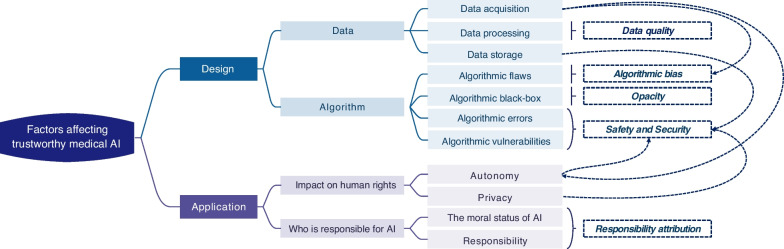
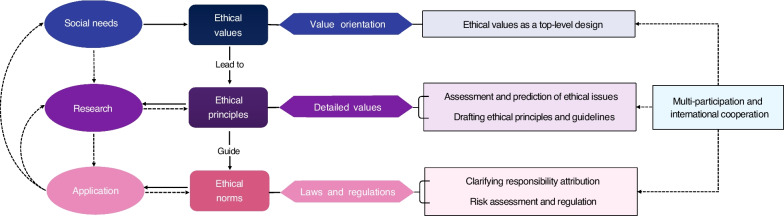
Background: The growing application of artificial intelligence (AI) in healthcare has brought technological breakthroughs to traditional diagnosis and treatment, but it is accompanied by many risks and challenges. These adverse effects are also seen as ethical issues and affect trustworthiness in medical AI and need to be managed through identification, prognosis and monitoring. Methods: We adopted a multidisciplinary approach and summarized five subjects that influence the trustworthiness of medical AI: data quality, algorithmic bias, opacity, safety and security, and responsibility attribution, and discussed these factors from the perspectives of technology, law, and healthcare stakeholders and institutions. The ethical framework of ethical values-ethical principles-ethical norms is used to propose corresponding ethical governance countermeasures for trustworthy medical AI from the ethical, legal, and regulatory aspects. Results: Medical data are primarily unstructured, lacking uniform and standardized annotation, and data quality will directly affect the quality of medical AI algorithm models. Algorithmic bias can affect AI clinical predictions and exacerbate health disparities. The opacity of algorithms affects patients’ and doctors’ trust in medical AI, and algorithmic errors or security vulnerabilities can pose significant risks and harm to patients. The involvement of medical AI in clinical practices may threaten doctors ‘and patients’ autonomy and dignity. When accidents occur with medical AI, the responsibility attribution is not clear. All these factors affect people’s trust in medical AI. Conclusions: In order to make medical AI trustworthy, at the ethical level, the ethical value orientation of promoting human health should first and foremost be considered as the top-level design. At the legal level, current medical AI does not have moral status and humans remain the duty bearers. At the regulatory level, strengthening data quality management, improving algorithm transparency and traceability to reduce algorithm bias, and regulating and reviewing the whole process of the AI industry to control risks are proposed. It is also necessary to encourage multiple parties to discuss and assess AI risks and social impacts, and to strengthen international cooperation and communication.
Overview
AI snapshot
Written from the paper’s full text.
TL;DR
This paper argues that trustworthy medical AI depends on addressing five ethical/governance factors: data quality, algorithmic bias, opacity, safety and security, and responsibility attribution. It proposes governance through an ethical values–principles–norms framework, with humans remaining the responsible actors and with stronger data management, transparency/traceability, whole-process review, multi-party participation, and international cooperation.
Key findings
- The paper identifies five factors affecting trustworthiness in medical AI: data quality, algorithmic bias, opacity, safety and security, and responsibility attribution. Poor data quality, including unstructured and inconsistently annotated medical data, directly affects algorithm quality; algorithmic bias can exacerbate health disparities; opacity affects patient and clinician trust; safety/security failures can harm patients; and responsibility attribution remains unclear when accidents occur.
- It reports illustrative harms and market/regulatory figures: the health AI market was estimated to grow tenfold from 2020 to 2026, reaching $45.2 billion in 2026; U.S. surgical robots were linked to at least 1,391 harm-causing incidents and 144 deaths between 2000 and 2013; 15% of global data breaches came from healthcare in 2017; and as of 2020 the FDA had approved 222 AI medical device products while Europe had approved 240 with European conformity certification.
- It cites algorithmic bias examples, including an AI for melanoma diagnosis being difficult to apply to darker races because of few medical images of darker races, and a health decision algorithm incorrectly using health care costs rather than disease to represent health need, leading it to conclude Black people were healthier despite being much sicker in the datasets.
- It argues that current medical AI lacks moral status and should be treated as a tool; humans remain the duty bearers. Governance proposals include strengthening data quality management, promoting data sharing with privacy protections, reducing algorithmic bias, increasing transparency and traceability, regulating and reviewing the whole AI lifecycle, encouraging multi-party risk assessment, and strengthening international cooperation.
Methods
- The paper uses a multidisciplinary approach and summarizes five subjects influencing trustworthy medical AI: data quality, algorithmic bias, opacity, safety and security, and responsibility attribution.
- It discusses these factors from technology, law, and healthcare stakeholder/institution perspectives, analyzing both the design level (technical reliability) and application level (human impact).
- It applies an ethical governance framework of ethical values–ethical principles–ethical norms to propose countermeasures from ethical, legal, and regulatory aspects. No empirical sample, dataset, or statistical analysis is reported.
Limitations
- The paper does not state limitations in a dedicated limitations section.
- Evident from the text: it is a conceptual/normative review rather than an empirical study, with no primary data collection, systematic review protocol, or formal evaluation of the proposed governance measures.
- Evident from the text: many supporting examples are drawn from news reports, regulatory actions, and prior literature rather than from a systematic evidence synthesis, and the governance proposals are not tested for implementation feasibility or effectiveness.
Model-written summary. Check it against the paper before relying on it.
Integrity signals
Registry
Cites
Statistics
Figures
Verification
Claims the paper makes
51 Not checked yet · 43 Own interpretation · 36 No basis given · 1 Supported
The paper states this without a source or data behind it here, so there is nothing to check it against. The quote shows it is in the paper.
In the paper
“The quality of data directly determines the quality of medical AI”
§ Ethics and governance of trustworthy medical artificial intelligence > Results > Data quality
plaindirect- Asserted: passes — The authors put it forward as true.
- Checkable: passes — It can be checked against evidence.
- Load-bearing: passes — The paper’s conclusions depend on it.
- Based: passes — The paper gives a reason why it holds.
A conclusion the paper draws from its own results — it cites no other source for it, so there is none to check. The quote shows it is in the paper.
In the paper
“All these factors affect people’s trust in medical AI”
§ Ethics and governance of trustworthy medical artificial intelligence > Abstract > Results
plaindirect- Asserted: passes — The authors put it forward as true.
- Checkable: passes — It can be checked against evidence.
- Load-bearing: passes — The paper’s conclusions depend on it.
- Based: passes — The paper gives a reason why it holds.
In the paper
“However, algorithms can also lead to biased results”
§ Ethics and governance of trustworthy medical artificial intelligence > Results > Algorithmic bias
What the sources say
- Not checked yetcites [24] Sharon T. Self-Tracking for health and the quantified self: re-articulating autonomy, solidarity, and authenticity in an age of personalized healthcare. Philos Technol. 2017;30:93–121. https://doi.org/10.1007/s13347-016-0215-5. source
plaindirect- Asserted: passes — The authors put it forward as true.
- Checkable: passes — It can be checked against evidence.
- Load-bearing: passes — The paper’s conclusions depend on it.
- Based: passes — The paper gives a reason why it holds.
The paper states this without a source or data behind it here, so there is nothing to check it against. The quote shows it is in the paper.
In the paper
“The accuracy of the data annotation determines the quality of the dataset”
§ Ethics and governance of trustworthy medical artificial intelligence > Results > Data quality
plaindirect- Asserted: passes — The authors put it forward as true.
- Checkable: passes — It can be checked against evidence.
- Load-bearing: passes — The paper’s conclusions depend on it.
- Based: unclear — It is unclear why the paper says it holds.
In the paper
“AI systems are only as good as the data provided to them”
§ Ethics and governance of trustworthy medical artificial intelligence > Results > Data quality
What the sources say
- Not checked yetcites [18] Johnson SLJ. AI, machine learning, and ethics in health care. J Leg Med. 2020;39:427–41. https://doi.org/10.1080/01947648.2019.1690604. source
plaindirect- Asserted: passes — The authors put it forward as true.
- Checkable: passes — It can be checked against evidence.
- Load-bearing: passes — The paper’s conclusions depend on it.
- Based: passes — The paper gives a reason why it holds.
None of the sources cited for this claim have been checked yet.
In the paper
“Human-induced bias is intentionally or unintentionally written by the developers because individuals are always influenced by their own moral perceptions and relevant interests, which affects data training”
§ Ethics and governance of trustworthy medical artificial intelligence > Results > Algorithmic bias
What the sources say
- Not checked yetcites [25] Monteith S, Glenn T. Automated decision-making and big data: concerns for people with mental illness. Curr Psychiatry Rep. 2016;18(12):112. https://doi.org/10.1007/s11920-016-0746-6. source
- Not checked yetcites [26] Howard A, Borenstein J. The ugly truth about ourselves and our robot creations: the problem of bias and social inequity. Sci Eng Eth. 2018;24(5):1521–36. https://doi.org/10.1007/s11948-017-9975-2. source
plaindirect- Asserted: passes — The authors put it forward as true.
- Checkable: passes — It can be checked against evidence.
- Load-bearing: passes — The paper’s conclusions depend on it.
- Based: passes — The paper gives a reason why it holds.
In the paper
“In the Draft Report with Recommendations to the Commission on Civil Law Rules on Robotics [62] the European Union has given intelligent devices the independent status of electronic persons with specific rights and obligations, making them eligible for liability for damage caused by themselves.”
§ Ethics and governance of trustworthy medical artificial intelligence > Results > Responsibility attribution
What the sources say
- Not checked yetcites [62] European Commission. European Parliament, Committee on Legal Affairs: Draft Report with Recommendations to the Commission on Civil Law Rules on Robotics. 2016. http://www.europarl.europa.eu/sides/getDoc.do?pubRef=-//EP//NONSGML%2BCOMPARL%2BPE-582.443%2B01%2BDOC%2BPDF%2BV0//EN. Accessed 28 Jul 2022.
plaindirect- Asserted: passes — The authors put it forward as true.
- Checkable: passes — It can be checked against evidence.
- Load-bearing: passes — The paper’s conclusions depend on it.
- Based: passes — The paper gives a reason why it holds.
A conclusion the paper draws from its own results — it cites no other source for it, so there is none to check. The quote shows it is in the paper.
In the paper
“whether algorithmic safety issues can be effectively addressed is related to whether medical AI can be widely adopted on a large scale”
§ Ethics and governance of trustworthy medical artificial intelligence > Results > Safety and security
plaincorrelational- Asserted: passes — The authors put it forward as true.
- Checkable: passes — It can be checked against evidence.
- Load-bearing: passes — The paper’s conclusions depend on it.
- Based: passes — The paper gives a reason why it holds.
A conclusion the paper draws from its own results — it cites no other source for it, so there is none to check. The quote shows it is in the paper.
In the paper
“It suggests that a malicious hacker can deceive an AI system with subtle interference to harm humans”
§ Ethics and governance of trustworthy medical artificial intelligence > Results > Safety and security
hedgeddirect- Asserted: passes — The authors put it forward as true.
- Checkable: passes — It can be checked against evidence.
- Load-bearing: passes — The paper’s conclusions depend on it.
- Based: passes — The paper gives a reason why it holds.
A conclusion the paper draws from its own results — it cites no other source for it, so there is none to check. The quote shows it is in the paper.
In the paper
“Therefore, medical AI is still a tool in human medical activities at present, and humans should be responsible for AI.”
§ Ethics and governance of trustworthy medical artificial intelligence > Results > Responsibility attribution
plain- Asserted: passes — The authors put it forward as true.
- Checkable: passes — It can be checked against evidence.
- Load-bearing: passes — The paper’s conclusions depend on it.
- Based: passes — The paper gives a reason why it holds.
- Probably not a substantial claim. 71
- It may state two separate claims as one. 66
Every source the paper cites for this claim was checked and supports it.
In the paper
“Data-induced bias refers to the bias when the training data is not representative or insufficient that affects the algorithm model”
§ Ethics and governance of trustworthy medical artificial intelligence > Results > Algorithmic bias
What the sources say
- Supportedcites [27] Mooney SJ, Pejaver V. Big data in public health: terminology, machine learning, and privacy. Annu Rev Public Health. 2018;39(1):95–112. https://doi.org/10.1146/annurev-publhealth-040617-014208. source
The ‘Limitations and open issues’ section states that small or biased training sets can cause overfitting. It also explains that training data unlike the data encountered in practice can lead to poor real-world predictions, supporting the claim’s description of how insufficient or unrepresentative data affect a model. (LLM, conf=0.90)
- Supportedcites [28] Senders JT, Zaki MM, Karhade AV, et al. An introduction and overview of machine learning in neurosurgical care. Acta Neurochir (Wien). 2018;160(1):29–38. https://doi.org/10.1007/s00701-017-3385-8. source
The Future challenges section says insufficient data can prevent effective model training. It also says training only on patients with sufficient data introduces selection bias and can make models perform poorly in clinical settings because they do not generalize. (LLM, conf=0.92)
plaindirect- Asserted: passes — The authors put it forward as true.
- Checkable: passes — It can be checked against evidence.
- Load-bearing: fails — The paper’s conclusions may not depend on it.
- Based: passes — The paper gives a reason why it holds.
Probably not a substantial claim. The paper’s conclusions may not depend on it.
- Supported
A conclusion the paper draws from its own results — it cites no other source for it, so there is none to check. The quote shows it is in the paper.
In the paper
“Not only do algorithms inherit human biases, but such biases are also likely to be reinforced and amplified with the accumulation of data and iterations of algorithms”
§ Ethics and governance of trustworthy medical artificial intelligence > Results > Algorithmic bias
hedgedconditional- Asserted: passes — The authors put it forward as true.
- Checkable: passes — It can be checked against evidence.
- Load-bearing: passes — The paper’s conclusions depend on it.
- Based: passes — The paper gives a reason why it holds.
It may state two separate claims as one.
The paper states this without a source or data behind it here, so there is nothing to check it against. The quote shows it is in the paper.
In the paper
“since most of the texts in TCM are unstructured data and Chinese medicine has more non-standardized expressions, manual annotation is extremely costly and difficult, which greatly affects data quality”
§ Ethics and governance of trustworthy medical artificial intelligence > Results > Data quality
plaindirect- Asserted: passes — The authors put it forward as true.
- Checkable: passes — It can be checked against evidence.
- Load-bearing: passes — The paper’s conclusions depend on it.
- Based: fails — The paper may give no reason why it holds.
Probably not a substantial claim. The paper may give no reason why it holds. It may state two separate claims as one.
A conclusion the paper draws from its own results — it cites no other source for it, so there is none to check. The quote shows it is in the paper.
In the paper
“These biases may be continuously replicated and amplified in algorithm and lead to biased prediction results, which may cause discriminatory treatment of certain people in medical care and even lead to medical safety accidents”
§ Ethics and governance of trustworthy medical artificial intelligence > Results > Algorithmic bias
hedgedconditional- Asserted: passes — The authors put it forward as true.
- Checkable: passes — It can be checked against evidence.
- Load-bearing: passes — The paper’s conclusions depend on it.
- Based: passes — The paper gives a reason why it holds.
It may state two separate claims as one.
The paper states this without a source or data behind it here, so there is nothing to check it against. The quote shows it is in the paper.
In the paper
“The opacity of algorithms affects patients’ and doctors’ trust in medical AI”
§ Ethics and governance of trustworthy medical artificial intelligence > Abstract > Results
plaindirect- Asserted: passes — The authors put it forward as true.
- Checkable: passes — It can be checked against evidence.
- Load-bearing: passes — The paper’s conclusions depend on it.
- Based: fails — The paper may give no reason why it holds.
Probably not a substantial claim. The paper may give no reason why it holds.
A conclusion the paper draws from its own results — it cites no other source for it, so there is none to check. The quote shows it is in the paper.
In the paper
“In healthcare, biased algorithms may underestimate or overestimate certain patients’ risks, and unrepresentative data may consolidate or exacerbate health disparities”
§ Ethics and governance of trustworthy medical artificial intelligence > Results > Algorithmic bias
hedgedconditional- Asserted: passes — The authors put it forward as true.
- Checkable: passes — It can be checked against evidence.
- Load-bearing: passes — The paper’s conclusions depend on it.
- Based: passes — The paper gives a reason why it holds.
It may state two separate claims as one.
The paper states this without a source or data behind it here, so there is nothing to check it against. The quote shows it is in the paper.
In the paper
“data quality will directly affect the quality of medical AI algorithm models”
§ Ethics and governance of trustworthy medical artificial intelligence > Abstract > Results
plaindirect- Asserted: passes — The authors put it forward as true.
- Checkable: passes — It can be checked against evidence.
- Load-bearing: passes — The paper’s conclusions depend on it.
- Based: fails — The paper may give no reason why it holds.
Probably not a substantial claim. The paper may give no reason why it holds.
In the paper
“There are three possible reasons for opacity: (1) algorithms are trade secrets that companies intentionally hide; (2) the inability of lay people to understand programming and algorithmic techniques; (3) the complex nature of the algorithms themselves, which are incomprehensible to humans”
§ Ethics and governance of trustworthy medical artificial intelligence > Results > Opacity
What the sources say
- Not checked yetcites [32] Burrell J. How the machine “thinks”: understanding opacity in machine learning algorithms. Big Data Soc. 2016. https://doi.org/10.1177/2053951715622512. source
plaindirect- Asserted: passes — The authors put it forward as true.
- Checkable: passes — It can be checked against evidence.
- Load-bearing: passes — The paper’s conclusions depend on it.
- Based: passes — The paper gives a reason why it holds.
It may state two separate claims as one.
A conclusion the paper draws from its own results — it cites no other source for it, so there is none to check. The quote shows it is in the paper.
In the paper
“We adopted a multidisciplinary approach and summarized five subjects that influence the trustworthiness of medical AI: data quality, algorithmic bias, opacity, safety and security, and responsibility attribution”
§ Ethics and governance of trustworthy medical artificial intelligence > Abstract > Methods
plaincorrelationaln = 5- Asserted: passes — The authors put it forward as true.
- Checkable: passes — It can be checked against evidence.
- Load-bearing: passes — The paper’s conclusions depend on it.
- Based: passes — The paper gives a reason why it holds.
Probably not a substantial claim.
The paper states this without a source or data behind it here, so there is nothing to check it against. The quote shows it is in the paper.
In the paper
“Algorithmic bias includes both human-induced bias and data-induced bias”
§ Ethics and governance of trustworthy medical artificial intelligence > Results > Algorithmic bias
plain- Asserted: passes — The authors put it forward as true.
- Checkable: passes — It can be checked against evidence.
- Load-bearing: fails — The paper’s conclusions may not depend on it.
- Based: passes — The paper gives a reason why it holds.
Probably not a substantial claim. The paper’s conclusions may not depend on it.
The paper states this without a source or data behind it here, so there is nothing to check it against. The quote shows it is in the paper.
In the paper
“At present, there are some problems in the data of medical AI, such as data errors and omissions in the original data entry process, lack of unified metadata standards, difficulties in data fusion, lack of data management, non-standardized strategy for data cleaning, and much medical data is stored in unstructured forms such as text and images”
§ Ethics and governance of trustworthy medical artificial intelligence > Results > Data quality
plain- Asserted: passes — The authors put it forward as true.
- Checkable: passes — It can be checked against evidence.
- Load-bearing: passes — The paper’s conclusions depend on it.
- Based: fails — The paper may give no reason why it holds.
Probably not a substantial claim. The paper may give no reason why it holds. It may state two separate claims as one.
The paper states this without a source or data behind it here, so there is nothing to check it against. The quote shows it is in the paper.
In the paper
“Algorithmic bias can affect AI clinical predictions and exacerbate health disparities”
§ Ethics and governance of trustworthy medical artificial intelligence > Abstract > Results
plainconditional- Asserted: passes — The authors put it forward as true.
- Checkable: passes — It can be checked against evidence.
- Load-bearing: passes — The paper’s conclusions depend on it.
- Based: fails — The paper may give no reason why it holds.
Probably not a substantial claim. The paper may give no reason why it holds. It may state two separate claims as one.
The paper states this without a source or data behind it here, so there is nothing to check it against. The quote shows it is in the paper.
In the paper
“algorithmic errors or security vulnerabilities can pose significant risks and harm to patients”
§ Ethics and governance of trustworthy medical artificial intelligence > Abstract > Results
plaindirect- Asserted: passes — The authors put it forward as true.
- Checkable: passes — It can be checked against evidence.
- Load-bearing: passes — The paper’s conclusions depend on it.
- Based: fails — The paper may give no reason why it holds.
Probably not a substantial claim. The paper may give no reason why it holds.
The paper states this without a source or data behind it here, so there is nothing to check it against. The quote shows it is in the paper.
In the paper
“The involvement of medical AI in clinical practices may threaten doctors ‘and patients’ autonomy and dignity”
§ Ethics and governance of trustworthy medical artificial intelligence > Abstract > Results
hedgedconditional- Asserted: passes — The authors put it forward as true.
- Checkable: passes — It can be checked against evidence.
- Load-bearing: passes — The paper’s conclusions depend on it.
- Based: fails — The paper may give no reason why it holds.
Probably not a substantial claim. The paper may give no reason why it holds.
The paper states this without a source or data behind it here, so there is nothing to check it against. The quote shows it is in the paper.
In the paper
“deep learning is a typical “black box”, it is opaque and uninterpretable, which makes the biases difficult to be detected”
§ Ethics and governance of trustworthy medical artificial intelligence > Results > Algorithmic bias
plaindirect- Asserted: passes — The authors put it forward as true.
- Checkable: passes — It can be checked against evidence.
- Load-bearing: passes — The paper’s conclusions depend on it.
- Based: unclear — It is unclear why the paper says it holds.
It may state two separate claims as one.
The paper states this without a source or data behind it here, so there is nothing to check it against. The quote shows it is in the paper.
In the paper
“Medical data are primarily unstructured, lacking uniform and standardized annotation”
§ Ethics and governance of trustworthy medical artificial intelligence > Abstract > Results
plain- Asserted: passes — The authors put it forward as true.
- Checkable: passes — It can be checked against evidence.
- Load-bearing: fails — The paper’s conclusions may not depend on it.
- Based: fails — The paper may give no reason why it holds.
Probably not a substantial claim. The paper’s conclusions may not depend on it. The paper may give no reason why it holds. It may state two separate claims as one.
In the paper
“Although Watson is good at answering questions, it cannot independently and synthetically evaluate medical problems, nor can it independently conceptualize and search for new relevant information because it lacks the higher level of cognition required for critical thinking and the diversity of solutions ranked by the intrinsic value [67].”
§ Ethics and governance of trustworthy medical artificial intelligence > Results > Responsibility attribution
What the sources say
- Not checked yetcites [67] Chung J, Zink A. Hey Watson, can i sue you for malpractice? Examining the liability of artificial intelligence in medicine. Asia Pac J Health Law Eth. 2018;11(2):51–80.
plaindirect- Asserted: passes — The authors put it forward as true.
- Checkable: passes — It can be checked against evidence.
- Load-bearing: passes — The paper’s conclusions depend on it.
- Based: passes — The paper gives a reason why it holds.
It may state two separate claims as one.
The paper states this without a source or data behind it here, so there is nothing to check it against. The quote shows it is in the paper.
In the paper
“Much medical institution data is stored in the cloud or third-party servers, which is more vulnerable to hacking”
§ Ethics and governance of trustworthy medical artificial intelligence > Results > Safety and security
plaindirect- Asserted: passes — The authors put it forward as true.
- Checkable: passes — It can be checked against evidence.
- Load-bearing: fails — The paper’s conclusions may not depend on it.
- Based: fails — The paper may give no reason why it holds.
Probably not a substantial claim. The paper’s conclusions may not depend on it. The paper may give no reason why it holds.
None of the sources cited for this claim have been checked yet.
In the paper
“The hybrid approach combines the first two and is the current mainstream of AI algorithm design.”
§ Ethics and governance of trustworthy medical artificial intelligence > Discussion > Ethical values as a top-level design
What the sources say
- Not checked yetcites [77] Wallach W, Allen C, Smit I. Machine morality: bottom-up and top-down approaches for modelling human moral faculties. AI Soc. 2008;22(4):565–82. https://doi.org/10.1007/s00146-007-0099-0. source
- Not checked yetcites [78] Reddy S, Allan S, Coghlan S, et al. A governance model for the application of AI in health care. J Am Med Inform Assoc. 2019;27(3):491–7. https://doi.org/10.1093/jamia/ocz192. source
plain- Asserted: passes — The authors put it forward as true.
- Checkable: passes — It can be checked against evidence.
- Load-bearing: unclear — It is unclear whether the paper’s conclusions depend on it.
- Based: passes — The paper gives a reason why it holds.
It may state two separate claims as one.
A conclusion the paper draws from its own results — it cites no other source for it, so there is none to check. The quote shows it is in the paper.
In the paper
“Medical AI replaces certain tasks previously performed by physicians, which will undoubtedly change the relationship between doctors and patients, and poses a dilemma in the division of ethical responsibilities.”
§ Ethics and governance of trustworthy medical artificial intelligence > Results > Responsibility attribution
boosteddirect- Asserted: passes — The authors put it forward as true.
- Checkable: passes — It can be checked against evidence.
- Load-bearing: passes — The paper’s conclusions depend on it.
- Based: fails — The paper may give no reason why it holds.
Probably not a substantial claim. The paper may give no reason why it holds. It may state two separate claims as one.
In the paper
“Beauchamp T.L. and Childress J.F. first proposed four major principles of bioethics in their book Principles of Biomedical Ethics: respect for autonomy, nonmaleficence, beneficence, and justice[76]”
§ Ethics and governance of trustworthy medical artificial intelligence > Discussion > Ethical values as a top-level design
What the sources say
- Not checked yetcites [76] Beauchamp T, Childress J. Principles of biomedical ethics. New York: Oxford University Press; 2013.
plain- Asserted: passes — The authors put it forward as true.
- Checkable: passes — It can be checked against evidence.
- Load-bearing: fails — The paper’s conclusions may not depend on it.
- Based: passes — The paper gives a reason why it holds.
Probably not a substantial claim. The paper’s conclusions may not depend on it.
The paper states this without a source or data behind it here, so there is nothing to check it against. The quote shows it is in the paper.
In the paper
“In fact, humans have no consensus on ethical dilemmas like the “trolley problem”. It is unlikely to generate an ethical standard that everyone agrees on to deal with the issues, which also poses an ethical challenge for moral algorithms.”
§ Ethics and governance of trustworthy medical artificial intelligence > Discussion > Ethical values as a top-level design
hedged- Asserted: passes — The authors put it forward as true.
- Checkable: passes — It can be checked against evidence.
- Load-bearing: passes — The paper’s conclusions depend on it.
- Based: fails — The paper may give no reason why it holds.
Probably not a substantial claim. The paper may give no reason why it holds. It may state two separate claims as one.
A conclusion the paper draws from its own results — it cites no other source for it, so there is none to check. The quote shows it is in the paper.
In the paper
“In addition, AI challenges the perceived authority of clinicians and may influence their independent judgment.”
§ Ethics and governance of trustworthy medical artificial intelligence > Results > Safety and security
hedgedconditional- Asserted: passes — The authors put it forward as true.
- Checkable: passes — It can be checked against evidence.
- Load-bearing: passes — The paper’s conclusions depend on it.
- Based: passes — The paper gives a reason why it holds.
It may state two separate claims as one.
The paper states this without a source or data behind it here, so there is nothing to check it against. The quote shows it is in the paper.
In the paper
“Although people agree with ethical values, there is a huge gap between ethical orientation and application.”
§ Ethics and governance of trustworthy medical artificial intelligence > Discussion > Ethical values as a top-level design
plain- Asserted: passes — The authors put it forward as true.
- Checkable: fails — It may be too vague to check against evidence.
- Load-bearing: passes — The paper’s conclusions depend on it.
- Based: fails — The paper may give no reason why it holds.
Probably not a substantial claim. It may be too vague to check against evidence. The paper may give no reason why it holds.
The paper states this without a source or data behind it here, so there is nothing to check it against. The quote shows it is in the paper.
In the paper
“The limited IT power of medical institutions also makes it difficult to ensure data security”
§ Ethics and governance of trustworthy medical artificial intelligence > Results > Safety and security
plaindirect- Asserted: passes — The authors put it forward as true.
- Checkable: passes — It can be checked against evidence.
- Load-bearing: fails — The paper’s conclusions may not depend on it.
- Based: fails — The paper may give no reason why it holds.
Probably not a substantial claim. The paper’s conclusions may not depend on it. The paper may give no reason why it holds.
The paper states this without a source or data behind it here, so there is nothing to check it against. The quote shows it is in the paper.
In the paper
“how to find a balance between medical data sharing and patient privacy protection is also an ethical problem faced in medical AI applications”
§ Ethics and governance of trustworthy medical artificial intelligence > Results > Safety and security
plain- Asserted: passes — The authors put it forward as true.
- Checkable: fails — It may be too vague to check against evidence.
- Load-bearing: passes — The paper’s conclusions depend on it.
- Based: passes — The paper gives a reason why it holds.
Probably not a substantial claim. It may be too vague to check against evidence.
A conclusion the paper draws from its own results — it cites no other source for it, so there is none to check. The quote shows it is in the paper.
In the paper
“The value orientation of AI ethics and medical ethics is the same, that is, to promote human health and well-being, and the bottom line is to do no harm to humans.”
§ Ethics and governance of trustworthy medical artificial intelligence > Discussion > Ethical values as a top-level design
plain- Asserted: passes — The authors put it forward as true.
- Checkable: passes — It can be checked against evidence.
- Load-bearing: passes — The paper’s conclusions depend on it.
- Based: passes — The paper gives a reason why it holds.
Probably not a substantial claim. It may state two separate claims as one.
The paper states this without a source or data behind it here, so there is nothing to check it against. The quote shows it is in the paper.
In the paper
“The corresponding legal system has not yet been improved, resulting in the lack of effective regulation and restraint in medical data collection, use and privacy protection”
§ Ethics and governance of trustworthy medical artificial intelligence > Results > Safety and security
plaindirect- Asserted: passes — The authors put it forward as true.
- Checkable: passes — It can be checked against evidence.
- Load-bearing: fails — The paper’s conclusions may not depend on it.
- Based: fails — The paper may give no reason why it holds.
Probably not a substantial claim. The paper’s conclusions may not depend on it. The paper may give no reason why it holds. It may state two separate claims as one.
The paper states this without a source or data behind it here, so there is nothing to check it against. The quote shows it is in the paper.
In the paper
“The third type of opacity is inherent to machine learning and is also known as the algorithmic “black box””
§ Ethics and governance of trustworthy medical artificial intelligence > Results > Opacity
plain- Asserted: passes — The authors put it forward as true.
- Checkable: passes — It can be checked against evidence.
- Load-bearing: fails — The paper’s conclusions may not depend on it.
- Based: passes — The paper gives a reason why it holds.
Probably not a substantial claim. The paper’s conclusions may not depend on it. It may state two separate claims as one.
A conclusion the paper draws from its own results — it cites no other source for it, so there is none to check. The quote shows it is in the paper.
In the paper
“It can be seen that, due to the many stakeholders, we cannot simply blame the doctors in the application of medical AI, but need to bring in more responsible stakeholders, such as developers of medical AI, designers of algorithms, providers of training data, regulators of AI, etc.”
§ Ethics and governance of trustworthy medical artificial intelligence > Results > Responsibility attribution
plaindirect- Asserted: passes — The authors put it forward as true.
- Checkable: fails — It may be too vague to check against evidence.
- Load-bearing: passes — The paper’s conclusions depend on it.
- Based: passes — The paper gives a reason why it holds.
Probably not a substantial claim. It may be too vague to check against evidence. It may state two separate claims as one.
A conclusion the paper draws from its own results — it cites no other source for it, so there is none to check. The quote shows it is in the paper.
In the paper
“Current medical AI is only an auxiliary tool used by doctors to diagnose and treat diseases, not qualified to be a responsible subject.”
§ Ethics and governance of trustworthy medical artificial intelligence > Results > Responsibility attribution
plain- Asserted: passes — The authors put it forward as true.
- Checkable: passes — It can be checked against evidence.
- Load-bearing: passes — The paper’s conclusions depend on it.
- Based: passes — The paper gives a reason why it holds.
It may state two separate claims as one.
- Rests on an assumption: Most scholars believe that AI robots at this stage can only belong to the category of tools.
A conclusion the paper draws from its own results — it cites no other source for it, so there is none to check. The quote shows it is in the paper.
In the paper
“Medical AI, as a technology, contains the values of the developer or designer; therefore, those involved have an ethical responsibility for AI products.”
§ Ethics and governance of trustworthy medical artificial intelligence > Discussion > Ethical values as a top-level design
plaindirect- Asserted: passes — The authors put it forward as true.
- Checkable: fails — It may be too vague to check against evidence.
- Load-bearing: passes — The paper’s conclusions depend on it.
- Based: passes — The paper gives a reason why it holds.
Probably not a substantial claim. It may be too vague to check against evidence. It may state two separate claims as one.
The paper states this without a source or data behind it here, so there is nothing to check it against. The quote shows it is in the paper.
In the paper
“The law is a mandatory norm with certain lagging defects, and the legislative process is characterized by a harshness and long cycle, and more often than not, it can only be “hindsight” and cannot provide timely and effective protection measures.”
§ Ethics and governance of trustworthy medical artificial intelligence > Discussion > Ethical values as a top-level design
plaindirect- Asserted: passes — The authors put it forward as true.
- Checkable: passes — It can be checked against evidence.
- Load-bearing: passes — The paper’s conclusions depend on it.
- Based: passes — The paper gives a reason why it holds.
Probably not a substantial claim. It may state two separate claims as one.
The paper states this without a source or data behind it here, so there is nothing to check it against. The quote shows it is in the paper.
In the paper
“medical AI is still just a machine or program at this stage. It cannot adjust its actions to the actual situation and must rely on doctors to manipulate the machinery or make the final decision”
§ Ethics and governance of trustworthy medical artificial intelligence > Results > Safety and security
plaindirect- Asserted: passes — The authors put it forward as true.
- Checkable: passes — It can be checked against evidence.
- Load-bearing: passes — The paper’s conclusions depend on it.
- Based: fails — The paper may give no reason why it holds.
Probably not a substantial claim. The paper may give no reason why it holds. It may state two separate claims as one.
The paper states this without a source or data behind it here, so there is nothing to check it against. The quote shows it is in the paper.
In the paper
“Healthcare data also has high research and business value, but data breach occurs frequently”
§ Ethics and governance of trustworthy medical artificial intelligence > Results > Safety and security
plain- Asserted: passes — The authors put it forward as true.
- Checkable: passes — It can be checked against evidence.
- Load-bearing: passes — The paper’s conclusions depend on it.
- Based: passes — The paper gives a reason why it holds.
It may state two separate claims as one.
In the paper
“It is impossible to develop a code that covers all possibilities. Therefore, safety flaws in AI may endanger more patients than the possibility of a single misdiagnosis by a doctor because automated systems will replicate more errors”
§ Ethics and governance of trustworthy medical artificial intelligence > Results > Safety and security
What the sources say
- Not checked yetcites [50] Macnish K. Unblinking eyes: the ethics of automating surveillance. Eth Inf Technol. 2012;14:151–67. https://doi.org/10.1007/s10676-012-9291-0. source
hedgedconditional- Asserted: passes — The authors put it forward as true.
- Checkable: unclear — It is unclear whether it could be checked against evidence.
- Load-bearing: passes — The paper’s conclusions depend on it.
- Based: passes — The paper gives a reason why it holds.
It may state two separate claims as one.
A conclusion the paper draws from its own results — it cites no other source for it, so there is none to check. The quote shows it is in the paper.
In the paper
“The opacity of the algorithm creates “ignorance” among human agents and will affect the trust of patients and clinicians in AI tools”
§ Ethics and governance of trustworthy medical artificial intelligence > Results > Opacity
plaindirect- Asserted: passes — The authors put it forward as true.
- Checkable: passes — It can be checked against evidence.
- Load-bearing: passes — The paper’s conclusions depend on it.
- Based: passes — The paper gives a reason why it holds.
It may state two separate claims as one.
A conclusion the paper draws from its own results — it cites no other source for it, so there is none to check. The quote shows it is in the paper.
In the paper
“This automated setup means that even if the AI gives up control, none of the humans has time to intervene, so who is responsible for the accident?”
§ Ethics and governance of trustworthy medical artificial intelligence > Results > Responsibility attribution
plaindirect- Asserted: passes — The authors put it forward as true.
- Checkable: passes — It can be checked against evidence.
- Load-bearing: passes — The paper’s conclusions depend on it.
- Based: passes — The paper gives a reason why it holds.
Probably not a substantial claim.
In the paper
“From Aristotle's “action must originate from the agent, and a person cannot be unaware of what he or she is doing”, AI neither meets the traditional criteria of free will nor is aware of what it is doing.”
§ Ethics and governance of trustworthy medical artificial intelligence > Results > Responsibility attribution
What the sources say
- Not checked yetcites [65] Coeckelbergh M. Artificial intelligence, responsibility attribution, and a relational justification of explainability. Sci Eng Eth. 2020;26(4):2051–68. https://doi.org/10.1007/s11948-019-00146-8. source
plain- Asserted: passes — The authors put it forward as true.
- Checkable: passes — It can be checked against evidence.
- Load-bearing: passes — The paper’s conclusions depend on it.
- Based: passes — The paper gives a reason why it holds.
It may state two separate claims as one.
In the paper
“In 2022, a report by the National Highway Traffic Safety Administration (NHTSA) showed that in an investigation of 16 Tesla crashes, several showed that Autopilot (Automated Assisted Driving) gave back control of the car to the human driver in “less than a second” on average before the crash and resulted in a total of 15 injuries and one fatality [70].”
§ Ethics and governance of trustworthy medical artificial intelligence > Results > Responsibility attribution
What the sources say
- Not checked yetcites [70] Gitlin JM. NHTSA data shows Teslas using Autopilot crashed 273 times in less than a year. 2022. https://arstechnica.com/cars/2022/06/teslas-using-autopilot-crashed-273-times-in-less-than-a-year/. Accessed 28 Jul 2022.
plaindirect- Asserted: passes — The authors put it forward as true.
- Checkable: passes — It can be checked against evidence.
- Load-bearing: passes — The paper’s conclusions depend on it.
- Based: passes — The paper gives a reason why it holds.
It may state two separate claims as one.
In the paper
“doctors seem to be more repulsed by medical AI than patients. Based on an inherent mindset emphasizing science and logic, doctors are less willing to trust and rely on things they cannot explain”
§ Ethics and governance of trustworthy medical artificial intelligence > Results > Opacity
What the sources say
- Not checked yetcites [40] Feldman R, Aldana E, Stein K. Artificial intelligence in the health care space: how we can trust what we cannot know. Stanf Law Policy Rev. 2019;30:399–419.
hedgeddirect- Asserted: passes — The authors put it forward as true.
- Checkable: passes — It can be checked against evidence.
- Load-bearing: unclear — It is unclear whether the paper’s conclusions depend on it.
- Based: passes — The paper gives a reason why it holds.
It may state two separate claims as one.
A conclusion the paper draws from its own results — it cites no other source for it, so there is none to check. The quote shows it is in the paper.
In the paper
“Therefore, ethics and morality become an effective complement to the legal system, and AI technology innovation must be carried out in accordance with ethical requirements.”
§ Ethics and governance of trustworthy medical artificial intelligence > Discussion > Ethical values as a top-level design
plaindirect- Asserted: passes — The authors put it forward as true.
- Checkable: fails — It may be too vague to check against evidence.
- Load-bearing: passes — The paper’s conclusions depend on it.
- Based: passes — The paper gives a reason why it holds.
Probably not a substantial claim. It may be too vague to check against evidence.
None of the sources cited for this claim have been checked yet.
In the paper
“Some scholars argue that although AI may surpass humans in many aspects, they do not possess free will essentially and does not have moral subjectivity [63, 64].”
§ Ethics and governance of trustworthy medical artificial intelligence > Results > Responsibility attribution
What the sources say
hedged- Asserted: fails — The authors may not put it forward as true.
- Checkable: passes — It can be checked against evidence.
- Load-bearing: passes — The paper’s conclusions depend on it.
- Based: passes — The paper gives a reason why it holds.
Probably not a substantial claim. The authors may not put it forward as true. It may state two separate claims as one.
In the paper
“medical chatbots provide diagnostic and treatment recommendations in order to reduce unnecessary doctor visits. However, these medical chatbots may also harm patients if they are not continuously updated, checked, or regulated”
§ Ethics and governance of trustworthy medical artificial intelligence > Results > Safety and security
What the sources say
- Not checked yetcites [7] Katznelson G, Gerke S. The need for health AI ethics in medical school education. Adv Health Sci Educ. 2021;26:1447–58. https://doi.org/10.1007/s10459-021-10040-3. source
hedgedconditional- Asserted: passes — The authors put it forward as true.
- Checkable: passes — It can be checked against evidence.
- Load-bearing: passes — The paper’s conclusions depend on it.
- Based: passes — The paper gives a reason why it holds.
It may state two separate claims as one.
The paper states this without a source or data behind it here, so there is nothing to check it against. The quote shows it is in the paper.
In the paper
“The main situations of medical data breaches include cyber attacks such as hacker intrusion and unauthorized access, and even theft or loss of data by insiders in possession of the data”
§ Ethics and governance of trustworthy medical artificial intelligence > Results > Safety and security
plain- Asserted: passes — The authors put it forward as true.
- Checkable: passes — It can be checked against evidence.
- Load-bearing: unclear — It is unclear whether the paper’s conclusions depend on it.
- Based: passes — The paper gives a reason why it holds.
It may state two separate claims as one.
The paper states this without a source or data behind it here, so there is nothing to check it against. The quote shows it is in the paper.
In the paper
“The data breach is also a security concern”
§ Ethics and governance of trustworthy medical artificial intelligence > Results > Safety and security
plain- Asserted: passes — The authors put it forward as true.
- Checkable: passes — It can be checked against evidence.
- Load-bearing: fails — The paper’s conclusions may not depend on it.
- Based: passes — The paper gives a reason why it holds.
Probably not a substantial claim. The paper’s conclusions may not depend on it.
In the paper
“most current medical AI algorithms are trained using historical data from retrospective studies. When encountering real-world data that differ from that in the training datasets, the performance of AI may be worse, leading to clinical risks”
§ Ethics and governance of trustworthy medical artificial intelligence > Results > Safety and security
What the sources say
- Not checked yetcites [52] Kelly CJ, Karthikesalingam A, Suleyman M, et al. Key challenges for delivering clinical impact with artificial intelligence. BMC Med. 2019;17(1):195. https://doi.org/10.1186/s12916-019-1426-2. source
hedgedconditional- Asserted: passes — The authors put it forward as true.
- Checkable: passes — It can be checked against evidence.
- Load-bearing: passes — The paper’s conclusions depend on it.
- Based: passes — The paper gives a reason why it holds.
It may state two separate claims as one.
The paper states this without a source or data behind it here, so there is nothing to check it against. The quote shows it is in the paper.
In the paper
“However, it is controversial to grant personality and rights to robots.”
§ Ethics and governance of trustworthy medical artificial intelligence > Results > Responsibility attribution
plain- Asserted: passes — The authors put it forward as true.
- Checkable: passes — It can be checked against evidence.
- Load-bearing: fails — The paper’s conclusions may not depend on it.
- Based: passes — The paper gives a reason why it holds.
Probably not a substantial claim. The paper’s conclusions may not depend on it.
In the paper
“even if a medical AI could perform computer and mathematical-level explanations, it would be difficult to translate them into meaningful medical explanations. It is because AI is always a statistical correlation analysis rather than a medical causality analysis”
§ Ethics and governance of trustworthy medical artificial intelligence > Results > Opacity
What the sources say
- Not checked yetcites [41] Kamensky S. Artificial intelligence and technology in health care: overview and possible legal implications. DePaul J Health Care Law. 2020;21(3):1–13.
hedgeddirect- Asserted: passes — The authors put it forward as true.
- Checkable: unclear — It is unclear whether it could be checked against evidence.
- Load-bearing: passes — The paper’s conclusions depend on it.
- Based: passes — The paper gives a reason why it holds.
It may state two separate claims as one.
None of the sources cited for this claim have been checked yet.
In the paper
“The common value goal mentioned in these ethical principles is to put the interests of human beings at the forefront. That is to say, the development and use of AI must promote the good of mankind.”
§ Ethics and governance of trustworthy medical artificial intelligence > Discussion > Ethical values as a top-level design
What the sources say
- Not checked yetcites [71] IEEE. Ethically Aligned Design: A Vision for Prioritizing Human Well-being with Autonomous and Intelligent Systems, First Edition. 2016. https://ethicsinaction.ieee.org/. Accessed 2 Dec 2022.
- Not checked yetcites [72] Future of life institute. Asilomar AI Principles. 2017. https://futureoflife.org/open-letter/asilomar-ai-principles/. Accessed 2 Dec 2022.
- Not checked yetcites [73] The High-Level Expert Group on AI. Ethics guidelines for trustworthy AI. 2019. https://digital-strategy.ec.europa.eu/en/library/ethics-guidelines-trustworthy-ai. Accessed 2 Dec 2022.
plain- Asserted: passes — The authors put it forward as true.
- Checkable: passes — It can be checked against evidence.
- Load-bearing: passes — The paper’s conclusions depend on it.
- Based: passes — The paper gives a reason why it holds.
Probably not a substantial claim. It may state two separate claims as one.
A conclusion the paper draws from its own results — it cites no other source for it, so there is none to check. The quote shows it is in the paper.
In the paper
“At the beginning of its application, doctors may suffer from machine malfunctions due to inexperience and unskilled operation, some of which (e.g., operating errors in surgical robots) can have serious consequences. Patients would not necessarily have suffered this harm if not for the use of medical AI”
§ Ethics and governance of trustworthy medical artificial intelligence > Results > Safety and security
hedgedconditional- Asserted: passes — The authors put it forward as true.
- Checkable: passes — It can be checked against evidence.
- Load-bearing: passes — The paper’s conclusions depend on it.
- Based: passes — The paper gives a reason why it holds.
It may state two separate claims as one.
In the paper
“The Turing test suggests that complex AI may have a certain level of consciousness [61].”
§ Ethics and governance of trustworthy medical artificial intelligence > Results > Responsibility attribution
What the sources say
- Not checked yetcites [61] Warwick K, Shah H. Passing the turing test does not mean the end of humanity. Cognit Comput. 2016;8(3):409–19. source
hedgedconditional- Asserted: passes — The authors put it forward as true.
- Checkable: passes — It can be checked against evidence.
- Load-bearing: fails — The paper’s conclusions may not depend on it.
- Based: passes — The paper gives a reason why it holds.
Probably not a substantial claim. The paper’s conclusions may not depend on it.
In the paper
“The medical AI Watson system passed the U.S. physician licensing exam in 2012 [66].”
§ Ethics and governance of trustworthy medical artificial intelligence > Results > Responsibility attribution
What the sources say
- Not checked yetcites [66] Jessica SA. From Jeopardy to Jaundice: the medical liability implications of Dr. Watson and other artificial intelligence systems. La Law Rev. 2013;73:1049.
plain- Asserted: passes — The authors put it forward as true.
- Checkable: passes — It can be checked against evidence.
- Load-bearing: fails — The paper’s conclusions may not depend on it.
- Based: passes — The paper gives a reason why it holds.
Probably not a substantial claim. The paper’s conclusions may not depend on it.
In the paper
“explaining deep learning-based medical AI is almost impossible, which is related to the connection complexity and mathematical abstraction of deep neural networks. People cannot explain how the machine makes judgments”
§ Ethics and governance of trustworthy medical artificial intelligence > Results > Opacity
What the sources say
- Not checked yetcites [38] Grote T, Berens P. On the ethics of algorithmic decision-making in healthcare. J Med Eth. 2020;46(3):205–11. https://doi.org/10.1136/medethics-2019-105586. source
boosteddirect- Asserted: passes — The authors put it forward as true.
- Checkable: passes — It can be checked against evidence.
- Load-bearing: passes — The paper’s conclusions depend on it.
- Based: passes — The paper gives a reason why it holds.
It may state two separate claims as one.
In the paper
“patients are generally repulsed by unexplained AI interventions in diagnostic and treatment sessions. They usually only accept AI to handle administrative matters such as registration, bill payment, and guidance”
§ Ethics and governance of trustworthy medical artificial intelligence > Results > Opacity
What the sources say
- Not checked yetcites [39] Liu LL, He YM, Liu XD. A survey on patients perceptions and trust in artificial intelligence healthcare. Chin Med Eth. 2019;32(8):986–90. https://doi.org/10.12026/j.issn.1001-8565.2019.08.07. source
plain- Asserted: passes — The authors put it forward as true.
- Checkable: passes — It can be checked against evidence.
- Load-bearing: passes — The paper’s conclusions depend on it.
- Based: passes — The paper gives a reason why it holds.
It may state two separate claims as one.
A conclusion the paper draws from its own results — it cites no other source for it, so there is none to check. The quote shows it is in the paper.
In the paper
“Thus, AI involvement may diminish the patient's subject position in clinical practices, undermine shared decision-making between doctors and patients, and threaten patient’s autonomy and dignity.”
§ Ethics and governance of trustworthy medical artificial intelligence > Results > Safety and security
hedgedconditional- Asserted: passes — The authors put it forward as true.
- Checkable: passes — It can be checked against evidence.
- Load-bearing: passes — The paper’s conclusions depend on it.
- Based: passes — The paper gives a reason why it holds.
It may state two separate claims as one.
- Rests on an assumption: What is optimal for one patient in the same clinical situation may not be optimal for other patients.
In the paper
“The safety issues of medical AI are the risks and harms that occur in its practices, such as program errors, being affected by cybersecurity, the need for adequate testing, difficult software certification, etc., covering various legal and ethical issues”
§ Ethics and governance of trustworthy medical artificial intelligence > Results > Safety and security
What the sources say
- Not checked yetcites [47] O’Sullivan S, Nevejans N, Allen C, et al. Legal, regulatory, and ethical frameworks for develop-ment of standards in artificial intelligence(AI) and autonomous robotic surgery. Int J Med Robot. 2019;15(1):e1968. https://doi.org/10.1002/rcs.1968. source
plain- Asserted: passes — The authors put it forward as true.
- Checkable: fails — It may be too vague to check against evidence.
- Load-bearing: fails — The paper’s conclusions may not depend on it.
- Based: passes — The paper gives a reason why it holds.
Probably not a substantial claim. It may be too vague to check against evidence. The paper’s conclusions may not depend on it.
In the paper
“there is a consensus among computer scientists that an inherent tension is between the performance and explainability of machine learning, with the best-performing algorithms being the least transparent and those that provide precise explanatory algorithms often being less accurate”
§ Ethics and governance of trustworthy medical artificial intelligence > Results > Opacity
What the sources say
- Not checked yetcites [46] Holzinger A, Biemann C, Pattichis CS. What Do We Need to Build Explainable AI Systems for the Medical Domain?. arXiv, 2017. https://doi.org/10.48550/arXiv.1712.09923 source
boostedcorrelational- Asserted: passes — The authors put it forward as true.
- Checkable: passes — It can be checked against evidence.
- Load-bearing: passes — The paper’s conclusions depend on it.
- Based: passes — The paper gives a reason why it holds.
It may state two separate claims as one.
A conclusion the paper draws from its own results — it cites no other source for it, so there is none to check. The quote shows it is in the paper.
In the paper
“the algorithmic black box makes models lack explainability and are difficult to proofread. If the algorithm is flawed or incorrect, the output will lead to even greater errors, which will most likely cause diagnostic errors, harm human health, and even deprive human lives”
§ Ethics and governance of trustworthy medical artificial intelligence > Results > Safety and security
hedgeddirect- Asserted: passes — The authors put it forward as true.
- Checkable: unclear — It is unclear whether it could be checked against evidence.
- Load-bearing: passes — The paper’s conclusions depend on it.
- Based: passes — The paper gives a reason why it holds.
It may state two separate claims as one.
The paper states this without a source or data behind it here, so there is nothing to check it against. The quote shows it is in the paper.
In the paper
“A gap still exists between the machine’s rule-based conditions and probabilistic statistics, and the human judgment mechanism, which is based on emotion and epiphanic meditation.”
§ Ethics and governance of trustworthy medical artificial intelligence > Results > Responsibility attribution
plain- Asserted: passes — The authors put it forward as true.
- Checkable: fails — It may be too vague to check against evidence.
- Load-bearing: passes — The paper’s conclusions depend on it.
- Based: passes — The paper gives a reason why it holds.
Probably not a substantial claim. It may be too vague to check against evidence.
The paper states this without a source or data behind it here, so there is nothing to check it against. The quote shows it is in the paper.
In the paper
“The form of the function that relates the input data to the output is too complex for non-specialists to understand, and even the designer may not be able to understand the logic of the calculation”
§ Ethics and governance of trustworthy medical artificial intelligence > Results > Opacity
plain- Asserted: passes — The authors put it forward as true.
- Checkable: passes — It can be checked against evidence.
- Load-bearing: passes — The paper’s conclusions depend on it.
- Based: passes — The paper gives a reason why it holds.
It may state two separate claims as one.
A conclusion the paper draws from its own results — it cites no other source for it, so there is none to check. The quote shows it is in the paper.
In the paper
“Only with the participation of all relevant sectors of society and multiple parties can an ethical and publicly acceptable medical AI be developed.”
§ Ethics and governance of trustworthy medical artificial intelligence > Discussion > Multi-participation and international cooperation
plaindirect- Asserted: passes — The authors put it forward as true.
- Checkable: fails — It may be too vague to check against evidence.
- Load-bearing: passes — The paper’s conclusions depend on it.
- Based: fails — The paper may give no reason why it holds.
Probably not a substantial claim. It may be too vague to check against evidence. The paper may give no reason why it holds.
A conclusion the paper draws from its own results — it cites no other source for it, so there is none to check. The quote shows it is in the paper.
In the paper
“Trust in AI will improve through a more transparent development process with a better understanding of algorithms and AI functions.”
§ Ethics and governance of trustworthy medical artificial intelligence > Discussion > Multi-participation and international cooperation
plaindirect- Asserted: passes — The authors put it forward as true.
- Checkable: fails — It may be too vague to check against evidence.
- Load-bearing: passes — The paper’s conclusions depend on it.
- Based: fails — The paper may give no reason why it holds.
Probably not a substantial claim. It may be too vague to check against evidence. The paper may give no reason why it holds.
None of the sources cited for this claim have been checked yet.
In the paper
“aspirin was used for about 70 years for its antipyretic, analgesic, and anti-inflammatory clinical effects, but its pharmacological mechanisms were not understood until later [93, 94].”
§ Ethics and governance of trustworthy medical artificial intelligence > Discussion > Risk assessment and regulation
What the sources say
- Not checked yetcites [93] London AJ. Artificial intelligence and black-box medical decisions: accuracy versus explainability. Hastings Cent Rep. 2019;49(1):15–21. https://doi.org/10.1002/hast.973. source
- Not checked yetcites [94] Vane JR, Botting RM. The mechanism of action of aspirin. Thromb Res. 2003;110(5–6):255–8. https://doi.org/10.1016/S0049-3848(03)00379-7. source
plain- Asserted: passes — The authors put it forward as true.
- Checkable: passes — It can be checked against evidence.
- Load-bearing: fails — The paper’s conclusions may not depend on it.
- Based: passes — The paper gives a reason why it holds.
Probably not a substantial claim. The paper’s conclusions may not depend on it. It may state two separate claims as one.
In the paper
“Anonymous data means that it cannot be used to identify a person and is therefore not subject to the GDPR rules, which means that if a company collects anonymous data, it does not need to obtain the consent of the users.”
§ Ethics and governance of trustworthy medical artificial intelligence > Discussion > Risk assessment and regulation
What the sources say
- Not checked yetcites [86] EU: General Data Protection Regulation. 2018. https://gdpr-info.eu. Accessed 28 Jul 2022.
plaindirect- Asserted: passes — The authors put it forward as true.
- Checkable: passes — It can be checked against evidence.
- Load-bearing: unclear — It is unclear whether the paper’s conclusions depend on it.
- Based: passes — The paper gives a reason why it holds.
It may state two separate claims as one.
A conclusion the paper draws from its own results — it cites no other source for it, so there is none to check. The quote shows it is in the paper.
In the paper
“At the same time, doctors are not exempt from liability because they are the main actors in diagnosing patients.”
§ Ethics and governance of trustworthy medical artificial intelligence > Discussion > Clarifying responsibility attribution
plain- Asserted: passes — The authors put it forward as true.
- Checkable: passes — It can be checked against evidence.
- Load-bearing: passes — The paper’s conclusions depend on it.
- Based: passes — The paper gives a reason why it holds.
Probably not a substantial claim.
A conclusion the paper draws from its own results — it cites no other source for it, so there is none to check. The quote shows it is in the paper.
In the paper
“Although algorithm transparency is not equal to algorithm explainability, it will form a powerful deterrent and encourage more diverse subjects, such as medical institutions, insurance companies, and social security institutions, to participate in supervision, which will greatly compensate for the lack of supervision of regulatory authorities.”
§ Ethics and governance of trustworthy medical artificial intelligence > Discussion > Risk assessment and regulation
boosteddirect- Asserted: passes — The authors put it forward as true.
- Checkable: fails — It may be too vague to check against evidence.
- Load-bearing: passes — The paper’s conclusions depend on it.
- Based: fails — The paper may give no reason why it holds.
Probably not a substantial claim. It may be too vague to check against evidence. The paper may give no reason why it holds. It may state two separate claims as one.
A conclusion the paper draws from its own results — it cites no other source for it, so there is none to check. The quote shows it is in the paper.
In the paper
“In practice, however, if software development organizations were to require patient consent for each use of aggregated data, it would inevitably increase the cost of data use.”
§ Ethics and governance of trustworthy medical artificial intelligence > Discussion > Risk assessment and regulation
hedgeddirect- Asserted: passes — The authors put it forward as true.
- Checkable: passes — It can be checked against evidence.
- Load-bearing: fails — The paper’s conclusions may not depend on it.
- Based: fails — The paper may give no reason why it holds.
Probably not a substantial claim. The paper’s conclusions may not depend on it. The paper may give no reason why it holds.
In the paper
“Manson and O’Neill [87] argue that more specific consent is not always ethically better and is difficult to achieve in practice. Consent requires unique communicative transactions.”
§ Ethics and governance of trustworthy medical artificial intelligence > Discussion > Risk assessment and regulation
What the sources say
- Not checked yetcites [87] Manson NC, O’Neill O. Rethinking informed consent in bioethics. Cambridge: Cambridge University Press; 2007. source
plain- Asserted: passes — The authors put it forward as true.
- Checkable: passes — It can be checked against evidence.
- Load-bearing: fails — The paper’s conclusions may not depend on it.
- Based: passes — The paper gives a reason why it holds.
Probably not a substantial claim. The paper’s conclusions may not depend on it. It may state two separate claims as one.
In the paper
“From the perspective of human benefits, it is also unethical not to use existing clinical data to develop tools to benefit all humanity [91].”
§ Ethics and governance of trustworthy medical artificial intelligence > Discussion > Risk assessment and regulation
What the sources say
- Not checked yetcites [91] Larson DB, Magnus DC, Lungren MP, et al. Ethics of using and sharing clinical imaging data for artificial Intelligence: a proposed framework. Radiology. 2020;295(3):675–82. https://doi.org/10.1148/radiol.2020192536. source
plain- Asserted: passes — The authors put it forward as true.
- Checkable: fails — It may be too vague to check against evidence.
- Load-bearing: passes — The paper’s conclusions depend on it.
- Based: passes — The paper gives a reason why it holds.
Probably not a substantial claim. It may be too vague to check against evidence.
The paper states this without a source or data behind it here, so there is nothing to check it against. The quote shows it is in the paper.
In the paper
“In the third scenario, the related people are scrupulous in their duties, but still cannot prevent the medical AI from making an incorrect diagnosis that leads to the patients’ misfortune. There is no clear evidence of who is responsible, or we cannot attribute responsibility to any individual.”
§ Ethics and governance of trustworthy medical artificial intelligence > Discussion > Clarifying responsibility attribution
plaindirect- Asserted: passes — The authors put it forward as true.
- Checkable: passes — It can be checked against evidence.
- Load-bearing: passes — The paper’s conclusions depend on it.
- Based: passes — The paper gives a reason why it holds.
Probably not a substantial claim. It may state two separate claims as one.
In the paper
“Floridi proposed a principle of moral responsibility of faultless responsibility, which means that no one is at fault, but they are still responsible for it.”
§ Ethics and governance of trustworthy medical artificial intelligence > Discussion > Clarifying responsibility attribution
What the sources say
- Not checked yetcites [79] Floridi L, Peng C. Faultless responsibility: on the nature and allocation of moral responsibility for distributed moral actions. Philos Trans R Soc A Math Phys Eng Sci. 2018;374(2083):0112. https://doi.org/10.2139/ssrn.3835211. source
plain- Asserted: passes — The authors put it forward as true.
- Checkable: passes — It can be checked against evidence.
- Load-bearing: passes — The paper’s conclusions depend on it.
- Based: passes — The paper gives a reason why it holds.
Probably not a substantial claim.
A conclusion the paper draws from its own results — it cites no other source for it, so there is none to check. The quote shows it is in the paper.
In the paper
“In the previous section, we have elaborated that existing medical AIs are not moral enablers and do not have the ability to think and make decisions independently and cannot be considered as duty bearers.”
§ Ethics and governance of trustworthy medical artificial intelligence > Discussion > Clarifying responsibility attribution
plain- Asserted: passes — The authors put it forward as true.
- Checkable: fails — It may be too vague to check against evidence.
- Load-bearing: passes — The paper’s conclusions depend on it.
- Based: fails — The paper may give no reason why it holds.
Probably not a substantial claim. It may be too vague to check against evidence. The paper may give no reason why it holds. It may state two separate claims as one.
A conclusion the paper draws from its own results — it cites no other source for it, so there is none to check. The quote shows it is in the paper.
In the paper
“However, in either approach, AI’s response to the causality dilemma remains inadequate, and the threat to human moral subjectivity by allowing AI to form universal ethical guidelines spontaneously is even more deadly.”
§ Ethics and governance of trustworthy medical artificial intelligence > Discussion > Ethical values as a top-level design
plaindirect- Asserted: passes — The authors put it forward as true.
- Checkable: fails — It may be too vague to check against evidence.
- Load-bearing: passes — The paper’s conclusions depend on it.
- Based: fails — The paper may give no reason why it holds.
Probably not a substantial claim. It may be too vague to check against evidence. The paper may give no reason why it holds. It may state two separate claims as one.
A conclusion the paper draws from its own results — it cites no other source for it, so there is none to check. The quote shows it is in the paper.
In the paper
“We believe that it is ethical to dispense with re-informed consent for data use under conditions that ensure data security and do not compromise patient privacy, as long as a sound ethical review system is in place.”
§ Ethics and governance of trustworthy medical artificial intelligence > Discussion > Risk assessment and regulation
plain- Asserted: passes — The authors put it forward as true.
- Checkable: fails — It may be too vague to check against evidence.
- Load-bearing: passes — The paper’s conclusions depend on it.
- Based: fails — The paper may give no reason why it holds.
Probably not a substantial claim. It may be too vague to check against evidence. The paper may give no reason why it holds.
A conclusion the paper draws from its own results — it cites no other source for it, so there is none to check. The quote shows it is in the paper.
In the paper
“At the legal level, we clarified that medical AI does not have moral status at this stage, and humans remain the responsibility bearers.”
§ Ethics and governance of trustworthy medical artificial intelligence > Conclusion
boosted- Asserted: passes — The authors put it forward as true.
- Checkable: passes — It can be checked against evidence.
- Load-bearing: passes — The paper’s conclusions depend on it.
- Based: fails — The paper may give no reason why it holds.
Probably not a substantial claim. The paper may give no reason why it holds. It may state two separate claims as one.
The paper states this without a source or data behind it here, so there is nothing to check it against. The quote shows it is in the paper.
In the paper
“Medicine itself is potentially risky and uncertain.”
§ Ethics and governance of trustworthy medical artificial intelligence > Discussion > Clarifying responsibility attribution
hedged- Asserted: passes — The authors put it forward as true.
- Checkable: fails — It may be too vague to check against evidence.
- Load-bearing: passes — The paper’s conclusions depend on it.
- Based: fails — The paper may give no reason why it holds.
Probably not a substantial claim. It may be too vague to check against evidence. The paper may give no reason why it holds.
A conclusion the paper draws from its own results — it cites no other source for it, so there is none to check. The quote shows it is in the paper.
In the paper
“At the current level of medical AI development, doctors are still in the position of supervising and they should not let machines make final decisions without their permission.”
§ Ethics and governance of trustworthy medical artificial intelligence > Discussion > Clarifying responsibility attribution
plain- Asserted: passes — The authors put it forward as true.
- Checkable: fails — It may be too vague to check against evidence.
- Load-bearing: passes — The paper’s conclusions depend on it.
- Based: passes — The paper gives a reason why it holds.
Probably not a substantial claim. It may be too vague to check against evidence. It may state two separate claims as one.
In the paper
“For example, operators are required to allow users to express a desire for personal data to be “forgotten”, i.e., “I don’t want you to remember my past data and I want you not to use my data for modeling purposes from now on”. At the same time, the consequences of violating GDPR are severe, and fines can be as high as 4% of the global revenue of the fined organization.”
§ Ethics and governance of trustworthy medical artificial intelligence > Discussion > Risk assessment and regulation
What the sources say
- Not checked yetcites [86] EU: General Data Protection Regulation. 2018. https://gdpr-info.eu. Accessed 28 Jul 2022.
plain- Asserted: passes — The authors put it forward as true.
- Checkable: passes — It can be checked against evidence.
- Load-bearing: unclear — It is unclear whether the paper’s conclusions depend on it.
- Based: passes — The paper gives a reason why it holds.
It may state two separate claims as one.
A conclusion the paper draws from its own results — it cites no other source for it, so there is none to check. The quote shows it is in the paper.
In the paper
“Patients’ clinical data have potential medical value and should be widely shared to promote the health and well-being of all humans.”
§ Ethics and governance of trustworthy medical artificial intelligence > Discussion > Risk assessment and regulation
plain- Asserted: passes — The authors put it forward as true.
- Checkable: fails — It may be too vague to check against evidence.
- Load-bearing: passes — The paper’s conclusions depend on it.
- Based: fails — The paper may give no reason why it holds.
Probably not a substantial claim. It may be too vague to check against evidence. The paper may give no reason why it holds. It may state two separate claims as one.
A conclusion the paper draws from its own results — it cites no other source for it, so there is none to check. The quote shows it is in the paper.
In the paper
“Interpretability is not a necessary or sufficient condition for accountability.”
§ Ethics and governance of trustworthy medical artificial intelligence > Discussion > Risk assessment and regulation
plain- Asserted: passes — The authors put it forward as true.
- Checkable: passes — It can be checked against evidence.
- Load-bearing: passes — The paper’s conclusions depend on it.
- Based: passes — The paper gives a reason why it holds.
It may state two separate claims as one.
In the paper
“In 2018, the EU introduced the first bill on personal data privacy protection-General Data Protection Regulation (GDPR) [86]. Unlike previous industry regulations, this is a truly enforceable law with specific and strict requirements.”
§ Ethics and governance of trustworthy medical artificial intelligence > Discussion > Risk assessment and regulation
What the sources say
- Not checked yetcites [86] EU: General Data Protection Regulation. 2018. https://gdpr-info.eu. Accessed 28 Jul 2022.
plain- Asserted: passes — The authors put it forward as true.
- Checkable: passes — It can be checked against evidence.
- Load-bearing: fails — The paper’s conclusions may not depend on it.
- Based: passes — The paper gives a reason why it holds.
Probably not a substantial claim. The paper’s conclusions may not depend on it. It may state two separate claims as one.
In the paper
“For example, China’s Deep Learning Assisted Decision-Making Medical Device Software Approval Points [81] requires quality control of training data, and should ensure diversity of data sources, with data collected from multiple medical institutions at different geographic and hierarchical levels whenever possible. The Approval points further subdivide the data sets into training sets (for algorithm”
§ Ethics and governance of trustworthy medical artificial intelligence > Discussion > Risk assessment and regulation
What the sources say
- Not checked yetcites [81] Deep Learning Assisted Decision-Making Medical Device Software Approval Points. China National Medical Products Administration [EB/OL] (2019–7–3). https://www.cmde.org.cn/xwdt/shpgzgg/gztg/20190703141714991.html
plain- Asserted: passes — The authors put it forward as true.
- Checkable: passes — It can be checked against evidence.
- Load-bearing: unclear — It is unclear whether the paper’s conclusions depend on it.
- Based: passes — The paper gives a reason why it holds.
It may state two separate claims as one.
In the paper
“Macnish and Gauttier [82] argue that it's not appropriate to talk about our relationship with data in terms of ownership. There are only weak philosophical grounds on giving citizens control of ‘their’ data. Control should be based around custody of data and the potential for harm.”
§ Ethics and governance of trustworthy medical artificial intelligence > Discussion > Risk assessment and regulation
What the sources say
- Not checked yetcites [82] Macnish K, Gauttier S. A pre-occupation with possession: the (non-) ownership of personal data. Big data and democracy. Edinburgh: Edinburgh University Press; 2020. p. 42–56.
plain- Asserted: passes — The authors put it forward as true.
- Checkable: passes — It can be checked against evidence.
- Load-bearing: fails — The paper’s conclusions may not depend on it.
- Based: passes — The paper gives a reason why it holds.
Probably not a substantial claim. The paper’s conclusions may not depend on it. It may state two separate claims as one.
In the paper
“Respect for personal privacy is a crucial ethical principle in health care because privacy is linked to personal identity and autonomy [84].”
§ Ethics and governance of trustworthy medical artificial intelligence > Discussion > Risk assessment and regulation
What the sources say
- Not checked yetcites [84] Cath C. Governing artificial intelligence: ethical, legal and technical opportunities and challenges. Philos Trans A Math Phys Eng Sci. 2018;376(2133):20180080. https://doi.org/10.1098/rsta.2018.0080. source
plaincorrelational- Asserted: passes — The authors put it forward as true.
- Checkable: fails — It may be too vague to check against evidence.
- Load-bearing: passes — The paper’s conclusions depend on it.
- Based: passes — The paper gives a reason why it holds.
Probably not a substantial claim. It may be too vague to check against evidence. It may state two separate claims as one.
The paper states this without a source or data behind it here, so there is nothing to check it against. The quote shows it is in the paper.
In the paper
“Current AI technology essentially obtains data by measuring the real world, extracts algorithmic models from the data, and uses the models to make relevant predictions.”
§ Ethics and governance of trustworthy medical artificial intelligence > Discussion > Risk assessment and regulation
plaindirect- Asserted: passes — The authors put it forward as true.
- Checkable: passes — It can be checked against evidence.
- Load-bearing: fails — The paper’s conclusions may not depend on it.
- Based: fails — The paper may give no reason why it holds.
Probably not a substantial claim. The paper’s conclusions may not depend on it. The paper may give no reason why it holds. It may state two separate claims as one.
In the paper
“A few companies are keen to propose ethical standards rather than binding rules. The reasons for this are apparent because there is no substantial penalty if they change or disregard ethical standards under this circumstance [80].”
§ Ethics and governance of trustworthy medical artificial intelligence > Discussion > Risk assessment and regulation
What the sources say
- Not checked yetcites [80] Calo R. Artificial intelligence policy: a primer and roadmap. UC Davis Law Rev. 2017;2:399–436. https://doi.org/10.2139/ssrn.3015350. source
plaindirect- Asserted: passes — The authors put it forward as true.
- Checkable: passes — It can be checked against evidence.
- Load-bearing: unclear — It is unclear whether the paper’s conclusions depend on it.
- Based: passes — The paper gives a reason why it holds.
It may state two separate claims as one.
In the paper
“As of 2020, the U.S. Food and Drug Administration (FDA) has approved a total of 222 AI medical device products, and Europe has approved a total of 240 AI medical device products with European conformity certification [97].”
§ Ethics and governance of trustworthy medical artificial intelligence > Discussion > Risk assessment and regulation
What the sources say
- Not checked yetcites [97] Ujm A, Pd B, Pknv B. Approval of artificial intelligence and machine learning-based medical devices in the USA and Europe (2015–20): a comparative analysis. Lancet Digits Health. 2021;3:195–203. https://doi.org/10.1016/S2589-7500(20)30292-2. source
plain- Asserted: passes — The authors put it forward as true.
- Checkable: passes — It can be checked against evidence.
- Load-bearing: fails — The paper’s conclusions may not depend on it.
- Based: passes — The paper gives a reason why it holds.
Probably not a substantial claim. The paper’s conclusions may not depend on it. It may state two separate claims as one.
The paper states this without a source or data behind it here, so there is nothing to check it against. The quote shows it is in the paper.
In the paper
“The main obstacle to data sharing is the ownership of data.”
§ Ethics and governance of trustworthy medical artificial intelligence > Discussion > Risk assessment and regulation
plaindirect- Asserted: passes — The authors put it forward as true.
- Checkable: passes — It can be checked against evidence.
- Load-bearing: fails — The paper’s conclusions may not depend on it.
- Based: fails — The paper may give no reason why it holds.
Probably not a substantial claim. The paper’s conclusions may not depend on it. The paper may give no reason why it holds.
None of the sources cited for this claim have been checked yet.
In the paper
“Some scholars proposed more lenient forms of informed consent, such as broad consent and blanket consent, to facilitate practical implementation [88, 89]. However, the moral rationality for these informed consents remains controversial.”
§ Ethics and governance of trustworthy medical artificial intelligence > Discussion > Risk assessment and regulation
What the sources say
- Not checked yetcites [88] Virani AH, Longstaff H. Ethical considerations in biobanks: how a public health ethics perspective sheds new light on old controversies. J Genet Couns. 2015;24(3):428–32. https://doi.org/10.1007/s10897-014-9781-9. source
- Not checked yetcites [89] Kaufman D, Bollinger J, Dvoskin R, et al. Preferences for opt-in and opt-out enrollment and consent models in biobank research: a national survey of Veterans Administration patients. Genet Med. 2012;14(9):787–94. https://doi.org/10.1038/gim.2012.45. source
plain- Asserted: passes — The authors put it forward as true.
- Checkable: passes — It can be checked against evidence.
- Load-bearing: fails — The paper’s conclusions may not depend on it.
- Based: passes — The paper gives a reason why it holds.
Probably not a substantial claim. The paper’s conclusions may not depend on it. It may state two separate claims as one.
The paper states this without a source or data behind it here, so there is nothing to check it against. The quote shows it is in the paper.
In the paper
“In addition, the algorithms of medical AI are based on the pre-existing human experience.”
§ Ethics and governance of trustworthy medical artificial intelligence > Discussion > Clarifying responsibility attribution
plaindirect- Asserted: passes — The authors put it forward as true.
- Checkable: passes — It can be checked against evidence.
- Load-bearing: passes — The paper’s conclusions depend on it.
- Based: fails — The paper may give no reason why it holds.
Probably not a substantial claim. The paper may give no reason why it holds.
None of the sources cited for this claim have been checked yet.
In the paper
“Healthcare data are sensitive information about a person [23, 83] which is also related to personal privacy.”
§ Ethics and governance of trustworthy medical artificial intelligence > Discussion > Risk assessment and regulation
What the sources say
- Not checked yetcites [23] Char DS, Shah NH, Magnus D. Implementing machine learning in health care-addressing ethical challenges. N Engl J Med. 2018;378(11):981–3. https://doi.org/10.1056/NEJMp1714229. source
- Not checked yetcites [83] Vayena E, Blasimme A, Cohen IG. Machine learning in medicine: addressing ethical challenges. PLoS Med. 2018;15(11):e1002689. https://doi.org/10.1371/journal.pmed.1002689. source
plaincorrelational- Asserted: passes — The authors put it forward as true.
- Checkable: passes — It can be checked against evidence.
- Load-bearing: passes — The paper’s conclusions depend on it.
- Based: passes — The paper gives a reason why it holds.
Probably not a substantial claim. It may state two separate claims as one.
A conclusion the paper draws from its own results — it cites no other source for it, so there is none to check. The quote shows it is in the paper.
In the paper
“However, this distributed responsibility may result in a lack of individual responsibility, leading to a tendency for everyone to be conservative and making the application and innovation of new technologies impossible.”
§ Ethics and governance of trustworthy medical artificial intelligence > Discussion > Clarifying responsibility attribution
hedgedconditional- Asserted: passes — The authors put it forward as true.
- Checkable: fails — It may be too vague to check against evidence.
- Load-bearing: passes — The paper’s conclusions depend on it.
- Based: fails — The paper may give no reason why it holds.
Probably not a substantial claim. It may be too vague to check against evidence. The paper may give no reason why it holds. It may state two separate claims as one.
A conclusion the paper draws from its own results — it cites no other source for it, so there is none to check. The quote shows it is in the paper.
In the paper
“algorithms may be continually updated beyond their initially approved clinical function, which may require particular policies and supervision.”
§ Ethics and governance of trustworthy medical artificial intelligence > Discussion > Risk assessment and regulation
hedgedconditional- Asserted: passes — The authors put it forward as true.
- Checkable: passes — It can be checked against evidence.
- Load-bearing: passes — The paper’s conclusions depend on it.
- Based: passes — The paper gives a reason why it holds.
It may state two separate claims as one.
In the paper
“Regarding the sharing of health care data, some believe that patients have an obligation to contribute to improving the quality of the health care system [90].”
§ Ethics and governance of trustworthy medical artificial intelligence > Discussion > Risk assessment and regulation
What the sources say
- Not checked yetcites [90] Faden RR, Kass NE, Goodman SN, et al. An ethics framework for a learning health care system: a departure from traditional research ethics and clinical ethics. Hastings Cent Rep. 2013;43:16–27. https://doi.org/10.1002/hast.134. source
hedged- Asserted: fails — The authors may not put it forward as true.
- Checkable: passes — It can be checked against evidence.
- Load-bearing: fails — The paper’s conclusions may not depend on it.
- Based: passes — The paper gives a reason why it holds.
Probably not a substantial claim. The authors may not put it forward as true. The paper’s conclusions may not depend on it.
A conclusion the paper draws from its own results — it cites no other source for it, so there is none to check. The quote shows it is in the paper.
In the paper
“If the doctor has errors in operation, the doctor and the medical institution are responsible.”
§ Ethics and governance of trustworthy medical artificial intelligence > Discussion > Clarifying responsibility attribution
plaindirect- Asserted: passes — The authors put it forward as true.
- Checkable: passes — It can be checked against evidence.
- Load-bearing: passes — The paper’s conclusions depend on it.
- Based: passes — The paper gives a reason why it holds.
Probably not a substantial claim.
In the paper
“Educating users and patients about medical AI is also a way to ensure that they understand the benefits, risks, and limitations of medical AI devices and increase product transparency and user trust [98].”
§ Ethics and governance of trustworthy medical artificial intelligence > Discussion > Risk assessment and regulation
What the sources say
- Not checked yetcites [98] FDA. Artificial Intelligence and Machine Learning in Software as a Medical Device. 2021. https://www.fda.gov/medical-devices/software-medical-device-samd/artificial-intelligence-and-machine-learning-software-medical-device. Accessed 29 Jul 2022.
plaindirect- Asserted: passes — The authors put it forward as true.
- Checkable: passes — It can be checked against evidence.
- Load-bearing: fails — The paper’s conclusions may not depend on it.
- Based: passes — The paper gives a reason why it holds.
Probably not a substantial claim. The paper’s conclusions may not depend on it.
The paper states this without a source or data behind it here, so there is nothing to check it against. The quote shows it is in the paper.
In the paper
“Besides, current medical AI falls under the category of medical devices”
§ Ethics and governance of trustworthy medical artificial intelligence > Discussion > Clarifying responsibility attribution
plain- Asserted: passes — The authors put it forward as true.
- Checkable: passes — It can be checked against evidence.
- Load-bearing: fails — The paper’s conclusions may not depend on it.
- Based: fails — The paper may give no reason why it holds.
Probably not a substantial claim. The paper’s conclusions may not depend on it. The paper may give no reason why it holds.
In the paper
“GDPR requires algorithms to have interpretability, and data subjects can take intervention and require interpretation of the relevant data when they are not satisfied with automated decisions.”
§ Ethics and governance of trustworthy medical artificial intelligence > Discussion > Risk assessment and regulation
What the sources say
- Not checked yetcites GDPR
plaindirect- Asserted: passes — The authors put it forward as true.
- Checkable: passes — It can be checked against evidence.
- Load-bearing: unclear — It is unclear whether the paper’s conclusions depend on it.
- Based: passes — The paper gives a reason why it holds.
It may state two separate claims as one.
A conclusion the paper draws from its own results — it cites no other source for it, so there is none to check. The quote shows it is in the paper.
In the paper
“If a doctor causes damage, the medical institution can recover compensation from the doctor after taking responsibility.”
§ Ethics and governance of trustworthy medical artificial intelligence > Discussion > Clarifying responsibility attribution
plaindirect- Asserted: passes — The authors put it forward as true.
- Checkable: passes — It can be checked against evidence.
- Load-bearing: passes — The paper’s conclusions depend on it.
- Based: fails — The paper may give no reason why it holds.
Probably not a substantial claim. The paper may give no reason why it holds.
A conclusion the paper draws from its own results — it cites no other source for it, so there is none to check. The quote shows it is in the paper.
In the paper
“algorithmic transparency and traceability do not require algorithms to be explainable, but they provide the possibility of algorithmic explanation and form effective supervision.”
§ Ethics and governance of trustworthy medical artificial intelligence > Discussion > Risk assessment and regulation
plaindirect- Asserted: passes — The authors put it forward as true.
- Checkable: fails — It may be too vague to check against evidence.
- Load-bearing: passes — The paper’s conclusions depend on it.
- Based: fails — The paper may give no reason why it holds.
Probably not a substantial claim. It may be too vague to check against evidence. The paper may give no reason why it holds. It may state two separate claims as one.
The paper states this without a source or data behind it here, so there is nothing to check it against. The quote shows it is in the paper.
In the paper
“AI robot’s participation in diagnosis and treatment is predicated on the approval of the medical institution where it is located.”
§ Ethics and governance of trustworthy medical artificial intelligence > Discussion > Clarifying responsibility attribution
plaindirect- Asserted: passes — The authors put it forward as true.
- Checkable: passes — It can be checked against evidence.
- Load-bearing: passes — The paper’s conclusions depend on it.
- Based: fails — The paper may give no reason why it holds.
Probably not a substantial claim. The paper may give no reason why it holds.
In the paper
“Legal experts concerned with AI governance issues criticize ethical principles as flawed and inadequate in addressing AI’s ethical and social issues.”
§ Ethics and governance of trustworthy medical artificial intelligence > Discussion > Risk assessment and regulation
What the sources say
- Not checked yetcites [80] Calo R. Artificial intelligence policy: a primer and roadmap. UC Davis Law Rev. 2017;2:399–436. https://doi.org/10.2139/ssrn.3015350. source
plain- Asserted: passes — The authors put it forward as true.
- Checkable: passes — It can be checked against evidence.
- Load-bearing: passes — The paper’s conclusions depend on it.
- Based: passes — The paper gives a reason why it holds.
Probably not a substantial claim.
A conclusion the paper draws from its own results — it cites no other source for it, so there is none to check. The quote shows it is in the paper.
In the paper
“Therefore, data and algorithms are the basis of AI computing and decision-making.”
§ Ethics and governance of trustworthy medical artificial intelligence > Discussion > Risk assessment and regulation
plaindirect- Asserted: passes — The authors put it forward as true.
- Checkable: passes — It can be checked against evidence.
- Load-bearing: fails — The paper’s conclusions may not depend on it.
- Based: passes — The paper gives a reason why it holds.
Probably not a substantial claim. The paper’s conclusions may not depend on it.
The paper relies on this without support.
When accidents occur with medical AI, the responsibility attribution is not clear.
“When accidents occur with medical AI, the responsibility attribution is not clear”
The paper relies on this without support.
What is optimal for one patient in the same clinical situation may not be optimal for other patients.
“What is optimal for one patient in the same clinical situation may not be so for other patients.”
The authors state this as an assumption.
The purpose of AI development is to serve humans better, not to subject humans to AI.
“We believe that the purpose of AI development is to serve humans better, not to subject humans to AI.”
The authors state this as an assumption.
Technology should serve humans, not replace human talent and creativity.
“Technology should serve humans, not replace human talent and creativity.”
The paper relies on this without support.
At present, there is no unified standardized quality standard, access system, evaluation system and guarantee system for the application of AI in the medical field, and the related policy and regulation system has not been completely established.
“At present, there is no unified standardized quality standard, access system, evaluation system and guarantee system for the application of AI in the medical field, and the related policy and regulation system has not been completely established yet.”
The paper relies on this without support.
The utilization rate of big data in healthcare is low.
“The utilization rate of big data in healthcare is low.”
The paper relies on this without support.
Most hospital data are unstructured and cannot bring out the value of 'big data'.
“Although the data in hospitals are enormous, most of them are unstructured data, which cannot bring out the value of “big data”.”
The paper relies on this without support.
Many hospitals have not yet established a unified data management system, which is not conducive to unified analysis of data and impacts the application of AI technology in the medical field.
“Many hospitals have not yet established a unified data management system, which is not conducive to the unified analysis of data and impacts the application of AI technology in the medical field.”
The paper relies on this without support.
Most scholars believe that AI robots at this stage can only belong to the category of tools.
“Most scholars believe that AI robots at this stage can only belong to the category of tools yet.”
The paper relies on this without support.
It is the current consensus in the AI industry that AI cannot be a responsible subject.
“It is also the current consensus in the AI industry.”
The paper relies on this without support.
There is limited transparency in the black box of algorithms, whose inherent logic is hidden even from developers.
“there is limited transparency in the black box of algorithms, whose inherent logic is hidden even from developers”
The paper relies on this without support.
Clinicians are not always able to explain their inferences perfectly, as they may make decisions based more on experience and intuition than on clear medical criteria.
“clinicians are also not always able to explain their inferences perfectly, as they may make decisions based more on experience and intuition than on clear medical criteria.”
The paper relies on this without support.
Medical AI will belong to the category of medical devices for a considerable period of time, and its main function is to assist doctors in diagnosis and treatment.
“medical AI will belong to the category of medical devices for a considerable period of time, and its main function is to assist doctors in diagnosis and treatment.”
The paper relies on this without support.
Countries generally require or encourage medical device applicants to submit appropriate scientific research evidence to explain the scientific process and verify the safety and efficacy of the device at all stages of registration.
“Countries generally require or encourage medical device applicants to submit appropriate scientific research evidence to explain the scientific process and verify the safety and efficacy of the device at all stages of registration-including premarket approval and postmarketing studies.”
The paper relies on this without support.
International cooperation faces many obstacles, such as cultural and legal systems differences in each country, which may lead to different attitudes and positions in the face of medical AI.
“international cooperation also faces many obstacles, such as cultural and legal systems differences in each country, which may lead to different attitudes and positions in the face of medical AI.”
The paper relies on this without support.
In the past, scientific and technological work was often the result of scientists setting up projects, the relevant departments or enterprises giving money, the government approving them, the public unaccountably affected, and humanities and social science experts cleaning up the mess.
“In the past, scientific and technological work was often the result of scientists setting up projects, the relevant departments or enterprises giving money, the government approving them, the public unaccountably affected, and humanities and social science experts cleaning up the mess.”
Claims other papers make about this one
Each is checked against this paper’s own text: does it say what the citing paper says it does?
The source backs part of the claim, not all of it — or backs it for a different population, condition or comparison.
In the citing paper
“Despite these promising developments, the adoption of AI in nursing raises critical ethical, social, and educational concerns.”
From The Role of AI in Nursing Education and Practice: Umbrella Review (2025) · cites this paper as [8]
Experimental — accuracy not yet measuredThe cited source says what the claim attributes to it.
In the citing paper
“Ethical challenges such as data privacy breaches, algorithmic bias, and a lack of transparency in AI decision-making processes threaten to undermine patient trust and exacerbate health disparities [7,8].”
From The Role of AI in Nursing Education and Practice: Umbrella Review (2025) · cites this paper as [8]
The cited source says what the claim attributes to it.
In the citing paper
“Other practical frameworks exist. They count with strategies to implement ethics and the governance of AI systems in health to separate the factors affecting trustworthy medical AI into design (data and algorithm aspects) and application. This is done through controls strategies [136] at both design and application phases.”
From Connecting the dots in trustworthy Artificial Intelligence: From AI principles, ethics, and key requirements to responsible AI systems and regulation (2023) · cites this paper as [136]
In the citing paper
“From a legal perspective, AI lacks the legal status of a human being, leaving humans as the ultimate duty bearers [27].”
From Ethical Considerations of Using ChatGPT in Health Care (2023) · cites this paper as [27]
In the citing paper
“In addition, concerns regarding the data privacy and security of patient information complicate research processes and hinder the integration of AI into clinical practice [50].”
From Artificial intelligence in assessment and intervention of speech and language disorders: A literature review (2025) · cites this paper as [50]
Self-check
Percentages, sums and reported differences re-computed from the paper’s own numbers.
Each contradiction between two passages listed here was confirmed by an independent check.
Rated minor: it would not touch a result — a value no result rests on, a p-value that stays on the same side of the significance level, or a conflict that is clerical, resolved elsewhere in the paper, or outside its own findings.
In the paper
§ Ethics and governance of trustworthy medical artificial intelligence > Results > Safety and security
“In 2019, the U.S. Food and Drug Administration(FDA) urgently recalled Zimmer Biomet’s ROSA Brain 3.0 robotic surgical system due to errors in software that caused the robot's arm to be in the wrong position [51]”
§ Ethics and governance of trustworthy medical artificial intelligence > References
“51. U.S. Food and Drug Administration. Zimmer Biomet Recalls ROSA One 3.1 Brain Application Due to Error in Software.2021.”
Citations
Cites
Regression shrinkage and selection via the lasso
Tibshirani, R. (1996) · Journal of the Royal Statistical Society Series B: Statistical Methodology · doi:10.1111/j.2517-6161.1996.tb02080.x · Cited by 51,482 · cited 1×
“Not all algorithms are black boxes [33].”
Dermatologist-level classification of skin cancer with deep neural networks
Esteva, A., Kuprel, B., Novoa, R. A., Ko, J., Swetter, S. M., Blau, H. M., & Thrun, S. (2017) · Nature · doi:10.1038/nature21056 · Cited by 14,362 · cited 1×
“Deep learning is widely used in medical AI and performs very well currently in medical imaging analysis [36] and clinical risk prediction [37] significantly improving doctors’ diagnostic and predictive capabilities.”
Principles of Biomedical Ethics
(2012) · Thieves of Virtue · doi:10.7551/mitpress/9079.003.0009 · Cited by 13,453
Mastering the game of Go without human knowledge
Silver, D., Schrittwieser, J., Simonyan, K., Antonoglou, I., Huang, A., Guez, A., Hubert, T., Baker, L., Lai, M., Bolton, A., et al. (2017) · Nature · doi:10.1038/nature24270 · Cited by 9,084 · cited 1×
“For example, AlphaGo Zero uses a deep learning algorithm that does not require human input of large amounts of game data for training like AlphaGo, but starts with a blank board and plays millions of games against itself to reach a level that is much higher than AlphaGo [35].”
BackgroundDissecting racial bias in an algorithm used to manage the health of populations
Obermeyer, Z., Powers, B., Vogeli, C., & Mullainathan, S. (2019) · Science · doi:10.1126/science.aax2342 · Cited by 7,137
Peeking Inside the Black-Box: A Survey on Explainable Artificial Intelligence (XAI)
Adadi, A., & Berrada, M. (2018) · IEEE Access · doi:10.1109/access.2018.2870052 · Cited by 6,294 · cited 2×
“The technical community has proposed the goal of explainable AI (XAI) [42] that is, making AI explainable while maintaining high performance.”
BackgroundHow the machine “thinks”: Understanding opacity in machine learning algorithms
Burrell, J. (2016) · Big Data & Society · doi:10.1177/2053951715622512 · Cited by 3,196 · cited 1×
“There are three possible reasons for opacity: (1) algorithms are trade secrets that companies intentionally hide; (2) the inability of lay people to understand programming and algorithmic techniques; (3) the complex nature of the algorithms themselves, which are incom-prehensible to humans [32].”
BackgroundKey challenges for delivering clinical impact with artificial intelligence
Kelly, C. J., Karthikesalingam, A., Suleyman, M., Corrado, G., & King, D. (2019) · BMC Medicine · doi:10.1186/s12916-019-1426-2 · Cited by 3,136
Clinically applicable deep learning for diagnosis and referral in retinal disease
De Fauw, J., Ledsam, J. R., Romera-Paredes, B., Nikolov, S., Tomasev, N., Blackwell, S., Askham, H., Glorot, X., O’Donoghue, B., Visentin, D., et al. (2018) · Nature Medicine · doi:10.1038/s41591-018-0107-6 · Cited by 2,639
Opportunities and obstacles for deep learning in biology and medicine
Ching, T., Himmelstein, D. S., Beaulieu-Jones, B. K., Kalinin, A. A., Do, B. T., Way, G. P., Ferrero, E., Agapow, P.-M., Zietz, M., Hoffman, M. M., et al. (2018) · Journal of The Royal Society Interface · doi:10.1098/rsif.2017.0387 · Cited by 2,310 · cited 1×
“However, most of the current medical AI does not replace human doctors but rather speeds up and helps humans to diagnose [8] with the final decision still coming from humans [9] which is also known as “Augmented Intelligence” [10].”
Background
Research works printed but not linked: 14
- AMA (American Medical Association). Report of the Council on Long Range Planning and Development. 2018. https://www.ama-assn.org/system/files/2018-11/a18-clrpd-reports.pdf. Accessed 23 Jul 2022.
- Wang H, Meng XF, Wang Q, et al. Strategy for management and quality control of datasets in artificial intelligence medical device. China Med Devices. 2018;33(12):1–5.
- Xu Y, Ma XM, Yue Q, et al. Ethics of lung cancer image data and artificial intelligence. Med Soc. 2021;34(5):100–104
- Price W, Nicholson II. Medical AI and contextual bias. Harv J Law Technol. 2019;33:65–116.
- Liu LL, He YM, Liu XD. A survey on patients perceptions and trust in artificial intelligence healthcare. Chin Med Eth. 2019;32(8):986–90. https://doi.org/10.12026/j.issn.1001-8565.2019.08.07. · DOI
- Feldman R, Aldana E, Stein K. Artificial intelligence in the health care space: how we can trust what we cannot know. Stanf Law Policy Rev. 2019;30:399–419.
- Kamensky S. Artificial intelligence and technology in health care: overview and possible legal implications. DePaul J Health Care Law. 2020;21(3):1–13.
- Gan SP. How can robots have rights. Eth Res. 2017;3:126–30. https://doi.org/10.3969/j.issn.1671-9115.2017.03.025. · DOI
- Jessica SA. From Jeopardy to Jaundice: the medical liability implications of Dr. Watson and other artificial intelligence systems. La Law Rev. 2013;73:1049.
- Chung J, Zink A. Hey Watson, can i sue you for malpractice? Examining the liability of artificial intelligence in medicine. Asia Pac J Health Law Eth. 2018;11(2):51–80.
- Weaver JF, Zheng ZF. How to sue a robot: liability and AI. Law Econ. 2019;1:140–60.
- Zhang L, Chen P. Critique of the theory of robot “personality” and the legal regulation of artificial intelligent objects. Academia. 2018;12:53–75. https://doi.org/10.3969/j.issn.1002-1698.2018.12.006. · DOI
- IEEE. Ethically Aligned Design: A Vision for Prioritizing Human Well-being with Autonomous and Intelligent Systems, First Edition. 2016. https://ethicsinaction.ieee.org/. Accessed 2 Dec 2022.
- Macnish K, Gauttier S. A pre-occupation with possession: the (non-) ownership of personal data. Big data and democracy. Edinburgh: Edinburgh University Press; 2020. p. 42–56.
Cited by
Sorted by citations
Díaz-Rodríguez, N., Del Ser, J., Coeckelbergh, M., López de Prado, M., Herrera-Viedma, E., & Herrera, F. (2023) · Information Fusion · doi:10.1016/j.inffus.2023.101896 · Cited by 800
Ethical Considerations of Using ChatGPT in Health Care
Wang, C., Liu, S., Yang, H., Guo, J., Wu, Y., & Liu, J. (2023) · Journal of Medical Internet Research · doi:10.2196/48009 · Cited by 541
“From a legal perspective, AI lacks the legal status of a human being, leaving humans as the ultimate duty bearers [27].”
Evaluation of artificial intelligence techniques in disease diagnosis and prediction
Nia, N. G., Kaplanoğlu, E., & Nasab, A. (2023) · Discover Artificial Intelligence · doi:10.1007/s44163-023-00049-5 · Cited by 498
“Additionally, patient privacy must be taken seriously when entering data into artificial intelligence systems [132].”
BackgroundEsmaeilzadeh, P. (2024) · Artificial Intelligence in Medicine · doi:10.1016/j.artmed.2024.102861 · Cited by 442
AI Governance: A Systematic Literature Review
Batool, A., Zowghi, D., & Bano, M. (2025) · AI and Ethics · doi:10.1007/s43681-024-00653-w · Cited by 314
“These risks can only be mitigated through international communication, which can be achieved if governments take responsibility by establishing an AI ethics committee after collecting multiple opinions [31].”
Ethical and legal considerations in healthcare AI: innovation and policy for safe and fair use
Pham, T. D. (2025) · Royal Society Open Science · doi:10.1098/rsos.241873 · Cited by 367
Ennab, M., & Mcheick, H. (2024) · Frontiers in Robotics and AI · doi:10.3389/frobt.2024.1444763 · Cited by 238
Machine learning in point-of-care testing: innovations, challenges, and opportunities
Han, G., Goncharov, A., Eryılmaz, M., Ye, S., Palanisamy, B., Ghosh, R., Lisi, F., Rogers, E., Guzmán, D., Yigci, D., et al. (2025) · Nature Communications · doi:10.1038/s41467-025-58527-6 · Cited by 262
“The “ black-box ” nature of many AI and ML models poses another signi fi cant challenge 188 .”
Benefits and Risks of AI in Health Care: Narrative Review
Chustecki, M. (2024) · Interactive Journal of Medical Research · doi:10.2196/53616 · Cited by 208
“…instance, this review highlights the importance of human oversight and the complementarity of AI with clinician expertise, which aligns with Morley et al [68] and Zhang and Zhang [69] but also offers additional insights into practical implementation issues not fully covered in the previous reviews.”
Yelne, S., Chaudhary, M., Dod, K., Sayyad, A., & Sharma, R. (2023) · Cureus · doi:10.7759/cureus.49252 · Cited by 190
“These structures also play a crucial role in ensuring that AI systems align with the organization's mission and values while focusing on patient safety, data security, and ethical patient care [57].”
BackgroundFountzilas, E., Pearce, T. E., Baysal, M. A., Chakraborty, A., & Tsimberidou, A. M. (2025) · npj Digital Medicine · doi:10.1038/s41746-025-01471-y · Cited by 233
Tuygunov, N., Samaranayake, L. P., Khurshid, Z., Rewthamrongsris, P., Schwendicke, F., Osathanon, T., & Yahya, N. A. (2025) · International Dental Journal · doi:10.1016/j.identj.2025.02.006 · Cited by 200
Shaping the future of AI in healthcare through ethics and governance
Bouderhem, R. (2024) · Humanities and Social Sciences Communications · doi:10.1057/s41599-024-02894-w · Cited by 218
“AI regulation and governance are of paramount importance (Zhang and Zhang 2023).”
The Role of AI in Nursing Education and Practice: Umbrella Review
El Arab, R. A., Al Moosa, O. A., Abuadas, F. H., & Somerville, J. (2025) · Journal of Medical Internet Research · doi:10.2196/69881 · Cited by 202
“Ethical challenges such as data privacy breaches, algorithmic bias, and a lack of transparency in AI decision-making processes threaten to undermine patient trust and exacerbate health disparities [7,8].”
Artificial intelligence for personalized nanomedicine; from material selection to patient outcomes
Mazumdar, H., Khondakar, K. R., Das, S., Halder, A., & Kaushik, A. K. (2024) · Expert Opinion on Drug Delivery · doi:10.1080/17425247.2024.2440618 · Cited by 180
“Personalized medicine using AI brings up several ethical issues, such as algorithmic bias, patient consent, and data privacy [199].”
Abdelwanis, M., Alarafati, H. K., Tammam, M. M. S., & Simsekler, M. C. E. (2024) · Journal of Safety Science and Resilience · doi:10.1016/j.jnlssr.2024.06.001 · Cited by 177
Vaira, L. A., Lechien, J. R., Abbate, V., Allevi, F., Audino, G., Beltramini, G. A., Bergonzani, M., Bolzoni, A. R., Committeri, U., Crimi, S., et al. (2023) · Otolaryngology · doi:10.1002/ohn.489 · Cited by 123
Implementing AI in healthcare—the relevance of trust: a scoping review
Steerling, E., Siira, E., Nilsén, P., Svedberg, P., & Nygren, J. (2023) · Frontiers in Health Services · doi:10.3389/frhs.2023.1211150 · Cited by 152
Research on Artificial-Intelligence-Assisted Medicine: A Survey on Medical Artificial Intelligence
Gou, F., Liu, J., Xiao, C., & Wu, J. (2024) · Diagnostics · doi:10.3390/diagnostics14141472 · Cited by 129
Brancato, V., Esposito, G., Coppola, L., Cavaliere, C., Mirabelli, P., Scapicchio, C., Borgheresi, R., Neri, E., Salvatore, M., & Aiello, M. (2024) · Journal of Translational Medicine · doi:10.1186/s12967-024-04891-8 · Cited by 106
“However, the rapid development of AI technology is also accompanied by many ethical concerns and potential biases in AI algorithms when handling sensitive medical data, necessitating a careful balance between technological advancement and the ethical principles of patient privacy and fairness [15].”
BackgroundBayeSeg: Bayesian modeling for medical image segmentation with interpretable generalizability
Gao, S., Zhou, H., Gao, Y., & Zhuang, X. (2023) · Medical Image Analysis · doi:10.1016/j.media.2023.102889 · Cited by 121
Chest X-ray Images for Lung Disease Detection Using Deep Learning Techniques: A Comprehensive Survey
Al‐qaness, M. A. A., Zhu, J., AL-Alimi, D., Dahou, A., Alsamhi, S. H., Elaziz, M. A., & Ewees, A. A. (2024) · Archives of Computational Methods in Engineering · doi:10.1007/s11831-024-10081-y · Cited by 110
Hatia, A., Doldo, T., Parrini, S., Chisci, E., Cipriani, L., Montagna, L., Laganà, G., Guenza, G., Agosta, E., Vinjolli, F., et al. (2024) · Journal of Clinical Medicine · doi:10.3390/jcm13030735 · Cited by 104
“One health information for misinterpretation understand the important aspects to assess confidential health data, including personal information and medical records entered by patients in the chat box [27].”
BackgroundZhui, L., Li, F., Wang, X., Fu, Q., & Wei, R. (2024) · Journal of Medical Internet Research · doi:10.2196/60083 · Cited by 110
“From a legal perspective, AI lacks the legal standing of a human being, thus leaving humans as the ultimate accountable parties [45].”
Dailah, H. G., Koriri, M. D., Sabei, A., Kriry, T., & Zakri, M. (2024) · Healthcare · doi:10.3390/healthcare12242555 · Cited by 114
“The healthcare sector accounted for 15% of all global data breaches in 2017, the second-highest percentage at that time [135].”
Implementing Artificial Intelligence in Critical Care Medicine: a consensus of 22.
Cecconi, M., Greco, M., Shickel, B., Angus, D. C., Bailey, H., Bignami, E., Calandra, T., Celi, L. A., Einav, S., Elbers, P., et al. (2025) · Critical Care · doi:10.1186/s13054-025-05532-2 · Cited by 80
Artificial intelligence for medicine: Progress, challenges, and perspectives
Huang, T., Xu, H., Wang, H., Huang, H., Xu, Y., Li, B., Hong, S., Feng, G., Kui, S., Liu, G., et al. (2023) · The Innovation Medicine · doi:10.59717/j.xinn-med.2023.100030 · Cited by 77
Badawy, W., Zinhom, H., & Shaban, M. (2025) · International Nursing Review · doi:10.1111/inr.13059 · Cited by 80
Romero-Oraá, R., Herrero-Tudela, M., López, M. I., Hornero, R., & García, M. (2024) · Computer Methods and Programs in Biomedicine · doi:10.1016/j.cmpb.2024.108160 · Cited by 91
A survey on deep learning for polyp segmentation: techniques, challenges and future trends
Mei, J., Zhou, T., Huang, K., Zhang, Y., Zhou, Y. X., Wu, Y., & Fu, H. (2025) · Visual Intelligence · doi:10.1007/s44267-024-00071-w · Cited by 74
“Five primary themes influencing the credibility of medical AI include data quality, algorithmic biases, opacity, security considerations, and accountability [124].”
AI Governance: A Systematic Literature ReviewPreprint
Batool, A., Zowghi, D., & Bano, M. (2024) · Research Square · doi:10.21203/rs.3.rs-4784792/v1 · Cited by 70
Eke, C. I., & Shuib, L. M. (2024) · Neural Computing and Applications · doi:10.1007/s00521-024-10868-x · Cited by 103
Human centred explainable AI decision-making in healthcare
van Leersum, C. M., & Maathuis, C. (2025) · Journal of Responsible Technology · doi:10.1016/j.jrt.2025.100108 · Cited by 66
Data Management in Biobanking: Strategies, Challenges, and Future Directions
Alkhatib, R., & Gaede, K. I. (2024) · BioTech · doi:10.3390/biotech13030034 · Cited by 77
“Exploring the ethical and social implications of biobanking is crucial for guiding future directions in this field, ensuring that practices align with ethical principles [106], respect participant rights, and address societal concerns.”
BackgroundCan deepseek and ChatGPT be used in the diagnosis of oral pathologies?
Kaygisiz, Ö. F., & Teke, M. T. (2025) · BMC Oral Health · doi:10.1186/s12903-025-06034-x · Cited by 73
“From a legal perspective, AI does not have the legal status of a human being, leaving humans as the ultimate duty bearers [35].”
Artificial Intelligence in Cardiac Surgery: Transforming Outcomes and Shaping the Future
Leivaditis, V., Beltsios, E. T., Papatriantafyllou, A., Grapatsas, K., Mulita, F., Kontodimopoulos, N., Baikoussis, N. G., Tchabashvili, L., Tasios, K., Maroulis, I., et al. (2025) · Clinics and Practice · doi:10.3390/clinpract15010017 · Cited by 74
AI-driven innovations in pharmaceuticals: optimizing drug discovery and industry operations
Saini, J. P. S., Thakur, A., & Yadav, D. (2025) · RSC Pharmaceutics · doi:10.1039/d4pm00323c · Cited by 81
Meylani, R. (2024) · Journal of Computer and Education Research · doi:10.18009/jcer.1477709 · Cited by 113
Foundation models and intelligent decision-making: Progress, challenges, and perspectives
Huang, J., Xu, Y., Wang, Q., Wang, Q., Liang, X., Wang, F., Zhang, Z., Wei, W., Zhang, B., Huang, L., et al. (2025) · The Innovation · doi:10.1016/j.xinn.2025.100948 · Cited by 87
Self-citationFrom Machine Learning to Patient Outcomes: A Comprehensive Review of AI in Pancreatic Cancer
Tripathi, S., Tabari, A., Mansur, A., Dabbara, H., Bridge, C. P., & Daye, D. (2024) · Diagnostics · doi:10.3390/diagnostics14020174 · Cited by 70
“Ensuring robust data protection mechanisms is imperative to prevent unauthorized access and potential misuse of personal health information [173–175].”
BackgroundAbas Mohamed, Y., Ee Khoo, B., Shahrimie Mohd Asaari, M., Ezane Aziz, M., & Rahiman Ghazali, F. (2025) · International Journal of Medical Informatics · doi:10.1016/j.ijmedinf.2024.105689 · Cited by 57
Olawade, D. B., Plabon, S. B., Ojo, A., Ogunbona, M. A., Makanjuola, B. D., & Olasilola, R. (2026) · International Journal of Medical Informatics · doi:10.1016/j.ijmedinf.2026.106362 · Cited by 93
Artificial Intelligence Applications in Smart Healthcare: A Survey
Gao, X., He, P., Zhou, Y. X., & Qin, X. (2024) · Future Internet · doi:10.3390/fi16090308 · Cited by 70
“Developing comprehensive accountability guidelines can help in establishing who should be held responsible for errors or system failures, and mechanisms should be put in place to address such issues effectively [138].”
Using artificial intelligence to improve primary care for patients and clinicians.
Sarkar, U., & Bates, D. W. (2024) · JAMA Internal Medicine · doi:10.1001/jamainternmed.2023.7965 · Cited by 52
Hsieh, P.-J. (2023) · Computers in Human Behavior · doi:10.1016/j.chb.2023.107868 · Cited by 55
The Application of Radiomics and AI to Molecular Imaging for Prostate Cancer
Tapper, W., Carneiro, G., Mikropoulos, C., Thomas, S. A., Evans, P., & Boussios, S. (2024) · Journal of Personalized Medicine · doi:10.3390/jpm14030287 · Cited by 45
“For example, Zhang et al. [122] identified five subject areas which influence the trustworthiness of medical AI.”
BackgroundArtificial Intelligence in Malnutrition: A Systematic Literature Review
Janssen, S. M. W., Bouzembrak, Y., & Teki̇nerdoğan, B. (2024) · Advances in Nutrition · doi:10.1016/j.advnut.2024.100264 · Cited by 58
Marques, M., Almeida, A. M., & Pereira, H. (2024) · Cureus · doi:10.7759/cureus.69405 · Cited by 58
“There is also a theoretical debate about whether highly advanced AI should be granted certain rights, raising deep ethical questions about AI's future role in society [37,38].”
BackgroundStrigari, L., Schwarz, J., Bradshaw, T., Brosch-Lenz, J., Currie, G. M., Fakhri, G. E., Jha, A. K., Mežinska, S., Pandit-Taskar, N. D., Roncali, E., et al. (2025) · Journal of Nuclear Medicine · doi:10.2967/jnumed.124.268186 · Cited by 44
“For any medical AI to have a large-scale impact, it is crucial to incorporate source data from different geographic zones to support global health research, personalized medicine, and epidemiologic surveillance ( 14 , 15 ).”
Li, W., Ge, X., Liu, S., et al. (2024) · Frontiers in Medicine · doi:10.3389/fmed.2023.1336175 · Cited by 39
Yaseen, I., & Rather, R. A. (2024) · International Journal of Women s Health · doi:10.2147/ijwh.s454127 · Cited by 51
Gin, B. C., LaForge, K., Burk-Rafel, J., & Boscardin, C. K. (2025) · Academic Medicine · doi:10.1097/acm.0000000000006117 · Cited by 36
Bečulić, H., Begagić, E., Skomorac, R., Mašović, A., Selimović, E., & Pojskić, M. (2023) · Medicinski Glasnik · doi:10.17392/1661-23 · Cited by 37
Maccaro, A., Stokes, K., Statham, L., He, L., Williams, A., Pecchia, L., & Piaggio, D. (2024) · Journal of Personalized Medicine · doi:10.3390/jpm14050443 · Cited by 39
“This group explores the challenges and ethical considerations in safeguarding patient information in the context of AI-driven medical practices and health apps [43,44,46,47,53,60,61,68,71,84,90,102,105,113].”
BackgroundInfluentialThe unintended consequences of artificial intelligence in paediatric radiology
Ciet, P., Eade, C., Ho, M., Laborie, L. B., Mahomed, N., Naidoo, J., Pace, E., Segal, B., Toso, S., Tschauner, S., et al. (2023) · Pediatric Radiology · doi:10.1007/s00247-023-05746-y · Cited by 34
“This leads to questions of trustworthiness and whether some practitioners can ethically choose not to use AI [61, 62].”
Nti, I. K., Adekoya, A. F., Weyori, B. A., & Kyeremeh, F. (2023) · Decision Analytics Journal · doi:10.1016/j.dajour.2023.100292 · Cited by 38
Gin, B. C., O’Sullivan, P., Hauer, K. E., Abdulnour, R.-E. E., Mackenzie, M. E., ten Cate, O., & Boscardin, C. (2024) · Academic Medicine · doi:10.1097/acm.0000000000005930 · Cited by 51
Lu, H. J., Alhaskawi, A., Dong, Y., Zou, X., Zhou, H., Ezzi, S. H. A., Kota, V. G., Abdulla, M. H. A. H., & Abdalbary, S. A. (2024) · INQUIRY The Journal of Health Care Organization Provision and Financing · doi:10.1177/00469580241266364 · Cited by 41
Okwor, I. A., Hitch, G., Hakkim, S., Akbar, S., Sookhoo, D., & Kainesie, J. (2024) · AI · doi:10.3390/ai5040095 · Cited by 32
“However, the availability of Biobanks globally, initiated to capture and store large-scale biomedical, clinical, imaging, and genomic data, which provide a rich research resource, will go a long way in addressing some of these challenges [46].”
AI’s call: Jordan’s MSMEs answer with intent
Abaddi, S. (2024) · Journal of Entrepreneurship in Emerging Economies · doi:10.1108/jeee-11-2023-0446 · Cited by 29
Ethical and social issues related to AI in healthcare
Mondal, H., & Mondal, S. (2024) · Methods in microbiology · doi:10.1016/bs.mim.2024.05.009 · Cited by 33
How to mitigate the risks of deployment of artificial intelligence in medicine?
İlikhan, S. U., Özer, M., Tanberkan, H., & Bozkurt, V. (2024) · TURKISH JOURNAL OF MEDICAL SCIENCES · doi:10.55730/1300-0144.5814 · Cited by 46
“All these factors affect people’s trust in medical AI [15].”
BackgroundInfluentialHow AI and Robotics Will Advance Interventional Radiology: Narrative Review and Future Perspectives
Zhang, J., Fang, J., Xu, Y., & Si, G. (2024) · Diagnostics · doi:10.3390/diagnostics14131393 · Cited by 37
“We need to find a balance between patient privacy, ethics, and AI company partners on data protection issues [121].”
BackgroundSelf-citationMachine Learning in Spine Surgery: A Narrative Review
Adida, S., Legarreta, A. P., Hudson, J. S., McCarthy, D., Andrews, E., Shanahan, R. M., Taori, S., Lavadi, R. S., Buell, T. J., Hamilton, D. K., et al. (2023) · Neurosurgery · doi:10.1227/neu.0000000000002660 · Cited by 31
Critical review of self‐diagnosis of mental health conditions using artificial intelligence
Wimbarti, S., Kairupan, B. H. R., & Tallei, T. E. (2024) · International Journal of Mental Health Nursing · doi:10.1111/inm.13303 · Cited by 36
Ethical Dilemmas of Using Artificial Intelligence in Medicine
Astărăstoae, V., Rogozea, L. M., Leaşu, F., & Ioan, B. G. (2024) · American Journal of Therapeutics · doi:10.1097/mjt.0000000000001693 · Cited by 36
“55 The number of incidents produced by robots is quite high, and some have already been subject to processes related to effectiveness or malfunction; in the US, between 2000 and 2013, surgical robots were responsible for at least 1391 incidents that had adverse consequences for patients, including…”
The human role to guarantee an ethical AI in healthcare: a five-facts approach
Iniesta, R. (2023) · AI and Ethics · doi:10.1007/s43681-023-00353-x · Cited by 30
“…suggested that clinicians’ concerns about the AI use include the accuracy of advice given, potential legal liability if harm to a patient occurs [24, 46] and that medical practitioners fear that AI ‘may reduce their professional autonomy or may be used against them in the event of medical-legal…”
The Application of Large Language Models for Radiologic Decision Making
Zaki, H. A., Aoun, A., Munshi, S., Abdel-Megid, H., Nazario-Johnson, L., & Ahn, S. H. (2024) · Journal of the American College of Radiology · doi:10.1016/j.jacr.2024.01.007 · Cited by 30
Li, X., Zong, Q., & Cheng, M. (2024) · Journal of Nursing Management · doi:10.1155/2024/8885760 · Cited by 33
“By fostering international collaboration, we can advance global cooperation in investigating and re-solving ethical concerns associated with medical AI and gain knowledge from one another [103, 104].”
Singh, M. P., & Keche, Y. N. (2025) · Cureus · doi:10.7759/cureus.84804 · Cited by 42
Exploring AI Approaches for Breast Cancer Detection and Diagnosis: A Review Article
Ali, A., Alghamdi, M., Marzuki, S., Din, T. A. D. A. T., Yamin, M. S., Alrashidi, M., Alkhazi, I. S., & Ahmed, N. (2025) · Breast Cancer Targets and Therapy · doi:10.2147/bctt.s550307 · Cited by 37
“21 This review synthesizes the recent advancements in AI and deep learning applications for breast cancer diagnosis, covering foundational models, data integration strategies, and the ethical landscape.”
Impact of artificial intelligence on the diagnosis, treatment and prognosis of endometrial cancer
Butt, S. R., Soulat, A., Lal, P. M., Fakhor, H., Patel, S. K., Ali, M. B., Arwani, S., Mohan, A., Majumder, K., Kumar, V., et al. (2024) · Annals of Medicine and Surgery · doi:10.1097/ms9.0000000000001733 · Cited by 25
“It is also vital to foster international cooperation and communication and encourage various parties to debate and assess AI ’ s hazards and social implications [61] .”
BackgroundFeng, Q. J., Harte, M., Carey, B., Alqarni, A., Monteiro, L. S., Freitas, M. D., Fricain, J., Lodi, G., Brailo, V., Andreoletti, M., et al. (2024) · Oral Diseases · doi:10.1111/odi.15100 · Cited by 30
“( Zhang & Zhang, 2023 ).”
InfluentialStogiannos, N., O’Regan, T., Scurr, E. D., Litosseliti, L., Pogose, M., Harvey, H., Kumar, A., Malik, R., Barnes, A., McEntee, M. F., et al. (2024) · Radiography · doi:10.1016/j.radi.2024.01.019 · Cited by 27
Kumar, R., Singh, A. K., Kassar, A. S. A., Humaida, M. I., Joshi, S., & Sharma, M. (2025) · Frontiers in Public Health · doi:10.3389/fpubh.2025.1558772 · Cited by 36
Explainable AI for Cybersecurity
Sindiramutty, S. R., Tan, C. E., Lau, S. P., Thangaveloo, R., Gharib, A. H., Manchuri, A. R., Khan, N. A., Tee, W. J., & Muniandy, L. (2024) · Advances in computational intelligence and robotics book series · doi:10.4018/978-1-6684-6361-1.ch002 · Cited by 29
Chau, M. T. (2024) · Journal of medical imaging and radiation sciences · doi:10.1016/j.jmir.2024.101733 · Cited by 30
Krook, J., Winter, P., Downer, J., & Blockx, J. (2025) · AI and Ethics · doi:10.1007/s43681-025-00674-z · Cited by 32
Abuadas, M. H., & Albikawi, Z. F. (2025) · Journal of Human Behavior in the Social Environment · doi:10.1080/10911359.2025.2472852 · Cited by 34
“As AI systems become more prevalent in medical decision-making, understanding the ethical implications of these technologies is crucial for ensuring responsible use in clinical practice (Pedersen et al., 2023; Zhang & Zhang, 2023).”
Artificial Intelligence in Wound Care Education: Protocol for a Scoping Review
Encarnação, R., Manuel, T., Palheira, H., Neves‐Amado, J., & Alves, P. J. P. (2024) · Nursing Reports · doi:10.3390/nursrep14010048 · Cited by 28
“This approach enhances the educational experience while safeguarding the interests and rights of all involved stakeholders [43].”
BackgroundRaghavan, N., Patel, P. C., Limon, D., Morris, M. X., Kempenich, J. W., & Rajesh, A. (2025) · The American Surgeon · doi:10.1177/00031348251397597 · Cited by 26
“51,52 Informed consent is critical, and residents and patients should know what data is collected, its storage duration, and how it is shared.”
Duggal, I., & Tripathi, T. (2024) · Journal of Oral Biology and Craniofacial Research · doi:10.1016/j.jobcr.2024.04.003 · Cited by 22
“26”
Bailo, P., Nittari, G., Pesel, G., Basello, E., Spasari, T., & Ricci, G. (2026) · Sci · doi:10.3390/sci8020036 · Cited by 22
mplications of using artificial intelligence in the diagnosis of sepsis/sepsis shock
Gorecki, G.-P., Tomescu, D. R., Pleș, L., et al. (2024) · GERMS · doi:10.18683/germs.2024.1419 · Cited by 21
Ethical framework for responsible foundational models in medical imaging
Jha, D., Durak, G., Das, A., Sanjotra, J., Susladkar, O., Sarkar, S., Rauniyar, A., Kumar Tomar, N., Peng, L., Li, S., et al. (2025) · Frontiers in Medicine · doi:10.3389/fmed.2025.1544501 · Cited by 21
“Safety in medical AI systems requires a comprehensive validation protocol that includes rigorous testing, continuous monitoring, and regular assessment of outcomes [54].”
Self-citationDetecting and Mitigating the Clever Hans Effect in Medical Imaging: A Scoping Review
Vásquez-Venegas, C., Wu, C., Sundar, S., Prôa, R., Beloy, F. J., Medina, J. R., McNichol, M. C., Parvataneni, K., Kurtzman, N., Mirshawka, F., et al. (2024) · Journal of Imaging Informatics in Medicine · doi:10.1007/s10278-024-01335-z · Cited by 26
Artificial Intelligence in Communication Sciences and Disorders: Introduction to the Forum
Green, J. R. (2024) · Journal of Speech Language and Hearing Research · doi:10.1044/2024_jslhr-24-00594 · Cited by 23
Nakao, Y., Nishihara, T., Sasaki, R., Fukushima, M., Miuma, S., Miyaaki, H., Akazawa, Y., & Nakao, K. (2024) · Scientific Reports · doi:10.1038/s41598-024-57078-y · Cited by 19
Digital pathology implementation in cancer diagnostics: towards informed decision-making
Sulaieva, O., Dudin, O., Koshyk, O., Panko, M., & Kobyliak, N. M. (2024) · Frontiers in Digital Health · doi:10.3389/fdgth.2024.1358305 · Cited by 19
Hammerschmidt, T., Hafner, A., Stolz, K., Passlack, N., Posegga, O., & Gerholz, K.-H. (2025) · Information Systems Frontiers · doi:10.1007/s10796-025-10596-0 · Cited by 15
Upama, P. B., Kolli, A., Kolli, H., Alam, S., Syam, M., Shahriar, H., & Ahamed, S. I. (2023) · IEEE Annual International Computer Software and Applications Conference (COMPSAC) · doi:10.1109/compsac57700.2023.00238 · Cited by 23
Bridging the gap: From petri dish to patient - Advancements in translational drug discovery
El‐Tanani, M., Rabbani, S. A., El‐Tanani, Y., Matalka, I. I., & Khalil, I. A. (2024) · Heliyon · doi:10.1016/j.heliyon.2024.e41317 · Cited by 17
Transforming clinical reasoning—the role of AI in supporting human cognitive limitations
Greengrass, C. J. (2026) · Frontiers in Digital Health · doi:10.3389/fdgth.2025.1715440 · Cited by 25
Artificial Intelligence Applications in Healthcare
Usmani, U. A., Happonen, A., Watada, J., & Khakurel, J. (2023) · Lecture notes in networks and systems · doi:10.1007/978-981-99-3091-3_89 · Cited by 23
Ethical and legal issues regarding artificial intelligence (AI) and management of surgical data
Ferreres, A. R. (2024) · European Journal of Surgical Oncology · doi:10.1016/j.ejso.2024.108279 · Cited by 17
Artificial Intelligence in Value-Based Health Care
Shah, R. F., Bozic, K. J., & Jayakumar, P. (2025) · HSS Journal® The Musculoskeletal Journal of Hospital for Special Surgery · doi:10.1177/15563316251340074 · Cited by 25
Alnaimat, F., Al-Halaseh, S., & AlSamhori, A. R. F. (2024) · Journal of Korean Medical Science · doi:10.3346/jkms.2024.39.e231 · Cited by 20
“98 Legally speaking, since ChatGPT is not a person, 101 who can be held accountable?”
BackgroundHealth technology assessment framework for artificial intelligence-based technologies
Bidino, R. D., Daugbjerg, S. B., Papavero, S. C., Haraldsen, I., Cicchetti, A., & Sacchini, D. (2024) · International Journal of Technology Assessment in Health Care · doi:10.1017/s0266462324000308 · Cited by 16
Passlack, N., Hammerschmidt, T., & Posegga, O. (2024) · Behaviour and Information Technology · doi:10.1080/0144929x.2024.2431050 · Cited by 17
Mitigating patient harm risks: A proposal of requirements for AI in healthcare
Garcia-Gomez, J. M., Blanes-Selva, V., Álvarez-Romero, C., Cenzano, J. C. D. B., Mesquita, F. P., Pazos, A., & Doñate-Martínez, A. (2025) · Artificial Intelligence in Medicine · doi:10.1016/j.artmed.2025.103168 · Cited by 19
Metadata
- Authors
- Zhang, J., & Zhang, Z.-M.
- Affiliations
- Nanjing University of Chinese Medicine (CN)
- ORCID
- Zhang, Jie
- Venue
- BMC Medical Informatics and Decision Making
- Published
- 2023-01-13
- Volume
- 23
- Issue
- 1
- Pages
- 7-7
- ISSN
- 1472-6947 (ISSN-L)
- PMC
- PMC9840286
- OpenAlex
- W4315880904
- Semantic Scholar
- 9534e6b18c015575f7f49d5a1252c6a854a690d7
- Cited by
- 507
- References
- 71
- Citations by year
- 2026: 171 · 2025: 169 · 2024: 131 · 2023: 36
- FWCI
- 20.19
- Type
- journal article
- Language
- en
- Open access
- gold
- doi.org
- Locations
- BMC Medical Informatics and Decision Making (publishedVersion, cc-by)
- PubMed Central (publishedVersion, cc-by)
- PubMed (publishedVersion)
- DOAJ (DOAJ: Directory of Open Access Journals) (submittedVersion, cc-by-sa)
- Funders
- National Social Science Fund of China (18ZDA322)
- Topics
- Health Sciences › Medicine › Health Informatics › Artificial Intelligence in Healthcare and Education
- Physical Sciences › Computer Science › Artificial Intelligence › Ethics and Social Impacts of AI
- Physical Sciences › Computer Science › Artificial Intelligence › Explainable Artificial Intelligence (XAI)
- Keywords
- artificial intelligence in healthcare, trustworthy AI, AI ethics, AI governance, algorithmic bias, data quality, algorithmic opacity, algorithmic transparency, attribution of responsibility, health disparities, patient autonomy, AI regulation, ethical frameworks, legal status of AI, international cooperation
- MeSH terms
- Data Management, Algorithms, Artificial Intelligence, Delivery of Health Care, Humans, Prognosis
About these checks
Registry, retraction, Cites and statistics results are computed, not judged, with one exception: a printed reference that no index lists is read once by a model before it counts as a citation error. Claims are extracted by a model and kept only when their quote appears verbatim in the text; each cited source is then checked, with a model’s help, for whether it says what the claim relies on. Those verdicts can be wrong — read the claim’s quote and the cited source before relying on one.
A language model drew the claims from the paper on 2026-10-07, under version 3 of the claim definition (model deepseek-v4.1-flash, prompt extract-v3).
A second model labelled each claim on 2026-10-07 (model jev-1.13-20260917, definition revision gold-guideline-v0.2).
Cited sources are checked with a language model’s help (gpt-6-sol).
Statistics and arithmetic are recomputed, not judged.
Confidence bands are shown only for fields calibrated on our annotated test set. None is calibrated yet, so no band is shown.
What counts as a claim ›How we measure confidence ›How we check this ›
Are you an author, or do you see a problem with this page? Request a review
