

Efficacy of virtual reality for pain relief in medical procedures: a systematic review and meta-analysis
Open accessThe DOI matches its Crossref record; 178 of the 179 references it cites were found in a registry or an index.
Abstract
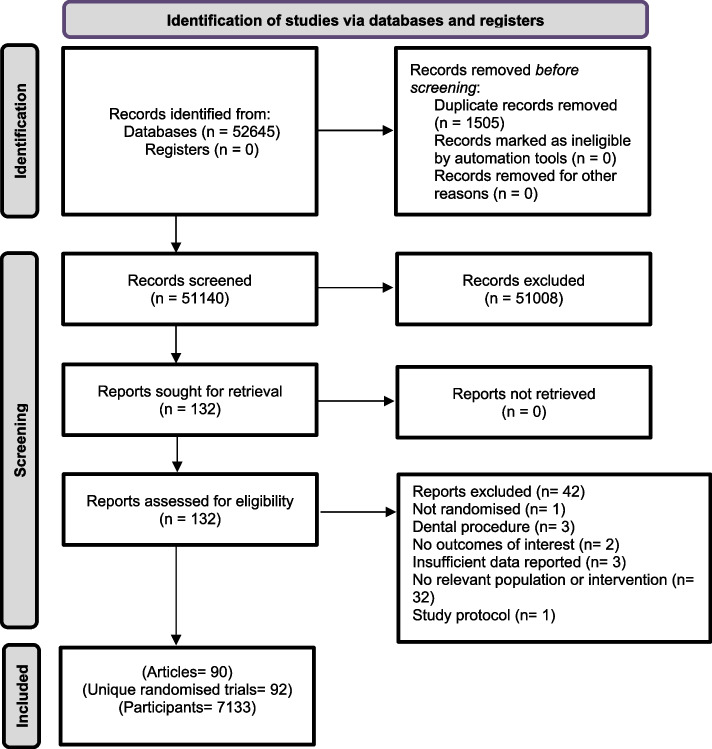
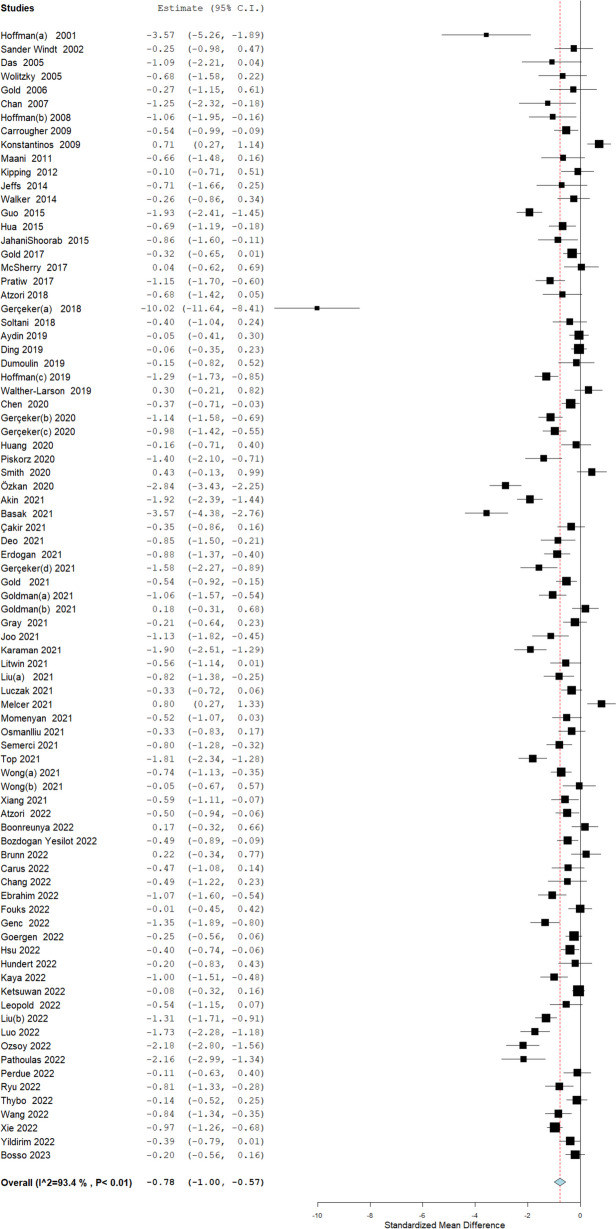
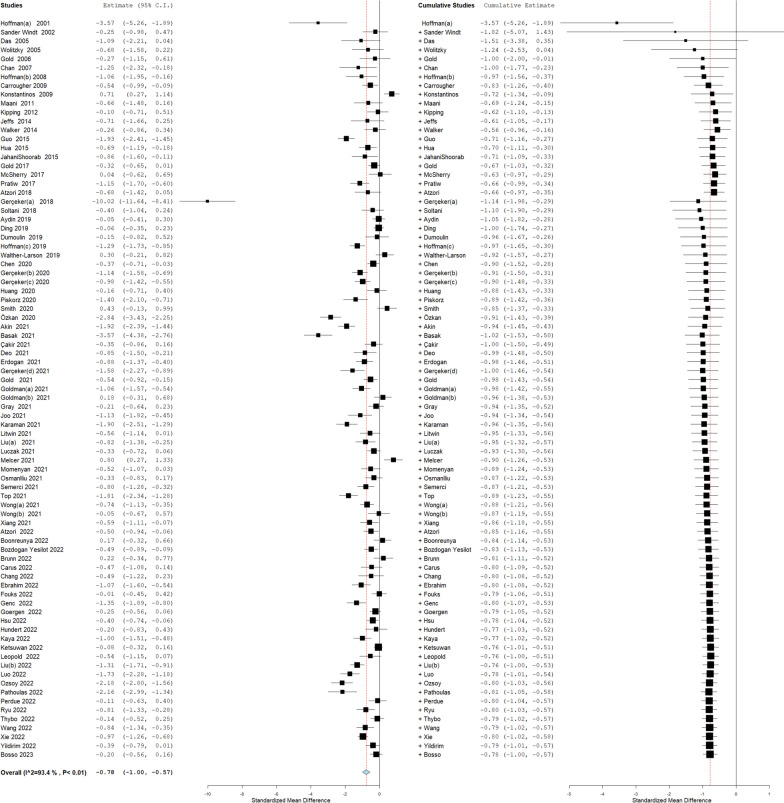
Background: Effective pain control is crucial to optimise the success of medical procedures. Immersive virtual reality (VR) technology could offer an effective non-invasive, non-pharmacological option to distract patients and reduce their experience of pain. We aimed to evaluate the efficacy of Immersive virtual reality (VR) technology in reducing patient’s pain perception during various medical procedures by conducting a systematic review and meta-analysis. Methods: We searched MEDLINE, EMBASE, CENTRAL, CINAHL, and SIGLE until December 2022 for all randomised clinical trials (RCT) evaluating any type of VR in patients undergoing any medical procedure. We conducted a random effect meta-analysis summarising standardised mean differences (SMD) with 95% confidence intervals (CI). We evaluated heterogeneity using I 2 and explored it using subgroup and meta-regression analyses. Results: In total, we included 92 RCTs ( n = 7133 participants). There was a significant reduction in pain scores with VR across all medical procedures ( n = 83, SMD − 0.78, 95% CI − 1.00 to − 0.57, I 2 = 93%, p = < 0.01). Subgroup analysis showed varied reduction in pain scores across trial designs [crossover ( n = 13, SMD − 0.86, 95% CI − 1.23 to − 0.49, I 2 = 72%, p = < 0.01) vs parallel RCTs ( n = 70, SMD − 0.77, 95% CI − 1.01 to − 0.52, I 2 = 90%, p = < 0.01)]; participant age groups [paediatric ( n = 43, SMD − 0.91, 95% CI − 1.26 to − 0.56, I 2 = 87%, p = < 0.01) vs adults ( n = 40, SMD − 0.66, 95% CI − 0.94 to − 0.39, I 2 = 89%, p = < 0.01)] or procedures [venepuncture ( n = 32, SMD − 0.99, 95% CI − 1.52 to − 0.46, I 2 = 90%, p = < 0.01) vs childbirth ( n = 7, SMD − 0.99, 95% CI − 1.59 to − 0.38, I 2 = 88%, p = < 0.01) vs minimally invasive medical procedures ( n = 25, SMD − 0.51, 95% CI − 0.79 to − 0.23, I 2 = 85%, p = < 0.01) vs dressing changes in burn patients ( n = 19, SMD − 0.8, 95% CI − 1.16 to − 0.45, I 2 = 87%, p = < 0.01)]. We explored heterogeneity using meta-regression which showed no significant impact of different covariates including crossover trials ( p = 0.53), minimally invasive procedures ( p = 0.37), and among paediatric participants ( p = 0.27). Cumulative meta-analysis showed no change in overall effect estimates with the additional RCTs since 2018. Conclusions: Immersive VR technology offers effective pain control across various medical procedures, albeit statistical heterogeneity. Further research is needed to inform the safe adoption of this technology across different medical disciplines.
Overview
The claims and statistics of this paper haven’t been checked yet.
Free: it reads the open-access text and checks the first 5 claims that cite a source we can check. Create a free account to check every claim.
Integrity signals
Registry
Cites
Statistics
Figures
Verification
Claims the paper makes
The claims and statistics of this paper haven’t been checked yet.
Free: it reads the open-access text and checks the first 5 claims that cite a source we can check. Create a free account to check every claim.
Claims other papers make about this one
Each is checked against this paper’s own text: does it say what the citing paper says it does?
The check wasn’t confident either way, so it gives no verdict — never disputed.
In the citing paper
“However, no significant age differences were found in our study, consistent with other research.46”
From A Pilot Study of Virtual Reality in Hemodialysis for Mitigating Pain and Anxiety: User Experiences and Perceptions (2025) · cites this paper as [46]
Experimental — accuracy not yet measured
Self-check
Percentages, sums and reported differences re-computed from the paper’s own numbers.
The self-check needs the paper’s full text.
Citations
Cites
The PRISMA 2020 Statement: An Updated Guideline for Reporting Systematic Reviews
Page, M. J., McKenzie, J. E., Bossuyt, P. M., Boutron, I., Hoffmann, T. C., Mulrow, C. D., Shamseer, L., Tetzlaff, J. M., Akl, E. A., Brennan, S. E., et al. (2021) · International Journal of Surgery · doi:10.1016/j.ijsu.2021.105906 · Cited by 11,748
A Nonparametric “Trim and Fill” Method of Accounting for Publication Bias in Meta-Analysis
Duval, S., & Tweedie, R. (2000) · Journal of the American Statistical Association · doi:10.1080/01621459.2000.10473905 · Cited by 2,955 · cited 1×
“Where publication bias was detected, we explore potential impact using the trim and fill method [56] to estimate and adjust for the number and outcomes of missing studies in the meta-analysis.”
MethodAssessing risk of bias in a randomized trial
Higgins, J. P., Savović, J., Page, M. J., Elbers, R. G., & Sterne, J. A. (2019) · Cochrane Handbook for Systematic Reviews of Interventions · doi:10.1002/9781119536604.ch8 · Cited by 1,765 · cited 1×
“We assessed the risk of bias in included trials in duplicate (JJT, RP, AK, DP, MPR, SH) using the Cochrane Risk of Bias assessment tool 2.0 [51].”
MethodInfluentialCipresso, P., Giglioli, I. A. C., Raya, M. A., & Riva, G. (2018) · Frontiers in Psychology · doi:10.3389/fpsyg.2018.02086 · Cited by 1,131
Sterne, J. A. C., & Harbord, R. M. (2004) · The Stata Journal: Promoting communications on statistics and Stata · doi:10.1177/1536867x0400400204 · Cited by 708 · cited 1×
“We also investigated the risk of publication bias using Egger’s test, a funnel plot, and Galbraith plot to identify potential outliers [55].”
MethodA review of immersive virtual reality serious games to enhance learning and training
Checa, D., & Bustillo, A. (2020) · Multimedia Tools and Applications · doi:10.1007/s11042-019-08348-9 · Cited by 693
Gordon, D. B., Dahl, J. L., Miaskowski, C., McCarberg, B., Todd, K. H., Paice, J. A., Lipman, A. G., Bookbinder, M., Sanders, S. H., Turk, D. C., et al. (2005) · Archives of Internal Medicine · doi:10.1001/archinte.165.14.1574 · Cited by 687
Opioids and the treatment of chronic pain: Controversies, current status, and future directions.
Rosenblum, A., Marsch, L. A., Joseph, H., & Portenoy, R. K. (2008) · Experimental and Clinical Psychopharmacology · doi:10.1037/a0013628 · Cited by 643
Systematic Review and Meta-analysis of Virtual Reality in Pediatrics: Effects on Pain and Anxiety
Eijlers, R., Utens, E. M. W. J., Staals, L. M., de Nijs, P. F. A., Berghmans, J. M., Wijnen, R. M. H., Hillegers, M. H. J., Dierckx, B., & Legerstee, J. S. (2019) · Anesthesia & Analgesia · doi:10.1213/ane.0000000000004165 · Cited by 605
Application of virtual reality technology in clinical medicine.
Li, L., Yu, F., Shi, D., Shi, J., Tian, Z., Yang, J., Wang, X., & Jiang, Q. (2017) · Europe PMC (PubMed Central) · Cited by 597
The Impact of Pain Management on Quality of Life
Katz, N. (2002) · Journal of Pain and Symptom Management · doi:10.1016/s0885-3924(02)00411-6 · Cited by 418
Das, D. A., Grimmer, K. A., Sparnon, A. L., McRae, S. E., & Thomas, B. H. (2005) · BMC Pediatrics · doi:10.1186/1471-2431-5-1 · Cited by 391
Effectiveness of Virtual Reality for Pediatric Pain Distraction during IV Placement
Gold, J. I., Kim, S. H., Kant, A. J., Joseph, M. H., & Rizzo, A. ". (2006) · CyberPsychology & Behavior · doi:10.1089/cpb.2006.9.207 · Cited by 391
Mallari, B., Spaeth, E. K., Goh, H., & Boyd, B. S. (2019) · Journal of Pain Research · doi:10.2147/jpr.s200498 · Cited by 374
Effectiveness of Virtual Reality–Based Pain Control With Multiple Treatments
Hoffman, H. G., Patterson, D. R., Carrougher, G. J., & Sharar, S. R. (2001) · The Clinical Journal of Pain · doi:10.1097/00002508-200109000-00007 · Cited by 360
Virtual reality pain control during burn wound debridement in the hydrotank
Hoffman, H. G., Patterson, D. R., Seibel, E., Soltani, M., Jewett-Leahy, L., & Sharar, S. R. (2008) · The Clinical Journal of Pain · doi:10.1097/ajp.0b013e318164d2cc · Cited by 352
A Pilot and Feasibility Study of Virtual Reality as a Distraction for Children With Cancer
GERSHON, J., ZIMAND, E., PICKERING, M., ROTHBAUM, B. O., & HODGES, L. (2004) · Journal of the American Academy of Child & Adolescent Psychiatry · doi:10.1097/01.chi.0000135621.23145.05 · Cited by 342
Baniasadi, T., Ayyoubzadeh, S. M., & Mohammadzadeh, N. (2020) · Oman Medical Journal · doi:10.5001/omj.2020.43 · Cited by 328
Schmitt, Y. S., Hoffman, H. G., Blough, D. K., Patterson, D. R., Jensen, M. P., Soltani, M., Carrougher, G. J., Nakamura, D., & Sharar, S. R. (2011) · Burns · doi:10.1016/j.burns.2010.07.007 · Cited by 282
Gold, J. I., & Mahrer, N. E. (2018) · Journal of Pediatric Psychology · doi:10.1093/jpepsy/jsx129 · Cited by 282
Bani Mohammad, E., & Ahmad, M. (2019) · Palliative and Supportive Care · doi:10.1017/s1478951518000639 · Cited by 264
Navarro-Haro, M. V., López-del-Hoyo, Y., Campos, D., Linehan, M. M., Hoffman, H. G., García-Palacios, A., Modrego-Alarcón, M., Borao, L., & García-Campayo, J. (2017) · PLoS ONE · doi:10.1371/journal.pone.0187777 · Cited by 262 · cited 1×
“Such versatile and easy-to-use technology has the potential to help chronic pain patients within the community enabled by virtual reality meditation and mindfulness techniques [176].”
BackgroundKipping, B., Rodger, S., Miller, K., & Kimble, R. M. (2012) · Burns · doi:10.1016/j.burns.2011.11.010 · Cited by 260
Virtual Reality Clinical Research: Promises and Challenges
Garrett, B., Taverner, T., Gromala, D., Tao, G., Cordingley, E., & Sun, C. (2018) · JMIR Serious Games · doi:10.2196/10839 · Cited by 245
The Applications of Virtual Reality Technology in Medical Groups Teaching.
Samadbeik, M., Yaaghobi, D., Bastani, P., Abhari, S., Rezaee, R., & Garavand, A. (2018) · PubMed Central · Cited by 241
Mütterlein, J. (2018) · Proceedings of the Annual Hawaii International Conference on System Sciences · doi:10.24251/hicss.2018.174 · Cited by 238 · cited 1×
“VR devices are designed to alter one’s perception of presence in an alternate reality and augment their immersion, and interactivity [12].”
BackgroundWint, S. S., Eshelman, D., Steele, J., & Guzzetta, C. E. (2002) · Oncology Nursing Forum · doi:10.1188/02.onf.e8-e15 · Cited by 234
Spiegel, B., Fuller, G., Lopez, M., Dupuy, T., Noah, B., Howard, A., Albert, M., Tashjian, V., Lam, R., Ahn, J., et al. (2019) · PLOS ONE · doi:10.1371/journal.pone.0219115 · Cited by 233
Sharar, S. R., Carrougher, G. J., Nakamura, D., Hoffman, H. G., Blough, D. K., & Patterson, D. R. (2007) · Archives of Physical Medicine and Rehabilitation · doi:10.1016/j.apmr.2007.09.004 · Cited by 224
Effect of Virtual Reality on Adolescent Pain During Burn Wound Care
Jeffs, D., Dorman, D., Brown, S., Files, A., Graves, T., Kirk, E., Meredith-Neve, S., Sanders, J., White, B., & Swearingen, C. J. (2014) · Journal of Burn Care & Research · doi:10.1097/bcr.0000000000000019 · Cited by 223
Virtual Reality for Pediatric Needle Procedural Pain: Two Randomized Clinical Trials
Chan, E., Hovenden, M., Ramage, E., Ling, N., Pham, J. H., Rahim, A., Lam, C., Liu, L., Foster, S., Sambell, R., et al. (2019) · The Journal of Pediatrics · doi:10.1016/j.jpeds.2019.02.034 · Cited by 218
Eijlers, R., Dierckx, B., Staals, L. M., Berghmans, J. M., van der Schroeff, M. P., Strabbing, E. M., Wijnen, R. M. H., Hillegers, M. H. J., Legerstee, J. S., & Utens, E. M. W. J. (2019) · European Journal of Anaesthesiology · doi:10.1097/eja.0000000000001059 · Cited by 211
Chan, E., Foster, S., Sambell, R., & Leong, P. (2018) · PLOS ONE · doi:10.1371/journal.pone.0200987 · Cited by 203
Maani, C. V., Hoffman, H. G., Morrow, M., Maiers, A., Gaylord, K., McGhee, L. L., & DeSocio, P. A. (2011) · Journal of Trauma: Injury, Infection & Critical Care · doi:10.1097/ta.0b013e31822192e2 · Cited by 202
Effective Pain Management and Improvements in Patients’ Outcomes and Satisfaction
Glowacki, D. (2015) · Critical Care Nurse · doi:10.4037/ccn2015440 · Cited by 200
Lost in Translation: Obstacles to Translational Medicine
Mankoff, S. P., Brander, C., Ferrone, S., & Marincola, F. M. (2004) · Journal of Translational Medicine · doi:10.1186/1479-5876-2-14 · Cited by 187
Wolitzky, K., Fivush, R., Zimand, E., Hodges, L., & Rothbaum, B. O. (2005) · Psychology & Health · doi:10.1080/14768320500143339 · Cited by 181
Stone, A. B., Yuan, C. T., Rosen, M. A., Grant, M. C., Benishek, L. E., Hanahan, E., Lubomski, L. H., Ko, C. Y., & Wick, E. C. (2018) · JAMA Surgery · doi:10.1001/jamasurg.2017.5565 · Cited by 179
Özalp Gerçeker, G., Ayar, D., Özdemir, E. Z., & Bektaş, M. (2020) · Journal of Clinical Nursing · doi:10.1111/jocn.15173 · Cited by 179
Virtual Reality and Neuropsychology: Upgrading the Current Tools
Schultheis, M. T., Himelstein, J., & Rizzo, A. A. (2002) · Journal of Head Trauma Rehabilitation · doi:10.1097/00001199-200210000-00002 · Cited by 178
The Effect of Virtual Reality on Pain and Range of Motion in Adults With Burn Injuries
Carrougher, G. J., Hoffman, H. G., Nakamura, D., Lezotte, D., Soltani, M., Leahy, L., Engrav, L. H., & Patterson, D. R. (2009) · Journal of Burn Care & Research · doi:10.1097/bcr.0b013e3181b485d3 · Cited by 178
Hua, Y., Qiu, R., Yao, W.-Y., Zhang, Q., & Chen, X.-L. (2015) · Pain Management Nursing · doi:10.1016/j.pmn.2015.03.001 · Cited by 170
Hoffman, H. G., Rodriguez, R. A., Gonzalez, M., Bernardy, M., Peña, R., Beck, W., Patterson, D. R., & Meyer, W. J. (2019) · Frontiers in Human Neuroscience · doi:10.3389/fnhum.2019.00262 · Cited by 164
Xiang, H., Shen, J., Wheeler, K. K., Patterson, J., Lever, K., Armstrong, M., Shi, J., Thakkar, R. K., Groner, J. I., Noffsinger, D. L., et al. (2021) · JAMA Network Open · doi:10.1001/jamanetworkopen.2021.12082 · Cited by 164
Virtual Reality in the treatment of burn patients: A systematic review
Scapin, S., Echevarría-Guanilo, M. E., Boeira Fuculo Junior, P. R., Gonçalves, N., Rocha, P. K., & Coimbra, R. (2018) · Burns · doi:10.1016/j.burns.2017.11.002 · Cited by 163
Aminabadi, N. A., Erfanparast, L., Sohrabi, A., Oskouei, S. G., & Naghili, A. (2012) · PubMed · doi:10.5681/joddd.2012.025 · Cited by 162
Gerçeker, G. Ö., Bektaş, M., Aydınok, Y., Ören, H., Ellidokuz, H., & Olgun, N. (2021) · European Journal of Oncology Nursing · doi:10.1016/j.ejon.2020.101886 · Cited by 160
van Twillert, B., Bremer, M., & Faber, A. W. (2007) · Journal of Burn Care & Research · doi:10.1097/bcr.0b013e318148c96f · Cited by 159
Technology Assessment in Practice and Theory
Grunwald, A. (2018) · Routledge eBooks · doi:10.4324/9780429442643 · Cited by 158
Chen, Y., Cheng, S., Lee, P., Lai, C., Hou, I., & Chen, C. (2019) · Journal of Clinical Nursing · doi:10.1111/jocn.15088 · Cited by 157
Dumoulin, S., Bouchard, S., Ellis, J., Lavoie, K. L., Vézina, M.-P., Charbonneau, P., Tardif, J., & Hajjar, A. (2019) · Games for Health Journal · doi:10.1089/g4h.2018.0111 · Cited by 152
Abhinav, R., Sweta, V., & Ramesh, A. (2019) · Annals of Maxillofacial Surgery · doi:10.4103/ams.ams_263_18 · Cited by 152
Darnall, B. D., Krishnamurthy, P., Tsuei, J., & Minor, J. D. (2020) · JMIR Formative Research · doi:10.2196/17293 · Cited by 150
Erdogan, B., & Aytekin Ozdemir, A. (2021) · Journal of Pediatric Nursing · doi:10.1016/j.pedn.2021.01.001 · Cited by 148
Frey, D. P., Bauer, M. E., Bell, C. L., Low, L. K., Hassett, A. L., Cassidy, R. B., Boyer, K. D., & Sharar, S. R. (2019) · Anesthesia & Analgesia · doi:10.1213/ane.0000000000003649 · Cited by 142
Opioids and Chronic Pain: An Analytic Review of the Clinical Evidence
Nadeau, S. E., Wu, J. K., & Lawhern, R. A. (2021) · Frontiers in Pain Research · doi:10.3389/fpain.2021.721357 · Cited by 136
Virtual Reality Hypnosis for Pain Associated With Recovery From Physical Trauma
Patterson, D. R., Jensen, M. P., Wiechman, S. A., & Sharar, S. R. (2010) · International Journal of Clinical and Experimental Hypnosis · doi:10.1080/00207141003760595 · Cited by 134
Gold, J. I., SooHoo, M., Laikin, A. M., Lane, A. S., & Klein, M. J. (2021) · JAMA Network Open · doi:10.1001/jamanetworkopen.2021.22569 · Cited by 133
Application of a virtual reality prototype for pain relief of pediatric burn in Taiwan
Chan, E. A., Chung, J. W., Wong, T. K., Lien, A. S., & Yang, J. Y. (2007) · Journal of Clinical Nursing · doi:10.1111/j.1365-2702.2006.01719.x · Cited by 131
Gerçeker, G. Ö., Binay, Ş., Bilsin, E., Kahraman, A., & Yılmaz, H. B. (2018) · Journal of PeriAnesthesia Nursing · doi:10.1016/j.jopan.2017.12.010 · Cited by 125
Morris, L. D., Louw, Q. A., & Crous, L. C. (2009) · Burns · doi:10.1016/j.burns.2009.09.005 · Cited by 124
The Method Quality of Cross-Over Studies Involved in Cochrane Systematic Reviews
Ding, H., Hu, G. L., Zheng, X. Y., Chen, Q., Threapleton, D. E., & Zhou, Z. H. (2015) · PLOS ONE · doi:10.1371/journal.pone.0120519 · Cited by 123
Virtual Reality Analgesia During Venipuncture in Pediatric Patients With Onco-Hematological Diseases
Atzori, B., Hoffman, H. G., Vagnoli, L., Patterson, D. R., Alhalabi, W., Messeri, A., & Lauro Grotto, R. (2018) · Frontiers in Psychology · doi:10.3389/fpsyg.2018.02508 · Cited by 120
Matheve, T., Bogaerts, K., & Timmermans, A. (2020) · Journal of NeuroEngineering and Rehabilitation · doi:10.1186/s12984-020-00688-0 · Cited by 118
Kontopantelis, E., & Reeves, D. (2012) · Statistical Methods in Medical Research · doi:10.1177/0962280211413451 · Cited by 117
Puppala, N., Reddy, N. V., Srujana, P. L. N., Srikanth, K., Daneswari, V., & Geetha, K. (2018) · Journal of Indian Society of Pedodontics and Preventive Dentistry · doi:10.4103/jisppd.jisppd_1158_17 · Cited by 117
Virtual Reality Reduces Pain in Laboring Women: A Randomized Controlled Trial
Wong, M. S., Spiegel, B. M. R., & Gregory, K. D. (2020) · American Journal of Perinatology · doi:10.1055/s-0040-1708851 · Cited by 115
Jahanishoorab, N., Zagami, S. E., Nahvi, A., Mazluom, S. R., Golmakani, N., Talebi, M., & Pabarja, F. (2015) · PubMed Central · Cited by 113
Wong, C. L., Li, C. K., Chan, C. W. H., Choi, K. C., Chen, J., Yeung, M. T., & Chan, O. N. (2020) · Cancer Nursing · doi:10.1097/ncc.0000000000000844 · Cited by 106
Wong, C. L., Lui, M. M. W., & Choi, K. C. (2019) · Trials · doi:10.1186/s13063-019-3443-z · Cited by 105
Walker, M. R., Kallingal, G. J. S., Musser, J. E., Folen, R., Stetz, M. C., & Clark, J. Y. (2014) · Military Medicine · doi:10.7205/milmed-d-13-00343 · Cited by 104
Virtual reality for acute pain in outpatient hysteroscopy: a randomised controlled trial
Deo, N. D., Khan, K. S., Mak, J., Allotey, J., Carreras, F. G., Fusari, G., & Benn, J. (2020) · BJOG An International Journal of Obstetrics & Gynaecology · doi:10.1111/1471-0528.16377 · Cited by 103
Self-citationEffects of Virtual Reality on Symptom Distress in Children Receiving Chemotherapy
SCHNEIDER, S. M., & WORKMAN, M. L. (1999) · CyberPsychology & Behavior · doi:10.1089/cpb.1999.2.125 · Cited by 102
McSherry, T., Atterbury, M., Gartner, S., Helmold, E., Searles, D. M., & Schulman, C. (2017) · Journal of Burn Care & Research · doi:10.1097/bcr.0000000000000589 · Cited by 102
Özkan, T. K., & Polat, F. (2019) · Journal of PeriAnesthesia Nursing · doi:10.1016/j.jopan.2019.08.010 · Cited by 100
Immersive Virtual Reality for Pediatric Procedural Pain: A Randomized Clinical Trial
Walther-Larsen, S., Petersen, T., Friis, S. M., Aagaard, G., Drivenes, B., & Opstrup, P. (2019) · Hospital Pediatrics · doi:10.1542/hpeds.2018-0249 · Cited by 98
Virtual reality for spinal cord injury-associated neuropathic pain: Systematic review
Chi, B., Chau, B., Yeo, E., & Ta, P. (2019) · Annals of Physical and Rehabilitation Medicine · doi:10.1016/j.rehab.2018.09.006 · Cited by 97 · cited 1×
“Previous systematic reviews [20, 178–180] called for larger trials to address the perceived heterogeneity.”
BackgroundImmersive virtual reality on childbirth experience for women: a randomized controlled trial
Carus, E. G., Albayrak, N., Bildirici, H. M., & Gür-Özmen, S. (2022) · BMC Pregnancy and Childbirth · doi:10.1186/s12884-022-04598-y · Cited by 97
Semerci, R., Kostak, M. A., Eren, T., & Avci, G. (2020) · Journal of Pediatric Oncology Nursing · doi:10.1177/1043454220975702 · Cited by 91
Ryu, J., Oh, A., Yoo, H., Kim, J., Park, J., & Han, S. (2018) · Pediatric Anesthesia · doi:10.1111/pan.13535 · Cited by 90
Guo, C., Deng, H., & Yang, J. (2015) · Journal of Clinical Nursing · doi:10.1111/jocn.12626 · Cited by 88
Virtual reality in medicine: a brief overview and future research directions
Mazurek, J., Kiper, P., Cieślik, B., Rutkowski, S., Mehlich, K., Turolla, A., & Szczepańska-Gieracha, J. (2019) · Human Movement · doi:10.5114/hm.2019.83529 · Cited by 86
Stunden, C., Stratton, K., Zakani, S., & Jacob, J. (2021) · Journal of Medical Internet Research · doi:10.2196/22942 · Cited by 86
Hundert, A. S., Birnie, K. A., Abla, O., Positano, K., Cassiani, C., Lloyd, S., Tiessen, P. H., Lalloo, C., Jibb, L., & Stinson, J. (2021) · Clinical Journal of Pain · doi:10.1097/ajp.0000000000001017 · Cited by 85
Konstantatos, A., Angliss, M., Costello, V., Cleland, H. J., & Stafrace, S. (2008) · Burns · doi:10.1016/j.burns.2008.08.017 · Cited by 84
Pandrangi, V. C., Shah, S. N., Bruening, J., Wax, M. K., Clayburgh, D. R., Andersen, P. E., & Li, R. J. (2022) · JAMA Otolaryngology–Head & Neck Surgery · doi:10.1001/jamaoto.2022.1121 · Cited by 84
Lin, H.-T., Li, Y.-I., Hu, W.-P., Huang, C.-C., & Du, Y.-C. (2019) · Journal of Clinical Medicine · doi:10.3390/jcm8060791 · Cited by 83
The Effect of Virtual Reality on Pain and Anxiety During Colonoscopy: A Randomized Controlled Trial
Çakır, S. K., & Evirgen, S. (2021) · The Turkish Journal of Gastroenterology · doi:10.5152/tjg.2021.191081 · Cited by 82
Visual distraction alone for the improvement of colonoscopy-related pain and satisfaction
Umezawa, S., Higurashi, T., Uchiyama, S., Sakai, E., Ohkubo, H., Endo, H., Nonaka, T., & Nakajima, A. (2015) · World Journal of Gastroenterology · doi:10.3748/wjg.v21.i15.4707 · Cited by 80
Economic analysis of implementing virtual reality therapy for pain among hospitalized patients
Delshad, S. D., Almario, C. V., Fuller, G., Luong, D., & Spiegel, B. M. R. (2018) · npj Digital Medicine · doi:10.1038/s41746-018-0026-4 · Cited by 79
Virtual reality for intravenous placement in the emergency department—a randomized controlled trial
Goldman, R. D., & Behboudi, A. (2020) · European Journal of Pediatrics · doi:10.1007/s00431-020-03771-9 · Cited by 77
Nusser, M., Knapp, S., Kramer, M., & Krischak, G. D. (2020) · Journal of Rehabilitation Medicine · doi:10.2340/16501977-2786 · Cited by 76
YILDIRIM, B. G., & Gerçeker, G. Ö. (2022) · Journal of Emergency Nursing · doi:10.1016/j.jen.2022.09.018 · Cited by 74
Virtual reality analgesia for burn joint flexibility: A randomized controlled trial.
Soltani, M., Drever, S. A., Hoffman, H. G., Sharar, S. R., WIECHMAN, S. A., Jensen, M. P., & Patterson, D. R. (2018) · Rehabilitation Psychology · doi:10.1037/rep0000239 · Cited by 73
Turrado-Rodriguez, V., Guzman, Y. C., Jiménez-Lillo, J., Villegas, E., de Lacy, F. B., Blanch, J., Balibrea, J. M., & Lacy, A. M. (2021) · Surgical Endoscopy · doi:10.1007/s00464-021-08407-z · Cited by 70
Austin, P., Siddall, P. J., & Lovell, M. R. (2022) · Supportive Care in Cancer · doi:10.1007/s00520-022-06824-x · Cited by 68
Hoffman, H. G. (2021) · Scientific Reports · doi:10.1038/s41598-021-89526-4 · Cited by 66
Genç, H., Korkmaz, M., & Akkurt, A. (2022) · Journal of PeriAnesthesia Nursing · doi:10.1016/j.jopan.2021.09.006 · Cited by 66
Honzel, E., Murthi, S. B., Brawn, B., Colloca, G., Kier, C., Varshney, A., & Colloca, L. (2019) · Pain · doi:10.1097/j.pain.0000000000001539 · Cited by 65
Estrella‐Juarez, F., Requena, M., García‐González, J., López-Villén, A., & Alarcón, R. (2022) · Journal of Midwifery & Women s Health · doi:10.1111/jmwh.13413 · Cited by 65
Szczepańska-Gieracha, J., Jóźwik, S., Cieślik, B., Mazurek, J., & Gajda, R. (2021) · Cyberpsychology, Behavior, and Social Networking · doi:10.1089/cyber.2020.0297 · Cited by 64
Sufficiency and Stability of Evidence for Public Health Interventions Using Cumulative Meta-Analysis
Muellerleile, P., & Mullen, B. (2006) · American Journal of Public Health · doi:10.2105/ajph.2003.036343 · Cited by 63
Rebêlo, F. L., Silva, L. F. D. S., Doná, F., Barreto, A. S., & Quintans, J. D. S. S. (2021) · Experimental Gerontology · doi:10.1016/j.exger.2021.111308 · Cited by 61
Using a Virtual Reality Headset to Decrease Pain Felt During a Venipuncture Procedure in Children
Aydın, A. İ., & Özyazıcıoğlu, N. (2019) · Journal of PeriAnesthesia Nursing · doi:10.1016/j.jopan.2019.05.134 · Cited by 60
Jóźwik, S., Cieślik, B., Gajda, R., & Szczepańska-Gieracha, J. (2021) · Journal of Clinical Medicine · doi:10.3390/jcm10102148 · Cited by 60
Kaya, M., & Özlü, Z. K. (2022) · Burns · doi:10.1016/j.burns.2022.06.001 · Cited by 60
Akın, B., Kocak, M. Y., Küçükaydın, Z., & Güzel, K. (2021) · Journal of Clinical Nursing · doi:10.1111/jocn.15768 · Cited by 58
Wang, Y., Guo, L., & Xiong, X. (2022) · Frontiers in Psychology · doi:10.3389/fpsyg.2022.842847 · Cited by 58
Karaman, D., & Taşdemir, N. (2021) · Journal of PeriAnesthesia Nursing · doi:10.1016/j.jopan.2021.04.007 · Cited by 56
Litwin, S. P., Nguyen, C., Hundert, A. S., Stuart, S. D. F., Liu, D. H., Maguire, B. R., Matava, C. T., & Stinson, J. (2020) · Clinical Journal of Pain · doi:10.1097/ajp.0000000000000894 · Cited by 55
Development of virtual reality game-based interfaces for civil engineering education
Dinis, F. M., Guimarães, A. S., Rangel, B., & Martins, J. P. (2017) · IEEE Global Engineering Education Conference (EDUCON) · doi:10.1109/educon.2017.7943000 · Cited by 54
Schlechter, A. K., Whitaker, W., Iyer, S., Gabriele, G., & Wilkinson, M. H. (2020) · The American Journal of Emergency Medicine · doi:10.1016/j.ajem.2020.04.009 · Cited by 54
Georgescu, R., Fodor, L. A., Dobrean, A., & Cristea, I. A. (2020) · Psychological Medicine · doi:10.1017/s0033291719001855 · Cited by 53 · cited 2×
“Previous systematic reviews [20, 178–180] called for larger trials to address the perceived heterogeneity.”
BackgroundMethodMerlot, B., Dispersyn, G., Husson, Z., Chanavaz‐Lacheray, I., Dennis, T., Greco-Vuilloud, J., Fougère, M., Potvin, S., Cotty-Eslous, M., Roman, H., et al. (2022) · Journal of Medical Internet Research · doi:10.2196/39531 · Cited by 52
Huang, M. Y., Scharf, S., & Chan, P. (2020) · PLoS ONE · doi:10.1371/journal.pone.0229320 · Cited by 50
Lee, H. N., Bae, W., Park, J. W., Jung, J. Y., Hwang, S., Kim, D. K., & Kwak, Y. H. (2021) · PLoS ONE · doi:10.1371/journal.pone.0256489 · Cited by 50
Fouks, Y., Kern, G., Cohen, A., Reicher, L., Shapira, Z., Many, A., Yogev, Y., & Rattan, G. (2021) · European Journal of Pain · doi:10.1002/ejp.1882 · Cited by 50
Ogourtsova, T., Archambault, P. S., & Lamontagne, A. (2017) · Disability and Rehabilitation · doi:10.1080/09638288.2017.1387292 · Cited by 48
May, S. L., Tsimicalis, A., Noel, M. E., Rainville, P., Khadra, C., Ballard, A., Guingo, E., Cotes‐Turpin, C., Addab, S., Chougui, K., et al. (2020) · Journal of Advanced Nursing · doi:10.1111/jan.14607 · Cited by 48
Rodríguez-Hernández, M., Criado‐Álvarez, J. J., Sánchez, A. I. C., Martín‐Conty, J. L., Mohedano‐Moriano, A., & López, B. P. (2021) · International Journal of Environmental Research and Public Health · doi:10.3390/ijerph18062810 · Cited by 48
Ding, J., He, Y., Chen, L., Zhu, B., Cai, Q., Chen, K., & Liu, G. (2019) · Journal of International Medical Research · doi:10.1177/0300060519857862 · Cited by 47
Virtual Reality as Distraction Analgesia and Anxiolysis for Pediatric Otolaryngology Procedures
Liu, K. Y., Ninan, S. J., Laitman, B. M., Goldrich, D. Y., Iloreta, A. M., & Londino, A. V. (2020) · The Laryngoscope · doi:10.1002/lary.29148 · Cited by 47
Low – Cost Devices Used in Virtual Reality Exposure Therapy
Bun, P., Gorski, F., Grajewski, D., Wichniarek, R., & Zawadzki, P. (2017) · Procedia Computer Science · doi:10.1016/j.procs.2017.01.158 · Cited by 45
Osmanlliu, E., Trottier, E. D., Bailey, B., Lagacé, M., Certain, M., Khadra, C., Sanchez, M., Thériault, C., Paquin, D., Cotes‐Turpin, C., et al. (2020) · Canadian Journal of Emergency Medicine · doi:10.1007/s43678-020-00006-6 · Cited by 45
Ebrahimian, A., Bilandi, R. R., Bilandī, M. R. R., & Sabzeh, Z. (2022) · BMC Pregnancy and Childbirth · doi:10.1186/s12884-021-04359-3 · Cited by 45
Bentsen, B., Svensson, P., & Wenzel, A. (2001) · European Journal of Pain · doi:10.1053/eujp.2001.0256 · Cited by 43
Gray, M. L., Goldrich, D. Y., McKee, S. P., Schaberg, M. R., Signore, A. D., Govindaraj, S., & Iloreta, A. M. (2020) · Otolaryngology · doi:10.1177/0194599820942215 · Cited by 40
Birckhead, B., Eberlein, S., Alvarez, G., Gale, R., Dupuy, T., Makaroff, K., Fuller, G., Liu, X., Yu, K.-S., Black, J. T., et al. (2021) · BMJ Open · doi:10.1136/bmjopen-2021-050545 · Cited by 39
Hsu, M., Whu, Y., Lin, I., Liu, C., Lai, F.-C., Liu, P., & Chen, C. (2022) · Asian Nursing Research · doi:10.1016/j.anr.2022.03.002 · Cited by 39
Li, X., Huang, J., Kong, Z., Sun, F., Sit, C. H. P., & Li, C. (2023) · Games for Health Journal · doi:10.1089/g4h.2022.0168 · Cited by 38
Thybo, K. H., Friis, S. M., Aagaard, G. B., Jensen, C. S., Dyekjær, C. D., Jørgensen, C. H., & Walther-Larsen, S. (2022) · Acta Anaesthesiologica Scandinavica · doi:10.1111/aas.14120 · Cited by 36
The Barriers to High-Quality Inpatient Pain Management: A Qualitative Study
Lin, R. J., Reid, M. C., Liu, L. L., Chused, A. E., & Evans, A. T. (2015) · American Journal of Hospice and Palliative Medicine® · doi:10.1177/1049909114530491 · Cited by 35
Akbar, N., Teo, S. P., Hj-Abdul-Rahman, H. N. A., Hj-Husaini, H. A., & Venkatasalu, M. R. (2019) · Annals of Geriatric Medicine and Research · doi:10.4235/agmr.19.0037 · Cited by 35
Vlake, J. H., van Bommel, J., Hellemons, M. E., Wils, E.-J., Gommers, D., & van Genderen, M. E. (2021) · Frontiers in Medicine · doi:10.3389/fmed.2020.629086 · Cited by 35
Solcà, M., Krishna, V., Young, N. A., Deogaonkar, M. S., Herbelin, B., Orepić, P., Mange, R., Rognini, G., Serino, A., Rezai, A. R., et al. (2020) · Pain · doi:10.1097/j.pain.0000000000002160 · Cited by 34
A Randomized Controlled Trial of Virtual Reality in Awake Minor Pediatric Plastic Surgery Procedures
Clerc, P., Arneja, J. S., Zwimpfer, C. M., Behboudi, A., & Goldman, R. D. (2021) · Plastic & Reconstructive Surgery · doi:10.1097/prs.0000000000008196 · Cited by 34
Virtual reality and its use in post-operative pain following laparoscopy: a feasibility study
Payne, O., Smith, V., Rolnik, D. L., Davies-Tuck, M. L., Warty, R. R., Seo, D., Wetherell, L., Murday, H. K., Nair, A., Kaur, R., et al. (2022) · Scientific Reports · doi:10.1038/s41598-022-17183-2 · Cited by 33
Ryu, J., Han, S., Hwang, S. M., Lee, J., Do, S.-H., Kim, J., & Park, J. (2022) · Frontiers in Medicine · doi:10.3389/fmed.2022.849541 · Cited by 32
Ketsuwan, C., Matang, W., Ratanapornsompong, W., Sangkum, P., Phengsalae, Y., Kongchareonsombat, W., & Jongwannasiri, M. (2022) · World Journal of Urology · doi:10.1007/s00345-022-04142-9 · Cited by 32
Liu, Q., Zang, Y., Zang, W., Cai, W., Li, W., Guo, Y., Xin, C., & Tu, X. (2022) · Clinical Medicine · doi:10.7861/clinmed.2022-0001 · Cited by 31
Lee, H. N., Park, J. W., Hwang, S., Jung, J. Y., Kim, D. K., Kwak, Y. H., & Lee, E. J. (2022) · Archives of Pediatrics and Adolescent Medicine · doi:10.1001/jamapediatrics.2022.4426 · Cited by 31
Mobile virtual reality distraction reduces needle pain and stress in children?
Piskorz, J., Czub, M., Šulžickaja, B., & Kiliś‐Pstrusińska, K. (2020) · Cyberpsychology Journal of Psychosocial Research on Cyberspace · doi:10.5817/cp2020-1-3 · Cited by 30
Başak, T., Demırtaş, A., & Yorubulut, S. M. (2021) · Journal of Advanced Nursing · doi:10.1111/jan.14782 · Cited by 30
Analgesic efficacy of virtual reality for acute pain in amniocentesis: A randomized controlled trial
Melcer, Y., Maymon, R., Gal-Kochav, M., Pekar‐Zlotin, M., Levinsohn‐Tavor, O., Meizner, I., & Svirsky, R. (2021) · European Journal of Obstetrics & Gynecology and Reproductive Biology · doi:10.1016/j.ejogrb.2021.04.024 · Cited by 30
Atzori, B., Vagnoli, L., Graziani, D., Hoffman, H. G., Sampaio, M., Alhalabi, W., Messeri, A., & Lauro-Grotto, R. (2022) · International Journal of Environmental Research and Public Health · doi:10.3390/ijerph19042291 · Cited by 30
Patterson, D. R., Hoffman, H. G., Chambers, G. T., Bennetts, D., Hunner, H. H., WIECHMAN, S. A., García‐Palacios, A., & Jensen, M. P. (2021) · International Journal of Clinical and Experimental Hypnosis · doi:10.1080/00207144.2021.1882259 · Cited by 29
Virtual Reality as a distraction therapy during cystoscopy: a clinical trial
Goergen, D. I., & Freitas, D. M. (2022) · Revista do Colégio Brasileiro de Cirurgiões · doi:10.1590/0100-6991e-20223138-en · Cited by 29
Luo, W., Chen, C., Zhou, W., Cao, A., Zhu, W., Zhou, Y., Xu, Z., Wang, J., & Zhu, B. (2022) · Journal of Pediatric Urology · doi:10.1016/j.jpurol.2022.10.023 · Cited by 29
Momenyan, N., Safaei, A., & Hantoushzadeh, S. (2021) · Clinical and Experimental Obstetrics & Gynecology · doi:10.31083/j.ceog.2021.01.2116 · Cited by 28
Joo, Y. J., Kim, E.-K., Song, H.-G., Jung, H., Park, H., & Moon, J. Y. (2021) · The Korean journal of pain · doi:10.3344/kjp.2021.34.3.304 · Cited by 28
Balanyuk, I., Ledonne, G., Provenzano, M., Bianco, R., Meroni, C., Ferri, P., & Bonetti, L. (2018) · Acta bio-medica dell'Ateneo parmense/Acta biomedica · doi:10.23750/abm.v89i4-s.7115 · Cited by 27
Yeşilot, S. B., Yeşilkuş, R., & Beyaz, F. (2022) · Pain Management Nursing · doi:10.1016/j.pmn.2022.07.001 · Cited by 26
Goldman, R. D., & Behboudi, A. (2021) · Journal of Child & Adolescent Trauma · doi:10.1007/s40653-021-00350-4 · Cited by 25
Chang, Z. Y., Kang, G. C.-Y., Koh, Y. L. E., Fong, R. J. K., Tang, J., Goh, C. K., & Tan, N. C. (2022) · Frontiers in Pediatrics · doi:10.3389/fped.2022.847257 · Cited by 25
Wang, Q., Xu, S., Guo, B., Xu, Y. X., & Lu, W. (2022) · Journal of Burn Care & Research · doi:10.1093/jbcr/irac149 · Cited by 25
Rogozińska, E., Marlin, N., Thangaratinam, S., Khan, K. S., & Zamora, J. (2017) · BMJ Evidence-Based Medicine · doi:10.1136/ebmed-2017-110775 · Cited by 24
Self-citationŁuczak, M., Nowak, Ł., Chorbińska, J., Galik, K., Kiełb, P., Łaszkiewicz, J., Tukiendorf, A., Kościelska−Kasprzak, K., Małkiewicz, B., Zdrojowy, R., et al. (2021) · Journal of Personalized Medicine · doi:10.3390/jpm11111214 · Cited by 24
Arnfred, B. T., Bang, P., Hjorthøj, C. R., Winding, C., Moeller, K. S., Hvenegaard, M., Agerskov, L., Gausbøl, U. K., Soe, D., Wiborg, P., et al. (2022) · BMJ Open · doi:10.1136/bmjopen-2021-051147 · Cited by 24
Clinical solutions to chronic pain and the opiate epidemic
Murray, M. R., Stone, A. B., Pearson, V., & Treisman, G. J. (2018) · Preventive Medicine · doi:10.1016/j.ypmed.2018.10.004 · Cited by 23
Pain management in children during invasive procedures: A randomized clinical trial
Top, F. Ü., & Ayyıldız, T. K. (2021) · Nursing Forum · doi:10.1111/nuf.12616 · Cited by 22
Esposito, C., Autorino, G., Iervolino, A., Vozzella, E. A., Cerulo, M., Esposito, G., Coppola, V., Carulli, R., Cortese, G., Gallo, L., et al. (2021) · Journal of Laparoendoscopic & Advanced Surgical Techniques · doi:10.1089/lap.2021.0566 · Cited by 21
Wechsler, T. F., Pfaller, M., Eickels, R. E. V., Schulz, L. H., & Mühlberger, A. (2021) · Frontiers in Psychiatry · doi:10.3389/fpsyt.2021.751272 · Cited by 21
Smith, V., Warty, R. R., Kashyap, R., Neil, P., Adriaans, C., Nair, A., Krishnan, S., Costa, F. D. S., Vollenhoven, B. J., & Wallace, E. M. (2020) · Scientific Reports · doi:10.1038/s41598-020-60040-3 · Cited by 20
Virtual reality distraction during upper gastrointestinal endoscopy: a randomized controlled trial
Boonreunya, N., Nopawong, E., Yongsiriwit, K., & Chirapongsathorn, S. (2022) · Journal of Gastroenterology and Hepatology · doi:10.1111/jgh.15786 · Cited by 19
Bosso, L., Espejo, T., Taffé, P., Caillet‐Bois, D., Christen, T., Berna, C., & Hügli, O. (2022) · Annals of Emergency Medicine · doi:10.1016/j.annemergmed.2022.04.015 · Cited by 19
Powers, M. B., Carl, E., Levihn‐Coon, A., Veldhuizen, M. V., Caven, A., Pogue, J. R., Fresnedo, M., Turner, E. D., Adams, M., Leonard, K., et al. (2021) · Clinical Journal of Pain · doi:10.1097/ajp.0000000000000958 · Cited by 15
Virtual-Reality Effects on Acute Pain During Office Hysteroscopy: A Randomized Controlled Trial
Brunn, E., Cheney, M. C., Hazen, N., Morozov, V., & Robinson, J. K. (2022) · Journal of Gynecologic Surgery · doi:10.1089/gyn.2021.0121 · Cited by 15
Yeşilot, S. B., Çiftçi, H., & Yener, K. (2022) · AORN Journal · doi:10.1002/aorn.13665 · Cited by 15
Bulteau, S., Laurin, A., Bach‐Ngohou, K., Péré, M., Vibet, M., Hardouin, J.-B., Sebille, V., Lagalice, L., Faurel-Paul, E., Acier, D., et al. (2022) · Journal of Clinical Medicine · doi:10.3390/jcm11020345 · Cited by 13
Mueller, J., Niederer, D., Tenberg, S., Oberheim, L., Moesner, A., & Mueller, S. (2022) · BMC Sports Science Medicine and Rehabilitation · doi:10.1186/s13102-022-00586-z · Cited by 13
Özsoy, F., & Ulus, B. (2022) · The Journal of Pediatric Research · doi:10.4274/jpr.galenos.2021.68335 · Cited by 11
Montori, V. M. (2002) · BMJ Evidence-Based Medicine · doi:10.1136/ebm.7.4.104 · Cited by 9
Mathematical Characterization of Changes in Fear During Exposure Therapy
Portêlo, A., Shiban, Y., & Maia, T. V. (2021) · Biological Psychiatry Cognitive Neuroscience and Neuroimaging · doi:10.1016/j.bpsc.2021.01.005 · Cited by 8
Perdue, M. J., Umar, M., Walker, J. D., & Kubena, B. (2022) · Military Medicine · doi:10.1093/milmed/usac249 · Cited by 8
Xie, J., & Zeng, Q. (2022) · Ginekologia Polska · doi:10.5603/gp.a2022.0134 · Cited by 8
Use of virtual reality during scalp injections: A randomized interventional crossover study
Pathoulas, J. T., Flanagan, K. E., Walker, C. J., Wiss, I. P., Collins, M. S., Ali, S., & Senna, M. M. (2022) · Journal of the American Academy of Dermatology · doi:10.1016/j.jaad.2021.12.048 · Cited by 5
Leopold, I., Denson, K., Cutler, E., Schaake, R., Zenk, B. A., Shafer, L., Maresky, H. S., & Cohen, G. (2022) · Journal of Vascular and Interventional Radiology · doi:10.1016/j.jvir.2022.03.087 · Cited by 2
Canares, T., Parrish, C., Santos, C., Badawi, A., Kleinman, K., Stewart, A., Biddle, A., Brylske, P., & Mcguire, J. F. (2021) · PEDIATRICS · doi:10.1542/peds.147.3ma3.307 · Cited by 2
Research works printed but not linked: 1
- Sherman WR Craig AB Understanding virtual reality: Interface, application, and design: Morgan Kaufmann 2018
Cited by
Hu, S., Song, D., Wan, S., Zhang, S., Luo, C., Li, N., Liu, G., Vasconcelos, J. D. G. E. S., de Carvalho, L. L. C., Neobísi, E., et al. (2025) · Frontiers in Public Health · doi:10.3389/fpubh.2025.1646802 · Cited by 83
A synthesis of meta-analyses of immersive virtual reality interventions in pain
Rooney, T., Sharpe, L., Winiarski, N., Todd, J., Colagiuri, B., Ryckeghem, D. M. L. V., Crombez, G., & Michalski, S. C. (2025) · Clinical Psychology Review · doi:10.1016/j.cpr.2025.102566 · Cited by 30
Virtual Reality for Postoperative Pain Management: A Review of Current Evidence
Malik, A., Elshazly, T. B., Pokuri, K., Apai, C., Rothkrug, A., Hasoon, J. J., Chung, M., Ye, Z., Bhayani, S., Kaye, A. D., et al. (2024) · Current Pain and Headache Reports · doi:10.1007/s11916-024-01308-5 · Cited by 26
Device associated complications in the intensive care unit
Hixson, R., Schwab, K. E., Melamed, K. H., & Qadir, N. (2024) · BMJ · doi:10.1136/bmj-2023-077318 · Cited by 24
Extended reality in anesthesia: a narrative review
Han, S., Kiroff, K. L., & Kinjo, S. (2025) · Korean Journal of Anesthesiology · doi:10.4097/kja.24687 · Cited by 10
Metadata
- Authors
- Teh, J. J., Pascoe, D. J., Hafeji, S., Parchure, R., Koczoski, A., Rimmer, M. P., Khan, K. S., & Al Wattar, B. H.
- Affiliations
- Imperial College London (GB)
- University of St Andrews (GB)
- University College London (GB)
- St John's Hospital (GB)
- Universidad de Granada (ES)
- Corresponding author
- Rimmer, Michael P.
- Venue
- BMC Medicine
- Published
- 2024-02-14
- Volume
- 22
- Issue
- 1
- Pages
- 64-64
- ISSN
- 1741-7015 (ISSN-L)
- PMC
- PMC10865524
- OpenAlex
- W4391818233
- Cited by
- 132
- References
- 179
- Citations by year
- 2026: 60 · 2025: 45 · 2024: 27
- FWCI
- 15.62
- Type
- journal article
- Language
- en
- Open access
- gold
- doi.org
- Licence
- cc-by
- creativecommons.org/licenses/by/4.0 (tdm)
- creativecommons.org/licenses/by/4.0 (vor)
- Locations
- BMC Medicine (publishedVersion, cc-by)
- PubMed Central (publishedVersion, cc-by)
- PubMed (publishedVersion)
- Institutional Repository of the University of Granada (University of Granada) (submittedVersion, cc-by)
- DOAJ (DOAJ: Directory of Open Access Journals) (submittedVersion)
- Edinburgh Research Explorer (University of Edinburgh) (submittedVersion, cc-by)
- Funders
- Universidad de Granada
- Medical Research Council (MR/N022556/1)
- Topics
- Health Sciences › Medicine › Pediatrics, Perinatology and Child Health › Pediatric Pain Management Techniques
- Physical Sciences › Computer Science › Human-Computer Interaction › Virtual Reality Applications and Impacts
- Health Sciences › Medicine › Anesthesiology and Pain Medicine › Pain Management and Treatment
- Keywords
- virtual reality, analgesia, procedural pain, distraction therapy, non-pharmacological analgesia, medical procedures, pediatric patients, venipuncture, needle insertion, pain scores, subgroup analysis, meta-regression, effect size heterogeneity, standardized mean difference
- MeSH terms
- Virtual Reality, Adult, Child, Humans, Pain, Pain Management
About these checks
Registry, retraction, Cites and statistics results are computed, not judged, with one exception: a printed reference that no index lists is read once by a model before it counts as a citation error. Claims are extracted by a model and kept only when their quote appears verbatim in the text; each cited source is then checked, with a model’s help, for whether it says what the claim relies on. Those verdicts can be wrong — read the claim’s quote and the cited source before relying on one.
Statistics and arithmetic are recomputed, not judged.
Confidence bands are shown only for fields calibrated on our annotated test set. None is calibrated yet, so no band is shown.
What counts as a claim ›How we measure confidence ›How we check this ›
Are you an author, or do you see a problem with this page? Request a review
Data sources
Bibliographic data: Semantic Scholar, OpenAlex, Crossref.
Contains information from the Semantic Scholar Academic Graph Datasets, made available under the ODC Attribution License (ODC-BY 1.0).
Semantic Scholar’s data is described in: Kinney, R., et al. (2023). The Semantic Scholar Open Data Platform. arXiv:2301.10140.
