

Mechanisms of receptor tyrosine kinase activation in cancer
Open accessThe DOI matches its Crossref record; 199 of the 199 references it cites were found in a registry or an index.
Abstract
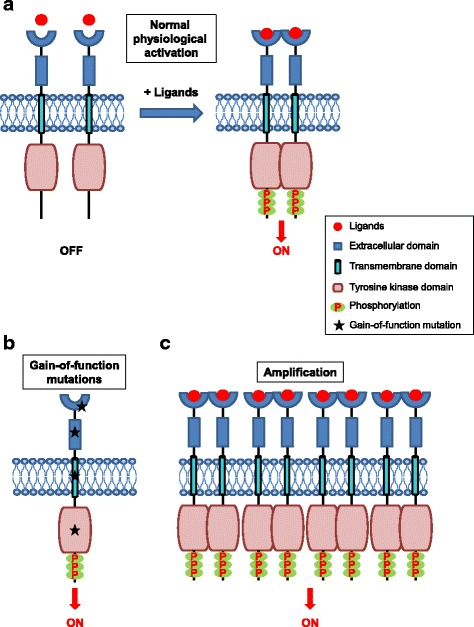
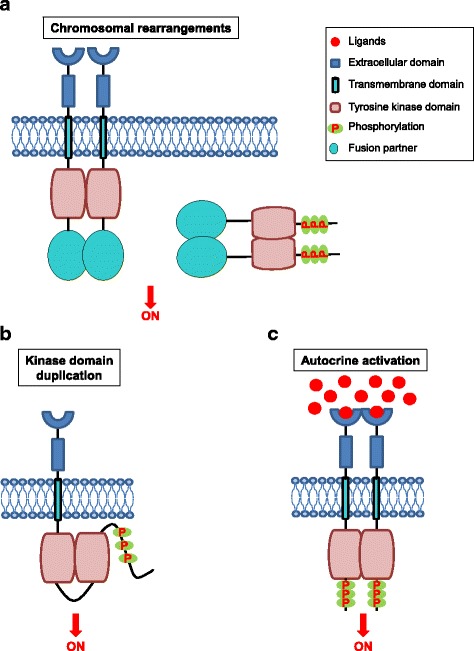
Receptor tyrosine kinases (RTKs) play an important role in a variety of cellular processes including growth, motility, differentiation, and metabolism. As such, dysregulation of RTK signaling leads to an assortment of human diseases, most notably, cancers. Recent large-scale genomic studies have revealed the presence of various alterations in the genes encoding RTKs such as EGFR, HER2/ErbB2, and MET, amongst many others. Abnormal RTK activation in human cancers is mediated by four principal mechanisms: gain-of-function mutations, genomic amplification, chromosomal rearrangements, and / or autocrine activation. In this manuscript, we review the processes whereby RTKs are activated under normal physiological conditions and discuss several mechanisms whereby RTKs can be aberrantly activated in human cancers. Understanding of these mechanisms has important implications for selection of anti-cancer therapies.
Overview
The claims and statistics of this paper haven’t been checked yet.
Free: it reads the open-access text and checks the first 5 claims that cite a source we can check. Create a free account to check every claim.
Integrity signals
Registry
Cites
Statistics
Figures
Verification
Claims the paper makes
The claims and statistics of this paper haven’t been checked yet.
Free: it reads the open-access text and checks the first 5 claims that cite a source we can check. Create a free account to check every claim.
Claims other papers make about this one
Each is checked against this paper’s own text: does it say what the citing paper says it does?
The source backs part of the claim, not all of it — or backs it for a different population, condition or comparison.
In the citing paper
“KRAS-mutant tumors are often insensitive to KRAS-targeted therapy due to feedback reactivation of upstream RTKs, which are crucial for cancer cell signaling [62, 63].”
From Differential Response and Resistance to KRAS-Targeted Therapy (2025) · cites this paper as [63]
Experimental — accuracy not yet measured
Self-check
Percentages, sums and reported differences re-computed from the paper’s own numbers.
The self-check needs the paper’s full text.
Citations
Cites
Gefitinib or Carboplatin–Paclitaxel in Pulmonary Adenocarcinoma
Mok, T. S., Wu, Y.-L., Thongprasert, S., Yang, C.-H., Chu, D.-T., Saijo, N., Sunpaweravong, P., Han, B., Margono, B., Ichinose, Y., et al. (2009) · New England Journal of Medicine · doi:10.1056/nejmoa0810699 · Cited by 8,261
The protein kinase complement of the human genome
Manning, G., Whyte, D. B., Martinez, R., Hunter, T., & Sudarsanam, S. (2002) · Science · doi:10.1126/science.1075762 · Cited by 8,145 · cited 1×
“There are 58 known RTKs in humans [1, 2], and all RTKs share a similar protein structure comprised of an extracellular ligand binding domain, a single transmembrane helix, and an intracellular region that contains a juxtamembrane regulatory region, a tyrosine kinase domain (TKD) and a carboxyl (C-) terminal tail [3].”
Cell Signaling by Receptor Tyrosine Kinases
Lemmon, M. A., & Schlessinger, J. (2010) · Cell · doi:10.1016/j.cell.2010.06.011 · Cited by 7,929
Vogelstein, B., Papadopoulos, N., Velculescu, V. E., Zhou, S., Diaz, L. A., & Kinzler, K. W. (2013) · Science · doi:10.1126/science.1235122 · Cited by 7,863
Comprehensive molecular profiling of lung adenocarcinoma
The Cancer Genome Atlas Research Network (2014) · Nature · doi:10.1038/nature13385 · Cited by 5,732
Gefitinib or Chemotherapy for Non–Small-Cell Lung Cancer with Mutated EGFR
Maemondo, M., Inoue, A., Kobayashi, K., Sugawara, S., Oizumi, S., Isobe, H., Gemma, A., Harada, M., Yoshizawa, H., Kinoshita, I., et al. (2010) · New England Journal of Medicine · doi:10.1056/nejmoa0909530 · Cited by 5,525
Osimertinib in Untreated EGFR -Mutated Advanced Non–Small-Cell Lung Cancer
Soria, J.-C., Ohe, Y., Vansteenkiste, J., Reungwetwattana, T., Chewaskulyong, B., Lee, K. H., Dechaphunkul, A., Imamura, F., Nogami, N., Kurata, T., et al. (2018) · New England Journal of Medicine · doi:10.1056/nejmoa1713137 · Cited by 5,508 · cited 1×
“Novel approaches have been shown to effectively overcome acquired resistance, including the development of second-generation [191, 192] and third-generation inhibitors [193, 194] and the combinational use of TKIs with monoclonal antibodies against the same target [195].”
Rosell, R., Carcereny, E., Gervais, R., Vergnenegre, A., Massuti, B., Felip, E., Palmero, R., Garcia-Gomez, R., Pallares, C., Sanchez, J. M., et al. (2012) · The Lancet Oncology · doi:10.1016/s1470-2045(11)70393-x · Cited by 5,489
Identification of the transforming EML4–ALK fusion gene in non-small-cell lung cancer
Soda, M., Choi, Y. L., Enomoto, M., Takada, S., Yamashita, Y., Ishikawa, S., Fujiwara, S.-I., Watanabe, H., Kurashina, K., Hatanaka, H., et al. (2007) · Nature · doi:10.1038/nature05945 · Cited by 5,439 · cited 3×
“Instead, such proteins typically localize to the cytoplasm, as is the case for the EML4-ALK fusion protein [124].”
Trastuzumab plus Adjuvant Chemotherapy for Operable HER2-Positive Breast Cancer
Romond, E. H., Perez, E. A., Bryant, J., Suman, V. J., Geyer, C. E., Davidson, N. E., Tan-Chiu, E., Martino, S., Paik, S., Kaufman, P. A., et al. (2005) · New England Journal of Medicine · doi:10.1056/nejmoa052122 · Cited by 5,356 · cited 1×
“cetuximab in lung cancer [181], panitumumab in colon cancer [182], cetuximab in head and neck cancer [183], trastuzumab and pertuzumab in breast cancer [184, 185].”
Research works printed but not linked: 1
- Soria JC, Ohe Y, Vansteenkiste J, Reungwetwattana T, Chewaskulyong B, Lee KH, et al. Osimertinib in untreated EGFR-mutated advanced non-small-cell lung cancer. N Engl J Med. 2018;378:113-25. · DOI · Paper page
Cited by
Items 101–200 of 1,000
El‐Sayed, W. A., Alminderej, F. M., Mounier, M. M., Nossier, E. S., Saleh, S. M., & Kassem, A. F. (2022) · Molecules · doi:10.3390/molecules27175688 · Cited by 59
Cardiovascular Toxicities Associated with Tyrosine Kinase Inhibitors
Sayegh, N., Yirerong, J., Agarwal, N., Addison, D., Fradley, M. G., Cortes, J. E., Weintraub, N. L., Sayed, N., Raval, G. G., & Guha, A. (2023) · Current Cardiology Reports · doi:10.1007/s11886-023-01845-2 · Cited by 59
“Notably, higher levels of circulating endothelial adhesion molecules (sICAM-1, sVCAM-1, and sE-selectin) have been reported in patients with CML treated with dasatinib [38]. The French Pulmonary Hypertension Registry reported an incidence of 0.45% among patients with chronic dasatinib exposure, with a relative improve…”
InfluentialThe Configuration of GRB2 in Protein Interaction and Signal Transduction
Wang, D., Liu, G., Meng, Y., Chen, H., Ye, Z., & Ji, J. (2024) · Biomolecules · doi:10.3390/biom14030259 · Cited by 60
“RTK fusion oncoproteins that undergo chromosomal rearrangement in cancer usually lose their lipid-membrane-targeting sequences, such as transmembrane domains [46], forming their own subcellular compartment, membraneless cytoplasmic protein granules (RTK fusion partner).”
BackgroundThe occurrence and development mechanisms of esophageal stricture: state of the art review
Yang, F., Hu, Y., Shi, Z., Liu, M., Hu, K., Ye, G., Pang, Q., Hou, R., Tang, K., & Zhu, Y. (2024) · Journal of Translational Medicine · doi:10.1186/s12967-024-04932-2 · Cited by 58
Reactive oxygen species: Janus-faced molecules in the era of modern cancer therapy
O’Reilly, A., Zhao, W., Wickström, S. L., Arnér, E. S. J., & Kiessling, R. W. (2024) · Journal for ImmunoTherapy of Cancer · doi:10.1136/jitc-2024-009409 · Cited by 59
Genetically encoded fluorescent biosensors illuminate kinase signaling in cancer
Lin, W., Mehta, S., & Zhang, J. (2019) · Journal of Biological Chemistry · doi:10.1074/jbc.rev119.006177 · Cited by 58
“For example, RTKs such as EGFR regulate cell growth and proliferation by signaling through intracellular MAP kinase cascades, and aberrant RTK activation is a frequent driver of malignancies, including breast and lung cancer (4).”
BackgroundGalectins as modulators of receptor tyrosine kinases signaling in health and disease
Porębska, N., Poźniak, M., Matynia, A., Żukowska, D., Zakrzewska, M., Otlewski, J., & Opaliński, Ł. (2021) · Cytokine & Growth Factor Reviews · doi:10.1016/j.cytogfr.2021.03.004 · Cited by 58
Structural basis for RNA surveillance by the human nuclear exosome targeting (NEXT) complex
Puno, M. R., & Lima, C. D. (2022) · Cell · doi:10.1016/j.cell.2022.04.016 · Cited by 57
Mu, R., Yu, Y.-Y., Gegen, T., Wen, D., Wang, F., Chen, Z., & Xu, W. (2021) · BMC Genomics · doi:10.1186/s12864-021-07688-x · Cited by 57
Roles for receptor tyrosine kinases in tumor progression and implications for cancer treatment
Ghosh, S., Marrocco, I., & Yarden, Y. (2020) · Advances in cancer research · doi:10.1016/bs.acr.2020.04.002 · Cited by 58
Kurmi, B. D., Patel, P., Paliwal, R., & Paliwal, S. R. (2020) · Journal of Drug Delivery Science and Technology · doi:10.1016/j.jddst.2020.101682 · Cited by 55
Modifications of Plasma Membrane Organization in Cancer Cells for Targeted Therapy
Choromańska, A., Chwiłkowska, A., Kulbacka, J., Baczyńska, D., Rembiałkowska, N., Szewczyk, A., Michel, O., Gajewska-Naryniecka, A., Przystupski, D., & Saczko, J. (2021) · Molecules · doi:10.3390/molecules26071850 · Cited by 55
Oxadiazole derivatives: Histone deacetylase inhibitors in anticancer therapy and drug discovery
Matore, B. W., Banjare, P., Guria, T., Roy, P. P., & Singh, J. (2022) · European Journal of Medicinal Chemistry Reports · doi:10.1016/j.ejmcr.2022.100058 · Cited by 54
Kumar, K., & Ghosh, A. K. (2021) · Molecules · doi:10.3390/molecules26020414 · Cited by 55
“RTKs are key regulators of normal cellular processes with a critical role in the development and progression of many types of cancers [155].”
BackgroundEffects of tyrosine kinase inhibitors on thyroid function and thyroid hormone metabolism
Basolo, A., Matrone, A., Elisei, R., & Santini, F. (2021) · Seminars in Cancer Biology · doi:10.1016/j.semcancer.2020.12.008 · Cited by 54
Wandering beyond small molecules: peptides as allosteric protein modulators
Mannes, M., Martin, C., Menet, C. J., & Ballet, S. (2021) · Trends in Pharmacological Sciences · doi:10.1016/j.tips.2021.10.011 · Cited by 53
Potential therapeutic targets of the JAK2/STAT3 signaling pathway in triple-negative breast cancer
Lin, L., Fei, X., Chen, L., Yao, L., & Lei, X. (2024) · Frontiers in Oncology · doi:10.3389/fonc.2024.1381251 · Cited by 60
Cancer Response to Therapy-Induced Senescence: A Matter of Dose and Timing
Mongiardi, M. P., Pellegrini, M., Pallini, R., Levi, A., & Falchetti, M. L. (2021) · Cancers · doi:10.3390/cancers13030484 · Cited by 53
Roles of TrkC Signaling in the Regulation of Tumorigenicity and Metastasis of Cancer
Jin, W. (2020) · Cancers · doi:10.3390/cancers12010147 · Cited by 52
Regulation of Beclin 1-Mediated Autophagy by Oncogenic Tyrosine Kinases
Vega-Rubín-de-Celis, S., Kinch, L. N., & Peña‐Llopis, S. (2020) · International Journal of Molecular Sciences · doi:10.3390/ijms21239210 · Cited by 52
“involved into the aberrant activation of tyrosine kinases found in cancers, including gain-of-function mutations, increased RTK levels by overexpression or amplification, chromosomal rearrangements, kinase domain duplication, or autocrine activation [26,27].”
BackgroundDrug resistance in targeted cancer therapies with RAF inhibitors
Degirmenci, U., Yap, J., Sim, Y. R. M., Qin, S., & Hu, J. (2021) · Cancer Drug Resistance · doi:10.20517/cdr.2021.36 · Cited by 52
Gerson‐Gurwitz, A., Young, N. P., Goel, V., Eam, B., Stumpf, C. R., Chen, J. W., Fish, S., Barrera, M., Sung, E., Staunton, J., et al. (2021) · Frontiers in Oncology · doi:10.3389/fonc.2021.766298 · Cited by 51
“Altered expression and/or dysregulation of RTKs that lead to their constitutive activation are associated with oncogenesis due to aberrant downstream signal transduction (3).”
BackgroundChen, D., Su, X., Zhu, L., Hao, J., Han, B., Chen, H., Liang, Q., Hu, C., Yang, H., Liu, L., et al. (2023) · Journal of Translational Medicine · doi:10.1186/s12967-022-03848-z · Cited by 51
“These enzymes can phosphorylate many regulatory proteins in the cell, and can trigger signal transduction cascades that regulate many cellular functions such as proliferation, differentiation, and metabolism [65].”
BackgroundKrajka‐Kuźniak, V., Belka, M., & Papierska, K. (2024) · Cancers · doi:10.3390/cancers16061092 · Cited by 51
“These ligands can activate downstream signaling pathways involving phosphoinositide 3-kinase (PI3K) and Src kinases, which phosphorylate and activate STATs independently of JAKs [29].”
N 6 ‐methyladenosine Steers RNA Metabolism and Regulation in Cancer
Dong, S., Wu, Y., Liu, Y., Weng, H., & Huang, H. (2021) · 癌症:英文版 · doi:10.1002/cac2.12161 · Cited by 51
Singh, J. P., Li, Y., Chen, Y.-Y., Hsu, S. D., Page, R., Peti, W., & Meng, T. (2022) · Nature Communications · doi:10.1038/s41467-021-27633-6 · Cited by 51
Walker, G., Brown, C., Ge, X., Kumar, S., Muzumdar, M. D., Gupta, K., & Bhattacharyya, M. (2023) · Nature Nanotechnology · doi:10.1038/s41565-023-01547-4 · Cited by 50
Tang, R., Langdon, W. Y., & Zhang, J. (2022) · Frontiers in Endocrinology · doi:10.3389/fendo.2022.971162 · Cited by 51
Grodzka, A., Knopik-Skrocka, A., Kowalska, K., Kurzawa, P., Krzyżaniak, M., Stencel, K. M., & Bryl, M. (2023) · EXCLI journal · doi:10.17179/excli2023-6122 · Cited by 48
Mechanisms of Melanoma Progression and Treatment Resistance: Role of Cancer Stem-like Cells
Hmada, Y. A., Brodell, R. T., Kharouf, N., Flanagan, T. W., AlAmodi, A. A., Hassan, S.-Y., Shalaby, H., Hassan, S.-L., Haïkel, Y., Megahed, M., et al. (2024) · Cancers · doi:10.3390/cancers16020470 · Cited by 49
“Dimerization-dependent activation of RTK is mediated through the phosphorylation of tyrosine residues located in the kinase activation loop or juxta membrane domain of trans-membrane receptors [135,136].”
BackgroundRevitalizing Cancer Treatment: Exploring the Role of Drug Repurposing
Malla, R. R., Sathiyapriya, V., Makena, S., Kapoor, S. S., Verma, D., Raju, A. A., Dunna, M., & Muniraj, N. (2024) · Cancers · doi:10.3390/cancers16081463 · Cited by 48
Classification of anticancer drugs: an update with FDA- and EMA-approved drugs
Ostios-García, L., Martínez-Pérez, D., Castelo, B., Herradón, N. H., Zamora, P. M., Feliú, J., & Espinosa, E. (2024) · Cancer and Metastasis Reviews · doi:10.1007/s10555-024-10188-5 · Cited by 48
Chen, L., Kong, X., Fang, Y., Paunikar, S., Wang, X., Brown, J. A. L., Bourke, E., Li, X., & Wang, J. (2021) · Frontiers in Cell and Developmental Biology · doi:10.3389/fcell.2021.747314 · Cited by 48
“…growth factor receptors (PGFRs), fibroblast growth factor receptors (FGFRs), vascular endothelial growth factor receptors, ephrin receptors, hepatocyte growth factor receptor, nerve growth factor receptors, and colon carcinoma kinase receptors (Lemmon and Schlessinger, 2010; Du and Lovly, 2018).”
BackgroundMg2+ Transporters in Digestive Cancers
Auwercx, J., Rybarczyk, P., Kischel, P., Duthille, I., Chatelain, D., Sevestre, H., SEUNINGEN, I. V., Ouadid‐Ahidouch, H., Jonckheere, N., & Gautier, M. (2021) · Nutrients · doi:10.3390/nu13010210 · Cited by 48
“These recruited proteins either have intrinsic enzymatic activity (such as Src and Phospholipase C (PLC), or serve as docking proteins that are capable to bind additional enzymes [100,101].”
BackgroundRTK Inhibitors in Melanoma: From Bench to Bedside
Sabbah, M., Najem, A., Krayem, M., Awada, A. H., Journé, F., & Ghanem, G. (2021) · Cancers · doi:10.3390/cancers13071685 · Cited by 48
Design and synthesis of new 2-oxoquinoxalinyl-1,2,4-triazoles as antitumor VEGFR-2 inhibitors
Zengin, M., Tan, O. Ü., Arafa, R. K., & Balkan, A. (2022) · Bioorganic Chemistry · doi:10.1016/j.bioorg.2022.105696 · Cited by 47
Mechanisms of tyrosine kinase inhibitor resistance in renal cell carcinoma
Sweeney, P. L., Suri, Y., Basu, A., Koshkin, V. S., & Desai, A. (2023) · Cancer Drug Resistance · doi:10.20517/cdr.2023.89 · Cited by 46
Hou, J., Xi, Z., Niu, J., Li, W., Wang, X., Liang, C., Sun, H., Fang, D., & Xie, S. (2018) · Oncology Reports · doi:10.3892/or.2018.6928 · Cited by 46
“EGFR is part of the ErbB family of receptor tyrosine kinases and is overexpressed in many human cancers (25).”
BackgroundDNA-Programed Plasmon Rulers Decrypt Single-Receptor Dimerization on Cell Membrane
Wang, J., Song, J., Zhang, X., Wang, S., Kang, B., Li, X., Chen, H., & Xu, J. (2023) · Journal of the American Chemical Society · doi:10.1021/jacs.2c11201 · Cited by 45
Off‐target effects of statins: molecular mechanisms, side effects and the emerging role of kinases
Lagunas‐Rangel, F. A., Liepinsh, E., Fredriksson, R., Alsehli, A. M., Williams, M. J., Dambrova, M., Jönsson, J., & Schiöth, H. B. (2024) · British Journal of Pharmacology · doi:10.1111/bph.17309 · Cited by 46
“Indeed, the overactivation of kinases is a widespread phenomenon observed across various types of cancer (Du & Lovly, 2018).”
Zhang, C., Lin, X., Zhao, Q., Wang, Y., Jiang, F., Ji, C., Li, Y., Gao, J., Li, J., & Shen, L. (2020) · Journal of Cancer Research and Clinical Oncology · doi:10.1007/s00432-019-03115-7 · Cited by 46
“As a crucial signaling node stimulating multiple pathways and transcriptional factors (such as PI3K-Akt, RAS-RAFMEK-ERK, PLC-γ, Src, and JAK-STAT), EGFR (epidermal growth factor receptor) was prevalently mutated in lung cancer, while its genetic amplification and overexpression were also major causative events for gas…”
BackgroundMohamady, S., Galal, M., Eldehna, W. M., Gutierrez, D. C., Ibrahim, H. S., Elmazar, M. M., & Ali, H. I. (2020) · ACS Omega · doi:10.1021/acsomega.0c02038 · Cited by 45
Santoni, M., Iacovelli, R., Colonna, V., Klinz, S. G., Mauri, G., & Nuti, M. (2021) · Expert Review of Anticancer Therapy · doi:10.1080/14737140.2021.1919090 · Cited by 45
“Mutations that affect RTK function can disrupt these processes and promote tumorigenesis [3,4].”
BackgroundChu, Y., Chen, M., Wei, Y., Lee, H., Xia, W., Wang, Y., Yam, C., Hsu, J. L., Wang, H.-L., Chang, W., et al. (2022) · Nature Cancer · doi:10.1038/s43018-022-00438-2 · Cited by 45
Muneer, G., Chen, C., & Chen, Y. (2024) · PROTEOMICS · doi:10.1002/pmic.202400087 · Cited by 45
Nurcahyanti, A. D. R., Jap, A., Lady, J., Prismawan, D., Sharopov, F. S., Daoud, R., Wink, M., & Sobeh, M. (2021) · Biomedicine & Pharmacotherapy · doi:10.1016/j.biopha.2021.112138 · Cited by 44
Particulate matter promotes cancer metastasis through increased HBEGF expression in macrophages
Park, S., Yoon, S., Choi, S. H., Jung, J., Park, J.-Y., Park, Y., Seo, J., Lee, J., Lee, M., Lee, S., et al. (2022) · Experimental & Molecular Medicine · doi:10.1038/s12276-022-00886-x · Cited by 44
Wang, T., Mao, P., Feng, Y. D., Cui, B., Zhang, B., Chen, C., Xu, M., & Gao, K. (2021) · Cell Cycle · doi:10.1080/15384101.2021.1930357 · Cited by 43
“to the initiation, maintenance and progression of many different tumor including GBM [13,14].”
BackgroundThe genetic landscape and possible therapeutics of neurofibromatosis type 2
Ghalavand, M. A., Asghari, A., Farhadi, M. R., Taghizadeh‐Hesary, F., Garshasbi, M., & Falah, M. (2023) · Cancer Cell International · doi:10.1186/s12935-023-02940-8 · Cited by 43
“The phosphorylation of RTK’s intracellular domain activates cell proliferation, survival, and migration signaling pathways [127].”
BackgroundPRKDC Induces Chemoresistance in Osteosarcoma by Recruiting GDE2 to Stabilize GNAS and Activate AKT
Zhang, W., Li, W., Yin, C., Feng, C., Liu, B., Xu, H., Jin, X., Tu, C., & Li, Z. (2024) · Cancer Research · doi:10.1158/0008-5472.can-24-0163 · Cited by 43
Progress in the discovery and development of anticancer agents from marine cyanobacteria
Luesch, H., Ellis, E. K., Chen, Q.-Y., & Ratnayake, R. (2025) · Natural Product Reports · doi:10.1039/d4np00019f · Cited by 44
Biology of cancer; from cellular and molecular mechanisms to developmental processes and adaptation
Motofei, I. G. (2021) · Seminars in Cancer Biology · doi:10.1016/j.semcancer.2021.10.003 · Cited by 43
Friedman, R. (2021) · Biochimica et Biophysica Acta (BBA) - Reviews on Cancer · doi:10.1016/j.bbcan.2021.188666 · Cited by 43
Pro-tumorigenic and Anti-tumorigenic Roles of Pro-inflammatory Cytokines in Cancer
Tahmasebi, S., Alimohammadi, M., Khorasani, S., & Rezaei, N. (2022) · Springer eBooks · doi:10.1007/978-3-030-80962-1_25-1 · Cited by 42
Puzzo, M., Santo, M. D., Morelli, C., Leggio, A., & Pasqua, L. (2024) · Small Science · doi:10.1002/smsc.202400113 · Cited by 42
LRIG1, a regulator of stem cell quiescence and a pleiotropic feedback tumor suppressor
Ji, Y., Kumar, R., Gokhale, A., Chao, H.-P., Rycaj, K., Chen, X., Li, Q., & Tang, D. G. (2021) · Seminars in Cancer Biology · doi:10.1016/j.semcancer.2020.12.016 · Cited by 42
Jalili‐Nik, M., Afshari, A. R., Sabri, H., Bibak, B., Mollazadeh, H., & Sahebkar, A. (2021) · BioFactors · doi:10.1002/biof.1756 · Cited by 42
“RTKs serve an essential role in many aspects of cellular activities, like motility, metabolism, growth, and differentiation.(49) Dysregulation of RTK signaling, therefore, contributes to several human diseases, especially cancers.”
BackgroundCabozantinib for HCC Treatment, From Clinical Back to Experimental Models
Deng, S., Solinas, A., & Calvisi, D. F. (2021) · Frontiers in Oncology · doi:10.3389/fonc.2021.756672 · Cited by 42
“Receptor tyrosine kinases are critical regulatory signaling proteins involved in many cellular processes, including cell growth, division, survival , and migration (26, 27).”
BackgroundEmerging Importance of Tyrosine Kinase Inhibitors against Cancer: Quo Vadis to Cure?
Mongre, R. K., Mishra, C. B., Shukla, A. K., Prakash, A., Jung, S., Ashraf-Uz-Zaman, M., & Lee, M. (2021) · International Journal of Molecular Sciences · doi:10.3390/ijms222111659 · Cited by 42
“These kinases are generally present as monomers on the cell surface which bind with different growth factors to initiate kinase activities, auto-phosphorylation, and dimerization [26,27].”
BackgroundLapatinib loaded exosomes as a drug delivery system in breast cancer
Değirmenci, N. S., Uslu, M., Kırbaş, O. K., Şahin, F., & Uçar, E. Ö. (2022) · Journal of Drug Delivery Science and Technology · doi:10.1016/j.jddst.2022.103584 · Cited by 42
Molecular events in the pathogenesis of vulvar squamous cell carcinoma
Xing, D., & Fadare, O. (2020) · Seminars in Diagnostic Pathology · doi:10.1053/j.semdp.2020.09.010 · Cited by 41
Signaling pathways downstream to receptor tyrosine kinases: targets for cancer treatment
Cordover, E., & Minden, A. (2020) · Journal of Cancer Metastasis and Treatment · doi:10.20517/2394-4722.2020.101 · Cited by 41
“Intracellular signaling pathways are often improperly regulated in cancer([3]).”
BackgroundAdvances in Lung Cancer Driver Genes Associated With Brain Metastasis
Kang, Y., Jin, Y. T., Li, Q., & Yuan, X. (2021) · Frontiers in Oncology · doi:10.3389/fonc.2020.606300 · Cited by 41
“Abnormal RTKs activation in tumors mainly includes acquired mutations, genome amplification, chromosome rearrangement, and autocrine activation, which lead to the imbalance of RTK signals and promote cell proliferation, metabolism, cytoskeleton remodeling, cell migration, and anti-apoptosis effects (71).”
BackgroundGao, Z., Xu, M., Yue, S., Shan, H., Xia, J., Jiang, J., & Yang, S. (2021) · Current Research in Pharmacology and Drug Discovery · doi:10.1016/j.crphar.2021.100079 · Cited by 41
“RTK is activated by the dimerization or oligomerization of the receptor, and the receptor is induced by a ligand that binds to the extracellular domain of RTK (Rodrigues et al., 2018; Du and Lovly, 2018).”
BackgroundYusoh, N. A., Ahmad, H., Vallis, K. A., & Gill, M. R. (2025) · Medical Oncology · doi:10.1007/s12032-025-02812-3 · Cited by 40
“Given their overexpression in various cancers, inhibiting these kinases offers a targeted therapeutic approach [41].”
Targeting HER3 to overcome EGFR TKI resistance in NSCLC
Chen, Q., Jia, G., Zhang, X., & Ma, W. (2024) · Frontiers in Immunology · doi:10.3389/fimmu.2023.1332057 · Cited by 40
“Aberrations in EGFR can trigger abnormal cellular growth (9 – 12).”
BackgroundCYpHER: catalytic extracellular targeted protein degradation with high potency and durable effect
Crook, Z. R., Sevilla, G. P., Young, P., Girard, E. J., Phi, T.-D., Howard, M. L., Price, J., Olson, J. M., & Nairn, N. W. (2024) · Nature Communications · doi:10.1038/s41467-024-52975-2 · Cited by 40
“Anexemplarygroupofproteintargetsisreceptortyrosinekinases (RTKs) in cancer, as they can potentiate growth, differentiation, and survival signaling 4 .”
Nuclear receptor tyrosine kinase transport and functions in cancer
Chen, M., Hsu, J. L., & Hung, M. (2020) · Advances in cancer research · doi:10.1016/bs.acr.2020.04.010 · Cited by 40
Synthesis and evaluation of new thiourea derivatives as antitumor and antiangiogenic agents
Bai, W., Ji, J., Huang, Q., & Wei, W. (2020) · Tetrahedron Letters · doi:10.1016/j.tetlet.2020.152366 · Cited by 40
Kalathil, S. G., Wang, K., Hutson, A. D., Iyer, R. V., & Thanavala, Y. M. (2020) · OncoImmunology · doi:10.1080/2162402x.2020.1824863 · Cited by 40
“ciated with activity of receptor tyrosine kinases (RTKs) and their intracellular signal transduction pathways which regulate several cellular functions including proliferation, adhesion and angiogenesis.(3,4) HCC is a malignancy driven by VEGF which initiates a signaling cascade that promotes new blood vessel formatio…”
BackgroundThe role of the NDRG1 in the pathogenesis and treatment of breast cancer
Zhao, X., & Richardson, D. R. (2023) · Biochimica et Biophysica Acta (BBA) - Reviews on Cancer · doi:10.1016/j.bbcan.2023.188871 · Cited by 39
Current status and future challenges of CAR-T cell therapy for osteosarcoma
Li, S., Zhang, H., & Shang, G. (2023) · Frontiers in Immunology · doi:10.3389/fimmu.2023.1290762 · Cited by 39
“Studies have shown that B7-H3 may in fl uence tumor progression by regulating the PI3K/AKT/mTOR, JAK2/ STAT3, and TLR4/NF-k B pathways (59 – 61).”
BackgroundLin, C., Huang, Y., Cho, C.-F., Lin, Y., Lo, C.-C., Kuo, T.-T., Tseng, G., Cheng, W., Chang, W., Hsiao, T., et al. (2020) · Theranostics · doi:10.7150/thno.49425 · Cited by 39
“Non-small-cell lung cancer (NSCLC) accounts for approximately 70–80% of all lung cancers [2] and oncogenic activation of receptor tyrosine kinases (RTKs), such as epidermal growth factor receptor (EGFR), is especially relevant for this disease [3].”
BackgroundAXL Receptor in Breast Cancer: Molecular Involvement and Therapeutic Limitations
Falcone, I., Conciatori, F., Bazzichetto, C., Bria, E., Carbognin, L., Malaguti, P., Ferretti, G., Cognetti, F., Milella, M., & Ciuffreda, L. (2020) · International Journal of Molecular Sciences · doi:10.3390/ijms21228419 · Cited by 39
Ciftci, H. I., Radwan, M. O., Ozturk, S. E., Ulusoy, N. G., Sözer, E., Ellakwa, D. E., Ocak, Z., Can, M., Ali, T. F. S., Abd-Alla, H. I., et al. (2019) · Molecules · doi:10.3390/molecules24193535 · Cited by 39
Current Strategies for Treating NSCLC: From Biological Mechanisms to Clinical Treatment
Li, J., & Kwok, H. F. (2020) · Cancers · doi:10.3390/cancers12061587 · Cited by 38
Lam, C. K., & Wu, J. C. (2021) · Arteriosclerosis Thrombosis and Vascular Biology · doi:10.1161/atvbaha.120.314695 · Cited by 38
Chen, Y., Gleaton, J., Yang, Y., Dhayalan, B., Phillips, N. B., Liu, Y., Broadwater, L., Jarosinski, M. A., Chatterjee, D., Lawrence, M. C., et al. (2021) · Proceedings of the National Academy of Sciences · doi:10.1073/pnas.2103518118 · Cited by 39
Porębska, N., Ciura, K., Chorążewska, A., Zakrzewska, M., Otlewski, J., & Opaliński, Ł. (2023) · Biotechnology Advances · doi:10.1016/j.biotechadv.2023.108213 · Cited by 38
Hosseini-Kharat, M., Bremmell, K. E., Grubor‐Bauk, B., & Prestidge, C. A. (2024) · Journal of Controlled Release · doi:10.1016/j.jconrel.2024.12.002 · Cited by 39
Eijkelenboom, A., Tops, B. B. J., van den Berg, A., van den Brule, A., Dinjens, W. N. M., Dubbink, H. J., ter Elst, A., Geurts-Giele, W. R. R., Groenen, P. J. T. A., Groenendijk, F. H., et al. (2019) · Archiv für Pathologische Anatomie und Physiologie und für Klinische Medicin · doi:10.1007/s00428-019-02555-3 · Cited by 37
Plant natural products with anti-thyroid cancer activity
Sharifi‐Rad, J., Rajabi, S., Martorell, M., López, M. D., Toro, M. T., Barollo, S., Armanini, D., Fokou, P. V. T., Zagotto, G., Ribaudo, G., et al. (2020) · Fitoterapia · doi:10.1016/j.fitote.2020.104640 · Cited by 37
Targeting kinases with thymoquinone: a molecular approach to cancer therapeutics
Afrose, S. S., Junaid, M., Akter, Y., Tania, M., Zheng, M., & Khan, M. A. (2020) · Drug Discovery Today · doi:10.1016/j.drudis.2020.07.019 · Cited by 37
Proteolytic Cleavage of Receptor Tyrosine Kinases
Huang, H. (2021) · Biomolecules · doi:10.3390/biom11050660 · Cited by 37
AXL and MET in Hepatocellular Carcinoma: A Systematic Literature Review
Hsu, C., Huang, Y., Lin, S., & Hsu, C. (2022) · Liver Cancer · doi:10.1159/000520501 · Cited by 37
Kovács, T., Zákány, F., & Nagy, P. (2022) · Cancers · doi:10.3390/cancers14040944 · Cited by 37
“Resolution of the crystal structures of the liganded and unliganded forms of several such receptors established that, although this general principle applies to practically every case, several different mechanisms exist with regard to the details of protein–protein interactions [1].”
BackgroundFDA-Approved Kinase Inhibitors in Preclinical and Clinical Trials for Neurological Disorders
Lui, A., Vanleuven, J., Perekopskiy, D., Liu, D., Xu, D., Alzayat, O., Elgokhy, T., Do, T., Gann, M., Martin, R. M., et al. (2022) · Pharmaceuticals · doi:10.3390/ph15121546 · Cited by 37
“Kinases have predominantly been thought of as oncogenes involved in tumorigenesis [28], since genome-wide studies of kinases have revealed that genetically inherited variants of specific kinases mediate cancer initiation, promotion, and progression, as well as recurrence [29], when they are constitutively overexpresse…”
BackgroundGamble, M. C., Williams, B. R., Singh, N., Posa, L., Freyberg, Z., Logan, R. W., & Puig, S. (2022) · Frontiers in Systems Neuroscience · doi:10.3389/fnsys.2022.1059089 · Cited by 37
“(PI3K), mitogen-activated protein kinase/p38 (MAPK/p38), Ras-GTPase-activating protein (Ras-GAP), Janus kinase/signal transducer and activator of transcription (JAK/STAT), protooncogene c-Src, or focal adhesion kinase (FAK) signaling cascades (for a review see: (Lemmon and Schlessinger, 2010; Du and Lovly, 2018).”
BackgroundReceptor Tyrosine Kinases in Development: Insights from Drosophila
Mele, S., & Johnson, T. K. (2019) · International Journal of Molecular Sciences · doi:10.3390/ijms21010188 · Cited by 36
“The aberrant activation of various RTKs is observed in nearly all forms of human cancer [9], and as such, these proteins are the targets of significant efforts to produce effective pharmacological inhibitors [10,11].”
BackgroundClinical updates on tyrosine kinase inhibitors in HER2-positive breast cancer
Singh, D. D., Lee, H., & Yadav, D. K. (2022) · Frontiers in Pharmacology · doi:10.3389/fphar.2022.1089066 · Cited by 38
“The enormous assortment of RTK activation pathways is due to several RTK domains and a variety of ligand-binding modalities (Hsu and Hung, 2016; Du and Lovly, 2018).”
BackgroundPumping the brakes on RAS – negative regulators and death effectors of RAS
Stewart, D. R. H., & Clark, G. J. (2020) · Journal of Cell Science · doi:10.1242/jcs.238865 · Cited by 36
“Furthermore, GPCRs and RTKs can be directly affected by multiple pathological insults, including transcriptional overexpression, mutational activation and loss of negative regulators, among others (Du and Lovly, 2018).”
BackgroundLim, H. Y., & Dolzhenko, A. V. (2024) · European Journal of Medicinal Chemistry · doi:10.1016/j.ejmech.2024.116680 · Cited by 35
Primary cilia and cancer: a tale of many faces
Collinson, R. S., & Tanos, B. E. (2025) · Oncogene · doi:10.1038/s41388-025-03416-x · Cited by 35
“As such, overactivation of these pathways, whether through constitutive receptor activation, receptor accumulation, or mutations in downstream effectors, can drive proliferation and tumorigenesis [78].”
Src Family Tyrosine Kinases in Intestinal Homeostasis, Regeneration and Tumorigenesis
Sirvent, A., Mevizou, R., Naim, D., Lafitte, M., & Roche, S. (2020) · Cancers · doi:10.3390/cancers12082014 · Cited by 35
Non-Coding Variants in Cancer: Mechanistic Insights and Clinical Potential for Personalized Medicine
Lange, M., Begolli, R., & Giakountis, A. (2021) · Non-Coding RNA · doi:10.3390/ncrna7030047 · Cited by 37
(Dis)similarities between the Decidual and Tumor Microenvironment
Krstić, J., Deutsch, A. J. A., Fuchs, J., Gauster, M., Sparovec, T. G., Hiden, U., Krappinger, J. C., Moser, G., Pansy, K., Szmyra, M., et al. (2022) · Biomedicines · doi:10.3390/biomedicines10051065 · Cited by 36
Cellular and Biophysical Applications of Genetic Code Expansion
Yi, H., Lee, S., Seo, K., Kim, H., Kim, M., & Lee, H. S. (2024) · Chemical Reviews · doi:10.1021/acs.chemrev.4c00112 · Cited by 35
Fadaly, W. A. A., Nemr, M. T. M., El-Hameed, A. M. A., Mohamed, F. E. A., & Zidan, T. H. (2025) · Bioorganic Chemistry · doi:10.1016/j.bioorg.2025.108563 · Cited by 34
Phage-Displayed Peptides for Targeting Tyrosine Kinase Membrane Receptors in Cancer Therapy
Aloisio, A., Nisticò, N., Mimmi, S., Maisano, D., Vecchio, E., Fiume, G., Iaccino, E., & Quinto, I. (2021) · Viruses · doi:10.3390/v13040649 · Cited by 34
Intrahepatic Cholangiocarcinoma: A Summative Review of Biomarkers and Targeted Therapies
Acher, A. W., Paro, A., Elfadaly, A., Tsilimigras, D. I., & Pawlik, T. M. (2021) · Cancers · doi:10.3390/cancers13205169 · Cited by 34
Metadata
- Authors
- Du, Z., & Lovly, C. M.
- Affiliations
- Vanderbilt University Medical Center (US)
- Vanderbilt-Ingram Cancer Center (US)
- Corresponding author
- Lovly, Christine M.
- Venue
- Molecular Cancer
- Published
- 2018-02-19
- Volume
- 17
- Issue
- 1
- Pages
- 58-58
- ISSN
- 1476-4598 (ISSN-L)
- PMC
- PMC5817791
- OpenAlex
- W2795353688
- Cited by
- 1,066
- References
- 199
- Citations by year
- 2026: 87 · 2025: 166 · 2024: 213 · 2023: 176 · 2022: 152 · 2021: 142 · 2020: 88 · 2019: 31 · 2018: 9
- FWCI
- 7.12
- Type
- journal article
- Language
- en
- Open access
- gold
- doi.org
- Licence
- cc-by
- creativecommons.org/licenses/by/4.0/ (tdm)
- creativecommons.org/licenses/by/4.0/ (vor)
- Locations
- Molecular Cancer (publishedVersion, cc-by)
- PubMed Central (publishedVersion, cc-by)
- PubMed (publishedVersion)
- DOAJ (DOAJ: Directory of Open Access Journals) (submittedVersion, cc-by-sa)
- Funders
- National Institutes of Health (R01CA121210, P01CA129243, U10CA180864, P30CA068485-13S5)
- Topics
- Health Sciences › Medicine › Oncology › HER2/EGFR in Cancer Research
- Life Sciences › Biochemistry, Genetics and Molecular Biology › Molecular Biology › Protein Kinase Regulation and GTPase Signaling
- Life Sciences › Biochemistry, Genetics and Molecular Biology › Cancer Research › Cancer Mechanisms and Therapy
- Keywords
- receptor tyrosine kinase, receptor tyrosine kinase signaling, cancer, gain-of-function mutations, gene amplification, chromosomal rearrangements, autocrine activation, EGFR, human epidermal growth factor receptor 2, MET, cancer therapy
- MeSH terms
- Animals, Cell Transformation, Neoplastic, Enzyme Activation, Humans, Ligands, Mutation, Neoplasms, Phosphorylation, Protein Binding, Signal Transduction, Gene Expression Regulation, Neoplastic, Receptor Protein-Tyrosine Kinases, Protein Kinase Inhibitors, Protein Interaction Domains and Motifs, Protein Multimerization, Molecular Targeted Therapy
About these checks
Registry, retraction, Cites and statistics results are computed, not judged, with one exception: a printed reference that no index lists is read once by a model before it counts as a citation error. Claims are extracted by a model and kept only when their quote appears verbatim in the text; each cited source is then checked, with a model’s help, for whether it says what the claim relies on. Those verdicts can be wrong — read the claim’s quote and the cited source before relying on one.
Statistics and arithmetic are recomputed, not judged.
Confidence bands are shown only for fields calibrated on our annotated test set. None is calibrated yet, so no band is shown.
What counts as a claim ›How we measure confidence ›How we check this ›
Are you an author, or do you see a problem with this page? Request a review
Data sources
Bibliographic data: Semantic Scholar, OpenAlex, Crossref.
Contains information from the Semantic Scholar Academic Graph Datasets, made available under the ODC Attribution License (ODC-BY 1.0).
Semantic Scholar’s data is described in: Kinney, R., et al. (2023). The Semantic Scholar Open Data Platform. arXiv:2301.10140.
