

Mechanisms of receptor tyrosine kinase activation in cancer
Open accessThe DOI matches its Crossref record; 199 of the 199 references it cites were found in a registry or an index.
Abstract
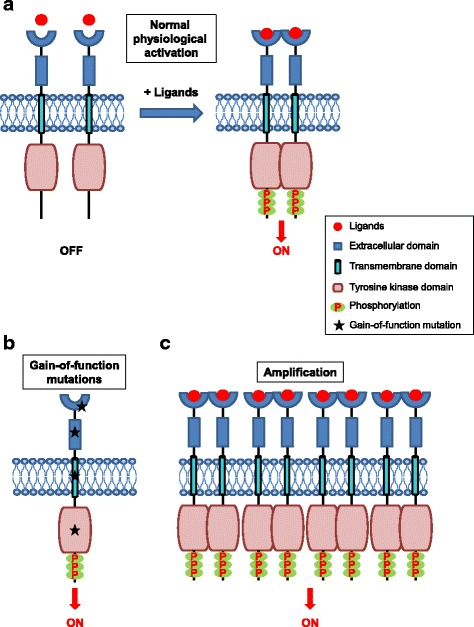
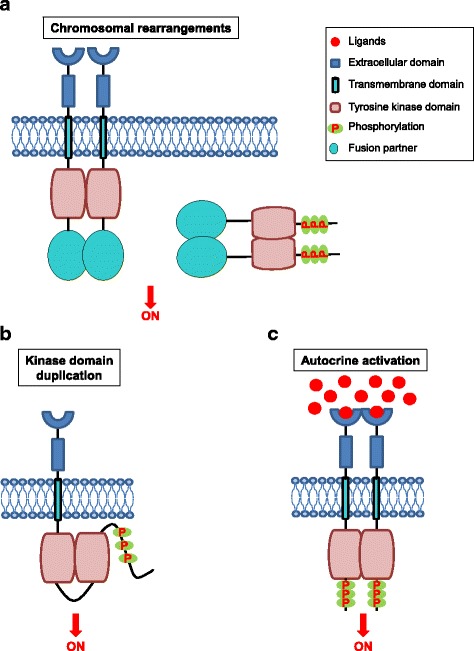
Receptor tyrosine kinases (RTKs) play an important role in a variety of cellular processes including growth, motility, differentiation, and metabolism. As such, dysregulation of RTK signaling leads to an assortment of human diseases, most notably, cancers. Recent large-scale genomic studies have revealed the presence of various alterations in the genes encoding RTKs such as EGFR, HER2/ErbB2, and MET, amongst many others. Abnormal RTK activation in human cancers is mediated by four principal mechanisms: gain-of-function mutations, genomic amplification, chromosomal rearrangements, and / or autocrine activation. In this manuscript, we review the processes whereby RTKs are activated under normal physiological conditions and discuss several mechanisms whereby RTKs can be aberrantly activated in human cancers. Understanding of these mechanisms has important implications for selection of anti-cancer therapies.
Overview
The claims and statistics of this paper haven’t been checked yet.
Free: it reads the open-access text and checks the first 5 claims that cite a source we can check. Create a free account to check every claim.
Integrity signals
Registry
Cites
Statistics
Figures
Verification
Claims the paper makes
The claims and statistics of this paper haven’t been checked yet.
Free: it reads the open-access text and checks the first 5 claims that cite a source we can check. Create a free account to check every claim.
Claims other papers make about this one
Each is checked against this paper’s own text: does it say what the citing paper says it does?
The source backs part of the claim, not all of it — or backs it for a different population, condition or comparison.
In the citing paper
“KRAS-mutant tumors are often insensitive to KRAS-targeted therapy due to feedback reactivation of upstream RTKs, which are crucial for cancer cell signaling [62, 63].”
From Differential Response and Resistance to KRAS-Targeted Therapy (2025) · cites this paper as [63]
Experimental — accuracy not yet measured
Self-check
Percentages, sums and reported differences re-computed from the paper’s own numbers.
The self-check needs the paper’s full text.
Citations
Cites
Gefitinib or Carboplatin–Paclitaxel in Pulmonary Adenocarcinoma
Mok, T. S., Wu, Y.-L., Thongprasert, S., Yang, C.-H., Chu, D.-T., Saijo, N., Sunpaweravong, P., Han, B., Margono, B., Ichinose, Y., et al. (2009) · New England Journal of Medicine · doi:10.1056/nejmoa0810699 · Cited by 8,261
The protein kinase complement of the human genome
Manning, G., Whyte, D. B., Martinez, R., Hunter, T., & Sudarsanam, S. (2002) · Science · doi:10.1126/science.1075762 · Cited by 8,145 · cited 1×
“There are 58 known RTKs in humans [1, 2], and all RTKs share a similar protein structure comprised of an extracellular ligand binding domain, a single transmembrane helix, and an intracellular region that contains a juxtamembrane regulatory region, a tyrosine kinase domain (TKD) and a carboxyl (C-) terminal tail [3].”
Cell Signaling by Receptor Tyrosine Kinases
Lemmon, M. A., & Schlessinger, J. (2010) · Cell · doi:10.1016/j.cell.2010.06.011 · Cited by 7,929
Vogelstein, B., Papadopoulos, N., Velculescu, V. E., Zhou, S., Diaz, L. A., & Kinzler, K. W. (2013) · Science · doi:10.1126/science.1235122 · Cited by 7,863
Comprehensive molecular profiling of lung adenocarcinoma
The Cancer Genome Atlas Research Network (2014) · Nature · doi:10.1038/nature13385 · Cited by 5,732
Gefitinib or Chemotherapy for Non–Small-Cell Lung Cancer with Mutated EGFR
Maemondo, M., Inoue, A., Kobayashi, K., Sugawara, S., Oizumi, S., Isobe, H., Gemma, A., Harada, M., Yoshizawa, H., Kinoshita, I., et al. (2010) · New England Journal of Medicine · doi:10.1056/nejmoa0909530 · Cited by 5,525
Osimertinib in Untreated EGFR -Mutated Advanced Non–Small-Cell Lung Cancer
Soria, J.-C., Ohe, Y., Vansteenkiste, J., Reungwetwattana, T., Chewaskulyong, B., Lee, K. H., Dechaphunkul, A., Imamura, F., Nogami, N., Kurata, T., et al. (2018) · New England Journal of Medicine · doi:10.1056/nejmoa1713137 · Cited by 5,508 · cited 1×
“Novel approaches have been shown to effectively overcome acquired resistance, including the development of second-generation [191, 192] and third-generation inhibitors [193, 194] and the combinational use of TKIs with monoclonal antibodies against the same target [195].”
Rosell, R., Carcereny, E., Gervais, R., Vergnenegre, A., Massuti, B., Felip, E., Palmero, R., Garcia-Gomez, R., Pallares, C., Sanchez, J. M., et al. (2012) · The Lancet Oncology · doi:10.1016/s1470-2045(11)70393-x · Cited by 5,489
Identification of the transforming EML4–ALK fusion gene in non-small-cell lung cancer
Soda, M., Choi, Y. L., Enomoto, M., Takada, S., Yamashita, Y., Ishikawa, S., Fujiwara, S.-I., Watanabe, H., Kurashina, K., Hatanaka, H., et al. (2007) · Nature · doi:10.1038/nature05945 · Cited by 5,439 · cited 3×
“Instead, such proteins typically localize to the cytoplasm, as is the case for the EML4-ALK fusion protein [124].”
Trastuzumab plus Adjuvant Chemotherapy for Operable HER2-Positive Breast Cancer
Romond, E. H., Perez, E. A., Bryant, J., Suman, V. J., Geyer, C. E., Davidson, N. E., Tan-Chiu, E., Martino, S., Paik, S., Kaufman, P. A., et al. (2005) · New England Journal of Medicine · doi:10.1056/nejmoa052122 · Cited by 5,356 · cited 1×
“cetuximab in lung cancer [181], panitumumab in colon cancer [182], cetuximab in head and neck cancer [183], trastuzumab and pertuzumab in breast cancer [184, 185].”
Research works printed but not linked: 1
- Soria JC, Ohe Y, Vansteenkiste J, Reungwetwattana T, Chewaskulyong B, Lee KH, et al. Osimertinib in untreated EGFR-mutated advanced non-small-cell lung cancer. N Engl J Med. 2018;378:113-25. · DOI · Paper page
Cited by
Items 601–700 of 1,000
Wang, S., Cheng, L., Jing, F., & Gan, L. (2022) · BMC Medical Genomics · doi:10.1186/s12920-022-01329-2 · Cited by 7
“In addition, GO enrichment analysis suggested that these IRGs possess multiple molecular functions and engagement in various biological processes such as cell chemotaxis and receptor ligand activity, which are involved in tumour development and metastasis [32, 33].”
BackgroundWu, X., Huang, S., Fan, W., Tang, W., & Qiu, H. (2011) · 四川大学学报:医学版 · Cited by 7
Frassanito, P., Thomale, U. W., Obersnel, M., Romano, A., Leblond, P., Knerlich‐Lukoschus, F., Due‐Tønnessen, B. J., Thompson, D. N. P., Rocco, F. D., & the CPN Lyon 2024 Consensus Conference Group (2025) · Child s Nervous System · doi:10.1007/s00381-025-06799-0 · Cited by 6
“Autophosphorylation of RTKs recruits and activates a wide variety of downstream signalling proteins including Ras/MAPK/ERK and PI3K/AKT, leading to cell proliferation, invasions, and angiogenesis [24].”
Peng, N., Mao, L., Su, J., Liu, S., Ou, J., Chen, S., Su, Z., Li, W., Yang, F., Zhou, Y.-H., et al. (2025) · Frontiers in Immunology · doi:10.3389/fimmu.2025.1593153 · Cited by 6
“…interruption, withholding, or dose reduction during the treatment process, and may also be related to the mechanism of action of TKIs, which involves inhibiting abnormally activated tyrosine kinases in proliferating tumor cells, thereby suppressing tumor cell proliferation and angiogenesis (35).”
Wei, S.-S., Jhang, W.-E., Liu, Y.-C., Chuang, C.-C., & Ou, Y. (2025) · Journal of Chemical Information and Modeling · doi:10.1021/acs.jcim.5c00766 · Cited by 7
EGFR blockade confers sensitivity to pan-RAS inhibitors in KRAS-mutated cancers
Han, J., Yu, B., Jing, J., He, X., Hua, Y., & Xu, G. (2025) · Cellular Oncology · doi:10.1007/s13402-025-01075-4 · Cited by 6
“In the majority of human cancers, RTKs and their downstream signaling cascade mediate key oncogenic signaling pathways that are involved in cell proliferation, differentiation, survival and migration [1, 2].”
Zhao, F., Xia, W., Wang, Y., Hu, S., Zhang, X., & Zhang, J. Z. H. (2025) · International Journal of Biological Macromolecules · doi:10.1016/j.ijbiomac.2025.146212 · Cited by 6
Giacoletto, C. J., Valente, L. J., Brown, L., Patterson, S. E., Gokhale, R. H., Mockus, S. M., Grody, W. W., Deng, H., Rotter, J. I., & Schiller, M. R. (2025) · Genomics · doi:10.1016/j.ygeno.2025.111118 · Cited by 6
“For example, V560G in KIT and V561D in PDGFRA are known to drive oncogenic signaling (52).”
Zhan, M., Yang, R., Gu, Y., Zhu, J., Guo, M., Pupwe, G., Huang, X., Xu, H., Jia, Z., Takehiro, K., et al. (2025) · Molecular Biomedicine · doi:10.1186/s43556-025-00360-w · Cited by 6
Eltaib, L., Afzal, M., Maji, C., Malathi, H., Goyal, K., Ali, H., Gupta, G., & Hussain, M. S. (2025) · Cancer Chemotherapy and Pharmacology · doi:10.1007/s00280-025-04848-8 · Cited by 6
“The dual nature of receptor tyrosine kinase (RTK) cascades in the TME enables cancer cells to evade suppression by ADCs [103].”
Cihan‐Üstündağ, G., Cinek, T., Sancar, S., Yıldırım, M., Genç, Ö., Eroğlu, G. Ö., Erol-Bozkurt, A., Öztay, F., Eter, Ö. S., Bolkent, Ş., et al. (2025) · European Journal of Medicinal Chemistry · doi:10.1016/j.ejmech.2025.118509 · Cited by 6
The critical role of the proto-oncogene c-Kit in TSC renal cystogenesis
Zahedi, K. A., Barone, S., Brooks, M., Zhang, W., Yu, J. J., Zaidman, N. A., & Soleimani, M. (2025) · EMBO Molecular Medicine · doi:10.1038/s44321-025-00360-x · Cited by 6
“…affected tissues (Huo et al, 2005; Miliaras et al, 2004; Tabone-Eglinger et al, 2008), the former results in ligand independent activation of c-KIT (Du and Lovly, 2018; Tabone-Eglinger et al, 2008), and has been implicated in the development of variety of cancers including gastrointestinal stromal…”
Drug discovery for cancer therapy with special reference to inhibitors of protein kinase pathway
Nayak, C., & Singh, S. K. (2022) · Elsevier eBooks · doi:10.1016/b978-0-323-91287-7.00024-7 · Cited by 6
Zhang, M., Lai, W., Zhang, J., Hu, B., Huang, L., & Chu, C. (2022) · Disease Markers · doi:10.1155/2022/6957580 · Cited by 6
“Lenvatinib is an inhibitor for tyrosine kinase receptor (RTK), which can inhibit the kinase activity of VEGF receptors such as VEGFR1 (Flt1), VEGFR2 (KDR), and VEGFR3 (Flt4) [24].”
BackgroundRetractedDena-Beltrán, J. L., Nava, P., Palmerín-Carreño, D. M., Martínez-Alarcón, D., Moreno‐Celis, U., Valle-Pacheco, M., Castro-Guillén, J. L., Blanco‐Labra, A., & García-Gasca, T. (2023) · Pharmaceuticals · doi:10.3390/ph16020290 · Cited by 6
“The activation of these receptors depends on the binding with their specific ligands that promote dimerization or oligomerization with conformational changes and the recruitment of downstream proteins [15,16].”
BackgroundZheng, Q., Guo, J., Ma, R., & Pu, W. (2024) · MedComm – Oncology · doi:10.1002/mog2.64 · Cited by 6
Munikumar, M., Pradeepkiran, J. A., Kumar, M. K., Banapuram, S., & Edurkala, A. B. (2024) · Cancer Treatment and Research Communications · doi:10.1016/j.ctarc.2024.100795 · Cited by 6
Correlation Analysis of Genetic Mutations and Galectin Levels in Breast Cancer Patients
Markalunas, E. G., Arnold, D. H., Funkhouser, A., Martin, J., Shtutman, M. S., Edenfield, W. J., & Blenda, A. V. (2024) · Genes · doi:10.3390/genes15060818 · Cited by 6
“Often in cancer, mutations of genes encoding RTKs result in a gain of function, thereby facilitating cell proliferation, differentiation, and migration [4].”
BackgroundThe MET Family of Receptor Tyrosine Kinases Promotes a Shift to Pro-Tumor Metabolism
Davis, J. C., & Waltz, S. E. (2024) · Genes · doi:10.3390/genes15070953 · Cited by 6
“Upon overexpression of the receptor or stimulation with the receptor’s ligand, receptor monomers dimerize either as homodimers or heterodimers and induce downstream signaling via direct and indirect phosphorylation of target proteins [6].”
BackgroundImpact of cell plasticity on prostate tumor heterogeneity and therapeutic response
Archer, M., Lin, K. M., Kolanukuduru, K. P., Zhang, J. N., Ben‐David, R., Kotula, L., & Kyprianou, N. (2024) · American Journal of Clinical and Experimental Urology · doi:10.62347/yfrp8901 · Cited by 6
The Molecular Basis of Pediatric Brain Tumors: A Review with Clinical Implications
Antoniades, E., Keffes, N., Vorri, S. C., Tsitouras, V., Gkantsinikoudis, N., Tsitsopoulos, P., & Magras, J. (2025) · Cancers · doi:10.3390/cancers17091566 · Cited by 6
A mutation-specific, single-arm, phase 2 study of dovitinib in patients with advanced malignancies
Taylor, M. H., Alva, A. S., Larson, T. G., Szpakowski, S., Purkaystha, D., Amin, A., Karpiak, L., & Piha-Paul, S. A. (2020) · Oncotarget · doi:10.18632/oncotarget.27530 · Cited by 6
“Mutations in RTKs that result in aberrant signaling have been linked to tumorigenesis [2].”
BackgroundCryo-EM studies of the apo states of human IGF1R
Zhang, X., Wu, C., Wei, T., Lü, Y., Liu, C., & Zhang, J. (2022) · Biochemical and Biophysical Research Communications · doi:10.1016/j.bbrc.2022.05.063 · Cited by 6
Intracellular Cardiac Signaling Pathways Altered by Cancer Therapies
Scott, S. S., Greenlee, A. N., Schwendeman, E. J., Mohammad, S. J., Naughton, M. T., Matzko, A., Diallo, M., Stein, M., Revan, R., Zaramo, T. Z., et al. (2022) · Springer eBooks · doi:10.1007/978-3-031-08309-9_4 · Cited by 6
KIT genetic alterations in breast cancer
Vahdatinia, M., Derakhshan, F. N., Paula, A. D. C., Dopeso, H., Marra, A., Gazzo, A. M., Brown, D. N., Selenica, P., Ross, D. S., Razavi, P., et al. (2022) · Journal of Clinical Pathology · doi:10.1136/jcp-2022-208611 · Cited by 6
Olukunle, O. F., Omoboyede, V., & Chukwuemeka, P. O. (2023) · Journal of Biomolecular Structure and Dynamics · doi:10.1080/07391102.2023.2220823 · Cited by 6
“These functions include protein tyrosine kinase activity which is critical for growth and differentiation in response to external stimuli and protein serine/threonine kinase activity which is important for apoptosis (Du & Lovly, 2018).”
BackgroundSzeitz, B., Glasz, T., Herold, Z., Tóth, G., Balbisi, M., Fillinger, J., Horváth, S., Mohácsi, R., Kwon, H. J., Moldvay, J., et al. (2023) · International Journal of Molecular Sciences · doi:10.3390/ijms241411369 · Cited by 6
“Investigation of pathway-level differences of tumors compared to NATs mirrored known cancer hallmarks, including the impairment of glycolysis [34], unfolded protein response [35], translation [36], ECM organization [37] pathways or signaling by RTKs [38].”
BackgroundEldaly, S. M., Zakaria, D. S., & Metwally, N. H. (2023) · Chemistry & Biodiversity · doi:10.1002/cbdv.202300138 · Cited by 6
Luthfiana, D., Soleha, M., Prasetiyo, A., Kusuma, W. A., Fatriani, R., Nurfadhila, L., Yunitasari, N., Ahkam, A. H., Wargasetia, T. L., Irfandi, R., et al. (2023) · Food systems · doi:10.21323/2618-9771-2023-6-3-365-389 · Cited by 7
González, M. G., Rakers, P. R. J., Jespers, W., IJzerman, A. P., Heitman, L. H., & van Westen, G. J. P. (2024) · International Journal of Molecular Sciences · doi:10.3390/ijms25073698 · Cited by 6
“The intracellular kinase domain can phosphorylate downstream kinases, which can induce a range of different cellular effects such as cellular differentiation, growth, and proliferation [22].”
BackgroundInfluentialWang, C., Lei, L., Yang, X., Li, Y., Zhang, J., Xu, Y., & Si, S. (2024) · Pharmaceuticals · doi:10.3390/ph17040425 · Cited by 6
“A total of 58 RTKs have been found in humans, and many of them play an essential role in regulating differentiation, cell growth, and cell metabolism [12].”
BackgroundCharacterization and clustering of kinase isoform expression in metastatic melanoma
Holland, D. O., Gotea, V., Fedkenheuer, K., Jaiswal, S. K., Baugher, C., Tan, H., Fedkenheuer, M., & Elnitski, L. L. (2022) · PLoS Computational Biology · doi:10.1371/journal.pcbi.1010065 · Cited by 6
“Specifically, mutations have been observed in kinases serving as growth factor receptors [4], cell cycle regulators [5,6], nuclear signaling [7], and apoptosis regulators [8].”
BackgroundChang, W., Lin, H., Chang, T., Lin, S., & Li, Y. (2023) · Frontiers in Oncology · doi:10.3389/fonc.2023.1172036 · Cited by 6
“Given the pivotal role of tyrosine kinases in regulating extracellular signals that control cell growth, differentiation, metabolism, and survival (7, 10, 21), inhibition of tyrosine kinases may result in the development of HF, coronary spasm, and thromboembolic events (22, 23).”
BackgroundCombining Three Tyrosine Kinase Inhibitors: Drug Monitoring Is the Key
Thomas, Q. D., Firmin, N., Mbatchi, L., Evrard, A., Quantin, X., & Leenhardt, F. (2023) · International Journal of Molecular Sciences · doi:10.3390/ijms24065518 · Cited by 6
Assessing the Activation of Tyrosine Kinase KIT through Free Energy Calculations
Sandoval‐Pérez, A., Winger, B. A., & Jacobson, M. P. (2022) · Journal of Chemical Theory and Computation · doi:10.1021/acs.jctc.2c00526 · Cited by 5
Lenvatinib Suppresses Protein Kinase B Signaling and Induces Apoptosis in Osteosarcoma Cells
LI, C.-Y., CHEN, H.-C., Liao, C., Hsu, F., Hung, K.-C., Liu, K.-C., Chen, J., & Ku, M.-C. (2023) · Anticancer Research · doi:10.21873/anticanres.16790 · Cited by 5
Epigenetic modifications in abdominal aortic aneurysms: from basic to clinical
Liu, Y., Sun, X., Gou, Z., Deng, Z., Zhang, Y., Zhao, P., Sun, W., Bai, Y., & Jing, Y. (2024) · Frontiers in Cardiovascular Medicine · doi:10.3389/fcvm.2024.1394889 · Cited by 5
“RTKs play crucial regulatory roles not only in normal cells but also have pivotal functions in the progression of various cancers, including lung cancer, gastric cancer, thyroid cancer, etc (152).”
BackgroundNovel insight into mechanisms of ROS1 catalytic activation via loss of the extracellular domain
Jones, K. L., Keddy, C., Jenkins, C., Nicholson, K. S., Shinde, U. P., & Davare, M. A. (2024) · Scientific Reports · doi:10.1038/s41598-024-71687-7 · Cited by 5
Kinase-Targeted Therapies for Glioblastoma
Salbini, M., Formato, A., Mongiardi, M. P., Levi, A., & Falchetti, M. L. (2025) · International Journal of Molecular Sciences · doi:10.3390/ijms26083737 · Cited by 5
“The role of altered kinase activity in different neoplasms has been widely addressed [8], and the study of anti-kinase molecules has become central in the anti-cancer research of the 21st century (for recent reviews see [9,10]), including those on glioblastoma [11–13].”
Sorafenib with or without co-interventions for hepatocellular carcinoma
Chen, S., Liu, J., Li, X., Dang, S., & Li, W. (2025) · Cochrane Database of Systematic Reviews · doi:10.1002/14651858.cd015851 · Cited by 5
“TKIs are a class of compounds that can suppress the growth and metastasis of tumour cells by inhibiting the phosphorylation of tyrosine residues in proteins and blocking the downstream signal pathways (Du 2018; Tan 2018).”
Ho, E. K., Kim, R., Simpkins, A. G., Farahani, P. E., Oatman, H. R., Pósfai, E., Shvartsman, S. Y., & Toettcher, J. E. (2025) · Cell Reports · doi:10.1016/j.celrep.2025.115930 · Cited by 5
“40 The homologous recombination cassette contains the 3× CD3 ε ITAM sequence, a P2A self-cleaving peptide sequence, and a fluorescently tagged ZtSH2 (Figure 1B).”
Non-oncologic to oncologic drug: A systematic review of drug repurposing in cancer
Dhanush, Y., & Ganesh, V. S. (2025) · Cancer Chemotherapy and Pharmacology · doi:10.1007/s00280-025-04822-4 · Cited by 5
“These mechanisms are typically acti - vated when specific molecules attach to receptors located on the cell’s exterior membrane, many of which contain intracellular tyrosine kinase domains [18].”
ERBB2/ERBB3‑mutated S100/SOX10‑positive high‑grade uterine sarcoma—a case report on a rare entity
Huang, X., He, Y., & Wang, W. (2025) · Archiv für Pathologische Anatomie und Physiologie und für Klinische Medicin · doi:10.1007/s00428-025-04257-5 · Cited by 5
“…activation of HER2 promotes the formation of kinase‑active hetero‑oligomers, which in turn stimulate intracellular sur‑ vival pathway cascades [5] Amplification of ERBB2 leads to persistent dysregulated survival signaling and plays a prominent role in the initiation and maintenance of several…”
Structural insights into Wnt/β-catenin signaling regulation by LGR4, R-spondin, and ZNRF3
Peng, Y., Fujimura, A., Asami, J., Zhang, Z., Shimizu, T., & Ohto, U. (2025) · Nature Communications · doi:10.1038/s41467-025-64129-z · Cited by 5
“Receptor tyrosine kinases undergo ligand-induced dimerization, triggering trans-autophosphorylation and subsequent activation 36 – 38 .”
Sawiris, M. M., Khalil, O. M., Halim, P. A., & Hassan, M. S. A. (2025) · Bioorganic Chemistry · doi:10.1016/j.bioorg.2025.109075 · Cited by 5
Li, J., Song, N., Ma, R., & Qu, X. (2025) · International Journal of Biological Sciences · doi:10.7150/ijbs.118831 · Cited by 5
“Upon activation, RTKs recruit and modulate various downstream signaling cascades, such as the RAS/MAPK, PI3K/AKT, and JAK2/STAT pathways [124].”
A single urine test-based SERS–AI–BAM for on-site multiple cancer diagnosis and metabolite profiling
Seo, H. J., Kim, J. Y., Linh, V. T. N., Heo, B. Y., Yang, J.-Y., Park, R., Han, I. W., Park, S.-G., 이민영, Choi, S. S., et al. (2026) · Chemical Engineering Journal · doi:10.1016/j.cej.2026.173116 · Cited by 5
Zhou, L.-N., Peng, S.-Q., Chen, X.-L., Zhu, X., Jin, A., Liu, Y.-Y., Zhu, L., & Zhu, Y.-Q. (2022) · Oxidative Medicine and Cellular Longevity · doi:10.1155/2022/8550817 · Cited by 5
“Activation of RTKs plays a crucial role in a variety of cellular functions including proliferation, di ff erentiation, and metabolism [32 – 34].”
Ye, P., Chen, Z., Lou, H., Mai, Y., Zhu, X., & Fu, X. (2023) · Journal of Clinical and Experimental Hepatology · doi:10.1016/j.jceh.2023.04.004 · Cited by 5
Moeinafshar, A., Nouri, M., Shokrollahi, N., Masrour, M., Behnam, A., Fateh, S. T., Sadeghi, H., Miryounesi, M., & Ghasemi, M. (2024) · Cancer Cell International · doi:10.1186/s12935-023-03203-2 · Cited by 5
“Dysregulation of RTK signaling, which is commonly observed in various types of cancer, has been implicated in tumor growth, invasion, and metastasis [11, 12].”
BackgroundShi, H., Yuan, M., Cai, J., Shi, J., Li, Y., Qian, Q., Dong, Z., Pan, G., Zhu, S., Wang, W. J., et al. (2024) · Scientific Reports · doi:10.1038/s41598-024-57097-9 · Cited by 5
Shi, Y., Cheng, Y., Wang, W., Tang, L., Li, W., Zhang, L., Zheng, Y., Zhu, F., & Duan, Q. (2024) · Scientific Reports · doi:10.1038/s41598-024-61157-5 · Cited by 5
Acosta-Ramos, E., Mendoza, M. S., & Olivares-Reyes, J. A. (2024) · Interdisciplinary cancer research · doi:10.1007/16833_2024_281 · Cited by 6
Lou, Y., Xu, B., Huang, K., Li, X., Jin, H., Ding, L., Ning, S., & Chen, X. (2024) · Biochemical Pharmacology · doi:10.1016/j.bcp.2024.116414 · Cited by 5
Liu, K., Lu, J., Lin, J., Cong, Y., Luo, X., Huang, Z., Zhang, T., Wang, M., Xie, Z., & Li, H. (2025) · Chinese Chemical Letters · doi:10.1016/j.cclet.2025.111049 · Cited by 5
Singh, P., Chaturvedi, R., & Somvanshi, P. (2025) · Cancer Medicine · doi:10.1002/cam4.70674 · Cited by 5
“Activation by ligands triggers signaling pathways influencing cell division, migration, differentiation, and apoptosis [63].”
Kurillová, A., Kvítek, L., & Panáček, A. (2025) · Pharmaceutics · doi:10.3390/pharmaceutics17060783 · Cited by 5
Huang, Y., Kong, Y., Wei, Z., & Ye, X. (2022) · Asia-Pacific Journal of Clinical Oncology · doi:10.1111/ajco.13875 · Cited by 5
Protein Kinase Inhibitors as a New Target for Immune System Modulation and Brain Cancer Management
Filippone, A., Mannino, D., Casili, G., Lanza, M., Paterniti, I., Cuzzocrea, S., Capra, A. P., Colarossi, L., Giuffrida, D., Lombardo, S. P., et al. (2022) · International Journal of Molecular Sciences · doi:10.3390/ijms232415693 · Cited by 5
“RTKs are involved in mediating cell-to-cell communication and controlling biological functions, including cell growth, motility, differentiation, and metabolism [28].”
BackgroundCADD for Cancer Therapy: Current and Future Perspective
Ejiofor, I. I., Ekeomodi, C. C., IlecChukwu, A. U., & Ochiamu, M. C. (2023) · Biological and medical physics, biomedical engineering · doi:10.1007/978-981-19-9786-0_9 · Cited by 5
Chen, K., Ge, L., & Liu, G. (2023) · Journal of Bioinformatics and Computational Biology · doi:10.1142/s0219720023500075 · Cited by 5
Insights into receptor tyrosine kinases signaling in neurodegenerative disorders
Randhawa, P. K., Jaggi, A. S., & Bali, A. (2023) · Elsevier eBooks · doi:10.1016/b978-0-443-18677-6.00001-4 · Cited by 5
Utilizing bivalent aptamers as first DNA agonist to activate RTKs heterodimer of different families
Liu, K., Cong, Y., Luo, X., Yao, M., Xie, Z., & Li, H. (2024) · Chinese Chemical Letters · doi:10.1016/j.cclet.2024.109839 · Cited by 5
The role of mesenchymal cells in cholangiocarcinoma
Sueca-Comes, M., Rusu, E. C., Ashworth, J. C., Collier, P., Probert, C., Ritchie, A., Meakin, M. L., Mongan, N. P., Egbuniwe, I. U., Andersen, J. B., et al. (2024) · Disease Models & Mechanisms · doi:10.1242/dmm.050716 · Cited by 5
Small Molecule Inhibitors of MERTK and FLT3 Induce Cell Cycle Arrest in Human CD8+ T Cells
Powell, R., Peeters, M. J. W., Rahbech, A., Aehnlich, P., Seremet, T., & Straten, P. T. (2021) · Vaccines · doi:10.3390/vaccines9111294 · Cited by 5
“Key factors for metabolism and growth (Pi3K, AKT, mTOR), migration (RAS/MAPK), cell signaling (STAT), and cell survival and motility (PKC) are activated by RTKs, whereby constitutive expression can govern oncogenesis [2].”
BackgroundDecoupling the dynamic mechanism revealed by FGFR2 mutation-induced population shift
Zhang, Y., Yin, X., Ji, M., Chen, Y., & Chai, Z. (2023) · Journal of Biomolecular Structure and Dynamics · doi:10.1080/07391102.2023.2217924 · Cited by 5
“…to abnormal activation of downstream pathways, such as the RAS-Raf-MAPK, JAK-STAT, and PI3K-AKT-mTOR pathways (Xie et al., 2020; Zheng et al., 2022), which contributes to the development and progression of serious diseases such as dysplasia (Anvarian et al., 2019) and malignancy (Du & Lovly, 2018).”
BackgroundAnsari, S., & Verma, M. (2023) · Medical Oncology · doi:10.1007/s12032-023-02116-4 · Cited by 5
“Detection of mutations is done by qRT-PCR, considered a technique with hyper-sensitivity that is used for the detection and quantification of transcribed mRNA into complementary DNA (cDNA) that undergoes PCR amplification [1, 106].”
MethodTGFα Promotes Chemoresistance of Malignant Pleural Mesothelioma
Staumont, B., Jamakhani, M., Costa, C., Vandermeers, F., Sriramareddy, S. N., Redouté, G., Mascaux, C., Delvenne, P., Hubert, P., Safari, R., et al. (2020) · Cancers · doi:10.3390/cancers12061484 · Cited by 5
“EGFR can be targeted by monoclonal antibodies (cetuximab) and TKIs (gefinitib and erlotinib) [26].”
BackgroundZhang, X., Liang, Y., Li, Y., & Yin, J. (2020) · Advances in Therapy · doi:10.1007/s12325-020-01545-1 · Cited by 5
ELAPOR1 suppresses tumor progression in colorectal cancer and indicates favorable prognosis
Huang, A., Qin, C., Wu, M., Zhang, D., Wu, G., & Sun, P. (2023) · Cancer Biomarkers · doi:10.3233/cbm-220285 · Cited by 4
“This composition is similar to the receptor tyrosine kinase, integrin, ligand, and cytokine receptors, which are various membrane-binding proteins that characterize the cells [19–21].”
Niu, Y., Zhu, X., Ma, D., Pan, Q., & Li, X. (2025) · Biochemical Genetics · doi:10.1007/s10528-025-11070-x · Cited by 4
“Therefore, kinase inhibitors are considered promising candidates for anticancer drugs (Du and Lovly 2018; Yuan et al. 2022).”
Li, J., & Yuan, L. (2025) · Iranian Journal of Public Health · doi:10.18502/ijph.v54i4.18410 · Cited by 4
Dermatomyofibromas harbor PDGFRB mutations – another tyrosine kinase-driven neoplasm
Flucke, U. E., Hiemcke‐Jiwa, L. S., van Gorp, J. M., Hayes, D., Seyger, M. M. B., Koudijs, M. J., Kester, L. A., van Helvert, S., & van Cruchten, R. T. P. (2025) · Archiv für Pathologische Anatomie und Physiologie und für Klinische Medicin · doi:10.1007/s00428-025-04128-z · Cited by 4
“Constitutive activation of PDGFRB results, like in other RTKs, in elevated signal transduction of the PI3 K-AKT-mTOR pathway [4, 11, 13, 33].”
Liu, M., Wang, X., Sun, Z.-L., Yang, X. H., & Chen, X. (2025) · Interdisciplinary Sciences Computational Life Sciences · doi:10.1007/s12539-025-00731-5 · Cited by 4
“Tyrosine protein kinases are critical mediators of signaling cascades and play key roles in biological processes such as growth, metabolism, differentiation, and apoptosis in response to stimuli [27, 28].”
AlRaheem, Z. S. G., Le, T. T., Seyfoddin, A., & Li, Y. (2025) · Current Issues in Molecular Biology · doi:10.3390/cimb47080584 · Cited by 4
“Many studies have demonstrated that lung cancer patients with EGFR kinase domain mutations benefit from EGFR-TKI treatments, while those with wild-type EGFR do not show similar advantages [61].”
Sharma, A., Narasimhan, B., & Marwaha, R. K. (2025) · ChemistrySelect · doi:10.1002/slct.202502264 · Cited by 4
Active regulation of the epidermal growth factor receptor by the membrane bilayer
Srinivasan, S., Lin, X., Chen, X., Regmi, R., Zhang, B., & Schlau‐Cohen, G. S. (2026) · eLife · doi:10.7554/elife.108789.3 · Cited by 3
Naufal, M., Hermawati, E., Danova, A., Hidayat, I. W., & Anshori, J. A. (2025) · ChemistryOpen · doi:10.1002/open.202500158 · Cited by 4
Machine learning identifies proteomic risk factors across 23 diseases
Meng, L., Li, M., Kong, X., Zhang, T., Álvez, M. B., Liao, X., Türkez, H., Altay, Ö., Zhang, C., Uhlén, M., et al. (2026) · iScience · doi:10.1016/j.isci.2026.114687 · Cited by 4
“52,53 55 NF2, which encodes the tumor suppressor Merlin, acts as a critical negative regulator of RTK-mediated signaling.”
Jafari, A., Fathi, S., Moosavi, F., & Firuzi, O. (2026) · Biochimica et Biophysica Acta (BBA) - Reviews on Cancer · doi:10.1016/j.bbcan.2026.189552 · Cited by 4
Ilić, A., Zukic, S., Oljačić, S., Maran, U., Nikolic, K. M., & Popović-Nikolić, M. R. (2026) · Pharmaceutics · doi:10.3390/pharmaceutics18020273 · Cited by 4
“Among them, receptor tyrosine kinases (RTKs) are particularly important, as their activation initiates downstream signaling pathways that regulate tumor cell proliferation and angiogenesis [9].”
Chakraborty, S., Baruah, R., Mishra, N., & Varma, A. K. (2023) · Genomics & Informatics · doi:10.5808/gi.22069 · Cited by 4
“Mutations reported in different functional domains of RTKs are linked to the kinase constitutive expression, ligand-independent signaling, and drug sensitivity [1].”
BackgroundDecision making in clinical trials: Interim analyses, innovative design, and biomarkers
Welsh-Bohmer, K. A., Kerchner, G. A., Dhadda, S., Garcia, M., Miller, D. S., Natanegara, F., Rakêt, L. L., Robieson, W., Siemers, E., Carrillo, M. C., et al. (2023) · Alzheimer s & Dementia Translational Research & Clinical Interventions · doi:10.1002/trc2.12421 · Cited by 4
“42 Thismovetowardabiologicalclassification of disease in turn inspired novel clinical trial designs that moved the field in the direction of targeted therapies and personalized medicine.”
BackgroundBreast Cancer Therapies: A Review
Adebayo, K. S., Ajao, J. J., Oderemi, O. M., & Ughagwu, K. P. (2024) · Asian Pacific Journal of Cancer Biology · doi:10.31557/apjcb.2024.9.1.53-59 · Cited by 4
“While the functional mechanism of the HER2 receptor is simple in organisms like Caenorhabditis elegans and Drosophila , it is far more complex in mammals, especially humans where at least twelve ligands and 4 receptors are required for signaling [9].”
BackgroundReciprocal regulation of MMP-28 and EGFR is required for sustaining proliferative signaling in PDAC
Hong, Z., Huang, X., Xia, L., Liang, T., & Bai, X. (2025) · Journal of Experimental & Clinical Cancer Research · doi:10.1186/s13046-025-03323-9 · Cited by 4
“RTKs are the largest class of enzyme-linked receptors including EGFR, PDGFR, IGFR, VEGFR, and so on [15, 16].”
Li, X., Chen, Z., Yin, J., Shen, X., & Li, H. (2025) · BMC Cancer · doi:10.1186/s12885-025-14639-2 · Cited by 4
“Targeting tyrosine kinase receptors is critical in CRC treatment, as these receptors mediate multiple oncogenic signaling pathways, including cell proliferation, angiogenesis, and metastasis [13].”
Kremmydas, S., Gourdoupi, C., Piperigkou, Z., & Karamanos, N. K. (2025) · International Journal of Molecular Sciences · doi:10.3390/ijms26178665 · Cited by 5
“In cancer, dysregulation of RTKs leads to constant activation and disruption in the equilibrium between cell growth and cell death, promoting cancer progression [16,17].”
PDGFRA in paediatric high-grade glioma – target or distraction?
Le, N., Chen, J., Ekert, P. G., Brown, L. M., & Manoharan, N. (2025) · Neoplasia · doi:10.1016/j.neo.2025.101231 · Cited by 4
“Constitutive autocrine signalling leads to unregulated cellular proliferation and invasion, and can synergise with other autocrine pathways to drive tumorigenesis[53].”
Mycobacterium Tubercular Mediated Inflammation and Lung Carcinogenesis: Connecting Links
Vashishth, A., Shuaib, M., Bansal, T., & Kumar, S. (2023) · OBM Genetics · doi:10.21926/obm.genet.2302183 · Cited by 4
Comparative Atomistic Insights on Apo and ATP-I1171N/S/T in Nonsmall-Cell Lung Cancer
Balasundaram, A., & Doss, C. G. P. (2023) · ACS Omega · doi:10.1021/acsomega.3c05785 · Cited by 4
Lin, Y., Zhu, Y., Li, X., Qi, C., & Wu, G. (2023) · Journal of Holistic Integrative Pharmacy · doi:10.1016/j.jhip.2023.12.001 · Cited by 4
Advances in pediatric gliomas: from molecular characterization to personalized treatments
Sathyakumar, S., Martinez, M., Perreault, S., Legault, G., Bouffet, É., Jabado, N., Larouche, V., & Renzi, S. (2024) · European Journal of Pediatrics · doi:10.1007/s00431-024-05540-4 · Cited by 4
“Like other tyrosine kinase receptors (TRKs), FGFR1 plays an important role in critical cell functions such as cell proliferation, differentiation, and metabolism and is hence susceptible to lead to oncogenesis when dysregulated [26, 27].”
Elucidating the effective age for dietary restriction and the key metabolites involved
Loo, J., Gunasekaran, G., Tan, J. K., & Goon, J. A. (2024) · Experimental Gerontology · doi:10.1016/j.exger.2024.112601 · Cited by 4
“Tyrosine phosphorylation on receptor tyrosine kinases (RTKs) is initiated by growth factors like insulin and IGF-1(Du and Lovly, 2018).”
InfluentialPutra, P. P., Indradi, R. B., Yuniarta, T. A., Hanifa, D., Syaban, M. F. R., & Suharti, N. (2024) · Journal of Herbmed Pharmacology · doi:10.34172/jhp.2024.52544 · Cited by 4
“Understanding the mechanisms of these receptors could provide new insights into anti-cancer therapies (38).”
BackgroundOptogenetics and Its Transformative Role in Tissue Engineering and Regenerative Medicine
Camcıoglu, E., Mohammadrezaloo, D. G., & Dinç, B. (2024) · Nano Select · doi:10.1002/nano.202400013 · Cited by 4
Cellular signals integrate cell cycle and metabolic control in cancer
Akekawatchai, C., & Jitrapakdee, S. (2023) · Advances in protein chemistry and structural biology · doi:10.1016/bs.apcsb.2023.01.002 · Cited by 4
Gain-of-Function Variomics and Multi-omics Network Biology for Precision Medicine
Li, M. M., Awasthi, S., Ghosh, S. K., Bisht, D., Coban‐Akdemir, Z., Sheynkman, G., Sahni, N., & Yi, S. S. (2023) · Methods in molecular biology · doi:10.1007/978-1-0716-3163-8_24 · Cited by 5
Singh, K., & Gautam, P. K. (2023) · Journal of Cancer Immunology · doi:10.33696/cancerimmunol.5.076 · Cited by 4
“Within this microenvironment, transformed cancer cells secrete autocrine growth factors such as fibroblast growth factor (FGF), hepatocyte growth factor (HGF), epidermal growth factor (EGF), and transforming growth factor (TGF), which encourage cancer cell proliferation and bind to receptor tyrosine kinases (RTKs) [18…”
BackgroundUbiquitin-specific proteases as targets for anticancer drug therapies
Campos-Iglesias, D., López-Otín, C., & Freije, J. M. P. (2020) · Elsevier eBooks · doi:10.1016/b978-0-12-818168-3.00004-8 · Cited by 4
Rampogu, S. D., Lee, G., Ravinder, D., & Lee, K. W. (2020) · Computational Biology and Chemistry · doi:10.1016/j.compbiolchem.2020.107242 · Cited by 4
Metadata
- Authors
- Du, Z., & Lovly, C. M.
- Affiliations
- Vanderbilt University Medical Center (US)
- Vanderbilt-Ingram Cancer Center (US)
- Corresponding author
- Lovly, Christine M.
- Venue
- Molecular Cancer
- Published
- 2018-02-19
- Volume
- 17
- Issue
- 1
- Pages
- 58-58
- ISSN
- 1476-4598 (ISSN-L)
- PMC
- PMC5817791
- OpenAlex
- W2795353688
- Cited by
- 1,066
- References
- 199
- Citations by year
- 2026: 87 · 2025: 166 · 2024: 213 · 2023: 176 · 2022: 152 · 2021: 142 · 2020: 88 · 2019: 31 · 2018: 9
- FWCI
- 7.12
- Type
- journal article
- Language
- en
- Open access
- gold
- doi.org
- Licence
- cc-by
- creativecommons.org/licenses/by/4.0/ (tdm)
- creativecommons.org/licenses/by/4.0/ (vor)
- Locations
- Molecular Cancer (publishedVersion, cc-by)
- PubMed Central (publishedVersion, cc-by)
- PubMed (publishedVersion)
- DOAJ (DOAJ: Directory of Open Access Journals) (submittedVersion, cc-by-sa)
- Funders
- National Institutes of Health (R01CA121210, P01CA129243, U10CA180864, P30CA068485-13S5)
- Topics
- Health Sciences › Medicine › Oncology › HER2/EGFR in Cancer Research
- Life Sciences › Biochemistry, Genetics and Molecular Biology › Molecular Biology › Protein Kinase Regulation and GTPase Signaling
- Life Sciences › Biochemistry, Genetics and Molecular Biology › Cancer Research › Cancer Mechanisms and Therapy
- Keywords
- receptor tyrosine kinase, receptor tyrosine kinase signaling, cancer, gain-of-function mutations, gene amplification, chromosomal rearrangements, autocrine activation, EGFR, human epidermal growth factor receptor 2, MET, cancer therapy
- MeSH terms
- Animals, Cell Transformation, Neoplastic, Enzyme Activation, Humans, Ligands, Mutation, Neoplasms, Phosphorylation, Protein Binding, Signal Transduction, Gene Expression Regulation, Neoplastic, Receptor Protein-Tyrosine Kinases, Protein Kinase Inhibitors, Protein Interaction Domains and Motifs, Protein Multimerization, Molecular Targeted Therapy
About these checks
Registry, retraction, Cites and statistics results are computed, not judged, with one exception: a printed reference that no index lists is read once by a model before it counts as a citation error. Claims are extracted by a model and kept only when their quote appears verbatim in the text; each cited source is then checked, with a model’s help, for whether it says what the claim relies on. Those verdicts can be wrong — read the claim’s quote and the cited source before relying on one.
Statistics and arithmetic are recomputed, not judged.
Confidence bands are shown only for fields calibrated on our annotated test set. None is calibrated yet, so no band is shown.
What counts as a claim ›How we measure confidence ›How we check this ›
Are you an author, or do you see a problem with this page? Request a review
Data sources
Bibliographic data: Semantic Scholar, OpenAlex, Crossref.
Contains information from the Semantic Scholar Academic Graph Datasets, made available under the ODC Attribution License (ODC-BY 1.0).
Semantic Scholar’s data is described in: Kinney, R., et al. (2023). The Semantic Scholar Open Data Platform. arXiv:2301.10140.
