

Mechanisms of receptor tyrosine kinase activation in cancer
Open accessThe DOI matches its Crossref record; 199 of the 199 references it cites were found in a registry or an index.
Abstract
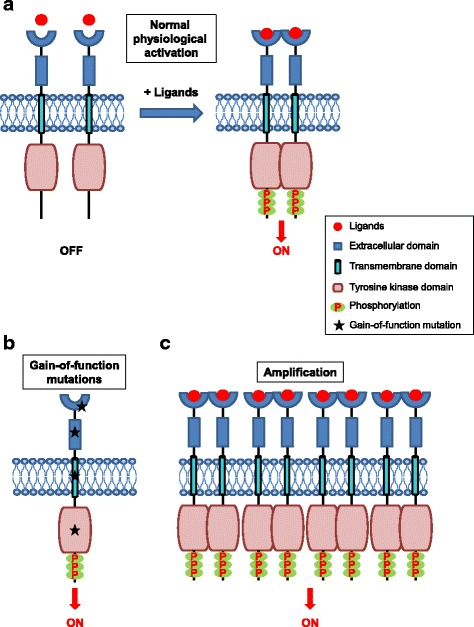
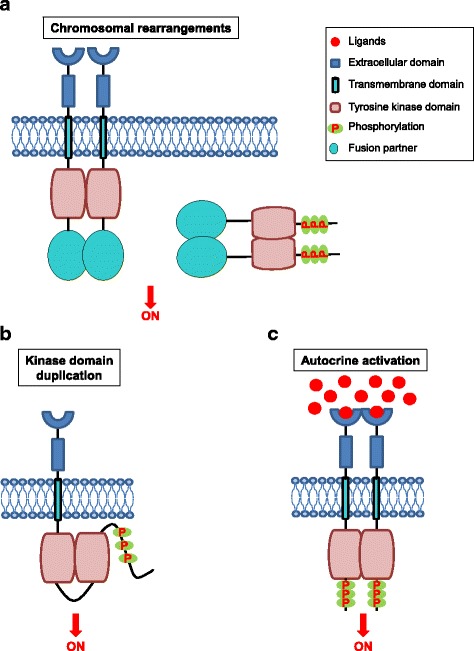
Receptor tyrosine kinases (RTKs) play an important role in a variety of cellular processes including growth, motility, differentiation, and metabolism. As such, dysregulation of RTK signaling leads to an assortment of human diseases, most notably, cancers. Recent large-scale genomic studies have revealed the presence of various alterations in the genes encoding RTKs such as EGFR, HER2/ErbB2, and MET, amongst many others. Abnormal RTK activation in human cancers is mediated by four principal mechanisms: gain-of-function mutations, genomic amplification, chromosomal rearrangements, and / or autocrine activation. In this manuscript, we review the processes whereby RTKs are activated under normal physiological conditions and discuss several mechanisms whereby RTKs can be aberrantly activated in human cancers. Understanding of these mechanisms has important implications for selection of anti-cancer therapies.
Overview
The claims and statistics of this paper haven’t been checked yet.
Free: it reads the open-access text and checks the first 5 claims that cite a source we can check. Create a free account to check every claim.
Integrity signals
Registry
Cites
Statistics
Figures
Verification
Claims the paper makes
The claims and statistics of this paper haven’t been checked yet.
Free: it reads the open-access text and checks the first 5 claims that cite a source we can check. Create a free account to check every claim.
Claims other papers make about this one
Each is checked against this paper’s own text: does it say what the citing paper says it does?
The source backs part of the claim, not all of it — or backs it for a different population, condition or comparison.
In the citing paper
“KRAS-mutant tumors are often insensitive to KRAS-targeted therapy due to feedback reactivation of upstream RTKs, which are crucial for cancer cell signaling [62, 63].”
From Differential Response and Resistance to KRAS-Targeted Therapy (2025) · cites this paper as [63]
Experimental — accuracy not yet measured
Self-check
Percentages, sums and reported differences re-computed from the paper’s own numbers.
The self-check needs the paper’s full text.
Citations
Cites
Gefitinib or Carboplatin–Paclitaxel in Pulmonary Adenocarcinoma
Mok, T. S., Wu, Y.-L., Thongprasert, S., Yang, C.-H., Chu, D.-T., Saijo, N., Sunpaweravong, P., Han, B., Margono, B., Ichinose, Y., et al. (2009) · New England Journal of Medicine · doi:10.1056/nejmoa0810699 · Cited by 8,261
The protein kinase complement of the human genome
Manning, G., Whyte, D. B., Martinez, R., Hunter, T., & Sudarsanam, S. (2002) · Science · doi:10.1126/science.1075762 · Cited by 8,145 · cited 1×
“There are 58 known RTKs in humans [1, 2], and all RTKs share a similar protein structure comprised of an extracellular ligand binding domain, a single transmembrane helix, and an intracellular region that contains a juxtamembrane regulatory region, a tyrosine kinase domain (TKD) and a carboxyl (C-) terminal tail [3].”
Cell Signaling by Receptor Tyrosine Kinases
Lemmon, M. A., & Schlessinger, J. (2010) · Cell · doi:10.1016/j.cell.2010.06.011 · Cited by 7,929
Vogelstein, B., Papadopoulos, N., Velculescu, V. E., Zhou, S., Diaz, L. A., & Kinzler, K. W. (2013) · Science · doi:10.1126/science.1235122 · Cited by 7,863
Comprehensive molecular profiling of lung adenocarcinoma
The Cancer Genome Atlas Research Network (2014) · Nature · doi:10.1038/nature13385 · Cited by 5,732
Gefitinib or Chemotherapy for Non–Small-Cell Lung Cancer with Mutated EGFR
Maemondo, M., Inoue, A., Kobayashi, K., Sugawara, S., Oizumi, S., Isobe, H., Gemma, A., Harada, M., Yoshizawa, H., Kinoshita, I., et al. (2010) · New England Journal of Medicine · doi:10.1056/nejmoa0909530 · Cited by 5,525
Osimertinib in Untreated EGFR -Mutated Advanced Non–Small-Cell Lung Cancer
Soria, J.-C., Ohe, Y., Vansteenkiste, J., Reungwetwattana, T., Chewaskulyong, B., Lee, K. H., Dechaphunkul, A., Imamura, F., Nogami, N., Kurata, T., et al. (2018) · New England Journal of Medicine · doi:10.1056/nejmoa1713137 · Cited by 5,508 · cited 1×
“Novel approaches have been shown to effectively overcome acquired resistance, including the development of second-generation [191, 192] and third-generation inhibitors [193, 194] and the combinational use of TKIs with monoclonal antibodies against the same target [195].”
Rosell, R., Carcereny, E., Gervais, R., Vergnenegre, A., Massuti, B., Felip, E., Palmero, R., Garcia-Gomez, R., Pallares, C., Sanchez, J. M., et al. (2012) · The Lancet Oncology · doi:10.1016/s1470-2045(11)70393-x · Cited by 5,489
Identification of the transforming EML4–ALK fusion gene in non-small-cell lung cancer
Soda, M., Choi, Y. L., Enomoto, M., Takada, S., Yamashita, Y., Ishikawa, S., Fujiwara, S.-I., Watanabe, H., Kurashina, K., Hatanaka, H., et al. (2007) · Nature · doi:10.1038/nature05945 · Cited by 5,439 · cited 3×
“Instead, such proteins typically localize to the cytoplasm, as is the case for the EML4-ALK fusion protein [124].”
Trastuzumab plus Adjuvant Chemotherapy for Operable HER2-Positive Breast Cancer
Romond, E. H., Perez, E. A., Bryant, J., Suman, V. J., Geyer, C. E., Davidson, N. E., Tan-Chiu, E., Martino, S., Paik, S., Kaufman, P. A., et al. (2005) · New England Journal of Medicine · doi:10.1056/nejmoa052122 · Cited by 5,356 · cited 1×
“cetuximab in lung cancer [181], panitumumab in colon cancer [182], cetuximab in head and neck cancer [183], trastuzumab and pertuzumab in breast cancer [184, 185].”
Research works printed but not linked: 1
- Soria JC, Ohe Y, Vansteenkiste J, Reungwetwattana T, Chewaskulyong B, Lee KH, et al. Osimertinib in untreated EGFR-mutated advanced non-small-cell lung cancer. N Engl J Med. 2018;378:113-25. · DOI · Paper page
Cited by
Items 801–900 of 1,000
Qi, L., Wu, Y., Zhang, B., Zhou, Y., He, L., Zhang, M., Wang, K., Chen, M., & He, X. (2025) · ACS Applied Materials & Interfaces · doi:10.1021/acsami.5c09210 · Cited by 2
Tseng, T., Kao, S., Yang, S., Lin, Y., Lin, C., Chen, J.-L., Chen, C.-M., & Hsieh, Y. (2025) · Cell Death Discovery · doi:10.1038/s41420-025-02681-9 · Cited by 2
“Protein tyrosine kinases (PTKs) and the associated pathways are crucial in regulating tumorigenic features such as proliferation, invasion, and acquired drug resistance [6].”
Pokharkar, K., Siddiki, A. A., & Chauhan, R. S. (2025) · ChemistrySelect · doi:10.1002/slct.202501650 · Cited by 2
Bette, M., Nowak-Rossmann, A., & Mandić, R. (2018) · Anticancer Research · doi:10.21873/anticanres.12826 · Cited by 2
Lee, J., Chen, R., Mohanakumar, T., Bremner, R. M., Mittal, S. K., & Fleming, T. P. (2021) · OncoTargets and Therapy · doi:10.2147/ott.s309388 · Cited by 2
Therapeutic approaches to overcome temozolomide resistance in glioblastoma
Gergues, M., Savanur, V. H., Prado, D., Eljarrah, A., Liu, J. K., Jaloudi, M., & Rameshwar, P. (2021) · Elsevier eBooks · doi:10.1016/b978-0-12-821567-8.00012-9 · Cited by 2
A Common Molecular Switch for H2S to Regulate Multiple Protein Targets
Tao, B., & Zhu, Y. (2021) · Advances in experimental medicine and biology · doi:10.1007/978-981-16-0991-6_1 · Cited by 2
Lu, G. X., Li, X., Zhang, J., & Xu, Q. (2021) · Amino Acids · doi:10.1007/s00726-021-03083-8 · Cited by 2
“Receptor tyrosine kinases (RTKs) are a subclass of tyrosine kinases that are involved in mediating cell-to-cell communication and controlling a wide range of complex biological functions such as cell growth, motility, differentiation and metabolism (Du and Lovly 2018).”
BackgroundKaur, M., Kaur, R., Saini, H., & Singh, P. (2022) · Journal of Molecular Structure · doi:10.1016/j.molstruc.2022.134819 · Cited by 2
Filis, G., Baltoumas, F. A., Spanogiannis, G., Litou, Z. I., & Iconomidou, V. A. (2023) · Biomolecules · doi:10.3390/biom13020270 · Cited by 3
“Moreover, they have been the basis of research for new potential drugs [6,17–22].”
BackgroundTherapeutic Implications of Oncogenic Missense HER2 (ERBB2) Mutations in Gastric Adenocarcinoma
King, D. A., Weiel, J. J., Reyes, R., Mills, M. A., Itchon, A., Fisher, G. A., Ford, J. M., & Suarez, C. J. (2023) · JCO Precision Oncology · doi:10.1200/po.22.00093 · Cited by 2
Long non-coding RNAs and tyrosine kinase-mediated drug resistance in pancreatic cancer
Li, D., Weng, S., Zeng, K., Xu, H., Wang, W., Shi, J., Chen, J., & Chen, C. (2023) · Gene · doi:10.1016/j.gene.2023.148007 · Cited by 2
Nie, X., Nasim, A. A., Yao, X., & Fan, X. (2023) · Chemical Biology & Drug Design · doi:10.1111/cbdd.14408 · Cited by 2
“EGFR mutations include point mutations, deletions and insertions within exons 18–25 of the EGFR gene (Du & Lovly, 2018; Harrison et al., 2020; Wang et al., 2011).”
BackgroundCuello, M., Rivello, H. G., Garaicoa, F. H., Irigoyen-Piñeiros, P., Lara-Torres, C. O., Rizzo, M., Ticona-Castro, M., Trejo, R., & Zoroquiaín, P. (2023) · Future Oncology · doi:10.2217/fon-2023-0552 · Cited by 2
Johnston, E. F. (2019) · The Atrium (University of Guelph) · Cited by 2
Huang, L., Zhang, X.-O., Verdejo‐Torres, O., Wigglesworth, K., Sun, X., Sallis, B., Moon, D., Huang, T., Rozen, E. J., Wang, G., et al. (2020) · bioRxiv (Cold Spring Harbor Laboratory) · doi:10.1101/2020.08.12.246660 · Cited by 2
Metabolism and Distribution of Novel Tumor Targeting Drugs In Vivo
Wang, M., Du, Q., Zuo, L., Xue, P., Lan, C., & Sun, Z. (2020) · Current Drug Metabolism · doi:10.2174/1389200221666201112110638 · Cited by 1
Wnt signaling and Hedgehog expression in basal cell carcinoma
Houschyar, K. S., Borrelli, M. R., Tapking, C., Rein, S., Popp, D., Puladi, B., Wallner, C., Schulz, T., Maan, Z. N., Duscher, D., et al. (2021) · European Journal of Plastic Surgery · doi:10.1007/s00238-021-01920-3 · Cited by 1
Vandetanib as a prospective anti-inflammatory and anti-contractile agent in asthma
Zeng, X., Xue, L., Li, W., Zhao, P., Chen, W., Wang, W., & Shen, J. (2024) · Frontiers in Pharmacology · doi:10.3389/fphar.2024.1345070 · Cited by 1
“Several tyrosine kinases, including receptor tyrosine kinase (RTK), Bruton ’ s tyrosine kinase (BTK) and spleen tyrosine kinase (SYK), are key mediators that play critical roles in multiple humandiseases(Mocsai etal., 2010; Du and Lovly, 2018; Liang et al., 2018).”
BackgroundGowthami, M., & Rajesh, R. (2024) · Research Journal of Pharmacy and Technology · doi:10.52711/0974-360x.2024.00461 · Cited by 1
Jones, C. M., Rohwedder, A., Suen, K. M., Mohajerani, S. Z., Calabrese, A. N., Knipp, S., Bedford, M. T., & Ladbury, J. E. (2024) · Heliyon · doi:10.1016/j.heliyon.2024.e35480 · Cited by 1
“Despite this, there is evidence that overexpression of wild-type RTKs also closely correlates with outcomes in a number of malignancies [2].”
BackgroundInfluentialThoracic radiation in combination with erlotinib—results from a phase 2 randomized trial
Nymoen, H. M., Alver, T. N., Horndalsveen, H., Eide, H., Bjaanæs, M. M., Brustugun, O. T., Grønberg, B. H., Haakensen, V. D., & Helland, Å. (2024) · Frontiers in Oncology · doi:10.3389/fonc.2024.1412716 · Cited by 1
Rahmani, F., Ajoudanifar, H., Soleimani, N. A., & Fooladi, A. A. I. (2024) · Breast Cancer · doi:10.1007/s12282-024-01625-y · Cited by 1
“Activation of the EGF receptor after ligand binding leads to receptor internalization and trafficking to the cells primary endosome compartment [39, 40].”
Murphy, S. (2024) · Veterinary Clinics of North America Equine Practice · doi:10.1016/j.cveq.2024.07.001 · Cited by 1
Modulating membrane-bound enzyme activity with chemical stimuli.
Zhou, Z.-L., Huang, Z., Tang, Y., Zhu, Y., & Li, J. (2024) · European journal of medicinal chemistry · doi:10.1016/j.ejmech.2024.116964
Dawoud, R. A., Saman, H. T., Rasul, K. I., Jibril, F., Sahal, A., Al‐Okka, R., Mahfouz, Y., Omar, N. E., Hamad, A. A., Mohsen, R., et al. (2024) · Clinical Medicine Insights Oncology · doi:10.1177/11795549241272490 · Cited by 1
Sağlık Bilimlerinde Akademik Araştırma ve Değerlendirmeler II
BİLGİLİ, A., Yıldırım, K., FIRAT, M., Kavurmacı, M., Yıldız, B. C. D., Sarıaslan, A., Yıldız, İ., Pala, A. İ., Temiz, Ö., Öztürk, G., et al. (2024) · Özgür Yayınları eBooks · doi:10.58830/ozgur.pub566 · Cited by 1
Kang, X., Ma, L., Wen, J., Gong, W., Liu, X., Hu, Y., Feng, Z., Jing, Q., Cai, Y., Li, S., et al. (2025) · Frontiers in Molecular Neuroscience · doi:10.3389/fnmol.2024.1457874 · Cited by 1
Exploring the conformational space of ROS1 kinase domain and the impact of allosteric mutations
Haq, F. U., Vilachã, J. F., de Beeck, K. O., Camp, G. V., Marrink, . J., & Vandeweyer, G. (2025) · Journal of Biomolecular Structure and Dynamics · doi:10.1080/07391102.2024.2448677 · Cited by 2
“ROS1 is one of the more recently described kinases in the context of NSCLC.”
InfluentialSynthesis and Antitumor Activity of 6-(2-Aminobenzo[d]thiazol-5-yl) quinazolin-4(3H)-one Derivatives
Linghu, A., Tang, L., Li, Q., Zhong, T., Luo, F., Zhao, X. O., Zhang, F., Su, M., Fan, Y., & Li, L. (2025) · ACS Omega · doi:10.1021/acsomega.4c08645 · Cited by 1
Tyrosine kinase inhibitors in modern oncotherapy
Cherneva, D., & Gerova, D. I. (2024) · Scripta Scientifica Medica · doi:10.14748/ssm.v55i3.10121 · Cited by 1
Krishnan, D., Suresh, S., George, N. A., Anila, K. R., & Kannan, S. (2025) · Journal of Cancer Research and Therapeutics · doi:10.4103/jcrt.jcrt_460_24 · Cited by 1
In Silico Modeling of Drug–Receptor Interactions for Rational Drug Design in Neuropharmacology
Shrivastav, P., Prajapati, B. G., Chandarana, C. V., & Prajapati, P. (2025) · Wiley eBooks · doi:10.1002/9781394242474.ch4 · Cited by 1
Adeniran, A. A., & Adenaya, A. (2024) · Tropical Journal of Phytochemistry and Pharmaceutical Sciences · doi:10.26538/tjpps/v3i5.5 · Cited by 1
Qiu, Y., Wu, X., Luo, Y., Shen, L., Guo, A., Jiang, J., Zhu, L., Zhang, Y., Han, F., & Yu, E. (2025) · Clinical and Experimental Medicine · doi:10.1007/s10238-025-01556-8 · Cited by 1
“Dysregulation in kinase signaling, manifested through various abnormalities such as overexpression, aberrant localization, point mutations, or disruptions in upstream signaling pathways, has been implicated in the development of cancer and a range of human disorders [12, 18–20].”
Role of Receptor Tyrosine Kinase AXL in Cancer
Kumar, R., Tanwar, P., Bhatia, D. D., & Solanki, R. (2025) · Cancer drug discovery and develogment/Cancer drug discovery and development · doi:10.1007/978-3-031-93894-8_4 · Cited by 1
Elucidating the risk factors and oncogene drivers of acute myeloid leukemia
Sanya, D. R. A., & Onésime, D. (2025) · Human Cell · doi:10.1007/s13577-025-01294-9 · Cited by 1
Yang, S. R. E., & Nie, Z. (2025) · Mechanobiology in Medicine · doi:10.1016/j.mbm.2025.100160 · Cited by 1
Pyrazoline Derivatives as EGFR Inhibitor: Mini Review
Bhendarkar, K. P., Khedekar, P. B., Wanode, D. M., & Ambatkar, M. P. (2025) · Research Journal of Pharmacy and Technology · doi:10.52711/0974-360x.2025.00734 · Cited by 1
Emerging interventional treatments in the management of pediatric brain tumors
Shatara, M., Ho, W. S., Roland, J. L., & Limbrick, D. D. (2025) · Advances in cancer research · doi:10.1016/bs.acr.2025.09.004 · Cited by 1
Double minutes: exploring the formation and oncogenic roles in cancer progression
Sanam, M., Hossain, C. F. T. Z., Oishi, J. F., Tarannum, R., & Rouf, N. Z. (2025) · Gene · doi:10.1016/j.gene.2025.149879 · Cited by 1
Ejaz, S., Paracha, R. Z., Nisar, M., Amir, A., Saleem, K., & Malik, F. P. (2025) · Journal of Bioinformatics and Computational Biology · doi:10.1142/s0219720025500222 · Cited by 1
Ayatollahi, H., Jafarian, A. H., Emamdadi‐Aliabad, Z., Ranjbar, F., Mehrad‐Majd, H., & Oudi, B. (2025) · Iranian journal of pathology · doi:10.30699/ijp.2025.2057190.3438 · Cited by 1
“It comprises an extracellular ligand-binding domain, a single transmembrane helix, and an intracellular tyrosine kinase domain (17).”
Lyu, N., Hassanzadeh‐Barforoushi, A., Zhang, W., Ngo, C. H. L., Hnit, S. S. T., Inglis, D. W., & Wang, Y. (2025) · ACS Nano · doi:10.1021/acsnano.5c18375 · Cited by 1
A Chemically Inducible Multimerization System for Tunable and Background-Free RTK Activation
Zheng, Y., Fei, J., Chakrabarti, A., & Zhou, R. (2026) · Analytical Chemistry · doi:10.1021/acs.analchem.5c05190 · Cited by 1
Multi-tyrosine kinase inhibitors in paediatric soft tissue sarcoma – A review
Schellekens, K. P. J., Ferrari, A., Meister, M. T., Zwaan, C. M., Gatz, S. A., van Noesel, M. M., Casanova, M., & Schoot, R. A. (2026) · EJC Paediatric Oncology · doi:10.1016/j.ejcped.2026.100484 · Cited by 1
Guan, X., Liu, T., Chen, S., Zhang, J., Huang, H., Chen, D., & Yang, Q. (2026) · Journal of Biological Chemistry · doi:10.1016/j.jbc.2026.111170 · Cited by 1
“The synergistic amplification of malignant phenotypes upon coexpression further underscores their complementary functions, a phenomenon previously observed in fusion gene systems such as BCR-ABL1 and its circular isoforms (32).”
Liu, R., Qi, J., Liu, Y., Hou, M., Zhang, M., An, X., & Hu, J. (2026) · International Immunopharmacology · doi:10.1016/j.intimp.2026.116249 · Cited by 1
Dutta, P., Middya, S., Shome, S., Gupta, M. K., Dharmalingam, P., & Sudandiradoss, C. (2026) · Molecular and Cellular Probes · doi:10.1016/j.mcp.2026.102063 · Cited by 1
ERKed by too much signaling: from oncogenic driver to therapeutic vulnerability
Farnsworth, D., Naznin, F., Subramaniam, A., Sew, K., & Lockwood, W. (2026) · Cellular and Molecular Life Sciences (CMLS) · doi:10.1007/s00018-026-06084-6 · Cited by 1
“Phosphorylated ERK (pERK) is typically activated downstream of receptor tyrosine kinases (RTKs) and RAS proteins via the sequential activation of RAF and MEK kinases [76 ].”
Zhang, Y., Wang, H., Wei, Y., Pan, Y., Song, X., Shao, J., Yu, L., Shi, T., & Wang, Y. (2026) · eLife · doi:10.7554/elife.104060.3 · Cited by 1
Lights up on the embryonic dance: tools and applications of optogenetics in developmental biology
Gao, Y., Ho, E. K., & Toettcher, J. E. (2026) · Genes & Development · doi:10.1101/gad.353459.125 · Cited by 1
“A challenge for ectopic expression of light-induced receptors is that in many cases, overexpression is a well-established mechanism for ligand-independent activation (Du and Lovly 2018).”
Wang, D.-C., Li, J., Wang, X.-B., Hu, G.-S., Nie, R.-C., Zheng, B., He, Y., & Liu, W. (2026) · PLoS Biology · doi:10.1371/journal.pbio.3003729 · Cited by 1
“Protein kinase activity is known to be dysregulated in many diseases, including cancer [50,51].”
Chuang, C., Huang, H.-H., Wu, Y., Chen, C.-H., Weng, S.-L., Chiu, Y.-C., & Liao, K.-W. (2026) · Computational and Structural Biotechnology Journal · doi:10.34133/csbj.0109 · Cited by 1
Targeting non‑small cell lung cancer: Molecular mechanisms and clinical studies (Review)
Luo, Y., Yin, G., Luo, X., Liu, Y., Jin, K., & Wang, Z. (2026) · Oncology Letters · doi:10.3892/ol.2026.15663 · Cited by 1
“Dysregulation of EGFR signaling is caused mainly by point mutations, receptor amplification or ligand overproduction (119).”
Deciphering O-GlcNAc-Dependent Signaling Via Integrated Proteomics and Phosphoproteomics
Wu, C., Hou, C., Wang, X., Peng, Y., Lin, Y., Byers, S. W., Pei, H., & Ma, J. (2026) · ACS Omega · doi:10.1021/acsomega.6c02310 · Cited by 1
“53,54 Consequently, PTPs have emerged as promising targets for therapeutic intervention.”
Engineering a Transmembrane Receptor for Coacervate-Based Artificial Cells
van Veldhuisen, T. W., Raeven, L. M. V., van Herwijnen, N., Nathalia, B. L., Meuleman, T. J., Le, D. H. T., Gräwe, A., Goñi, V. R., Pistikou, A. M., Brunsveld, L., et al. (2026) · Journal of the American Chemical Society · doi:10.1021/jacs.6c03433 · Cited by 1
“25 Inspired by the modular architecture of native dimeric receptors such as the IL-2R or receptor tyrosine kinases, 26 we present a modular synthetic receptor design for coacervate-based artificial cells (Figure 1).”
Mapping The Pathways of Breast Cancer: Molecular Insights and Therapeutic Opportunities
Gupta, M., Kumar, U., & Singh, S. (2026) · Defence Life Science Journal · doi:10.14429/dlsj.21066 · Cited by 1
“HER2 phosphoryla-tion may lead to the activation of the PI3K/AKT/mTOR pathway 72-73 .”
Advances in the design and discovery of small-molecule tyrosine kinase inhibitors for breast cancer
Elwaie, T. A., Aref, M. M. A., & Ali, H. I. (2026) · RSC Advances · doi:10.1039/d6ra03011d · Cited by 1
“34 Kinases catalyze the transfer of a phosphate group from ATP to speci c amino acid residues in protein substrates, modulating their function and activity.”
Sayed, K. A. E. (2021) · Elsevier eBooks · doi:10.1016/b978-0-12-819528-4.00037-7 · Cited by 1
Patranabis, S. (2021) · Biochemistry · doi:10.5772/intechopen.98497 · Cited by 1
Hammad, S. (2021) · American Journal of Biomedical Science & Research · doi:10.34297/ajbsr.2021.13.001888 · Cited by 1
Vemulapalli, V., Blacklow, S. C., Gygi, S. P., & Erickson, A. R. (2022) · BIO-PROTOCOL · doi:10.21769/bioprotoc.4311 · Cited by 1
“These activated RTKs can initiate a wide range of downstream signaling pathways, such as RAS/MAPK or PI3K/AKT signaling, which elicit oncogenic responses in cells (Du and Lovly, 2018).”
Efficient expression, purification, and visualization by cryo-EM of unliganded near full-length HER3
Diwanji, D. C., Trenker, R., Jura, N., & Verba, K. A. (2022) · Methods in enzymology on CD-ROM/Methods in enzymology · doi:10.1016/bs.mie.2022.03.048 · Cited by 1
Receptor Tyrosine Kinase Pathway and Infiltrating Urothelial Carcinoma
Büyücek, Ş., Coşkun, S. K., Önal, B., Gamsızkan, M., Cangür, Ş., & Eşbah, O. (2022) · Journal of Environmental Pathology Toxicology and Oncology · doi:10.1615/jenvironpatholtoxicoloncol.2022044380 · Cited by 1
Comparison of Biomarkers Between Hepatic Tumors in Rat Models and a Dog
Kim, S., Kim, Y., Kim, S. E., & Kim, H. (2023) · In Vivo · doi:10.21873/invivo.13075 · Cited by 1
Melanoma and Glioblastoma—Not a Serendipitous Association
Oh, K. S., & Mahalingam, M. (2023) · Advances in Anatomic Pathology · doi:10.1097/pap.0000000000000393 · Cited by 1
Targeted Therapies in Gallbladder Cancer: Current Status and Future Perspectives
Dixit, M., Jeeyar, V., & Choudhury, S. (2023) · Springer eBooks · doi:10.1007/978-981-19-6442-8_16 · Cited by 1
Target Hyperactive ERK Signaling for Cancer Therapy
Yap, J., & Hu, J. (2023) · Springer eBooks · doi:10.1007/978-3-030-80962-1_257-1 · Cited by 1
Virtual screening of natural product as TAM family of RTK inhibitor
Dholakia, S. P., Kher, M. N., Sharma, A., Sangani, R. S., & Sureja, D. K. (2023) · Elsevier eBooks · doi:10.1016/b978-0-443-15457-7.00010-1 · Cited by 1
Refining triple negative breast cancer targeted therapy: special focus on tyrosine kinase receptors
Ramzy, A., Nafea, H., Eltahtawy, O., Rashan, L. J., El‐Shazly, M., & Youness, R. A. (2022) · Scaffold Press Books · doi:10.52679/978-81-952885-6-4_2 · Cited by 1
Thakur, N., Quazi, S., Naik, B., Jha, S. K., & Singh, P. (2023) · Frontiers in Oncology · doi:10.3389/fonc.2023.1193736 · Cited by 1
“These pathways are responsible for promoting cell survival , proliferation, and invasiveness (81).”
BackgroundRetractedErmawati, N. (2023) · JURNAL FARMASI DAN KESEHATAN INDONESIA · doi:10.61179/jfki.v3i1.408 · Cited by 1
“Proses perubahan pada titik 790 diuraikan pada penelitian Du dan Lovly dkk [11].”
BackgroundThe Prognostic and Functional Impact of Sprouty 2 Expression in Non–small Cell Lung Cancer
Açıkgöz, Y., Yıldırım, F., Esen, S. A., Uçar, G., Ergün, Y., Bal, Ö., Doğan, M., & Uncu, D. (2023) · American Journal of Clinical Oncology · doi:10.1097/coc.0000000000001044 · Cited by 1
Bali, A. (2022) · Neuroscience and Neurological Surgery · doi:10.31579/2578-8868/239 · Cited by 1
El‐Ashmawy, N. E., Khedr, E. G., Khedr, N. F., & El‐Adawy, S. A. (2023) · Pathology - Research and Practice · doi:10.1016/j.prp.2023.154907 · Cited by 1
AGENTES ANTINEOPLÁSICOS BIORREDUTÍVEIS: AVANÇOS E DESAFIOS APÓS 20 ANOS
Santana, P. A. L., Marques, G., Cortezzi, M., Alves, R. J., & de Oliveira, R. B. (2023) · Química Nova · doi:10.21577/0100-4042.20230115 · Cited by 1
Development of nanoparticles for the Novel anticancer therapeutic agents for Acute Myeloid Leukemia
Bhagwat, A. A., Doke, R. R., Ghule, S. D., & Gandhi, B. R. (2023) · International Journal of Pharmaceutical Sciences and Nanotechnology · doi:10.37285/ijpsn.2023.16.4.7 · Cited by 1
Vaarala, O., Liikkanen, S., & Moilanen, A. (2023) · Royal Society of Chemistry eBooks · doi:10.1039/9781788018982-00514 · Cited by 1
Elucidating the Role of Wildtype and Variant FGFR2 Structural Dynamics in (Dys)Function and Disorder
Lian, Y., Bodian, D. L., & Shehu, A. (2024) · International Journal of Molecular Sciences · doi:10.3390/ijms25084523 · Cited by 1
“Dysregulation of RTKs, often caused by gain-of-function mutations, genomic amplifications, chromosomal rearrangements, or autocrine signaling mechanisms, has been implicated in the pathogenesis of numerous human cancers [2–4].”
BackgroundPalupi, E. S., Retnoaji, B., Astutı, P., Alamsyah, F., Taruno, W. P., & Pratiwi, R. (2024) · Indonesian Journal of Biotechnology · doi:10.22146/ijbiotech.87396 · Cited by 1
“A review stated that the activation of abnormal re ceptor tyrosine kinase (RTK) in cancer possibly occurred through one or more of these mechanisms, i.e. gainof function mutations, genomic amplification, chromosomal rearrangement, and/or autocrine activation ( Du and Lovly 2018).”
BackgroundDwivedi, A. R., Rathod, S. V., Sathe, B. D., Meenakshi, M., Murti, Y., Mane, M. S., Pandey, S. K., Mahajan, S., Rawat, P., Kandhari, H., et al. (2024) · Synlett · doi:10.1055/a-2360-6586 · Cited by 1
Zhang, H., Ma, X., Niu, W., Liang, H., Qiao, Z., Wang, Z., & Niu, L. (2024) · Frontiers in Oncology · doi:10.3389/fonc.2024.1403762 · Cited by 1
“Receptor tyrosine kinases (RTKs) play an important role in a variety of cellular processes including growth, motility, differentiation, and metabolism (13).”
BackgroundUnveiling the Complexity of cis ‐Regulation Mechanisms in Kinases: A Comprehensive Analysis
Navarro, A. M., Alonso, M., Martínez‐Pérez, E., Lázár, T., Gibson, T. J., Iserte, J., Tompa, P., & Marino‐Buslje, C. (2024) · Proteins Structure Function and Bioinformatics · doi:10.1002/prot.26751 · Cited by 1
Bazhenova, L. A., Kim, D., Cho, B. C., Goel, S., Heist, R. S., Werner, T. L., Eaton, K. D., Wang, J. S., Pant, S., Adkins, D. R., et al. (2024) · Future Oncology · doi:10.1080/14796694.2024.2418285 · Cited by 1
Mao, Y., Ye, F., Jiang, Q., Liu, S., & Gong, Y. (2025) · Medicine · doi:10.1097/md.0000000000041835 · Cited by 1
“[33] Tyrosine kinases-receptors catalyze the transfer of phosphate groups from adenosine triphosphate (ATP) to hydroxyl groups in the tyrosine residues of proteins.”
Sharrocks, K. L., Swaih, A. M., & Hanyaloglu, A. C. (2025) · Molecular Pharmacology · doi:10.1016/j.molpha.2025.100033 · Cited by 1
“Mutations that result in changes to the kinase domain or the extracellular domain can result in altered dimerization and activation, including ligand-independent dimerization, leading to hyperactivation and aberrant signaling in cancer (McDonell et al, 2015; Du and Lovly 2018).”
Proteomic characterization and bioinformatic insights into MUC18 function in gastric cancer
Kim, S., Lee, S., Seo, Y.-J., & Kim, J. (2025) · Journal of Analytical Science & Technology · doi:10.1186/s40543-025-00489-x · Cited by 1
Receptor Tyrosine Kinase c-MET: A Biomarker and Therapeutic Target in Cancer
Park, J. S., Lee, J. E., Lee, M. E., Park, Y. J., & Ham, W. S. (2025) · Cancer drug discovery and develogment/Cancer drug discovery and development · doi:10.1007/978-3-031-93894-8_6 · Cited by 1
Liu, Y., Li, X., Li, B., Wang, Y., Zhang, Z., Wang, Z., Gu, M., Li, W., & Zhang, T. (2025) · International Immunopharmacology · doi:10.1016/j.intimp.2025.115520 · Cited by 1
Shuken, S. R., Frere, G. A., Beard, C. R., McGann, C. D., Canterbury, J. D., Zuniga, N. R., Gassaway, B. M., Dawson, S. L., Ooi, K. H., Paulo, J. A., et al. (2026) · Nature Communications · doi:10.1038/s41467-026-76929-y · Cited by 1
“6C, Supplementary Data 8) 33 .”
Preclinical investigation of the novel SRC inhibitor eCF506 in cancer
Temps, C. (2020) · ERA · doi:10.7488/era/279 · Cited by 1
Areeb, Z. (2020) · Minerva Access (University of Melbourne) · Cited by 1
Mitogenic and Metabolic signals regulate mTOR complex 1 function to control GSK3β nuclear program
Bautista, S. J. (2021) · doi:10.32920/ryerson.14654061.v1 · Cited by 1
Tuning of cytokine signaling through imbalanced abundances of receptors and kinasesPreprint
Sta, L., Voisinne, G., Cotari, J. W., Adamer, M. F., Molina-París, C., & Altan-Bonnet, G. Y. (2022) · bioRxiv (Cold Spring Harbor Laboratory) · doi:10.1101/2022.10.07.511173 · Cited by 1
“EGFR was upregulated in 28% of analyzed tumors (compared to 213 healthy counterparts), whereas γc was upregulated in only 11%. Furthermore, of the 11% of cases in which γc was upregulated, 214 78% of those also included upregulation of a secondary γc family signaling chain, such as IL-4Rα or IL-2Rβ. Interestingly, 215…”
InfluentialFan, W., Shi, R., Zhang, H., Li, C., Zhang, J., Su, S., Wu, P., & Tang, M. (2023) · bioRxiv (Cold Spring Harbor Laboratory) · doi:10.1101/2023.05.04.538185 · Cited by 1
“They share several mutations in genes such as EGFR, MET and HER2 50 [BREE2] (Du and Lovly 2018).”
BackgroundOrtiz, M. M. O., Patel, D. H., Garcia-Lerena, J., Nelson, A. C., Swiatnicki, M., & Andrechek, E. R. (2024) · bioRxiv (Cold Spring Harbor Laboratory) · doi:10.1101/2024.06.13.598886 · Cited by 1
Zhang, Y., Wang, H., Wei, Y., Pan, Y., Song, X., Shao, J., Yu, L., Shi, T., & Wang, Y. (2026) · eLife · doi:10.7554/elife.104060 · Cited by 1
Active regulation of the epidermal growth factor receptor by the membrane bilayerPreprint
Srinivasan, S., Lin, X., Chen, X., Regmi, R., Zhang, B., & Schlau‐Cohen, G. S. (2025) · eLife · doi:10.7554/elife.108789.1 · Cited by 1
Maria, S. D. (2021) · Use Siena air (University of Siena) · doi:10.25434/di-maria-salvatore_phd2021 · Cited by 1
Metadata
- Authors
- Du, Z., & Lovly, C. M.
- Affiliations
- Vanderbilt University Medical Center (US)
- Vanderbilt-Ingram Cancer Center (US)
- Corresponding author
- Lovly, Christine M.
- Venue
- Molecular Cancer
- Published
- 2018-02-19
- Volume
- 17
- Issue
- 1
- Pages
- 58-58
- ISSN
- 1476-4598 (ISSN-L)
- PMC
- PMC5817791
- OpenAlex
- W2795353688
- Cited by
- 1,066
- References
- 199
- Citations by year
- 2026: 87 · 2025: 166 · 2024: 213 · 2023: 176 · 2022: 152 · 2021: 142 · 2020: 88 · 2019: 31 · 2018: 9
- FWCI
- 7.12
- Type
- journal article
- Language
- en
- Open access
- gold
- doi.org
- Licence
- cc-by
- creativecommons.org/licenses/by/4.0/ (tdm)
- creativecommons.org/licenses/by/4.0/ (vor)
- Locations
- Molecular Cancer (publishedVersion, cc-by)
- PubMed Central (publishedVersion, cc-by)
- PubMed (publishedVersion)
- DOAJ (DOAJ: Directory of Open Access Journals) (submittedVersion, cc-by-sa)
- Funders
- National Institutes of Health (R01CA121210, P01CA129243, U10CA180864, P30CA068485-13S5)
- Topics
- Health Sciences › Medicine › Oncology › HER2/EGFR in Cancer Research
- Life Sciences › Biochemistry, Genetics and Molecular Biology › Molecular Biology › Protein Kinase Regulation and GTPase Signaling
- Life Sciences › Biochemistry, Genetics and Molecular Biology › Cancer Research › Cancer Mechanisms and Therapy
- Keywords
- receptor tyrosine kinase, receptor tyrosine kinase signaling, cancer, gain-of-function mutations, gene amplification, chromosomal rearrangements, autocrine activation, EGFR, human epidermal growth factor receptor 2, MET, cancer therapy
- MeSH terms
- Animals, Cell Transformation, Neoplastic, Enzyme Activation, Humans, Ligands, Mutation, Neoplasms, Phosphorylation, Protein Binding, Signal Transduction, Gene Expression Regulation, Neoplastic, Receptor Protein-Tyrosine Kinases, Protein Kinase Inhibitors, Protein Interaction Domains and Motifs, Protein Multimerization, Molecular Targeted Therapy
About these checks
Registry, retraction, Cites and statistics results are computed, not judged, with one exception: a printed reference that no index lists is read once by a model before it counts as a citation error. Claims are extracted by a model and kept only when their quote appears verbatim in the text; each cited source is then checked, with a model’s help, for whether it says what the claim relies on. Those verdicts can be wrong — read the claim’s quote and the cited source before relying on one.
Statistics and arithmetic are recomputed, not judged.
Confidence bands are shown only for fields calibrated on our annotated test set. None is calibrated yet, so no band is shown.
What counts as a claim ›How we measure confidence ›How we check this ›
Are you an author, or do you see a problem with this page? Request a review
Data sources
Bibliographic data: Semantic Scholar, OpenAlex, Crossref.
Contains information from the Semantic Scholar Academic Graph Datasets, made available under the ODC Attribution License (ODC-BY 1.0).
Semantic Scholar’s data is described in: Kinney, R., et al. (2023). The Semantic Scholar Open Data Platform. arXiv:2301.10140.
