

Mechanisms of receptor tyrosine kinase activation in cancer
Open accessThe DOI matches its Crossref record; 199 of the 199 references it cites were found in a registry or an index.
Abstract
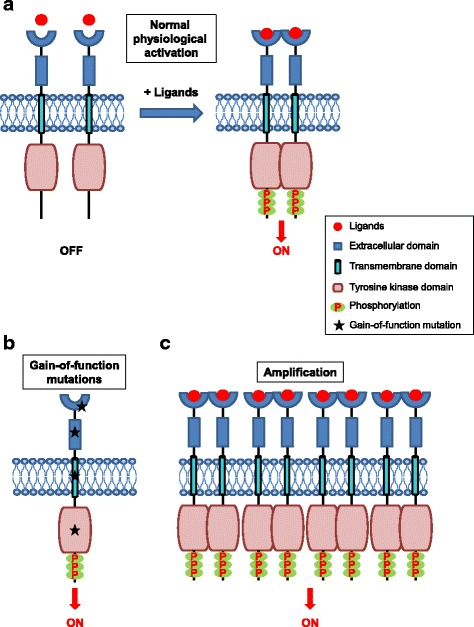
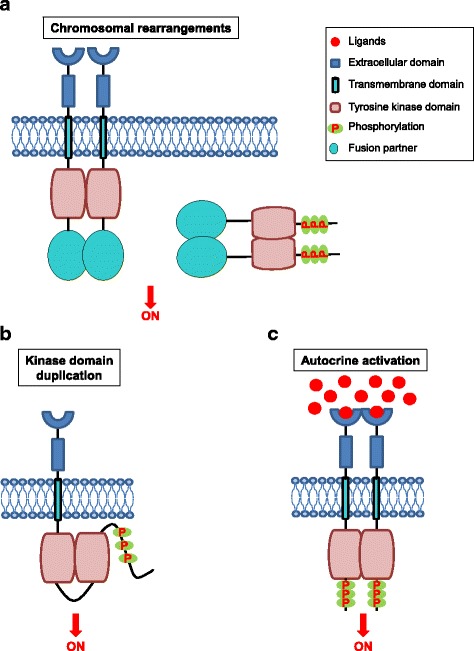
Receptor tyrosine kinases (RTKs) play an important role in a variety of cellular processes including growth, motility, differentiation, and metabolism. As such, dysregulation of RTK signaling leads to an assortment of human diseases, most notably, cancers. Recent large-scale genomic studies have revealed the presence of various alterations in the genes encoding RTKs such as EGFR, HER2/ErbB2, and MET, amongst many others. Abnormal RTK activation in human cancers is mediated by four principal mechanisms: gain-of-function mutations, genomic amplification, chromosomal rearrangements, and / or autocrine activation. In this manuscript, we review the processes whereby RTKs are activated under normal physiological conditions and discuss several mechanisms whereby RTKs can be aberrantly activated in human cancers. Understanding of these mechanisms has important implications for selection of anti-cancer therapies.
Overview
The claims and statistics of this paper haven’t been checked yet.
Free: it reads the open-access text and checks the first 5 claims that cite a source we can check. Create a free account to check every claim.
Integrity signals
Registry
Cites
Statistics
Figures
Verification
Claims the paper makes
The claims and statistics of this paper haven’t been checked yet.
Free: it reads the open-access text and checks the first 5 claims that cite a source we can check. Create a free account to check every claim.
Claims other papers make about this one
Each is checked against this paper’s own text: does it say what the citing paper says it does?
The source backs part of the claim, not all of it — or backs it for a different population, condition or comparison.
In the citing paper
“KRAS-mutant tumors are often insensitive to KRAS-targeted therapy due to feedback reactivation of upstream RTKs, which are crucial for cancer cell signaling [62, 63].”
From Differential Response and Resistance to KRAS-Targeted Therapy (2025) · cites this paper as [63]
Experimental — accuracy not yet measured
Self-check
Percentages, sums and reported differences re-computed from the paper’s own numbers.
The self-check needs the paper’s full text.
Citations
Cites
Gefitinib or Carboplatin–Paclitaxel in Pulmonary Adenocarcinoma
Mok, T. S., Wu, Y.-L., Thongprasert, S., Yang, C.-H., Chu, D.-T., Saijo, N., Sunpaweravong, P., Han, B., Margono, B., Ichinose, Y., et al. (2009) · New England Journal of Medicine · doi:10.1056/nejmoa0810699 · Cited by 8,261
The protein kinase complement of the human genome
Manning, G., Whyte, D. B., Martinez, R., Hunter, T., & Sudarsanam, S. (2002) · Science · doi:10.1126/science.1075762 · Cited by 8,145 · cited 1×
“There are 58 known RTKs in humans [1, 2], and all RTKs share a similar protein structure comprised of an extracellular ligand binding domain, a single transmembrane helix, and an intracellular region that contains a juxtamembrane regulatory region, a tyrosine kinase domain (TKD) and a carboxyl (C-) terminal tail [3].”
Cell Signaling by Receptor Tyrosine Kinases
Lemmon, M. A., & Schlessinger, J. (2010) · Cell · doi:10.1016/j.cell.2010.06.011 · Cited by 7,929
Vogelstein, B., Papadopoulos, N., Velculescu, V. E., Zhou, S., Diaz, L. A., & Kinzler, K. W. (2013) · Science · doi:10.1126/science.1235122 · Cited by 7,863
Comprehensive molecular profiling of lung adenocarcinoma
The Cancer Genome Atlas Research Network (2014) · Nature · doi:10.1038/nature13385 · Cited by 5,732
Gefitinib or Chemotherapy for Non–Small-Cell Lung Cancer with Mutated EGFR
Maemondo, M., Inoue, A., Kobayashi, K., Sugawara, S., Oizumi, S., Isobe, H., Gemma, A., Harada, M., Yoshizawa, H., Kinoshita, I., et al. (2010) · New England Journal of Medicine · doi:10.1056/nejmoa0909530 · Cited by 5,525
Osimertinib in Untreated EGFR -Mutated Advanced Non–Small-Cell Lung Cancer
Soria, J.-C., Ohe, Y., Vansteenkiste, J., Reungwetwattana, T., Chewaskulyong, B., Lee, K. H., Dechaphunkul, A., Imamura, F., Nogami, N., Kurata, T., et al. (2018) · New England Journal of Medicine · doi:10.1056/nejmoa1713137 · Cited by 5,508 · cited 1×
“Novel approaches have been shown to effectively overcome acquired resistance, including the development of second-generation [191, 192] and third-generation inhibitors [193, 194] and the combinational use of TKIs with monoclonal antibodies against the same target [195].”
Rosell, R., Carcereny, E., Gervais, R., Vergnenegre, A., Massuti, B., Felip, E., Palmero, R., Garcia-Gomez, R., Pallares, C., Sanchez, J. M., et al. (2012) · The Lancet Oncology · doi:10.1016/s1470-2045(11)70393-x · Cited by 5,489
Identification of the transforming EML4–ALK fusion gene in non-small-cell lung cancer
Soda, M., Choi, Y. L., Enomoto, M., Takada, S., Yamashita, Y., Ishikawa, S., Fujiwara, S.-I., Watanabe, H., Kurashina, K., Hatanaka, H., et al. (2007) · Nature · doi:10.1038/nature05945 · Cited by 5,439 · cited 3×
“Instead, such proteins typically localize to the cytoplasm, as is the case for the EML4-ALK fusion protein [124].”
Trastuzumab plus Adjuvant Chemotherapy for Operable HER2-Positive Breast Cancer
Romond, E. H., Perez, E. A., Bryant, J., Suman, V. J., Geyer, C. E., Davidson, N. E., Tan-Chiu, E., Martino, S., Paik, S., Kaufman, P. A., et al. (2005) · New England Journal of Medicine · doi:10.1056/nejmoa052122 · Cited by 5,356 · cited 1×
“cetuximab in lung cancer [181], panitumumab in colon cancer [182], cetuximab in head and neck cancer [183], trastuzumab and pertuzumab in breast cancer [184, 185].”
Research works printed but not linked: 1
- Soria JC, Ohe Y, Vansteenkiste J, Reungwetwattana T, Chewaskulyong B, Lee KH, et al. Osimertinib in untreated EGFR-mutated advanced non-small-cell lung cancer. N Engl J Med. 2018;378:113-25. · DOI · Paper page
Cited by
Targeting the RAS/RAF/MAPK pathway for cancer therapy: from mechanism to clinical studies
Bahar, M. E., Kim, H. J., & Kim, D. R. (2023) · Signal Transduction and Targeted Therapy · doi:10.1038/s41392-023-01705-z · Cited by 888
“64 Beyond RAS mutations, disruptions of RAS upstream components can also impact RAF activation.”
BackgroundMolecular targeted therapy for anticancer treatment
Min, H.-Y., & Lee, H.-Y. (2022) · Experimental & Molecular Medicine · doi:10.1038/s12276-022-00864-3 · Cited by 569
ImmunoPET: Concept, Design, and Applications
Wei, W., Rosenkrans, Z. T., Liu, J., Huang, G., Luo, Q.-Y., & Cai, W. (2020) · Chemical Reviews · doi:10.1021/acs.chemrev.9b00738 · Cited by 484
Drug repurposing for cancer therapy
Xia, Y., Sun, M., Huang, H., & Jin, W.-L. (2024) · Signal Transduction and Targeted Therapy · doi:10.1038/s41392-024-01808-1 · Cited by 443
“70 The phosphatidylinositol 3-kinase/protein kinase B (PI3K/AKT), mammalian target of rapamycin (mTOR), 71 and mitogen-activated protein kinases/ extracellular signal-regulated kinase (MAPK/ERK) pathways have all been implicated in sustaining proliferative signaling.”
BackgroundZhong, Q., Xiao, X., Qiu, Y., Xu, Z., Chen, C., Chong, B., Zhao, X., Hai, S., Li, S., An, Z., et al. (2023) · MedComm · doi:10.1002/mco2.261 · Cited by 442
Liquid–liquid phase separation drives cellular function and dysfunction in cancer
Mehta, S., & Zhang, J. (2022) · Nature Reviews Cancer · doi:10.1038/s41568-022-00444-7 · Cited by 437
Chen, Y.-J., Roumeliotis, T. I., Chang, Y.-H., Chen, C.-T., Han, C.-L., Lin, M.-H., Chen, H.-W., Chang, G.-C., Chang, Y.-L., Wu, C.-T., et al. (2020) · Cell · doi:10.1016/j.cell.2020.06.012 · Cited by 382
EGFR signaling pathway as therapeutic target in human cancers
Levantini, E., Maroni, G., Del Re, M., & Tenen, D. G. (2022) · Seminars in Cancer Biology · doi:10.1016/j.semcancer.2022.04.002 · Cited by 356
Ho, D. W.-H., Tsui, Y.-M., Chan, L.-K., Sze, K. M.-F., Zhang, X., Cheu, J. W.-S., Chiu, Y.-T., Lee, J. M.-F., Chan, A. C.-Y., Cheung, E. T.-Y., et al. (2021) · Nature Communications · doi:10.1038/s41467-021-24010-1 · Cited by 324
Yang, Y., Li, S., Wang, Y., Zhao, Y., & Li, Q. (2022) · Signal Transduction and Targeted Therapy · doi:10.1038/s41392-022-01168-8 · Cited by 294
“However, antagonistic function of PTPs cannot completely attenuate PTKs overactivity caused by the above mechanisms.(13) As endogenous PTPs cannot inhibit the sustained activation of PTKs, exogenous PTK inhibition is necessary.”
BackgroundMollinedo, F., & Gajate, C. (2020) · Journal of Lipid Research · doi:10.1194/jlr.tr119000439 · Cited by 279
AlphaFold Protein Structure Database and 3D-Beacons: New Data and Capabilities
Fleming, J., Magana, P., Nair, S., Tsenkov, M., Bertoni, D., Pidruchna, I., Lima Afonso, M. Q., Midlik, A., Paramval, U., Žídek, A., et al. (2025) · Journal of Molecular Biology · doi:10.1016/j.jmb.2025.168967 · Cited by 276
Unraveling the complexity of STAT3 in cancer: molecular understanding and drug discovery
Hu, Y., Dong, Z., & Liu, K. (2024) · Journal of Experimental & Clinical Cancer Research · doi:10.1186/s13046-024-02949-5 · Cited by 268
“And RTKs-JAKs-STAT3 signaling are well-elucidated signaling networks in cancers involving almost all cancer hallmark features [52].”
BackgroundPathological implication of protein post-translational modifications in cancer
Pan, S., & Chen, R. (2022) · Molecular Aspects of Medicine · doi:10.1016/j.mam.2022.101097 · Cited by 263
Therapeutic advances of targeting receptor tyrosine kinases in cancer
Tomuleasa, C., Tigu, A.-B., Munteanu, R., Moldovan, C.-S., Kegyes, D., Onaciu, A., Gulei, D., Ghiaur, G., Einsele, H., & Croce, C. M. (2024) · Signal Transduction and Targeted Therapy · doi:10.1038/s41392-024-01899-w · Cited by 260
Zeng, S., Huang, W., Zheng, X., cheng, L., Zhang, Z., Wang, J., & Shen, Z. (2021) · European Journal of Medicinal Chemistry · doi:10.1016/j.ejmech.2020.112981 · Cited by 245
Targeting Drug Chemo-Resistance in Cancer Using Natural Products
Talib, W. H., Alsayed, A. R., Barakat, M., Abu-Taha, M. I., & Mahmod, A. I. (2021) · Biomedicines · doi:10.3390/biomedicines9101353 · Cited by 231
Mechanism of epithelial‐mesenchymal transition in cancer and its regulation by natural compounds
Ang, H. L., Mohan, C. D., Shanmugam, M. K., Leong, H. C., Makvandi, P., Rangappa, K. S., Bishayee, A., Kumar, A. P., & Sethi, G. (2023) · Medicinal Research Reviews · doi:10.1002/med.21948 · Cited by 229
“However, RTK signaling and dimerization can also be activated independently of growth factors, as in the case of the ERBB receptors.(125) Increased EMT capabilities can also occur through the activation of RTK downstream effectors, such as Ras/mitogen‐activated protein kinase (MAPK), phosphoinositide‐3‐kinase (PI3K),…”
BackgroundInfluentialKulukian, A., Lee, P., Taylor, J., Rosler, R., de Vries, P., Watson, D., Forero-Torres, A., & Peterson, S. (2020) · Molecular Cancer Therapeutics · doi:10.1158/1535-7163.mct-19-0873 · Cited by 222
“Step 4: 7-(2methyl-4-nitrophenoxy)-[1,2,4]triazolo[1,5-a]pyridine is hydrogenated over 5% Pd/C in tetrahydrofuran (THF) at 45 C.”
BackgroundMethodInfluentialMolecular Targeting Therapy against EGFR Family in Breast Cancer: Progress and Future Potentials
Maennling, A. E., Tur, M. K., Niebert, M., Klockenbring, T., Zeppernick, F., Gattenlöhner, S., Meinhold-Heerlein, I., & Hussain, A. F. (2019) · Cancers · doi:10.3390/cancers11121826 · Cited by 218
“Enzymatic phosphorylation of proteins on tyrosine residues is a key element of signal transduction within mammalian cells [12].”
BackgroundLaha, D., Grant, R., Mishra, P., & Nilubol, N. (2021) · Frontiers in Immunology · doi:10.3389/fimmu.2021.656908 · Cited by 213
“Mutations in RTKs and their associated downstream signaling pathways have oncogenic roles in many solid cancers, hence the development of targeted therapy specifically for these RTKs (64).”
BackgroundInfluentialReceptor tyrosine kinases and cancer: oncogenic mechanisms and therapeutic approaches
Saraon, P., Pathmanathan, S., Snider, J., Lyakisheva, A., Wong, V., & Stagljar, I. (2021) · Oncogene · doi:10.1038/s41388-021-01841-2 · Cited by 205
“Increased levels of RTK result in constitutive kinase activation due to RTK clustering or increased sensitivity to cognate ligands, with resultant aberrant signaling [3].”
BackgroundRah, B., Rather, R. A., Bhat, G. R., Baba, A. B., Mushtaq, I., Farooq, M., Yousuf, T., Dar, S. B., Parveen, S., Hassan, R., et al. (2022) · Frontiers in Pharmacology · doi:10.3389/fphar.2022.821344 · Cited by 202
“More recently, cell-permeable, STAT3 SH2 domain mimetics with promising anti-tumor effects have been designed (Lai et al., 2015; Du and Lovly, 2018; Franke et al., 2018).”
BackgroundNatural Products and Synthetic Analogs as a Source of Antitumor Drugs
Sharifi-Rad, J., Ozleyen, A., Boyunegmez Tumer, T., Oluwaseun Adetunji, C., El Omari, N., Balahbib, A., Taheri, Y., Bouyahya, A., Martorell, M., Martins, N., et al. (2019) · Biomolecules · doi:10.3390/biom9110679 · Cited by 197
Kinase-mediated RAS signaling via membraneless cytoplasmic protein granules
Tulpule, A., Guan, J., Neel, D. S., Allegakoen, H. R., Lin, Y. P., Brown, D., Chou, Y.-T., Heslin, A., Chatterjee, N., Perati, S., et al. (2021) · Cell · doi:10.1016/j.cell.2021.03.031 · Cited by 189
“This mechanism is distinct from other known strategies of RTK activation including promoter driven overexpression of the oncoprotein or dimerization/oligomerization mediated by domains within the non-kinase fusion partner (Du and Lovly, 2018; Medves and Demoulin, 2012).”
ALK-positive lung cancer: a moving target
Schneider, J. L., Lin, J. J., & Shaw, A. T. (2023) · Nature Cancer · doi:10.1038/s43018-023-00515-0 · Cited by 189
“ALK is activated when ALKAL proteins (endogenous ligands of ALK) bind to its extracellular domain, resulting in dimerization and autophosphorylation and activation of downstream signaling pathways critical for cell proliferation, survival and differentiation 14–16 .”
BackgroundDoostmohammadi, A., Jooya, H., Ghorbanian, K., Gohari, S., & Dadashpour, M. (2024) · Cell Communication and Signaling · doi:10.1186/s12964-024-01607-9 · Cited by 187
“They’re transmembrane receptors that play a role in many cellular processes, including growth, differentiation, and metabolism [62].”
BackgroundPolyoxidovanadates' interactions with proteins: An overview
Aureliano, M., Gumerova, N. I., Sciortino, G., Garribba, E., McLauchlan, C. C., Rompel, A., & Crans, D. C. (2022) · Coordination Chemistry Reviews · doi:10.1016/j.ccr.2021.214344 · Cited by 172
Receptor Tyrosine Kinases and Their Signaling Pathways as Therapeutic Targets of Curcumin in Cancer
Dev, S. S., Abidin, S. A. Z., Farghadani, R., Othman, I., & Naidu, R. (2021) · Frontiers in Pharmacology · doi:10.3389/fphar.2021.772510 · Cited by 173
“protein tyrosine phosphatases, altered endocytic/trafficking genes and also spatial deregulation of RTKs (Casaletto andMcClatchey, 2012; Du and Lovly, 2018).”
BackgroundReceptor tyrosine kinase inhibitors in cancer
Ebrahimi, N., Fardi, E., Ghaderi, H., Palizdar, S., Khorram, R., Vafadar, R., Ghanaatian, M., Rezaei‐Tazangi, F., Baziyar, P., Ahmadi, A., et al. (2023) · Cellular and Molecular Life Sciences · doi:10.1007/s00018-023-04729-4 · Cited by 168
“All RTKs have a similar structure which includes an extracellular ligand-binding domain, a transmembrane α-helix spanning the cell membrane, an intracellular tyrosine kinase domain (TKD), a cytoplasmic membrane-assocoated regulatory region, and a carboxy (C)terminus tail [18].”
BackgroundEGF receptor in organ development, tissue homeostasis and regeneration
Tito, C., Masciarelli, S., Colotti, G., & Fazi, F. (2025) · Journal of Biomedical Science · doi:10.1186/s12929-025-01119-9 · Cited by 164
Targeting strategies for bone diseases: signaling pathways and clinical studies
Xu, H., Wang, W., Liu, X., Huang, W., Zhu, C., Xu, Y., Yang, H., Bai, J., & Geng, D. (2023) · Signal Transduction and Targeted Therapy · doi:10.1038/s41392-023-01467-8 · Cited by 162
“, has been proven to drive osteosarcoma genesis.(378) Small-molecule oral multiple tyrosine kinase inhibitor (MTKI) agents, especially VEGFRs/RET-targeted agents, have shown promising effects on progression-free survival in patients with relapsed and unresectable high-grade osteosarcoma and metastatic osteosarcoma.”
BackgroundTRPM7, Magnesium, and Signaling
Zou, Z.-G., Rios, F. J., Montezano, A. C., & Touyz, R. M. (2019) · International Journal of Molecular Sciences · doi:10.3390/ijms20081877 · Cited by 160
“These recruited proteins either have intrinsic enzymatic activity, such as Src and PLCγ, or serve as docking protein that f nction as “a sembly platforms” and recruit additional enzymes [32,75,85,92].”
BackgroundTargeting RTK-PI3K-mTOR Axis in Gliomas: An Update
Colardo, M., Segatto, M., & Bartolomeo, S. D. (2021) · International Journal of Molecular Sciences · doi:10.3390/ijms22094899 · Cited by 157
The Endosomal Recycling Pathway—At the Crossroads of the Cell
O’Sullivan, M. J., & Lindsay, A. J. (2020) · International Journal of Molecular Sciences · doi:10.3390/ijms21176074 · Cited by 155
The role of Bruton's tyrosine kinase in the immune system and disease
McDonald, C., Xanthopoulos, C., & Kostareli, E. (2021) · Immunology · doi:10.1111/imm.13416 · Cited by 151
“Firstly, shortly after its discovery, BTK was positioned within BCR signalling downstream of the antigen receptor [8] (Figure 2b).”
BackgroundThe emergence of drug resistance to targeted cancer therapies: Clinical evidence
Sarmento‐Ribeiro, A. B., Scorilas, A., Gonçalves, A. C., Efferth, T., & Trougakos, I. P. (2019) · Drug Resistance Updates · doi:10.1016/j.drup.2019.100646 · Cited by 149
Hallmarks of cancer resistance
Tufail, M., Hu, J.-J., Liang, J., He, C., Wan, W., Huang, Y., Jiang, C., Wu, H., & Li, N. (2024) · iScience · doi:10.1016/j.isci.2024.109979 · Cited by 151
Next-Generation Immunotherapy: Advancing Clinical Applications in Cancer Treatment
Garg, P. K., Pareek, S., Kulkarni, P., Horne, D., Salgia, R., & Singhal, S. S. (2024) · Journal of Clinical Medicine · doi:10.3390/jcm13216537 · Cited by 150
“Similarly, tyrosine kinase inhibitors (TKIs) targeting the EGFR pathway can help modulate immune cells and enhance the infiltration of effector T cells into tumors [59].”
BackgroundMartins, Á. M., Ramos, C. C., Freitas, D., & Reis, C. A. (2021) · Cells · doi:10.3390/cells10010109 · Cited by 127
Dhillon, S. (2020) · Drugs · doi:10.1007/s40265-020-01275-2 · Cited by 137
Molecular classification of hormone receptor-positive HER2-negative breast cancer
Jin, X., Zhou, Y.-F., Ma, D., Zhao, S., Lin, C., Xiao, Y., Fu, T., Liu, C., Chen, Y., Xiao, W.-X., et al. (2023) · Nature Genetics · doi:10.1038/s41588-023-01507-7 · Cited by 137
Carboranes as unique pharmacophores in antitumor medicinal chemistry
Chen, Y., Du, F., Tang, L., Xu, J., Zhao, Y., Wu, X., Li, M., Shen, J., Wen, Q., Cho, C. H., et al. (2022) · Molecular Therapy — Oncolytics · doi:10.1016/j.omto.2022.01.005 · Cited by 135
Hepatocellular carcinoma: signaling pathways, targeted therapy, and immunotherapy
Luo, X., He, X., Zhang, X., Zhao, X., Zhang, Y., Shi, Y., & Hua, S. (2024) · MedComm · doi:10.1002/mco2.474 · Cited by 135
“21 Almost all types of RTKs are targeted by antitumor drugs currently developed, especially drugs targeting VEGFR and EGFR, which have been put into first line clinical use.”
Unravelling cell migration: defining movement from the cell surface
Merino-Casallo, F., Gómez‐Benito, M. J., Hervás-Raluy, S., & García‐Aznar, J. M. (2022) · Cell Adhesion & Migration · doi:10.1080/19336918.2022.2055520 · Cited by 132
“, cancer development and progression) [66,75,76].”
Zheng, Y., Wu, C., Yang, J., Zhao, Y., Jia, H., Xue, M., Xu, D., Yang, F., Fu, D., Wang, C., et al. (2020) · Signal Transduction and Targeted Therapy · doi:10.1038/s41392-020-0146-6 · Cited by 129
Sever, B., Altıntop, M. D., Radwan, M. O., Özdemır, A., Otsuka, M., Fujita, M., & Ciftci, H. I. (2019) · European Journal of Medicinal Chemistry · doi:10.1016/j.ejmech.2019.111648 · Cited by 128
NTRK Fusions in Central Nervous System Tumors: A Rare, but Worthy Target
Gambella, A., Senetta, R., Collemi, G., Vallero, S. G., Monticelli, M., Cofano, F., Zeppa, P., Garbossa, D., Pellerino, A., Rudà, R., et al. (2020) · International Journal of Molecular Sciences · doi:10.3390/ijms21030753 · Cited by 127
Molecular Spies in Action: Genetically Encoded Fluorescent Biosensors Light up Cellular Signals
Gest, A. M. M., Sahan, A. Z., Zhong, Y., Lin, W., Mehta, S., & Zhang, J. (2024) · Chemical Reviews · doi:10.1021/acs.chemrev.4c00293 · Cited by 128
An Overview of EGFR Mechanisms and Their Implications in Targeted Therapies for Glioblastoma
Rodriguez, S. M. B., Kamel, A. E., Ciubotaru, G. V., Onose, G., Sevastre, A.-S., Sfredel, V., Dănoiu, S., Dricu, A., & Tătăranu, L. G. (2023) · International Journal of Molecular Sciences · doi:10.3390/ijms241311110 · Cited by 120
Mechanisms of resistance to tyrosine kinase inhibitor‐targeted therapy and overcoming strategies
Ou, X., Gao, G., Habaz, I. A., & Wang, Y. (2024) · MedComm · doi:10.1002/mco2.694 · Cited by 116
“For example, IL-6 and TGF-β promote tumor cell proliferation, survival, and EMT, contributing to TKI resistance.”
BackgroundZuo, W., Pang, Q., Zhu, X., Yang, Q., Zhao, Q., He, G., Han, B., & Huang, W. (2024) · Journal of Hematology & Oncology · doi:10.1186/s13045-024-01601-1 · Cited by 113
Novel Targeted Therapies for Metastatic Thyroid Cancer—A Comprehensive Review
Al-Jundi, M., Thakur, S., Gubbi, S., & Kłubo-Gwieździńska, J. (2020) · Cancers · doi:10.3390/cancers12082104 · Cited by 111
Protein Tyrosine Kinases: Their Roles and Their Targeting in Leukemia
Bhanumathy, K. K., Amrutha, B., Vizeacoumar, F. S., Vizeacoumar, F. J., Freywald, A., & Giambra, V. (2021) · Cancers · doi:10.3390/cancers13020184 · Cited by 111
“(a) Receptor tyrosine kinase (RTK) and (b) nonreceptor tyrosine kinase (NRTK) activation during leukaemia development and progression [10,31].”
BackgroundInfluentialHuang, X. L., Khan, M. I., Wang, J., Ali, R., Ali, S. W., Zahra, Q. U. A., Kazmi, A., Lolai, A., Huang, Y., Hussain, A., et al. (2021) · International Journal of Biological Macromolecules · doi:10.1016/j.ijbiomac.2021.03.075 · Cited by 111
Resistance to antibody–drug conjugates: A review
Li, S., Zhao, X., Fu, K., Zhu, S., Pan, C., Yang, C., Wang, F., To, K. K. W., & Fu, L. (2024) · Acta Pharmaceutica Sinica B · doi:10.1016/j.apsb.2024.12.036 · Cited by 109
“Abnormal RTK activation has been observed in various tumors 179 ,suchastheupregulationofHER2innumerousbreastcancer celllines,providingthefoundationforT-DM1,anon-cleavableADC targeting HER2.”
EGFR Mutations in Head and Neck Squamous Cell Carcinoma
Nair, S., Bonner, J. A., & Bredel, M. (2022) · International Journal of Molecular Sciences · doi:10.3390/ijms23073818 · Cited by 107
PI3K–AKT-Targeting Breast Cancer Treatments: Natural Products and Synthetic Compounds
Yuan, Y., Long, H., Zhou, Z., Fu, Y., & Jiang, B. (2023) · Biomolecules · doi:10.3390/biom13010093 · Cited by 108
“These RTKs possess an extracellular ligand-binding domain, a transmembrane domain, and an intracellular tyrosine kinase domain [17].”
BackgroundMedicinal chemistry perspective of pyrido[2,3- d ]pyrimidines as anticancer agents
Kumar, A., Bhagat, K. K., Singh, A. K., Singh, H., Angre, T. D., Verma, A., Khalilullah, H., Jaremko, M., Emwas, A.-H. M., & Kumar, P. (2023) · RSC Advances · doi:10.1039/d3ra00056g · Cited by 97
Molecular principles underlying aggressive cancers
Nussinov, R., Yavuz, B. R., & Jang, H. (2025) · Signal Transduction and Targeted Therapy · doi:10.1038/s41392-025-02129-7 · Cited by 98
Emerging next-generation sequencing-based discoveries for targeted osteosarcoma therapy
Zhao, J., Dean, D. C., Hornicek, F. J., Yu, X., & Duan, Z. (2020) · Cancer Letters · doi:10.1016/j.canlet.2020.01.020 · Cited by 96
Targeted protein degradation in cancers: Orthodox PROTACs and beyond
Li, J., Chen, X., Lü, A., & Liang, C. (2023) · The Innovation · doi:10.1016/j.xinn.2023.100413 · Cited by 95
Aberrant protein glycosylation: Implications on diagnosis and Immunotherapy
Bangarh, R., Khatana, C., Kaur, S., Sharma, A., Kaushal, A., Siwal, S. S., Tuli, H. S., Dhama, K., Thakur, V. K., Saini, R. V., et al. (2023) · Biotechnology Advances · doi:10.1016/j.biotechadv.2023.108149 · Cited by 93
Therapeutic targeting of the functionally elusive TAM receptor family
Miao, Y. R., Rankin, E. B., & Giaccia, A. J. (2023) · Nature Reviews Drug Discovery · doi:10.1038/s41573-023-00846-8 · Cited by 92
“Both acquired resistance due to crosstalk between kinase receptors and intrinsic, mutation-driven resistance can result in the loss of therapeutic efficacy in patients 157 .”
Essegian, D., Khurana, R., Stathias, V., & Schürer, S. C. (2020) · Cell Reports Medicine · doi:10.1016/j.xcrm.2020.100128 · Cited by 74
“The target should not be uniformly distributed and expressed throughout the body, a characteristic that can be checked using expression databases such as GTex69 or The Human Protein Atlas.70 Also, immunoprecipitation (IP) is a critical consideration.”
BackgroundCurrent Status and Prospects of Clinical Treatment of Osteosarcoma
Jiang, Z.-Y., Liu, J., Wang, X., Ma, Y., & Fu, D. (2022) · Technology in Cancer Research & Treatment · doi:10.1177/15330338221124696 · Cited by 88
Lorusso, L., Cappagli, V., Valerio, L., Giani, C., Viola, D., Puleo, L., Gambale, C., Minaldi, E., Campopiano, M. C., Matrone, A., et al. (2021) · International Journal of Molecular Sciences · doi:10.3390/ijms22063117 · Cited by 85
“RET proto-oncogene is one of the most common altered oncogene coding for a TKR in TC [47].”
BackgroundFibroblast growth factor receptor signalling dysregulation and targeting in breast cancer
Francavilla, C., & O’Brien, C. (2022) · Open Biology · doi:10.1098/rsob.210373 · Cited by 83
The efficacy of tucatinib-based therapeutic approaches for HER2-positive breast cancer
Sirhan, Z., Thyagarajan‐Sahu, A., & Sahu, R. P. (2022) · Military Medical Research · doi:10.1186/s40779-022-00401-3 · Cited by 81
“, HER3/4) of the epidermal growth factor receptor (EGFR) family are receptor tyrosine kinases, which are located on the cellular membrane and respond to a wide variety of ligands [18, 19].”
BackgroundRET Receptor Tyrosine Kinase: Role in Neurodegeneration, Obesity, and Cancer
Mahato, A. K., & Sidorova, Y. A. (2020) · International Journal of Molecular Sciences · doi:10.3390/ijms21197108 · Cited by 79
Mansour, M. A., AboulMagd, A. M., Abbas, S. H., Abdel-Rahman, H. M., & Abdel‐Aziz, M. (2023) · RSC Advances · doi:10.1039/d3ra02347h · Cited by 80
Othman, I. M. M., Al-Amshany, Z. M., Tashkandi, N. Y., Gad‐Elkareem, M. A. M., El‐Karim, S. S. A., & Nossier, E. S. (2021) · RSC Advances · doi:10.1039/d1ra08055e · Cited by 78
Small-molecule agents for cancer immunotherapy
Wang, F., Fu, K., Wang, Y., Pan, C., Wang, X., Liu, Z., Yang, C., Zheng, Y. Y., Li, X., Lu, Y., et al. (2023) · Acta Pharmaceutica Sinica B · doi:10.1016/j.apsb.2023.12.010 · Cited by 77
“Receptor tyrosine kinases (RTKs) have a significant impact on various cellular processes including cell growth, proliferation, differentiation, migration, metabolism, and cell cycle progression in cancer 219,220 .”
BackgroundDai, L.-J., Ma, D., Xu, Y.-Z., Li, M., Li, Y., Xiao, Y., Jin, X., Wu, S., Zhao, Y., Wang, H., et al. (2023) · Nature Communications · doi:10.1038/s41467-023-40715-x · Cited by 76
“PTK6 and PIK3CA canfunctionasdownstream effectorsof ERBB2 signaling 34 – 36 .”
Gamma-secretase-dependent signaling of receptor tyrosine kinases
Merilahti, J. A. M., & Elenius, K. (2018) · Oncogene · doi:10.1038/s41388-018-0465-z · Cited by 76
“and tumor cells may become addicted to specific activating variations in RTK sequence or copy number [102].”
BackgroundAdvances in targeting EGFR allosteric site as anti-NSCLC therapy to overcome the drug resistance
Maity, S., Pai, K. S. R., & Nayak, Y. (2020) · Pharmacological Reports · doi:10.1007/s43440-020-00131-0 · Cited by 76
El‐Sayed, W. A., Alminderej, F. M., Mounier, M. M., Nossier, E. S., Saleh, S. M., & Kassem, A. F. (2022) · Molecules · doi:10.3390/molecules27072047 · Cited by 75
ERK pathway agonism for cancer therapy: evidence, insights, and a target discovery framework
Timofeev, O. N., Giron, P., Lawo, S., Pichler, M., & Noeparast, A. (2024) · npj Precision Oncology · doi:10.1038/s41698-024-00554-5 · Cited by 75
“The induced conformational alterations in the tyrosine kinase domain of dimerization partners facilitate ATP binding in their ATP binding cleft and, as suggested, in the case of EGFR, might lead to the relief of cis-autoinhibition and trans-autophosphorylation of the tyrosine kinase domains 70,71 .”
BackgroundJha, K. T., Shome, A., Chahat, & Chawla, P. A. (2023) · Bioorganic Chemistry · doi:10.1016/j.bioorg.2023.106680 · Cited by 73
Tumor Cellular and Microenvironmental Cues Controlling Invadopodia Formation
Masi, I., Caprara, V., Bagnato, A., & Rosanò, L. (2020) · Frontiers in Cell and Developmental Biology · doi:10.3389/fcell.2020.584181 · Cited by 72
“Members of the large family of receptors with tyrosine kinase activity (RTK) are key regulators of cancer cell growth, proliferation, and survival, as well as invasion and metastasis (Du and Lovly, 2018).”
BackgroundLigand bias in receptor tyrosine kinase signaling
Karl, K., Paul, M. D., Pasquale, E. B., & Hristova, K. A. (2020) · Journal of Biological Chemistry · doi:10.1074/jbc.rev120.015190 · Cited by 72
Jayaswamy, P. K., Vijaykrishnaraj, M., Patil, P., Alexander, L. M., Kellarai, A., & Shetty, P. K. (2022) · Ageing Research Reviews · doi:10.1016/j.arr.2022.101791 · Cited by 72
Elsayad, K. A., Elmasry, G. F., Mahmoud, S. T., & Awadallah, F. M. (2024) · Bioorganic Chemistry · doi:10.1016/j.bioorg.2024.107409 · Cited by 69
Targeted Therapy for Hepatocellular Carcinoma: Old and New Opportunities
Laface, C., Fedele, P., Maselli, F. M., Ambrogio, F., Foti, C., Molinari, P., Ammendola, M., Lioce, M., & Ranieri, G. (2022) · Cancers · doi:10.3390/cancers14164028 · Cited by 68
2-Aminobenzothiazoles in anticancer drug design and discovery
Huang, G., Cierpicki, T., & Grembecka, J. E. (2023) · Bioorganic Chemistry · doi:10.1016/j.bioorg.2023.106477 · Cited by 68
Discovery of a First-in-Class Mitogen-Activated Protein Kinase Kinase 1/2 Degrader
Wei, J., Hu, J., Wang, L., Xie, L., Jin, M. S., Chen, X., Liu, J., & Jin, J. (2019) · Journal of Medicinal Chemistry · doi:10.1021/acs.jmedchem.9b01528 · Cited by 66
Invasion and Metastasis as a Central Hallmark of Breast Cancer
Saha, T., Solomon, J., Samson, A. O., & Gil-Henn, H. (2021) · Journal of Clinical Medicine · doi:10.3390/jcm10163498 · Cited by 67
“For example, cancer cells can enhance autocrine stimulation [10,11] or paracrine stimulation [12] with stromal cells.”
BackgroundRole of protein phosphatases in the cancer microenvironment
Ruvolo, P. P. (2018) · Biochimica et Biophysica Acta (BBA) - Molecular Cell Research · doi:10.1016/j.bbamcr.2018.07.006 · Cited by 66
Chronicles of EGFR Tyrosine Kinase Inhibitors: Targeting EGFR C797S Containing Triple Mutations
Duggirala, K. B., Lee, Y., & Lee, K. (2021) · Biomolecules & Therapeutics · doi:10.4062/biomolther.2021.047 · Cited by 64
“These kinase inhibitors belong to competitive inhibitors as they bind to the intracellular active region of the tyrosine kinase domain, where ATP binds to the kinase activation (Du and Lovly, 2018).”
BackgroundALK inhibitors in cancer: mechanisms of resistance and therapeutic management strategies
Poei, D., Ali, S., Ye, S., & Hsu, R. C. (2024) · Cancer Drug Resistance · doi:10.20517/cdr.2024.25 · Cited by 64
Mechanisms by Which Probiotic Bacteria Attenuate the Risk of Hepatocellular Carcinoma
Thilakarathna, W. P. D. W., Rupasinghe, H. P. V., & Ridgway, N. D. (2021) · International Journal of Molecular Sciences · doi:10.3390/ijms22052606 · Cited by 64
Ji, J., Wang, Z., Sun, W., Li, Z., Cai, H., Zhao, E., & Cui, H. (2021) · International Journal of Molecular Sciences · doi:10.3390/ijms222212125 · Cited by 63
A stepwise activation model for the insulin receptor
Yunn, N.-O., Kim, J., Ryu, S. H., & Cho, Y. (2023) · Experimental & Molecular Medicine · doi:10.1038/s12276-023-01101-1 · Cited by 63
Epiregulin confers EGFR-TKI resistance via EGFR/ErbB2 heterodimer in non-small cell lung cancer
Ma, S., Zhang, L., Ren, Y., Dai, W., Chen, T., Luo, L., Zeng, J., Mi, K., Lang, J., & Cao, B. (2021) · Oncogene · doi:10.1038/s41388-021-01734-4 · Cited by 62
Invadopodia in cancer metastasis: dynamics, regulation, and targeted therapies
Hao, Z., Zhang, M., Du, Y., Liu, J., Zeng, G., Li, H., & Peng, X. Y. (2025) · Journal of Translational Medicine · doi:10.1186/s12967-025-06526-y · Cited by 62
“Receptor tyrosine kinases (RTKs) constitute a large family of proteins that regulate cancer cell growth, proliferation, survival, invasion, and metastasis [103].”
Receptor tyrosine kinases in PI3K signaling: The therapeutic targets in cancer
Jiang, W., & Ji, M. (2019) · Seminars in Cancer Biology · doi:10.1016/j.semcancer.2019.03.006 · Cited by 63
Non-small molecule PROTACs (NSM-PROTACs): Protein degradation kaleidoscope
Ma, S., Ji, J., Tong, Y., Zhu, Y., Dou, J., Zhang, X., Xu, S., Zhu, T., Xu, X., You, Q., et al. (2022) · Acta Pharmaceutica Sinica B · doi:10.1016/j.apsb.2022.02.022 · Cited by 61
Structural basis for RNA surveillance by the human nuclear exosome targeting (NEXT) complex
Puno, M. R., & Lima, C. D. (2022) · Cell · doi:10.1016/j.cell.2022.04.016 · Cited by 57
Insights into the New Cancer Therapy through Redox Homeostasis and Metabolic Shifts
Hyun, D. (2020) · Cancers · doi:10.3390/cancers12071822 · Cited by 61
“First, cancer cell proliferation can be promoted through the activation of ERK1/2 and ligand-independent receptor tyrosine kinase (RTK) [68,69].”
BackgroundCombinational blockade of MET and PD-L1 improves pancreatic cancer immunotherapeutic efficacy
Li, E., Huang, X., Zhang, G., & Liang, T. (2021) · Journal of Experimental & Clinical Cancer Research · doi:10.1186/s13046-021-02055-w · Cited by 61
Metadata
- Authors
- Du, Z., & Lovly, C. M.
- Affiliations
- Vanderbilt University Medical Center (US)
- Vanderbilt-Ingram Cancer Center (US)
- Corresponding author
- Lovly, Christine M.
- Venue
- Molecular Cancer
- Published
- 2018-02-19
- Volume
- 17
- Issue
- 1
- Pages
- 58-58
- ISSN
- 1476-4598 (ISSN-L)
- PMC
- PMC5817791
- OpenAlex
- W2795353688
- Cited by
- 1,066
- References
- 199
- Citations by year
- 2026: 87 · 2025: 166 · 2024: 213 · 2023: 176 · 2022: 152 · 2021: 142 · 2020: 88 · 2019: 31 · 2018: 9
- FWCI
- 7.12
- Type
- journal article
- Language
- en
- Open access
- gold
- doi.org
- Licence
- cc-by
- creativecommons.org/licenses/by/4.0/ (tdm)
- creativecommons.org/licenses/by/4.0/ (vor)
- Locations
- Molecular Cancer (publishedVersion, cc-by)
- PubMed Central (publishedVersion, cc-by)
- PubMed (publishedVersion)
- DOAJ (DOAJ: Directory of Open Access Journals) (submittedVersion, cc-by-sa)
- Funders
- National Institutes of Health (R01CA121210, P01CA129243, U10CA180864, P30CA068485-13S5)
- Topics
- Health Sciences › Medicine › Oncology › HER2/EGFR in Cancer Research
- Life Sciences › Biochemistry, Genetics and Molecular Biology › Molecular Biology › Protein Kinase Regulation and GTPase Signaling
- Life Sciences › Biochemistry, Genetics and Molecular Biology › Cancer Research › Cancer Mechanisms and Therapy
- Keywords
- receptor tyrosine kinase, receptor tyrosine kinase signaling, cancer, gain-of-function mutations, gene amplification, chromosomal rearrangements, autocrine activation, EGFR, human epidermal growth factor receptor 2, MET, cancer therapy
- MeSH terms
- Animals, Cell Transformation, Neoplastic, Enzyme Activation, Humans, Ligands, Mutation, Neoplasms, Phosphorylation, Protein Binding, Signal Transduction, Gene Expression Regulation, Neoplastic, Receptor Protein-Tyrosine Kinases, Protein Kinase Inhibitors, Protein Interaction Domains and Motifs, Protein Multimerization, Molecular Targeted Therapy
About these checks
Registry, retraction, Cites and statistics results are computed, not judged, with one exception: a printed reference that no index lists is read once by a model before it counts as a citation error. Claims are extracted by a model and kept only when their quote appears verbatim in the text; each cited source is then checked, with a model’s help, for whether it says what the claim relies on. Those verdicts can be wrong — read the claim’s quote and the cited source before relying on one.
Statistics and arithmetic are recomputed, not judged.
Confidence bands are shown only for fields calibrated on our annotated test set. None is calibrated yet, so no band is shown.
What counts as a claim ›How we measure confidence ›How we check this ›
Are you an author, or do you see a problem with this page? Request a review
Data sources
Bibliographic data: Semantic Scholar, OpenAlex, Crossref.
Contains information from the Semantic Scholar Academic Graph Datasets, made available under the ODC Attribution License (ODC-BY 1.0).
Semantic Scholar’s data is described in: Kinney, R., et al. (2023). The Semantic Scholar Open Data Platform. arXiv:2301.10140.
