

Mechanisms of receptor tyrosine kinase activation in cancer
Open accessThe DOI matches its Crossref record; 199 of the 199 references it cites were found in a registry or an index.
Abstract
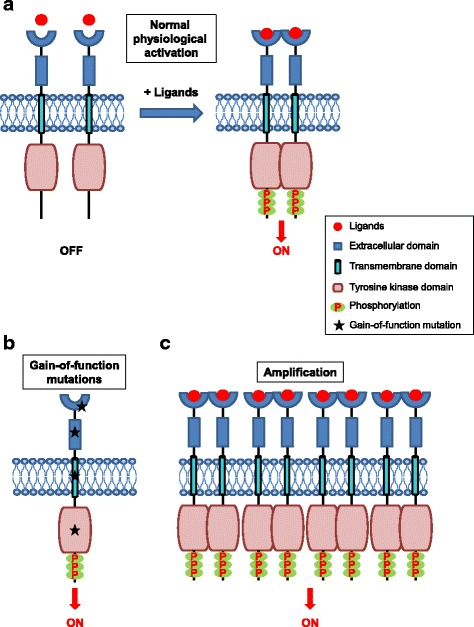
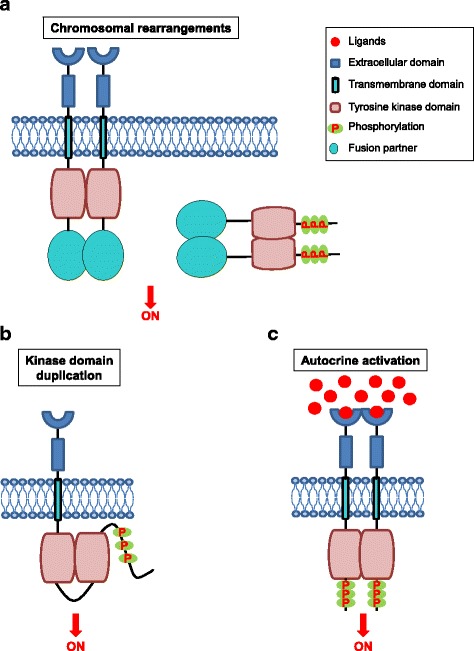
Receptor tyrosine kinases (RTKs) play an important role in a variety of cellular processes including growth, motility, differentiation, and metabolism. As such, dysregulation of RTK signaling leads to an assortment of human diseases, most notably, cancers. Recent large-scale genomic studies have revealed the presence of various alterations in the genes encoding RTKs such as EGFR, HER2/ErbB2, and MET, amongst many others. Abnormal RTK activation in human cancers is mediated by four principal mechanisms: gain-of-function mutations, genomic amplification, chromosomal rearrangements, and / or autocrine activation. In this manuscript, we review the processes whereby RTKs are activated under normal physiological conditions and discuss several mechanisms whereby RTKs can be aberrantly activated in human cancers. Understanding of these mechanisms has important implications for selection of anti-cancer therapies.
Overview
The claims and statistics of this paper haven’t been checked yet.
Free: it reads the open-access text and checks the first 5 claims that cite a source we can check. Create a free account to check every claim.
Integrity signals
Registry
Cites
Statistics
Figures
Verification
Claims the paper makes
The claims and statistics of this paper haven’t been checked yet.
Free: it reads the open-access text and checks the first 5 claims that cite a source we can check. Create a free account to check every claim.
Claims other papers make about this one
Each is checked against this paper’s own text: does it say what the citing paper says it does?
The source backs part of the claim, not all of it — or backs it for a different population, condition or comparison.
In the citing paper
“KRAS-mutant tumors are often insensitive to KRAS-targeted therapy due to feedback reactivation of upstream RTKs, which are crucial for cancer cell signaling [62, 63].”
From Differential Response and Resistance to KRAS-Targeted Therapy (2025) · cites this paper as [63]
Experimental — accuracy not yet measured
Self-check
Percentages, sums and reported differences re-computed from the paper’s own numbers.
The self-check needs the paper’s full text.
Citations
Cites
Gefitinib or Carboplatin–Paclitaxel in Pulmonary Adenocarcinoma
Mok, T. S., Wu, Y.-L., Thongprasert, S., Yang, C.-H., Chu, D.-T., Saijo, N., Sunpaweravong, P., Han, B., Margono, B., Ichinose, Y., et al. (2009) · New England Journal of Medicine · doi:10.1056/nejmoa0810699 · Cited by 8,261
The protein kinase complement of the human genome
Manning, G., Whyte, D. B., Martinez, R., Hunter, T., & Sudarsanam, S. (2002) · Science · doi:10.1126/science.1075762 · Cited by 8,145 · cited 1×
“There are 58 known RTKs in humans [1, 2], and all RTKs share a similar protein structure comprised of an extracellular ligand binding domain, a single transmembrane helix, and an intracellular region that contains a juxtamembrane regulatory region, a tyrosine kinase domain (TKD) and a carboxyl (C-) terminal tail [3].”
Cell Signaling by Receptor Tyrosine Kinases
Lemmon, M. A., & Schlessinger, J. (2010) · Cell · doi:10.1016/j.cell.2010.06.011 · Cited by 7,929
Vogelstein, B., Papadopoulos, N., Velculescu, V. E., Zhou, S., Diaz, L. A., & Kinzler, K. W. (2013) · Science · doi:10.1126/science.1235122 · Cited by 7,863
Comprehensive molecular profiling of lung adenocarcinoma
The Cancer Genome Atlas Research Network (2014) · Nature · doi:10.1038/nature13385 · Cited by 5,732
Gefitinib or Chemotherapy for Non–Small-Cell Lung Cancer with Mutated EGFR
Maemondo, M., Inoue, A., Kobayashi, K., Sugawara, S., Oizumi, S., Isobe, H., Gemma, A., Harada, M., Yoshizawa, H., Kinoshita, I., et al. (2010) · New England Journal of Medicine · doi:10.1056/nejmoa0909530 · Cited by 5,525
Osimertinib in Untreated EGFR -Mutated Advanced Non–Small-Cell Lung Cancer
Soria, J.-C., Ohe, Y., Vansteenkiste, J., Reungwetwattana, T., Chewaskulyong, B., Lee, K. H., Dechaphunkul, A., Imamura, F., Nogami, N., Kurata, T., et al. (2018) · New England Journal of Medicine · doi:10.1056/nejmoa1713137 · Cited by 5,508 · cited 1×
“Novel approaches have been shown to effectively overcome acquired resistance, including the development of second-generation [191, 192] and third-generation inhibitors [193, 194] and the combinational use of TKIs with monoclonal antibodies against the same target [195].”
Rosell, R., Carcereny, E., Gervais, R., Vergnenegre, A., Massuti, B., Felip, E., Palmero, R., Garcia-Gomez, R., Pallares, C., Sanchez, J. M., et al. (2012) · The Lancet Oncology · doi:10.1016/s1470-2045(11)70393-x · Cited by 5,489
Identification of the transforming EML4–ALK fusion gene in non-small-cell lung cancer
Soda, M., Choi, Y. L., Enomoto, M., Takada, S., Yamashita, Y., Ishikawa, S., Fujiwara, S.-I., Watanabe, H., Kurashina, K., Hatanaka, H., et al. (2007) · Nature · doi:10.1038/nature05945 · Cited by 5,439 · cited 3×
“Instead, such proteins typically localize to the cytoplasm, as is the case for the EML4-ALK fusion protein [124].”
Trastuzumab plus Adjuvant Chemotherapy for Operable HER2-Positive Breast Cancer
Romond, E. H., Perez, E. A., Bryant, J., Suman, V. J., Geyer, C. E., Davidson, N. E., Tan-Chiu, E., Martino, S., Paik, S., Kaufman, P. A., et al. (2005) · New England Journal of Medicine · doi:10.1056/nejmoa052122 · Cited by 5,356 · cited 1×
“cetuximab in lung cancer [181], panitumumab in colon cancer [182], cetuximab in head and neck cancer [183], trastuzumab and pertuzumab in breast cancer [184, 185].”
Research works printed but not linked: 1
- Soria JC, Ohe Y, Vansteenkiste J, Reungwetwattana T, Chewaskulyong B, Lee KH, et al. Osimertinib in untreated EGFR-mutated advanced non-small-cell lung cancer. N Engl J Med. 2018;378:113-25. · DOI · Paper page
Cited by
Items 701–800 of 1,000
Zhang, Q., Jing, T., Cui, X., & Zhao, L. (2021) · International Journal of Peptide Research and Therapeutics · doi:10.1007/s10989-021-10223-x · Cited by 4
Maheshwari, V. K., Slader, C., Dani, N., Gkitzia, C., Yuan, Q., Xiong, T., Liu, Y., & Viana, R. (2021) · PLoS ONE · doi:10.1371/journal.pone.0259076 · Cited by 4
Jung, M., Lee, S., & Moon, K. C. (2022) · Cancers · doi:10.3390/cancers14041095 · Cited by 4
Kumar, T. M., & Ramanathan, K. (2022) · Journal of Computational Biophysics and Chemistry · doi:10.1142/s273741652250017x · Cited by 4
Cryo-EM Structure Reveals Polymorphic Ligand-bound States of IGF1R
Zhang, X., Wei, T., Wu, C., Jiang, J., Chen, S., Yin-qing, H., Lü, Y., Sun, D., Zhai, L., Zhang, J., et al. (2022) · Journal of Molecular Biology · doi:10.1016/j.jmb.2022.167536 · Cited by 4
Darré, H., Masson, P., Nativel, A., Villain, L., Lefaudeux, D., Couty, C., Martin, B., Jacob, E., Duruisseaux, M., Palgen, J., et al. (2024) · Biomedicines · doi:10.3390/biomedicines12030704 · Cited by 4
Lemur Tyrosine Kinases and Prostate Cancer: A Literature Review
Ferrari, E., Naponelli, V., & Bettuzzi, S. (2021) · International Journal of Molecular Sciences · doi:10.3390/ijms22115453 · Cited by 4
“Instead, in cancer cells, oncogenic alterations of RTKs (caused by mutations, genomic amplification, and chromosomal rearrangements) result in aberrant RTKs activation and downstream signal transduction, disrupting the balance between cell proliferation and cell death [6,8].”
BackgroundOptimizing Mendelian Randomization for Drug Prediction: Exploring Validity and Research StrategiesPreprint
Zhang, M., Xie, Z., Tian, A., Su, Z., Wang, W., Qi, B., Yang, J., Wen, J., & Chen, P. (2024) · Research Square · doi:10.21203/rs.3.rs-3966011/v1 · Cited by 4
Chemical proteomics decrypts the kinases that shape the dynamic human phosphoproteomePreprint
Bayer, F. P., Müller, J., Kabella, N., Abele, M., Chang, Y.-C., Estrada, L., Jensen, C. B., Hamood, F., Lee, C., Schneider, A., et al. (2025) · bioRxiv (Cold Spring Harbor Laboratory) · doi:10.1101/2025.11.18.689017 · Cited by 4
Discoidin domain receptor 1 (DDR1): An emerged novel mechanosensor
Liu, J., Chien, S., & Zhou, J. (2024) · Fundamental Research · doi:10.1016/j.fmre.2024.01.021 · Cited by 3
“Receptor tyrosine kinases (RTKs) constitute a subclass of tyrosine kinases responsible for mediating cell-to-cell communication and regulating a wide range of complex biological functions, including cell growth, motility, differentiation, and metabolism [8 , 9] .”
Hu, C., Lu, C., Zheng, J., Kang, J., Huang, D., He, C., Liu, Y., Liu, Z.-R., Wu, D., Dou, Y., et al. (2025) · Acta Pharmacologica Sinica · doi:10.1038/s41401-025-01511-z · Cited by 3
“Activation of EGFR may depend on binding to the kinase domain of ALK to induce ALK-TKI resistance Changes in protein conformation are known to be closely associated with resistance to TKIs in cancer [24, 25].”
Molecular Mechanisms of Acquired Therapeutic Resistance to Tyrosine Kinase Targeted Therapy
Fu, L., & Luo, M. (2025) · Cancer drug discovery and develogment/Cancer drug discovery and development · doi:10.1007/978-3-031-93894-8_8 · Cited by 3
GAUDIO, A. D., Lopetuso, L. R., Pavese, V., Palesandro, E., Campisi, I., Tucci, M., & Scaldaferri, F. (2025) · Therapeutic Advances in Gastroenterology · doi:10.1177/17562848251358174 · Cited by 3
Targeting developmental vulnerabilities in childhood sarcomas
Young, E., Kelly, B., & Cain, J. E. (2025) · Cancer and Metastasis Reviews · doi:10.1007/s10555-025-10286-y · Cited by 3
“…through non-receptor serine/threonine kinases including mitogen-activated protein kinase (MAPK), cyclin-dependent kinases (CDKs), RAC-α serine/threonine protein kinase (AKT), and mammalian target of rapamycin (mTOR) amongst others, and the non-receptor tyrosine kinase Janus kinase (JAK) [162].”
InfluentialZhou, M., Shi, N., & Li, P. (2025) · Cell chemical biology · doi:10.1016/j.chembiol.2025.11.001 · Cited by 5
John, D., Jagatheesan, S. C. R., Radhakrishnan, E. K., Kannadasan, S., Sorrentino, A., & Sambandam, A. (2025) · Bioorganic Chemistry · doi:10.1016/j.bioorg.2025.109387 · Cited by 3
Nanobody-based targeted cancer therapy and immunotherapy: fear not the future
Guo, M.-D., Liao, R., Wang, M.-Y., Wu, L.-J., & Zhang, Y. (2026) · Acta Pharmacologica Sinica · doi:10.1038/s41401-026-01787-9 · Cited by 4
“Dysregulation by mutations or overexpression occurs frequently in cancer and provides oncogenic signals [88].”
Advancements in targeted therapy for gastric cancer
Wang, Y., Li, J., Liu, G., Zhang, C., Li, P., Kang, W., & Ye, X. (2026) · Therapeutic Advances in Gastroenterology · doi:10.1177/17562848261439234 · Cited by 3
“19 TKIs, administered orally as small molecules, exert their effect by binding the intracellular TKD of RTKs.”
El-Hema, H. S., El-Ghorab, R. A.-S., Hawata, M. A., Nossier, E. S., Hussein, M. F., Elhendawy, A. T., Hamza, M. F., & Abdel‐Rahman, A. A. ‐. (2026) · Bioorganic Chemistry · doi:10.1016/j.bioorg.2026.110052 · Cited by 3
c‐Met‐Targeted Imaging Agents: Progress and Challenges
Li, Y. F., Ji, A., Ding, Q., Lou, H., & Cheng, Z. (2026) · iRadiology · doi:10.1002/ird3.70076 · Cited by 3
Birinci Mesajcılar ve Reseptörlerine Genel Bakış
Selçuk, E., & Calapoğlu, N. Ş. (2022) · Süleyman Demirel Üniversitesi Sağlık Bilimleri Dergisi · doi:10.22312/sdusbed.1208717 · Cited by 3
Gilbert, T. M., Randle, L. E., Quinn, M., McGreevy, O., O’Leary, L., Young, R., Diaz-neito, R., Jones, R. P., Greenhalf, B., Goldring, C. E., et al. (2024) · European Journal of Surgical Oncology · doi:10.1016/j.ejso.2024.108352 · Cited by 3
Zhang, Z., Zhang, K., Liao, X., Yuan, Q., & Zhang, H. (2024) · iScience · doi:10.1016/j.isci.2024.109859 · Cited by 3
“42 It is often overexpressed out of control in tumors, which makes it one of the proto-oncogenes.”
Huang, J., Xiao, J., He, L., Dai, W., Xiao, J., Li, Y., He, Y., & Yu, L. (2024) · Journal of Cellular and Molecular Medicine · doi:10.1111/jcmm.18539 · Cited by 3
“32,33 It is notable Interestingly, it appears that K562/FLM cells are more suscepti - ble to ivermectin-induced apoptosis and cell cycle arrest than their parental K562 counterparts.”
BackgroundNaufal, M., Hidayat, I. W., Hermawati, E., Syah, Y. M., & Anshori, J. A. (2025) · Sains Malaysiana · doi:10.17576/jsm-2025-5401-16 · Cited by 3
Radiosynthesis and evaluation of [11C]AG-488, a dual anti-angiogenetic and anti-tubulin PET ligand
Kumar, J. S. D., Molotkov, A., Carberry, P., Chaly, T., Neelamegam, R., & Mintz, A. (2022) · Bioorganic & Medicinal Chemistry Letters · doi:10.1016/j.bmcl.2022.128941 · Cited by 3
Rico, M. I., Goncalves, B. G., Hunt, H. L., & Banerjee, I. A. (2023) · International Journal of Peptide Research and Therapeutics · doi:10.1007/s10989-023-10583-6 · Cited by 3
Altered PI3K/AKT/mTOR Signaling Pathway and Cancer Stem Cells
Ertay, A. (2024) · Stem cell biology and regenerative medicine · doi:10.1007/978-3-031-74842-4_5 · Cited by 3
Tyrosine kinases: Structural insights and mechanistic roles in cancer progression and therapeutics
Nadendla, E. K., Vadla, G. P., Radhakrishnan, M., & Nagampalli, R. S. K. (2025) · Innovative Medicines & Omics · doi:10.36922/imo025200022 · Cited by 3
Avapritinib: novel hope for patients with metastatic gist with PDGFRA exon 18 mutation
Maggo, S., Dubey, A. P., Dhull, P., & Singh, N. K. (2020) · International Journal of Basic & Clinical Pharmacology · doi:10.18203/2319-2003.ijbcp20202960 · Cited by 3
“These mutations drive ligand-independent constitutive kinase activity and downstream signalling, resulting in increased tumour cell proliferation and survival.(8) With the advent of molecular diagnostics and targeted therapy, there has been a paramount change in management of GIST as the treatment response can be reli…”
BackgroundLaryngeal squamous cell carcinoma cell lines show high tolerance for siRNA-mediated CDK1 knockdown.
Bednarek, K., Kostrzewska‐Poczekaj, M., Ustaszewski, A., Janiszewska, J., Kiwerska, K., Paczkowska, J., Grenman, R. A., Giefing, M., & Jarmuż‐Szymczak, M. (2021) · PubMed Central · Cited by 3
Rational design of heterodimeric receptors capable of activating target signaling molecules
Kongkrongtong, T., Zhang, R., & Kawahara, M. (2021) · Scientific Reports · doi:10.1038/s41598-021-96396-3 · Cited by 3
Manachai, N., Rattanapinyopituk, K., Fonghem, P., Phoomvuthisarn, P., Nakahata, S., Morishita, K., & Rungsipipat, A. (2022) · Veterinary Medicine International · doi:10.1155/2022/9509900 · Cited by 3
“(ese mechanisms result in alteration of the kinase activity and allow malignant transformation [1, 2].”
BackgroundImaging strategies for receptor tyrosine kinase dimers in living cells
Zhang, X., Yin, J., Pan, W., Li, Y., Li, N., & Tang, B. (2022) · Analytical and Bioanalytical Chemistry · doi:10.1007/s00216-022-04334-7 · Cited by 3
Zhao, Y., Chang, Z., Hu, B., Zhang, Q., Zhang, D., He, C., Guo, Y., Peng, Z., Chen, C., & Chen, Y. (2023) · Frontiers in Oncology · doi:10.3389/fonc.2023.1090542 · Cited by 3
Bojórquez, N. D. C. Q., Morales‐Mendoza, L. F., Hidalgo‐Figueroa, S., Hernández‐Álvarez, A. J., & Campos, M. R. S. (2023) · Journal of Biomolecular Structure and Dynamics · doi:10.1080/07391102.2023.2232045 · Cited by 3
“Signal attenuation and downregulation provide important implications in cancer therapies (Du & Lovly, 2018).”
BackgroundChauhan, S., Sen, S., Irshad, K., Kashyap, S., Pushker, N., Meel, R., & Sharma, M. C. (2023) · Human Cell · doi:10.1007/s13577-023-00993-5 · Cited by 3
“Gain-of-function mutations, genomic amplification, chromosomal rearrangements, and/or autocrine activation all play a role in abnormal RTK activation in human malignancies [10].”
Biswas, D., Shenoy, S. V., Chauhan, A., Halder, A., Padhye, A., Dutta, S., Auromahima, S., Bavaskar, H., Yadav, D., Ghosh, B., et al. (2025) · Journal of Proteome Research · doi:10.1021/acs.jproteome.4c00982 · Cited by 3
Castro, L., Liu, J., Yu, L. C., Burwell, A. D., Saddler, T. O., Santiago, L. A., Xue, W., Foley, J. F., Staup, M. A., Flagler, N. D., et al. (2021) · Toxicology Research and Application · doi:10.1177/23978473211047164 · Cited by 3
“Overexpression of ERBB2 has also been found in breast, lung, bladder, and gastric cancers.(39) EGFR more specifically has been shown to play a role in cell proliferation, cell survival, cell adhesion, and cell migration when tightly regulated; however, if overexpressed it can lead to the growth of tumor cells and tumo…”
BackgroundБурдина, О. Б. (2011) · Bulletin of Chelyabinsk State University · Cited by 3
Anwar, R., Setiawan, A. S., Supriatno, S., & Supratman, U. (2021) · B-Dent Jurnal Kedokteran Gigi Universitas Baiturrahmah · doi:10.33854/jbd.v8i3.563 · Cited by 3
“which in turn phosphorylates and activates ERK.(12) ERK has many”
BackgroundA tyrosine kinase protein interaction map reveals targetable EGFR network oncogenesis in lung cancerPreprint
Kaushik, S., Haderk, F., Zhao, X., Hu, H., Shah, K. N., Jang, G. Μ., Olivas, V. R., Nanjo, S., Jascur, J., Masto, V. B., et al. (2020) · bioRxiv (Cold Spring Harbor Laboratory) · doi:10.1101/2020.07.02.185173 · Cited by 3
“Our systematic analysis indicates that in pathogenic contexts such as cancer where RTKs are often over-expressed (Du and Lovly, 2018) they can take on alternative cellular localizations and associate with functionally distinct protein complexes.”
BackgroundSmith, M. P., Ferguson, H. R., Ferguson, J., Zindy, E., Kowalczyk, K. M., Kedward, T., Bates, C., Parsons, J., Watson, J., Chandler, S., et al. (2021) · bioRxiv (Cold Spring Harbor Laboratory) · doi:10.1101/2021.01.04.425243 · Cited by 3
Structural conservation and divergence across the Receptor Tyrosine Kinase superfamilyPreprint
Bakhman, A. F., Kolodny, R., & Kosloff, M. (2025) · bioRxiv (Cold Spring Harbor Laboratory) · doi:10.1101/2024.12.31.630944 · Cited by 3
Active regulation of the epidermal growth factor receptor by the membrane bilayerPreprint
Srinivasan, S., Lin, X., Chen, X., Regmi, R., Zhang, B., & Schlau‐Cohen, G. S. (2026) · eLife · doi:10.7554/elife.108789 · Cited by 4
“The composition of the membrane changes from healthy to disease states in a manner known to influence EGFR activity ( Desai and Miller, 2018 ; Casaletto and McClatchey, 2012 ; Du and Lovly, 2018 ; Kim et al., 2021 ).”
Zheng, J., Zhao, S., Zhan, J., Zhuang, W., Chen, M., Jiang, W., Huang, Y., He, J., Hu, L., Pang, L., et al. (2026) · Cancer Discovery · doi:10.1158/2159-8290.cd-25-1936 · Cited by 2
Franziscus, C. A., Ritz, D., Kappel, N. C., Solinger, J. A., Schmidt, A., & Spang, A. (2024) · FEBS Open Bio · doi:10.1002/2211-5463.13771 · Cited by 2
Cao, B., Ma, T., Zhang, Y., Huang, L., Lin, H. Y., Jiang, H., Zhao, Y., Geng, Y., Yang, Y., Cao, S., et al. (2024) · Investigational New Drugs · doi:10.1007/s10637-024-01436-0 · Cited by 2
“It’s reported that approximately 85% of EGFR mutations in NSCLC are “classical mutations”, including Del19 exon deletion mutations (Del19) and L858R point mutations in exon 21, which are sensitive to EGFR TKIs, also known as EGFR “sensitive mutations” [10, 11].”
HER3 (ERBB3) amplification in liposarcoma - a putative new therapeutic target?
Becker, A.-K., Puladi, B., Xie, K., Cassataro, M. A., Götzl, R., Hölzle, F., Beier, J. P., Knüchel, R., & Braunschweig, T. A. (2024) · World Journal of Surgical Oncology · doi:10.1186/s12957-024-03406-5 · Cited by 2
“As RTK play a crucial role in cell cycle and differentiation, they are used as therapeutical targets in a broad spectrum of oncological diseases [24].”
BackgroundInsight in Quinazoline-based HDAC Inhibitors as Anti-cancer Agents
Martino, E., Thakur, S., Kumar, A., Yadav, A. K., Boschi, D., Kumar, D., & Lolli, M. L. (2024) · Mini-Reviews in Medicinal Chemistry · doi:10.2174/0113895575303614240527093106 · Cited by 2
D’Souza, W., Lokesh, K. N., Mahajan, N., Mishra, R., Amirtham, U., Rajeev, L. K., & Kumar, A. (2025) · Indian Journal of Surgical Oncology · doi:10.1007/s13193-025-02359-9 · Cited by 2
Nucleolin as a Crucial Player in Head and Neck Cancer: Diagnostic and Therapeutic Perspectives
Ramasamy, K., Arun, R., Khan, S. F., Prince, S., & Nagarajan, A. K. (2025) · Current Cancer Drug Targets · doi:10.2174/0115680096370250250513115130 · Cited by 2
Role of PDGFRα-mediated signalling in anoikis resistance in glioblastoma: in vitro study
Raut, S., Makwana, M., & Pillai, P. P. (2025) · In Vitro Cellular & Developmental Biology - Animal · doi:10.1007/s11626-025-01075-6 · Cited by 2
“Moreover, glioblastoma cells, including U87, often exhibit constitutive activation of multiple receptor tyrosine kinases (RTKs) such as EGFR, IGF1R, or TrkB, which can independently drive anoikis resistance through the PI3K/Akt or MAPK pathways (Du & Lovly 2018; Qin et al .”
Ryu, H.-M., Kim, D., Choi, J. Y., Yoon, S., Lee, H., Park, J. E., Lee, E., Sung, Y., Lee, C. H., Lee, E.-Y., et al. (2025) · Cellular and Molecular Life Sciences · doi:10.1007/s00018-025-05791-w · Cited by 2
“Considering that both the PI3K/AKT and MEK/ERK pathways are key downstream signaling pathways directly related to cell proliferation and survival [10, 53], this suggests that the MED12 KO NSCLC cell lines are highly dependent on the MEK/ERK pathway since AKT is already inhibited.”
Nemeș, A., Voskuil-Galoş, D., & Bunta, O. (2025) · Dentistry Journal · doi:10.3390/dj13100439 · Cited by 2
“Physiologically, tyrosine kinase enzymes permit proper cell activity, mediating important cellular functions such as proliferation, differentiation, migration, metabolic processes and lastly, apoptosis [3,4].”
Fraternal cooperation of hierarchical cancer parallels metazoan multicellularity and eusociality
Choi, J. (2025) · Biological reviews/Biological reviews of the Cambridge Philosophical Society · doi:10.1111/brv.70087 · Cited by 2
“Excessive production of EGFRs and cognate ligands is a frequent feature of various cancers (Du & Lovly, 2018; Rivera-Soto et al ., 2024).”
InfluentialRadiation-Triggered Payload Release Enhances Bispecific Antibody Efficacy
Rodriguez-Castellanos, V. E., Quintana, J. M., Martin, J. M., Goemans, M., Banla, L. I., Ng, T. S. C., Weissleder, R., & Miller, M. A. (2025) · Cancer Research · doi:10.1158/0008-5472.can-25-0517 · Cited by 3
Moore, M., Kong, J., Akmel, A., & Thomas, M. A. (2025) · PLoS Pathogens · doi:10.1371/journal.ppat.1013202 · Cited by 2
“Insulin and growth factor receptor activation is caused by ligand binding [49].”
Jung, J., Lee, T., Jung, A., Jung, H., Jung, A., Min, J., Jung, J., Zhang, B., An, J., & Hong, W. (2025) · Molecules · doi:10.3390/molecules30234516 · Cited by 2
“Notably, all these targets, except for CDK2, are well-known targets for tyrosine kinases (TKs), the same family to which EGFR also belongs [44,45].”
Low-order assemblies drive oncogenic RTK fusion signalling without condensation
Gonzalez-Martinez, D., Mumford, T. R., Wilde, D., Wissert, S., Gao, Y. C., Brackhahn, E., Kriwacki, R. W., Rhoades, E., & Bugaj, L. J. (2026) · Nature Cell Biology · doi:10.64898/2025.12.10.693466 · Cited by 2
Shukla, D., Matore, B. W., Murmu, A., Gawande, P., Roy, P. P., & Singh, J. (2025) · Future Medicinal Chemistry · doi:10.1080/17568919.2025.2605010 · Cited by 2
Receptor tyrosine kinases in Alzheimer's disease: Mechanistic insights and therapeutic implications
Zhao, P., Cao, Z., & Rozpędek‐Kamińska, W. (2026) · Neurochemistry International · doi:10.1016/j.neuint.2026.106117 · Cited by 2
Wang, X., Tang, Y., Xiao, M., Huang, J. N., Dai, Y., Huang, W., Han, Z., & Gu, Y. (2026) · Analytical Chemistry · doi:10.1021/acs.analchem.5c07102 · Cited by 2
Construction of Agonistic Bivalent Double‐Stranded Aptamers Targeting c‐MET
Zhang, X., Zhang, N., Sun, H., Sheng, J., Li, Y., Long, Z., Liu, X., & Shangguan, D. (2026) · Angewandte Chemie International Edition · doi:10.1002/anie.202516203 · Cited by 2
Exploring the Potential of Receptor Silencing in the Tumor Microenvironment by RNA Interference
MELO, K. M. T. B. D., Bandeira, B. M. A., Novis, P. V. S., Silva, M. E. D. S., de Moura, I. A., de Freitas, A. C., & Silva, A. J. D. (2026) · Biomolecules · doi:10.3390/biom16020315 · Cited by 2
“Growth factor receptors are part of the receptor tyrosine kinase (RTK) family, which are important for the signal transduction of various processes [183].”
Postlmayr, A., Bergman, A. S., Torrejon-Diaz, J., Ciraulo, B., Yan, S., Hofmann, N., Kisele, S., Dobler, R., Machaalani, C., Schönholzer, M. T., et al. (2026) · Cell Reports · doi:10.1016/j.celrep.2026.117046 · Cited by 2
Moghaddam, A. G., Siriki, A., Majumder, D., Elsayed, H. E., Ebrahim, H. Y., Sayed, K. A. E., & Murru, S. (2026) · ChemMedChem · doi:10.1002/cmdc.202500864 · Cited by 2
“Their dysregulation has been linked to numerous cancers, making them prominent targets for therapeutic intervention [11, 12].”
Qian, K., Zhang, Y., Zhou, Q., 周建明, Wu, X., Zhu, J., Pan, Y. P., Wu, Z., Li, S., Lin, Y., et al. (2026) · Holistic Integrative Oncology · doi:10.1007/s44178-026-00257-w · Cited by 2
Dér, B., Váradi, M., Nagy, N. T., Kubik, A., Paner, G. P., Iyer, G., Gaisa, N. T., Wobker, S. E., Bambury, R. M., van Rhijn, B. W. G., et al. (2026) · Cancer and Metastasis Reviews · doi:10.1007/s10555-026-10332-3 · Cited by 2
“Based on their frequent involvement, we highlighted the receptor tyrosine-kinase (RTK)–Ras [74], Wnt [75] and cell-cycle pathways [76] with their functional features (Fig.”
Starost, K. A., Bommi, J. R., Peterman, M. C., McCullough, M., Buschman, M. D., Yun, B., & Field, S. J. (2026) · Science Signaling · doi:10.1126/scisignal.aed1622 · Cited by 2
Adams, J., Mallette, E., London, M., Liang, R. J., van Dyk, D., Pavlovic, Z., Pot, I., Geyer, C. R., Bruce, H. A., Blazer, L. L., et al. (2026) · Protein Science · doi:10.1002/pro.70645 · Cited by 2
Scalable phosphotyrosine enrichment with SH2 superbinder enables deep profiling of EGF responses
Chang, A., Rodríguez‐Mias, R. A., Berg, M. D., Moggridge, S., & Villén, J. (2026) · The EMBO Journal · doi:10.1038/s44318-026-00843-8 · Cited by 2
“Dysregulated pY signaling drives cancer and other diseases (Blume-Jensen and Hunter, 2001; Lemmon and Schlessinger, 2010; Hunter, 2000; Du and Lovly, 2018).”
Chen, Y., Liu, Q.-P., Yang, S.-J., Ding, J., Lu, X.-Y., & Xie, H. (2026) · Acta Pharmacologica Sinica · doi:10.1038/s41401-026-01855-0 · Cited by 3
“HER2 ampli fi cation: HER2, another member of the ErbB family, can also elicit analogous downstream signaling activation through homo-or heterodimerization to mediate cancer progression [196].”
Li, H., Zhou, J., & Zhu, X. (2026) · Biomedicines · doi:10.3390/biomedicines14081735 · Cited by 2
“…autophosphorylation and subsequent activation of their intracellular kinase domains, thereby recruiting downstream adaptor proteins to form dynamic signaling complexes and initiate cascade activation of pathways such as the mitogen-activated protein kinase (MAPK) and PI3K/AKT pathways [17].”
Modulating phosphorylation by proximity-inducing strategy: an update
Xia, Y., Zhai, D., You, Q., Wang, L., & Zhang, Q. (2026) · RSC Medicinal Chemistry · doi:10.1039/d6md00484a · Cited by 2
TogoPhosTAC as a delivery-ready platform for targeted protein dephosphorylation
Chen, Y.-Y., Ke, D.-T., Lee, Y., Chen, H., Lin, H.-Y., Yeh, C.-L., Ko, Y.-C., Tu, M., Yu, C., Hu, Z., et al. (2026) · Nature Communications · doi:10.1038/s41467-026-76725-8 · Cited by 2
“disrupt phosphorylation patterns in lung tissue, promoting tumor progression and conferring resistance to RTK-targeted therapies 1,2 .”
Hechavarria, M. E., & Richard, S. A. (2022) · Current Stem Cell Research & Therapy · doi:10.2174/1574888x17666220420134619 · Cited by 2
ADVANTAGES AND PROSPECTS OF TARGETED THERAPY IN ONCOLOGICAL PRACTICE: A LITERATURE REVIEW
Murina, A., Uaisova, А., & Ergalieva, A. (2022) · Oncologia i radiologia Kazakhstana · doi:10.52532/2663-4864-2022-1-63-70-80 · Cited by 2
PET Imaging in Clinical Oncology
Harsini, S., & Bénard, F. (2023) · Springer eBooks · doi:10.1007/978-3-030-80962-1_134-1 · Cited by 2
Zhang, Y., Ma, K., Jiang, L., Xu, L., Luo, Y., Wu, J., & Li, Y. (2023) · ACS Omega · doi:10.1021/acsomega.3c00122 · Cited by 2
Saini, R. P., Kumari, S., Singh, A., & Mishra, A. (2023) · Journal of Cellular Biochemistry · doi:10.1002/jcb.30501 · Cited by 2
“64 Molecular docking is an effective tool to gain an initial understanding of protein − ligand interactions.”
MethodChen, M., Yin, B., Liu, Y., Li, M., Shen, S., Wu, J., Li, W., & Fan, J. (2024) · Cell Cycle · doi:10.1080/15384101.2024.2308411 · Cited by 2
“Integrated molecular studies of ccRCC have indicated that RCC onset and progression are closely associated with the functional abnormality of receptor tyrosine kinases [5].”
BackgroundRoy, S., Harish, V., Mohd, S., & Singh, S. K. (2024) · Advanced Therapeutics · doi:10.1002/adtp.202400126 · Cited by 2
Snow, A. J. D., Wijesiriwardena, T., Lane, B. J., Farrell, B., Dowdle, P. C., Katan, M., Muench, S. P., & Breeze, A. L. (2025) · Scientific Reports · doi:10.1038/s41598-025-86194-6 · Cited by 2
“These generally affect signalling through either the promotion of a ligand-independent dimer or a constitutively active kinase domain 16,28 .”
Abdo, E.-L., Ajib, I., Mounzer, J. E., Husseini, M., Kalaoun, G., Matta, T.-M., Mosleh, R., Nasr, F., Richani, N., Khalil, A., et al. (2025) · Inflammation Research · doi:10.1007/s00011-025-02008-5 · Cited by 3
“Once activated by their specific ligands they dimerize and autophosphory-late and then recruit signaling molecules involved in initiating intracellular signaling cascades activation [8].”
Wang, X., Zhou, Y., Wang, Y., Wang, X., Zhang, Y., Mao, Y., Zhang, L., Qi, J., Zhang, Y., Lyu, F., et al. (2022) · Journal of Clinical Medicine · doi:10.3390/jcm11164765 · Cited by 2
Best Practice for Clinical Somatic Variant Interpretation and Reporting
Schubert, J. A., Wu, J., Li, M. M., & Cao, K. (2022) · Clinics in Laboratory Medicine · doi:10.1016/j.cll.2022.04.006 · Cited by 2
Smart systems in bio-encapsulation for cancer therapy
Ferreira, N. N., Cancino‐Bernardi, J., Cardoso, V. M. D. O., Comparetti, E. J., Miranda, R. R., Ferreira, L. M. B., & Zucolotto, V. (2022) · Elsevier eBooks · doi:10.1016/b978-0-323-91229-7.00015-5 · Cited by 2
Wang, W., Chen, L., Yang, J., Hu, D., Yang, Y., Dong, T., Long, X., Zou, Y., Li, J., Ma, X., et al. (2023) · Combinatorial Chemistry & High Throughput Screening · doi:10.2174/1386207326666230228101008 · Cited by 2
Linzer, J. T., Phelps, Z., Vummidi, S., Lee, B. Y. E., Coant, N., & Haley, J. D. (2023) · Proteomes · doi:10.3390/proteomes11020020 · Cited by 2
“, EGFR exon 19 deletion or L858) and by gene amplification and overexpression, which increase receptor density on the cell surface, promoting ligand-independent kinase activation [4].”
BackgroundScoring Systems for Immunohistochemistry in Urothelial Carcinoma
Bösherz, M.-S., Samarska, I. V., & Gaisa, N. T. (2023) · Methods in molecular biology · doi:10.1007/978-1-0716-3291-8_1 · Cited by 2
Zhang, Y., Liang, S., Zhang, Y., Liu, M., & Zhang, K. (2023) · Oncology Letters · doi:10.3892/ol.2023.14098 · Cited by 2
“Aberrant activa‑ tion of the RTK pathway usually occurs in tumorigenesis and malignant progression (29).”
Mariammal, B. G. V., Devarajan, D. W., Siddikuzzaman, Singaram, V., Ravichandran, R., Chandrasekharan, G., & Kathirvelan, C. (2023) · Recent Patents on Nanotechnology · doi:10.2174/0118722105246143231016105620 · Cited by 2
Benegas, P., Ziegler, B. M., Dieminger, V., Bengio, R. M. N., Zapata, P. D., Larripa, I. B., & Ferri, C. A. (2023) · Gene · doi:10.1016/j.gene.2023.148047 · Cited by 2
Lu, W., Liu, L., Xiang, K., Ren, K., Huang, Y., Cheng, M., Li, X., Xu, F., & Xu, X. (2024) · Acta Biochimica et Biophysica Sinica · doi:10.3724/abbs.2024069 · Cited by 2
“NSCLC is the most common form of lung cancer, and oncogenic activation of receptor tyrosine kinases (RTKs), such as EGFR, protein kinase B (PKB, also known as AKT), and extracellular regulated protein kinase (ERK), is especially relevant for this disease [14].”
BackgroundWei, Y.-S., Wu, C., Lin, S., Tsai, S., Chen, Y., & Tsai, P. (2024) · Biomedicine & Pharmacotherapy · doi:10.1016/j.biopha.2024.116905 · Cited by 2
Investigating druggable kinases for targeted therapy in retinoblastoma
Jeyaprakash, K., Kumaran, M., Kim, U. R., Santhi, R., Muthukkaruppan, V., Devarajan, B., & Vanniarajan, A. (2024) · Journal of Human Genetics · doi:10.1038/s10038-024-01267-0 · Cited by 2
“These fi ndings establish a foundation for exploring kinase-targeted therapy in RB, offering the promise of more targeted and effective strategy to improve RB treatment outcomes.”
Quercetin: A Flavonoid with Diverse Chemo Preventive Properties against Cancer
Rushdi, M. I. (2024) · IntechOpen eBooks · doi:10.5772/intechopen.1004133 · Cited by 2
Double trouble: how c-MET and HER2 fuel bladder cancer progression
Naguib, E. M., Ismail, E., Badran, D. I., SHERIEF, M. H., & El-Abaseri, T. B. (2024) · Egyptian Journal of Medical Human Genetics · doi:10.1186/s43042-024-00618-y · Cited by 2
Bithia, R., & Doss, C. G. P. (2025) · Journal of Molecular Graphics and Modelling · doi:10.1016/j.jmgm.2025.109072 · Cited by 2
Metadata
- Authors
- Du, Z., & Lovly, C. M.
- Affiliations
- Vanderbilt University Medical Center (US)
- Vanderbilt-Ingram Cancer Center (US)
- Corresponding author
- Lovly, Christine M.
- Venue
- Molecular Cancer
- Published
- 2018-02-19
- Volume
- 17
- Issue
- 1
- Pages
- 58-58
- ISSN
- 1476-4598 (ISSN-L)
- PMC
- PMC5817791
- OpenAlex
- W2795353688
- Cited by
- 1,066
- References
- 199
- Citations by year
- 2026: 87 · 2025: 166 · 2024: 213 · 2023: 176 · 2022: 152 · 2021: 142 · 2020: 88 · 2019: 31 · 2018: 9
- FWCI
- 7.12
- Type
- journal article
- Language
- en
- Open access
- gold
- doi.org
- Licence
- cc-by
- creativecommons.org/licenses/by/4.0/ (tdm)
- creativecommons.org/licenses/by/4.0/ (vor)
- Locations
- Molecular Cancer (publishedVersion, cc-by)
- PubMed Central (publishedVersion, cc-by)
- PubMed (publishedVersion)
- DOAJ (DOAJ: Directory of Open Access Journals) (submittedVersion, cc-by-sa)
- Funders
- National Institutes of Health (R01CA121210, P01CA129243, U10CA180864, P30CA068485-13S5)
- Topics
- Health Sciences › Medicine › Oncology › HER2/EGFR in Cancer Research
- Life Sciences › Biochemistry, Genetics and Molecular Biology › Molecular Biology › Protein Kinase Regulation and GTPase Signaling
- Life Sciences › Biochemistry, Genetics and Molecular Biology › Cancer Research › Cancer Mechanisms and Therapy
- Keywords
- receptor tyrosine kinase, receptor tyrosine kinase signaling, cancer, gain-of-function mutations, gene amplification, chromosomal rearrangements, autocrine activation, EGFR, human epidermal growth factor receptor 2, MET, cancer therapy
- MeSH terms
- Animals, Cell Transformation, Neoplastic, Enzyme Activation, Humans, Ligands, Mutation, Neoplasms, Phosphorylation, Protein Binding, Signal Transduction, Gene Expression Regulation, Neoplastic, Receptor Protein-Tyrosine Kinases, Protein Kinase Inhibitors, Protein Interaction Domains and Motifs, Protein Multimerization, Molecular Targeted Therapy
About these checks
Registry, retraction, Cites and statistics results are computed, not judged, with one exception: a printed reference that no index lists is read once by a model before it counts as a citation error. Claims are extracted by a model and kept only when their quote appears verbatim in the text; each cited source is then checked, with a model’s help, for whether it says what the claim relies on. Those verdicts can be wrong — read the claim’s quote and the cited source before relying on one.
Statistics and arithmetic are recomputed, not judged.
Confidence bands are shown only for fields calibrated on our annotated test set. None is calibrated yet, so no band is shown.
What counts as a claim ›How we measure confidence ›How we check this ›
Are you an author, or do you see a problem with this page? Request a review
Data sources
Bibliographic data: Semantic Scholar, OpenAlex, Crossref.
Contains information from the Semantic Scholar Academic Graph Datasets, made available under the ODC Attribution License (ODC-BY 1.0).
Semantic Scholar’s data is described in: Kinney, R., et al. (2023). The Semantic Scholar Open Data Platform. arXiv:2301.10140.
