

Mechanisms of receptor tyrosine kinase activation in cancer
Open accessThe DOI matches its Crossref record; 199 of the 199 references it cites were found in a registry or an index.
Abstract
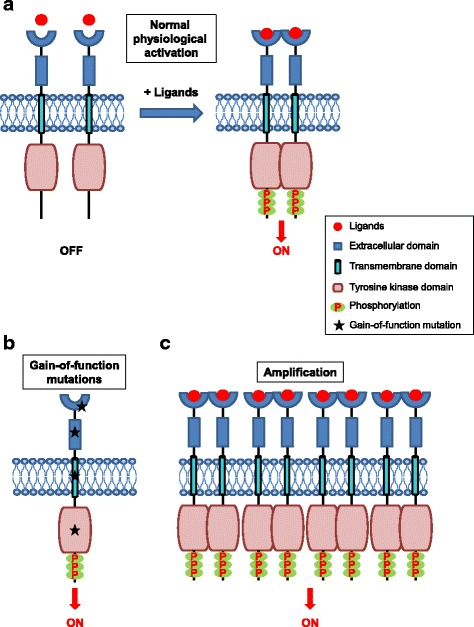
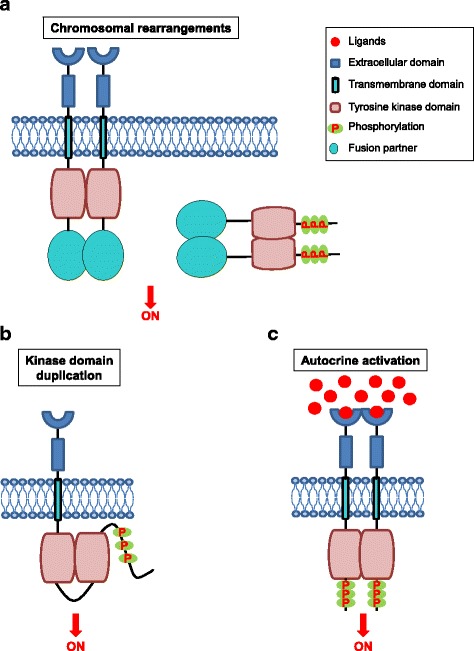
Receptor tyrosine kinases (RTKs) play an important role in a variety of cellular processes including growth, motility, differentiation, and metabolism. As such, dysregulation of RTK signaling leads to an assortment of human diseases, most notably, cancers. Recent large-scale genomic studies have revealed the presence of various alterations in the genes encoding RTKs such as EGFR, HER2/ErbB2, and MET, amongst many others. Abnormal RTK activation in human cancers is mediated by four principal mechanisms: gain-of-function mutations, genomic amplification, chromosomal rearrangements, and / or autocrine activation. In this manuscript, we review the processes whereby RTKs are activated under normal physiological conditions and discuss several mechanisms whereby RTKs can be aberrantly activated in human cancers. Understanding of these mechanisms has important implications for selection of anti-cancer therapies.
Overview
The claims and statistics of this paper haven’t been checked yet.
Free: it reads the open-access text and checks the first 5 claims that cite a source we can check. Create a free account to check every claim.
Integrity signals
Registry
Cites
Statistics
Figures
Verification
Claims the paper makes
The claims and statistics of this paper haven’t been checked yet.
Free: it reads the open-access text and checks the first 5 claims that cite a source we can check. Create a free account to check every claim.
Claims other papers make about this one
Each is checked against this paper’s own text: does it say what the citing paper says it does?
The source backs part of the claim, not all of it — or backs it for a different population, condition or comparison.
In the citing paper
“KRAS-mutant tumors are often insensitive to KRAS-targeted therapy due to feedback reactivation of upstream RTKs, which are crucial for cancer cell signaling [62, 63].”
From Differential Response and Resistance to KRAS-Targeted Therapy (2025) · cites this paper as [63]
Experimental — accuracy not yet measured
Self-check
Percentages, sums and reported differences re-computed from the paper’s own numbers.
The self-check needs the paper’s full text.
Citations
Cites
Gefitinib or Carboplatin–Paclitaxel in Pulmonary Adenocarcinoma
Mok, T. S., Wu, Y.-L., Thongprasert, S., Yang, C.-H., Chu, D.-T., Saijo, N., Sunpaweravong, P., Han, B., Margono, B., Ichinose, Y., et al. (2009) · New England Journal of Medicine · doi:10.1056/nejmoa0810699 · Cited by 8,261
The protein kinase complement of the human genome
Manning, G., Whyte, D. B., Martinez, R., Hunter, T., & Sudarsanam, S. (2002) · Science · doi:10.1126/science.1075762 · Cited by 8,145 · cited 1×
“There are 58 known RTKs in humans [1, 2], and all RTKs share a similar protein structure comprised of an extracellular ligand binding domain, a single transmembrane helix, and an intracellular region that contains a juxtamembrane regulatory region, a tyrosine kinase domain (TKD) and a carboxyl (C-) terminal tail [3].”
Cell Signaling by Receptor Tyrosine Kinases
Lemmon, M. A., & Schlessinger, J. (2010) · Cell · doi:10.1016/j.cell.2010.06.011 · Cited by 7,929
Vogelstein, B., Papadopoulos, N., Velculescu, V. E., Zhou, S., Diaz, L. A., & Kinzler, K. W. (2013) · Science · doi:10.1126/science.1235122 · Cited by 7,863
Comprehensive molecular profiling of lung adenocarcinoma
The Cancer Genome Atlas Research Network (2014) · Nature · doi:10.1038/nature13385 · Cited by 5,732
Gefitinib or Chemotherapy for Non–Small-Cell Lung Cancer with Mutated EGFR
Maemondo, M., Inoue, A., Kobayashi, K., Sugawara, S., Oizumi, S., Isobe, H., Gemma, A., Harada, M., Yoshizawa, H., Kinoshita, I., et al. (2010) · New England Journal of Medicine · doi:10.1056/nejmoa0909530 · Cited by 5,525
Osimertinib in Untreated EGFR -Mutated Advanced Non–Small-Cell Lung Cancer
Soria, J.-C., Ohe, Y., Vansteenkiste, J., Reungwetwattana, T., Chewaskulyong, B., Lee, K. H., Dechaphunkul, A., Imamura, F., Nogami, N., Kurata, T., et al. (2018) · New England Journal of Medicine · doi:10.1056/nejmoa1713137 · Cited by 5,508 · cited 1×
“Novel approaches have been shown to effectively overcome acquired resistance, including the development of second-generation [191, 192] and third-generation inhibitors [193, 194] and the combinational use of TKIs with monoclonal antibodies against the same target [195].”
Rosell, R., Carcereny, E., Gervais, R., Vergnenegre, A., Massuti, B., Felip, E., Palmero, R., Garcia-Gomez, R., Pallares, C., Sanchez, J. M., et al. (2012) · The Lancet Oncology · doi:10.1016/s1470-2045(11)70393-x · Cited by 5,489
Identification of the transforming EML4–ALK fusion gene in non-small-cell lung cancer
Soda, M., Choi, Y. L., Enomoto, M., Takada, S., Yamashita, Y., Ishikawa, S., Fujiwara, S.-I., Watanabe, H., Kurashina, K., Hatanaka, H., et al. (2007) · Nature · doi:10.1038/nature05945 · Cited by 5,439 · cited 3×
“Instead, such proteins typically localize to the cytoplasm, as is the case for the EML4-ALK fusion protein [124].”
Trastuzumab plus Adjuvant Chemotherapy for Operable HER2-Positive Breast Cancer
Romond, E. H., Perez, E. A., Bryant, J., Suman, V. J., Geyer, C. E., Davidson, N. E., Tan-Chiu, E., Martino, S., Paik, S., Kaufman, P. A., et al. (2005) · New England Journal of Medicine · doi:10.1056/nejmoa052122 · Cited by 5,356 · cited 1×
“cetuximab in lung cancer [181], panitumumab in colon cancer [182], cetuximab in head and neck cancer [183], trastuzumab and pertuzumab in breast cancer [184, 185].”
Research works printed but not linked: 1
- Soria JC, Ohe Y, Vansteenkiste J, Reungwetwattana T, Chewaskulyong B, Lee KH, et al. Osimertinib in untreated EGFR-mutated advanced non-small-cell lung cancer. N Engl J Med. 2018;378:113-25. · DOI · Paper page
Cited by
Items 201–300 of 1,000
Qi, X. (2022) · American Journal of Cancer Research · doi:10.62347/etjh6697 · Cited by 34
Kong, Y., Chen, J., Jiang, L., Chen, H., Shen, Y., Wang, L., Yan, Y., Zhou, H., Zheng, H., Yu, F., et al. (2023) · Plant Communications · doi:10.1016/j.xplc.2023.100559 · Cited by 34
Sakane, T., Sakamoto, Y., Masaki, A., Murase, T., Okuda, K., Nakanishi, R., & Inagaki, H. (2020) · Clinical Lung Cancer · doi:10.1016/j.cllc.2020.11.010 · Cited by 33
Inhibition of SHP2 as an approach to block RAS-driven cancers
Chou, Y., & Bivona, T. G. (2022) · Advances in cancer research · doi:10.1016/bs.acr.2021.07.002 · Cited by 34
Yao, Z., Dong, H., Zhu, J., Du, L., Luo, Y., Liu, Q., Liu, S., Lin, Y., Wang, L., Wang, S., et al. (2023) · JCI Insight · doi:10.1172/jci.insight.166306 · Cited by 33
Lenting, K., van den Heuvel, C. N. A. M., van Ewijk, A., Elmelik, D., de Boer, R., Tindall, E. A., Ge, W., Küsters, B., Dorsthorst, M. T., ter Laan, M., et al. (2019) · Acta Neuropathologica Communications · doi:10.1186/s40478-019-0826-z · Cited by 32
“p53 and CDKN2A) and DNA repair proteins, leading to genetic instability and loss of cell cycle control) [1–3], and activating mutations, amplifications or fusion events in proto-oncogenes [4, 5].”
Bharti, J., Gogu, P., Pandey, S. K., Verma, A., Yadav, J. P., Singh, A. K., Kumar, P., Dwivedi, A. R., & Pathak, P. (2025) · Experimental Cell Research · doi:10.1016/j.yexcr.2025.114440 · Cited by 32
López-Mejía, J. A., Utrilla, L. F. T., Salazar-Sojo, P., Mantilla-Ollarves, J. C., Sánchez‐Carballido, M. A., & Rocha‐Zavaleta, L. (2022) · International Journal of Molecular Sciences · doi:10.3390/ijms23158702 · Cited by 32
“Thus, the dysregulation of RTKs, particularly c-Kit, has been linked to tumor progression [6].”
BackgroundJaradat, S. K., Ayoub, N. M., Sharie, A. H. A., & Aldaod, J. M. (2024) · Technology in Cancer Research & Treatment · doi:10.1177/15330338241234780 · Cited by 32
“48 Constitutive activation is a principal oncogenic mechanism of RTKs.”
BackgroundInfluentialAnti-EGFR-mAb and 5-Fluorouracil Conjugated Polymeric Nanoparticles for Colorectal Cancer
Bhattacharya, S. (2020) · Recent Patents on Anti-Cancer Drug Discovery · doi:10.2174/1574892815666201221121859 · Cited by 35
Identification of NTRK gene fusions in lung adenocarcinomas in the Chinese population
Zhao, R., Yao, F., Xiang, C., Zhao, J., Shang, Z., Guo, L., Ding, W., Ma, S., Yu, A., Shao, J., et al. (2021) · The Journal of Pathology Clinical Research · doi:10.1002/cjp2.208 · Cited by 32
“At the protein level, IHC-positive results can be attributed to either gene fusion events [20] or other forms of abnormalities such as ALK alternative transcription initiation, which generates oncoproteins with kinase activities [21].”
BackgroundOptogenetic Approaches for the Spatiotemporal Control of Signal Transduction Pathways
Kramer, M. M., Lataster, L., Weber, W., & Radziwill, G. (2021) · International Journal of Molecular Sciences · doi:10.3390/ijms22105300 · Cited by 32
Zhou, L., Zhang, Z., Huang, Z., Nice, E. C., Zou, B., & Huang, C. (2020) · Molecular Biomedicine · doi:10.1186/s43556-020-00004-1 · Cited by 31
“Dysregulation of RTKs (either gene amplification or somatic mutations) that results in their constitutive activation and oncogenic properties, has been reported in various tumor types, contributing to tumor growth [56].”
BackgroundSmall-Molecule Inhibitors (SMIs) as an Effective Therapeutic Strategy for Endometrial Cancer
Megino‐Luque, C., Moiola, C. P., Molins-Escuder, C., López-Gil, C., Gil‐Moreno, A., Matías‐Guiu, X., Colás, E., & Eritja, N. (2020) · Cancers · doi:10.3390/cancers12102751 · Cited by 31
Dilmaghani, N. A., Safaroghli‐Azar, A., Pourbagheri‐Sigaroodi, A., & Bashash, D. (2021) · IUBMB Life · doi:10.1002/iub.2446 · Cited by 31
“RTKs are a wide family of high-affinity cell surface receptors that transfer the message of hormones and growth factors to the nucleus of the cells.(17) Thus far, 58 RTKs have been recognized in the cells and are classified into 20 classes.”
BackgroundCryo-electron Microscopic Analysis of Single-Pass Transmembrane Receptors
Cai, K., Zhang, X., & Bai, X. (2022) · Chemical Reviews · doi:10.1021/acs.chemrev.1c01035 · Cited by 31
New Opportunities in the Systemic Treatment of Hepatocellular Carcinoma—Today and Tomorrow
Becht, R., Kiełbowski, K., & Wasilewicz, M. P. (2024) · International Journal of Molecular Sciences · doi:10.3390/ijms25031456 · Cited by 31
“Autocrine activation, amplification, mutations, or chromosomal rearrangements are the main reasons for constitutively activated RTKs, which, in turn, drive tumor progression [4].”
BackgroundMustafa, M., Abbas, K., Alam, M., Habib, S., Zulfareen, Hasan, G. M., Islam, S., Shamsi, A., & Hassan, M. I. (2024) · Frontiers in Oncology · doi:10.3389/fonc.2024.1427802 · Cited by 32
“Critical factors, including transforming growth factor-a (TGF a ) (16), insulin-like growth factor 1 (IGF1) (17), fi broblast growth factors (FGFs) (18), and hepatocyte growth factor (HGF) (19), along with their corresponding tyrosine kinase receptors, such as epidermal growth factor receptor (EGFR) (20), receptor tyro…”
BackgroundEissa, A. A. M., Aljamal, K. F. M., Ibrahim, H. S., & Allam, H. A. (2021) · Bioorganic Chemistry · doi:10.1016/j.bioorg.2021.105318 · Cited by 30
Synaptic plasticity via receptor tyrosine kinase/G-protein-coupled receptor crosstalk
Lao‐Peregrín, C., Xiang, G., Kim, J., Srivastava, I., Fall, A. B., Gerhard, D. M., Kohtala, P., Kim, D., Song, M., Garcia‐Marcos, M., et al. (2023) · Cell Reports · doi:10.1016/j.celrep.2023.113595 · Cited by 30
“For example, many cancers are associated with constitutively active G α q mutations, 91-93 which may provide a means of amplifying the pro-cancer signaling of RTKs 94,95 and serve as promising therapeutic targets.”
BackgroundKazerooni, A. F., Akbari, H., Hu, X., Bommineni, V. L., Grigoriadis, D., Toorens, E., Sako, C., Mamourian, E., Ballinger, D. G., Sussman, R. T., et al. (2025) · Communications Medicine · doi:10.1038/s43856-025-00767-0 · Cited by 31
“Ligand-receptor bindingtransmitssignalsthatresultinactivationofaseriesofintracellular signalingcascadesaffectingapoptosis,angiogenesis,andinvasion 53 .”
InfluentialThe Evolving Landscape of HER2-Directed Breast Cancer Therapy
Marti, J. L. G., Hyder, T., Nasrazadani, A., & Brufsky, A. (2020) · Current Treatment Options in Oncology · doi:10.1007/s11864-020-00780-6 · Cited by 29
Theanine and cancer: A systematic review of the literature
Shojaei‐Zarghani, S., Rafraf, M., & Yari‐Khosroushahi, A. (2021) · Phytotherapy Research · doi:10.1002/ptr.7110 · Cited by 26
Shen, C.-H., Chou, C.-C., Lai, T., Hsu, J.-E., Lin, Y.-S., Liu, H., Chen, Y.-K., Ho, I.-L., Hsu, P., Chuang, T., et al. (2021) · Frontiers in Cell and Developmental Biology · doi:10.3389/fcell.2021.642625 · Cited by 29
“Aberrant EGFR activation often leads to the progression of various diseases and cancers (Du and Lovly, 2018).”
BackgroundKiș, A. M., Macasoi, I. G., Paul, C., Rădulescu, M., Buzatu, R., Watz, C. G., Chevereșan, A., Berceanu, D., Pînzaru, I., Dinu, Ş., et al. (2022) · Medicina · doi:10.3390/medicina58020167 · Cited by 29
“This activates the intracellular tyrosine kinase region of EGFR, resulting in the initiation of a signaling pathway involved in cell differentiation, proliferation, migration, angiogenesis, apoptosis, and metastatic spread [30].”
BackgroundAptamers against cancer drug resistance: Small fighters switching tactics in the face of defeat
Sanati, M., Afshari, A. R., Ahmadi, S. S., Kesharwani, P., & Sahebkar, A. (2023) · Biochimica et Biophysica Acta (BBA) - Molecular Basis of Disease · doi:10.1016/j.bbadis.2023.166720 · Cited by 29
Small Molecule Tyrosine Kinase Inhibitors (TKIs) for Glioblastoma Treatment
Frumento, D., Grossi, G., Falesiedi, M., Musumeci, F., Carbone, A., & Schenone, S. (2024) · International Journal of Molecular Sciences · doi:10.3390/ijms25031398 · Cited by 29
“These enzymes are overexpressed, hyperactivated or mutated in different types of cancers, included GBM [19].”
BackgroundAdaptations of membrane trafficking in cancer and tumorigenesis
Evergren, E., Mills, I. G., & Kennedy, G. (2024) · Journal of Cell Science · doi:10.1242/jcs.260943 · Cited by 28
Zinger, A., Baudo, G., Naoi, T., Giordano, F., Lenna, S., Massaro, M., Ewing, A., Kim, H. R., Tasciotti, E., Yustein, J. T., et al. (2020) · ACS Applied Bio Materials · doi:10.1021/acsabm.0c00685 · Cited by 28
Role of Collagen Regulators in Cancer Treatment: A Comprehensive Review
Angre, T. D., Kumar, A., Singh, A. K., Thareja, S., & Kumar, P. (2022) · Anti-Cancer Agents in Medicinal Chemistry · doi:10.2174/1871520622666220501162351 · Cited by 28
Targeting BRD3 eradicates nuclear TYRO3-induced colorectal cancer metastasis
Hsu, P.-L., Chien, C., Tang, Y., Lin, B., Lin, S., Lin, Y., Chen, S.-Y., Sun, H. S., & Tsai, S. (2023) · Science Advances · doi:10.1126/sciadv.ade3422 · Cited by 28
Zhou, Q., Jin, P., Liu, J., Li, S., Liu, W., & Xi, S. (2020) · The Science of The Total Environment · doi:10.1016/j.scitotenv.2020.141962 · Cited by 28
Rinninella, E., Cintoni, M., Raoul, P. C., Pozzo, C., Strippoli, A., Ponziani, F. R., Pompili, M., Bria, E., Tortora, G., Gasbarrini, A., et al. (2020) · Nutrients · doi:10.3390/nu12103101 · Cited by 29
“Finally, KIT, RET, and B-RAF are other receptor tyrosine kinases encoded by proto-oncogenes: the overexpression or mutations of these proteins can promote carcinogenesis in several tissues [19].”
BackgroundEmerging treatment modalities for systemic therapy in hepatocellular carcinoma
Qing, X., Xu, W., Zong, J., Du, X., Peng, H., & Zhang, Y. (2021) · Biomarker Research · doi:10.1186/s40364-021-00319-3 · Cited by 28
“Within the multitude of molecules known to be growth promoters, members of the family of protein tyrosine kinases have a central role in regulating tumour-initiating activity [66], and this is the main object of targeted therapy.”
BackgroundMicroRNAs as the critical regulators of tyrosine kinase inhibitors resistance in lung tumor cells
Maharati, A., Zangouei, A. S., Khalili‐Tanha, G., & Moghbeli, M. (2022) · Cell Communication and Signaling · doi:10.1186/s12964-022-00840-4 · Cited by 28
“Receptor tyrosine kinases (RTKs) RTKs are trans-membrane proteins that are expressed on different cell types and are implicated in a myriad of cellular mechanisms including proliferation, cell survival, and cell–cell communication [35].”
BackgroundAmino acid sequence and side chain specific synthetic receptors targeting protein phosphorylation
İncel, A. (2021) · doi:10.24834/isbn.9789178772087 · Cited by 28
Synergistic targeting strategies for prostate cancer
Li, X., Han, Z., & Ai, J. (2025) · Nature Reviews Urology · doi:10.1038/s41585-025-01042-6 · Cited by 27
“RTKs and NRTKs are strongly associated with tumorigenesis and prostate cancer progression 118,266 .”
Balmaña, M., Diniz, F., Feijão, T., Barrias, C. C., Mereiter, S., & Reis, C. A. (2020) · International Journal of Molecular Sciences · doi:10.3390/ijms21030722 · Cited by 27
Platelet functional responses and signalling: the molecular relationship. Part 1: responses.
Sveshnikova, A. N., Stepanyan, M. G., & Panteleev, M. A. (2021) · System Biology and Physiology Reports · doi:10.52455/sbpr.01.202101014 · Cited by 27
Utilization of macrocyclic peptides to target protein-protein interactions in cancer
Yang, J., Zhu, Q., Wu, Y., Xiao-juan, Q., Liu, H., Jiang, B., Ge, D., & Song, X. (2022) · Frontiers in Oncology · doi:10.3389/fonc.2022.992171 · Cited by 27
The emerging role of receptor tyrosine kinase phase separation in cancer
Lin, C., Suen, K. M., Lidster, J. A., & Ladbury, J. E. (2023) · Trends in Cell Biology · doi:10.1016/j.tcb.2023.09.002 · Cited by 27
Oncogenic EML4-ALK assemblies suppress growth factor perception and modulate drug tolerance
Gonzalez-Martinez, D., Roth, L., Mumford, T. R., Guan, J., Le, A., Doebele, R. C., Huang, B., Tulpule, A., Niewiadomska–Bugaj, M., Bivona, T. G., et al. (2024) · Nature Communications · doi:10.1038/s41467-024-53451-7 · Cited by 26
“Because multivalency and RTK adapter recruitment are common motifs of RTK fusions, the molecular mechanisms we describe may act across this large class of oncogenes 19,72 .”
COPB2: a transport protein with multifaceted roles in cancer development and progression
Feng, Y., Lei, X., Zhang, L., Wan, H., Pan, H., Wu, J., Zou, M., Zhu, L., & Mi, Y. (2021) · Clinical & Translational Oncology · doi:10.1007/s12094-021-02630-9 · Cited by 26
“RTKs participation has also been reported in the development and progression of human cancer via gain-of-function mutations, genomic amplification, chromosomal rearrangements, and autocrine activation [25].”
BackgroundPharmacophore based drug design and synthesis of oxindole bearing hybrid as anticancer agents
Pathak, A., Pandey, V. P., Pokharel, Y. R., Devaraji, V., Ali, A., Haider, K., Saad, S., Dewangan, R. P., Siddiqui, N., & Yar, M. S. (2021) · Bioorganic Chemistry · doi:10.1016/j.bioorg.2021.105358 · Cited by 26
Emerging treatments for myelodysplastic syndromes: Biological rationales and clinical translation
Rodríguez‐Sevilla, J. J., Ademà, V., Garcia‐Manero, G., & Colla, S. (2023) · Cell Reports Medicine · doi:10.1016/j.xcrm.2023.100940 · Cited by 26
Li, J., Xiao, Y., Yu, H., Jin, X., Fan, S., & Liu, W. (2023) · Frontiers in Oncology · doi:10.3389/fonc.2023.1140133 · Cited by 26
“Therefore, the IL-6 cytokine family receptor/JAK/STAT3 axis targeting might also block two-step cancer metastasis and reverse the dissemination of metastasis-related CSCs (44).”
BackgroundEpithelial-to-Mesenchymal Transition-Related Markers in Prostate Cancer: From Bench to Bedside
Gogola, S., Rejzer, M., Bahmad, H. F., Abou-Kheir, W. G., Omarzai, Y., & Poppiti, R. (2023) · Cancers · doi:10.3390/cancers15082309 · Cited by 27
“In short, ligand binding to RTKs leads to receptor dimerization and trans-phosphorylation of intracellular domains, initiating additional signaling cascades via Ras, PI3K, FAK, Src, and TAK [66].”
BackgroundPerturbations in 3D genome organization can promote acquired drug resistance
Manjón, A. G., Manzo, S. G., Preković, S., Potgeter, L., van Schaik, T., Liu, N. Q., Flach, K. D., Peric‐Hupkes, D., Joosten, S. E. P., Teunissen, H., et al. (2023) · Cell Reports · doi:10.1016/j.celrep.2023.113124 · Cited by 26
The dichotomic role of single cytokines: Fine-tuning immune responses
Silva, R. C. M. C., Travassos, L. H., & Dutra, F. F. (2023) · Cytokine · doi:10.1016/j.cyto.2023.156408 · Cited by 26
Naufal, M., Hermawati, E., Syah, Y. M., Hidayat, A. T., Hidayat, I. W., & Anshori, J. A. (2024) · ACS Omega · doi:10.1021/acsomega.3c04749 · Cited by 26
Molecular basis of VEGFR1 autoinhibition at the plasma membrane
Chakraborty, M. P., Das, D., Mondal, P., Kaul, P., Bhattacharyya, S., Das, P. K., & Das, R. (2024) · Nature Communications · doi:10.1038/s41467-024-45499-2 · Cited by 26
“Unlike other RTKs 59,76 , removal of the ECD does not spontaneously activate the VEGFR1 (Fig.”
InfluentialGastric Cancer Signaling Pathways and Therapeutic Applications
Wu, M., Yuan, S., Liu, K., Wang, C., & Wen, F. (2024) · Technology in Cancer Research & Treatment · doi:10.1177/15330338241271935 · Cited by 26
Graves‐Deal, R., Bogatcheva, G. T., Rehman, S., Lu, Y., Higginbotham, J. N., & Singh, B. (2019) · Oncotarget · doi:10.18632/oncotarget.26663 · Cited by 27
Clinical Relevance of Targeted Therapy and Immune-Checkpoint Inhibition in Lung Cancer
Leone, G. M., Candido, S., Lavoro, A., Vivarelli, S., Gattuso, G., Călina, D. C., Libra, M., & Falzone, L. (2023) · Pharmaceutics · doi:10.3390/pharmaceutics15041252 · Cited by 26
The human autophagy-initiating complexes ULK1C and PI3KC3-C1
Chen, M., & Hurley, J. H. (2025) · Journal of Biological Chemistry · doi:10.1016/j.jbc.2025.110391 · Cited by 25
“This mechanism parallels the well-known paradigm observed in receptor tyrosine kinases (RTKs) (84), and many other kinases, in which dimerization triggers autophosphorylation and activation (Fig.”
Viral warfare: unleashing engineered oncolytic viruses to outsmart cancer’s defenses
Omolekan, T. O., Folahan, J. T., Tesfay, M. Z., Mohan, H., Dutta, O., Rahimian, L., Ferdous, K. U., Ghavimi, R., Cios, A., Beng, T. K., et al. (2025) · Frontiers in Immunology · doi:10.3389/fimmu.2025.1618751 · Cited by 26
“Their dysregulation is a hallmark of many cancers, making them attractive therapeutic targets (178).”
Benchikh, S., Bousfiha, A., Hamouchi, A. E., Soro, S. G. C., Malki, A., & Nassereddine, S. (2022) · Egyptian Journal of Medical Human Genetics · doi:10.1186/s43042-022-00248-2 · Cited by 25
“Molecular diagnosis Mutations are detected by qRT-PCR, a hyper-sensitive technique used to detect and quantify mRNA transcribed into complementary DNA (cDNA) which will undergo PCR amplification [59].”
MethodEctopic biomolecular phase transitions: fusion proteins in cancer pathologies
Davis, R. B., Moosa, M. M., & Banerjee, P. R. (2022) · Trends in Cell Biology · doi:10.1016/j.tcb.2022.03.005 · Cited by 25
Mir, S. A., Meher, R. K., Baitharu, I., & Nayak, B. (2022) · Results in Chemistry · doi:10.1016/j.rechem.2022.100418 · Cited by 25
Rendell, A., Thomas-Bland, I., McCuish, L., Taylor, C., Binju, M., & Yu, Y. (2022) · Biomedicines · doi:10.3390/biomedicines10092113 · Cited by 25
“Oncogenic activation of RTKs and their intermediates typically occurs through one of the following mechanisms: autocrine activation of RTK signalling (Figure 1a), chromosomal rearrangements (Figure 1b), duplication of tyrosine kinase domain (Figure 1c), gain of function mutations (Figure 1d), or genomic amplifications…”
BackgroundLin, S., Qiu, L., Liang, K., Zhang, H., Xian, M., Chen, Z., Wei, J., Fu, S., Gong, X., Ding, K., et al. (2022) · Genes · doi:10.3390/genes13101817 · Cited by 25
Abouelenein, M. G., El-Rashedy, A. A. E., Awad, H. M., El-Farargy, A. F., Nassar, I. F., & Nassrallah, A. (2023) · Bioorganic Chemistry · doi:10.1016/j.bioorg.2023.106910 · Cited by 25
Flavonoids as receptor tyrosine kinase inhibitors in lung cancer
Dev, S. S., Farghadani, R., Abidin, S. A. Z., Othman, I., & Naidu, R. (2023) · Journal of Functional Foods · doi:10.1016/j.jff.2023.105845 · Cited by 25
“In conclusion, flavonoids seem to play a key role as anti-cancer agents by targeting RTKs and modulating their downstream signalling pathways like MAPK, PI3K/Akt and JAK/STAT.”
InfluentialSala, M., Allain, N., Moreau, M., Jabouille, A., Henriet, E., Hammoud, A. A., Uguen, A., Di-Tommaso, S., Dourthe, C., Raymond, A., et al. (2022) · Oncogene · doi:10.1038/s41388-022-02266-1 · Cited by 25
Oncogenic RTKs sensitize cancer cells to ferroptosis via c-Myc mediated upregulation of ACSL4
Sun, N., Wang, J., Qin, J., Ma, S., Luan, J., Hou, G., Zhang, W., & Gao, M. (2024) · Cell Death and Disease · doi:10.1038/s41419-024-07254-9 · Cited by 24
BRAF Targeting Across Solid Tumors: Molecular Aspects and Clinical Applications
Mechahougui, H., Gutmans, J., Gouasmi, R., Smekens, L., & Friedlaender, A. (2025) · International Journal of Molecular Sciences · doi:10.3390/ijms26083757 · Cited by 24
“Dysregulated activation of RAF, commonly arising from mutations in RAS or in upstream receptors, particularly receptor tyrosine kinases (RTKs), is critically involved in cancer progression [9].”
Intracellular Signaling Pathways Mediating Tyrosine Kinase Inhibitor Cardiotoxicity
Scott, S. S., Greenlee, A. N., Matzko, A., Stein, M., Naughton, M. T., Zaramo, T. Z., Schwendeman, E. J., Mohammad, S. J., Diallo, M., Revan, R., et al. (2022) · Heart Failure Clinics · doi:10.1016/j.hfc.2022.02.003 · Cited by 24
Harnessing bioactive nanomaterials in modulating tumor glycolysis-associated metabolism
Gu, Z., & Yu, C. (2022) · Journal of Nanobiotechnology · doi:10.1186/s12951-022-01740-y · Cited by 24
“Receptor tyrosine kinases (RTKs) are transmembrane proteins overexpressed in a variety of cancers [43].”
BackgroundQuercetin modulates signal transductions and targets non-coding RNAs against cancer development
Homayoonfal, M., Gilasi, H., Asemi, Z., Mahabady, M. K., Asemi, R., & Yousefi, B. (2023) · Cellular Signalling · doi:10.1016/j.cellsig.2023.110667 · Cited by 25
Caspase-8 and Tyrosine Kinases: A Dangerous Liaison in Cancer
Contadini, C., Ferri, A., Cirotti, C., Stupack, D. G., & Barilà, D. (2023) · Cancers · doi:10.3390/cancers15133271 · Cited by 25
“Receptor tyrosine kinases are frequently aberrantly hyperactivated in cancer, resulting in the deregulation of intracellular signaling involving downstream non-receptor tyrosine kinases such as Src, and other Src-family kinases (SFKs), which act as central hubs to propagate deregulated and redundant upstream signals […”
BackgroundMonteiro, M., Zhang, X., & Yee, D. (2023) · Experimental Cell Research · doi:10.1016/j.yexcr.2023.113862 · Cited by 24
Location, location, location: Protein kinase nanoclustering for optimised signalling output
Gormal, R. S., Martínez‐Mármol, R., Brooks, A. J., & Meunier, F. A. (2024) · eLife · doi:10.7554/elife.93902 · Cited by 24
Khan, S. H., Sarfraz, A., Prakash, O., & Khan, F. (2024) · Journal of Molecular Structure · doi:10.1016/j.molstruc.2024.138807 · Cited by 24
New drugs in gastrointestinal stromal tumors
Martín‐Broto, J., & Moura, D. S. (2020) · Current Opinion in Oncology · doi:10.1097/cco.0000000000000642 · Cited by 24
Patients with Lung Cancer of Different Racial Backgrounds Harbor Distinct Immune Cell Profiles
Xu, Y., Zhang, L., Thaiparambil, J. T., Mai, S., Perera, D. N., Zhang, J., Pan, P., Coarfa, C., Ramos, K. S., Chen, S., et al. (2022) · Cancer Research Communications · doi:10.1158/2767-9764.crc-22-0057 · Cited by 23
“Between 50% and 80% of patients with lung cancer have preexisting COPD, compared with a 15% to 20% prevalence of COPD in the general smoking population (4, 21, 22), and studies have shown that smokers with COPD are at increased risk for developing lung cancer (2, 23).”
BackgroundResultRegulation of Metastasis in Ewing Sarcoma
Li, M., & Chen, C.-W. D. (2022) · Cancers · doi:10.3390/cancers14194902 · Cited by 23
“Receptor tyrosine kinases (RTKs) and their dysfunction have been applied in many oncogenic and tumor-promotion events [97,98].”
BackgroundInfluentialBerbamine dihydrochloride suppresses the progression of colorectal cancer via RTKs/Akt axis
Liu, L., Liang, D., Zheng, Q., Zhao, M., Lv, R., Tang, J., & Chen, N. (2022) · Journal of Ethnopharmacology · doi:10.1016/j.jep.2022.116025 · Cited by 23
Receptor tyrosine kinases (RTKs)
Batool, Z., Azfal, A., Liaquat, L., Sadir, S., Nisar, R., Inamullah, A., Ghalib, A. U. F., & Haider, S. (2023) · Elsevier eBooks · doi:10.1016/b978-0-443-18677-6.00012-9 · Cited by 23
Hsu, T., Su, Y., Chen, H., Liao, P., Shen, S. C., Tsai, K., Wang, T.-H., Chen, A., Huang, C., Shibu, M. A., et al. (2023) · Aging · doi:10.18632/aging.204867 · Cited by 23
Fisher, Y., Lacambra, M. D., Almohsen, S. S., Chow, C., Hornick, J. L., To, K., & Dickson, B. C. (2023) · Genes Chromosomes and Cancer · doi:10.1002/gcc.23197 · Cited by 23
Autophagy supports PDGFRA-dependent brain tumor development by enhancing oncogenic signaling
Simpson, J. E., Muir, M., Lee, M., Naughton, C., Gilbert, N., Pollard, S. M., & Gammoh, N. (2023) · Developmental Cell · doi:10.1016/j.devcel.2023.11.023 · Cited by 23
Guo, H., Zhou, C. X., Zheng, M., Zhang, J., Wu, H., He, Q., Ding, L., & Yang, B. (2024) · Pharmacological Research · doi:10.1016/j.phrs.2024.107084 · Cited by 23
Glycosylation of FGF/FGFR: An underrated sweet code regulating cellular signaling programs
Gędaj, A., Gregorczyk, P., Żukowska, D., Chorążewska, A., Ciura, K., Kalka, M., Porębska, N., & Opaliński, Ł. (2024) · Cytokine & Growth Factor Reviews · doi:10.1016/j.cytogfr.2024.04.001 · Cited by 23
Wu, S., Shang, Y., Yan, Y., Zhou, A., Bing, T., Zhao, Z., & Tan, W. (2024) · Journal of the American Chemical Society · doi:10.1021/jacs.4c05665 · Cited by 24
Kuo, M. T., Long, Y., Tsai, W.-B., Li, Y.-Y., Chen, H. H. W., Feun, L. G., & Savaraj, N. (2019) · Translational Oncology · doi:10.1016/j.tranon.2019.12.003 · Cited by 23
“There are 58 known RTKs in humans sharing similar protein structures including extracellular ligand-binding domains and intracellular tyrosine kinase domains [31,32], but diverse mechanisms of activation and cell signaling [33].”
BackgroundInfantile fibrosarcoma–like tumor driven by novel RBPMS-MET fusion consolidated with cabozantinib
Gupta, A. K., Belsky, J. A., Schieffer, K. M., Leraas, K., Varga, E., McGrath, S. D., Koo, S. C., Magrini, V. J., Wilson, R. K., White, P., et al. (2020) · Molecular Case Studies · doi:10.1101/mcs.a005645 · Cited by 23
“In many receptor tyrosine kinase fusions, the 5′ gene partner contributes an oligomerization domain, such as a coiled-coil motif, which promote constitutively active and ligand-independent receptor activation (Du and Lovly 2018).”
BackgroundSmith, M. P., Ferguson, H. R., Ferguson, J., Zindy, E., Kowalczyk, K. M., Kedward, T., Bates, C., Parsons, J., Watson, J., Chandler, S., et al. (2021) · The EMBO Journal · doi:10.15252/embj.2020107182 · Cited by 23
Ruswanto, R., Miftah, A. M., Tjahjono, D. H., & Siswandono (2021) · Chemical Data Collections · doi:10.1016/j.cdc.2021.100741 · Cited by 23
Pancreatic Adenocarcinoma Therapeutics Targeting RTK and TGF Beta Receptor
Yang, H.-H., Liu, J., Lee, J.-H., Harn, H., & Chiou, T. (2021) · International Journal of Molecular Sciences · doi:10.3390/ijms22158125 · Cited by 23
Old drugs, new challenges: reassigning drugs for cancer therapies
Czechowicz, P., Więch, A., Sławski, J., Collawn, J. F., & Bartoszewski, R. (2025) · Cellular & Molecular Biology Letters · doi:10.1186/s11658-025-00710-0 · Cited by 22
“These pathways operate mainly by receiving signals from growth factors that bind to cell-surface receptors typically with intracellular tyrosine kinase activity [72].”
Zhang, Y., Huang, M., Yang, S., Cai, J., Zhao, Q., Zhang, F.-L., Hu, X., Shao, Z., Liao, L., Cao, A., et al. (2025) · Advanced Science · doi:10.1002/advs.202500421 · Cited by 22
Deng, M., Liu, B., Zhang, Z., Chen, Y., Wang, Y., Wang, X., Lv, Q., Yang, X., Hou, K., Che, X., et al. (2020) · The International Journal of Biochemistry & Cell Biology · doi:10.1016/j.biocel.2020.105716 · Cited by 22
A-to-I edited miR-411-5p targets MET and promotes TKI response in NSCLC-resistant cells
Romano, G., Le, P., Nigita, G., Saviana, M., Micalo, L., Lovat, F., Morales, D. D. V., Li, H. Y., Nana-Sinkam, P. S., & Acunzo, M. (2023) · Oncogene · doi:10.1038/s41388-023-02673-y · Cited by 22
Matsuzaka, Y., & Yashiro, R. (2024) · Biologics · doi:10.3390/biologics4020008 · Cited by 23
“For example, mutated and inactive heparanase promotes VEGF activation mediated by proto-oncogene tyrosine-protein kinase Src and p38 mitogen-activated protein kinase activation.”
BackgroundVisualization of Protein-Drug Interactions for the Analysis of Drug Resistance in Lung Cancer
Qureshi, R., Zhu, M., & Yan, H. (2020) · IEEE Journal of Biomedical and Health Informatics · doi:10.1109/jbhi.2020.3027511 · Cited by 22
“EGFR tyrosine kinase inhibitors (TKIs) have been approved by the US Food and Drug Administration (FDA) as first line treatments for NSCLC patients harboring EGFR mutations [10].”
BackgroundInfluentialYounus, S., S, V. C. S., & Nair, A. S. S. (2021) · Future Journal of Pharmaceutical Sciences · doi:10.1186/s43094-021-00323-2 · Cited by 22
“The main reason for GBM and NSCLC is the dysregulations of RTKs in C-MET, C-ROS1 and ALK [4].”
BackgroundBasu, B., & Ghosh, M. K. (2022) · Biochimica et Biophysica Acta (BBA) - Molecular Cell Research · doi:10.1016/j.bbamcr.2022.119261 · Cited by 22
The ErbB Signaling Network and Its Potential Role in Endometrial Cancer
Georgios, A., Styliara, I., Zarogianni, E., Lazurko, N., Valasoulis, G., Michail, G., & Adonakis, G. (2023) · Epigenomes · doi:10.3390/epigenomes7040024 · Cited by 22
“…of ErbB receptors enables recruitment of various signaling molecules and results in downstream signaling via several pathways [38,42,44–46, However, heritable changes in gene function without alterations in the DNA sequence (epigenetic changes) could possibly affect…”
BackgroundInfluentialExploring the landscape of post-translational modification in drug discovery
Cao, Y., Yu, T., Zhu, Z., Zhang, Y., Sun, S., Li, N., Gu, C., & Yang, Y. (2024) · Pharmacology & Therapeutics · doi:10.1016/j.pharmthera.2024.108749 · Cited by 21
Alrumaihi, F., Rahmani, A. H., Prabhu, S. V., Kumar, V., & Anwar, S. (2025) · Current Issues in Molecular Biology · doi:10.3390/cimb47070498 · Cited by 21
Metadata
- Authors
- Du, Z., & Lovly, C. M.
- Affiliations
- Vanderbilt University Medical Center (US)
- Vanderbilt-Ingram Cancer Center (US)
- Corresponding author
- Lovly, Christine M.
- Venue
- Molecular Cancer
- Published
- 2018-02-19
- Volume
- 17
- Issue
- 1
- Pages
- 58-58
- ISSN
- 1476-4598 (ISSN-L)
- PMC
- PMC5817791
- OpenAlex
- W2795353688
- Cited by
- 1,066
- References
- 199
- Citations by year
- 2026: 87 · 2025: 166 · 2024: 213 · 2023: 176 · 2022: 152 · 2021: 142 · 2020: 88 · 2019: 31 · 2018: 9
- FWCI
- 7.12
- Type
- journal article
- Language
- en
- Open access
- gold
- doi.org
- Licence
- cc-by
- creativecommons.org/licenses/by/4.0/ (tdm)
- creativecommons.org/licenses/by/4.0/ (vor)
- Locations
- Molecular Cancer (publishedVersion, cc-by)
- PubMed Central (publishedVersion, cc-by)
- PubMed (publishedVersion)
- DOAJ (DOAJ: Directory of Open Access Journals) (submittedVersion, cc-by-sa)
- Funders
- National Institutes of Health (R01CA121210, P01CA129243, U10CA180864, P30CA068485-13S5)
- Topics
- Health Sciences › Medicine › Oncology › HER2/EGFR in Cancer Research
- Life Sciences › Biochemistry, Genetics and Molecular Biology › Molecular Biology › Protein Kinase Regulation and GTPase Signaling
- Life Sciences › Biochemistry, Genetics and Molecular Biology › Cancer Research › Cancer Mechanisms and Therapy
- Keywords
- receptor tyrosine kinase, receptor tyrosine kinase signaling, cancer, gain-of-function mutations, gene amplification, chromosomal rearrangements, autocrine activation, EGFR, human epidermal growth factor receptor 2, MET, cancer therapy
- MeSH terms
- Animals, Cell Transformation, Neoplastic, Enzyme Activation, Humans, Ligands, Mutation, Neoplasms, Phosphorylation, Protein Binding, Signal Transduction, Gene Expression Regulation, Neoplastic, Receptor Protein-Tyrosine Kinases, Protein Kinase Inhibitors, Protein Interaction Domains and Motifs, Protein Multimerization, Molecular Targeted Therapy
About these checks
Registry, retraction, Cites and statistics results are computed, not judged, with one exception: a printed reference that no index lists is read once by a model before it counts as a citation error. Claims are extracted by a model and kept only when their quote appears verbatim in the text; each cited source is then checked, with a model’s help, for whether it says what the claim relies on. Those verdicts can be wrong — read the claim’s quote and the cited source before relying on one.
Statistics and arithmetic are recomputed, not judged.
Confidence bands are shown only for fields calibrated on our annotated test set. None is calibrated yet, so no band is shown.
What counts as a claim ›How we measure confidence ›How we check this ›
Are you an author, or do you see a problem with this page? Request a review
Data sources
Bibliographic data: Semantic Scholar, OpenAlex, Crossref.
Contains information from the Semantic Scholar Academic Graph Datasets, made available under the ODC Attribution License (ODC-BY 1.0).
Semantic Scholar’s data is described in: Kinney, R., et al. (2023). The Semantic Scholar Open Data Platform. arXiv:2301.10140.
