

Mechanisms of receptor tyrosine kinase activation in cancer
Open accessThe DOI matches its Crossref record; 199 of the 199 references it cites were found in a registry or an index.
Abstract
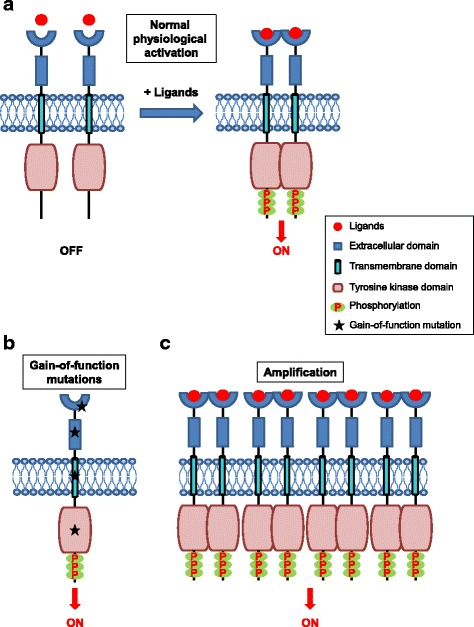
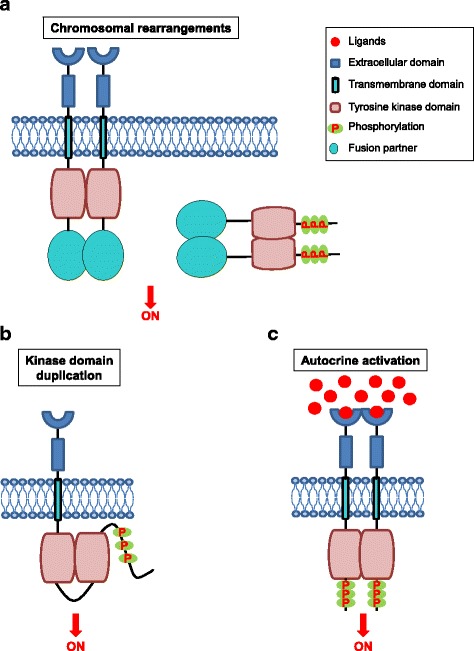
Receptor tyrosine kinases (RTKs) play an important role in a variety of cellular processes including growth, motility, differentiation, and metabolism. As such, dysregulation of RTK signaling leads to an assortment of human diseases, most notably, cancers. Recent large-scale genomic studies have revealed the presence of various alterations in the genes encoding RTKs such as EGFR, HER2/ErbB2, and MET, amongst many others. Abnormal RTK activation in human cancers is mediated by four principal mechanisms: gain-of-function mutations, genomic amplification, chromosomal rearrangements, and / or autocrine activation. In this manuscript, we review the processes whereby RTKs are activated under normal physiological conditions and discuss several mechanisms whereby RTKs can be aberrantly activated in human cancers. Understanding of these mechanisms has important implications for selection of anti-cancer therapies.
Overview
The claims and statistics of this paper haven’t been checked yet.
Free: it reads the open-access text and checks the first 5 claims that cite a source we can check. Create a free account to check every claim.
Integrity signals
Registry
Cites
Statistics
Figures
Verification
Claims the paper makes
The claims and statistics of this paper haven’t been checked yet.
Free: it reads the open-access text and checks the first 5 claims that cite a source we can check. Create a free account to check every claim.
Claims other papers make about this one
Each is checked against this paper’s own text: does it say what the citing paper says it does?
The source backs part of the claim, not all of it — or backs it for a different population, condition or comparison.
In the citing paper
“KRAS-mutant tumors are often insensitive to KRAS-targeted therapy due to feedback reactivation of upstream RTKs, which are crucial for cancer cell signaling [62, 63].”
From Differential Response and Resistance to KRAS-Targeted Therapy (2025) · cites this paper as [63]
Experimental — accuracy not yet measured
Self-check
Percentages, sums and reported differences re-computed from the paper’s own numbers.
The self-check needs the paper’s full text.
Citations
Cites
Gefitinib or Carboplatin–Paclitaxel in Pulmonary Adenocarcinoma
Mok, T. S., Wu, Y.-L., Thongprasert, S., Yang, C.-H., Chu, D.-T., Saijo, N., Sunpaweravong, P., Han, B., Margono, B., Ichinose, Y., et al. (2009) · New England Journal of Medicine · doi:10.1056/nejmoa0810699 · Cited by 8,261
The protein kinase complement of the human genome
Manning, G., Whyte, D. B., Martinez, R., Hunter, T., & Sudarsanam, S. (2002) · Science · doi:10.1126/science.1075762 · Cited by 8,145 · cited 1×
“There are 58 known RTKs in humans [1, 2], and all RTKs share a similar protein structure comprised of an extracellular ligand binding domain, a single transmembrane helix, and an intracellular region that contains a juxtamembrane regulatory region, a tyrosine kinase domain (TKD) and a carboxyl (C-) terminal tail [3].”
Cell Signaling by Receptor Tyrosine Kinases
Lemmon, M. A., & Schlessinger, J. (2010) · Cell · doi:10.1016/j.cell.2010.06.011 · Cited by 7,929
Vogelstein, B., Papadopoulos, N., Velculescu, V. E., Zhou, S., Diaz, L. A., & Kinzler, K. W. (2013) · Science · doi:10.1126/science.1235122 · Cited by 7,863
Comprehensive molecular profiling of lung adenocarcinoma
The Cancer Genome Atlas Research Network (2014) · Nature · doi:10.1038/nature13385 · Cited by 5,732
Gefitinib or Chemotherapy for Non–Small-Cell Lung Cancer with Mutated EGFR
Maemondo, M., Inoue, A., Kobayashi, K., Sugawara, S., Oizumi, S., Isobe, H., Gemma, A., Harada, M., Yoshizawa, H., Kinoshita, I., et al. (2010) · New England Journal of Medicine · doi:10.1056/nejmoa0909530 · Cited by 5,525
Osimertinib in Untreated EGFR -Mutated Advanced Non–Small-Cell Lung Cancer
Soria, J.-C., Ohe, Y., Vansteenkiste, J., Reungwetwattana, T., Chewaskulyong, B., Lee, K. H., Dechaphunkul, A., Imamura, F., Nogami, N., Kurata, T., et al. (2018) · New England Journal of Medicine · doi:10.1056/nejmoa1713137 · Cited by 5,508 · cited 1×
“Novel approaches have been shown to effectively overcome acquired resistance, including the development of second-generation [191, 192] and third-generation inhibitors [193, 194] and the combinational use of TKIs with monoclonal antibodies against the same target [195].”
Rosell, R., Carcereny, E., Gervais, R., Vergnenegre, A., Massuti, B., Felip, E., Palmero, R., Garcia-Gomez, R., Pallares, C., Sanchez, J. M., et al. (2012) · The Lancet Oncology · doi:10.1016/s1470-2045(11)70393-x · Cited by 5,489
Identification of the transforming EML4–ALK fusion gene in non-small-cell lung cancer
Soda, M., Choi, Y. L., Enomoto, M., Takada, S., Yamashita, Y., Ishikawa, S., Fujiwara, S.-I., Watanabe, H., Kurashina, K., Hatanaka, H., et al. (2007) · Nature · doi:10.1038/nature05945 · Cited by 5,439 · cited 3×
“Instead, such proteins typically localize to the cytoplasm, as is the case for the EML4-ALK fusion protein [124].”
Trastuzumab plus Adjuvant Chemotherapy for Operable HER2-Positive Breast Cancer
Romond, E. H., Perez, E. A., Bryant, J., Suman, V. J., Geyer, C. E., Davidson, N. E., Tan-Chiu, E., Martino, S., Paik, S., Kaufman, P. A., et al. (2005) · New England Journal of Medicine · doi:10.1056/nejmoa052122 · Cited by 5,356 · cited 1×
“cetuximab in lung cancer [181], panitumumab in colon cancer [182], cetuximab in head and neck cancer [183], trastuzumab and pertuzumab in breast cancer [184, 185].”
Research works printed but not linked: 1
- Soria JC, Ohe Y, Vansteenkiste J, Reungwetwattana T, Chewaskulyong B, Lee KH, et al. Osimertinib in untreated EGFR-mutated advanced non-small-cell lung cancer. N Engl J Med. 2018;378:113-25. · DOI · Paper page
Cited by
Items 501–600 of 1,000
Roles of miRNAs in regulating ovarian cancer stemness
Chong, Z. X. (2024) · Biochimica et Biophysica Acta (BBA) - Reviews on Cancer · doi:10.1016/j.bbcan.2024.189191 · Cited by 10
Lagunas‐Rangel, F. A., Jonsson, J., Jackeviča, L., Fredriksson, R., Dambrova, M., & Schiöth, H. B. (2025) · Frontiers in Pharmacology · doi:10.3389/fphar.2025.1653702 · Cited by 10
“Dysregulated kinase activity, particularly overactivation, is a common hallmark of many cancers and plays a central role in promoting tumor growth, survival, and metastasis (Du and Lovly, 2018).”
The molecular basis of the anticancer properties of quercetin
Adorisio, S., Argentieri, M. P., Avato, P., Caderni, G., Chioccioli, S., Cirmi, S., Delfino, D. V., Greco, G., Hrelia, P., Iriti, M., et al. (2021) · doi:10.36118/pharmadvances.2021.10 · Cited by 10
“of the most frequently deregulated family of proteins in LC, playing a key role in the control of tumor cell proliferation (85).”
BackgroundA cyanine-based NIR fluorescent Vemurafenib analog to probe BRAFV600E in cancer cells
Barresi, E., Baldanzi, C., Roncetti, M., Roggia, M., Baglini, E., Lepori, I., Vitiello, M., Salerno, S., Tedeschi, L., Settimo, F. D., et al. (2023) · European Journal of Medicinal Chemistry · doi:10.1016/j.ejmech.2023.115446 · Cited by 10
EPHA2 Receptor as a Possible Therapeutic Target in Viral Infections
Vincenzi, M., Mercurio, F. A., & Leone, M. (2023) · Current Medicinal Chemistry · doi:10.2174/0109298673256638231003111234 · Cited by 10
Optimization of a Protein-Targeted Medicine into an RNA-Specific Small Molecule
Meyer, S. M., Tanaka, T., Taghavi, A., Baisden, J. T., Grefe, M., & Disney, M. D. (2023) · ACS Chemical Biology · doi:10.1021/acschembio.3c00476 · Cited by 10
Malami, I., Bunza, A. M., Alhassan, A. M., Muhammad, A. I., Abubakar, I. B., Yunusa, A., Waziri, P. M., & Etti, I. C. (2020) · Journal of Biomolecular Structure and Dynamics · doi:10.1080/07391102.2020.1824811 · Cited by 10
“Therefore, dysregulations of these receptors can ultimately lead to cancer growth and development (Z. Du & Lovly, 2018).”
BackgroundLee, C., Kim, M., Kim, D., Kim, T. M., Kim, S., Im, S.-W., Jeon, Y. K., Keam, B., Ku, J., & Heo, D. S. (2021) · Cancer Research and Treatment · doi:10.4143/crt.2021.385 · Cited by 10
“In contrast to ligand-dependent EGFR activation in typical conditions, EGFR -KDD forms ligand-inde-pendent intra-molecular dimers and amplifies downstream signal with ligand-dependent inter-molecular dimers and multimers [7-9].”
FGFR4 inhibitors for the treatment of hepatocellular carcinoma: a synopsis of therapeutic potential
Xie, H., Alem, D., & Kim, R. D. (2021) · Expert Opinion on Investigational Drugs · doi:10.1080/13543784.2022.2017879 · Cited by 10
“activated protein kinase (MAPK), phosphatidylinositol 3-kinase (PI3K), phospholipase Cγ (PLCγ), and signal transducer and activator of transcription (STAT) pathways (Figure 1) [30].”
BackgroundTargeting the altered tyrosine kinases in colorectal cancer: From inhibitors to drugs
Srivastava, A., Rai, S., Bisht, D., Sachan, M., Jit, B. P., & Srivastava, S. (2022) · Elsevier eBooks · doi:10.1016/b978-0-323-91287-7.00007-7 · Cited by 10
Discoidin Domain Receptors in Tumor Biology and Immunology: Progression and Challenge
Zhang, H., Chen, W., Zhu, H., & Tsai, H. (2025) · Biomolecules · doi:10.3390/biom15060832 · Cited by 9
“…tyrosine kinases (RTKs), as integral members of the tyrosine kinase receptor family, modulate diverse complex biological processes through cellular signal transduction, playing pivotal roles in fundamental life activities, such as cell proliferation, differentiation, and metabolic regulation [7].”
Hussein, A., El-Sofany, W. I., Alminderej, F. M., Albadri, A. E. A. E., Awad, H. M., Nossier, E. S., & El‐Sayed, W. A. (2025) · ChemistrySelect · doi:10.1002/slct.202404887 · Cited by 9
SCAN-ACT: adoptive T cell therapy target discovery through single-cell transcriptomics
Testa, S., Pal, A., Subramanian, A., Varma, S., Tang, J. P., Graham, D., Arfan, S., Pan, M., Bui, N. Q., Ganjoo, K. N., et al. (2025) · Genome Medicine · doi:10.1186/s13073-025-01514-9 · Cited by 9
“Other common target classes were glypicans [170], immune checkpoint molecules [171], protein tyrosine kinases [172], NOTCH family receptors [173], G-protein coupled receptors—GPCRs [174], cell adhesion molecules of the Immunoglobulin superfam-ily—Ig-like CAMs, semaphorins [175], cytokine receptors,…”
Molecularly Built Ligands Degrade Membrane Receptors via Enhancing Their Accumulation in Lysosomes
Zhang, D., Zhou, X., Cai, J., Tan, W., Liu, Y., & Zhao, Z. (2025) · ACS Central Science · doi:10.1021/acscentsci.5c01647 · Cited by 9
Çoban, G. (2023) · Journal of Biomolecular Structure and Dynamics · doi:10.1080/07391102.2023.2194425 · Cited by 9
“Drug resistance caused by EGFR mutations towards the current reversible and irreversible EGFR inhibitors, makes harder to regulate protein kinase (PK) activation for NSCLC therapy (Du & Lovely, 2018).”
BackgroundYashavarddhan, M. H., Bohra, D., Rana, R., Tuli, H. S., Ranjan, V., Rana, D. S., & Ganguly, N. K. (2023) · Microbiological Research · doi:10.1016/j.micres.2023.127504 · Cited by 9
KURIAN, T. (2024) · International Journal of Pharmacy and Pharmaceutical Sciences · doi:10.22159/ijpps.2024v16i4.50478 · Cited by 9
“Dysregulation of RTK's signaling leads to many human diseases like Cancer [4, 5].”
BackgroundToffoli, L., Ditsiou, A., & Gagliano, T. (2024) · Receptors · doi:10.3390/receptors3020008 · Cited by 9
“Acting as cell surface receptors, RTKs initiate intracellular signaling cascades upon ligand activation, regulating critical cellular processes like proliferation, survival, and angiogenesis [9].”
BackgroundChemotherapy Resistance in Cancer: Mechanism and Roadmap to Evade Exploring Apoptosis
Halder, K. (2024) · International Journal of Advancement in Life Sciences Research · doi:10.31632/ijalsr.2024.v07i02.003 · Cited by 9
Islam, R., Yen, K. P., Rani, N. N. I. M., & Hossain, M. S. (2024) · Bioorganic & Medicinal Chemistry · doi:10.1016/j.bmc.2024.117877 · Cited by 9
Manipulating the EphB4-ephrinB2 axis to reduce metastasis in HNSCC
Abdelazeem, K. N. M., Nguyen, D., Corbo, S., Darragh, L. B., Matsumoto, M. W., Court, B. V., Neupert, B., Yu, J. D., Olimpo, N. A., Osborne, D. G., et al. (2024) · Oncogene · doi:10.1038/s41388-024-03208-9 · Cited by 9
“…with recombinant human IL-2 (Biological Resources Branch National Cancer Institute, Frederick, Maryland, USA), 10% fetal bovine serum, 50 nM 2-mercaptoethanol, 1X MEM non-essential amino acids, 1X penicillin-streptomycin, 1 M HEPES, and 100 mM sodium pyruvate (Gibco, Billings, Montana, USA).”
Wu, T., Sun, Y., Wang, D., Isaji, T., Fukuda, T., Suzuki, C., Hanamatsu, H., Nishikaze, T., Tsumoto, H., Miura, Y., et al. (2024) · Journal of Biological Chemistry · doi:10.1016/j.jbc.2024.108010 · Cited by 9
“Previous studies have shown that the receptor tyrosine kinases (RTKs)/MAPK pathway is one of the most crucial pathways associated with differentiation (31 – 33).”
PAK2 as a therapeutic target in cancer: Mechanisms, challenges, and future perspectives
Chen, X.-P., Yang, Z.-T., Yang, S., Li, E., & Xie, L. (2024) · Biochimica et Biophysica Acta (BBA) - Reviews on Cancer · doi:10.1016/j.bbcan.2024.189246 · Cited by 9
Kim, C. W., Toita, R., Kang, J., Mori, T., Kishimura, A., & Katayama, Y. (2021) · ACS Biomaterials Science & Engineering · doi:10.1021/acsbiomaterials.1c00213 · Cited by 9
Prognostic Role of Receptor Tyrosine Kinase–Like Orphan Receptors in Intestinal-Type Gastric Cancer
Nema, R., Patel, P., & Kumar, A. (2021) · Asian Pacific Journal of Cancer Prevention · doi:10.31557/apjcp.2021.22.7.2125 · Cited by 9
“Both the RORs regulate various processes, including cell proliferation, survival, and metastasis (Du and Lovly, 2018).”
BackgroundAyoub, N. M., Ibrahim, D. R., & Alkhalifa, A. E. (2021) · Medical Oncology · doi:10.1007/s12032-021-01596-6 · Cited by 9
Management of Head and Neck Mucosal Melanoma
Nenclares, P., & Harrington, K. J. (2022) · Oral and Maxillofacial Surgery Clinics of North America · doi:10.1016/j.coms.2021.11.008 · Cited by 9
Cancer regulator EGFR-ErbB4 heterodimer is stabilized through glycans at the dimeric interface
Motamedi, Z., Shahsavari, M., Rajabi‐Maham, H., & Irani, M. A. (2022) · Journal of Molecular Modeling · doi:10.1007/s00894-022-05395-2 · Cited by 9
“These receptors, with their tyrosine kinase activity, play critical roles in cellular regulating activities such as proliferating, differentiating, migrating, and apoptosis (Du and Lovly 2018).”
BackgroundXiu, F., Rausch, M., Gai, Z., Su, S., Wang, S., & Visentin, M. (2023) · International Journal of Molecular Sciences · doi:10.3390/ijms24032101 · Cited by 9
“Most TKIs have been designed against membrane-bound receptor tyrosine kinases, which play an important role in a variety of cellular processes, including growth, motility, differentiation and metabolism, and are often aberrantly activated in cancer cells because of gain-of-function mutations, genomic amplification, ch…”
BackgroundThe implication of ciliary signaling pathways for epithelial–mesenchymal transition
Zhong, B., & Dong, M. (2023) · Molecular and Cellular Biochemistry · doi:10.1007/s11010-023-04817-w · Cited by 9
“RTK signaling consists of 58 members, which plays an essential role in various cellular processes including growth, motility, differentiation and metabolism in humans [81].”
BackgroundSelpercatinib for adult patients with locally advanced or metastatic RET-altered solid tumors
Le, D. T., & Konda, B. (2023) · Expert Review of Anticancer Therapy · doi:10.1080/14737140.2023.2267754 · Cited by 9
Tailoring Potential Natural Compounds for the Treatment of Luminal Breast Cancer
da Silva, F. C., Brandão, D. C., Ferreira, E. A., Siqueira, R. P., Ferreira, H. S. V., Filho, A. A. D. S., & Araújo, T. G. (2023) · Pharmaceuticals · doi:10.3390/ph16101466 · Cited by 9
“RTKs are a family of receptors attached to the cell membrane, whose intracellular domain contains a tyrosine kinase capable of autophosphorylation or phosphorylation of tyrosine residues in target proteins [181,182].”
BackgroundRahman, A., Jain, R. S. K., Meghana, P., Nippu, B. N., Manjunatha, K. S., Rajaput, P. S., Kumaraswamy, H. M., & Satyanarayan, N. D. (2023) · Bioorganic Chemistry · doi:10.1016/j.bioorg.2023.106968 · Cited by 9
Vallese, S., Barresi, S., Hiemcke‐Jiwa, L. S., Patrizi, S. T., Kester, L. A., Giovannoni, I., Cardoni, A., Pedace, L., Nardini, C., Tancredi, C., et al. (2024) · Modern Pathology · doi:10.1016/j.modpat.2024.100539 · Cited by 9
Moosavi, F., Damghani, T., Ghazi, S., & Pirhadi, S. (2022) · Journal of Receptors and Signal Transduction · doi:10.1080/10799893.2022.2086988 · Cited by 9
Shahare, H. V., & Talele, G. S. (2019) · Journal of Biomolecular Structure and Dynamics · doi:10.1080/07391102.2019.1604264 · Cited by 9
“RTKs are associated for cell-to-cell messaging and several biological functions including cell growth, motility, differentiation and metabolism (Du & Lovly, 2018).”
BackgroundLiang, B.-G., Zheng, Y.-M., Xu, M., Gao, C., Xu, W., Chen, J.-B., Wang, S., Zhao, L.-T., Yang, G., Li, Y., et al. (2025) · Hepatology · doi:10.1097/hep.0000000000001392 · Cited by 8
“[6] Recent studies have highlighted the prominent role of microtubule-associated serine/ threonine kinase – like (MASTL) in cancer progression and therapy resistance across various cancer types.”
Mechanistic insights into MET exon 14 skipping mutations and their role in tumor progression
Ghosh, P., Pecora, I., & Park, M. (2025) · Biochemical Society Transactions · doi:10.1042/bst20253091 · Cited by 8
Al‐Hussain, S. A., Dawood, D. H., Farghaly, T. A., Alnjaa, A. M. A., & Zaki, M. E. A. (2025) · Pharmaceuticals · doi:10.3390/ph18121839 · Cited by 8
Protein O‐GlcNAcylation in Health and Diseases
Ran, Z., Chen, C., Ou, J., Wu, G., Yang, C., & Liu, X. (2025) · MedComm · doi:10.1002/mco2.70536 · Cited by 8
“…important class within the RTKs protein family is growth factor receptors, which regulate multiple signaling pathways, such as the protein kinase B (AKT) pathway that controls cell growth and proliferation [124], and the insulin signaling pathway that regulates metabolism and energy storage [125].”
Krchniaková, M., Paukovčeková, S., Chlapek, P., Neradil, J., Skoda, J., & Veselská, R. (2022) · Frontiers in Pharmacology · doi:10.3389/fphar.2022.976955 · Cited by 8
Tyrphostin A9 attenuates glioblastoma growth by suppressing PYK2/EGFR-ERK signaling pathway
Yadav, N., Babu, D., Madigubba, S., Panigrahi, M. K., & Phanithi, P. B. (2023) · Journal of Neuro-Oncology · doi:10.1007/s11060-023-04383-7 · Cited by 8
“Emerging studies disclosed that the receptor tyrosine kinases (RTKs) modulated signaling pathways could elicit cancer progression and malignancy [6, 7, 25].”
BackgroundLiu, J., Li, W., Sun, S., Huang, L., Wan, M., Li, X., Zhang, L., Yang, D., Liu, F., Liao, X., et al. (2024) · Comparative Biochemistry and Physiology Part C Toxicology & Pharmacology · doi:10.1016/j.cbpc.2024.109834 · Cited by 8
Downregulation of praja2 restrains endocytosis and boosts tyrosine kinase receptors in kidney cancer
Rinaldi, L., Chiuso, F., Senatore, E., Borzacchiello, D., Lignitto, L., Iannucci, R., Donne, R. D., Fuggi, M., Reale, C., Russo, F., et al. (2024) · Communications Biology · doi:10.1038/s42003-024-05823-4 · Cited by 8
Circadian patterns of growth factor receptor-dependent signaling and implications for carcinogenesis
Murgo, E., Falco, G., Serviddio, G., Mazzoccoli, G., & Colangelo, T. (2024) · Cell Communication and Signaling · doi:10.1186/s12964-024-01676-w · Cited by 8
“Growth factor signaling can be terminated by receptor-mediated endocytosis with internalization of the ligand-receptor complex, but in case of oncogenic changes RTKs signal unrelenting cell proliferation regardless of growth factor stimulation [34].”
BackgroundMontecino-Garrido, H. L., Trostchansky, A., Espinosa‐Parrilla, Y., Palomo, I. F., & Fuentes, E. (2024) · International Journal of Molecular Sciences · doi:10.3390/ijms251810000 · Cited by 8
DDR1 promotes metastasis of cervical cancer and downstream phosphorylation signal via binding GRB2
Zhang, J., Maimaiti, A., Chang, X., Sun, P., & Chang, X. (2024) · Cell Death and Disease · doi:10.1038/s41419-024-07212-5 · Cited by 8
Argirova, M., Cherneva, E. D., Mihaylova, R., Momekov, G., & Yancheva, D. Y. (2024) · Archives of Biochemistry and Biophysics · doi:10.1016/j.abb.2024.110245 · Cited by 8
The β Common Cytokine Receptor Family Reveals New Functional Paradigms From Structural Complexities
Kan, W. L., Weekley, C. M., Nero, T. L., Hercus, T. R., Yip, K. H., Tumes, D. J., Woodcock, J. M., Ross, D. M., Thomas, D., Teran, D., et al. (2025) · Immunological Reviews · doi:10.1111/imr.13430 · Cited by 8
“Although there was a parallel here with early studies noting receptor tyrosine kinase overexpression in solid tumors such as HER2 [87] and EGFR [88] leading to excessive oncogenic signaling, the lack of tyrosine kinase activity of IL3Rα required alternative explanations.”
Eisen, T. J., Ghaffari-Kashani, S., Hung, C., Groves, J. T., Weiss, A., & Kuriyan, J. (2025) · Science Signaling · doi:10.1126/scisignal.ado1252 · Cited by 8
Daley, J. D., Whiteway, S. L., Heske, C. M., Cruz, F. S. D., Whittle, S. B., Cohen‐Gogo, S., Collier, A. B., Gupta, A. K., Ohm, J. E., Clark, A., et al. (2025) · Pediatric Blood & Cancer · doi:10.1002/pbc.31917 · Cited by 8
Tyrosine kinase signaling in and on the endoplasmic reticulum
Farhan, H. (2020) · Biochemical Society Transactions · doi:10.1042/bst20190543 · Cited by 8
Mechanisms of Peritoneal Metastasis Formation
Yonemura, Y., Ishibashi, H., Mizumoto, A., Nishihara, K., Liu, Y., Wakama, S., Sako, S., Takao, N., Ichinose, M., Motoi, S.-I., et al. (2020) · Springer eBooks · doi:10.1007/978-981-15-3773-8_1 · Cited by 8
Wang, M., Liu, A., Niu, Q., Feng, X., Zheng, Y., Chen, S.-J., Xu, H. M., Li, Q., Hou, G., Bi, X., et al. (2022) · Theranostics · doi:10.7150/thno.72269 · Cited by 8
“This process leads to the activation and translocation of transcript factors to nuclei [11, 12].”
BackgroundMoshe, D. L., Baghaie, L., Leroy, F., Skapinker, E., & Szewczuk, M. R. (2023) · Biomedicines · doi:10.3390/biomedicines11082142 · Cited by 8
Autocrine signaling by receptor tyrosine kinases in urothelial carcinoma of the bladder
Lee, Y. H., Lee, M. M., Silva, D. M. D., Roy, A., Wright, C. E., Wong, T. K., Costello, R., Olaku, O., Grubb, R. L., Agarwal, P. K., et al. (2021) · PLoS ONE · doi:10.1371/journal.pone.0241766 · Cited by 8
“gene amplification, chromosomal rearrangements, gain of function mutations, and autocrine activation or aberrant ligand production in the tumor microenvironment) suppress immune surveillance and enhance tumor cell survival, proliferation, motility and invasion in a wide spectrum of cancers and thereby drive tumor prog…”
BackgroundComparative Anticancer Activity and Molecular Docking of Different Isatin-Based Scaffolds
Espinosa-Rodríguez, B. A., Nieto-Moreno, A. M., Arredondo‐Espinoza, E., Ávalos‐Alanís, F. G., & Balderas-Rentería, I. (2021) · Anticancer Research · doi:10.21873/anticanres.15310 · Cited by 8
Kim, Y. O., Narayanankutty, A., Kuttithodi, A. M., Kim, H., Na, S. W., Kunnath, K., Rajagopal, R., & Alfarhan, A. (2021) · Applied Sciences · doi:10.3390/app12010120 · Cited by 8
Engineered kinases as a tool for phosphorylation of selected targets in vivo
Łepeta, K., Roubinet, C., Bauer, M., Viganò, M., Aguilar, G., Kanca, O., Ochoa‐Espinosa, A., Bieli, D., Cabernard, C., Caussinus, E., et al. (2022) · The Journal of Cell Biology · doi:10.1083/jcb.202106179 · Cited by 8
Research hotspots and trends of chordoma: A bibliometric analysis
Gao, J., Huang, R., Yin, H., Song, D., & Meng, T. (2022) · Frontiers in Oncology · doi:10.3389/fonc.2022.946597 · Cited by 8
Targeted Strategies for Degradation of Key Transmembrane Proteins in Cancer
Sakanyan, V. A., Iradyan, N., & de Sousa, R. A. (2023) · BioTech · doi:10.3390/biotech12030057 · Cited by 8
“Targeted protein inhibition accelerated the development of new chemotherapeutic drugs capable of inhibiting key proteins in tumor cells [13].”
He, F., Song, K., Guan, G., Huo, J., Xin, Y., Li, T., Liu, C., Zhu, Q., Fan, N., Guo, Y. L., et al. (2021) · Pharmacogenomics and Personalized Medicine · doi:10.2147/pgpm.s313848 · Cited by 8
“In addition, it has been reported that some epithelial malignancies with abnormal activation of tyrosine kinase caused by GR respond well to targeted drugs, such as neurotrophic receptor tyrosine kinase (NTRK) rearrangement.(20,30,47) However, our study found that there was no significant difference between GR-HCCs an…”
BackgroundEditorial: Molecular Insights Into Ligand-Receptor Interactions on the Cell Surface
Marchetti, L., Porciani, D., Mitola, S. M. F., & Giacomelli, C. (2022) · Frontiers in Molecular Biosciences · doi:10.3389/fmolb.2022.921677 · Cited by 8
“For instance, single-molecule imaging has defined how receptors are activated by their ligands, and how aberrant spatial distribution of membrane receptors is implicated in several pathologies, including nearly all types of cancer (Du and Lovly, 2018).”
BackgroundDifferential Response and Resistance to KRAS-Targeted Therapy
Liu, Z., Lenz, H., Yu, J., & Zhang, L. (2025) · Molecular Carcinogenesis · doi:10.1002/mc.23908 · Cited by 7
“KRAS ‐ mutant tumors are often insensitive to KRAS ‐ targeted therapy due to feedback reactivation of upstream RTKs, which are crucial for cancer cell signaling [64, 65].”
Therapeutic dominance of tyrosine kinase inhibitors in non-small cell lung cancer (NSCLC)
Shivika, Sharma, M., Bajpai, A., Dar, Z. A., Singh, R., & Bansal, R. (2025) · Bioorganic Chemistry · doi:10.1016/j.bioorg.2025.108660 · Cited by 7
Bioinspired Engineering beyond Homeostasis
Moreddu, R. (2025) · Advanced Intelligent Systems · doi:10.1002/aisy.202500435 · Cited by 7
Mo, Y., Wang, D., & Bai, Y. (2025) · Medicinal Research Reviews · doi:10.1002/med.70014 · Cited by 7
“Subsequently, activated RTKs engage with intracellular enzymes or junction proteins with Src homology 2(SH2) domains or phosphotyrosine binding (PTB) domains, leading to downstream intracellular signaling cascades [13].”
Pharmacophore-guided review of EGFR-targeted anticancer drugs with gefitinib as a reference
Meenu, Sheikh, K. A., Shaquiquzzaman, M., Gupta, S., Barkha, Tasneem, S., Akhter, M., Anwer, T., Kaleem, M., Singh, S., et al. (2025) · European Journal of Medicinal Chemistry · doi:10.1016/j.ejmech.2025.118411 · Cited by 7
Synergistic Strategies in Systemic Therapy for Advanced Hepatocellular Carcinoma
Yu, Y., Jiang, Y., Yang, Y., Glandorff, C., Fang, W., & Sun, M. (2025) · Global Challenges · doi:10.1002/gch2.202500247 · Cited by 7
“Receptor tyrosine kinases (RTKs) are a group of transmembrane receptors composed of 20 subtypes (Table 2), playing important roles in cell survival, proliferation, differentiation, metabolism, regeneration,andapoptosispathways[22].”
Semba, Y., Yamamoto, S., Takahashi, S., Shinomiya, T., & Nagahara, Y. (2022) · European Journal of Pharmacology · doi:10.1016/j.ejphar.2022.175183 · Cited by 7
Zhang, H., Bao, M., Liao, D., Zhang, Z., Tian, Z., Yang, E., Luo, P., & Jiang, X. (2023) · Medical Oncology · doi:10.1007/s12032-023-02023-8 · Cited by 7
“Dysfunction of the receptor may lead to the development of cancers [30, 31].”
BackgroundPetrohilos, C., Patchett, A. L., Hogg, C. J., Belov, K., & Peel, E. (2023) · Scientific Reports · doi:10.1038/s41598-023-39901-0 · Cited by 7
“However, RTK inhibitors are a major class of therapeutics against a wide variety of cancers 80,81 .”
BackgroundDecoding the contextual duality of CD40 functions
Bandyopadhyay, S., Gurjar, D., Saha, B., & Bodhale, N. P. (2023) · Human Immunology · doi:10.1016/j.humimm.2023.08.142 · Cited by 7
Natsume, M., Niwa, M., Ichikawa, S., Okamoto, T., Tsutsui, H., Usukura, D., Murata, T., Abe, R., Shimonaka, M., Nishida, T., et al. (2024) · Journal of Biological Chemistry · doi:10.1016/j.jbc.2024.107327 · Cited by 7
“RTKs are type I 70 transmembrane proteins whose carboxy-terminal tyrosine kinase domain is oriented towards the 71 cytosolic side.(1,2) Soon after their synthesis in the ER, RTKs undergo partial glycosylation and 72 subsequently move to the Golgi for complex glycosylation, followed by trafficking towards the 73 PM.”
Feunaing, R. T., Tamfu, A. N., Yaya, A. J. G., Djoko, C. T., Ntchapda, F., Henoumont, C., Laurent, S., Talla, E., Anouar, E. H., Zingue, S., et al. (2024) · Biomedicine & Pharmacotherapy · doi:10.1016/j.biopha.2024.117370 · Cited by 7
“Dysregulation of signaling pathways of receptor tyrosine kinases (RTK) can cause the assortment of cancers with modifications in the genes such as HER2/ErbB2, EGFR and MET amongst others which are genes encoding RTKs [67,68].”
Abramczyk, H., Surmacki, J. M., & Kopeć, M. (2024) · Journal of Medicinal Chemistry · doi:10.1021/acs.jmedchem.4c01591 · Cited by 7
Application of a macrocyclization strategy in kinase inhibitor development
Xing, K., Li, S., Li, J., Liu, D., Huang, M., & Zhao, L. (2025) · Acta Materia Medica · doi:10.15212/amm-2024-0070 · Cited by 7
“It has been confirmed that dysregulation of the kinase phosphorylation level has a critical role in the development of various diseases, making kinases attractive targets for therapeutic intervention [2-4].”
Tang, Y., Wang, H., Zhang, J., Yang, C., Xu, F., Song, Y., Li, T., & Zhang, Q. (2025) · Scientific Reports · doi:10.1038/s41598-025-86185-7 · Cited by 7
Sood, N., Maurya, R., Gautam, S., Patel, P., Gupta, G. D., & Kurmi, B. D. (2025) · Naunyn-Schmiedeberg s Archives of Pharmacology · doi:10.1007/s00210-025-04204-w · Cited by 7
“…comprising an extra-cellular domain (facilitating ligand binding), followed by a transmembrane domain (an intracellular tyrosine kinase domain), and an intracellular domain (constituting juxta membrane regulatory region, tyrosine kinase domain, and carboxyl C-terminal tail) (Du and Lovly 2018).”
Aliashrafzadeh, H., Liu, D., Alba, S. D., Akbar, I., Lui, A., Vanleuven, J., Martin, R. M., Wang, Z., & Liu, D. (2025) · Exploration of Drug Science · doi:10.37349/eds.2025.1008116 · Cited by 7
“Kinases, existing universally in various species, have predominantly been thought as oncogenes involving tumorigenesis for many decades [7, 8], in spite of the opposite evidence that shows several kinases [e.g., protein kinase C (PKC), mitogen-activated protein kinase kinase 4 (MAPKK4/MEK4), and…”
Abdel‐Megid, M., Salem, M. E., El-boghdady, A. H., El-Rashedy, A. A. E., Abdel-Aal, M. T., Nassrallah, A., Aboelnaga, A., & Abouelenein, M. G. (2025) · Journal of Molecular Structure · doi:10.1016/j.molstruc.2025.143107 · Cited by 7
Sawiris, M. M., Khalil, O. M., Halim, P. A., & Hassan, M. S. A. (2025) · Archiv der Pharmazie · doi:10.1002/ardp.70061 · Cited by 7
Joo, S. H., Cho, Y.-Y., & Jung-Hyun, S. (2025) · Biomolecules & Therapeutics · doi:10.4062/biomolther.2025.211 · Cited by 7
“Several growth factors, such as EGFR and MET, are RTKs, and their activation is closely related to carcinogenesis (Du and Lovly, 2018).”
Justo, A. F. O., & Afonso, P. P. L. (2021) · Journal of Cell Communication and Signaling · doi:10.1007/s12079-021-00611-9 · Cited by 7
Balasubramanian, B., Venkatraman, S., Janvilisri, T., Suthiphongchai, T., Jitkaew, S., Sripa, J., & Tohtong, R. (2021) · Pharmaceuticals · doi:10.3390/ph14090898 · Cited by 7
Kinase Inhibitors’ Effects on Innate Immunity in Solid Cancers
Peng, C., Rabold, K., Mulder, W. J. M., Jaeger, M., & Netea-Maier, R. T. (2021) · Cancers · doi:10.3390/cancers13225695 · Cited by 7
A Multicenter, Open-Label, Phase I/II Study of FN-1501 in Patients with Advanced Solid Tumors
Richardson, G. E., Al-Rajabi, R. M. T., Uprety, D., Hamid, A., Williamson, S. K., Baranda, J. C., Mamdani, H. M., Lee, Y.-L., Nitika, Li, L., et al. (2023) · Cancers · doi:10.3390/cancers15092553 · Cited by 7
“Receptor tyrosine kinases (RTK), a group of transmembrane proteins, are regulators of growth, differentiation, metabolism, and other key functions in normal cells [1,2].”
BackgroundNanoplatform-based analysis for the detection of HER3 and HER4 for gastric cancer diagnosis
Gheorghe, D., Staden, R. S., Ilie‐Mihai, R., & Sfîrloagă, P. (2023) · Nanotechnology · doi:10.1088/1361-6528/acd9d3 · Cited by 7
Elhameed, A. A. A., Ali, A. R., Ghabbour, H. A., Bayomi, S. M., & El‐Gohary, N. S. (2023) · Drug Development Research · doi:10.1002/ddr.22109 · Cited by 7
“RTK mutations result in abnormal signal transductions, affecting cell survival, proliferation, angiogenesis (Du & Lovly, 2018), and vascular permeability (Huang et al., 2021).”
BackgroundWalker, T. J., Reyes-Alvarez, E., Hyndman, B. D., Sugiyama, M. G., de Oliveira, L. C. B., Rekab, A. N., Crupi, M. J. F., Cabral‐Dias, R., Guo, Q., Dahia, P. L. M., et al. (2024) · eLife · doi:10.7554/elife.89100 · Cited by 7
“Overexpression or cell surface accumulation can frequently cause constitutive activation of growth factor receptors, conferring ligand insensitivity for modulating the intensity and duration of their downstream signals ( Du and Lovly, 2018 ).”
BackgroundTherapeutic potential of targeting protein tyrosine phosphatases in liver diseases
Wang, A., Zhang, Y., Lv, X., & Liang, G. (2024) · Acta Pharmaceutica Sinica B · doi:10.1016/j.apsb.2024.05.006 · Cited by 7
“PTKs are known to disrupt key cellular pathways and are well-established regulators of many human diseases, such as cancer and immune system diseases 7,8 .”
BackgroundResearch progress on fusion genes in tumours
Chang, Y. N., Zhao, Z., & Song, Y. (2024) · Clinical and Translational Discovery · doi:10.1002/ctd2.352 · Cited by 7
Somatic mutational landscape across Indian breast cancer cases by whole exome sequencing
Kumar, R., Awasthi, S., Pradhan, D., Kumar, R., Goel, H., Singh, J., Haider, I., Deo, S. V. S., Kumar, C., Srivastava, A., et al. (2024) · Scientific Reports · doi:10.1038/s41598-024-65148-4 · Cited by 7
“Receptor tyrosine kinase (RTK) is one of the most common intracellular signaling pathways that plays an essential role in cell growth, differentiation, and survival 34,35 .”
BackgroundEwell, S. M., Burton, H., & Mochona, B. (2024) · Current Issues in Molecular Biology · doi:10.3390/cimb46100666 · Cited by 7
“Receptor tyrosine kinases (RTKs) constitute a family of cell surface receptors that regulate various cellular processes, including proliferation, differentiation, and migration, through the activation of intracellular signaling pathways [6,7].”
BackgroundGlobal Research Trends in Tyrosine Kinase Inhibitors: Coword and Visualization Study
Hu, J., Xing, K., Zhang, Y., Liu, M., & Wang, Z. (2022) · JMIR Medical Informatics · doi:10.2196/34548 · Cited by 7
Trenker, R., Diwanji, D. C., Verba, K. A., & Jura, N. (2022) · Methods in enzymology on CD-ROM/Methods in enzymology · doi:10.1016/bs.mie.2022.03.049 · Cited by 7
Dong, K., Zhang, W., Hu, H., Cheng, S., Mu, Y., Yan, B., Shu, W., Li, L., Wang, H., & Xiao, X. (2022) · Biosensors and Bioelectronics · doi:10.1016/j.bios.2022.114746 · Cited by 7
Kim, H. S., Bae, S., Lim, Y. J., So, K. A., Kim, T. J., Bae, S., & Lee, J. H. (2023) · Biomedicines · doi:10.3390/biomedicines11123155 · Cited by 7
“Receptor tyrosine kinase (RTK) pathways have been known to regulate intracellular prosurvival signaling [73,74].”
BackgroundEl-Metnawy, W., Qenawi, M., Sabet, S., & Bassiony, H. (2022) · Egyptian Journal of Basic and Applied Sciences · doi:10.1080/2314808x.2021.2022924 · Cited by 7
Xiao, Y., Xu, G., Cloyd, J. M., Du, S., Mao, Y., & Pawlik, T. M. (2022) · Journal of Gastrointestinal Surgery · doi:10.1007/s11605-022-05337-6 · Cited by 7
Metadata
- Authors
- Du, Z., & Lovly, C. M.
- Affiliations
- Vanderbilt University Medical Center (US)
- Vanderbilt-Ingram Cancer Center (US)
- Corresponding author
- Lovly, Christine M.
- Venue
- Molecular Cancer
- Published
- 2018-02-19
- Volume
- 17
- Issue
- 1
- Pages
- 58-58
- ISSN
- 1476-4598 (ISSN-L)
- PMC
- PMC5817791
- OpenAlex
- W2795353688
- Cited by
- 1,066
- References
- 199
- Citations by year
- 2026: 87 · 2025: 166 · 2024: 213 · 2023: 176 · 2022: 152 · 2021: 142 · 2020: 88 · 2019: 31 · 2018: 9
- FWCI
- 7.12
- Type
- journal article
- Language
- en
- Open access
- gold
- doi.org
- Licence
- cc-by
- creativecommons.org/licenses/by/4.0/ (tdm)
- creativecommons.org/licenses/by/4.0/ (vor)
- Locations
- Molecular Cancer (publishedVersion, cc-by)
- PubMed Central (publishedVersion, cc-by)
- PubMed (publishedVersion)
- DOAJ (DOAJ: Directory of Open Access Journals) (submittedVersion, cc-by-sa)
- Funders
- National Institutes of Health (R01CA121210, P01CA129243, U10CA180864, P30CA068485-13S5)
- Topics
- Health Sciences › Medicine › Oncology › HER2/EGFR in Cancer Research
- Life Sciences › Biochemistry, Genetics and Molecular Biology › Molecular Biology › Protein Kinase Regulation and GTPase Signaling
- Life Sciences › Biochemistry, Genetics and Molecular Biology › Cancer Research › Cancer Mechanisms and Therapy
- Keywords
- receptor tyrosine kinase, receptor tyrosine kinase signaling, cancer, gain-of-function mutations, gene amplification, chromosomal rearrangements, autocrine activation, EGFR, human epidermal growth factor receptor 2, MET, cancer therapy
- MeSH terms
- Animals, Cell Transformation, Neoplastic, Enzyme Activation, Humans, Ligands, Mutation, Neoplasms, Phosphorylation, Protein Binding, Signal Transduction, Gene Expression Regulation, Neoplastic, Receptor Protein-Tyrosine Kinases, Protein Kinase Inhibitors, Protein Interaction Domains and Motifs, Protein Multimerization, Molecular Targeted Therapy
About these checks
Registry, retraction, Cites and statistics results are computed, not judged, with one exception: a printed reference that no index lists is read once by a model before it counts as a citation error. Claims are extracted by a model and kept only when their quote appears verbatim in the text; each cited source is then checked, with a model’s help, for whether it says what the claim relies on. Those verdicts can be wrong — read the claim’s quote and the cited source before relying on one.
Statistics and arithmetic are recomputed, not judged.
Confidence bands are shown only for fields calibrated on our annotated test set. None is calibrated yet, so no band is shown.
What counts as a claim ›How we measure confidence ›How we check this ›
Are you an author, or do you see a problem with this page? Request a review
Data sources
Bibliographic data: Semantic Scholar, OpenAlex, Crossref.
Contains information from the Semantic Scholar Academic Graph Datasets, made available under the ODC Attribution License (ODC-BY 1.0).
Semantic Scholar’s data is described in: Kinney, R., et al. (2023). The Semantic Scholar Open Data Platform. arXiv:2301.10140.
