

Mechanisms of receptor tyrosine kinase activation in cancer
Open accessThe DOI matches its Crossref record; 199 of the 199 references it cites were found in a registry or an index.
Abstract
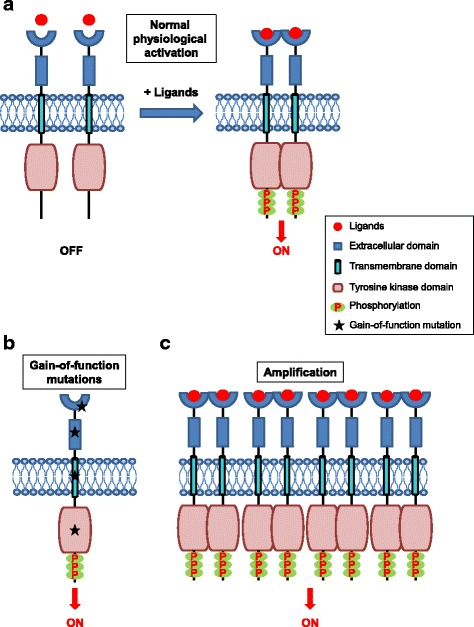
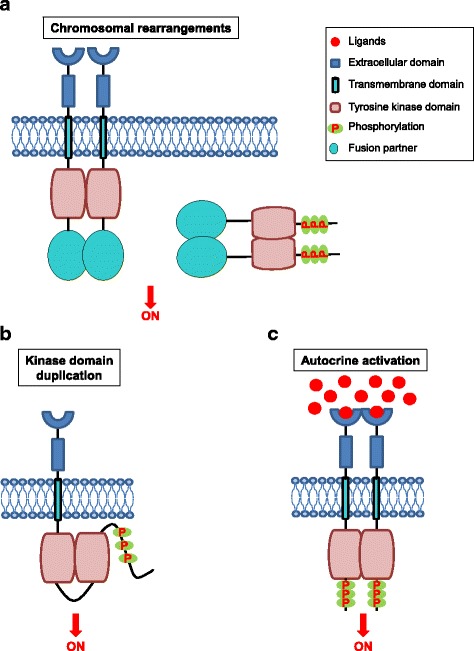
Receptor tyrosine kinases (RTKs) play an important role in a variety of cellular processes including growth, motility, differentiation, and metabolism. As such, dysregulation of RTK signaling leads to an assortment of human diseases, most notably, cancers. Recent large-scale genomic studies have revealed the presence of various alterations in the genes encoding RTKs such as EGFR, HER2/ErbB2, and MET, amongst many others. Abnormal RTK activation in human cancers is mediated by four principal mechanisms: gain-of-function mutations, genomic amplification, chromosomal rearrangements, and / or autocrine activation. In this manuscript, we review the processes whereby RTKs are activated under normal physiological conditions and discuss several mechanisms whereby RTKs can be aberrantly activated in human cancers. Understanding of these mechanisms has important implications for selection of anti-cancer therapies.
Overview
The claims and statistics of this paper haven’t been checked yet.
Free: it reads the open-access text and checks the first 5 claims that cite a source we can check. Create a free account to check every claim.
Integrity signals
Registry
Cites
Statistics
Figures
Verification
Claims the paper makes
The claims and statistics of this paper haven’t been checked yet.
Free: it reads the open-access text and checks the first 5 claims that cite a source we can check. Create a free account to check every claim.
Claims other papers make about this one
Each is checked against this paper’s own text: does it say what the citing paper says it does?
The source backs part of the claim, not all of it — or backs it for a different population, condition or comparison.
In the citing paper
“KRAS-mutant tumors are often insensitive to KRAS-targeted therapy due to feedback reactivation of upstream RTKs, which are crucial for cancer cell signaling [62, 63].”
From Differential Response and Resistance to KRAS-Targeted Therapy (2025) · cites this paper as [63]
Experimental — accuracy not yet measured
Self-check
Percentages, sums and reported differences re-computed from the paper’s own numbers.
The self-check needs the paper’s full text.
Citations
Cites
Gefitinib or Carboplatin–Paclitaxel in Pulmonary Adenocarcinoma
Mok, T. S., Wu, Y.-L., Thongprasert, S., Yang, C.-H., Chu, D.-T., Saijo, N., Sunpaweravong, P., Han, B., Margono, B., Ichinose, Y., et al. (2009) · New England Journal of Medicine · doi:10.1056/nejmoa0810699 · Cited by 8,261
The protein kinase complement of the human genome
Manning, G., Whyte, D. B., Martinez, R., Hunter, T., & Sudarsanam, S. (2002) · Science · doi:10.1126/science.1075762 · Cited by 8,145 · cited 1×
“There are 58 known RTKs in humans [1, 2], and all RTKs share a similar protein structure comprised of an extracellular ligand binding domain, a single transmembrane helix, and an intracellular region that contains a juxtamembrane regulatory region, a tyrosine kinase domain (TKD) and a carboxyl (C-) terminal tail [3].”
Cell Signaling by Receptor Tyrosine Kinases
Lemmon, M. A., & Schlessinger, J. (2010) · Cell · doi:10.1016/j.cell.2010.06.011 · Cited by 7,929
Vogelstein, B., Papadopoulos, N., Velculescu, V. E., Zhou, S., Diaz, L. A., & Kinzler, K. W. (2013) · Science · doi:10.1126/science.1235122 · Cited by 7,863
Comprehensive molecular profiling of lung adenocarcinoma
The Cancer Genome Atlas Research Network (2014) · Nature · doi:10.1038/nature13385 · Cited by 5,732
Gefitinib or Chemotherapy for Non–Small-Cell Lung Cancer with Mutated EGFR
Maemondo, M., Inoue, A., Kobayashi, K., Sugawara, S., Oizumi, S., Isobe, H., Gemma, A., Harada, M., Yoshizawa, H., Kinoshita, I., et al. (2010) · New England Journal of Medicine · doi:10.1056/nejmoa0909530 · Cited by 5,525
Osimertinib in Untreated EGFR -Mutated Advanced Non–Small-Cell Lung Cancer
Soria, J.-C., Ohe, Y., Vansteenkiste, J., Reungwetwattana, T., Chewaskulyong, B., Lee, K. H., Dechaphunkul, A., Imamura, F., Nogami, N., Kurata, T., et al. (2018) · New England Journal of Medicine · doi:10.1056/nejmoa1713137 · Cited by 5,508 · cited 1×
“Novel approaches have been shown to effectively overcome acquired resistance, including the development of second-generation [191, 192] and third-generation inhibitors [193, 194] and the combinational use of TKIs with monoclonal antibodies against the same target [195].”
Rosell, R., Carcereny, E., Gervais, R., Vergnenegre, A., Massuti, B., Felip, E., Palmero, R., Garcia-Gomez, R., Pallares, C., Sanchez, J. M., et al. (2012) · The Lancet Oncology · doi:10.1016/s1470-2045(11)70393-x · Cited by 5,489
Identification of the transforming EML4–ALK fusion gene in non-small-cell lung cancer
Soda, M., Choi, Y. L., Enomoto, M., Takada, S., Yamashita, Y., Ishikawa, S., Fujiwara, S.-I., Watanabe, H., Kurashina, K., Hatanaka, H., et al. (2007) · Nature · doi:10.1038/nature05945 · Cited by 5,439 · cited 3×
“Instead, such proteins typically localize to the cytoplasm, as is the case for the EML4-ALK fusion protein [124].”
Trastuzumab plus Adjuvant Chemotherapy for Operable HER2-Positive Breast Cancer
Romond, E. H., Perez, E. A., Bryant, J., Suman, V. J., Geyer, C. E., Davidson, N. E., Tan-Chiu, E., Martino, S., Paik, S., Kaufman, P. A., et al. (2005) · New England Journal of Medicine · doi:10.1056/nejmoa052122 · Cited by 5,356 · cited 1×
“cetuximab in lung cancer [181], panitumumab in colon cancer [182], cetuximab in head and neck cancer [183], trastuzumab and pertuzumab in breast cancer [184, 185].”
Research works printed but not linked: 1
- Soria JC, Ohe Y, Vansteenkiste J, Reungwetwattana T, Chewaskulyong B, Lee KH, et al. Osimertinib in untreated EGFR-mutated advanced non-small-cell lung cancer. N Engl J Med. 2018;378:113-25. · DOI · Paper page
Cited by
Items 301–400 of 1,000
Pro-tumorigenic and Anti-tumorigenic Roles of Pro-inflammatory Cytokines in Cancer
Tahmasebi, S., Alimohammadi, M., Khorasani, S., & Rezaei, N. (2025) · Springer eBooks · doi:10.1007/978-3-032-00749-0_25 · Cited by 21
Honar, Y. S., Javaher, S., Soleimani, M., Zarebkohan, A., Farhadihosseinabadi, B., Tohidfar, M., & Abdollahpour‐Alitappeh, M. (2023) · Scientific Reports · doi:10.1038/s41598-023-44246-9 · Cited by 21
“Recent advancements in the understanding of the fundamental molecular mechanisms underlying cancer cell signaling have revealed the pivotal role of kinases in the carcinogenesis and metastases of various cancer types 29 .”
BackgroundTools for investigating O-GlcNAc in signaling and other fundamental biological pathways
Nelson, Z., Leonard, G. D., & Fehl, C. (2023) · Journal of Biological Chemistry · doi:10.1016/j.jbc.2023.105615 · Cited by 21
Makey, D. M., Gadkari, V. V., Kennedy, R. T., & Ruotolo, B. T. (2024) · Analytical Chemistry · doi:10.1021/acs.analchem.4c00477 · Cited by 21
Budipramana, K., & Sangande, F. (2024) · Chemical Biology & Drug Design · doi:10.1111/cbdd.14534 · Cited by 21
“Similar to the other RTKs, the structure of EGFR and VEGFR2 comprises an extracellular domain, a transmembrane domain, and an intracellular domain consisting of a juxtamembrane, a tyrosine kinase domain, and a carboxyl (C) terminal tail (Du & Lovly, 2018).”
BackgroundPineda-Cortel, M. R., Gonzalez-Suarez, C., Cabrera, J.-T., Daya, M. L., Bonifacio, R. B. L., Vergara, R. C., Dacanay, A. T. L., & Villavieja, A. (2024) · Plasmatology · doi:10.1177/26348535241277625 · Cited by 21
“20 EGF is fi rst synthesized as an inactive transmembrane precursor.”
Zeid, M. M., El‐Badry, O. M., Elmeligie, S. E., & Hassan, R. A. (2025) · Current Pharmaceutical Design · doi:10.2174/0113816128346900241111115125 · Cited by 21
BRD4-targeted photodegradation nanoplatform for light activatable melanoma therapy
Lu, S., Shi, Z., Ding, C., Wang, W., Zhang, W., Huang, L., Lin, J., Wang, X., Luo, R., Zeng, X., et al. (2025) · Biomaterials · doi:10.1016/j.biomaterials.2025.123101 · Cited by 21
Faure, C., Djerbi-Bouillié, R., Domingot, A., Bouzinba-Ségard, H., Taouji, S., Saidi, Y., Bernard, S. C., Carallis, F., Rothe, R., Lenormand, J., et al. (2021) · Cancer Research · doi:10.1158/0008-5472.can-21-0162 · Cited by 21
“Introduction HER2þ breast cancer is defined by amplification of the ERBB2/ HER2/Neu oncogene and/or overexpression of its associated HER2 transmembrane receptor protein (1).”
BackgroundZhang, J., Dai, J., Lan, X., Zhao, Y. H., Yang, F., Zhang, H., Tang, S., Liang, G., Wang, X., & Tang, Q. (2022) · European Journal of Medicinal Chemistry · doi:10.1016/j.ejmech.2022.114215 · Cited by 21
Sandalova, T., Sala, B. M., & Achour, A. (2022) · Frontiers in Chemistry · doi:10.3389/fchem.2022.861609 · Cited by 21
“Malignant transformation modifies often protein kinase/phosphatase pathways which regulate cell growth, proliferation, differentiation and cell death (Du and Lovly 2018; Revathidevi and Munirajan 2019).”
BackgroundLe, J., Li, L., Wang, C., Hu, Q., Shao, K., Zhao, Y. F., & Jin, Y. (2025) · Food Chemistry · doi:10.1016/j.foodchem.2025.145613 · Cited by 20
Xu, H., Tan, M., Hou, G., Sang, Y.-Z., Lin, L., Gan, X.-C., Cao, X., & Liu, A. (2023) · Cell Death and Disease · doi:10.1038/s41419-023-06344-4 · Cited by 20
“Immediately prior to use in biological assays, protein purity was veri fi ed by SDS-PAGE using Coomassie brilliant blue staining intensity.”
MethodHER-2 directed therapies across gastrointestinal tract cancers – A new frontier
Jones, L., Cunningham, D., & Starling, N. (2024) · Cancer Treatment Reviews · doi:10.1016/j.ctrv.2024.102789 · Cited by 20
Mukherjee, S., Joshi, V., Reddy, K. P., Singh, N., Das, P., & Datta, P. (2024) · Asian Journal of Pharmaceutical Sciences · doi:10.1016/j.ajps.2024.100980 · Cited by 20
Development of a cobalt( iii )-based ponatinib prodrug system
Mathuber, M., Gutmann, M., Franca, M. L., Vician, P., Laemmerer, A., Moser, P., Keppler, B. K., Berger, W., & Kowol, C. R. (2021) · Inorganic Chemistry Frontiers · doi:10.1039/d1qi00211b · Cited by 20
Yeeravalli, R., Kaushik, K., & Das, A. (2021) · Biochimica et Biophysica Acta (BBA) - Molecular Basis of Disease · doi:10.1016/j.bbadis.2021.166141 · Cited by 20
Circular RNAs in cancer and diabetes
Hatibaruah, A., Rahman, M., Agarwala, S., Singh, S. A., Gupta, S., & Paul, P. (2021) · Journal of Genetics · doi:10.1007/s12041-021-01268-4 · Cited by 20
Expression and Impact of C1GalT1 in Cancer Development and Progression
Wan, Y., & Yu, L. (2021) · Cancers · doi:10.3390/cancers13246305 · Cited by 20
Identification of targetable kinases in idiopathic pulmonary fibrosis
Higo, H., Ohashi, K., Tomida, S., Okawa, S., Yamamoto, H., Sugimoto, S., Senoo, S., Makimoto, G., Ninomiya, K., Nakasuka, T., et al. (2022) · Respiratory Research · doi:10.1186/s12931-022-01940-y · Cited by 20
“In addition, the activation of tyrosine kinases and overexpression of growth factors have been known to play important roles in the progression of both pulmonary fibrosis [16, 17] and lung cancers [18].”
BackgroundKuşoğlu, A., Örnek, D., Dansık, A., Uzun, C., Özkan, S. N., Sarıca, S., Yangın, K., Özdinç, Ş., Sorhun, D. T., Solcan, N., et al. (2024) · Advanced Science · doi:10.1002/advs.202309966 · Cited by 19
“We then blocked other RTKs including FGFR and TGFβR.”
BackgroundInfluentialUnlocking healing codes: Nanocarriers and signalling pathways modulation for wound repair
Kumar, A., Kumar, D., Kondaveeti, S. B., Dabburu, K., Awasthi, A., Singh, T. G., Thomas, S., & Kumar, M. (2025) · Materials Today Communications · doi:10.1016/j.mtcomm.2025.114149 · Cited by 19
Sengupta, P., Das, R., Majumder, P., & Mukhopadhyay, D. (2024) · Exploration of neuroscience · doi:10.37349/en.2024.00033 · Cited by 19
Golgi apparatus targeted therapy in cancer: Are we there yet?
Lee, Z. Y., Lee, W. H., Lim, J. S., Ali, A. A. A., Loo, J. S. E., Wibowo, A., Mohammat, M. F., & Foo, J. B. (2024) · Life Sciences · doi:10.1016/j.lfs.2024.122868 · Cited by 19
Hong, X., Tai, X., Cheng, W., Wu, Y.-L. L. C., He, D., Wang, L., Liu, H., Zhang, S.-Y., Sun, Y., Liu, H., et al. (2025) · Scientific Reports · doi:10.1038/s41598-025-87537-z · Cited by 19
“These sites are located in the tyrosine kinase region (amino acids 682–958) of EGFR, which has ATP binding sites that are involved in the activation of downstream signalling pathways 29 .”
Mondal, D., Amin, S. A., Moinul, M., Das, K., Jha, T., & Gayen, S. (2021) · Bioorganic & Medicinal Chemistry · doi:10.1016/j.bmc.2021.116534 · Cited by 19
Gastric Cancer Pre-Stage Detection and Early Diagnosis of Gastritis Using Serum Protein Signatures
Aziz, S., Rasheed, F., Zahra, R., & König, S. (2022) · Molecules · doi:10.3390/molecules27092857 · Cited by 19
Parejo-Alonso, B., Royo-García, A., Espiau-Romera, P., Courtois, S., Curiel‐García, Á., Zagorac, S., Villaoslada, I., Olive, K. P., Heeschen, C., & Sancho, P. (2022) · Biomedicine & Pharmacotherapy · doi:10.1016/j.biopha.2022.114162 · Cited by 19
Wang, M., Naganna, N., & Sintim, H. O. (2019) · Bioorganic Chemistry · doi:10.1016/j.bioorg.2019.103052 · Cited by 19
“Mutations of RET lead to constitutive activation of the receptor itself in the absence of ligand binding [3].”
BackgroundReceptor Tyrosine Kinases as Therapeutic Targets for Alcohol Use Disorder
Hamada, K., & Lasek, A. W. (2019) · Neurotherapeutics · doi:10.1007/s13311-019-00795-4 · Cited by 19
Mashelkar, K. K., Byun, W. S., Ko, H., Sung, K., Tripathi, S., An, S., Yum, Y. A., Kwon, J. Y., Kim, M., Kim, G., et al. (2021) · Pharmaceuticals · doi:10.3390/ph14121290 · Cited by 18
Heterocyclic Molecular Targeted Drugs and Nanomedicines for Cancer: Recent Advances and Challenges
Liu, J., Chao, T., Liu, Y., Chen, G., Zhang, Y., & Xiong, H. (2023) · Pharmaceutics · doi:10.3390/pharmaceutics15061706 · Cited by 19
“11 3-Amino-1-(benzo[d][1,3]dioxol-5-yl)-1H-benzo[f]chromene-2- carbonitrile”
O’Meara, C. H., Jafri, Z., & Khachigian, L. M. (2023) · International Journal of Molecular Sciences · doi:10.3390/ijms241411695 · Cited by 18
Venkatesh, G., Vennila, P., & Balasubramaniyan, S. (2024) · Chemical Physics Impact · doi:10.1016/j.chphi.2024.100498 · Cited by 18
Evodiamine Inhibits Colorectal Cancer Growth via RTKs Mediated PI3K/AKT/p53 Signaling Pathway
Zheng, Q., Jing, S., Hu, L., & Meng, X. (2024) · Journal of Cancer · doi:10.7150/jca.92087 · Cited by 18
Current knowledge about FLT3 gene mutations, exploring the isoforms, and protein importance in AML
Maceckova, D., Vaňková, L., Holubová, M., Jindra, P., Klieber, R., Jandová, E., & Pitule, P. (2024) · Molecular Biology Reports · doi:10.1007/s11033-024-09452-2 · Cited by 18
“This dephosphorylation event facilitates the JM domain to assume its autoinhibitory conformation, thereby suppress - ing the kinase activity of FLT3 [35, 36 ].”
Xie, Y., Sang, Q., Da, Q., Niu, G., Deng, S., Feng, H., Chen, Y., Li, Y., Liu, B., Yang, Y., et al. (2024) · Artificial Intelligence in Medicine · doi:10.1016/j.artmed.2024.102871 · Cited by 19
Receptor tyrosine kinases and steroid hormone receptors in breast cancer: Review of recent evidences
Teklemariam, A. B., Muche, Z. T., Agidew, M. M., Mulu, A. T., Zewde, E. A., Baye, N. D., Adugna, D. G., Maru, L., & Ayele, T. M. (2024) · Metabolism Open · doi:10.1016/j.metop.2024.100324 · Cited by 18
“More specifically, it is typically overexpressed and associated with a poor prognosis in TNBC, a breast cancer subtype for which numerous EGFR-targeting therapies have been investigated [7,16].”
BackgroundInfluentialTargeting of extracellular protein–protein interactions with macrocyclic peptides
Taguchi, S., & Suga, H. (2021) · Current Opinion in Chemical Biology · doi:10.1016/j.cbpa.2021.02.013 · Cited by 18
Pedicona, F., Casado, P., Hijazi, M., Gribben, J. G., Rouault‐Pierre, K., & Cutillas, P. R. (2022) · Science Signaling · doi:10.1126/scisignal.abl7989 · Cited by 18
“INTRODUCTION Signaling pathways downstream of receptor tyrosine kinases (RTKs) control crucial cellular functions and, when dysregulated, grant cancer cells with a growth advantage over normal cells (1, 2), leading to their physiological dependency on the resulting overproliferative signals (3).”
BackgroundMET∆14 promotes a ligand-dependent, AKT-driven invasive growth
Cerqua, M., Botti, O., Arigoni, M., Gioelli, N., Serini, G., Calogero, R., Boccaccio, C., Comoglio, P. M., & Altintas, D. M. (2022) · Life Science Alliance · doi:10.26508/lsa.202201409 · Cited by 18
Mehta, V., Suman, P., & Chander, H. (2022) · Clinical & Translational Oncology · doi:10.1007/s12094-022-02889-6 · Cited by 18
A novel ligand-receptor relationship between families of ribonucleases and receptor tyrosine kinases
Wang, Y., Lee, H., & Hung, M. (2018) · Journal of Biomedical Science · doi:10.1186/s12929-018-0484-7 · Cited by 18
Jin, W. (2020) · Frontiers in Cell and Developmental Biology · doi:10.3389/fcell.2020.00613 · Cited by 19
Kang, D., Wang, Y., Lin, Y., Ma, W. W., Morgensztern, D., Leventakos, K., Bi, C., Ding, Y., Xiong, J., Yan, M., et al. (2025) · Clinical Cancer Research · doi:10.1158/1078-0432.ccr-24-3691 · Cited by 17
Radiotherapy and radio‐sensitization in H3K27M ‐mutated diffuse midline gliomas
Liu, C., Kuang, S., Wu, L., Cheng, Q., Gong, X., Wu, J., & Zhang, L. (2023) · CNS Neuroscience & Therapeutics · doi:10.1111/cns.14225 · Cited by 17
Role and Function of Receptor Tyrosine Kinases in BRAF Mutant Cancers
Biersack, B., Tahtamouni, L. H., & Höpfner, M. (2024) · Receptors · doi:10.3390/receptors3010005 · Cited by 17
“Yet, changes in the tumor microenvironment and epigenetic mechanisms, negative signaling regulators and protein phosphatases, duplication of kinase domains, and protein sequestration processes can also play a role [26–32].”
BackgroundPhosphatidylinositol 4,5-bisphosphate drives the formation of EGFR and EphA2 complexes
Singh, P. K., Rybak, J. A., Schuck, R. J., Sahoo, A. R., Buck, M., Barrera, F. N., & Smith, A. W. (2024) · Science Advances · doi:10.1126/sciadv.adl0649 · Cited by 17
“RTKs play crucial roles in cell growth, migration, and differentiation and are common targets of cancer therapies ( 5 , 6 ).”
Yokokawa, M., Morita, K., Oikawa, Y., Kayamori, K., Sakamoto, K., Ikeda, T., & Harada, H. (2019) · Journal of Oral Pathology and Medicine · doi:10.1111/jop.12977 · Cited by 17
A novel peptide targeting c-Met for hepatocellular carcinoma diagnosis
Tang, Y., Xu, H., Dai, Y., Wang, F., Huang, W., Liu, P., & Gu, Y. (2021) · Journal of Materials Chemistry B · doi:10.1039/d1tb00408e · Cited by 17
Zhong, H., He, J., Yu, J., Li, X., Mei, Y., Hao, L., & Wu, X. (2021) · Biochimie · doi:10.1016/j.biochi.2021.07.002 · Cited by 17
Prognostic Significance of HER3 Expression in Patients with Cervical Cancer
Chang, C., Shim, J. I., Byeon, S., Lee, E. J., Lee, Y.-Y., Kim, T., Lee, J., Kim, B., & Choi, C. H. (2022) · Cancers · doi:10.3390/cancers14092139 · Cited by 17
Violacein negatively modulates the colorectal cancer survival and epithelial–mesenchymal transition
Oliveira, P. F. D. S., Faria, A. V. D. S., Clerici, S. P., Akagi, E. M., Carvalho, H. F., Justo, G. Z., Durán, N., & Ferreira‐Halder, C. V. (2022) · Journal of Cellular Biochemistry · doi:10.1002/jcb.30295 · Cited by 17
Saha, T., Detroja, R., Mukherjee, S., & Samson, A. O. (2022) · International Journal of Molecular Sciences · doi:10.3390/ijms232012628 · Cited by 17
Facilitated Transport of EGFR Inhibitors Plays an Important Role in Their Cellular Uptake
Wong, B. S., Dunnington, E. L., Wu, R., Kim, J. I., Hu, K., Ro, T. H., & Fu, D. (2024) · Analytical Chemistry · doi:10.1021/acs.analchem.3c04242 · Cited by 17
Rusciano, G., Sasso, E., Capaccio, A., Zambrano, N., & Sasso, A. (2019) · Scientific Reports · doi:10.1038/s41598-018-37997-3 · Cited by 17
Inmunología del cáncer II: bases moleculares y celulares de la carcinogénesis
Universidad de San Martín de Porres, F. D. M. H., de León, J., Cruz, A. P., & Universidad de San Martín de Porres, F. D. M. H. (2019) · Horizonte Médico (Lima) · doi:10.24265/horizmed.2019.v19n2.11 · Cited by 19
“La ocurrencia de traslocaciones genéticas, mutaciones puntuales o amplificaciones en la secuencia de los proto-oncogenes conduce a la trascripción y traducción de oncoproteínas con actividad constitutiva, independiente de ligando (18).”
BackgroundGrillo, E., Corsini, M., Ravelli, C., Somma, M. D., Zammataro, L. A., Monti, E., Presta, M., & Mitola, S. M. F. (2020) · Cancer Letters · doi:10.1016/j.canlet.2020.09.027 · Cited by 17
Grillo, E., Corsini, M., Ravelli, C., Zammataro, L. A., Bacci, M., Morandi, A., Monti, E., Presta, M., & Mitola, S. M. F. (2021) · Cancer Letters · doi:10.1016/j.canlet.2021.03.007 · Cited by 17
Recent computational advances in the identification of cryptic binding sites for drug discovery
Gašparíková, D., Chikhale, R. V., Cole, J. C., & Pohl, E. (2024) · Bioinformatics Advances · doi:10.1093/bioadv/vbaf156 · Cited by 17
“Therefore, RTK is a validated drug target and understanding it better can potentially improve current cancer therapies (Du and Lovly 2018).”
AlHammadi, S. A., Nagshabandi, L. N., Muhammad, H., Sukkarieh, H. H., & Aljada, A. (2025) · Clinical Proteomics · doi:10.1186/s12014-025-09567-z · Cited by 17
“…quantification of therapeutic targets in oncology, particularly receptor tyrosine kinases and immune checkpoints, represents an area where mass spectrometry’s superior quantification and multiplexing capabilities could improve therapeutic selection compared to semi-quantitative IHC [255, 327, 328].”
TERRA Gene Expression in Gastric Cancer: Role of hTERT
Vahidi, S., & Samadani, A. A. (2021) · Journal of Gastrointestinal Cancer · doi:10.1007/s12029-020-00565-y · Cited by 16
Ma, Y., Liu, F., Zhang, Y., Chen, Q., Chen, Z., Liu, Q., Huang, Y., Yang, Y., Fang, W., Xi, N., et al. (2022) · Frontiers in Immunology · doi:10.3389/fimmu.2022.1024755 · Cited by 16
“Dysregulation of RTK signaling leads to many human diseases, especially cancer, making these proteins promising drug targets for cancer therapy (4).”
BackgroundGlycosylation in cancer as a source of biomarkers
Khorami-Sarvestani, S., Hanash, S., Fahrmann, J. F., Léon-Letelier, R. A., & Katayama, H. (2024) · Expert Review of Proteomics · doi:10.1080/14789450.2024.2409224 · Cited by 17
“The O-fucose-EGF repeat, for instance, activates the Upa receptor and downstream signaling pathways such as receptor tyrosine kinases (RTKs), which are associated with cancer initiation or progression [34,35].”
Metabolism: an important player in glioma survival and development
Wang, N., Yuan, Y., Hu, T., Xu, H., & Piao, H. (2024) · Discover Oncology · doi:10.1007/s12672-024-01402-5 · Cited by 17
Implication of protein post translational modifications in gastric cancer
Song, H., Zhang, M., Guo, C., Xi, G., Ma, Y., & Ma, Y. (2025) · Frontiers in Cell and Developmental Biology · doi:10.3389/fcell.2025.1523958 · Cited by 16
Naz, Z., Fareed, M., Chaudhary, A. R. H., Snigdha, N. T., Zafar, A., Alsaidan, O. A., Mangu, K., Ahmad, S., Aslam, M., & Rizwanullah, M. (2025) · International Journal of Pharmaceutics · doi:10.1016/j.ijpharm.2025.125687 · Cited by 16
Liang, Z., Wang, X., Dong, K., Li, X., Qin, C., & Zhou, H. (2021) · BioMed Research International · doi:10.1155/2021/5575704 · Cited by 16
“Receptor tyrosine kinases (RTKs) play an important role in a variety of cellular processes in cancer [3].”
BackgroundReceptor tyrosine kinases as a therapeutic target by natural compounds in cancer treatment
Balogun, T. A., Ige, O. M., Alausa, A. O., Onyeani, C. O., Tiamiyu, Z. A., Omoboyowa, D. A., Saibu, O. A., & Abdullateef, O. T. (2021) · Future Journal of Pharmaceutical Sciences · doi:10.1186/s43094-021-00346-9 · Cited by 16
Challenges and Opportunities Associated With Platelets in Pancreatic Cancer
Chen, Z., Wei, X., Dong, S., Han, F., He, R., & Zhou, W. (2022) · Frontiers in Oncology · doi:10.3389/fonc.2022.850485 · Cited by 16
Torabi, M., Aghanejad, A., Savadi, P., Barzegari, A., Omidi, Y., & Barar, J. (2023) · Bioimpacts · doi:10.34172/bi.2023.25298 · Cited by 16
Discovery of oncogenic ROS1 missense mutations with sensitivity to tyrosine kinase inhibitors
Iyer, S. R., Nusser, K. D., Jones, K. L., Shinde, P., Beach, C. Z., Keddy, C., Aguero, E., Force, J. M., Shinde, U. P., & Davare, M. A. (2023) · EMBO Molecular Medicine · doi:10.15252/emmm.202217367 · Cited by 16
Ambrosio, N., Voci, S., Gagliardi, A., Palma, E., Fresta, M., & Cosco, D. (2022) · Journal of Functional Biomaterials · doi:10.3390/jfb13030116 · Cited by 16
Ding, K., Jiang, X., Wang, Z., Zou, L., Cui, J., Li, X., Shu, C., Li, A., & Zhou, J. (2023) · International Journal of Molecular Sciences · doi:10.3390/ijms24108794 · Cited by 15
An, B., Fan, Y., Wei, L., Nie, W., Nie, H., Wang, M., Feng, J., Yao, H., Zhang, Y., Li, X., et al. (2023) · Bioorganic Chemistry · doi:10.1016/j.bioorg.2023.106653 · Cited by 15
Jiang, H., Zhou, S., & Li, G. (2023) · Frontiers in Pharmacology · doi:10.3389/fphar.2023.1189799 · Cited by 15
Clinical Progress of Targeted Therapy for Breast Cancer: A Comprehensive Review
Debnath, A., & Mazumder, R. (2024) · Current Cancer Drug Targets · doi:10.2174/0115680096289260240311062343 · Cited by 15
From Tyrosine Kinases to Tyrosine Phosphatases: New Therapeutic Targets in Cancers and Beyond
Zhou, Y., Yao, Z., Lin, Y., & Zhang, H. (2024) · Pharmaceutics · doi:10.3390/pharmaceutics16070888 · Cited by 16
Pappalardo, M., Sipala, F. M., Nicolosi, M. C., Guccione, S., & Ronsisvalle, S. (2024) · Molecules · doi:10.3390/molecules29225349 · Cited by 15
Naturally occurring and synthetic constitutive-active cytokine receptors in disease and therapy
Floss, D. M., & Scheller, J. (2019) · Cytokine & Growth Factor Reviews · doi:10.1016/j.cytogfr.2019.05.007 · Cited by 15
RTKs in pathobiology of head and neck cancers
Nadhan, R., Srinivas, P., & Pillai, M. R. (2020) · Advances in cancer research · doi:10.1016/bs.acr.2020.04.008 · Cited by 15
Kinase inhibitors with viral oncolysis: Unmasking pharmacoviral approaches for cancer therapy
Gilchrist, V. H., Jémus-Gonzalez, E., Said, A., & Alain, T. (2020) · Cytokine & Growth Factor Reviews · doi:10.1016/j.cytogfr.2020.07.008 · Cited by 15
Mehta, M., Dhanjal, D. S., Satija, S., Wadhwa, R., Paudel, K. R., Chellappan, D. K., Mohammad, S., Haghi, M., Hansbro, P. M., & Dua, K. (2020) · Current Pharmaceutical Design · doi:10.2174/1381612826999201116161143 · Cited by 15
Wang, X., Deng, B., Yu, M., Zeng, T., Chen, Y., Hu, J., Wu, Q., & Li, A. (2021) · Biomaterials Science · doi:10.1039/d1bm01246k · Cited by 15
Nematpour, M., Rezaee, E., Nazari, M., Hosseini, O., & Tabatabai, S. A. (2022) · Iranian journal of pharmaceutical research · doi:10.5812/ijpr.123826 · Cited by 15
“Receptor protein tyrosine kinases (RPTKs), also called phosphotyrosine kinases, have a considerable role in the signal transduction pathway and are responsible for regulating various functions in normal cells, including cell growth, proliferation, metabolism, differentiation, and apoptosis (3, 4).”
BackgroundExtracellular ST6GAL1 regulates monocyte–macrophage development and survival
Rusiniak, M. E., Punch, P. R., Hait, N. C., Maiti, A., Burns, R., Chapla, D. G., Moremen, K. W., Zhao, P., Wells, L., Hoffmeister, K. M., et al. (2022) · Glycobiology · doi:10.1093/glycob/cwac032 · Cited by 15
Yao, W., Du, X., Wang, J., Wang, X., Zhang, P., & Niu, X. (2022) · OncoTargets and Therapy · doi:10.2147/ott.s365506 · Cited by 15
Meineke, R., Stelz, S., Busch, M., Werlein, C., Kühnel, M., Jonigk, D. D., Rimmelzwaan, G. F., & Elbahesh, H. (2022) · Viruses · doi:10.3390/v14092058 · Cited by 15
Vuong, H. G., Le, H. T., Le, T. T. B., Le, T., Hassell, L. A., & Kakudo, K. (2022) · Pathology - Research and Practice · doi:10.1016/j.prp.2022.154180 · Cited by 15
Participation of Krüppel-like Factors in Atherogenesis
Kotlyarov, S. N., & Котлярова, А. А. (2023) · Metabolites · doi:10.3390/metabo13030448 · Cited by 15
Gregorczyk, P., Porębska, N., Żukowska, D., Chorążewska, A., Gędaj, A., Malinowska, A., Otlewski, J., Zakrzewska, M., & Opaliński, Ł. (2023) · Cell Communication and Signaling · doi:10.1186/s12964-023-01203-3 · Cited by 15
Wang, B., Zhang, X., Li, Z.-S., Wei, C., Yu, R.-Z., Du, X., He, Y., Ren, Y., Zhen, Y., & Han, L. (2024) · Cancer Letters · doi:10.1016/j.canlet.2024.216665 · Cited by 15
Non-receptor Tyrosine Kinases Role and Significance in Hematological Malignancies
Azevedo, A. P., Silva, S., & Rueff, J. (2019) · IntechOpen eBooks · doi:10.5772/intechopen.84873 · Cited by 15
Combing the Cancer Genome for Novel Kinase Drivers and New Therapeutic Targets
Torres‐Ayuso, P., & Brognard, J. (2019) · Cancers · doi:10.3390/cancers11121972 · Cited by 15
“For example, activating mutations in EGFR were initially found in NSCLC and generally involved mutations in exons 18–21, including in-frame deletions of exon 19, which are adjacent to the ATP binding pocket [28].”
BackgroundOu, X., & Lv, W. (2020) · Future Oncology · doi:10.2217/fon-2019-0692 · Cited by 15
Noble, M., Lin, Q., Sirko, C., Houpt, J. A., Novello, M. J., & Stathopulos, P. B. (2020) · International Journal of Molecular Sciences · doi:10.3390/ijms21103642 · Cited by 15
A call to action: molecular pathology in Brazil
da Cunha, I. W., Coudry, R. D. A., de Macêdo, M. P., de Assis, E. A. C. P., Stefani, S. D., & Soares, F. A. (2021) · Surgical and Experimental Pathology · doi:10.1186/s42047-021-00096-1 · Cited by 15
mTORC2 Is the Major Second Layer Kinase Negatively Regulating FOXO3 Activity
Jiménez, L., Amenábar, C., Mayoral-Varo, V., Mackenzie, T. A., Ramos, M. C., da Silva, A. M., Calissi, G., Grenho, I., Blanco‐Aparicio, C., Pastor, J., et al. (2022) · Molecules · doi:10.3390/molecules27175414 · Cited by 14
“RTKs are cell surface receptors activated by growth factors to produce a downstream response that includes the activation of the PI3K/AKT signaling cascade [15].”
BackgroundGlycaemic abnormalities induced by small molecule tryosine kinase inhibitors: a review
Mugiya, T., Mothibe, M. E., Khathi, A., Ngubane, P. S., & Sibiya, N. H. (2024) · Frontiers in Pharmacology · doi:10.3389/fphar.2024.1355171 · Cited by 14
“These docking proteins recruit other effector molecules which contain SH2, SH3, PTB, and Pleckstrin homology domain (Paul and Mukhopadhyay, 2004; Du and Lovly, 2018).”
BackgroundInfluentialUnveiling the Cardiotoxicity Conundrum: Navigating the Seas of Tyrosine Kinase Inhibitor Therapies
Ekram, J., Rathore, A. H., Avila, C., Hussein, R., & Alomar, M. (2024) · Cancer Control · doi:10.1177/10732748241285755 · Cited by 14
“3 Due to this, tyrosine kinase inhibitors have emerged as a revolutionary option to target aberrant signaling pathways crucial for tumorigenesis for a wide variety of malignancies including chronic myeloid leukemia (CML), chronic lymphocytic leukemia (CLL), gastrointestinal stromal tumors,…”
Background
Metadata
- Authors
- Du, Z., & Lovly, C. M.
- Affiliations
- Vanderbilt University Medical Center (US)
- Vanderbilt-Ingram Cancer Center (US)
- Corresponding author
- Lovly, Christine M.
- Venue
- Molecular Cancer
- Published
- 2018-02-19
- Volume
- 17
- Issue
- 1
- Pages
- 58-58
- ISSN
- 1476-4598 (ISSN-L)
- PMC
- PMC5817791
- OpenAlex
- W2795353688
- Cited by
- 1,066
- References
- 199
- Citations by year
- 2026: 87 · 2025: 166 · 2024: 213 · 2023: 176 · 2022: 152 · 2021: 142 · 2020: 88 · 2019: 31 · 2018: 9
- FWCI
- 7.12
- Type
- journal article
- Language
- en
- Open access
- gold
- doi.org
- Licence
- cc-by
- creativecommons.org/licenses/by/4.0/ (tdm)
- creativecommons.org/licenses/by/4.0/ (vor)
- Locations
- Molecular Cancer (publishedVersion, cc-by)
- PubMed Central (publishedVersion, cc-by)
- PubMed (publishedVersion)
- DOAJ (DOAJ: Directory of Open Access Journals) (submittedVersion, cc-by-sa)
- Funders
- National Institutes of Health (R01CA121210, P01CA129243, U10CA180864, P30CA068485-13S5)
- Topics
- Health Sciences › Medicine › Oncology › HER2/EGFR in Cancer Research
- Life Sciences › Biochemistry, Genetics and Molecular Biology › Molecular Biology › Protein Kinase Regulation and GTPase Signaling
- Life Sciences › Biochemistry, Genetics and Molecular Biology › Cancer Research › Cancer Mechanisms and Therapy
- Keywords
- receptor tyrosine kinase, receptor tyrosine kinase signaling, cancer, gain-of-function mutations, gene amplification, chromosomal rearrangements, autocrine activation, EGFR, human epidermal growth factor receptor 2, MET, cancer therapy
- MeSH terms
- Animals, Cell Transformation, Neoplastic, Enzyme Activation, Humans, Ligands, Mutation, Neoplasms, Phosphorylation, Protein Binding, Signal Transduction, Gene Expression Regulation, Neoplastic, Receptor Protein-Tyrosine Kinases, Protein Kinase Inhibitors, Protein Interaction Domains and Motifs, Protein Multimerization, Molecular Targeted Therapy
About these checks
Registry, retraction, Cites and statistics results are computed, not judged, with one exception: a printed reference that no index lists is read once by a model before it counts as a citation error. Claims are extracted by a model and kept only when their quote appears verbatim in the text; each cited source is then checked, with a model’s help, for whether it says what the claim relies on. Those verdicts can be wrong — read the claim’s quote and the cited source before relying on one.
Statistics and arithmetic are recomputed, not judged.
Confidence bands are shown only for fields calibrated on our annotated test set. None is calibrated yet, so no band is shown.
What counts as a claim ›How we measure confidence ›How we check this ›
Are you an author, or do you see a problem with this page? Request a review
Data sources
Bibliographic data: Semantic Scholar, OpenAlex, Crossref.
Contains information from the Semantic Scholar Academic Graph Datasets, made available under the ODC Attribution License (ODC-BY 1.0).
Semantic Scholar’s data is described in: Kinney, R., et al. (2023). The Semantic Scholar Open Data Platform. arXiv:2301.10140.
