

Mechanisms of receptor tyrosine kinase activation in cancer
Open accessThe DOI matches its Crossref record; 199 of the 199 references it cites were found in a registry or an index.
Abstract
Receptor tyrosine kinases (RTKs) play an important role in a variety of cellular processes including growth, motility, differentiation, and metabolism. As such, dysregulation of RTK signaling leads to an assortment of human diseases, most notably, cancers. Recent large-scale genomic studies have revealed the presence of various alterations in the genes encoding RTKs such as EGFR, HER2/ErbB2, and MET, amongst many others. Abnormal RTK activation in human cancers is mediated by four principal mechanisms: gain-of-function mutations, genomic amplification, chromosomal rearrangements, and / or autocrine activation. In this manuscript, we review the processes whereby RTKs are activated under normal physiological conditions and discuss several mechanisms whereby RTKs can be aberrantly activated in human cancers. Understanding of these mechanisms has important implications for selection of anti-cancer therapies.
Overview
The claims and statistics of this paper haven’t been checked yet.
Free: it reads the open-access text and checks the first 5 claims that cite a source we can check. Create a free account to check every claim.
Integrity signals
Registry
Cites
Statistics
Figures
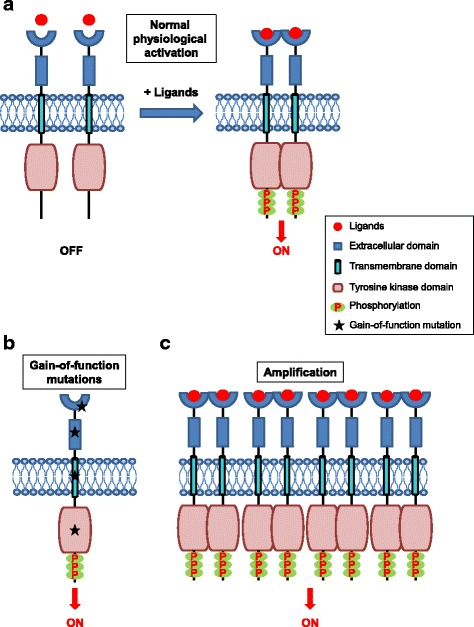
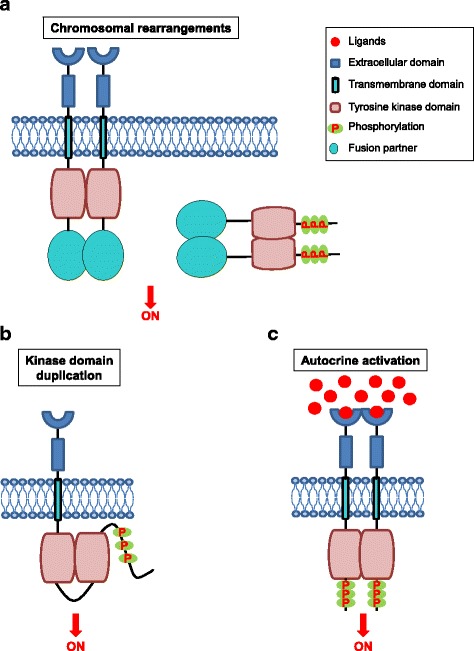
Verification
Claims the paper makes
The claims and statistics of this paper haven’t been checked yet.
Free: it reads the open-access text and checks the first 5 claims that cite a source we can check. Create a free account to check every claim.
Claims other papers make about this one
Each is checked against this paper’s own text: does it say what the citing paper says it does?
The source backs part of the claim, not all of it — or backs it for a different population, condition or comparison.
In the citing paper
“KRAS-mutant tumors are often insensitive to KRAS-targeted therapy due to feedback reactivation of upstream RTKs, which are crucial for cancer cell signaling [62, 63].”
From Differential Response and Resistance to KRAS-Targeted Therapy (2025) · cites this paper as [63]
Experimental — accuracy not yet measured
Self-check
Percentages, sums and reported differences re-computed from the paper’s own numbers.
The self-check needs the paper’s full text.
Citations
Cites
Gefitinib or Carboplatin–Paclitaxel in Pulmonary Adenocarcinoma
Mok, T. S., Wu, Y.-L., Thongprasert, S., Yang, C.-H., Chu, D.-T., Saijo, N., Sunpaweravong, P., Han, B., Margono, B., Ichinose, Y., et al. (2009) · New England Journal of Medicine · doi:10.1056/nejmoa0810699 · Cited by 8,261
The protein kinase complement of the human genome
Manning, G., Whyte, D. B., Martinez, R., Hunter, T., & Sudarsanam, S. (2002) · Science · doi:10.1126/science.1075762 · Cited by 8,145 · cited 1×
“There are 58 known RTKs in humans [1, 2], and all RTKs share a similar protein structure comprised of an extracellular ligand binding domain, a single transmembrane helix, and an intracellular region that contains a juxtamembrane regulatory region, a tyrosine kinase domain (TKD) and a carboxyl (C-) terminal tail [3].”
Cell Signaling by Receptor Tyrosine Kinases
Lemmon, M. A., & Schlessinger, J. (2010) · Cell · doi:10.1016/j.cell.2010.06.011 · Cited by 7,929
Vogelstein, B., Papadopoulos, N., Velculescu, V. E., Zhou, S., Diaz, L. A., & Kinzler, K. W. (2013) · Science · doi:10.1126/science.1235122 · Cited by 7,863
Comprehensive molecular profiling of lung adenocarcinoma
The Cancer Genome Atlas Research Network (2014) · Nature · doi:10.1038/nature13385 · Cited by 5,732
Gefitinib or Chemotherapy for Non–Small-Cell Lung Cancer with Mutated EGFR
Maemondo, M., Inoue, A., Kobayashi, K., Sugawara, S., Oizumi, S., Isobe, H., Gemma, A., Harada, M., Yoshizawa, H., Kinoshita, I., et al. (2010) · New England Journal of Medicine · doi:10.1056/nejmoa0909530 · Cited by 5,525
Osimertinib in Untreated EGFR -Mutated Advanced Non–Small-Cell Lung Cancer
Soria, J.-C., Ohe, Y., Vansteenkiste, J., Reungwetwattana, T., Chewaskulyong, B., Lee, K. H., Dechaphunkul, A., Imamura, F., Nogami, N., Kurata, T., et al. (2018) · New England Journal of Medicine · doi:10.1056/nejmoa1713137 · Cited by 5,508 · cited 1×
“Novel approaches have been shown to effectively overcome acquired resistance, including the development of second-generation [191, 192] and third-generation inhibitors [193, 194] and the combinational use of TKIs with monoclonal antibodies against the same target [195].”
Rosell, R., Carcereny, E., Gervais, R., Vergnenegre, A., Massuti, B., Felip, E., Palmero, R., Garcia-Gomez, R., Pallares, C., Sanchez, J. M., et al. (2012) · The Lancet Oncology · doi:10.1016/s1470-2045(11)70393-x · Cited by 5,489
Identification of the transforming EML4–ALK fusion gene in non-small-cell lung cancer
Soda, M., Choi, Y. L., Enomoto, M., Takada, S., Yamashita, Y., Ishikawa, S., Fujiwara, S.-I., Watanabe, H., Kurashina, K., Hatanaka, H., et al. (2007) · Nature · doi:10.1038/nature05945 · Cited by 5,439 · cited 3×
“Instead, such proteins typically localize to the cytoplasm, as is the case for the EML4-ALK fusion protein [124].”
Trastuzumab plus Adjuvant Chemotherapy for Operable HER2-Positive Breast Cancer
Romond, E. H., Perez, E. A., Bryant, J., Suman, V. J., Geyer, C. E., Davidson, N. E., Tan-Chiu, E., Martino, S., Paik, S., Kaufman, P. A., et al. (2005) · New England Journal of Medicine · doi:10.1056/nejmoa052122 · Cited by 5,356 · cited 1×
“cetuximab in lung cancer [181], panitumumab in colon cancer [182], cetuximab in head and neck cancer [183], trastuzumab and pertuzumab in breast cancer [184, 185].”
Research works printed but not linked: 1
- Soria JC, Ohe Y, Vansteenkiste J, Reungwetwattana T, Chewaskulyong B, Lee KH, et al. Osimertinib in untreated EGFR-mutated advanced non-small-cell lung cancer. N Engl J Med. 2018;378:113-25. · DOI · Paper page
Cited by
Items 401–500 of 1,000
Ma, Y., Tan, Y., Li, J., Xiang, Q., Liu, S., Jin, X., Shao, S., Geng, W., Zhu, L., & Yang, D. (2024) · Analytical Chemistry · doi:10.1021/acs.analchem.4c03206 · Cited by 14
Ruan, X., Tao, M., Dong, Y., Hu, L., Xu, G., Hu, C., Huang, Y., Wang, Y., Yu, J., Luo, W. F., et al. (2025) · Endocrine Related Cancer · doi:10.1530/erc-24-0169 · Cited by 15
Kanayama, K., Imai, H., Hashizume, R., Matsuda, C., Usugi, E., HIROKAWA, Y. S., & Watanabe, M. (2025) · Molecular Cancer Research · doi:10.1158/1541-7786.mcr-24-0741 · Cited by 15
Filamin C dimerisation is regulated by HSPB7
Wang, Z., Cao, G., Collier, M. P., Qiu, X., Broadway‐Stringer, S., Šaman, D., Ng, J. Z. Y., Sen, N., Azad, A. J., Hooper, C. L., et al. (2025) · Nature Communications · doi:10.1038/s41467-025-58889-x · Cited by 14
“In general, increased phosphorylation on tyrosine is common in cancer, due to the activation of tyrosine kinases, which leads to modulation of a variety of cellular activities 50,51 .”
Boichuk, S., & Gessel, T. (2025) · Cancers · doi:10.3390/cancers17203354 · Cited by 14
“Conversely, changes in TK-mediated pathways, such as autocrine or paracrine stimulation, activating mutations, and hyperexpression, may lead to malignant transformation, progression, metastasis, and the development of resistance to chemotherapies [146,147].”
Hartman, Z., Geldenhuys, W. J., & Agazie, Y. M. (2020) · ACS Omega · doi:10.1021/acsomega.0c02746 · Cited by 14
Organ-Specific, Fibroblast-Derived Matrix as a Tool for Studying Breast Cancer Metastasis
Jensen, A. R. D., Horton, E. R., Blicher, L. H., Pietras, E. J., Steinhauer, C., Reuten, R., Schoof, E. M., & Erler, J. T. (2021) · Cancers · doi:10.3390/cancers13133331 · Cited by 14
“Tyrosine kinases transfer a phosphate molecule from ATP to the tyrosine residue [17].”
BackgroundYamoah, K., Asamoah, F. A., Abrahams, A. O. D., Awasthi, S., Mensah, J. E., Dhillon, J., Mahal, B. A. V., Gueye, S. M., Jalloh, M., Farahani, S. J., et al. (2021) · The Prostate · doi:10.1002/pros.24238 · Cited by 14
“Additionally, the gene expression profile of NAM prostate tumors is also highly enriched for the receptor tyrosine kinase as well TNFA signaling via nuclear factor kappa B pathways, both of which are associated with cancer progression.(28,29) Although immune infiltrates within the tumor microenvironment (TME) are asso…”
BackgroundChen, Q., Lai, Q., Jiang, Y., Yao, J., Chen, Q., Zhang, L., Wang, C., Zhou, Y., Deng, M., & Xu, B. (2022) · Translational Oncology · doi:10.1016/j.tranon.2022.101516 · Cited by 14
“Knowing that upstream receptor tyrosine kinase can cause the change of the downstream gene expression profile [34,35].”
BackgroundDDR2 Coordinates EMT and Metabolic Reprogramming as a Shared Effector of FOXQ1 and SNAI1
Mitchell, A. V., Wu, J., Meng, F., Dong, L., Block, C. J., Song, W., Zhang, B., Li, J., & Wu, G. (2022) · Cancer Research Communications · doi:10.1158/2767-9764.crc-22-0013 · Cited by 14
“RTKs have been historically successful pharmacologic targets in cancer treatment (46–48).”
Liu, Q., Li, S., Qiu, Y., Zhang, J., Rios, F. J. O., Zou, Z., & Touyz, R. M. (2023) · Frontiers in Cardiovascular Medicine · doi:10.3389/fcvm.2023.1002438 · Cited by 14
“Abnormal expression and overactivation of RTKs, including vascular endothelial growth factor receptor (VEGFR), epidermal growth factor receptor (EGFR), and platelet-derived growth factor receptor (PDGFR) are associated with tumor invasion, metastasis, and tumor angiogenesis (5).”
BackgroundChang, W., Lin, H., Chang, T., Lin, S., & Li, Y. (2023) · JAMA Network Open · doi:10.1001/jamanetworkopen.2023.13824 · Cited by 14
Khoo, A. S. B., Boyer, M. J., Jafri, Z., Makeham, T. P., Pham, T., Khachigian, L. M., Floros, P., Dowling, E., Fedder, K. L., Shonka, D. C., et al. (2024) · International Journal of Molecular Sciences · doi:10.3390/ijms25052798 · Cited by 15
“Receptor tyrosine kinases (RTKs) are a family of cell surface receptors which regulate a range of homeostatic cellular processes including intercellular communication, metabolic functions, and cell differentiation [179].”
BackgroundZhu, H., Zhao, L., Li, Z., Wen, B., Qiu, C., Liu, M., Xu, Z., Hu, S., & Li, H. (2019) · Protein Expression and Purification · doi:10.1016/j.pep.2019.02.003 · Cited by 14
Pattern and Dynamics of FLT3 Duplications
Todde, G., & Friedman, R. (2020) · Journal of Chemical Information and Modeling · doi:10.1021/acs.jcim.0c00544 · Cited by 14
Aisyah, S., Handharyani, E., Bermawie, N., & Setiyono, A. (2021) · Veterinary World · doi:10.14202/vetworld.2021.1988-1994 · Cited by 14
“HER2 has tyrosine kinase activity, in which receptor dimerization is produced during autophosphorylation of tyrosine residues within the cytoplasm domain receptor and initiates various signaling pathways that cause cell proliferation and tumorigenesis [5-7].”
BackgroundHabib, I., Sulaimani, M. N., Hussain, A., Gulzar, M., Mohammad, T., Alajmi, M. F., Shamsi, A., & Hassan, M. I. (2024) · Frontiers in Molecular Biosciences · doi:10.3389/fmolb.2024.1492847 · Cited by 13
“…includes an extracellular domain responsible for binding with ligands, a transmembrane helix that anchors the receptor in the cell membrane, and an intracellular region housing both tyrosine kinase domain and c-terminal tail (Robinson et al., 2000; Manning et al., 2002; Du and Lovly, 2018).”
Zhou, Z., Liu, Y., Wang, Y., Jiang, H., Chen, T., Zhu, Y., Fu, T., & Li, J. (2025) · Nature Communications · doi:10.1038/s41467-025-59098-2 · Cited by 13
Varrone, F., Mandrich, L., & Caputo, E. (2021) · Cancers · doi:10.3390/cancers13225788 · Cited by 13
“The most studied and well-characterized driver mutations in melanoma have been found mainly in genes involved in the Mitogen-Activated Protein Kinase (MAPK) [7–9] and in the Phosphoinositide 3-Kinase/protein Kinase B (PI3K/AKT) pathways [10,11].”
BackgroundMcGrowder, D. A., Tulloch-Reid, M. K., Coard, K. C. M., McCaw‐Binns, A., Ferguson, T. S., Aiken, W. D., Harrison, L., Anderson, S. G., & Jackson, M. D. (2022) · Cancer Control · doi:10.1177/10732748221131225 · Cited by 13
Bu, X., Liu, Y., Wang, L., Yan, Z., Guo, X., & Su, W. (2022) · Cell Cycle · doi:10.1080/15384101.2022.2112486 · Cited by 13
“Abnormal expression of receptor tyrosine kinases (RTKs) plays an important role in the development and progression of cancers [19].”
BackgroundCombined PARP inhibitors and small molecular inhibitors in solid tumor treatment (Review)
Jin, N. Y., Xia, Y., & Gao, Q. (2023) · International Journal of Oncology · doi:10.3892/ijo.2023.5476 · Cited by 13
“RTKs, which act as membrane receptor proteins and subse‐ quently activate intracellular signalling, have been reported to participate in a variety of biological processes, such as growth, motility, differentiation and metabolism (27,28).”
Targeting neddylation as a novel approach to lung cancer treatment (Review)
Zhaochun, Z., Li, J., Ma, R., Li, T., Sun, Z., & Huang, S. (2023) · International Journal of Oncology · doi:10.3892/ijo.2023.5513 · Cited by 13
“target EGFR; however, the drug‐resistant mutation of EGFR is a significant barrier to treatment (63,69).”
BackgroundBiased activation of the receptor tyrosine kinase HER2
Catapano, C., Rahm, J. V., Omer, M., Teodori, L., Kjems, J., Dietz, M. S., & Heilemann, M. (2023) · Cellular and Molecular Life Sciences · doi:10.1007/s00018-023-04806-8 · Cited by 13
“Growth factor binding to receptors initiates cellular signal transduction by inducing RTK dimerization, tyrosine phosphorylation, and recruitment of downstream signaling proteins (Casaletto and McClatchey 2012; Du and Lovly 2018).”
BackgroundPulivarthi, C. B., Choubey, S. S., Pandey, S. K., Gautam, A. S., & Singh, R. K. (2023) · Elsevier eBooks · doi:10.1016/b978-0-443-18677-6.00011-7 · Cited by 13
Recent advances in the structural biology of tyrosine kinases
Rygiel, K. A., & Elkins, J. M. (2023) · Current Opinion in Structural Biology · doi:10.1016/j.sbi.2023.102665 · Cited by 13
To Investigate Growth Factor Receptor Targets and Generate Cancer Targeting Inhibitors
Basu, D., Pal, R., Sarkar, M., Barma, S., Halder, S., Roy, H., Nandi, S., & Samadder, A. (2023) · Current Topics in Medicinal Chemistry · doi:10.2174/0115680266261150231110053650 · Cited by 13
Kharouf, N., Flanagan, T. W., AlAmodi, A. A., Hmada, Y. A., Hassan, S.-Y., Shalaby, H., Santourlidis, S., Hassan, S.-L., Haïkel, Y., Megahed, M., et al. (2024) · Cells · doi:10.3390/cells13030240 · Cited by 13
“Jamal et The structure of the catalytic domain is organized in two lobes. through inhibition of PI3K/AKT/mTOR signaling [135] The binding of both ATP and substrate to the corresponding domains catalyzes phosphate transfer in the cleft between the small and the large lobes [146].”
BackgroundSigaud, R., Brummer, T., Kocher, D., Milde, T., & Selt, F. (2024) · Child s Nervous System · doi:10.1007/s00381-024-06463-z · Cited by 13
“RTKs are activated by growth factors inducing their dimerization, activation, and trans-phosphorylation resulting in the recruitment of effector protein complexes such as the Grb2/SOS complex promoting RAS-GTP loading [12].”
BackgroundSanthanakrishnan, J., Meganathan, P., & Vedagiri, H. (2024) · Exploration of Medicine · doi:10.37349/emed.2024.00237 · Cited by 13
Current status and challenges in HER2 IHC assessment: scoring survey results in Japan
Sakatani, T., Tsuda, H., Yoshida, M., Honma, N., Masuda, S., Osako, T., Hayashi, A., Jara‐Lazaro, A. R., & Horii, R. (2024) · Breast Cancer Research and Treatment · doi:10.1007/s10549-024-07532-2 · Cited by 13
NTRK fusion‐positive colorectal cancer in Japanese population
Yonemaru, J., Hashimoto, T., Takayanagi, D., Naka, T., Yatabe, Y., Kanemitsu, Y., Shiraishi, K., & Sekine, S. (2021) · Pathology International · doi:10.1111/pin.13082 · Cited by 13
Fujiwara, R., Taniguchi, Y., Rai, S., Iwata, Y., Fujii, A., Fujimoto, K., Kumode, T., Serizawa, K., Morita, Y., Espinoza, J. L., et al. (2022) · Biochemical and Biophysical Research Communications · doi:10.1016/j.bbrc.2022.08.010 · Cited by 13
Bhujbal, S. P., Keretsu, S., & Cho, S. J. (2021) · Molecules · doi:10.3390/molecules26030691 · Cited by 13
Younis, M. A., & Harashima, H. (2024) · Pharmacogenomics and Personalized Medicine · doi:10.2147/pgpm.s431346 · Cited by 12
“13,16 Previous reports have revealed the overexpression of tyrosine kinases in various cancers, which includes HCC. 17,18 Therefore, tyrosine kinases are interesting targets for several small molecular inhibitors that are used in the clinical management of HCC: Sorafenib (SOR), Lenvatinib,…”
BackgroundTyrosine kinase as therapeutic target of neurodegenerative disorders
Karati, D., & Kumar, D. (2025) · Brain Disorders · doi:10.1016/j.dscb.2025.100193 · Cited by 12
Thiruvalluvan, M., Billet, S., Liu, Z., Lownik, J. C., Waissengrin, B., Kim, H., Villamejor, A. L., Milshteyn, L., Li, X., Gayhart, M. G., et al. (2025) · Drug Resistance Updates · doi:10.1016/j.drup.2025.101237 · Cited by 12
FGFR2 residence in primary cilia is necessary for epithelial cell signaling
Niţă, A., Abraham, S. P., Elrefaay, E. R., Fafílek, B., Cizkova, E., Ursachi, V.-C., Gudernová, I., Koudelka, A., Dudeja, P., Gregor, T., et al. (2025) · The Journal of Cell Biology · doi:10.1083/jcb.202311030 · Cited by 12
“Over 2000 RTK variants have been identified and associated with many human pathologies (Du and Lovly, 2018; Choura and Reba¨ ı , 2011; Saraon et al., 2021; McDonell et al., 2015; https:// www.ncbi.nlm.nih.gov/clinvar/), and the function of primary cilia in the RTK-driven morphogenesis and…”
Irfan, A., Al‐Hussain, S. A., Khalid, T., Nasim, I., Mojzych, M., & Zaki, M. E. A. (2025) · Journal of Saudi Chemical Society · doi:10.1007/s44442-025-00040-y · Cited by 12
Pancreatic Cancer: Recent Progress of Drugs in Clinical Trials
Zhang, Z., Song, J., Xie, C., Pan, J., Lu, W., & Liu, M. (2021) · The AAPS Journal · doi:10.1208/s12248-021-00556-2 · Cited by 12
Joshi, A. J., Bhojwani, H. R., Wagal, O. S., Begwani, K., Joshi, U. J., Sathaye, S. S., & Kanchan, D. M. (2021) · Anti-Cancer Agents in Medicinal Chemistry · doi:10.2174/1871520621666210415091359 · Cited by 12
Masbuchin, A. N., Widodo, W., Rohman, M. S., & Liu, P. (2022) · Frontiers in Cardiovascular Medicine · doi:10.3389/fcvm.2022.986570 · Cited by 12
“Most cancers are associated with the aberrant activation of TK signaling (2).”
BackgroundAnlotinib suppresses lung adenocarcinoma growth via inhibiting FASN-mediated lipid metabolism
Shen, J., Huang, J., Huang, Y., Chen, Y., Li, J., Luo, P., Zhang, Q., Qiu, Y., Wang, L., Jiang, H., et al. (2022) · Annals of Translational Medicine · doi:10.21037/atm-22-5438 · Cited by 12
Current status and future perspectives of bispecific antibodies in the treatment of lung cancer
Wang, W., Qiu, T., Li, F., & Ren, S. (2023) · Chinese Medical Journal · doi:10.1097/cm9.0000000000002460 · Cited by 12
Wang, P., Han, Y., Pan, W., Du, J., Zuo, D., Ba, Y., & Zhang, H. (2024) · MedComm · doi:10.1002/mco2.527 · Cited by 12
The diverse dependence of galectin-1 and -8 on multivalency for the modulation of FGFR1 endocytosis
Żukowska, D., Chorążewska, A., Ciura, K., Gędaj, A., Kalka, M., Poźniak, M., Porębska, N., & Opaliński, Ł. (2024) · Cell Communication and Signaling · doi:10.1186/s12964-024-01661-3 · Cited by 12
“This mechanism prevents the prolonged signal transduction that may ultimately contribute to oncogenesis [19, 59].”
BackgroundBawazir, W. A., Ahmed, N. S. I., El‐Karim, S. S. A., El-Sayed, A. F., & Anwar, M. M. (2024) · Future Medicinal Chemistry · doi:10.1080/17568919.2024.2437976 · Cited by 12
The First 3D Model of the Full-Length KIT Cytoplasmic Domain Reveals a New Look for an Old Receptor
Inizan, F., Hanna, M., Stolyarchuk, M. V., de Beauchêne, I. C., & Tchertanov, L. (2020) · Scientific Reports · doi:10.1038/s41598-020-62460-7 · Cited by 12
Building patient‐specific models for receptor tyrosine kinase signaling networks
Ebata, K., Yamashiro, S., Iida, K., & Okada, M. (2021) · FEBS Journal · doi:10.1111/febs.15831 · Cited by 12
“Hyperactivation of these pathways leads to dysregulated cell proliferation [58].”
BackgroundBaek, Y.-Y., Sung, B., Choi, J., Go, H.-K., Kim, D.-H., Hyon, J. Y., & You, J. C. (2021) · Translational Vision Science & Technology · doi:10.1167/tvst.10.11.14 · Cited by 12
Inhibiting CK2 among Promising Therapeutic Strategies for Gliomas and Several Other Neoplasms
Pucko, E. B., & Ostrowski, R. P. (2022) · Pharmaceutics · doi:10.3390/pharmaceutics14020331 · Cited by 12
Platelet functional responses and signalling: the molecular relationship. Part 2: receptors.
Martyanov, A. A., & Panteleev, M. A. (2021) · System Biology and Physiology Reports · doi:10.52455/sbpr.01.202103013 · Cited by 12
“The most widespread regulatory domains are:calciumbinding domains (C2-domain, EF- “handles”); domains that recognize certain amino acid sequences (SH2, SH3, immunoglobulin-like domains, DED); membrane-binding domains (PH, SH4, C1); aactinbindingdomains (REM; FH2) [101,104].”
BackgroundOncology Drug Repurposing for Sepsis Treatment
Rumieńczyk, I., Kulecka, M., Statkiewicz, M., Ostrowski, J., & Mikuła, M. (2022) · Biomedicines · doi:10.3390/biomedicines10040921 · Cited by 12
Rishehri, M., Etemadi, T., Pisheh, L., Koufigar, G., & Azadeh, M. (2022) · Genetics Research · doi:10.1155/2022/6787791 · Cited by 12
“Furthermore, SFN could positively contribute to the activation of receptor tyrosine kinases (RTKs) and prevent its degradation [62], leading to increase in the activation of the RTKs signaling pathway and induction of different cellular processes such as proliferation, growth, motility, and differentiation [63].”
BackgroundThe landscape of kinase domain duplication in Chinese lung cancer patients
Wu, D., Xie, Y., Jin, C., Qiu, J., Hou, T., Du, H., Chen, S., Xiang, J., Shi, X., & Liu, J. (2020) · Annals of Translational Medicine · doi:10.21037/atm-20-7408 · Cited by 12
“These kinases mediate most signal transductions and control various cellular processes including, but not limited to, cell proliferation, movement, apoptosis, metabolism and cell cycle progression (4-7).”
BackgroundRevisiting the molecular mechanisms of Alpha Lipoic Acid (ALA) actions on metabolism
Awoleye, M. O., & Adedeji, T. G. (2024) · Pharmacological Research - Natural Products · doi:10.1016/j.prenap.2024.100073 · Cited by 11
EGFR-mediated HSP70 phosphorylation facilitates PCNA association with chromatin and DNA replication
Wang, Y., Fernandez, A., Pei, X., Liu, B., Shen, L., Yan, Y., Solanki, H. S., Yang, L., Zhou, M., Guo, Y., et al. (2024) · Nucleic Acids Research · doi:10.1093/nar/gkae938 · Cited by 11
Label-Free SERS Sensors for Real-Time Monitoring of Tyrosine Phosphorylation
Geddis, A., Mendive‐Tapia, L., Sujantho, A., Liu, E., McAughtrie, S., Goodwin, R. J. A., Vendrell, M., & Campbell, C. J. (2024) · Analytical Chemistry · doi:10.1021/acs.analchem.4c02860 · Cited by 11
Elhameed, A. A. A., Ali, A. R., Ghabbour, H. A., Bayomi, S. M., & El‐Gohary, N. S. (2025) · RSC Medicinal Chemistry · doi:10.1039/d4md00754a · Cited by 11
Molder, L. T., Kreft, M., Heemskerk, N., Schuring, J., de Pereda, J. M., Wilhelmsen, K., & Sonnenberg, A. (2021) · Scientific Reports · doi:10.1038/s41598-021-88134-6 · Cited by 11
Correlation Analysis of Target Selectivity and Side Effects of FDA‐Approved Kinase Inhibitors**
Bayazeid, O., & Rahman, T. (2021) · ChemistrySelect · doi:10.1002/slct.202101367 · Cited by 11
Unraveling and targeting RAS-driven metabolic signaling for therapeutic gain
DeLiberty, J. M., Robb, R. N., Gates, C. E., & Bryant, K. L. (2022) · Advances in cancer research · doi:10.1016/bs.acr.2021.07.010 · Cited by 11
Targeting TMEM88 as an Attractive Therapeutic Strategy in Malignant Tumors
Cai, M., Ni, W., Wang, Y.-H., Wang, J.-J., & Zhou, H. (2022) · Frontiers in Oncology · doi:10.3389/fonc.2022.906372 · Cited by 11
“Moreover, a transmembrane protein called the tyrosine kinase receptor may be abnormally activated to affect tumor cell growth, metastasis, invasion and malignant transformation by regulating multiple subprotein families and downstream signaling pathways (14).”
BackgroundMajumdar, S., Palma, F. D., Spyrakis, F., Decherchi, S., & Cavalli, A. (2023) · Journal of Chemical Information and Modeling · doi:10.1021/acs.jcim.3c00738 · Cited by 11
Gupta, S. R. R., Ta, T. M., Khan, M., Singh, A. K., Singh, I. K., & Peethambaran, B. (2023) · Frontiers in Cell and Developmental Biology · doi:10.3389/fcell.2023.1243763 · Cited by 11
“These include Receptor Tyrosine Kinases (RTKs), which have been identi fi ed as critical regulators of various cellular activities, including cell-to-cell communication, proliferation, motility, differentiation, and metabolism (Du and Lovly, 2018; Zhao et al., 2021).”
BackgroundEndosomal Arl4A attenuates EGFR degradation by binding to the ESCRT-II component VPS36
Lin, S.-J., Lin, M., Liu, T.-J., Tsai, Y.-T., Tsai, M.-T., & Lee, F.-J. S. (2023) · Nature Communications · doi:10.1038/s41467-023-42979-9 · Cited by 11
“Inappropriate activation of RTKs is associated with the development and progression of many human malignancies 48,49 .”
BackgroundTang, J., Qi, C., Bai, X., Ji, M., Wang, Z., Luo, Y., Ni, S., Zhang, T., Liu, K., & Yuan, B. (2023) · ACS Pharmacology & Translational Science · doi:10.1021/acsptsci.3c00190 · Cited by 11
DNA-modulated dimerization and oligomerization of cell membrane receptors
Ali, A. A., & You, M. (2024) · Chemical Communications · doi:10.1039/d4cc03077j · Cited by 11
Kim, H., Lee, W., Kim, Y.-W., Lee, S.-J., Choi, W., Lee, G. K., Park, S.-J., Ju, S., Kim, S., Lee, C., et al. (2024) · Experimental & Molecular Medicine · doi:10.1038/s12276-024-01320-0 · Cited by 12
“Blockade of these mutations by tyrosine kinase inhibitors (TKIs) typically results in an initial clinical response lasting several months 2 – 4 .”
BackgroundGhobadi, N., & Asoodeh, A. (2024) · Current Pharmacology Reports · doi:10.1007/s40495-024-00379-7 · Cited by 11
“These proteins lead to the activation of main downstream signaling pathways such as MAPK, JAK/STAT and PI3K pathways [1, 27].”
Wang, Z., Gao, L., Jia, Z., Liu, L., Gu, A., Liu, Z., Zhu, Q., Zuo, Y., Yang, M., Wang, S., et al. (2025) · Signal Transduction and Targeted Therapy · doi:10.1038/s41392-025-02150-w · Cited by 11
Yunos, R. I. M., Mutalib, N. A., Tieng, F. Y. F., Abu, N., & Jamal, R. (2020) · Biomolecules · doi:10.3390/biom10030476 · Cited by 11
“Some of these alterations are located in receptor tyrosine kinases (RTK) genes (FGFR1, FGFR2, FGFR3, and FGFR4), which have important implications for the selection of anti-cancer therapies [19,20].”
BackgroundKendrick, N. C., Powers, G., Johansen, J., Hoelter, M., Koll, A., Carlson, S., Channaveerappa, D., & Darie, C. C. (2020) · PLoS ONE · doi:10.1371/journal.pone.0234645 · Cited by 11
“Aberrant pTyr-RTK activity sometimes drives cancer growth [1, 2].”
BackgroundCampbell, C. M., Guha, A., Haque, T. Z., Neilan, T. G., & Addison, D. (2020) · Journal of Clinical Medicine · doi:10.3390/jcm9092935 · Cited by 11
González-Magaldi, M., McCabe, J. M., Cartwright, H. N., Sun, N., & Leahy, D. J. (2020) · Biochemical Journal · doi:10.1042/bcj20200702 · Cited by 11
Xu, Z., Qiu, C., Wen, B., Wang, S., Zhu, L., Zhao, L., & Li, H. (2021) · Biochemical and Biophysical Research Communications · doi:10.1016/j.bbrc.2021.02.059 · Cited by 11
GPCRs that Rhoar the Guanine nucleotide exchange factors
Omble, A., & Kulkarni, K. A. (2021) · Small GTPases · doi:10.1080/21541248.2021.1896963 · Cited by 11
Parallels between the extracellular matrix roles in developmental biology and cancer biology
Yuzhalin, A. E. (2021) · Seminars in Cell and Developmental Biology · doi:10.1016/j.semcdb.2021.09.010 · Cited by 11
Lyu, M., Yi, X., Huang, Z., Chen, Y., Ai, Z., Liang, Y., Feng, Q., & Xiang, Z. (2022) · Annals of Translational Medicine · doi:10.21037/atm-21-6628 · Cited by 11
“Thus, an imbalance in RTK signaling leads to a variety of human diseases, including cancer (31).”
BackgroundL’Hostis, A., Palgen, J., Perrillat-Mercerot, A., Peyronnet, E., Jacob, E., Bosley, J., Duruisseaux, M., Toueg, R., Lefèvre, L., Kahoul, R., et al. (2023) · npj Systems Biology and Applications · doi:10.1038/s41540-023-00292-7 · Cited by 11
An Observatory for the MET Oncogene: A Guide for Targeted Therapies
Altintas, D. M., & Comoglio, P. M. (2023) · Cancers · doi:10.3390/cancers15184672 · Cited by 11
Kharkar, P. S. (2020) · Current Topics in Medicinal Chemistry · doi:10.2174/1568026620666200502005853 · Cited by 11
Kan, A., Liu, X., Xu, X., Zhang, N., & Jiang, W. (2020) · Chemical Communications · doi:10.1039/d0cc05607c · Cited by 11
Chromatographic bioanalytical assays for targeted covalent kinase inhibitors and their metabolites
Retmana, I. A., Beijnen, J. H., & Sparidans, R. W. (2020) · Journal of Chromatography B · doi:10.1016/j.jchromb.2020.122466 · Cited by 11
“It has been well received that the dysregulation of kinases enhancing oncogenic potential [4,5].”
BackgroundFuel for thought: targeting metabolism in lung cancer
Schneider, J. L., Han, S., & Nabel, C. S. (2024) · Translational Lung Cancer Research · doi:10.21037/tlcr-24-662 · Cited by 10
“Several RTKs have been described as oncogenic drivers in NSCLC, including epidermal growth factor receptor ( EGFR ), fibroblast growth factor receptor ( FGFR ), human epidermal growth factor receptor 2 ( HER2 ), and mesenchymal-epithelial transition factor ( MET ) (28).”
Targeting amino acid in tumor therapy
Ge, M., Xu, Y., Cui, L., Huang, E., Liu, Z., & Yin, K. (2025) · Frontiers in Oncology · doi:10.3389/fonc.2025.1582116 · Cited by 10
“The precise biological functions of tyrosine within the tumor microenvironment remain less understood compared to other non-essential amino acids (137).”
Innovations in Yeast Synthetic Biology: Engineered Discovery Systems for Immunotherapy
Slaton, E. W., Clay, N., Phan, N., & Kimmel, B. R. (2025) · ACS Synthetic Biology · doi:10.1021/acssynbio.5c00321 · Cited by 10
A Narrative Review on Breast Cancer Treatment Supported by Focused and Systemic Phytotherapy
Machado, H., Machado, J. P., Alves, C. H. F., Monteiro, M. D. C., Cruz, A., Pinho, C., Soares, C. M. D., Grosso, C., Rodrigues, J. M., & Criado, M. B. (2025) · Nutraceuticals · doi:10.3390/nutraceuticals5040037 · Cited by 10
Üremiş, N., & Üremiş, M. M. (2025) · Molecular Nutrition & Food Research · doi:10.1002/mnfr.70332 · Cited by 10
“The protein tyrosine kinase family, known for their role as growth promoters and angiogenic factors, plays an activating role in HCC-related signaling [134, 135].”
Wali, A. F., Talath, S., Babiker, R., El‐Tanani, M., Rangraze, I. R., Ibraheem, W., Al-Dhaheri, Y., Satyam, S. M., & El‐Tanani, Y. (2026) · Frontiers in Pharmacology · doi:10.3389/fphar.2026.1764550 · Cited by 10
“The signaling network fails as a result of these enzymes having a dominant oncoprotein status due to unusually strong TK signaling (Du and Lovly, 2018).”
Eph receptors as cancer targets for antibody-based therapy
Tang, F. H. F., Davis, D., Arap, W., Pasqualini, R., & Staquicini, F. I. (2020) · Advances in cancer research · doi:10.1016/bs.acr.2020.04.007 · Cited by 10
LINC02381-ceRNA exerts its oncogenic effect through regulation of IGF1R signaling pathway in glioma
Nemati, H., Taha, M. F., Javanmard, A., Jahanbakhshi, A., Mowla, S. J., & Soltani, B. M. (2022) · Journal of Neuro-Oncology · doi:10.1007/s11060-022-03992-y · Cited by 10
“Receptor tyrosine kinases (RTKs) play essential roles in various cellular processes, including cancers [31].”
Orrico, K. B. (2023) · Journal of Oncology Pharmacy Practice · doi:10.1177/10781552231153814 · Cited by 10
“RTKs belong to several kinase families that function as both receptors and enzymes.(14) RTKs occur as transmembrane, polypeptide, cell surface receptors that receive and transduce signals from the extracellular to the intracellular environment by triggering a series of downstream phosphorylation events.”
BackgroundOkano, S., Yamashiro, Y., Onagi, H., Sasa, K., Hayashi, T., Takahashi, M., Sugimoto, K., Sakamoto, K., Yao, T., & Saito, T. (2023) · Histopathology · doi:10.1111/his.15015 · Cited by 10
“Dysregulation of tyrosine kinase (TK) by constitutive TK activation plays an important role in tumorigenesis.(1) TK fusions, such as anaplastic lymphoma kinase (ALK), neurotrophic tyrosine receptor kinase (NTRK) and c-ros oncogene 1 (ROS1) fusion genes, contain kinase domains of TK with oligomerisation or coiled-coil…”
BackgroundCalcified Chondroid Mesenchymal Neoplasms
Kao, E. Y., & Chen, E. Y. (2023) · Surgical pathology clinics · doi:10.1016/j.path.2023.06.006 · Cited by 10
Cancer drugs with high repositioning potential for Alzheimer’s disease
Majeed, J., Sabbagh, M. N., Kang, M. H., Lawrence, J. J., Pruitt, K., Bacus, S. S., Reyna, E., Brown, M., & Decourt, B. (2023) · Expert Opinion on Emerging Drugs · doi:10.1080/14728214.2023.2296079 · Cited by 10
“To note, there is a high degree of redundancy between RTKs to activate several intracellular signaling pathways, which greatly complicates the analysis of these networks as the activation of specific pathways is highly dependent on and pondered by the cellular context [125].”
BackgroundTang, M., Wu, Z. E., & Li, F. (2024) · Computers in Biology and Medicine · doi:10.1016/j.compbiomed.2024.108040 · Cited by 10
Alshehri, M. M., Kumar, N., Kuthi, N. A., Olaide, Z., Alshammari, M. K., Bello, R. O., Alghazwni, M. K., Alshehri, A. M., Alshlali, O. M., Ashimiyu‐Abdusalam, Z., et al. (2024) · Journal of Biomolecular Structure and Dynamics · doi:10.1080/07391102.2024.2329297 · Cited by 10
“…and activators of transcription: STAT, Src family kinase: SFK, phosphoinositide 3-kinase: PI3K, protein kinase B: AKT, and extracellular signal-regulated kinase: ERK) and governs fundamental cellular processes such as growth, differentiation, and metabolism (Du & Lovly, 2018; Liu et al., 2022).”
Gholizadeh, N., Rokni, G. R., Zaresharifi, S., Gheisari, M., Tabari, M. A. K., & Zoghi, G. (2024) · Journal of Cosmetic Dermatology · doi:10.1111/jocd.16355 · Cited by 10
“18 Downstream signaling occurs when autophosphorylation generates docking sites for intracellular signaling proteins.”
Yang, J., Fu, H., Xue, F., Li, M., Wu, Y., Yu, Z., Luo, H., Gong, J., Niu, X., & Zhang, W. (2024) · Briefings in Bioinformatics · doi:10.1093/bib/bbae418 · Cited by 10
“Consequently,dysregulation of RTK signaling significantly contributes to many diseases, particularly cancer [47].”
Background
Metadata
- Authors
- Du, Z., & Lovly, C. M.
- Affiliations
- Vanderbilt University Medical Center (US)
- Vanderbilt-Ingram Cancer Center (US)
- Corresponding author
- Lovly, Christine M.
- Venue
- Molecular Cancer
- Published
- 2018-02-19
- Volume
- 17
- Issue
- 1
- Pages
- 58-58
- ISSN
- 1476-4598 (ISSN-L)
- PMC
- PMC5817791
- OpenAlex
- W2795353688
- Cited by
- 1,066
- References
- 199
- Citations by year
- 2026: 87 · 2025: 166 · 2024: 213 · 2023: 176 · 2022: 152 · 2021: 142 · 2020: 88 · 2019: 31 · 2018: 9
- FWCI
- 7.12
- Type
- journal article
- Language
- en
- Open access
- gold
- doi.org
- Licence
- cc-by
- creativecommons.org/licenses/by/4.0/ (tdm)
- creativecommons.org/licenses/by/4.0/ (vor)
- Locations
- Molecular Cancer (publishedVersion, cc-by)
- PubMed Central (publishedVersion, cc-by)
- PubMed (publishedVersion)
- DOAJ (DOAJ: Directory of Open Access Journals) (submittedVersion, cc-by-sa)
- Funders
- National Institutes of Health (R01CA121210, P01CA129243, U10CA180864, P30CA068485-13S5)
- Topics
- Health Sciences › Medicine › Oncology › HER2/EGFR in Cancer Research
- Life Sciences › Biochemistry, Genetics and Molecular Biology › Molecular Biology › Protein Kinase Regulation and GTPase Signaling
- Life Sciences › Biochemistry, Genetics and Molecular Biology › Cancer Research › Cancer Mechanisms and Therapy
- Keywords
- receptor tyrosine kinase, receptor tyrosine kinase signaling, cancer, gain-of-function mutations, gene amplification, chromosomal rearrangements, autocrine activation, EGFR, human epidermal growth factor receptor 2, MET, cancer therapy
- MeSH terms
- Animals, Cell Transformation, Neoplastic, Enzyme Activation, Humans, Ligands, Mutation, Neoplasms, Phosphorylation, Protein Binding, Signal Transduction, Gene Expression Regulation, Neoplastic, Receptor Protein-Tyrosine Kinases, Protein Kinase Inhibitors, Protein Interaction Domains and Motifs, Protein Multimerization, Molecular Targeted Therapy
About these checks
Registry, retraction, Cites and statistics results are computed, not judged, with one exception: a printed reference that no index lists is read once by a model before it counts as a citation error. Claims are extracted by a model and kept only when their quote appears verbatim in the text; each cited source is then checked, with a model’s help, for whether it says what the claim relies on. Those verdicts can be wrong — read the claim’s quote and the cited source before relying on one.
Statistics and arithmetic are recomputed, not judged.
Confidence bands are shown only for fields calibrated on our annotated test set. None is calibrated yet, so no band is shown.
What counts as a claim ›How we measure confidence ›How we check this ›
Are you an author, or do you see a problem with this page? Request a review
Data sources
Bibliographic data: Semantic Scholar, OpenAlex, Crossref.
Contains information from the Semantic Scholar Academic Graph Datasets, made available under the ODC Attribution License (ODC-BY 1.0).
Semantic Scholar’s data is described in: Kinney, R., et al. (2023). The Semantic Scholar Open Data Platform. arXiv:2301.10140.
