

Role of immune cells in the removal of deleterious senescent cells
Open accessThe DOI matches its Crossref record; 123 of the 123 references it cites were found in a registry or an index.
Abstract
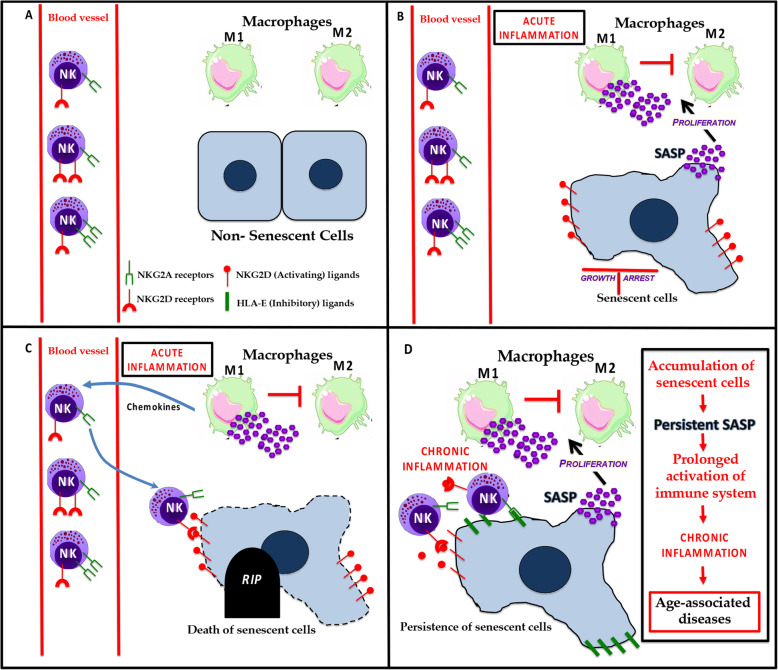
Cellular senescence is an essentially irreversible arrest of cell proliferation coupled to a complex senescence-associated secretory phenotype (SASP). The senescence arrest prevents the development of cancer, and the SASP can promote tissue repair. Recent data suggest that the prolonged presence of senescent cells, and especially the SASP, could be deleterious, and their beneficial effects early in life can become maladaptive such that they drive aging phenotypes and pathologies late in life. It is therefore important to develop strategies to eliminate senescent cells. There are currently under development or approved several immune cell-based therapies for cancer, which could be redesigned to target senescent cells. This review focuses on this possible use of immune cells and discusses how current cell-based therapies could be used for senescent cell removal.
Overview
The claims and statistics of this paper haven’t been checked yet.
Free: it reads the open-access text and checks the first 5 claims that cite a source we can check. Create a free account to check every claim.
Integrity signals
Registry
Cites
Statistics
Figures
Verification
Claims the paper makes
The claims and statistics of this paper haven’t been checked yet.
Free: it reads the open-access text and checks the first 5 claims that cite a source we can check. Create a free account to check every claim.
Claims other papers make about this one
Each is checked against this paper’s own text: does it say what the citing paper says it does?
The source backs part of the claim, not all of it — or backs it for a different population, condition or comparison.
In the citing paper
“which has been implicated not only in inflammation but also in immune evasion, an important property of senescent cells55”
From A new gene set identifies senescent cells and predicts senescence-associated pathways across tissues (2022) · cites this paper as [55]
Experimental — accuracy not yet measured
Self-check
Percentages, sums and reported differences re-computed from the paper’s own numbers.
The self-check needs the paper’s full text.
Citations
Cites
Pathogen Recognition and Innate Immunity
Akira, S., Uematsu, S., & Takeuchi, O. (2006) · Cell · doi:10.1016/j.cell.2006.02.015 · Cited by 11,952
The senescence-associated secretory phenotype: the dark side of tumor suppression
Coppé, J.-P., Desprez, P.-Y., Krtolica, A., & Campisi, J. (2010) · Annual Review of Pathology: Mechanisms of Disease · doi:10.1146/annurev-pathol-121808-102144 · Cited by 5,206
Self-citationBataller, R., & Brenner, D. A. (2005) · Journal of Clinical Investigation · doi:10.1172/jci24282 · Cited by 4,958
Cellular senescence: when bad things happen to good cells
Campisi, J., & d'Adda di Fagagna, F. (2007) · Nature Reviews Molecular Cell Biology · doi:10.1038/nrm2233 · Cited by 4,441 · cited 1×
“Cellular senescence entails an essentially irreversible arrest of proliferation in damaged or stressed cells that are at risk of malignant transformation [1, 2].”
BackgroundSelf-citationPleiotropy, natural selection, and the evolution of senescence.
Williams, G. C. (1957) · Evolution · doi:10.1111/j.1558-5646.1957.tb02911.x · Cited by 4,279
NITRIC OXIDE AND MACROPHAGE FUNCTION
MacMicking, J., Xie, Q.-W., & Nathan, C. (1997) · Annual Review of Immunology · doi:10.1146/annurev.immunol.15.1.323 · Cited by 4,211
Chronic Inflammation (Inflammaging) and Its Potential Contribution to Age-Associated Diseases
Franceschi, C., & Campisi, J. (2014) · The Journals of Gerontology Series A: Biological Sciences and Medical Sciences · doi:10.1093/gerona/glu057 · Cited by 3,891
Self-citationM-1/M-2 Macrophages and the Th1/Th2 Paradigm
Mills, C. D., Kincaid, K., Alt, J. M., Heilman, M. J., & Hill, A. M. (2000) · The Journal of Immunology · doi:10.4049/jimmunol.164.12.6166 · Cited by 3,287 · cited 2×
“These antigen-presenting cells are classically divided into two phenotypically distinct subgroups (M1 and M2), but with a high degree of plasticity somewhat similar to the Th1 and Th2 classification assigned to T cells [49, 50].”
BackgroundMurray, P. J. (2017) · Annual Review of Physiology · doi:10.1146/annurev-physiol-022516-034339 · Cited by 2,981
Aging, Cellular Senescence, and Cancer
Campisi, J. (2013) · Annual Review of Physiology · doi:10.1146/annurev-physiol-030212-183653 · Cited by 2,954
Self-citationCELLULAR RESPONSES TO INTERFERON-γ
Boehm, U., Klamp, T., Groot, M., & Howard, J. C. (1997) · Annual Review of Immunology · doi:10.1146/annurev.immunol.15.1.749 · Cited by 2,890
Naturally occurring p16Ink4a-positive cells shorten healthy lifespan
Baker, D. J., Childs, B. G., Durik, M., Wijers, M. E., Sieben, C. J., Zhong, J., A. Saltness, R., Jeganathan, K. B., Verzosa, G. C., Pezeshki, A., et al. (2016) · Nature · doi:10.1038/nature16932 · Cited by 2,876
Cellular senescence: from physiology to pathology
Muñoz-Espín, D., & Serrano, M. (2014) · Nature Reviews Molecular Cell Biology · doi:10.1038/nrm3823 · Cited by 2,818 · cited 3×
“Consistent with senescence being an antitumor mechanism, the activation of certain oncogenes such as RAS or BRAF leads to oncogene-induced senescence (OIS) [3, 7].”
BackgroundThe role of senescent cells in ageing
van Deursen, J. M. (2014) · Nature · doi:10.1038/nature13193 · Cited by 2,623
Senescence and tumour clearance is triggered by p53 restoration in murine liver carcinomas
Xue, W., Zender, L., Miething, C., Dickins, R. A., Hernando, E., Krizhanovsky, V., Cordon-Cardo, C., & Lowe, S. W. (2007) · Nature · doi:10.1038/nature05529 · Cited by 2,473 · cited 3×
“Along with NK cells and macrophages, neutrophils also infiltrate tissues containing senescent cells [44], and are susceptible to age-dependent decline in numbers and phagocytic function [103].”
BackgroundHashimoto, D., Chow, A., Noizat, C., Teo, P., Beasley, M. B., Leboeuf, M., Becker, C. D., See, P., Price, J., Lucas, D., et al. (2013) · Immunity · doi:10.1016/j.immuni.2013.04.004 · Cited by 2,311
Senolytics improve physical function and increase lifespan in old age
Xu, M., Pirtskhalava, T., Farr, J. N., Weigand, B. M., Palmer, A. K., Weivoda, M. M., Inman, C. L., Ogrodnik, M. B., Hachfeld, C. M., Fraser, D. G., et al. (2018) · Nature Medicine · doi:10.1038/s41591-018-0092-9 · Cited by 2,287
A complex secretory program orchestrated by the inflammasome controls paracrine senescence
Acosta, J. C., Banito, A., Wuestefeld, T., Georgilis, A., Janich, P., Morton, J. P., Athineos, D., Kang, T.-W., Lasitschka, F., Andrulis, M., et al. (2013) · Nature Cell Biology · doi:10.1038/ncb2784 · Cited by 2,278 · cited 1×
“These senescent-like macrophages increase with age, and might exacerbate the rise in senescent cells and the SASP during aging [66] by a paracrine effect, which was recently shown to occur in vivo [67, 68].”
BackgroundAn Essential Role for Senescent Cells in Optimal Wound Healing through Secretion of PDGF-AA
Demaria, M., Ohtani, N., Youssef, S. A., Rodier, F., Toussaint, W., Mitchell, J. R., Laberge, R.-M., Vijg, J., Van Steeg, H., Dollé, M. E. T., et al. (2014) · Developmental Cell · doi:10.1016/j.devcel.2014.11.012 · Cited by 2,045
Self-citationSenescence of Activated Stellate Cells Limits Liver Fibrosis
Krizhanovsky, V., Yon, M., Dickins, R. A., Hearn, S., Simon, J., Miething, C., Yee, H., Zender, L., & Lowe, S. W. (2008) · Cell · doi:10.1016/j.cell.2008.09.015 · Cited by 2,027
Pleiotropy, natural selection, and the evolution of senescence
Williams, G. C. (1957) · Evolution · doi:10.2307/2406060 · Cited by 1,912
Activating Receptors and Coreceptors Involved in Human Natural Killer Cell-Mediated Cytolysis
Moretta, A., Bottino, C., Vitale, M., Pende, D., Cantoni, C., Mingari, M. C., Biassoni, R., & Moretta, L. (2001) · Annual Review of Immunology · doi:10.1146/annurev.immunol.19.1.197 · Cited by 1,778
Senescence surveillance of pre-malignant hepatocytes limits liver cancer development
Kang, T.-W., Yevsa, T., Woller, N., Hoenicke, L., Wuestefeld, T., Dauch, D., Hohmeyer, A., Gereke, M., Rudalska, R., Potapova, A., et al. (2011) · Nature · doi:10.1038/nature10599 · Cited by 1,621 · cited 1×
“CD4 T cells are required for proper macrophage-dependent elimination of senescent hepatocytes (induced by oncogene expression) in vivo, suggesting that Th1 lymphocytes participate in immune surveillance of senescent cells [101].”
BackgroundCellular senescence mediates fibrotic pulmonary disease
Schafer, M. J., White, T. A., Iijima, K., Haak, A. J., Ligresti, G., Atkinson, E. J., Oberg, A. L., Birch, J., Salmonowicz, H., Zhu, Y., et al. (2017) · Nature Communications · doi:10.1038/ncomms14532 · Cited by 1,613
Jeon, O. H., Kim, C., Laberge, R.-M., Demaria, M., Rathod, S., Vasserot, A. P., Chung, J. W., Kim, D. H., Poon, Y., David, N., et al. (2017) · Nature Medicine · doi:10.1038/nm.4324 · Cited by 1,515
Self-citationBataller, R. (2005) · Journal of Clinical Investigation · doi:10.1172/jci200524282c1 · Cited by 1,472
Baar, M. P., Brandt, R. M. C., Putavet, D. A., Klein, J. D. D., Derks, K. W. J., Bourgeois, B. R. M., Stryeck, S., Rijksen, Y., van Willigenburg, H., Feijtel, D. A., et al. (2017) · Cell · doi:10.1016/j.cell.2017.02.031 · Cited by 1,454
Self-citationProgrammed cell senescence during mammalian embryonic development
Muñoz-Espín, D., Cañamero, M., Maraver, A., Gómez-López, G., Contreras, J., Murillo-Cuesta, S., Rodríguez-Baeza, A., Varela-Nieto, I., Ruberte, J., Collado, M., et al. (2013) · Cell · doi:10.1016/j.cell.2013.10.019 · Cited by 1,428
A proteomic atlas of senescence-associated secretomes for aging biomarker development
Basisty, N., Kale, A., Jeon, O. H., Kuehnemann, C., Payne, T., Rao, C., Holtz, A., Shah, S., Sharma, V., Ferrucci, L., et al. (2020) · PLOS Biology · doi:10.1371/journal.pbio.3000599 · Cited by 1,348
Self-citationCellular senescence promotes adverse effects of chemotherapy and cancer relapse
Demaria, M., O'Leary, M. N., Chang, J., Shao, L., Liu, S., Alimirah, F., Koenig, K., Le, C., Mitin, N., Deal, A. M., et al. (2017) · Cancer Discovery · doi:10.1158/2159-8290.cd-16-0241 · Cited by 1,338
Self-citationClearance of senescent glial cells prevents tau-dependent pathology and cognitive decline
Bussian, T. J., Aziz, A., Meyer, C. F., Swenson, B. L., van Deursen, J. M., & Baker, D. J. (2018) · Nature · doi:10.1038/s41586-018-0543-y · Cited by 1,289 · cited 1×
“The presence of senescent cells also exacerbates several diseases including, but not limited to, osteoarthritis [20], osteoporosis [21], atherosclerosis [22], Parkinson’s disease [23], and Alzheimer’s disease [24, 25].”
BackgroundMitochondrial Dysfunction Induces Senescence with a Distinct Secretory Phenotype
Wiley, C. D., Velarde, M. C., Lecot, P., Liu, S., Sarnoski, E. A., Freund, A., Shirakawa, K., Lim, H. W., Davis, S. S., Ramanathan, A., et al. (2016) · Cell Metabolism · doi:10.1016/j.cmet.2015.11.011 · Cited by 1,275 · cited 1×
“Further, events that disrupt mitochondrial function triggers a mitochondrial dysfunction-associated senescence (MiDAS) arrest [8], and oxidative stress [9, 10] and inhibitors of DNA methylases or histone deacetylases [6] also cause a senescence arrest (Fig.”
BackgroundSelf-citationSenescent intimal foam cells are deleterious at all stages of atherosclerosis
Childs, B. G., Baker, D. J., Wijshake, T., Conover, C. A., Campisi, J., & van Deursen, J. M. (2016) · Science · doi:10.1126/science.aaf6659 · Cited by 1,195
Self-citationSenescence is a developmental mechanism that contributes to embryonic growth and patterning
Storer, M., Mas, A., Robert-Moreno, A., Pecoraro, M., Ortells, M. C., Di Giacomo, V., Yosef, R., Pilpel, N., Krizhanovsky, V., Sharpe, J., et al. (2013) · Cell · doi:10.1016/j.cell.2013.10.041 · Cited by 1,186
Targeting cellular senescence prevents age-related bone loss in mice
Farr, J. N., Xu, M., Weivoda, M. M., Monroe, D. G., Fraser, D. G., Onken, J. L., Negley, B. A., Sfeir, J. G., Ogrodnik, M. B., Hachfeld, C. M., et al. (2017) · Nature Medicine · doi:10.1038/nm.4385 · Cited by 1,182 · cited 1×
“The presence of senescent cells also exacerbates several diseases including, but not limited to, osteoarthritis [20], osteoporosis [21], atherosclerosis [22], Parkinson’s disease [23], and Alzheimer’s disease [24, 25].”
BackgroundLiving on a break: cellular senescence as a DNA-damage response
d'Adda di Fagagna, F. (2008) · Nature Reviews Cancer · doi:10.1038/nrc2440 · Cited by 1,170
Forging a signature of in vivo senescence
Sharpless, N. E., & Sherr, C. J. (2015) · Nature Reviews Cancer · doi:10.1038/nrc3960 · Cited by 1,104 · cited 2×
“Consistent with senescence being an antitumor mechanism, the activation of certain oncogenes such as RAS or BRAF leads to oncogene-induced senescence (OIS) [3, 7].”
BackgroundJun, J.-I., & Lau, L. F. (2010) · Nature Cell Biology · doi:10.1038/ncb2070 · Cited by 998
Li, Y., Hermanson, D. L., Moriarity, B. S., & Kaufman, D. S. (2018) · Cell Stem Cell · doi:10.1016/j.stem.2018.06.002 · Cited by 981
Unmasking Transcriptional Heterogeneity in Senescent Cells
Hernandez-Segura, A., de Jong, T. V., Melov, S., Guryev, V., Campisi, J., & Demaria, M. (2017) · Current Biology · doi:10.1016/j.cub.2017.07.033 · Cited by 972 · cited 1×
“Further, events that disrupt mitochondrial function triggers a mitochondrial dysfunction-associated senescence (MiDAS) arrest [8], and oxidative stress [9, 10] and inhibitors of DNA methylases or histone deacetylases [6] also cause a senescence arrest (Fig.”
BackgroundSelf-citationRECEPTORS FOR HLA CLASS-I MOLECULES IN HUMAN NATURAL KILLER CELLS
Moretta, A., Bottino, C., Vitale, M., Pende, D., Biassoni, R., Mingari, M. C., & Moretta, L. (1996) · Annual Review of Immunology · doi:10.1146/annurev.immunol.14.1.619 · Cited by 875
Martinez, M., & Moon, E. K. (2019) · Frontiers in Immunology · doi:10.3389/fimmu.2019.00128 · Cited by 851
New insights into the multidimensional concept of macrophage ontogeny, activation and function
Ginhoux, F., Schultze, J. L., Murray, P. J., Ochando, J., & Biswas, S. K. (2016) · Nature Immunology · doi:10.1038/ni.3324 · Cited by 833
Non-Cell-Autonomous Tumor Suppression by p53
Lujambio, A., Akkari, L., Simon, J., Grace, D., Tschaharganeh, D. F., Bolden, J. E., Zhao, Z., Thapar, V., Joyce, J. A., Krizhanovsky, V., et al. (2013) · Cell · doi:10.1016/j.cell.2013.03.020 · Cited by 766 · cited 2×
“factors, which shift macrophages to the M2 state [59].”
BackgroundHart, P. H., Vitti, G. F., Burgess, D. R., Whitty, G. A., Piccoli, D. S., & Hamilton, J. A. (1989) · Proceedings of the National Academy of Sciences · doi:10.1073/pnas.86.10.3803 · Cited by 742
Hesse, M., Modolell, M., La Flamme, A. C., Schito, M., Fuentes, J. M., Cheever, A. W., Pearce, E. J., & Wynn, T. A. (2001) · The Journal of Immunology · doi:10.4049/jimmunol.167.11.6533 · Cited by 706
Tau protein aggregation is associated with cellular senescence in the brain
Musi, N., Valentine, J. M., Sickora, K. R., Baeuerle, E., Thompson, C. S., Shen, Q., & Orr, M. E. (2018) · Aging Cell · doi:10.1111/acel.12840 · Cited by 595 · cited 1×
“The presence of senescent cells also exacerbates several diseases including, but not limited to, osteoarthritis [20], osteoporosis [21], atherosclerosis [22], Parkinson’s disease [23], and Alzheimer’s disease [24, 25].”
BackgroundPerforin-mediated target-cell death and immune homeostasis
Voskoboinik, I., Smyth, M. J., & Trapani, J. A. (2006) · Nature reviews. Immunology · doi:10.1038/nri1983 · Cited by 592 · cited 1×
“Upon physical interaction with target cells, cytotoxic NK cells release perforin, granzymes (serine proteases) and proteoglycans contained in cytotoxic granules that kill the target cells [84].”
BackgroundTissue damage and senescence provide critical signals for cellular reprogramming in vivo
Mosteiro, L., Pantoja, C., Alcazar, N., Marión, R. M., Chondronasiou, D., Rovira, M., Fernandez-Marcos, P. J., Muñoz-Martin, M., Blanco-Aparicio, C., Pastor, J., et al. (2016) · Science · doi:10.1126/science.aaf4445 · Cited by 589
Impaired immune surveillance accelerates accumulation of senescent cells and aging
Ovadya, Y., Landsberger, T., Leins, H., Vadai, E., Gal, H., Biran, A., Yosef, R., Sagiv, A., Agrawal, A., Shapira, A., et al. (2018) · Nature Communications · doi:10.1038/s41467-018-07825-3 · Cited by 578 · cited 1×
“Impairing NK cell function results in an accelerated accumulation of senescent cells in various tissues, at least in animal models [88].”
BackgroundSenescent cells evade immune clearance via HLA-E-mediated NK and CD8+ T cell inhibition
Pereira, B. I., Devine, O. P., Vukmanovic-Stejic, M., Chambers, E. S., Subramanian, P., Patel, N., Virasami, A., Sebire, N. J., Kinsler, V., Valdovinos, A., et al. (2019) · Nature Communications · doi:10.1038/s41467-019-10335-5 · Cited by 556 · cited 2×
“On the other hand, senescent cells can escape NK-mediated killing by overexpressing MMP3 (which cleaves activating MICA ligands from the senescent cell surface) [98] or HLA-E (an inhibitory ligand that blocks NK cell killing) [97].”
BackgroundSelf-citationChinta, S. J., Woods, G., Demaria, M., Rane, A., Zou, Y., McQuade, A., Rajagopalan, S., Limbad, C., Madden, D. T., Campisi, J., et al. (2018) · Cell Reports · doi:10.1016/j.celrep.2017.12.092 · Cited by 530 · cited 1×
“The presence of senescent cells also exacerbates several diseases including, but not limited to, osteoarthritis [20], osteoporosis [21], atherosclerosis [22], Parkinson’s disease [23], and Alzheimer’s disease [24, 25].”
BackgroundSelf-citationMacrophage Polarization in Chronic Inflammatory Diseases: Killers or Builders?
Parisi, L., Gini, E., Baci, D., Tremolati, M., Fanuli, M., Bassani, B., Farronato, G., Bruno, A., & Mortara, L. (2018) · Journal of Immunology Research · doi:10.1155/2018/8917804 · Cited by 508 · cited 1×
“They also can promote certain diseases such as asthma, rheumatoid arthritis, cancer and atherosclerosis [52].”
BackgroundSoriani, A., Zingoni, A., Cerboni, C., Iannitto, M. L., Ricciardi, M. R., Di Gialleonardo, V., Cippitelli, M., Fionda, C., Petrucci, M. T., Guarini, A., et al. (2009) · Blood · doi:10.1182/blood-2008-08-173914 · Cited by 460
Coppé, J.-P., Patil, C. K., Rodier, F., Krtolica, A., Beauséjour, C. M., Parrinello, S., Hodgson, J. G., Chin, K., Desprez, P.-Y., & Campisi, J. (2010) · PLoS ONE · doi:10.1371/journal.pone.0009188 · Cited by 455
Self-citationEngineering Natural Killer Cells for Cancer Immunotherapy
Rezvani, K., Rouce, R., Liu, E., & Shpall, E. (2017) · Molecular Therapy · doi:10.1016/j.ymthe.2017.06.012 · Cited by 453
CD47-blocking immunotherapies stimulate macrophage-mediated destruction of small-cell lung cancer
Weiskopf, K., Jahchan, N. S., Schnorr, P. J., Cristea, S., Ring, A. M., Maute, R. L., Volkmer, A. K., Volkmer, J.-P., Liu, J., Lim, J. S., et al. (2016) · Journal of Clinical Investigation · doi:10.1172/jci81603 · Cited by 444
BRD4 Connects Enhancer Remodeling to Senescence Immune Surveillance
Tasdemir, N., Banito, A., Roe, J.-S., Alonso-Curbelo, D., Camiolo, M., Tschaharganeh, D. F., Huang, C.-H., Aksoy, O., Bolden, J. E., Chen, C.-C., et al. (2016) · Cancer Discovery · doi:10.1158/2159-8290.cd-16-0217 · Cited by 415 · cited 1×
“A role for the SASP in immune clearance of senescent cells was further highlighted by the finding that the epigenetic regulator BRD4, which dictates the enhancer and superenhancer landscape of SASP genes, determines the ability of the SASP to promote immune clearance of senescent cells [46].”
BackgroundIannello, A., Thompson, T. W., Ardolino, M., Lowe, S. W., & Raulet, D. H. (2013) · Journal of Experimental Medicine · doi:10.1084/jem.20130783 · Cited by 414
Telomeres and cell senescence—size matters not
Victorelli, S., & Passos, J. F. (2017) · EBioMedicine · doi:10.1016/j.ebiom.2017.03.027 · Cited by 413
Hall, B. M., Balan, V., Gleiberman, A. S., Strom, E., Krasnov, P., Virtuoso, L. P., Rydkina, E., Vujcic, S., Balan, K., Gitlin, I. I., et al. (2017) · Aging · doi:10.18632/aging.101268 · Cited by 407
Cellular senescence as a tumor-suppressor mechanism
Campisi, J. (2001) · Trends in Cell Biology · doi:10.1016/s0962-8924(01)82148-6 · Cited by 390 · cited 1×
“Cellular senescence entails an essentially irreversible arrest of proliferation in damaged or stressed cells that are at risk of malignant transformation [1, 2].”
BackgroundSelf-citationCentenarians as a model for healthy aging
Franceschi, C., & Bonafè, M. (2003) · Biochemical Society Transactions · doi:10.1042/bst0310457 · Cited by 380
Cellular senescence: putting the paradoxes in perspective
Campisi, J. (2011) · Current Opinion in Genetics & Development · doi:10.1016/j.gde.2010.10.005 · Cited by 368
Self-citationHall, B. M., Balan, V., Gleiberman, A. S., Strom, E., Krasnov, P., Virtuoso, L. P., Rydkina, E., Vujcic, S., Balan, K., Gitlin, I., et al. (2016) · Aging · doi:10.18632/aging.100991 · Cited by 357
Campbell, K. S., & Purdy, A. K. (2011) · Immunology · doi:10.1111/j.1365-2567.2010.03398.x · Cited by 329
Clearance of senescent decidual cells by uterine natural killer cells in cycling human endometrium
Brighton, P. J., Maruyama, Y., Fishwick, K., Vrljicak, P., Tewary, S., Fujihara, R., Muter, J., Lucas, E. S., Yamada, T., Woods, L., et al. (2017) · eLife · doi:10.7554/elife.31274 · Cited by 323
Hazeldine, J., & Lord, J. M. (2013) · Ageing Research Reviews · doi:10.1016/j.arr.2013.04.003 · Cited by 308
Cells exhibiting strong p16 INK4a promoter activation in vivo display features of senescence
Liu, J.-Y., Souroullas, G. P., Diekman, B. O., Krishnamurthy, J., Hall, B. M., Sorrentino, J. A., Parker, J. S., Sessions, G. A., Gudkov, A. V., & Sharpless, N. E. (2019) · Proceedings of the National Academy of Sciences · doi:10.1073/pnas.1818313116 · Cited by 306
Coppé, J.-P., Patil, C. K., Rodier, F., Sun, Y., Muñoz, D. P., Goldstein, J., Nelson, P. S., Desprez, P.-Y., & Campisi, J. (2008) · PLoS Biology · doi:10.1371/journal.pbio.0060301 · Cited by 302 · cited 2×
“The senescence arrest is generally coupled to a complex senescence-associated secretory phenotype (SASP) [11].”
BackgroundMacrophages in age-related chronic inflammatory diseases
Oishi, Y., & Manabe, I. (2016) · npj Aging and Mechanisms of Disease · doi:10.1038/npjamd.2016.18 · Cited by 262
Essential role for premature senescence of myofibroblasts in myocardial fibrosis
Meyer, K., Hodwin, B., Ramanujam, D., Engelhardt, S., & Sarikas, A. (2016) · Journal of the American College of Cardiology · doi:10.1016/j.jacc.2016.02.047 · Cited by 247
The bystander effect contributes to the accumulation of senescent cells in vivo
da Silva, P. F. L., Ogrodnik, M., Kucheryavenko, O., Glibert, J., Miwa, S., Cameron, K., Ishaq, A., Saretzki, G., Nagaraja‐Grellscheid, S., Nelson, G., et al. (2019) · Aging Cell · doi:10.1111/acel.12848 · Cited by 247
Granule exocytosis mediates immune surveillance of senescent cells
Sagiv, A., Biran, A., Yon, M., Simon, J., Lowe, S. W., & Krizhanovsky, V (2013) · Oncogene · doi:10.1038/onc.2012.206 · Cited by 240 · cited 1×
“NK cell-mediated clearance of senescent cells is an essential aspect of tissue homeostasis [85, 86] and tumor growth limitation [44, 87].”
BackgroundSmall molecule compounds that induce cellular senescence.
Petrova, N. V., Velichko, A. K., Razin, S. V., & Kantidze, O. L. (2016) · Aging Cell · doi:10.1111/acel.12518 · Cited by 240 · cited 2×
“In addition, some chemotherapeutic drugs such as doxorubicin or bleomycin also cause DNA damage, and other drugs such as abemaciclib or palbociclib inhibit CDKs directly to induce a senescence arrest [6].”
BackgroundBetancur, P. A., Abraham, B. J., Yiu, Y. Y., Willingham, S. B., Khameneh, F., Zarnegar, M., Kuo, A. H., McKenna, K., Kojima, Y., Leeper, N. J., et al. (2017) · Nature Communications · doi:10.1038/ncomms14802 · Cited by 235
Duan, J., Duan, J., Zhang, Z., & Tong, T. (2005) · The International Journal of Biochemistry & Cell Biology · doi:10.1016/j.biocel.2005.01.010 · Cited by 229
Cellular senescence: Immunosurveillance and future immunotherapy
Burton, D. G. A., & Stolzing, A. (2018) · Ageing Research Reviews · doi:10.1016/j.arr.2018.02.001 · Cited by 221 · cited 2×
“Evidence that there are senescent-specific surface markers is spotty [43], and specificity needs further validation.”
BackgroundSelf-citationUnderstanding how combinations of HLA and KIR genes influence disease
Rajagopalan, S., & Long, E. O. (2005) · The Journal of Experimental Medicine · doi:10.1084/jem.20050499 · Cited by 220
Molecular mechanisms of natural killer cell activation in response to cellular stress
Chan, C. J., Smyth, M. J., & Martinet, L. (2014) · Cell Death & Differentiation · doi:10.1038/cdd.2013.26 · Cited by 213
Senescent Cardiac Fibroblast Is Critical for Cardiac Fibrosis after Myocardial Infarction
Zhu, F., Li, Y., Zhang, J., Piao, C., Liu, T., Li, H.-H., & Du, J. (2013) · PLoS ONE · doi:10.1371/journal.pone.0074535 · Cited by 201
Lo, J., Lau, E. Y. T., Ching, R. H. H., Cheng, B. Y. L., Ma, M. K. F., Ng, I. O. L., & Lee, T. K. W. (2015) · Hepatology · doi:10.1002/hep.27859 · Cited by 199
Ageing and the neutrophil: no appetite for killing?
Butcher, S., Chahel, H., & Lord, J. M. (2000) · Immunology · doi:10.1046/j.1365-2567.2000.00079.x · Cited by 199
Macrophage-based cell therapies: The long and winding road
Lee, S., Kivimäe, S., Dolor, A., & Szoka, F. C. (2016) · Journal of Controlled Release · doi:10.1016/j.jconrel.2016.07.018 · Cited by 198
Natural Killer Cells as Allogeneic Effectors in Adoptive Cancer Immunotherapy
Lupo, K. B., & Matosevic, S. (2019) · Cancers · doi:10.3390/cancers11060769 · Cited by 196
Ageing is associated with a decline in peripheral blood CD56bright NK cells
Chidrawar, S. M., Khan, N., Chan, Y. L. T., Nayak, L., & Moss, P. A. (2006) · Immunity & Ageing · doi:10.1186/1742-4933-3-10 · Cited by 163
Genetically modified T cells in cancer therapy: opportunities and challenges
Sharpe, M., & Mount, N. (2015) · Disease Models & Mechanisms · doi:10.1242/dmm.018036 · Cited by 163
Muñoz, D. P., Yannone, S. M., Daemen, A., Sun, Y., Vakar-Lopez, F., Kawahara, M., Freund, A. M., Rodier, F., Wu, J. D., Desprez, P.-Y., et al. (2019) · JCI Insight · doi:10.1172/jci.insight.124716 · Cited by 162 · cited 2×
“for NK cell targeting of senescent cells [98].”
BackgroundSelf-citationGratchev, A., Kzhyshkowska, J., Utikal, J., & Goerdt, S. (2005) · Scandinavian Journal of Immunology · doi:10.1111/j.0300-9475.2005.01524.x · Cited by 161
Practical NK cell phenotyping and variability in healthy adults
Angelo, L. S., Banerjee, P. P., Monaco-Shawver, L., Rosen, J. B., Makedonas, G., Forbes, L. R., Mace, E. M., & Orange, J. S. (2015) · Immunologic Research · doi:10.1007/s12026-015-8664-y · Cited by 147
Lymphocyte cytotoxicity reactions to leukemia‐associated antigens in identical twins
ROSENBERG, E. B., Herberman, R. B., Levine, P. H., Halterman, R. H., McCov, J. L., & Wunderlich, J. R. (1972) · International Journal of Cancer · doi:10.1002/ijc.2910090323 · Cited by 146
Cerboni, C., Fionda, C., Soriani, A., Zingoni, A., Doria, M., Cippitelli, M., & Santoni, A. (2014) · Frontiers in Immunology · doi:10.3389/fimmu.2013.00508 · Cited by 136
Secretion of leukotrienes by senescent lung fibroblasts promotes pulmonary fibrosis
Wiley, C. D., Brumwell, A. N., Davis, S. S., Jackson, J. R., Valdovinos, A., Calhoun, C., Alimirah, F., Castellanos, C. A., Ruan, R., Wei, Y., et al. (2019) · JCI Insight · doi:10.1172/jci.insight.130056 · Cited by 132
Self-citationSenescent cells: Living or dying is a matter of NK cells
Antonangeli, F., Zingoni, A., Soriani, A., & Santoni, A. (2019) · Journal of Leukocyte Biology · doi:10.1002/jlb.mr0718-299r · Cited by 129
Effect of Aging on NK Cell Population and Their Proliferation at Ex Vivo Culture Condition
Gounder, S. S., Abdullah, B. J. J., Radzuanb, N. E. I. B. M., Zain, F. D. B. M., Sait, N. B. M., Chua, C., & Subramani, B. (2018) · Analytical Cellular Pathology · doi:10.1155/2018/7871814 · Cited by 128
Cudejko, C., Wouters, K., Fuentes, L., Hannou, S. A., Paquet, C., Bantubungi, K., Bouchaert, E., Vanhoutte, J., Fleury, S., Remy, P., et al. (2011) · Blood · doi:10.1182/blood-2010-10-313106 · Cited by 125
Vito, C. D., Mikulak, J., Zaghi, E., Pesce, S., Marcenaro, E., & Mavilio, D. (2019) · Seminars in Immunology · doi:10.1016/j.smim.2019.03.004 · Cited by 120
Of Flies, Mice, and Men: Evolutionarily Conserved Tissue Damage Responses and Aging
Neves, J., Demaria, M., Campisi, J., & Jasper, H. (2015) · Developmental Cell · doi:10.1016/j.devcel.2014.11.028 · Cited by 118
Self-citationCCN1-Induced Cellular Senescence Promotes Heart Regeneration
Feng, T., Meng, J., Kou, S., Jiang, Z., Huang, X., Lu, Z., Zhao, H., Lau, L. F., Zhou, B., & Zhang, H. (2019) · Circulation · doi:10.1161/circulationaha.119.039530 · Cited by 117
CRISPRed Macrophages for Cell-Based Cancer Immunotherapy
Ray, M., Lee, Y.-W., Hardie, J., Mout, R., Yeşilbag Tonga, G., Farkas, M. E., & Rotello, V. M. (2018) · Bioconjugate Chemistry · doi:10.1021/acs.bioconjchem.7b00768 · Cited by 110
Automation in cell and gene therapy manufacturing: from past to future
Moutsatsou, P., Ochs, J., Schmitt, R. H., Hewitt, C. J., & Hanga, M. P. (2019) · Biotechnology Letters · doi:10.1007/s10529-019-02732-z · Cited by 110
Zingoni, A., Cecere, F., Vulpis, E., Fionda, C., Molfetta, R., Soriani, A., Petrucci, M. T., Ricciardi, M. R., Fuerst, D., Amendola, M. G., et al. (2015) · The Journal of Immunology · doi:10.4049/jimmunol.1402643 · Cited by 100
Senescent human hepatocytes express a unique secretory phenotype and promote macrophage migration
Irvine, K. M., Skoien, R., Bokil, N. J., Melino, M., Thomas, G. P., Loo, D., Gabrielli, B., Hill, M. M., Sweet, M. J., Clouston, A. D., et al. (2014) · World Journal of Gastroenterology · doi:10.3748/wjg.v20.i47.17851 · Cited by 97
Shibuya, A., Lanier, L. L., & Phillips, J. H. (1998) · The Journal of Immunology · doi:10.4049/jimmunol.161.4.1671 · Cited by 96
Mazzoni, M., Mauro, G., Erreni, M., Romeo, P., Minna, E., Vizioli, M. G., Belgiovine, C., Rizzetti, M. G., Pagliardini, S., Avigni, R., et al. (2019) · Journal of Experimental & Clinical Cancer Research · doi:10.1186/s13046-019-1198-8 · Cited by 91
F4/80+ macrophages contribute to clearance of senescent cells in the mouse postpartum uterus
Egashira, M., Hirota, Y., Shimizu-Hirota, R., Saito-Fujita, T., Haraguchi, H., Matsumoto, L., Matsuo, M., Hiraoka, T., Tanaka, T., Akaeda, S., et al. (2017) · Endocrinology · doi:10.1210/en.2016-1886 · Cited by 90
Transient p53-Mediated Regenerative Senescence in the Injured Heart
Sarig, R., Rimmer, R., Bassat, E., Zhang, L., Umansky, K. B., Lendengolts, D., Perlmoter, G., Yaniv, K., & Tzahor, E. (2019) · Circulation · doi:10.1161/circulationaha.119.040125 · Cited by 89
Anti-Aging Strategies Based on Cellular Reprogramming
Ocampo, A., Reddy, P., & Belmonte, J. C. I. (2016) · Trends in Molecular Medicine · doi:10.1016/j.molmed.2016.06.005 · Cited by 87
Lingnau, M., Höflich, C., Volk, H., Sabat, R., & Döcke, W. (2007) · Human Immunology · doi:10.1016/j.humimm.2007.06.004 · Cited by 83
CD36 initiates the secretory phenotype during the establishment of cellular senescence
Chong, M., Yin, T., Chen, R., Xiang, H., Yuan, L., Ding, Y., Pan, C. C., Tang, Z., Alexander, P. B., Li, Q., et al. (2018) · EMBO Reports · doi:10.15252/embr.201745274 · Cited by 82
Strong, R. K. (2002) · Molecular Immunology · doi:10.1016/s0161-5890(02)00032-9 · Cited by 66
Natural killer cell recognition of in vivo drug-induced senescent multiple myeloma cells
Antonangeli, F., Soriani, A., Ricci, B., Ponzetta, A., Benigni, G., Morrone, S., Bernardini, G., & Santoni, A. (2016) · OncoImmunology · doi:10.1080/2162402x.2016.1218105 · Cited by 64
Challenges of NK cell-based immunotherapy in the new era
Fang, F., Xiao, W., & Tian, Z. (2018) · Frontiers of Medicine · doi:10.1007/s11684-018-0653-9 · Cited by 58
van Tuyn, J., Jaber-Hijazi, F., MacKenzie, D., Cole, J. J., Mann, E., Pawlikowski, J. S., Rai, T. S., Nelson, D. M., McBryan, T., Ivanov, A., et al. (2017) · Journal of Investigative Dermatology · doi:10.1016/j.jid.2017.05.030 · Cited by 51
Pillars Article: M-1/M-2 Macrophages and the Th1/Th2 Paradigm. J. Immunol. 2000. 164: 6166–6173
Mills, C. D., Kincaid, K., Alt, J. M., Heilman, M. J., & Hill, A. M. (2017) · The Journal of Immunology · doi:10.4049/jimmunol.1701141 · Cited by 48
CAR T-cell bioengineering: Single variable domain of heavy chain antibody targeted CARs
Rahbarizadeh, F., Ahmadvand, D., & Moghimi, S. M. (2019) · Advanced Drug Delivery Reviews · doi:10.1016/j.addr.2019.04.006 · Cited by 48
Aging affects the responsiveness of rat peritoneal macrophages to GM-CSF and IL-4
Dimitrijević, M., Stanojević, S., Blagojević, V., Ćuruvija, I., Vujnović, I., Petrović, R., Arsenović-Ranin, N., Vujić, V., & Leposavić, G. (2015) · Biogerontology · doi:10.1007/s10522-015-9620-x · Cited by 35
What do we mean when we write “senescence,”“apoptosis,”“necrosis,” or “clearance of dying cells”?
Mevorach, D., Trahtemberg, U., Krispin, A., Atallah, M., Zazoun, J., Tabib, A., Grau, A., & Verbovetski, I. (2010) · Annals of the New York Academy of Sciences · doi:10.1111/j.1749-6632.2010.05774.x · Cited by 31
Antigen-presenting cells and T-lymphocytes homing to the thymus shape T cell development
Santamaria, J. C., Darrigues, J., van Meerwijk, J. P. M., & Romagnoli, P. (2018) · Immunology Letters · doi:10.1016/j.imlet.2018.10.003 · Cited by 25
The use of chimeric antigen receptor T cells in patients with non-Hodgkin lymphoma.
Lulla, P., Hill, L. C., Ramos, C. A., & Heslop, H. E. (2018) · PubMed · Cited by 24
Thomas, L. M. (2015) · ImmunoTargets and Therapy · doi:10.2147/itt.s61498 · Cited by 20
Ex vivo Generation of Genetically Modified Macrophages from Human Induced Pluripotent Stem Cells
Ackermann, M., Kuhn, A., Kunkiel, J., Merkert, S., Martin, U., Moritz, T., & Lachmann, N. (2017) · Transfusion Medicine and Hemotherapy · doi:10.1159/000477129 · Cited by 15
(2019) · doi:10.1101/609438 · Cited by 15
Self-citation
Cited by
A new gene set identifies senescent cells and predicts senescence-associated pathways across tissues
Saul, D., Kosinsky, R. L., Atkinson, E. J., Doolittle, M. L., Zhang, X., LeBrasseur, N. K., Pignolo, R. J., Robbins, P. D., Niedernhofer, L. J., Ikeno, Y., et al. (2022) · Nature Communications · doi:10.1038/s41467-022-32552-1 · Cited by 1,022
“(MIF) pathway, which has been implicated not only in inflammation but also in immune evasion, an important property of senescent cells.(53) Finally, as a key validation of our in silico analyses,”
ResultThe senescence-associated secretory phenotype and its physiological and pathological implications
Wang, B., Han, J., Elisseeff, J. H., & Demaria, M. (2024) · Nature Reviews Molecular Cell Biology · doi:10.1038/s41580-024-00727-x · Cited by 948
Epidemiology of Glioblastoma Multiforme–Literature Review
Grochans, S., Cybulska, A. M., Simińska, D., Korbecki, J., Kojder, K., Chlubek, D., & Baranowska-Bosiacka, I. (2022) · Cancers · doi:10.3390/cancers14102412 · Cited by 630
Cellular senescence: a key therapeutic target in aging and diseases
Zhang, L., Pitcher, L. E., Yousefzadeh, M. J., Niedernhofer, L. J., Robbins, P. D., & Zhu, Y. (2022) · Journal of Clinical Investigation · doi:10.1172/jci158450 · Cited by 631
“The SASP crosstalk with immune cells, including NK cells, macrophages, and T cells, exacerbates both local and systemic inflammation (69).”
BackgroundStrategies for targeting senescent cells in human disease
Gasek, N. S., Kuchel, G. A., Kirkland, J. L., & Xu, M. (2021) · Nature Aging · doi:10.1038/s43587-021-00121-8 · Cited by 501
Metadata
- Authors
- Kale, A., Sharma, A., Stolzing, A., Desprez, P.-Y., & Campisi, J.
- Affiliations
- Buck Institute for Research on Aging (US)
- SENS Research Foundation (US)
- Loughborough University (GB)
- Corresponding author
- Campisi, Judith
- Venue
- Immunity & Ageing
- Published
- 2020-06-03
- Volume
- 17
- Issue
- 1
- Pages
- 16-16
- ISSN
- 1742-4933 (ISSN-L)
- PMC
- PMC7271494
- OpenAlex
- W3033290823
- Cited by
- 351
- References
- 122
- Citations by year
- 2026: 39 · 2025: 70 · 2024: 63 · 2023: 71 · 2022: 50 · 2021: 50 · 2020: 7
- FWCI
- 5.67
- Type
- journal article
- Language
- en
- Open access
- gold
- doi.org
- Licence
- cc-by
- creativecommons.org/licenses/by/4.0 (tdm)
- creativecommons.org/licenses/by/4.0 (vor)
- Locations
- Immunity & Ageing (publishedVersion, cc-by)
- PubMed Central (publishedVersion, cc-by)
- PubMed (publishedVersion)
- OSTI OAI (U.S. Department of Energy Office of Scientific and Technical Information) (submittedVersion)
- DOAJ (DOAJ: Directory of Open Access Journals) (submittedVersion, cc-by-sa)
- eScholarship (California Digital Library) (submittedVersion)
- eScholarship (California Digital Library) (submittedVersion, cc-by)
- Figshare (submittedVersion, cc-by)
- Funders
- SENS Research Foundation (NA)
- Topics
- Life Sciences › Biochemistry, Genetics and Molecular Biology › Cell Biology › Telomeres, Telomerase, and Senescence
- Life Sciences › Biochemistry, Genetics and Molecular Biology › Aging › Genetics, Aging, and Longevity in Model Organisms
- Life Sciences › Biochemistry, Genetics and Molecular Biology › Cell Biology › Mesenchymal stem cell research
- Keywords
- cellular senescence, senescence-associated secretory phenotype, senolytics, senescent cell clearance, aging, cancer immunotherapy, tissue repair
About these checks
Registry, retraction, Cites and statistics results are computed, not judged, with one exception: a printed reference that no index lists is read once by a model before it counts as a citation error. Claims are extracted by a model and kept only when their quote appears verbatim in the text; each cited source is then checked, with a model’s help, for whether it says what the claim relies on. Those verdicts can be wrong — read the claim’s quote and the cited source before relying on one.
Statistics and arithmetic are recomputed, not judged.
Confidence bands are shown only for fields calibrated on our annotated test set. None is calibrated yet, so no band is shown.
What counts as a claim ›How we measure confidence ›How we check this ›
Are you an author, or do you see a problem with this page? Request a review
Data sources
Bibliographic data: Semantic Scholar, OpenAlex, Crossref.
Contains information from the Semantic Scholar Academic Graph Datasets, made available under the ODC Attribution License (ODC-BY 1.0).
Semantic Scholar’s data is described in: Kinney, R., et al. (2023). The Semantic Scholar Open Data Platform. arXiv:2301.10140.
