

Underestimated health risks: polystyrene micro- and nanoplastics jointly induce intestinal barrier dysfunction by ROS-mediated epithelial cell apoptosis
Open accessThe DOI matches its Crossref record; 60 of the 60 references it cites were found in a registry or an index.
Abstract
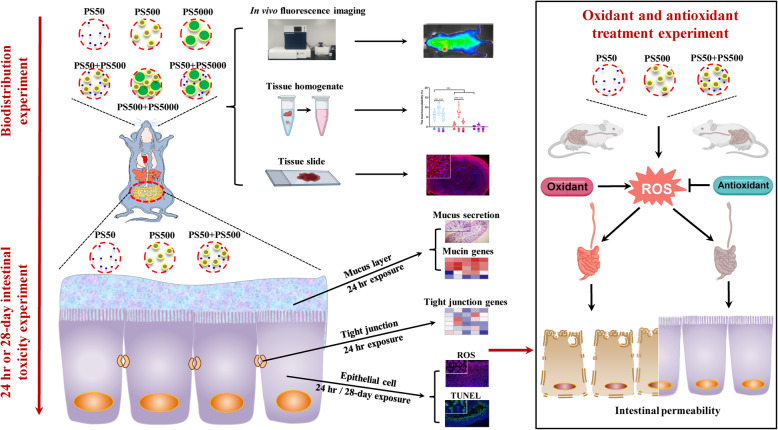
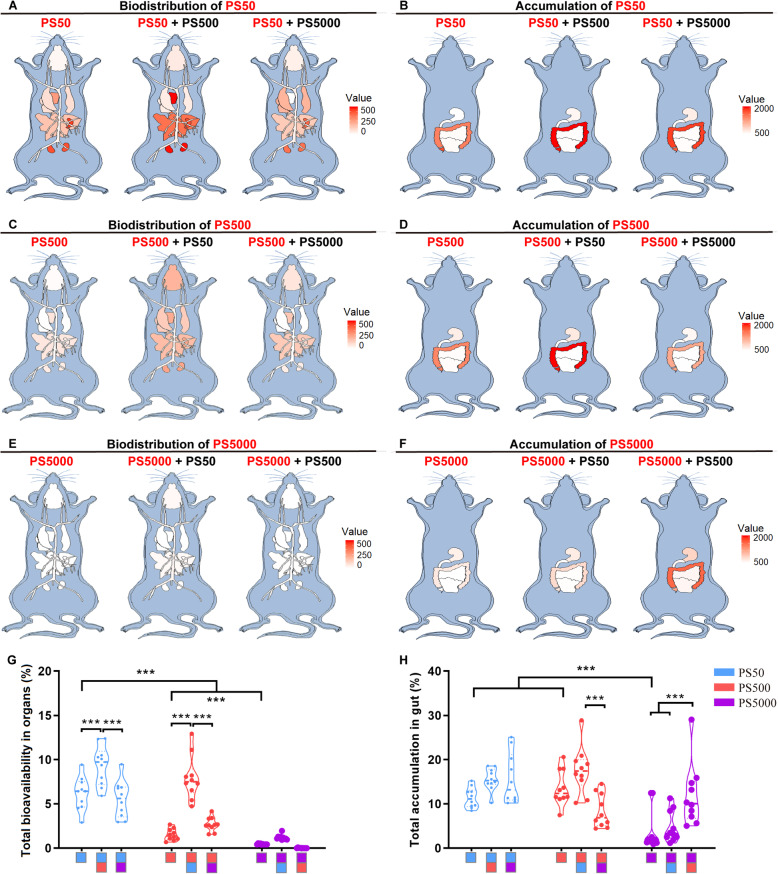
Background: Micro- and nanoplastic pollution has become a global environmental problem. Nanoplastics in the environment are still hard to detect because of analysis technology limitations. It is believed that when microplastics are found in the environment, more undetected nanoplastics are around. The current “microplastic exposure” is in fact the mixture of micro- and nanoplastic exposures. Therefore, the biological interaction between organisms among different sizes of micro- and nanoplastics should not be neglected. Results: We measured the biodistribution of three polystyrene (PS) particles (50 nm PS, PS50; 500 nm PS, PS500; 5000 nm PS, PS5000) under single and co-exposure conditions in mice. We explored the underlying mechanisms by investigating the effects on three major components of the intestinal barrier (the mucus layer, tight junctions and the epithelial cells) in four intestine segments (duodenum, jejunum, ileum and colon) of mice. We found that the amounts of both PS500 and PS5000 increased when they were co-exposed with PS50 for 24 h in the mice. These increased amounts were due primarily to the increased permeability in the mouse intestines. We also confirmed there was a combined toxicity of PS50 and PS500 in the mouse intestines. This manifested as the mixture of PS50 and PS500 causing more severe dysfunction of the intestinal barrier than that caused by PS50 or PS500 alone. We found that the combined toxicity of PS micro- and nanoplastics on intestinal barrier dysfunction was caused primarily by reactive oxygen species (ROS)-mediated epithelial cell apoptosis in the mice. These findings were further confirmed by an oxidants or antioxidants pretreatment study. In addition, the combined toxicity of PS micro- and nanoplastics was also found in the mice after a 28-day repeated dose exposure. Conclusions: There is a combined toxicity of PS50 and PS500 in the mouse intestines, which was caused primarily by ROS-mediated epithelial cell apoptosis in the mice. Considering that most recent studies on PS micro- and nanoplastics have been conducted using a single particle size, the health risks of exposure to PS micro- and nanoplastics on organisms may be underestimated.
Overview
The claims and statistics of this paper haven’t been checked yet.
Free: it reads the open-access text and checks the first 5 claims that cite a source we can check. Create a free account to check every claim.
Integrity signals
Registry
Cites
Statistics
Figures
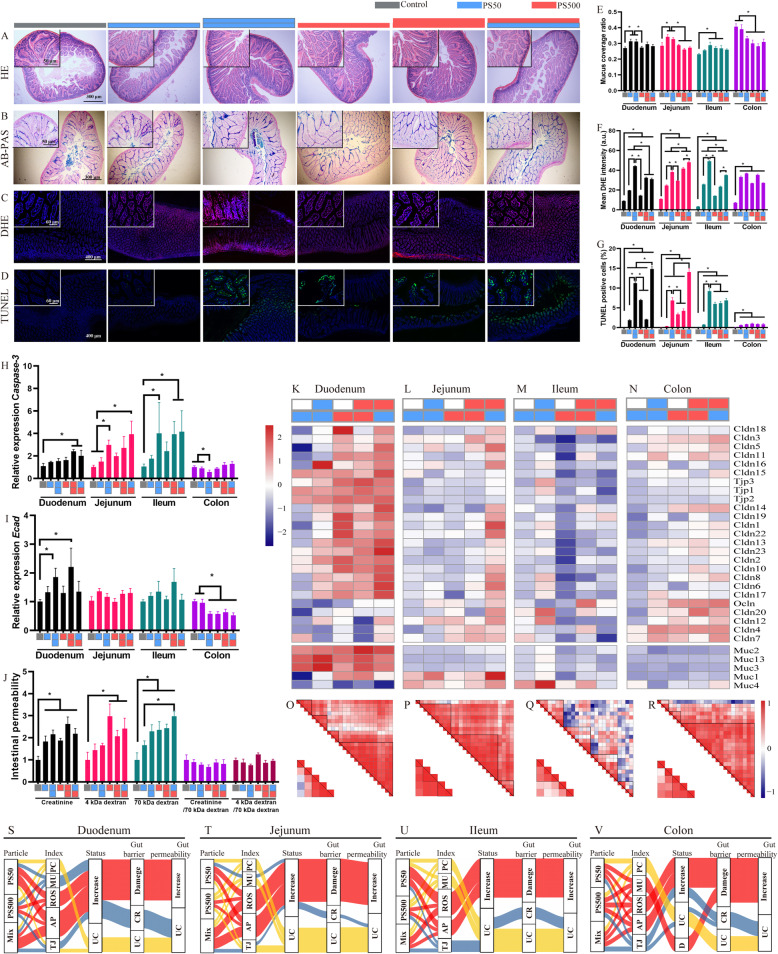
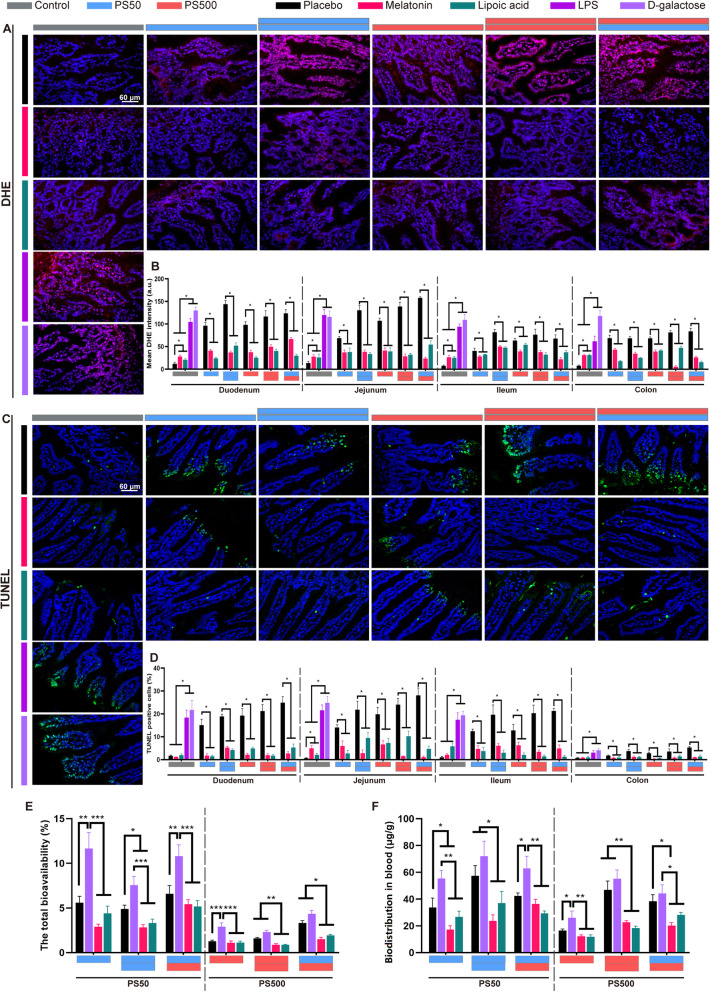
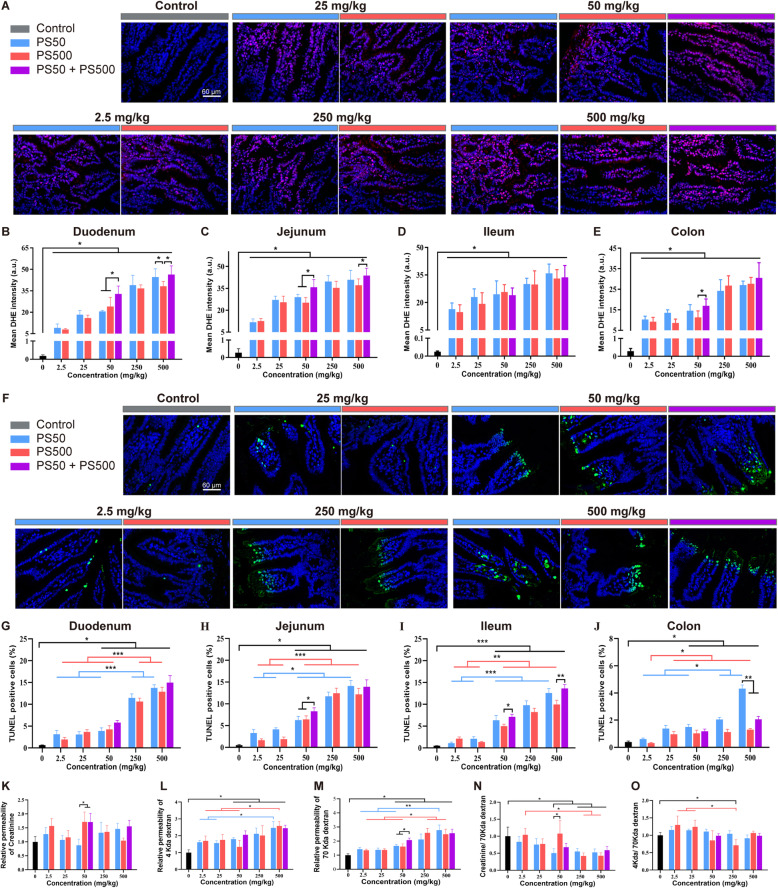
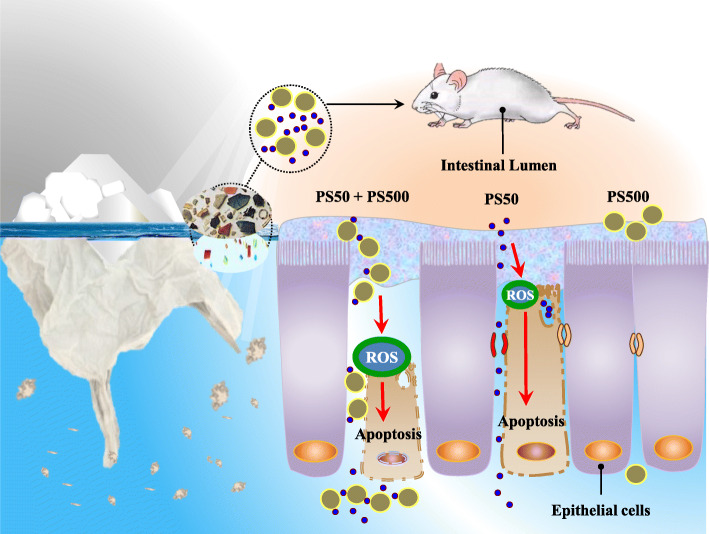
Verification
Claims the paper makes
The claims and statistics of this paper haven’t been checked yet.
Free: it reads the open-access text and checks the first 5 claims that cite a source we can check. Create a free account to check every claim.
Claims other papers make about this one
Each is checked against this paper’s own text: does it say what the citing paper says it does?
The cited source says what the claim attributes to it.
In the citing paper
“the absorption and distribution of MNPs increase as particle size decreases.26”
From Microplastics and Nanoplastics in Atheromas and Cardiovascular Events (2024) · cites this paper as [26]
Self-check
Percentages, sums and reported differences re-computed from the paper’s own numbers.
The self-check needs the paper’s full text.
Citations
Cites
Production, use, and fate of all plastics ever made
Geyer, R., Jambeck, J. R., & Law, K. L. (2017) · Science Advances · doi:10.1126/sciadv.1700782 · Cited by 18,606
Human Consumption of Microplastics
Cox, K. D., Covernton, G. A., Davies, H. L., Dower, J. F., Juanes, F., & Dudas, S. E. (2019) · Environmental Science & Technology · doi:10.1021/acs.est.9b01517 · Cited by 2,745
Microplastics in Freshwaters and Drinking Water: Critical Review and Assessment of Data Quality
Koelmans, A. A., Mohamed Nor, N. H., Hermsen, E., Kooi, M., Mintenig, S. M., & De France, J. (2019) · Water Research · doi:10.1016/j.watres.2019.02.054 · Cited by 2,535 · cited 1×
“Considering the combined effects of PS micro- and nanoplastics on the intestine, and that most human PS micro- and nanoplastics intake appears as a mixture of multiple sizes of PS particles [5, 6], the health risk of PS particles exposure in humans should not be underestimated.”
BackgroundLu, Y., Zhang, Y., Deng, Y., Jiang, W., Zhao, Y., Geng, J., Ding, L., & Ren, H. (2016) · Environmental Science & Technology · doi:10.1021/acs.est.6b00183 · Cited by 2,125 · cited 1×
“This indicates a ubiquitous size dependency in regard to PS bioavailability in organisms, as similar effects have also been reported in zebrafish [20], early juvenile (See figure on previous page.”
Interactions of microplastic debris throughout the marine ecosystem
Galloway, T. S., Cole, M., & Lewis, C. (2017) · Nature Ecology & Evolution · doi:10.1038/s41559-017-0116 · Cited by 1,955 · cited 1×
“and nanoplastics (size < 100 nm), based upon the diameter of the plastic particles [2].”
BackgroundDetection of Various Microplastics in Human Stool: A Prospective Case Series
Schwabl, P., Köppel, S., Königshofer, P., Bucsics, T., Trauner, M., Reiberger, T., & Liebmann, B. (2019) · Annals of Internal Medicine · doi:10.7326/m19-0618 · Cited by 1,951 · cited 1×
“These compounds have also been detected in human stool [9].”
BackgroundOyster reproduction is affected by exposure to polystyrene microplastics
Sussarellu, R., Suquet, M., Thomas, Y., Lambert, C., Fabioux, C., Pernet, M. E. J., Le Goïc, N., Quillien, V., Mingant, C., Epelboin, Y., et al. (2016) · Proceedings of the National Academy of Sciences · doi:10.1073/pnas.1519019113 · Cited by 1,827
The intestinal epithelial barrier: a therapeutic target?
Odenwald, M. A., & Turner, J. R. (2017) · Nature Reviews Gastroenterology & Hepatology · doi:10.1038/nrgastro.2016.169 · Cited by 1,288 · cited 8×
“When the tight junctions or epithelial cells were damaged, a high capacity and permissive pathway termed “unrestricted” pathway formed [41, 44].”
BackgroundInfluentialImpacts of polystyrene microplastic on the gut barrier, microbiota and metabolism of mice
Jin, Y., Lu, L., Tu, W., Luo, T., & Fu, Z. (2019) · Science of The Total Environment · doi:10.1016/j.scitotenv.2018.08.353 · Cited by 1,100 · cited 2×
“It has been reported that PS5000 decreases mucus secretion in the colon [13].”
BackgroundMethodSenathirajah, K., Attwood, S., Bhagwat, G., Carbery, M., Wilson, S., & Palanisami, T. (2021) · Journal of Hazardous Materials · doi:10.1016/j.jhazmat.2020.124004 · Cited by 1,092 · cited 1×
“A much higher estimate proposes 5 g microplastics with diameters below 1mm per week for human ingestion [57].”
Background
Research works printed but not linked: 1
- Team RC R: a language and environment for statistical computing, R foundationfor statistical computing, Vienna, Austria 2020
Cited by
Items 101–200 of 517
Chen, C., & Lin, Z. (2024) · Environment International · doi:10.1016/j.envint.2024.108617 · Cited by 53
Peng, Y., & Qi, H. (2024) · Ecotoxicology and Environmental Safety · doi:10.1016/j.ecoenv.2024.116505 · Cited by 54
Luo, W.-Q., Cao, M.-T., Sun, C.-X., Wang, J.-J., Gao, M.-X., He, X.-R., Dang, L.-N., Geng, Y.-Y., Li, B.-L., Li, J., et al. (2025) · Journal of Hazardous Materials · doi:10.1016/j.jhazmat.2025.137701 · Cited by 55
Occurrence, transport, and toxicity of nanomaterials in soil ecosystems: a review
Xu, Z., Long, X., Jia, Y., Zhao, D., & Pan, X. (2022) · Environmental Chemistry Letters · doi:10.1007/s10311-022-01507-9 · Cited by 51
“Particularly, when the levels of reactive oxygen species exceed the scope of an organism's ability to withstand, it would result in subsequent cell death (Liang et al. 2021).”
BackgroundJin, M.-H., Hu, J., Zhang, M., Meng, Z., Shi, G., Wang, Z., & Li, W. (2023) · Environmental Pollution · doi:10.1016/j.envpol.2023.121202 · Cited by 53
Shi, J., Deng, H., & Zhang, M. (2022) · Chemosphere · doi:10.1016/j.chemosphere.2022.135321 · Cited by 52
Zhao, X., Sun, J., Zhou, L., Teng, M., Zhao, L., Li, Y., & Wu, F. (2023) · Environmental Science Nano · doi:10.1039/d3en00491k · Cited by 60
Jiang, W., Hu, C., Chen, Y., Li, Y., Sun, X., Wu, H., Yang, R., Tang, Y., Niu, F., Wei, W., et al. (2023) · The Science of The Total Environment · doi:10.1016/j.scitotenv.2023.162101 · Cited by 49
Bazeli, J., Banikazemi, Z., Hamblin, M. R., & Chaleshtori, R. S. (2023) · Frontiers in Nutrition · doi:10.3389/fnut.2023.1186724 · Cited by 53
He, Y., Yu, T., Li, H., Sun, Q., Chen, M., Lin, Y., Dai, J., Wang, W., Li, Q., & Ju, S. (2024) · Journal of Animal Science and Biotechnology/Journal of animal science and biotechnology · doi:10.1186/s40104-024-01077-6 · Cited by 54
“An in vivo study reported that oral exposure to PS-NPs caused intestinal barrier dysfunction and increased intestinal permeability [11].”
BackgroundZhao, M., Xie, J., Zhang, J., Zhao, B., Zhang, Y., Xue, J., Zhang, R., Zhang, R., Wang, H., Li, Y., et al. (2024) · Environmental Pollution · doi:10.1016/j.envpol.2024.124935 · Cited by 46
Peters, R., de Jong, N., de Haan, L., Wright, S., & Bouwmeester, H. (2022) · Microplastics and Nanoplastics · doi:10.1186/s43591-021-00022-y · Cited by 48
“Yet, combination effects of the microplastics potentially affecting the barrier properties of the intestinal epithelial, resulting in an increase uptake need to be studied in more detail [65].”
BackgroundXian, H., Li, Z., Bai, R., Ye, R., Feng, Y., Zhong, Y., Liang, B., Huang, Y., Guo, J. Z., Wang, B., et al. (2024) · Journal of Hazardous Materials · doi:10.1016/j.jhazmat.2024.134298 · Cited by 42
Self-citationLi, Z., Xian, H., Ye, R., Zhong, Y., Liang, B., Huang, Y., Dai, M., Guo, J. Z., Tang, S., Ren, X., et al. (2024) · The Science of The Total Environment · doi:10.1016/j.scitotenv.2024.172876 · Cited by 44
Self-citationCheng, W., Chen, H., Zhou, Y., You, Y., Dong, L., Li, Y., Feng, Y., & Wang, Y. (2024) · Environment International · doi:10.1016/j.envint.2024.108949 · Cited by 50
Huang, Z., Weng, Y. Z., Shen, Q., Zhao, Y., Luo, T., Xiao, Y., Yang, G., & Jin, Y. (2023) · Environmental Pollution · doi:10.1016/j.envpol.2023.122275 · Cited by 45
Self-citationDang, T. T., Söğüt, E., Uysal‐Unalan, I., & Corredig, M. (2024) · Chemosphere · doi:10.1016/j.chemosphere.2024.143777 · Cited by 48
Zhang, Q., Xia, W., Zhou, X., Yang, C., Lu, Z., Wu, S., Lu, X., Yang, J., & Jin, C. (2023) · Environmental Pollution · doi:10.1016/j.envpol.2023.122723 · Cited by 39
Wan, D., Liu, Y., Chang, Q., Liu, Z., Wang, Q., Niu, R., Gao, B., Guan, Q., & Xia, Y. (2024) · Toxics · doi:10.3390/toxics12080553 · Cited by 41
“The proposed threshold of 200 nm as a research boundary for biological barriers seems ambiguous, particularly since smaller NPs have been found in excised carotid plaque specimens [17,18].”
BackgroundChoi, H.-J., Kaneko, S., Suzuki, Y., Inamura, K., Nishikawa, M., & Sakai, Y. (2024) · Nanomaterials · doi:10.3390/nano14171435 · Cited by 47
“In 2016, the European Food Safety Agency (EFSA) reported the potential translocation of MNPs under 150 µ m into the gut epithelium [18], and numerous in vivo studies (mainly rodents [19,20] and fish [21]) have already demonstrated MNP absorption in the GIT and accumulated in various organs.”
BackgroundInfluence of Microplastics on Morphological Manifestations of Experimental Acute Colitis
Zolotova, N. A., Dzhalilova, D. S., Цветков, И. С., & Makarova, O. V. (2023) · Toxics · doi:10.3390/toxics11090730 · Cited by 43
“A decrease in the number of goblet cells [17,26,29], mucin expression [24,31], and mucus secretion [21,22,25,30,31] were revealed.”
BackgroundSheng, S., Han, N., Wei, Y., Wang, J., Han, W., Xing, B., Xing, M., & Zhang, W. (2023) · Biological Trace Element Research · doi:10.1007/s12011-023-03835-5 · Cited by 38
“Excessive ROS production caused by MPs has been suggested as the triggering factor for the apoptosis of intestinal epithelial cells in mice [57].”
Domenech, J., Villacorta, A., de Ferrer, J. A., Llorens-Chiralt, R., Marcos, R., Hernández, A., & Catalán, J. (2024) · Journal of Hazardous Materials · doi:10.1016/j.jhazmat.2024.134030 · Cited by 39
Xiao, L., Huang, Y., Zu, D., Liu, H., He, H., Bao, Q., He, Y., Liang, C., Luo, G., Teng, Y., et al. (2024) · Ecotoxicology and Environmental Safety · doi:10.1016/j.ecoenv.2024.117284 · Cited by 39
Self-citationGeppner, L., Karaca, J., Wegner, W., Rados, M., Gutwald, T., Werth, P., & Henjakovic, M. (2023) · Toxics · doi:10.3390/toxics11090790 · Cited by 38
“offers a potential solution of using proteinase K in a different buffer solution than Tris-HCl, which might give better results [29].”
BackgroundXuan, L., Luo, J., Qu, C., Guo, P., Yi, W., Yang, J., Yan, Y., Guan, H., Zhou, P., & Huang, R. (2023) · The Science of The Total Environment · doi:10.1016/j.scitotenv.2023.169606 · Cited by 37
Xuan, L., Wang, Y., Qu, C., Yi, W., Yang, J., Pan, H., Zhang, J., Chen, C., Bai, C., Zhou, P., et al. (2024) · Ecotoxicology and Environmental Safety · doi:10.1016/j.ecoenv.2024.116255 · Cited by 35
Advances in the Interaction between Food-Derived Nanoparticles and the Intestinal Barrier
Jiang, B., Zhao, Y., Cao, Y., Sun, C., Lu, W. J., & Fang, Y. (2024) · Journal of Agricultural and Food Chemistry · doi:10.1021/acs.jafc.3c08145 · Cited by 36
Ye, R., Li, Z., Xian, H., Zhong, Y., Liang, B., Huang, Y., Chen, D., Dai, M., Tang, S., Guo, J., et al. (2024) · Environmental Health Perspectives · doi:10.1289/ehp13696 · Cited by 35
“16 With their larger speci fi c surface area, NPs possess the capacity to transport diverse pollutants, including organic pollutants and heavy metals.”
Self-citationSchnee, M., Sieler, M., Dörnen, J., & Dittmar, T. (2024) · Heliyon · doi:10.1016/j.heliyon.2024.e38686 · Cited by 40
Bang, E., Hwangbo, H., Lee, H., Park, C., Hong, S. H., Kim, H. S., Jung, Y., Hyun, Y., Hyun, J. W., Kim, G., et al. (2024) · Toxicology · doi:10.1016/j.tox.2024.154002 · Cited by 34
Busch, M., Brouwer, H., Aalderink, G., Bredeck, G., Kämpfer, A. A. M., Schins, R. P. F., & Bouwmeester, H. (2023) · Frontiers in Toxicology · doi:10.3389/ftox.2023.1112212 · Cited by 37
“Furthermore, plastic particles in the environment cover a whole size spectrum that might exhibit synergistic effects during coexposure of differently sized particles (Liang et al., 2021).”
BackgroundA Multisystemic Approach Revealed Aminated Polystyrene Nanoparticles‐Induced Neurotoxicity
Schröter, L., Jentsch, L., Maglioni, S., Muñoz‐Juan, A., Wahle, T., Limke, A., von Mikecz, A. H., Laromaine, A., & Ventura, N. (2023) · Small · doi:10.1002/smll.202302907 · Cited by 39
Fröhlich, E. (2024) · Journal of Toxicology and Environmental Health Part B · doi:10.1080/10937404.2024.2406192 · Cited by 41
Novel probiotics adsorbing and excreting microplastics in vivo show potential gut health benefits
Teng, X., Zhang, T., & Rao, C. (2025) · Frontiers in Microbiology · doi:10.3389/fmicb.2024.1522794 · Cited by 39
Liang, X., Zeng, Y., Zhang, P., Zhu, B., Feng, J., Deng, T., Fu, Z., Liu, C., Chen, C., & Zhang, Y. (2025) · Journal of Translational Medicine · doi:10.1186/s12967-025-06634-9 · Cited by 42
“The fluorescent PS-NPs demonstrated negligible fluorescence leakage when exposed to Milli-Q water and simulated gastric or intestinal fluids at 37 °C for 24 h [38].”
Antioxidant Intervention Against Microplastic Hazards
Wang, Z., Wang, Y., Zhang, J., Feng, G., Miao, S., Lu, R., Tian, X., & Yang, Y. (2025) · Antioxidants · doi:10.3390/antiox14070797 · Cited by 43
Yu, C., Takhistov, P., Alocilja, E. C., Reyes-De-Corcuera, J. I., Frey, M. W., Gomes, C. L., Mao, Y., McLamore, E. S., Lin, M., Tsyusko, O. V., et al. (2022) · Analytical and Bioanalytical Chemistry · doi:10.1007/s00216-022-04069-5 · Cited by 36
Cui, M., He, Q., Wang, Z., Yu, Y., Gao, H., Liu, Z., Peng, H., Wang, H., Zhang, X., Li, D., et al. (2023) · Environmental Pollution · doi:10.1016/j.envpol.2023.121808 · Cited by 32
Guo, X., Cheng, C., Wang, L., Li, D., Fan, R., & Wei, X. (2023) · Environmental Toxicology · doi:10.1002/tox.23886 · Cited by 34
“Micro- and nano-plastic particles accumulation can both induce multiple tissues and cell dysfunction by triggering a pathological increase of ROS levels leading to oxidative stress.(11) A sharp increase in ROS levels can lead to biological macromolecules such as lipid peroxidation damage.”
BackgroundZhong, Y., Feng, Y., Huang, Y., Wang, B., Shi, W., Liang, B., Li, Z., Zhang, B., Du, J., Xiu, J., et al. (2024) · Ecotoxicology and Environmental Safety · doi:10.1016/j.ecoenv.2024.116983 · Cited by 36
Self-citationXiong, Z., Kong, Q., Hua, J., Chen, Q., & Wang, D. (2025) · Ecotoxicology and Environmental Safety · doi:10.1016/j.ecoenv.2025.117712 · Cited by 34
Tiny trouble: microplastics, nanoplastics, and their heartfelt impact on cardiovascular health
Zhang, T., Liao, Y., Ling, J., Zhang, J., Zhang, D., Yin, X., Yu, P., & Liu, X. (2025) · Cardiovascular Research · doi:10.1093/cvr/cvaf068 · Cited by 43
Autophagic response of intestinal epithelial cells exposed to polystyrene nanoplastics
Xu, X., Feng, Y., Han, C., Yao, Z., Liu, Y., Luo, C., & Sheng, J. (2022) · Environmental Toxicology · doi:10.1002/tox.23678 · Cited by 35
“In an in vivo model, oral exposure of mice to PS-NPs induced ROS generation in different intestinal segments.(33) However, several studies have reported that no significant”
BackgroundDistribution and toxicity of submicron plastic particles in mice
Tsou, T.-Y., Lee, S.-H., Kuo, T.-H., Chien, C., Chen, H., & Cheng, T. (2022) · Environmental Toxicology and Pharmacology · doi:10.1016/j.etap.2022.104038 · Cited by 32
Han, J., Yan, J., Li, K., Lin, B., Lai, W., Bian, L., Jia, R., Liu, X., & Xi, Z. (2023) · Toxics · doi:10.3390/toxics11050441 · Cited by 33
“found that both 50 and 500 nm PS were accumulated in the brain, intestine, liver, kidney, testis, and blood after mice were orally administrated with 50 nm and 500 nm PS for 24 h [56].”
BackgroundMierzejewski, K., Kurzyńska, A., Golubska, M., Całka, J., Gałęcka, I., Szabelski, M., Paukszto, Ł., Andronowska, A., & Bogacka, I. (2023) · The Science of The Total Environment · doi:10.1016/j.scitotenv.2023.166967 · Cited by 36
Kharaghani, D., DeLoid, G. M., He, P., Swenor, B., Bui, T. H., Zuverza‐Mena, N., Tamez, C., Musante, C., Verzi, M. P., White, J. C., et al. (2025) · Journal of Hazardous Materials · doi:10.1016/j.jhazmat.2025.137714 · Cited by 33
Influence of the polymer type of a microplastic challenge on the reaction of murine cells
Jasinski, J., Völkl, M., Wilde, M. V., Jérôme, V., Fröhlich, T., Freitag, R., & Scheibel, T. (2023) · Journal of Hazardous Materials · doi:10.1016/j.jhazmat.2023.133280 · Cited by 30
Huang, Y., Xiao, L., Xu, S., Zu, D., Liu, H., He, H., Bao, Q., He, Y., Liang, C., Shi, Y., et al. (2024) · Free Radical Biology and Medicine · doi:10.1016/j.freeradbiomed.2024.11.012 · Cited by 32
Self-citationRapini, C. C. S., Berardino, C. D., Peserico, A., Capacchietti, G., & Barboni, B. (2024) · International Journal of Molecular Sciences · doi:10.3390/ijms252212166 · Cited by 37
Micro- and Nanoplastics and the Immune System: Mechanistic Insights and Future Directions
Fan, J., & Ha, Y. (2025) · Immuno · doi:10.3390/immuno5040052 · Cited by 37
Cheng, Y., Yang, S., Yin, L., Pu, Y., & Liang, G. (2022) · Ecotoxicology and Environmental Safety · doi:10.1016/j.ecoenv.2022.114385 · Cited by 36
Li, Z., Huang, Y., Zhong, Y., Liang, B., Yang, X., Wang, Q., Sui, H., & Huang, Z. (2023) · Food and Chemical Toxicology · doi:10.1016/j.fct.2023.113984 · Cited by 32
Self-citationZhang, Y., Jia, Z., Gao, X., Zhao, J., & Zhang, H. (2023) · The Science of The Total Environment · doi:10.1016/j.scitotenv.2023.168064 · Cited by 33
Micro(nano)-plastics exposure induced programmed cell death and corresponding influence factors
Wu, Q., Cao, J., Liu, X., Zhu, X., Huang, C., Wang, X., & Song, Y. (2024) · The Science of The Total Environment · doi:10.1016/j.scitotenv.2024.171230 · Cited by 34
Lin, P., Liu, L., Ma, Y., Du, R.-Y., Yi, C., Li, P., Xu, Y., Yin, H., Sun, L., & Li, Z. (2024) · Environmental Pollution · doi:10.1016/j.envpol.2024.124334 · Cited by 29
Yun, S. C., Jeong, H., Lee, J.-S., Kim, J., Kim, I., Maszczyk, P., Yang, Z., Hagiwara, A., & Lee, J. S. (2025) · Comparative Biochemistry and Physiology Part C Toxicology & Pharmacology · doi:10.1016/j.cbpc.2025.110388 · Cited by 49
Martin, L. M. A., Marbach, S., Zimba, P. V., Liu, Q., & Xu, W. (2023) · Chemosphere · doi:10.1016/j.chemosphere.2023.140069 · Cited by 32
In Vitro High-Throughput Toxicological Assessment of Nanoplastics
Gioria, S., Tolardo, V., Magrì, D., Fumagalli, F., Cassano, D., Athanassiou, A., & Fragouli, D. (2022) · Nanomaterials · doi:10.3390/nano12121947 · Cited by 34
Xia, S., Yan, C., Cai, G., Xu, Q., Zou, H., Gu, J., Yuan, Y., Liu, Z., & Bian, J. (2024) · Journal of Environmental Sciences · doi:10.1016/j.jes.2024.11.022 · Cited by 28
Kim, J. E., Sonar, N. S., Thakuri, L. S., Park, J. W., Kim, K., & Rhyu, D. Y. (2025) · NanoImpact · doi:10.1016/j.impact.2025.100549 · Cited by 28
Microplastics in Cosmetics: Emerging Risks for Skin Health and the Environment
Han, J. H., & Kim, H. S. (2025) · Cosmetics · doi:10.3390/cosmetics12040171 · Cited by 34
“− Induce oxidative stress, cause DNA damage and apoptosis [42].”
Cheng, D., Zheng, D., Jiang, M., Jin, Y., Liu, R., Zhou, Y., Shen, J., Tang, J., Wang, F., Tang, J., et al. (2025) · International Immunopharmacology · doi:10.1016/j.intimp.2025.115367 · Cited by 30
Spirito, F. D., Folliero, V., Palo, M. P. D., Benedetto, G. D., Aulisio, L., Martina, S., Rinaldi, L., & Franci, G. (2025) · Journal of Functional Biomaterials · doi:10.3390/jfb16090332 · Cited by 30
“This is consistent with findings that internalized MNPs localize to lysosomes and mitochondria, inducing ROS overproduction and cell stress [83,119].”
InfluentialGazzar, W. B. E., Sliem, R. E., Bayoumi, H., Nasr, H. E., Shabanah, M., Elalfy, A., Radwaan, S. E., Gebba, M. A., Mansour, H. M., Badr, A. M., et al. (2023) · International Journal of Molecular Sciences · doi:10.3390/ijms241713619 · Cited by 28
“’s (2021) [42] results were also different; they reported that PS50 and PS500 did not change tight junction protein mRNA expression in the jejunum, while when PS500, as well as PS50, were administrated as a mixture, most of the tight junction protein mRNA”
ResultLee, H., Song, S. J., Kim, C., & Park, B. (2024) · Aquatic Toxicology · doi:10.1016/j.aquatox.2024.107027 · Cited by 28
A systematic review of the effects of nanoplastics on fish
Dasmahapatra, A. K., Chatterjee, J., & Tchounwou, P. B. (2025) · Frontiers in Toxicology · doi:10.3389/ftox.2025.1530209 · Cited by 29
Impact of micro- and nanoplastics on gastrointestinal diseases: Recent advances
Zhao, H., Guo, L., Yin, Y., Wu, Q., Wang, Y., Tang, N., & Qi, X. (2025) · European Journal of Internal Medicine · doi:10.1016/j.ejim.2025.07.015 · Cited by 28
Fan, Y., Pan, D., Yang, M., & Wang, X. (2023) · The Science of The Total Environment · doi:10.1016/j.scitotenv.2023.161412 · Cited by 27
Investigation of Microplastics (≥10 μm) in Meconium by Fourier Transform Infrared Microspectroscopy
Li, Z., Wang, J., Gao, X., Du, J., Sui, H., Jieling, W., Zhong, Y., Liang, B., Huang, Y., Ye, R., et al. (2023) · Toxics · doi:10.3390/toxics11040310 · Cited by 30
“Over time, plastics can be broken down into fragments as they undergo various physicochemical processes [4].”
BackgroundSelf-citationZhang, K.-K., Wan, J.-Y., Chen, Y., Cheng, C.-H., Zhou, H., Zheng, D., Lan, Z., You, Q., & Sun, J. W. (2024) · The Science of The Total Environment · doi:10.1016/j.scitotenv.2024.173285 · Cited by 27
Yang, J.-Z., Zhang, K.-K., Hsu, C., Miao, L., Chen, L., Liu, J., Li, J.-H., Li, X., Zeng, J., Chen, L., et al. (2024) · Journal of Hazardous Materials · doi:10.1016/j.jhazmat.2024.134823 · Cited by 26
Self-citationLu, H., Xu, P., Sun, G., Chen, B., Zheng, Y., Zhang, J., & Wang, G. (2024) · The Science of The Total Environment · doi:10.1016/j.scitotenv.2024.176802 · Cited by 30
Gao, H., Zhou, H.-Q., Ji, H., Shen, J. Z., Yin, D., & Wu, D. (2025) · Ecotoxicology and Environmental Safety · doi:10.1016/j.ecoenv.2025.119114 · Cited by 29
Bai, H., Gu, H., Zhou, W., Shi, G., Yan, J., Su, Y., Li, W., Li, Y., Zhong, C., Zhao, N., et al. (2024) · Journal of Hazardous Materials · doi:10.1016/j.jhazmat.2024.136974 · Cited by 30
Zhou, B., Zhang, A., Wang, Y., Feng, S., Xue, Q., Liu, Z., Zhao, H., Jing, Z., & Xie, J. (2024) · Journal of Hazardous Materials · doi:10.1016/j.jhazmat.2024.137002 · Cited by 31
Popa, R., & Tăbăran, F. (2025) · Applied Sciences · doi:10.3390/app15116135 · Cited by 32
In vitro wheat protoplast cytotoxicity of polystyrene nanoplastics
Wang, J., Zhu, J., Zheng, Q., Wang, D., Wang, H., He, Y., Wang, J., & Zhan, X. (2023) · The Science of The Total Environment · doi:10.1016/j.scitotenv.2023.163560 · Cited by 25
Liu, M., Yu, X., Yang, M., Shu, W., Cao, F., Liu, Q., Wang, J., & Jiang, Y. (2023) · Journal of Hazardous Materials · doi:10.1016/j.jhazmat.2023.132315 · Cited by 25
Chen, C., Kamineni, V. N., & Lin, Z. (2024) · Journal of Hazardous Materials · doi:10.1016/j.jhazmat.2024.135922 · Cited by 45
Effects of microplastics on the immune system: How much should we worry?
Vanetti, C., Broggiato, M., Pezzana, S., Clerici, M., & Fenizia, C. (2025) · Immunology Letters · doi:10.1016/j.imlet.2025.106976 · Cited by 35
In vivo and In vitro assessment of the retinal toxicity of polystyrene nanoplastics
Zheng, J., He, L., Shi, Q., Wang, M., Ma, Y., Yu, W., Liu, L., Yu, G., Liu, X., Wang, B., et al. (2025) · Environment International · doi:10.1016/j.envint.2025.109420 · Cited by 26
Self-citationZhang, L., Jing, J., Lin, H., Liu, Z., Wang, J., Zhang, W., & Gao, A. (2022) · Nano Research · doi:10.1007/s12274-022-5032-9 · Cited by 26
Microplásticos e Nanoplásticos e sua relevância na saúde humana: uma revisão de literatura
Bugatti, C., de Almeida, K. C., Guimarães, M. S. D. A., & Amâncio, N. D. F. G. (2023) · Research Society and Development · doi:10.33448/rsd-v12i1.39302 · Cited by 28
Nanoplastic-Induced Biological Effects In Vivo and In Vitro: An Overview
Xie, H., Tian, X., Lin, X., Chen, R., Hameed, S. F., Wang, L., Yu, Y., Li, Y., & Li, Y. (2023) · Reviews of Environmental Contamination and Toxicology · doi:10.1007/s44169-023-00027-z · Cited by 26
“…and epithelial cells) in four mouse intestinal segments (duodenum, jejunum, ileum and colon) were studied after exposure to PS NPs (PS50 and PS500) and a combined toxicity in the mouse intestine was found, mainly caused by ROS-mediated apoptosis of mouse epithelial cells (Liang et al. 2021).”
BackgroundSelf-citationShang, Q., Wu, H., Wang, K., Zhang, M., Dou, Y., Jiang, X., Zhao, Y., Zhao, H., Chen, Z., Wang, J., et al. (2024) · The Science of The Total Environment · doi:10.1016/j.scitotenv.2024.175371 · Cited by 26
Zhao, L., Zheng, J., Gu, Y., Xu, X., Yu, J., Li, J., Yang, S., Chen, B., Du, J., & Dong, R. (2024) · Environmental Pollution · doi:10.1016/j.envpol.2024.124862 · Cited by 23
Nanomaterial journey in the gut: from intestinal mucosal interaction to systemic transport
Qiao, X., Bao, L., Liu, G., & Cui, X. (2024) · Nanoscale · doi:10.1039/d4nr02480j · Cited by 28
Lu, Y.-Y., Yang, R., Cao, M., Lu, L., Zhu, W., Hua, W., Tian, M., Sun, Y., & Huang, Q. (2024) · Environmental Pollution · doi:10.1016/j.envpol.2024.125506 · Cited by 22
Impact of microplastics on the human digestive system: From basic to clinical
Wang, Y., Wang, X., Chen, B., Yang, Y.-P., Li, H., & Wang, F. (2025) · World Journal of Gastroenterology · doi:10.3748/wjg.v31.i4.100470 · Cited by 41
Intestinal permeability, food antigens and the microbiome: a multifaceted perspective
Valitutti, F., Mennini, M., Monacelli, G., Fagiolari, G., Piccirillo, M., Nardo, G. D., & Cara, G. D. (2025) · Frontiers in Allergy · doi:10.3389/falgy.2024.1505834 · Cited by 29
Banaee, M., Zeidi, A., Beitsayah, A., Multisanti, C. R., & Faggio, C. (2025) · Journal of Xenobiotics · doi:10.3390/jox15040113 · Cited by 24
“Studies showed that NPs could induce hepatotoxicity [14–16], intestinal barrier dysfunction [17], and neurotoxicity [18].”
Research Progress on Micro(nano)plastic-Induced Programmed Cell Death Associated with Disease Risks
Liu, H., Li, H., Chen, T., Fan, Y., Lin, Q., Zhao, H., Jin, L., & Peng, R. (2024) · Toxics · doi:10.3390/toxics12070493 · Cited by 26
Dursun, C., Karaoğlu, K., Özdemır, N., Candan, K., Kumlutaş, Y., Ilgaz, Ç., & Gül, S. (2023) · Environmental Research · doi:10.1016/j.envres.2023.116774 · Cited by 23
He, J., Xiong, S., Zhou, W., Qiu, H., Rao, Y., Liu, Y., Shen, G., Zhao, P., Chen, G., & Li, J. (2024) · Journal of Hazardous Materials · doi:10.1016/j.jhazmat.2024.134586 · Cited by 24
The histopathological and functional consequences of microplastic exposure
Lee, Y., Sung, M. K., Sung, S., Choi, J.-H., Kang, K., Park, J. W., Kim, Y., & Lee, S. (2025) · Discover Applied Sciences · doi:10.1007/s42452-025-06470-y · Cited by 27
“Furthermore, various mechanical studies have shown that MPs of an appropriate size are integrated into the body through intestinal absorption [75].”
Muhammad, A., Qian, Z., Li, Y., Lei, X., Iqbal, J., Shen, X., He, J., Zhang, N., Sun, C., & Shao, Y. (2025) · Journal of Nanobiotechnology · doi:10.1186/s12951-025-03120-8 · Cited by 24
Oral exposure to PLA microplastics induces time-dependent nanotoxicity via the gut-liver axis
Fan, J., Qu, Y., Qu, L., Shen, D., Liu, H., & Nie, Z. (2025) · Journal of Hazardous Materials · doi:10.1016/j.jhazmat.2025.138931 · Cited by 21
Huang, X., Lu, B., Liu, H., Wu, X., & Liu, Y. (2025) · Ecotoxicology and Environmental Safety · doi:10.1016/j.ecoenv.2025.118748 · Cited by 26
Metadata
- Authors
- Liang, B., Zhong, Y., Huang, Y., Lin, X., Liu, J., Lin, L., Hu, M., Jiang, J., Dai, M., Wang, B., Zhang, B., Meng, H., Lelaka, J. J. J., Sui, H., Yang, X., & Huang, Z.
- Affiliations
- Southern Medical University (CN)
- Guangdong Pharmaceutical University (CN)
- China National Center for Food Safety Risk Assessment (CN)
- Corresponding author
- Yang, Xingfen
- Huang, Zhenlie
- Venue
- Particle and Fibre Toxicology
- Published
- 2021-06-07
- Volume
- 18
- Issue
- 1
- Pages
- 20-20
- ISSN
- 1743-8977 (ISSN-L)
- PMC
- PMC8186235
- OpenAlex
- W3171670357
- Cited by
- 508
- References
- 60
- Citations by year
- 2026: 124 · 2025: 119 · 2024: 119 · 2023: 85 · 2022: 52 · 2021: 7
- FWCI
- 16.30
- Type
- journal article
- Language
- en
- Open access
- gold
- doi.org
- Licence
- cc-by
- creativecommons.org/licenses/by/4.0 (tdm)
- creativecommons.org/licenses/by/4.0 (vor)
- Locations
- Particle and Fibre Toxicology (publishedVersion, cc-by)
- PubMed Central (publishedVersion, cc-by)
- PubMed (publishedVersion)
- DOAJ (DOAJ: Directory of Open Access Journals) (submittedVersion, cc-by-sa)
- Funders
- National Key R&D Program of China, Ministry of Science and Technology of China (2018YFC1602103, 2018YFC1603101)
- National Natural Science Foundation of China (82073519, 81872601)
- Guangdong Key R&D Program, Ministry of Science and Technology of Guangdong Province (2019B020210002)
- Natural Science Foundation of Guangdong Province (2018A030313068)
- Guangdong Provincial Key Laboratory of Tropical Disease Research (2017B030314035)
- National Training Program of Innovation and Entrepreneurship for Undergraduates (S202012121157, S202012121055, S201912121024)
- NMPA Key Laboratory for Safety Evaluation of Cosmetics
- Topics
- Physical Sciences › Environmental Science › Pollution › Microplastics and Plastic Pollution
- Physical Sciences › Environmental Science › Health, Toxicology and Mutagenesis › Environmental Toxicology and Ecotoxicology
- Physical Sciences › Materials Science › Materials Chemistry › Nanoparticles: synthesis and applications
- Keywords
- polystyrene, microplastics, nanoplastics, intestinal barrier dysfunction, reactive oxygen species, epithelial apoptosis, co-exposure toxicity, tissue distribution, intestinal permeability, tight junctions, mucus layer, repeated-dose exposure, oxidative stress
- MeSH terms
- Microplastics, Animals, Epithelial Cells, Plastics, Polystyrenes, Tissue Distribution, Apoptosis, Reactive Oxygen Species, Mice
About these checks
Registry, retraction, Cites and statistics results are computed, not judged, with one exception: a printed reference that no index lists is read once by a model before it counts as a citation error. Claims are extracted by a model and kept only when their quote appears verbatim in the text; each cited source is then checked, with a model’s help, for whether it says what the claim relies on. Those verdicts can be wrong — read the claim’s quote and the cited source before relying on one.
Statistics and arithmetic are recomputed, not judged.
Confidence bands are shown only for fields calibrated on our annotated test set. None is calibrated yet, so no band is shown.
What counts as a claim ›How we measure confidence ›How we check this ›
Are you an author, or do you see a problem with this page? Request a review
Data sources
Bibliographic data: Semantic Scholar, OpenAlex, Crossref.
Contains information from the Semantic Scholar Academic Graph Datasets, made available under the ODC Attribution License (ODC-BY 1.0).
Semantic Scholar’s data is described in: Kinney, R., et al. (2023). The Semantic Scholar Open Data Platform. arXiv:2301.10140.
