

Underestimated health risks: polystyrene micro- and nanoplastics jointly induce intestinal barrier dysfunction by ROS-mediated epithelial cell apoptosis
Open accessThe DOI matches its Crossref record; 60 of the 60 references it cites were found in a registry or an index.
Abstract
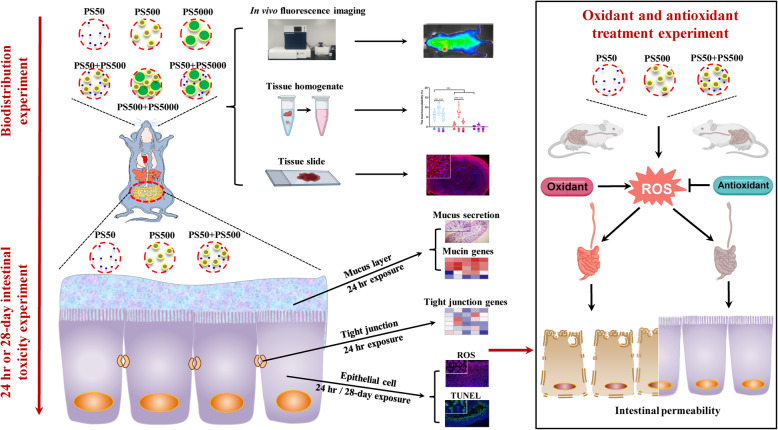
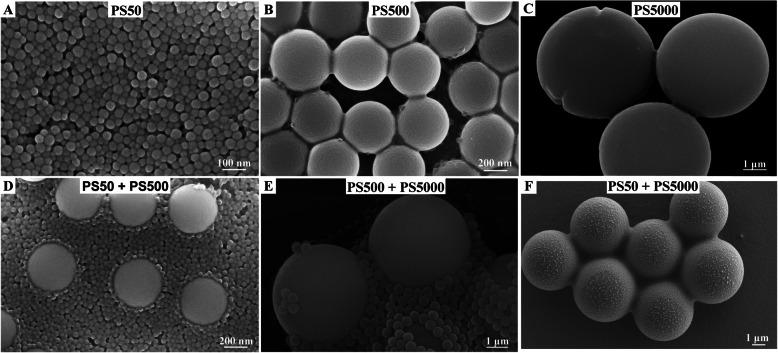
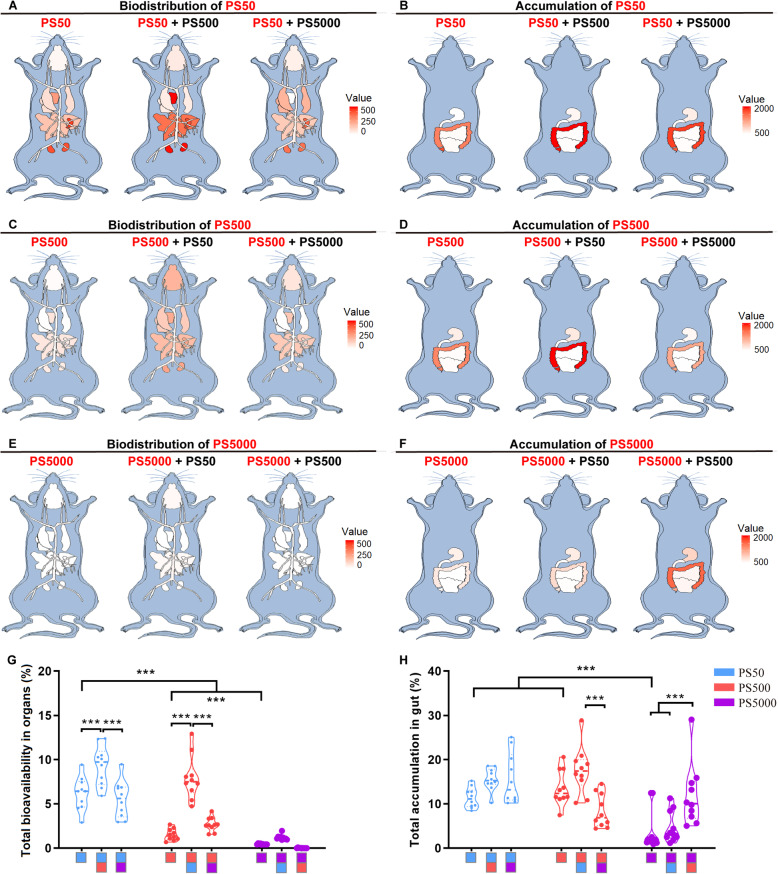
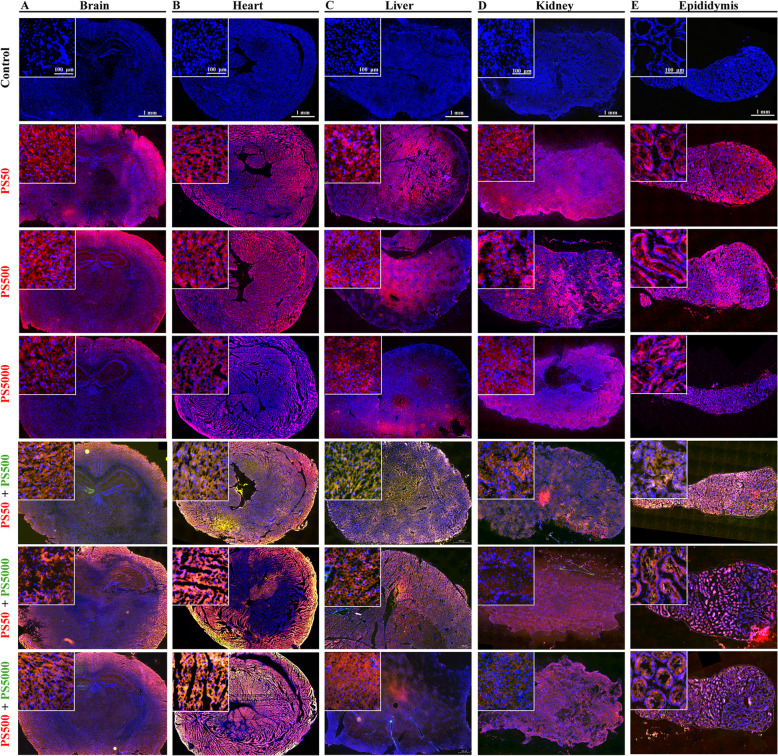
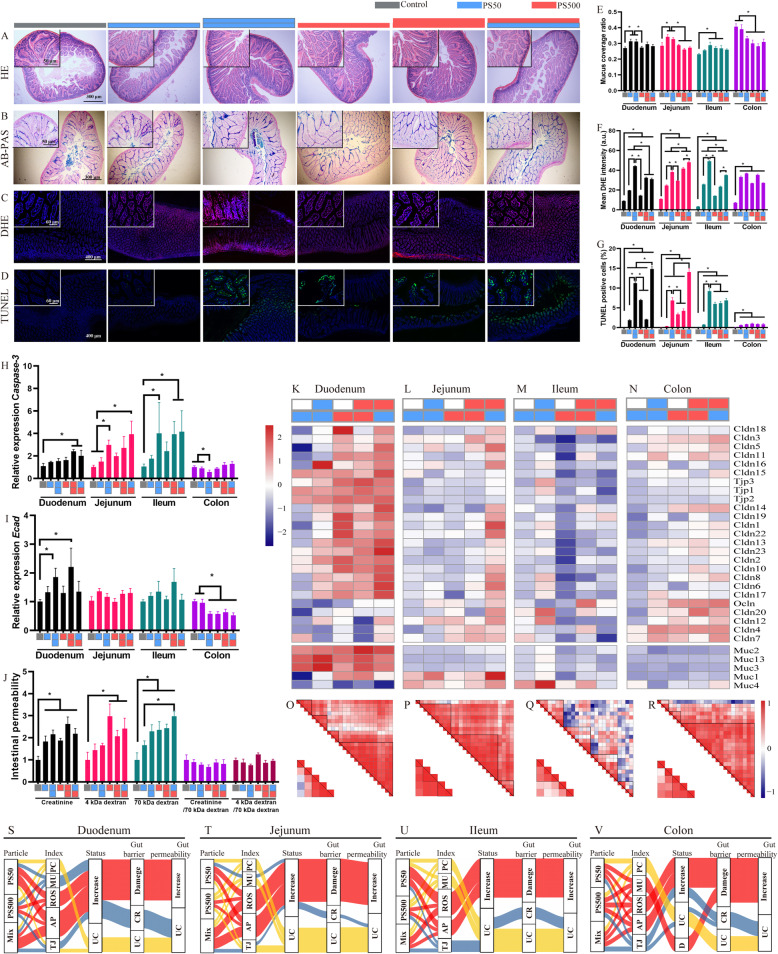
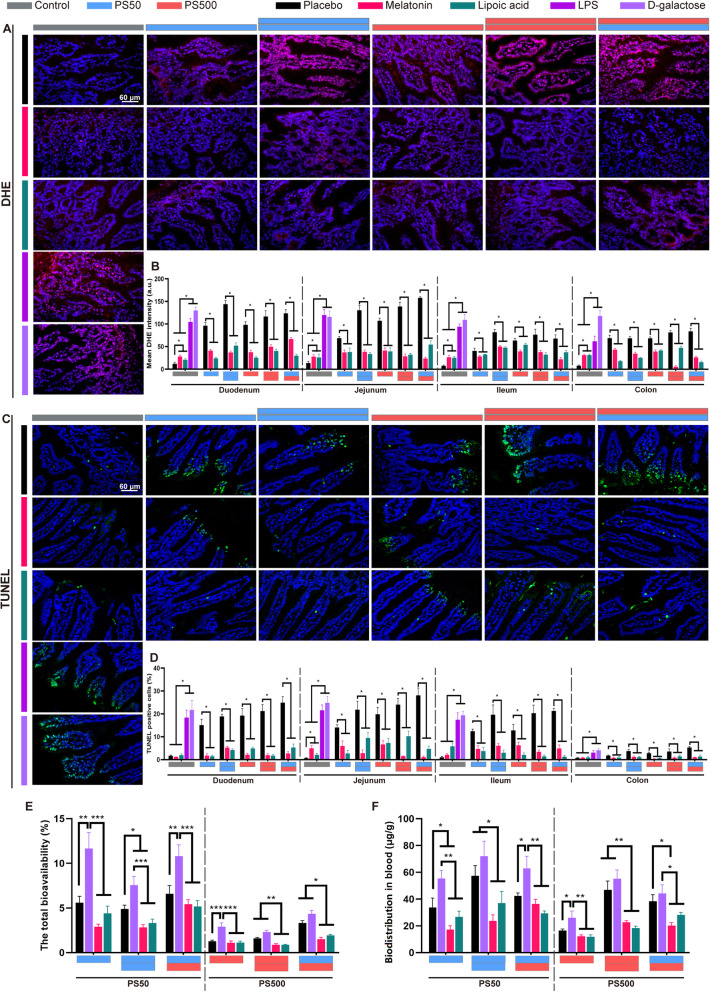
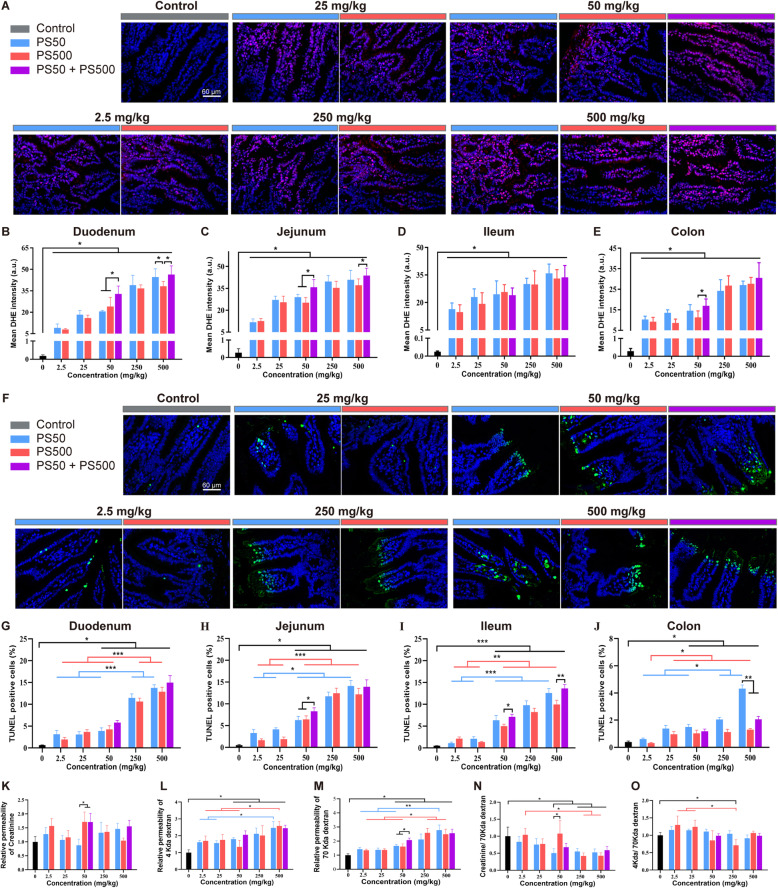
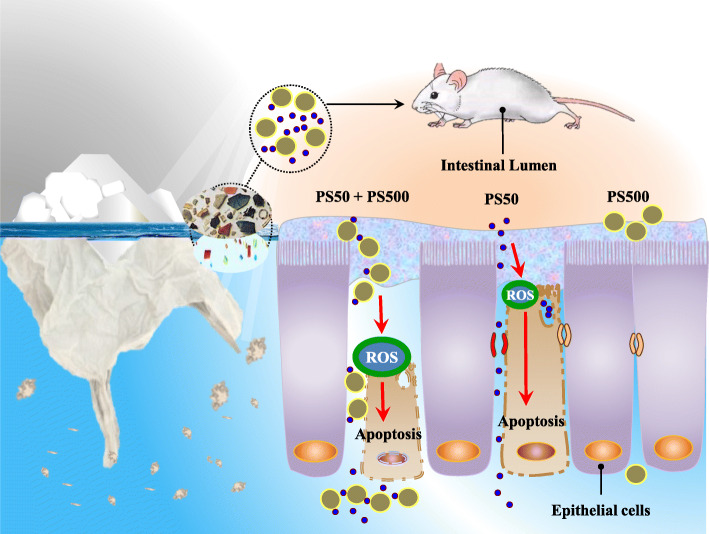
Background: Micro- and nanoplastic pollution has become a global environmental problem. Nanoplastics in the environment are still hard to detect because of analysis technology limitations. It is believed that when microplastics are found in the environment, more undetected nanoplastics are around. The current “microplastic exposure” is in fact the mixture of micro- and nanoplastic exposures. Therefore, the biological interaction between organisms among different sizes of micro- and nanoplastics should not be neglected. Results: We measured the biodistribution of three polystyrene (PS) particles (50 nm PS, PS50; 500 nm PS, PS500; 5000 nm PS, PS5000) under single and co-exposure conditions in mice. We explored the underlying mechanisms by investigating the effects on three major components of the intestinal barrier (the mucus layer, tight junctions and the epithelial cells) in four intestine segments (duodenum, jejunum, ileum and colon) of mice. We found that the amounts of both PS500 and PS5000 increased when they were co-exposed with PS50 for 24 h in the mice. These increased amounts were due primarily to the increased permeability in the mouse intestines. We also confirmed there was a combined toxicity of PS50 and PS500 in the mouse intestines. This manifested as the mixture of PS50 and PS500 causing more severe dysfunction of the intestinal barrier than that caused by PS50 or PS500 alone. We found that the combined toxicity of PS micro- and nanoplastics on intestinal barrier dysfunction was caused primarily by reactive oxygen species (ROS)-mediated epithelial cell apoptosis in the mice. These findings were further confirmed by an oxidants or antioxidants pretreatment study. In addition, the combined toxicity of PS micro- and nanoplastics was also found in the mice after a 28-day repeated dose exposure. Conclusions: There is a combined toxicity of PS50 and PS500 in the mouse intestines, which was caused primarily by ROS-mediated epithelial cell apoptosis in the mice. Considering that most recent studies on PS micro- and nanoplastics have been conducted using a single particle size, the health risks of exposure to PS micro- and nanoplastics on organisms may be underestimated.
Overview
The claims and statistics of this paper haven’t been checked yet.
Free: it reads the open-access text and checks the first 5 claims that cite a source we can check. Create a free account to check every claim.
Integrity signals
Registry
Cites
Statistics
Figures
Verification
Claims the paper makes
The claims and statistics of this paper haven’t been checked yet.
Free: it reads the open-access text and checks the first 5 claims that cite a source we can check. Create a free account to check every claim.
Claims other papers make about this one
Each is checked against this paper’s own text: does it say what the citing paper says it does?
The cited source says what the claim attributes to it.
In the citing paper
“the absorption and distribution of MNPs increase as particle size decreases.26”
From Microplastics and Nanoplastics in Atheromas and Cardiovascular Events (2024) · cites this paper as [26]
Self-check
Percentages, sums and reported differences re-computed from the paper’s own numbers.
The self-check needs the paper’s full text.
Citations
Cites
Production, use, and fate of all plastics ever made
Geyer, R., Jambeck, J. R., & Law, K. L. (2017) · Science Advances · doi:10.1126/sciadv.1700782 · Cited by 18,606
Human Consumption of Microplastics
Cox, K. D., Covernton, G. A., Davies, H. L., Dower, J. F., Juanes, F., & Dudas, S. E. (2019) · Environmental Science & Technology · doi:10.1021/acs.est.9b01517 · Cited by 2,745
Microplastics in Freshwaters and Drinking Water: Critical Review and Assessment of Data Quality
Koelmans, A. A., Mohamed Nor, N. H., Hermsen, E., Kooi, M., Mintenig, S. M., & De France, J. (2019) · Water Research · doi:10.1016/j.watres.2019.02.054 · Cited by 2,535 · cited 1×
“Considering the combined effects of PS micro- and nanoplastics on the intestine, and that most human PS micro- and nanoplastics intake appears as a mixture of multiple sizes of PS particles [5, 6], the health risk of PS particles exposure in humans should not be underestimated.”
BackgroundLu, Y., Zhang, Y., Deng, Y., Jiang, W., Zhao, Y., Geng, J., Ding, L., & Ren, H. (2016) · Environmental Science & Technology · doi:10.1021/acs.est.6b00183 · Cited by 2,125 · cited 1×
“This indicates a ubiquitous size dependency in regard to PS bioavailability in organisms, as similar effects have also been reported in zebrafish [20], early juvenile (See figure on previous page.”
Interactions of microplastic debris throughout the marine ecosystem
Galloway, T. S., Cole, M., & Lewis, C. (2017) · Nature Ecology & Evolution · doi:10.1038/s41559-017-0116 · Cited by 1,955 · cited 1×
“and nanoplastics (size < 100 nm), based upon the diameter of the plastic particles [2].”
BackgroundDetection of Various Microplastics in Human Stool: A Prospective Case Series
Schwabl, P., Köppel, S., Königshofer, P., Bucsics, T., Trauner, M., Reiberger, T., & Liebmann, B. (2019) · Annals of Internal Medicine · doi:10.7326/m19-0618 · Cited by 1,951 · cited 1×
“These compounds have also been detected in human stool [9].”
BackgroundOyster reproduction is affected by exposure to polystyrene microplastics
Sussarellu, R., Suquet, M., Thomas, Y., Lambert, C., Fabioux, C., Pernet, M. E. J., Le Goïc, N., Quillien, V., Mingant, C., Epelboin, Y., et al. (2016) · Proceedings of the National Academy of Sciences · doi:10.1073/pnas.1519019113 · Cited by 1,827
The intestinal epithelial barrier: a therapeutic target?
Odenwald, M. A., & Turner, J. R. (2017) · Nature Reviews Gastroenterology & Hepatology · doi:10.1038/nrgastro.2016.169 · Cited by 1,288 · cited 8×
“When the tight junctions or epithelial cells were damaged, a high capacity and permissive pathway termed “unrestricted” pathway formed [41, 44].”
BackgroundInfluentialImpacts of polystyrene microplastic on the gut barrier, microbiota and metabolism of mice
Jin, Y., Lu, L., Tu, W., Luo, T., & Fu, Z. (2019) · Science of The Total Environment · doi:10.1016/j.scitotenv.2018.08.353 · Cited by 1,100 · cited 2×
“It has been reported that PS5000 decreases mucus secretion in the colon [13].”
BackgroundMethodSenathirajah, K., Attwood, S., Bhagwat, G., Carbery, M., Wilson, S., & Palanisami, T. (2021) · Journal of Hazardous Materials · doi:10.1016/j.jhazmat.2020.124004 · Cited by 1,092 · cited 1×
“A much higher estimate proposes 5 g microplastics with diameters below 1mm per week for human ingestion [57].”
Background
Research works printed but not linked: 1
- Team RC R: a language and environment for statistical computing, R foundationfor statistical computing, Vienna, Austria 2020
Cited by
Items 301–400 of 517
Kharaghani, D., DeLoid, G. M., Bui, T. H., Zuverza‐Mena, N., Tamez, C., Musante, C., White, J. C., & Demokritou, P. (2025) · Microplastics · doi:10.3390/microplastics4010004 · Cited by 8
“In animal studies, MNPs were found to be readily taken up in the gastrointestinal tract (GIT) [43–47] and to pass through biological barriers to reside within multiple tissues, including the bone marrow, the blood, the brain, the heart, the liver, the kidney, the lungs, ovaries, testes, and others…”
Xue, R., Zong, X., Jiang, X., 尤光辉, Wei, Y., & Guo, B. (2025) · Foods · doi:10.3390/foods15010022 · Cited by 10
“Moreover, repeated exposure causes an accumulation of reactive oxygen species (ROS) in the gut and an upregulation of IL-6, damaging the intestinal barrier and further altering the microbiota composition, activating oxidative stress and inflammatory pathways [27].”
Microplastics induce mitochondrial dysfunction and accelerate cardiovascular pathogenesis
Chen, T., Chu, I.-T., Chang, R.-Y., Wang, H.-C., Chung, C., Tsai, T., & Chou, C. (2026) · Archives of Toxicology · doi:10.1007/s00204-026-04327-w · Cited by 9
“For instance, < 20 μm MNPs can traverse epithelial barriers and reach internal organs, while particles < 1 μm readily enter the circulation and interact with vascular components (Liang et al. 2021 ).”
The Effects of Nanoplastics on the Dopamine System of Cerebrocortical Neurons
Kim, N., & Lee, Y. (2024) · International Journal of Toxicology · doi:10.1177/10915818241293993 · Cited by 8
“28 Therefore, further research is needed to clarify the effect of exposure to complexes of NPx of various sizes.”
Toxic Effects of Immunofluorescent Polystyrene Nanoplastics on Rat Testicular Tissue
Değermenci, M., Baş, O., İlhan, H., Seçme, M., Hancı, H., Tokpınar, A., Yılmaz, H., Karapınar, B. O., Warille, A. A., & Altuntaş, E. (2025) · Bratislavské lekárske listy/Bratislava medical journal · doi:10.1007/s44411-025-00208-3 · Cited by 7
“Furthermore, MPs/NPs neurotoxicity has been implicated in the induction of oxidative stress, potentially causing cellular damage and increased vulnerability to the development of neuronal disorders [37].”
Influence of Microplastics on Manifestations of Experimental Chronic Colitis
Zolotova, N. A., Silina, M. V., Dzhalilova, D. S., Цветков, И. С., Fokichev, N., & Makarova, O. V. (2025) · Toxics · doi:10.3390/toxics13080701 · Cited by 11
“Liang et al. (2021) [34] treated mice with a single oral gavage of fluorescent PS particles 0.05, 0.5 or 5 µ m-diameter in a dose of 250 mg/kg and analyzed its distribution in organs after 24 h.”
InfluentialWāng, Y. (2025) · Trends in Food Science & Technology · doi:10.1016/j.tifs.2025.105265 · Cited by 12
Li, S., Zhang, Q., Hao, Y., Liu, X., Li, Y., Yan, L., Pan, G., & Sun, W. (2026) · Chemical Research in Toxicology · doi:10.1021/acs.chemrestox.5c00308 · Cited by 7
Yuan, Y., Hu, J., Li, L., Wang, Y., Liu, Q., Wang, X., & Yan, H. (2026) · Journal of Agricultural and Food Chemistry · doi:10.1021/acs.jafc.5c14758 · Cited by 8
Manono, B. O., Gichana, Z. M., Theuri, A., & Kithaka, K. M. (2026) · Pollutants · doi:10.3390/pollutants6010015 · Cited by 7
Hu, M., Zhang, L., Jia, H., Xue, C., Zhao, L., Dong, N., & Shan, A. (2023) · Journal of Biochemical and Molecular Toxicology · doi:10.1002/jbt.23538 · Cited by 7
Self-citationTastet, V., Vée, M. L., Verger, A., Brandhonneur, N., Bruyère, A., & Fardel, O. (2024) · Environmental Toxicology and Pharmacology · doi:10.1016/j.etap.2024.104563 · Cited by 8
Kannabiran, K. (2024) · Materials International · doi:10.33263/materials64.031 · Cited by 7
“ROS-mediated changes in gut microbiota can lead to intestinal inflammation and intestinal epithelial cell apoptosis, affecting intestinal transport [41].”
Wang, T., Meng, X., Qian, M., Jin, S., Bao, R., Zhu, L., & Zhang, Q. (2025) · Veterinary Sciences · doi:10.3390/vetsci12020174 · Cited by 8
“Moreover, CdtB raises ROS levels in IEC-6 cell monolayers, which contributes to intestinal inflammation and intestinal barrier disruption [43,44].”
Implications of exposure route for the bioaccumulation potential of nanopolystyrene particles
Pitt, J. A., Hahn, M. E., & Aluru, N. (2024) · Chemosphere · doi:10.1016/j.chemosphere.2024.141133 · Cited by 8
Hwang, Y.-Y., Sudirman, S., Tsai, P.-W., Mao, C.-F., Johnson, A., Chen, T., Hwang, D., & Kong, Z. (2025) · International Journal of Molecular Sciences · doi:10.3390/ijms26136097 · Cited by 6
“A previous study reported that PS-NPs induced intestinal barrier dysfunction through oxidative stress and inflammation [59].”
Exploring the detrimental effects of nanoplastics on ecosystems and human health
Sunil, M., Mithun, N., Xavier, K. A. M., Nayak, G., Kalthur, G., Chidangil, S., Kumar, K. S., & Lukose, J. (2025) · Journal of Hazardous Materials Advances · doi:10.1016/j.hazadv.2025.100831 · Cited by 15
Nanoplastic-induced NAT10/ac4C axis drives both oxidative stress and chemoresistance
Fu, H., Sun, J., Shao, Z., Wang, C.-Y., Bai, L., Zhu, G., Jiang, Z., & Zhang, W. (2025) · Journal of Hazardous Materials · doi:10.1016/j.jhazmat.2025.140193 · Cited by 7
Zolotova, N. A., Kirillova, M., Dzhalilova, D. S., Цветков, И. С., Fokichev, N., & Makarova, O. V. (2025) · International Journal of Molecular Sciences · doi:10.3390/ijms262311511 · Cited by 9
“When two different-sized particles are used together, their bioaccumulation changes [18].”
InfluentialDong, D., Yin, W., Cao, W., Hu, Z., Zhao, X., Cao, M., Xing, Z., Zhao, Y., Jiang, L., & Li, Y. (2025) · Journal of Hazardous Materials · doi:10.1016/j.jhazmat.2025.140659 · Cited by 6
Shi, R., Xia, P., Yang, X., Zhang, X. C., Liu, S., Shen, R., Tan, H., Deng, Y., & Zhang, Y. (2025) · Archives of Toxicology · doi:10.1007/s00204-025-04259-x · Cited by 5
Self-citationKopatz, V., Resch, U., Draganić, K., Horvath, A., Pfneissl, J., Kabiljo, J., Mödl, B., Timelthaler, G., Wallner, J., Mirzaei, Z., et al. (2025) · Microplastics and Nanoplastics · doi:10.1186/s43591-025-00160-7 · Cited by 6
“Various effects (e.g., change in goblet cell number, increased permeability, reduced mucin, inflammatory infiltrates) were observed for PS particles [59] and PVC [60], PE [61], and PP [62].”
Zhong, Y., Fan, B., Yang, X., Huang, Y., Liang, B., Zhiming, 任晓虎, Xian, H., Deng, Y., Feng, Y., et al. (2026) · Alzheimer s & Dementia · doi:10.1002/alz.71096 · Cited by 9
“14,15 In earlier work, we detected tracesodiumazideinthestocksolution.”
Self-citationQian, L., Xing, T., Yu, X., Wu, J., Li, T., Xu, S., Du, T., & Wu, L. (2024) · Journal of Environmental Sciences · doi:10.1016/j.jes.2024.11.001 · Cited by 7
Yu, X., Yao, R., Ge, M., Zeng, L., Zhou, L., Shen, Y., Wijayaraja, A. U., Kariyapperuma, R. H., Xu, W., Mei, Y., et al. (2025) · Ecotoxicology and Environmental Safety · doi:10.1016/j.ecoenv.2025.117748 · Cited by 9
Lopez, G. L., Adda-Bouchard, Y., Laulhé, X., Chamberlain, G., Bourguignon, L., Charpentier, T., Cyr, D. G., & Lamarre, A. (2025) · Journal of Hazardous Materials · doi:10.1016/j.jhazmat.2025.137316 · Cited by 7
Microplastic effects on mouse colon in normal and colitis conditions: A literature review
Zolotova, N. A., Dzhalilova, D. S., Цветков, И. С., Silina, M. V., Fokichev, N., & Makarova, O. V. (2025) · PeerJ · doi:10.7717/peerj.18880 · Cited by 10
“Biodistribution investigation of polystyrene (PS) particles 0.05, 0.5 and 5 µ m size in the mice after 24 h exposure demonstrated predominant accumulation in the intestine ( Liang et al., 2021 ).”
InfluentialKim, M., & Kim, S. D. (2025) · The Science of The Total Environment · doi:10.1016/j.scitotenv.2025.179404 · Cited by 7
Qiu, H., Li, J., Chen, G., Cao, T., Li, J., Li, X., & Qiu, R. (2023) · Chinese Science Bulletin (Chinese Version) · doi:10.1360/tb-2023-0295 · Cited by 9
Adverse Outcome Phenomena and Toxicity Mechanisms of Micro and Nanoplastics in Human Health
He, F., Wu, X., & Lin, S. (2024) · Nano LIFE · doi:10.1142/s1793984424400038 · Cited by 6
Majumder, S., Bazina, L., DeLoid, G. M., Garcia, A., Zuverza‐Mena, N., Konkol, J. A., Tsilomelekis, G., Verzi, M. P., Zhu, H., White, J. C., et al. (2025) · Toxics · doi:10.3390/toxics13110939 · Cited by 5
“Given that multiple studies in animal models have shown that MNPs are efficiently absorbed within the gastrointestinal tract (GIT) [20–23], such ingestion exposures are likely to result in systemic exposure and widespread distribution of ingested MNPs.”
Dai, W., Lan, Y., Wang, Y., & Xu, H. (2025) · Journal of environmental chemical engineering · doi:10.1016/j.jece.2025.120397 · Cited by 6
Microplastic and Nanoplastic: A Threat to the Environment
Priya, A. K., Muruganandam, M., & Nithya, M. (2024) · Springer eBooks · doi:10.1007/978-3-031-51967-3_1 · Cited by 8
Hou, Y., Li, S., Yu, J., Hou, Q., Wang, R., Xu, X., Xu, X., Li, Z., Ma, L., Liu, Q., et al. (2025) · Ecotoxicology and Environmental Safety · doi:10.1016/j.ecoenv.2025.118318 · Cited by 5
Rodríguez‐Pérez, C., de Rodrigáñez, M. S., & Pula, H. J. (2022) · Advances in food and nutrition research · doi:10.1016/bs.afnr.2022.08.003 · Cited by 5
Predari, S. C., Gutiérrez, M. A., Ribas, C., Molinari, G., & Santoianni, J. E. (1991) · PubMed · Cited by 6
Duan, W., Yang, M., Wen, X., Zou, T., Pan, Y., Hu, S., Zhan, C., & Liu, W. (2025) · Environmental Chemistry and Ecotoxicology · doi:10.1016/j.enceco.2025.11.021 · Cited by 4
Xiao, S., Liu, Y., Ding, S., Lu, D., Jin, Y., Niu, X., Qi, X., & Wei, J. (2025) · Journal of environmental chemical engineering · doi:10.1016/j.jece.2025.119812 · Cited by 4
Nanoplastics release from polystyrene foam containers
Lee, S., Hwang, C., Son, J.-W., Yang, S., Hwang, H., & Kim, C. (2025) · Journal of Hazardous Materials · doi:10.1016/j.jhazmat.2025.140269 · Cited by 5
Biodistribution and toxicity analysis of polystyrene nanoplastics in mice based on Raman detection
Zhang, S., Zhao, X., Miao, W., Chen, Q., Peng, Y., & Xu, W. (2025) · Journal of Hazardous Materials · doi:10.1016/j.jhazmat.2025.140488 · Cited by 4
Cell uptake of mixtures of different-sized nanoplastics: Interplay and mechanism
Liu, J., Liu, Y., Guo, Y. R., Chu, Z., Chen, L.-L., Tang, H., Cao, A., & Wang, H. (2026) · Journal of Hazardous Materials · doi:10.1016/j.jhazmat.2026.141578 · Cited by 5
Self-citationEffects of microplastics on the intestines
Jarmakiewicz-Czaja, S., Ferenc, K., Sokal-Dembowska, A., Wojdyła, D., & Filip, R. (2026) · BMC Gastroenterology · doi:10.1186/s12876-026-04749-x · Cited by 4
“In another study by Liang et al. the authors also confirmed that microplas-tics and nanoplastics reduced mucus and exacerbated intestinal barrier dysfunction through reactive oxygen species (ROS) mediated apoptosis of intestinal epithelial cells [72].”
Majumder, S., DeLoid, G. M., Das, M., Kaur, M., Eshun, G. B., Alotaibi, S., Zuverza‐Mena, N., Sadik, O. A., White, J. C., & Demokritou, P. (2026) · Environmental Science & Technology · doi:10.1021/acs.est.5c14500 · Cited by 4
Biological Responses to Combined Nanoparticles: Uptake, Distribution and Toxicity
Chen, L.-L., Guo, J., Liu, Y.-Y., & Wang, H. (2026) · Nanomaterials · doi:10.3390/nano16110695 · Cited by 4
Xia, H., Li, Y., Wang, F., Li, G., Tan, Z., & Song, M. (2026) · Environment & Health · doi:10.1021/envhealth.6c00122 · Cited by 5
Wu, M., Xu, J., Li, W., Han, Q., Xia, W., Li, Z., Zhang, Y., & Zhang, W. (2023) · Carbohydrate Polymer Technologies and Applications · doi:10.1016/j.carpta.2023.100339 · Cited by 4
Geppner, L., Grammatidis, S., Wilfing, H., & Henjakovic, M. (2024) · Microplastics · doi:10.3390/microplastics3030026 · Cited by 8
Zhang, X., Hu, R., Wang, Z., Wang, J., Yue, Z., Wu, F., Zhou, W., & Shah, A. M. (2025) · BMC Genomics · doi:10.1186/s12864-025-11383-6 · Cited by 4
“Previous studies have demonstrated that reactive oxygen species (ROS)-mediated epithelial cell apoptosis contributes to intestinal barrier dysfunction in mice [48].”
Rosales, P. J. S., & Medina, P. M. B. (2025) · Environmental Toxicology and Chemistry · doi:10.1093/etojnl/vgaf143 · Cited by 9
Rithi, A. T., Banerjee, A., Mitra, A., Nethaji, K., Ilanchoorian, D., & Radhakrishnan, A. (2024) · Groundwater for Sustainable Development · doi:10.1016/j.gsd.2024.101187 · Cited by 6
Exposure to Nanoplastics Affects Brain Development and Behavior in Offspring MicePreprint
Shin, H. S., Lee, S. H., Choi, S. M., Moon, H. J., Lee, H. R., & Jung, E. (2022) · SSRN Electronic Journal · doi:10.2139/ssrn.4112032 · Cited by 4
Long‑term exposure of polyethylene nanoplastics promotes colorectal tumorigenesis
Xiong, H., He, Z., Ding, J. X., Liu, J., Xue, Y., Ji, M., Hu, N., Wu, K., Deng, X., Liu, Z., et al. (2025) · Environmental Chemistry Letters · doi:10.1007/s10311-025-01829-4 · Cited by 3
“A previous study indicated that exposure to nanoplastics could induce intestinal barrier dysfunction [6].”
Self-citationWisdom of Crowds for Supporting the Safety Evaluation of Nanomaterials
Saarimäki, L. A., Fratello, M., del Giudice, G., Lieto, E. D., Afantitis, A., Alenius, H. T., Chiavazzo, E., Gulumian, M., Karisola, P., Lynch, I., et al. (2025) · Environmental Science & Technology · doi:10.1021/acs.est.5c00841 · Cited by 4
Liu, C., Ning, H., Zhang, Y., Ai, Z., Dong, N., Shan, A., & Dou, X. (2025) · Water Air & Soil Pollution · doi:10.1007/s11270-025-08884-1 · Cited by 3
“Furthermore, they discovered that PSMPs and various-sized nano-plastics were both hazardous (Liang et al., 2021).”
Zhiming, Chen, X., Yang, X., Huang, X., Ye, R., Du, J., Tang, S., Qiu, A., Huang, Y., Deng, Y., et al. (2026) · Environment International · doi:10.1016/j.envint.2026.110083 · Cited by 3
Self-citationŞtirbescu, R. M., Rădulescu, C., (Popa), R. M. B., Banica, A. L., Bucurică, I. A., & Dulamă, I. D. (2026) · Journal of Xenobiotics · doi:10.3390/jox16010037 · Cited by 3
“…aging that causes oxidative stress and DNA damage [60,65], disrupts cellular metabolism through autophagy and endoplasmic reticulum (RE) stress [65,66], and induces mitochondrial oxidative stress [67]; (iv) skin cancer induced by cell cycle abnormalities [68] and DNA damage [69]; and (v)…”
Luo, D., Chu, X., Wu, A. C. C., Wu, Y., Liao, Z., Fang, Y., Hu, X., Yu, J. Y., Liu, S., Xiang, T., et al. (2026) · Environmental Science & Technology · doi:10.1021/acs.est.5c18689 · Cited by 4
Self-citationWang, X., Wang, Q., Jiang, W., Wang, B., Zhang, X., & Wang, T. (2026) · ACS Nano · doi:10.1021/acsnano.6c00685 · Cited by 3
Self-citationBerber, A. A., Yıldız, E., BERBER, N., Kurnaz, M., & KENANOĞLU, N. A. (2026) · Biology · doi:10.3390/biology15141133 · Cited by 6
“…in animal and in vitro studies, activate NF-κ B-driven proinflammatory transcription (TNF-α , IL-6, IL-8); NLRP3-inflammasome assembly with IL-1 β secretion; MAPK signalling (ERK1/2, p38); and PERK/ ATF4 /CHOP-mediated endoplasmic reticulum (ER) stress with caspase-3-dependent apoptosis [27,65].”
InfluentialMicro(Nano)Plastics and the Risk of Cancer Development: Calling for Attention to a Macro Issue
Alijanzadeh, D., Aminzade, Z., Zolfaghari, K., Valizadeh, P., Samieefar, N., & Rezaei, N. (2024) · Interdisciplinary cancer research · doi:10.1007/16833_2024_399 · Cited by 3
Heo, J., Nguyen, V. P., Zheng, M., Park, J., Paulus, Y. M., & Kim, J. (2025) · Advanced NanoBiomed Research · doi:10.1002/anbr.202400153 · Cited by 3
Kompozyty PET i ich zastosowanie w obliczu wyzwań zielonej chemii – przegląd literaturowy
Ostrowski, K. A., Spyrowski, M., Romańska, P., Majka, T. M., Piech, R., Zawadzka, Z., Furtak, K., & Bednarowski, D. (2025) · Polimery · doi:10.14314/polimery.2025.4.1 · Cited by 3
Numerical Study towards In Vivo Tracking of Micro-/Nanoplastic Based on X-ray Fluorescence Imaging
von der Osten-Sacken, C., Staufer, T., Rothkamm, K., Kuhrwahl, R., & Grüner, F. J. (2024) · Biomedicines · doi:10.3390/biomedicines12071500 · Cited by 3
“…with a relatively long half-life, e.g., 64 Cu [14], 89 Zr [64] Labelled MNPs (polystyrene spheres) are available on the market for purchase [10] Accessibility of the Imaging Technology Synchrotron availability limited [17], alternatives: liquid-metal-jet X-ray source [71], X-ray source…”
BackgroundMethodInfluentialLu, Y.-Y., Hua, W., Sun, Y., Lu, L., Ren, H.-Y., & Huang, Q. (2024) · Toxicology Research · doi:10.1093/toxres/tfae188 · Cited by 3
Cui, M., Chen, S., Zhang, Z., Yu, Y., Xu, Y., Liu, L., Gao, H., Chen, X., Liu, Z., Zhang, X., et al. (2025) · Journal of Environmental Sciences · doi:10.1016/j.jes.2025.06.029 · Cited by 2
Liu, T., Liu, H., Chang, Y., Xu, S., & Xu, C. (2025) · Journal of Hazardous Materials · doi:10.1016/j.jhazmat.2025.139872 · Cited by 2
Chang, X., & Wang, W. (2025) · Environmental Pollution · doi:10.1016/j.envpol.2025.127264 · Cited by 2
Liriodendron attenuates intestinal fibrosis and inflammation in mice with radiation proctopathy
Huang, H., Li, J., Zhang, Y., Liu, B., Jia, G., & Zhao, G. (2025) · Chinese Medicine · doi:10.1186/s13020-025-01228-5 · Cited by 2
“ROS serve as crucial signaling molecules that link various triggers of apoptosis to the mechanisms that execute cell death [21].”
Unraveling the molecular pathways linking polystyrene exposure and depression
Murthy, M. K. (2025) · Environmental Science and Pollution Research · doi:10.1007/s11356-025-37184-8 · Cited by 3
“…polystyrene microplastics and nanoplastics can interfere with mitochondrial membrane potential and decrease the production of ATP in the endothelial cells of the blood–brain barrier, leading to energy defects and impaired barrier properties (Liang et al. 2021; Shan et al. 2022; Cho et al. 2024).”
Interventions for animal hazards caused by micro/nano plastics exposure: a systematic review
Sun, Y., Zhang, Q., Bai, N., & Chen, H. (2026) · ENGINEERING Environment · doi:10.1007/s11783-026-2102-3 · Cited by 2
“Research has demonstrated that once internalised, M/NPs can accumulate in the intestine and translocate to the liver through the intestinal wall and systemic circulation (Liang et al., 2021).”
Nanoplastics in the Biological System: A Microscopic Menace with an Impact
Dennis, J., & Mistri, T. K. (2026) · Environmental sciences · doi:10.5772/intechopen.1013429 · Cited by 3
Are Polymeric Microparticles Dangerous for Red Blood Cells?
Gural, A., & Barshtein, G. (2026) · Applied Sciences · doi:10.3390/app16052302 · Cited by 2
Luo, X., Yu, X., Feng, J., & Lu, X. B. (2026) · Journal of Hazardous Materials · doi:10.1016/j.jhazmat.2026.141674 · Cited by 2
Vardar, D. Ö., Ekmen, B., & Çalı, A. (2026) · Journal of Environmental Science and Health Part C · doi:10.1080/26896583.2026.2636868 · Cited by 3
“19,43”
Lee, S.-H., Chang, H., Yan, Y., Chien, C.-C., & Cheng, T. (2026) · Environmental Pollution · doi:10.1016/j.envpol.2026.127957 · Cited by 2
Xu, X., He, M., Lan, M., Qiu, L., Wang, J., Zhong, C., Qiu, L., Lu, W., Fang, J., Wang, S., et al. (2026) · Environment International · doi:10.1016/j.envint.2026.110212 · Cited by 2
Nanoplastics target lung monocytes, disrupting immune dynamics
Sone, H., Heo, D., Lee, T. J., Park, T., & Kwon, S. (2026) · Journal of Hazardous Materials · doi:10.1016/j.jhazmat.2026.141961 · Cited by 2
Alizadehfard, F., Chamani, A., Sobhanardakani, S., & Hamzeh, F. (2026) · Environmental Pollution · doi:10.1016/j.envpol.2026.128146 · Cited by 2
Yang, C., Lin, X., Xu, J., Ferreira, R. O. G., de Wiele, T. V., Marinelli, L., Çanga, E. M., & Gowen, A. (2026) · Talanta · doi:10.1016/j.talanta.2026.129864 · Cited by 2
Self-citationQu, X., Shi, Y., Li, Y., Han, Y., Sun, G., Sun, H., Wang, Y., Nan, X., Qu, R., Zhang, N., et al. (2026) · ACS Nano · doi:10.1021/acsnano.5c17539 · Cited by 2
Dong, Y., Pang, M., Li, Y., Li, J., Zhang, C. H., Sun, G., Chang, M., & Wang, Y. (2026) · Xenobiotica · doi:10.1080/00498254.2026.2671851 · Cited by 4
“Physically, the sharp edges or rough surfaces of MNPs can directly damage enterocytes (liang et al. 2021) and disrupt the structural integrity of intestinal microvill. chemically, both MNPs themselves and the adsorbed environmental pollutants elicit a robust oxidative stress response (Alaraby et…”
(1428787), H. Z., Liu, T., Meng, Q., Ren, K., Yuan, Y., Tian, J., Luo, Y., & Yue, T. (2026) · Food Research International · doi:10.1016/j.foodres.2026.119630 · Cited by 2
Gut barrier breach and glucose dysregulation: the dual threat of food-transformed microplastics
Chen, Z., Yuan, Y., Zhang, C., Li, X., Ren, F., Xue, D., Shao, J., Yun, K., & Guo, Z. (2026) · Food Research International · doi:10.1016/j.foodres.2026.119744 · Cited by 2
Majumder, S., DeLoid, G. M., Kaur, M., Eshun, G. B., Alotaibi, S., Das, M., Zuverza‐Mena, N., Sadik, O. A., White, J. C., & Demokritou, P. (2026) · Journal of Hazardous Materials · doi:10.1016/j.jhazmat.2026.142773 · Cited by 2
Cadmium oral bioavailability: From intestinal transport mechanisms to microplastic Co-exposure
Ćirović, A., & Ćirović, A. (2026) · Food and Chemical Toxicology · doi:10.1016/j.fct.2026.116303 · Cited by 2
Estudio de los efectos toxicológicos de los nanoplásticos en células de colon
Roos, E. C., & Juárez‐Moreno, K. (2023) · Mundo Nano Revista Interdisciplinaria en Nanociencia y Nanotecnología · doi:10.22201/ceiich.24485691e.2023.31.69782 · Cited by 5
Lakhawat, S. S., Jangid, Y., Dubey, D., Thakuria, B., Mathur, A., Malik, N., Kumar, A., Kumar, V., Kumar, S., & Sharma, P. K. (2024) · Elsevier eBooks · doi:10.1016/b978-0-443-29804-2.00003-2 · Cited by 5
Yasmine, R., Naaz, H., Anwer, R., Manzoor, N., & Fatma, T. (2025) · Scientific Reports · doi:10.1038/s41598-025-01507-z · Cited by 2
“intestinal barrier dysfunction via reactive oxygen species (ROS)-mediated epithelial cell apoptosis concomitant with their dynamic bio distribution in the blood and various organs, such as the spleen, kidney, heart, brain, lungs and liver 12 .”
Yin, S., Kang, Y., Du, W., Tan, X., Wang, Z., Shao, L., & Liu, J. (2025) · Ecotoxicology and Environmental Safety · doi:10.1016/j.ecoenv.2025.118800 · Cited by 3
Self-citationHe, L., & Zhang, Y. (2020) · Loquens · doi:10.3989/loquens.2020.074 · Cited by 2
The potential role of micro- and nanoplastics in the spread of viruses
Andryukov, B. G., Besednova, N. N., Zaporozhets, T. S., Yakovlev, A. A., Matosova, E. V., Kryzhanovsky, S. P., & MIu, S. (2023) · Antibiot Khimioter = Antibiotics and Chemotherapy · doi:10.37489/0235-2990-2023-68-1-2-33-44 · Cited by 2
Kyung, S. Y., Zheng, T., Park, Y. S., Lee, J., & Kim, H. (2022) · Toxicology Letters · doi:10.1016/j.toxlet.2022.07.385 · Cited by 2
Lelliott, P. M., Lindley, M., Vidallon, M. L. P., Hobro, A. J., Eliason, A. D., Moreno-Caceres, S., Samandra, S., Harrison, T., Harper, R. L., Trépout, S., et al. (2025) · bioRxiv (Cold Spring Harbor Laboratory) · doi:10.1101/2025.04.09.647903 · Cited by 2
Active compounds of licorice ameliorate microplastics-induced intestinal damage by targeting FADD
Xue, W., Fan, X., Hui, Y.-J., & Yu, J. (2025) · Food and Chemical Toxicology · doi:10.1016/j.fct.2025.115570 · Cited by 1
Fang, Y., Zhang, Y., Wei, T., Akhtar, H., Song, Y., Wang, Y., Yang, M. G., Hao, R., Li, Y., Sun, Z., et al. (2025) · Environmental Science Nano · doi:10.1039/d5en00161g · Cited by 3
Chen, H., Cheng, Y., Zhou, Y., Fu, R., Jia, J., Zhang, S., Chen, J., Cao, H., Zhang, P., Geng, Q., et al. (2025) · Environment & Health · doi:10.1021/envhealth.5c00214 · Cited by 1
Berezowitz, J. D., Fish, M. C., Mehanna, L. E., Knicely, B. G., Rowlands, C. E., Goellner, E. M., & Givens, B. E. (2026) · Soft Matter · doi:10.1039/d5sm01095k · Cited by 2
Asima, S. P., Mayur, A., Sonalisha, S., Parashar, R., Batsya, I., Sinha, A., Raina, V., Suar, M., & Verma, S. K. (2026) · Environmental Research · doi:10.1016/j.envres.2026.124090 · Cited by 2
Shen, J., Song, Z., Wang, Y., Ma, Y., He, X., Zheng, L., Wang, M., Feng, W., & Zhang, Z. (2026) · Environment & Health · doi:10.1021/envhealth.5c00862 · Cited by 1
Cui, M., Yuan, W., Wang, H., Zhang, Z., Gao, H., Chen, S., Guan, X., He, Y., Yang, X., Chen, M. H., et al. (2026) · Environmental Pollution · doi:10.1016/j.envpol.2026.128096 · Cited by 1
Self-citation
Metadata
- Authors
- Liang, B., Zhong, Y., Huang, Y., Lin, X., Liu, J., Lin, L., Hu, M., Jiang, J., Dai, M., Wang, B., Zhang, B., Meng, H., Lelaka, J. J. J., Sui, H., Yang, X., & Huang, Z.
- Affiliations
- Southern Medical University (CN)
- Guangdong Pharmaceutical University (CN)
- China National Center for Food Safety Risk Assessment (CN)
- Corresponding author
- Yang, Xingfen
- Huang, Zhenlie
- Venue
- Particle and Fibre Toxicology
- Published
- 2021-06-07
- Volume
- 18
- Issue
- 1
- Pages
- 20-20
- ISSN
- 1743-8977 (ISSN-L)
- PMC
- PMC8186235
- OpenAlex
- W3171670357
- Cited by
- 508
- References
- 60
- Citations by year
- 2026: 124 · 2025: 119 · 2024: 119 · 2023: 85 · 2022: 52 · 2021: 7
- FWCI
- 16.30
- Type
- journal article
- Language
- en
- Open access
- gold
- doi.org
- Licence
- cc-by
- creativecommons.org/licenses/by/4.0 (tdm)
- creativecommons.org/licenses/by/4.0 (vor)
- Locations
- Particle and Fibre Toxicology (publishedVersion, cc-by)
- PubMed Central (publishedVersion, cc-by)
- PubMed (publishedVersion)
- DOAJ (DOAJ: Directory of Open Access Journals) (submittedVersion, cc-by-sa)
- Funders
- National Key R&D Program of China, Ministry of Science and Technology of China (2018YFC1602103, 2018YFC1603101)
- National Natural Science Foundation of China (82073519, 81872601)
- Guangdong Key R&D Program, Ministry of Science and Technology of Guangdong Province (2019B020210002)
- Natural Science Foundation of Guangdong Province (2018A030313068)
- Guangdong Provincial Key Laboratory of Tropical Disease Research (2017B030314035)
- National Training Program of Innovation and Entrepreneurship for Undergraduates (S202012121157, S202012121055, S201912121024)
- NMPA Key Laboratory for Safety Evaluation of Cosmetics
- Topics
- Physical Sciences › Environmental Science › Pollution › Microplastics and Plastic Pollution
- Physical Sciences › Environmental Science › Health, Toxicology and Mutagenesis › Environmental Toxicology and Ecotoxicology
- Physical Sciences › Materials Science › Materials Chemistry › Nanoparticles: synthesis and applications
- Keywords
- polystyrene, microplastics, nanoplastics, intestinal barrier dysfunction, reactive oxygen species, epithelial apoptosis, co-exposure toxicity, tissue distribution, intestinal permeability, tight junctions, mucus layer, repeated-dose exposure, oxidative stress
- MeSH terms
- Microplastics, Animals, Epithelial Cells, Plastics, Polystyrenes, Tissue Distribution, Apoptosis, Reactive Oxygen Species, Mice
About these checks
Registry, retraction, Cites and statistics results are computed, not judged, with one exception: a printed reference that no index lists is read once by a model before it counts as a citation error. Claims are extracted by a model and kept only when their quote appears verbatim in the text; each cited source is then checked, with a model’s help, for whether it says what the claim relies on. Those verdicts can be wrong — read the claim’s quote and the cited source before relying on one.
Statistics and arithmetic are recomputed, not judged.
Confidence bands are shown only for fields calibrated on our annotated test set. None is calibrated yet, so no band is shown.
What counts as a claim ›How we measure confidence ›How we check this ›
Are you an author, or do you see a problem with this page? Request a review
Data sources
Bibliographic data: Semantic Scholar, OpenAlex, Crossref.
Contains information from the Semantic Scholar Academic Graph Datasets, made available under the ODC Attribution License (ODC-BY 1.0).
Semantic Scholar’s data is described in: Kinney, R., et al. (2023). The Semantic Scholar Open Data Platform. arXiv:2301.10140.
