

Underestimated health risks: polystyrene micro- and nanoplastics jointly induce intestinal barrier dysfunction by ROS-mediated epithelial cell apoptosis
Open accessThe DOI matches its Crossref record; 60 of the 60 references it cites were found in a registry or an index.
Abstract
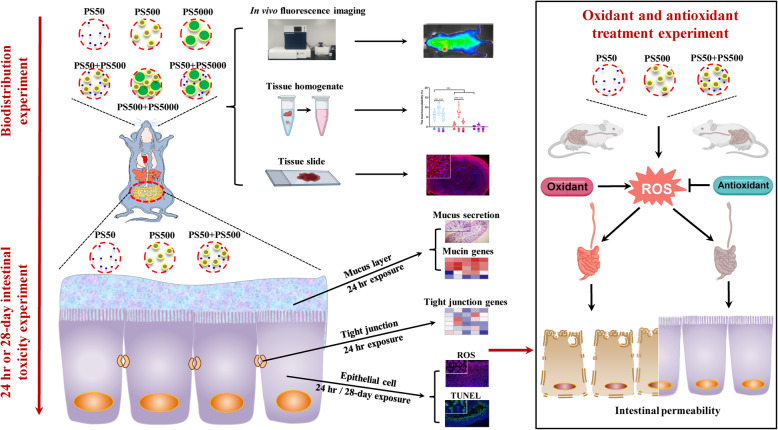
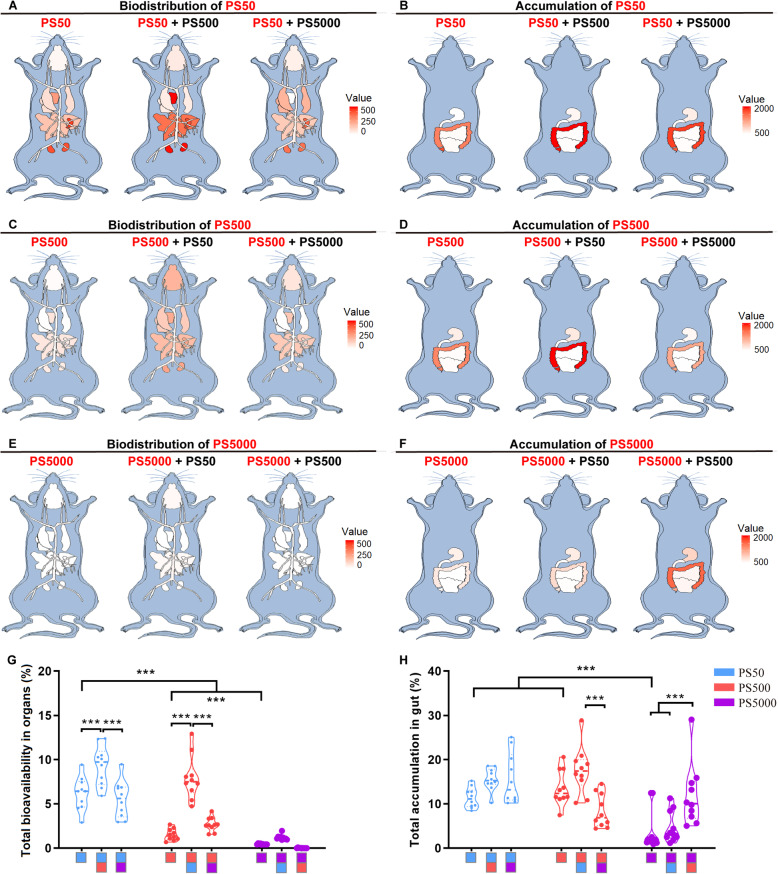
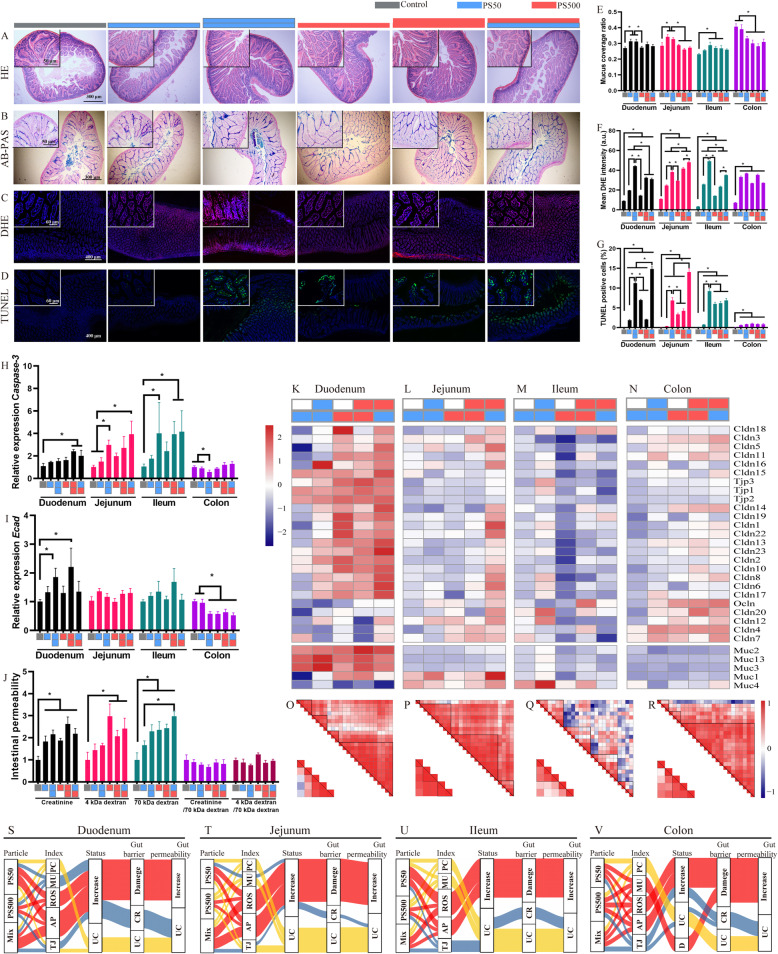
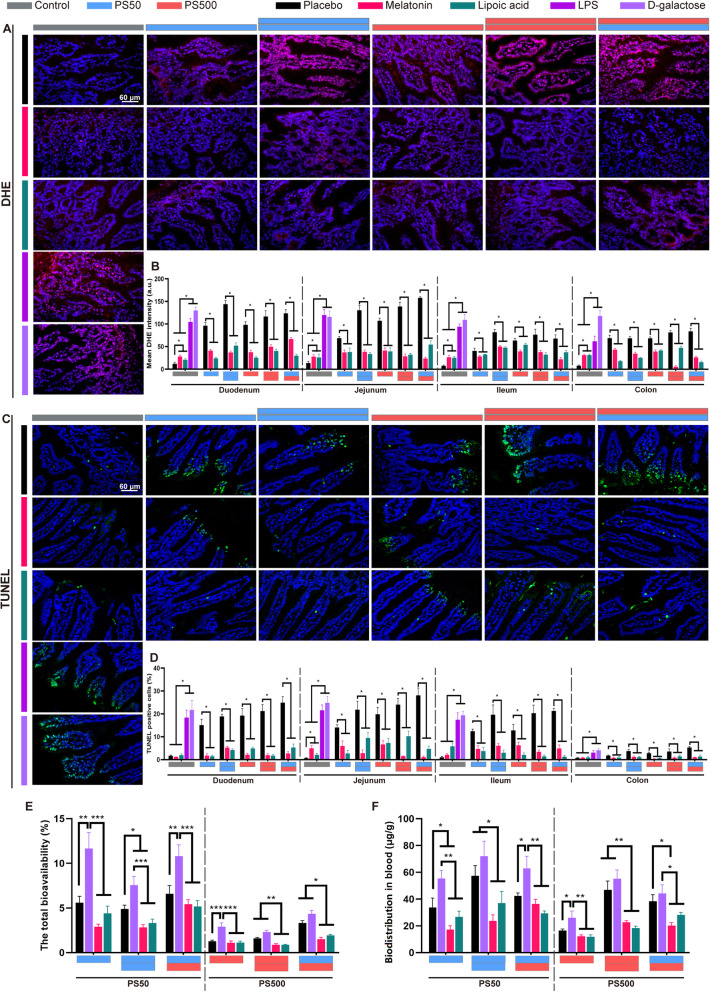
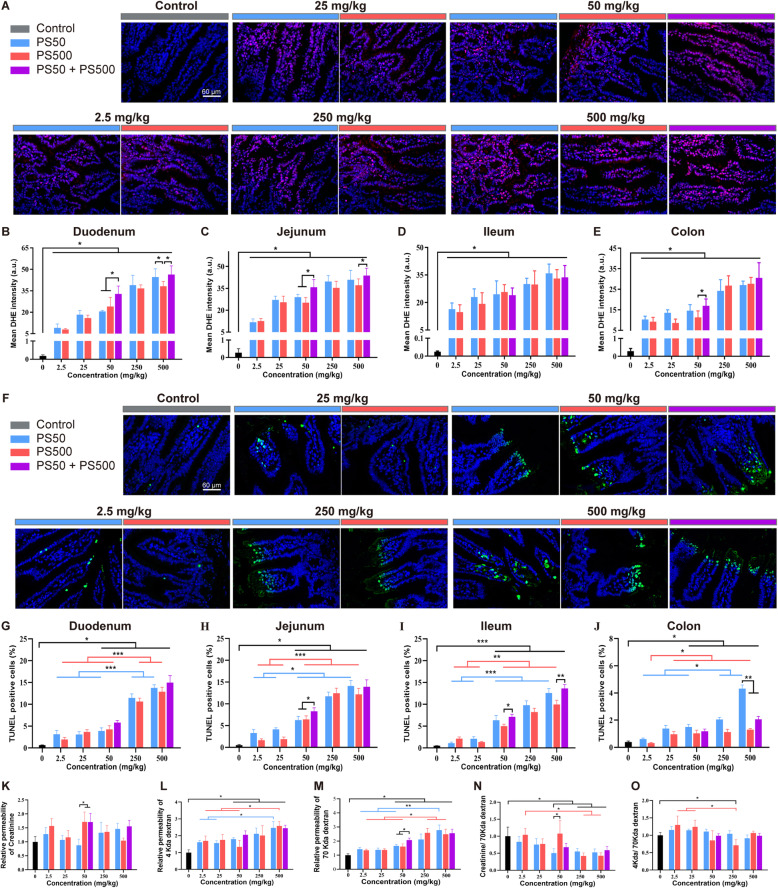
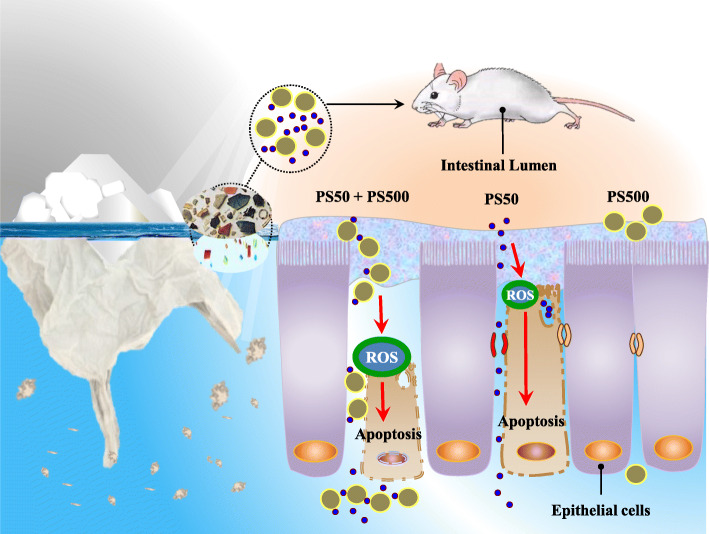
Background: Micro- and nanoplastic pollution has become a global environmental problem. Nanoplastics in the environment are still hard to detect because of analysis technology limitations. It is believed that when microplastics are found in the environment, more undetected nanoplastics are around. The current “microplastic exposure” is in fact the mixture of micro- and nanoplastic exposures. Therefore, the biological interaction between organisms among different sizes of micro- and nanoplastics should not be neglected. Results: We measured the biodistribution of three polystyrene (PS) particles (50 nm PS, PS50; 500 nm PS, PS500; 5000 nm PS, PS5000) under single and co-exposure conditions in mice. We explored the underlying mechanisms by investigating the effects on three major components of the intestinal barrier (the mucus layer, tight junctions and the epithelial cells) in four intestine segments (duodenum, jejunum, ileum and colon) of mice. We found that the amounts of both PS500 and PS5000 increased when they were co-exposed with PS50 for 24 h in the mice. These increased amounts were due primarily to the increased permeability in the mouse intestines. We also confirmed there was a combined toxicity of PS50 and PS500 in the mouse intestines. This manifested as the mixture of PS50 and PS500 causing more severe dysfunction of the intestinal barrier than that caused by PS50 or PS500 alone. We found that the combined toxicity of PS micro- and nanoplastics on intestinal barrier dysfunction was caused primarily by reactive oxygen species (ROS)-mediated epithelial cell apoptosis in the mice. These findings were further confirmed by an oxidants or antioxidants pretreatment study. In addition, the combined toxicity of PS micro- and nanoplastics was also found in the mice after a 28-day repeated dose exposure. Conclusions: There is a combined toxicity of PS50 and PS500 in the mouse intestines, which was caused primarily by ROS-mediated epithelial cell apoptosis in the mice. Considering that most recent studies on PS micro- and nanoplastics have been conducted using a single particle size, the health risks of exposure to PS micro- and nanoplastics on organisms may be underestimated.
Overview
The claims and statistics of this paper haven’t been checked yet.
Free: it reads the open-access text and checks the first 5 claims that cite a source we can check. Create a free account to check every claim.
Integrity signals
Registry
Cites
Statistics
Figures
Verification
Claims the paper makes
The claims and statistics of this paper haven’t been checked yet.
Free: it reads the open-access text and checks the first 5 claims that cite a source we can check. Create a free account to check every claim.
Claims other papers make about this one
Each is checked against this paper’s own text: does it say what the citing paper says it does?
The cited source says what the claim attributes to it.
In the citing paper
“the absorption and distribution of MNPs increase as particle size decreases.26”
From Microplastics and Nanoplastics in Atheromas and Cardiovascular Events (2024) · cites this paper as [26]
Self-check
Percentages, sums and reported differences re-computed from the paper’s own numbers.
The self-check needs the paper’s full text.
Citations
Cites
Production, use, and fate of all plastics ever made
Geyer, R., Jambeck, J. R., & Law, K. L. (2017) · Science Advances · doi:10.1126/sciadv.1700782 · Cited by 18,606
Human Consumption of Microplastics
Cox, K. D., Covernton, G. A., Davies, H. L., Dower, J. F., Juanes, F., & Dudas, S. E. (2019) · Environmental Science & Technology · doi:10.1021/acs.est.9b01517 · Cited by 2,745
Microplastics in Freshwaters and Drinking Water: Critical Review and Assessment of Data Quality
Koelmans, A. A., Mohamed Nor, N. H., Hermsen, E., Kooi, M., Mintenig, S. M., & De France, J. (2019) · Water Research · doi:10.1016/j.watres.2019.02.054 · Cited by 2,535 · cited 1×
“Considering the combined effects of PS micro- and nanoplastics on the intestine, and that most human PS micro- and nanoplastics intake appears as a mixture of multiple sizes of PS particles [5, 6], the health risk of PS particles exposure in humans should not be underestimated.”
BackgroundLu, Y., Zhang, Y., Deng, Y., Jiang, W., Zhao, Y., Geng, J., Ding, L., & Ren, H. (2016) · Environmental Science & Technology · doi:10.1021/acs.est.6b00183 · Cited by 2,125 · cited 1×
“This indicates a ubiquitous size dependency in regard to PS bioavailability in organisms, as similar effects have also been reported in zebrafish [20], early juvenile (See figure on previous page.”
Interactions of microplastic debris throughout the marine ecosystem
Galloway, T. S., Cole, M., & Lewis, C. (2017) · Nature Ecology & Evolution · doi:10.1038/s41559-017-0116 · Cited by 1,955 · cited 1×
“and nanoplastics (size < 100 nm), based upon the diameter of the plastic particles [2].”
BackgroundDetection of Various Microplastics in Human Stool: A Prospective Case Series
Schwabl, P., Köppel, S., Königshofer, P., Bucsics, T., Trauner, M., Reiberger, T., & Liebmann, B. (2019) · Annals of Internal Medicine · doi:10.7326/m19-0618 · Cited by 1,951 · cited 1×
“These compounds have also been detected in human stool [9].”
BackgroundOyster reproduction is affected by exposure to polystyrene microplastics
Sussarellu, R., Suquet, M., Thomas, Y., Lambert, C., Fabioux, C., Pernet, M. E. J., Le Goïc, N., Quillien, V., Mingant, C., Epelboin, Y., et al. (2016) · Proceedings of the National Academy of Sciences · doi:10.1073/pnas.1519019113 · Cited by 1,827
The intestinal epithelial barrier: a therapeutic target?
Odenwald, M. A., & Turner, J. R. (2017) · Nature Reviews Gastroenterology & Hepatology · doi:10.1038/nrgastro.2016.169 · Cited by 1,288 · cited 8×
“When the tight junctions or epithelial cells were damaged, a high capacity and permissive pathway termed “unrestricted” pathway formed [41, 44].”
BackgroundInfluentialImpacts of polystyrene microplastic on the gut barrier, microbiota and metabolism of mice
Jin, Y., Lu, L., Tu, W., Luo, T., & Fu, Z. (2019) · Science of The Total Environment · doi:10.1016/j.scitotenv.2018.08.353 · Cited by 1,100 · cited 2×
“It has been reported that PS5000 decreases mucus secretion in the colon [13].”
BackgroundMethodSenathirajah, K., Attwood, S., Bhagwat, G., Carbery, M., Wilson, S., & Palanisami, T. (2021) · Journal of Hazardous Materials · doi:10.1016/j.jhazmat.2020.124004 · Cited by 1,092 · cited 1×
“A much higher estimate proposes 5 g microplastics with diameters below 1mm per week for human ingestion [57].”
Background
Research works printed but not linked: 1
- Team RC R: a language and environment for statistical computing, R foundationfor statistical computing, Vienna, Austria 2020
Cited by
Microplastics and Nanoplastics in Atheromas and Cardiovascular Events
Marfella, R., Prattichizzo, F., Sardu, C., Fulgenzi, G., Graciotti, L., Spadoni, T., D’Onofrio, N., Scisciola, L., La Grotta, R., Frigé, C., et al. (2024) · New England Journal of Medicine · doi:10.1056/nejmoa2309822 · Cited by 1,223
Yuan, Z., Nag, R., & Cummins, E. (2022) · Science of The Total Environment · doi:10.1016/j.scitotenv.2022.153730 · Cited by 789
The Minderoo-Monaco Commission on Plastics and Human Health
Landrigan, P. J., Raps, H., Cropper, M., Bald, C., Brunner, M., Canonizado, E. M., Charles, D., Chiles, T. C., Donohue, M. J., Enck, J., et al. (2023) · Annals of Global Health · doi:10.5334/aogh.4056 · Cited by 471
Shan, S., Zhang, Y., Zhao, H., Zeng, T., & Zhao, X. (2022) · Chemosphere · doi:10.1016/j.chemosphere.2022.134261 · Cited by 506
The potential impacts of micro-and-nano plastics on various organ systems in humans
Ali, N., Katsouli, J., Marczylo, E. L., Gant, T. W., Wright, S., & Bernardino de la Serna, J. (2024) · eBioMedicine · doi:10.1016/j.ebiom.2023.104901 · Cited by 407
“82 In another study in mice model, exposure to PE-MPs (10 – 150 μ m) at various concentrations (2, 20, and 200 μ g/g for 5 weeks) showed more gut microbial species, increased bacterial abundance, fl ora diversity and increased pro-in fl ammatory cytokines secretion.”
BackgroundInfluentialThe potential toxicity of microplastics on human health
Zhao, B., Rehati, P., Yang, Z., Cai, Z., Guo, C., & Li, Y. (2024) · Science of The Total Environment · doi:10.1016/j.scitotenv.2023.168946 · Cited by 350
Micro- and nanoplastics: A new cardiovascular risk factor?
Zhu, X., Wang, C., Duan, X., Liang, B., Genbo Xu, E., & Huang, Z. (2023) · Environment International · doi:10.1016/j.envint.2022.107662 · Cited by 273
Self-citationDong, X., Liu, X., Hou, Q., & Wang, Z. (2023) · Science of The Total Environment · doi:10.1016/j.scitotenv.2022.158686 · Cited by 264
Accumulation of polystyrene microplastics induces liver fibrosis by activating cGAS/STING pathway
Shen, R., Yang, K., Cheng, X., Guo, C., Xing, X., Sun, H., Liu, D., Liu, X., & Wang, D. (2022) · Environmental Pollution · doi:10.1016/j.envpol.2022.118986 · Cited by 264
Liang, B., Huang, Y., Zhong, Y., Li, Z., Ye, R., Wang, B., Zhang, B., Meng, H., Lin, X., Du, J., et al. (2022) · Journal of Hazardous Materials · doi:10.1016/j.jhazmat.2022.128459 · Cited by 237
Self-citationLu, Y.-Y., Li, H., Ren, H., Zhang, X., Huang, F., Zhang, D., Huang, Q., & Zhang, X. (2022) · Journal of Hazardous Materials · doi:10.1016/j.jhazmat.2021.126770 · Cited by 219
Yang, D., Zhu, J., Zhou, X., Pan, D., Nan, S., Yin, R., Lei, Q., Ma, N., Zhu, H., Chen, J., et al. (2022) · Environment International · doi:10.1016/j.envint.2022.107362 · Cited by 213
Consequences of nano and microplastic exposure in rodent models: the known and unknown
da Silva Brito, W. A., Mutter, F., Wende, K., Cecchini, A. L., Schmidt, A., & Bekeschus, S. (2022) · Particle and Fibre Toxicology · doi:10.1186/s12989-022-00473-y · Cited by 195
“apoptosis, and intestinal permeability, and pre-treatment with antioxidants reversed the effects [23].”
BackgroundInfluentialAmereh, F., Amjadi, N., Mohseni-Bandpei, A., Isazadeh, S., Mehrabi, Y., Eslami, A., Naeiji, Z., & Rafiee, M. (2022) · Environmental Pollution · doi:10.1016/j.envpol.2022.120174 · Cited by 193
Zhang, Z., Chen, W., Chan, H., Peng, J., Zhu, P., Li, J., Jiang, X., Zhang, Z., Wang, Y., Tan, Z., et al. (2024) · Journal of Hazardous Materials · doi:10.1016/j.jhazmat.2023.132503 · Cited by 184
Huang, Y., Liang, B., Li, Z., Zhong, Y., Wang, B., Zhang, B., Du, J., Ye, R., Xian, H., Min, W., et al. (2023) · Particle and Fibre Toxicology · doi:10.1186/s12989-023-00556-4 · Cited by 183
“In our previous work, we observed PS-NP-induced PD-like neurodegeneration in the SNc and striatum of mouse brains, linked to disrupted mitochondrial energy metabolism [15, 33].”
BackgroundInfluentialSelf-citationLett, Z., Hall, A., Skidmore, S., & Alves, N. J. (2021) · Environmental Pollution · doi:10.1016/j.envpol.2021.118190 · Cited by 188
Zeng, G., Li, J., Wang, Y., Su, J., Lu, Z., Zhang, F., & Ding, W. (2024) · Environmental Pollution · doi:10.1016/j.envpol.2024.123473 · Cited by 168
Hu, L., Zhao, Y., & Xu, H. (2022) · Journal of Hazardous Materials · doi:10.1016/j.jhazmat.2022.129652 · Cited by 177
Yang, Z., Wang, M., Feng, Z., Wang, Z., Lv, M., Chang, J., Chen, L., & Wang, C. (2023) · Current Pollution Reports · doi:10.1007/s40726-023-00273-8 · Cited by 168
Yang, Z., DeLoid, G. M., Zarbl, H., Baw, J., & Demokritou, P. (2023) · NanoImpact · doi:10.1016/j.impact.2023.100481 · Cited by 184
Micro-nanoplastics and cardiovascular diseases: evidence and perspectives
Prattichizzo, F., Ceriello, A., Pellegrini, V., Grotta, R. L., Graciotti, L., Olivieri, F., Paolisso, P., D’Agostino, B., Iovino, P., Balestrieri, M. L., et al. (2024) · European Heart Journal · doi:10.1093/eurheartj/ehae552 · Cited by 188
“45,47,57,67 59 The ability of MNPs to alter the cardiac structure was also confirmed in human-derived organoids.”
Jia, R., Han, J., Liu, X., Li, K., Lai, W., Bian, L., Yan, J., & Xi, Z. (2023) · Toxics · doi:10.3390/toxics11020127 · Cited by 178
“Similarly, oral ingestion of PS nano/microplastics reduces mucus secretion and the level of Muc1 gene transcription in the colon of mice [55,91], and exposure to PS-MPs through drinking water also resulted in such effects in the colon of mice [47,92].”
BackgroundWu, Q., Liu, C., Liu, D., Wang, Y., Qi, H., Liu, X., Zhang, Y., Chen, H., Zeng, Y., & Li, J. (2023) · The Science of The Total Environment · doi:10.1016/j.scitotenv.2023.169260 · Cited by 169
Djouina, M., Vignal, C., Dehaut, A., Caboche, S., Hirt, N., Waxin, C., Himber, C., Beury, D., Hot, D., Dubuquoy, L., et al. (2022) · Environmental Research · doi:10.1016/j.envres.2022.113230 · Cited by 148
Hong, Y., Wu, S., & Wei, G. (2023) · The Science of The Total Environment · doi:10.1016/j.scitotenv.2023.166258 · Cited by 146
Reproductive toxicity of micro- and nanoplastics
Yang, S., Li, M., Kong, R. Y. C., Li, L., Li, R., Chen, J., & Lai, K. P. (2023) · Environment International · doi:10.1016/j.envint.2023.108002 · Cited by 123
Chen, X., Yang, X., Chen, Y., Yang, F., Zhu, M., Xu, J. M., & Jin, C. (2024) · The Science of The Total Environment · doi:10.1016/j.scitotenv.2024.173458 · Cited by 135
Self-citationMarcelino, R. C., Cardoso, R. M., Domingues, E. L., Gonçalves, R. V., Lima, G. D. D. A., & Novaes, R. D. (2022) · Life Sciences · doi:10.1016/j.lfs.2022.120404 · Cited by 121
Long-term exposure to polystyrene microplastics triggers premature testicular aging
Wu, D., Zhang, M., Bao, T. T., & Lan, H. (2023) · Particle and Fibre Toxicology · doi:10.1186/s12989-023-00546-6 · Cited by 121
“MPs pollution has threatened animals and humans health, such as liver fibrosis and disruption of intestinal barrier [12, 13].”
BackgroundDeLoid, G. M., Cao, X., Bitounis, D., Singh, D., Llopis, P. D. L. M. M., Buckley, B., & Demokritou, P. (2021) · Food and Chemical Toxicology · doi:10.1016/j.fct.2021.112609 · Cited by 110
Hu, L., Feng, X., Lan, Y., Zhang, J., Nie, P., & Xu, H. (2024) · Journal of Hazardous Materials · doi:10.1016/j.jhazmat.2024.133587 · Cited by 120
Schmidt, A., Brito, W. A. D. S., Singer, D., Mühl, M., Berner, J., Saadati, F., Wolff, C. M., Miebach, L., Wende, K., & Bekeschus, S. (2023) · Particle and Fibre Toxicology · doi:10.1186/s12989-023-00513-1 · Cited by 115
“Mice exposed to a single dose of NMP mixtures with different sizes by oral gavage demonstrated increased biodistribution in organs and ROS generation, while pre-treatment with antioxidants reversed the effects [59].”
BackgroundXu, D., Ma, Y., Peng, C., Gan, Y., Wang, Y., Chen, Z., Han, X., & Chen, Y. (2023) · Environment International · doi:10.1016/j.envint.2023.107968 · Cited by 112
Palaniappan, S., Sadacharan, C. M., & Rostama, B. (2021) · Exposure and Health · doi:10.1007/s12403-021-00419-3 · Cited by 113
Materials, surfaces, and interfacial phenomena in nanoplastics toxicology research
Martin, L. M. A., Gan, N., Wang, E., Merrill, M., & Xu, W. (2021) · Environmental Pollution · doi:10.1016/j.envpol.2021.118442 · Cited by 108
Nanoplastic Toxicity: Insights and Challenges from Experimental Model Systems
Schröter, L., & Ventura, N. (2022) · Small · doi:10.1002/smll.202201680 · Cited by 99
Micro(nano)plastics and Their Potential Impact on Human Gut Health: A Narrative Review
Covello, C., Vincenzo, F. D., Cammarota, G., & Pizzoferrato, M. (2024) · Current Issues in Molecular Biology · doi:10.3390/cimb46030168 · Cited by 110
“…mL/kg body weight for 28 days), there was a combined exposure that caused intestinal barrier dysfunction by the apoptosis of epithelial cells through ROS production in the mouse model [97] In terms of toxicity, a mention must be made of the ability of MPs to transport pollutants and plasticizers.”
BackgroundHe, Y., & Yin, R. (2023) · Journal of Applied Toxicology · doi:10.1002/jat.4510 · Cited by 110
“Based on rodent model-used studies, MPs and NPs have been detected to accumulate in exposed testes, ovaries, placenta, and other reproductive tissues and organs after exposure (Gruber et al., 2020; Jin et al., 2021, 2022; Liang et al., 2021; Wei et al., 2022; Zhou et al., 2022).”
BackgroundMethodResultInfluentialWu, Y., Yao, Y., Bai, H., Shimizu, K., Li, R., & Zhang, C. (2022) · The Science of The Total Environment · doi:10.1016/j.scitotenv.2022.158851 · Cited by 104
Völkl, M., Jérôme, V., Weig, A. R., Jasinski, J., Meides, N., Strohriegl, P., Scheibel, T., & Freitag, R. (2022) · Journal of Hazardous Materials · doi:10.1016/j.jhazmat.2022.128955 · Cited by 101
Polystyrene Microplastics Induce Oxidative Stress in Mouse Hepatocytes in Relation to Their Size
Zou, H., Qu, H., Bian, Y., Sun, J. G., Wang, T., Ma, Y., Yuan, Y., Gu, J., Bian, J., & Liu, Z. (2023) · International Journal of Molecular Sciences · doi:10.3390/ijms24087382 · Cited by 113
“The dosage and size of PS-MPs were determined according to previous studies [15,20,49].”
BackgroundMethodWang, J., Yang, Y., Shi, Y., Wei, L., Gao, L., & Liu, M. (2024) · Environment International · doi:10.1016/j.envint.2024.108523 · Cited by 110
Zha, H., Han, S., Tang, R., Cao, D., Chang, K., & Li, L. (2024) · Environmental Science and Ecotechnology · doi:10.1016/j.ese.2024.100428 · Cited by 102
Luo, T., Wang, D., Zhao, Y., Li, X., Yang, G., & Jin, Y. (2022) · The Science of The Total Environment · doi:10.1016/j.scitotenv.2022.156884 · Cited by 101
Journey of micronanoplastics with blood components
Rajendran, D., & Chandrasekaran, N. (2023) · RSC Advances · doi:10.1039/d3ra05620a · Cited by 104
Tang, X., Fan, X., Xu, T., He, Y., Chi, Q., Li, Z., & Li, S. (2022) · Environmental Toxicology · doi:10.1002/tox.23618 · Cited by 96
“logical mechanism of PS-NPs-induced tissue damage mainly focuses on organs such as the liver, kidney and intestine.(1,12) The immune system is a crucial defense line for the organism to resist diseases and”
BackgroundWang, B., Liang, B., Huang, Y., Li, Z., Zhang, B., Du, J., Ye, R., Xian, H., Deng, Y., Xiu, J., et al. (2023) · Advanced Science · doi:10.1002/advs.202205876 · Cited by 102
Self-citationLi, L., Lv, X., He, J., Zhang, L., Li, B., Zhang, X., Liu, S., & Zhang, Y. (2024) · Ecotoxicology and Environmental Safety · doi:10.1016/j.ecoenv.2023.115749 · Cited by 87
Self-citationZhou, L., Yu, Z., Xia, Y., Cheng, S., Gao, J., SUN, W. M., Jiang, X., Zhang, J., Mao, L., Qin, X., et al. (2022) · Environment International · doi:10.1016/j.envint.2022.107220 · Cited by 88
Abelouah, M. R., Ben-Haddad, M., Hajji, S., De-la-Torre, G. E., Taoufyq, A., Oualid, J. A., Bannı, M., & Alla, A. A. (2022) · Marine Pollution Bulletin · doi:10.1016/j.marpolbul.2022.113969 · Cited by 86
Xie, S., Zhang, R., Li, Z., Liu, C., Chen, Y., & Yu, Q. (2022) · Environmental Research · doi:10.1016/j.envres.2022.114861 · Cited by 96
Wen, J., Sun, H., Yang, B. V., Song, E., & Song, Y. (2024) · Journal of Hazardous Materials · doi:10.1016/j.jhazmat.2024.133583 · Cited by 100
Microplastic and nanoplastic transfer, accumulation, and toxicity in humans
Stapleton, P. A. (2021) · Current Opinion in Toxicology · doi:10.1016/j.cotox.2021.10.001 · Cited by 90
The potential toxicity of polystyrene nanoplastics to human trophoblasts in vitro
Hu, J., Zhu, Y., Zhang, J., Xu, Y., Wu, J., Zeng, W., Lin, Y., & Liu, X. (2022) · Environmental Pollution · doi:10.1016/j.envpol.2022.119924 · Cited by 87
Hazas, M. L. D. L., Boughanem, H., & Dávalos, A. (2021) · Advances in Nutrition · doi:10.1093/advances/nmab154 · Cited by 88
Xu, Z., Shen, J., Lin, L., Chen, J., Wang, L., Deng, X., Wu, X., Zheng, L., Zhang, Y., Yu, R., et al. (2023) · Environment International · doi:10.1016/j.envint.2023.108296 · Cited by 88
Self-citationShi, W., Wu, N., Zhang, Z., Liu, Y., Chen, J., & Li, J. (2023) · The Science of The Total Environment · doi:10.1016/j.scitotenv.2023.169469 · Cited by 89
Microplastics as an emerging threat to human health: An overview of potential health impacts
Luo, Q., Tan, H., Ye, M., Jho, E. H., Wang, P., Iqbal, B., Zhao, X., Shi, H., Lu, H., & Li, G. (2025) · Journal of Environmental Management · doi:10.1016/j.jenvman.2025.125915 · Cited by 98
Gao, L., Xiong, X., Chen, C., Luo, P., Li, J., Gao, X., Huang, L., & Li, L. (2023) · Ecotoxicology and Environmental Safety · doi:10.1016/j.ecoenv.2023.115618 · Cited by 88
Du, B., Li, T., He, H., Xu, X., Zhang, C., Lu, X., Wang, Y., Cao, J., Lu, Y., Liu, Y., et al. (2024) · International Journal of Nanomedicine · doi:10.2147/ijn.s466258 · Cited by 88
“27,28 31 However, current research on the toxicity of PS MPs/NPs mainly focuses on single sizes with different exposure doses or surface modifications, or using in vitro cell model or simple model organisms, which limits the prediction of potential toxicity of MPs and NPs to mammals, especially…”
Zou, H., Chen, Y., Qu, H., Sun, J. G., Wang, T., Ma, Y., Yuan, Y., Bian, J., & Liu, Z. (2022) · International Journal of Molecular Sciences · doi:10.3390/ijms232214411 · Cited by 84
“It was determined that 5 μm MPs accumulated in the mouse renal tubular epithelium and entered the renal tissue, which is consistent with previous findings [32].”
Li, H., Yang, Z., Jiang, F., Li, L., Li, Y., Zhang, M., Qi, Z., Ma, R., Zhang, Y., Fang, J., et al. (2022) · Environmental Research · doi:10.1016/j.envres.2022.114623 · Cited by 82
Genotoxic and neurotoxic potential of intracellular nanoplastics: A review
Casella, C., & Ballaz, S. (2024) · Journal of Applied Toxicology · doi:10.1002/jat.4598 · Cited by 88
“The alteration of proteostasis and autophagy pathways resulting from intracellular NPL trafficking lead to the development of inflammatory and OS disorders (Khan & Jia, 2023; Li et al., 2022; Liang et al., 2021; Qin et al., 2022; Wang et al., 2023; Xu et al., 2021).”
Shin, H. S., Lee, S. H., Moon, H. J., So, Y. H., Lee, H. R., Lee, E.-H., & Jung, E.-M. (2023) · Journal of Hazardous Materials · doi:10.1016/j.jhazmat.2023.131465 · Cited by 74
Bruno, A., Dovizio, M., Milillo, C., Aruffo, E., Pesce, M., Gatta, M., Chiacchiaretta, P., Carlo, P. D., & Ballerini, P. (2024) · Cancers · doi:10.3390/cancers16173079 · Cited by 77
“In mice receiving drinking water containing PS-NPs (0.1, 1, and 10 mg/L) for 8 consecutive months, the levels of pro-inflammatory cytokines IL-6, TNF-α , and IL-1 β were markedly elevated [133].”
BackgroundInfluentialBai, J. Y., Wang, Y., Deng, S., Yang, Y., Chen, S., & Wu, Z. (2024) · Particle and Fibre Toxicology · doi:10.1186/s12989-024-00595-5 · Cited by 77
“For instance, studies have found that MPs cause intestinal barrier dysfunction through ROS-mediated apoptosis of epithelial cells [34].”
BackgroundZhai, Z., Yang, Y., Chen, S., & Wu, Z. (2024) · Environmental Health Perspectives · doi:10.1289/ehp13913 · Cited by 80
“32 Exposure to PS-MS have been reported to induce anxiety-like behavior in mice by modulating gut microbe homeostasis.”
Tyc, H. J., Kłodnicka, K., Teresińska, B., Karpiński, R., Flieger, J., & Baj, J. (2025) · International Journal of Molecular Sciences · doi:10.3390/ijms26136156 · Cited by 81
Lu, C., Liang, Y., Cheng, Y., Peng, C., Sun, Y., Liu, K., Li, Y.-Q., Lou, Y., Jiang, X., Zhang, A., et al. (2023) · Food and Chemical Toxicology · doi:10.1016/j.fct.2023.113970 · Cited by 78
Self-citationZambrano-Pinto, M. V., Castillo, R. T., Riera, M. A., Maddela, N. R., Luque, R., & Rodríguez-Díaz, J. M. (2023) · The Science of The Total Environment · doi:10.1016/j.scitotenv.2023.168244 · Cited by 74
Micro(nano)plastics: an Emerging Burden for Human Health
Donisi, I., Colloca, A., Anastasio, C., Balestrieri, M. L., & D’Onofrio, N. (2024) · International Journal of Biological Sciences · doi:10.7150/ijbs.99556 · Cited by 73
“MNPs exerted toxic effect on mice intestinal cells causing ROS-mediated apoptotic cell death and are responsible of cardiovascular performances impairment, hemolysis and increased thrombotic risk at macro-and micro-vascular level [17,18].”
BackgroundHan, Q., Gao, X. Z., Wang, S., Wei, Z., Wang, Y., Xu, K., Zhu, Z., & Chen, M. (2022) · Toxicology Letters · doi:10.1016/j.toxlet.2023.07.013 · Cited by 65
Ding, R., Ma, Y., Li, T., Sun, M., Sun, Z., & Duan, J. (2023) · The Science of The Total Environment · doi:10.1016/j.scitotenv.2023.163144 · Cited by 71
DeLoid, G. M., Yang, Z., Bazina, L., Kharaghani, D., Sadrieh, F., & Demokritou, P. (2024) · Journal of Hazardous Materials · doi:10.1016/j.jhazmat.2024.134706 · Cited by 65
Micro(nano)plastics in food system: potential health impacts on human intestinal system
Wen, S., Zhao, Y., Wang, M., Yuan, H., & Xu, H. (2022) · Critical Reviews in Food Science and Nutrition · doi:10.1080/10408398.2022.2116559 · Cited by 67
“And the mice pre-treated with anti-oxidants (melatonin and lipoic acid) before the MNPs exposure showed the scavenged ROS and subsequent decreased epithelial cell apoptosis, furthering determine the critical role oxidative stress in damaged gut physical barrier (Liang et al. 2021).”
BackgroundMicroplastics in animal nutrition: Occurrence, spread, and hazard in animals
Khan, A. A., Qadeer, A., Wajid, A., Ullah, Q., Rahman, S. U., Ullah, K., Safi, S. Z., Ticha, L., Skalíčková, S., Chilala, P., et al. (2024) · Journal of Agriculture and Food Research · doi:10.1016/j.jafr.2024.101258 · Cited by 80
Ly, N. H., Kim, M., Lee, H., Lee, C.-M., Son, S. J., Zoh, K., Vasseghian, Y., & Joo, S. (2022) · Journal of nanostructure in chemistry · doi:10.1007/s40097-022-00506-0 · Cited by 74
“For example, many researchers have underestimated the health risks of PS MNP particles that have jointly induced intestinal barrier dysfunction by reactive oxygen speciesmediated epithelial cell apoptosis and lipid storage distribution [44, 134].”
BackgroundMethodDeLoid, G. M., Cao, X., Coreas, R., Bitounis, D., Singh, D., Zhong, W., & Demokritou, P. (2022) · Environmental Science & Technology · doi:10.1021/acs.est.2c03195 · Cited by 63
Chen, Y., Williams, A. M., Gordon, E., Rudolph, S., Longo, B. N., Li, G., & Kaplan, D. L. (2023) · Nanomedicine Nanotechnology Biology and Medicine · doi:10.1016/j.nano.2023.102680 · Cited by 80
Yang, S., Lee, S., Lee, Y., Cho, J.-H., Kim, S. H., Ha, E.-S., Jung, Y., Chung, H. Y., Kim, M., Kim, H. S., et al. (2023) · Free Radical Biology and Medicine · doi:10.1016/j.freeradbiomed.2023.08.010 · Cited by 64
Fontes, B. L. M., Souza, L. C. D. S. E., de Oliveira, A. P. S. D. S., da Fonseca, R. N., Neto, M. P. C., & Pinheiro, C. R. (2024) · Journal of Toxicology and Environmental Health Part B · doi:10.1080/10937404.2024.2330962 · Cited by 69
“…processes, production of reactive oxygen species (ROS), cell apoptosis, and cytotoxicity in rodents (Deng et al. 2017; Ding et al. 2021; Z. Li et al. 2020; Liang et al. 2021; Y. F. Yang et al. 2019) and Drosophila melanogaster (Kholy and Naggar 2023; Tu et al. 2023; Urbisz et al. 2024).”
BackgroundWang, Y., Wang, S., Xu, T., Cui, W., Xu, S., & Xu, S. (2022) · The Science of The Total Environment · doi:10.1016/j.scitotenv.2022.153413 · Cited by 58
Collin‐Faure, V., Vitipon, M., Torres, A., Tanyeres, O., Dalzon, B., & Rabilloud, T. (2023) · Frontiers in Immunology · doi:10.3389/fimmu.2023.1092743 · Cited by 64
Thakur, R., Joshi, V., Sahoo, G. C., Jindal, N., Tiwari, R. R., & Rana, S. (2025) · Toxicology Reports · doi:10.1016/j.toxrep.2025.102013 · Cited by 87
Chen, J., Chen, X., Yang, X., Shen, H., Tang, Y., Zhang, T., & Xu, J. (2023) · Ecotoxicology and Environmental Safety · doi:10.1016/j.ecoenv.2023.114520 · Cited by 63
Self-citationWang, S., Wu, H., Shi, X., Wang, Y., & Xu, S. (2023) · The Science of The Total Environment · doi:10.1016/j.scitotenv.2023.165461 · Cited by 62
Lu, Y.-Y., Lu, L., Ren, H.-Y., Hua, W., Zheng, N., Huang, F.-Y., Wang, J., Tian, M., & Huang, Q. (2024) · Environment International · doi:10.1016/j.envint.2024.108532 · Cited by 61
Pouring Hot Water Through Drip Bag Releases Thousands of Microplastics into Coffee
Wang, H.-P., Huang, X.-H., Chen, J., Dong, M., Zhang, Y.-Y., & Qin, L. (2022) · Food Chemistry · doi:10.1016/j.foodchem.2023.135717 · Cited by 62
“In recent years, many researchers have explored the toxicity of these MPs ( < 10 μ m) (Liang et al., 2021; Sun et al., 2021).”
Nano- and microplastic PBK modeling in the context of human exposure and risk assessment
Wardani, I., Nor, N. H. M., Wright, S., Kooter, I. M., & Koelmans, A. A. (2024) · Environment International · doi:10.1016/j.envint.2024.108504 · Cited by 62
Internalization and toxicity of polystyrene nanoplastics on inmortalized human neural stem cells
González, M. D. C., de Alba-Gonzalez, M., Torres-Ruíz, M., Iglesias-Hernández, P., Zapata, V., Terrón, M. C., Sachse, M., Morales, M., Martín-Folgar, R., Liste, I., et al. (2024) · Chemosphere · doi:10.1016/j.chemosphere.2024.141815 · Cited by 65
Zhang, Z., Meng, J., Tian, J., Li, N., Chen, Z. B., Yun, X., Song, D., Li, F., Duan, S., & Zhang, L. (2024) · Ecotoxicology and Environmental Safety · doi:10.1016/j.ecoenv.2024.117245 · Cited by 59
Is There Evidence of Health Risks From Exposure to Micro- and Nanoplastics in Foods?
Molina, E., & Benedé, S. (2022) · Frontiers in Nutrition · doi:10.3389/fnut.2022.910094 · Cited by 57
Effects of microplastic and engineered nanomaterials on inflammatory bowel disease: A review
Zhao, Y., Liu, S., & Xu, H. (2023) · Chemosphere · doi:10.1016/j.chemosphere.2023.138486 · Cited by 61
Lu, Y.-Y., Cao, M., Tian, M., & Huang, Q. (2022) · Journal of Applied Toxicology · doi:10.1002/jat.4378 · Cited by 63
“2023;43:262–271.wileyonlinelibrary.com/journal/jat et al., 2020; Liang et al., 2021; Wu et al., 2019).”
BackgroundMeng, X., Ge, L., Zhang, J., Xue, J., Gonzalez-Gil, G., Vrouwenvelder, J. S., & Li, Z. (2023) · The Science of The Total Environment · doi:10.1016/j.scitotenv.2023.164687 · Cited by 59
Huang, J., Sun, X., Wang, Y., Su, J., Li, G., Wang, X., Yang, Y., Zhang, Y., Li, B., Zhang, G., et al. (2023) · Ecotoxicology and Environmental Safety · doi:10.1016/j.ecoenv.2023.115447 · Cited by 58
Liang, B., Deng, Y., Zhong, Y., Chen, X., Huang, Y., Li, Z., Huang, X., Yang, X., Du, J., Ye, R., et al. (2024) · Advanced Science · doi:10.1002/advs.202401009 · Cited by 71
Self-citationLiang, B., Deng, Y., Huang, Y., Zhong, Y., Li, Z., Du, J., Ye, R., Feng, Y., Bai, R., Fan, B., et al. (2024) · ACS Nano · doi:10.1021/acsnano.4c03874 · Cited by 57
Self-citationMa, T., Liu, X., Xiong, T., Li, H., Zhou, Y., & Liang, J. (2023) · Ecotoxicology and Environmental Safety · doi:10.1016/j.ecoenv.2023.115403 · Cited by 55
Metadata
- Authors
- Liang, B., Zhong, Y., Huang, Y., Lin, X., Liu, J., Lin, L., Hu, M., Jiang, J., Dai, M., Wang, B., Zhang, B., Meng, H., Lelaka, J. J. J., Sui, H., Yang, X., & Huang, Z.
- Affiliations
- Southern Medical University (CN)
- Guangdong Pharmaceutical University (CN)
- China National Center for Food Safety Risk Assessment (CN)
- Corresponding author
- Yang, Xingfen
- Huang, Zhenlie
- Venue
- Particle and Fibre Toxicology
- Published
- 2021-06-07
- Volume
- 18
- Issue
- 1
- Pages
- 20-20
- ISSN
- 1743-8977 (ISSN-L)
- PMC
- PMC8186235
- OpenAlex
- W3171670357
- Cited by
- 508
- References
- 60
- Citations by year
- 2026: 124 · 2025: 119 · 2024: 119 · 2023: 85 · 2022: 52 · 2021: 7
- FWCI
- 16.30
- Type
- journal article
- Language
- en
- Open access
- gold
- doi.org
- Licence
- cc-by
- creativecommons.org/licenses/by/4.0 (tdm)
- creativecommons.org/licenses/by/4.0 (vor)
- Locations
- Particle and Fibre Toxicology (publishedVersion, cc-by)
- PubMed Central (publishedVersion, cc-by)
- PubMed (publishedVersion)
- DOAJ (DOAJ: Directory of Open Access Journals) (submittedVersion, cc-by-sa)
- Funders
- National Key R&D Program of China, Ministry of Science and Technology of China (2018YFC1602103, 2018YFC1603101)
- National Natural Science Foundation of China (82073519, 81872601)
- Guangdong Key R&D Program, Ministry of Science and Technology of Guangdong Province (2019B020210002)
- Natural Science Foundation of Guangdong Province (2018A030313068)
- Guangdong Provincial Key Laboratory of Tropical Disease Research (2017B030314035)
- National Training Program of Innovation and Entrepreneurship for Undergraduates (S202012121157, S202012121055, S201912121024)
- NMPA Key Laboratory for Safety Evaluation of Cosmetics
- Topics
- Physical Sciences › Environmental Science › Pollution › Microplastics and Plastic Pollution
- Physical Sciences › Environmental Science › Health, Toxicology and Mutagenesis › Environmental Toxicology and Ecotoxicology
- Physical Sciences › Materials Science › Materials Chemistry › Nanoparticles: synthesis and applications
- Keywords
- polystyrene, microplastics, nanoplastics, intestinal barrier dysfunction, reactive oxygen species, epithelial apoptosis, co-exposure toxicity, tissue distribution, intestinal permeability, tight junctions, mucus layer, repeated-dose exposure, oxidative stress
- MeSH terms
- Microplastics, Animals, Epithelial Cells, Plastics, Polystyrenes, Tissue Distribution, Apoptosis, Reactive Oxygen Species, Mice
About these checks
Registry, retraction, Cites and statistics results are computed, not judged, with one exception: a printed reference that no index lists is read once by a model before it counts as a citation error. Claims are extracted by a model and kept only when their quote appears verbatim in the text; each cited source is then checked, with a model’s help, for whether it says what the claim relies on. Those verdicts can be wrong — read the claim’s quote and the cited source before relying on one.
Statistics and arithmetic are recomputed, not judged.
Confidence bands are shown only for fields calibrated on our annotated test set. None is calibrated yet, so no band is shown.
What counts as a claim ›How we measure confidence ›How we check this ›
Are you an author, or do you see a problem with this page? Request a review
Data sources
Bibliographic data: Semantic Scholar, OpenAlex, Crossref.
Contains information from the Semantic Scholar Academic Graph Datasets, made available under the ODC Attribution License (ODC-BY 1.0).
Semantic Scholar’s data is described in: Kinney, R., et al. (2023). The Semantic Scholar Open Data Platform. arXiv:2301.10140.
