

Underestimated health risks: polystyrene micro- and nanoplastics jointly induce intestinal barrier dysfunction by ROS-mediated epithelial cell apoptosis
Open accessThe DOI matches its Crossref record; 60 of the 60 references it cites were found in a registry or an index.
Abstract
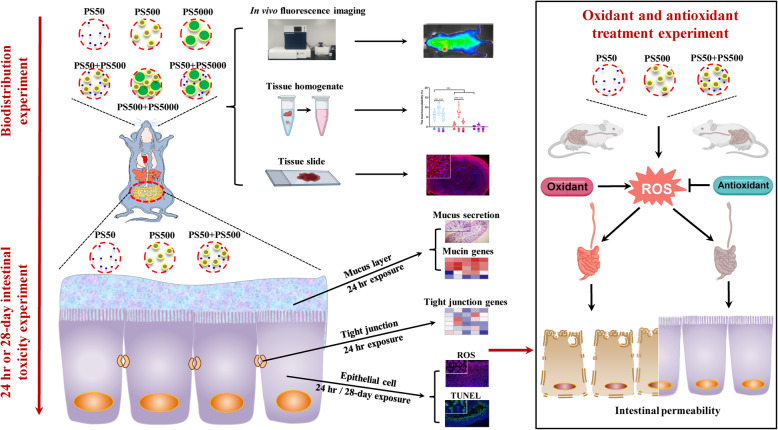
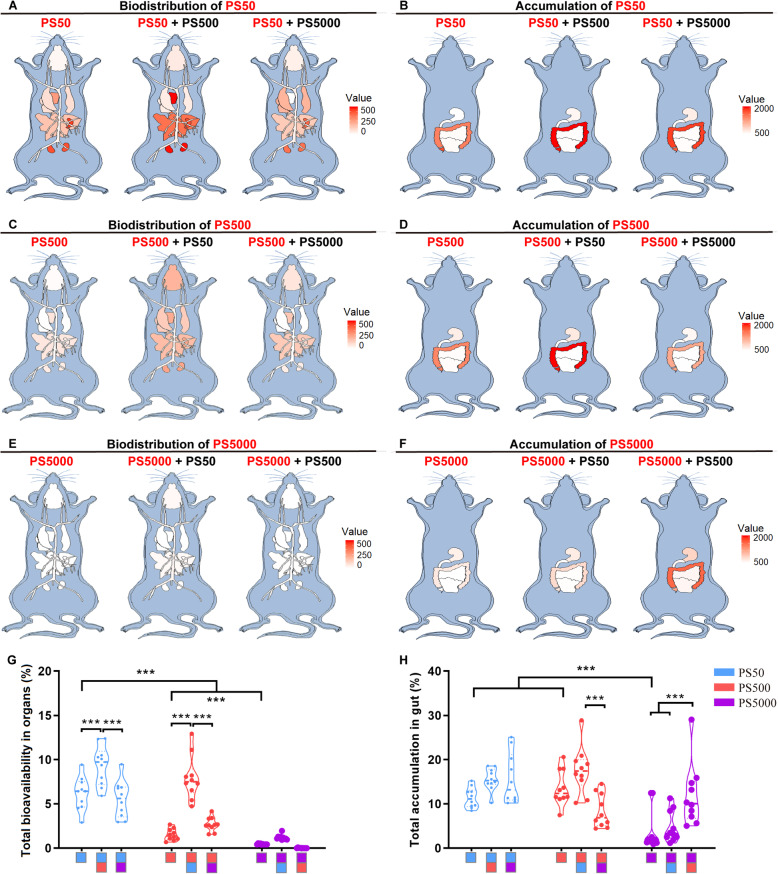
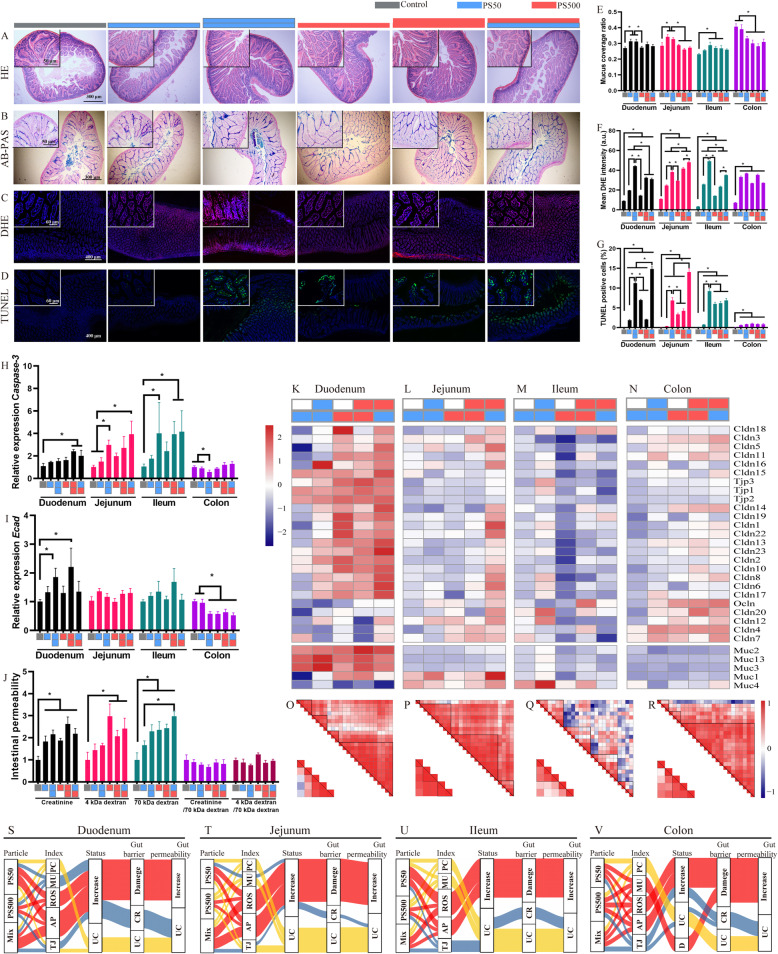
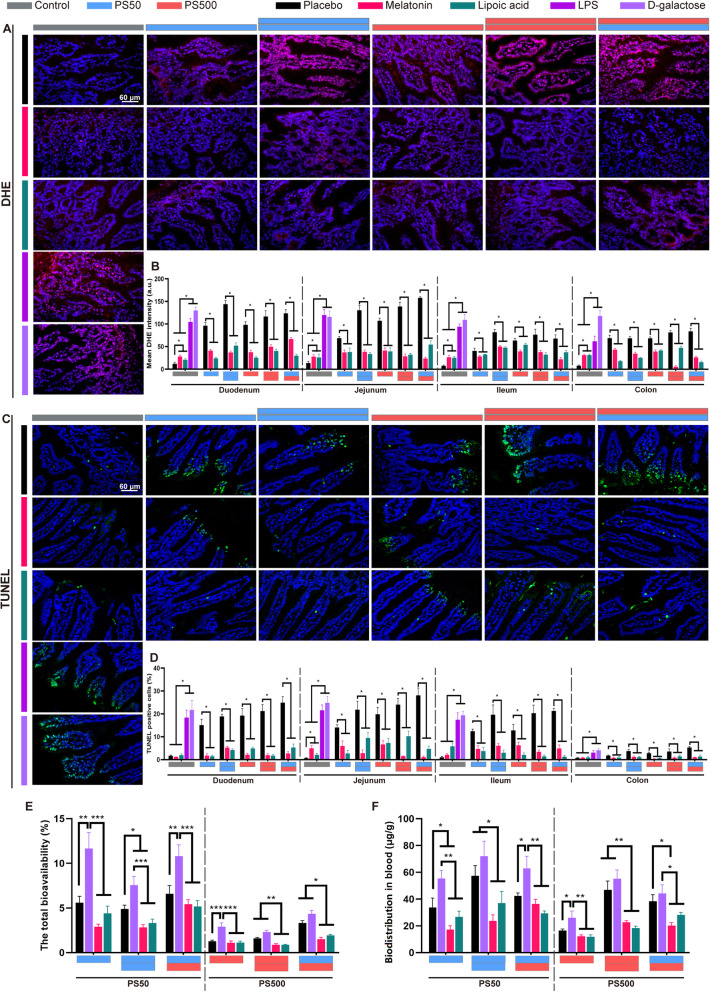
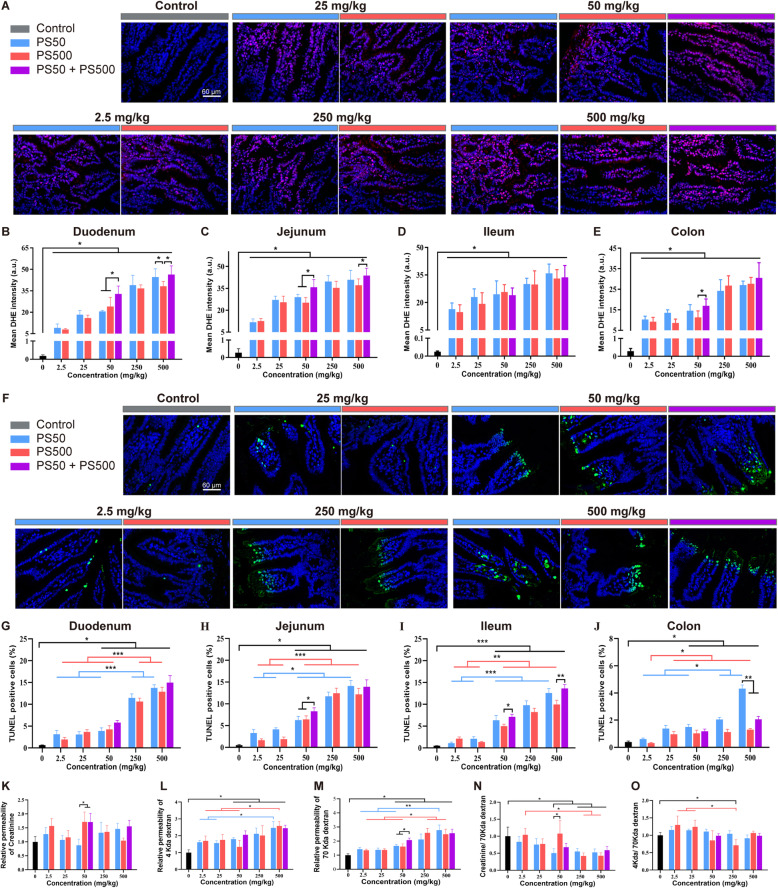
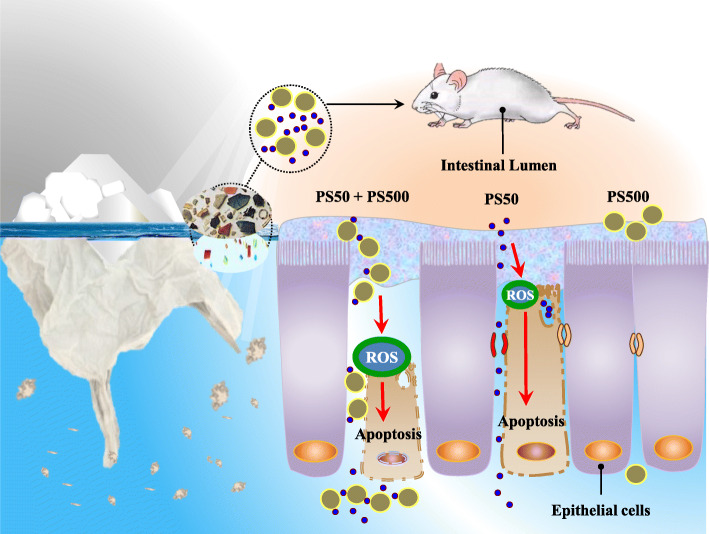
Background: Micro- and nanoplastic pollution has become a global environmental problem. Nanoplastics in the environment are still hard to detect because of analysis technology limitations. It is believed that when microplastics are found in the environment, more undetected nanoplastics are around. The current “microplastic exposure” is in fact the mixture of micro- and nanoplastic exposures. Therefore, the biological interaction between organisms among different sizes of micro- and nanoplastics should not be neglected. Results: We measured the biodistribution of three polystyrene (PS) particles (50 nm PS, PS50; 500 nm PS, PS500; 5000 nm PS, PS5000) under single and co-exposure conditions in mice. We explored the underlying mechanisms by investigating the effects on three major components of the intestinal barrier (the mucus layer, tight junctions and the epithelial cells) in four intestine segments (duodenum, jejunum, ileum and colon) of mice. We found that the amounts of both PS500 and PS5000 increased when they were co-exposed with PS50 for 24 h in the mice. These increased amounts were due primarily to the increased permeability in the mouse intestines. We also confirmed there was a combined toxicity of PS50 and PS500 in the mouse intestines. This manifested as the mixture of PS50 and PS500 causing more severe dysfunction of the intestinal barrier than that caused by PS50 or PS500 alone. We found that the combined toxicity of PS micro- and nanoplastics on intestinal barrier dysfunction was caused primarily by reactive oxygen species (ROS)-mediated epithelial cell apoptosis in the mice. These findings were further confirmed by an oxidants or antioxidants pretreatment study. In addition, the combined toxicity of PS micro- and nanoplastics was also found in the mice after a 28-day repeated dose exposure. Conclusions: There is a combined toxicity of PS50 and PS500 in the mouse intestines, which was caused primarily by ROS-mediated epithelial cell apoptosis in the mice. Considering that most recent studies on PS micro- and nanoplastics have been conducted using a single particle size, the health risks of exposure to PS micro- and nanoplastics on organisms may be underestimated.
Overview
The claims and statistics of this paper haven’t been checked yet.
Free: it reads the open-access text and checks the first 5 claims that cite a source we can check. Create a free account to check every claim.
Integrity signals
Registry
Cites
Statistics
Figures
Verification
Claims the paper makes
The claims and statistics of this paper haven’t been checked yet.
Free: it reads the open-access text and checks the first 5 claims that cite a source we can check. Create a free account to check every claim.
Claims other papers make about this one
Each is checked against this paper’s own text: does it say what the citing paper says it does?
The cited source says what the claim attributes to it.
In the citing paper
“the absorption and distribution of MNPs increase as particle size decreases.26”
From Microplastics and Nanoplastics in Atheromas and Cardiovascular Events (2024) · cites this paper as [26]
Self-check
Percentages, sums and reported differences re-computed from the paper’s own numbers.
The self-check needs the paper’s full text.
Citations
Cites
Production, use, and fate of all plastics ever made
Geyer, R., Jambeck, J. R., & Law, K. L. (2017) · Science Advances · doi:10.1126/sciadv.1700782 · Cited by 18,606
Human Consumption of Microplastics
Cox, K. D., Covernton, G. A., Davies, H. L., Dower, J. F., Juanes, F., & Dudas, S. E. (2019) · Environmental Science & Technology · doi:10.1021/acs.est.9b01517 · Cited by 2,745
Microplastics in Freshwaters and Drinking Water: Critical Review and Assessment of Data Quality
Koelmans, A. A., Mohamed Nor, N. H., Hermsen, E., Kooi, M., Mintenig, S. M., & De France, J. (2019) · Water Research · doi:10.1016/j.watres.2019.02.054 · Cited by 2,535 · cited 1×
“Considering the combined effects of PS micro- and nanoplastics on the intestine, and that most human PS micro- and nanoplastics intake appears as a mixture of multiple sizes of PS particles [5, 6], the health risk of PS particles exposure in humans should not be underestimated.”
BackgroundLu, Y., Zhang, Y., Deng, Y., Jiang, W., Zhao, Y., Geng, J., Ding, L., & Ren, H. (2016) · Environmental Science & Technology · doi:10.1021/acs.est.6b00183 · Cited by 2,125 · cited 1×
“This indicates a ubiquitous size dependency in regard to PS bioavailability in organisms, as similar effects have also been reported in zebrafish [20], early juvenile (See figure on previous page.”
Interactions of microplastic debris throughout the marine ecosystem
Galloway, T. S., Cole, M., & Lewis, C. (2017) · Nature Ecology & Evolution · doi:10.1038/s41559-017-0116 · Cited by 1,955 · cited 1×
“and nanoplastics (size < 100 nm), based upon the diameter of the plastic particles [2].”
BackgroundDetection of Various Microplastics in Human Stool: A Prospective Case Series
Schwabl, P., Köppel, S., Königshofer, P., Bucsics, T., Trauner, M., Reiberger, T., & Liebmann, B. (2019) · Annals of Internal Medicine · doi:10.7326/m19-0618 · Cited by 1,951 · cited 1×
“These compounds have also been detected in human stool [9].”
BackgroundOyster reproduction is affected by exposure to polystyrene microplastics
Sussarellu, R., Suquet, M., Thomas, Y., Lambert, C., Fabioux, C., Pernet, M. E. J., Le Goïc, N., Quillien, V., Mingant, C., Epelboin, Y., et al. (2016) · Proceedings of the National Academy of Sciences · doi:10.1073/pnas.1519019113 · Cited by 1,827
The intestinal epithelial barrier: a therapeutic target?
Odenwald, M. A., & Turner, J. R. (2017) · Nature Reviews Gastroenterology & Hepatology · doi:10.1038/nrgastro.2016.169 · Cited by 1,288 · cited 8×
“When the tight junctions or epithelial cells were damaged, a high capacity and permissive pathway termed “unrestricted” pathway formed [41, 44].”
BackgroundInfluentialImpacts of polystyrene microplastic on the gut barrier, microbiota and metabolism of mice
Jin, Y., Lu, L., Tu, W., Luo, T., & Fu, Z. (2019) · Science of The Total Environment · doi:10.1016/j.scitotenv.2018.08.353 · Cited by 1,100 · cited 2×
“It has been reported that PS5000 decreases mucus secretion in the colon [13].”
BackgroundMethodSenathirajah, K., Attwood, S., Bhagwat, G., Carbery, M., Wilson, S., & Palanisami, T. (2021) · Journal of Hazardous Materials · doi:10.1016/j.jhazmat.2020.124004 · Cited by 1,092 · cited 1×
“A much higher estimate proposes 5 g microplastics with diameters below 1mm per week for human ingestion [57].”
Background
Research works printed but not linked: 1
- Team RC R: a language and environment for statistical computing, R foundationfor statistical computing, Vienna, Austria 2020
Cited by
Items 401–500 of 517
Microplastics in the web of life: Unseen impacts on ecosystems and human health
Barman, A., Ghosh, S., Saha, N. C., & Bej, S. (2026) · Next research. · doi:10.1016/j.nexres.2026.101731 · Cited by 1
Wang, R., Wang, C., Hu, B., Zhang, Q., Xu, J., Huang, Y., Jin, D., & Wan, S. (2026) · ACS Applied Materials & Interfaces · doi:10.1021/acsami.6c02042 · Cited by 1
Self-citationSoil Contamination by Micro- and Nano Plastics: Emerging Environmental Threats
Ilango, S., Devarajan, G., & Malathi, K. (2026) · Lecture notes in nanoscale science and technology · doi:10.1007/978-3-032-17963-0_8 · Cited by 1
Kozan, G., Üstündağ, H., & Kara, A. (2026) · Frontiers in Pharmacology · doi:10.3389/fphar.2026.1824052 · Cited by 1
“Liang et al. (2021) demonstrated that exposure to PS micro-and nanoplastics was correlated with ROS generation, epithelial cell apoptosis, and increased intestinal permeability, suggesting that nanoplastics may exert systemic effects by modulating cellular communication networks.”
Jiang, W., Ni, M., Wu, M., Xu, T., Liu, Y., Zhu, C., Wang, J., & Lv, S.-W. (2026) · Environmental Pollution · doi:10.1016/j.envpol.2026.128509 · Cited by 1
Xu, X., Li, M., Wu, B., Tao, C., Zhang, B., Si, W., Wang, W., Yuan, Y., Wang, D., Zhang, A., et al. (2026) · Environment International · doi:10.1016/j.envint.2026.110358 · Cited by 1
Self-citationLai, T.-C., & Chen, C. H. (2026) · Ecotoxicology and Environmental Safety · doi:10.1016/j.ecoenv.2026.120398 · Cited by 1
Han, S., Miao, J., Sun, W., Dang, X., Chen, Q., Sun, X., Yue, Y., Diao, J., & Zhu, W. (2026) · Molecules · doi:10.3390/molecules31132268 · Cited by 1
“Previous studies have reported that microplastics can damage the intestinal barrier of organisms to a certain extent [10] and serve as effective carriers of other pollutants.”
Lee, S. (2026) · Toxicology Mechanisms and Methods · doi:10.1080/15376516.2026.2699441 · Cited by 1
Micro- and Nanoplastics—Impact on Marine Vertebrates and Invertebrates
Tandel, B. R., Mayur, T., Tushar, D., Tandel, V. R., Mitul, T., Nehal, T., Tandel, R. A., Timbadia, S., Varsha, L., & Bhoomi, P. (2025) · Sustainable development goals series · doi:10.1007/978-981-96-5047-7_14 · Cited by 1
Maldonado, C. A. O., Mares, D. M., Garcia, P. C., Gamez, M. F., Flores, M. R., Friudenberg, A. D., Peterson, R. L., & Harr, J. C. (2025) · Microplastics · doi:10.3390/microplastics4040096 · Cited by 2
“PS MP exposure leads to higher levels of reactive oxygen species [15,35,54] and increased expression of GST-4 (glutathione S-transferase 4, an enzyme that is involved in clearing ROS) in nematodes [45,56].”
Li, Y., Bao, S., Huang, P., Wang, J., Li, H., Liu, Y., Wang, K., Du, J., Yan, L., Pan, G., et al. (2026) · Journal of Applied Toxicology · doi:10.1002/jat.70196 · Cited by 2
“This finding is consistent with disruption of the intestinal mucosal physical barrier induced by NMPs reported in a mouse gavage model (Liang et al. 2021).”
Labi, M. M., Begum, M., Jaman, M. F., Alam, S., Uddin, M. N., Islam, S., Sultana, N. N., & Rahman, M. M. (2026) · Emerging contaminants · doi:10.1016/j.emcon.2026.100708 · Cited by 1
Zhang, Q., Li, Y., Sun, D., Fan, X., Sun, J., Jiang, X., & Bai, W. (2026) · Journal of Agricultural and Food Chemistry · doi:10.1021/acs.jafc.6c03768 · Cited by 1
Polystyrene nanoplastics perturb cell membranes and induce bystander uptake of diverse cargos
Wang, T., Yan, Y., Xu, T., Li, X., Xu, C., Wei, Y., Liu, H., Yang, K., & Yuan, B. (2026) · Journal of Hazardous Materials · doi:10.1016/j.jhazmat.2026.143303 · Cited by 2
Gustafson, B., Kosari, N., Brothersen, E., Mosher, M., & Zhou, A. (2026) · Sensors · doi:10.3390/s26175375 · Cited by 2
“…a deliberate starting point: short-term exposures allow mechanistic endpoints such as ROS generation and apoptosis to be isolated and attributed to specific particle properties without the confounding effects of cell adaptation, proliferation, or passage that accompany longer cultures [3,13–15].”
Fan, X., Xu, T., Peng, L., Tang, X., Chi, Q., Li, Z., Shi, G., & Li, S. (2022) · Research Square · doi:10.21203/rs.3.rs-1907903/v1 · Cited by 1
A Soothing Study: There is No Evidence of Microplastics in MeconiumPreprint
Li, Z., Jiamin, W., Jiaxin, D., Haixia, S., Jieling, W., Zhong, Y., Liang, B., Xian, H., Yuji, H., Ye, R., et al. (2022) · SSRN Electronic Journal · doi:10.2139/ssrn.4183302
Self-citationMartin, L. M. A., Marbach, S., Zimba, P. V., Liu, Q., & Xu, W. (2023) · SSRN Electronic Journal · doi:10.2139/ssrn.4463193
Martin, L. M. A., Marbach, S., Zimba, P. V., Liu, Q., & Xu, W. (2023) · SSRN Electronic Journal · doi:10.2139/ssrn.4500254
SILVA, R. V. C. D., Campos, C. M. C. G. Q., Mota, A. B., Tenório, C. P. F., Schiavi, D., de Menezes, G. X., de Assis, H. P., Salerno, P. R., Rodrigues, S. M., & Costa, Y. D. (2024) · Research Society and Development · doi:10.33448/rsd-v13i2.44992
Sensitive to organs or sensitivity of analytical equipment?
Sivan, G., Pamanji, R., & Srikanth, K. (2024) · Journal of Hazardous Materials · doi:10.1016/j.jhazmat.2024.134722
Huang, Z., Xian, H., Li, Z., Dai, M., & Tang, S. (2024) · Toxicology Letters · doi:10.1016/j.toxlet.2024.07.769
Self-citation3-D models for studying microplastics effects on humans
Aryanfar, Y., Wu, Y.-S., Alcaraz, J. L. G., Vidal, R. P. I., Osman, A. I., Manap, A. S. A., Afzal, S., Saikia, T., Chen, Z., Lu, K., et al. (2025) · Elsevier eBooks · doi:10.1016/b978-0-443-22210-8.00027-4
Use of agriculture product and bioindicator
Iannone, A., Mignogna, D., Carriera, F., Fiore, C. D., & Avino, P. (2025) · Elsevier eBooks · doi:10.1016/b978-0-443-22210-8.00028-6
Elevated Levels of Foreign Microparticles in the Blood of Patients with Digestive System Diseases
Song, J., Wang, Y., Ji, Y., Wang, M., Yuan, Q., Lv, C., & Chen, L. (2025) · Environmental Science & Technology Letters · doi:10.1021/acs.estlett.5c00262
A Comprehensive Review on Micro and Nanoplastics-Mediated Cardiovascular Complications
Chakraborty, J., Shil, D., Roy, S. D., Samanta, A., Bhowmik, D., Roy, S., Adhikari, M. D., & Jodder, P. K. (2025) · Sustainable development goals series · doi:10.1007/978-981-96-5047-7_18
Knupflemacher, D. S., García, X. A. S., Ovando, F. Á., Rojas, C. R., García, R. R. R., & Mejía, A. M. (2025) · Revista Científica de Salud y Desarrollo Humano · doi:10.61368/r.s.d.h.v6i2.675
Huang, P., Jia, T., & Li, J. (2025) · Toxicology Letters · doi:10.1016/j.toxlet.2025.07.594
Tokunaga, Y., Tanaka, K., Suzuki, G., Shimizu, N., Ikenaka, Y., Nakayama, S. M. M., & Ishizuka, M. (2025) · Journal of Hazardous Materials Letters · doi:10.1016/j.hazl.2025.100166 · Cited by 1
Collard, F., Hallanger, I. G., Harju, M., & Herzke, D. (2025) · Ecotoxicology and Environmental Safety · doi:10.1016/j.ecoenv.2025.119591
Wu, D., Zhang, M., Bao, T. T., & Lan, H. (2024) · Figshare · doi:10.6084/m9.figshare.26613296
He, Y., Yu, T., Li, H., Sun, Q., Chen, M., Lin, Y., Dai, J., Wang, W., Li, Q., & Ju, S. (2024) · Figshare · doi:10.6084/m9.figshare.26942370
He, Y., Yu, T., Li, H., Sun, Q., Chen, M., Lin, Y., Dai, J., Wang, W., Li, Q., & Ju, S. (2024) · Figshare · doi:10.6084/m9.figshare.26942373
Huang, Y., Liang, B., Li, Z., Zhong, Y., Wang, B., Zhang, B., Du, J., Ye, R., Xian, H., Min, W., et al. (2024) · Figshare · doi:10.6084/m9.figshare.24628161
Self-citationHuang, Y., Liang, B., Li, Z., Zhong, Y., Wang, B., Zhang, B., Du, J., Ye, R., Xian, H., Min, W., et al. (2023) · Figshare · doi:10.6084/m9.figshare.24628027
Self-citationHe, Y., Yu, T., Li, H., Sun, Q., Chen, M., Lin, Y., Dai, J., Wang, W., Li, Q., & Ju, S. (2024) · Figshare · doi:10.6084/m9.figshare.26942367
Wu, D., Zhang, M., Bao, T. T., & Lan, H. (2024) · Figshare · doi:10.6084/m9.figshare.26613302
Wu, D., Zhang, M., Bao, T. T., & Lan, H. (2024) · Figshare · doi:10.6084/m9.figshare.26613299
Polystyrene Nanoplastics Induce Mitochondrial Dysfunction and Hepatic Fibrosis Via Oxidative StressPreprint
Qiang, S., Huang, Y., Wang, Y., Jiao, L., Luo, Y., Li, S., Gu, H., Wang, Z., Zhang, Y., Wu, X., et al. (2025) · SSRN Electronic Journal · doi:10.2139/ssrn.5391979
Self-citationNanoplastics in Fermented Foods: A Review of the Fate, Interactions, and Health ImplicationsPreprint
Flores, E. K., Navarro, M. A., Salcedo, C. A. C., Taburada, E. Y., Amores, K. L. S., Ceballos, M. W. G., & Cagay, A. V. (2025) · SSRN Electronic Journal · doi:10.2139/ssrn.5546296
Duivenvoorde, L., Bangaloore-Narayana, V. K., Barbero, F., Drobne, D., Fenoglio, I., Ganin, V., Holleboom, W. J., Kress, H., Kurešepi, E., Laforsch, C., et al. (2025) · SSRN Electronic Journal · doi:10.2139/ssrn.5784561
Other Industrial Chemicals and Microplastics
Fromme, H. (2026) · Springer eBooks · doi:10.1007/978-3-032-10036-8_6
Wu, Y., Song, Z., Lu, Y., Wang, X. Z., An, L., & Wang, H. (2026) · Water · doi:10.3390/w18020274
“Liang et al. [29] revealed synergistic interactions between different-sized plastics, where co-exposure to 50nm and 500nm polystyrene caused more severe intestinal barrier dysfunction in mice than either size alone.”
Fan, Y., Wang, T., & Wang, X. (2026) · TrAC Trends in Analytical Chemistry · doi:10.1016/j.trac.2026.118724
Ecological Concerns with Clear Aligner Therapy – A Scoping Review
Thundukattil, V., Babu, S. A., Salish, J. S., & Aryasree, S. (2026) · Kerala Dental Journal · doi:10.4103/ksdj.ksdj_39_25
Nagasawa, R., Inoue, S., Miyano, T., & Umezawa, M. (2026) · Environmental Science Advances · doi:10.1039/d6va00031b
Stojanović, Z. S., Drakulić, D., Martinović, J., Todorović, A., Veljković, F. M., Filipović, N., & Stojanović, I. G. (2026) · Microplastics · doi:10.3390/microplastics5010054 · Cited by 4
“The physical presence of MPs, especially larger, irregular particles, can abrade the mucosal lining, provoking localized inflammation and the generation of reactive oxygen species (ROS) that contribute to epithelial damage, a mechanism demonstrated with polystyrene MPs [27].”
Zhang, J., Ma, X., Zhang, X., Liu, K., Wang, Y., Wang, J., Wang, J., Ding, Y., Huo, J., Zhang, J., et al. (2026) · Environmental Research · doi:10.1016/j.envres.2026.124274 · Cited by 1
Lewis, A. A., Biales, A. D., Miller, C. N., Oshiro, W. M., Beasley, T. E., Schladweiler, M. C. J., Momplaisir, G.-M., Flick, R. L., See, M. J., Huang, W., et al. (2026) · Drug and Chemical Toxicology · doi:10.1080/01480545.2026.2643619
“…including polystyrene in human primary tissue explants, oral exposure to poly-ethylene (li et al., 2020; Wang et al., 2023) and polystyrene (he et al., 2022; liang et al., 2021; su et al., 2024) in mice, and oral exposure to mixtures of polyamide and polyethylene in rats (toto et al., 2022).”
Curcumin attenuates nanoparticle-induced renal injury via the PI3K/AKT signaling pathway
Rui, H., xu, X., Liu, S., Gao, X., Jiang, X., & Yu, W. (2026) · Food & Function · doi:10.1039/d6fo00638h
Kim, J., Oh, J., Choi, H., Choi, H., Kim, S. W., Kim, S. W., Kim, B., Cho, J. H., Lee, J., & Lee, D. C. (2026) · Environmental Toxicology · doi:10.1002/tox.70093
Wang, S., Kong, W., & Zhao, Y. (2026) · European Journal of Protistology · doi:10.1016/j.ejop.2026.126201
Zhang, Q., Li, Y., Zhou, W., Han, Y., Sun, D., Li, X., Jiang, X., Sun, J., & Bai, W. (2026) · Journal of Agricultural and Food Chemistry · doi:10.1021/acs.jafc.5c12302
Liang, Y., Zhang, W., Sun, Y., Zhai, A., Xing, S., Zeng, L., Huang, W., Zhang, Y., Wu, L., Cheng, W., et al. (2026) · Environment International · doi:10.1016/j.envint.2026.110268
Ryabova, Y. V., Mukhammadiyeva, G. F., Valova, Y. V., Khmel, A. O., Repina, E. F., Karimov, D. O., Akhmadeev, A. R., Khusnutdinova, N. Y., & Kudoyarov, E. R. (2026) · Hygiene and Sanitation · doi:10.47470/0016-9900-2026-105-3-321-326 · Cited by 1
Wu, L., Sun, Y., Li, W., Liu, P. F., Ding, Q., & Sun, R. (2026) · Journal of Applied Toxicology · doi:10.1002/jat.70217 · Cited by 1
Pu, R., Liu, Y., Zou, B., Zhang, X., Wang, X., Yin, H., Jia, X., & Bi, Y. (2026) · Journal of Applied Toxicology · doi:10.1002/jat.70228
Toxicity of Environmentally Relevant Micro- and Nanoplastic Exposure on Liver Cell Models
Marcellus, K. A., Scur, M., Wade, M. G., & Gill, S. (2026) · Microplastics · doi:10.3390/microplastics5020086
Hu, X., Yuan, X., Cao, X., Su, J., Zhang, P., Guo, Y., Zhang, F., & Ding, W. (2026) · Environment & Health · doi:10.1021/envhealth.5c00830
Hua, W., Che, Z., Lu, Y.-Y., Zhu, W., Qiao, Y., Luo, L., Tian, M., & Huang, Q. (2026) · Toxicology Research · doi:10.1093/toxres/tfag033
Mohsin, U. M. J. U., Ting, K. N., Fang, C.-M., Tshai, K. Y., Selvam, S. B., Gibbins, C., Marsh, G. E., & Lee, M. K. (2026) · Life Sciences Medicine and Biomedicine · doi:10.28916/lsmb.10.1.2026.206
“Although MPs are the primary focus of this review, it is crucial to address the growing body of evidence suggesting that NPs may also penetrate the respiratory system, reaching alveolar regions and causing epithelial disruptions (Annangi et al., 2023; Cary et al., 2023; Liang et al., 2021).”
Microplastic’s Effects on Gene Expression and Microflora of Mice Colon in Health and Acute Colitis
Zolotova, N. A., Кириллова, М. В., Цветков, И. С., Dzhalilova, D. S., Владимировна, О. Л., Тиграновна, Д. М., & Makarova, O. V. (2026) · Moscow University Biological Sciences Bulletin · doi:10.3103/s0096392525601248
Singh, J., Choudhary, M., Tyagi, V. K., Singh, R. R., Mishra, A., Chhoden, K., & Rao, Y. R. S. (2026) · Water Quality Research Journal · doi:10.2166/wqrj.2026.055
Hall, R., Colwill, M., Patel, K., Honap, S., & Poullis, A. P. (2026) · World Journal of Gastrointestinal Pathophysiology · doi:10.4291/wjgp.122786
“By contrast, Liang et al [79] demonstrated functional barrier impairment in mice following exposure to PS particle sized 50 nm, 500 nm and 5000 nm assessed using creatinine, 4 kDa dextran and 70 kDa dextran flux assays.”
InfluentialAlvarenga, L., Braga, R. A. M., de Souza, J. G., Maia, C. S. C., Mafra, D., Torres, E. A. F. D. S., & Damasceno, N. R. T. (2026) · The EPMA Journal · doi:10.1007/s13167-026-00462-7
Adamiak, K., Sułkowski, G., Dąbrowska‐Bouta, B., Synoradzki, K. J., Frontczak‐Baniewicz, M., & Strużyńska, L. (2026) · Frontiers in Toxicology · doi:10.3389/ftox.2026.1976947
Soto‐Bielicka, P., Sanz‐Alférez, S., Hazen, M. J., Freire, P. F., & Peropadre, A. (2026) · Cell Biology and Toxicology · doi:10.1007/s10565-026-10228-6
Micro- and Nanoplastics as Emerging Cardiovascular Risk Factors: A Systematic Review
Kaczyńska, D., Malik, E., Szemik, K., Pokrzywiński, S., Nowojewska, W., Mitręga, A., & Kufel, J. (2026) · Journal of Xenobiotics · doi:10.3390/jox16040131 · Cited by 1
Kuttykattil, A., van Goethem, H., Egea, R., Rocabert, A., Rodríguez-Garraus, A., Holme, S., Villacorta, A., García‐Rodríguez, A., Catalán, J., Marcos, R., et al. (2026) · Research Square · doi:10.21203/rs.3.rs-10316934/v1
Lafram, A., Mouiret, O., Naggar, Y. A., & Roky, R. (2026) · Toxicology Letters · doi:10.1016/j.toxlet.2026.113164
Biological Fate of Food-Pakaging Microplastics: Generation Processes and In Vivo ToxicityPreprint
Zhang, C., teng, H., Zhao, Y., Zheng, Y., Ai, C., Cao, H., Xiao, J., & Chen, L. (2026) · Research Square · doi:10.21203/rs.3.rs-10049392/v1
Dussol, M., Ménard, S., Papin, M., Boulée, M., Bard, V., Airaud, M., Fenel, D., Moriscot, C., Barreau, F., & Carrière, M. (2026) · Frontiers in Toxicology · doi:10.3389/ftox.2026.1839932
Potential health risks and toxicological implications of microplastics
Samuel, M. S. (2026) · Elsevier eBooks · doi:10.1016/b978-0-443-45619-0.00003-0
Zhang, C., Hu, J., Ma, S., Wang, Y., Liu, H., Zhang, Y., Yu, W., Gao, Y., & Lu, J. (2026) · Frontiers in Endocrinology · doi:10.3389/fendo.2026.1819705
“Most studies suggest an inverse relationship between MP size and toxicity (77).”
Osman, R., Kussai, M., Abdulrahman, U., & Lamrabet, O. (2026) · Journal of Environmental Science and Health Part C · doi:10.1080/26896583.2026.2707025 · Cited by 1
“22,34,35,37 One of the major concerns is how this inflammation may affect the function of enterocytes, the cells responsible for nutrient absorption.”
InfluentialFate, toxicology and Organ-on-a-chip methodology of nanoplastics in human body
Wang, Y., Lü, F., Fang, J., Li, G., Zhang, H., & He, P. (2026) · Toxicology · doi:10.1016/j.tox.2026.154550
Chen, A., Wang, X., Li, Z., Liu, Z., 何焕枝, Lai, P., Huang, R., Lu, M., & Alimujiang, A. (2026) · Environmental Pollution · doi:10.1016/j.envpol.2026.128848
Paz‐Cruz, E., Vela, L., Tamayo‐Trujillo, R., Mideros-Mora, C., Ayala, C., & Ruiz‐Pozo, V. A. (2026) · Microplastics · doi:10.3390/microplastics5030150
Scuto, M. C., Cinzia, L., Zerbo, G., Ledda, C., Isola, G., Musso, N., & Salinaro, A. T. (2026) · Antioxidants · doi:10.3390/antiox15080951 · Cited by 1
Lee, J., Lee, C., Paek, S., Ryu, D., Terki, F., Jeong, J., Kim, Y. K., Oh, J.-E., Cho, J.-H., Moon, E. J., et al. (2026) · Journal of Science Advanced Materials and Devices · doi:10.1016/j.jsamd.2026.101236
Nanoplastics exacerbate DSS-induced colitis via histone lactate axis
Tian, S., Hu, Y., Zou, J., Hao, N., Liu, J., Li, R., & Li, J. (2026) · Ecotoxicology and Environmental Safety · doi:10.1016/j.ecoenv.2026.120688
Self-citationChowdhury, M. M. A., Sharifuzzaman, S. M., Rashid, H., Nayan, M. N. I., Sarker, B. S., Saha, D., & Mamun, A. (2026) · SSRN Electronic Journal · doi:10.2139/ssrn.7351929
Micro- and nanoplastics in periodontitis: mechanistic pathways and clinical implications
Ganesan, B., & Shenoy, N. (2026) · Frontiers in Dental Medicine · doi:10.3389/fdmed.2026.1918044
“…reactive oxygen species (ROS), lipid peroxidation, and oxidative DNA damage while depleting superoxide dismutase, catalase, and glutathione peroxidase — effects that compound the redox burden already established by neutrophil hyperactivity and bacterial challenge in periodontitis (10, 32, 34).”
Pei, X.-Y., Wang, X. R., Liu, S., Cheng, M.-D., Li, L.-C., Li, S., Xu, H., & Zhang, Y. (2026) · Redox Biology · doi:10.1016/j.redox.2026.104368
Microplastics, Gut Microbiome and Obesity: A Narrative Review of Emerging Links and Mechanisms
Palkamsetti, S., & Gunde, S. (2026) · European Journal of Clinical Medicine · doi:10.24018/clinicmed.2026.7.4.70430
“MPs impact the gut microbiome through multiple pathways: • Physical disruption : MPs cause mechanical injury to the mucosal barrier, thinning the mucus layer and impairing epithelial integrity [19], [5], [26].”
Gou, W., Xie, Y., Xia, R., Gou, P., Cao, C., Luan, F.-J., Liu, B., & Li, Y. (2026) · Cardiovascular Toxicology · doi:10.1007/s12012-026-10180-1
“Alarmingly, plastic particles have now been detected in virtually all human organs [ 2–6].”
Fang, Z., Niu, F., Gao, P., Zheng, Z., Tan, X.-H., Xia, M., Li, K., Jin, Z., Zhang, Z., Guan, R., et al. (2026) · The World Journal of Men s Health · doi:10.5534/wjmh.260019
Pathogenesis of Micro/Nanoplastics in Mammalian Systems: Gut to Systemic Multi-Organ Dysfunction
Xu, Z., Huang, R., Wang, L., Zhang, Y., Sharf-Eldin, A. A., Xu, K., Moussa, M. G., Yu, R., Pramono, H., Wang, L., et al. (2026) · Research · doi:10.34133/research.1439
“As a result, their toxicological profile is primarily driven by prolonged physical interaction with the mucosal surface rather than intracellular accumulation [ 21 , 48 ].”
Al-Qahtani, E. A., Virk, P., Al-Harbi, R. M., Elobeid, M., Alterary, S. S., Al-nogair, W. I., Alanazi, M. Q., Bhat, R. S., Merghani, N. M., & Fouad, D. (2026) · PLoS ONE · doi:10.1371/journal.pone.0355931
“Plastic polymers commonly used in consumer products include polyethylene(PE), polystyrene (PS), and polyvinyl chloride(PVC) [7,8].”
Yang, R., Zhou, M., Yin, Y., Wu, Y., Wang, Q., Zhang, Y., Zhang, F., Jiang, Y., Chen, D., Zheng, X., et al. (2026) · Environment International · doi:10.1016/j.envint.2026.110506 · Cited by 1
Perinatal exposure to nano-polystyrene: deleterious imprinting on inflammatory bowel diseases
Airaud, M., Roldan, A., Cléac'h, J. L., Isoard, L., Mas, E., Carrière, M., Ménard, S., & Barreau, F. (2026) · Particle and Fibre Toxicology · doi:10.1186/s12989-026-00700-w
“However, Liang et al. [40] reported that oral exposure to PS50 particles for 28 days, at a daily dose very close to the one used here, increased ROS production by intestinal epithelial cells.”
Wang, K., Gong, S., Sheng, Y., & Shen, L. (2026) · Langmuir · doi:10.1021/acs.langmuir.6c03846
ПЛАСТИК МИКРОЗАРРАЧАЛАРИНИ ИСТЕЪМОЛ ҚИЛГАН ОҚ СИЧҚОНЛАР ЙЎҒОН ИЧАГИНИНГ МОРФОФУНКЦИОНАЛ ХУСУСИЯТЛАРИ
Saidova, F. I. (2026) · Science and Technology in the Modern World · doi:10.70413/zdift-v5-i25-57235
Wang, K., Ma, Y., Chen, S., Liu, C., Chen, G., Duan, L., Xu, L., Zi, X., 豆腾飞, Lin, Q., et al. (2026) · Frontiers in Microbiology · doi:10.3389/fmicb.2026.1954352
Refosco, A., Geelhaar, L., Daniel, D. B., Solhaug, A., Eriksen, G. S., Smeland, H. Y., Lied, G. A., Goksøyr, A., Kögel, T., & Dierkes, J. (2026) · Environmental Pollution · doi:10.1016/j.envpol.2026.129255
Navya, V. B., Fathima, A., & Kumar, R. (2026) · Biochemical and Biophysical Research Communications · doi:10.1016/j.bbrc.2026.154678
Ma, T., Zhou, Y., Shen, C., Hu, R., Jin, H., Li, H., & Liang, J. (2026) · Toxicological Sciences · doi:10.1093/toxsci/kfag133
Qu, X., Han, Y., Shi, Y., Qu, R., Li, Y., Zhang, M., MingXue, S., Sun, G., Wang, M., Yan, Y., et al. (2026) · npj Emerging Contaminants · doi:10.1038/s44454-026-00063-z
“Emerging evidence indicates that MPs have also been implicated in the induction of oxidative stress 31,32 , cellular dysfunction 33,34 , and disruptionofmetabolicregulation 14 ,allofwhichmaycontributetosystemic pathophysiological damage.”
Metadata
- Authors
- Liang, B., Zhong, Y., Huang, Y., Lin, X., Liu, J., Lin, L., Hu, M., Jiang, J., Dai, M., Wang, B., Zhang, B., Meng, H., Lelaka, J. J. J., Sui, H., Yang, X., & Huang, Z.
- Affiliations
- Southern Medical University (CN)
- Guangdong Pharmaceutical University (CN)
- China National Center for Food Safety Risk Assessment (CN)
- Corresponding author
- Yang, Xingfen
- Huang, Zhenlie
- Venue
- Particle and Fibre Toxicology
- Published
- 2021-06-07
- Volume
- 18
- Issue
- 1
- Pages
- 20-20
- ISSN
- 1743-8977 (ISSN-L)
- PMC
- PMC8186235
- OpenAlex
- W3171670357
- Cited by
- 508
- References
- 60
- Citations by year
- 2026: 124 · 2025: 119 · 2024: 119 · 2023: 85 · 2022: 52 · 2021: 7
- FWCI
- 16.30
- Type
- journal article
- Language
- en
- Open access
- gold
- doi.org
- Licence
- cc-by
- creativecommons.org/licenses/by/4.0 (tdm)
- creativecommons.org/licenses/by/4.0 (vor)
- Locations
- Particle and Fibre Toxicology (publishedVersion, cc-by)
- PubMed Central (publishedVersion, cc-by)
- PubMed (publishedVersion)
- DOAJ (DOAJ: Directory of Open Access Journals) (submittedVersion, cc-by-sa)
- Funders
- National Key R&D Program of China, Ministry of Science and Technology of China (2018YFC1602103, 2018YFC1603101)
- National Natural Science Foundation of China (82073519, 81872601)
- Guangdong Key R&D Program, Ministry of Science and Technology of Guangdong Province (2019B020210002)
- Natural Science Foundation of Guangdong Province (2018A030313068)
- Guangdong Provincial Key Laboratory of Tropical Disease Research (2017B030314035)
- National Training Program of Innovation and Entrepreneurship for Undergraduates (S202012121157, S202012121055, S201912121024)
- NMPA Key Laboratory for Safety Evaluation of Cosmetics
- Topics
- Physical Sciences › Environmental Science › Pollution › Microplastics and Plastic Pollution
- Physical Sciences › Environmental Science › Health, Toxicology and Mutagenesis › Environmental Toxicology and Ecotoxicology
- Physical Sciences › Materials Science › Materials Chemistry › Nanoparticles: synthesis and applications
- Keywords
- polystyrene, microplastics, nanoplastics, intestinal barrier dysfunction, reactive oxygen species, epithelial apoptosis, co-exposure toxicity, tissue distribution, intestinal permeability, tight junctions, mucus layer, repeated-dose exposure, oxidative stress
- MeSH terms
- Microplastics, Animals, Epithelial Cells, Plastics, Polystyrenes, Tissue Distribution, Apoptosis, Reactive Oxygen Species, Mice
About these checks
Registry, retraction, Cites and statistics results are computed, not judged, with one exception: a printed reference that no index lists is read once by a model before it counts as a citation error. Claims are extracted by a model and kept only when their quote appears verbatim in the text; each cited source is then checked, with a model’s help, for whether it says what the claim relies on. Those verdicts can be wrong — read the claim’s quote and the cited source before relying on one.
Statistics and arithmetic are recomputed, not judged.
Confidence bands are shown only for fields calibrated on our annotated test set. None is calibrated yet, so no band is shown.
What counts as a claim ›How we measure confidence ›How we check this ›
Are you an author, or do you see a problem with this page? Request a review
Data sources
Bibliographic data: Semantic Scholar, OpenAlex, Crossref.
Contains information from the Semantic Scholar Academic Graph Datasets, made available under the ODC Attribution License (ODC-BY 1.0).
Semantic Scholar’s data is described in: Kinney, R., et al. (2023). The Semantic Scholar Open Data Platform. arXiv:2301.10140.
