

Underestimated health risks: polystyrene micro- and nanoplastics jointly induce intestinal barrier dysfunction by ROS-mediated epithelial cell apoptosis
Open accessThe DOI matches its Crossref record; 60 of the 60 references it cites were found in a registry or an index.
Abstract
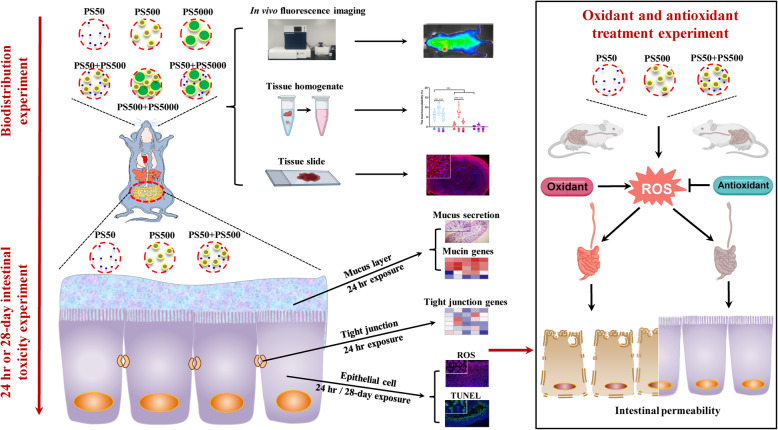
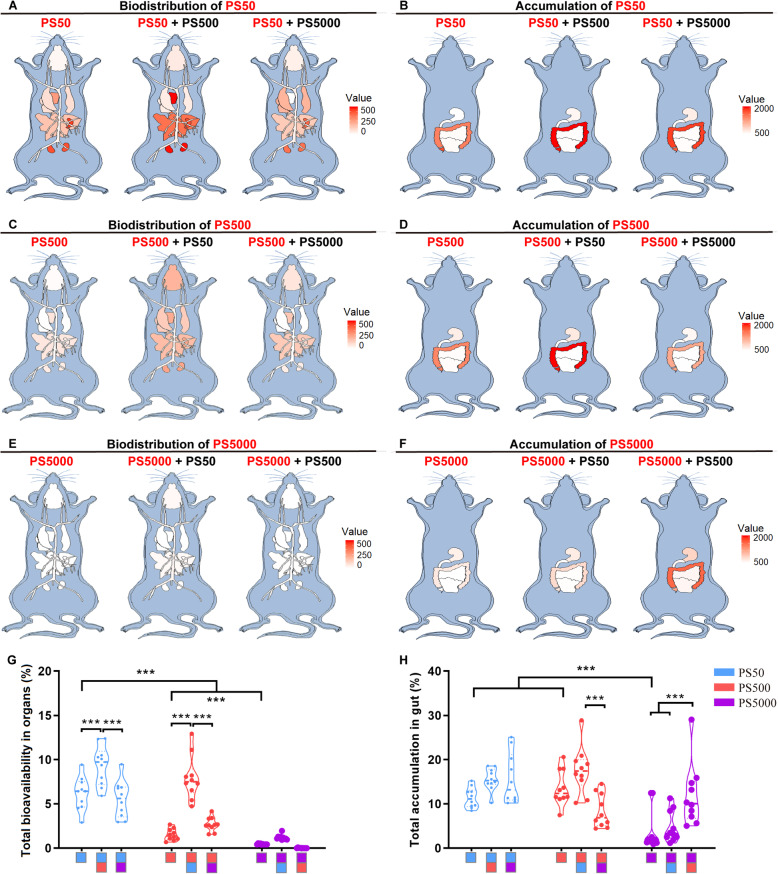
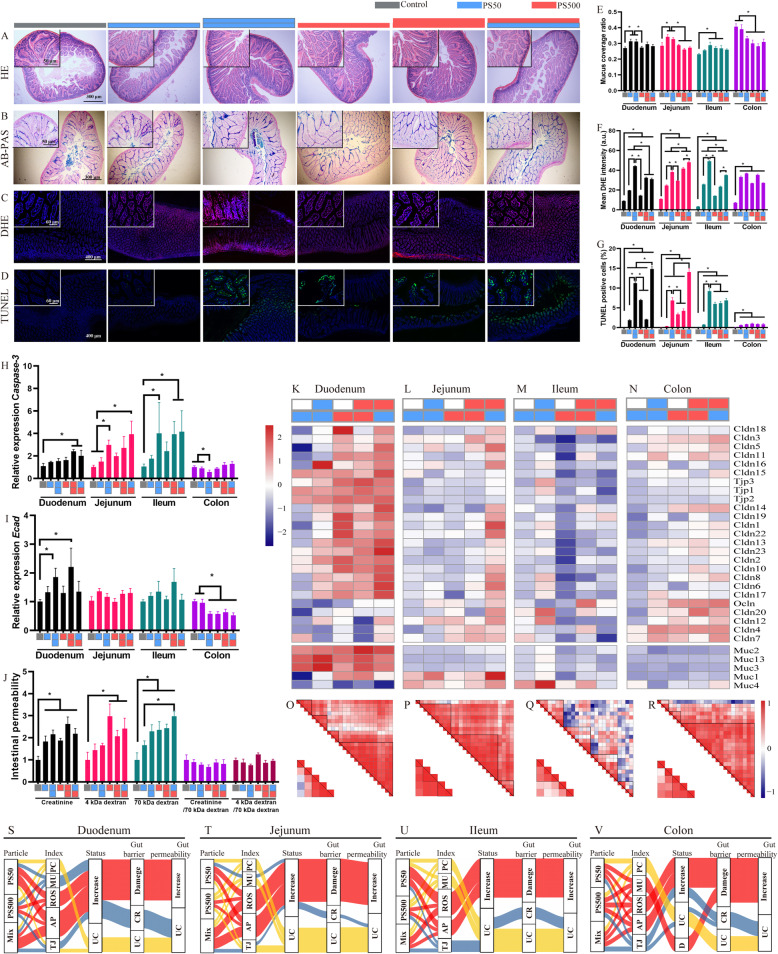
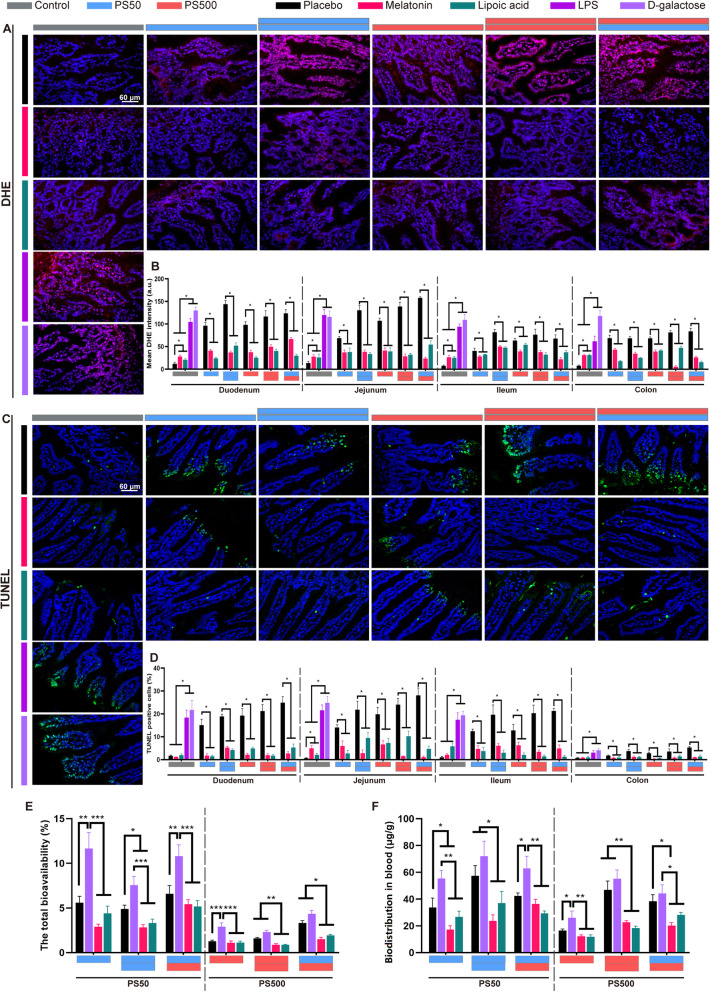
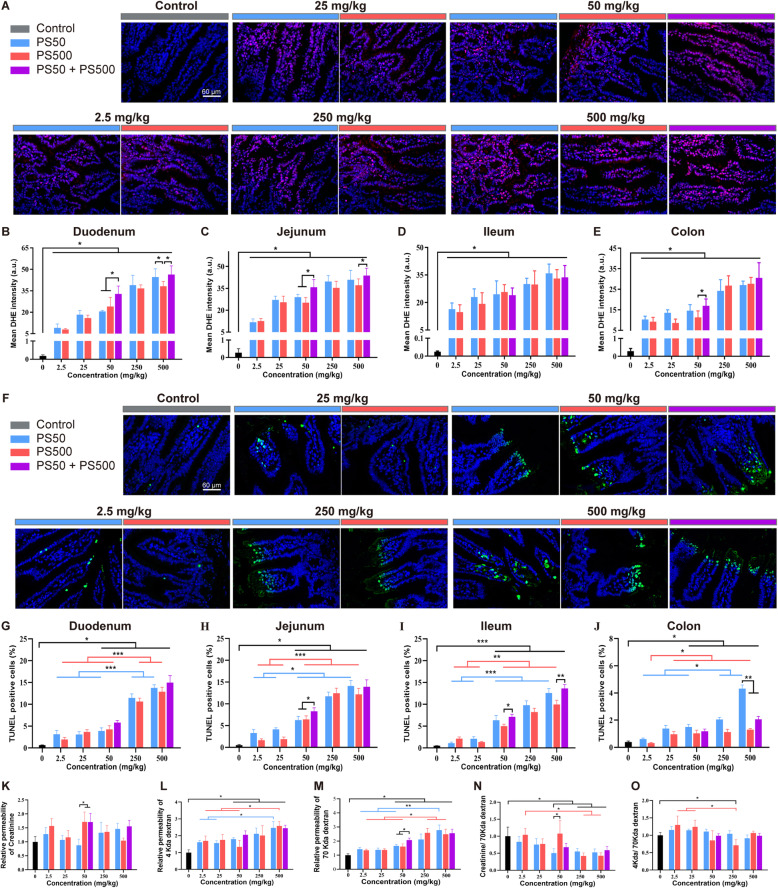
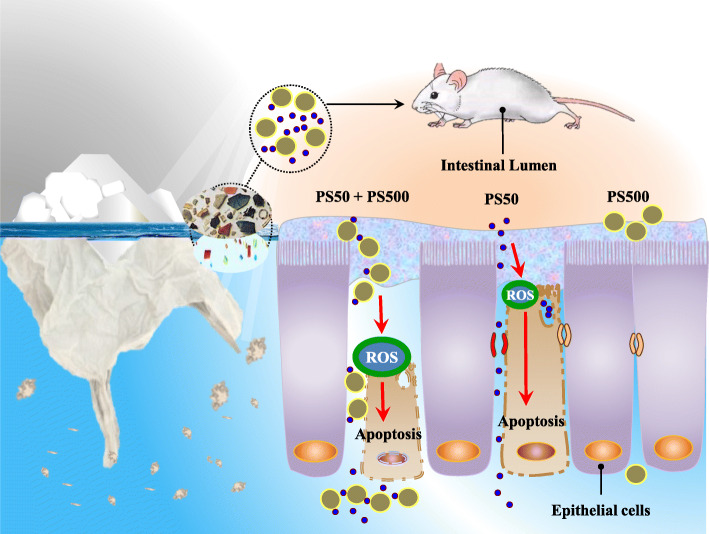
Background: Micro- and nanoplastic pollution has become a global environmental problem. Nanoplastics in the environment are still hard to detect because of analysis technology limitations. It is believed that when microplastics are found in the environment, more undetected nanoplastics are around. The current “microplastic exposure” is in fact the mixture of micro- and nanoplastic exposures. Therefore, the biological interaction between organisms among different sizes of micro- and nanoplastics should not be neglected. Results: We measured the biodistribution of three polystyrene (PS) particles (50 nm PS, PS50; 500 nm PS, PS500; 5000 nm PS, PS5000) under single and co-exposure conditions in mice. We explored the underlying mechanisms by investigating the effects on three major components of the intestinal barrier (the mucus layer, tight junctions and the epithelial cells) in four intestine segments (duodenum, jejunum, ileum and colon) of mice. We found that the amounts of both PS500 and PS5000 increased when they were co-exposed with PS50 for 24 h in the mice. These increased amounts were due primarily to the increased permeability in the mouse intestines. We also confirmed there was a combined toxicity of PS50 and PS500 in the mouse intestines. This manifested as the mixture of PS50 and PS500 causing more severe dysfunction of the intestinal barrier than that caused by PS50 or PS500 alone. We found that the combined toxicity of PS micro- and nanoplastics on intestinal barrier dysfunction was caused primarily by reactive oxygen species (ROS)-mediated epithelial cell apoptosis in the mice. These findings were further confirmed by an oxidants or antioxidants pretreatment study. In addition, the combined toxicity of PS micro- and nanoplastics was also found in the mice after a 28-day repeated dose exposure. Conclusions: There is a combined toxicity of PS50 and PS500 in the mouse intestines, which was caused primarily by ROS-mediated epithelial cell apoptosis in the mice. Considering that most recent studies on PS micro- and nanoplastics have been conducted using a single particle size, the health risks of exposure to PS micro- and nanoplastics on organisms may be underestimated.
Overview
The claims and statistics of this paper haven’t been checked yet.
Free: it reads the open-access text and checks the first 5 claims that cite a source we can check. Create a free account to check every claim.
Integrity signals
Registry
Cites
Statistics
Figures
Verification
Claims the paper makes
The claims and statistics of this paper haven’t been checked yet.
Free: it reads the open-access text and checks the first 5 claims that cite a source we can check. Create a free account to check every claim.
Claims other papers make about this one
Each is checked against this paper’s own text: does it say what the citing paper says it does?
The cited source says what the claim attributes to it.
In the citing paper
“the absorption and distribution of MNPs increase as particle size decreases.26”
From Microplastics and Nanoplastics in Atheromas and Cardiovascular Events (2024) · cites this paper as [26]
Self-check
Percentages, sums and reported differences re-computed from the paper’s own numbers.
The self-check needs the paper’s full text.
Citations
Cites
Production, use, and fate of all plastics ever made
Geyer, R., Jambeck, J. R., & Law, K. L. (2017) · Science Advances · doi:10.1126/sciadv.1700782 · Cited by 18,606
Human Consumption of Microplastics
Cox, K. D., Covernton, G. A., Davies, H. L., Dower, J. F., Juanes, F., & Dudas, S. E. (2019) · Environmental Science & Technology · doi:10.1021/acs.est.9b01517 · Cited by 2,745
Microplastics in Freshwaters and Drinking Water: Critical Review and Assessment of Data Quality
Koelmans, A. A., Mohamed Nor, N. H., Hermsen, E., Kooi, M., Mintenig, S. M., & De France, J. (2019) · Water Research · doi:10.1016/j.watres.2019.02.054 · Cited by 2,535 · cited 1×
“Considering the combined effects of PS micro- and nanoplastics on the intestine, and that most human PS micro- and nanoplastics intake appears as a mixture of multiple sizes of PS particles [5, 6], the health risk of PS particles exposure in humans should not be underestimated.”
BackgroundLu, Y., Zhang, Y., Deng, Y., Jiang, W., Zhao, Y., Geng, J., Ding, L., & Ren, H. (2016) · Environmental Science & Technology · doi:10.1021/acs.est.6b00183 · Cited by 2,125 · cited 1×
“This indicates a ubiquitous size dependency in regard to PS bioavailability in organisms, as similar effects have also been reported in zebrafish [20], early juvenile (See figure on previous page.”
Interactions of microplastic debris throughout the marine ecosystem
Galloway, T. S., Cole, M., & Lewis, C. (2017) · Nature Ecology & Evolution · doi:10.1038/s41559-017-0116 · Cited by 1,955 · cited 1×
“and nanoplastics (size < 100 nm), based upon the diameter of the plastic particles [2].”
BackgroundDetection of Various Microplastics in Human Stool: A Prospective Case Series
Schwabl, P., Köppel, S., Königshofer, P., Bucsics, T., Trauner, M., Reiberger, T., & Liebmann, B. (2019) · Annals of Internal Medicine · doi:10.7326/m19-0618 · Cited by 1,951 · cited 1×
“These compounds have also been detected in human stool [9].”
BackgroundOyster reproduction is affected by exposure to polystyrene microplastics
Sussarellu, R., Suquet, M., Thomas, Y., Lambert, C., Fabioux, C., Pernet, M. E. J., Le Goïc, N., Quillien, V., Mingant, C., Epelboin, Y., et al. (2016) · Proceedings of the National Academy of Sciences · doi:10.1073/pnas.1519019113 · Cited by 1,827
The intestinal epithelial barrier: a therapeutic target?
Odenwald, M. A., & Turner, J. R. (2017) · Nature Reviews Gastroenterology & Hepatology · doi:10.1038/nrgastro.2016.169 · Cited by 1,288 · cited 8×
“When the tight junctions or epithelial cells were damaged, a high capacity and permissive pathway termed “unrestricted” pathway formed [41, 44].”
BackgroundInfluentialImpacts of polystyrene microplastic on the gut barrier, microbiota and metabolism of mice
Jin, Y., Lu, L., Tu, W., Luo, T., & Fu, Z. (2019) · Science of The Total Environment · doi:10.1016/j.scitotenv.2018.08.353 · Cited by 1,100 · cited 2×
“It has been reported that PS5000 decreases mucus secretion in the colon [13].”
BackgroundMethodSenathirajah, K., Attwood, S., Bhagwat, G., Carbery, M., Wilson, S., & Palanisami, T. (2021) · Journal of Hazardous Materials · doi:10.1016/j.jhazmat.2020.124004 · Cited by 1,092 · cited 1×
“A much higher estimate proposes 5 g microplastics with diameters below 1mm per week for human ingestion [57].”
Background
Research works printed but not linked: 1
- Team RC R: a language and environment for statistical computing, R foundationfor statistical computing, Vienna, Austria 2020
Cited by
Items 201–300 of 517
Dávalos, A., Martín-Santiago, V., & Hazas, M. L. D. L. (2026) · Advances in Nutrition · doi:10.1016/j.advnut.2026.100624 · Cited by 22
“Microparticles and nanoparticles may damage colonic barrier integrity by inducing oxidative damage and inflammation in the gut, leading to epithelial cell apoptosis [50].”
Tiao, M., Sheen, J., Lin, I.-C., Khwepeya, M., & Yu, H. (2023) · International Journal of Molecular Sciences · doi:10.3390/ijms241713457 · Cited by 22
“According to prior evidence, exposure to microplastics can increase intracellular apoptosis through the activation of caspase-3 [27].”
BackgroundInfluentialEffect of nanoplastic intake on the dopamine system during the development of male mice
Kim, N., Choo, H.-I., & Lee, Y. (2024) · Neuroscience · doi:10.1016/j.neuroscience.2024.07.018 · Cited by 22
Liang, B., Huang, X., Li, Z., Huang, Y., Deng, Y., Chen, X., Zhong, Y., Yang, X., Feng, Y., Bai, R., et al. (2025) · Environment International · doi:10.1016/j.envint.2025.109367 · Cited by 23
Self-citationZeng, H., Qi, J., Chen, Q., Zhang, R., Guo, C., Zhao, J., Liang, H., Sun, J., Wang, W. T., & Song, H. (2025) · Ecotoxicology and Environmental Safety · doi:10.1016/j.ecoenv.2025.118529 · Cited by 20
Gut microbiome remodeling induced by microplastic exposure in humans
Yang, X.-Y., Zhang, Z., Chen, G., & Yuan, S. (2026) · Gut Microbes · doi:10.1080/19490976.2026.2617696 · Cited by 24
“21 22-24 Furthermore, ROS overproduction from MPs exposure down-regulates tight junction proteins (ZO-1, occludin, claudin-1) 25-27 while up-regulating ion transport genes such as Na-K-2Cl co-transporter 1 (Nkcc1), Na + /H + exchanger 3 (Nhe3), solute carrier family 26 member 6 (Slc26a6) in the…”
Self-citationLi, T., Xu, B., Chen, H., Shi, Y., Li, J., Yu, M., Xia, S., & Wu, S. (2023) · The Science of The Total Environment · doi:10.1016/j.scitotenv.2023.168254 · Cited by 22
Lactobacillus rhamnosus GG coating with nanocomposite ameliorates intestinal inflammation
Zhai, Z., Wang, X., Qian, Z., Wang, A., Zhao, W., Xiong, J., Wang, J., Wang, Y., & Cao, H. (2024) · Biomedicine & Pharmacotherapy · doi:10.1016/j.biopha.2024.117197 · Cited by 23
Meng, X., Zheng, X., Mai, W., Gao, J., Fan, Y., Fu, J. W., & Xu, J. (2025) · Journal of Hazardous Materials · doi:10.1016/j.jhazmat.2025.138130 · Cited by 20
Das, M., Calderon, L., Singh, D., Majumder, S., Bazina, L., Vaze, N., Trivanovic, U., DeLoid, G. M., Zuverza‐Mena, N., Kaur, M., et al. (2025) · NanoImpact · doi:10.1016/j.impact.2025.100567 · Cited by 22
Deng, Y., Li, Z., Huang, Y., Zhong, Y., Qiu, A., Chen, X., Huang, X., Yang, X., Feng, Y., Bai, R., et al. (2025) · Journal of Advanced Research · doi:10.1016/j.jare.2025.08.055 · Cited by 19
“Frozen liver samples ( n = 5 per group) were sectioned into 5 l m-thick slices for fluorescence detection following established protocols, with one slide prepared per animal [15].”
Self-citationWu, Y., Tan, X., Shi, X., Han, P., & Liu, H. (2023) · Toxics · doi:10.3390/toxics11080653 · Cited by 24
“5–50 mg/kg body weight resulted in more severe intestinal barrier dysfunction in mice, compared to single-exposure to micro- or nanoplastics [19].”
BackgroundInfluentialDjouina, M., Loison, S., & Body–Malapel, M. (2024) · Microplastics · doi:10.3390/microplastics3020013 · Cited by 21
“The other five studies showed that the intestinal toxicity of NPLs was of a similar intensity to that of MPLs, but that the features of toxic effects were dependent on the size of the MNPLs [28,40,43,49,55].”
BackgroundYu, Z., Xia, Y., Cheng, S., Mao, L., Luo, S., Tang, S., SUN, W. M., Jiang, X., Zou, Z., Chen, C., et al. (2022) · Chemosphere · doi:10.1016/j.chemosphere.2022.135324 · Cited by 20
Xie, Q., Gu, R., Lin, D., Liu, N., Qu, R., & Ge, F. (2022) · Environmental Science & Technology · doi:10.1021/acs.est.2c02935 · Cited by 19
Zhang, J., Zou, Y., Hu, L., Zhao, Y., Fen, Y., & Xu, H. (2023) · Journal of the Science of Food and Agriculture · doi:10.1002/jsfa.12722 · Cited by 20
Du, L., Liu, H., Song, X., Feng, X., Xu, H., Tang, W., & Yang, J. (2024) · Toxicology · doi:10.1016/j.tox.2024.153883 · Cited by 19
The whole life journey and destination of microplastics: A review
You, T., Feng, X., & Xu, H. (2024) · Environmental Pollution · doi:10.1016/j.envpol.2024.125165 · Cited by 20
Shen, Q., Liu, Y., Li, J., & Zhou, D. (2024) · Nutrients · doi:10.3390/nu16223878 · Cited by 19
Wang, Z., Li, N., Ding, Y., Li, N., Su, M., Zhang, C., Li, Y., Wang, Q., Sha, C., Xia, B., et al. (2025) · Journal of environmental chemical engineering · doi:10.1016/j.jece.2025.118807 · Cited by 28
Microplastics and nanoplastics in the human diet
Fiore, C. D., & Avino, P. (2026) · Nature Health · doi:10.1038/s44360-025-00025-6 · Cited by 23
Schmidt, A., Mühl, M., Brito, W. A. D. S., Singer, D., & Bekeschus, S. (2023) · Antioxidants · doi:10.3390/antiox12020227 · Cited by 20
“Additionally, an elevated ROS level was detected after NMP exposure in human epithelial cells [71] and in mice exposed to NMP mixtures, while pretreatment with antioxidants reversed the effects [72].”
BackgroundPolystyrene microplastics aggravate acute pancreatitis in mice
Zheng, J., Tan, Z., Wu, J., Liu, J., Yang, T., & Yang, H. (2023) · Toxicology · doi:10.1016/j.tox.2023.153513 · Cited by 21
Self-citationShan, S., Cheng, D., Li, H., Yao, W., Kou, R., Ji, J., Liu, N., Zeng, T., & Zhao, X. (2025) · Journal of Hazardous Materials · doi:10.1016/j.jhazmat.2025.137615 · Cited by 20
Guo, Y. C., Li, M., Liu, X., Duo, H., Huang, B., Lu, H., Zhang, X., Li, X., Zhao, Y., Lian, K., et al. (2025) · Brain Behavior and Immunity · doi:10.1016/j.bbi.2025.04.002 · Cited by 20
Yang, G., Li, M., Zheng, X., Chen, X., Yang, P., Li, J., Shui-qing, Y., Chen, H., Wang, Y., Zhang, H., et al. (2025) · ACS Nano · doi:10.1021/acsnano.5c01639 · Cited by 20
Zhang, Q., Guo, P., Zhou, X., Yang, C., Lu, Z., Wu, S., Lu, X., Yang, J., & Jin, C. (2025) · Free Radical Biology and Medicine · doi:10.1016/j.freeradbiomed.2025.05.402 · Cited by 16
Feng, H., Huang, Y., Zhang, H., Li, Z., Cen, X., Zhuang, Y., Zhang, X., Ma, K., Ruan, S., Yi, R., et al. (2025) · Particle and Fibre Toxicology · doi:10.1186/s12989-025-00642-9 · Cited by 16
“PS-NPs were used owing to their environmental occurrence, frequent application in nanoplastic toxicology, and to ensure comparability with our previous studies [31, 52–54].”
InfluentialSelf-citationMicroplastics, nanoplastics and liver disease: an emerging health concern?
Chokshi, S., Dhanda, A., Cramp, M., & Thompson, R. C. (2026) · Nature Reviews Gastroenterology & Hepatology · doi:10.1038/s41575-026-01188-7 · Cited by 25
Arsenic-Induced Ferroptosis in Chicken Hepatocytes via the Mitochondrial ROS Pathway
Gao, X., Su, Q., Pan, H., You, Y., Ruan, Z., Wu, Y., Tang, Z., & Hu, L. (2023) · Biological Trace Element Research · doi:10.1007/s12011-023-03968-7 · Cited by 16
Cheng, X., Shen, H., Zhang, W., Chen, B., Xu, S., & Wu, L. (2024) · Journal of Hazardous Materials · doi:10.1016/j.jhazmat.2024.135734 · Cited by 17
Chen, J., Chen, C., Luo, Z., Jin, X., Chen, Y., Wu, Q., Gong, Z., Yang, J., Jiang, S., Lin, S., et al. (2024) · Ecotoxicology and Environmental Safety · doi:10.1016/j.ecoenv.2024.117416 · Cited by 17
Self-citationConsumption of Bottled Water and Chronic Diseases: A Nationwide Cross-Sectional Study
Dolcini, J., Chiavarini, M., Firmani, G., Ponzio, E., D’Errico, M. M., & Barbadoro, P. (2024) · International Journal of Environmental Research and Public Health · doi:10.3390/ijerph21081074 · Cited by 15
“The questionnaire is standardized, and the survey is carried out by a sequential CAWI/PAPI mixed-mode technique [19] and has been used for investigations in several studies [20–22].”
MethodLu, Y.-Y., Zhu, W., Hua, W., Ren, H.-Y., Tian, M., Luo, L., Zhang, Y., & Huang, Q. (2025) · Environmental Science & Technology · doi:10.1021/acs.est.5c01582 · Cited by 18
Uchmanowicz, D., Styszko, K., Chen, X., Terribile, G., Jakhar, R., Sancini, G., & Pyssa, J. (2025) · International Journal of Molecular Sciences · doi:10.3390/ijms262110332 · Cited by 16
Meng, X., Ge, L., Zhang, J., Xue, J., Gonzalez-Gil, G., Vrouwenvelder, J. S., Guo, S., & Li, Z. (2024) · Journal of Hazardous Materials · doi:10.1016/j.jhazmat.2024.134509 · Cited by 15
Hepatic and metabolic outcomes induced by sub-chronic exposure to polystyrene microplastics in mice
Lee, S.-H., Lin, T.-A., Yan, Y., Chien, C., & Cheng, T. (2024) · Archives of Toxicology · doi:10.1007/s00204-024-03847-7 · Cited by 19
“Additionally, diverse sizes of MPs were observed in the blood and urine of rodents in the current (Tsou et al. 2023) and other studies (Lee et al. 2022; Liang et al. 2021).”
Microplastics induced ileum damage: Morphological and immunohistochemical study
Saleh, S. M. M., Abdel‐Zaher, S., Mohamed, M. S., & Sayed, A. E. H. (2024) · Microscopy Research and Technique · doi:10.1002/jemt.24696 · Cited by 17
Miranowicz-Dzierżawska, K., Zapór, L., Skowroń, J., Chojnacka-Puchta, L., & Sawicka, D. (2022) · Toxicological Research · doi:10.1007/s43188-022-00151-3 · Cited by 15
Gałęziewska, J., Gromek, P., Kruczkowska, W., Grabowska, K. H., Jęckowski, M., Capuano, F., Kciuk, M., Pasieka, Z. W., & Kłosiński, K. K. (2025) · Environmental Pollution · doi:10.1016/j.envpol.2025.127052 · Cited by 16
Microplastics exposure and immunologic response
Urrutia‐Pereira, M., Fogelbach, G. G., Chong‐Neto, H. J., & Solé, D. (2023) · Allergologia et Immunopathologia · doi:10.15586/aei.v51i5.834 · Cited by 15
Wang, J., Qiu, W., Cheng, H., Chen, T., Tang, Y., Magnuson, J. T., Xu, X., Xu, E. G., & Zheng, C. (2023) · ACS ES&T Water · doi:10.1021/acsestwater.3c00392 · Cited by 16
León, R. E., Salcedo, V. A. A., Miguel, F. J. N. S., Tardio, C. R. A. L., Briceño, A. A. T., Fouilloux, S. F. C., Barbosa, M. D. M., Barros, C. A. S., Waldman, W. R., Espinosa‐Bustos, C., et al. (2024) · Environmental Pollution · doi:10.1016/j.envpol.2024.123816 · Cited by 21
UV-aged polystyrene nanoplastics aggravate intestinal barrier damage by overproduction of ROS
Jia, T., Cai, J., He, S., Mao, Z., Zhang, X., Geng, A., Yang, H., Jiang, S., & Huang, P. (2024) · Environmental Toxicology and Pharmacology · doi:10.1016/j.etap.2024.104448 · Cited by 15
The biodistribution of polystyrene nanoparticles administered intravenously in the chicken embryo
Wang, M., Chen, S., Cheng, S., Nederstigt, T. A. P., Poelmann, R. E., DeRuiter, M. C., Lamers, G. E. M., Willemse, J. J., Mascitelli, C., Vijver, M. G., et al. (2024) · Environment International · doi:10.1016/j.envint.2024.108723 · Cited by 14
Schwarzfischer, M., Ruoss, T. S., Niechcial, A., Lee, S. S., Wawrzyniak, M., Laimbacher, A., Atrott, K., Manzini, R., Wilmink, M., Linzmeier, L., et al. (2024) · Nanomaterials · doi:10.3390/nano14161350 · Cited by 15
Liebgott, C., Chaïb, I., Doyen, P., Robert, H., Eutamène, H., Duflos, G., Reynaud, S., Grassl, B., & Mercier‐Bonin, M. (2023) · TrAC Trends in Analytical Chemistry · doi:10.1016/j.trac.2023.117175 · Cited by 15
Current status of microplastic pollution and the latest treatment technologies
Li, S., Peng, W., Guo, Y., Li, S., & Wang, Q. (2024) · The Science of The Total Environment · doi:10.1016/j.scitotenv.2024.177467 · Cited by 15
Toxicity of nanoplastics: machine learning combined with meta-analysis
Li, Z., Zhang, Y., & Chen, Y. (2025) · Nanoscale Horizons · doi:10.1039/d5nh00024f · Cited by 14
Cao, Z., Lu, Y., Yang, Q., Luo, A., Gou, S., Zhou, L., Li, H., Wang, Y., & Ding, T. (2025) · The Innovation · doi:10.1016/j.xinn.2025.101031 · Cited by 39
Microplastic-induced multi-organ toxicity: cellular mechanisms and critical roles of organ crosstalk
Zheng, L., Ma, X., Jin, Z., & Rao, Z. (2026) · Frontiers in Public Health · doi:10.3389/fpubh.2026.1746924 · Cited by 22
Utilization of intestinal organoid models for assessment of micro/nano plastic-induced toxicity
Yuan, Q., & Liu, Y. (2023) · Frontiers in Environmental Science · doi:10.3389/fenvs.2023.1285536 · Cited by 14
Zou, D., Yang, Y. S., Ji, F., Lv, R., Wu, H., Hou, G., Xu, T., Zhou, H., & Hu, C. (2024) · Journal of Agricultural and Food Chemistry · doi:10.1021/acs.jafc.4c03238 · Cited by 13
Li, X., Li, Y., Liu, B., Sui, G., Liu, S., & Song, G. (2024) · Journal of Hazardous Materials · doi:10.1016/j.jhazmat.2024.136865 · Cited by 16
Kaur, M., Sharma, A., Sharma, K. M. T. K., John, P. J., & Bhatnagar, P. (2024) · Toxicology · doi:10.1016/j.tox.2024.154043 · Cited by 15
Yang, J.-Z., Li, J., Liu, J., Zhou, A.-D., Wang, H., Xie, X., Zhang, K.-K., & Wang, Q. (2025) · Environmental Pollution · doi:10.1016/j.envpol.2025.126050 · Cited by 14
Self-citationFeng, C., Zhang, Q., Wang, L., Li, S., Wang, K., Xu, Y., Chen, K., Wang, J., Feng, S., Lyu, Y., et al. (2025) · Environmental Pollution · doi:10.1016/j.envpol.2025.126985 · Cited by 14
Gillings, H. L., Rojas‐Canales, D. M., Wong, S. W., Bhuskute, K. R., Kaur, A., Delcheva, I., Gleadle, J., & MacGregor, M. (2026) · Cell Biology and Toxicology · doi:10.1007/s10565-025-10135-2 · Cited by 12
“MPs in particular have been shown to affect several physiological systems, including the kidneys (Liang et al. 2021; Meng et al. 2022).”
Jiang, M., Wang, S., Zeng, H., Tan, B., Qin, Y., Zhou, Q., Lv, X., Wan, J., & Chen, M. (2026) · Environment International · doi:10.1016/j.envint.2026.110165 · Cited by 12
Zhai, Z., Yang, Y., Xu, Y., Fu, Q., Chen, S., & Wu, Z. (2026) · Journal of Hazardous Materials · doi:10.1016/j.jhazmat.2026.141722 · Cited by 16
Ototoxicity of polystyrene nanoplastics in mice, HEI-OC1 cells and zebrafish
Wu, Y., Li, L., Tang, L., Peijnenburg, W. J. G. M., Zhang, H., Xie, D., Geng, R., Zheng, T., Bi, L., Wei, X., et al. (2024) · Frontiers in Molecular Neuroscience · doi:10.3389/fnmol.2024.1345536 · Cited by 13
Zhang, X., Wu, Y., Fu, X., He, S., Shi, L., Xu, H., Shi, X., Yang, Y., Zhu, Y., Wang, Y., et al. (2024) · Toxics · doi:10.3390/toxics12080531 · Cited by 16
Liu, M., Wang, M., Sun, X., Mu, J., Teng, T., Jin, N., Song, J., Li, B., & Zhang, D. (2024) · Chemosphere · doi:10.1016/j.chemosphere.2024.143926 · Cited by 16
Mapping micro(nano)plastics in various organ systems: Their emerging links to human diseases?
Luo, Y., Xu, X., Yin, Q., Liu, S., Xing, M., Jin, X., Shu, L., Jiang, Z., Cai, Y., Ouyang, D., et al. (2024) · TrAC Trends in Analytical Chemistry · doi:10.1016/j.trac.2024.118114 · Cited by 16
Wang, K., Tang, J., Shen, D., Li, Y., Nagaoka, K., & Li, C. (2025) · Toxics · doi:10.3390/toxics13050331 · Cited by 17
“Given the small intestine’s critical role in nutrient absorption, its epithelial cells are highly susceptible to oxidative damage [21].”
Wu, Y., Yao, Y., Shen, Y., Bai, H., Zhang, L. M., & Zhang, C. (2025) · Small · doi:10.1002/smll.202412286 · Cited by 15
Aditya, M. R., Muhammad, A. R., Adriansyah, V., Samsu, N., & Sulistomo, H. W. (2025) · All Life · doi:10.1080/26895293.2025.2457760 · Cited by 15
Cheng, Y., Li, Y., Zhang, Y., Liu, H., Yang, B., Zhu, J., & Kuang, H. (2025) · Environmental Pollution · doi:10.1016/j.envpol.2025.126520 · Cited by 14
Zhang, M., Shi, J., Zhu, Y., Pan, H., Song, L., & Deng, H. (2024) · Environmental Pollution · doi:10.1016/j.envpol.2024.123441 · Cited by 12
He, Z., Feng, Y., Zhang, Y.-X., Gao, X., Liu, J., Liu, S., & Wu, G. (2025) · Cellular Signalling · doi:10.1016/j.cellsig.2025.111932 · Cited by 11
Self-citationLee, S.-H., Jeong, G. H., Nam, M., Kwak, M. H., Kim, C., Park, S.-H., Yeo, J., Choi, S., Jung, H. S., Rhim, H., et al. (2025) · Journal of Hazardous Materials · doi:10.1016/j.jhazmat.2025.140194 · Cited by 12
Sutton, S. C., & Hills, R. D. (2025) · Toxics · doi:10.3390/toxics13121036 · Cited by 14
Kim, B., Park, K.-M., Lee, H., & Hyun, Y. (2026) · ACS Nano · doi:10.1021/acsnano.5c15425 · Cited by 11
Polystyrene microplastics aggravate radiation-induced intestinal injury in mice
Chen, Y., Zeng, Q., Luo, Y., Song, M., He, X., Sheng, H., Gao, X., Zhu, Z., Sun, J., & Cao, C. (2024) · Ecotoxicology and Environmental Safety · doi:10.1016/j.ecoenv.2024.116834 · Cited by 12
Nanoplastics induces arrhythmia in human stem-cells derived cardiomyocytes
Chia, S. P. S., Pang, J. K. S., Winanto, W., & Soh, B.-S. (2025) · Ecotoxicology and Environmental Safety · doi:10.1016/j.ecoenv.2024.117657 · Cited by 15
Zhang, Y., Hales, B. F., & Robaire, B. (2025) · Archives of Toxicology · doi:10.1007/s00204-025-03969-6 · Cited by 16
“…body of evidence indicating a strong correlation between PSNPs and various adverse health effects, including neurotoxicity (Liu et al. 2024), intestinal barrier dysfunction (Liang et al. 2021), insulin resistance, glucose metabolism abnormalities (Fan et al. 2022), and reproductive dysfunction.”
Di, J., Wang, S., Liu, L., Rong, K., Guo, Z., Qin, Y., Wang, F., & Xiang, C. (2025) · Ecotoxicology and Environmental Safety · doi:10.1016/j.ecoenv.2025.118816 · Cited by 12
Ye, X., Xu, H., & Xu, Y. (2022) · Folia Histochemica et Cytobiologica · doi:10.5603/fhc.a2022.0029 · Cited by 14
Small Plastics, Big Inflammatory Problems
Prado, Y., Aravena, C., Aravena, D., Eltit, F., Gatica, S., Riedel, C. A., & Simón, F. (2023) · Advances in experimental medicine and biology · doi:10.1007/978-3-031-26163-3_6 · Cited by 15
Guan, X., Jia, D., Liu, X., Ding, C., Guo, J., Yao, M., Zhang, Z., Zhou, M., & Sun, J. (2024) · The Science of The Total Environment · doi:10.1016/j.scitotenv.2024.173772 · Cited by 10
Lu, Y.-Y., Hua, W., Lu, L., Tian, M., & Huang, Q. (2024) · Toxicology Research · doi:10.1093/toxres/tfae106 · Cited by 15
Budhwar, M., Mehra, S., Sharma, M., Ahsan, A. U., & Chopra, M. (2024) · Journal of Hazardous Materials Advances · doi:10.1016/j.hazadv.2024.100581 · Cited by 14
Ding, F., Huang, D., Zhao, Q., Wang, L., Ma, J., & Song, L. (2022) · Water · doi:10.3390/w14203288 · Cited by 10
“Both the PS-MPs and NP alone caused cellular oxidative stress, the depolarization of mitochondrial membrane potential, and cell cycle arrest, indicating that PS-MPs and NP may share the same mechanism, which can be seen as the main reason for the coordinated cell dysfunction caused by the combined…”
BackgroundHamzagić, A. R., Gazdic, M., Cvetković, D. M., Nikolić, D. D., Nikolić, S., Milivojević, N. N., Kastratović, N., Živanović, M., Kovačević, M. M., & Ljujić, B. (2024) · Toxics · doi:10.3390/toxics12050354 · Cited by 10
“Considering that most studies on PS micro-and nanoplastics so far only investigate one particle size, it is possible that the health risks associated with exposure to PS micro-and nanoplastics in the body are underestimated [21].”
BackgroundThe combined effects of polystyrene of different sizes and cadmium in mouse kidney tissues
Zhang, Q., Li, S., Fang, J., Hao, Y., Lu, J., Zhang, L., Zhang, M., Zhang, L., Wang, Y., Zhang, Y. L., et al. (2024) · Ecotoxicology and Environmental Safety · doi:10.1016/j.ecoenv.2024.116660 · Cited by 11
Stoian, A. I. (2024) · International conference KNOWLEDGE-BASED ORGANIZATION · doi:10.2478/kbo-2024-0097 · Cited by 9
Guo, J., You, T., Feng, X., & Xu, H. (2025) · Probiotics and Antimicrobial Proteins · doi:10.1007/s12602-024-10439-5 · Cited by 10
“Moreover, the MPs with 500 nm are more likely to remain outside the intestinal lumen and affect extraintestinal distal organs by interfering with the gut microbiota [31].”
Chen, Z., Qu, H., Sun, J. G., Wang, T., Yuan, Y., Gu, J., Bian, J., Liu, Z., & Zou, H. (2025) · Frontiers in Pharmacology · doi:10.3389/fphar.2024.1533188 · Cited by 12
Nobiletin‐mediated autophagy mitigates nanoplastic‐induced toxicity in human intestinal Caco‐2 cells
Yu, J., Yoon, J., Park, M., & Lee, H. (2025) · The FASEB Journal · doi:10.1096/fj.202402761r · Cited by 9
“14 NOB promotes autophagy via the AMPK pathway, often suppressed by LPS. 15 Furthermore, studies have indicated that NOB modulates autophagy in cancer cells via p62 and LC3B expression.”
Zhou, P., Kong, Y., Zhang, D., Juhasz, A. L., Zhang, Q., & Cui, X. (2025) · The Science of The Total Environment · doi:10.1016/j.scitotenv.2025.179381 · Cited by 9
Haddadi, A., Venditti, M., Kessabi, K., & Messaoudi, I. (2025) · Environmental Science and Pollution Research · doi:10.1007/s11356-025-36474-5 · Cited by 9
“…toxicity of MPs is manifested by histological alterations as well as by the induction of oxidative stress and apoptosis in several tissues of the rat and mouse such as the intestines (Liang et al. 2021), the liver (Deng et al. 2017), and the gonads (Haddadi et al. 2022; Ben Hassine et al. 2023).”
Djouina, M., Waxin, C., Caboche, S., Dehaut, A., Himber, C., BALESDENT, C., Beury, D., Hot, D., Vignal, C., Launay, D., et al. (2025) · Environmental Research · doi:10.1016/j.envres.2025.122621 · Cited by 13
Cintio, F. D., Ruggieri, A. G., Simone, C. D., Carlo, P. D., Ronci, M., Perrotti, V., & Sallese, M. (2025) · Scientific Reports · doi:10.1038/s41598-025-19064-w · Cited by 11
“Other researchers also investigated the toxic effects of PS-MPs in mice intestines, revealing that exposure to 50 nm and 500 nm PS-MPs induced toxicity by ROS-mediated apoptosis in epithelial cells 26 .”
From pollution to palpitations: the heart’s silent battle with microplastics
Jahedi, F., Khaksar, M. A., Rashidi, P., Fard, N. J. H., Mansouri, Z., Nardast, S., Ahmadi, B., & Zamani, A. M. (2025) · BMC Cardiovascular Disorders · doi:10.1186/s12872-025-05330-2 · Cited by 12
“Additionally, when Fischer 344 rats were orally exposed to three differently charged (neutrally, positively, and negatively) PS-NPs (50 nm) for six hours, higher bioaccumulation of negatively charged PS-NPs was observed in the heart compared to those with neutral or positive charges [35, 144].”
Yuvika, Sharma, D., & Sharma, A. (2026) · Comparative Biochemistry and Physiology Part C Toxicology & Pharmacology · doi:10.1016/j.cbpc.2026.110473 · Cited by 13
Microplastics and nanoplastics in the human gut: from signals to standards
Deng, B., Sinha, S. R., Lear, G., & Tropini, C. (2026) · Nature Reviews Gastroenterology & Hepatology · doi:10.1038/s41575-026-01185-w · Cited by 10
A REVIEW ON MICROPLASTIC IN THE SOILS AND THEIR IMPACT ON SOIL MICROBES, CROPS AND HUMANS
Bansal, O. P., & Singh, A. (2022) · International Journal of Research -GRANTHAALAYAH · doi:10.29121/granthaalayah.v10.i9.2022.4812 · Cited by 13
“International Journal of Research - GRANTHAALAYAH 260 Liang et al. (2021) reported that microplastic in the human body causes apoptosis, necrosis, and fibrosis and even can damage the tissue.”
BackgroundInfluentialLee, S. (2026) · Toxicology Mechanisms and Methods · doi:10.1080/15376516.2025.2584495 · Cited by 8
“Histologically, NPs reduce villi height and crypt depth, deplete mucus-producing goblet cells, and damage the brush border membrane (Hirt and Body-Malapel 2020; Liang et al. 2021; Su et al. 2024).”
Polystyrene microplastics exacerbated the toxicity of okadaic acid to the small intestine in mice
Huang, H.-J., Liu, Y., Wang, X., Huang, L., Li, D.-W., Li, H., & Yang, W. (2024) · Ecotoxicology and Environmental Safety · doi:10.1016/j.ecoenv.2024.116628 · Cited by 9
Gianoncelli, A., Tufoni, C., Žižić, M. V., Zingaro, F., Ceccone, G., Bonanni, V., Salome-Pateyron, M., Villalobos-Portillo, E. E., Spina, R. L., Cassano, D., et al. (2024) · X-Ray Spectrometry · doi:10.1002/xrs.3465 · Cited by 8
Metadata
- Authors
- Liang, B., Zhong, Y., Huang, Y., Lin, X., Liu, J., Lin, L., Hu, M., Jiang, J., Dai, M., Wang, B., Zhang, B., Meng, H., Lelaka, J. J. J., Sui, H., Yang, X., & Huang, Z.
- Affiliations
- Southern Medical University (CN)
- Guangdong Pharmaceutical University (CN)
- China National Center for Food Safety Risk Assessment (CN)
- Corresponding author
- Yang, Xingfen
- Huang, Zhenlie
- Venue
- Particle and Fibre Toxicology
- Published
- 2021-06-07
- Volume
- 18
- Issue
- 1
- Pages
- 20-20
- ISSN
- 1743-8977 (ISSN-L)
- PMC
- PMC8186235
- OpenAlex
- W3171670357
- Cited by
- 508
- References
- 60
- Citations by year
- 2026: 124 · 2025: 119 · 2024: 119 · 2023: 85 · 2022: 52 · 2021: 7
- FWCI
- 16.30
- Type
- journal article
- Language
- en
- Open access
- gold
- doi.org
- Licence
- cc-by
- creativecommons.org/licenses/by/4.0 (tdm)
- creativecommons.org/licenses/by/4.0 (vor)
- Locations
- Particle and Fibre Toxicology (publishedVersion, cc-by)
- PubMed Central (publishedVersion, cc-by)
- PubMed (publishedVersion)
- DOAJ (DOAJ: Directory of Open Access Journals) (submittedVersion, cc-by-sa)
- Funders
- National Key R&D Program of China, Ministry of Science and Technology of China (2018YFC1602103, 2018YFC1603101)
- National Natural Science Foundation of China (82073519, 81872601)
- Guangdong Key R&D Program, Ministry of Science and Technology of Guangdong Province (2019B020210002)
- Natural Science Foundation of Guangdong Province (2018A030313068)
- Guangdong Provincial Key Laboratory of Tropical Disease Research (2017B030314035)
- National Training Program of Innovation and Entrepreneurship for Undergraduates (S202012121157, S202012121055, S201912121024)
- NMPA Key Laboratory for Safety Evaluation of Cosmetics
- Topics
- Physical Sciences › Environmental Science › Pollution › Microplastics and Plastic Pollution
- Physical Sciences › Environmental Science › Health, Toxicology and Mutagenesis › Environmental Toxicology and Ecotoxicology
- Physical Sciences › Materials Science › Materials Chemistry › Nanoparticles: synthesis and applications
- Keywords
- polystyrene, microplastics, nanoplastics, intestinal barrier dysfunction, reactive oxygen species, epithelial apoptosis, co-exposure toxicity, tissue distribution, intestinal permeability, tight junctions, mucus layer, repeated-dose exposure, oxidative stress
- MeSH terms
- Microplastics, Animals, Epithelial Cells, Plastics, Polystyrenes, Tissue Distribution, Apoptosis, Reactive Oxygen Species, Mice
About these checks
Registry, retraction, Cites and statistics results are computed, not judged, with one exception: a printed reference that no index lists is read once by a model before it counts as a citation error. Claims are extracted by a model and kept only when their quote appears verbatim in the text; each cited source is then checked, with a model’s help, for whether it says what the claim relies on. Those verdicts can be wrong — read the claim’s quote and the cited source before relying on one.
Statistics and arithmetic are recomputed, not judged.
Confidence bands are shown only for fields calibrated on our annotated test set. None is calibrated yet, so no band is shown.
What counts as a claim ›How we measure confidence ›How we check this ›
Are you an author, or do you see a problem with this page? Request a review
Data sources
Bibliographic data: Semantic Scholar, OpenAlex, Crossref.
Contains information from the Semantic Scholar Academic Graph Datasets, made available under the ODC Attribution License (ODC-BY 1.0).
Semantic Scholar’s data is described in: Kinney, R., et al. (2023). The Semantic Scholar Open Data Platform. arXiv:2301.10140.
