

Underestimated health risks: polystyrene micro- and nanoplastics jointly induce intestinal barrier dysfunction by ROS-mediated epithelial cell apoptosis
Open accessThe DOI matches its Crossref record; 60 of the 60 references it cites were found in a registry or an index.
Abstract
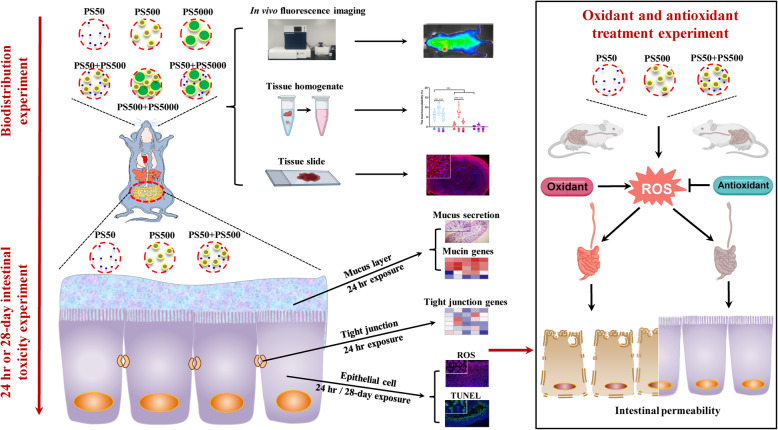
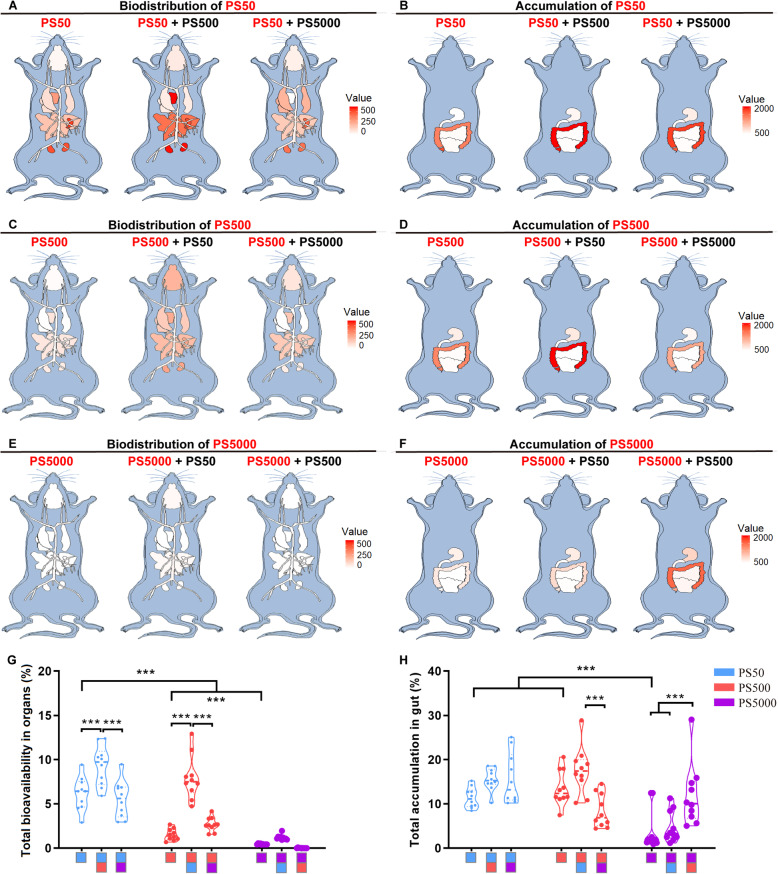
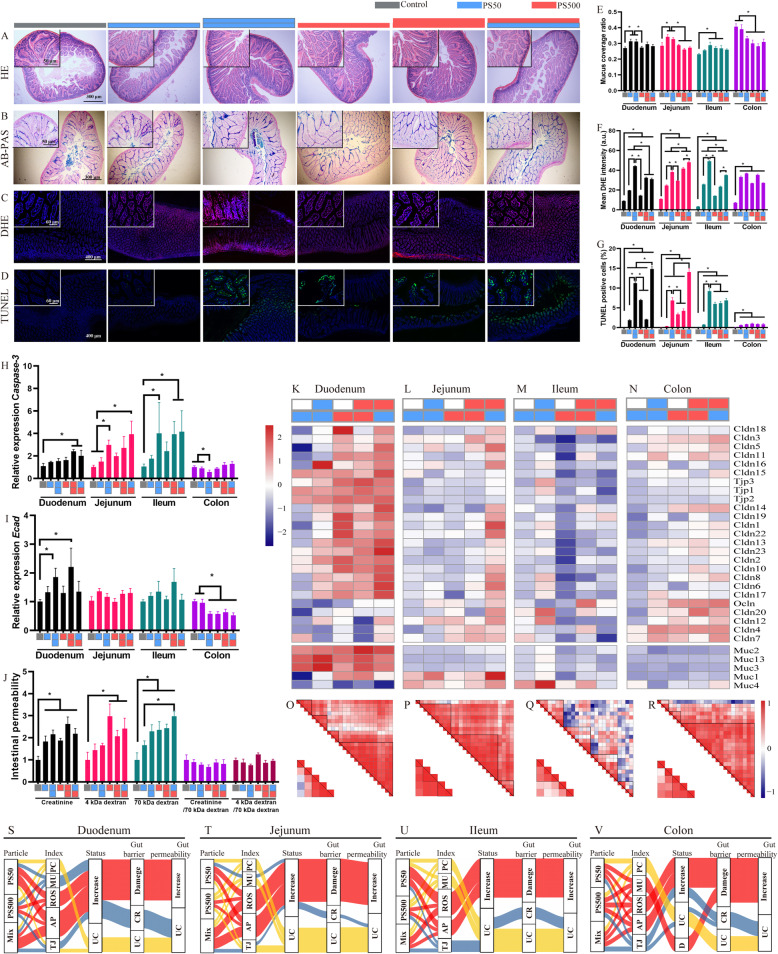
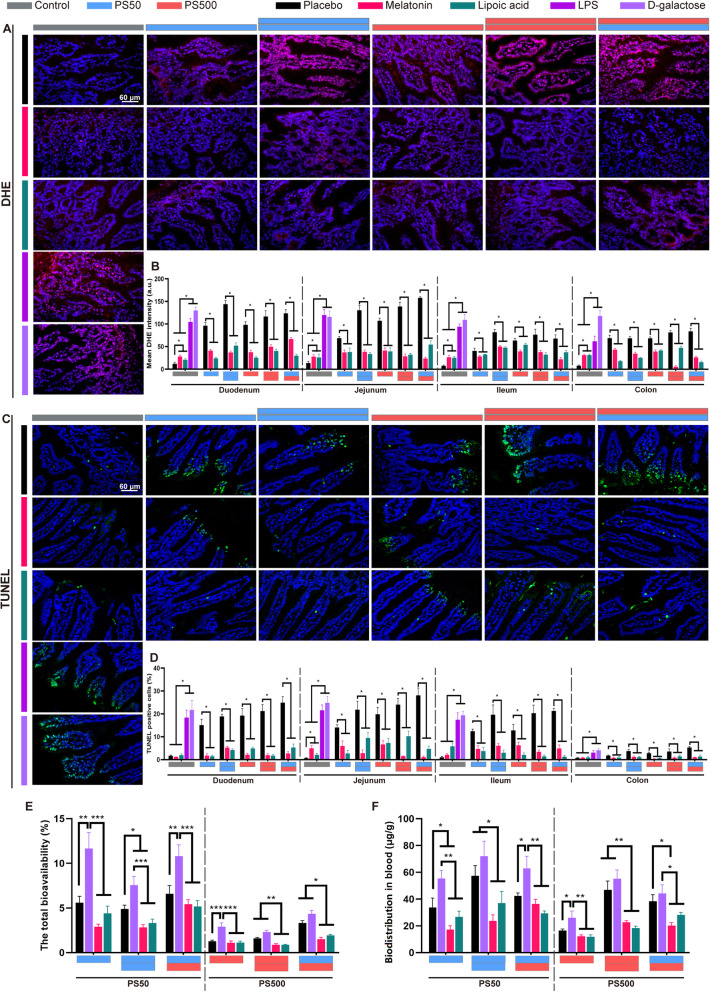
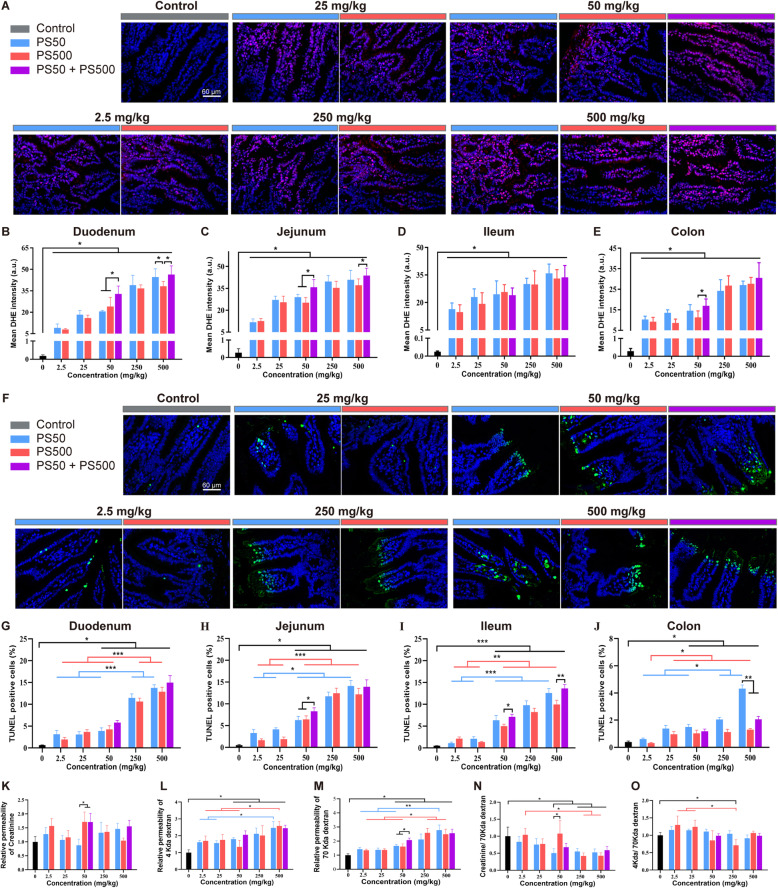
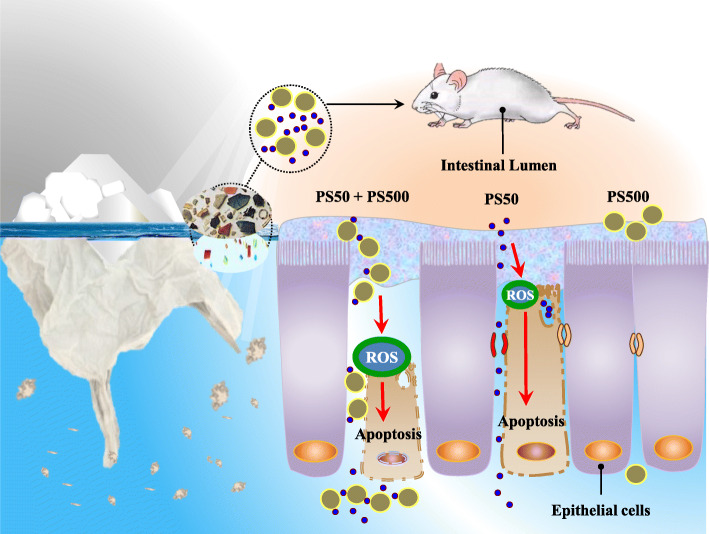
Background: Micro- and nanoplastic pollution has become a global environmental problem. Nanoplastics in the environment are still hard to detect because of analysis technology limitations. It is believed that when microplastics are found in the environment, more undetected nanoplastics are around. The current “microplastic exposure” is in fact the mixture of micro- and nanoplastic exposures. Therefore, the biological interaction between organisms among different sizes of micro- and nanoplastics should not be neglected. Results: We measured the biodistribution of three polystyrene (PS) particles (50 nm PS, PS50; 500 nm PS, PS500; 5000 nm PS, PS5000) under single and co-exposure conditions in mice. We explored the underlying mechanisms by investigating the effects on three major components of the intestinal barrier (the mucus layer, tight junctions and the epithelial cells) in four intestine segments (duodenum, jejunum, ileum and colon) of mice. We found that the amounts of both PS500 and PS5000 increased when they were co-exposed with PS50 for 24 h in the mice. These increased amounts were due primarily to the increased permeability in the mouse intestines. We also confirmed there was a combined toxicity of PS50 and PS500 in the mouse intestines. This manifested as the mixture of PS50 and PS500 causing more severe dysfunction of the intestinal barrier than that caused by PS50 or PS500 alone. We found that the combined toxicity of PS micro- and nanoplastics on intestinal barrier dysfunction was caused primarily by reactive oxygen species (ROS)-mediated epithelial cell apoptosis in the mice. These findings were further confirmed by an oxidants or antioxidants pretreatment study. In addition, the combined toxicity of PS micro- and nanoplastics was also found in the mice after a 28-day repeated dose exposure. Conclusions: There is a combined toxicity of PS50 and PS500 in the mouse intestines, which was caused primarily by ROS-mediated epithelial cell apoptosis in the mice. Considering that most recent studies on PS micro- and nanoplastics have been conducted using a single particle size, the health risks of exposure to PS micro- and nanoplastics on organisms may be underestimated.
Overview
The claims and statistics of this paper haven’t been checked yet.
Free: it reads the open-access text and checks the first 5 claims that cite a source we can check. Create a free account to check every claim.
Integrity signals
Registry
Cites
Statistics
Figures
Verification
Claims the paper makes
The claims and statistics of this paper haven’t been checked yet.
Free: it reads the open-access text and checks the first 5 claims that cite a source we can check. Create a free account to check every claim.
Claims other papers make about this one
Each is checked against this paper’s own text: does it say what the citing paper says it does?
The cited source says what the claim attributes to it.
In the citing paper
“the absorption and distribution of MNPs increase as particle size decreases.26”
From Microplastics and Nanoplastics in Atheromas and Cardiovascular Events (2024) · cites this paper as [26]
Self-check
Percentages, sums and reported differences re-computed from the paper’s own numbers.
The self-check needs the paper’s full text.
Citations
Cites
Production, use, and fate of all plastics ever made
Geyer, R., Jambeck, J. R., & Law, K. L. (2017) · Science Advances · doi:10.1126/sciadv.1700782 · Cited by 18,606
Human Consumption of Microplastics
Cox, K. D., Covernton, G. A., Davies, H. L., Dower, J. F., Juanes, F., & Dudas, S. E. (2019) · Environmental Science & Technology · doi:10.1021/acs.est.9b01517 · Cited by 2,745
Microplastics in Freshwaters and Drinking Water: Critical Review and Assessment of Data Quality
Koelmans, A. A., Mohamed Nor, N. H., Hermsen, E., Kooi, M., Mintenig, S. M., & De France, J. (2019) · Water Research · doi:10.1016/j.watres.2019.02.054 · Cited by 2,535 · cited 1×
“Considering the combined effects of PS micro- and nanoplastics on the intestine, and that most human PS micro- and nanoplastics intake appears as a mixture of multiple sizes of PS particles [5, 6], the health risk of PS particles exposure in humans should not be underestimated.”
BackgroundLu, Y., Zhang, Y., Deng, Y., Jiang, W., Zhao, Y., Geng, J., Ding, L., & Ren, H. (2016) · Environmental Science & Technology · doi:10.1021/acs.est.6b00183 · Cited by 2,125 · cited 1×
“This indicates a ubiquitous size dependency in regard to PS bioavailability in organisms, as similar effects have also been reported in zebrafish [20], early juvenile (See figure on previous page.”
Interactions of microplastic debris throughout the marine ecosystem
Galloway, T. S., Cole, M., & Lewis, C. (2017) · Nature Ecology & Evolution · doi:10.1038/s41559-017-0116 · Cited by 1,955 · cited 1×
“and nanoplastics (size < 100 nm), based upon the diameter of the plastic particles [2].”
BackgroundDetection of Various Microplastics in Human Stool: A Prospective Case Series
Schwabl, P., Köppel, S., Königshofer, P., Bucsics, T., Trauner, M., Reiberger, T., & Liebmann, B. (2019) · Annals of Internal Medicine · doi:10.7326/m19-0618 · Cited by 1,951 · cited 1×
“These compounds have also been detected in human stool [9].”
BackgroundOyster reproduction is affected by exposure to polystyrene microplastics
Sussarellu, R., Suquet, M., Thomas, Y., Lambert, C., Fabioux, C., Pernet, M. E. J., Le Goïc, N., Quillien, V., Mingant, C., Epelboin, Y., et al. (2016) · Proceedings of the National Academy of Sciences · doi:10.1073/pnas.1519019113 · Cited by 1,827
The intestinal epithelial barrier: a therapeutic target?
Odenwald, M. A., & Turner, J. R. (2017) · Nature Reviews Gastroenterology & Hepatology · doi:10.1038/nrgastro.2016.169 · Cited by 1,288 · cited 8×
“When the tight junctions or epithelial cells were damaged, a high capacity and permissive pathway termed “unrestricted” pathway formed [41, 44].”
BackgroundInfluentialImpacts of polystyrene microplastic on the gut barrier, microbiota and metabolism of mice
Jin, Y., Lu, L., Tu, W., Luo, T., & Fu, Z. (2019) · Science of The Total Environment · doi:10.1016/j.scitotenv.2018.08.353 · Cited by 1,100 · cited 2×
“It has been reported that PS5000 decreases mucus secretion in the colon [13].”
BackgroundMethodSenathirajah, K., Attwood, S., Bhagwat, G., Carbery, M., Wilson, S., & Palanisami, T. (2021) · Journal of Hazardous Materials · doi:10.1016/j.jhazmat.2020.124004 · Cited by 1,092 · cited 1×
“A much higher estimate proposes 5 g microplastics with diameters below 1mm per week for human ingestion [57].”
BackgroundLeaky gut: mechanisms, measurement and clinical implications in humans
Camilleri, M. (2019) · Gut · doi:10.1136/gutjnl-2019-318427 · Cited by 1,081
Environmental source, fate, and toxicity of microplastics
Wang, C., Zhao, J., & Xing, B. (2021) · Journal of Hazardous Materials · doi:10.1016/j.jhazmat.2020.124357 · Cited by 1,077 · cited 1×
“By using PS as one of the most abundant and typical micro- and nanoplastics [52, 53], our results draw an overall perspective that micro- and nanoplastics may induce oxidative stress in the small intestine, resulting in epithelial cell apoptosis and loss of the intestinal barrier.”
ResultPresence of microplastics and nanoplastics in food, with particular focus on seafood
(CONTAM), E. P. O. C. I. T. F. C. (2016) · EFSA Journal · doi:10.2903/j.efsa.2016.4501 · Cited by 958
Nanoparticle Uptake by the Rat Gastrointestinal Mucosa: Quantitation and Particle Size Dependency
Jani, P., Halbert, G. W., Langridge, J., & Florence, A. T. (1990) · Journal of Pharmacy and Pharmacology · doi:10.1111/j.2042-7158.1990.tb07033.x · Cited by 920
Immunotoxicity and intestinal effects of nano- and microplastics: a review of the literature
Hirt, N., & Body-Malapel, M. (2020) · Particle and Fibre Toxicology · doi:10.1186/s12989-020-00387-7 · Cited by 758 · cited 1×
“Due to the small plastic particle size, micro- and nanoplastics are easily ingested by organisms and enter their bodies where they affect biological health [3, 4].”
BackgroundMicroplastic exposure studies should be environmentally realistic
Lenz, R., Enders, K., & Nielsen, T. G. (2016) · Proceedings of the National Academy of Sciences · doi:10.1073/pnas.1606615113 · Cited by 747 · cited 2×
“Furthermore, it is likely that the particle counts will be much higher if we account for the nanoplastics [28].”
BackgroundHussain, N. (2001) · Advanced Drug Delivery Reviews · doi:10.1016/s0169-409x(01)00152-1 · Cited by 680 · cited 1×
“The upper limit for microplastic particles to translocate across the human gut is about 150 μm [19].”
BackgroundReview of micro- and nanoplastic contamination in the food chain
Toussaint, B., Raffael, B., Angers-Loustau, A., Gilliland, D., Kestens, V., Petrillo, M., Rio-Echevarria, I. M., & Van den Eede, G. (2019) · Food Additives & Contaminants: Part A · doi:10.1080/19440049.2019.1583381 · Cited by 643 · cited 1×
“Considering the combined effects of PS micro- and nanoplastics on the intestine, and that most human PS micro- and nanoplastics intake appears as a mixture of multiple sizes of PS particles [5, 6], the health risk of PS particles exposure in humans should not be underestimated.”
BackgroundXie, X., Deng, T., Duan, J., Xie, J., Yuan, J., & Chen, M. (2020) · Ecotoxicology and Environmental Safety · doi:10.1016/j.ecoenv.2019.110133 · Cited by 619 · cited 1×
“ROS generation caused by PS micro- and nanoplastics has been reported in multiple organisms, such as zebrafish [10], rats [48] and mice [49], and ROS clearance alleviates the mucosal injury and damage in the intestine [50].”
BackgroundUptake and effects of orally ingested polystyrene microplastic particles in vitro and in vivo
Stock, V., Böhmert, L., Lisicki, E., Block, R., Cara-Carmona, J., Pack, L. K., Selb, R., Lichtenstein, D., Voss, L., Henderson, C. J., et al. (2019) · Archives of Toxicology · doi:10.1007/s00204-019-02478-7 · Cited by 617 · cited 2×
“Particle size is one of the most important factors in determining the extent and pathway of particle biodistribution [15, 16], affecting the particle’s toxicities in vivo [17, 18].”
BackgroundBhagat, J., Nishimura, N., & Shimada, Y. (2021) · Journal of Hazardous Materials · doi:10.1016/j.jhazmat.2020.123913 · Cited by 551 · cited 2×
“Additionally, some physicochemical properties could have changed when micro-particles mixed with nanoparticles [29, 34, 54, 55], which may also have affected their toxicities.”
BackgroundSleep Loss Can Cause Death through Accumulation of Reactive Oxygen Species in the Gut
Vaccaro, A., Kaplan Dor, Y., Nambara, K., Pollina, E. A., Lin, C., Greenberg, M. E., & Rogulja, D. (2020) · Cell · doi:10.1016/j.cell.2020.04.049 · Cited by 541 · cited 3×
“DHE intensity in each group by measuring the fluorescent signal’s pixel intensity in each gut section, as described previously [51].”
BackgroundMethodInfluentialAre we underestimating the sources of microplastic pollution in terrestrial environment?
Xu, C., Zhang, B., Gu, C., Shen, C., Yin, S., Aamir, M., & Li, F. (2020) · Journal of Hazardous Materials · doi:10.1016/j.jhazmat.2020.123228 · Cited by 531 · cited 1×
“By using PS as one of the most abundant and typical micro- and nanoplastics [52, 53], our results draw an overall perspective that micro- and nanoplastics may induce oxidative stress in the small intestine, resulting in epithelial cell apoptosis and loss of the intestinal barrier.”
ResultSelf-citationDevelopment of an In Vitro Digestion Model for Estimating the Bioaccessibility of Soil Contaminants
Oomen, A. G., Rompelberg, C. J. M., Bruil, M. A., Dobbe, C. J. G., Pereboom, D. P. K. H., & Sips, A. J. A. M. (2003) · Archives of Environmental Contamination and Toxicology · doi:10.1007/s00244-002-1278-0 · Cited by 528 · cited 1×
“We prepared the simulated gastric and intestinal fluids by following previously described protocols [59].”
MethodWu, B., Wu, X., Liu, S., Wang, Z., & Chen, L. (2019) · Chemosphere · doi:10.1016/j.chemosphere.2019.01.056 · Cited by 518 · cited 1×
“Additionally, PS-induced cell dysfunctions were in line with other previous in vivo and in vitro studies in a size-dependent manner [10, 46].”
ResultEnvironmental occurrences, fate, and impacts of microplastics
Wu, P., Huang, J., Zheng, Y., Yang, Y., Zhang, Y., He, F., Chen, H., Quan, G., Yan, J., Li, T., et al. (2019) · Ecotoxicology and Environmental Safety · doi:10.1016/j.ecoenv.2019.109612 · Cited by 515 · cited 1×
“Due to the small plastic particle size, micro- and nanoplastics are easily ingested by organisms and enter their bodies where they affect biological health [3, 4].”
BackgroundLundquist, P., & Artursson, P. (2016) · Advanced Drug Delivery Reviews · doi:10.1016/j.addr.2016.07.007 · Cited by 483 · cited 1×
“En route to absorption through the intestine, the PS particles encounter a series of barriers, including the mucus layer, the tight junctions blocking paracellular passage, and the epithelial cells of the intestine [37].”
BackgroundNecrotic, apoptotic and autophagic cell fates triggered by nanoparticles
Mohammadinejad, R., Moosavi, M. A., Tavakol, S., Vardar, D. Ö., Hosseini, A., Rahmati, M., Dini, L., Hussain, S., Mandegary, A., & Klionsky, D. J. (2019) · Autophagy · doi:10.1080/15548627.2018.1509171 · Cited by 453 · cited 1×
“ROS generation is a common cause of nanoparticle-induced cell apoptosis [47].”
BackgroundShruti, V. C., Pérez-Guevara, F., Elizalde-Martínez, I., & Kutralam-Muniasamy, G. (2020) · Science of The Total Environment · doi:10.1016/j.scitotenv.2020.138580 · Cited by 450
An, R., Wang, X., Yang, L., Zhang, J., Wang, N., Xu, F., Hou, Y., Zhang, H., & Zhang, L. (2021) · Toxicology · doi:10.1016/j.tox.2020.152665 · Cited by 450 · cited 1×
“ROS generation caused by PS micro- and nanoplastics has been reported in multiple organisms, such as zebrafish [10], rats [48] and mice [49], and ROS clearance alleviates the mucosal injury and damage in the intestine [50].”
BackgroundZuccarello, P., Ferrante, M., Cristaldi, A., Copat, C., Grasso, A., Sangregorio, D., Fiore, M., & Oliveri Conti, G. (2019) · Water Research · doi:10.1016/j.watres.2019.03.091 · Cited by 425
Luo, T., Wang, C., Pan, Z., Jin, C., Fu, Z., & Jin, Y. (2019) · Environmental Science & Technology · doi:10.1021/acs.est.9b03191 · Cited by 388
Kwak, J. I., & An, Y.-J. (2021) · Journal of Hazardous Materials · doi:10.1016/j.jhazmat.2020.124034 · Cited by 359 · cited 1×
“The current “microplastic exposure” is in fact the mixture of micro- and nanoplastic exposure [30, 31].”
BackgroundMucins and Their Role in Shaping the Functions of Mucus Barriers
Wagner, C. E., Wheeler, K. M., & Ribbeck, K. (2018) · Annual Review of Cell and Developmental Biology · doi:10.1146/annurev-cellbio-100617-062818 · Cited by 303 · cited 1×
“The gel-like mucus layer is the first physical barrier to absorption in the intestine [38].”
BackgroundDanopoulos, E., Jenner, L. C., Twiddy, M., & Rotchell, J. M. (2020) · Environmental Health Perspectives · doi:10.1289/ehp7171 · Cited by 302
Human exposure to microplastics: A study in Iran
Abbasi, S., & Turner, A. (2021) · Journal of Hazardous Materials · doi:10.1016/j.jhazmat.2020.123799 · Cited by 299
Role of melatonin in sleep deprivation‐induced intestinal barrier dysfunction in mice
Gao, T., Wang, Z., Dong, Y., Cao, J., Lin, R., Wang, X., Yu, Z., & Chen, Y. (2019) · Journal of Pineal Research · doi:10.1111/jpi.12574 · Cited by 292 · cited 1×
“ROS generation caused by PS micro- and nanoplastics has been reported in multiple organisms, such as zebrafish [10], rats [48] and mice [49], and ROS clearance alleviates the mucosal injury and damage in the intestine [50].”
BackgroundYoo, J.-W., Doshi, N., & Mitragotri, S. (2011) · Advanced Drug Delivery Reviews · doi:10.1016/j.addr.2011.05.004 · Cited by 272 · cited 2×
“Particle size is one of the most important factors in determining the extent and pathway of particle biodistribution [15, 16], affecting the particle’s toxicities in vivo [17, 18].”
BackgroundIL-22 Upregulates Epithelial Claudin-2 to Drive Diarrhea and Enteric Pathogen Clearance
Tsai, P.-Y., Zhang, B., He, W.-Q., Zha, J.-M., Odenwald, M. A., Singh, G., Tamura, A., Shen, L., Sailer, A., Yeruva, S., et al. (2017) · Cell Host & Microbe · doi:10.1016/j.chom.2017.05.009 · Cited by 266 · cited 3×
“When the tight junctions or epithelial cells were damaged, a high capacity and permissive pathway termed “unrestricted” pathway formed [41, 44].”
BackgroundSelf-citationUptake and cellular effects of PE, PP, PET and PVC microplastic particles
Stock, V., Laurisch, C., Franke, J., Dönmez, M. H., Voss, L., Böhmert, L., Braeuning, A., & Sieg, H. (2021) · Toxicology in Vitro · doi:10.1016/j.tiv.2020.105021 · Cited by 258 · cited 1×
“Many factors affect particle absorption, such as particle size [22, 35], material [36], surface charge [22] and hydrophilicity [17].”
BackgroundGu, W., Liu, S., Chen, L., Liu, Y., Gu, C., Ren, H.-Q., & Wu, B. (2020) · Environmental Science & Technology · doi:10.1021/acs.est.9b06386 · Cited by 250 · cited 2×
“Additionally, PS-induced cell dysfunctions were in line with other previous in vivo and in vitro studies in a size-dependent manner [10, 46].”
BackgroundResultElkhatib, D., & Oyanedel-Craver, V. (2020) · Environmental Science & Technology · doi:10.1021/acs.est.9b06672 · Cited by 244 · cited 1×
“These nanoplastics have often been ignored due to the limitations of detection methods [58].”
BackgroundWalczak, A. P., Kramer, E., Hendriksen, P. J. M., Tromp, P., Helsper, J. P. F. G., van der Zande, M., Rietjens, I. M. C. M., & Bouwmeester, H. (2015) · Nanotoxicology · doi:10.3109/17435390.2014.944599 · Cited by 229
Walczak, A. P., Hendriksen, P. J. M., Woutersen, R. A., van der Zande, M., Undas, A. K., Helsdingen, R., van den Berg, H. H. J., Rietjens, I. M. C. M., & Bouwmeester, H. (2015) · Journal of Nanoparticle Research · doi:10.1007/s11051-015-3029-y · Cited by 198 · cited 2×
“Many factors affect particle absorption, such as particle size [22, 35], material [36], surface charge [22] and hydrophilicity [17].”
BackgroundZitouni, N., Bousserrhine, N., Missawi, O., Boughattas, I., Chèvre, N., Santos, R., Belbekhouche, S., Alphonse, V., Tisserand, F., Balmassiere, L., et al. (2021) · Journal of Hazardous Materials · doi:10.1016/j.jhazmat.2020.124055 · Cited by 182 · cited 1×
“fish [21], in vitro intestinal cell models [22], and rats”
BackgroundCarr, K. E., Smyth, S. H., McCullough, M., Morris, J. F., & Moyes, S. M. (2012) · Progress in Histochemistry and Cytochemistry · doi:10.1016/j.proghi.2011.11.001 · Cited by 175 · cited 2×
“Many factors affect particle absorption, such as particle size [22, 35], material [36], surface charge [22] and hydrophilicity [17].”
Backgroundgganatogram: An R package for modular visualisation of anatograms and tissues based on ggplot2
Maag, J. L. V. (2018) · F1000Research · doi:10.12688/f1000research.16409.1 · Cited by 170 · cited 1×
“The mouse model diagrams illustrating the PS organ biodistribution in the mice were generated using R [60] and the “gganatogram” package [61].”
MethodLee, J., & Chae, K.-J. (2021) · Journal of Hazardous Materials · doi:10.1016/j.jhazmat.2020.124049 · Cited by 163 · cited 1×
“However, nanoplastics in the environment are still hard to detect because of analysis technology limitations [27].”
BackgroundAnthropogenic particles in the stomach contents and liver of the freshwater fish Squalius cephalus
Collard, F., Gasperi, J., Gilbert, B., Eppe, G., Azimi, S., Rocher, V., & Tassin, B. (2018) · Science of The Total Environment · doi:10.1016/j.scitotenv.2018.06.313 · Cited by 162
Fihn, B., Sjöqvist, A., & Jodal, M. (2000) · Gastroenterology · doi:10.1053/gast.2000.18148 · Cited by 161
Gao, G., Zhao, X., Jin, P., Gao, K., & Beardall, J. (2020) · Journal of Hazardous Materials · doi:10.1016/j.jhazmat.2020.124685 · Cited by 141 · cited 1×
“The current “microplastic exposure” is in fact the mixture of micro- and nanoplastic exposure [30, 31].”
BackgroundJeong, G. N., Jo, U. B., Ryu, H. Y., Kim, Y. S., Song, K. S., & Yu, I. J. (2009) · Archives of Toxicology · doi:10.1007/s00204-009-0469-0 · Cited by 127 · cited 1×
“, silver nanoparticles, where it increases the amount of intestinal mucin by stimulating goblet cells [39].”
BackgroundShruti, V. C., Pérez‐Guevara, F., Elizalde, I., & Kutralam-Muniasamy, G. (2020) · Environmental Pollution · doi:10.1016/j.envpol.2020.115811 · Cited by 113
Sorensen, R. M., & Jovanović, B. (2020) · Marine Pollution Bulletin · doi:10.1016/j.marpolbul.2020.111926 · Cited by 109 · cited 1×
“However, most studies on microand nanoplastics have used a single size of plastic particles in the exposure group so far [33].”
BackgroundUnexpected Size Effect: The Interplay between Different‐Sized Nanoparticles in Their Cellular Uptake
Li, L., Xi, W., Su, Q., Li, Y., Yan, G., Liu, Y., Wang, H., & Cao, A. (2019) · Small · doi:10.1002/smll.201901687 · Cited by 102 · cited 3×
“An in vitro study has reported that a mixture of different sizes of nanoparticles affected their cellular uptake efficiency [32].”
BackgroundMethodInfluentialNoda, S., Tanabe, S., & Suzuki, T. (2013) · Molecular Nutrition & Food Research · doi:10.1002/mnfr.201300045 · Cited by 90 · cited 1×
“Increased TJP mRNA expression is commonly found to act as a protective mechanism when the intestine faces xenobiotics [43, 44].”
BackgroundPlastic pollution – A case study with Enchytraeus crypticus – From micro-to nanoplastics
Amorim, M. J. B., & Scott-Fordsmand, J. J. (2020) · Environmental Pollution · doi:10.1016/j.envpol.2020.116363 · Cited by 46 · cited 2×
“Additionally, it is believed that when microplastics are found in the environment, more undetected nanoplastics are around as well [29].”
BackgroundImportance of digestive mucus and mucins for designing new functional food ingredients
Kebouchi, M., Hafeez, Z., Roux, Y. L., Dary, A., & Genay, M. (2020) · Food Research International · doi:10.1016/j.foodres.2019.108906 · Cited by 37 · cited 1×
“There is a positive correlation between mucus secretion and mucin gene expression [40].”
BackgroundZhao, Q., Zhang, Q., Du, C., Sun, S., Steinkruger, J. D., Zhou, C., & Yang, S. (2019) · Nanomaterials · doi:10.3390/nano9040499 · Cited by 20
Yohanes, Y., & Sekiguchi, Y. (2018) · Journal of Dynamic Behavior of Materials · doi:10.1007/s40870-018-0148-4 · Cited by 14 · cited 1×
“Additionally, some physicochemical properties could have changed when micro-particles mixed with nanoparticles [29, 34, 54, 55], which may also have affected their toxicities.”
Background
Research works printed but not linked: 1
- Team RC R: a language and environment for statistical computing, R foundationfor statistical computing, Vienna, Austria 2020
Cited by
Microplastics and Nanoplastics in Atheromas and Cardiovascular Events
Marfella, R., Prattichizzo, F., Sardu, C., Fulgenzi, G., Graciotti, L., Spadoni, T., D’Onofrio, N., Scisciola, L., La Grotta, R., Frigé, C., et al. (2024) · New England Journal of Medicine · doi:10.1056/nejmoa2309822 · Cited by 1,223
Yuan, Z., Nag, R., & Cummins, E. (2022) · Science of The Total Environment · doi:10.1016/j.scitotenv.2022.153730 · Cited by 789
The Minderoo-Monaco Commission on Plastics and Human Health
Landrigan, P. J., Raps, H., Cropper, M., Bald, C., Brunner, M., Canonizado, E. M., Charles, D., Chiles, T. C., Donohue, M. J., Enck, J., et al. (2023) · Annals of Global Health · doi:10.5334/aogh.4056 · Cited by 471
Shan, S., Zhang, Y., Zhao, H., Zeng, T., & Zhao, X. (2022) · Chemosphere · doi:10.1016/j.chemosphere.2022.134261 · Cited by 506
The potential impacts of micro-and-nano plastics on various organ systems in humans
Ali, N., Katsouli, J., Marczylo, E. L., Gant, T. W., Wright, S., & Bernardino de la Serna, J. (2024) · eBioMedicine · doi:10.1016/j.ebiom.2023.104901 · Cited by 407
“82 In another study in mice model, exposure to PE-MPs (10 – 150 μ m) at various concentrations (2, 20, and 200 μ g/g for 5 weeks) showed more gut microbial species, increased bacterial abundance, fl ora diversity and increased pro-in fl ammatory cytokines secretion.”
BackgroundInfluential
Metadata
- Authors
- Liang, B., Zhong, Y., Huang, Y., Lin, X., Liu, J., Lin, L., Hu, M., Jiang, J., Dai, M., Wang, B., Zhang, B., Meng, H., Lelaka, J. J. J., Sui, H., Yang, X., & Huang, Z.
- Affiliations
- Southern Medical University (CN)
- Guangdong Pharmaceutical University (CN)
- China National Center for Food Safety Risk Assessment (CN)
- Corresponding author
- Yang, Xingfen
- Huang, Zhenlie
- Venue
- Particle and Fibre Toxicology
- Published
- 2021-06-07
- Volume
- 18
- Issue
- 1
- Pages
- 20-20
- ISSN
- 1743-8977 (ISSN-L)
- PMC
- PMC8186235
- OpenAlex
- W3171670357
- Cited by
- 508
- References
- 60
- Citations by year
- 2026: 124 · 2025: 119 · 2024: 119 · 2023: 85 · 2022: 52 · 2021: 7
- FWCI
- 16.30
- Type
- journal article
- Language
- en
- Open access
- gold
- doi.org
- Licence
- cc-by
- creativecommons.org/licenses/by/4.0 (tdm)
- creativecommons.org/licenses/by/4.0 (vor)
- Locations
- Particle and Fibre Toxicology (publishedVersion, cc-by)
- PubMed Central (publishedVersion, cc-by)
- PubMed (publishedVersion)
- DOAJ (DOAJ: Directory of Open Access Journals) (submittedVersion, cc-by-sa)
- Funders
- National Key R&D Program of China, Ministry of Science and Technology of China (2018YFC1602103, 2018YFC1603101)
- National Natural Science Foundation of China (82073519, 81872601)
- Guangdong Key R&D Program, Ministry of Science and Technology of Guangdong Province (2019B020210002)
- Natural Science Foundation of Guangdong Province (2018A030313068)
- Guangdong Provincial Key Laboratory of Tropical Disease Research (2017B030314035)
- National Training Program of Innovation and Entrepreneurship for Undergraduates (S202012121157, S202012121055, S201912121024)
- NMPA Key Laboratory for Safety Evaluation of Cosmetics
- Topics
- Physical Sciences › Environmental Science › Pollution › Microplastics and Plastic Pollution
- Physical Sciences › Environmental Science › Health, Toxicology and Mutagenesis › Environmental Toxicology and Ecotoxicology
- Physical Sciences › Materials Science › Materials Chemistry › Nanoparticles: synthesis and applications
- Keywords
- polystyrene, microplastics, nanoplastics, intestinal barrier dysfunction, reactive oxygen species, epithelial apoptosis, co-exposure toxicity, tissue distribution, intestinal permeability, tight junctions, mucus layer, repeated-dose exposure, oxidative stress
- MeSH terms
- Microplastics, Animals, Epithelial Cells, Plastics, Polystyrenes, Tissue Distribution, Apoptosis, Reactive Oxygen Species, Mice
About these checks
Registry, retraction, Cites and statistics results are computed, not judged, with one exception: a printed reference that no index lists is read once by a model before it counts as a citation error. Claims are extracted by a model and kept only when their quote appears verbatim in the text; each cited source is then checked, with a model’s help, for whether it says what the claim relies on. Those verdicts can be wrong — read the claim’s quote and the cited source before relying on one.
Statistics and arithmetic are recomputed, not judged.
Confidence bands are shown only for fields calibrated on our annotated test set. None is calibrated yet, so no band is shown.
What counts as a claim ›How we measure confidence ›How we check this ›
Are you an author, or do you see a problem with this page? Request a review
Data sources
Bibliographic data: Semantic Scholar, OpenAlex, Crossref.
Contains information from the Semantic Scholar Academic Graph Datasets, made available under the ODC Attribution License (ODC-BY 1.0).
Semantic Scholar’s data is described in: Kinney, R., et al. (2023). The Semantic Scholar Open Data Platform. arXiv:2301.10140.
