

Underestimated health risks: polystyrene micro- and nanoplastics jointly induce intestinal barrier dysfunction by ROS-mediated epithelial cell apoptosis
Open accessThe DOI matches its Crossref record; 60 of the 60 references it cites were found in a registry or an index.
Abstract
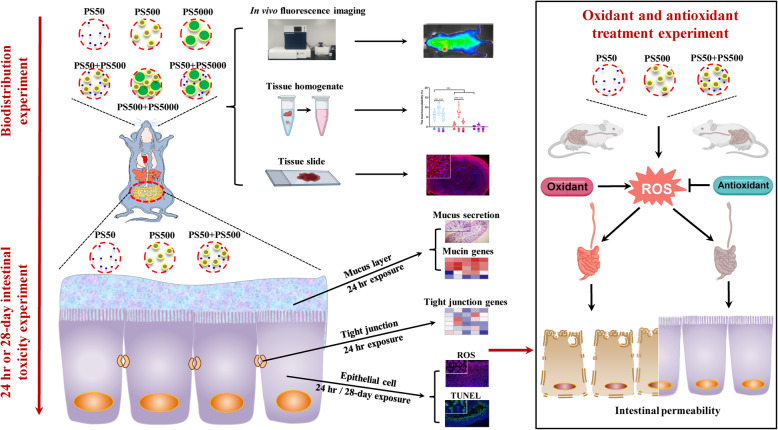
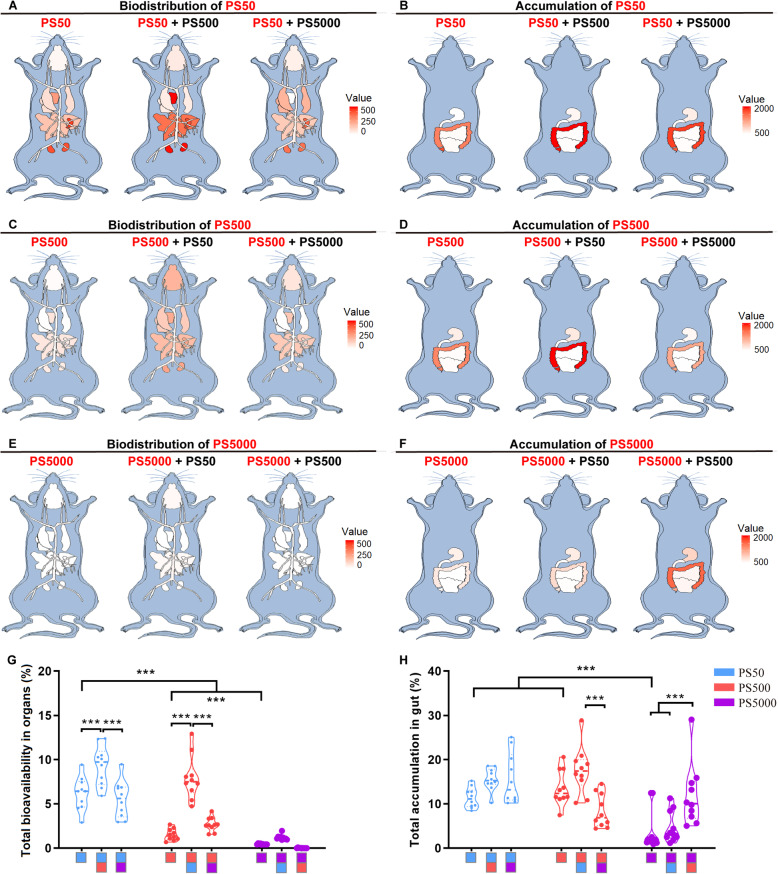
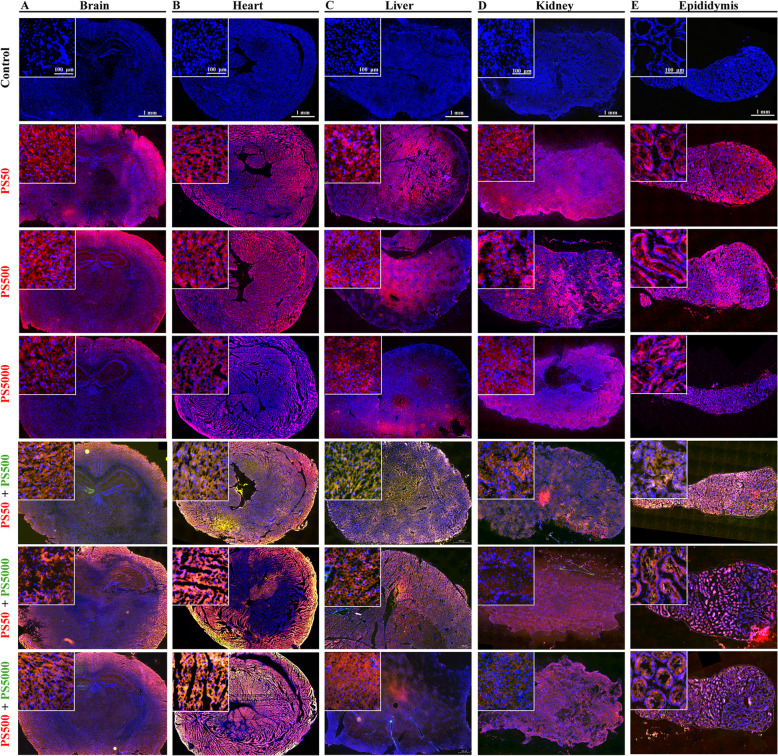
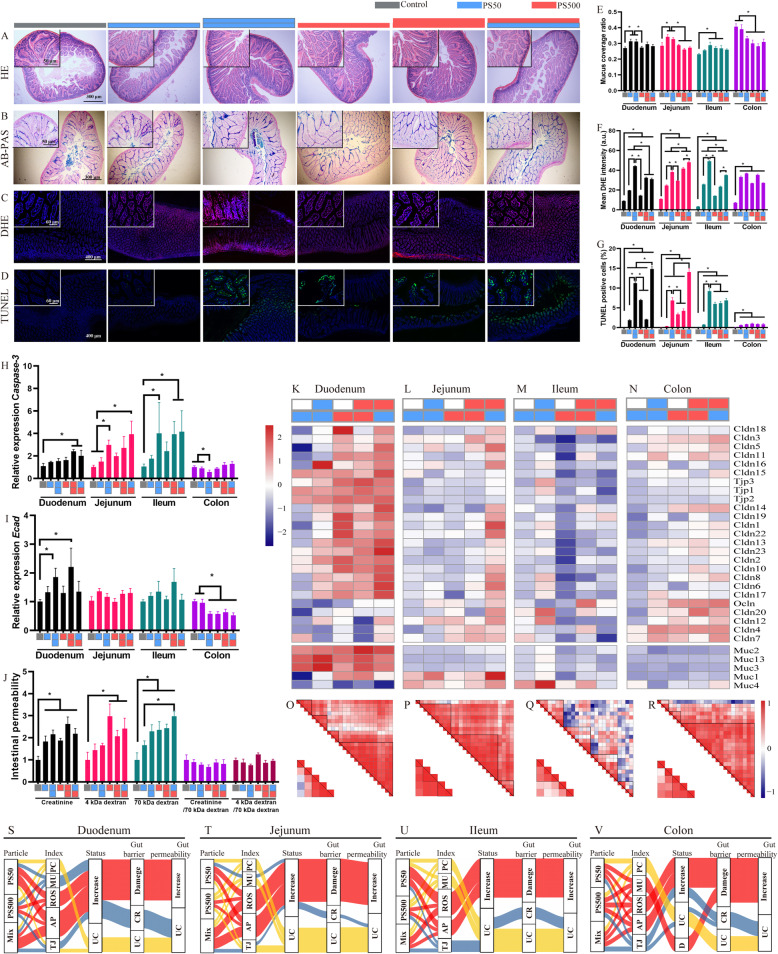
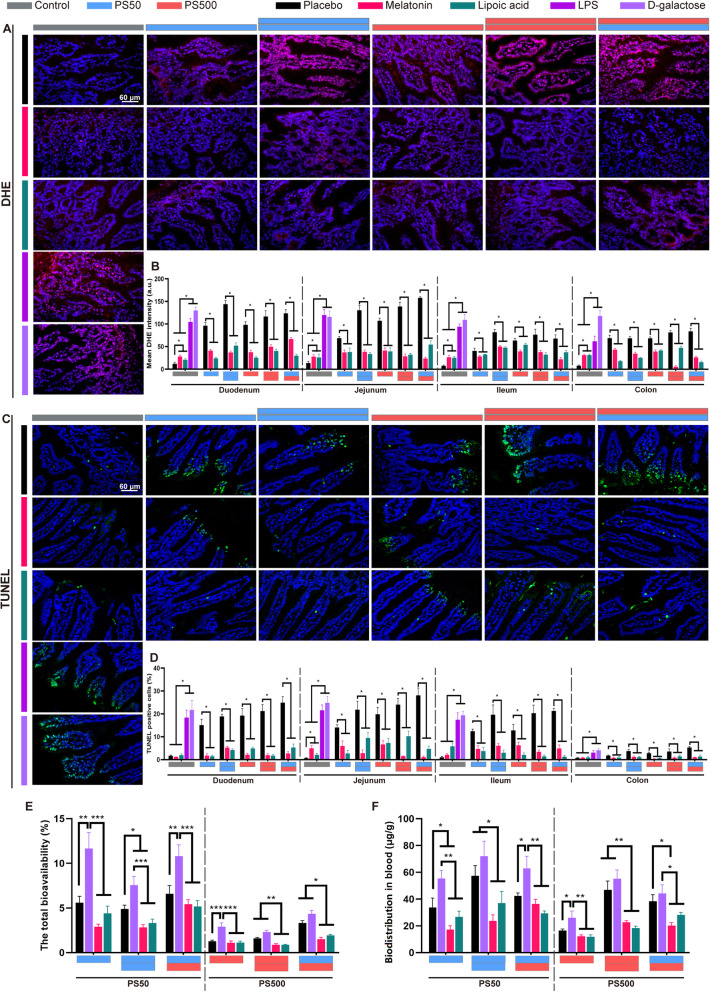
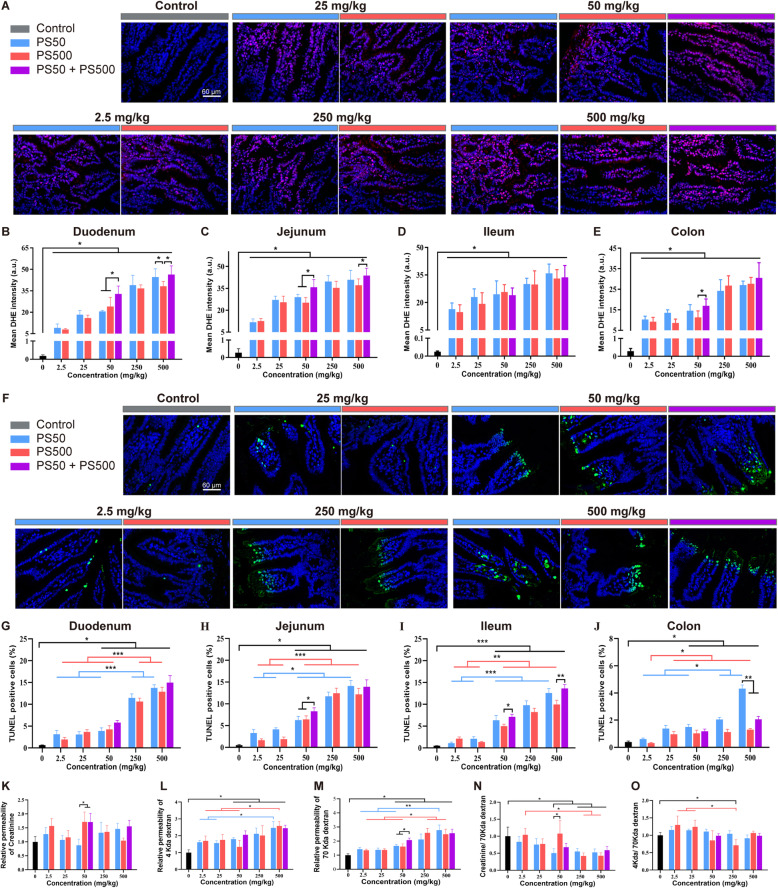
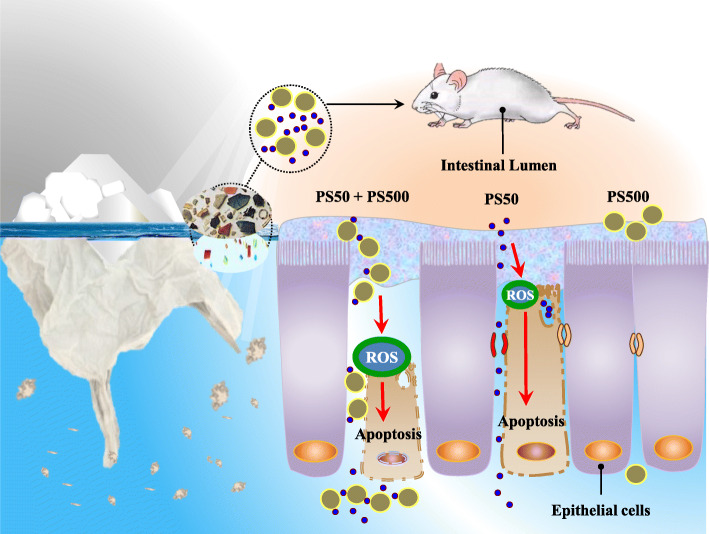
Background: Micro- and nanoplastic pollution has become a global environmental problem. Nanoplastics in the environment are still hard to detect because of analysis technology limitations. It is believed that when microplastics are found in the environment, more undetected nanoplastics are around. The current “microplastic exposure” is in fact the mixture of micro- and nanoplastic exposures. Therefore, the biological interaction between organisms among different sizes of micro- and nanoplastics should not be neglected. Results: We measured the biodistribution of three polystyrene (PS) particles (50 nm PS, PS50; 500 nm PS, PS500; 5000 nm PS, PS5000) under single and co-exposure conditions in mice. We explored the underlying mechanisms by investigating the effects on three major components of the intestinal barrier (the mucus layer, tight junctions and the epithelial cells) in four intestine segments (duodenum, jejunum, ileum and colon) of mice. We found that the amounts of both PS500 and PS5000 increased when they were co-exposed with PS50 for 24 h in the mice. These increased amounts were due primarily to the increased permeability in the mouse intestines. We also confirmed there was a combined toxicity of PS50 and PS500 in the mouse intestines. This manifested as the mixture of PS50 and PS500 causing more severe dysfunction of the intestinal barrier than that caused by PS50 or PS500 alone. We found that the combined toxicity of PS micro- and nanoplastics on intestinal barrier dysfunction was caused primarily by reactive oxygen species (ROS)-mediated epithelial cell apoptosis in the mice. These findings were further confirmed by an oxidants or antioxidants pretreatment study. In addition, the combined toxicity of PS micro- and nanoplastics was also found in the mice after a 28-day repeated dose exposure. Conclusions: There is a combined toxicity of PS50 and PS500 in the mouse intestines, which was caused primarily by ROS-mediated epithelial cell apoptosis in the mice. Considering that most recent studies on PS micro- and nanoplastics have been conducted using a single particle size, the health risks of exposure to PS micro- and nanoplastics on organisms may be underestimated.
Overview
The claims and statistics of this paper haven’t been checked yet.
Free: it reads the open-access text and checks the first 5 claims that cite a source we can check. Create a free account to check every claim.
Integrity signals
Registry
Cites
Statistics
Figures
Verification
Claims the paper makes
The claims and statistics of this paper haven’t been checked yet.
Free: it reads the open-access text and checks the first 5 claims that cite a source we can check. Create a free account to check every claim.
Claims other papers make about this one
Each is checked against this paper’s own text: does it say what the citing paper says it does?
The cited source says what the claim attributes to it.
In the citing paper
“the absorption and distribution of MNPs increase as particle size decreases.26”
From Microplastics and Nanoplastics in Atheromas and Cardiovascular Events (2024) · cites this paper as [26]
Self-check
Percentages, sums and reported differences re-computed from the paper’s own numbers.
The self-check needs the paper’s full text.
Citations
Cites
Production, use, and fate of all plastics ever made
Geyer, R., Jambeck, J. R., & Law, K. L. (2017) · Science Advances · doi:10.1126/sciadv.1700782 · Cited by 18,606
Human Consumption of Microplastics
Cox, K. D., Covernton, G. A., Davies, H. L., Dower, J. F., Juanes, F., & Dudas, S. E. (2019) · Environmental Science & Technology · doi:10.1021/acs.est.9b01517 · Cited by 2,745
Microplastics in Freshwaters and Drinking Water: Critical Review and Assessment of Data Quality
Koelmans, A. A., Mohamed Nor, N. H., Hermsen, E., Kooi, M., Mintenig, S. M., & De France, J. (2019) · Water Research · doi:10.1016/j.watres.2019.02.054 · Cited by 2,535 · cited 1×
“Considering the combined effects of PS micro- and nanoplastics on the intestine, and that most human PS micro- and nanoplastics intake appears as a mixture of multiple sizes of PS particles [5, 6], the health risk of PS particles exposure in humans should not be underestimated.”
BackgroundLu, Y., Zhang, Y., Deng, Y., Jiang, W., Zhao, Y., Geng, J., Ding, L., & Ren, H. (2016) · Environmental Science & Technology · doi:10.1021/acs.est.6b00183 · Cited by 2,125 · cited 1×
“This indicates a ubiquitous size dependency in regard to PS bioavailability in organisms, as similar effects have also been reported in zebrafish [20], early juvenile (See figure on previous page.”
Interactions of microplastic debris throughout the marine ecosystem
Galloway, T. S., Cole, M., & Lewis, C. (2017) · Nature Ecology & Evolution · doi:10.1038/s41559-017-0116 · Cited by 1,955 · cited 1×
“and nanoplastics (size < 100 nm), based upon the diameter of the plastic particles [2].”
BackgroundDetection of Various Microplastics in Human Stool: A Prospective Case Series
Schwabl, P., Köppel, S., Königshofer, P., Bucsics, T., Trauner, M., Reiberger, T., & Liebmann, B. (2019) · Annals of Internal Medicine · doi:10.7326/m19-0618 · Cited by 1,951 · cited 1×
“These compounds have also been detected in human stool [9].”
BackgroundOyster reproduction is affected by exposure to polystyrene microplastics
Sussarellu, R., Suquet, M., Thomas, Y., Lambert, C., Fabioux, C., Pernet, M. E. J., Le Goïc, N., Quillien, V., Mingant, C., Epelboin, Y., et al. (2016) · Proceedings of the National Academy of Sciences · doi:10.1073/pnas.1519019113 · Cited by 1,827
The intestinal epithelial barrier: a therapeutic target?
Odenwald, M. A., & Turner, J. R. (2017) · Nature Reviews Gastroenterology & Hepatology · doi:10.1038/nrgastro.2016.169 · Cited by 1,288 · cited 8×
“When the tight junctions or epithelial cells were damaged, a high capacity and permissive pathway termed “unrestricted” pathway formed [41, 44].”
BackgroundInfluentialImpacts of polystyrene microplastic on the gut barrier, microbiota and metabolism of mice
Jin, Y., Lu, L., Tu, W., Luo, T., & Fu, Z. (2019) · Science of The Total Environment · doi:10.1016/j.scitotenv.2018.08.353 · Cited by 1,100 · cited 2×
“It has been reported that PS5000 decreases mucus secretion in the colon [13].”
BackgroundMethodSenathirajah, K., Attwood, S., Bhagwat, G., Carbery, M., Wilson, S., & Palanisami, T. (2021) · Journal of Hazardous Materials · doi:10.1016/j.jhazmat.2020.124004 · Cited by 1,092 · cited 1×
“A much higher estimate proposes 5 g microplastics with diameters below 1mm per week for human ingestion [57].”
Background
Research works printed but not linked: 1
- Team RC R: a language and environment for statistical computing, R foundationfor statistical computing, Vienna, Austria 2020
Cited by
Items 501–517 of 517
Ponce‐Cusi, R., Carrillo, C. F. B., & Pilco-Ferreto, N. (2026) · Frontiers in Cellular and Infection Microbiology · doi:10.3389/fcimb.2026.1923626
“…co-exposure studies involving MPs/NPs, micro-organisms, and hosts (Wu et al., 2019); (ii) studies of MPs/NPs and hosts without a microbial component (Liang et al., 2021; Qiao et al., 2021); (iii) studies of the plastisphere or microbial ecology without a host component (Sun et al., 2023); (iv)…”
InfluentialCornelli, U., Luque, R., & Casella, C. (2026) · Microplastics · doi:10.3390/microplastics5040202
Husain, M. A., & Akram, M. (2026) · Journal of Hazardous Materials Plastics · doi:10.1016/j.hazmp.2026.100091
Kang, J., Yang, H., Wang, Y., Zhang, X., Zhu, C., Zhou, Y., & 李艳琴 (2026) · Frontiers in Pharmacology · doi:10.3389/fphar.2026.1973458
Li, G., Xiong, Y., Yu, X., Yu, J., & Xu, R. (2026) · Frontiers in Microbiology · doi:10.3389/fmicb.2026.1977638
“Ingestion can expose the intestinal ecosystem to MPs and NPs, and experimental studies suggest effects on oxidative stress, inflammation, barrier integrity and particle-related toxicity (Schwabl et al., 2019; Liang et al., 2021).”
Multipurpose Kieselguhrbots to Mitigate Micro-Nanoplastics and Energy Harvesting
Dubey, S., Rishabh, K., De, S., Sharma, S. K., Deka, R., Deshmukh, O. S., & Bandyopadhyay, D. (2026) · ACS Applied Materials & Interfaces · doi:10.1021/acsami.6c13403
14C-Enabled Quantitative Fate Mapping of Orally Administered Polystyrene Nanoplastics in Laying Hens
Chen, T., Chen, Y., Wang, X., Chen, Y., Zheng, N., Wang, L., Yu, Z., Zhang, S., Xu, L., Li, Q. X., et al. (2026) · ACS Nano · doi:10.1021/acsnano.6c09648
Rashidi, M., Moradi, H. R., Khaksar, Z., & Abbasi, S. (2026) · OpenNano · doi:10.1016/j.onano.2026.100325
Salvianolic acid B attenuates cholesterol dysregulation induced by polystyrene nanoplastics
Rong, H., Li, Z., Amat, G., Gao, Y., Guo, X., Zhang, X., Chen, R., Peng, Z., Bian, Y., Feng, Y., et al. (2026) · Molecular & Cellular Toxicology · doi:10.1007/s13273-026-00668-w
Zu, Y., Fatola, M. E., Morovati, A., Walker, T., Vivek, N., Cañas‐Carrell, J. E., Clegg, D. J., & Moustaïd‐Moussa, N. (2026) · Journal of Nutrition · doi:10.1016/j.tjnut.2026.101888
Microplastics as microbiota modulators: rewiring the gut metabolism immune axis
Algül, Ş., Beyhan, Y. E., & Özçelik, O. (2026) · Toxicology Mechanisms and Methods · doi:10.1080/15376516.2026.2749674
Micro(nano)plastics as an Emerging Skeletal Toxicant in Aquatic Organisms: Evidence and Mechanisms
Wen, X., Zou, T., Liu, W., & Zhan, C. (2026) · ACS ES&T Water · doi:10.1021/acsestwater.6c00820
MICRO- AND NANOPLASTICS IN INFLAMMATORY BOWEL DISEASE: FROM EXPERIMENTAL MODELS TO HUMAN EVIDENCE
Kowalczyk, M., Kolasa, M., Kuca, F., Gawiński, M., Kraśnik, K., Kuchciak, P., & Kurus, S. (2026) · International Journal of Innovative Technologies in Social Science · doi:10.31435/ijitss.4(52).2026.6481
He, L., Lei, T., Li, Z., Song, J., Wang, H., & Wang, Y. (2026) · Nano Today · doi:10.1016/j.nantod.2026.103223
Tu, Q., Li, H., Li, J., Feng, Z., Wei, X., Zhang, H., Yi, Q., Lin, H., Zhang, Y., Li, Y., et al. (2026) · International Journal of Pharmaceutics X · doi:10.1016/j.ijpx.2026.100699
Polystyrene nanoplastic exposure exacerbates epileptic vulnerability in SCN1A mutation models
Jo, J. H., Park, S. B., Jung, W. H., Lee, J. G., Kim, S. S., Seo, W., Im, J., Choi, K. J., Koh, B., Nam, H. J., et al. (2026) · Journal of Hazardous Materials · doi:10.1016/j.jhazmat.2026.144105
Loison, S., Djouina, M., Veclin, C., Lamana, J. J., Waxin, C., Speca, S., ZERBIB, P., Grassl, B., Reynaud, S., & Body–Malapel, M. (2026) · Journal of Hazardous Materials Advances · doi:10.1016/j.hazadv.2026.101727
Metadata
- Authors
- Liang, B., Zhong, Y., Huang, Y., Lin, X., Liu, J., Lin, L., Hu, M., Jiang, J., Dai, M., Wang, B., Zhang, B., Meng, H., Lelaka, J. J. J., Sui, H., Yang, X., & Huang, Z.
- Affiliations
- Southern Medical University (CN)
- Guangdong Pharmaceutical University (CN)
- China National Center for Food Safety Risk Assessment (CN)
- Corresponding author
- Yang, Xingfen
- Huang, Zhenlie
- Venue
- Particle and Fibre Toxicology
- Published
- 2021-06-07
- Volume
- 18
- Issue
- 1
- Pages
- 20-20
- ISSN
- 1743-8977 (ISSN-L)
- PMC
- PMC8186235
- OpenAlex
- W3171670357
- Cited by
- 508
- References
- 60
- Citations by year
- 2026: 124 · 2025: 119 · 2024: 119 · 2023: 85 · 2022: 52 · 2021: 7
- FWCI
- 16.30
- Type
- journal article
- Language
- en
- Open access
- gold
- doi.org
- Licence
- cc-by
- creativecommons.org/licenses/by/4.0 (tdm)
- creativecommons.org/licenses/by/4.0 (vor)
- Locations
- Particle and Fibre Toxicology (publishedVersion, cc-by)
- PubMed Central (publishedVersion, cc-by)
- PubMed (publishedVersion)
- DOAJ (DOAJ: Directory of Open Access Journals) (submittedVersion, cc-by-sa)
- Funders
- National Key R&D Program of China, Ministry of Science and Technology of China (2018YFC1602103, 2018YFC1603101)
- National Natural Science Foundation of China (82073519, 81872601)
- Guangdong Key R&D Program, Ministry of Science and Technology of Guangdong Province (2019B020210002)
- Natural Science Foundation of Guangdong Province (2018A030313068)
- Guangdong Provincial Key Laboratory of Tropical Disease Research (2017B030314035)
- National Training Program of Innovation and Entrepreneurship for Undergraduates (S202012121157, S202012121055, S201912121024)
- NMPA Key Laboratory for Safety Evaluation of Cosmetics
- Topics
- Physical Sciences › Environmental Science › Pollution › Microplastics and Plastic Pollution
- Physical Sciences › Environmental Science › Health, Toxicology and Mutagenesis › Environmental Toxicology and Ecotoxicology
- Physical Sciences › Materials Science › Materials Chemistry › Nanoparticles: synthesis and applications
- Keywords
- polystyrene, microplastics, nanoplastics, intestinal barrier dysfunction, reactive oxygen species, epithelial apoptosis, co-exposure toxicity, tissue distribution, intestinal permeability, tight junctions, mucus layer, repeated-dose exposure, oxidative stress
- MeSH terms
- Microplastics, Animals, Epithelial Cells, Plastics, Polystyrenes, Tissue Distribution, Apoptosis, Reactive Oxygen Species, Mice
About these checks
Registry, retraction, Cites and statistics results are computed, not judged, with one exception: a printed reference that no index lists is read once by a model before it counts as a citation error. Claims are extracted by a model and kept only when their quote appears verbatim in the text; each cited source is then checked, with a model’s help, for whether it says what the claim relies on. Those verdicts can be wrong — read the claim’s quote and the cited source before relying on one.
Statistics and arithmetic are recomputed, not judged.
Confidence bands are shown only for fields calibrated on our annotated test set. None is calibrated yet, so no band is shown.
What counts as a claim ›How we measure confidence ›How we check this ›
Are you an author, or do you see a problem with this page? Request a review
Data sources
Bibliographic data: Semantic Scholar, OpenAlex, Crossref.
Contains information from the Semantic Scholar Academic Graph Datasets, made available under the ODC Attribution License (ODC-BY 1.0).
Semantic Scholar’s data is described in: Kinney, R., et al. (2023). The Semantic Scholar Open Data Platform. arXiv:2301.10140.
