

A systematic review of the use of the Consolidated Framework for Implementation Research
Open accessThe DOI matches its Crossref record; 44 of the 45 references it cites were found in a registry or an index.
Abstract
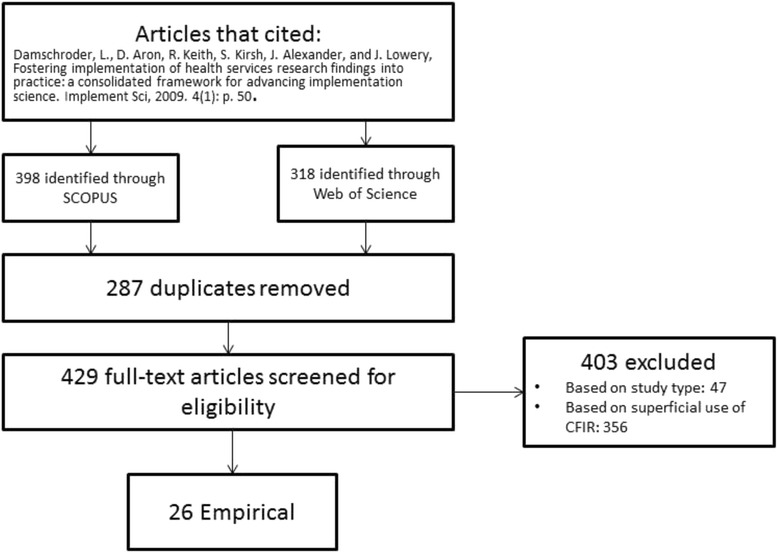
BACKGROUND: In 2009, Damschroder et al. developed the Consolidated Framework for Implementation Research (CFIR), which provides a comprehensive listing of constructs thought to influence implementation. This systematic review assesses the extent to which the CFIR's use in implementation research fulfills goals set forth by Damschroder et al. in terms of breadth of use, depth of application, and contribution to implementation research. METHODS: We searched Scopus and Web of Science for publications that cited the original CFIR publication by Damschroder et al. (Implement Sci 4:50, 2009) and downloaded each unique result for review. After applying exclusion criteria, the final articles were empirical studies published in peer-review journals that used the CFIR in a meaningful way (i.e., used the CFIR to guide data collection, measurement, coding, analysis, and/or reporting). A framework analysis approach was used to guide abstraction and synthesis of the included articles. RESULTS: Twenty-six of 429 unique articles (6 %) met inclusion criteria. We found great breadth in CFIR application; the CFIR was applied across a wide variety of study objectives, settings, and units of analysis. There was also variation in the method of included studies (mixed methods (n = 13); qualitative (n = 10); quantitative (n = 3)). Depth of CFIR application revealed some areas for improvement. Few studies (n = 3) reported justification for selection of CFIR constructs used; the majority of studies (n = 14) used the CFIR to guide data analysis only; and few studies investigated any outcomes (n = 11). Finally, reflections on the contribution of the CFIR to implementation research were scarce. CONCLUSIONS: Our results indicate that the CFIR has been used across a wide range of studies, though more in-depth use of the CFIR may help advance implementation science. To harness its potential, researchers should consider how to most meaningfully use the CFIR. Specific recommendations for applying the CFIR include explicitly justifying selection of CFIR constructs; integrating the CFIR throughout the research process (in study design, data collection, and analysis); and appropriately using the CFIR given the phase of implementation of the research (e.g., if the research is post-implementation, using the CFIR to link determinants of implementation to outcomes).
Overview
The claims and statistics of this paper haven’t been checked yet.
Free: it reads the open-access text and checks the first 5 claims that cite a source we can check. Create a free account to check every claim.
Integrity signals
Registry
Cites
Statistics
Figures
Verification
Claims the paper makes
The claims and statistics of this paper haven’t been checked yet.
Free: it reads the open-access text and checks the first 5 claims that cite a source we can check. Create a free account to check every claim.
Claims other papers make about this one
Each is checked against this paper’s own text: does it say what the citing paper says it does?
The cited source says what the claim attributes to it.
In the citing paper
“Kirk et al.’s 2015 review of 26 articles with meaningful use of the CFIR found that most users employed mixed (n = 13) or qualitative (n = 10) methods and used the CFIR in the post-implementation phase (n = 15) [13].”
From The updated consolidated framework for implementation research based on user feedback (2022) · cites this paper as [13]
The cited source says what the claim attributes to it.
In the citing paper
“Determinant frameworks can thus be used to inform choice of implementation strategies that may best address contextual determinants [14], generate hypotheses to prospectively guide predictions of implementation outcomes, or retrospectively explain implementation outcomes by assessing differences in determinants across implementation settings [11, 13, 15].”
From The updated consolidated framework for implementation research based on user feedback (2022) · cites this paper as [13]
The cited source says what the claim attributes to it.
In the citing paper
“The majority of CFIR users employ qualitative methods to assess constructs [13].”
From The updated consolidated framework for implementation research based on user feedback (2022) · cites this paper as [13]
The cited source says what the claim attributes to it.
In the citing paper
“In their systematic review of CFIR application, Kirk et al highlight gaps in depth of use of the framework, variation in selection of CFIR constructs, and a lack of justification of constructs used, limiting comparison of findings across time and contexts.14”
The cited source says what the claim attributes to it.
In the citing paper
“One indicator of this is a finding by Kirk et al: Among 26 research studies that meaningfully used CFIR, only two of the 26 included patients among their unit of analysis.14”
4 more claims about this paper
Create a free account to see every claim other papers make about this one.
Self-check
Percentages, sums and reported differences re-computed from the paper’s own numbers.
The self-check needs the paper’s full text.
Citations
Cites
Damschroder, L. J., Aron, D. C., Keith, R. E., Kirsh, S. R., Alexander, J. A., & Lowery, J. C. (2009) · Implementation Science · doi:10.1186/1748-5908-4-50 · Cited by 14,496 · cited 10×
“At the macro level, the CFIR provides a standardized structure for building on findings across studies [3].”
BackgroundMethodInfluentialSelf-citationGale, N. K., Heath, G., Cameron, E., Rashid, S., & Redwood, S. (2013) · BMC Medical Research Methodology · doi:10.1186/1471-2288-13-117 · Cited by 10,865 · cited 1×
“Objective 3: determine the contribution of the CFIR to implementation research General co posed by D • Cohere • Whethe • Whethe Microsoft Excel where content was arrayed in a matrix format consisting of rows (articles), columns (codes), and cells (summarized data) [8].”
BackgroundQualitative research practice: a guide for social science students and researchers
(2003) · Choice Reviews Online · doi:10.5860/choice.41-1319 · Cited by 10,543
Proctor, E., Silmere, H., Raghavan, R., Hovmand, P., Aarons, G., Bunger, A., Griffey, R., & Hensley, M. (2011) · Administration and Policy in Mental Health and Mental Health Services Research · doi:10.1007/s10488-010-0319-7 · Cited by 8,721 · cited 2×
“[25]), (2) provide clearer linkage of CFIR constructs with outcomes, and (3) provide clearer specification of which CFIR constructs were used to investigate outcomes.”
BackgroundComparison of PubMed, Scopus, Web of Science, and Google Scholar: strengths and weaknesses
Falagas, M. E., Pitsouni, E. I., Malietzis, G. A., & Pappas, G. (2008) · The FASEB Journal · doi:10.1096/fj.07-9492lsf · Cited by 5,039 · cited 1×
“, Google Scholar) [6].”
The Challenge of Innovation Implementation
Klein, K. J., & Sorra, J. S. (1996) · The Academy of Management Review · doi:10.2307/259164 · Cited by 2,113 · cited 1×
“Investigation of outcomes is critical for the field of implementation science overall because optimal implementation outcomes are a necessary condition for innovation effectiveness [25, 26].”
BackgroundFrench, S. D., Green, S. E., O’Connor, D. A., McKenzie, J. E., Francis, J. J., Michie, S., Buchbinder, R., Schattner, P., Spike, N., & Grimshaw, J. M. (2012) · Implementation Science · doi:10.1186/1748-5908-7-38 · Cited by 1,338 · cited 1×
“Better integration of the CFIR (or other theoretical framework) into empirical studies would help to address gaps in use of theory and advance implementation science [4, 31, 32].”
Kitson, A. L., Rycroft-Malone, J., Harvey, G., McCormack, B., Seers, K., & Titchen, A. (2008) · Implementation Science · doi:10.1186/1748-5908-3-1 · Cited by 1,314 · cited 1×
“earlier by developers of the PARIHS framework [27].”
MethodMeho, L. I., & Yang, K. (2007) · Journal of the American Society for Information Science and Technology · doi:10.1002/asi.20677 · Cited by 974
Damschroder, L. J., & Lowery, J. C. (2013) · Implementation Science · doi:10.1186/1748-5908-8-51 · Cited by 734
Self-citation
Cited by
Items 101–200 of 1,001
Dalkin, S. M., Hardwick, R., Haighton, C., & Finch, T. L. (2021) · Implementation Science Communications · doi:10.1186/s43058-021-00172-3 · Cited by 56
“…science approaches gain increasing application in research to evaluate interventions and programmes (see, for example, Kirk et al. ’ s [31] review of the application of the Consolidated Framework for Implementation Research (CFIR)), learning from this review can be extrapolated to…”
Liu, M., & Schueller, S. M. (2023) · Current Treatment Options in Psychiatry · doi:10.1007/s40501-023-00298-2 · Cited by 56
“The CFIR has been used in a multitude of studies to identify potential determinants of implementation (see [19]).”
Klaiman, T. A., Silvestri, J. A., Srinivasan, T. L., Szymanski, S., Tran, T., Oredeko, F., Sjoding, M. W., Fuchs, B. D., Maillie, S., Jablonski, J., et al. (2020) · Annals of the American Thoracic Society · doi:10.1513/annalsats.202005-571oc · Cited by 55
Ezezika, O. C., Gong, J., Abdirahman, H., & Sellen, D. (2021) · Global Implementation Research and Applications · doi:10.1007/s43477-021-00007-2 · Cited by 55
Smit, L. C., Schuurmans, M. J., Blom, J. W., Fabbricotti, I. N., Jansen, A. P. D., Kempen, G. I. J. M., Koopmans, R. T. C. M., Looman, W., Melis, R. J. F., Metzelthin, S., et al. (2017) · Journal of Clinical Epidemiology · doi:10.1016/j.jclinepi.2017.12.013 · Cited by 56
“To overcome the risk of inadequate implementation and the failure to replicate, future development of interventions should therefore focus on the implementation context [35,40].”
BackgroundHu, J., Ruan, H., Li, Q., Gifford, W., Zhou, Y., Yu, L., & Harrison, D. M. (2020) · Journal of Pediatric Nursing · doi:10.1016/j.pedn.2020.06.004 · Cited by 54
Ndejjo, R., Wanyenze, R. K., Nuwaha, F., Bastiaens, H., & Musinguzi, G. (2020) · Implementation Science · doi:10.1186/s13012-020-01065-0 · Cited by 54
Mielke, J., Leppla, L., Valenta, S., Zullig, L. L., Zúñiga, F., Staudacher, S., Teynor, A., & Geest, S. D. (2022) · Implementation Science Communications · doi:10.1186/s43058-022-00354-7 · Cited by 56
“In cases where contextual analysis is treated not as a separate foundational phase of an IS project, but as an add-on, contextual data are commonly only performed retrospectively, as part of a process evaluation [19, 29].”
BackgroundJohnson, A. M., Moore, J. E., Chambers, D. A., Rup, J., Dinyarian, C., & Straus, S. E. (2019) · Implementation Science · doi:10.1186/s13012-019-0895-1 · Cited by 53
Salvador‐Carulla, L., Lukersmith, S., & Sullivan, W. F. (2017) · Epidemiology and Psychiatric Sciences · doi:10.1017/s2045796016000767 · Cited by 53
“2015); and to incorporate the analysis of the context and the impacts of guideline implementation in individual and population outcomes (Damschroder et al. 2009; Kirk et al. 2016).”
BackgroundSarkar, U., Lee, J. E., Nguyen, K. H., Lisker, S., & Lyles, C. R. (2021) · Journal of Medical Internet Research · doi:10.2196/26623 · Cited by 52
Desveaux, L., Saragosa, M., Rogers, J., Bevan, L., Loshak, H., Moser, A., Feldman, S., Regier, L. D., Jeffs, L. P., & Ivers, N. M. (2017) · Implementation Science · doi:10.1186/s13012-017-0602-z · Cited by 53
“vention outcomes [27], our findings also highlight the set of constructs that facilitated perceived success of the”
BackgroundSpecialist, A. I. L. F. C., Faruq, M. O., Dhaka, B., & Mollah, M. H.-O.-R. (2021) · American Journal of Scholarly Research and Innovation · doi:10.63125/4qpdpf28 · Cited by 52
Bhatti, Y. A., Prime, M., Harris, M., Wadge, H., McQueen, J., Patel, H., Carter, A. W., Parston, G., & Darzi, A. (2017) · BMJ Innovations · doi:10.1136/bmjinnov-2016-000186 · Cited by 51
Providers as Stakeholders in Addressing Implementation Barriers to Youth Mental Healthcare
Goodcase, E. T., Brewe, A. M., White, S. W., & Jones, S. (2021) · Community Mental Health Journal · doi:10.1007/s10597-021-00905-7 · Cited by 51
Mielke, J., Brunkert, T., Zúñiga, F., Simon, M., Zullig, L. L., & Geest, S. D. (2022) · BMC Medical Research Methodology · doi:10.1186/s12874-022-01772-w · Cited by 57
Young, J. Q., Sugarman, R., Schwartz, J., McClure, M., & O’Sullivan, P. (2020) · Perspectives on Medical Education · doi:10.1007/s40037-020-00587-z · Cited by 51
Fridberg, H., Wallin, L., & Tistad, M. (2021) · BMC Health Services Research · doi:10.1186/s12913-021-06942-y · Cited by 51
“Content analysis employing a mixed deductive–inductive approach using constructs from the CFIR to describe HCPs’ perceptions of PCC in relation to their context was chosen for three overarching and long-term reasons [16, 19, 36, 37]: to facilitate the comparison of results from multiple and repeated data collections a…”
MethodResultLiao, X., Yao, C., Jin, F., Zhang, J., & Liu, L. (2024) · BMJ Open · doi:10.1136/bmjopen-2024-084398 · Cited by 50
“17 In China, a major milestone was achieved with the approval of the first AI-related software for coronary artery fractional flow reserve by the National Medical Products Administration (NMPA) in 2020, 18 highlighting the continuous development and integration of AI technologies in healthcare…”
Means, A. R., Ajjampur, S. S. R., Bailey, R. L., Galactionova, K., Gwayi-Chore, M.-C., Halliday, K. E., Ibikounlé, M., Juvekar, S. K., Kalua, K., Kang, G., et al. (2018) · PLoS neglected tropical diseases · doi:10.1371/journal.pntd.0005988 · Cited by 50
“The CFIR is built upon a number of preexisting implementation theories to provide a comprehensive meta-theoretical framework of 39 “constructs” that influence implementation [16].”
BackgroundOliver, D., Spada, G., Colling, C., Broadbent, M., Baldwin, H., Patel, R., Stewart, R., Stahl, D., Dobson, R., McGuire, P., et al. (2021) · Schizophrenia Research · doi:10.1016/j.schres.2020.05.007 · Cited by 49
“A recent systematic review concluded that only 6% of studies acknowledging the CFIR actually used it meaningfully (Kirk et al., 2016).”
McLoughlin, G. M., Candal, P., Vazou, S., Lee, J. A., Dzewaltowski, D. A., Rosenkranz, R. R., Lanningham‐Foster, L., Gentile, D. A., Liechty, L., Chen, S., et al. (2020) · International Journal of Behavioral Nutrition and Physical Activity · doi:10.1186/s12966-020-01070-y · Cited by 51
Gordon, E. J., Uriarte, J. J., Lee, J. J., Kang, R. H., Shumate, M., Ruiz, R. M., Mathur, A. K., Ladner, D. P., & Caicedo, J. C. (2021) · American Journal of Transplantation · doi:10.1111/ajt.16857 · Cited by 49
A Pragmatic Guide to Qualitative Analysis for Pediatric Researchers
Thompson, D. I., Deatrick, J. A., Knafl, K. A., Swallow, V. M., & Wu, Y. P. (2022) · Journal of Pediatric Psychology · doi:10.1093/jpepsy/jsac040 · Cited by 47
DATA-DRIVEN APPROACHES TO ENHANCING HUMAN–MACHINE COLLABORATION IN REMOTE WORK ENVIRONMENTS
Mollah, M. H.-O.-R., & Kudapa, S. P. (2022) · doi:10.63125/wt9t6w68 · Cited by 47
Meshkovska, B., Scheller, D. A., Wendt, J., Jilani, H. S., Scheidmeir, M., Stratil, J. M., & Lien, N. (2022) · International Journal of Behavioral Nutrition and Physical Activity · doi:10.1186/s12966-022-01246-8 · Cited by 48
“CFIR: application One of the advantages of using CFIR for synthesis of results is that it enables comparison of findings across studies using the same framework [13].”
MethodMcDermott, J. H., Wright, S. J., Sharma, V., Newman, W. G., Payne, K., & Wilson, P. M. (2022) · Frontiers in Medicine · doi:10.3389/fmed.2022.945352 · Cited by 47
Dambi, J. M., Norman, C., Doukani, A., Potgieter, S., Turner, J., Musesengwa, R., Verhey, R., & Chibanda, D. (2022) · JMIR Mental Health · doi:10.2196/37968 · Cited by 46
Kinney, A. R., Stearns‐Yoder, K. A., Hoffberg, A. S., Middleton, A., Weaver, J., Roseen, E. J., Juckett, L., & Brenner, L. A. (2023) · Archives of Physical Medicine and Rehabilitation · doi:10.1016/j.apmr.2023.03.005 · Cited by 47
Selick, A., Durbin, J., Casson, I., Lee, J. S., & Lunsky, Y. (2018) · Health Promotion and Chronic Disease Prevention in Canada · doi:10.24095/hpcdp.38.10.01 · Cited by 46
Stokes, T., Tumilty, E., Doolan‐Noble, F., & Gauld, R. D. C. (2018) · BMJ Open · doi:10.1136/bmjopen-2018-025094 · Cited by 46
“CFIR has been widely used to inform qualitative process evaluations across a range of complex interventions.(15)”
MethodMeyerson, B. E., Agley, J. D., Jayawardene, W. P., Eldridge, L. A., Arora, P., Smith, C., Vadiei, N., Kennedy, A., & Moehling, T. J. (2019) · Research in Social and Administrative Pharmacy · doi:10.1016/j.sapharm.2019.08.026 · Cited by 46
Greiver, M., Havard, A., Bowles, J., Kalia, S., Chen, T., Aliarzadeh, B., Moineddin, R., Sherlock, J., Hinton, W., Sullivan, F., et al. (2020) · British Journal of General Practice · doi:10.3399/bjgp20x714089 · Cited by 46
“54 Strategies can involve individual, collective, and structural changes; 55 these include prioritising the change, leadership support, presence of champions, and audit and feedback.”
McLoughlin, G. M., Allen, P. M., Walsh‐Bailey, C., & Brownson, R. C. (2021) · Implementation Science Communications · doi:10.1186/s43058-021-00169-y · Cited by 46
Campmans, J. M. D., Smit, D. J. M., van Oostrom, S. H., Engels, J. A., & Proper, K. I. (2023) · Frontiers in Public Health · doi:10.3389/fpubh.2022.1035064 · Cited by 47
Fu, B. Q., Zhong, C. C., Wong, C. H. L., Ho, F. F., Nilsén, P., Hung, C. T., Yeoh, E., & Chung, V. C. (2023) · International Journal of Health Policy and Management · doi:10.34172/ijhpm.2023.7089 · Cited by 45
Baltaxe, E., Cano, I., Herranz, C., Barberán-García, A., Hernández, C., Alonso, A., Arguis, M. J., Bescos, C., Burgos, F., Clèries, M., et al. (2019) · BMC Health Services Research · doi:10.1186/s12913-019-4174-2 · Cited by 46
Hendricks‐Sturrup, R., Mazor, K. M., Sturm, A. C., & Lu, C. Y. (2019) · Journal of Personalized Medicine · doi:10.3390/jpm9030032 · Cited by 45
Piat, M., Wainwright, M., Sofouli, E., Albert, H., Casey, R., Rivest, M.-P., Briand, C., Kasdorf, S., Labonté, L., LeBlanc, S., et al. (2021) · Implementation Science Communications · doi:10.1186/s43058-020-00099-1 · Cited by 45
“As external change agents, we did not only want to apply the CFIR as a framework for data-collection at the postimplementation stage as it has typically been used [2].”
BackgroundMethodInfluentialImplementing biomarkers to predict motor recovery after stroke
Connell, L., Smith, M., Byblow, W. D., & Stinear, C. M. (2018) · Neurorehabilitation · doi:10.3233/nre-172395 · Cited by 44
“to refine and adapt both their implementation strategy and the innovation before implementation began (Kirk et al., 2016).”
Johnson, K. A., Gilbert, L., Hunt, T., Wu, E., Metsch, L. R., Goddard‐Eckrich, D., Richards, S., Tibbetts, R., Rowe, J. C., Wainberg, M. L., et al. (2018) · Trials · doi:10.1186/s13063-018-2792-3 · Cited by 45
Hagedorn, H., Wisdom, J. P., Gerould, H., Pinsker, E. A., Brown, R., Dawes, M. A., Dieperink, E. W., Myrick, D. H., Oliva, E. M., Wagner, T. H., et al. (2019) · Addiction Science & Clinical Practice · doi:10.1186/s13722-019-0151-7 · Cited by 47
Holmes, J. A., Logan, P., Morris, R. P. G., & Radford, K. (2020) · Systematic Reviews · doi:10.1186/s13643-020-01508-1 · Cited by 44
“Parallels and variances in language used were revealed, which inform theoretical development [33, 110].”
BackgroundDolansky, M. A., Pohnert, A. M., Ball, S., McCormack, M. E., Hughes, R., & Pino, L. (2021) · Worldviews on Evidence-Based Nursing · doi:10.1111/wvn.12498 · Cited by 44
Shepperd, S., Cradduck-Bamford, A., Butler, C., Ellis, G., Godfrey, M., Gray, A. M., Hemsley, A. G., Khanna, P., Langhorne, P., Mäkelä, P., et al. (2022) · Health and Social Care Delivery Research · doi:10.3310/htaf1569 · Cited by 45
Wu, X. S., Miles, A., & Braakhuis, A. J. (2022) · Current Developments in Nutrition · doi:10.1093/cdn/nzac032 · Cited by 44
“The Consolidated Framework for Implementation Research (CFIR) has been recognized as one of the most common conceptual frameworks in guideline implementation (24).”
Michel, D. E., Tonna, A. P., Dartsch, D. C., & Weidmann, A. E. (2021) · Research in Social and Administrative Pharmacy · doi:10.1016/j.sapharm.2021.07.017 · Cited by 44
Smit, L. C., Dikken, J., Schuurmans, M. J., de Wit, N. J., & Bleijenberg, N. (2020) · BMJ Open · doi:10.1136/bmjopen-2020-039681 · Cited by 42
Dovigi, E., Kwok, E. Y. L., & English, J. C. (2020) · Current Dermatology Reports · doi:10.1007/s13671-020-00323-0 · Cited by 43
Evaluating childsmile, Scotland's National Oral Health Improvement Programme for children
Ross, A. J., Sherriff, A., Kidd, J., Deas, L., Eaves, J., Blokland, A., Wright, B., King, P., McMahon, A. D., Conway, D. I., et al. (2023) · Community Dentistry and Oral Epidemiology · doi:10.1111/cdoe.12790 · Cited by 31
Factors influencing implementation of aerobic exercise after stroke: a systematic review
Gaskins, N. J., Bray, E. P., Hill, J. E., Doherty, P., Harrison, A. S., & Connell, L. (2019) · Disability and Rehabilitation · doi:10.1080/09638288.2019.1704075 · Cited by 41
Recognition and Management of Protracted Bacterial Bronchitis in Australian Aboriginal Children
Laird, P. J., Walker, R., Lane, M., Totterdell, J. A., Chang, A. B., & Schultz, A. (2020) · CHEST Journal · doi:10.1016/j.chest.2020.06.073 · Cited by 41
Brien, R., Volpe, I., Grigg, J., Lyons, T., Hughes, C., McKinnon, G., Tzanetis, S., Crawford, S., Eade, A., Lee, N., et al. (2023) · Harm Reduction Journal · doi:10.1186/s12954-023-00761-6 · Cited by 41
“interventions should be informed by participatory, formative evaluations to meet the needs of all affected stakeholders [52, 85, 89, 90, 103].”
BackgroundShin, H. D., Hamovitch, E., Gatov, E., MacKinnon, M., Samawi, L., Boateng, R., Thorpe, K. E., & Barwick, M. (2025) · PLOS Digital Health · doi:10.1371/journal.pdig.0000418 · Cited by 40
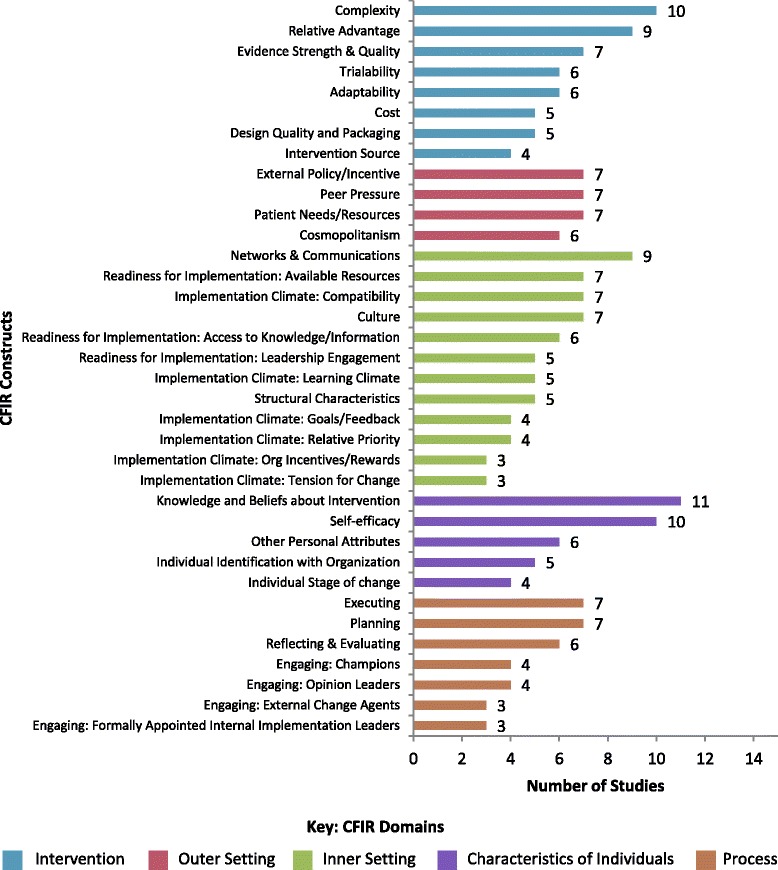
“A recent literature review of the CFIR indicated that the most commonly used constructs in studies were “Knowledge and Beliefs about the Intervention,” followed by “Self-Efficacy,” both of which fall within the CFIR domain of Individual Characteristics [86].”
Shin, H. D., Hamovitch, E., Gatov, E., MacKinnon, M., Samawi, L., Boateng, R., Thorpe, K., & Barwick, M. (2023) · doi:10.1101/2023.11.22.23298897 · Cited by 40
“While we did include a small number of English studies published in non-526 English speaking countries, our findings may not provide a comprehensive representation of the NASSS application in those regions.”
ResultHighfield, L., Valerio, M. A., Fernandez, M. E., & Eldridge-Bartholomew, L. K. (2018) · Frontiers in Public Health · doi:10.3389/fpubh.2018.00300 · Cited by 35
Rogers, L. Q., Goncalves, L., Martin, M. Y., Pisu, M., Smith, T., Hessong, D., Oster, R. A., Qu, H., Shewchuk, R. M., Iqbal, F., et al. (2019) · Journal of Cancer Survivorship · doi:10.1007/s11764-019-00773-x · Cited by 40
King, E. S., Moore, C. J., Wilson, H. K., Harden, S. M., Davis, M. A., & Berg, A. C. (2019) · BMC Public Health · doi:10.1186/s12889-019-7315-y · Cited by 40
The Mechanisms of Implementation Support - Findings from a Systematic Integrative Review
Albers, B., Metz, A. J. R., Burke, K., Bührmann, L., Bartley, L., Driessen, P., & Varsi, C. (2021) · Research on Social Work Practice · doi:10.1177/10497315211042375 · Cited by 41
“The framework has been used extensively to describe and analyze implementation study contexts (Kirk et al., 2016), and to support the conduct of systematic reviews in a diverse range of human and social service sectors (Li, Jeffs, Barwick, & Stevens, 2018; Means et al., 2020; Pellerin, Lamontagne,…”
MethodCoffey, A., Hartigan, I., Timmons, S., Buckley, C., Lehane, E. A., O’Loughlin, C., O’Connell, S., & Cornally, N. (2021) · Implementation Science Communications · doi:10.1186/s43058-021-00241-7 · Cited by 41
“A strength of the study is that CFIR along with i-PARIHS [26] was used from the conception of the research, to inform the intervention and to evaluate the process of implementation, given that many studies only employ CFIR in post hoc analysis [38].”
MethodImplementation Science and Nutrition Education and Behavior: Opportunities for Integration
Swindle, T., Curran, G. M., & Johnson, S. L. (2019) · Journal of Nutrition Education and Behavior · doi:10.1016/j.jneb.2019.03.001 · Cited by 44
Maben, J., Taylor, C., Jagosh, J., Carrieri, D., Briscoe, S., Klepacz, N. A., & Mattick, K. L. (2024) · Health and Social Care Delivery Research · doi:10.3310/twdu4109 · Cited by 41
Schmitt, M. E., Hawkins, M. M., & Florsheim, P. (2025) · Implementation Science Communications · doi:10.1186/s43058-025-00712-1 · Cited by 41
“While this research on the implementation processes has provided valuable insight into the relevance certain determinants play throughout the implementation process, there has been a notable lack of research comparing the relevance and/ or strength of particular determinants across programs [9].”
InfluentialMatz-Costa, C. J., Howard, E., Castaneda‐Sceppa, C., Iriarte, A. D.-V., & Lachman, M. E. (2018) · The Gerontologist · doi:10.1093/geront/gny092 · Cited by 39
Gordon, E. J., Romo, E., Amórtegui, D., Rodas, A., Anderson, N., Uriarte, J. J., McNatt, G. E., Caicedo, J. C., Ladner, D. P., & Shumate, M. (2020) · Health Expectations · doi:10.1111/hex.13124 · Cited by 39
Tuteja, S., Salloum, R. G., Elchynski, A. L., Smith, D. M., Rowe, E. J., Blake, K., Limdi, N. A., Aquilante, C. L., Bates, J. S., Beitelshees, A. L., et al. (2021) · Clinical and Translational Science · doi:10.1111/cts.13154 · Cited by 39
“Impact on health and social policy 3 (18) 3 (23) 0 (0)”
BackgroundA Novel Peer-to-Peer Coaching Program to Support Digital Mental Health: Design and Implementation
Rosenberg, B. M., Kodish, T., Cohen, Z. D., Gong-Guy, E., & Craske, M. G. (2022) · JMIR Mental Health · doi:10.2196/32430 · Cited by 39
“It contains both core components , defined within the Consolidated Framework for Implementation Research (CFIR) as the “essential and indispensable elements” of the program, and the adaptable periphery , defined as the aspects of the program that can be modified and varied from site to site [86,87].”
Citters, A. D. V., Dieni, O., Scalia, P., Dowd, C., Sabadosa, K. A., Fliege, J. D., Jain, M., Miller, R. W., & Ren, C. L. (2021) · Journal of Cystic Fibrosis · doi:10.1016/j.jcf.2021.09.004 · Cited by 40
McIsaac, J. D., Warner, G., Lawrence, L. M., Urquhart, R., Price, S. L., Gahagan, J., McNally, M., & Jackson, L. A. (2018) · AIMS Public Health · doi:10.3934/publichealth.2018.1.13 · Cited by 40
“IS investigates the best approaches to move research into practice “ to improve the quality and effectiveness of health services” [2] focusing mostly on changing healthcare professional and organizational behavior [2,8,9].”
Greiver, M., Dahrouge, S., O’Brien, P. J., Manca, D. P., Lussier, M., Wang, J., Burge, F., Grandy, M., Singer, A. G., Twohig, M., et al. (2019) · Implementation Science · doi:10.1186/s13012-019-0904-4 · Cited by 39
Baumgartner, A. D., Clark, C. M., LaValley, S. A., Monte, S. V., Wahler, R. G., & Singh, R. K. P. G. (2019) · Journal of Clinical Pharmacy and Therapeutics · doi:10.1111/jcpt.13103 · Cited by 38
Why do we fail to deliver evidence-based practice in critical care medicine?
Weiss, C. H. (2017) · Current Opinion in Critical Care · doi:10.1097/mcc.0000000000000436 · Cited by 37
Industrial doctorates: a systematic literature review and future research agenda
Compagnucci, L., & Spigarelli, F. (2024) · Studies in Higher Education · doi:10.1080/03075079.2024.2362407 · Cited by 38
“Furthermore, the literature demonstrated that WoS and Scopus yield more consistent and accurate results than do other databases (Falagas et al. 2008; Kirk et al. 2015).”
Lyu, J., Zhang, H., Wang, H., Liu, X., Jing, Y., Yin, L., & Wang, A. (2024) · Implementation Science Communications · doi:10.1186/s43058-024-00654-0 · Cited by 42
“Because the CFIR can be used to identify implementation influences, develop strategies, and evaluate implementation effectiveness [59, 60], this systematic review will identify and weigh important factors influencing PRO implementation in oncology clinical practice settings.”
BackgroundArapovic-Johansson, B., Jensen, I. B., Wåhlin, C., Björklund, C., & Kwak, L. (2020) · International Journal of Environmental Research and Public Health · doi:10.3390/ijerph17197285 · Cited by 38
Kononowech, J., Hagedorn, H., Hall, C., Helfrich, C. D., Lambert‐Kerzner, A., Miller, S. C., Sales, A. E., & Damschroder, L. J. (2021) · Implementation Science Communications · doi:10.1186/s43058-021-00121-0 · Cited by 37
Self-citationHunter, S. C., Kim, B., & Kitson, A. A. (2023) · Implementation Science Communications · doi:10.1186/s43058-022-00379-y · Cited by 39
“Furthermore, using theoretical approaches allows us to tease out why particular evidence is successfully implemented in one setting and not another [8].”
BackgroundChapman, A., Rankin, N. M., Jongebloed, H., Yoong, S. L., White, V., Livingston, P. M., Hutchinson, A. M., & Ugalde, A. (2023) · Systematic Reviews · doi:10.1186/s13643-023-02285-3 · Cited by 36
“scope of systematic reviews of implementation studies in healthcare can include, but is not limited to, collating and evaluating measurement tools/instruments [4]; understanding the applicability of theories, models and/ or frameworks [5]; exploring barriers and facilitators to implementation [6]; investigating potent…”
BackgroundCarruthers, S., Mleczko, N., Page, S., Ahuja, S., Ellis, C., Howlin, P., Leadbitter, K., Taylor, L. J., Slonims, V., & Charman, T. (2022) · Autism · doi:10.1177/13623613221125630 · Cited by 36
Silver, S. R., Jones, K. C., Redmond, S. A., George, E. R., Zornes, S., Barwise, A. K., Leppin, A. L., Dong, Y., Harmon, L. A., Kumar, V. K., et al. (2023) · BMC Health Services Research · doi:10.1186/s12913-023-09209-w · Cited by 35
“Specifically, we conducted a template analysis of interview transcripts, a type of thematic analysis that has a relatively high degree of structure and speed through utilization of a coding template that is based on a priori themes [16].”
MethodLestari, T., Graham, S., van den Boogard, C., Triasih, R., Poespoprodjo, J. R., Ubra, R. R., Kenangalem, E., Mahendradhata, Y., Anstey, N. M., Bailie, R. S., et al. (2019) · Implementation Science · doi:10.1186/s13012-019-0870-x · Cited by 36
“However, a potential limitation is that the application of such frameworks is open to the interpretation of study investigators, such that findings from different studies using the same frameworks may be difficult to synthesize [52].”
BackgroundFactors Associated with Effective Implementation: Research and Practical Implications
Barwick, M. A., Dubrowski, R., & Damschroder, L. J. (2020) · Springer eBooks · doi:10.1007/978-3-030-03874-8_4 · Cited by 36
Self-citationDeinse, T. B. V., Zielinski, M. J., Holliday, S. B., Rudd, B. N., & Crable, E. L. (2023) · Implementation Science Communications · doi:10.1186/s43058-023-00521-4 · Cited by 37
“The Consolidated Framework for Implementation Research (CFIR; [11]) and the Exploration, Preparation, Implementation, Sustainment framework [12] are two of the most widely used implementation science frameworks [13, 14].”
MethodCannon, J. S., Gilbert, M., Ebener, P. A., Malone, P. S., Reardon, C. M., Acosta, J., & Chinman, M. (2019) · Prevention Science · doi:10.1007/s11121-019-01037-x · Cited by 36
The first AI ‐based Chatbot to promote HIV self‐management: A mixed methods usability study
Ma, Y., Achiche, S., Tu, G., Vicente, S., Lessard, D., Engler, K., Lemire, B., Laymouna, M. A., de Pokomandy, A., Cox, J., et al. (2024) · HIV Medicine · doi:10.1111/hiv.13720 · Cited by 35
“A comprehensive coding matrix based on the TAM and the Consolidated Framework for Implementation Research (CFIR) [78] was used for deductive thematic analysis.”
Hill, J. N., Locatelli, S. M., Bokhour, B. G., Fix, G. M., Solomon, J., Mueller, N., & LaVela, S. L. (2018) · BMC Research Notes · doi:10.1186/s13104-018-3650-9 · Cited by 35
Providing reproductive health services for women who inject drugs: a pilot program
Owens, L. E., Gilmore, K. C., Terplan, M., Prager, S., & Micks, E. (2020) · Harm Reduction Journal · doi:10.1186/s12954-020-00395-y · Cited by 35
Implementing PROMs in routine clinical care: a qualitative exploration of GP perspectives
Litchfield, I. J., Greenfield, S., Turner, G., Finnikin, S., & Calvert, M. (2020) · BJGP Open · doi:10.3399/bjgpopen20x101135 · Cited by 37
“The approach permitted a comprehensive evaluation of the existing use of PROMs within five domains ranging from the characteristics of the individual PROM to the overarching processes and policies guiding their use.(17) This helped to identify the key areas that need to be addressed if PROMs are to be successfully imp…”
MethodVidgen, H. A., Love, P., Wutzke, S. E., Daniels, L., Rissel, C. E., Innes‐Hughes, C., & Baur, L. A. (2018) · Implementation Science · doi:10.1186/s13012-018-0801-2 · Cited by 35
“While numerous studies have explored the key determinants of successful program implementation using the CFIR [18, 24], few have examined this in the context of childhood weight management program implementation [15], and to our knowledge, none has explored the interplay between the layers of systems required for ‘at…”
BackgroundCoats, H., Meek, P., Schilling, L. M., Akard, T. F., & Doorenbos, A. Z. (2020) · Journal of Palliative Medicine · doi:10.1089/jpm.2019.0376 · Cited by 35
“The CFIR has five domains: (1) intervention characteristics, (2) characteristics of individuals, (3) outer setting, (4) inner setting, and (5) process of implementation.(12,15,16)”
for the Partners Scale Up Team, Mugwanya, K. K., Irungu, E., Bukusi, E., Mugo, N. R., Odoyo, J., Wamoni, E., Ngure, K., Morton, J. F., Peebles, K., et al. (2018) · Implementation Science · doi:10.1186/s13012-018-0809-7 · Cited by 34
Charlson, F., Chang, O., Kubuabola, I., Schess, J., Latu, C., Hunter, E. M., Tukana, I., Qaloewai, S., & Shidhaye, R. R. (2019) · International Journal of Mental Health Systems · doi:10.1186/s13033-019-0301-z · Cited by 35
Barriers and facilitators to implementing priority inpatient initiatives in the safety net setting
Crable, E. L., Biancarelli, D. L., Walkey, A. J., & Drainoni, M. (2020) · Implementation Science Communications · doi:10.1186/s43058-020-00024-6 · Cited by 35
Advancing implementation frameworks with a mixed methods case study in child behavioral health
Barwick, M., Barac, R., Kimber, M., Akrong, L., Johnson, S. N., Cunningham, C. E., Bennett, K., Ashbourne, G., & Godden, T. (2020) · Translational Behavioral Medicine · doi:10.1093/tbm/ibz005 · Cited by 33
Canfield, J. P. (2015) · Oxford University Press eBooks · doi:10.1093/acprof:oso/9780190213053.003.0005 · Cited by 33
Lambert‐Kerzner, A., Aasen, D. M., Overbey, D. M., Damschroder, L. J., Henderson, W. G., Hammermeister, K. E., Bronsert, M. R., & Meguid, R. A. (2019) · Journal of Thoracic Disease · doi:10.21037/jtd.2019.01.29 · Cited by 33
“identified gaps in the use of CFIR in all of the phases of an individual implementation (5).”
BackgroundMethodSelf-citationPalmer, J. A., Parker, V. A., Mor, V., Volandes, A. E., Barre, L. R., Bélanger, E., Carter, P., Loomer, L., McCreedy, E. M., & Mitchell, S. L. (2019) · BMC Health Services Research · doi:10.1186/s12913-019-4309-5 · Cited by 33
Regulating religion in a time of COVID-19 pandemic in Indonesia: context, dynamics, and implication
Regus, M. (2021) · International Journal of Sociology and Social Policy · doi:10.1108/ijssp-07-2020-0321 · Cited by 33
Lucas, G., Brook, J., Thomas, T., Daniel, D., Ahmet, L., & Salmon, D. (2021) · Journal of Clinical Nursing · doi:10.1111/jocn.15675 · Cited by 33
Wu, X. S., Miles, A., & Braakhuis, A. J. (2022) · Dysphagia · doi:10.1007/s00455-021-10393-2 · Cited by 34
“In particular, it has been most commonly used to understand the determinants of implementation outcomes following new guideline implementation [17].”
Method
Metadata
- Authors
- Kirk, M. A., Kelley, C., Yankey, N., Birken, S. A., Abadie, B., & Damschroder, L.
- Affiliations
- University of North Carolina at Chapel Hill (US)
- VA Ann Arbor Healthcare System (US)
- Eastern Michigan University (US)
- Corresponding author
- Kirk, M. Alexis
- Venue
- Implementation Science
- Published
- 2015-12
- Volume
- 11
- Issue
- 1
- Pages
- 72-72
- ISSN
- 1748-5908 (ISSN-L)
- PMC
- PMC4869309
- OpenAlex
- W2398003476
- Semantic Scholar
- c8757b9931f0128e029ff09f1d76564f0b0c686b
- Cited by
- 1,496
- References
- 45
- Citations by year
- 2026: 160 · 2025: 173 · 2024: 236 · 2023: 209 · 2022: 213 · 2021: 182 · 2020: 151 · 2019: 87 · 2018: 40 · 2017: 38 · 2016: 4 · 2015: 2
- FWCI
- 5.03
- Type
- journal article
- Language
- en
- Open access
- gold
- doi.org
- Licence
- cc-by
- Locations
- Implementation Science (publishedVersion, cc-by)
- PubMed Central (publishedVersion, cc-by)
- PubMed (publishedVersion)
- Carolina Digital Repository (University of North Carolina at Chapel Hill) (submittedVersion)
- Funders
- RTI International (NA)
- Topics
- Health Sciences › Health Professions › General Health Professions › Health Policy Implementation Science
- Health Sciences › Health Professions › General Health Professions › Health Sciences Research and Education
- Health Sciences › Medicine › Public Health, Environmental and Occupational Health › Clinical practice guidelines implementation
- Keywords
- Consolidated Framework for Implementation Research, implementation research, implementation factors, implementation outcomes
- MeSH terms
- Goals, Health Plan Implementation, Health Services Research, Humans
About these checks
Registry, retraction, Cites and statistics results are computed, not judged, with one exception: a printed reference that no index lists is read once by a model before it counts as a citation error. Claims are extracted by a model and kept only when their quote appears verbatim in the text; each cited source is then checked, with a model’s help, for whether it says what the claim relies on. Those verdicts can be wrong — read the claim’s quote and the cited source before relying on one.
Statistics and arithmetic are recomputed, not judged.
Confidence bands are shown only for fields calibrated on our annotated test set. None is calibrated yet, so no band is shown.
What counts as a claim ›How we measure confidence ›How we check this ›
Are you an author, or do you see a problem with this page? Request a review
Data sources
Bibliographic data: Semantic Scholar, OpenAlex, Crossref.
Contains information from the Semantic Scholar Academic Graph Datasets, made available under the ODC Attribution License (ODC-BY 1.0).
Semantic Scholar’s data is described in: Kinney, R., et al. (2023). The Semantic Scholar Open Data Platform. arXiv:2301.10140.
